
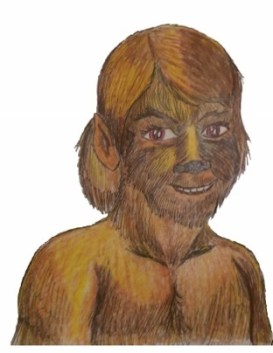
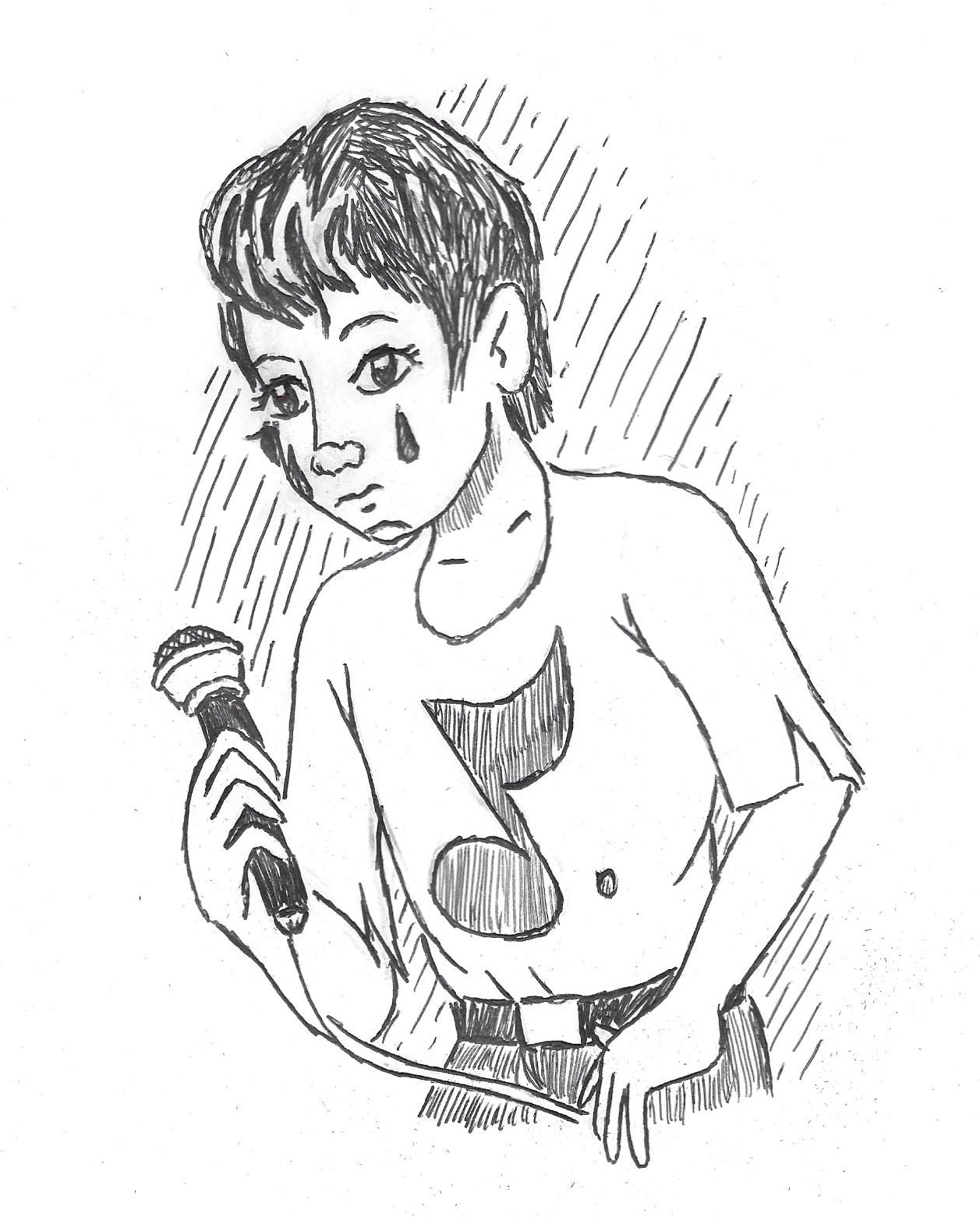
I have been working on my novel The Baby Werewolf, and I am now in the final phase, working on the climax and crisis point. And I surprised myself. The killer monologues to the main characters who have now become his intended next victims. I have played this out over and over in the twenty-two years I have been writing this book. Last night, for the first time ever, the hero character laughs in this scene instead of the cringing fear that had always been there before.
How is such a thing possible? What changed? I have been writing and rewriting this story since 1996. But it goes much deeper and darker than that. This story went on my have-to-write list in 1966 when an older, stronger boy who lived near my home trapped me in a place out-of-sight of others and stripped me, gaining some horrible kind of pleasure by inflicting pain on my private parts. Recovery from that has taken half a century. The recovery itself probably explains why I struggled so long to pull this story together in a finished form.
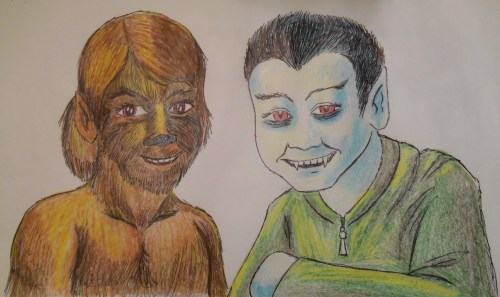
There are things about my writing life that are undeniable. First of all, I have to write. There is really no other choice for me. My mind will never know rest or peace without being able to spin out the paragraphs and essays and stories that make it possible to know those things. Nothing is real if I can’t write it out. Secondly, I am a humorist. If I can never be funny at all, can never write a joke, then I will descend into madness. My sense of humor not only shields me and serves as my suit of armor, it heals me when I suffer psychic wounds. This book is a horror story, but like many of the best horror stories, it relies on humor to drive every scene and knit the plot together. And it was a breakthrough for me to have the hero character laugh instead of cringe in the critical scene. It allows me to live again. And love again. And the real monster that caused this book to be, is now forgiven. The world continues to turn. The picture is now complete. And soon, the novel will be too.
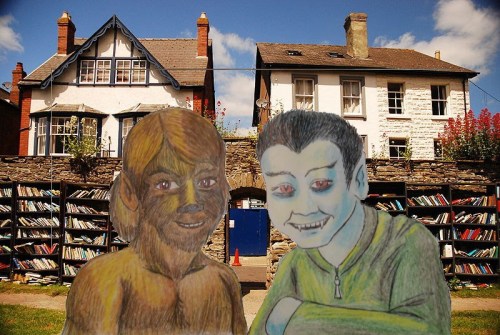
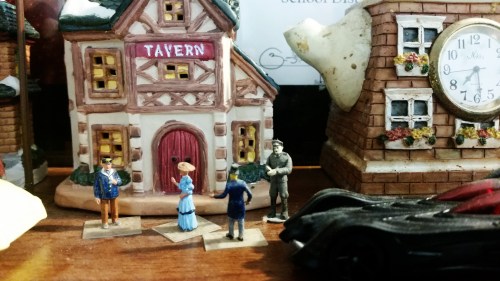


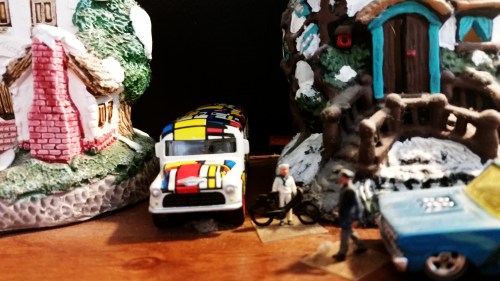 Here’s a view of the front of that same TV bus as it sits between Miss Wortle’s place and Eggbert Egghead’s Egg House. Dabney Egghead is the boy in the sailor suit showing off his brand new velocipede.











 Catch a Falling Star
The Cowboy Code
When I was a boy playing cowboys and Indians with cap pistols and rubber tomahawks, we all knew that cowboys had a code. The guy in the white hat always shoots straight. He knows right from wrong. He only shoots the bad guy. He even shoots the gun out of the bad guy’s hand if he can. Westerns are about right and wrong, good and bad, and the unyieldingly good knights of plains.
And boys believe what they see on TV and in the movie theaters. People who make television shows never lie, do they? In fact, Wyatt Earp was based on a real guy who really lived and really shot the bad guys at the gosh-darn real OK Corral.
Daniel Boone was a real guy too. He faced the opening up of new lands full of deadly dangers. And when Fess Parker played him in 1964, wearing Davy Crockett’s coonskin hat, he walked the earth like a guardian angel, making everyone safe by the end of the episode. He even knew which Indians were good and which were bad. Mingo was always on Daniel’s side. And when they spoke to each other about the dangers they faced, it was never about killing the people they feared. It was about doing what is was right, about helping the community at Boonesboro to survive. Being encouraging… looking forward to a more settled future created by following the cowboy frontier code.
So, I am left wondering what ever happened to the cowboy code? I listen to Republican presidential candidates talking about dipping bullets in pig’s blood to kill Muslims, and building walls against Mexican immigrants, and why our right to carry assault rifles is sacred, and I wonder what happened. Didn’t they experience the same education from the television versions of the Great American Mythology? Didn’t they learn the code too?
I am old enough now to know that cap guns are not real guns and you cannot solve problems by shooting somebody. But that was never the point of the cowboy code. We need straight-shooters again in our lives, not to shoot people, but to tell the unvarnished truth. We need wise people who can tell who are the good Indians and who are the bad We need them to shoot the weapons out of the bad guys’ hands. And I know that’s asking for leaders to be larger than life and be more perfect than a man can actually be. But Daniel Boone was a real man. Myths and legends start with a fundamental truth.
Leave a comment
Filed under autobiography, commentary, cowboys, humor, insight, philosophy, politics, Uncategorized
Tagged as arizona, autobiography, childhood beliefs, cowboy code, Daniel Boone, humor, politics, Red Ryder, Roy Rogers, satire, writing, Wyatt Earp