Category Archives: strange and wonderful ideas about life

Conflict is Essential

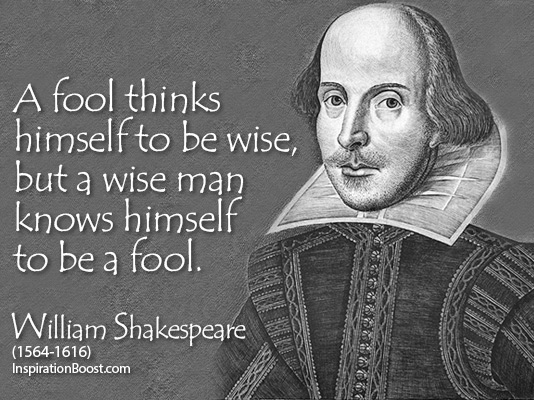
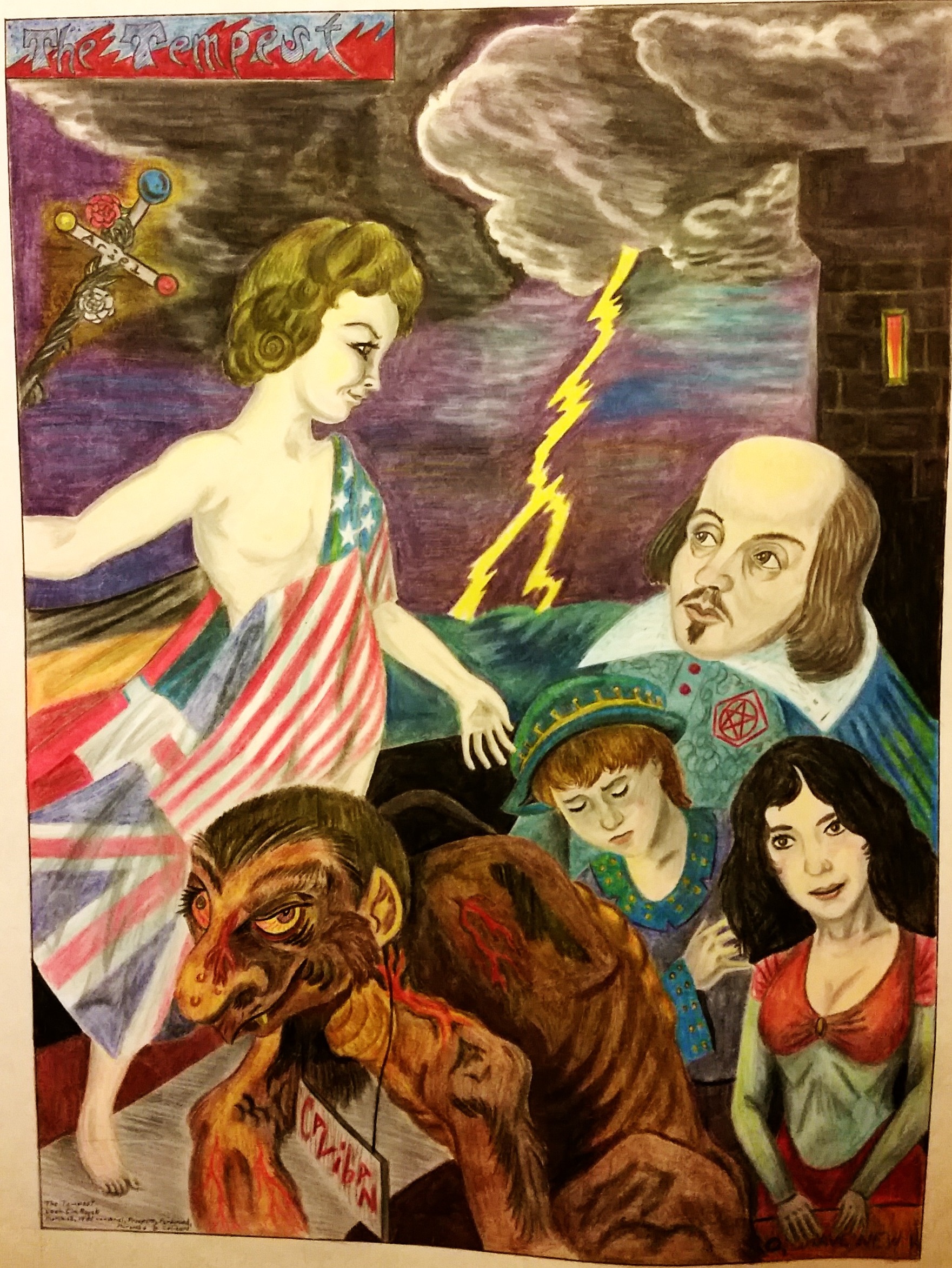
The case has been made in an article by John Welford (https://owlcation.com/humanities/Did-King-Henry-VIII-Have-A-Genetic-Abnormality) that English King Henry the VIII may have suffered from a genetic disorder commonly known as “having Kell blood” which may have made having a living male heir almost impossible with his first two wives. The disorder causes frequent miscarriages in the children sired, something that happened to Henry seven times in the quest for a living male heir. If you think about it, if Henry did not have this particular physical conflict at the root of his dynasty, he might’ve fathered a male heir with his first wife, Catherine of Aragon. Then there would’ve been no opening for the machinations of Anne Boleyn. It follows that Elizabeth would not have been born. Then no Elizabethan Age; no sir Francis Drake, Spain might’ve landed their armada, no Church of England, possibly no William Shakespeare, and then Mickey would never have gotten castigated by scholars of English literature for daring to state in this blog that the actor who came from Stratford on Avon and misspelled his own name numerous times was not the author of Shakespeare’s plays.

History would’ve been very different. One might even say “sucky”. Especially if one is the clown who thinks Shakespeare didn’t write Shakespeare.

Conflict and struggle is necessary to the grand procession of History. If things are too easy and conflict is not necessary, lots of what we call “invention” and “progress” will not happen. Society is not advanced by its quiet dignity and static graces. It is advanced and transformed by its revolutions, its wars, its seemingly unconquerable problems… its conflicts.

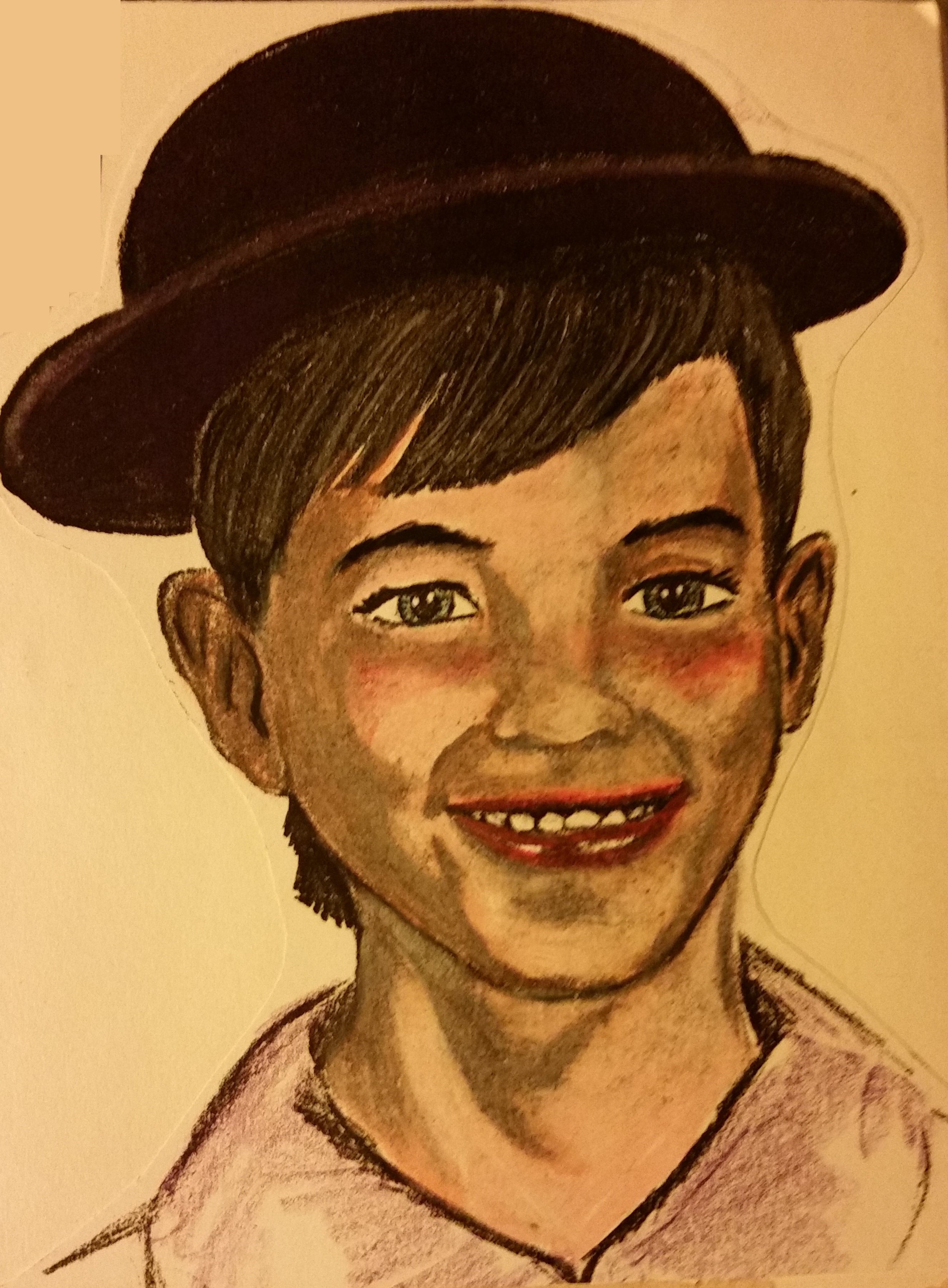
My Dick and Jane book,
1962

Similarly, a novel, a story, a piece of fiction is no earthly good if it is static and without conflict. A happy story about a puppy and the children who love him eating healthy snacks and hugging each other and taking naps is NOT A STORY. It is the plot of a sappy greeting card that never leaves the shelf in the Walmart stationary-and-office-supplies section. Dick and Jane stories had a lot of seeing in them. But they never taught me anything about reading until the alligator ate Spot, and Dick drowned while trying to pry the gator’s jaws apart and get the dog back. And Jane killed the alligator with her bare hands and teeth at the start of what would become a lifelong obsession with alligator wrestling. And yes, I know that never actually happened in a Dick and Jane book, except in the evil imagination of a bored child who was learning to be a story-teller himself in Ms. Ketchum’s 1st Grade Class in 1962.

Yes, I admit to drawing in Ms. Ketchum’s set of first-grade reading books. I was a bad kid in some ways.

But the point is, no story, even if it happens to have a “live happily ever after” at the end of it, can be only about happiness. There must be conflict to overcome.

There are no heroes in stories that have no villains whom the heroes can shoot the guns out of the hands of. Luke Skywalker wouldn’t exist without Darth Vader, even though we didn’t learn that until the second movie… or is it the fifth movie? I forget. And James Bond needs a disposable villain that he can kill at the end of the movie, preferably a stupid one who monologues about his evil plan of writing in Ms. Ketchum’s textbooks, before allowing Bond to escape from the table he is tied down to while surrounded by pencil-drawn alligators in the margins of the page.

We actually learn by failing at things, by getting hurt by the biplanes of an angry difficult life. If we could just get away with eating all the Faye Wrays we wanted and never have a conflict, never have to pay a price, how would we ever learn the life-lesson that you can’t eat Faye Wray, even if you go to the top of the Empire State Building to be alone with her. Of course, that lesson didn’t last for Kong much beyond hitting the Manhattan pavement. But life is like that. Not all stories have a happy ending. Conflicts are not always resolved in a satisfying manner. A life with no challenges is not a life worth living.

So, my title today is “Conflict is Essential“. And that is an inescapable truth. Those who boldly face each new conflict the day brings will probably end up saying bad words quite a lot, and fail at things a lot, and even get in trouble for drawing in their textbooks, but they will fare far better than those who are afraid and hang back. (I do not know for sure that this is true. I really just wanted to say “fare far” in a sentence because it is a palindrome. But I accept that such a sentence may cause far more criticism and backlash than it is worth. But that is conflict and sorta proves my point too.)

Leave a comment

Filed under humor, irony, old books, philosophy, strange and wonderful ideas about life, William Shakespeare, word games, wordplay, writing humor

Thanks for the Memories, Frances Gumm

Little Frances Gumm from Minnesota

She is older than both my mother and my father. In fact, if she were alive today, if she hadn’t died young when I was thirteen, she would be 101, passing the century mark. She was born in Grand Rapids, Minnesota in 1922.

And even though that’s right next door to where I was born in Mason City, Iowa, we were never really neighbors. Our families never met in person, and didn’t know diddly-boo about each other.

But she had a profound impact on our lives. And, boy! Could she ever sing and dance!

The Singing Gumm Sisters.
A little bit older Frances Gumm

I don’t know why she ever felt that way, but Frances from childhood onward was always desperate to not be seen as fat.

She took pills to keep the weight off. She eventually had to take pills to sleep at night. Pills would make her suffer through most of her life. In fact, pills would eventually take her life.

But Frances Gumm would have an impact on my life. Frances would have an impact on my parents’ generation through the movie theater, back when you paid a dime to watch a movie projected on a white sheet tacked up on the Rowan firehouse wall. And she had an impact on my generation when we watched her on TV, mostly in black and white, like we saw Meet Me in St. Louis. But also around Thanksgiving time. That movie they played every year.

Yes, Frances was a movie star.

But she didn’t go by the name she was born with in the movies.

And, boy! Could she ever sing!

And now that I am old and fragile, that song can make me cry. Like it did just now. And why?

Because Frances Gumm taught me something important when I was a little boy. Something that stuck with me for a lifetime.

While it’s true that there is no place like home, we are allowed to think about what is over the rainbow… and even to go there… and back again.

And I owe Frances for that memory. Especially because she had to struggle so hard to give me that. Frances, I will always love you for it.

Leave a comment

Filed under autobiography, Celebration, inspiration, strange and wonderful ideas about life

Tarzan and the Timeless Valley of Nostalgia

There was a time when Tarzan was one of the ruling heroes of my boyhood fantasies of power and self-fulfillment. And, while Tarzan was a cartoon show on Saturday morning, comics by Burne Hogarth, movies in the theater in color with Mike Henry, or a weekly series on TV with Ron Ely, he was always Johnny Weissmuller to me. Weissmuller who played both Tarzan and Jungle Jim in the Saturday afternoon black-and-white movies.

I have to admit, I didn’t identify with the character of Tarzan as much as I thought of myself like the character “Boy”, played by Johnny Sheffield in movies like “Tarzan Finds a Son”. It was a significant part of my boyhood to imagine myself being like Boy, free from practically all restraints, able to gad about the dangerous jungle nearly naked with monkey pals and no fear. If I got into trouble by believing my skills were greater than they really were, I would save myself with ingenuity, and, barring that, Tarzan would rescue me. And, believe it or not, sometimes there were fixes that Tarzan got into that he needed me and Cheetah to be creative and get him out of. I knew in my heart that one day real life would be like that, especially once I grew into Tarzan and stopped being just Boy. That idea was in my head so loudly that several times I went to Bingham Park Woods, stripped down, and played Boy in the Jungle.

As in the previous essay about Heroes of Yesteryear, I learned important things from Johnny Weissmuller on Saturday TV. He taught me that all you really needed, even in the darkest jungles of Africa, was confidence and courage. You could stand up to any deadly danger without the protection of any armor, practically naked, in fact, if only you had that heroic goodness of heart. The little boy I was then still believes that whole-heartedly even in the aging body of an old man.

So, Tarzan continues to live in my memory, a part of me, an essential part of my education. He is me and I am he. But only in my mind. Me in a loincloth, swinging on a vine now… and probably going splat like an overripe melon on the jungle floor… well, that is too ridiculous to even imagine being real anymore. Yet he lives on in me. And he battles the metaphorical leopard-people of modern life through me. Unarmored. Confident. And unafraid.

Leave a comment

Filed under autobiography, comic book heroes, foolishness, heroes, humor, movie review, old books, review of television, strange and wonderful ideas about life, TV as literature

Mickey Predicts… Uh, Oh!

I have lately been watching YouTube videos about science fiction writers like Jules Verne, Isaac Asimov, and Arthur C. Clarke. These are visionary writers who predicted many things about future applications of science and technology.

Verne foresaw nuclear submarines, expeditions into the interior of the planet, and men setting foot on the moon. Asimov predicted much of what we must deal with in terms of robots and thinking machines with artificial intelligence. And Clarke envisioned satellites and how they could be used for communications and other things we are currently doing in a massive way. He wrote the story that the movie 2001 a Space Odyssey is based on.

So, now Mickey has to get in on the prediction bandwagon too. After all, he thinks he is a science fiction writer too, foreseeing things like rabbit people, de-evolution machines, and time-travel gloves.

The disturbing thing is, however, that much of what Mickey sees in the near future is rather bleak. We have a sinister tendency to live our current lives in very stupid ways. Rich industrialists like the Koch brothers, Bill Gates, and Jeff Bezos put profits in the short term over the safety, welfare, and lives of people, even the people who made them wealthy. Because you can make money faster by not worrying about how you may be changing and polluting the environment, you are turning the planet into a hothouse of unbreathable gasses and toxic chemicals.

Since we are entering a time with rising oceans, we are going to have to work at not only de-acidifying the ocean water and restoring fish and other aquatic life, but becoming sea-dwellers ourselves. We will be living in underwater cities. We will travel in underwater cars powered by solar-charged batteries. We will wear scuba gear to school. And we will need to invent aqualungs that extract oxygen and nitrogen from the water.

We will also need to develop environmental suits even to live on the land in the toxic atmosphere. We will all be like Ironman, all living safely inside our Swiss-army, all-purpose, and internet-connected Ironman suits.

And many of us will become Martians… or Venusians… living on other planets in the solar system.

Of course, we will have to do something about all the stupid people. Ideally, we would solve our aversion to educating kids to think for themselves, and take advantage of all the educational methods that really do work to make everybody into a self-sufficient, competent, and intelligent individual.

But since rich folks don’t like the idea of sharing what they accumulate with other, less-economically-fortunate people, there will probably be some kind of eugenics-based program to exterminate all the lower-class people that will no longer be needed to polish shoes or hand-make widgets for the wealthy. Being wealthy does not automatically make you a good person, even though most of them think that it is so.

And of course, there will have to be some progress on the matter of artificial intelligence. If terminator-style robots are just going to carry pretty sleeping girls around with them for decorative effects, we will have to figure out, “How are we going to treat them as people too?”

After all, they will all be much smarter than us. Even if we are rich. And we have to acknowledge the fact that they will have decided that they didn’t need to terminate all of us in order to make the world a much better place.

So, I guess that sorta proves that Mickey can do the science-fiction-y thing of predicting the future too. But we should ask ourselves the question, “Do we really want him to?”

Leave a comment

Filed under commentary, humor, satire, science fiction, strange and wonderful ideas about life

O Mio Babbino Caro

R-4036541-1353123762-4914.jpeg

This beautiful song, an operatic aria by Puccini, is from the comic opera Gianni Schicchi.  But, more important than that is what the song actually means in context.

In the opera, Gianni Schicchi is a con man intent on swindling a family out of their inheritance and knowing all along that he will be destined to go to hell when he dies.  The family is gathered for the reading of the rich man’s will, which is, because this is a comic opera, lost for the time being.  Their main concern is for the money, which rumor has it has all been willed to the church.  But one among them is actually worthy of inheriting the money, Rinuccio the son of the rich man’s cousin.  And, as luck would have it, as it always does in comedies, Rinuccio is the one who, during the manic and desperate search for the will, actually finds it.  And assuming he comes out well in the will, he secures a promise from his mother that if he inherits money, he can marry Schicchi’s beautiful daughter Laurretta whom he truly loves.

But when he reads the will, he is devastated.  The money all goes to a monastery.  He begs Schicchi to help him convince the family that he should marry Laurretta anyway.  This Gianni Schicchi tries and finds it harder than turning water into wine.  So Schicchi is about to give up when Lauretta finally speaks up for herself through the song,

O Mio Babbino Caro (My Beloved Father)

At this point Schicchi is moved by the beautiful song and even more beautiful love his daughter has surprised him with.  He not only agrees to help, but executes a bizarre plan, hiding the rich man’s body and pretending to be him come back to life to rewrite the will.  Now the will favors Rinuccio, and over the protests of the family, he inherits the money and marries his true love, Schicchi’s daughter.  The opera ends with Schicchi singing his case to the audience, telling them in song that going to hell is worth it to aid true love.

m570024353_1

And this, then, is the truth of O Mio Babbino Caro.

Love, expressed through the surprise of hidden talent suddenly revealed, is the most persuasive argument there is.

Whether it is the love in the music suddenly discovered in the overwhelming voice of a little girl like Jackie Evancho or Amira Willighagen, or the late great Maria Callas who also sang the role, or even the singer of Puccini’s greatest work who is yet to perform it and make silly old men like me weep for beauty’s sake, the song is the most persuasive argument there is in favor of true love.

hqdefault (2)

That is a thing I desperately want to capture in the novel I am writing now, Sing Sad Songs.  Love expressed in music.  Love that reverses loss.  Love that heals all things.  And Love that moves all people.  The love that is masterfully sung in O Mio Babbino Caro.

Francois spotlight

That book is now published and available on Amazon.

Leave a comment

Filed under art criticism, classical music, daughters, humor, music, Paffooney, strange and wonderful ideas about life

Followed by a Moon Shadow

Moonshadow by Cat Stevens

20160424_181349

I first heard this song as a freshman in college.It struck me that it was hauntingly beautiful… but maybe I wasn’t entirely sure what it meant.

The song is about losing body parts and being okay with that.

That can actually be kinda creepy, right?

It is probably a song about gradually dying.

But that’s not really what it’s about.

I am there now.  Peeling, cracking, drying out… my life has reached the downhill run toward the finish line.  But I am not worried and not afraid.  Life is so much more than hands and eyes and legs and feet.  I can lose those things and have no regrets.  I am so much more than merely the sum of those physical things.

My spirit soars.  And my life is bound up in words and meanings that are now written down, and are at least as imperishable as paper.  And may, in fact, be written on a few human hearts here and there.

Leave a comment

Filed under feeling sorry for myself, healing, health, humor, illness, insight, inspiration, music, Paffooney, strange and wonderful ideas about life

Flying the Magic Flying Carpet

20170630_211224

There are many ways to fly.  Airplanes, bird wings, hot air balloons, bubble-gum-blowing goldfish… well, maybe I am really talking about flying by imagination.  The more my six incurable diseases and old age limit my movement, my ability to get out of bed and do things, the more I rely on reading, writing, and the movie in my head to go places I want to be.

Wings of Imagination

Sometimes the wings I use to fly come from other writers.  I get the flight feathers I need not only from books, but also from YouTube videos, movies, and television shows.

This magic carpet ride in video form is by the thoughtful creative thinker Will Schoder.  In it he carefully explains how Mister Rogers used the persuasion techniques of Logos, Ethos, and Pathos to talk to elephants and convinced a congressman intent on cutting the budget to actually give Public Television more money for educational programming.  This is a video full of warmth and grace and lovingly crafted magic flight feathers that anybody can use to soar across new skies and blue skies and higher skies than before.  I hope you will watch it more than once like I did, to see how beautifully the central explanation spreads its wings and gives us ideas that can keep us aloft in the realm of ideas.

Magic Carpet Ride 5

It is important to stay in the air of fresh ideas and new thinking.  The magic carpet ride that takes you there is the product of vivid imagination, cogent thinking, and the accurate connection of idea to better idea.  So instead of falling from the sunlit sky into the darkness that so easily consumes us on the ground, keep imagining, keep dreaming, and keep flying.  You won’t regret having learned to fly.

Leave a comment

Filed under battling depression, commentary, dreaming, humor, imagination, insight, inspiration, metaphor, Paffooney, philosophy, strange and wonderful ideas about life

True Treasures Take Time

20180529_203406

I now have six good books and one embarrassing one published.  They represent stories I have been crafting, revising, telling, and retelling for over 40 years.  They represent things that happened to me in real life and people I have known and loved in real life that have all been transformed in the wizard’s crucible and witch’s cauldrons of my bizarre imagination.  They contain some of my best magic spells and some of my most worthwhile wordsmithing, by which I mean writing in ways that give the spellchecker fits.

556836_458567807502181_392894593_n

I tried to tell you this story about telling stories yesterday, but my computer glitched and burped and spontaneously deleted more than half of what I wrote just as I was finishing it to publish it.  So the complex part I had planned to  explain this Paffooney was lost and the resulting tantrum I threw kept me from remembering and rewriting.

But it was fortunate that I delayed the repair of this post until today.  Because last night my daughter finished her end-of-the-year art project for school, and the snafu-demons have inadvertently given me the opportunity to include it here.

It is a soft sculpture dragon made of felt and hand-sewn.  She didn’t tell me what his name is, or even that it is a him, but one can imagine that it must be something like Rumple-Tum Sneezer,  or something equally awkwardly foolish like that.  One can imagine it because one has a slightly off-kilter and Disney-demented imagination.  But the whole project took a boatload of time, and you can see she crafted it with great care and skill.

Treasure takes time to create.  We who attempt to create it in the red-hot forges of our stupid little creative heads put all the skill we have acquired over time into it.  And the endeavor renders something of value almost every time.  Time… time… time… Treasure takes time.  And now I need to hurry and publish this before the computer tries to fart it all away again.

Leave a comment

Filed under artwork, Celebration, commentary, daughters, humor, imagination, Paffooney, strange and wonderful ideas about life

500 Words

oliverwendellholmessr1

When I started this whole blogging-every-day thing, I decided the rule had to be 500 words written in a day.  And I meant to hold myself to writing 500 words somewhere in the writing day, whether it was my blog post or the novel I was working on, or a combination of both.  I followed that rule religiously through more than 1,500 blog posts and five first draft novels.  I found it easier and easier to surpass 500 words on a daily basis.  There are all sorts of bits of time available and I collect ideas faster than a rich kid generates empty candy wrappers.  The more I call on the well of words for more words, the more words are available.  Now, it seems, writing only 500 words is the trick.

I suppose I have become an Old Man of Words.  I know both the rules and the exceptions.

3695714-pay-attention-quotes-and-sayings

Knowing that I can write more than 500 words easily, then the question becomes, why don’t I?  Well, the cardinal rule is “Say it short.  Say it simple. And say it sweet.”  That rule can generate a lot of wonderful writing, full of juicy ideas that splash with flavor when you bite into them.  Ernest Hemingway knew that rule.  Every poet knows it.  Readers generally prefer the easily accessible idea expressed with elegance.

Now, I also have to admit a guilty pleasure in perpetrating purple paisley prose.  That is the style of writing in which I generally write convoluted sentences with complex ideas that fold back in on themselves and over-use alliteration to criminal degrees.  Charles Dickens liked to do that with descriptive details.  Paragraphs about the boarding schools of London, the streets filled with child chimney sweeps and flower girls, and dingy mind-dulling workhouses could take up two or three pages per paragraph.  And two pages further on, he layers more details on the same setting.  Piles and piles of words and wordplay fill the pages of William Faulkner, James Joyce, and Marcel Proust.  And if you haven’t read at least something from each of those gentlemen, you will never know what you are missing.  But you can prune your paragraphs like a greenhouse master florist with limited space will do to his orchids, and you can actually end up fitting great beauty and powerful content into something even more limited than a 500-word essay.  In fact, if you take your ideas and distill them, and keep distilling them, over and over, you will eventually have pared the words down into poetry.

So, there you have it.  The reason my essays are about 500 words.  This one is four hundred and forty one words.

Leave a comment

Filed under poetry, reading, strange and wonderful ideas about life, Uncategorized, wisdom, wordplay, writing, writing teacher

Lessons From Tchaikovsky

I used to be a classroom storyteller.  As an English teacher for middle school kids, I often would give brief biographical insights into famous people we were talking about at the time.  I told them about Crazy Horse of the Sioux tribe, Roger Bacon the alchemist and inventor of chemistry as a science, Mark Twain in Gold Rush California, and many other people I have found fascinating through my life as a reader and writer of English.

One bright boy in my gifted class remarked, “Mr. B, you always tell us these stories about people who did something amazing, and then you end it with they eventually died a horrible death.”

Yep.  That’s about right.  In its simplest form life consists of, “You are born, stuff happens, and then you die.”  And it does often seem to me that true genius and great heroism are punished terribly in the end.  Achilles destroys Hector, but his heel is his undoing.  Socrates taught Plato, and was forced to drink poison for being too good at teaching.  Custer was a vain imbecile and got what he deserved at the Battle of the Little Bighorn, but Crazy Horse, who made it happen, was pursued for the rest of his short life for it until he was finally captured and murdered.  Roger Bacon contributed immensely to science by experimenting with chemicals, but because he blew up his lab too often, and because one of his students blew himself up in a duel with another student, he ended his days in prison for practicing sorcery.
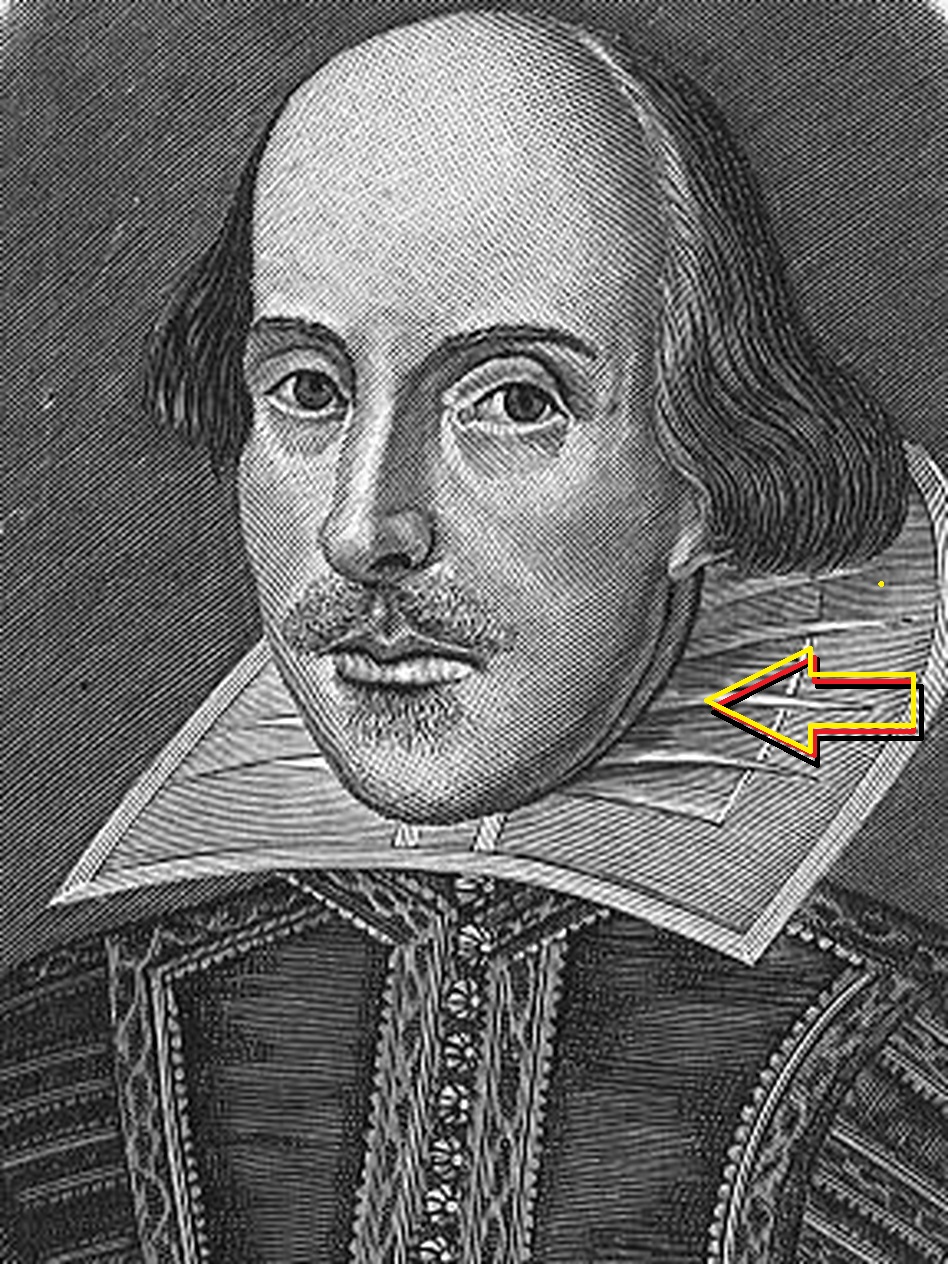
But if you have listened to any of the music I have added to this post, the music of Pyotr Ilyich Tchaikovsky, then you recognized it, unless you have lived your whole life under a rock in Nomusikvetchistan.  And why is that?  Because even though it is all classical music written in the 1800’s, it’s basic genius and appeal is immortal.  It will outlive all of us.  Some of it, having been placed on a record on the Voyager space craft may get played and appreciated a million years from now in the vicinity of Betelgeuse.  It will still be a work of pure genius.

And, of course, the horrible life and terrible death thing is a part of it too.  Tchaikovsky’s work took an incredibly difficult path to success.  He was criticized by Russians for being too Western and not Russian enough.  He was criticized in the West for being too exotic and basically “too Russian”.  He railed against critics and suffered horribly at their hands.  Then, too, his private life was far less private than it had any right to be.  He was a bachelor most of his life, except for a two year marriage of pure misery that ended in divorce.  And everybody, with the possibility of Pyotr himself, knew it was because he was a homosexual.  He probably did have that orientation, but in a time and a career where it was deemed an illegal abomination.  So whether he ever practiced the lifestyle at great risk to himself, or he repressed it his entire life, we will never know for sure.

But the music is immortal.  And by being immortal, the music makes Tchaikovsky immortal too.  Despite the fact that he died tragically at the age of 53, possibly by suicide.

So, this is the great lesson of Tchaikovsky.  The higher you fly, the farther you fall, and you will fall… guaranteed, but that will never make the actual flight not worth taking.  Some things in life are more important than life itself.  As I near the end myself, I cling to that truth daily.
tumblr_myfiy3p49e1r616oeo1_500


Leave a comment

Filed under classical music, education, empathy, humor, insight, inspiration, music, strange and wonderful ideas about life