
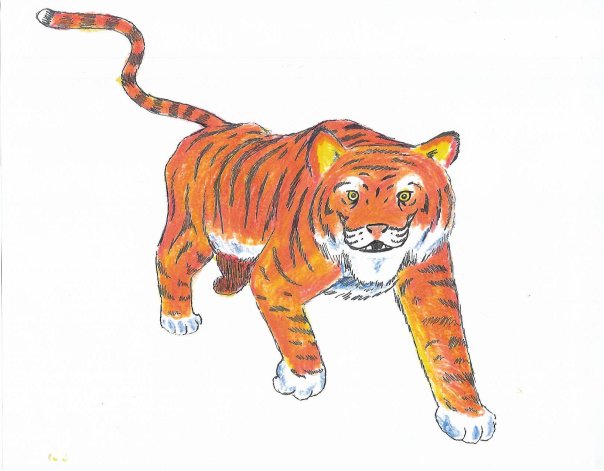
In point of fact, using humor in the classroom is one of the easiest ways I know to become a beloved and effective teacher. But it requires skill. It is like dancing barefoot in a mine field that is littered with pit traps for trapping tigers. See how I linked the title to my opening paragraph there? Kids in the classroom don’t… unless you make it funny. Sometimes they want you to fall in the tiger trap on purpose even though there are punji sticks at the bottom. They want to see what the consequences of the mistake really are so they are not surprised when they immediately make that same mistake.
So, let me tell you about a few of those tiger traps and how to navigate through them.
Poo-Poo Jokes
Yes, one of the unfortunate truths about humor in the classroom is that nothing is funnier to middle school and high school kids than references to sticky brown stuff. (If that last statement made you snicker, then you know that it even goes beyond school.) And it can be a devastating thing on fragile, fledgling egos in a school environment where boys will invariably stick a half-eaten chocolate bar in a back pocket on a hot day even though they are wearing khaki-colored jeans. Over-reacting to a sudden fragrance from one of a number of volatile digestive systems packed into the same small classroom can completely empty the room and imperil the teacher’s job. (Principals don’t appreciate unauthorized leaving of the classroom… so teachers need to quickly learn how to calm-and-continue in an unusually gassy environment.) Of course, the girl leading the lemming rush out of the classroom under gas attack is usually the one who dealt it. But you can’t point that out without crushing some young flower’s petals of self-image. It is necessary to lay down fences of regulation at the beginning of the school year to regulate exactly how brown and sticky a bathroom joke can actually be before it traps you in eternal detention.
Hurt-y Humor
There is the kind of humor that numerous comedians use as their fall-back style, that Don Rickles-esque “Your mama’s so fat that satellites can see her from space”sort of humor. It is also a highly tiger-trappy sort of humor to use in the classroom. Students don’t perform well after being the butt of slappy-face-style put-downs. You don’t want to remind the kid in the back row of how he mixed up the words “pied” and “peed” in last week’s read-aloud right before taking the State science test that will determine his educational future and your next evaluation. So how do you resist the urge to tell the snooty little cheerleader that just told you her mom is going to get you fired that she’s got a tail of toilet paper hanging down from the back of her skirt… when she actually does… and the football player she most idolizes is watching every move she makes with that big, tart and trippy tongue of hers? You take pity on them, and remember that if you break them down into tears in front of their peers you are doing the same thing to them that Bully Bob Beegshout did to you back in high school. Self-deprecating humor is far more effective at defusing a confrontation. You get them to laugh at themselves by making them see themselves in the story you just told on yourself. You can often make them laugh themselves right out of the bad behavior that way. (Oh, and I didn’t point out the toilet paper, but you can wait until someone else inevitably does and karma can balance the universe in that way.)
So, now that I have rolled well past the 500-word goal and still haven’t used up the whole list of tiger traps, I suppose it is time to reveal there will be a follow-up to this post.













Giving and Taking Stupid Advice
Let’s begin with some stupid advice. I don’t have time to write a lot today because the Princess is ill and must go see the doctor in Plano. So the advice is; Set aside time for writing and always allow plenty of time for it. You will probably notice already that I am giving you advice that I am not taking myself this morning. So don’t follow that advice. It is stupid advice. I have given it to creative writing classes for years and thought I meant it. But looking back on real life, I realize, it has never been true for me. My best ideas, my best writing, always seem to come in the middle of the pressure-cooker of daily struggle and strife. I have battled serious illness for most of my adult life. I have the luck of a man who tried to avoid letting a black cat cross his path by crashing his bicycle at the top of a hill covered in clover with only three leaves each and then rolling down the hill, under a ladder, and crashing into a doorpost which knocks the horseshoe off the top. The horseshoe lands on my stupid head with the “U” facing downward so the luck all drains out. Bad things happen to me all the time. But it makes for good writing. Tell me you didn’t at least smile at the picture I just painted in your mind. You might’ve even been unable to suppress a chuckle. I am under time pressure and misfortune pressure and the need to rearrange my entire daily schedule. So it is the perfect time to write.
This essay, however, is about bad advice. And I am a perfect person to rely on as a resource for bad advice. I am full of it. Of course, I mean I am full of bad advice, not that other thing we think of when someone tells me I am “Full of it!” So here’s another bit of writing advice that is probably completely wrong and a bad idea to take without a grain of salt, or at least a doctor’s prescription. You should stop bird-walking in your essay and get to the damn point!
I know a lot about the subject of depression. When I was a teenager, I came very close to suicide. I experienced tidal waves of self-loathing and black-enveloping blankets of depression for reasons that I didn’t understand until I realized later in life that it all came from being a child-victim of sexual assault. Somehow I muddled through and managed to self-medicate with journal writing and fantasy-fixations, thus avoiding a potentially serious alcohol or drug problem. This is connected to my main idea, despite the fact that I am obviously not following the no bird-walking advice. You see, with depression, Bad advice can kill you. Seriously, people want to tell you to just, “Get over it! Stop moping about and get on with life. It isn’t real. You are just being lazy.”
I have been on the inside of depression and I know for a fact that not taking it seriously can be deadly. In fact, I have faced suicidal depression not only in myself, but in several former students and even my own children. I have spent time in emergency rooms, mental hospitals, and therapists offices when I wasn’t myself the depression sufferer. One of my high school classmates and one of my former students lost their battles and now are no longer among the living. (Sorry, have to take a moment for tears again.) But I learned how to help a depression sufferer. You have to talk to them and make them listen at least to the part where you say, “I have been through this myself. Don’t give in to it. You can survive if you fight back. And whatever you have to do, I will be right here for you. You can talk to me about anything. I will listen. And I won’t try to give you any advice.” Of course, after you say that to them, you do not leave them alone. You stay by them and protect them from themselves, or make sure somebody that will do the same for them stays with them. So far, that last bit of advice has worked for me. But the fight can be life-long. And it is a critical battle.
So taking advice from others is always an adventure. Red pill? Green pill? Poison pill? Which will you take? I can’t decide for you. Any advice I give you would probably just be stupid advice. You have to weigh the evidence and decide for yourself. What does this stupid essay even mean? Isn’t it just a pile of stupid advice? A concluding paragraph should tell you the answer if it can. But, I fear, there is no answer this time.
Leave a comment
Filed under artwork, autobiography, battling depression, commentary, compassion, Depression, empathy, healing, insight, Paffooney, sharing from YouTube, strange and wonderful ideas about life
Tagged as anxiety, depression, life, mental health, writing, writing advice