Yes, there is very definitely a possibility that there is more than one me.
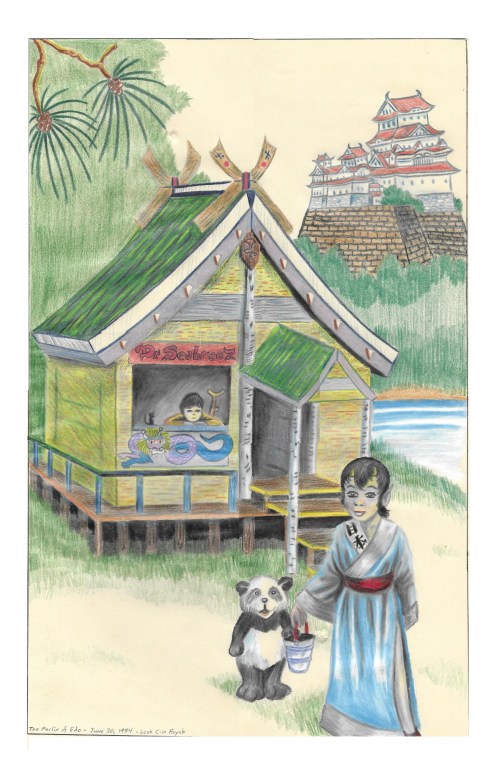
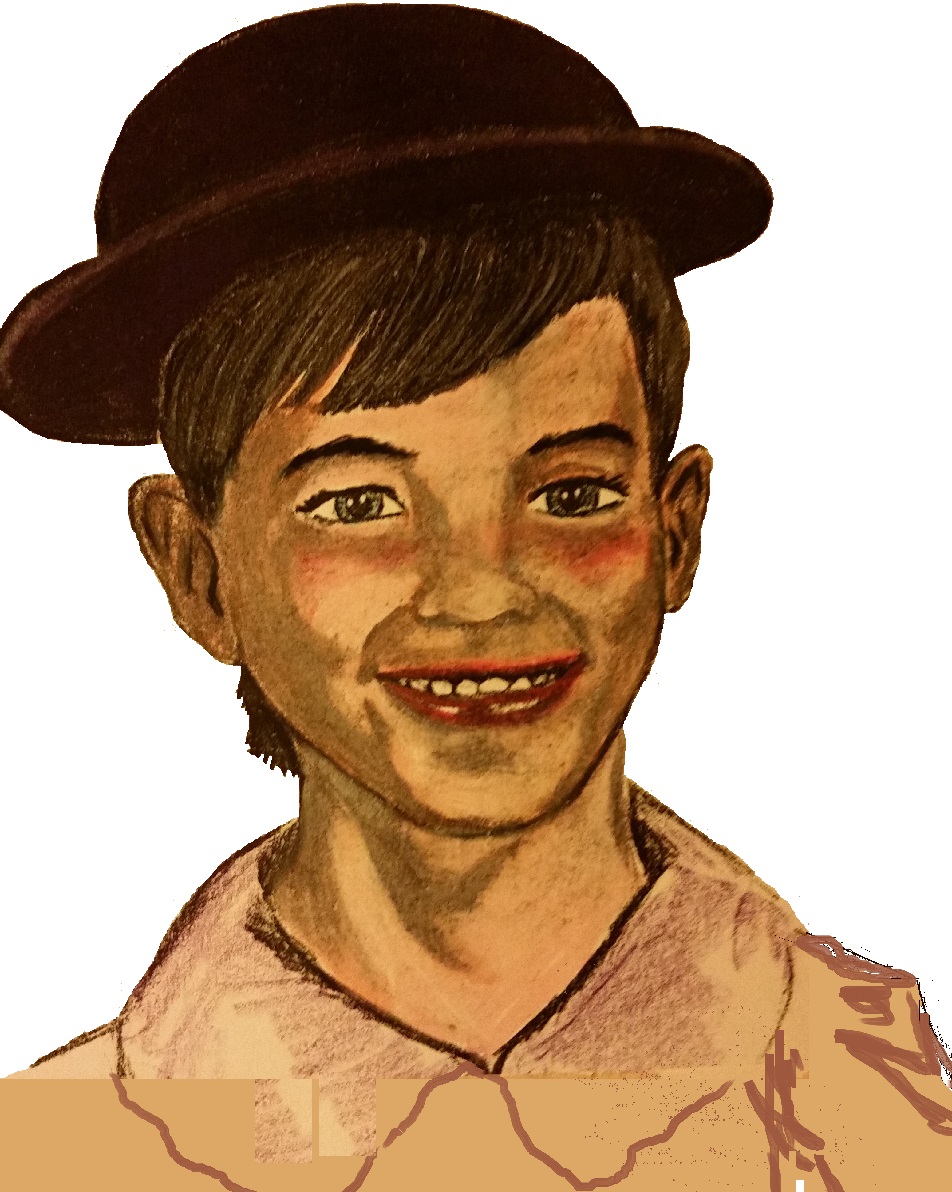
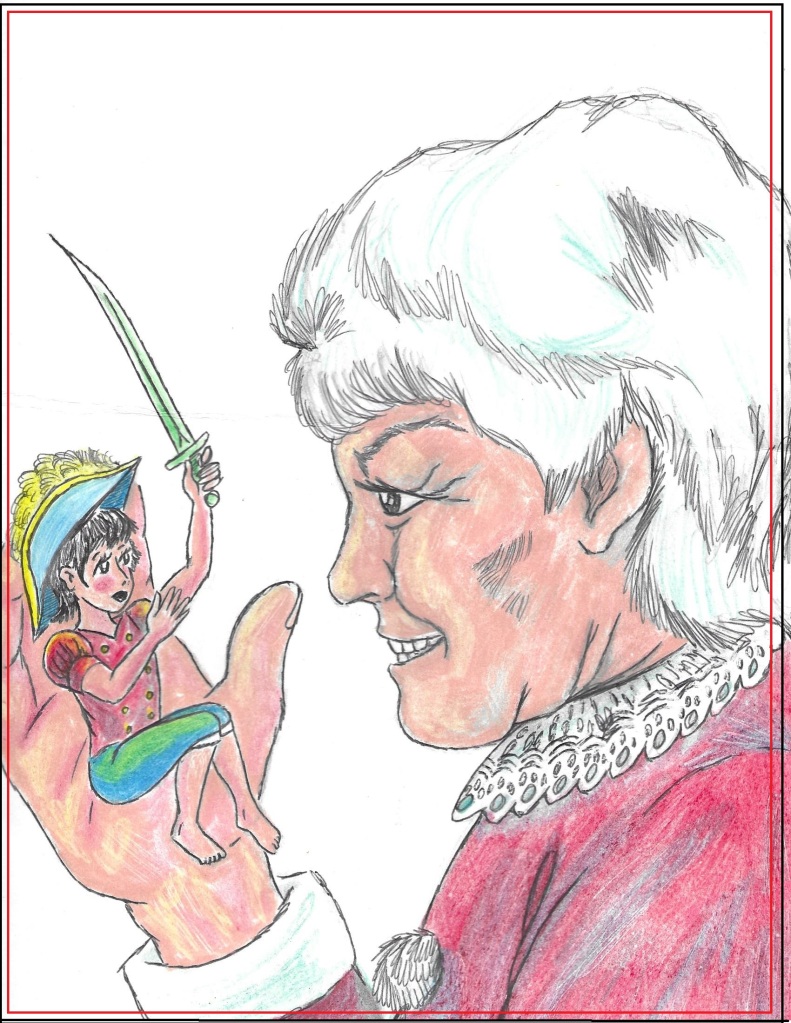
If you look carefully at the colored pencil drawing above, you will see that it is titled “The Wizard of Edo” and signed by someone called Leah Cim Reyeb. A sinister sounding Asian name, you think? I told college friends that my research uncovered the fact that he was an Etruscan artist who started his art career more than two thousand years ago in a cave in France. But, of course, if you are clever enough to read the name backward, you get, “beyeR miC haeL”. So, that stupid Etruscan cave artist is actually me.
It turns out that it is a conceit about signing my name as an artist that I stole from an old episode of The Dick Van Dyke Show and have used for well over two decades through college and my teaching career.
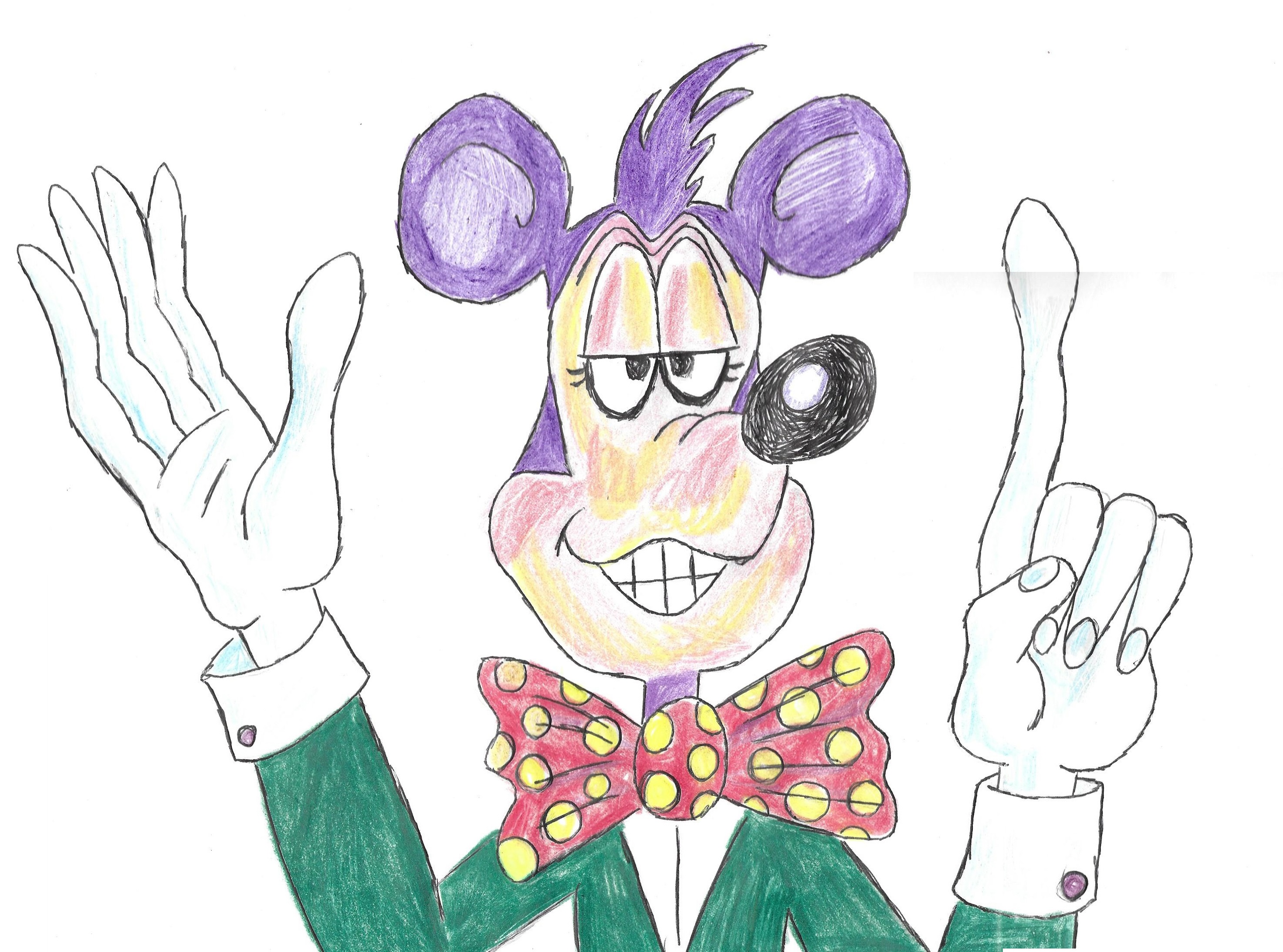
And of course, the cartoonist me is Mickey. Mickey also writes this blog. Mickey is the humorist identity that I use to write all my published novels and blog posts since I published the novel Catch a Falling Star.
Michael Beyer is the truest form of my secret identity. That was my teacher name. It was often simplified by students to simply “Mr. B”. I was known by that secret identity for 31 years.
Even more sinister are my various fictional identities occurring in my art and my fiction. You see one of them in this Paffooney. The name Dr. Seabreez appears in Catch a Falling Star as the Engineer who makes a steam engine train fly into space in the 1890’s with alien technology. He appears again in The Bicycle-Wheel Genius as a time-traveler.
The young writer in the novel Superchicken, Branch Macmillan, is also me. As is the English teacher Lawrance “Rance” Kellogg used in multiple novels.
So, disturbing as it may be to realize, there is more than one name and identity that signifies me. But if you are a writer of fiction, a cartoonist, an artist, or a poet, you will probably understand this idea better. And you may even have more than one you too.
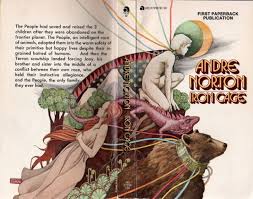
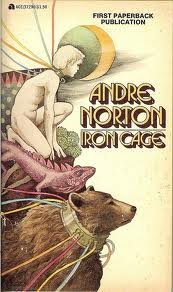
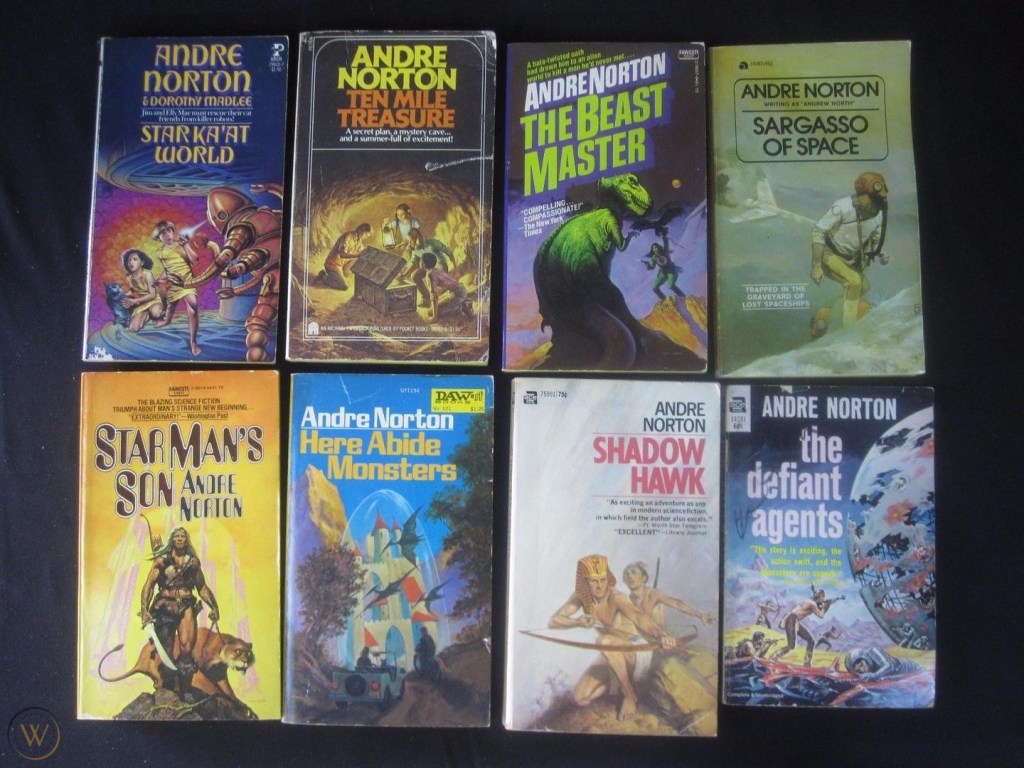
It began for me in 1977 with this wrap-around cover illustration. I knew there were a lot of this guy’s books on the shelves of the college bookstore along with works by Robert E. Howard, Roger Zelazney, and Theodore Sturgeon. And I knew this guy had also written paperback books under the name “Andrew North”, a name I had seen on the twenty-five cent novels in the drugstore where you could buy the really good pulp fiction novels only slightly used.
I had never before bought one of his books. And the book money I had for the fall quarter at Iowa State was supposed to all go towards the book-list given to me as a Junior-level English major. But the naked kid on the cover had a wired-up collar around his neck. And I had only recently recovered long-suppressed memories of being a victim of a sexual assault. I had to have it. I had to know what that illustration had to do with the story inside.
So, I bought a book that I judged by its cover.
And it was not the wrong thing to do.
The main character was a boy named Jony, the naked boy on the cover of the book. He is taken by alien beings as a study specimen along with his mother, the pregnant woman on the back of the wrap-around illustration. The story starts with Jony in a cage, treated like an animal. His mother, also a study specimen has been mated to a Neanderthal-like humanoid specimen who cannot speak, and she has given birth to twins, a boy, and a girl. They are kept in separate cages by their inhuman captors.
Jony manages a mass escape, taking his mother and his younger siblings with him, and releasing as many of the other study specimens as he can. Luckily they escape onto a very earth-like planet. But unluckily, the mother is in very poor health and dies soon after escaping. Jony is then responsible for his little brother and sister in a wilderness that is not empty of others. Luckily, the others they first run afoul of are the bear-like ursine aliens who share their need to not be recaptured by the zoo-keeper aliens.
It was a perfect novel for me. I identified strongly with the main character, who had been violated in a very personal way by monsters. And then had to build a new life in a world full of potential other-monsters. Andre Norton shared my pain and helped me overcome it.
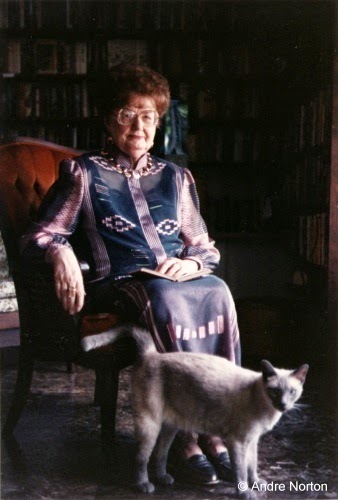
But she also fooled me big-time. She was not a he.
She was a librarian and editor of pulp fiction who wrote enough sci-fi and fantasy in the 50’s, 60’s, and 70’s to finally become a full-time author.
She was already on book number 29 when she retired from being a librarian to write full time.
And I would go on to own and read several of her other books, which were good, but never quite lived up to that first one I read. Of course, that may have been because of the timing and circumstance that led me to a book that I actually needed to read. That book set me on the road to recovery from my personal darkness. And it may have sparked in me the need to eventually become a nudist. And more important than that, it may have led me to a lifelong need to teach reading.
Andre Norton was a real writer. And she made me one too. Though I never knew who she really was until after I bought that book because of the picture on the cover. And I never got around to properly thanking her for all of that… Until this very moment.
It is said by somebody who wasn’t basically me that any time an artist draws a picture of someone, or paints a picture of someone, or twizzles a twizzle-snoot of someone… they are basically making a picture of themselves.
So, this Paffooney that I paffooned of a purple mouse in a Don Martin-esque style, is supposed to be Mickey the cartoonist. And Mickey is supposedly, basically me.
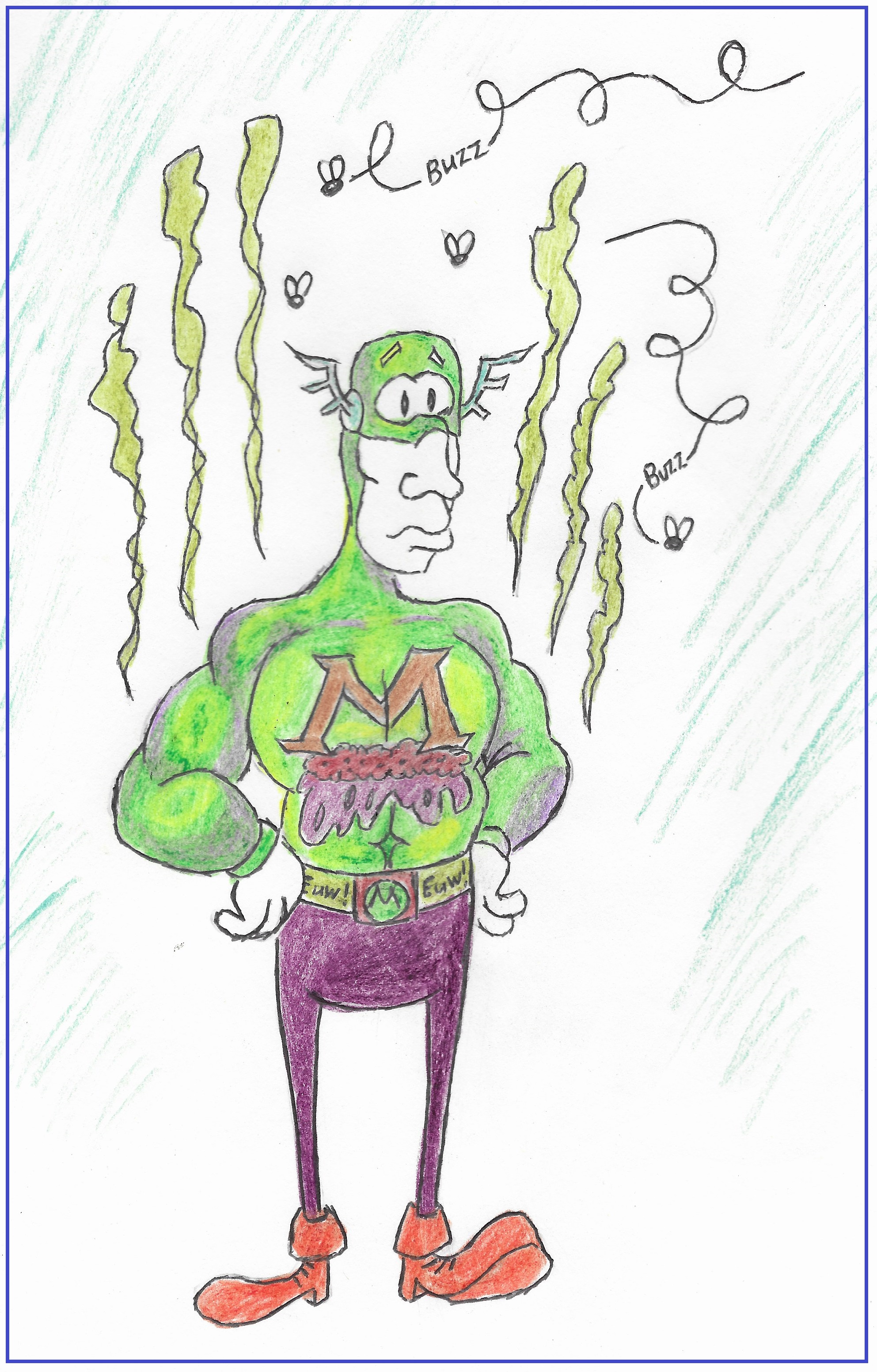
And here I am as Muck Man, the superhero. It is me because the super power he has is his horrible, non-adorable, and unrelenting stench. The horrible smell of him renders villains and bad people unconscious or worse… sometimes straight to the hearse. And using his olfactory assaults on evil as a way to make something terrible into something with a -someness of awe, makes him indubitably, indelibly basically me.
“Long Ago It Might Have Been”
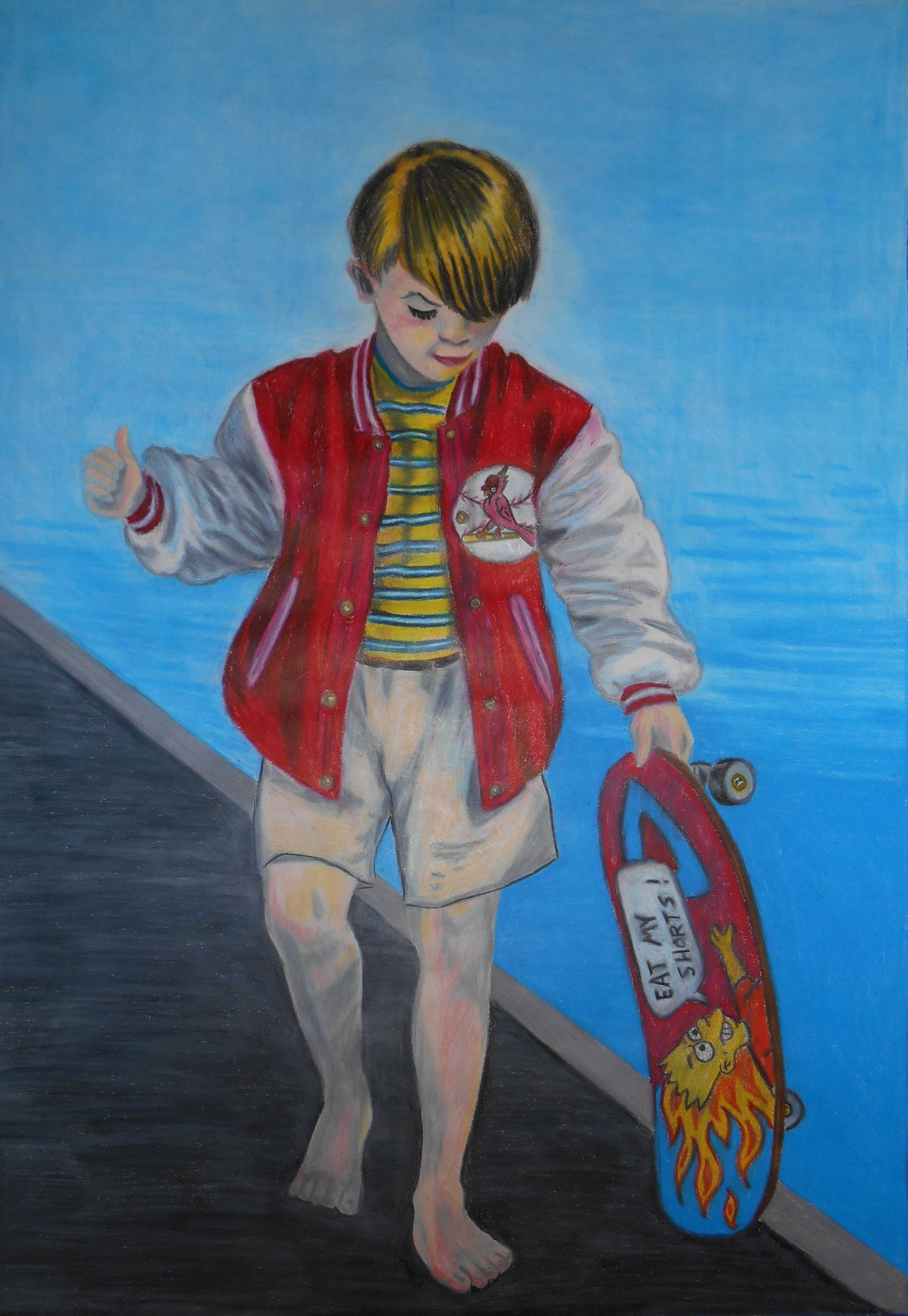
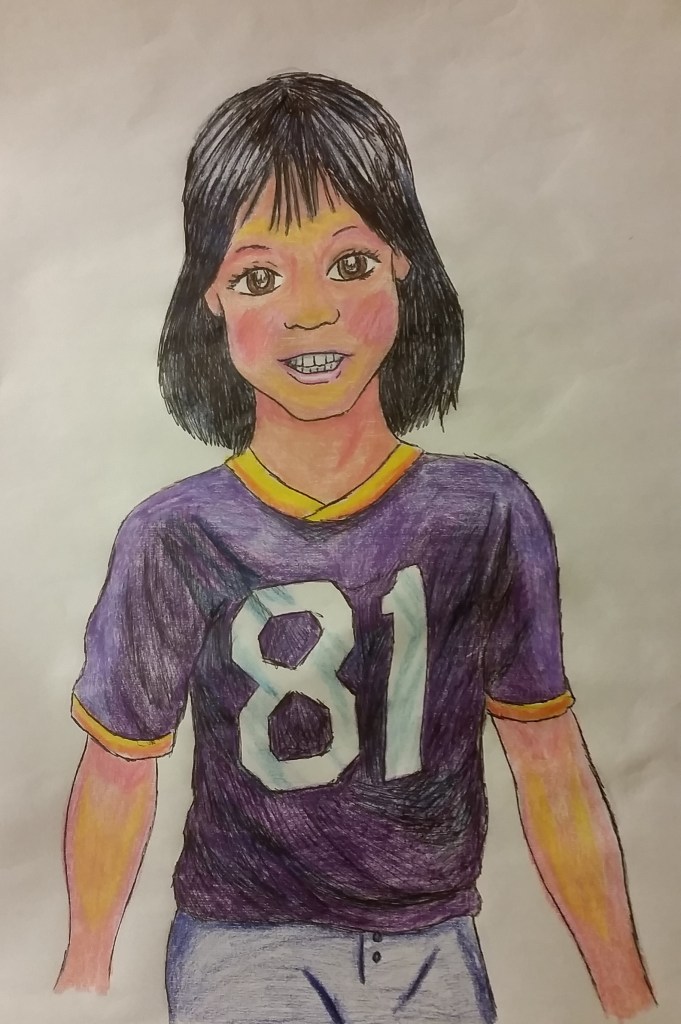
And here is a picture of a boy who might’ve been my son if only I had been given enough good sense to fall in love with that first blond young lady who first had thoughts about making babies with me. I didn’t. I’m stupid. And now she has only girls. That makes it a picture too of basically me.
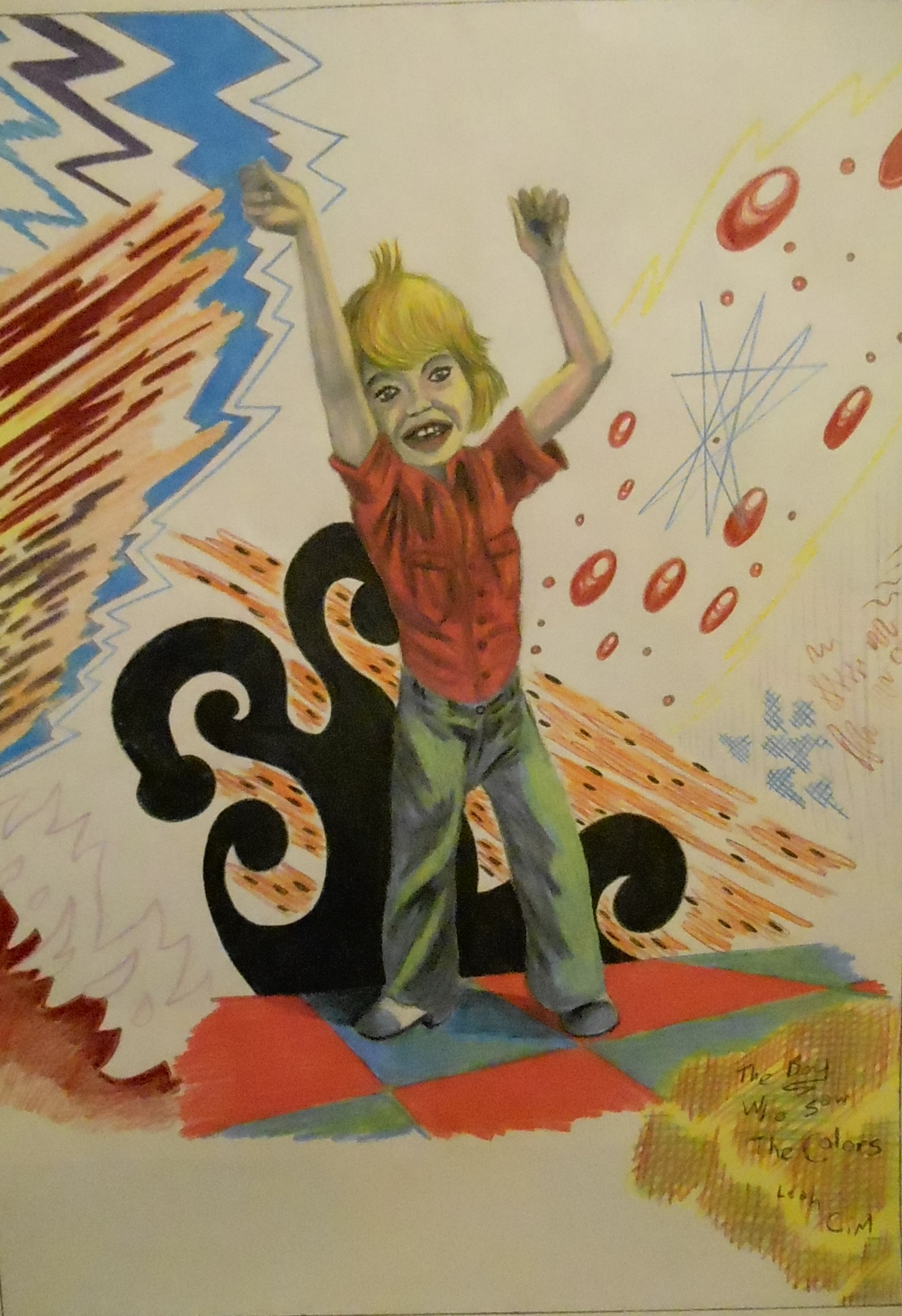
And this little not-me was me all along, and as the boy who sees colors, it’s really not wrong. Synesthetic they call it in a name that’s not long, but is resoundingly deep like the words of a song.
And you might argue this one and say that it’s true… “This one is too pretty to be a picture of you.” But you would be wrong on this basis, you see…
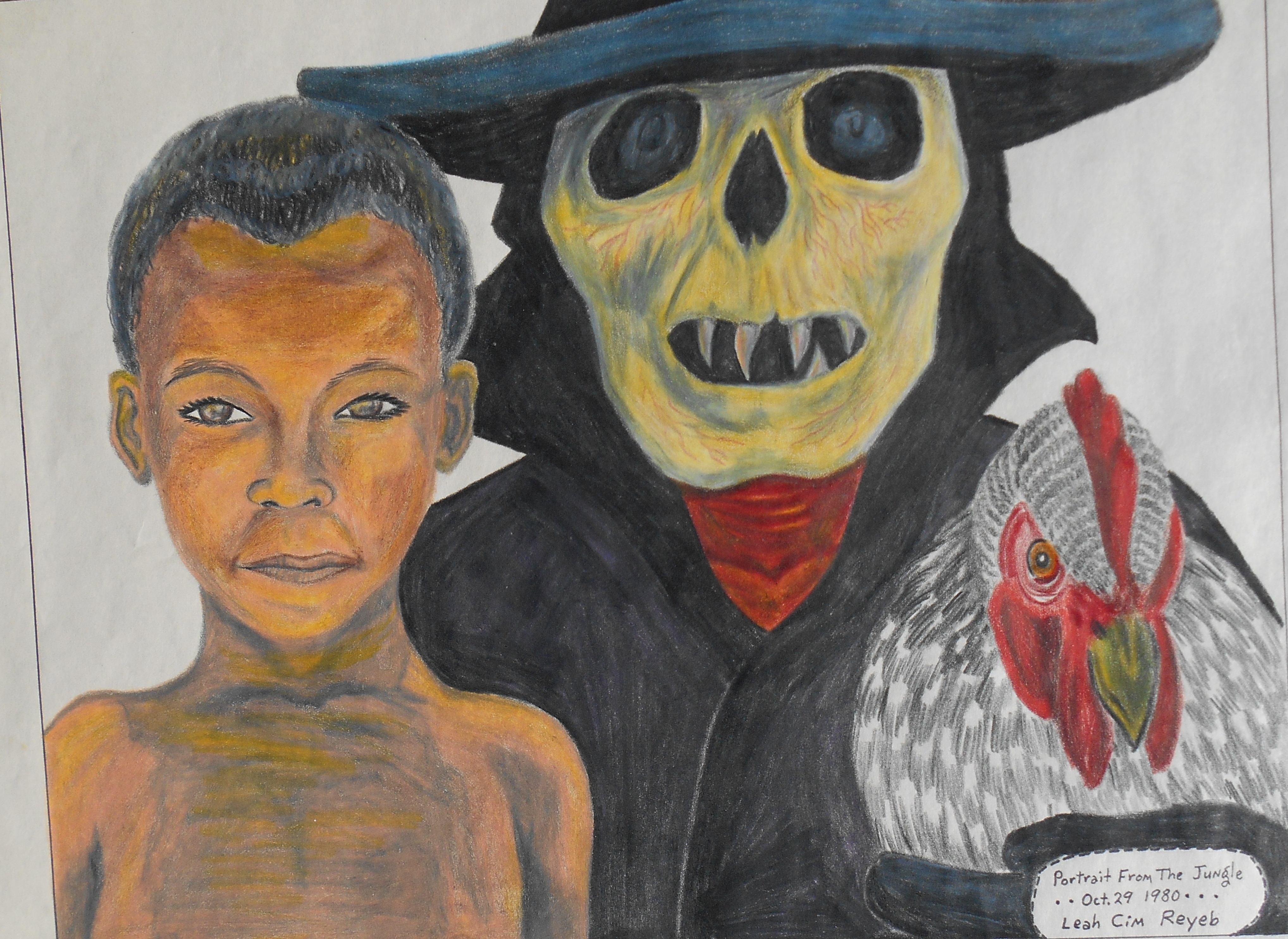
The monster inside me is basically me
And here I am all magic and purple, and I just blew the rhyme again, so this isn’t another danged verse. I drew this picture of Milt Morgan from an old school picture of me.
I often say the character in the stories is based on the Other Mike, the other boy I grew up with who was named Mike in my little home town.
But he thought like me, he acted a lot like me. He even looked like me, at least a little bit. So, if I am portraying him, I am depicting basically me.
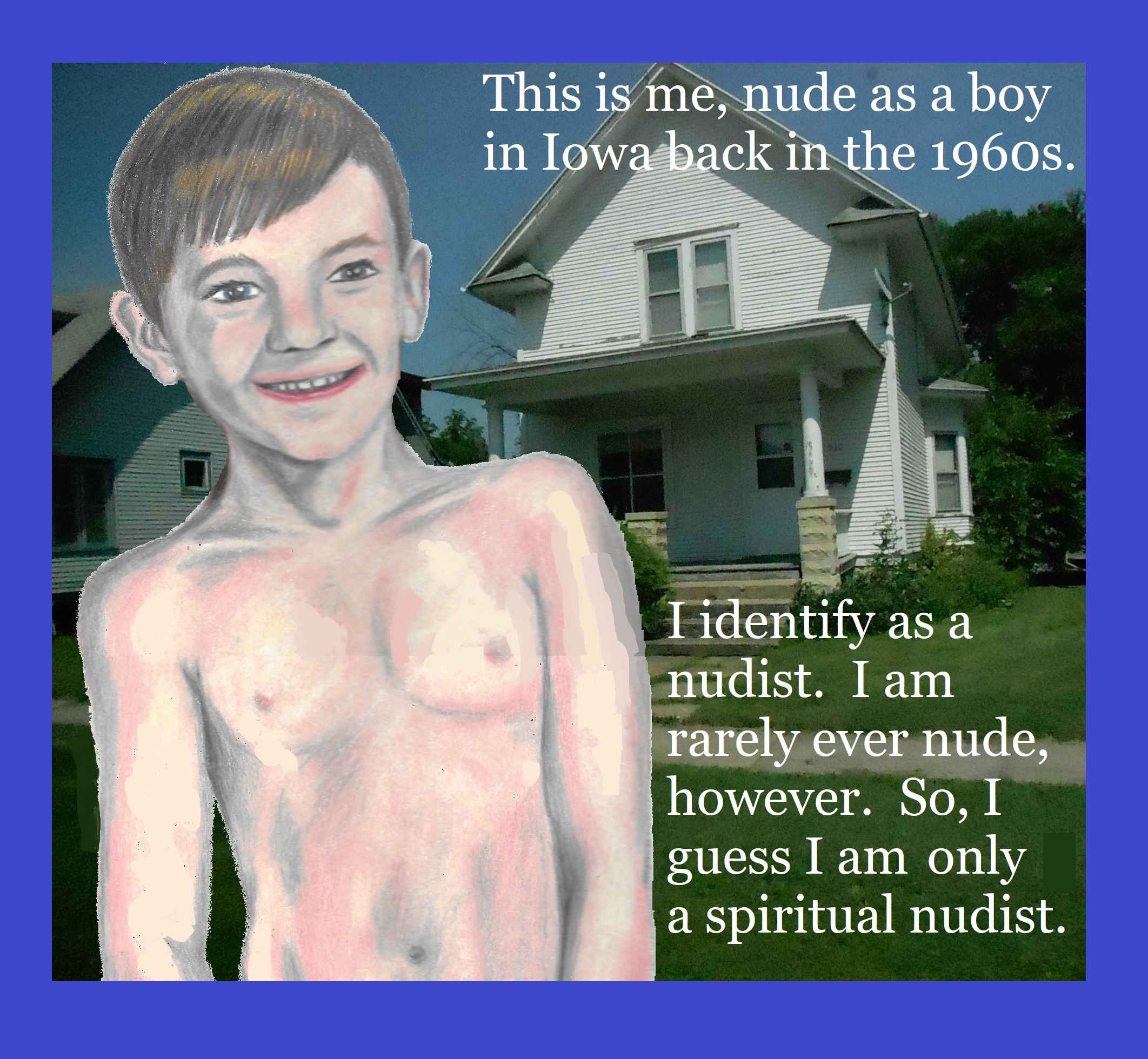
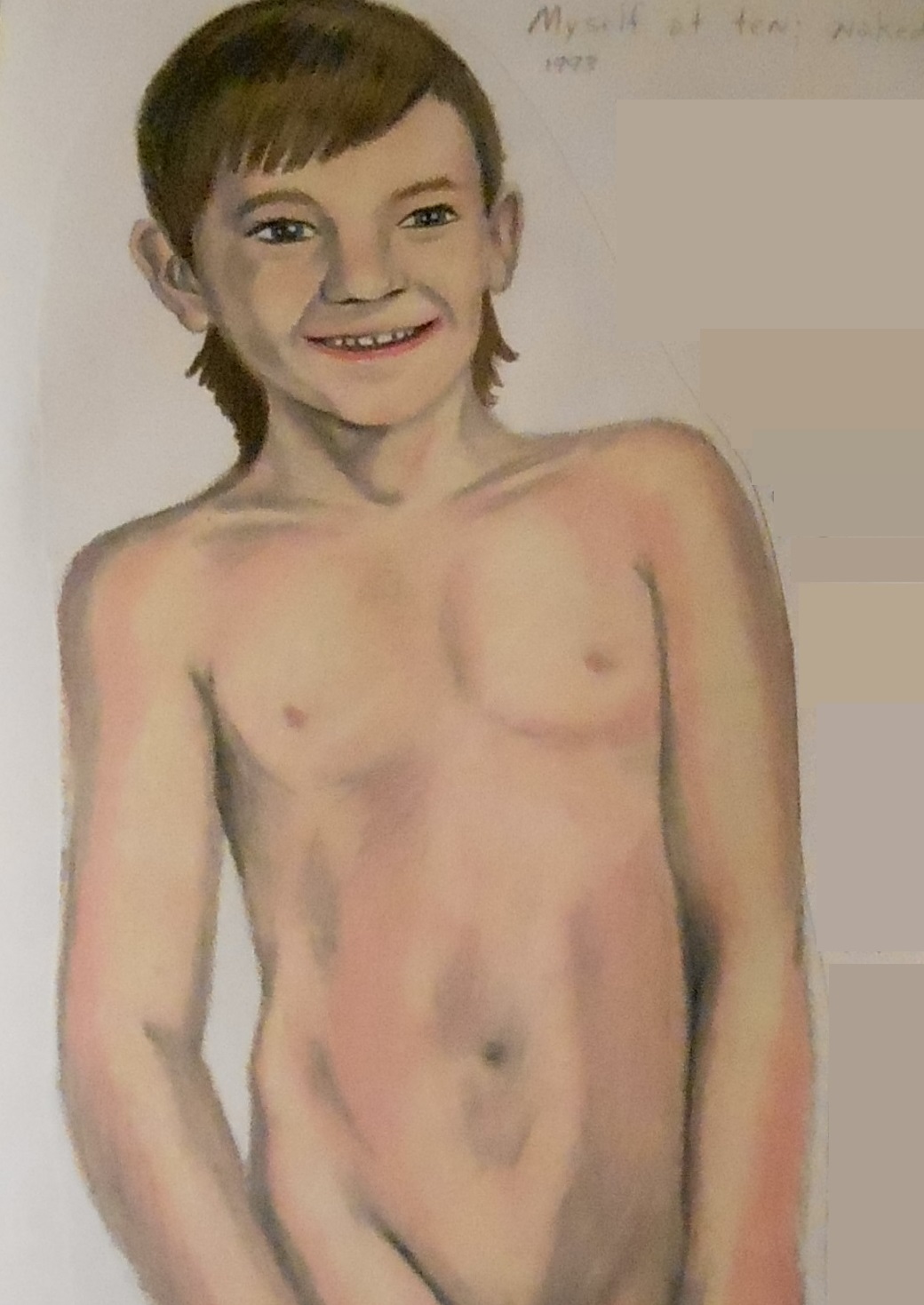
And this is the naked me, as a nudist back in childhood in Rowan, Iowa, which I never was… not like this… but still am. Because I am a writer. And writers always write about their naked selves, showing the whole world what saner and more prudish people keep secret. If they were truly smart and wanted to keep their secrets to themselves, artists would never draw or paint or write about or twizzle about themselves. In fact, they would make no art at all.
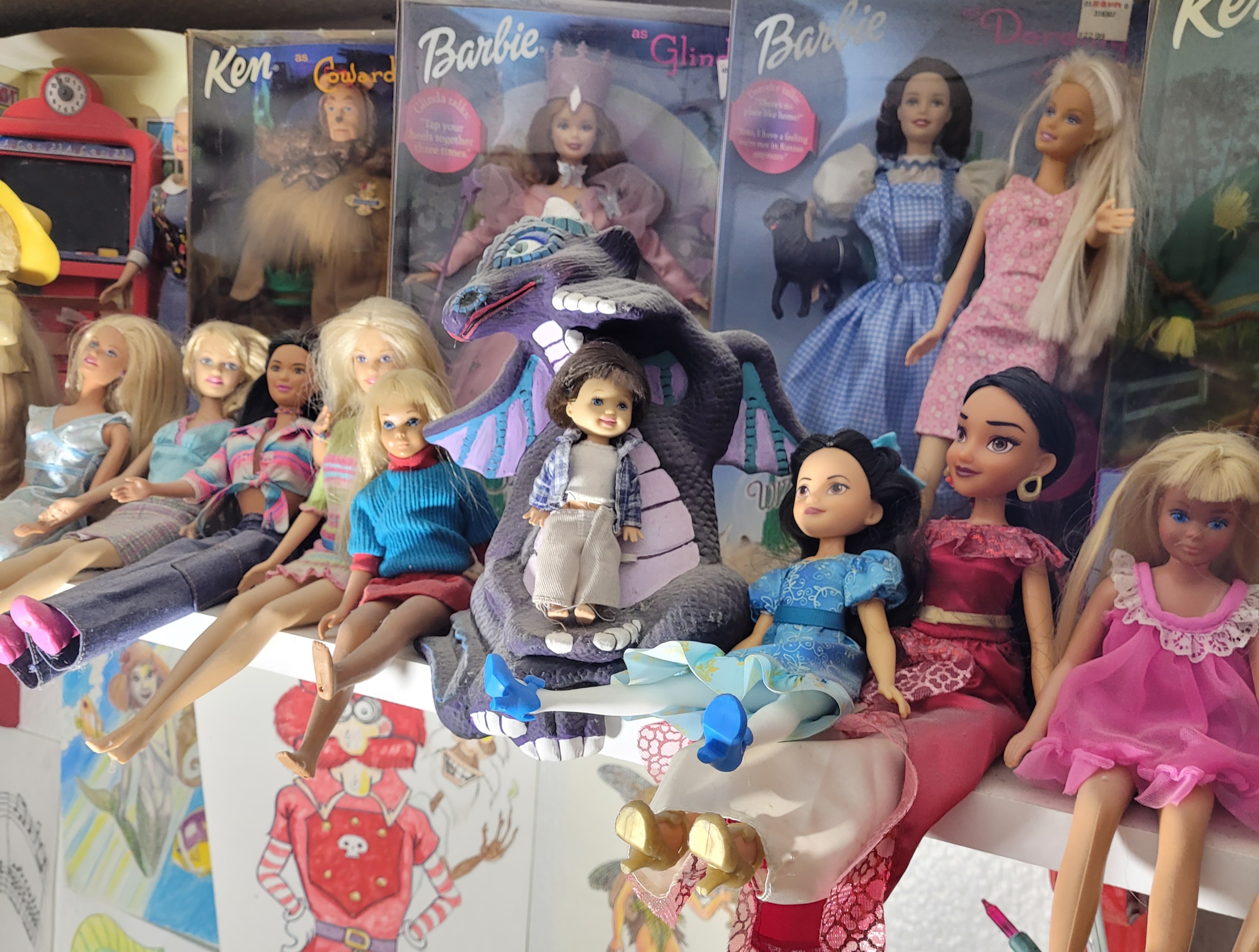
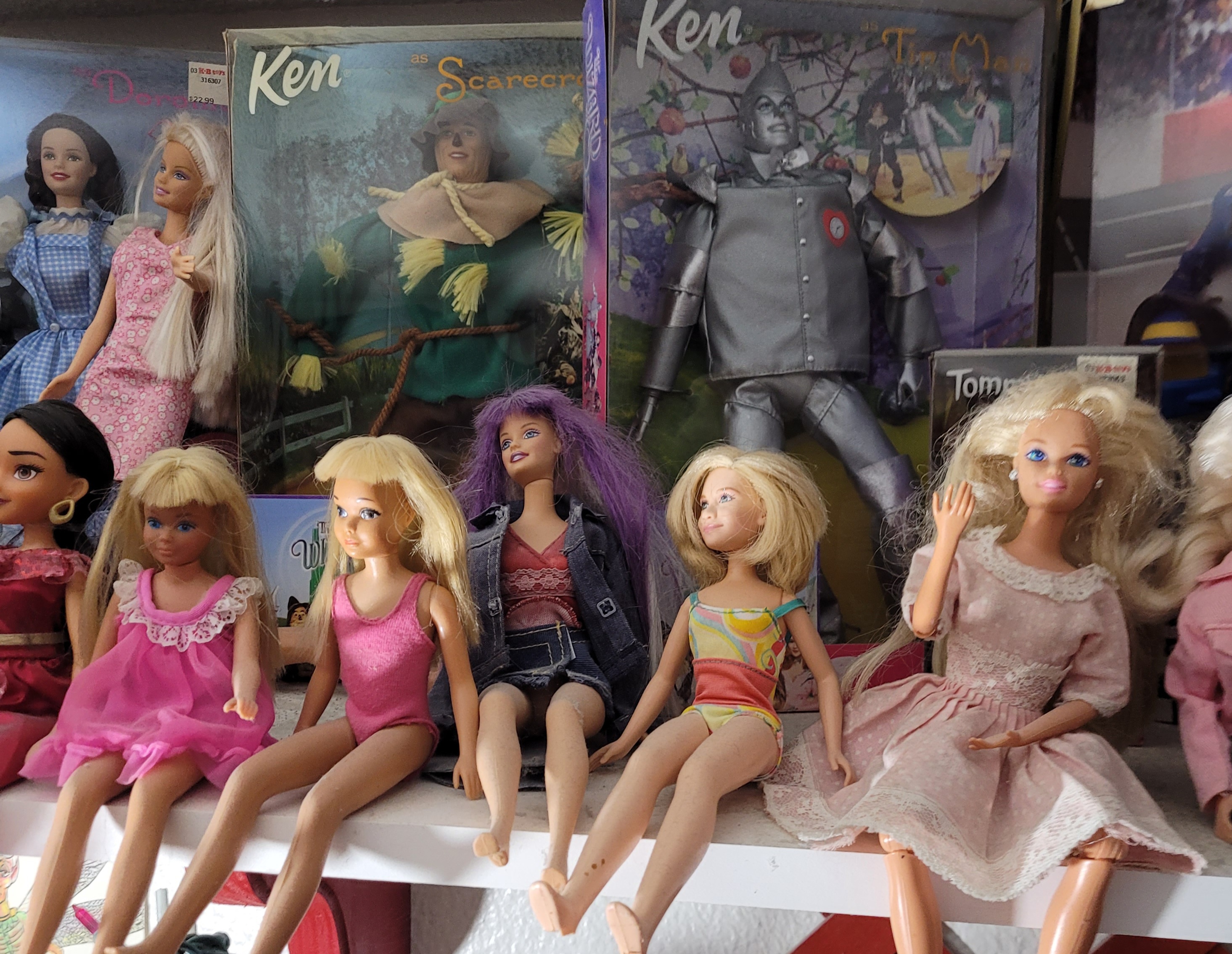
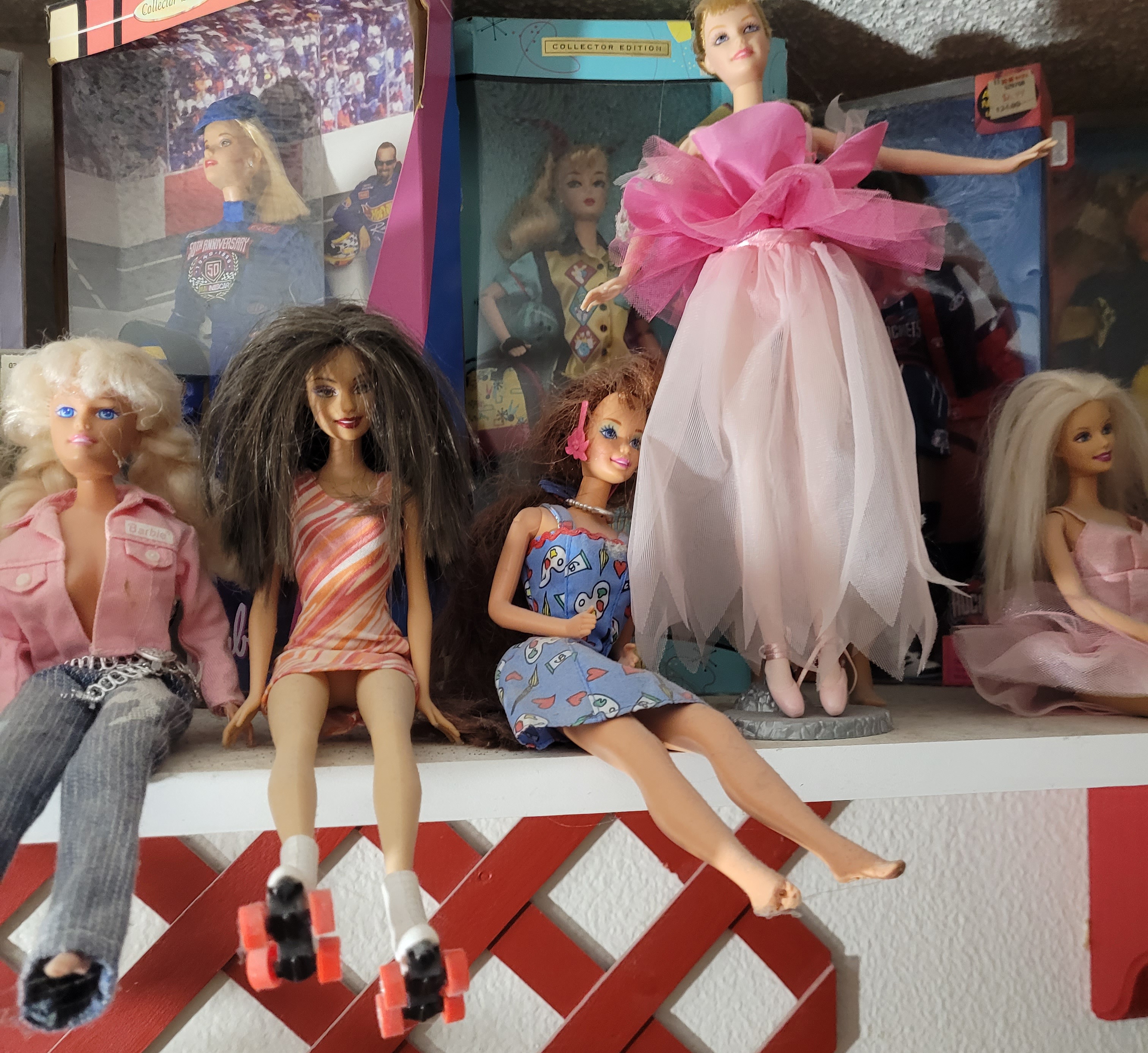
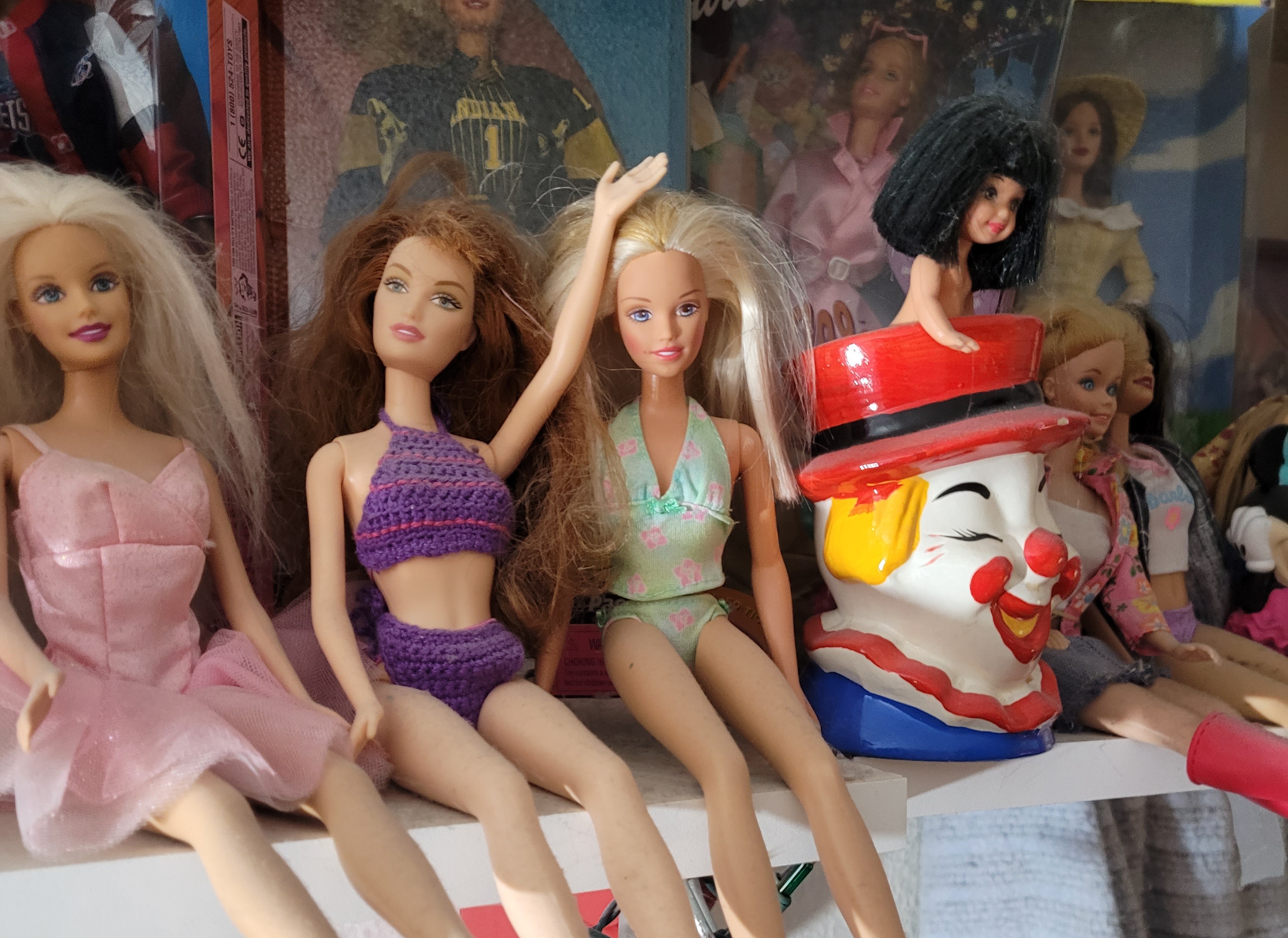
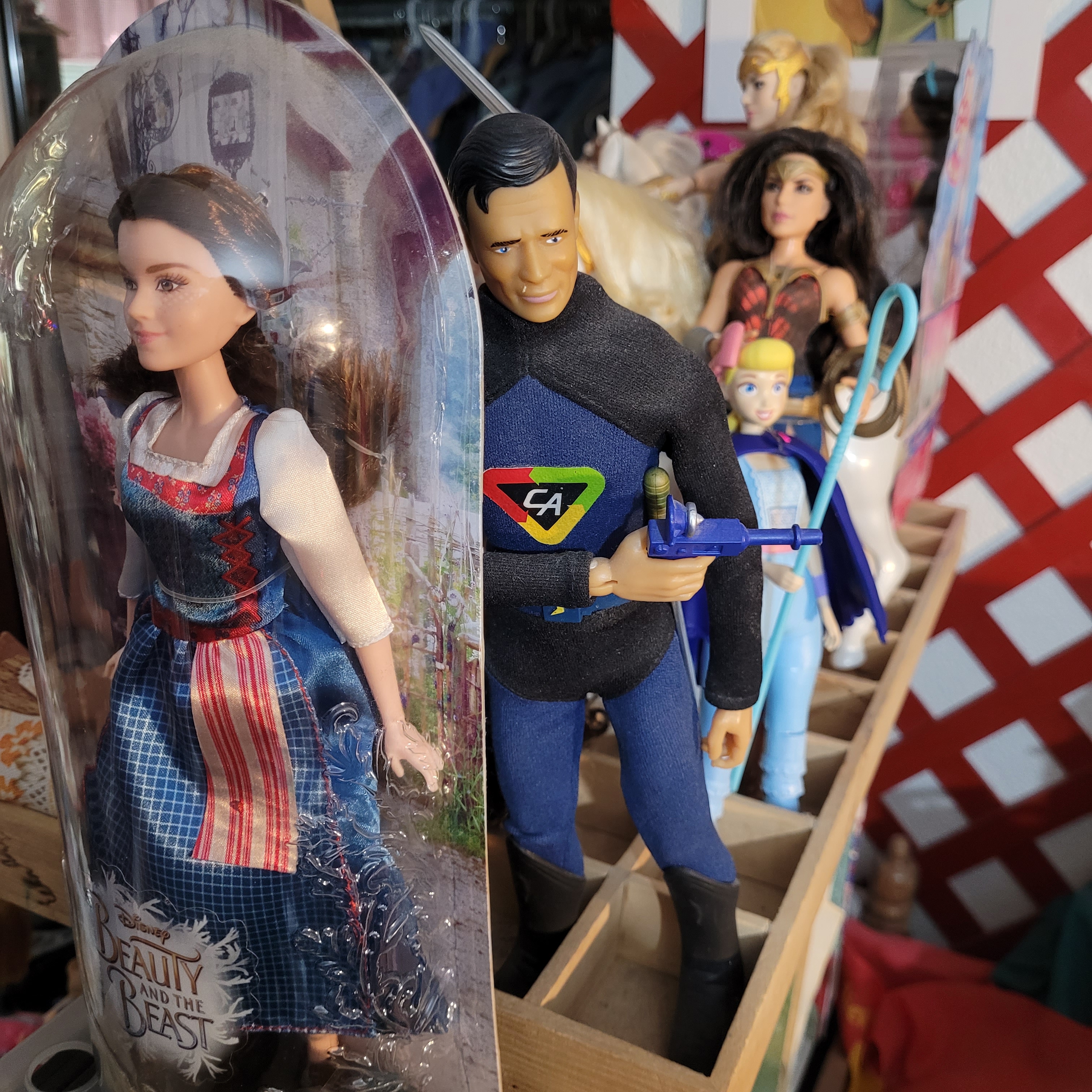
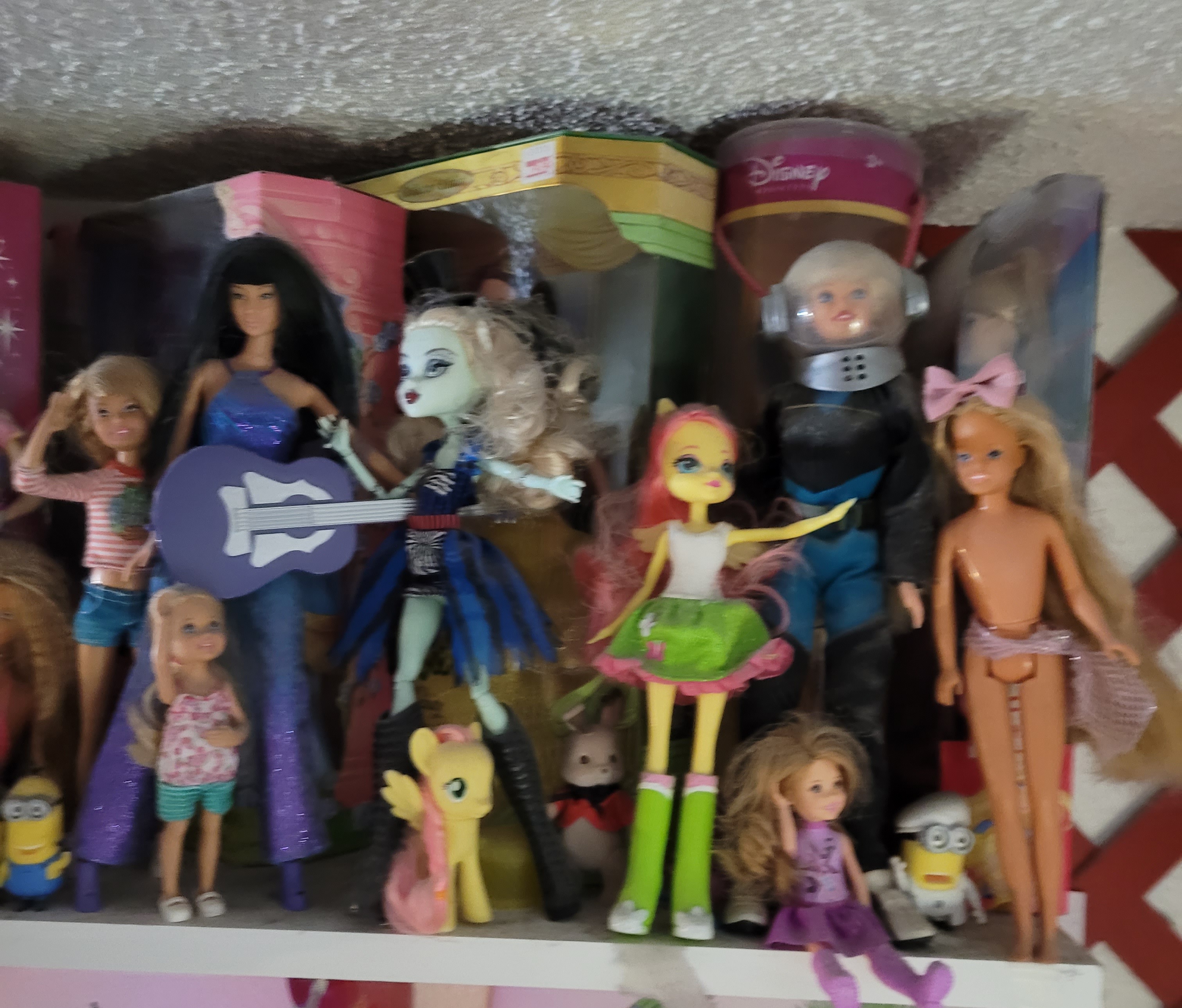
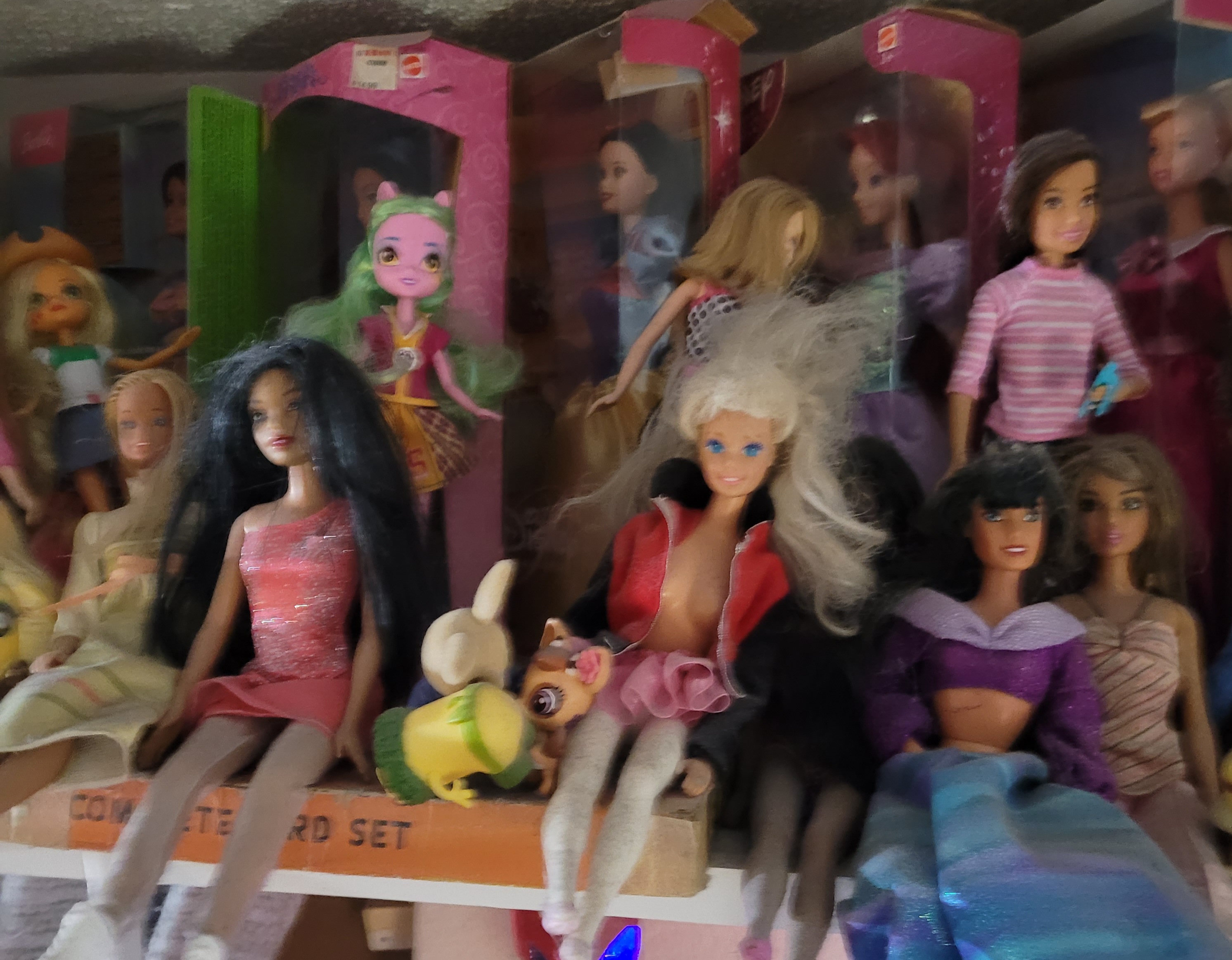
I like taking pictures of my doll collection. Those pictures are then qualified for Art Day posting. So, here are random pictures of dolls, most of which are from the doll shelf in my bedroom.
Not all of my dolls are on the doll shelf.
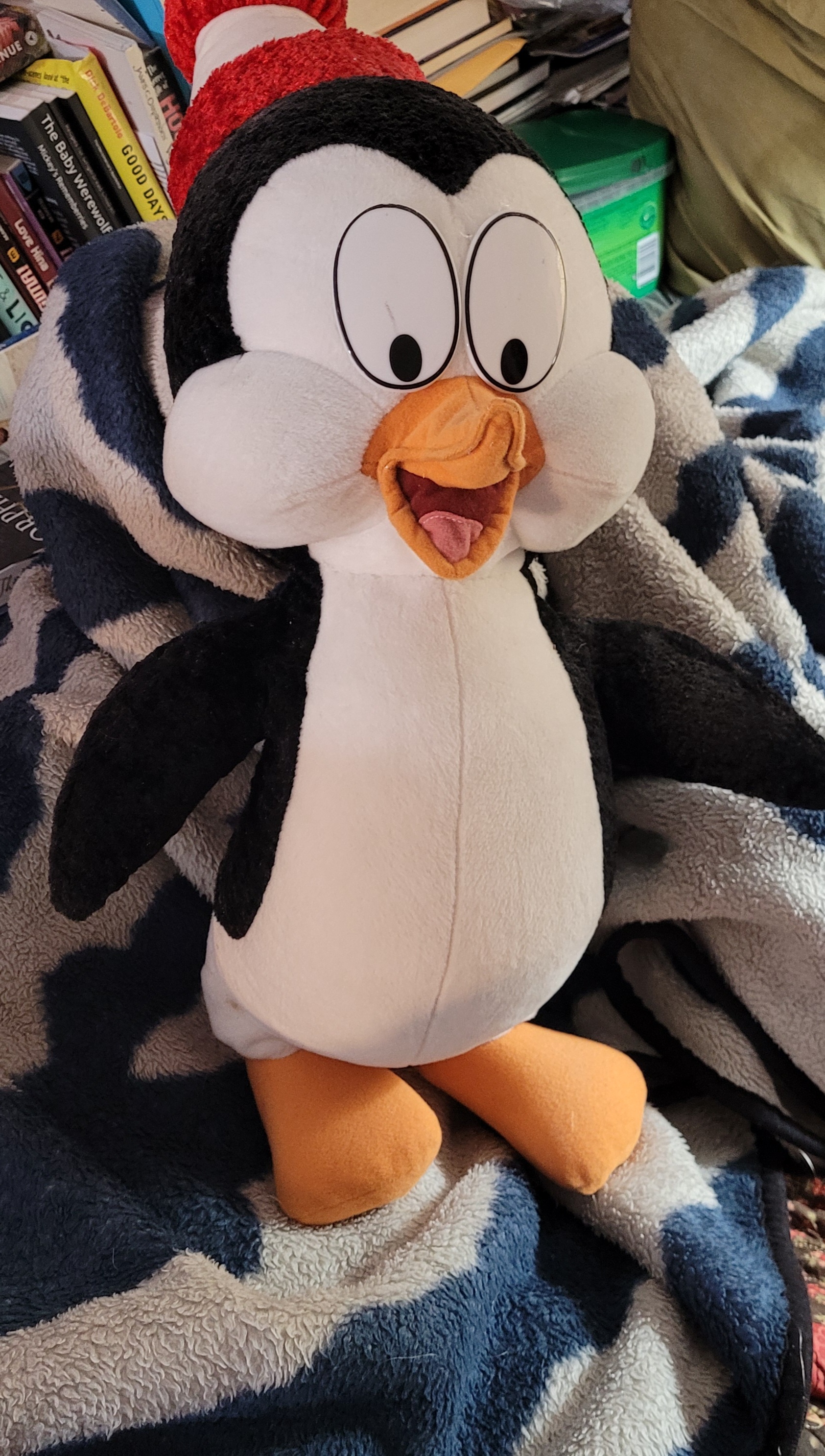
Chilly Willy here is a carnival prize that was probably won in a basketball-toss game at Six Flags and purchased by me for five dollars in a garage sale. He is technically not a doll. He is a stuffed animal.
So, let’s get back to dolls.
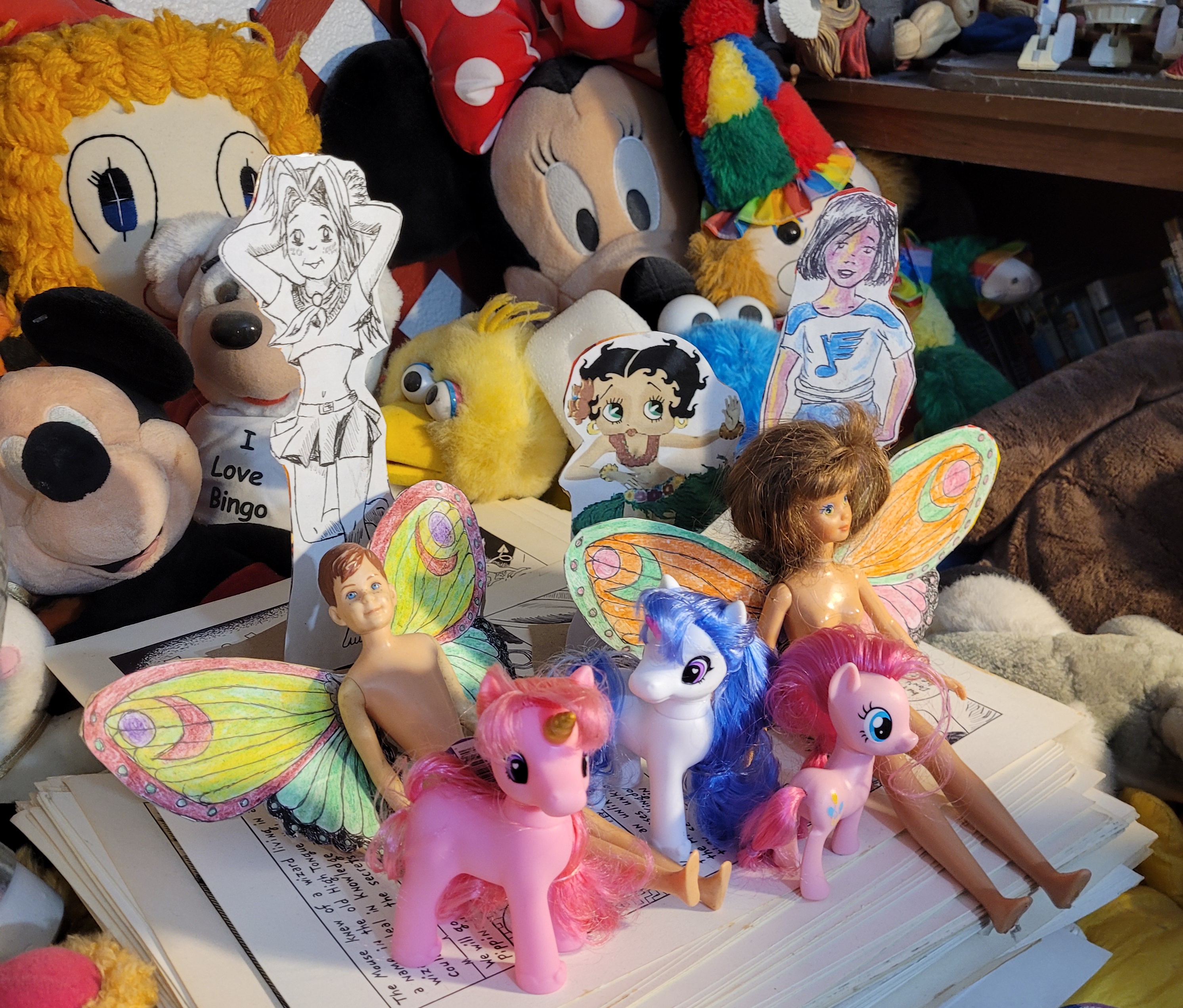
More stuffed animals, as well as ponies and paper dolls to add to this immense doll collection.Creepy Captain Action lurks behind mint=in-box Emma Watson as Belle while he looks for his lost hat. But Bo Peep and Wonder Woman are keeping an eye on him.I had to stop here as the caveman Minion had to go and start a fight with Peter Rabbit. Leave it to a mindless Minion… “Oobah Dee?” “Sorry, boss.”
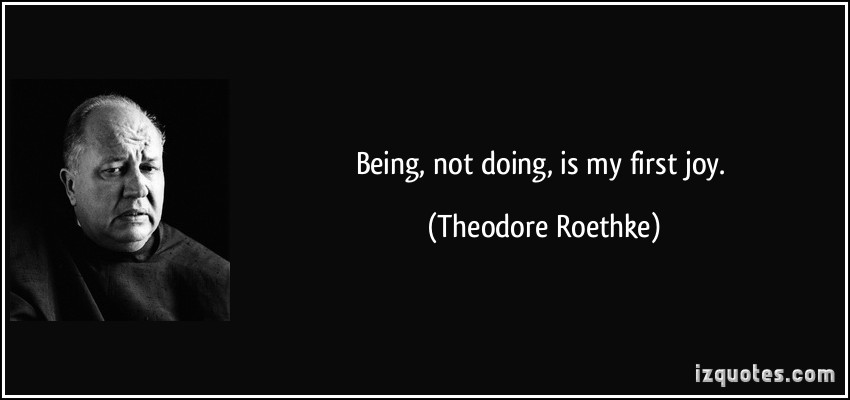
The classic line from the visionary poet Theodore Roethke;
**** This is a look back at an essay from 2017****
But the truth is, before you can BE you must first BECOME.
I know what you are probably thinking. “What is this idiot rambling on about now?”
Well, sometimes you simply have to spout a lot of love and hoo-haw and just pretend it means something. That is the core, I think, of what philosophy is all about.
But maybe a list of what I have already become will get the idea knitting itself together. You know, a list of the things I can already just BE.
I have already become college educated. I have a BA in English and an MAT in Education (Master of the Art of Teaching). Those letters my college years bestowed upon me are only an “N” short of being an anagram for BATMAN. So I have almost become BATMAN.
I have also finished becoming a teacher. In fact, I have spent 31 years becoming a teacher. I have gotten so teacherfied over the years that I am actually now becoming a retired teacher. I haven’t learned the art of retired teacher yet. It is still gonna take a bit of practice to start getting it right. But I can get a kid to sit down and shut up with just a look. I can read the mind of a glum-faced student and know we are about to have a bad day. And I always know when to tell a really awful joke so that the students know their only hope of keeping their lunch down and retaining their sanity is to ask me to please get back to today’s lesson. So I can BE that, at least in theory. I am still BECOMING retired.
Why-ever would I draw myself as a naked boy? I have inexplicably weird urges sometimes.
I am a living, breathing human being. I have been that now for sixty years and eight months. I have practiced it enough that I can BE that without even thinking about it. Well, not now, just most of the time I don’t have to think about it.
But I did make a huge mistake fairly recently in applying for a chance to be a blogger for an AANR-affiliated website. Yes, that’s right, the American Association for Nude Recreation. I signed on to write about being a nudist.
I am asked to write a review of the nearest naturist park, the Bluebonnet Naturist Park in Alvord, Texas. I am hoping to find a day for a day-visit that won’t find a lot of people there. Ummm. How did I get roped into BECOMING a nudist? Is it too late to back out now? Or would that be UNBECOMING?
But most of all, I have labored long and hard at BECOMING a real writer. I have two books already published. Aeroquest and Catch a Falling Star. You can find them both on Amazon or Barnes and Noble. But don’t buy Aeroquest. Those cheap burgle-binkies don’t deserve to make any more money off of me. I have another book coming out soon from Page Publishing, Magical Miss Morgan. It is a book I am really proud of, though these foofy publishers have done nothing to help it and a lot to mess it up for me.
But, I must admit, I have just finished reading Mitch Albom’s masterpiece, The Magic Strings of Frankie Pesto. It is a miraculous, engaging read that made me laugh and made me cry and made me fall in love with the story. And it is so far beyond what I can do that I must write a review on it, maybe tomorrow, and gush praises all over it. I can only dream of BEING a writer like that. It proves to me that I have a lot more BECOMING to work on. Sorry, Ted, I am just not there yet.
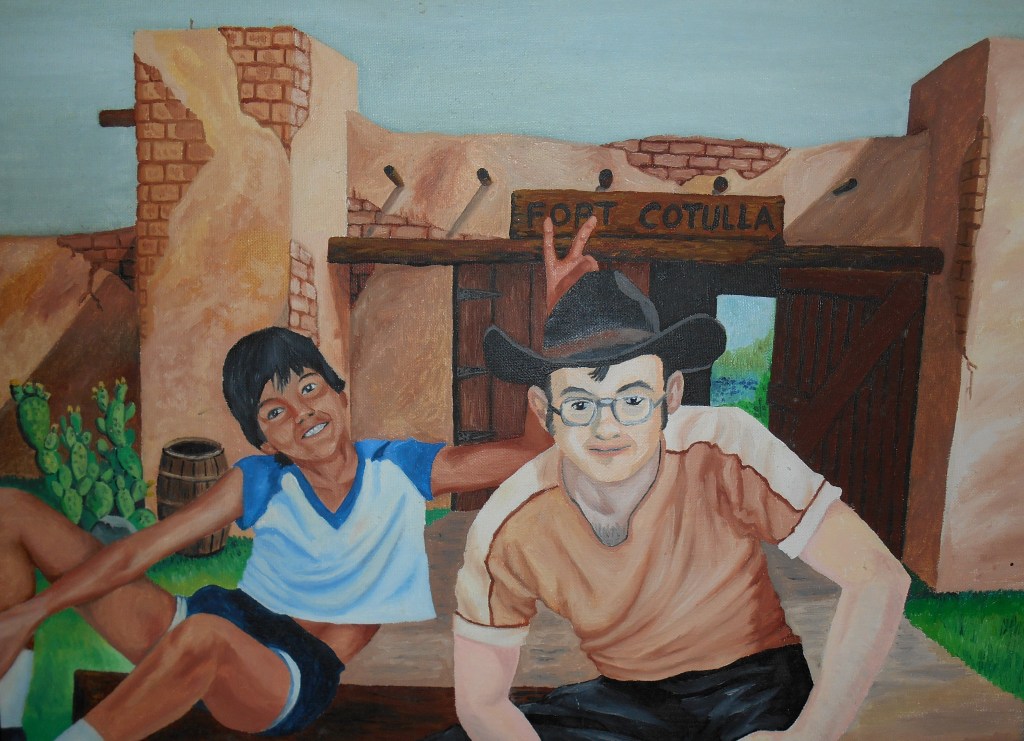
Rowan, Iowa… Not the place I was born, but the place where I got to be a stupid kid, and have the lessons of the good and god-fearing life hammered into my head hard enough to make a dent and make it stay with me for more than half a century. I got to go to grade school there. I learned to read there, especially in Miss Mennenga’s third and fourth grade class. Especially in that old copy of Treasure Island with the N.C, Wyeth illustrations in it, the one Grandma Aldrich kept in the upstairs closet in their farm house. I got to see my first naked girl there. I learned a lot of things about sex from my friends there, and none of them were true. I played 4-H softball there, and made a game-saving catch in center field… in the same game where my cousin Bob hit the game-winning home run. But those were things kids did everywhere. It didn’t make me special. There was no real magic in it.
Being a farm-kid’s kid taught me the importance of doing your chores, every day and on time. If you didn’t do them, animals could get sick, animals could die, crops could be spoiled, the chickens could get angry and petulant and peck your hands when you tried to get the eggs. Cows could get grumpy and kick the milk bucket. Cats could vow revenge if you didn’t direct a spray or two at their little faces as they lined up to watch you milk the cows. And you never knew for sure what a vengeful cat might do to you later, as cats were evil. They might jump on the keyboard during your piano recital. They might knock the turkey stuffing bowl off the top of the dryer when Mom and Grandma and several aunts were cooking Thanksgiving Dinner. And I know old black Midnight did that on purpose because he got to snatch some off the floor before it could be reached by angry aunts with brooms and dustpans. And all of it was your fault if it all led back to not doing your chores, and not doing them exactly right.
But, even though we learned responsibility and work ethic from our chores, that was not the real home-town magic either. I wasn’t technically a real farm kid. Sure, I picked up the eggs in the chicken house at Grandpa and Grandma Aldrich’s farm more than once. And I did, in fact, help with milking machines and even milking cows by hand and squirting cats in the faces at Uncle Donny’s farm. I walked beans, going up and down the rows to pull and chop weeds out of the bean fields at Uncle Larry’s farm. I drove a tractor at Great Uncle Alvin’s farm. But I didn’t have to do any of those things every single day. My mother and my father both grew up on farms. But we lived in town. So, my work ethic was probably worth only a quarter of what the work ethic of any of my friends in school was truly worth. I was a bum kid by comparison. Gary G. and Kevin K, both real farm kids and older than me, explained this to me one day behind the gymnasium with specific examples and fists.
Being a farm kid helped to forge my character. But that was really all about working hard, and nothing really to do with magic.
I truly believe the real magic to be found in Rowan, Iowa, my home town, was the fact that it was boring. It was a sleepy little town, that never had any real event… well, except maybe for a couple of monster blizzards in the 60’s and 70’s, and the Bicentennial parade and tractor pull on Main Street in 1976, and a couple of costume contests in the 1960’s held in the Fire Station where I had really worked hard on the costumes, a scarecrow one year, and an ogre the next, where I almost won a prize. But nothing that changed history or made Rowan the center of everything.
And therein lies the magic. I had to look at everything closely to find the things and strategies that would take me to the great things and places where I wanted to end up. I learned to wish upon a star from Disney movies. I learned about beauty of body and soul from the girls that I grew up with, most of them related. And I invented fantastical stories with the vivid imagination I discovered lurking in my own stupid head. I embarrassed Alicia Stewart by telling everyone that I could prove she was a Martian princess, kidnapped and brought to Earth by space pirates that only I knew how to defeat. And I learned to say funny things and make people laugh… but in ways that didn’t get me sent to the principal’s office in school. Yes, it was the magic of my own imagination. And boring Iowa farm towns made more people with magic in them than just me. John Wayne was one. Johnny Carson was one also. And have you heard of Elijah Wood? Or the painter Grant Wood? Or the actress Cloris Leachman?
Yep. We were such stuff as dreams were made on in small towns in Iowa. And that is real magic.
I have never been an attention-seeker. In the Elysian Fields of modern society, I have never really been the honeybee. I have always been the flower. I had a reputation in high school for being the quiet nerd who ends up surprising you immensely in speech class, at the science fair, or at the art show. I was the one they all turned to when everybody in the conversation had already had their chance to strut and pontificate and say dumb things, and they were finally ready to get the solution to the problem being discussed, or the best suggestion on where to begin to find it.
When I became the teacher of the class instead of the student, I had to make major changes. I had to go from being patient, quiet, and shy to being the fearless presenter, forceful, sharp as an imparter of knowledge, and able to be easily understood, even by the kids whom you couldn’t legally call stupid, but were less than smart, and not in a pleasant Forrest Gump sort of way.
Shyness is only ever overcome by determination and practice. The standard advice given is to picture your audience naked so that you are not intimidated by them. But if your audience is seventh graders, you have to be extra careful about that. They are metaphorically naked all the time, ready at a moment’s notice to explode out of any metaphorical clothing they have learned to wear to cover the things that they wish to keep to themselves about themselves. And while you want them to open up and talk to you, you don’t want the emotional nakedness of having them sobbing in front of the entire class, or throwing things at you in the throes of a mega-tantrum over their love-life and the resulting soap operas of betrayal and revenge. And you definitely don’t want any literal nakedness in your classroom. (Please put your sweat pants back on, Keesha. Those shorts are not within the limits of the dress code.) Calling attention to yourself and what you have to say, because you are being paid to do so, is a critical, yet tricky thing to do. You want them looking at you, and actually thinking about what you are saying (preferably without imagining you naked, which they will do at any sort of unintentional slip or accidental prompting.) The ones who ignore you are a problem that has to be remedied individually and can eat up the majority of your teaching time.
I trained myself to be fairly good at commanding the attention of the room.
But now that I am retired, things have changed. I can still command attention in the room, which I proved to myself by being a successful substitute teacher last year. But I no longer have a captive audience that I can speak to five days a week in a classroom. Now my audience is whoever happens to see this blog and is intrigued enough by the title and pictures to read my words.
Now that I am retired and only speaking to the world at large through writing, I am ignored more than ever before. Being ignored is, perhaps, the only thing I do anymore. It is the new definition of Mickey. Mickey means, “He who must be ignored. Not partially, but wholly… and with malice.”
I put my blog posts on Facebook and Twitter where I know for a fact that there are people who know me and would read them and like them if they knew that they were there. But the malevolent algorithms on those social media sites guarantee that none of my dozens of cousins, old school friends, and former students will see them. Only the single ladies from Kazakhstan and members of the Butchers Union of Cleveland see my posts. Why is this? I do not know. Facebook and Twitter ignore me when I ask.
My books, though liked by everybody who has actually read and responded to them, are lost in a vast ocean of self-published books, most of which are not very good and give a black eye to self-published authors in general. I recently got another call from I-Universe/Penguin Books publishers about Catch a Falling Star, the one book I still have with them. They are concerned that my book, which is on their Editor’s Choice list, is not performing as well as their marketing people think it should. But to promote it, I would have to pay four hundred dollars towards the marketing campaign, even though they are already subsidizing it by fifty percent. They tell me they believe in my book. But apparently not enough to pay for 100% of the promotion.
I have decided to invest in a review service that will cost me about twenty dollars a month. But my confidence is not high. The last time I paid somebody to review a book, they reviewed a book with the same title as mine from a different author. That service still owes me money.
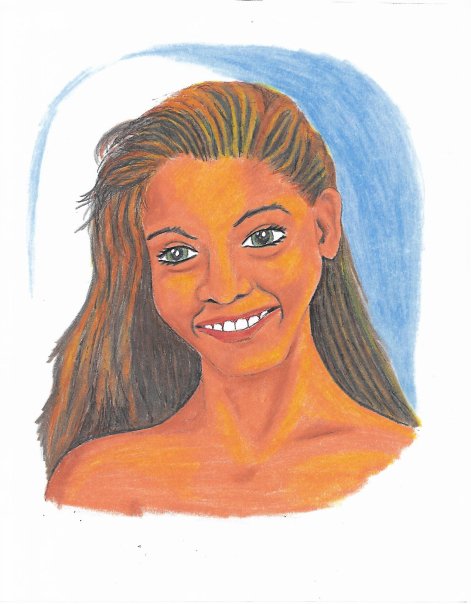
But the only reason it is a problem that I am being thoroughly ignored these days is that an author needs to be read to fulfill his purpose in life. Maybe pictures of pretty girls in this post will help. But, even if they don’t, well, I had their attention once upon a time. And since my purpose as a teacher is already fulfilled, perhaps that will be enough for one lifetime.
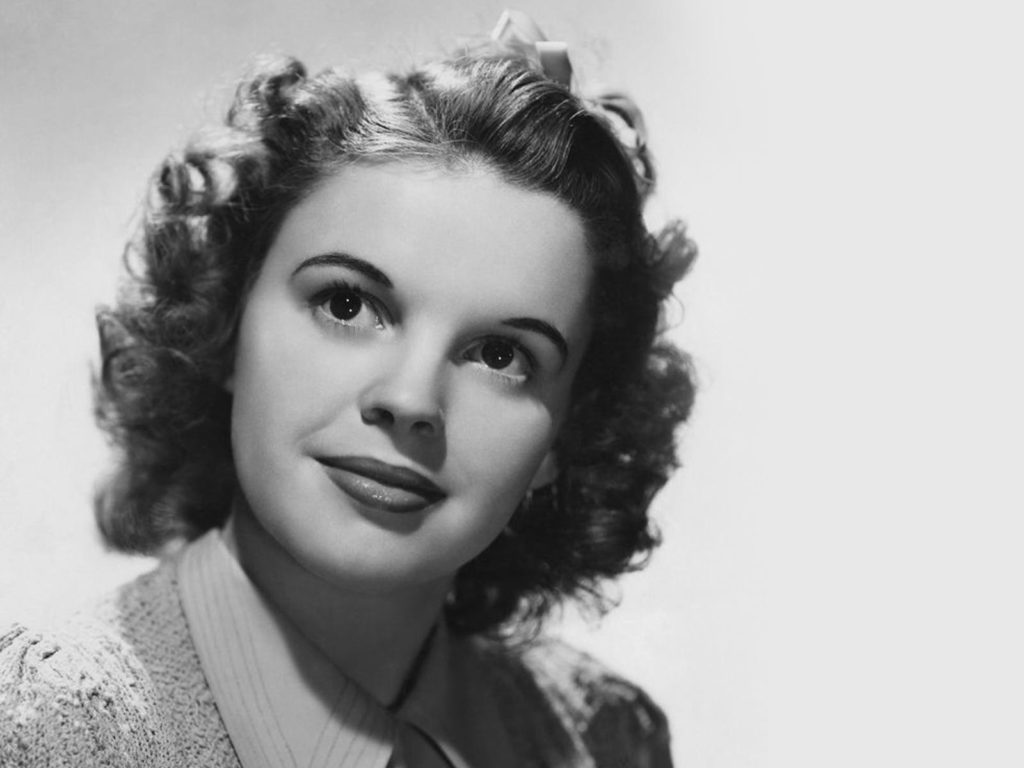
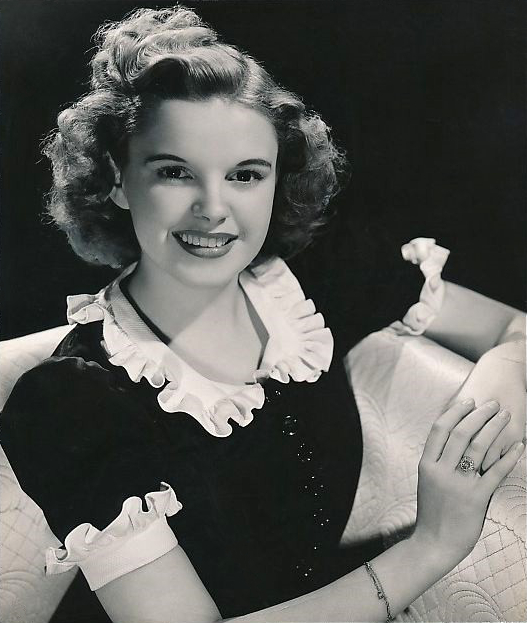
She is older than both my mother and my father. In fact, if she were alive today, if she hadn’t died young when I was thirteen, she would be 101, passing the century mark. She was born in Grand Rapids, Minnesota in 1922.
And even though that’s right next door to where I was born in Mason City, Iowa, we were never really neighbors. Our families never met in person, and didn’t know diddly-boo about each other.
But she had a profound impact on our lives. And, boy! Could she ever sing and dance!
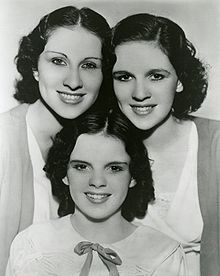
The Singing Gumm Sisters.
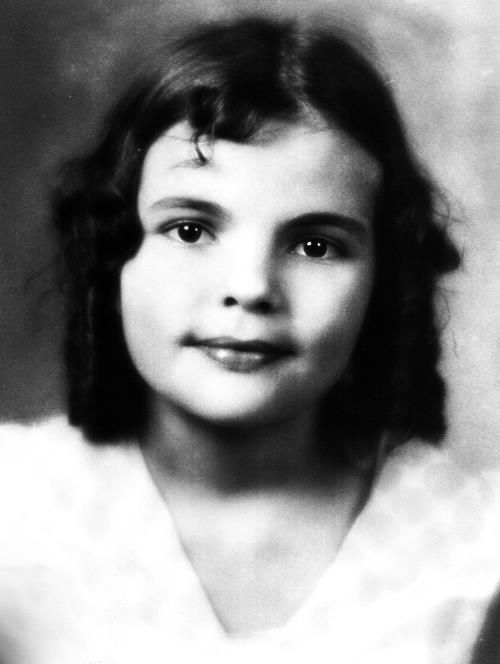
A little bit older Frances Gumm
I don’t know why she ever felt that way, but Frances from childhood onward was always desperate to not be seen as fat.
She took pills to keep the weight off. She eventually had to take pills to sleep at night. Pills would make her suffer through most of her life. In fact, pills would eventually take her life.
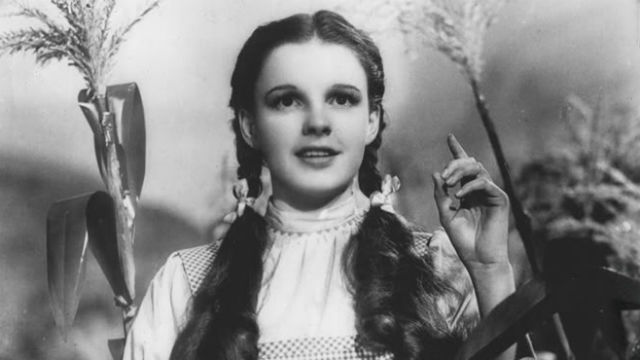
But Frances Gumm would have an impact on my life. Frances would have an impact on my parents’ generation through the movie theater, back when you paid a dime to watch a movie projected on a white sheet tacked up on the Rowan firehouse wall. And she had an impact on my generation when we watched her on TV, mostly in black and white, like we saw Meet Me in St. Louis. But also around Thanksgiving time. That movie they played every year.
Yes, Frances was a movie star.
But she didn’t go by the name she was born with in the movies.
And, boy! Could she ever sing!
And now that I am old and fragile, that song can make me cry. Like it did just now. And why?
Because Frances Gumm taught me something important when I was a little boy. Something that stuck with me for a lifetime.
While it’s true that there is no place like home, we are allowed to think about what is over the rainbow… and even to go there… and back again.
And I owe Frances for that memory. Especially because she had to struggle so hard to give me that. Frances, I will always love you for it.
Yes, this post is a shameless promotion. But this is a good book that not enough people are reading to truly appreciate that fact. When I was a boy in the 1960’s, there really was an old German lady who lived in a small tar-papered house, all ginger-brown in color, which we all called the Gingerbread House. She really did love to give out sweets and cookies and popcorn balls to the kids in our town. And she really did love to talk to people and tell them little stories.
Grandma Gretel Stein
Her name, in real life, was Marie Jacobson. She was, in fact, a survivor of the holocaust. She had a tattoo on her right forearm that I saw only one time. Our parents told us what the tattoo meant. But there were no details ever added to the story. Mrs. Jacobson doted on the local children. She regularly gave me chocolate bars just because I held the door for her after church. But she was apparently unwilling to ever talk about World War II and Germany. We were told never to press for answers. There was, however, a rumor that she lost her family in one of the camps. And I have always been the kind that fills in the details with fiction when the truth is out of reach.
I based the character of Grandma Gretel on Mrs. Jacobson. But the facts about her secret life are, of course, from my imagination, not from the truth about Mrs. Jacobson’s real life.
Marie Jacobson cooked gingerbread cookies. I know because I ate some. But she didn’t talk to fairies or use magic spells in cooking. I know because the fairies from the Hidden Kingdom in Rowan disavowed ever talking to any slow one but me. She wasn’t Jewish, since she went to our Methodist Church. She wasn’t a nudist, either. But neither were my twin cousins who the Cobble Sisters, the nude girls in the story, are fifty percent based on. A lot of details about the kids in my book come from the lives of my students in Texas. The blond nudist twins were in my class in the early eighties. And they were only part-time nudists who talked about it more than lived it.
Miss Sherry Cobble, a happy nudist.
But the story itself is not about nudists, or Nazis, or gingerbread children coming to life through magic. The story is about how telling stories can help us to allay our fears. Telling stories can help us cope with and make meaning out of the most terrible things that have happened to us in life. And it is also a way to connect with the hearts of other people and help them to see us for who we really are. And that was the whole reason for writing this book.
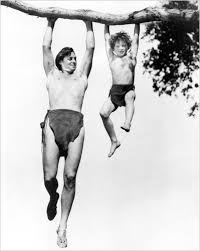
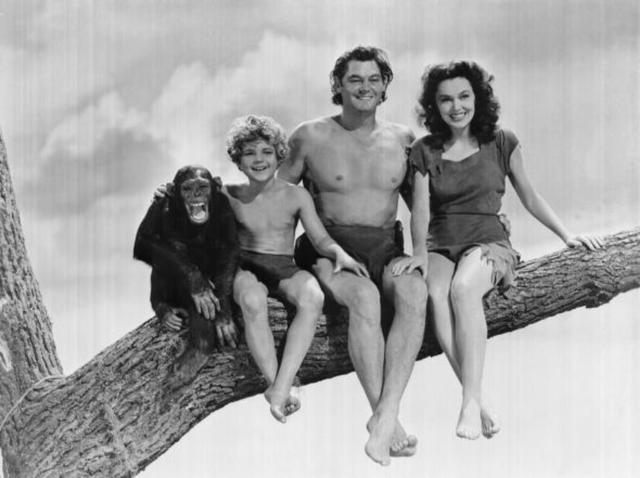
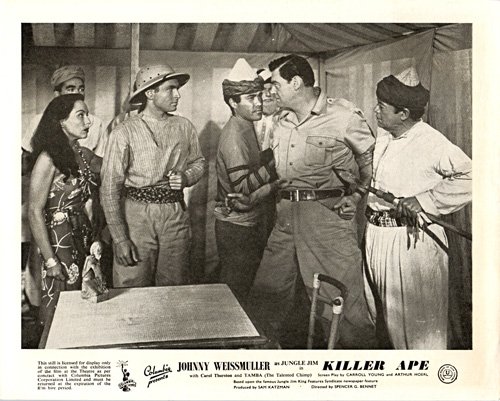
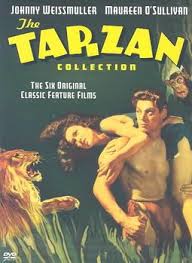
There was a time when Tarzan was one of the ruling heroes of my boyhood fantasies of power and self-fulfillment. And, while Tarzan was a cartoon show on Saturday morning, comics by Burne Hogarth, movies in the theater in color with Mike Henry, or a weekly series on TV with Ron Ely, he was always Johnny Weissmuller to me. Weissmuller who played both Tarzan and Jungle Jim in the Saturday afternoon black-and-white movies.
I have to admit, I didn’t identify with the character of Tarzan as much as I thought of myself like the character “Boy”, played by Johnny Sheffield in movies like “Tarzan Finds a Son”. It was a significant part of my boyhood to imagine myself being like Boy, free from practically all restraints, able to gad about the dangerous jungle nearly naked with monkey pals and no fear. If I got into trouble by believing my skills were greater than they really were, I would save myself with ingenuity, and, barring that, Tarzan would rescue me. And, believe it or not, sometimes there were fixes that Tarzan got into that he needed me and Cheetah to be creative and get him out of. I knew in my heart that one day real life would be like that, especially once I grew into Tarzan and stopped being just Boy. That idea was in my head so loudly that several times I went to Bingham Park Woods, stripped down, and played Boy in the Jungle.
As in the previous essay about Heroes of Yesteryear, I learned important things from Johnny Weissmuller on Saturday TV. He taught me that all you really needed, even in the darkest jungles of Africa, was confidence and courage. You could stand up to any deadly danger without the protection of any armor, practically naked, in fact, if only you had that heroic goodness of heart. The little boy I was then still believes that whole-heartedly even in the aging body of an old man.
So, Tarzan continues to live in my memory, a part of me, an essential part of my education. He is me and I am he. But only in my mind. Me in a loincloth, swinging on a vine now… and probably going splat like an overripe melon on the jungle floor… well, that is too ridiculous to even imagine being real anymore. Yet he lives on in me. And he battles the metaphorical leopard-people of modern life through me. Unarmored. Confident. And unafraid.




The Real Magic in that Old Home Town
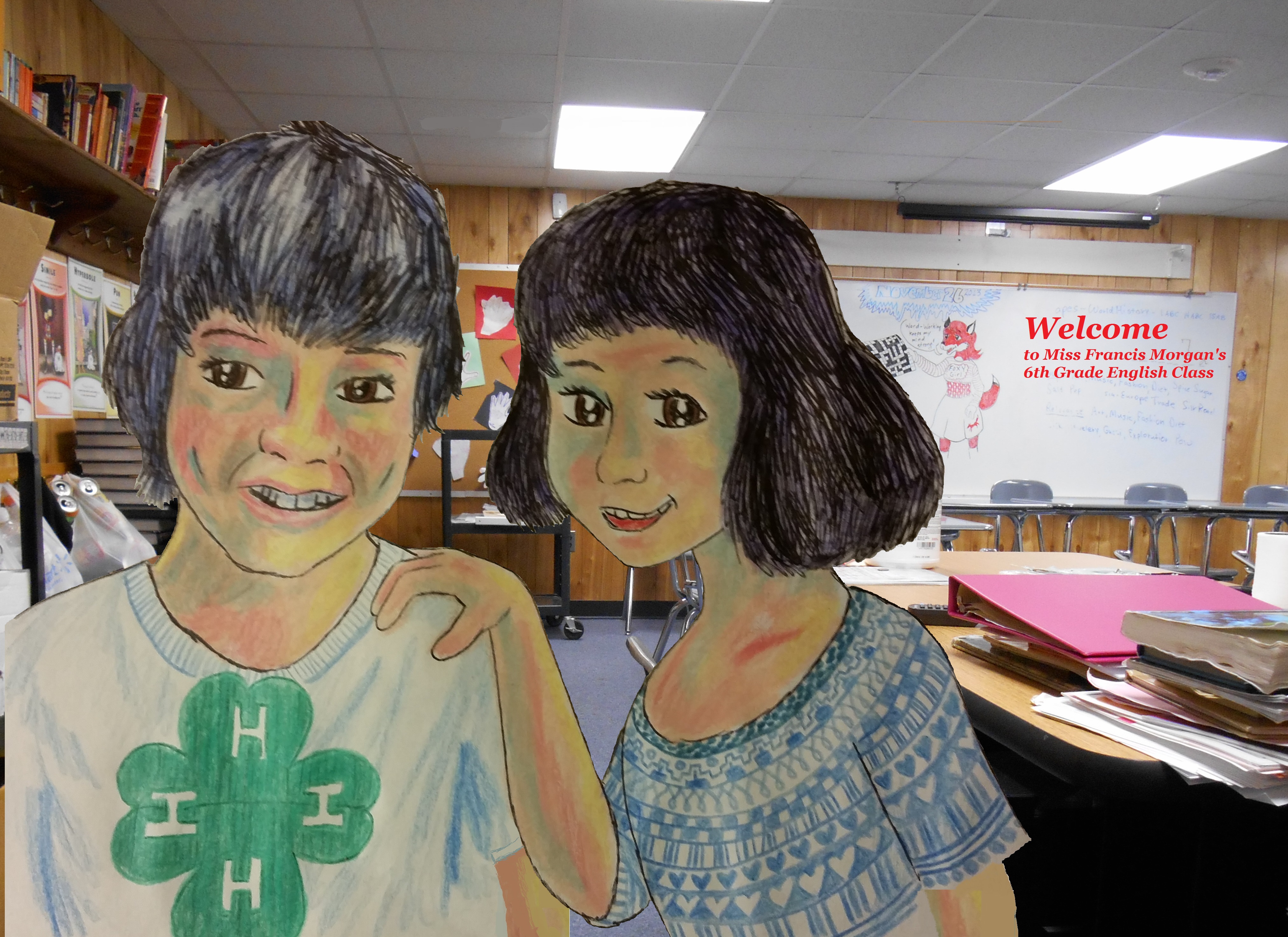
Rowan, Iowa… Not the place I was born, but the place where I got to be a stupid kid, and have the lessons of the good and god-fearing life hammered into my head hard enough to make a dent and make it stay with me for more than half a century. I got to go to grade school there. I learned to read there, especially in Miss Mennenga’s third and fourth grade class. Especially in that old copy of Treasure Island with the N.C, Wyeth illustrations in it, the one Grandma Aldrich kept in the upstairs closet in their farm house. I got to see my first naked girl there. I learned a lot of things about sex from my friends there, and none of them were true. I played 4-H softball there, and made a game-saving catch in center field… in the same game where my cousin Bob hit the game-winning home run. But those were things kids did everywhere. It didn’t make me special. There was no real magic in it.
Being a farm-kid’s kid taught me the importance of doing your chores, every day and on time. If you didn’t do them, animals could get sick, animals could die, crops could be spoiled, the chickens could get angry and petulant and peck your hands when you tried to get the eggs. Cows could get grumpy and kick the milk bucket. Cats could vow revenge if you didn’t direct a spray or two at their little faces as they lined up to watch you milk the cows. And you never knew for sure what a vengeful cat might do to you later, as cats were evil. They might jump on the keyboard during your piano recital. They might knock the turkey stuffing bowl off the top of the dryer when Mom and Grandma and several aunts were cooking Thanksgiving Dinner. And I know old black Midnight did that on purpose because he got to snatch some off the floor before it could be reached by angry aunts with brooms and dustpans. And all of it was your fault if it all led back to not doing your chores, and not doing them exactly right.
But, even though we learned responsibility and work ethic from our chores, that was not the real home-town magic either. I wasn’t technically a real farm kid. Sure, I picked up the eggs in the chicken house at Grandpa and Grandma Aldrich’s farm more than once. And I did, in fact, help with milking machines and even milking cows by hand and squirting cats in the faces at Uncle Donny’s farm. I walked beans, going up and down the rows to pull and chop weeds out of the bean fields at Uncle Larry’s farm. I drove a tractor at Great Uncle Alvin’s farm. But I didn’t have to do any of those things every single day. My mother and my father both grew up on farms. But we lived in town. So, my work ethic was probably worth only a quarter of what the work ethic of any of my friends in school was truly worth. I was a bum kid by comparison. Gary G. and Kevin K, both real farm kids and older than me, explained this to me one day behind the gymnasium with specific examples and fists.
Being a farm kid helped to forge my character. But that was really all about working hard, and nothing really to do with magic.
I truly believe the real magic to be found in Rowan, Iowa, my home town, was the fact that it was boring. It was a sleepy little town, that never had any real event… well, except maybe for a couple of monster blizzards in the 60’s and 70’s, and the Bicentennial parade and tractor pull on Main Street in 1976, and a couple of costume contests in the 1960’s held in the Fire Station where I had really worked hard on the costumes, a scarecrow one year, and an ogre the next, where I almost won a prize. But nothing that changed history or made Rowan the center of everything.
And therein lies the magic. I had to look at everything closely to find the things and strategies that would take me to the great things and places where I wanted to end up. I learned to wish upon a star from Disney movies. I learned about beauty of body and soul from the girls that I grew up with, most of them related. And I invented fantastical stories with the vivid imagination I discovered lurking in my own stupid head. I embarrassed Alicia Stewart by telling everyone that I could prove she was a Martian princess, kidnapped and brought to Earth by space pirates that only I knew how to defeat. And I learned to say funny things and make people laugh… but in ways that didn’t get me sent to the principal’s office in school. Yes, it was the magic of my own imagination. And boring Iowa farm towns made more people with magic in them than just me. John Wayne was one. Johnny Carson was one also. And have you heard of Elijah Wood? Or the painter Grant Wood? Or the actress Cloris Leachman?
Yep. We were such stuff as dreams were made on in small towns in Iowa. And that is real magic.
Leave a comment
Filed under autobiography, commentary, dreaming, farm boy, farming, foolishness, goofy thoughts, humor, magic, Paffooney
Tagged as animals, cows, family, farm, farming, life, love, writing