
I am spending Thanksgiving week at home in Texas by myself, except for the dog. The rest of my family is having a Thanksgiving meal together in Iowa (hopefully, if the weather doesn’t have other plans) or on a road trip to Central Florida, a trip I was supposed to also attend. I simply cannot travel to either place. My arthritis is too bad to sit for long car rides, and in the Trump economy, school teachers can’t afford air travel. So, I had to practice being selfless once again. They needed to do these things, and I had to talk them into doing these things without me. My misfortunes can’t be allowed to ruin my family’s grace and peace, not when I can still give gifts of myself by allowing them to go and do without worrying about me.
I can’t actually say that I learned to be selfless and encouraging from Fred Rogers. He was really only one of many such teachers, a list headed by my maternal grandfather. But in a way, he is responsible for giving me the tools I use to make things like that happen.
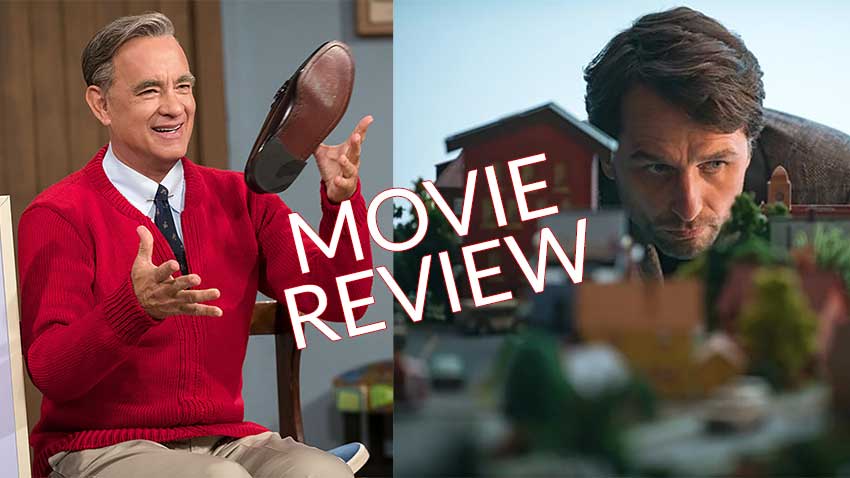
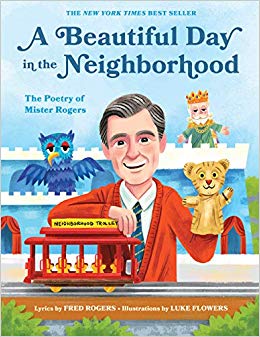
Yesterday I went to the movie “A Beautiful Day in the Neighborhood” at the Music City Mall in Lewisville. I can drive those few miles. And I freely admit to crying through a good portion of the movie. It is not really a sad movie. It is not actually a biopic. It is based on a real article in Esquire magazine by journalist Tom Junod. It is a partially fictionalized story about how the innate goodness of a man like Fred Rogers has a profound impact on the journalist, and all of the rest of us as well, through that act of caring and loving and gentle being-just-the-way-you-are. There is no doubt about it, when Tom Hanks, channeling Fred Rogers in the restaurant scene, asks for one minute of silence to think of all those people who have had a hand in making you who you are, he looks directly into the audience, he looks directly at me individually, and the entire theater is dead silent as everyone is doing exactly what the movie character is asking you to do. It was a singular moment in cinema that I have never experienced before. It touched my soul.
I left that movie theater feeling amazingly fulfilled. Was it because it was an excellent movie? It definitely was excellent. Was it because of the wonderful way Tom Hanks brought Fred Rogers back to life even though he looks nothing like him? He definitely made that happen. Or was it because the movie invoked a true angel, a once-living hand of God now gone from this world? Because Fred Rogers was that for so many kids for more than 800 episodes.
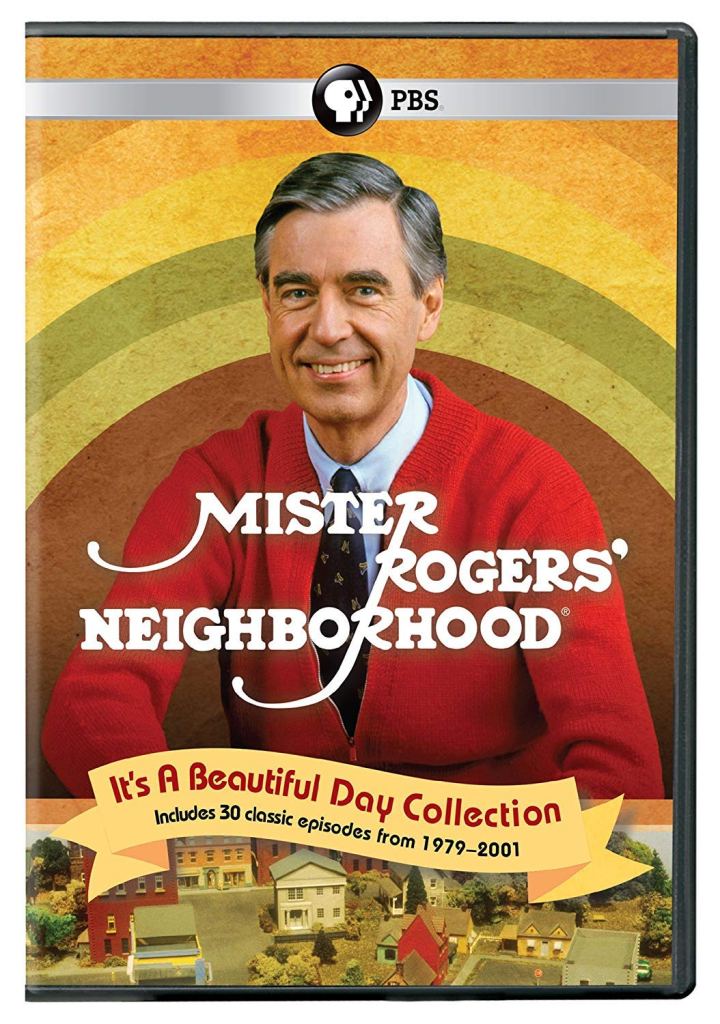
I must confess, when I was a teenager, I didn’t think much of “Mister Rogers’ Neighborhood“, though I saw some of those first black-and-white episodes, back when King Friday and Daniel Striped-Tiger were new. If I had to watch kids’ shows on PBS, which I often did because of younger siblings and cousins, I much preferred the color and the Muppets in “Sesame Street”.
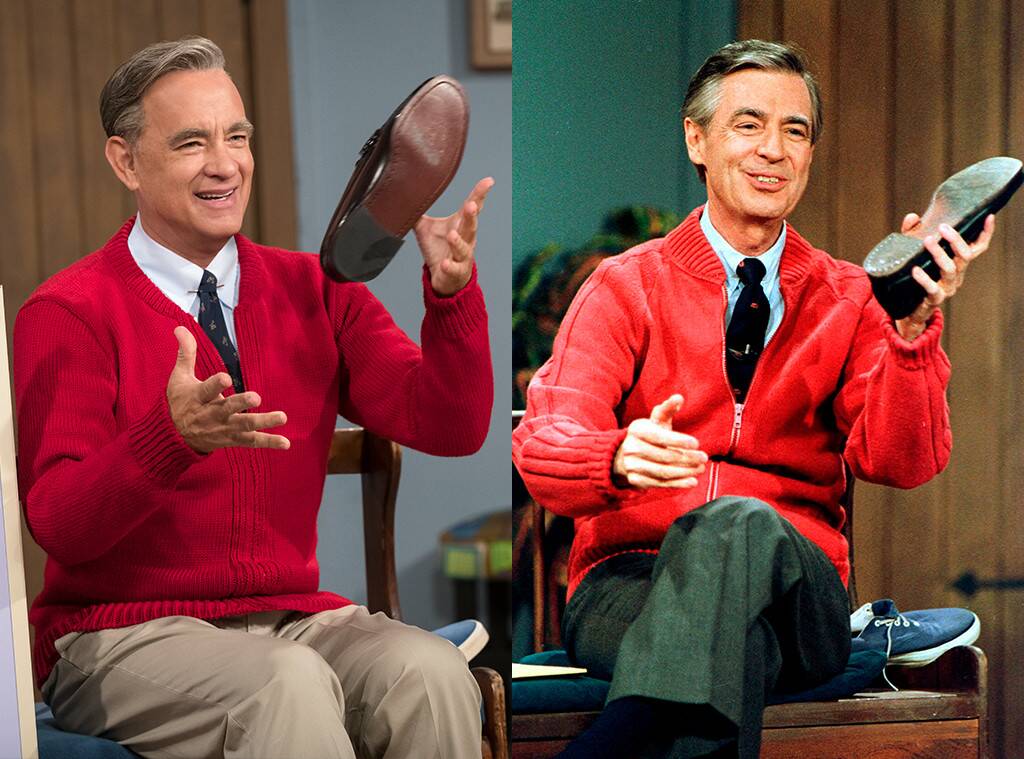
But when I had been a teacher for a few years, and had to search hard for ways to communicate and teach for use with South Texas middle-schoolers, I began to see the true genius of Fred Rogers. He never talked down to kids. He never lost patience, even when things went wrong. He was always trying to keep it simple, even when the point he was making was as metaphorical as talking about keeping a “garden in your mind”. He was understandable. He was welcoming and relentlessly nice. And it wasn’t a TV character. It was really him.
I can’t really say this was a movie that changed my life. But maybe it did. I cried silently during a large portion of it, not because of the sad parts in the movie, but because I recognized so much of myself in the journalist waking up to the need to be as real and honest and able to connect to other people as Fred Rogers always did.
So, my conclusion to this essay that may be a movie review, or possibly an homage to Fred Rogers, is really quite simple. Thank you, Mr. Rogers. I really like you, just the way you are.









Giving and Taking Stupid Advice
Let’s begin with some stupid advice. I don’t have time to write a lot today because the Princess is ill and must go see the doctor in Plano. So the advice is; Set aside time for writing and always allow plenty of time for it. You will probably notice already that I am giving you advice that I am not taking myself this morning. So don’t follow that advice. It is stupid advice. I have given it to creative writing classes for years and thought I meant it. But looking back on real life, I realize, it has never been true for me. My best ideas, my best writing, always seem to come in the middle of the pressure-cooker of daily struggle and strife. I have battled serious illness for most of my adult life. I have the luck of a man who tried to avoid letting a black cat cross his path by crashing his bicycle at the top of a hill covered in clover with only three leaves each and then rolling down the hill, under a ladder, and crashing into a doorpost which knocks the horseshoe off the top. The horseshoe lands on my stupid head with the “U” facing downward so the luck all drains out. Bad things happen to me all the time. But it makes for good writing. Tell me you didn’t at least smile at the picture I just painted in your mind. You might’ve even been unable to suppress a chuckle. I am under time pressure and misfortune pressure and the need to rearrange my entire daily schedule. So it is the perfect time to write.
This essay, however, is about bad advice. And I am a perfect person to rely on as a resource for bad advice. I am full of it. Of course, I mean I am full of bad advice, not that other thing we think of when someone tells me I am “Full of it!” So here’s another bit of writing advice that is probably completely wrong and a bad idea to take without a grain of salt, or at least a doctor’s prescription. You should stop bird-walking in your essay and get to the damn point!
I know a lot about the subject of depression. When I was a teenager, I came very close to suicide. I experienced tidal waves of self-loathing and black-enveloping blankets of depression for reasons that I didn’t understand until I realized later in life that it all came from being a child-victim of sexual assault. Somehow I muddled through and managed to self-medicate with journal writing and fantasy-fixations, thus avoiding a potentially serious alcohol or drug problem. This is connected to my main idea, despite the fact that I am obviously not following the no bird-walking advice. You see, with depression, Bad advice can kill you. Seriously, people want to tell you to just, “Get over it! Stop moping about and get on with life. It isn’t real. You are just being lazy.”
I have been on the inside of depression and I know for a fact that not taking it seriously can be deadly. In fact, I have faced suicidal depression not only in myself, but in several former students and even my own children. I have spent time in emergency rooms, mental hospitals, and therapists offices when I wasn’t myself the depression sufferer. One of my high school classmates and one of my former students lost their battles and now are no longer among the living. (Sorry, have to take a moment for tears again.) But I learned how to help a depression sufferer. You have to talk to them and make them listen at least to the part where you say, “I have been through this myself. Don’t give in to it. You can survive if you fight back. And whatever you have to do, I will be right here for you. You can talk to me about anything. I will listen. And I won’t try to give you any advice.” Of course, after you say that to them, you do not leave them alone. You stay by them and protect them from themselves, or make sure somebody that will do the same for them stays with them. So far, that last bit of advice has worked for me. But the fight can be life-long. And it is a critical battle.
So taking advice from others is always an adventure. Red pill? Green pill? Poison pill? Which will you take? I can’t decide for you. Any advice I give you would probably just be stupid advice. You have to weigh the evidence and decide for yourself. What does this stupid essay even mean? Isn’t it just a pile of stupid advice? A concluding paragraph should tell you the answer if it can. But, I fear, there is no answer this time.
Leave a comment
Filed under artwork, autobiography, battling depression, commentary, compassion, Depression, empathy, healing, insight, Paffooney, sharing from YouTube, strange and wonderful ideas about life
Tagged as anxiety, depression, life, mental health, writing, writing advice