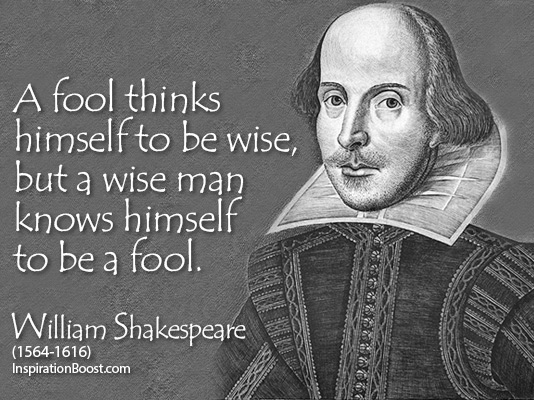
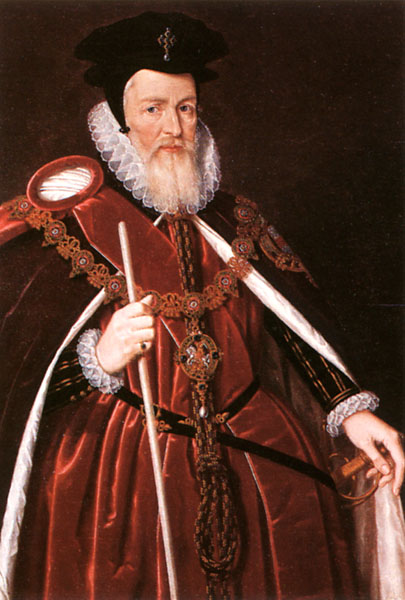
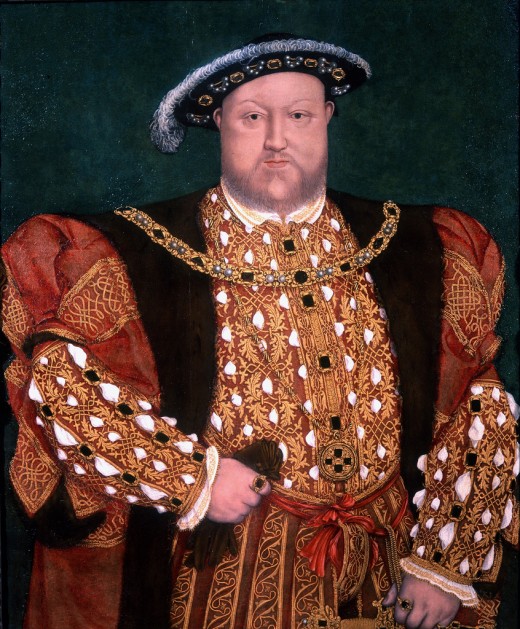
The case has been made in an article by John Welford (https://owlcation.com/humanities/Did-King-Henry-VIII-Have-A-Genetic-Abnormality) that English King Henry the VIII may have suffered from a genetic disorder commonly known as “having Kell blood” which may have made having a living male heir almost impossible with his first two wives. The disorder causes frequent miscarriages in the children sired, something that happened to Henry seven times in the quest for a living male heir. If you think about it, if Henry did not have this particular physical conflict at the root of his dynasty, he might’ve fathered a male heir with his first wife, Catherine of Aragon. Then there would’ve been no opening for the machinations of Anne Boleyn. It follows that Elizabeth would not have been born. Then no Elizabethan Age; no sir Francis Drake, Spain might’ve landed their armada, no Church of England, possibly no William Shakespeare, and then Mickey would never have gotten castigated by scholars of English literature for daring to state in this blog that the actor who came from Stratford on Avon and misspelled his own name numerous times was not the author of Shakespeare’s plays.
History would’ve been very different. One might even say “sucky”. Especially if one is the clown who thinks Shakespeare didn’t write Shakespeare.

Conflict and struggle is necessary to the grand procession of History. If things are too easy and conflict is not necessary, lots of what we call “invention” and “progress” will not happen. Society is not advanced by its quiet dignity and static graces. It is advanced and transformed by its revolutions, its wars, its seemingly unconquerable problems… its conflicts.

1962
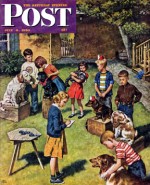
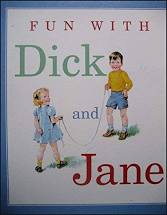
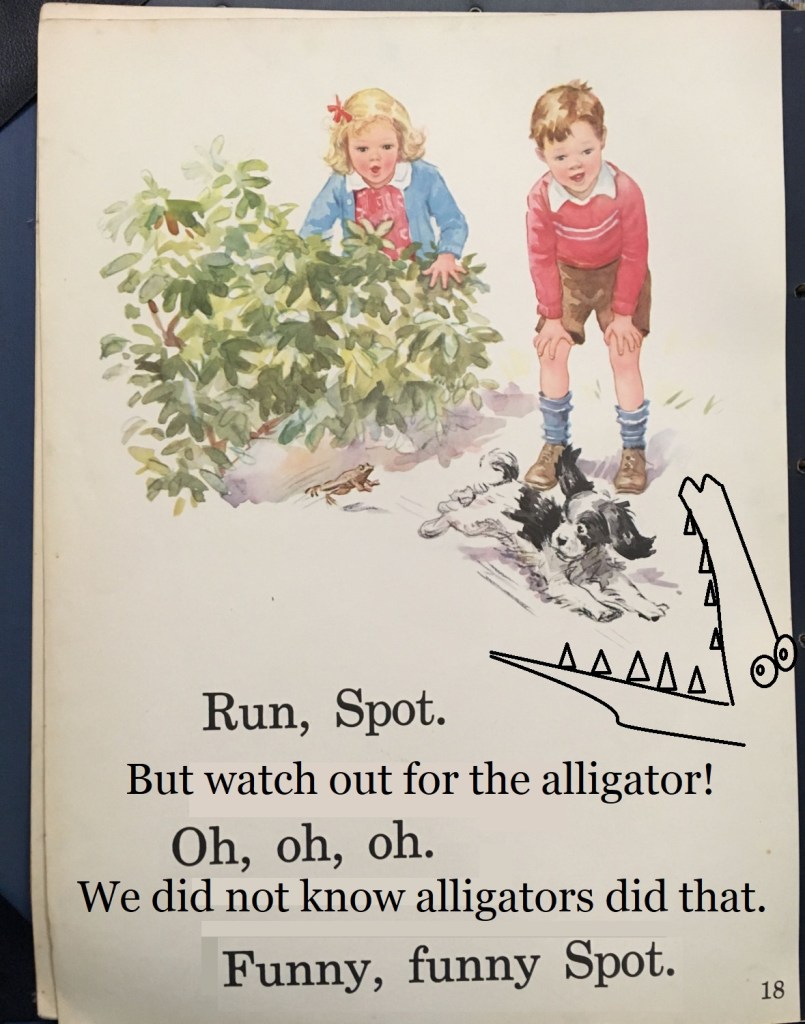
Similarly, a novel, a story, a piece of fiction is no earthly good if it is static and without conflict. A happy story about a puppy and the children who love him eating healthy snacks and hugging each other and taking naps is NOT A STORY. It is the plot of a sappy greeting card that never leaves the shelf in the Walmart stationary-and-office-supplies section. Dick and Jane stories had a lot of seeing in them. But they never taught me anything about reading until the alligator ate Spot, and Dick drowned while trying to pry the gator’s jaws apart and get the dog back. And Jane killed the alligator with her bare hands and teeth at the start of what would become a lifelong obsession with alligator wrestling. And yes, I know that never actually happened in a Dick and Jane book, except in the evil imagination of a bored child who was learning to be a story-teller himself in Ms. Ketchum’s 1st Grade Class in 1962.

Yes, I admit to drawing in Ms. Ketchum’s set of first-grade reading books. I was a bad kid in some ways.
But the point is, no story, even if it happens to have a “live happily ever after” at the end of it, can be only about happiness. There must be conflict to overcome.

There are no heroes in stories that have no villains whom the heroes can shoot the guns out of the hands of. Luke Skywalker wouldn’t exist without Darth Vader, even though we didn’t learn that until the second movie… or is it the fifth movie? I forget. And James Bond needs a disposable villain that he can kill at the end of the movie, preferably a stupid one who monologues about his evil plan of writing in Ms. Ketchum’s textbooks, before allowing Bond to escape from the table he is tied down to while surrounded by pencil-drawn alligators in the margins of the page.

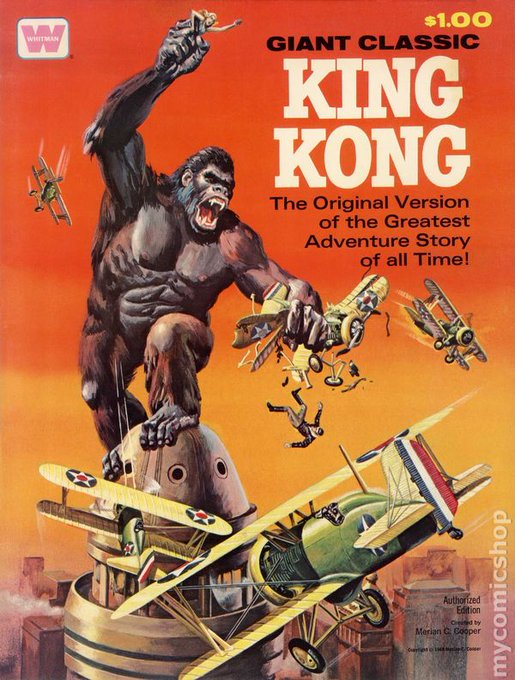
We actually learn by failing at things, by getting hurt by the biplanes of an angry difficult life. If we could just get away with eating all the Faye Wrays we wanted and never have a conflict, never have to pay a price, how would we ever learn the life-lesson that you can’t eat Faye Wray, even if you go to the top of the Empire State Building to be alone with her. Of course, that lesson didn’t last for Kong much beyond hitting the Manhattan pavement. But life is like that. Not all stories have a happy ending. Conflicts are not always resolved in a satisfying manner. A life with no challenges is not a life worth living.
So, my title today is “Conflict is Essential“. And that is an inescapable truth. Those who boldly face each new conflict the day brings will probably end up saying bad words quite a lot, and fail at things a lot, and even get in trouble for drawing in their textbooks, but they will fare far better than those who are afraid and hang back. (I do not know for sure that this is true. I really just wanted to say “fare far” in a sentence because it is a palindrome. But I accept that such a sentence may cause far more criticism and backlash than it is worth. But that is conflict and sorta proves my point too.)


Who Do You Listen To?
There was a time when you could turn on the TV news and listen to what you were fairly confident was actually news. Walter Cronkite on CBS always seemed to really “Tell it like it is.” He never seemed to put a spin on anything. No one doubted anything he said when he reported space missions from NASA or the assassination of JFK. You never had to wonder, “What is Cronkite’s real agenda?” His agenda was always to tell me the news of the day.
The question of politics and ideas was always one of, “Which flavor tastes best in my own personal opinion?” Because I was weirdly and excessively smart as a kid, I often listened to some of the smartest people accessible to a black-and-white RCA television set.
William F. Buckley Jr. and Gore Vidal were both identifiably smarter than me. I loved to listen to them argue. They were equally matched. They respected each other’s intellect, but they hated each other with a passion. Buckley was a Fascist-leaning conservative ball of hatred with a giant ego. Vidal was a self-contradictory Commie-pinko bastard child of liberal chaos with an equally giant ego. I never agreed with either of them on anything, but their debates taught me so much about life and politics that I became a dyed-in-the-wool moderate because of them. They were the key evidence backing up the theory that you needed two sides in the political argument to hammer out good ideas of solid worth. And, though I didn’t trust either side of the argument fully, I always trusted that both were basing their ideas on facts.
Then along came Richard Nixon and the faith-shaking lies of Watergate. The media began to be cast as the villain as they continued to show the violence and horrors of Vietnam on TV and tell us about campus unrest and the terrible outcomes of things like the Kent State Massacre. The President suggested routinely that the media was not using facts as much as it was using opinions to turn people away from the Nixon administration’s answer to the problems of life in the USA. I tried to continue believing in the Republican president right up until he resigned and flew away in that helicopter with his metaphorical tail between his legs (I am trying to suggest he was a cowardly dog, not that I want to make a lewd joke about poor Dick Nixon… or is that Little Dick Nixon, the man who let me down?)
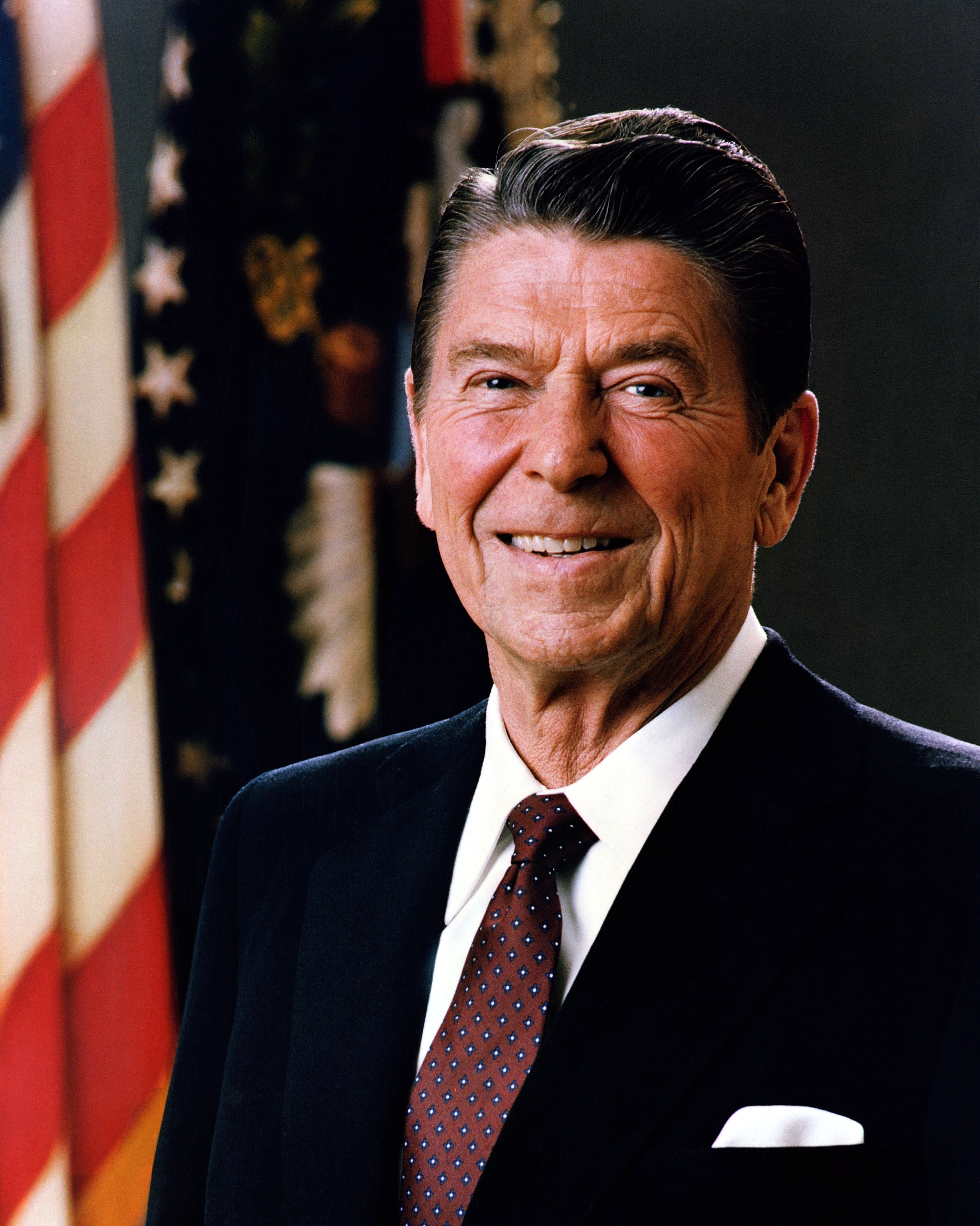
And then along comes Ronald Reagan, the man acting as a “Great President” because he was a veteran actor and knew how to play the part. And with him came Fox News.

Roger Ailes, a former adviser to Nixon, got together with media mogul Rupert Murdoch, a man who would commit any crime necessary to sell more newspapers, and created a news channel that would pump out conservative-leaning propaganda that would leave Joseph Goebbels envious. I make it a rule to only listen to them and their views on anything when I feel the need to get one-foot-hopping, fire-spitting mad about something. So, since, I am a relatively happy person in spite of a long, hard life, you can understand why I almost never watch Fox News. They are truly skilled at making me mad and unhappy. And I suspect they do the same for everyone. They deal in outrage more than well-thought-out ideas.
News media came under a cloud that obscured the border between facts and partisan opinions. And conservatives seemed to have a monopoly on the shouty-pouty angry news. So, I began to wonder where to turn for a well-reasoned and possibly more liberal discussion of what was politically and ethically real. I found it in the most surprising of places.
I turned to the “Excuse me, this is the news” crews on Comedy Central where Jon Stewart and Stephen Colbert were busy remaking news reporting as a form of comedy entertainment. It is hard work to take real news and turn it into go-for-the-chuckles statements of fact that make you go, “Hmm, that’s right, isn’t it?” Stewart and Colbert consistently examine how other news organizations hurl, vomit forth, and spin the news, and by so doing, they help you examine the sources, get at the truth, and find the dissonance in the songs everyone else is singing. And these are very smart men. As I said, the intellectual work they do is very difficult, harder than merely telling it like it is. I know because I have tried to do the same myself. And is it really “fake news”? It seems to me like it is carefully filtered news, with the poisons of propaganda either surgically removed, or neutralized with antidotes of reason and understanding.


So, Mickey listens to comedians to get his news. Is that where you expected this article to end up? If not, where do you get your news?
Leave a comment
Filed under angry rant, commentary, conspiracy theory, humor, insight, politics, review of television, strange and wonderful ideas about life
Tagged as Donald Trump, history, News, news media, news reporting, politics, Trump, Walter Cronkite, writing