
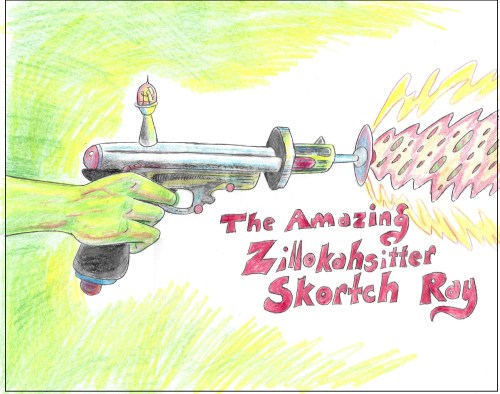
You are probably not going to believe this, but there are certain things you simply cannot safely sell on E-Bay. My first good novel, Catch a Falling Star, took years to write. The research, interviews with survivors, fighting off remaining alien invaders left behind when the Telleron invasion failed, and clean-up of sites and inconvenient witnesses took at least from 1990 to 2012. And then, as part of my marketing-by-blogging strategy for the book, I took a box of leftover skortch pistols and listed them for sale on E-Bay. They turned out to be a very popular item. It took the first skortch ray almost a year to sell for a measly five dollars. It was bought by a woman with a very annoying husband. She apparently bought the item as a joke, thinking it would not actually work as a molecular disintegration weapon. But after she surprised her husband with it and then posted the surprising results on Facebook, I quickly sold out the rest of the 26 pistols in the box and made almost $800. I am told by concerned investigative reporters that crotchety old men, ugly wives, and particularly Dennis-the-Menace-like kids were disappearing all across the Midwest. I also learned that one skortch ray pistol came into the hands of a Republican political operative before the election in 2016. That fact may have accounted for the disappearances of large numbers of registered Democrats in both Michigan and Pennsylvania in the weeks before the election.
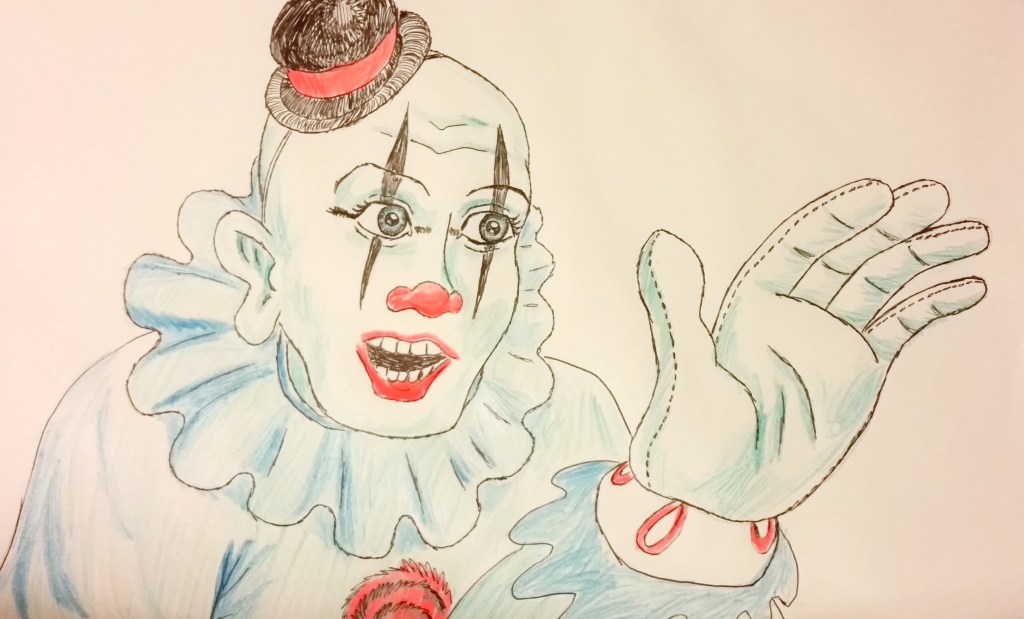
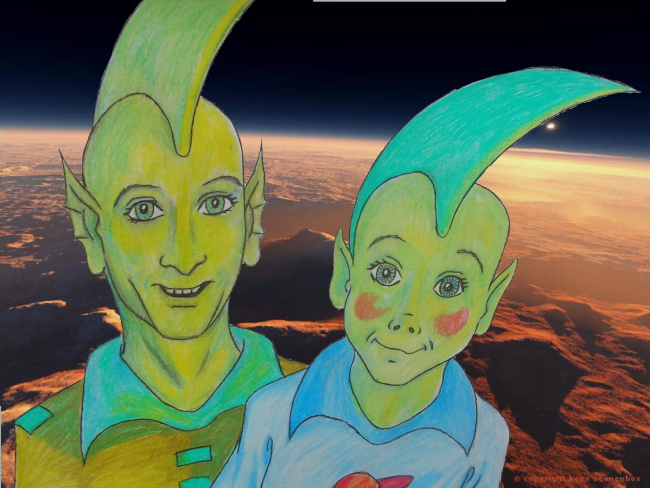
I wanted to inform you that I may have done something stupid on E-Bay. Therefore I am re-posting the drawing I did of Studpopper the Telleron demonstrating the firing of an example skortch pistol created by Zillokahsitter Industries on Telleri Prime with Sylvani technology. If you should see one of these in the hands of a spouse that thinks you are grumpy too much of the time, I would suggest an almost instantaneous program of self-improvement. And if you see one in the hands of someone in a red MAGA baseball cap, immediately put on your own red hat and say something inordinately stupid so they will assume you are one of them, and hope they skortch themselves by accident before they get around to skortching you.
Sorry about that. I should’ve thought this whole thing through more carefully beforehand.










The Case for the Clown
The criminal was led into the courtroom in chains and forced to sit in a box made of metal bars so his influence would not reach out and harm anyone by drawing their sympathy in.
“Mr. Prosecutor,” said the learned judge, “what terrible crime has the perpetrator been charged with?”
“The alleged perpetrator!” objected the defense attorney, a mousy old man who looked like a cross between Santa Clause and Robert E.Lee because of his white beard, stern face, and a twinkle in his eye.
“Shut up please, Mr. Badweather. You will have your turn to speak.” The judge banged his gavel smartly to emphasize the shut-up-ness of his overruling.
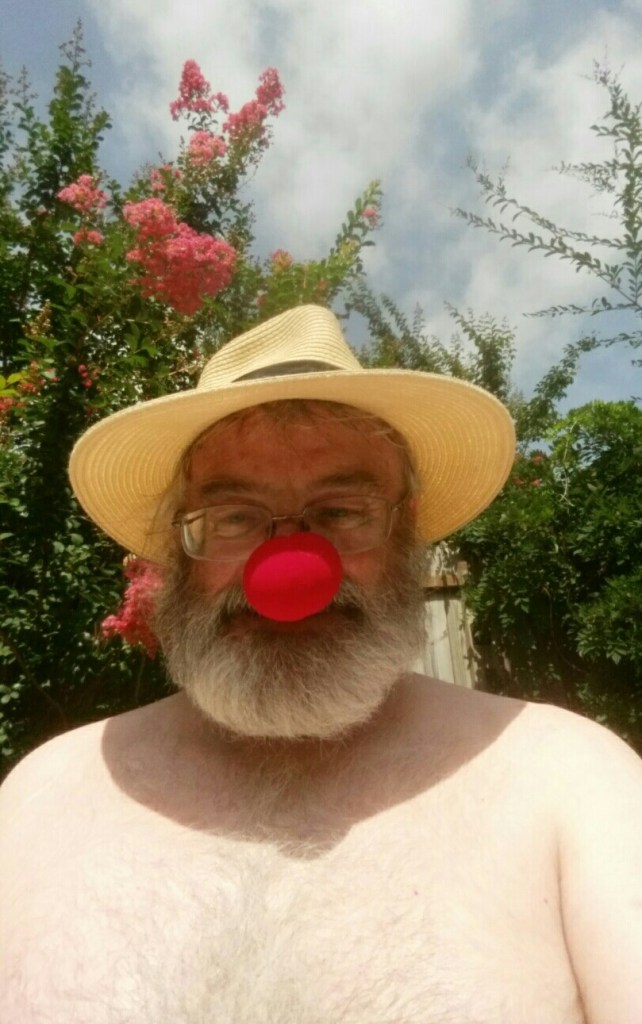
“Your honor,” said the prosecutor, “Mister Pennysnatcher Goodlaughs stands accused of being a clown.”
“The people of the State of Texas, home of the free, land of the brave, and place where cowboys can hang their hat on the antlers of a moose they shot in Canada, will prove that Mr. Goodlaughs did willfully, and with malice of forethought, commit acts of supposed humor in order to make people laugh. And we will further prove that in a time of very serious things, he intentionally made light of very serious matters and the very serious men who try to turn those serious things to their exclusive… err, sorry, I mean… everyone’s benefit.”
“Your honor,” said the defense attorney, looking like a cross between Mark Twain and Colonel Sanders, “I would like to request a new venue for this trial. My client will not get a fair trial here.”
“Sir, your stupid request is rejected on the grounds that Mr. Goodlaughs cannot get a fair trial anywhere. We are all conservatives, and are therefore incapable of having a sense of humor. Continue, Mr. Prosecutor.”
“We will show numerous instances of Mr. Goodlaughs putting paint on his face to hide his true features or assume the identity of a character not his own. He has repeatedly used false noses, large shoes, and floppy hats to exaggerate his flaws and scare young children. He repeatedly wears polka-dotted clothing to simulate terrible taste and ridiculous lack of fashion-sense. He employs pratfalls and slapstick humor in his performances, things that, if any school-age child would imitate the behavior, might lead to serious injury or even death. And he has even dared to make fun of our glorious leaders, implying that they make mistakes and may even have hurt people. That they act without thinking about anything but their own pocketbooks. In other words, this clown has knowingly made jokes in order to get people to not take things seriously.”
“Your honor, I object to this jury. I object to the fact that it is made up of fifty percent rednecks and fifty percent kangaroos! My client demands a new, more impartial jury!” cried the defense attorney, looking like a cross between Captain Kangaroo and Ronald Reagan.
“Has anybody noticed?” asked the judge, “that this attorney looks like he could influence this jury unfairly? He looks like two people who could lead the two halves of this jury to the wrong conclusion. Bailiff! Take the defense attorney out back and execute him by firing squad.”
After the entire courtroom heard the gunshots go off, the judge then turned to the prisoner.
“It seems, Mr. Goodlaughs, that the defense’s opening statement is now entirely up to you. Do you have anything to say in your own defense?
“I do, your honor. Ladies and gentlemen, kangaroos and Reagan Republicans of the jury, I submit to you that I have never actually been a circus clown, or wore face paint. Not that I wouldn’t if the opportunity presented itself. I merely claim the right to laugh at anything I think is funny… or can be made funny. Whether I am being what you call a clown, a humorist, a cartoonist, a comedian, a fool, a village idiot, or a witty fellow, I believe I have the right to make light of anything. Life is always better when you can laugh. Especially if you can laugh at yourself.”
“I’ve heard enough,” said the judge. “What say you, jury?”
“Guilty!”
“Yes. And I preemptively waive the prisoner’s right to appeal. Sir, you are guilty, and you shall be executed immediately.”
Everyone in the courtroom breathed a long-awaited sigh of relief.
Leave a comment
Filed under clowns, comedians, commentary, foolishness, humor, insight, Paffooney, pessimism
Tagged as books, clowns, fiction, horror, horror-movies, humor, short story, writing