How does an artist know himself? Now there’s a difficult question. I spend all my time looking at the world with the eyes of imagination. I don’t even seem to be able to take photographs in the normal way other people do. Maybe I should consider this self-think through the medium of pictures I have made with captions added to them?
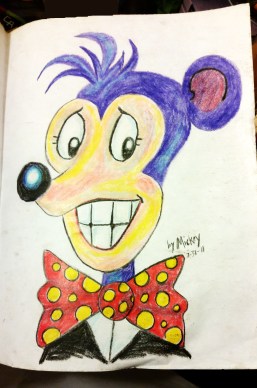
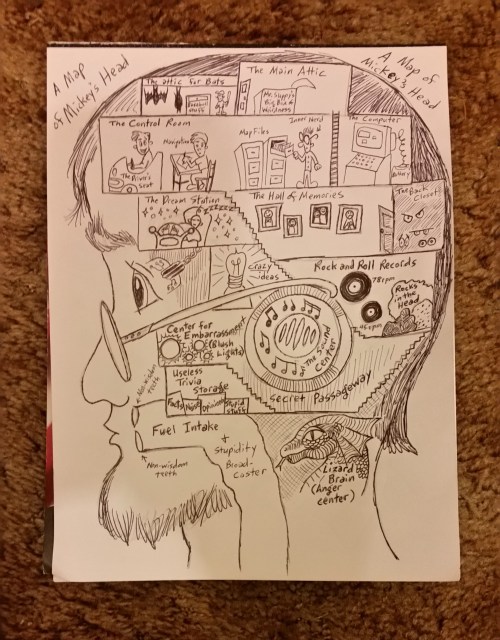
Mickey is not actually me. He is my “other” me, my pen name, my goofier self.
I was born in a blizzard in Mason City, Iowa in the 1950’s.
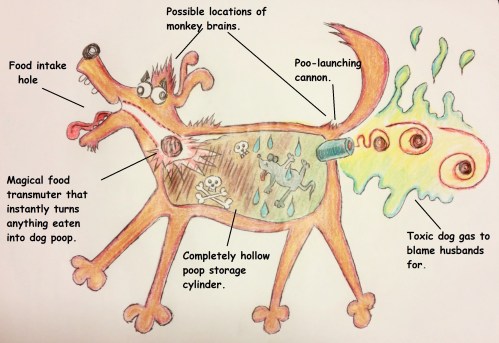
I have learned about dog poop five times a day since 2011 when we found Jade, our dog.
I was a middle school teacher for 24 of my 31 years of teaching. I love/hate 7th Graders.
When things go wrong, I tend to make a joke about it.
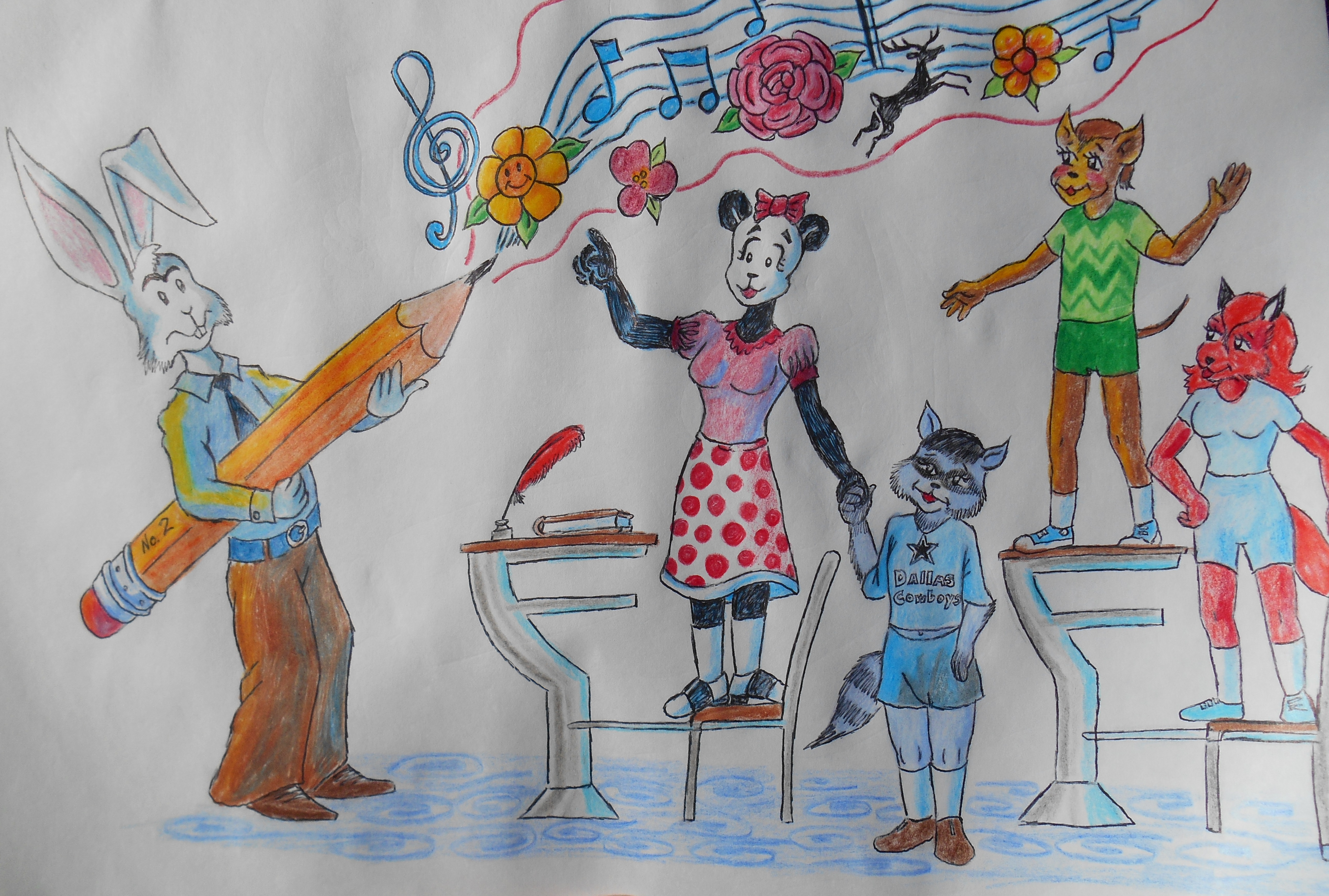
I like to draw students as I saw them, not as they really were.
I always see myself as the one with the BIG pencil.
If there is goofiness around here, it is all my fault.
In spite of the title, I don’t know how to disappear.
I love everything Disney.
I tend not to be very much like other people. I don’t think like they do.
In grade school, I was deeply in love with Alicia Stewart, though I never told her that, and that is not her real name.
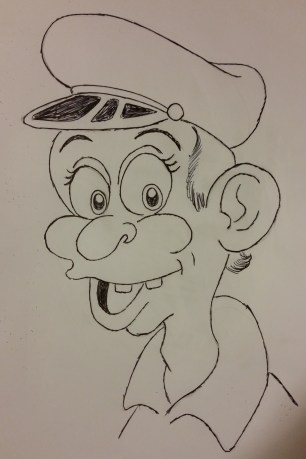
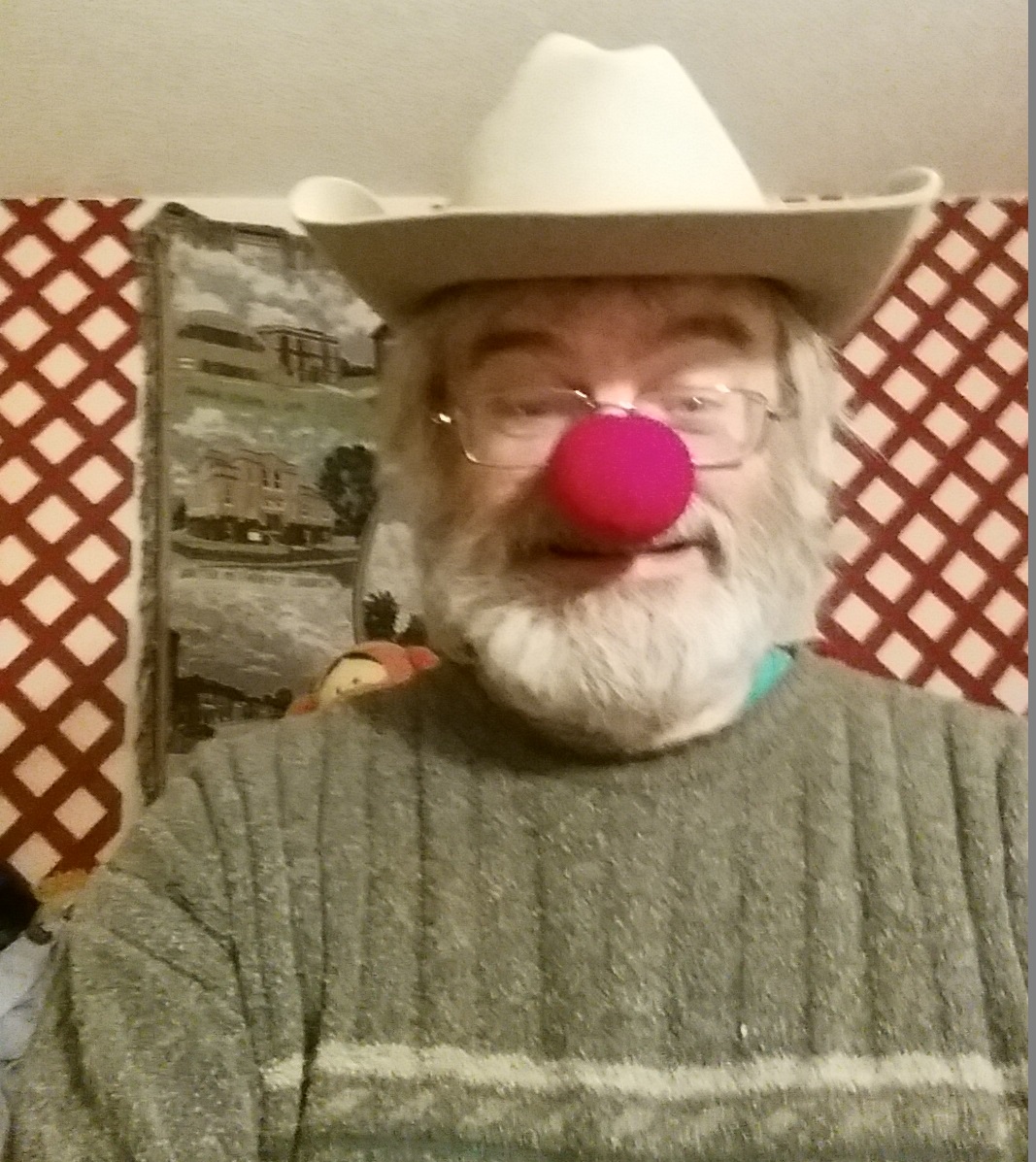
My high school art teacher told me that when an artist draws someone, he always ends up making it look a little bit like himself. That is because, I suppose, an artist can only draw what he knows and he really only knows himself. That being said, this post should really look just like me.
When I was a boy playing cowboys and Indians with cap pistols and rubber tomahawks, we all knew that cowboys had a code. The guy in the white hat always shoots straight. He knows right from wrong. He only shoots the bad guy. He even shoots the gun out of the bad guy’s hand if he can. Westerns are about right and wrong, good and bad, and the unyieldingly good knights of plains.
And boys believe what they see on TV and in the movie theaters. People who make television shows never lie, do they? In fact, Wyatt Earp was based on a real guy who really lived and really shot the bad guys at the gosh-darn real OK Corral.
Daniel Boone was a real guy too. He faced the opening up of new lands full of deadly dangers. And when Fess Parker played him in 1964, wearing Davy Crockett’s coonskin hat, he walked the earth like a guardian angel, making everyone safe by the end of the episode. He even knew which Indians were good and which were bad. Mingo was always on Daniel’s side. And when they spoke to each other about the dangers they faced, it was never about killing the people they feared. It was about doing what is was right, about helping the community at Boonesboro to survive. Being encouraging… looking forward to a more settled future created by following the cowboy frontier code.
So, I am left wondering what ever happened to the cowboy code? I listen to Republican presidential candidates talking about dipping bullets in pig’s blood to kill Muslims, and building walls against Mexican immigrants, and why our right to carry assault rifles is sacred, and I wonder what happened. Didn’t they experience the same education from the television versions of the Great American Mythology? Didn’t they learn the code too?
I am old enough now to know that cap guns are not real guns and you cannot solve problems by shooting somebody. But that was never the point of the cowboy code. We need straight-shooters again in our lives, not to shoot people, but to tell the unvarnished truth. We need wise people who can tell who are the good Indians and who are the bad We need them to shoot the weapons out of the bad guys’ hands. And I know that’s asking for leaders to be larger than life and be more perfect than a man can actually be. But Daniel Boone was a real man. Myths and legends start with a fundamental truth.
In college I took classes in oral reading and acting because I was nutty about drama and play-writing, even though I was much too terrified of being put on a public stage to ever try out for a part. But in Oral Reading 101 I was given the gift of a professor who actually was the head of the ISU Drama Department. One of the things he made us do was a soliloquy from a Shakespeare play. I was assigned the opening soliloquy from Richard the Third.
Good God! Is that man ever a villain and a monster! He’s more sinister and evil than Snidely Whiplash or Dick Dastardly… and certainly no less cartoonish. Here is the best I can still do to recreate my old college performance of “The Winter of Our Discontent” soliloquy.
To pull off this assignment (On which I received an A grade from a professor known for imperious F-giving) I had to do a lot of research on King Richard III to be able to walk around in his skin for three whole minutes. I had to learn about him from books and articles and drama critiques. I spent a couple of weeks in the library (There was no internet or Google in 1978). I learned that he was a complex man involved in the deeply troubled time of the War of the Roses. He was from the house of York, the House of the White Rose. His elder brother, Edward, had been victorious in both battle and royal intrigue, and, with Richard’s help had secured the throne of England that had been wrested from the hands of Richard II to begin the struggle between House Lancaster (the Red Rose) and House York… both of which had blood-relationship claims to the throne. Once in the hands of Richard’s brother Edward IV, the crown did not really rest peacefully on Yorkish heads. Edward became ill and died in 1483. The crown was to then go to twelve-year-old Edward V who was placed under the care of Uncle Richard’s regency. At the time of his coronation, the legitimacy of Edward IV’s marriage was declared null and void, making the boy no longer eligible to be king. Richard seized the title. Young Edward and his younger brother were taken to the Tower of London and they were never seen publicly again. According to Shakespeare, Richard did, in fact, have them killed. But, the crown did not stay on Richard’s head for longer than two years. In 1485 Henry Tudor came back to England from France. Richard was defeated at the Battle of Bosworth Field and died in battle there.
I do actually understand Richard in ways that are difficult to admit. I know what it feels like to be convinced you are unworthy by factors beyond your control. Richard was a hunchback, plagued with severe scoliosis of the spine. He lived his life in pain and was ridiculed for his deformity in a time where it was believed such things were a punishment from God for sins of the parents, or even sins the child himself was born with. I can relate. I was always so far above the other kids in my class at school that I was treated like a Martian, unloved and unlovable because I could not speak a language they really understood. And on top of that, I was secretly the victim of a sexual assault, a condition that I feared made me a monster. I could so easily have become a monster. I could’ve set my mind to it in the same way Richard did, because vengeance for his differences consumed him utterly. Thankfully, I did not choose a path of evil. Drawing and telling stories proved to be the pick and shovel I used to dig myself out of my own pit of despair.
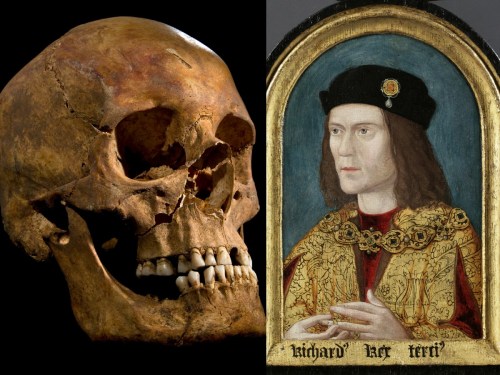
Richard III’s long-forgotten grave was rediscovered in 2013, and a DNA match with relatives proved the skeleton with scoliosis was him in 2014.
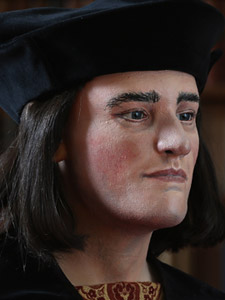
The real Richard III may not have been the monster Shakespeare portrayed him as, either. He was demonized after his defeat and death by the Tudors to strengthen their shaky claim to the throne. There exists some evidence that he was a progressive king and a friend to his people, but horribly betrayed by some of his own followers, and certainly made the scapegoat by succeeding generations.
A recreation of what Richard III looked like based on the skull found and portraits from the time period.
There is also some evidence that Shakespeare wrote the play as a political diatribe against the hunchback in the royal court of his day. Sir Robert Cecil, 1st Earl of Salisbury was also a hunchback with scoliosis. And by his sometimes sinister-seeming machinations, he rose to power as Secretary of State for both Elizabeth I, and after her, James I. He had a part to play in making James the King after Elizabeth’s long reign, probably an instrumental part. He also uncovered the Gunpowder Plot of Guy Fawkes and friends, and rumors persisted that he had more to do with it than merely revealing and foiling it. Nothing was ever proven against him. Though Elizabeth called him “my pygmy” and James referred to him as “my little beagle”, he held power throughout his lifetime and foiled the work of his many enemies against him. In fact, it is the similarities between Shakespeare’s Richard III and Robert Cecil that first made me begin to believe that Shakespeare was actually someone other than the actor who owned the Globe Theater and never spelled his own name the same way twice. Knowing about Cecil surely needed to be the act of an insider in the royal court. I balked at first when it was suggested to me that Shakespeare’s plays were actually written by Francis Bacon… and I continued to doubt until I learned more about the Earl of Oxford, Edward deVere.
So what is the point of this soliloquy about the soliloquy of Richard III? Well, the point is that at one time I had to be him for a short while. I had to understand who he was (at least the character that Shakespeare created him to be) and think as he thought. That is what a soliloquy truly is. Sharing from the character’s mind to my mind… and back again if I am to perform him… or even write him in some future fiction.
I am, however, an expert on how NOT to write a good poem.
A truly terrible poem might begin with an over-extended metaphor.
It might begin by saying, “A poem is like a fairy tale, filmed in black and white on 35 mm film stock, with Orson Wells as the director.”
And for the meat of the poem, you use details about the fairy acrobats having an accident on the trapeze, and the circus train derails and has a terrible accident, and the clown never takes his makeup off because he’s on the run from the police… and you totally forget that the movie “The Greatest Show on Earth” was directed by Cecil B. DeMille and filmed in color.
And you have a tendency to “squinch” the rhymes, rhyming “good” with “food” and “dud” with “odd,” and at the same time you put trochaic warts all over the iambic pentameter because as a poet you are not William Shakespeare, and you are not even Buddy Rich because the rhythm sounds more like banging trashcan lids than drumbeats.
In the middle of the poem somewhere it suddenly becomes free verse without a rhyme scheme or reason for the change. And the theme circles back on itself and does a pretzel twist with no logic to salt it with.
And you are a terrible poet like Mickey because, when you write a poem you don’t realize;
the gemstone at the center of your poem must go from your mind, to pen, to paper, to eye of the reader, to mind… and finally to heart…
And the blaze of its beauty must be strong enough to resonate…
and be able to SHAKE THE BONES OF THE UNIVERSE.
And you can’t do it because you don’t even get the irony of that rule.
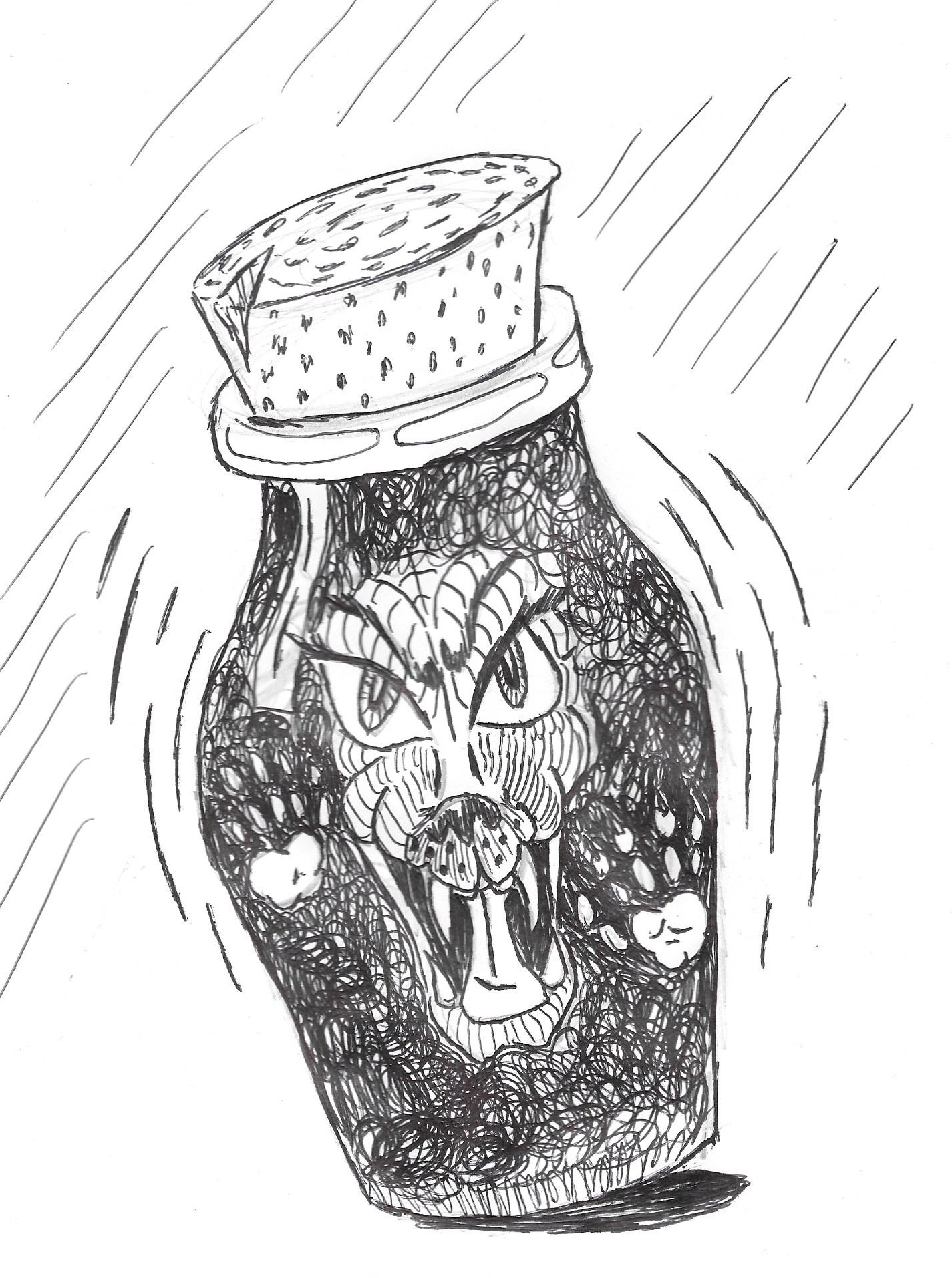
I gave you a list of places where my ideas for fiction come from, and in the end, I failed to explain the thing about the bottle imp. Yes, I do get ideas from the bottle imp. He’s an angry blue boggart with limited spell powers. But he’s also more than 700 years old and has only been trapped in the bottle since 1805. So, he has about 500 years of magical life experience to draw from and answer my idea questions. Admittedly it would be more helpful if he were a smarter imp. His name is Bruce, and his IQ in human terms would only be about 75. But, then, I don’t have to worry about misfired magic. If I asked him to, “Make me a hamburger,” he wouldn’t immediately change me into a fried, ground-beef patty because he is not smart enough to do that high of a level of magic spell.
But he is just barely intelligent enough to tell me a truthful answer if I asked him a question like, “What would happen if I put an alligator’s egg in a robin’s nest as a joke, and the robin family decided it was their own weird-looking egg and then tried to hatch it?” The answer would be truthful according to his vast knowledge of swamp pranks. And it would also be funny because he’s too dumb to know better. In fact, he told me about a mother robin who worked so diligently at hatching an alligator egg that a baby alligator was hatched. She convinced it that it was actually a bird. And when it came time for the baby birds to learn to fly, the baby alligator couldn’t do it… until she talked it into flapping madly with all four legs. Then, a mother’s love and faith in her child got an alligator airborne.
Yeah, that hasn’t proved to be a very useful story idea. I put it into a story I was writing during my seven years in high school, and then lost the manuscript. (I was a teacher, not a hard-to-graduate student.) But it was proof that you can get your writing ideas from a bottle imp.
So, if you decide to use bottle imps as an idea source for fiction, the next step is to find and acquire the right sort of bottle imp. I got mine from Smellbone, the rat-faced necromancer. I bought it for an American quarter and three Canadian loonies more than a dozen years ago. I found it at his Arcana and Horse-Radish Burger Emporium in Montreal. But I am not sure how that information helps you. Smellbone died in a firey magical-transformation accident involving an angry Wall-Street financier and a dill pickle. The whole Emporium went to cinders in an hour.
If you are going to try to capture the bottle imp yourself, which I strongly do not recommend, you are going to need a magical spell-resistant butterfly net, a solid glass jar, bottle, or brass urn. A garlic-soaked cork to fit the bottle. A spell scroll ready to cast containing at least one fairy-shrink spell. And an extremely limited amount of time to actually think about what you are doing.
Now I have told you how I get writing ideas from a bottle imp. Aren’t you glad I did not include this idea in the post about where ideas come from? After all, I am a fiction writer. I get my jollies from telling lies in story form. And bottle imps, especially angry blue bottle imps named Bruce, or Charlie, or Bill, are more trouble than they are worth. They can curse you with magical spells of infinite silliness and undercut your serious nature for a lifetime.
When you make the mistake of admitting to others that you are a writer, they immediately assume you know things that are kept secret from “normal” people. For instance, they will simply assume that you can tell them where you get your ideas for writing. Well, I am fairly sure that I got the idea for this post from watching a YouTube video in which the Master, Neil Gaiman, says that every author has a joke answer for that one with enough sarcastic wit in it to punish the asker with public humiliation.
I asked the dog if she knew any jokes like that which I could use to prepare for someone asking me that question in public. She said, “You could tell them that your family dog tells you what to write every day.”
“No,” I said, “people would never believe it.”
“Well, it is supposed to be a joke. But you are right. No one would ever think you were actually smart enough to write down what a dog tells you.”
“Yes, it’s a good thing for me that you know how to speak in English. I could never translate and transcribe Barkinese.”
So, I began thinking of where some of my best ideas came from.
Dreams
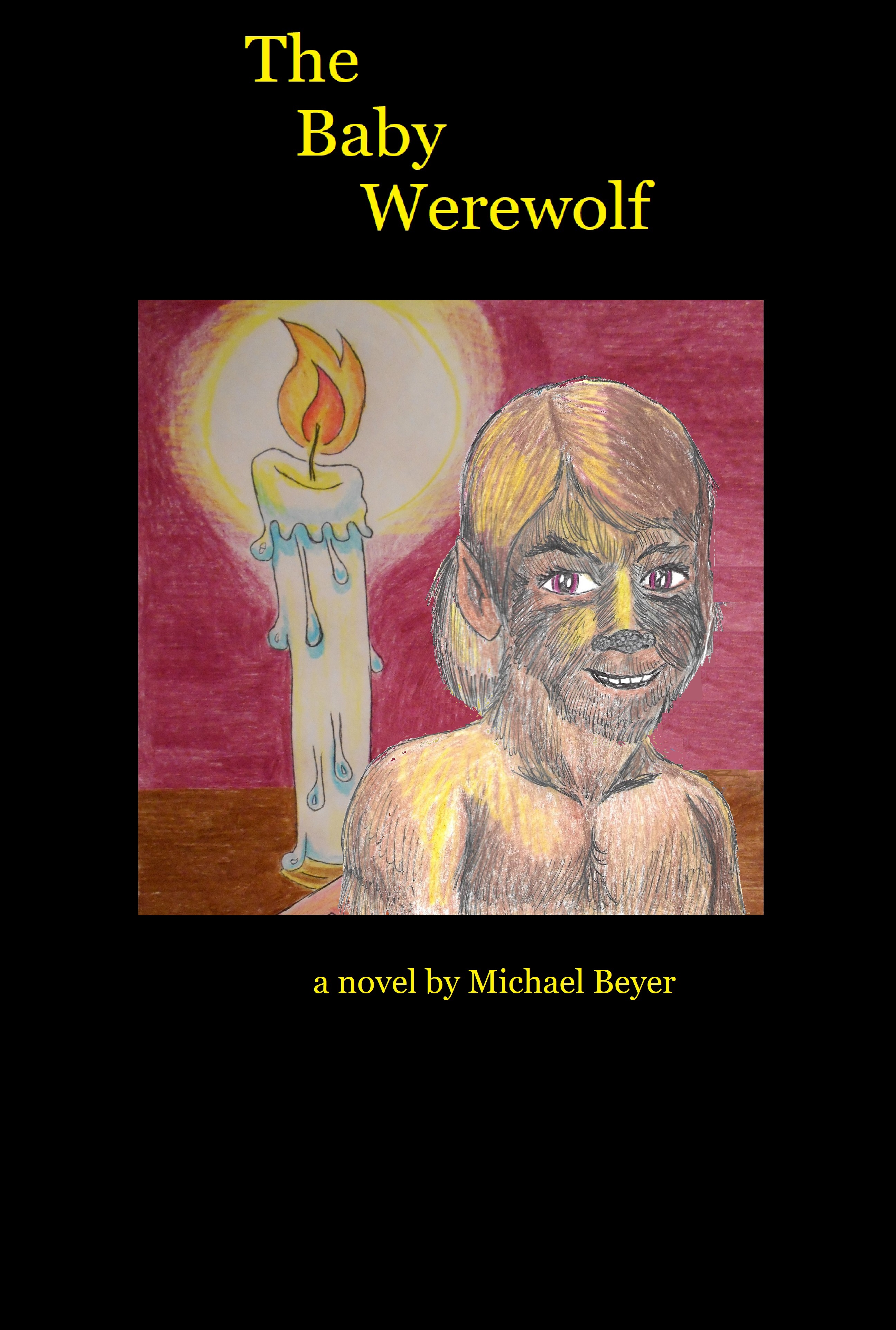
Some of my stories come directly from dreams that I had. The nightmare about being chased down a street in Rowan at midnight by a large black dog with red eyes was an actual dream I had in the 1970s. So was the nightmare of the werewolf climbing out of the TV during a late-night viewing of Lon Chaney in The Wolfman.
Those two dreams together were the start of the story that became my recently published novel, The Baby Werewolf. Both dreams visit the protagonist in the story I wrote almost as if they were his dreams and not actually mine.
Events
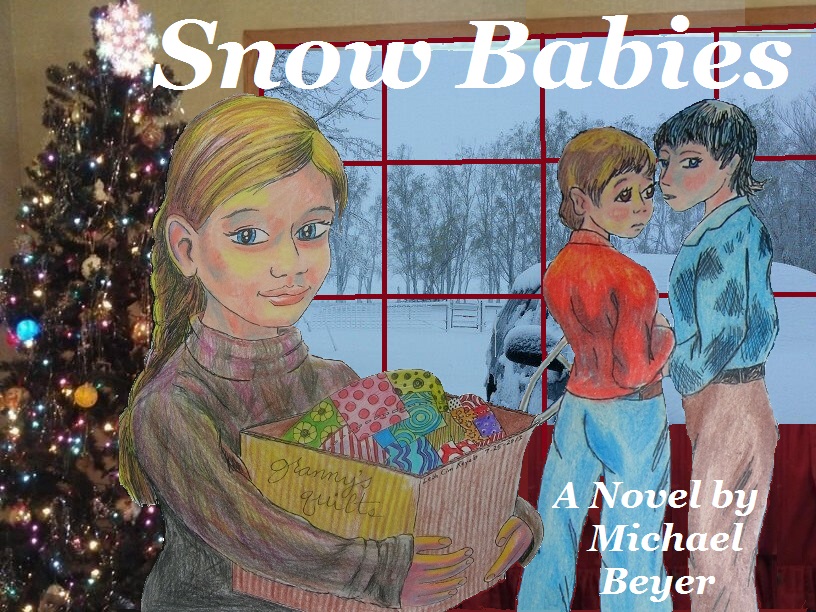
Snow Babies, the best novel I have ever written, was based on two different blizzards I experienced, first as a child in the 1960’s, and then again as a high school kid in the 1970s. Each blizzard involved being snowed in for a week at someone else’s house. As a child, I was stuck at Grandpa’s farm place until the snow plows could finally do their work and open the gravel roads. As a teen, I was stuck in Great Grandma’s retirement apartment near the high school in Belmond.
That novel also is based on the next source of ideas;
Characters
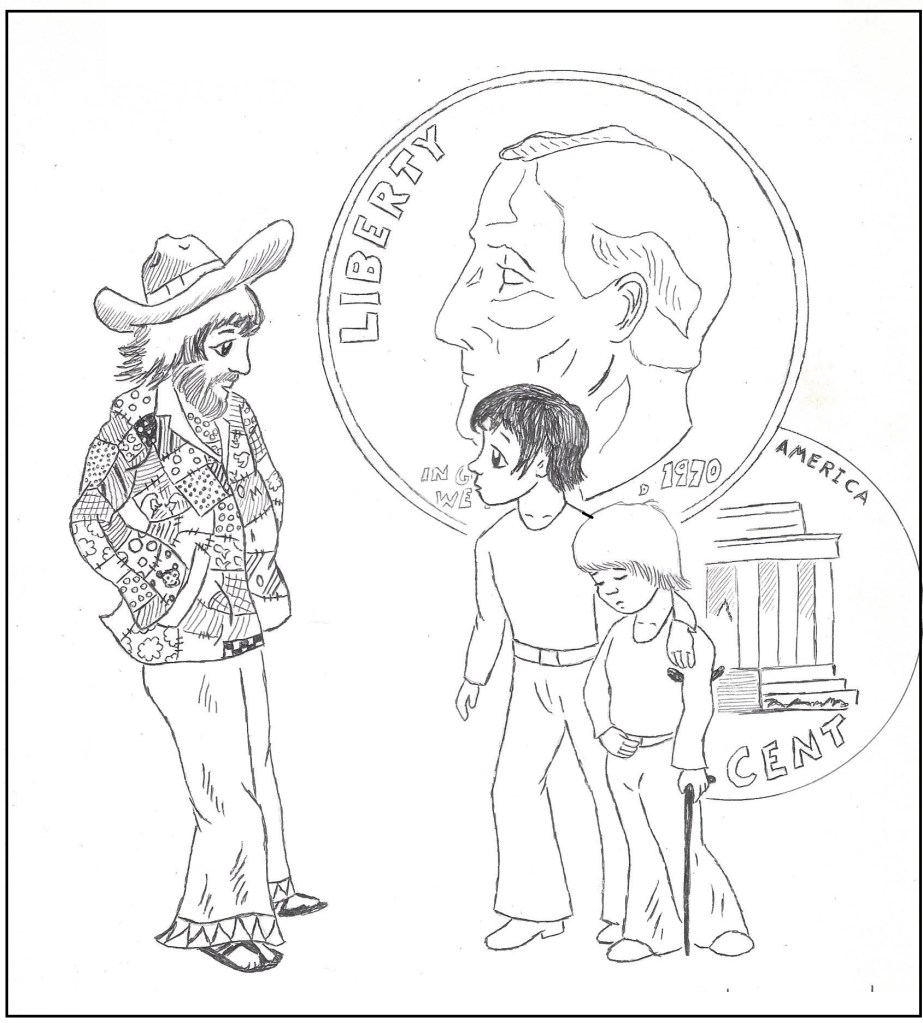
I can’t think of any story I have written that isn’t based on real people I have known in one way or another. Valerie in the novel above is based on three different girls I have known or taught. One of those three is my own daughter. The four orphans on the bus in that story are all boys from my junior high classes in the 1980s.
Lucky Catbird Sandman, the hobo who wears the quilted coat of many colors, is based on the poet Walt Whitman, whom I knew well in a past life, and my own shiftless, storyteller self. Some characters are just so key to a story idea that they themselves are the reason for a book to exist.
In conclusion, the dog doesn’t really know what she’s talking about. None of these things are really where I get my ideas. But I am out of time. I will have to write about the bottle imp another day. No, really. A magical imp trapped in a bottle. You can make one of those give you ideas for novels with only a slight risk to your life and soul.
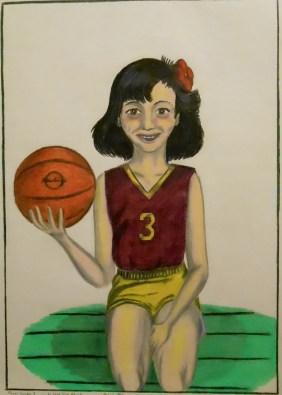
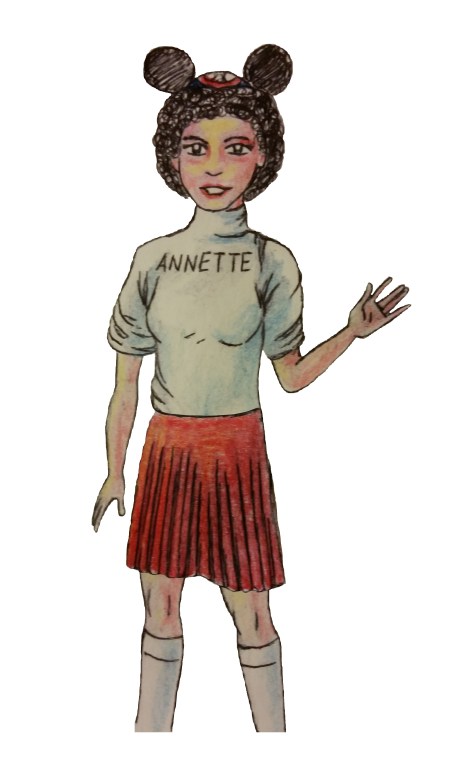
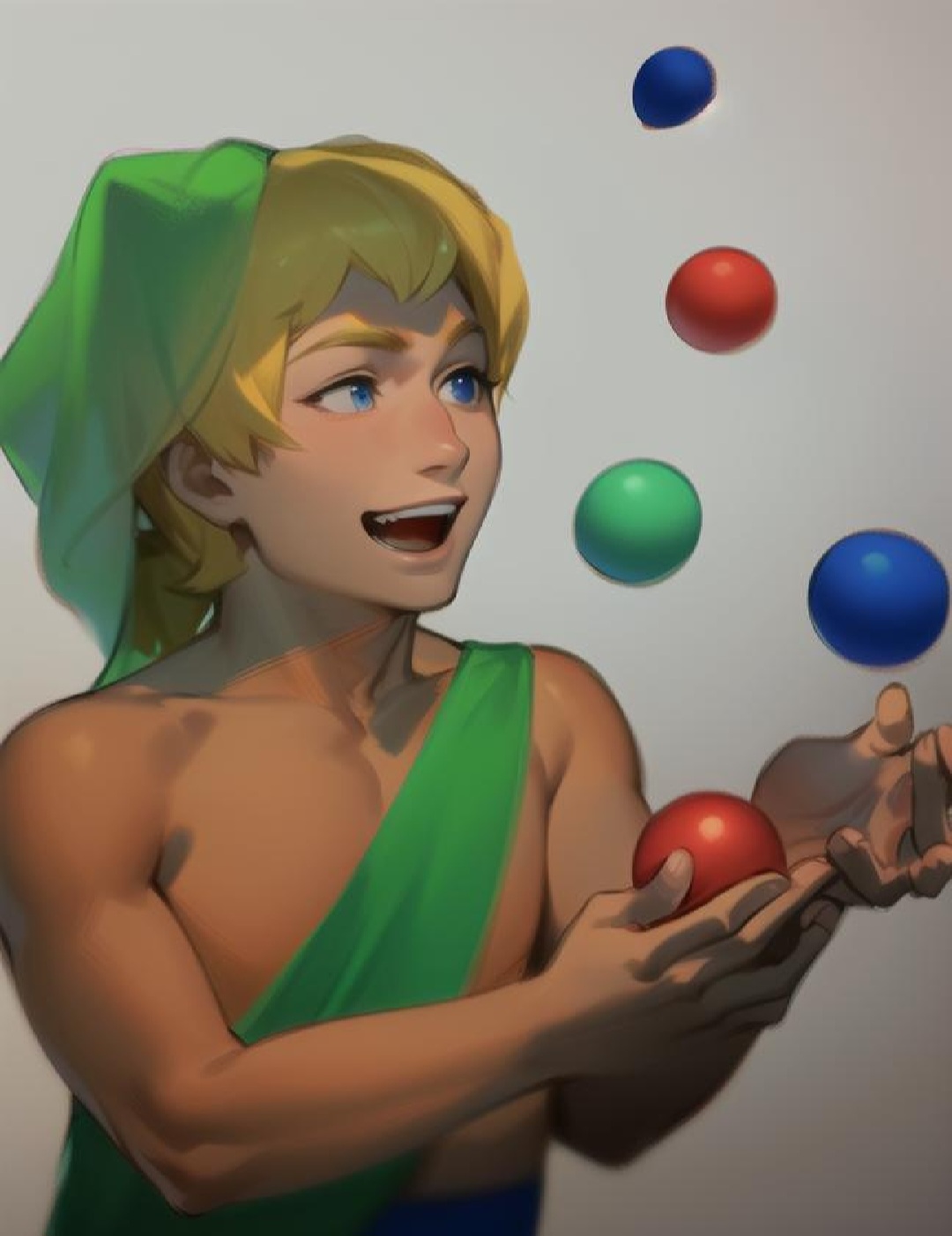
It has been brought to my attention by family members, friends, and even some readers that my current use of the AI Mirror program to edit my artwork is really overwhelming my personal style with its anime filter. The smiling anime face on the cheerleader is a good example. The eyes are bigger than I would have chosen to make them in a colored-pencil rendering. The nose is too small, and if I highlight it on the previous layer it makes it show up in the final, but still too small. What I like about it is the way it makes the highlights and shadows on her flesh and her clothes so much more accurate to the light source than I can do even with the digital stylus. But I am noticing more and more that the AI tends to do what it wants to the picture more than it does what I want. Even though I layered my drawing over a photo and traced it before coloring, the AI made changes that were not needed. I get that I leave openings on the face for interpretation because I am not trying to make an identifiable portrait. But it even makes the logo on the top of the uniform into something far more unreadable than the “Iowa” that was there. I get that it refuses to copy logos and copyrighted stuff, but that isn’t really the case in this picture. I realize I am trading some of my control as an artist for the good things the AI can do to correct the problems my arthritis makes. But I am really no happier with the situation than some of my critics. I only rely on the AI because it allows me to draw more and more frequently than I can with pencils, pen, and paper. This Devil’s bargain allows me to still draw every day.
This is what the AI does with old drawings I have done years ago. This one, Filch the burglar and entertainer from a D & D game in the early 1990s, shows how the AI can interpret my older and better drawings almost the way I would have done it myself. Almost… but you can plainly see the work I had to do on the hands. AI art programs have difficulty with hands. The left hand confused it because three fingers actually go off the page and I highlighted the top of the palm. The program broke the little finger and tried to bend a sixth finger across the top of the palm. The right hand is nearer to correct, though my glaucoma-hampered eyes still see the fingers as too long. That, however, could also be said of the original drawing.
So, as an artist, I do battle daily. Not only with the arthritis in my hands, but also some Artificial Unintelligence. They should call it AU rather than AI. It’s too dumb to get offended by that.
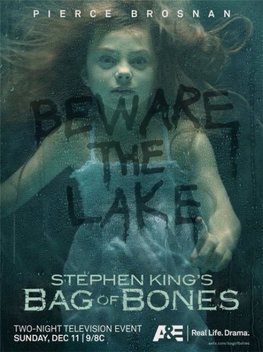
This is not a book review. I did finish reading this book in a 3-hour-end-of-the-book reading orgy, spending an hour last night, and two more early in the morning before the rest of my family was awake.
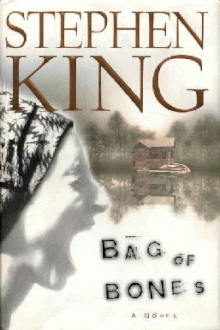
This is certainly not a book review. But I did read a Stephen King book, 1998’s Bag of Bones, which I picked up from the dollar sale shelves at Half Price Books. And I did love the story.
………………………………………………………………………This is not a book review. Instead, I want to talk about what a novelist can learn and reflect on by meta-cogitating over what this book reveals about King’s work habits and style and author’s voice.
Mike Noonan, the protagonist, is a novelist who writes books that routinely land in the numbers 10 through 15 slots in the New York Times Bestseller List. Obviously, this first-person narrative is coming directly out of King’s own writing experience. But, remember, this is not a book review. I am discussing what I have learned about how King puts a story together.
King sets a back-story for this novel that digs deep into the geographica and historica of the city in Maine where the story is set. The literal bag of bones revealed in the book’s climax is almost a hundred years old. And he takes a compellingly realistic tour back in time to the turn of the Twentieth Century more than once to reveal who the undead characters are and why they do what they do. One thing that makes a writer, a novelist, truly solid is his ability to set the scene, to grow the story out of the background in the most organic and realistic way possible. But this is not a book review. I am saying that King always does this with his books. And if you wish to write at that level, you must do that too. I know I am sincerely trying.
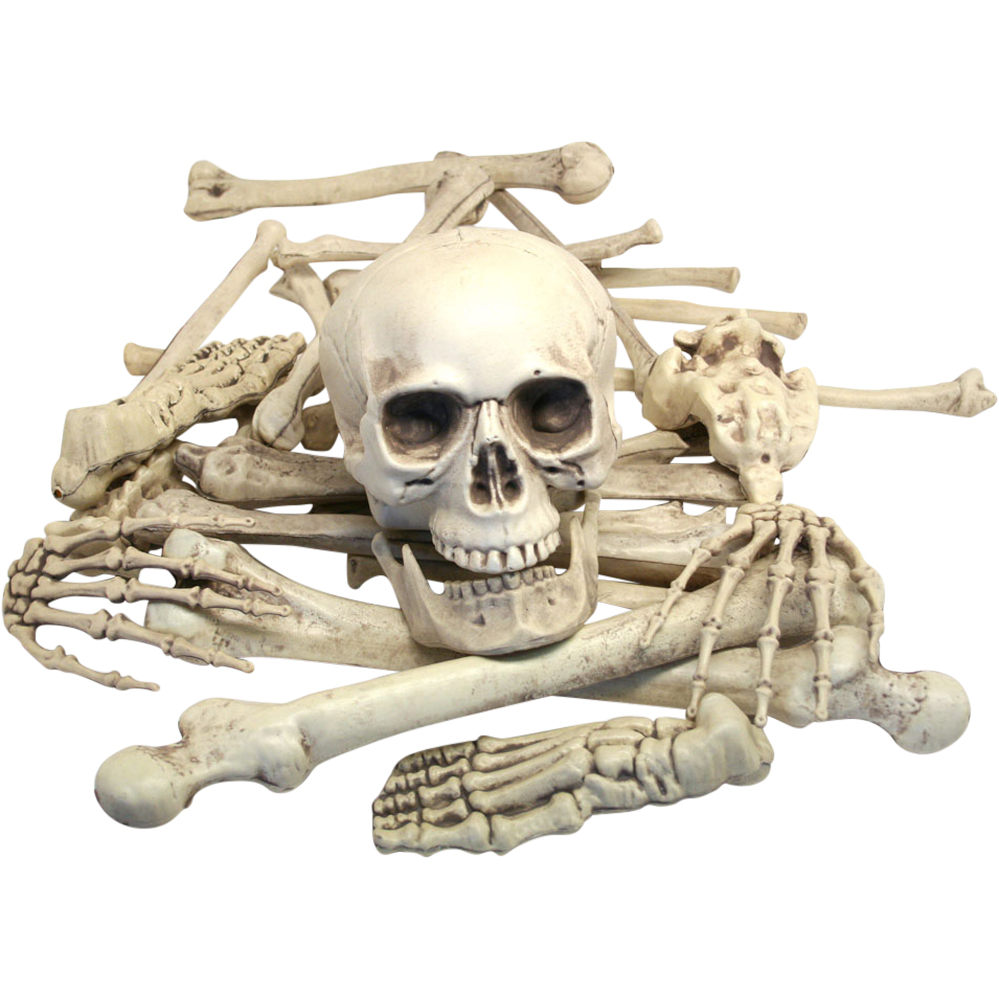
At the end of the story, he clearly tells the reader that he learned from Thomas Hardy that “the most brilliantly drawn character in a novel is but a bag of bones”. So, he is definitely aware that a character is a construct that has to be crafted from raw materials. It takes a master craftsman to build one with the right words to make it live and breathe on the page. He does it masterfully in this book with several characters. The protagonist, the beautiful young love interest, the love interest’s charming three-year-old daughter who is nearly slain in a horrific manner at the end of the book… The living villain is a well-crafted bag of bones, as is the ghost, the actual bag of bones in the story. But this is not a book review. Most of his books, at least the ones I have read, have the same sort of masterful characters.
There is so much more to be learned about novel writing from this book. He literally shows you how ideas are captured, how they are developed into stories, how you overcome “writer’s block”, and Noonan’s book he is writing within this book is even used as an example of how to poetically advance the plot. But this is not a book review. You should read this book. It is a very good and scary piece of work. But you should read it because it shows us how to write and do it like a master.
Nobody who wants to be a writer gets by with just writing and never reading anything by anybody else. It is too easy to devolve into some kind of human mushroom that way, thinking only thoughts a mushroom could think, all fungus-like and having no chlorophyll of their own. You never learn to decode other people and other people’s thinking if you don’t read other people’s thoughts crystallized in writing.
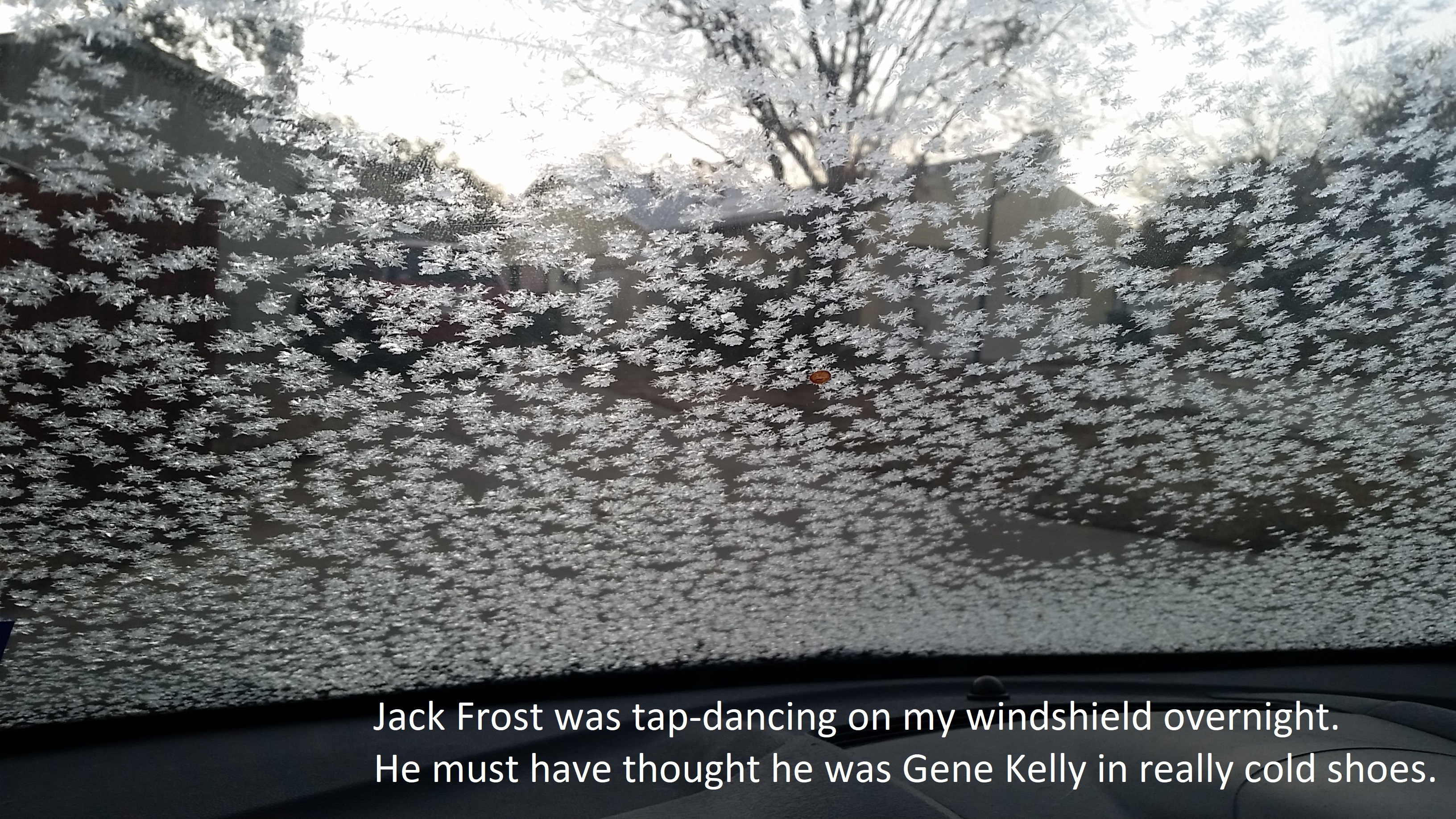
And not every other writer is Robert Frost. Or even Jack Frost who thinks he’s Gene Kelly. There has to be some interpretation, some digging for understanding. What did that writer mean when she said political correctness was like a tongue disease? And what does it mean when a commenting troll calls me a nekkid poofter? Is that how he spells “exceptional genius”? I think it is. Trolls are not smart.
I know people have to make an effort to understand me. When I write, I am writing under the delusion that I can produce literary quality off the top of my head. In fact, I can barely produce hair off the top of my head, and it is gray when I do it. See what I did there? It is the kind of joke a surrealist makes, pretending the idiomatic expression you use is to be taken literally when it doesn’t literally make sense. That kind of nonsense is what my readers have to put up with, and probably also the reason why most of them just look at the pictures. If you have to think too hard when you read, your brain could over-heat and your hair could catch fire. I like that kind of purple paisley prose that folds back in on itself and makes you think in curlicues. But most people don’t. Most people don’t have fire-proof hair like I do.
Of course, there is the opposite problem too. Some writers are not hard to understand at all. They only use simple sentences. They only use ideas that lots of other people have used before. You don’t have to think about what they write. You only need to react. They are the reasons that words like “trite”, “hackneyed”, “boring”, and “cliche” exist in English. But simple, boring writing isn’t written by stupid people. Hemingway is like that. Pared down to the basics. No frills. Yet able to yield complex thoughts, insights, and relationships.
Sometimes, it doesn’t even take a word to make the point. For instance, why, in the picture, is Fluttershy trying to drink out of the toilet in the dollhouse bathroom? For that matter, why does a doll house even need a bathroom? Applejack doesn’t even fit in that yellow bathtub. I know. I tried to stuff her in there for this picture. And, as you read this, doesn’t this paragraph tell you a lot about me that you probably didn’t even want to know?
When I am reading the writing of others, I am looking for a cornucopia of things. I want to not only understand their ideas, I want to detect the limping footprints across the murder scene of their paragraphs and come to know the deeper things about them as well. I spent years decoding and trying to understand the writing of preliterate kids in my middle school English classes in order to be able to teach them to write better. And I learned that no writer is a bad writer as long as they are using readable words. I also learned that very few writers are James Joyce or Marcel Proust. Thank God for that! And given enough time I can read anything by anybody and learn something from it. I read a lot. And it may not always make me a better writer to read it, but it always has value. It is always worth doing.
I know the last thing you would ever consider doing is to take up writing essays like these. What kind of a moronic bingo-boingo clown wants to take everything he or she knows, put it in a high-speed blender and turn it all into idea milkshakes?
But I was a writing teacher for many years. And now, being retired and having no students to yell at when my blood pressure gets high, the urge to teach it again is overwhelming.
So, here goes…
Once you have picked the silly, pointless, or semi-obnoxious idea you want to shape the essay around, you have to write a lead. A lead is the attention-grabbing device or booby-trap for readers that will draw them into your essay. In a Mickian essay, whose purpose is to entertain, or possibly bore you in a mildly amusing manner, or cause you enough brain damage to make you want to send me money (this last possibility never seems to work, but I thought I’d throw it in there just in case), the lead is usually a “surpriser”, something so amazingly dumb or off-the-wall crazy that you just have to read, at least a little bit, to find out if this writer is really that insane or what. The rest of the intro paragraph that is not part of the lead may be used to draw things together to suggest the essay is not simply a chaotic mass of silly words in random order. It can point the reader down the jungle path that he or she can take to come out of the other end of the essay alive.
Once started on this insane quest to build an essay that will strangle the senses and mix up the mind of the reader, you have to carry out the plan in three or four body paragraphs. This is where you have to use those bricks of brainiac bull-puckie that you have saved up to be the concrete details in the framework of the main rooms of the little idea-house you are constructing. If you were to number or label these main rooms, this one you are reading now would, for example, be Room #2, or B, or “the second body paragraph”. And as you read this paragraph, you should be thinking in the voice of your favorite English teacher of all time. The three main rooms in this example idea house are beginning, middle, and end. You could also call them introduction, body, and conclusion. These are the rooms of your idea house that the reader will live in during his or her brief stay (assuming they don’t run out of the house screaming after seeing the clutter in the entryway).
The last thing you have to do is the concluding paragraph. (Of course, you have to realize that we are not actually there yet in this essay. This is Room C in the smelly chickenhouse of this essay, the third body paragraph.) The escape hatch on the essay that may potentially explode into fireworks of thoughts, daydreams, or plans for something better to do with your life than a read an essay written by an insane former middle school English teacher at any moment, is a necessary part of the whole process. This is where you have to remind them of what the essay is basically about, and leave them with the thought that you want to haunt them in their nightmares later. The last thing that you say in the essay is the thing they are the most likely to remember. So you need to save the best for last.
So, here, finally, is the exit door to this masterfully mixed-up Mickian Essay. It is a simple, and straightforward structure. The introduction containing the lead is followed by three or four body paragraphs that develop the idea and end in a conclusion that summarizes or simply restates the overall main idea. And now you know why all of my former students either know how to construct an essay, or have several years left in therapy sessions with a psychiatrist.








 Of course, there is the opposite problem too. Some writers are not hard to understand at all. They only use simple sentences. They only use ideas that lots of other people have used before. You don’t have to think about what they write. You only need to react. They are the reasons that words like “trite”, “hackneyed”, “boring”, and “cliche” exist in English. But simple, boring writing isn’t written by stupid people. Hemingway is like that. Pared down to the basics. No frills. Yet able to yield complex thoughts, insights, and relationships.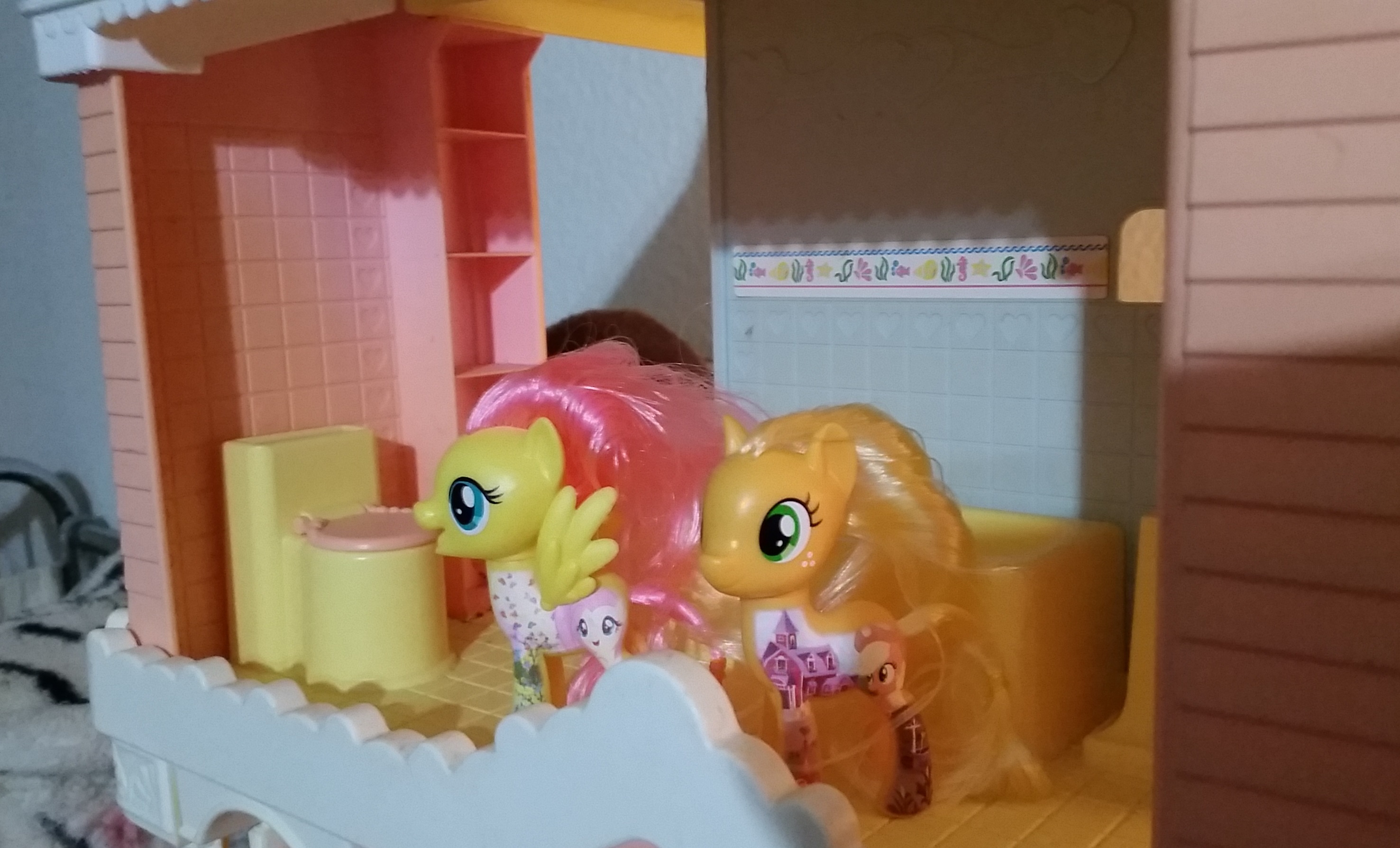
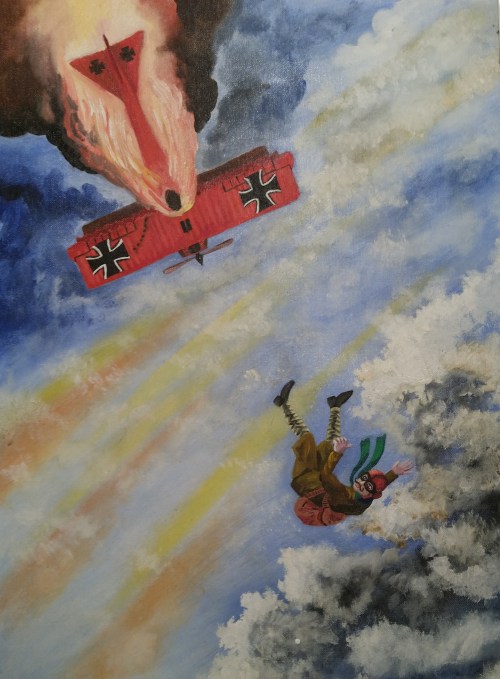
 Catch a Falling Star
The Cowboy Code
When I was a boy playing cowboys and Indians with cap pistols and rubber tomahawks, we all knew that cowboys had a code. The guy in the white hat always shoots straight. He knows right from wrong. He only shoots the bad guy. He even shoots the gun out of the bad guy’s hand if he can. Westerns are about right and wrong, good and bad, and the unyieldingly good knights of plains.
And boys believe what they see on TV and in the movie theaters. People who make television shows never lie, do they? In fact, Wyatt Earp was based on a real guy who really lived and really shot the bad guys at the gosh-darn real OK Corral.
Daniel Boone was a real guy too. He faced the opening up of new lands full of deadly dangers. And when Fess Parker played him in 1964, wearing Davy Crockett’s coonskin hat, he walked the earth like a guardian angel, making everyone safe by the end of the episode. He even knew which Indians were good and which were bad. Mingo was always on Daniel’s side. And when they spoke to each other about the dangers they faced, it was never about killing the people they feared. It was about doing what is was right, about helping the community at Boonesboro to survive. Being encouraging… looking forward to a more settled future created by following the cowboy frontier code.
So, I am left wondering what ever happened to the cowboy code? I listen to Republican presidential candidates talking about dipping bullets in pig’s blood to kill Muslims, and building walls against Mexican immigrants, and why our right to carry assault rifles is sacred, and I wonder what happened. Didn’t they experience the same education from the television versions of the Great American Mythology? Didn’t they learn the code too?
I am old enough now to know that cap guns are not real guns and you cannot solve problems by shooting somebody. But that was never the point of the cowboy code. We need straight-shooters again in our lives, not to shoot people, but to tell the unvarnished truth. We need wise people who can tell who are the good Indians and who are the bad We need them to shoot the weapons out of the bad guys’ hands. And I know that’s asking for leaders to be larger than life and be more perfect than a man can actually be. But Daniel Boone was a real man. Myths and legends start with a fundamental truth.
Leave a comment
Filed under autobiography, commentary, cowboys, humor, insight, philosophy, politics, Uncategorized
Tagged as arizona, autobiography, childhood beliefs, cowboy code, Daniel Boone, humor, politics, Red Ryder, Roy Rogers, satire, writing, Wyatt Earp