


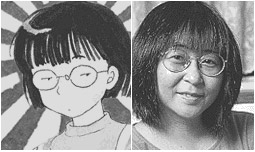
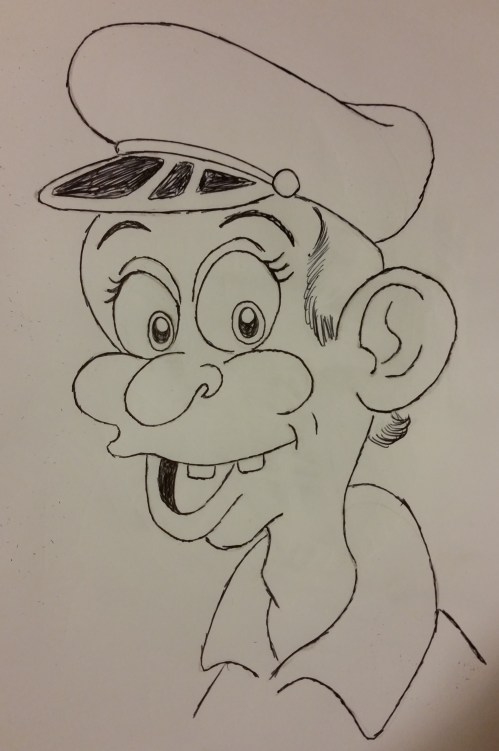
Yesterday I used a Paffooney I had stolen to illustrate my gymnasium adventures, and in the caption I gave credit to the wonderful comic artist I shamelessly copied it from. The second imitation Takahashi that I did yesterday is now displayed next to it above. I am now compelled to explain about my goofy, sideways obsession with Anime and Manga, the cartoons from Japan. I love the art style. I have since I fell in love with Astroboy Anime as a child in Iowa. Rumiko Takahashi is almost exactly one year younger than me. As a cartoonist she is light years more successful than me. She has been crafting pen and ink masterpieces of goofy story-telling longer than I have been a teacher.
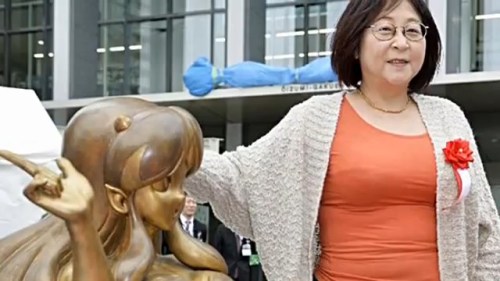
Her artwork is a primary reason I have been so overly-enamored of the Japanese Manga-cartoon style. I love the big eyes, the child-like features of even adult characters, the weird poses and still-weirder comic art conventions of this culture from practically a different planet. She has created comic series that are immensely popular in Japan, and have even put down sturdy roots in this country, especially with young adults since the 80’s. She is the world’s number one best-selling female comics artist.


Just as we Westerners have to accept numerous ridiculous things to appreciate the stories told in American comics (for instance, brawny heroes running around in tights with their underwear on the outside of their pants, nearly naked ladies with super powers diving into battle next to men encased in armored suits, and talking animals), the Manga-minded must also practice a bizarre form of the willing suspension of disbelief. In Ranma 1/2, the main character is a boy marshal artist who turns into a girl when splashed with cold water. Much of the romantic comedy of that work revolves around boys and old men finding themselves in the bath house next to naked young girls. For some reason that sort of naked surprise causes the boys to spout fountain-like nosebleeds. In Inu-Yasha the whole thing is about fighting demons with swords. Inu-Yasha himself is part demon. Apparently part-demon is a good thing to be. Japanese villains are spectacularly susceptible to fits of crying rage and tantrums. And everybody looks more like American white people than orientals. Oh, and there are talking animals.
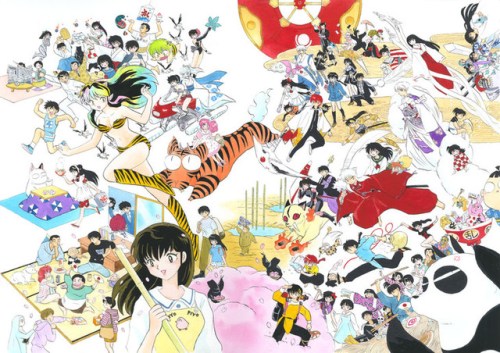
Rumiko is a master of pen and ink. Here is a sample of of her black and white work.


And she does color well too.
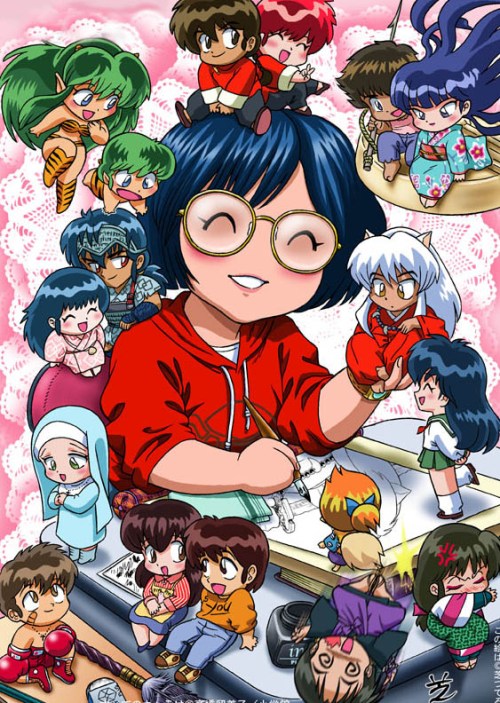
The little people are a special style of Manga character called a Chibi, and all regular Manga characters can turn into one at any moment.
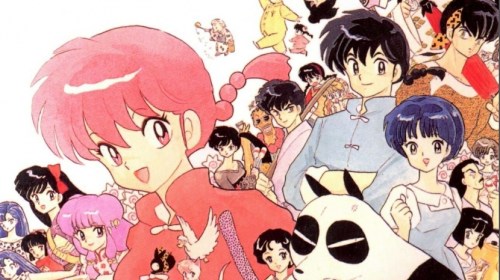
And, of course, to read actual Manga you have to master reading backwards. Americans read left to right. The Japanese read right to left. You have to open a Japanese book in a manner that seems both backwards and upside down.
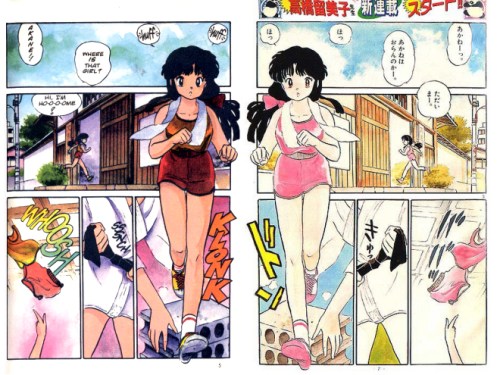
This illustration shows how American publishers flip Japanese comics to make them more accessible to American audiences.
So now, by uncovering the fact that I am addicted to and seriously affected by Japanese cartoons, you have one more bit of evidence to present to a jury in case you decide Mickey needs to be locked up and medicated for a while. Japanese comics are a world of great beauty, but also a world unto themselves. It is an acquired taste that has to be considered carefully. And of all the many marvelous Manga makers, Rumiko Takahashi is the one I love the best.

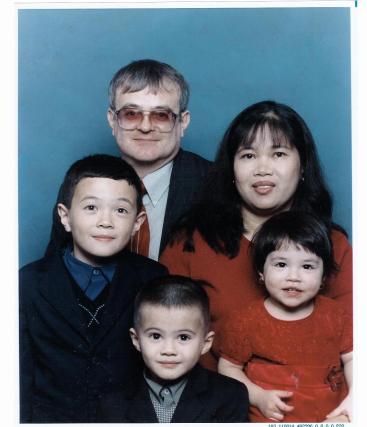



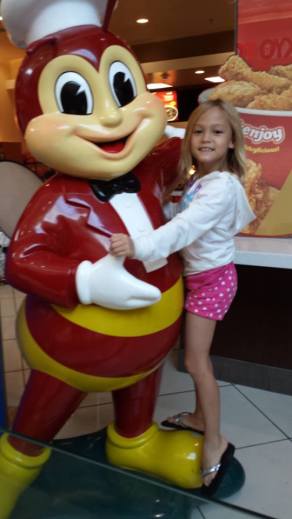 #3. To know about Filipino culture, you have to understand what Jollibee is all about. Jollibee is the Filipino MacDonald’s. Of course, it is cheaper… and better tasting. There are a few of them around the country here. California has more than Texas. They are like a giant Filipino magnet. You go there to find the Filipino community in any American city. But other people love the food too. You have to sort the Filipinos from the Hispanics and white folks that are not too proud to eat cheap and delicious.
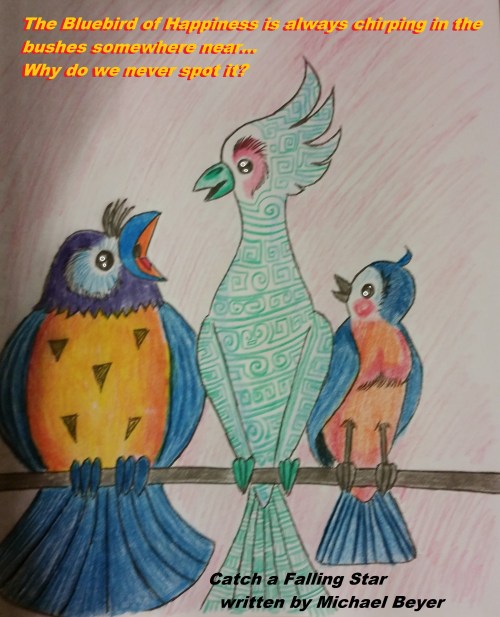

 Catch a Falling Star
Living in the Spider Kingdom
Life seems to be getting harder and harder. And I realize that a big part of that perception is the fact that my health is deteriorating quickly. This is a humor blog, but it has been getting more and more serious and more and more grim as the grim reaper becomes more and more a central character in my own personal story.
My perception of reality, however, is best explained by a passage in a novel that spoke to me in college. It comes from the novel, the Bildungsroman by Thomas Mann called Der Zauberberg, in English, The Magic Mountain. In the scene, Hans Castorp is possibly freezing to death, and he hallucinates a pastoral mountainside scene where children are happily playing in the sunshine. Possibly Heaven? But maybe not. As he goes into a stone building and finds a passage down into the ground, he sees wrinkled, ugly, horrible hags gathered around a child’s corpse, eating it. And this vision explains the duality at the center of the meaning of life.
For every good thing, there is an equal and opposite bad thing that balances it out. There is no understanding what perfection and goodness mean without knowing profanity and evil. Just as you can’t understand hot without cold nor light without darkness. And you don’t get to overturn the way it is. You try your hardest to stay on the heads side of the coin knowing that half the time life falls to tails.
So, what good does it do me to think about and write about things like this? Well, it makes for me a sort of philosophical gyroscope that spins and dances and helps me keep my balance in the stormy sea of daily life. I deal with hard things with humor and a sense of literary irony. I make complex metaphors that help me throw a rope around the things that hurt me.
We are living now in the Spider Kingdom. Hard times are here again. The corrupt and corpulent corporate spiders are spinning the many webs we are trapped in. As metaphorical as it is, we wouldn’t have the government we currently have and be suffering the way we are if that weren’t true.
But no bad thing nor no good thing lasts forever. The wheel goes round and round. The top of the wheel reaches the bottom just as often as the bottom returns to the top. So, it will all pass if we can only hold out long enough.
Leave a comment
Filed under commentary, empathy, feeling sorry for myself, humor, metaphor, Paffooney, philosophy
Tagged as 365ways, art, book review, books, food, grim-reaper, hemingway, horror, humor, oregon, photography