
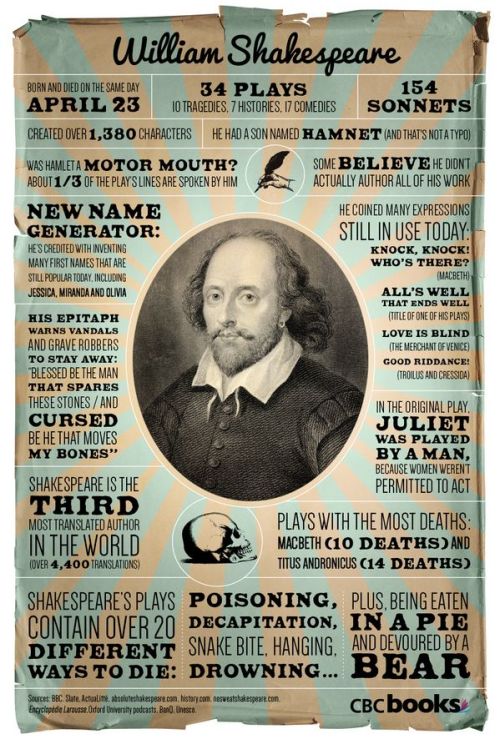
Despite my skepticism about the accepted wisdom in regard to the historical William Shakespeare, I do deeply love the body of work that is Shakespeare. My most favorite play is The Tempest, the final play in the canon. I also have read and loved As You Like It, Romeo and Juliet, Hamlet, A Midsummer Night’s Dream, The Merchant of Venice, Henry V, Richard III, Julius Caesar, Macbeth, Othello, and King Lear. I know that is not all of the plays, but that is probably more than most people have read. And of course, as an English major in college, and later as a teacher, I have actually analyzed, compared, studied, and taught some of these plays. So, the Shakespeare I know is the Shakespeare of the writer’s own mind, his communicated wit and wisdom, imagination and intellect.
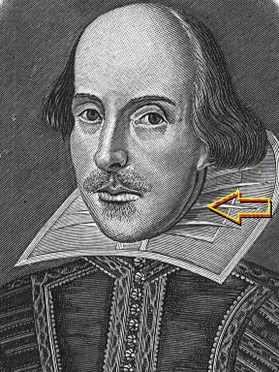
And I do not have any disdain or disrespect to give the Stratford guy. To say that, in the Elizabethan world, the actor son of a tradesman with only a grammar school education could not have been the mind behind the literary masterworks is foolish. The Stratford guy owned and operated the Globe theater at a time when “the play was the thing”. All of London society, rich and poor, gloried in the theater, and Shakespeare did for Elizabethan plays what Babe Ruth did for baseball. He was a good enough business man to make himself a decent fortune. Although, apparently, this world-shaking author didn’t spend any of his money on owning books, which in my experience is extremely rare among writers. His life, bound up in an urban existence that never traveled outside of the country also somehow produced great works that were set in places in Europe, especially Italy, that described those settings in accurate detail. As a working actor, he also apparently had the time to study law and somehow learn the inner workings of the royal courts of more than one country. And the plots were not original. He took existing stories that already were a part of European literature and lore and wove them into rich tapestries of human striving, laughable foibles, and a deep understanding of basic human character. But I do have doubts that the businessman and actor from Stratford was the real writer of the plays.
I have already told you that I don’t believe Sir Francis Bacon was secretly Shakespeare. Christopher Marlowe wasn’t either. And I have unsuccessfully made a case against Shakspere, the Stratford guy. So who could possibly be the real William Shakespeare? Well, I am not going to be able to make a decent case for him in the 100 words that I have left to end this essay with. So there has to be more to come. (And stop screaming obscenities at the computer screen. I am going to reveal the name before the end of this essay. And I promise not to make my case for him in coming days too boring and horrible.) I have to show why I believe that the true heart of Shakespeare could only have beaten within the body of Edward deVere, the Earl of Oxford.






















The Alchemist by Paulo Coelho
Some books come along telling a story that has to be taken seriously in ways that don’t make sense in any normal way. The Alchemist is one of those books.
What is an alchemist, after all?
An alchemist uses the medieval forms of the art of chemistry to transmute things, one thing becoming another thing.
Coelho in this book is himself an alchemist of ideas. He uses this book to transmute one idea into another until he digs deep enough into the pile of ideas to finally transmute words into wisdom.
There is a great deal of wisdom in this book, and I can actually share some of it here without spoiling the story.
Here are a few gemstones of wisdom from the Alchemist’s treasure chest;
“It’s the possibility of having a dream come true that makes life interesting…” (p.13)
“It’s the simple things in life that are the most extraordinary; only wise men are able to understand them.” (p.17)
“All things are one. And, when you want something, all the universe conspires in helping you to achieve it.” (p.24)
“And when he had gone only a short distance, he realized that, while they were erecting the stall, one of them had spoken Arabic and the other Spanish. And they had understood each other perfectly well. There must be a language that doesn’t depend on words, the boy thought.” (p.45)
All of these quotes from the book, as you can see, come from the first third of the book. There are many more treasures to be found in this book. I should not share them with you here. Just as the main character of the story learns, you have to do the work for yourself. But this book is not only an enjoyable read, but a map for how you can execute your own journey towards your “Personal Legend”. In fact, you may find that the book tells you not only how to go about making a dream come true, but, if you are already on that journey successfully, it tells you what things you are already doing right.
Leave a comment
Filed under book reports, book review, commentary, good books, magic, strange and wonderful ideas about life, wisdom, wizards
Tagged as book review, books, fantasy, fiction, magical books, mystical books, reading, the Alchemist by Paulo Coelho