Tag Archives: books

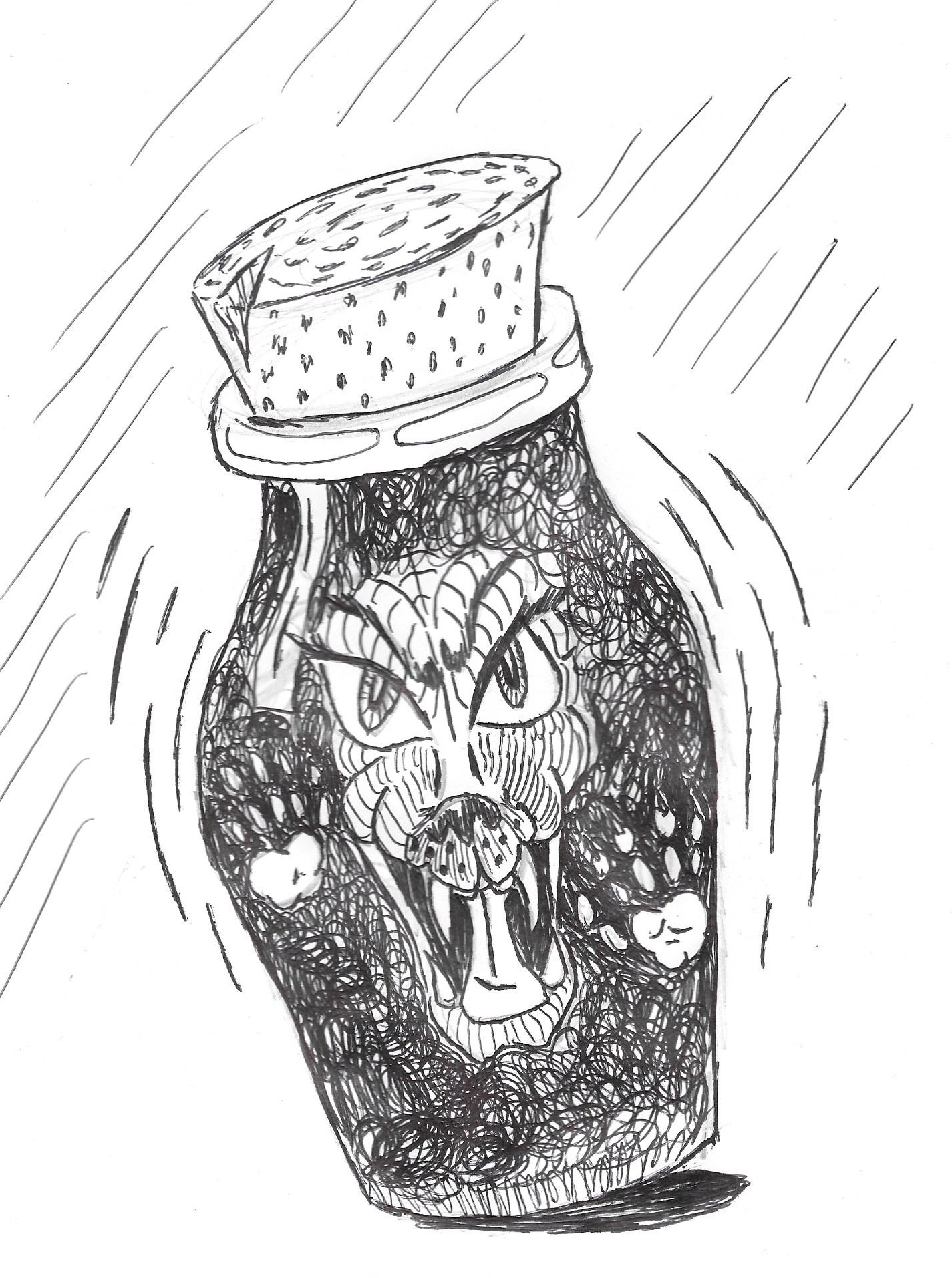
Writing a Horror Story

Candle-lit nightmares become stories and keep me awake late at night.

I am now closing in on the publication of The Baby Werewolf, a novel whose story began with a nightmare in 1978.  It was a dream I had about being a monster.  I woke up in a cold sweat and realized, to my complete horror, that I had been repressing the memory of being sexually assaulted for twelve years, the thing that almost brought me to suicide in 1973 and that I couldn’t put into words when I talked to counselors and ministers and friends who tried to keep me alive without even knowing that that was what the dark black words were about.

I don’t normally write horror stories.  Yes, it is true, a character of some sort dies at the end of practically every novel I have ever written, but those are comedies.  I am sort of the anti-Shakespeare in that sense.  The Bard wrote comedies that ended with weddings and tragedies that end in death.  So, since my comedies all seem to end in death, I guess if I ever write a tragedy, it will have to end with a wedding.

Torrie Brownfield

But writing this horror story is no joke for me, though I admit to using humor in it liberally.  It is a necessary act of confession and redemption for me to put all those dark and terrible feelings into words.

The main theme of the story is coming to grips with feeling like you are a monster when it is actually someone else’s fault that you feel that way.  Torrie, the main character, is not the real werewolf of the story.  He is merely a boy with hypertrichosis, the werewolf-hair disorder.  He has been made to feel like a monster because of the psychological and physical abuse heaped upon him by the real werewolf of the story, an unhappy child pornographer and abuser who is enabled by other adults who should know better and who should not be so easily fooled.  The basis of the tale is the suffering I myself experienced as a child victim.

It is not easy to write a story like this, draining pain from scars on my own soul to paint a portrait of something that still terrifies me to this day, even though I am more than sixty years old and my abuser is now dead.  But as I continue to reread and edit this book, I can’t help but feel like it has been worth the pain and the striving.  No one else in the entire world may ever want to read this book, but I am proud of it.  It allowed me to put a silver bullet in the heart of a werewolf who has been chasing me for fifty-two years.  And that’s how the monster movie in my head is supposed to end, with the monster dead, even though I know the possibility of more monsters in the darkness still exists.

Leave a comment

Filed under autobiography, horror writing, humor, NOVEL WRITING, Paffooney

The Art of Being Mickey

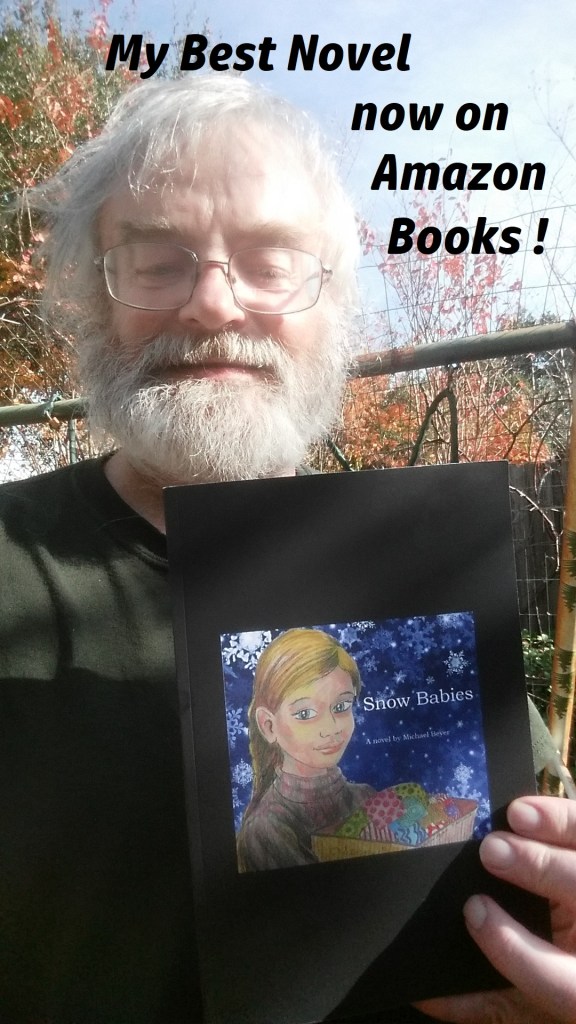
I have published my eighth novel in the last six years. (This is, of course, a re-post of an old essay.) Sure, it is through mostly self-publishing of novels that no one but me has ever read. Catch a Falling Star and Snow Babies both had a professional editor, one who had worked for Harcourt and one who worked for PDMI. Magical Miss Morgan has had a proofreader who made numerous stupid mistake errors that I had to change back to the original meticulously by hand. But all three of those novels won an award or were finalists in a young adult novel contest. I do have reason to believe I am a competent writer and better even than some who have achieved commercial success.

But what is the real reason that I am so intent on producing the maximum amount of creative work possible in this decade? Well, to be coldly objective, I am a diabetic who cannot currently afford insulin. I have been betrayed by the for-profit healthcare system that treats me as a source of unending profit. I am like a laying hen in the chicken house, giving my eggs of effort away to a farmer who means to eat my very children if time and circumstance allows. I am the victim of six incurable diseases and conditions that I got most likely as a result of exposure to toxic farm chemicals in the early 70’s. I am also a cancer survivor from a malignant melanoma in 1983, and for three years now I have not been able to get the preventative cancer tests I am supposed to be receiving every year for the rest of my life. My prostate could very well be cancerous as I write this. If that is so, it will kill me unawares, because I don’t even want to know about having a disease I can’t possibly afford to fight all over again.’

So, the basic reason I am going through the most productive and creative period of my entire life is because I have a great rage to create before I die and I could be dying as soon as tonight. All of the countless stories in my head clamoring to be written down before it is too late cry out to me desperately for my immediate attention.

I will, then, continue to write stories and draw cartoons and other Paffoonies for as long as I am still able, and possibly even afterward. I have, after all, threatened repeatedly to become a ghostwriter after I die. And, yes, I understand when you scream at my essay that that is not what a ghostwriter is. But if a woman can channel the ghost of Franz Schubert and finish his unfinished symphony…(https://en.wikipedia.org/wiki/Rosemary_Brown_(spiritualist))

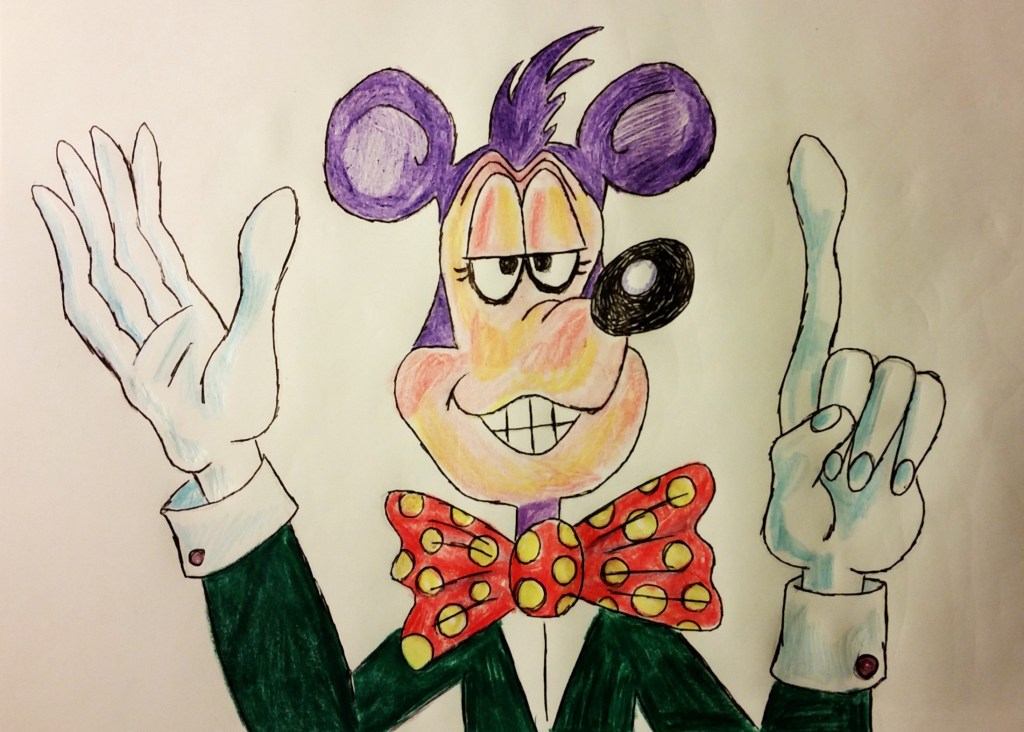
—then I should also be able to tell my stories from beyond the grave. I have been percolating them in my head and writing and drawing them in whole or in part since 1974. I have too much time and too many daydreams wrapped up in them to let it all just evaporate into the ether. In summation, I am claiming stupidly that my novels, crack-brained and wacky as they are, are somehow destined to exist, either because of me or in spite of me. So just be happy that I write what I write, for there is an art to being Mickey, and I am the one artist and writer who is the best Mickey possible if truly there ever was a real Mickey.

Leave a comment

Filed under battling depression, commentary, goofy thoughts, humor, novel writing, Paffooney

The Interstellar Bad Poetry Challenge

c360_2016-12-18-09-40-07-285

The Ixcanixian Cultural Ambassador from the Squeelix Sector of the Planet Ixcanix sent me an e-mail about his planet’s newest idea for a cultural exchange.  He calls it the “Ixcanixian Spleegle Gorn Vorpaloop” which translates to the “Ixcanixian Interstellar Bad Poetry Challenge”.  At least, it does if I am conjugating the verb “Vorpaloop” correctly.  It is difficult because you have to drop the silent “y” before adding the “aloop” without causing it to explode.  I know it is probably a very bad idea to present it here on this planet, but he talked me into it by promising to promote my novel Catch a Falling Star on his homeworld and at least two other planets in the Bugeye Federation.

Here are the rules for the alien poetry contest;

  1. Entries can only come from planets in the Orion Spur of the Sagittarius  Spiral Arm of the Milky Way Galaxy.  (So, for you non-astronomers out there, we on Earth do qualify.)
  2. All poets must be less intelligent than the Mud-Eaters of Paralaxos IV as they will be employed as judges of what poetry is truly bad.  (Again, Earth qualifies as we have recently re-elected Trump and also allow Nigel Farage of Great Britain to continue to exist.)
  3. Entries must not be so long that the total weight of letters exceed critical mass and form black holes in the intergalactic servers when uploaded.
  4. Vogons need not apply.  Their poetry is so bad that they would automatically win, causing the death of trillions of bad poetry readers in the galaxy.
  5. Entries must not cause thermonuclear reactions with cesium.
  6. Please refrain from confusing good poetry with bad poetry.  The Vornloos of Talos XII are looking for poetry they can weaponize, and no one wants a poetry contest winner to suddenly create World Peace on Talos XII.  That would be bad for the galaxy as a whole in ways that are very difficult to explain.

A sample of interstellar bad poetry is included here to inspire the kind of poetry we seek.

Ratzen Bargle’s Bisketoon  (a love poem by Touperary Kloob, Poet Laureate of Antares VI)

Ratzen Bargle was a Doofus,

From the planet Rufus-Ploofiss,

And he had a lovely bride,

With a head not tall, but twice as wide.

She had three eyes, and two were green.

She had the loveliest fleen you’ve ever seen.

And as they sat ‘neath a wayward moon,

He kissed his lovely bisketoon.

Immediately before naught was said,

She bit off his tiny three-eyed head.

And then she ate him bones and all

With sauce that really becomes the fall.

And so it is on Rufus-Ploofiss,

That  males all die with one last roof-kiss.

Because they sit under wayward moons

With their lovely, hungry bisketoons.
Should you have the unfortunate urge to participate in this senseless and probably suicidal poetry contest, you are welcome to offer four-line poems in the comment section, or email longer poems to Mickey at mbeyer51@gmail.com.  I will attempt to transmit the worst offers to the Ixcanixians as soon as I get my interstellar flooglebeeder transmitting again.  I will also post winners in a future alien poetry blog.

I have been warned that prizes range from instant execution by the Lizard Lords of Galtorr Prime to a beat up copy of Mickey’s 2012 novel Catch a Falling Star.  So, good luck with the bad poetry.

I must confess, I did not submit any of my terrible poetry as I don’t want any of the prizes.

Leave a comment

Filed under aliens, goofiness, humor, Paffooney, pen and ink, poem, poetry, satire, science fiction

A $3.00 Treasure Trove

C360_2016-12-21-17-27-40-934.jpg

If you cruise the bargain sections in an old used book store like Half-Price Books, eventually you are going to find something priceless.  This book I am showing you is that very thing for me.

It was copyrighted in 1978.  The inscription inside the front cover says this was a Father’s Day gift on June 19th, 1988.  Someone named Gary gifted it to someone named Claude in Burleson, Texas.  It was probably a cherished book until someone passed away and the book changed hands in an estate sale.

c360_2016-12-21-17-26-52-638

Howard Pyle

The book chronicles the height of the publishing era when being able to print books and reproduce artworks began entertaining the masses.  Always before painters and great artists worked for a patron for the purpose of decorating their home in a way that displayed their great wealth.  But from the 1880’s to the rise of cinema, magazines and books kept the masses entertained, helped more people to become literate than ever before, and created the stories that made our shared culture and life experiences grow stronger and ever more inventive.  The book focuses on the best of the best among a new breed of artist… the illustrators.

These are the ones the book details;

Howard Pyle, N.C. Wyeth, Frederick Remington, Maxfield Parrish, J.C. Leyendecker, Norman Rockwell, Charles Dana Gibson, Howard Chandler Christy, James Montgomery Flagg, and John Held Jr.

c360_2016-12-21-17-26-08-244

N.C. Wyeth

Wyeth was most famous as a book illustrator for Treasure Island, Kidnapped, other books by Robert Louis Stevenson, Mark Twain,  and a famous volume of tales about Robin Hood.

c360_2016-12-21-17-25-30-575

Frederick Remington

Remington is a name you probably know as a maker of Western art.  He was a famous painter of cowboys and Indians and the American frontier.

c360_2016-12-21-17-25-11-104

Maxfield Parrish

Maxfield Parrish is my all-time favorite painter.  His work is something I gushed about in previous posts because I own other books about his fanciful works painted in Maxfield Parrish blue.

c360_2016-12-21-17-24-36-579

Also Maxfield Parrish


c360_2016-12-21-17-24-09-869

J.C. Leyendecker

You will probably recognize Leyendecker’s work in magazine and advertising illustration as the standard of the Roaring 20’s.  His paintings set a style that swept American culture for more than a decade, and still affects how we dress to this very day.


c360_2016-12-21-17-23-44-163

More Leyendecker


c360_2016-12-21-17-23-26-011

Even more from Leyendecker


c360_2016-12-21-17-22-58-983

Norman Rockwell

Norman Rockwell and his work for The Saturday Evening Post is still familiar to practically everyone who reads and looks at the illustrations.  As you can see he was a master of folksy realism and could do a portrait better than practically anyone.


c360_2016-12-21-17-22-02-082

Also Rockwell

I have also written about Norman Rockwell before too.  I have half a dozen books that include his works.  My wife is from the Philippines and she knew about him before I ever said a word to her about him.

c360_2016-12-21-17-21-38-237

Charles Dana Gibson

As you can plainly see, Gibson was a master of pen and ink.  His work for Collier’s and other magazines thrills in simple black and white.  More cartoonists than just little ol’ me obsess about how he did what he did.

c360_2016-12-21-17-21-14-634

Also Gibson


c360_2016-12-21-17-20-49-992

James Montgomery Flagg… with a name like that, who else could it be?


c360_2016-12-21-17-20-06-847

John Held Jr.

The work of Held is stylistically different than all the rest in easily noticeable ways.  He’s the guy that made all the big-headed Pinocchio-looking people in the 1920’s.  You may have seen his work before, though you probably never knew his name.

This bit of someone else’s treasure hoard will now become a part of my own dragon’s treasure, staying by my bedside for quite a while, while I continue to suck the marrow from each of its bones.  I love this book.  It is mine, and you can’t have it… unless you find your own copy in a used bookstore somewhere.

Leave a comment

Filed under art criticism, art my Grandpa loved, book reports, book review, humor, illustrations, imagination, oil painting, old art, old books, pen and ink, Uncategorized

Islands of Identity

Island Girl2z

Who am I?

Why do I do the things that I do?

No man is an island.  John Donne the English poet stated that.  And Ernest Hemingway quoted it… and wove it into his stories as a major theme… and proceeded to try to disprove it.  We need other people.  I married an island girl from the island of Luzon in the Philippines.  She may have actually needed me too, though she will never admit it.

Gilligans Island

When I was a young junior high school teacher in the early eighties, they called me Mr. Gilligan.  My classroom was known as Gilligan’s Island.  This came about because a goofball student in the very first class on the very first day said, “You look like Gilligan’s Island!”  By which he meant I reminded him of Bob Denver, the actor that played Gilligan.  But as he said it, he was actually accusing me of being an island.  And no man is an island.  Thank you, Fabian, you were sorta dumb, but I loved you for it.

20160730_061115

You see, being Gilligan on Gilligan’s Island was not a bad thing to be.  It was who I was as a teacher.  Nerdy, awkward, telling stories about when I was young, and my doofy friends like Skinny Mulligan.  Being a teacher gave me an identity.  And Gilligan was stranded on the Island with two beautiful single women, Mary Ann and Ginger.  Not a bad thing to be.  And I loved teaching and telling stories to kids who would later be the doofy students in new stories.

But we go through life searching for who we are and why we are here.  Now that I am retired, and no longer a teacher… who am I now?  We never really find the answer.  Answers change over time.  And so do I.

Leave a comment

Filed under artwork, being alone, feeling sorry for myself, finding love, humor, insight, Paffooney, strange and wonderful ideas about life

What Are You Reading, Mickey?

Well, I have a thing for collecting old books. This one is 100 years old. It is a modern edition, though, re-published in 2003.

Here’s my Goodreads review;

This book is an ancient treasure in many ways, being now more than 100 years old. The illustrations by John O’Neill, too, have a very antique charm. The book is a little short on plot. Dorothy wanders off from the Kansas farm, meets the hobo Shaggy Man, and Button Bright, one of the stupidest little boys in literature. They meet old friends along the way; Jack Pumpkinhead, H.M. Wogglebug T.E., the Tin Man, the Scarecrow, the Cowardly Lion, the Hungry Tiger, Tik Tok the mechanical man, Billina the Talking Yellow Chicken, and the living Sawhorse. And they all end the story at Princess Ozma”s birthday party where Santa Claus is the favorite guest. This is a potboiler novel for Baum, obviously written only because the readers all begged for it, and it has a lot in it to be enjoyed by true fans of Oz, but not much in the way of suspense or excitement. It can easily be summed up in the words of Button Bright, “I don’t know,” which he says in answer to every question.

I find the illustrations more compelling than the story itself, but I have to admit that the story itself is incredibly visual.

I love this book, even though I don’t respect it much as a storyteller myself. But it is the fourth Oz book I have read since childhood. And it isn’t because of the story. Frank L. Baum is a genius at creating loveable and memorable characters. And these illustrations are wonderful. The Shaggy Man with the head of a donkey? Absolutely fabulous! You can’t beat that. (Well, you can. But whether he’s a donkey or a man, it’s still a crime. )

Leave a comment

Filed under book reports, book review, humor, Uncategorized

I Love to Laugh

“Mickey, why can’t you be more serious, the way smart people are?”

“Well, now, my dear, I think I take humor very seriously.”

“How can you say that?  You never seem to be serious for more than a few seconds in a row.”

“I can say it in a high, squeaky, falsetto voice so I sound like Mickey Mouse.”

“You know that’s not what I mean.”

“I can also burp it… Well, maybe not so much since I was in junior high.”

THREE STOOGES, THE

“I distinctly remember getting in trouble in Mrs. Mennenga’s third grade class in school for pantomiming pulling my beating heart out of my chest and accidentally dropping it on the floor.  She lectured me about being more studious.  But I made Alicia sitting in the row beside me laugh.  It was all worth it.  And the teacher was right.  I don’t remember anything from the lesson on adding fractions we were supposed to be doing.  But I remember that laugh.  It is one precious piece of the golden treasure I put in the treasure chest of memories I keep stored in my heart.”

Groucho

“I always listened to the words Groucho Marx was saying, even though he said them awfully fast and sneaky-like.  I listened to the words.  Other characters didn’t seem to listen to him.  He didn’t seem to listen to them.  Yet, how could he respond like he did if he really wasn’t listening?  In his answers were always golden bits of wisdom.  Other people laughed at his jokes when the laugh track told them to.  I laughed when I understood the wisdom.”

727-1

“Laughing is a way of showing understanding.  Laughing is a way of making yourself feel good.  Laughing is good for your brain and your heart and your soul.  So, I want to laugh more.  I need to laugh more.  I love to laugh.”

Leave a comment

Filed under autobiography, comedians, commentary, goofiness, goofy thoughts, humor, irony, Paffooney, strange and wonderful ideas about life, wisdom

Friedrich Nietzsche is a Crazy, Stupid, Idiot

Yes, Friedrich Nietzsche, the philosopher of “der Ubermensch,” the Superman, and the famous quote, “God is dead,” is not very smart. Of course, that’s probably because he’s been dead since 1900. It is a little difficult to think once you are no longer alive and your brain has turned to stinky muck in your coffin under the ground. And you cannot hope to defend your recorded intelligence in the written works you have left behind if you are totally dead and unaware of how people may be misinterpreting your ideas.

This is old crazy Fred with his pet hairy caterpillar which he always kept right under his nose his whole adult life.

Crazy Fred was born in 1844. He was multi-talented, being a philosopher, poet, musical composer, and a writer of fiction. He was something of a genius for a while. At the age of 24 he became the youngest person ever to hold the prestigious Chair of Classical Philology at the University of Basel, His radical philosophy created a critique of truth that leaned in favor of perspectivism. And as he continued down paths of making ironic aphorisms and exercising his wits to wander into thinking that life is meaningless and the roots of nihilism, he more or less stumbled into the view of his philosophy that there was no hope for the future but the improvement of the self.

I think it could be argued that Crazy Fred did indeed become a monster with the abyss staring back at him. At the age of 44 he had a complete mental breakdown. After that, for the remaining 11 years of his life, he had to be cared for by his mother… until she died in 1897, and then by his sister Elizabeth until he died in 1900. If street stories are to be believed, he escaped from his home, found a horse being beaten by its owner, stepped in to save the horse from the beating, then turned to the horse, hugged its neck, and died.

This drawing by Hans Olde shows Crazy Fred during his insane years. It was used as a textbook illustration for dementia.

His writings were inherited by his sister Elizabeth. And she was an ultra-nationalist. Under her management, his writings were edited to fit her agenda for a new Germany, and so his ideas were credited with founding the Nazi movement and the quest for Aryan superiority… eugenics and genocide were to follow.

Ironically, Crazy Fred was radically opposed to anti-Semitism and most of the ideas that Hitler and the Nazis would give him credit for.

Don’t get me wrong. There are a lot of good things in Crazy Fred’s philosophical teachings that make him worth reading and studying. He identified two distinct forms of thought that operate in culture. He called them Apollonian and Dionysian styles of thinking. Apollonian is associated with the sun god Apollo, rationalism, logic, order, and clarity. Dionysian is associated with the god of wine and sensuality, Dionysius, emotionality, chaos, intuition, and obscurity. These cultural definitions are very useful for understanding human behavior.

But Crazy Fred is controversial to this day. I am not the only one that thinks he’s a coocoo bird and wrong about a lot of things. And, yet, his work led to very good things as well as the questionable. Much of the philosophy of the 1960’s owes its progress to him, from the Apollonian Bertrand Russel to the Dionysian Albert Camus.

Nietzsche said, “What doesn’t kill us, makes us stronger.”

Clearly, I believe I myself am proof that Crazy Fred was wrong about that one. After six incurable diseases, surviving skin cancer, and making it most of the way through the Covid Pandemic alive, an awful lot of things didn’t kill me so far. By rights, if what Fred said is true, then I should be stronger than Superman. X-ray vision and the power of flight too. You can tell by the picture that if I am like Superman, then I have seen entirely too much Kryptonite up close.

Leave a comment

Filed under humor, philosophy

How It Should Be… According to Mickey

A 1951 Schwinn Spitfire like mine in 1963 when the world was golden.

My bicycle was red. It was red and looked just like the ones that Captain Kangaroo had in his commercials that we watched on a black-and-white TV every day before we walked or rode our bicycle to school, across town a whole long seven blocks away. After school I could ride it out a whole mile and a half to Jack’s farm with Bobby and Richard and Mark the preacher’s kid to go skinny dipping in the cold creek in Jack’s South pasture. Jack was younger than any of us except Bobby. And it was a golden age.

Spiderman comic books and Avengers comic books cost twelve cents to own, but they were forbidden. And as much as we sneaked them and passed them around until they fell apart, usually in Bobby’s hands, we never knew that Dr. Wertham had gone to Congress to make our parents believe that comic books would make us gay and violent. He was a psychiatrist who wrote a book, so even if you didn’t believe him, you had to worry about such things.

I believed in Santa Claus until 1967. And after I found out, I only despaired a tiny little bit, because I began to understand you have to grow up. And adults can lie to you, even if they don’t do it to be mean. And the world is a hard place. And the golden age ended in November of 1963 when JFK was assassinated.

In June of 1968 I rode my bicycle out to the Bingham Park woods, Once there, I took off all my clothes and put them in the bicycle basket, and then I rode up and down the walking paths through the trees with nothing between me and God but my skin. I had a serious think about how life should be. All the while I was terrified that someone might see me. I was naked and vulnerable. A mere two years before that I had been sexually assaulted and was terrified of older boys, especially when I was naked and vulnerable. But I was a fan of the St. Louis Cardinals and Bob Gibson. They were repeated World Series winners. And they beat the Yankees in the series in 1964. And more important than that, cardinals were the little red songbirds who never flew away when the winter came. You don’t give up in the face of hardship. You face the trouble. No matter how deep the snow may pile up.

And in 1969, the first man to walk on the moon showed that a Star Trek world was in reach of mankind. Star Trek was on every afternoon after school. I watched a lot of those episodes at Verner’s house on his family’s black-and-white TV. The Klingons were always bested or beaten because the crew of the Enterprise outsmarted them. You can solve the problems of the universe with science. I know this because of all the times Mr. Spock proved it to me not just by telling me so, but by showing me how you do it. And what you can achieve is greatly enhanced if you work together like Spock and Kirk and Bones… and sometimes Scotty always did.

So, what is the way it should be? What did Mickey decide while naked in the forest like a Dakota Sioux shaman on a spirit-quest?

JFK’s 108th birthday was on May 29th. Dr. Wertham has been dead for 44 years. Bob Gibson was 85 when he passed away in October of 2020. Captain Kirk turned 94 in March of this year.

The Golden age is long gone. There is no single set of rules that can clearly establish how it should be now. But I like those ideas of how it should be that I established for myself while naked on a Schwinn Spitfire in a forest long ago.

2 Comments

Filed under autobiography, cardinals, comic book heroes, commentary, humor, inspiration, oldies, Paffooney, philosophy

Penguin Proverbs

Penguins

You know how creepy penguins in cartoons can be, right?  The Penguins of Madagascar are like a Mission-Impossible Team gone horribly wrong and transformed into penguins.  The penguin in Wallace and Gromit’s The Wrong Trousers disguised himself as a chicken to perform acts of pure evil.  Cartoonists all know that penguins are inherently creepy and evil.

I recently learned a hard lesson about penguins.  You know the joke, “What’s black and white and red all over?  A penguin with a sunburn.”  I told that joke one too many times.  Who knew the Dallas metroplex had so many loose penguins lurking around?  They are literally everywhere.  One of them overheard me.  And apparently they have vowed a sacred penguin vow that no penguin joke goes unpunished.

As I walked the dog this morning, I spotted creepy penguin eyes, about three pairs, looking at me from behind the bank of the creek bed in the park.  When I went to retrieve the empty recycle bins from the driveway, there they were again, looking at me over the top of the neighbor’s privacy fence.

“Penguins see the world in black and white,” said one of the Penguins.

“Except for purple ones,” added the purple one.

“Penguins can talk?” I tried unsuccessfully to ask.

“Penguins only talk in proverbs,” said one of the penguins.

“But the purple one gives the counterpoint,” said the purple one.

“The wisdom of penguins is always cold and harsh,” said one of the penguins.

“Except on days like this when it’s hot,” said the purple one.

“You should always listen to penguins,” said one of the penguins.

“Of course, people will think you are crazy if you do,” said the purple one.

“People who talk to penguins are headed for a nervous breakdown,” said one of the penguins.

“Unless you are a cartoonist.  Then it is probably normal behavior,” said the purple one.

“Is this all real?” I tried unsuccessfully to ask.

“Everyone knows that penguins are real,” said one of the penguins.

“But there are no purple penguins in nature,” said the purple one.

So, I sat down to write this post about penguins and their proverbs with a very disturbing thought in my little cartoonist’s head…  Why am I really writing about penguins today?  I really have nothing profound to say about penguin proverbs.  Especially profound penguin proverbs with a counterpoint by a purple penguin.  Maybe it is all merely a load of goofy silliness and a waste of my time.

“Writing about penguins is never a waste of time,” said one of the penguins.

“And if you believe that, I have some choice real estate in the Okefenokee Swamp I need to talk to you about,” added the purple one.


Leave a comment

Filed under artwork, birds, cartoons, goofy thoughts, humor, Paffooney, philosophy, surrealism