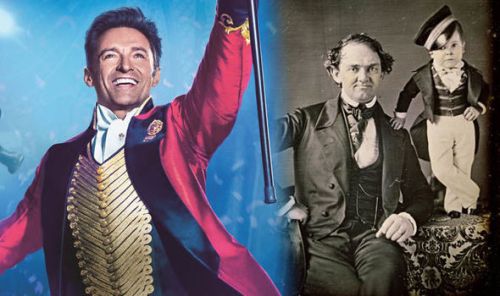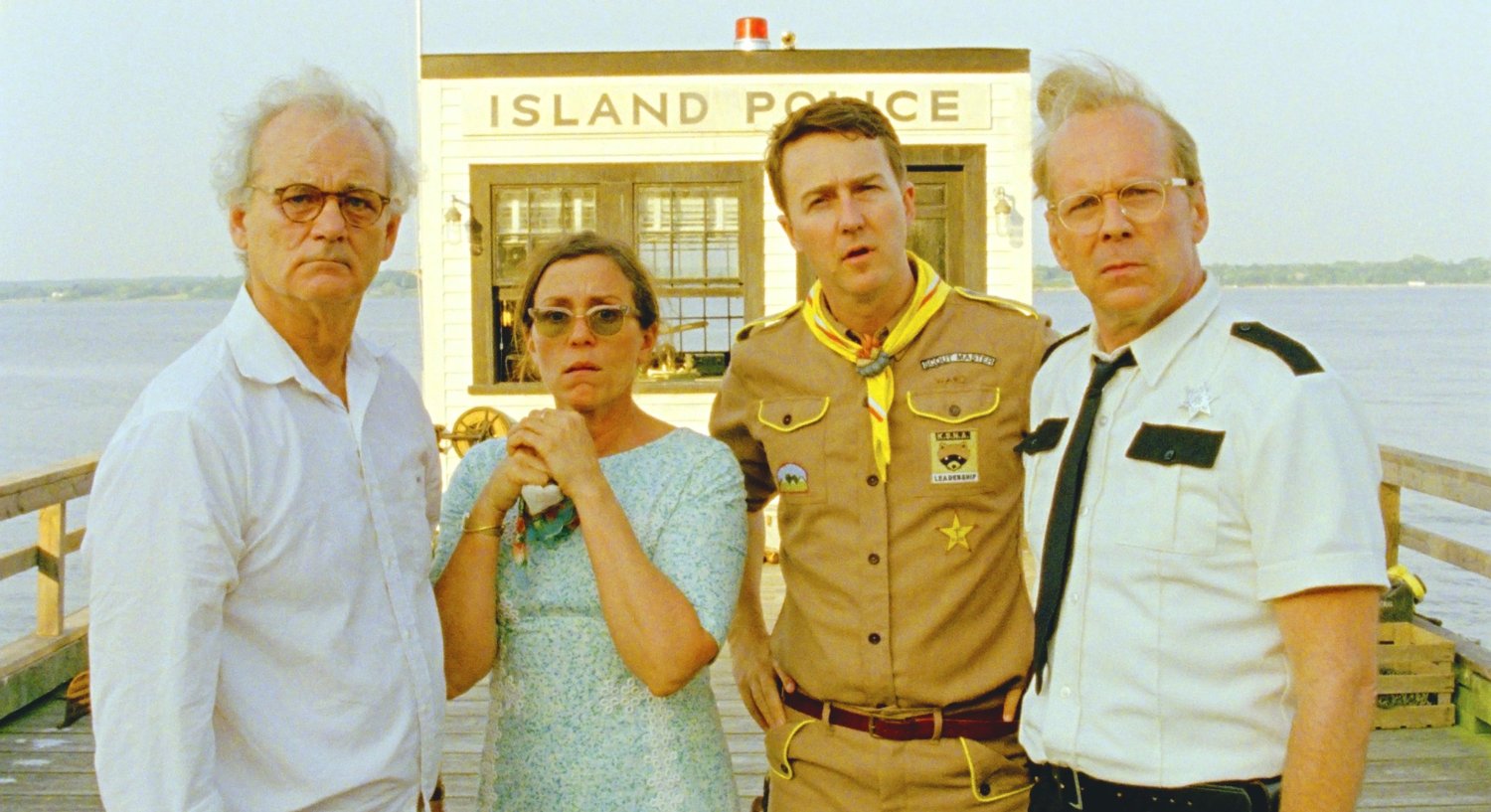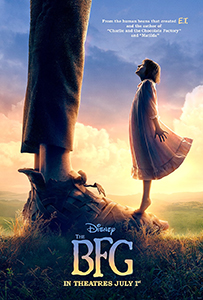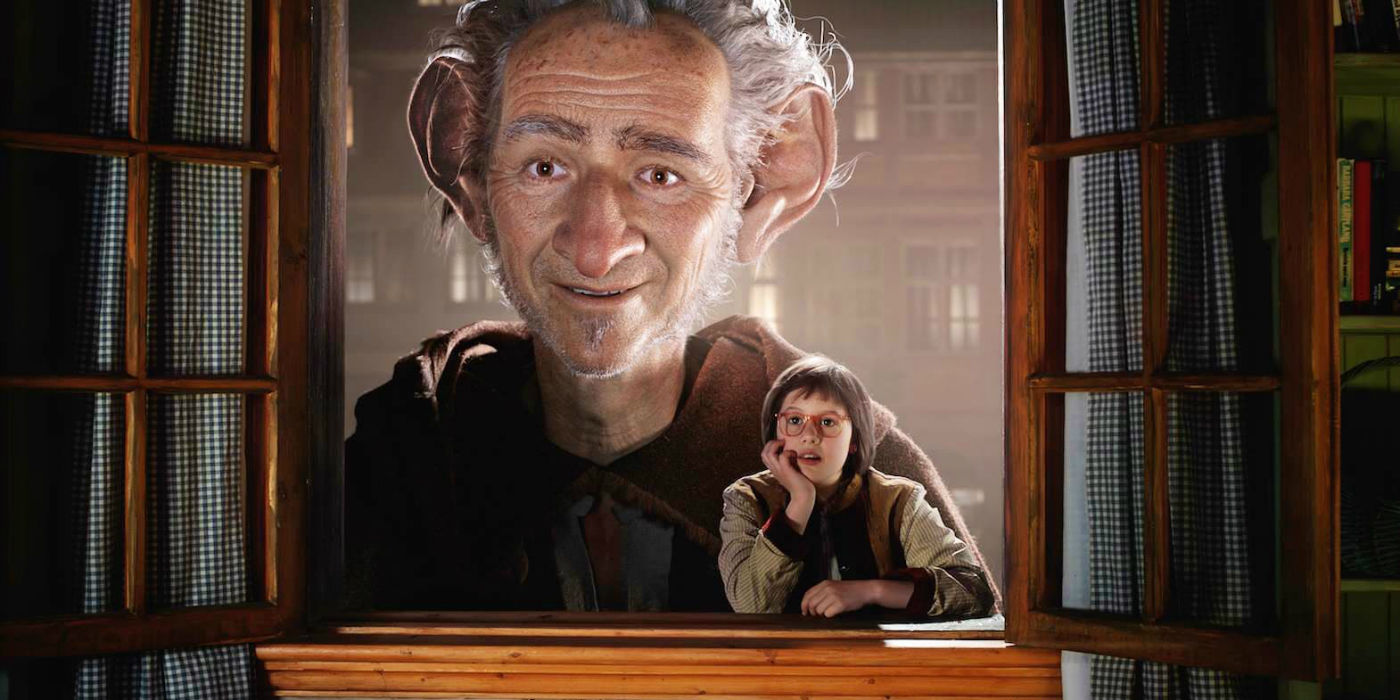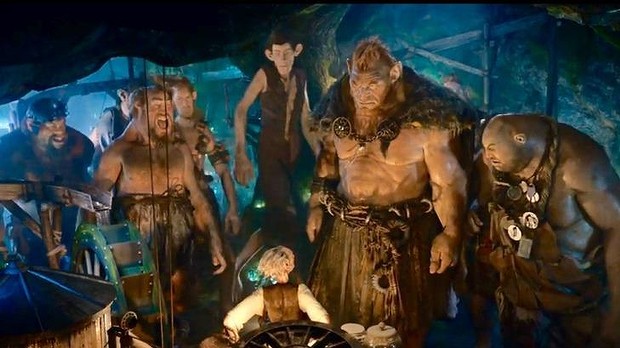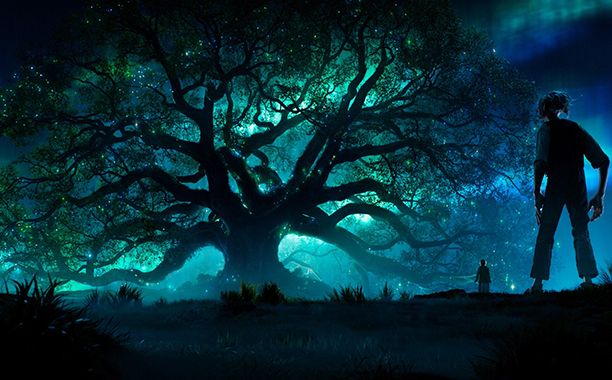
I was predisposed to like this movie from the outset. After all… Spielbergh… Roald Dahl… a musical score by John Williams… almost Robin Williams as the BFG! But I don’t like this movie after all. I LOVE it!!!
I am easily stunned by gorgeous settings, CGI magic, and artistically done visuals. I am easily captivated by cute and gifted young actresses like the one who plays Sophie, Ruby Barnhill. And I am especially won over by the smiling face of the BFG himself. He reminds me so clearly of my Great Grandpa Raymond (who was no less a magical being in my life than the BFG is in Sophie’s).
The fact that the BFG’s job in Giant Land is the capturing, bottling, mixing, and gifting of dreams is the most winning feature of all. And he uses it in the epic plan to overcome the bestial, cannibalistic, (and possibly Trump supporters) other, bigger giants. He is a metaphor for the story-teller himself… enduring hardships and harrowing adventures to capture, package, and deliver the stories that are so important to life and people’s ultimate happiness. It is true for Roald Dahl, the darkly silly genius who wrote the story. It is also true for Steven Spielberg, the craft-master and movie-maker who put it on film. It is true also for the magician of movie music, John Williams. I hope, someday, it will also be true for me.
So many things about this movie are the epitome of the best movie-theater experiences. I do not understand how it could’ve done so poorly in the box office. I believe it will become one of those beloved and much-watched DVDs like Spielberg’s previous fairy-tale masterpiece, Hook, did. I pray that it won’t simply become an overlooked asterisk in the history of cinema. It is too good of a movie experience for that.

Okay, so on the synesthesia tests I didn’t score as a synesthete on the music/color test. But I was extremely synesthetic on the tests for color/months/days of the week. I was a little over the mark on letter/number/colors synesthesia too, but it was more a problem with manipulating the color-selector device when I don’t have a mouse to use on my laptop. The test for music did not test the way I see colors with music. They wanted me to respond to what color each individual note seemed to be, and that isn’t even close to the way I experience it. For me, the perfect description of how synesthesia works for me is Bach’s Tocata and Fugue in D minor as it is depicted in Fantasia.
I was shocked when I first saw it. The colors are wrong for this piece, but the visual experience is almost exactly how I experience music, especially wordless instrumental music. The only problem with this piece is that the overall color schemes are wrong. But this comes about because every synesthete sees the colors differently. And I have no doubt that at least one of the artists who created this had synesthesia. If there were more reds, yellows, and magenta in the opening and more indigo contrasted with silver later, this interpretation would be perfect.
Music synesthetically works in two directions for me. The picture above, called The Wings of Imagination, makes me think of La Mer by Claude Debussy.
If you listen to the piece, don’t look at the YouTube illustration, look at my picture if you want to see the music the way I do. The following song, Don’t Worry, Be Happy, is a multicolored song that I can best express with the colors in the picture I call Rainbow Peacock.
The full range of primary colors together in one picture, or one song, always means completeness, fullness, and happiness to me. If there is absence of one or more of the basic colors from the color wheel, the mood and emotion present in the song or picture is altered to something other than happiness. The Firebird Suite by Igor Stravinsky goes from the indigo and navy blue of fear and confusion to instances of angry red and feverish orange. It would look something like this in the theater of my imagination;
And one of my favorite instrumental pieces of all times, Prelude to the Afternoon of the Faun by Claude Debussy, is full of melancholy and sexual tension, deeply felt vibrations in the depths of my stomach, and would look like my picture Sleeping Beauty with its teal and blue melancholia juxtaposed with candle-lit yellows and wood brown mixed feelings of joy and anxiety.
Now, if you have waded through all of this goofy color-and-music analysis from a source whose sanity is questionable at best, you probably have no earthly idea what any of it has to do with anything. But if you have that aha!-moment and see it all clearly too, then I suspect you probably are a synesthete too. Poor you. It is not a treatable condition. But it is also not a burden. Learn to enjoy it. It resonates in your very soul.
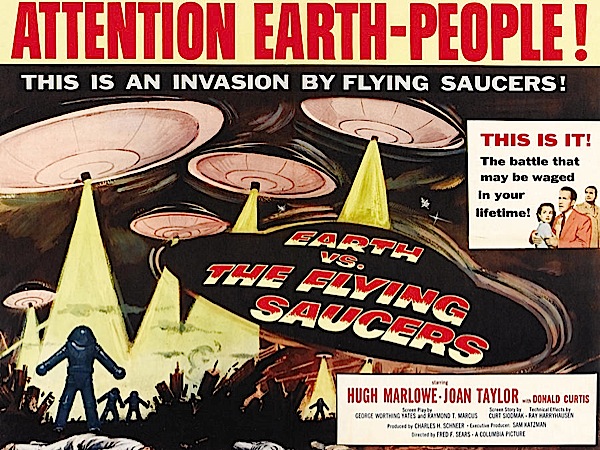
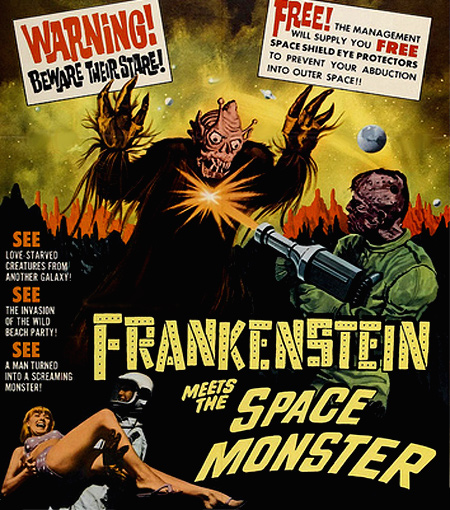
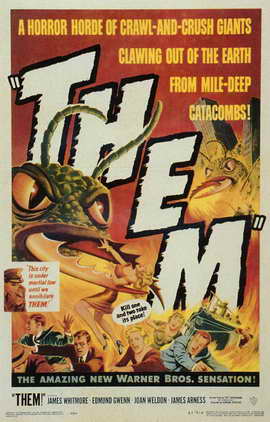
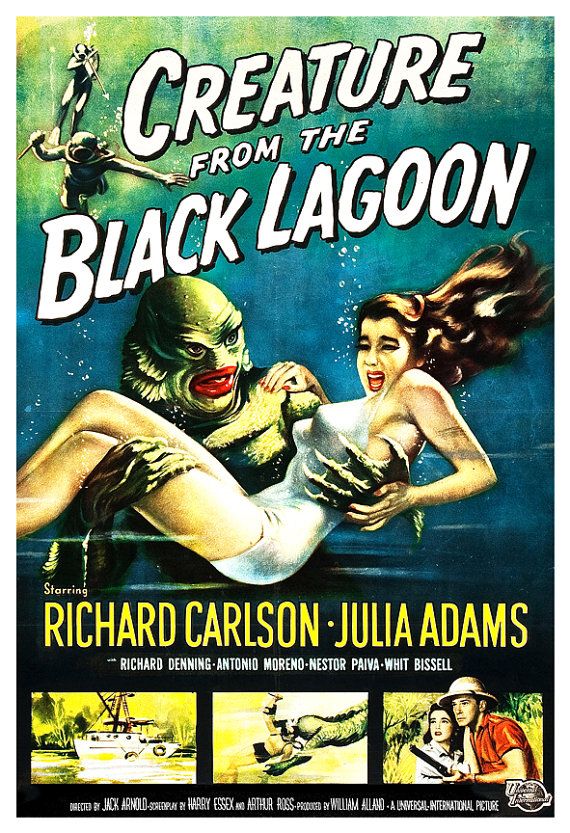
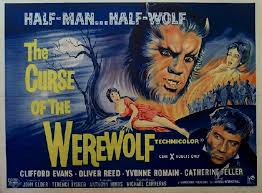
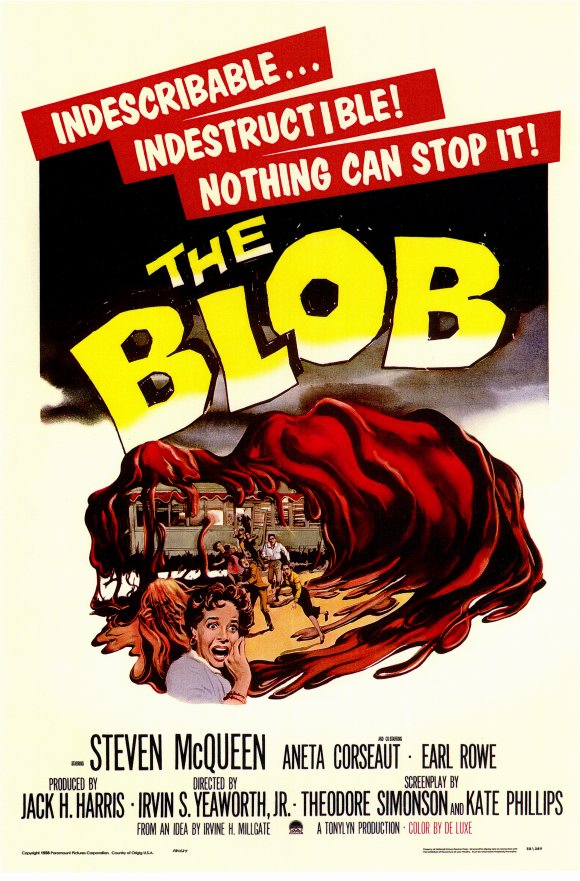
I slept in this morning. Spent another late night doing nothing but watching monster movies. I recently got myself a DVD collection of Hammer Films monster movies from the sixties. I found it in the $5 bargain bin at Walmart, a place I regularly shop for movies.
When I was a boy, back in the 60’s, there always used to be a midnight monster movie feature called Gravesend Manor on Channel 5, WOI TV in Ames, Iowa. It started at 11:00 pm and ran til 1:00 am. I, of course, being a weird little monster-obsessed kid, would sneak downstairs in my PJ’s when everyone else was asleep and I would laugh at the antics of the goofy butler, possibly gay vampire duke, and the other guy who was supposedly made in the master’s laboratory. And when the movie started, I was often scared witless by the black-and-white monster B-movie like Scream of Fear!, or Curse of the Mummy’s Tomb, or Eyes of the Gorgon. It was always the reason I could rarely get up in time for church and Sunday school the next morning without complaints and bleary-eyed stumbling through breakfast. I never knew if my parents figured it out or not, but they probably did and were just too tired to care.
It was my source for critical monster-knowledge that would aid me greatly when I grew up to be a fireman/cowboy hero. Because battling monsters was… you know, a hero prerequisite. And I intended to be the greatest one there ever was. Even better than Wyatt Earp or Sherlock Holmes or Jungle Jim.
Boris Karloff, Bela Lugosi, Peter Lorre, Peter Cushing, Vincent Price, and the immortal Christopher Lee were my tutors in the ways of combating the darkness. When I started watching a really creepy monster movie, I always had to stick it out to the end to see the monster defeated and the pretty girl saved. And they didn’t always end in ways that allowed me to sleep soundly after Gravesend Manor had signed off the airways for the night. Some movies were tragedies. Sometimes the hero didn’t win. Sometimes it was really more of a romance than a monster movie, and the monster was the one you were rooting for by the end. I remember how the original Mighty Joe Young made me cry. And sometimes you had to contemplate more than tragedy. You had to face the facts of death… sometimes grisly, painful, and filled with fear. You had to walk in the shoes of that luckless victim who never looked over his shoulder at the right moment, or walked down the wrong dark alley, or opened the wrong door. The future was filled with terrifying possibilities.
Now, at the end of a long life, when I am supposed to be more mature and sensible, I find myself watching midnight monster movies again. What’s wrong with me? Am in my second childhood already? Am I just a goofy old coot with limited decision-making capabilities? Of course I am. And I intend to enjoy every horrifying moment of it.
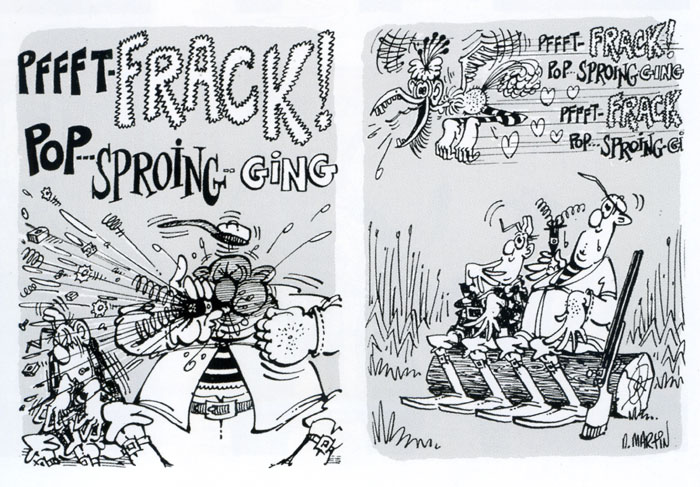
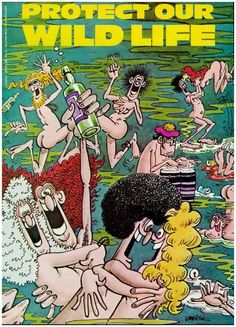
Born in 1931 and lasting in this crazy, mixed-up world until the year 2000, Don Martin was a mixy, crazed-up cartoonist for Mad Magazine who would come to be billed as “Mad Magazine’s Maddest Artist.” His greatest work was done during his Mad years, from 1956 (the year I was born… not a coincidence, I firmly believe) until his retirement in 1988. And I learned a lot from him by reading his trippy toons in Mad from my childhood until my early teacher-hood.
His style is uniquely recognizable and easily identifiable. Nobody cartoons a Foon-man like Don Martin.
The googly eyes are always popped in surprise. The tongue is often out and twirling. Knees and elbows always have amazingly knobbly knobs. Feet have an extra hinge in them that God never thought of when he had Adam on the drawing board.
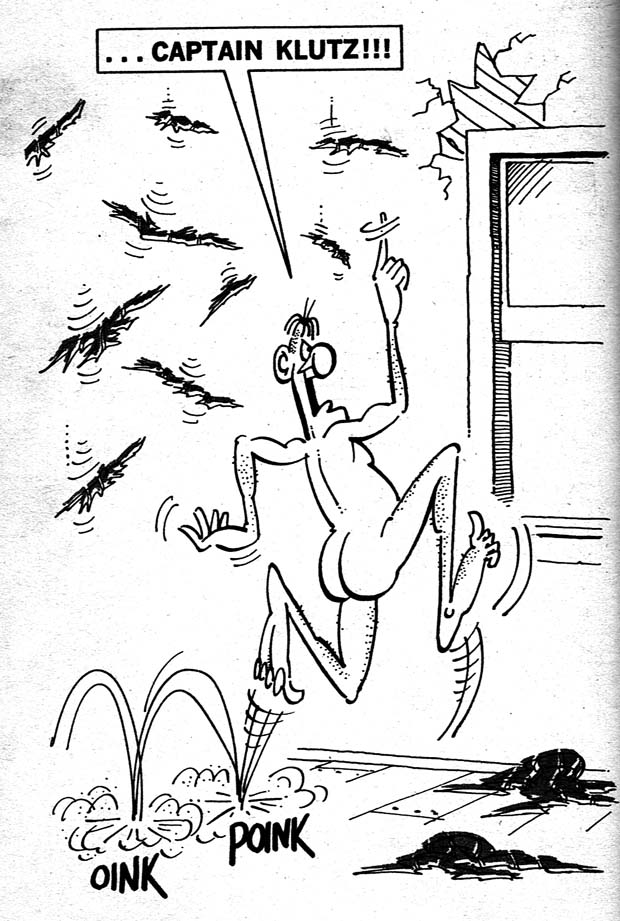
And then there is the way that Martin uses sound effects. Yes, cartoons in print don’t make literal sounds, but the incredible series of squeedonks and doinks that Martin uses create a cacophony of craziness in the mind’s ear.
And there is a certain musicality in the rhyming of the character names he uses. Fester Bestertester was a common foil for slapstick mayhem, and Fonebone would later stand revealed by his full name, Freenbeen I. Fonebone.
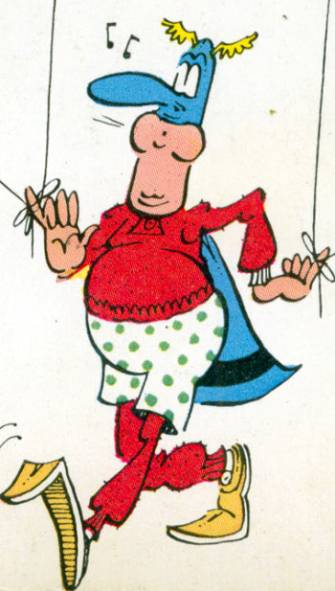
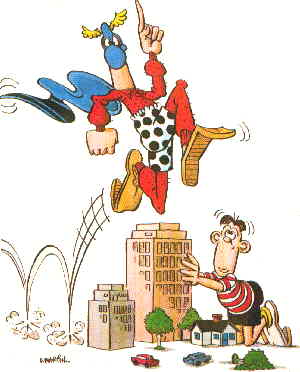
And, of course, one of his most amazingly adventurous ne’er-do-well slapstick characters was the immeasurable Captain Klutz!
Here, there, and everywhere… on the outside he wears his underwear… it’s the incredible, insteadable, and completely not edible… Captain Klutz!
If you cannot tell it from this tribute, I deeply love the comic genius who was Don Martin, Mad Magazine’s Maddest Artist. Like me he was obsessed with nudists and drawing anatomy. Like me he was not above making up words with ridiculous-sounding syllables. And like me he was also a purple-furred gorilla in a human suit… wait! No, he wasn’t, but he did invent Gorilla-Suit Day, where people in gorilla suits might randomly attack you as you go about your daily life, or gorillas in people suits, or… keep your eye on the banana in the following cartoon.
So, even though I told you about Bruce Timm and Wally Wood and other toon artists long before I got around to telling you about Don Martin, that doesn’t mean I love them more. Don Martin is wacky after my own heart, and the reason I spent so much time immersed in Mad Magazine back in the 60’s, 70’s, and 80’s.
Johann Sebastian Bach may or may not have written his organ masterpiece, Toccata and Fugue in D Minor in 1704. All we know for sure is that the combined efforts of Johannes Ringk, who saved it in manuscript form in the 1830’s, and Felix Mendelssohn who performed it and made it a hit you could dance to during the Bach Revival in 1840 made it possible to still hear its sublime music today. Okay, maybe not dance to exactly… But without the two of them, the piece might have been lost to us in obscurity.
The Toccata part is a composition that uses fast fingerings and a sprightly beat to make happy hippie type music that is really quite trippy. The Fugue part (pronounced Fyoog, not Fuggwee which I learned to my horror in grade school music class) is a part where one part of the tune echoes another part of the tune and one part becomes the other part and then reflects it all back again. I know that’s needlessly confusing, but at least I know what I mean. That is not always a given when I am writing quickly like a Toccata.
I have posted two different versions for you to listen to in this musical metaphor nonsensical posticle… err… Popsicle… err… maybe just post. One is the kinda creepy organ version like you might find in a Hammer Films monster movie in the 1970’s. The other is the light and fluffy violin version from Disney’s Fantasia. I don’t really expect you to listen to both, but listening to one or the other would at least give you a tonal hint about what the ever-loving foolishness I am writing in this post is really all about.
You see, I find sober thoughts in this 313-year-old piece of music that I apply to the arc of my life to give it meaning in musical measure.
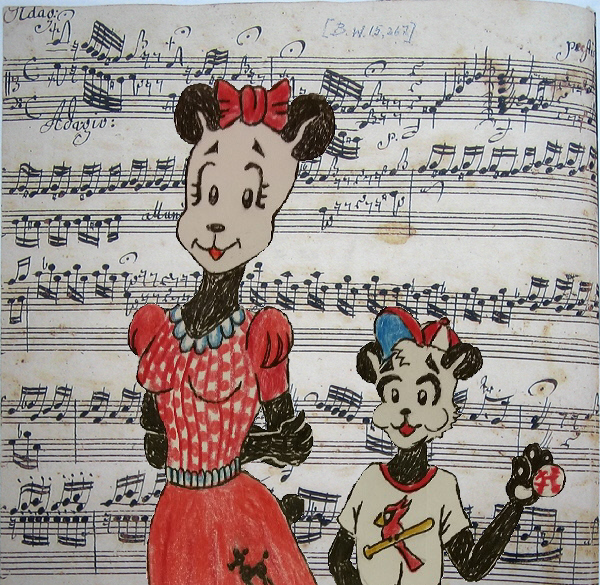
This is the Paffooney of this piece, a picture of my wife in her cartoon panda incarnation, along with the panda persona of my number two son. The background of this Paffooney is the actual Ringk manuscript that allowed Bach’s masterwork not to be lost for all time.
My life was always a musical composition, though I never really learned piano other than to pick out favorite tunes by ear. But the Bach Toccata and Fugue begins thusly;
The Toccata begins with a single-voice flourish in the upper ranges of the keyboard, doubled at the octave. It then spirals toward the bottom, where a diminished seventh chord appears (which actually implies a dominant chord with a minor 9th against a tonic pedal), built one note at a time. This resolves into a D major chord.
I interpret that in prose thusly;
Life was bright and full of promise when I was a child… men going to the moon, me learning to draw and paint, and being smarter than the average child to the point of being hated for my smart-asserry and tortured accordingly. I was sexually assaulted by an older boy and spiraled towards the bottom where I was diminished for a time and mired in a seventh chord of depression and despair. But that resolved into a D major chord when the realization dawned that I could teach and help others to learn the music of life.
And then the Fugue begins in earnest. I set the melody and led my students to repeat and reflect it back again. Over and over, rising like a storm and skipping like a happy child through the tulips that blossom as the showers pass. Winding and unwinding in equal measure, my life progressed to a creaky old age. But the notes of regret in the conclusion are few. The reflections of happinesses gained are legion. I have lived a life I do not regret. I may not have my music saved in the same way Johann Sebastian did, but I am proud of the whole of it. And whether by organ or by violin, it will translate to the next life, and will continue to repeat. What more can a doofus who thinks teaching and drawing and telling stories are a form of music ask for from life?
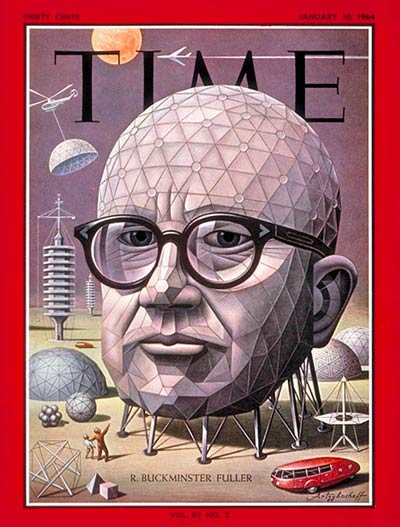
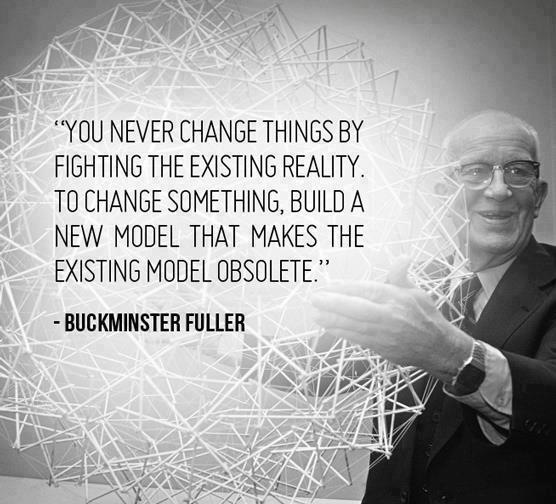
Buckminster Fuller is an intellectual hero of mine. As he said in the video, if you bothered to watch it, “I was told I had to get a job and make money, but would you rather be making money, or making sense?” Bucky was always a little bit to the left of center, and basically in the farthest corner of the outfield. That’s why we depend so much on him in times like these when the ball is being hit to the warning track. (I know the world doesn’t really work on baseball metaphors any more, but my life has always been about metaphors from 1964 with the St. Louis Cardinals playing and beating the New York Yankees. Mantle was on their side, but Maris was playing for us.) You have to live in the world that fits into your own mental map of reality. And if you’ve been whacked on the side of the head one too many times… it changes the way you think. You begin to think differently.
If you don’t know who Bucky is, as you probably don’t because he revolutionized the world in the 60’s and died in the 1980’s, Richard Buckminster “Bucky” Fuller was an American architect, systems theorist, author, designer, and inventor. He is credited with the invention of the Geodesic Dome. But he was so much more than that. He wanted to build things that made better sense, in a practical sort of way, than the way we actually do them. He built geodesic homes because he felt a home should maximize space and use of materials and minimize costs and amounts of materials as well as environmental impacts. He is the one who popularized the notion of “Spaceship Earth”. He wrote and published more than thirty books, and gave us a variety of truly wise insights. He promoted the concept of synergy. He said, “Don’t fight forces, use them.” He also pointed out, “Ninety per cent of who you are is invisible and untouchable.” He was a man full of quotes useful for internet memes.
So, lets consider an example from the mixed up mind of Mickey;
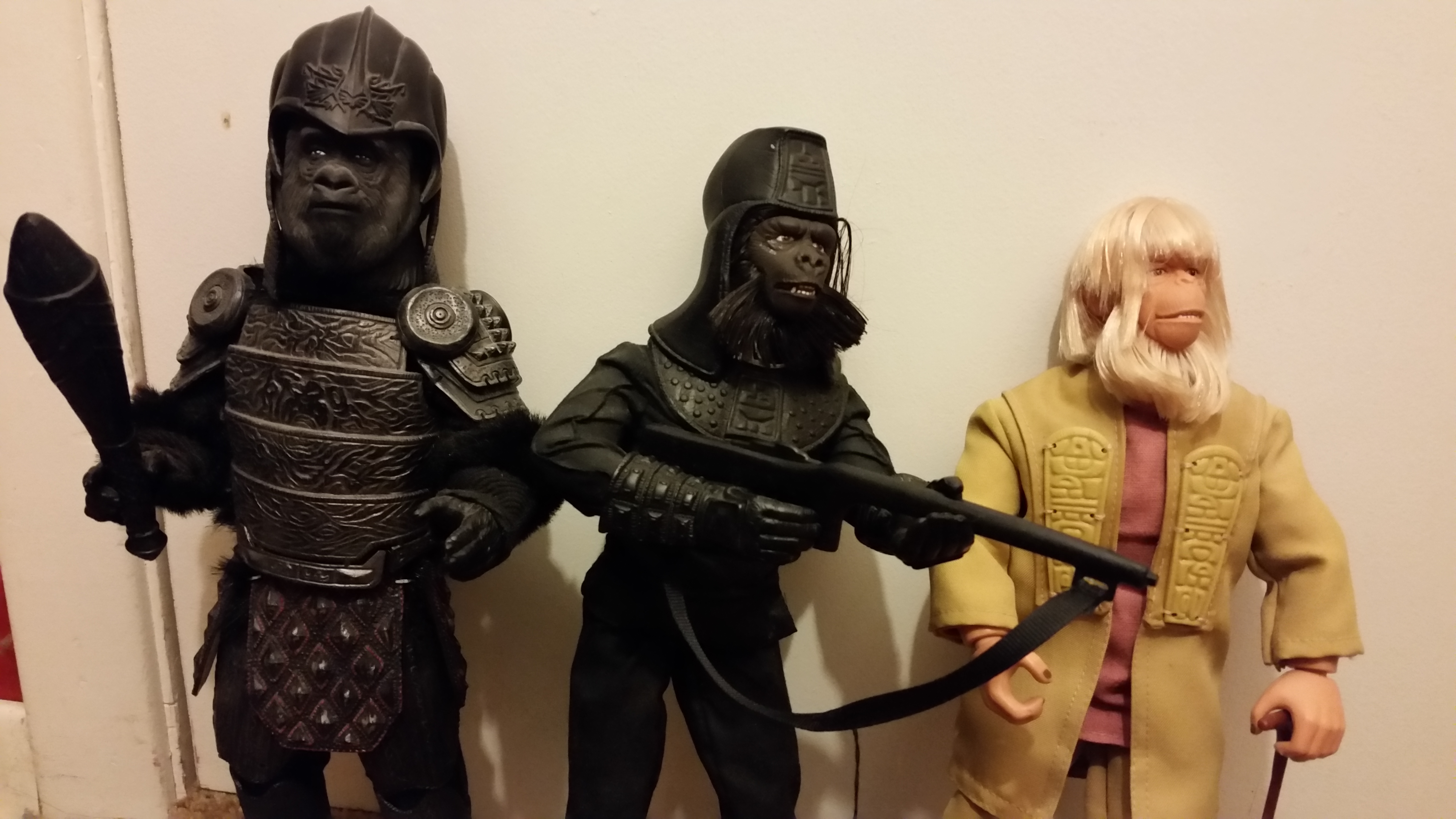
Here are three dolls from the Planet of the Apes part of my doll collection. (Two different movies are represented here, the 1968 original, and the Tim Burton 2001 remake.)
The world we now live in is increasingly like the movie, The Planet of the Apes. In that film the world the astronauts set down upon is ruled by talking apes. The human beings in that film are relegated to the fields and forests where they are no more than speechless animals. Much like the Republican Party and the wealthy ruling elite of this day and age, the apes control everything and, led by Dr. Zaius (seen on the far right) reject science and evidence as a way to explain things. They rely on the rules set down by the Lawgiver in much the same way that modern day Republicans swear by the U.S. Constitution to determine the truth of all things.
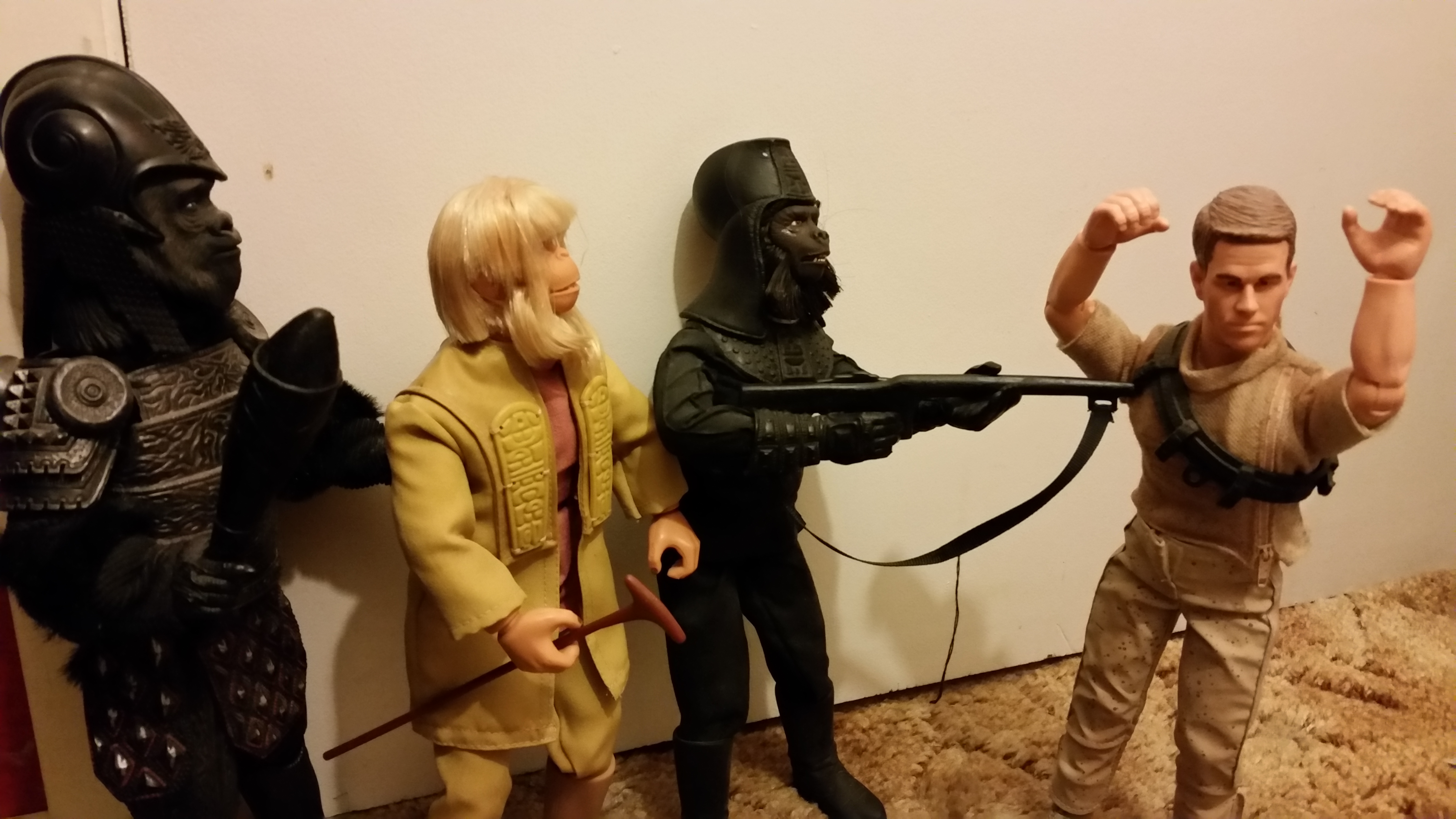
Here we see the apes capturing and enslaving Marky Mark… er… Mark Wahlberg rather than Chuck Heston from the original movie.
In the original set of movies, Charleton Heston, playing the astronaut Taylor, discovers that through hatred and warring, the human beings of Earth have bombed themselves back into the stone age and enabled the evolved apes to take over. How does Mr. Heston deal with that problem? He discovers an old doomsday device and blows up the world. Chuck Heston has always approved Second Amendment solutions to modern problems, so it is no wonder that he lays waste to everything, the good and the bad. I think we can see that old orangutan-man, Donald Trump doing exactly the same things now as he runs for President, or Great Ape, or whatever…
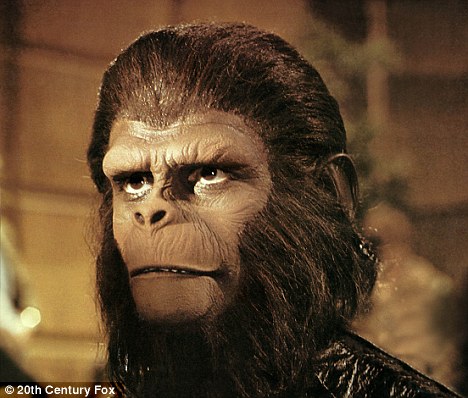
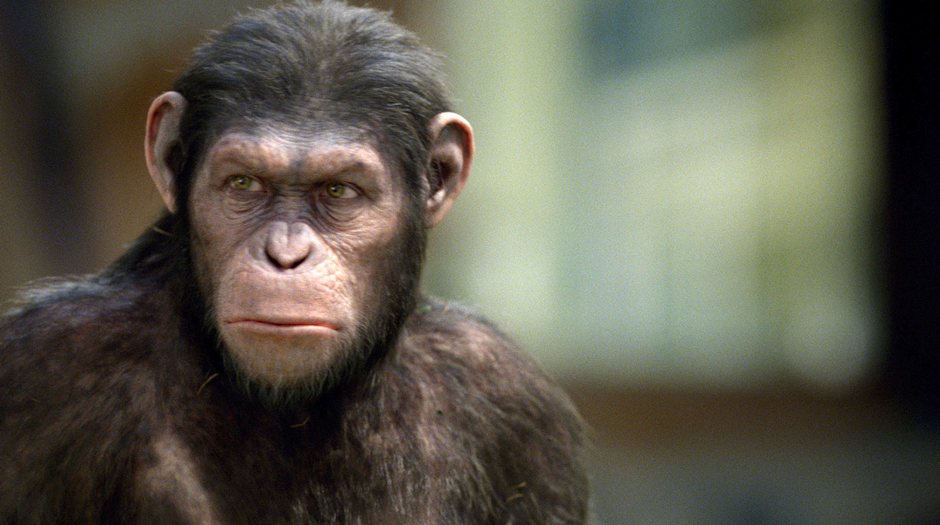
In both the previous series, and the current remake, salvation from the rule of the monkey people comes in the form of a leader among the apes. Caesar, whether he be played by Roddy MacDowell or by Andy Serkis, is able to solve the problems of apes and men by reaching out to those of the other species, assigning them value, and ultimately doing what helps everyone to survive and live together. Diversity is power and provides a workable solution through cooperation. The forces of hatred and fear are the things that must be overcome and threaten the existence of everyone. Donald Trump needs to learn from the lesson of The Planet of the Apes, and be less like General Ursus. We need Bernie Sanders to embrace the role of Caesar and show us how we can get along with our Muslim brothers… after all, they are more like us than the apes are, and Caesar builds bridges between apes and men.
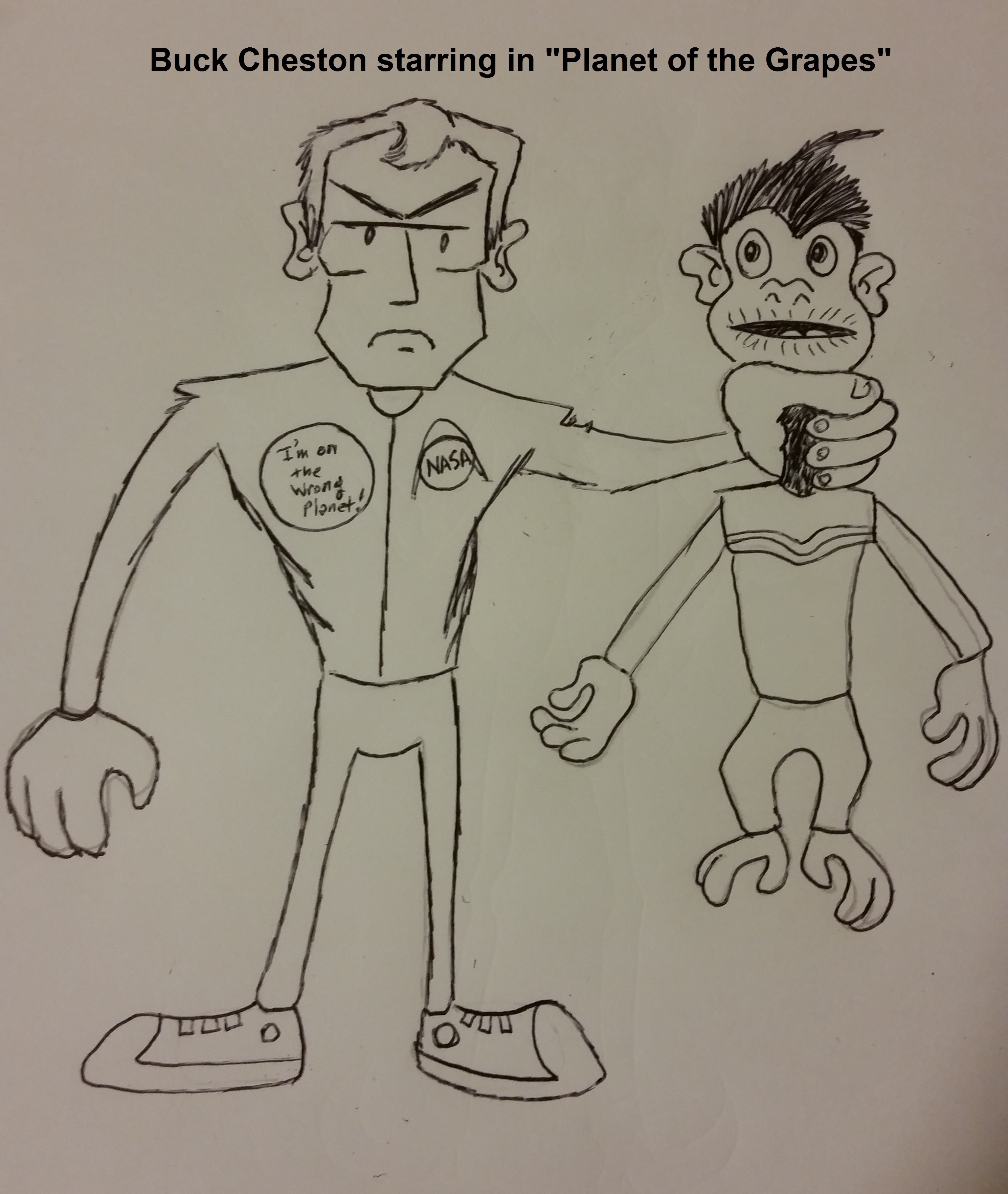
So, there you have it, my attempt to build a new model based on an old movie… or on the remake… whichever you prefer. And if that doesn’t work, well, there’s always…
“Mickey, why can’t you be more serious the way smart people are?”
“Well, now, my dear, I think I take humor very seriously.”
“How can you say that? You never seem to be serious for more than a few seconds in a row.”
“I can say it in a high, squeaky, falsetto voice so I sound like Mickey Mouse.”
“You know that’s not what I mean.”
“I can also burp it… well, maybe not so much since I was in junior high.”
“I distinctly remember getting in trouble in Mrs. Mennenga’s third grade class in school for pantomiming pulling my beating heart out of my chest and accidentally dropping it on the floor. She lectured me about being more studious. But I made Alicia sitting in the row beside me laugh. It was all worth it. And the teacher was right. I don’t remember anything from the lesson on adding fractions we were supposed to be doing. But I remember that laugh. It is one precious piece of the golden treasure I put in the treasure chest of memories I keep stored in my heart.”
“I always listened to the words Groucho Marx was saying, even though he said them awfully fast and sneaky-like. I listened to the words. Other characters didn’t seem to listen to him. He didn’t seem to listen to them. Yet, how could he respond like he did if he really wasn’t listening? In his answers were always golden bits of wisdom. Other people laughed at his jokes when the laugh track told them to. I laughed when I understood the wisdom.”
“Laughing is a way of showing understanding. Laughing is a way of making yourself feel good. Laughing is good for your brain and your heart and your soul. So, I want to laugh more. I need to laugh more. I love to laugh.”
Mickey Mouse was born on November 18, 1928 in the film “Steamboat Willie”. This month will be his 96th Birthday. He’s still pretty spry for such an old guy. My own father is pretty close to the same age, born in about 1932.
And I… I was born in a blizzard in 1956, on November 17th, the day before his 28th birthday. Don’t do the math. I don’t really want to know how old I am. I have six incurable diseases, and I may be adding a seventh to that, depending on what my cardiologist finds out. I survived malignant melanoma in 1983. I am deeply grateful for every day of the 41 years I have lived since.
This post started out as something about birthdays. Mickey’s and mine (who am also Mickey)… But I think it is really about numbers. There are still important numbers to consider. I have published twenty novels, two books of short essays, a book-length essay on nudism, and a book of poetry. Aeroquest and Catch a Falling Star are the first two books I published. But I have since turned Aeroquest into four novels with a planned fifth and possible sixth book. This was done because Publish America was a criminal publishing scheme and held my book hostage for seven years. Snow Babies is the best story I ever wrote. I have written a number of hometown stories about the little town in Iowa in which I grew up. The Bicycle-Wheel Genius,Superchicken, The Baby Werewolf, Recipes for Gingerbread Children, Sing Sad Songs, and The Boy… Forever are a few of these. The Magical Miss Morgan is the last book I published with a pay-to-publish publishing scheme. From here on I only publish for free with Amazon. Even the literary agents that call me only want to charge me money to promote my books. So, I want to write and publish more for free. People are reading my books and I am having precious little success as a mostly-unknown author. How much time do I really have left? I confess to having at least five novel-length stories that are only written in my head and outlined on paper. The clock is ticking. I want to share all of these stories, but I know I probably do not have 86+ years. I truly believe that both this Mickey and that Mickey are capable of speaking to the ages, but it can only happen if I get my words shared so that somebody I do not know will read them, smile a little, laugh a little, maybe cry a little, and understand what I tried to say.

So here’s a self-portrait of what Mickey once looked like (before the beard and long hair) along with Valerie Clarke, the main character of Snow Babies, and the most beautiful little girl ever born in Norwall, Iowa.
I had originally thought to call this post “A Walk with God.” But that would probably offend my Christian friends and alienate my Jehovah’s Witness wife. It would bother my intellectual atheist friends too. Because they know I claim to be a Christian Existentialist, in other words, “an atheist who believes in God.” Agnostics are agnostics because they literally know they don’t know what is true and what is merely made up by men. And not knowing offends most people in the Western world.
But Debussy’s Reverie is a quiet walk in the sacred woods, the forest of as-yet-uncovered truths.
And that is what I need today. A quiet walk in the woods… when no literal woods are available.
I have apparently survived the Covid pandemic. But this pandemic has been hard on me. Having had the Omicron variant, I am left without the strength I once had even though I am fully vaccinated. I have lost the power to be a substitute teacher, a job I love. The loss of the ability to teach in any form still drives me to tears. I am a prisoner in my room at home most days. My soul is in darkness, knowing that the end could be right around the corner. There is so much left to do, to say, to write down for those who come after so they can fail to read any of it and reinforce the cruel irony that informs the universe. I have stories and lessons and morals and meanings to give the world still if only someone is willing to listen.
I am not afraid to die. I have no regrets. But I have been in a reverie about what has been in the past, what might have been, and what yet may be… if only I am granted the time.
And, as always, I feel like I have more writing yet to do. I am about to finish The Education of PoppenSparkle. And I have started He Rose on a Golden Wing, The Haunted Toystore, and AeroQuest 5. And I have stories beyond that to complete if I may.
But the most important thing right now is having time to think. Time for Reverie. And reflections upon the great symphony of life as it continues to play on… with or without me.
I am still hoping to write more before the end comes. I have at least one more AeroQuest novel in me. And another Cissy Moonskipper adventure. My heart is still in science fiction, still lost among the stars.
The next Cissy Moonskipper story is about Cissy’s spaceship and crew meeting the Nebulon race in deep space, aboard their space-whale living starships.
Nebulons are blue-skinned humanoids with unique survival abilities. They tend to mostly inhabit deep space and are generally not planet-bound. They also are uniquely resistant to radiation of all kinds. The blue skin absorbs radiation and transfers it along the skin to the two red organs on their cheeks that safely dampen and release the radiation back out into space.
Their homes are basically the space whales belonging to each of the different but vast Nebulon Clans. Each space whale is a titanic creature that is like a balloon, space-faring metallic flesh on the outside with a huge self-contained world inside, complete with plants and animals in their self-regulating internal environment.
Each clan is led by a Great Lord who rules the noble Clan Circle of Wisdom. The Marjaruc Clan is led by Great Lord Seizer Marjac. He is an overly serious and possibly heartless ruler who decides things narrowly for the benefit of the Clan Elite.
So, you can plainly see that I am still world-building for science fiction stories. I believe I will tell at least a few more science fiction stories before it all stops permanently.
I Love to Laugh
“Mickey, why can’t you be more serious the way smart people are?”
“Well, now, my dear, I think I take humor very seriously.”
“How can you say that? You never seem to be serious for more than a few seconds in a row.”
“I can say it in a high, squeaky, falsetto voice so I sound like Mickey Mouse.”
“You know that’s not what I mean.”
“I can also burp it… well, maybe not so much since I was in junior high.”
“I distinctly remember getting in trouble in Mrs. Mennenga’s third grade class in school for pantomiming pulling my beating heart out of my chest and accidentally dropping it on the floor. She lectured me about being more studious. But I made Alicia sitting in the row beside me laugh. It was all worth it. And the teacher was right. I don’t remember anything from the lesson on adding fractions we were supposed to be doing. But I remember that laugh. It is one precious piece of the golden treasure I put in the treasure chest of memories I keep stored in my heart.”
“I always listened to the words Groucho Marx was saying, even though he said them awfully fast and sneaky-like. I listened to the words. Other characters didn’t seem to listen to him. He didn’t seem to listen to them. Yet, how could he respond like he did if he really wasn’t listening? In his answers were always golden bits of wisdom. Other people laughed at his jokes when the laugh track told them to. I laughed when I understood the wisdom.”
“Laughing is a way of showing understanding. Laughing is a way of making yourself feel good. Laughing is good for your brain and your heart and your soul. So, I want to laugh more. I need to laugh more. I love to laugh.”
Leave a comment
Filed under autobiography, comedians, commentary, goofiness, goofy thoughts, humor, irony, Paffooney, strange and wonderful ideas about life, wisdom
Tagged as books, commentary, Ed Wynn, Groucho Marx, Moe Howard, procrastination, reviews, therapy