
I am spending Thanksgiving week at home in Texas by myself, except for the dog. The rest of my family is having a Thanksgiving meal together in Iowa (hopefully, if the weather doesn’t have other plans) or on a road trip to Central Florida, a trip I was supposed to also attend. I simply cannot travel to either place. My arthritis is too bad to sit for long car rides, and in the Trump economy, school teachers can’t afford air travel. So, I had to practice being selfless once again. They needed to do these things, and I had to talk them into doing these things without me. My misfortunes can’t be allowed to ruin my family’s grace and peace, not when I can still give gifts of myself by allowing them to go and do without worrying about me.
I can’t actually say that I learned to be selfless and encouraging from Fred Rogers. He was really only one of many such teachers, a list headed by my maternal grandfather. But in a way, he is responsible for giving me the tools I use to make things like that happen.

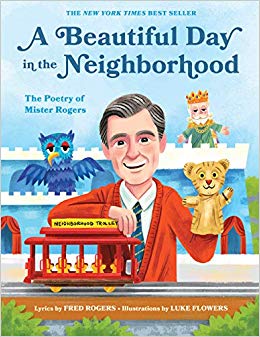
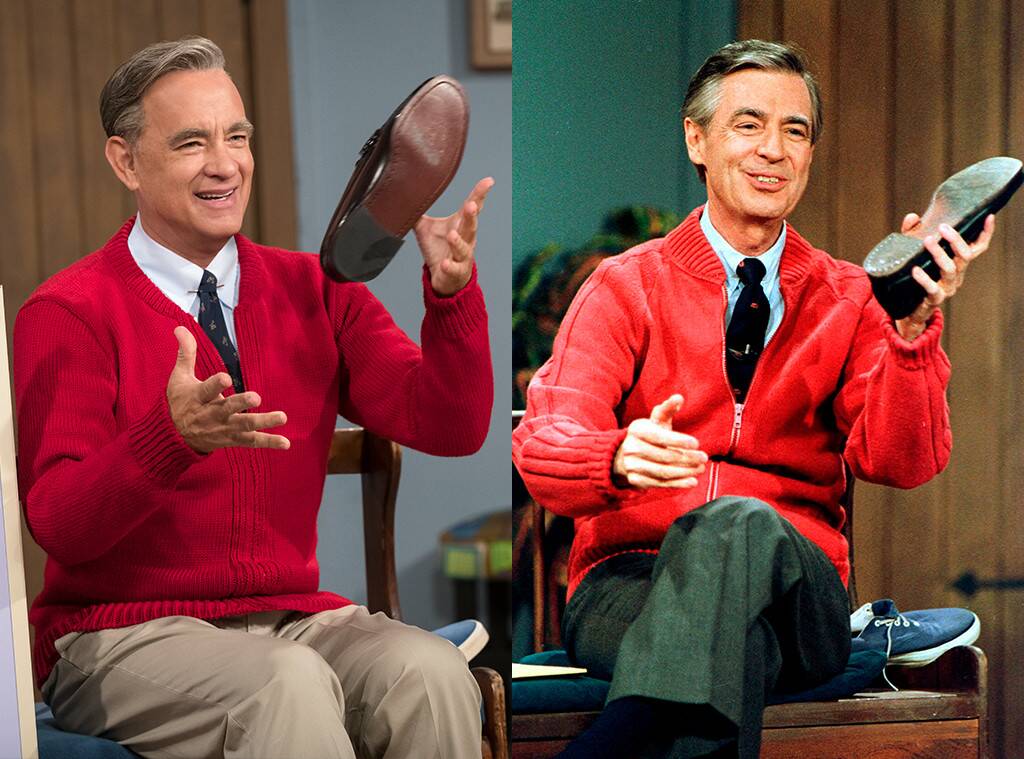
Yesterday I went to the movie “A Beautiful Day in the Neighborhood” at the Music City Mall in Lewisville. I can drive those few miles. And I freely admit to crying through a good portion of the movie. It is not really a sad movie. It is not actually a biopic. It is based on a real article in Esquire magazine by journalist Tom Junod. It is a partially fictionalized story about how the innate goodness of a man like Fred Rogers has a profound impact on the journalist, and all of the rest of us as well, through that act of caring and loving and gentle being-just-the-way-you-are. There is no doubt about it, when Tom Hanks, channeling Fred Rogers in the restaurant scene, asks for one minute of silence to think of all those people who have had a hand in making you who you are, he looks directly into the audience, he looks directly at me individually, and the entire theater is dead silent as everyone is doing exactly what the movie character is asking you to do. It was a singular moment in cinema that I have never experienced before. It touched my soul.
I left that movie theater feeling amazingly fulfilled. Was it because it was an excellent movie? It definitely was excellent. Was it because of the wonderful way Tom Hanks brought Fred Rogers back to life even though he looks nothing like him? He definitely made that happen. Or was it because the movie invoked a true angel, a once-living hand of God now gone from this world? Because Fred Rogers was that for so many kids for more than 800 episodes.
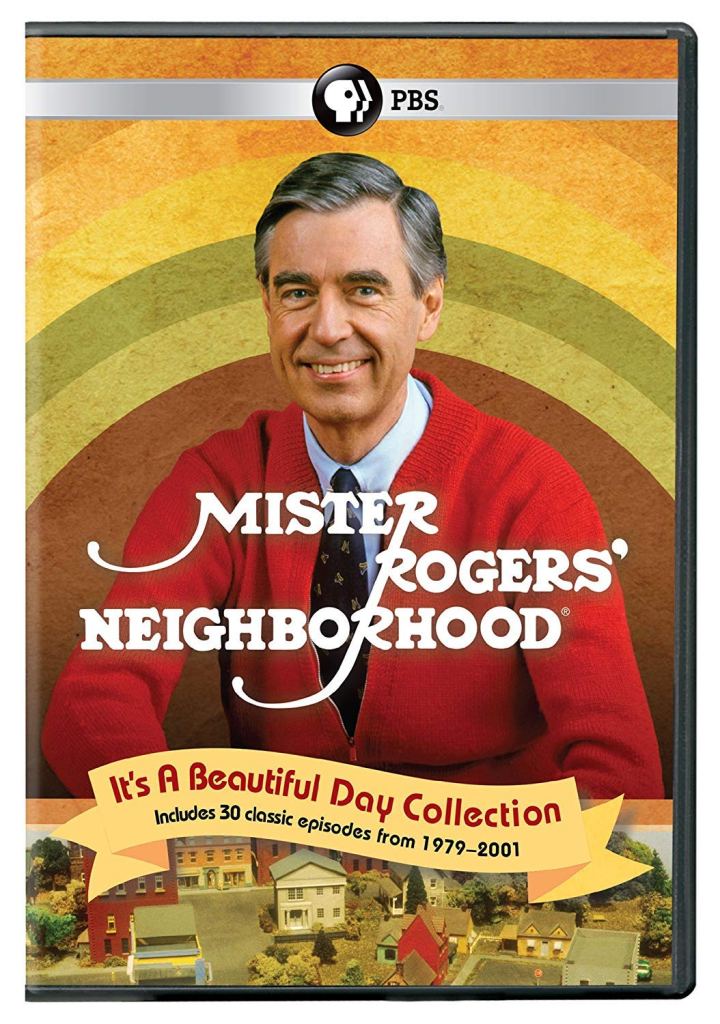
I must confess, when I was a teenager, I didn’t think much of “Mister Rogers’ Neighborhood“, though I saw some of those first black-and-white episodes, back when King Friday and Daniel Striped-Tiger were new. If I had to watch kids’ shows on PBS, which I often did because of younger siblings and cousins, I much preferred the color and the Muppets in “Sesame Street”.
But when I had been a teacher for a few years, and had to search hard for ways to communicate and teach for use with South Texas middle-schoolers, I began to see the true genius of Fred Rogers. He never talked down to kids. He never lost patience, even when things went wrong. He was always trying to keep it simple, even when the point he was making was as metaphorical as talking about keeping a “garden in your mind”. He was understandable. He was welcoming and relentlessly nice. And it wasn’t a TV character. It was really him.
I can’t really say this was a movie that changed my life. But maybe it did. I cried silently during a large portion of it, not because of the sad parts in the movie, but because I recognized so much of myself in the journalist waking up to the need to be as real and honest and able to connect to other people as Fred Rogers always did.
So, my conclusion to this essay that may be a movie review, or possibly an homage to Fred Rogers, is really quite simple. Thank you, Mr. Rogers. I really like you, just the way you are.











 J
















Oh Brother, Where Art Thou? (a review by the Uncritical Critic)
I love musicals. What can I say? I am a surrealist as an artist, and so I am dedicated to combining the disjointed and bizarre to make something that makes you laugh, or makes you cry, or makes you go, “Huh? I wonder why?” So when, in the middle of a sometimes serious but mostly comic story of escaped convicts on the lam in the Great Depression Era South, people suddenly burst into song… I love it!
And this movie is filled with creative stuff and biting social satire about religion, politics, crime and punishment, love and sex, desire and disappointment, and, most of all, the need to escape from it all if only for a moment to share a good, old-fashioned song.
The main character is Ulysses Everett McGill (played by George Clooney), so naturally the sirens overpower him and turn one of his crew into a frog. This is because this story is based on the Odyssey by Homer. Only the Trojan War is replaced by a chain gang singing spirituals as they break rocks, the cyclops is a Bible salesman and Ku Klux Klan member with a patch over one eye, and when Ulysses returns to Ithica, he defeats his wife’s suitors with a song. How can you not love a story as creative as that?
The whole movie is shot in color-corrected sepia tones to give it an old-photograph, old-timey feel. John Turturro and Tim Blake Nelson are masterful in the role of McGill’s two idiot hayseed friends.
Again, I remind you, as a completely uncritical critic, I have no intention of trying to tell you what is wrong with this movie. I loved it. I will watch it again. I am writing this review only because I feel moved to tell you how much I loved it and why. So if you don’t approve of that, well, don’t shoot me. Put me on a chain gang and give me a chance to sing.
Leave a comment
Filed under art criticism, commentary, humor, movie review, strange and wonderful ideas about life, surrealism, Uncategorized
Tagged as art, books, Coen Brothers' Movie, comedy, film, movie, movie review, musical, o brother where art thou?