
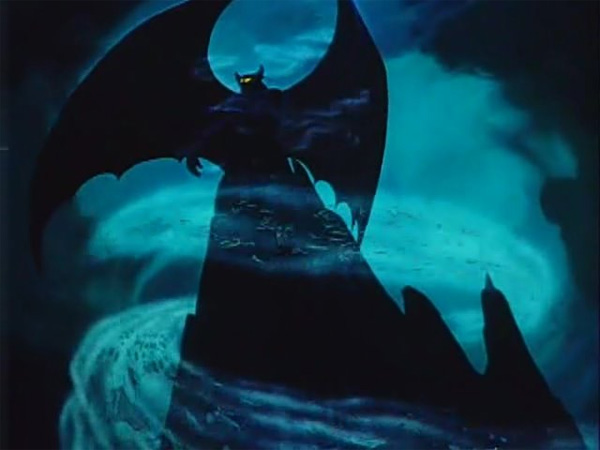
Mussorgsky’s Night on Bald Mountain from Disney’s Fantasia
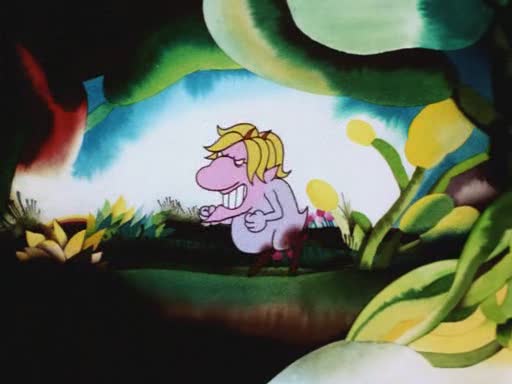
The old faun
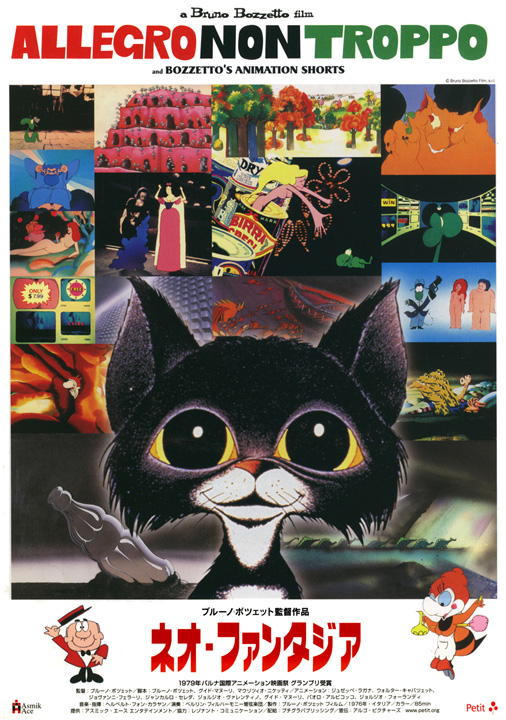
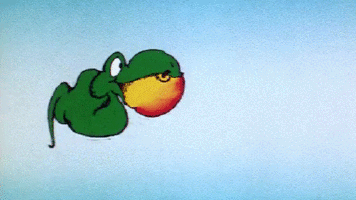
In musical terms, Allegro Non Troppo means fast tempo, but not too fast. So, I recently discovered that Allegro Non Troppo is one of many rare and obscure old movies which I am passionate about that can be found in its entirety on YouTube. I will include the YouTube link to a portion of it at the end of this post, and I sincerely recommend that if you have never seen this movie, you watch the whole thing at least once. No matter how many cringes or winces or blushes it causes, this is a movie of many bizarre parts that you really need to take in as a whole. It ranges from the ridiculous to the sublime, the atrociously ugly to the lyrically beautiful, from the brilliant classical score being played by a mistreated band of old ladies with orchestral instruments to a gorilla running amok, from Debussy to Ravel, from an artist released from his cage to single-handedly draw the animation, to a satire rich with baudy humor making fun of no less a work of animation than Prisney’s.. I mean Disney’s Fantasia. The dark elements are there. The light-hearted, lilting comedy is there. The fairy tale delicacy and technicolor dreaming is all there.
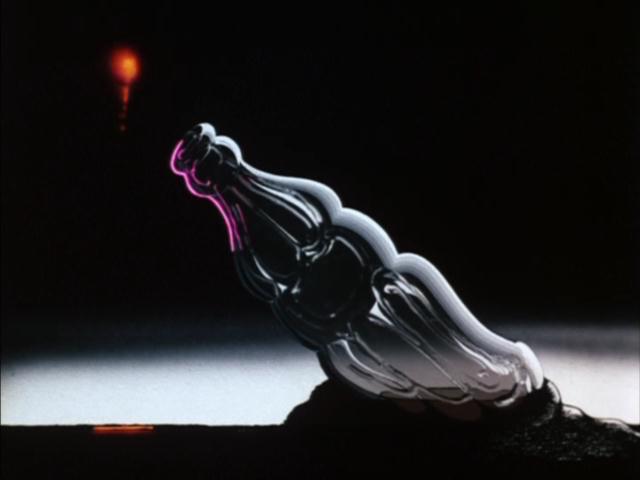
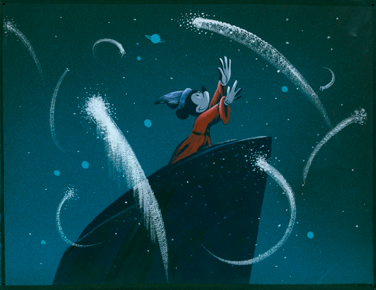
And why should this be important to me? Especially now that I am retired from a long and fruitful teaching career? Well, I have history with this movie. I saw it first in college. I was an English major, but I took every film as literature class I could fit into my silly schedule. As an undergrad, I was determined to be a cartoonist for a career. I took classes seriously and aced most of them, but I was at college to intellectually play around. I didn’t take the prescribed courses to be an English teacher. That had to wait for the more responsible me to come along in grad school for that. I saw both Fantasia and Allegro Non Troppo during one of the play-time years. Much as the old satyr in Claude Debussy’s Prélude à l’après-midi d’un faune, I was enamored with sensory experience. I took my first girlfriend to see Disney’s Fantasia, and she later turned down the opportunity to see Allegro Non Troppo with me. Good sense on her part, but the beginning of the end of our relationship.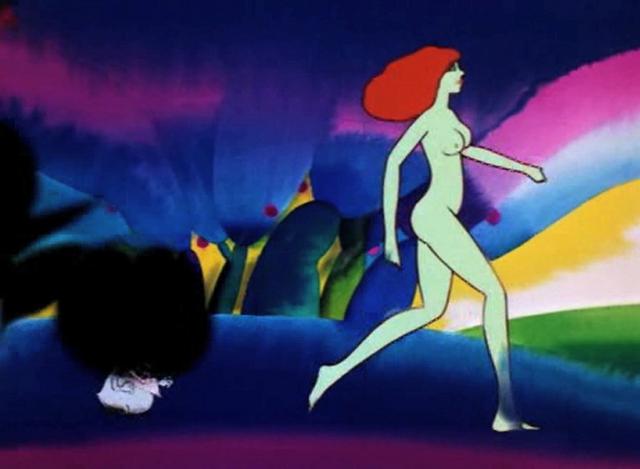 Just as Fantasia has the part in it where Stravinsky’s Rite of Spring describes evolution from the beginning of the Earth to the end of the dinosaurs, Allegro Non Troppo uses Ravel’s Bolero to describe the evolution of life on a weird planet from germs in a discarded Coke bottle to the inevitable coming of the malevolent monkey who is ultimately us. And, of course, the satire would not be complete without some off-set for Dukas’ The Sorcerer’s Apprentice.
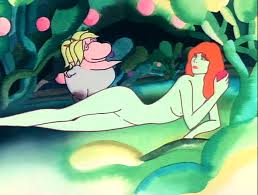
  As near as I can figure it out, the apprentice, played by Mickey Mouse, becomes the snake from the Garden of Eden in Allegro Non Troppo. When the snake is unable to get Adam and Eve to eat the apple, he makes the mistake of eating the apple himself. He learns the hard way that, no matter how clever, even diabolically clever, you think you are, you are not really in control of anything in life. Every would-be wizard in the world has to understand that he is powerless without hard experience. And what a boring world full of naked people this would be if there were never any apprentices in it foolish enough to actually become wizards.
  Of cou
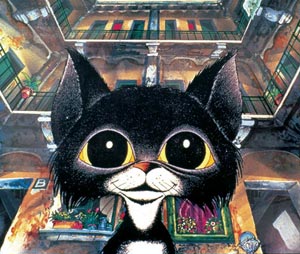
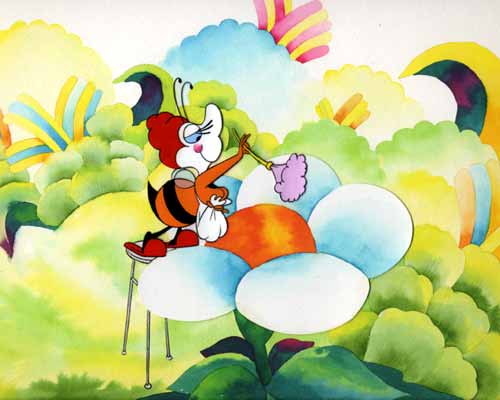
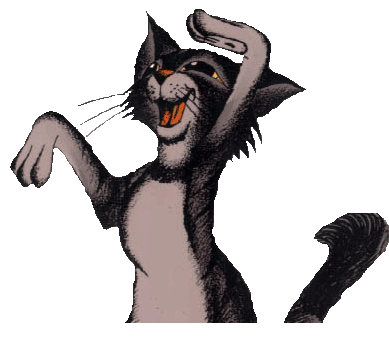
 rse, I haven’t really talked about the most heart-twisting part of Allegro Non Troppo… the sad cat wandering the ruins of his former home, or the most laugh-aloud part with the super-tidy little lady-bee trying to eat a blossom, but being interrupted by a couple of picnickers.
 But the thing is, this movie is a timely subject for me. Not only did I, just yesterday, rediscover it, but it still has the same meaning for me now as it did when I first saw it. Then I was an aspiring young artist who loved this movie because it approached ideas non-consecutively, just as I approached my learning years… rambling here and there, finding first a bitter-sweet something, and then a sad beauty behind everything in life. And it is where I am again now, in a poor-health enforced retirement… divorced from teacher’s schedules and time itself. Able to do as I please, and aspiring once again to commit great acts of art.
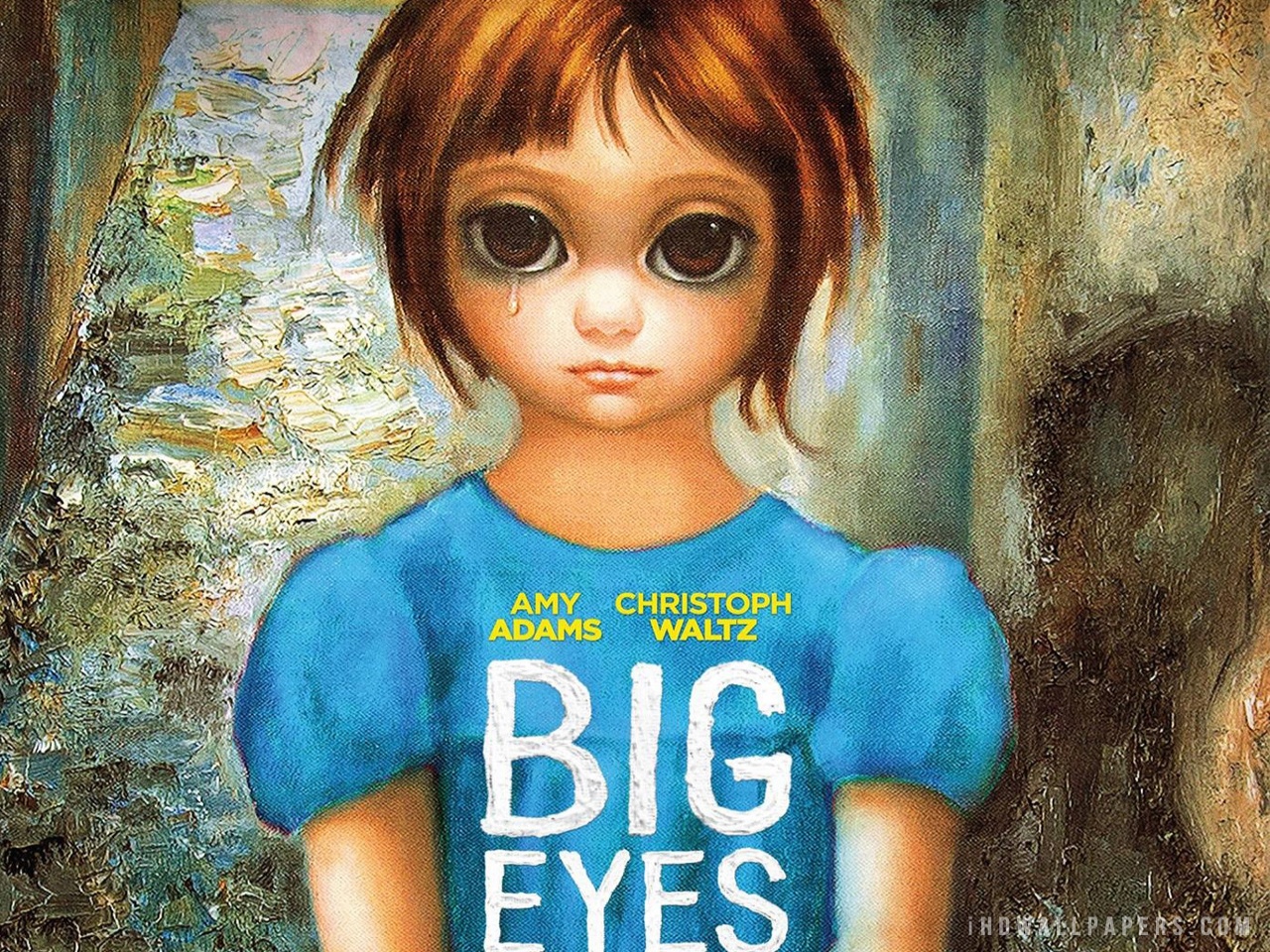
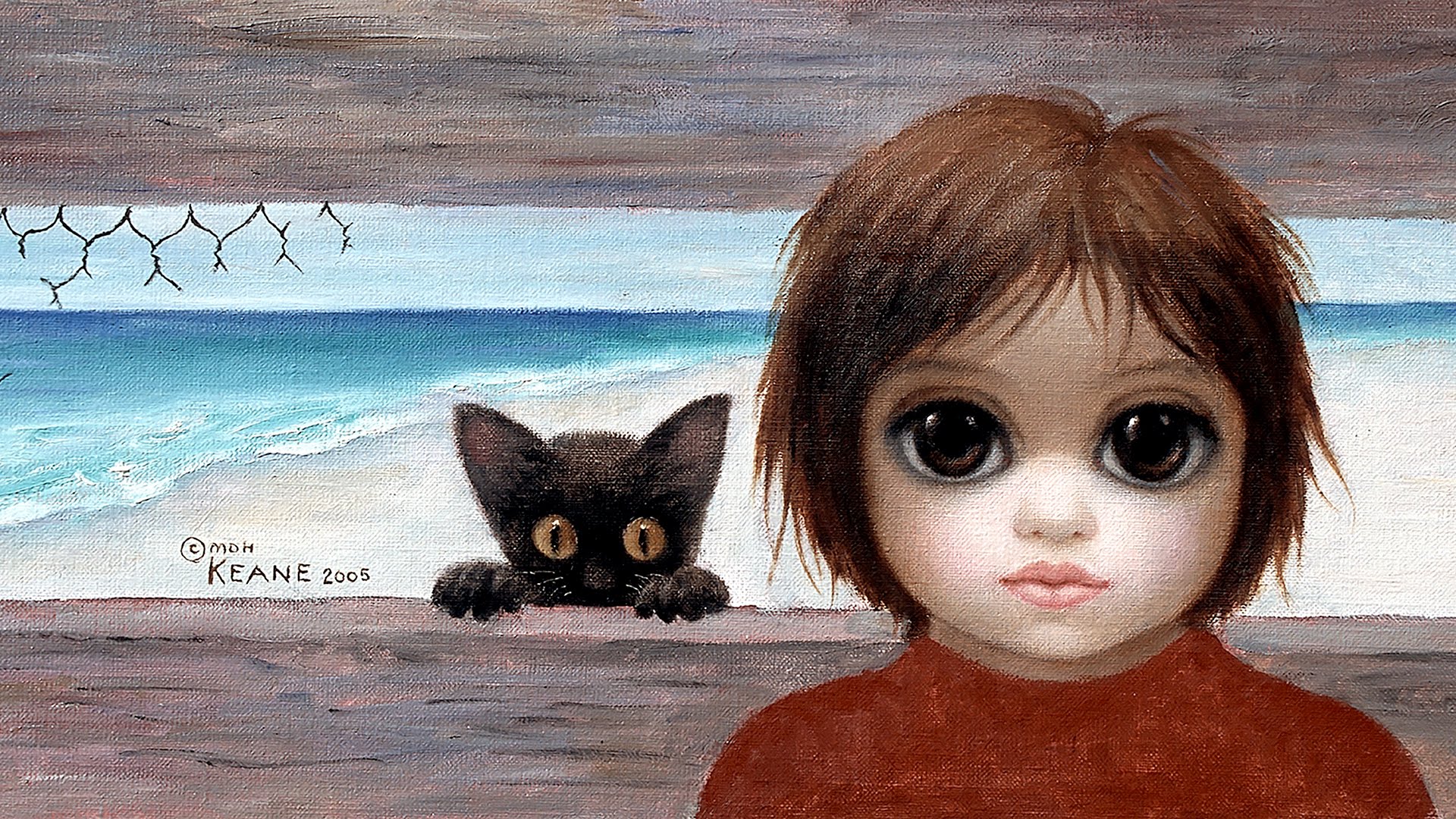
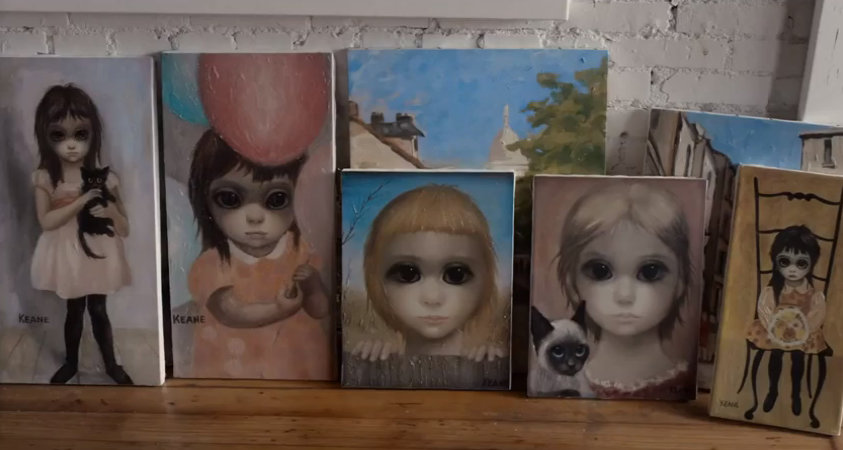
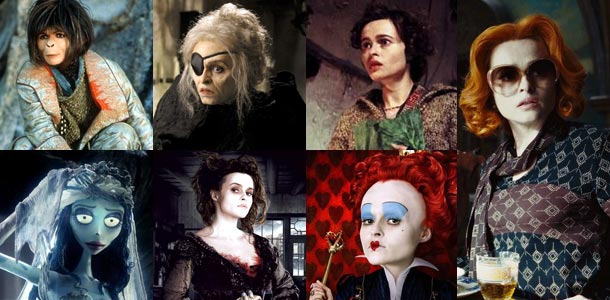
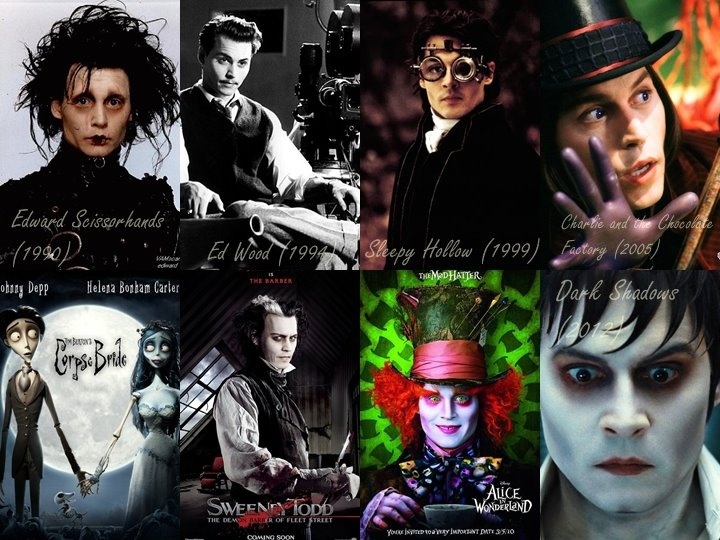
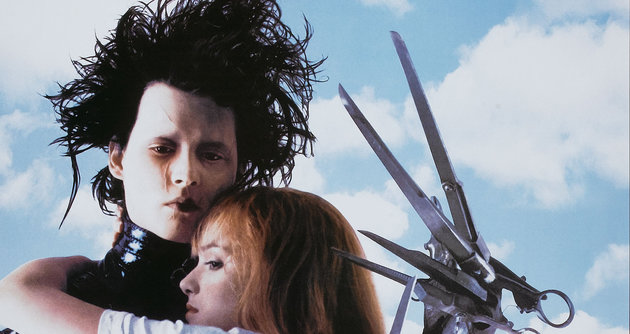
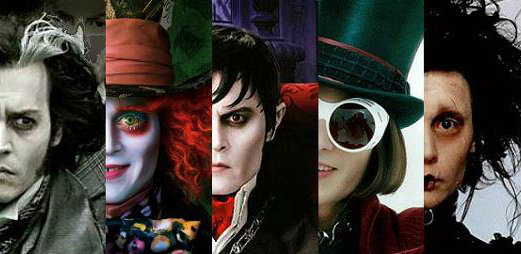
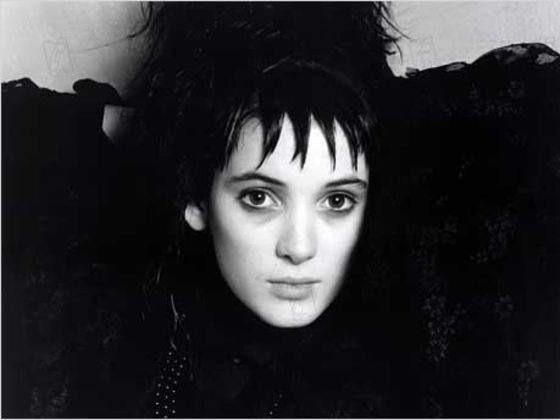
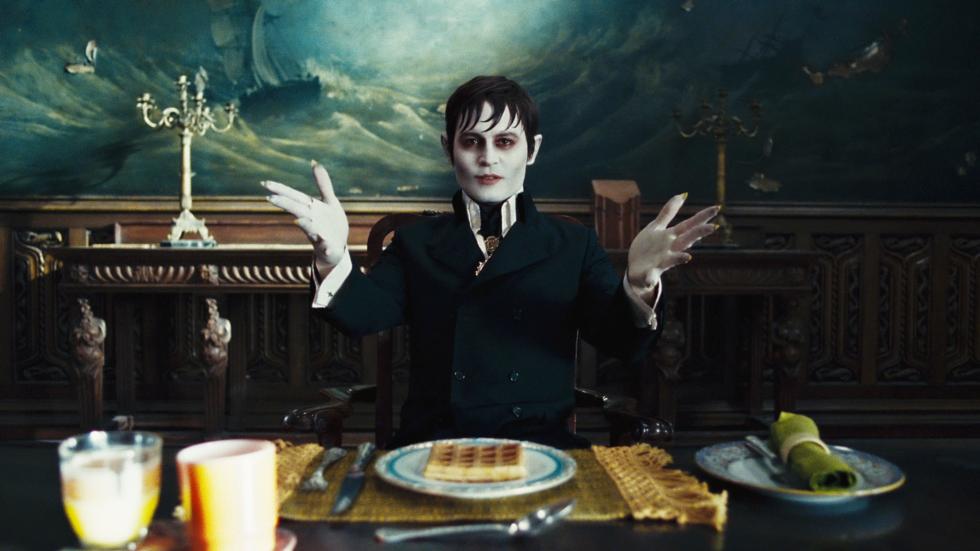
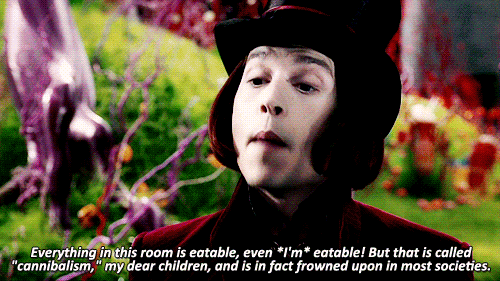
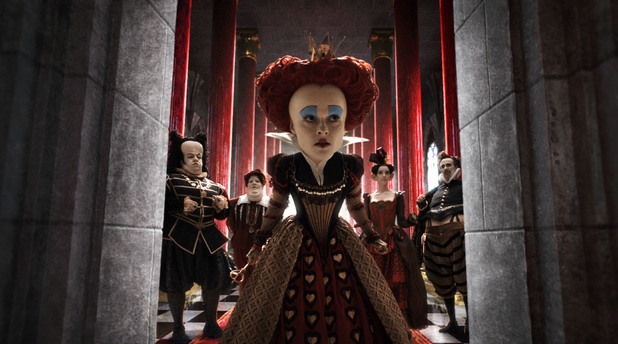
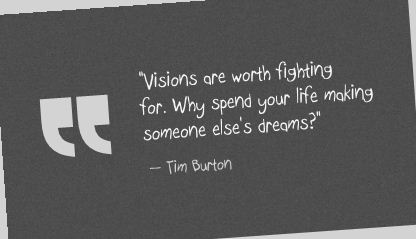
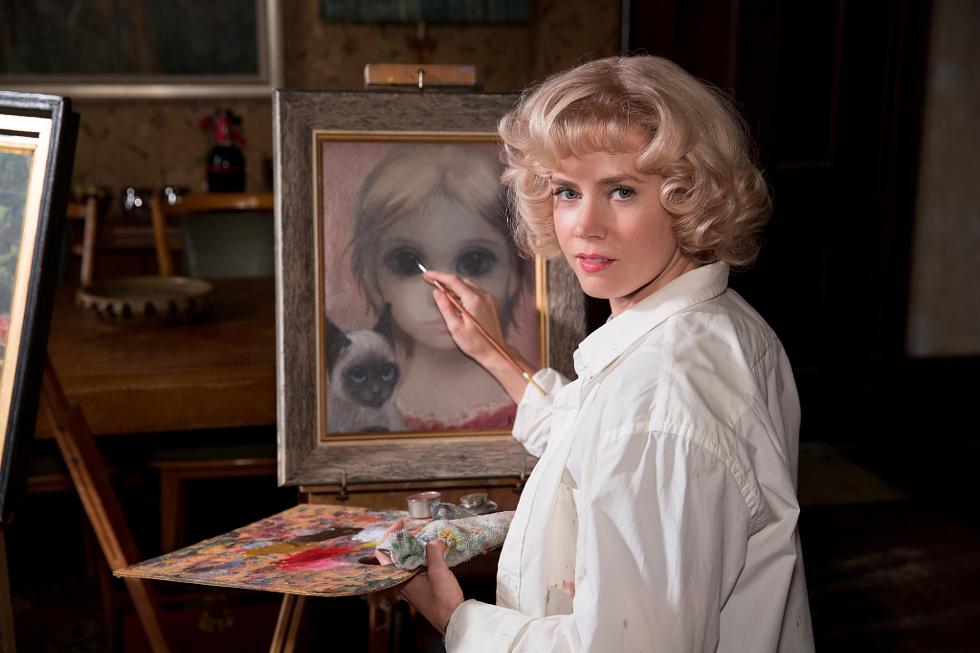
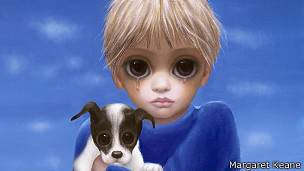 Yesterday, before the big game, I watched the DVD I bought of Tim Burton’s Golden Globe Award movie, Big Eyes. It is the true-story bio-pic of an artist I loved as a kid, Margaret Keane… though I knew her as Walter Keane.


















Only One Star?
There are certain books that simply have to exist in order for me to be me. I couldn’t be the person I am without The Lord of the Rings by Tolkien, Dandelion Wine by Ray Bradbury, The Little Prince by Antoine de Saint-Exupery, The Alchemist by Paulo Coelho, Der Zauberberg (The Magic Mountain) by Thomas Mann, and A Wrinkle in Time by Madeleine L’Engle. These are all books that have an allegorical element, a trans-formative effect, that shapes how you think and how you live after reading them. Some of these books have not been made into a movie. Some probably still can’t be. Others have not been made into an effective movie. But, then, Disney in 2018 makes a movie version of A Wrinkle in Time that makes me relive the primary experience of the book all over again.
I was disappointed to see the critics being harsh about the movie. I had high hopes before going to see it. Yet, you couldn’t miss the one star rating on the box office rating system of the ticket and show time site I was using. But my daughter and I went to see it yesterday anyway. It was far above my highest expectations.
You see, the novel itself is magical. The essential characters of Mrs. Whatsit, Mrs. Who, and Mrs. Which have to be witch-like, super-real incarnations of inter-dimensional beings. It is the view of them with open-minded childlike eyes that makes the complex relationships of this story to reality apparent to anyone who thinks clearly like a child. It is the reason why this book is a young adult novel, written primarily for children, even though the concept of a tesseract is wholly mind-bending in a Stephen Hawking sort of way. It is the wonder with which the director of this movie lensed the dimension-tessering time witches that makes this movie the best version. Not like that failed attempt in 2003. That was almost there, but not quite by half.
Critics don’t like some of the special effects and the color schemes of some scenes. Many things about the final battle with evil are seen by them as inexplicably bizarre. They don’t like the over-use of extreme close-ups on the faces of characters. And they think the performances of some of the child actors are too wooden and unreal to carry off the story.
I wholeheartedly disagree.
This is a story that takes place in the heads of the people involved, including the viewer of the movie. The extreme close-ups pull you into the personal feelings and struggles of the main characters. Particularly Storm Reid as Meg. The story is about her struggle as an adolescent to be at peace with her own flaws and self-image while at the same time being responsible for finding and saving her father, as he has completely lost his way on his quest to “shake hands with the universe”. Meg undergoes a challenge to her self image as she is cruelly bullied by another girl in school. She has to come to terms with loving her super-genius little brother Charles Wallace. And she has to weather the changes that occur when she encounters a potential first love in Calvin. It is a coming of age story that really smart kids can relate to directly from their own personal experience.
This one-star movie with only a 40% fresh rating on Rotten Tomatoes is a far better movie than the critics would have you believe. It is doing quite well at the box office. Kids seem to love it. And in my wacky opinion, it is the best movie version of the book to date. I love this movie.
Leave a comment
Filed under art criticism, commentary, magic, movie review, science fiction
Tagged as A Wrinkle in Time, Madeleine L'Engle, movie review