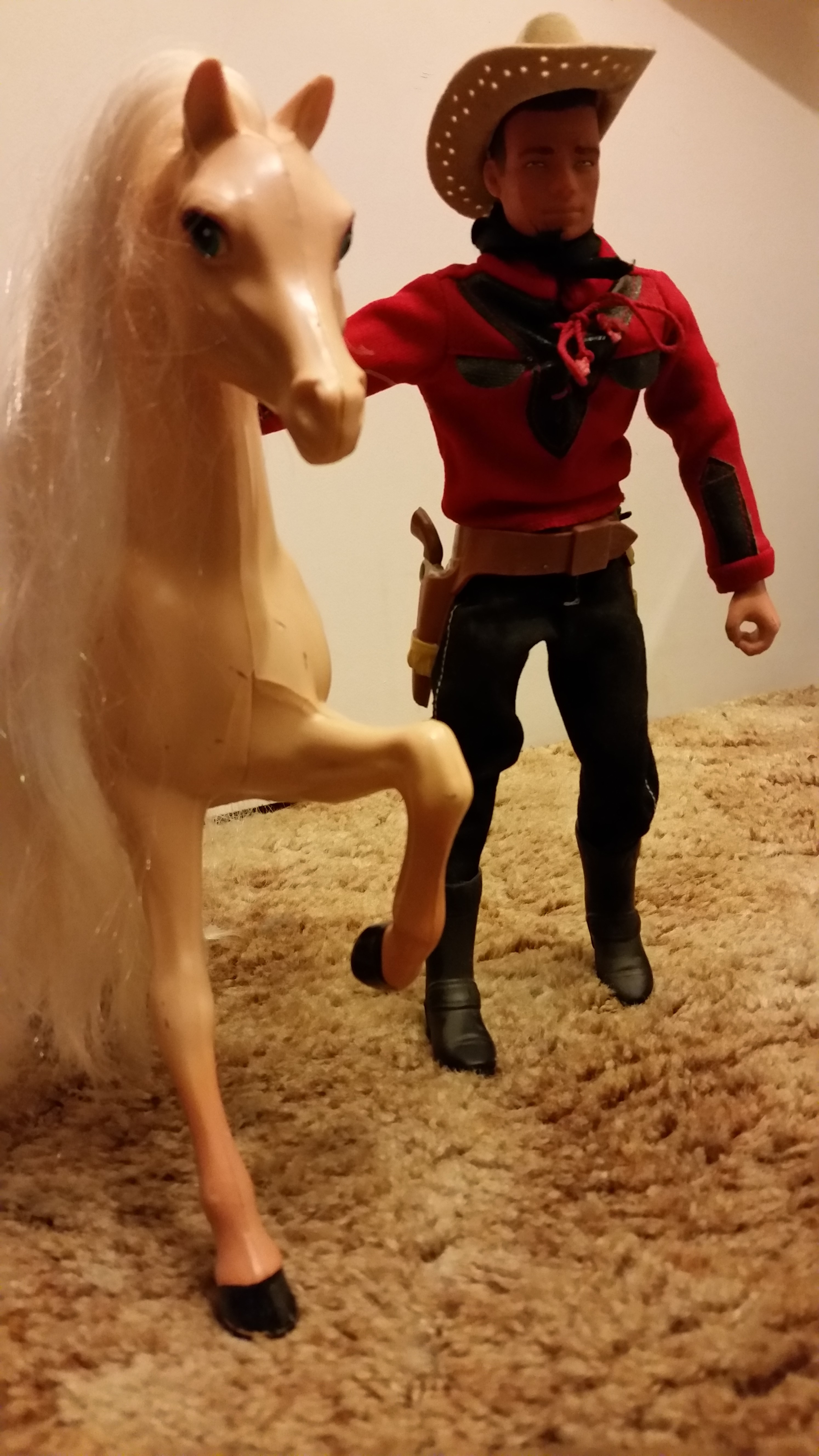
Cleaning in the library led me to rediscover an old project. Roy Rogers and Trigger had been sitting next to the TV in the library. I found them both on the floor between the TV and a book stack. Time to pick them up and put them back in shape.
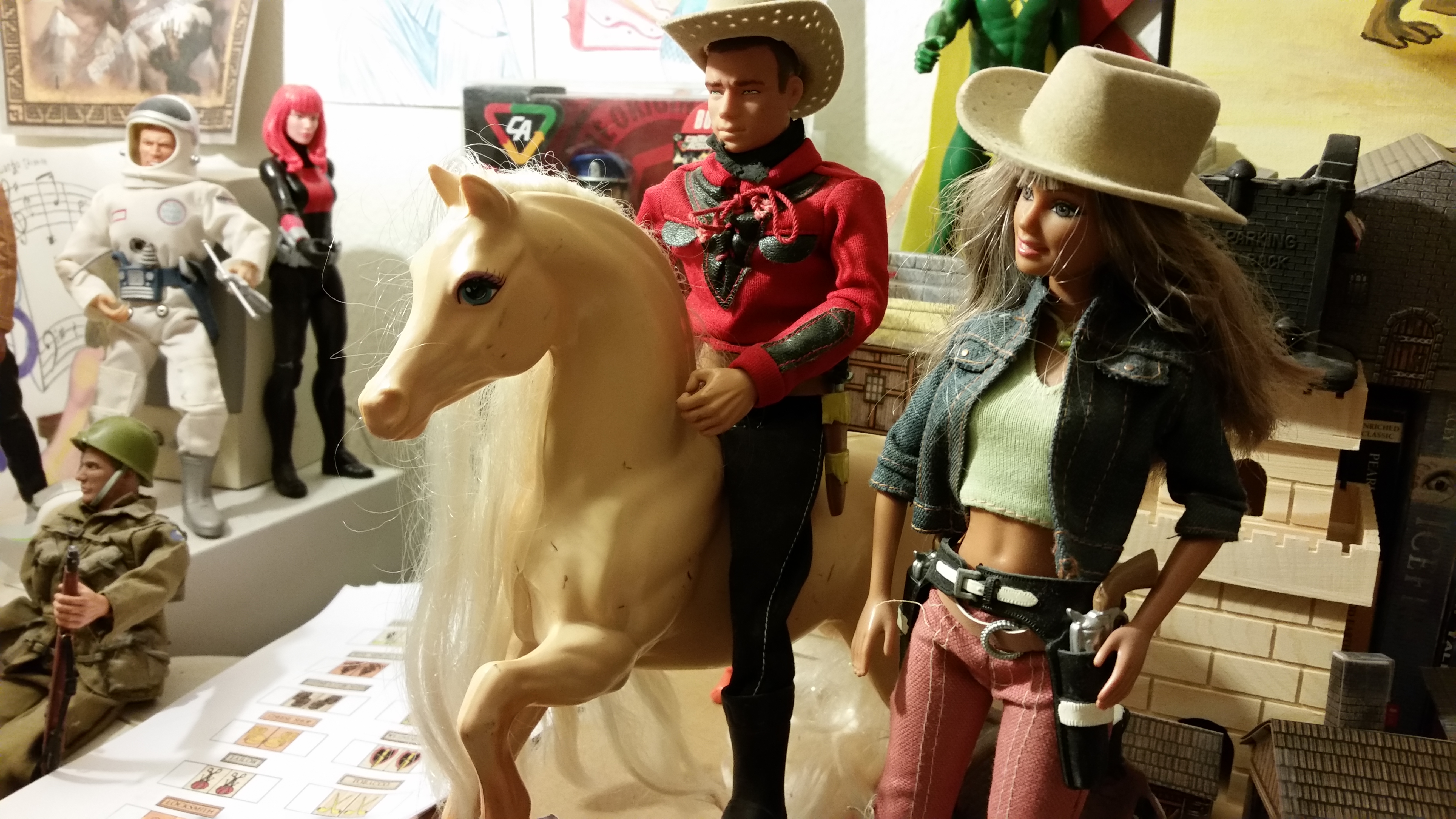
The doll is a random military action figure rescued naked from a thrift store. I thought the face looked enough like Roy Rogers to turn him into that particular hero. The horse is from Mattel, and probably is part of a Barbie play-set. It was given to me by a relative. I dressed Roy in a Lone Ranger Captain Action uniform with a Tonto gun belt, both created by Playing Mantis Toy Company in the late 1990’s. The hat is actually from a Cowgirl Barbie because I wanted a Roy Rogers-style, almost-white hat. The Lone Ranger hat is too flat-brimmed to look right and way too large to fit on Roy’s smaller head, and the only other cowboy hat I have for it is a Johnny West hat from Marx Toys in the 1960s, and that is dark brown.
Everything Johnny West that I still have was salvaged from the house where I grew up back in the 1980s. They belonged to my little brother but ended up in my collection because he outgrew dolls and action figures long before I did. I wish I still had the doll himself, but I think Dabney blew him up with a firecracker when he was a teenager.
So, I have to be happy with only having Roy and Cowgirl Barbie to play with.
It is difficult to look at the sky and not feel that the power of Heaven is real. As I approach the halfway point of my sixty-eighth year, and the darkness of the future draws ever nearer, I am forced to think about what I really believe. Being smarter than the average bear has its drawbacks. I understand why most of the writers I most admire were atheists, and all of the philosophers I have read and found agreement with are decidedly atheist. Science, rationality, and reason all suggest that there is nothing beyond the physical realm. Should that matter? Faith, according to Mark Twain, is fervently believing in your heart what your mind tells you ain’t so. In fact, Hebrews 11:1 says, “Faith is the assured expectation of things hoped for, the evident demonstration of realities though not beheld.” Even the Bible is saying you have to believe it even though you shouldn’t believe it.
So, will I go to Heaven when I die? For me, the question is meaningless. I look up at the miracle of a blue sky on a partly cloudy day and see the life-giving sun. I am alive… here and now… and nothing else is really relevant. I am a part of the great, vast universe of reality. My existence is real and cannot be unmade… even by God, if He were inclined to do such a thing. I am a small, insignificant part of reality, and I can be gone in the next instant like a puff of smoke in the wind. But I am here and I am alive and I took the Paffooney picture that I used to illustrate this post. And I face whatever comes with a smile on my face. I am alive… and life is good.
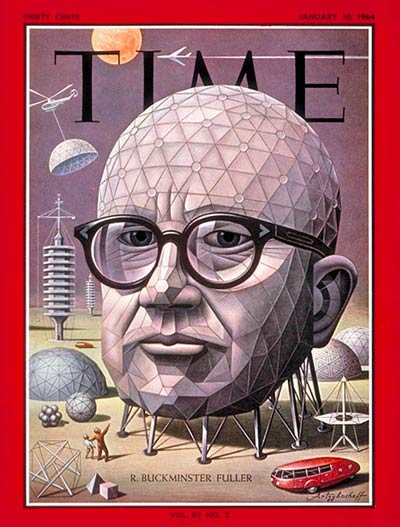
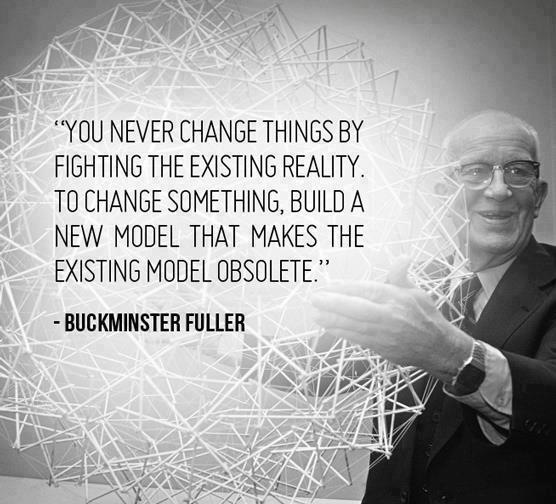
Buckminster Fuller is an intellectual hero of mine. As he said in the video, if you bothered to watch it, “I was told I had to get a job and make money, but would you rather be making money, or making sense?” Bucky was always a little bit to the left of center, and basically in the farthest corner of the outfield. That’s why we depend so much on him in times like these when the ball is being hit to the warning track. (I know the world doesn’t really work on baseball metaphors any more, but my life has always been about metaphors from 1964 with the St. Louis Cardinals playing and beating the New York Yankees. Mantle was on their side, but Maris was playing for us.) You have to live in the world that fits into your own mental map of reality. And if you’ve been whacked on the side of the head one too many times… it changes the way you think. You begin to think differently.
If you don’t know who Bucky is, as you probably don’t because he revolutionized the world in the 60’s and died in the 1980’s, Richard Buckminster “Bucky” Fuller was an American architect, systems theorist, author, designer, and inventor. He is credited with the invention of the Geodesic Dome. But he was so much more than that. He wanted to build things that made better sense, in a practical sort of way, than the way we actually do them. He built geodesic homes because he felt a home should maximize space and use of materials and minimize costs and amounts of materials as well as environmental impacts. He is the one who popularized the notion of “Spaceship Earth”. He wrote and published more than thirty books, and gave us a variety of truly wise insights. He promoted the concept of synergy. He said, “Don’t fight forces, use them.” He also pointed out, “Ninety per cent of who you are is invisible and untouchable.” He was a man full of quotes useful for internet memes.
So, lets consider an example from the mixed up mind of Mickey;
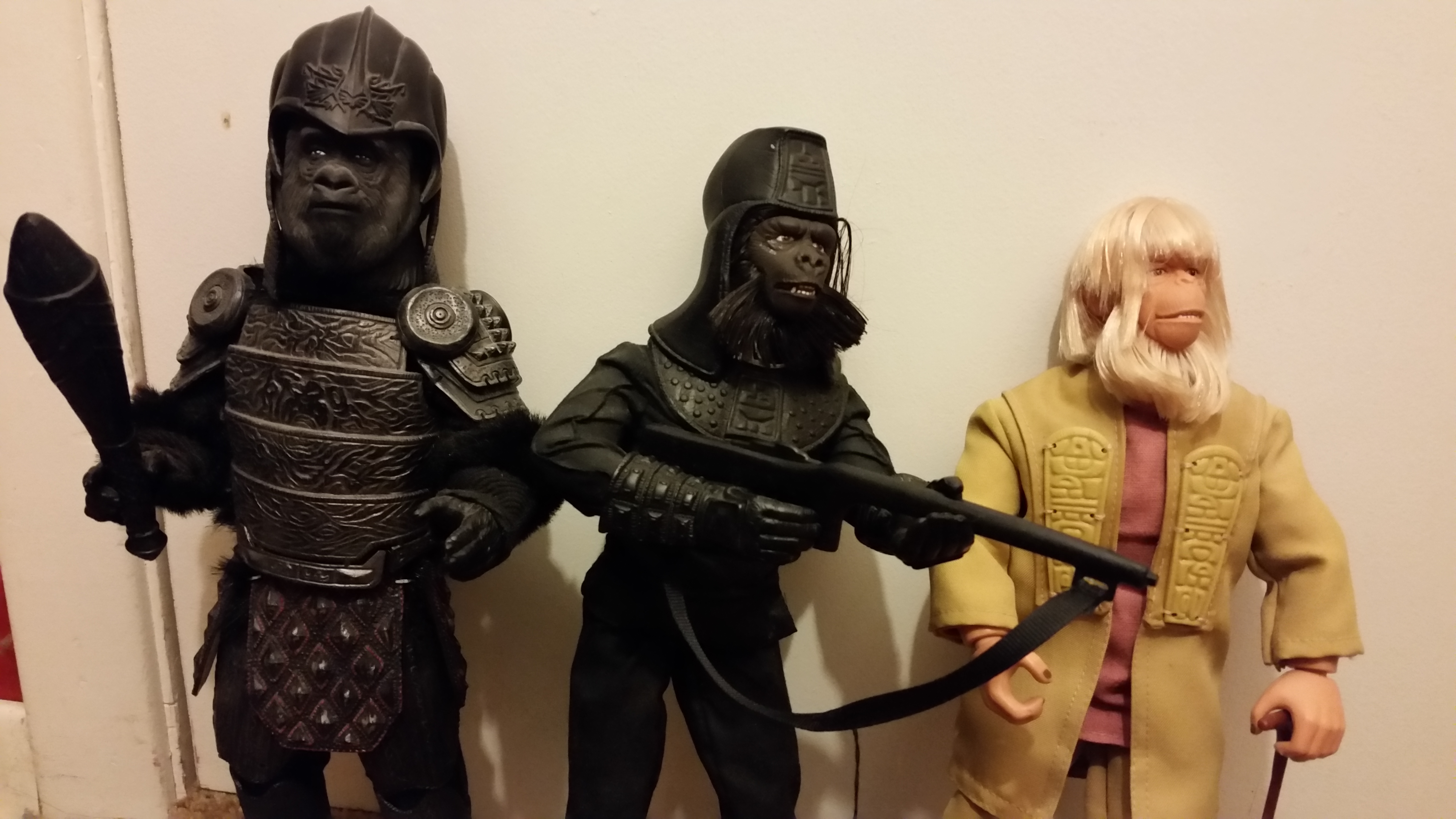
Here are three dolls from the Planet of the Apes part of my doll collection. (Two different movies are represented here, the 1968 original, and the Tim Burton 2001 remake.)
The world we now live in is increasingly like the movie, The Planet of the Apes. In that film the world the astronauts set down upon is ruled by talking apes. The human beings in that film are relegated to the fields and forests where they are no more than speechless animals. Much like the Republican Party and the wealthy ruling elite of this day and age, the apes control everything and, led by Dr. Zaius (seen on the far right) reject science and evidence as a way to explain things. They rely on the rules set down by the Lawgiver in much the same way that modern day Republicans swear by the U.S. Constitution to determine the truth of all things.
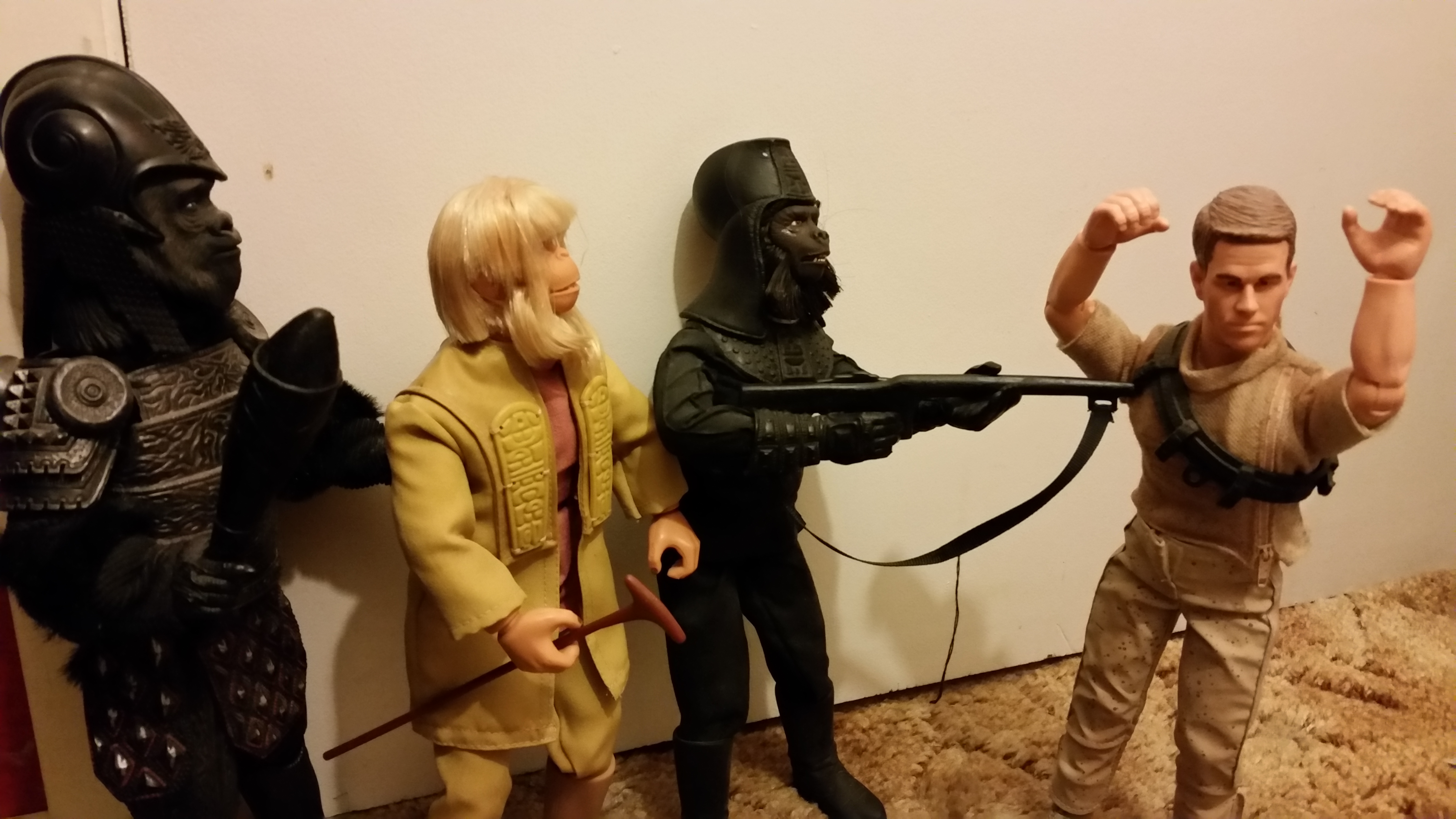
Here we see the apes capturing and enslaving Marky Mark… er… Mark Wahlberg rather than Chuck Heston from the original movie.
In the original set of movies, Charleton Heston, playing the astronaut Taylor, discovers that through hatred and warring, the human beings of Earth have bombed themselves back into the stone age and enabled the evolved apes to take over. How does Mr. Heston deal with that problem? He discovers an old doomsday device and blows up the world. Chuck Heston has always approved Second Amendment solutions to modern problems, so it is no wonder that he lays waste to everything, the good and the bad. I think we can see that old orangutan-man, Donald Trump doing exactly the same things now as he runs for President, or Great Ape, or whatever…
In both the previous series, and the current remake, salvation from the rule of the monkey people comes in the form of a leader among the apes. Caesar, whether he be played by Roddy MacDowell or by Andy Serkis, is able to solve the problems of apes and men by reaching out to those of the other species, assigning them value, and ultimately doing what helps everyone to survive and live together. Diversity is power and provides a workable solution through cooperation. The forces of hatred and fear are the things that must be overcome and threaten the existence of everyone. Donald Trump needs to learn from the lesson of The Planet of the Apes, and be less like General Ursus. We need Bernie Sanders to embrace the role of Caesar and show us how we can get along with our Muslim brothers… after all, they are more like us than the apes are, and Caesar builds bridges between apes and men.
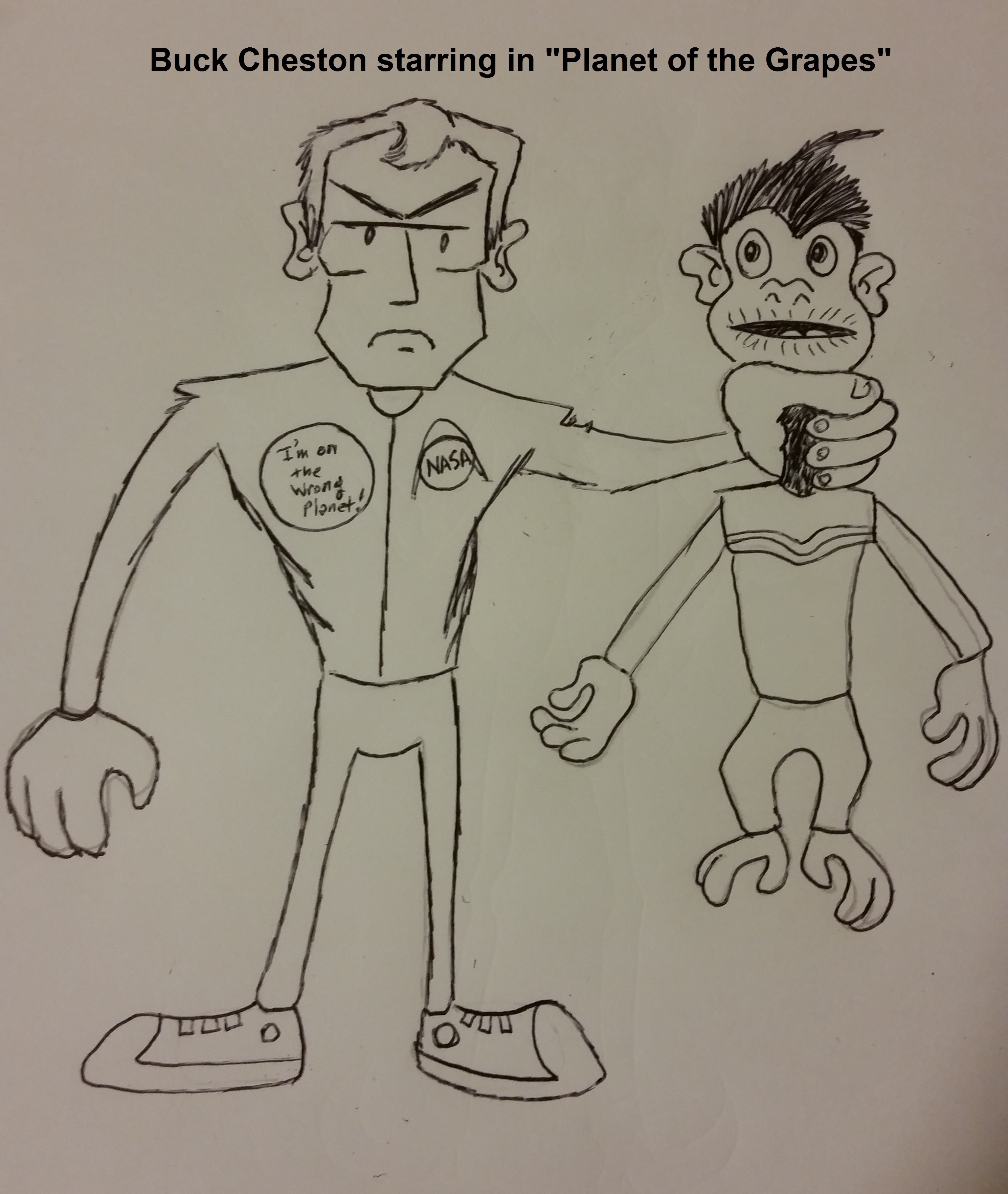
So, there you have it, my attempt to build a new model based on an old movie… or on the remake… whichever you prefer. And if that doesn’t work, well, there’s always…
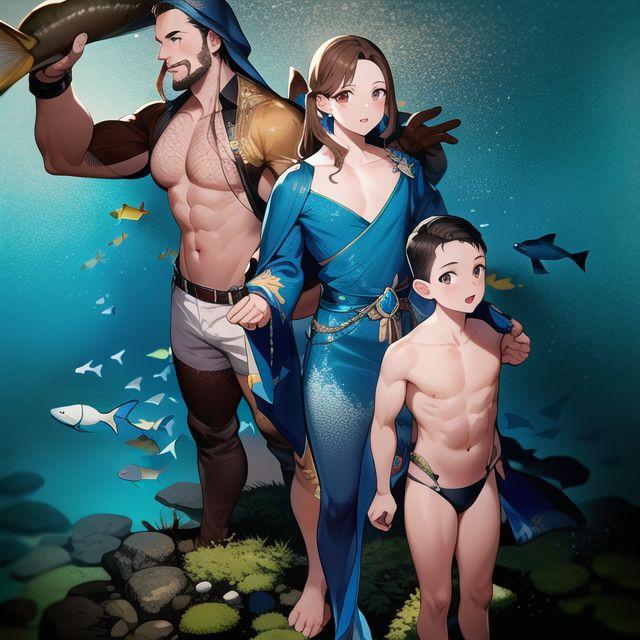
I made this picture for Instagram using my action figures for models, AI Mirror to fix my drawing for arthritic infractions, and Picsart AI Photo Editor for the background. You can easily see that I had some changes made by the AI programs that I really did not know how to fix. Aquaman’s fish club was supposed to be a fish swimming above his head. I did try to make him bare-chested and not with a shredded sleeve on his right arm. Mira’s right hand was supposed to have a visible thumb, and Aqualad’s shorts were not a string bikini bottom.
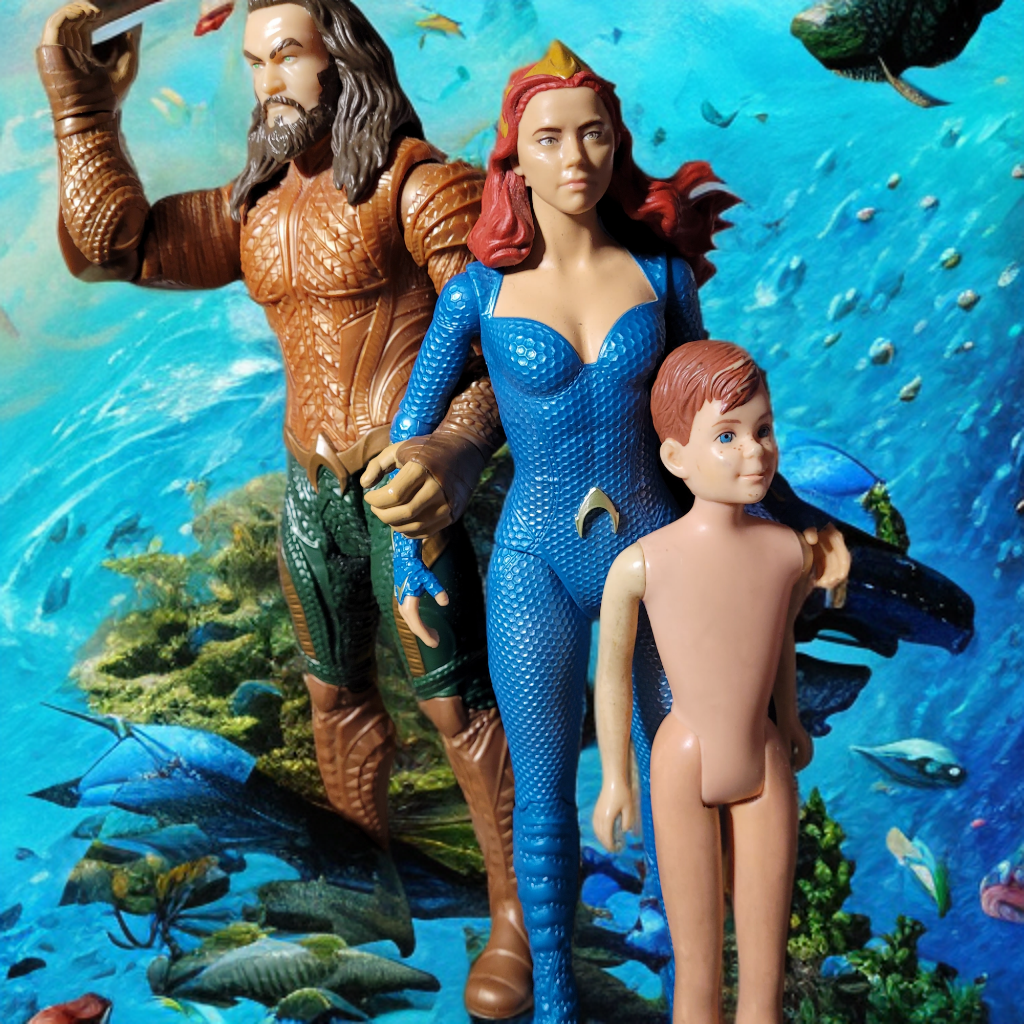
This is the original photoshop picture with the dolls, Aquaman, Mira, and Ricky from the Barbie series, standing in for Aqualad.
I suppose the final outcome is acceptable, considering the compromises I had to make anyway. My tracing layer on top of this photo turned out embarrassingly awkward, so it’s not surprising how many strange changes AI Mirror made. What I couldn’t forgive was how the spellchecker changed Aquaman’s name to Aquamarine just as I pushed the post button.
I am fascinated by the darker alleyways in the city of human thought. I love monster movies, those love-story tragedies where the monster is us with one or more of our basic flaws pumped up to the absolute maximum. We are all capable of becoming a monster. There are consequences to every hurtful thing we have ever thought or ever said to other people, especially the people we love.
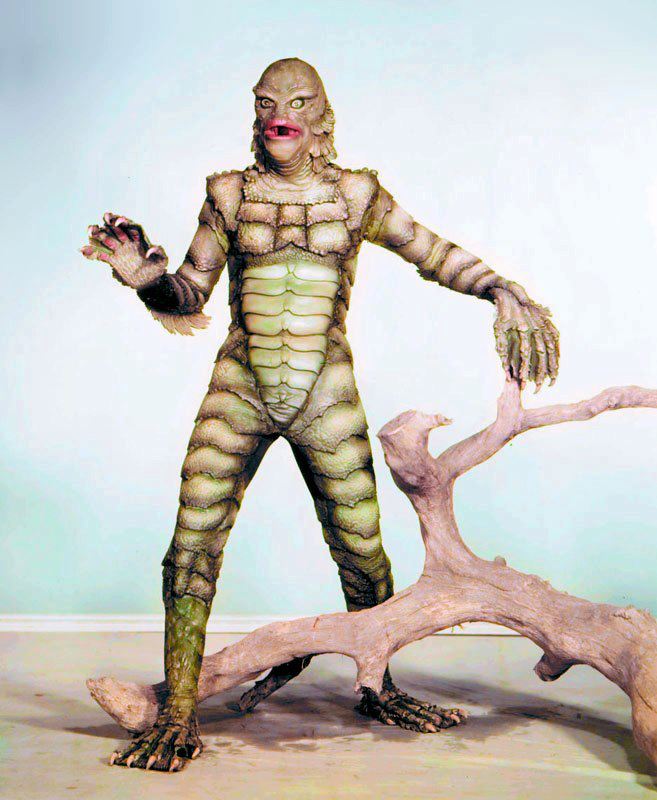
The monster movies I love most are the old black and whites from Universal Studios. But I can also seriously enjoy the monsters of Hammer Films, and even the more recent remakes of Frankenstein, The Mummy, and their silly sequels. I am fascinated by the Creature from the Black Lagoon because it is the story of a total outsider who is so different he can’t really communicate with the others he meets. All he can do is grab the one that attracts him and strike out at those who cause him pain. It occurs to me that I am him when having an argument with my wife. Sometimes I am too intelligent and culturally different to talk to her and be understood. She gets mad at me and lashes out at me because when I am trying to make peace she thinks I am somehow making fun of her. How do you convince someone of anything if they always think your heartfelt apology is actually sarcasm? How do you share what’s in your heart if they are always looking for double meaning in everything you say?
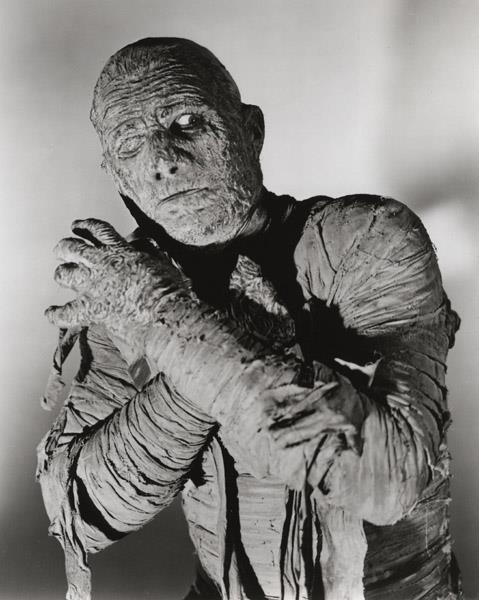
But other people can change into monsters too. I am not the only one. People who are bitter about how their life seems to have turned out can strike out at others like the Mummy. Wrapped in restrictive wrappings of what they think should have been, and denied the eternal rest of satisfaction over the way the past treated them, they attack with intent to injure, even just with hurtful words, because their past sins have animated them with a need to change the past, though the time is long past when they should’ve let their bitterness simply die away.
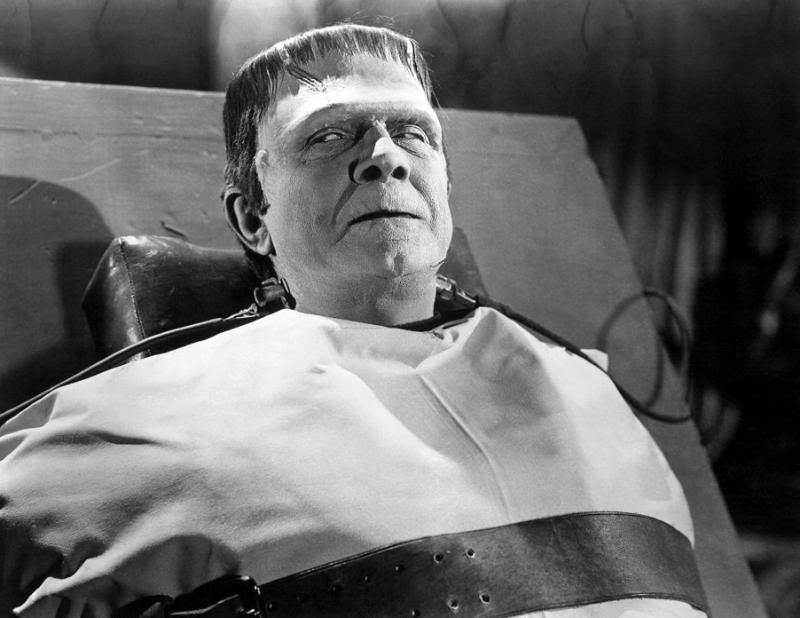
And we might all of us fall into the trap of Victor Frankenstein’s monster, who never asked to be made. He finds life to be an unmanageable nightmare with others constantly assaulting him with the pitchforks and torches of their fear and rejection.
But the thing about monster movies… at least the good ones, is that you can watch it to the end and see the monster defeated. We realize in the end that the monster never really wins. He can defeat the monstrous qualities within himself and stop himself. Or the antidote to what ails him is discovered (as Luke did with Darth Vader). Or we can see him put to his justifiable end and remember that if we should see those qualities within ourselves, we should do something about it so that we do not suffer the same fate. Or, better yet, we can learn to laugh at the monstrosity that is every-day life. Humor is a panacea for most of life’s ills.
Much of what I love about good story telling is bound up in the nature of the fool character, or the wise fool, if you will. Shakespeare is probably the consummate creator of fool characters. Jaques in As You Like It, Falstaff in Henry IV and Henry V, the King’s Fool in King Lear, and even Polonius in Hamlet. The fool is essential to the story because he serves several important purposes. He is a foil for main characters in the unraveling of the plot, providing exposition through dialogue, wit and wisdom in commenting on the events, and pratfalls and innuendos for the further amusement of the audience. He is the Harpo Marx character, Chaplin’s Little Tramp, any Red Skelton character, Lou Costello, Jerry Lewis, and every foolish talking animal in cartoon adventures like Scooby Doo.
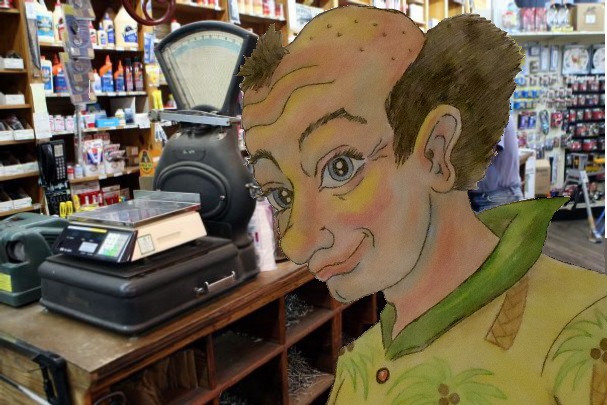
So, I have tried to include the clown in my stories of childhood in Iowa, the land of imagination and corn. In my newest novel, Snow Babies, the key clown is Harker Dawes, a good-hearted bumbler who has bought the hardware store in Norwall, Iowa and quickly managed to turn it into a bankrupted and foolishly failed business. He is in control of essential supplies for a small town to use in surviving a raging blizzard, but he is also totally incompetent and capable of creating as many problems as his store can solve. He is a bachelor uncle living with his brother’s family of three, and he becomes one of the people most responsible for taking in the four orphans from the bus.
Today’s Paffooney is a picture of Harker in his store. Of course, I can’t tell you the name of the real-life person that Harker is based on. But I can tell you that I drew this portrait by combining his real-life mug with the features of Rowan Atkinson. In fact, if a miracle happens and they make this story into a movie, Rowan Atkinson would be perfect for the part. His first name is even the real name of the town that becomes Norwall in my story. Stewart’s Hardware Store is no longer there anymore. Even the building is gone, but the image in the background is close to the antique feel of that wonderful old place.
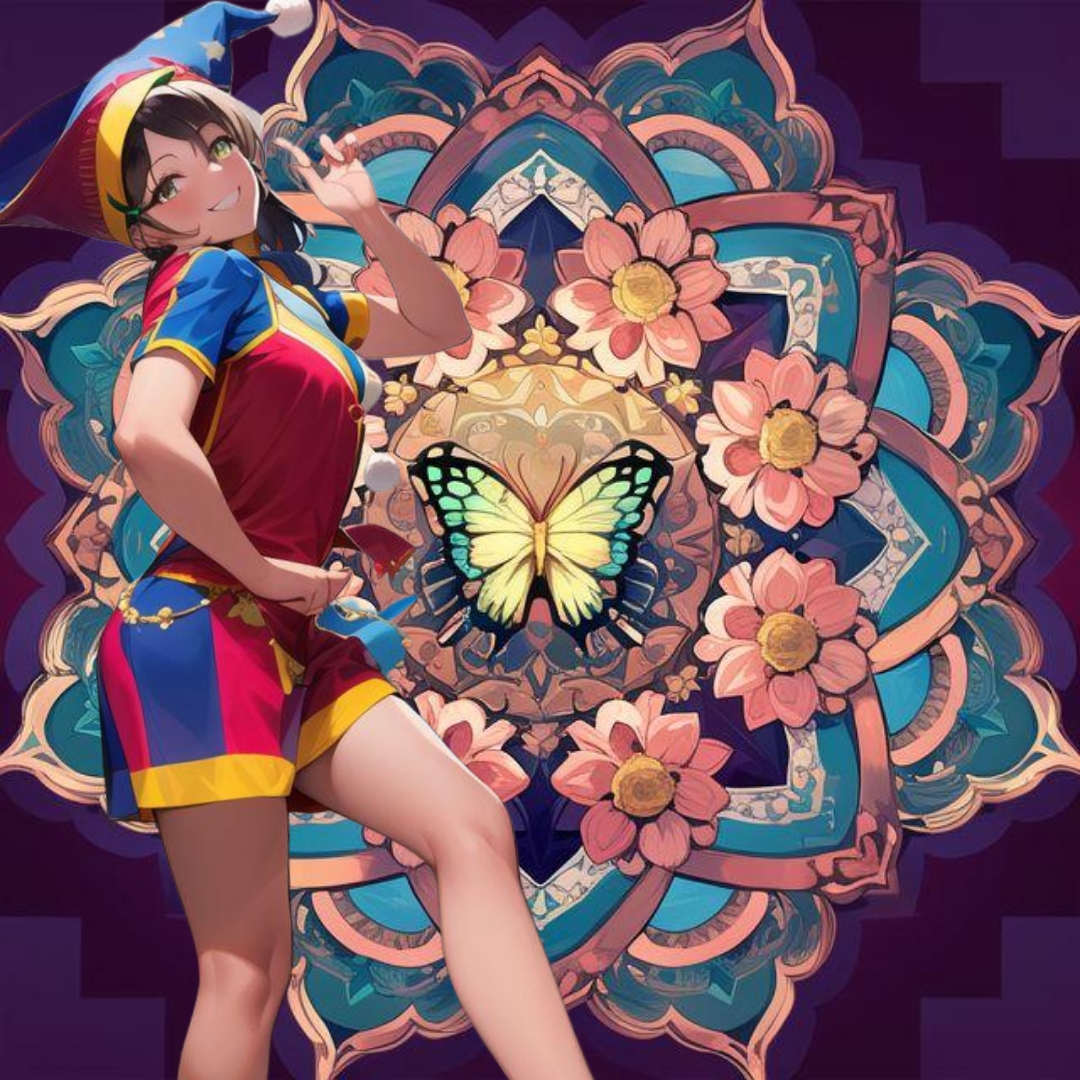
A lot of critical art viewers will randomly tell me that using AI Art programs is plagiarism because these programs have been trained on people’s posted artwork without permission or acknowledgment. I agree that that is not fair. I also think that is not how I use AI programs. The above picture used Picsart AI Photo Editor and AI Mirror in its creation. The Harlequin Girl is drawn from a model I saw on Instagram, a human dancer in a costume that is similar to my drawing. I used AI Mirror to make my imperfect drawing look better than I can do with arthritic fingers. I used the uncorrected version here with the problem hands so you could see the kind of things you have to go back and draw over with digital art tools. I used Picsart to turn her into what is called a “sticker” that I could place upon a background. I used a colored mandala that I got from Tapcolor Digital Coloring Book as a background. Before I put the sticker on top, I added the butterfly and altered the round design elements into flowers.
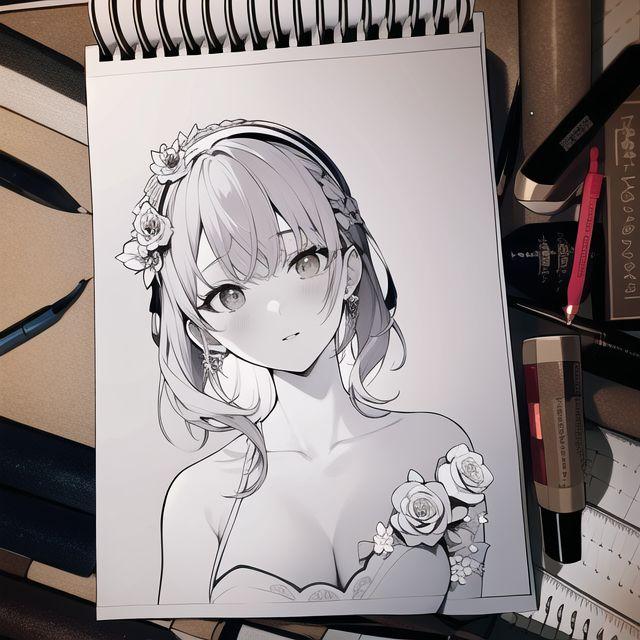
This is how I use AI Mirror to improve my artwork. The picture above is nothing but a pencil drawing inked and guidelines erased. If you look at it carefully you can see how I skewed the eyes when I inked the pencil drawing. One on the left is the roundness I wanted. The right one has a lower eyelid that cuts too narrowly to make the eyes look mismatched. So, I ran the photo of the finished pen and ink drawing through AI Mirror allowing it to make changes up to 50 %. Below you can see the best result. It took eight tries to get the eye match I wanted.
You can see that the program made changes to more than just the eyes. It took much of the 50% to adjust the background, adding art tools that I had in previous photos of the drawing board used in similar pictures I used AI Mirror on. It also changed the hairstyle, and since it didn’t like the ladybug theme of the dress, changed it for white roses which I have used in similar pictures repeatedly. I did go back and add whiteness to the roses to make it look a little cooler.
This one above is intended to be a surrealist interpretation of a piece of music. Of course, the AI Mirror program and the Picsart program are both overly sensitive to copyright and trademark. That’s why it intentionally screws up the sheet music and the words on the t-shirt of the drawing I did for the girl sticker. It doesn’t reproduce things that could potentially be trademarked. And the flower stems the girl held in my drawing got turned into a short black stick and a sword? There were multiple things I needed to correct as I continued to change it to make it fit my vision for the piece.
This isn’t a final version either, but it is closer. It still needs to have the sheet music tamed to look more like ordinary sheet music. The main character’s bikini bottom shows up in a way that proves that making it two-color black and brown needed to be more contrasting to the shadow color on her legs. And the nudity of her companion was my idea, but I will have to make the further correction of not sending this post to Facebook. Facebook is ready to sanction me for showing bare breasts in their news feeds.
I am now done complaining about the nagging little things that annoy me about the AI art process. But I do the drawings that I present as my work. I am not plagiarizing anything. And I thoroughly enjoy this whole process.
The past two months have been a rollercoaster in the dark in a rail car that is barely set properly on the tracks. Every curve I didn’t see coming was a potential derailment and crash. A potential fatal crash.
President Pumpkinhead has been crashing and destroying government services left and right. My Medicare (which I am still paying increasingly high premiums for) is at risk of being totally cut, as is the Medicaid and Social Security that people more poverty stricken than me may lose. The military leadership has been overturned for less competent and lower-ranking officers who are more Pumpkinhead-friendly. The Department of Justice is now set up to unleash a revenge campaign, firing politically neutral officers, judges, and lawyers for less competent and more wishy-washy ones. Will they come for me? Probably not for a while. Big list. But eventually.
And my health woes have taken a darker turn. A broken crown that turned into a dangerously infected broken molar had to be extracted, along with a second broken molar. I ended up with a large dental bill that the dentist’s office tried to help me finance resulting in a credit denial that will stick me with a large bill I cannot pay. That started at the beginning of January and is finishing in the credit denial today. I also had a second serious infection of my urinary tract that required the heaviest possible antibiotics I could take without dying. That was overlapping some sort of flu-like virus and the passing of two, or possibly four, kidney stones. I am floored with lifeforce fully spent… but not quite dead.
Could any of this have been avoided? Any of this dumb stuff? I voted for the nice black lady who took over from the really old but really good President. So did my daughter. We didn’t want the Pumpkinhead to win. And I really would’ve liked Medicare to help me pay for necessary dental work, but you apparently have to fill out a long form by a certain date back in October as explained in a letter I never got in September. I have no idea where the other dumb stuff came from or how it could’ve been prevented.
So, I am now done complaining about all this dumb stuff. I will probably survive it. Maybe not. But probably. It would depend on where the rail car actually went off the rails resulting in a fatal crash I didn’t yet learn about.
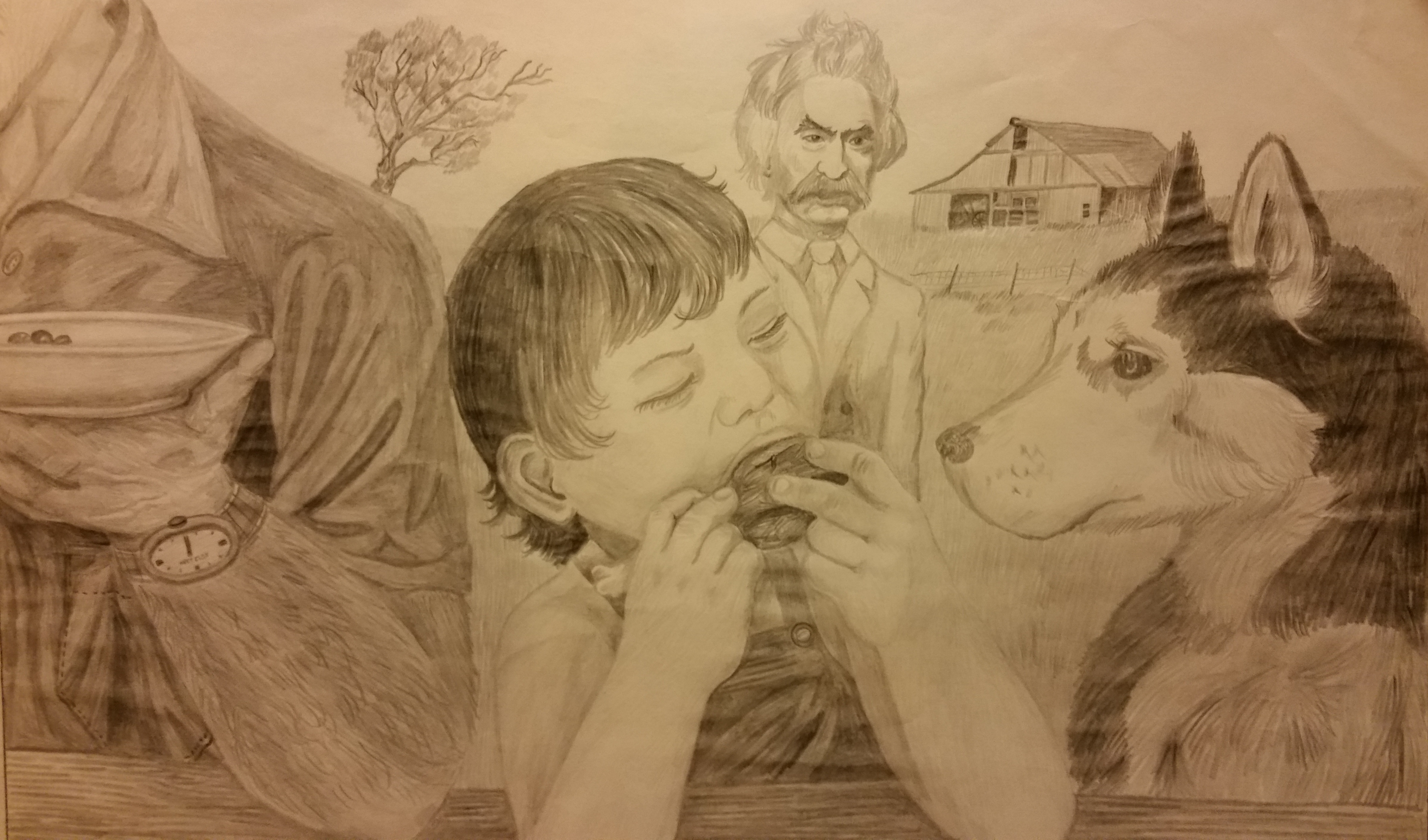
Last night I watched again Part I of Ken Burns’ Mark Twain. I think it reminds me of who I am as a writer. No, I am not being all big-head arrogant and full of myself. I devoured certain writers as a youth, consumed them whole. Charles Dickens was my first passion, followed by J.R.R. Tolkien, and then Mark Twain. Of all of them, Samuel Clemens is the most like me. He was from the Midwest, born and raised in Missouri along the Mississippi River. I am from the Midwest, born and raised in Iowa along the Iowa River. He endured hardship and tragedy as a youth, losing his little brother in a riverboat accident, and he dealt with it by humor. I endured a sexual assault from an older boy, and dealt with it by… well, you get the picture. We are alike, him and I. We both draw upon the place we grew up, the people we have known, and the events of our youth to create stories.
It is a pretty big responsibility to follow in his footsteps, and I will probably never live to see the success and the wealth that came to him. But I have a responsibility to the people I knew and the time that gave rise to me to tell their story. I need to build a network of stories that resonate the truth of existence that I have been witness to. A big responsibility… and I probably will not live up to it. But I have to try.
Being a writer is somewhat like being cursed. The words burn inside, needing to get out, needing to be heard. I have stories that need to be told, and they will be told, even if only to file away in the closet again. Like Mark Twain, I am good at feeling sorry for myself. And the Mickey part of me, the writer part of me, is just like Mark Twain, a writer persona, and not the real man himself. I am simply the container for something that has to exist and has to tell stories. It is not a bad thing to be. But the more I get to know it, the more I would not wish the destiny on others.
Forgive how sad and bunglingly boorish this post is. But sometimes there are thoughts I simply have to think. And as a writer, I am bound to write down the silly things that I think.
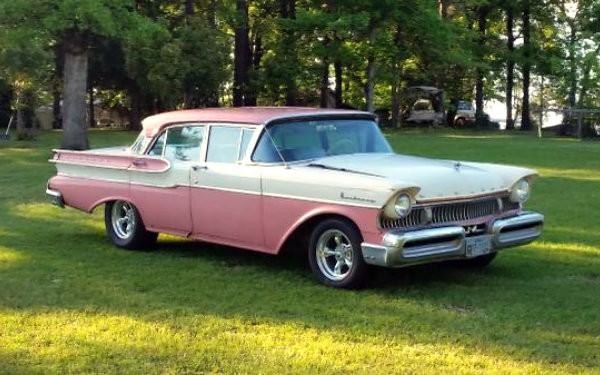
I don’t have writer’s block. I can write as long as I can think and move my fingers on the keyboard to crystallize that thinking into words. The Pink and White Mercury of Imagination is always moving, either driving forward in the present and towards the future, or in reverse, rewriting the past. It is never parked.
But somewhere along the way today, the route got sidetracked onto a looping detour.
Hence, this car-themed drive through the idea-capturing process.
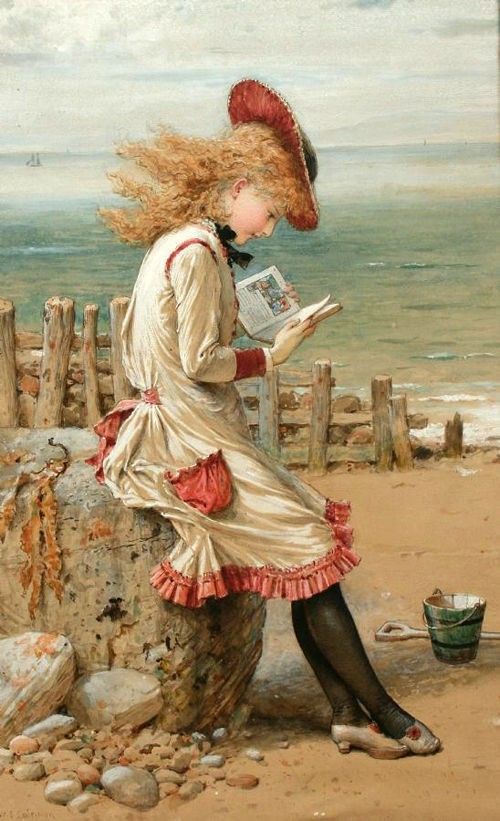
A picture of me reading painted long ago and not with me in the picture..
I started reading a new novel. It is a 500-plus-pager by Kate Morton called Distant Hours. It is a Gothic novel, but in a very different way from the one I am writing in The Baby Werewolf. That book starts as a first person narrative, and then flashes back to the past as a series of third person narratives focused on single characters per section. My novel is a first person narrative throughout, though told by three different narrators. It would make an interesting writing analysis post, but I haven’t read enough of that novel nor completed mine to a point where I can compare and contrast them. And those of you who get bored easily have already tuned out and just looked at the pictures by this point.
I also thought about writing a post about Uber-driving conversations and how that impacts the quality of my driver-service. But the best stuff there can’t be revealed without breaking confidences. Doctors, lawyers, bartenders, and Uber drivers are tasked with providing a touch of confidentiality.
I wanted to complain more about Trump and evil Republicans. But that gets far too tiring. And if the collection of my posts on WordPress is like a flower garden, the political rants I do are definitely the garden-choking weeds.
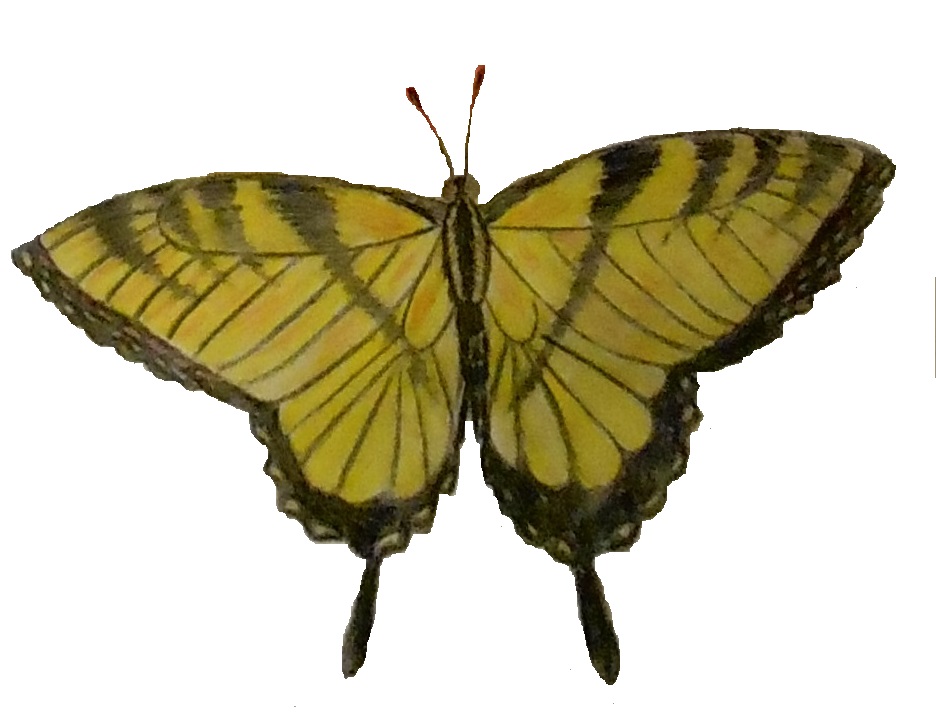
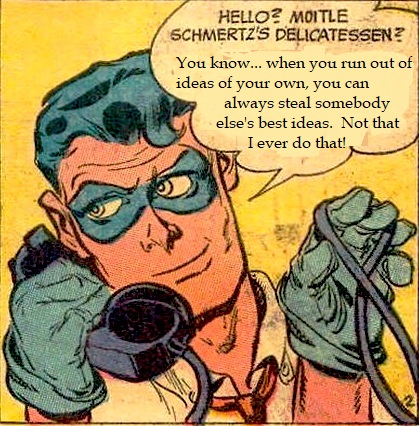
A much better thing for my garden is to chase the flitting butterflies of near-perfect ideas with a butterfly net made of idea lists like this particular post.
So, it is true that I never actually have writer’s block. I do get writer’s detours, writer’s delays, and writer’s just-not-satisfieds- with-those-ideas sorts of things. But not today. I made the problems the topic and the topic wrote itself.






 But the thing about monster movies… at least the good ones, is that you can watch it to the end and see the monster defeated. We realize in the end that the monster never really wins. He can defeat the monstrous qualities within himself and stop himself. Or the antidote to what ails him is discovered (as Luke did with Darth Vader). Or we can see him put to his justifiable end and remember that if we should see those qualities within ourselves, we should do something about it so that we do not suffer the same fate. Or, better yet, we can learn to laugh at the monstrosity that is every-day life. Humor is a panacea for most of life’s ills.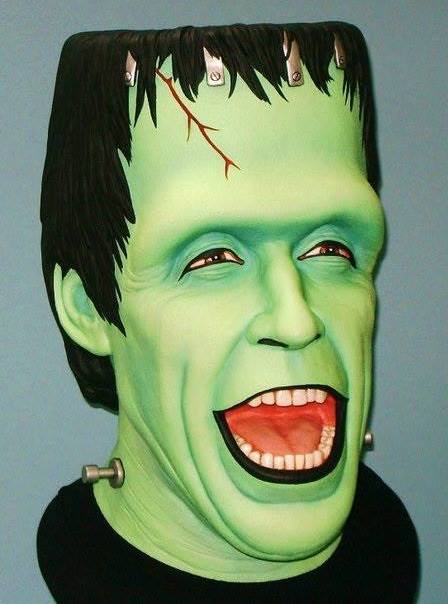




 Catch a Falling Star