I recently got word that my octogenarian father is in the hospital again for the third time in the last three months. I am fairly sure the end of my father’s long and epic life is near. And though I have basically come to terms with not only the coming end of his life but my own life as well, human beings, real ones, were never meant to live forever.
But I do not welcome the coming sadness, never-the-less. There will always be something in the mysteries of death and darkness that is to be feared… and avoided for as long as possible.
There are many ways to light a candle, and some require no fire.
One of the most important avoidance measures is to light a few candles. A candle holds back the darkness for a while. And of course, I mean that in only the most metaphorical of multiple senses.
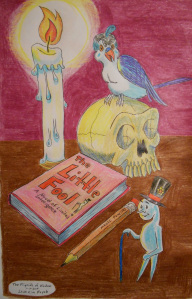
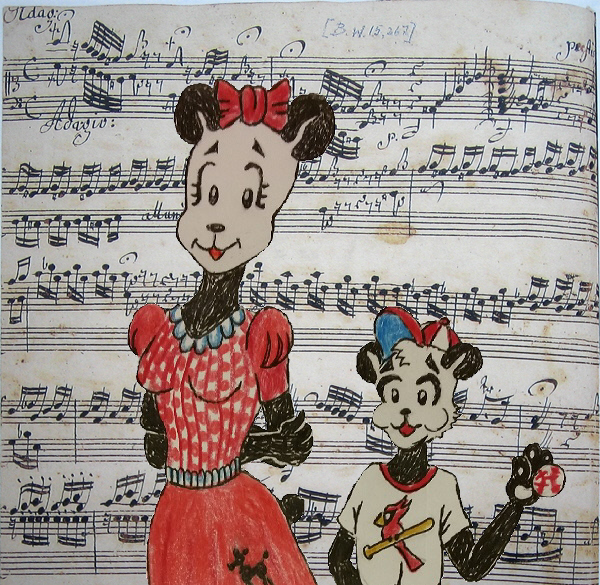
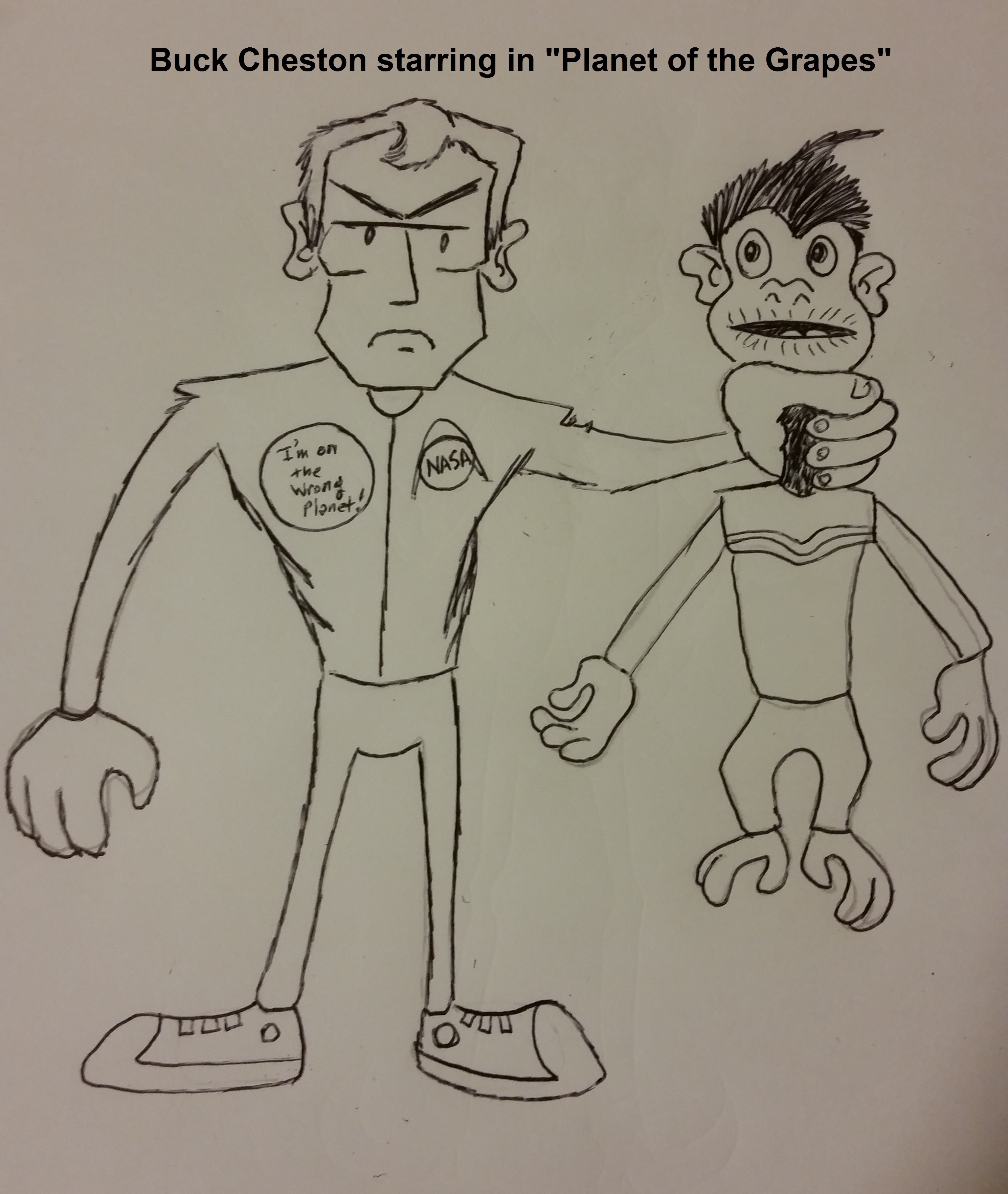
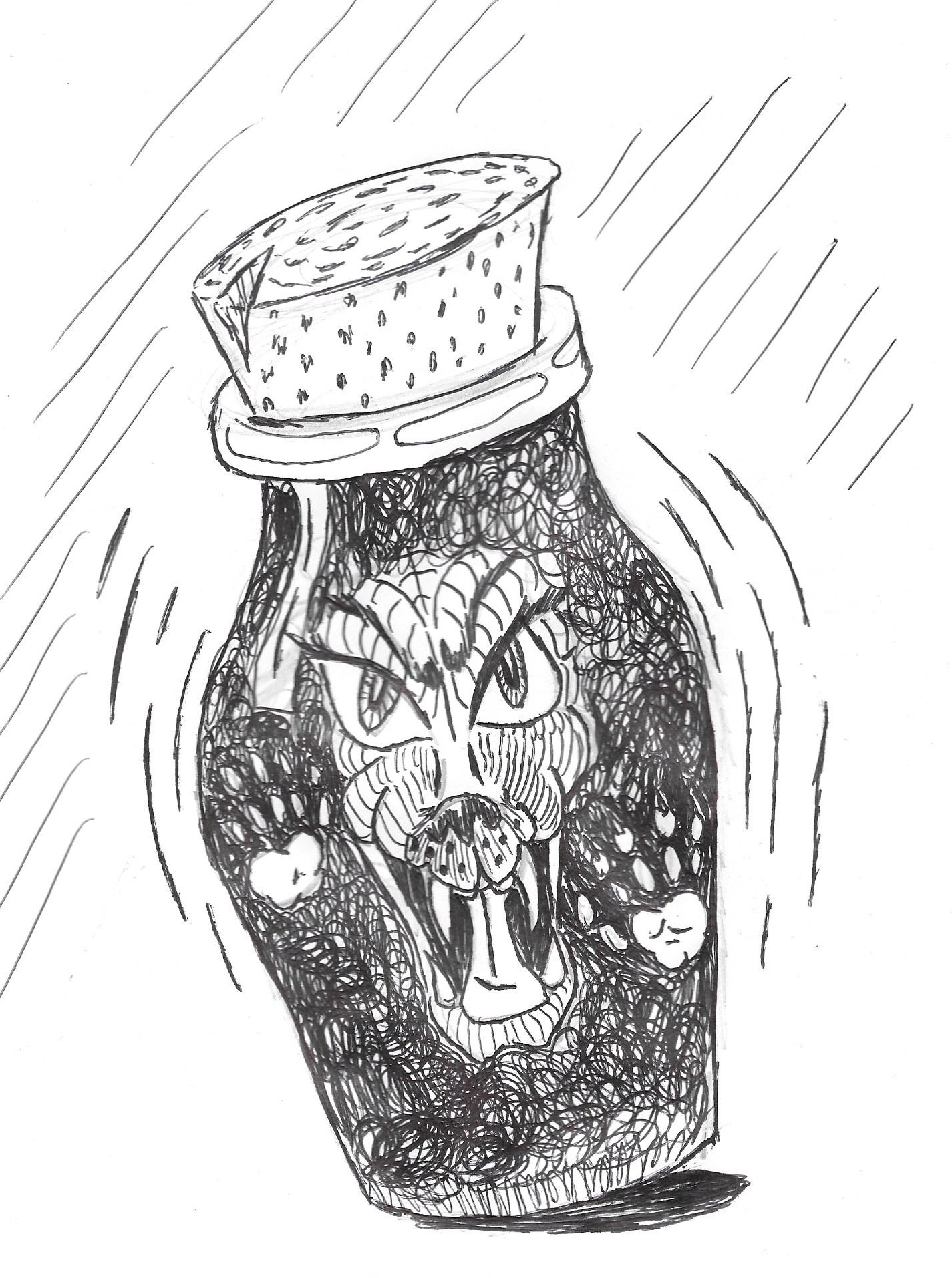
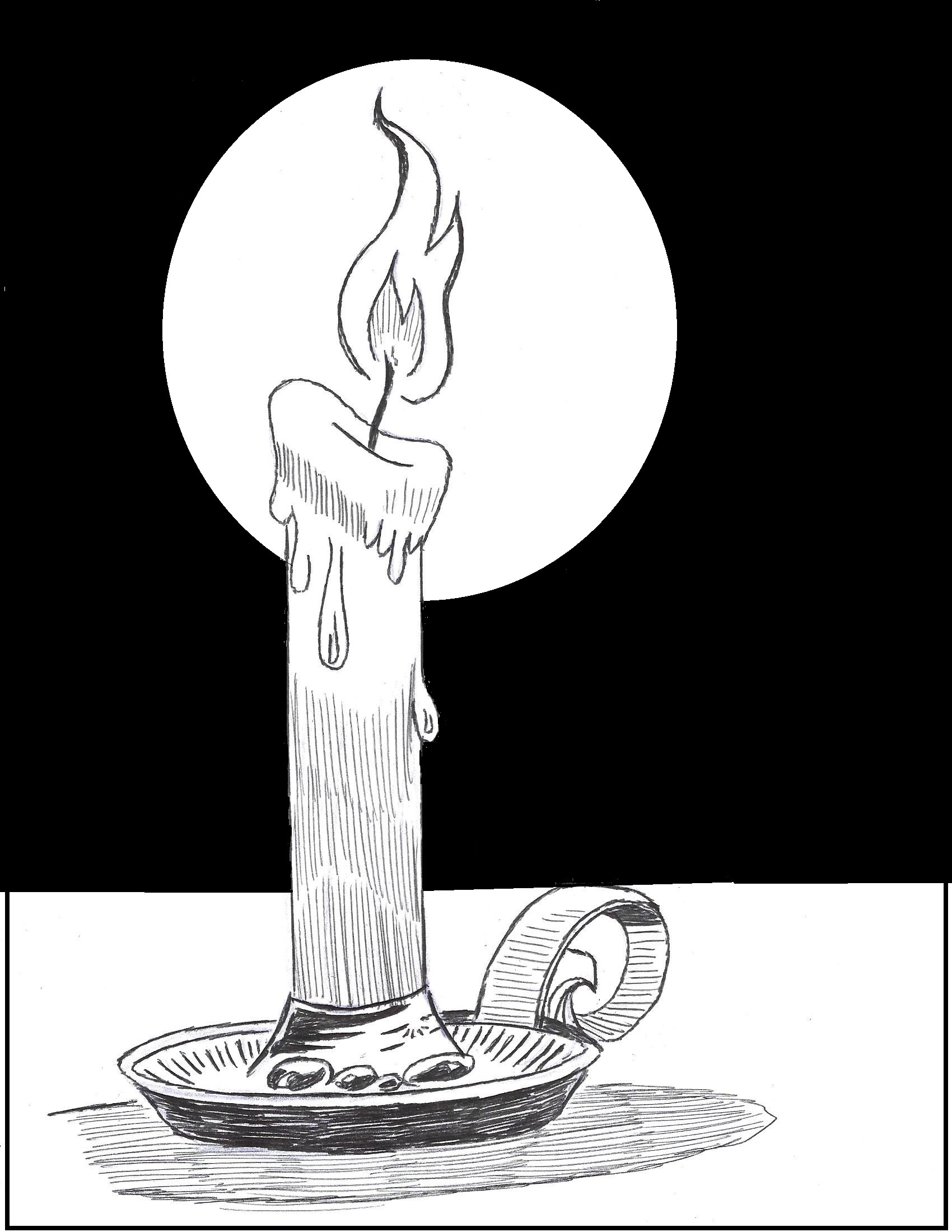
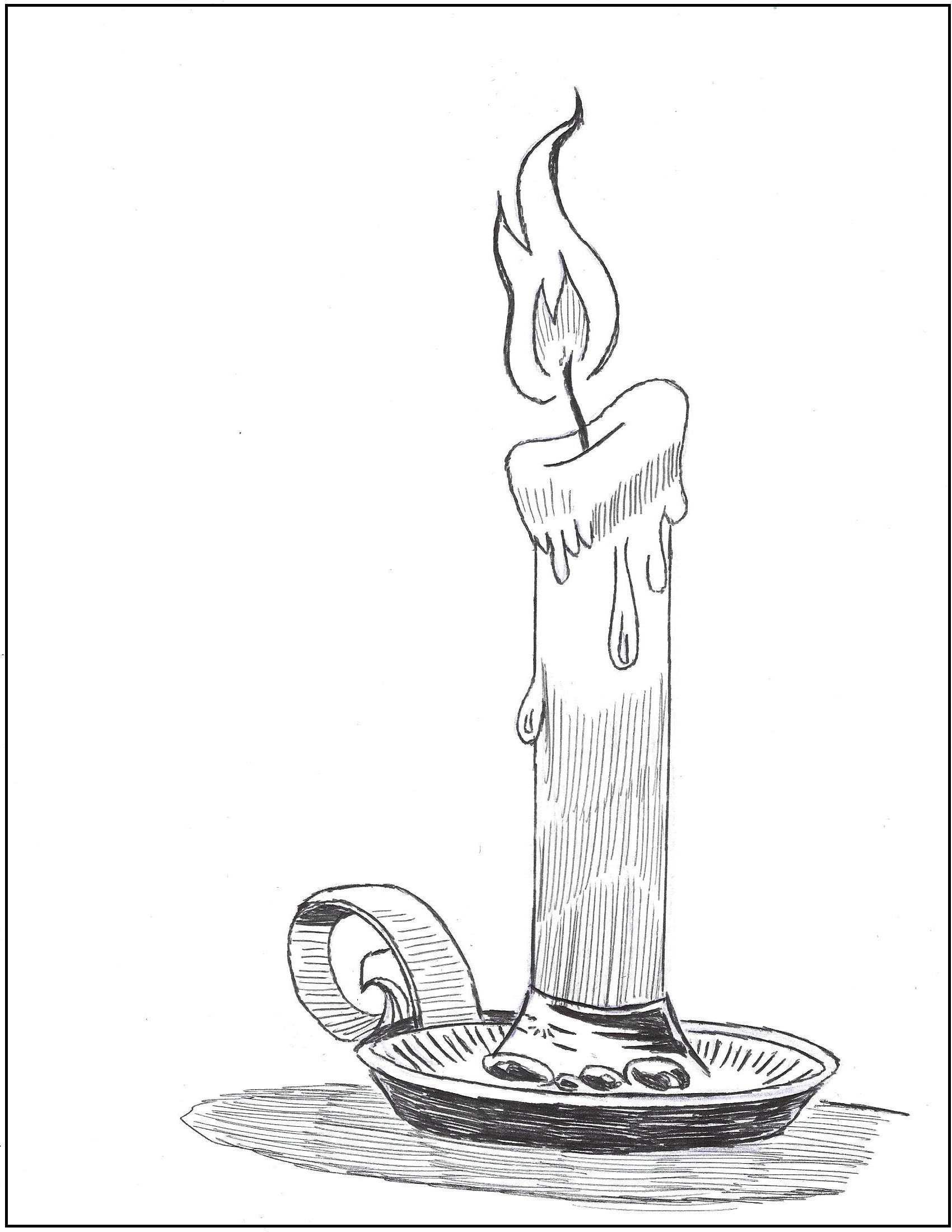
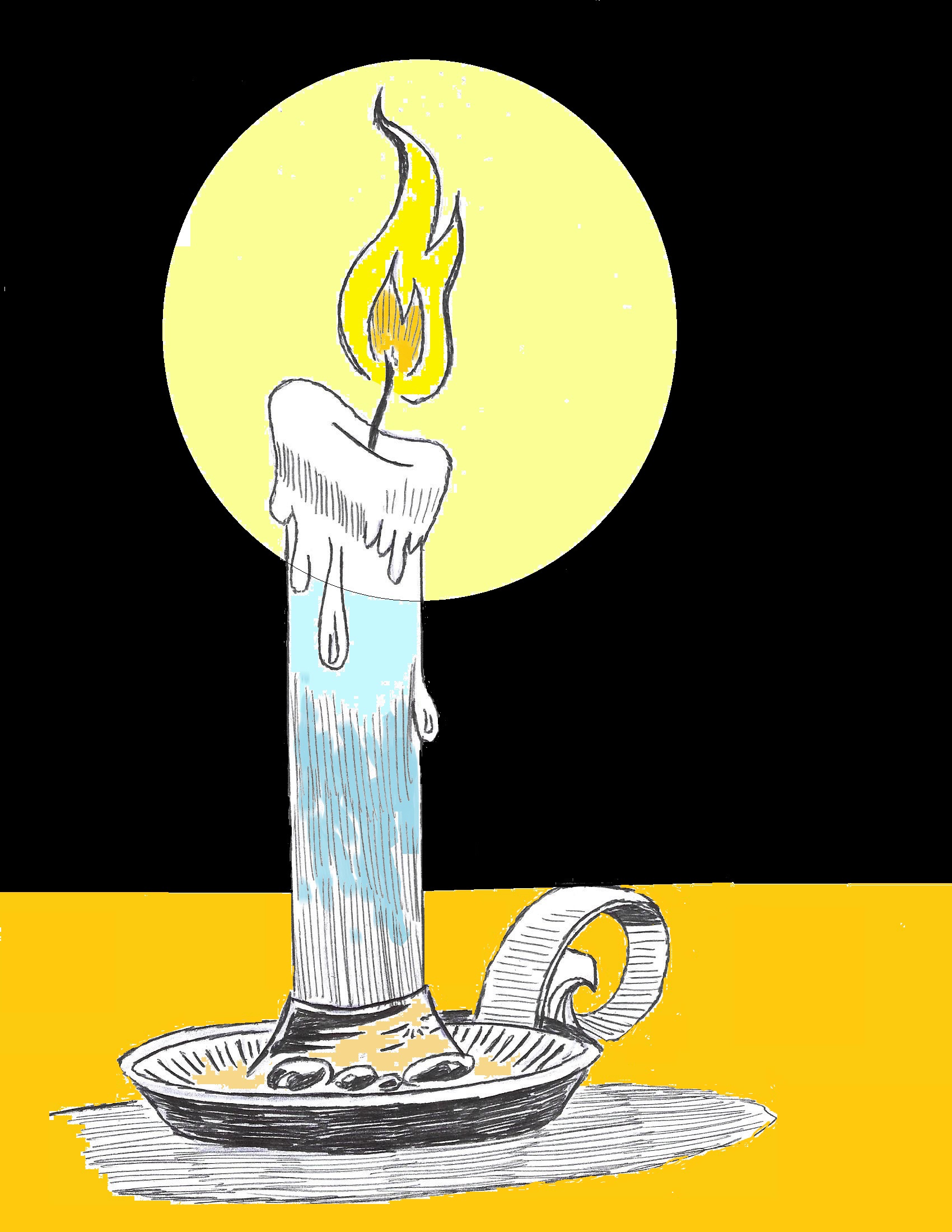
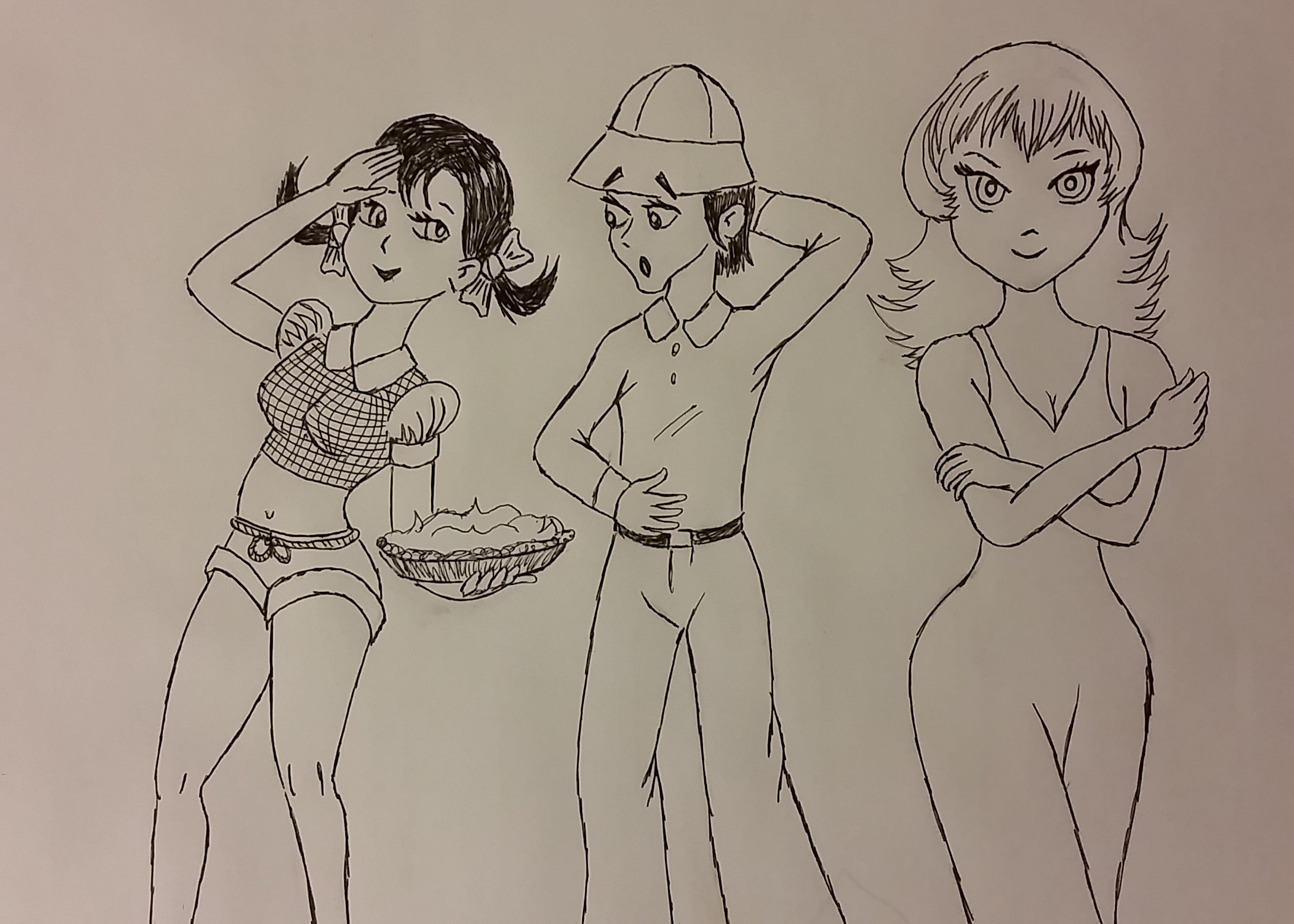
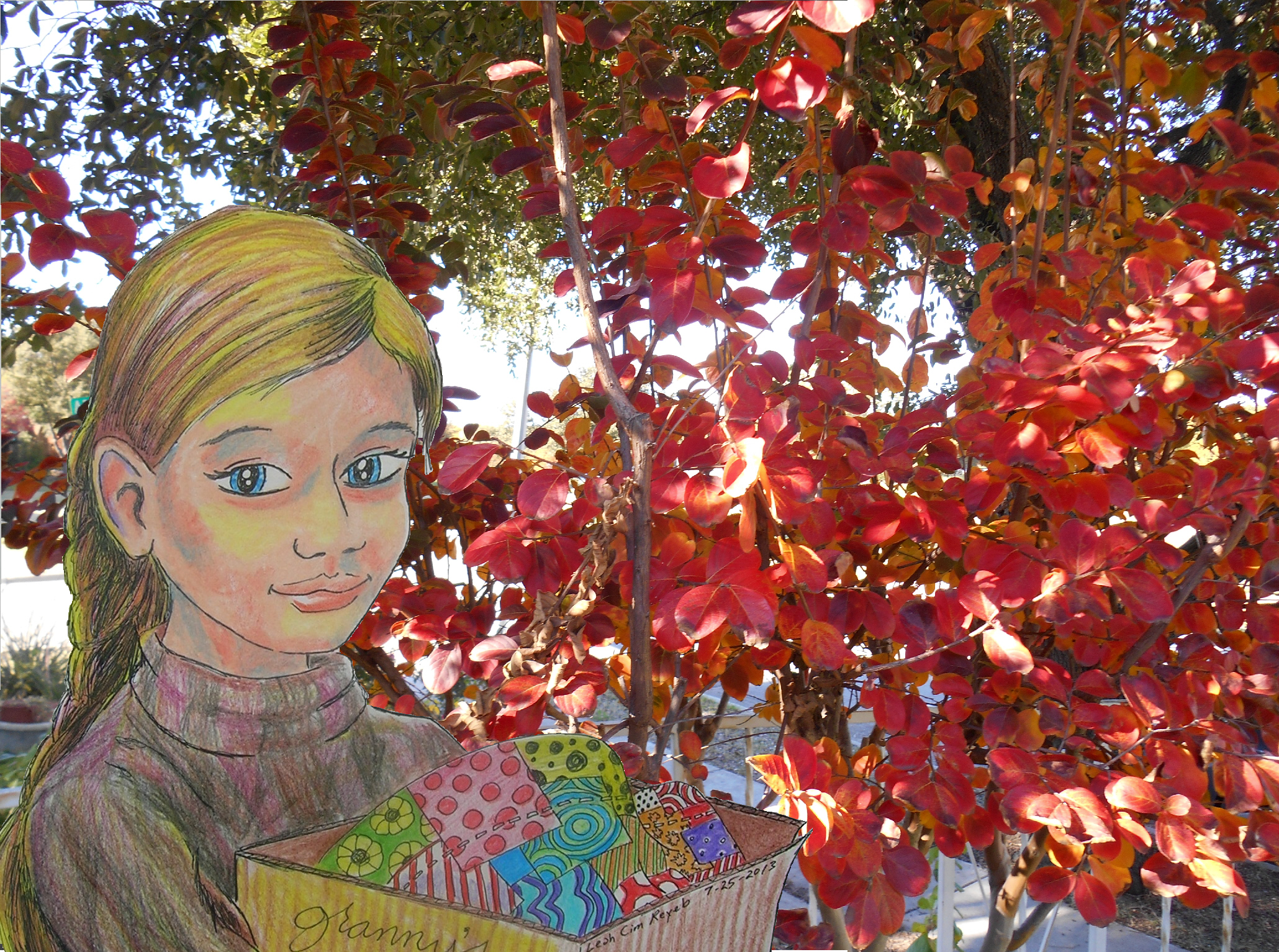
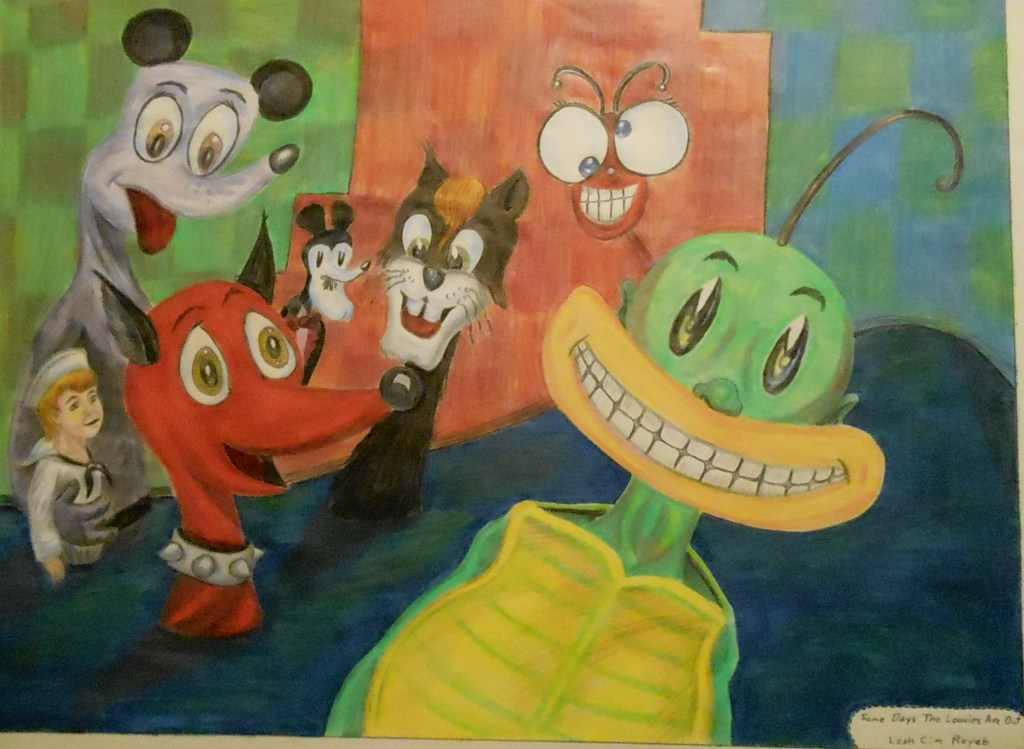
There are many ways to light a candle. I have lit three in this essay. I lit them with my ink pen and my drawing skill (modest though it may be). And drawing alone is not the sum total of the ways a candle may be lit.
Each of the novels I have written is also a candle. They may be useless piles of pages that nobody ever reads, but they are the summation of my already long life and work as a writer. I may not be well known, and probably am not as talented as the better-known writers, but I really do have something to tell. And being published where someone may eventually… even accidentally read some of it, there is no telling exactly how far into the darkness my light will reach.
And the even-more-amazing fact about the reach my candlelight into the darkness has is this, my candles were only lit because my father first lit the candle that is me. As I have passed the candle-lighting responsibility on to those who read my writing, and to my children who have many more candles of their own to light.
I love you, Dad. Raymond L. Beyer. My next novel is dedicated to you. Let’s continue to hold off the darkness for as long as we can… together.
There was a time when you could turn on the TV news and listen to what you were fairly confident was actually news. Walter Cronkite on CBS always seemed to really “Tell it like it is.” He never seemed to put a spin on anything. No one doubted anything he said when he reported space missions from NASA or the assassination of JFK. You never had to wonder, “What is Cronkite’s real agenda?” His agenda was always to tell me the news of the day.
The question of politics and ideas was always one of, “Which flavor tastes best in my own personal opinion?” Because I was weirdly and excessively smart as a kid, I often listened to some of the smartest people accessible to a black-and-white RCA television set.
William F. Buckley Jr. and Gore Vidal were both identifiably smarter than me. I loved to listen to them argue. They were equally matched. They respected each other’s intellect, but they hated each other with a passion. Buckley was a Fascist-leaning conservative ball of hatred with a giant ego. Vidal was a self-contradictory Commie-pinko bastard child of liberal chaos with an equally giant ego. I never agreed with either of them on anything, but their debates taught me so much about life and politics that I became a dyed-in-the-wool moderate because of them. They were the key evidence backing up the theory that you needed two sides in the political argument to hammer out good ideas of solid worth. And, though I didn’t trust either side of the argument fully, I always trusted that both were basing their ideas on facts.
When I was young I identified as a Republican like my father, and thought George Will was a reasonable opinion-leader. After all, a man who loves baseball can’t be a bad guy.
Then along came Richard Nixon and the faith-shaking lies of Watergate. The media began to be cast as the villain as they continued to show the violence and horrors of Vietnam on TV and tell us about campus unrest and the terrible outcomes of things like the Kent State Massacre. The President suggested routinely that the media was not using facts as much as it was using opinions to turn people away from the Nixon administration’s answer to the problems of life in the USA. I tried to continue believing in the Republican president right up until he resigned and flew away in that helicopter with his metaphorical tail between his legs (I am trying to suggest he was a cowardly dog, not that I want to make a lewd joke about poor Dick Nixon… or is that Little Dick Nixon, the man who let me down?)
And then along comes Ronald Reagan, the man acting as a “Great President” because he was a veteran actor and knew how to play the part. And with him came Fox News.
Roger Ailes, a former adviser to Nixon, got together with media mogul Rupert Murdoch, a man who would commit any crime necessary to sell more newspapers, and created a news channel that would pump out conservative-leaning propaganda that would leave Joseph Goebbels envious. I make it a rule to only listen to them and their views on anything when I feel the need to get one-foot-hopping, fire-spitting mad about something. So, since, I am a relatively happy person in spite of a long, hard life, you can understand why I almost never watch Fox News. They are truly skilled at making me mad and unhappy. And I suspect they do the same for everyone. They deal in outrage more than well-thought-out ideas.
News media came under a cloud that obscured the border between facts and partisan opinions. And conservatives seemed to have a monopoly on the shouty-pouty angry news. So, I began to wonder where to turn for a well-reasoned and possibly more liberal discussion of what was politically and ethically real. I found it in the most surprising of places.
I turned to the “Excuse me, this is the news” crews on Comedy Central where Jon Stewart and Stephen Colbert were busy remaking news reporting as a form of comedy entertainment. It is hard work to take real news and turn it into go-for-the-chuckles statements of fact that make you go, “Hmm, that’s right, isn’t it?” Stewart and Colbert consistently examine how other news organizations hurl, vomit forth, and spin the news, and by so doing, they help you examine the sources, get at the truth, and find the dissonance in the songs everyone else is singing. And these are very smart men. As I said, the intellectual work they do is very difficult, harder than merely telling it like it is. I know because I have tried to do the same myself. And is it really “fake news”? It seems to me like it is carefully filtered news, with the poisons of propaganda either surgically removed, or neutralized with antidotes of reason and understanding.
So, Mickey listens to comedians to get his news. Is that where you expected this article to end up? If not, where do you get your news?
No man is an island. John Donne the English poet stated that. And Ernest Hemingway quoted it… and wove it into his stories as a major theme… and proceeded to try to disprove it. We need other people. I married an island girl from the island of Luzon in the Philippines. She may have actually needed me too, though she will never admit it.
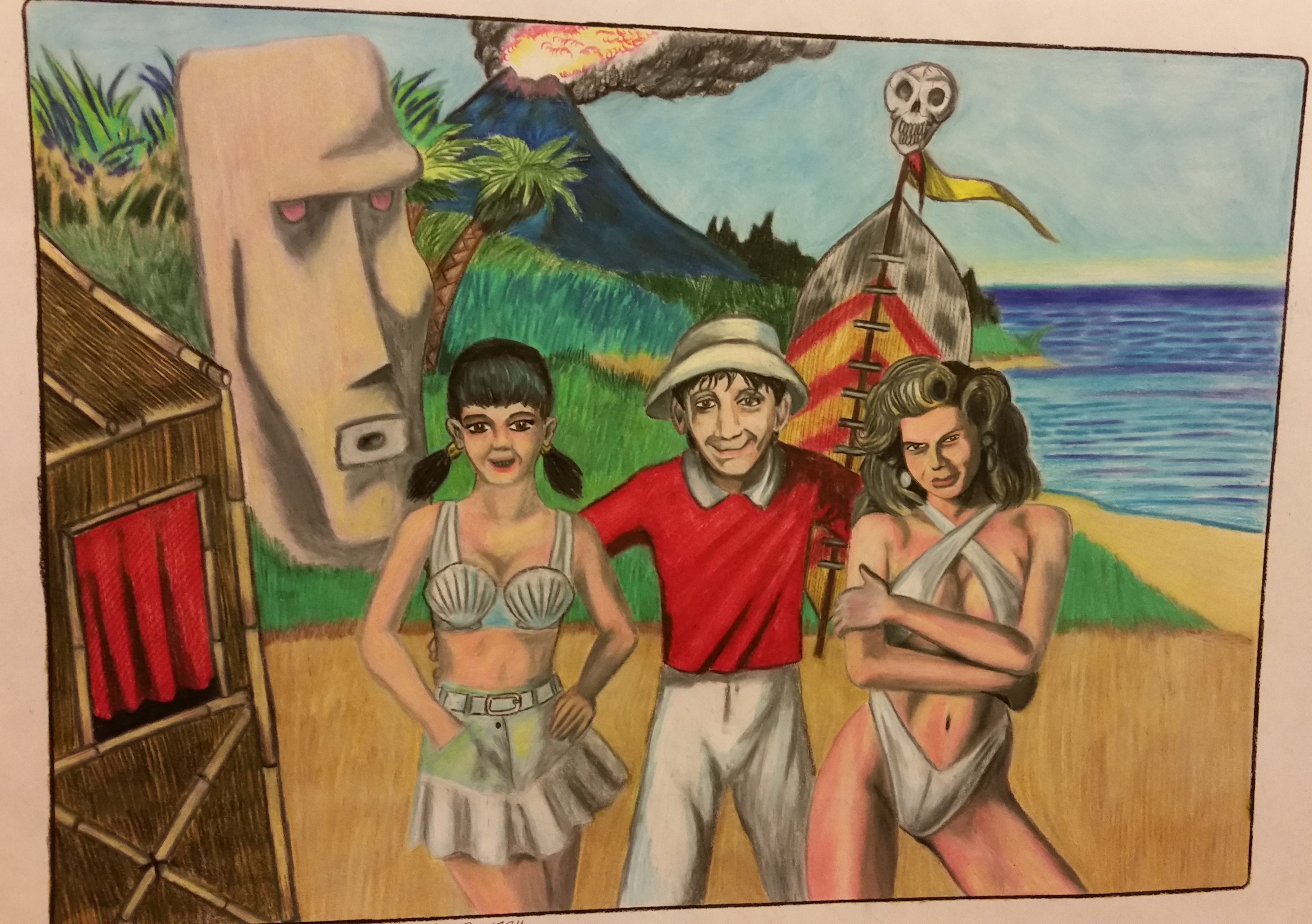
When I was a young junior high school teacher in the early eighties, they called me Mr. Gilligan. My classroom was known as Gilligan’s Island. This came about because a goofball student in the very first class on the very first day said, “You look like Gilligan’s Island!” By which he meant I reminded him of Bob Denver, the actor that played Gilligan. But as he said it, he was actually accusing me of being an island. And no man is an island. Thank you, Fabian, you were sorta dumb, but I loved you for it.
You see, being Gilligan on Gilligan’s Island was not a bad thing to be. It was who I was as a teacher. Nerdy, awkward, telling stories about when I was young, and my doofy friends like Skinny Mulligan. Being a teacher gave me an identity. And Gilligan was stranded on the Island with two beautiful single women, Mary Ann and Ginger. Not a bad thing to be. And I loved teaching and telling stories to kids who would later be the doofy students in new stories.
But we go through life searching for who we are and why we are here. Now that I am retired, and no longer a teacher… who am I now? We never really find the answer. Answers change over time. And so do I.
Let’s begin with some stupid advice. I don’t have time to write a lot today because the Princess is ill and must go see the doctor in Plano. So the advice is; Set aside time for writing and always allow plenty of time for it. You will probably notice already that I am giving you advice that I am not taking myself this morning. So don’t follow that advice. It is stupid advice. I have given it to creative writing classes for years and thought I meant it. But looking back on real life, I realize, it has never been true for me. My best ideas, my best writing, always seem to come in the middle of the pressure-cooker of daily struggle and strife. I have battled serious illness for most of my adult life. I have the luck of a man who tried to avoid letting a black cat cross his path by crashing his bicycle at the top of a hill covered in clover with only three leaves each and then rolling down the hill, under a ladder, and crashing into a doorpost which knocks the horseshoe off the top. The horseshoe lands on my stupid head with the “U” facing downward so the luck all drains out. Bad things happen to me all the time. But it makes for good writing. Tell me you didn’t at least smile at the picture I just painted in your mind. You might’ve even been unable to suppress a chuckle. I am under time pressure and misfortune pressure and the need to rearrange my entire daily schedule. So it is the perfect time to write.
This essay, however, is about bad advice. And I am a perfect person to rely on as a resource for bad advice. I am full of it. Of course, I mean I am full of bad advice, not that other thing we think of when someone tells me I am “Full of it!” So here’s another bit of writing advice that is probably completely wrong and a bad idea to take without a grain of salt, or at least a doctor’s prescription. You should stop bird-walking in your essay and get to the damn point!
I know a lot about the subject of depression. When I was a teenager, I came very close to suicide. I experienced tidal waves of self-loathing and black-enveloping blankets of depression for reasons that I didn’t understand until I realized later in life that it all came from being a child-victim of sexual assault. Somehow I muddled through and managed to self-medicate with journal writing and fantasy-fixations, thus avoiding a potentially serious alcohol or drug problem. This is connected to my main idea, despite the fact that I am obviously not following the no bird-walking advice. You see, with depression, Bad advice can kill you. Seriously, people want to tell you to just, “Get over it! Stop moping about and get on with life. It isn’t real. You are just being lazy.”
I have been on the inside of depression and I know for a fact that not taking it seriously can be deadly. In fact, I have faced suicidal depression not only in myself, but in several former students and even my own children. I have spent time in emergency rooms, mental hospitals, and therapists offices when I wasn’t myself the depression sufferer. One of my high school classmates and one of my former students lost their battles and now are no longer among the living. (Sorry, have to take a moment for tears again.) But I learned how to help a depression sufferer. You have to talk to them and make them listen at least to the part where you say, “I have been through this myself. Don’t give in to it. You can survive if you fight back. And whatever you have to do, I will be right here for you. You can talk to me about anything. I will listen. And I won’t try to give you any advice.” Of course, after you say that to them, you do not leave them alone. You stay by them and protect them from themselves, or make sure somebody that will do the same for them stays with them. So far, that last bit of advice has worked for me. But the fight can be life-long. And it is a critical battle.
So taking advice from others is always an adventure. Red pill? Green pill? Poison pill? Which will you take? I can’t decide for you. Any advice I give you would probably just be stupid advice. You have to weigh the evidence and decide for yourself. What does this stupid essay even mean? Isn’t it just a pile of stupid advice? A concluding paragraph should tell you the answer if it can. But, I fear, there is no answer this time.
If you are wondering, “How in the Heck can Mickey write nonsense like that essay he wrote yesterday?”, then please be aware that Mickey is pondering that same question.
Seriously, why would a writer publish personal thoughts and allude to personal tragedies? Especially when they are about things that once upon a time nearly killed him? (Please note that when Mickey starts a sentence with “Seriously” it is probably about to lead to a joke, the same way as when Trump says, “Believe me” we should assume he is telling a lie and knows it.)
The answer is simply, writers write stuff. They have to. If they didn’t, they wouldn’t be writers.
It is really not something to do to earn fame and fortune. Fame and fortune happen to rare individuals like J. K. Rowling and Steven King… and even Stephanie Meyer, to prove that it is totally random and not based on actual writing talent… except for sometimes.
You write to get your head right about bad things that happen in life. You find that factor in Mark Twain whose infant son died, as well as most of the rest of his family, before him, forcing him to face survivor’s guilt and the notion that life is random and death does not come for you based on any kind of merit system. Charles Dickens wrote about the foibles of his father, on whom he based the David Copperfieldcharacter Wilkins Micawber, a man who was overly optimistic and constantly landing in debtor’s prison because of it. He also wrote in his stories about the women he truly loved (who were not, it seems, his wife) one of whom died in his arms while yet a teenager. Dickens’ amused take on the innate foolishness of mankind gave him a chance to powerfully depict great tragedies both large (as in a Tale of Two Cities) and small (as in Oliver Twist). I wrote yesterday’s post based on the connection between the nudity I write about in novels and my own traumatic assault when I was only ten.
You write because you have wisdom, an inner personal truth, that you are convinced needs to be crystallized in words and written down on paper. It isn’t necessarily real truth. Lots of idiots write things and post them in newspapers, blogs, and even books. And it is often true that their inner personal truth is complete hogwash. (But, hey, at least the hogs are cleaner that way.) Still, your wisdom is your own, and it is true for you even if some idiot like Mickey reads it and thinks it is only fit for cleaning hogs.
And you truly do have to write. If I did not write my stupid, worthless novels, all the hundreds of characters in my head would get mad and start kicking the pillars that hold up the structures in my head. I do have structures in my head. My mind is organized in boxes that contain specifically sorted ideas and stories and notions. It is not a festering stew pot where everything is mixed together and either bubbling or boiling with hot places or coagulating in the cold corners. (That is how I picture Donald Trump’s mind. It is certainly not an empty desert like many people think, because deserts don’t explode all over Twitter early in the morning like the stew pot metaphor obviously would.)
And so, I have done it again. I have set down my 500+ words for today and made a complete fool of myself. And why do I do it? Because Mickey is a writer, and so, Mickey writes stuff.
These are volumes 3 & 4 of my daily journal that I have kept since the 1980s.
Writing every single day is something I have been doing since 1975, my senior year in high school. It is why I claim to be a writer, even though I have never made enough money at it to even begin to think of myself as a professional writer. I kept a journal/diary/series of notebooks that I filled with junk I wrote and doodles in the margins up until the mid-90s when I began to put all my noodling into computer files instead of notebooks. I have millions of words piled in piles of notebooks and filling my hard drive to the point of “insufficient memory” errors on my laptop. I am now 69 years old and have been writing every day for 51 years.
There are days in the past where I only wrote a word, or a sentence or two. But there were a lot of words besides the words in my journal. I started my first novel in college. I completed it the summer before my first teaching job in 1981. I put it the closet, never to be thought of again, except when I needed a good cringe and cry at how terrible a writer I once was. I have been starting, stopping, percolating, piecing together, and eventually completing novel projects ever since… each one goofier and more wit-wacky than the last. So I have a closet full of those too.
It would be wrong of me to suggest that my journals are only for words. As a cartoon-boy-wannabee I doodle everywhere in margins and corners and parts of pages. Sometimes the doodle is an afterthought. Sometimes it precedes the paragraph. Sometimes it is directly connected to the words and their meaning.
Sometimes the work of art is the main thing itself.
But always, the habit of writing down words and ideas every single day takes precedence over every other part of my day. That’s the main reason I am stupid enough to think of myself as a writer even though I don’t make a living by writing.
But I did put my words into my profession too. As a teacher of writing, I wrote with and to my students. I did that for 31 years as a classroom teacher, and two years as a substitute. I required them each to keep a daily journal (though they only got graded for the ones they wrote in class, and then only for reaching the amount of words assigned). We shared the writing aloud in class, making only positive comments. I wrote every assignment I gave them, including the journal entries. They got to see and hear what I could write, and it often inspired them or gave them a structure to hang their own ideas upon. And often they liked what I wrote and were surprised by it almost as much as I liked and was surprised by theirs. Being a writer was never a total waste of time and effort.
So am I telling you that if you want to be writer you have to write every day too? If I have to tell you that… you have totally missed the point.
I am falling apart. My health is poor and continuing to fail. My memory is suffering from an inability to remember the names of things. I find myself in the kitchen having gone in for a specific purpose, and not being able to remember what that purpose was. That is not to say I am not coping. I have quite a lot of adaptability and significant problem-solving skills. But that will eventually become a losing battle. Especially if I get the virus… any virus. So, what am I going to talk about with a dissolving brain and an hourglass of lifeforce swiftly running out? Fascination. I am fascinated by the details of the process. Like Mr. Spock, I find practically everything, “Fascinating!”
Birds and butterflies
My childhood fascinations turned into obsession first around natural things. When my mother would go to Vey Osier’s Beauty Salon, Vey had this fascinating parrot that was probably a hundred years old and knew how to swear really, really foully. I remember that being the only reason I was willing to go there and wait for Mom to get her hair fussed up (What my Grandpa Aldrich, her father, used to call it.)
I remember waiting for hours to hear that bird say the magic F-word or the horrible S-word. Or even the zillion other bad words I didn’t know anything about when I was seven. And, of course, I never did. The bird was mute the whole time during who-knows-how-many visits. But I did get to look endlessly at that green parrot’s amazing nutcracker bill that Vey always assured us would snap our fingers off like biting a salted pretzel if we got them anywhere close to the bill.
And when I was nine I was given as a present a plastic model kit of a Golden-Crowned Kinglet (the bird in that first picture). My relatives knew I was a burgeoning artist since my teachers constantly complained about all the skeletons, crocodiles, and monsters I drew in the margins of my school workbooks. So, I had a plastic bird to paint with all the necessary paints, but no idea what the bird looked like. We had to go all the way to Mason City to Grandma Beyer’s house because we called up there and checked, and, sure enough, there was a colored picture in the K volume of her Collier’s Encyclopedia. I painted it so accurately, the danged thing looked almost alive.
And if you have ever seen any of my butterfly posts, you know I became a butterfly hunter before ever entering junior high school, where Miss Rubelmacher, the rabid seventh-grade science teacher, made that obsession a hundred times worse. (She didn’t actually have rabies, just a reputation of requiring excessively hard-to-find life-science specimens like a nasturtium that bloomed in October in Iowa, or a Mourning Cloak butterfly.
I was able to find for her numerous Red-Spotted Purples like the one in the picture. I got them off the grill of Dad’s Ford, as well as in Grandpa Aldrich’s grove. And I eventually caught a pair of Mourning Cloaks as well on Grandpa Aldrich’s apple trees, though not until summer after seventh grade was over for me. I could tell you about my quest to catch a Tiger Swallowtail, too. But that’s an entirely different essay, written for an entirely different thematic reason.
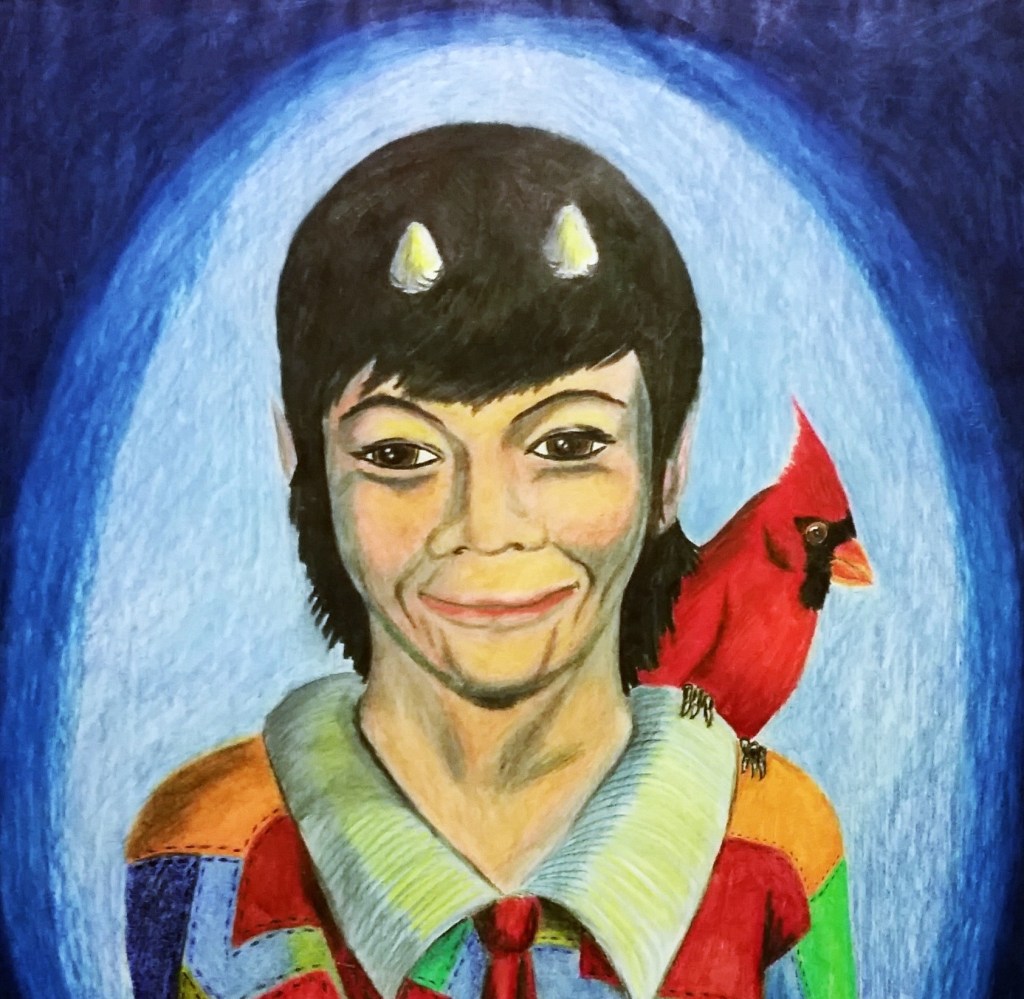
Needless to say, my bird fascination led me to become an amateur bird-watcher with a great deal of useless naturalist information crammed into my juvenile bird-brain about birds. Especially Cardinals. And my fascination with butterflies opened my eyes to a previously invisible world of fascinating and ornately-decorated bugs. (Of course, I should’ve said “insects” instead of “bugs” since I absolutely did learn the difference.) And I still to this day know what a Hairstreak Butterfly looks like, what a Luna Moth is (Think Lunesta Commercials,) and how you have to look at the underside of the lower wings to correctly identify a Moonglow Fritillary Butterfly.
During my lifetime, my fascinations have become legion. I became obsessed with the comic books done by artist Wally Wood, especially Daredevil. I became obsessed with Disney movies, especially the animated ones like The Rescuers, The Jungle Book, Pinocchio, and Fantasia. I rode the bucking bronco of a fascination with the Roswell Crash (and the actual alien space ships I am almost certain the U.S. Army recovered there.) And so many other things that it would make this essay too long, and would probably bore you into a death-like coma. So, here’s what I have learned by being fascinated with my own fascinations;
You do not want to play me in a game of Trivial Pursuit for money, even now that my memory is like swiss cheese.
I have a real ability to problem-solve because I know so many useless details that can be combined in novel ways to come up with solutions to problems.
I can write interesting essays and engaging novels because I have such a plethora of concrete details and facts to supplement my sentences and paragraphs with.
It can be really, really boring to talk to me about any of my fascinations unless I happen to light the same color of fire in your imagination too. Or unless you arrived at that same fascination before I brought it up.
Yes, this was written in 2017, but somehow, every word still applies.
In Texas a little girl who has cerebral palsy committed the crime of crossing a border patrol station near Laredo on the way to having life-saving gall bladder surgery. So the border patrol followed her to the hospital, waited until the surgery was finished, and then took her to a detention facility for deportation. Wow!
We are a heartless people. We elect heartless representatives to congress to make heartless laws to punish people for being poor, or not being white, or not being patriotic enough at football games during the playing of the national anthem. We elected an orange-faced creature with bad hair to the presidency rather than electing a human being with a beating heart. And why did we do that? Because too many people were in favor of health care laws and regulations that help people we don’t like. We elected him to send a message to all the people we don’t like. That message was, “Screw you, why don’t you just die already?” We like that message because we are a heartless people.
But while we are only thinking of ourselves and vowing to let everybody else go to hell, somewhere the music of the dance begins to play. Hear it yet?
Somewhere children are laughing.
Somewhere Santa Claus is real.
Holidays are approaching and, with indictments sealed and in the hands of prosecutors, possible impeachment looms. The happy dance is about to begin again.
Or maybe it never really went away. People did care, do care, about the crisis in Puerto Rico. After the hurricane, Dippy Donald Dimwit tossed paper towels to survivors, apparently suggesting that all he needed to do was that to symbolically get all the people cleaning up while holding on to their own bootstraps and pulling with all their might. Apparently heartless people believe you can levitate if you pull upwards on bootstraps. But Tesla gifted the city of San Juan with solar panels and batteries and started set-up of an island-based solar power grid to get Puerto Rico back online in the modern world. And Elon Musk is taking the steps towards building the future that the pumpkinhead in chief can’t even conceive in his empty pumpkin head. The music sways and builds. The dancers circle each other and first steps in ballet shoes begin.
We are a heartless people. We suffer in our cubicles alone, angry at a heartless world. “Why don’t you love me?” each one of us cries, “aren’t I worthy of love?” But crying never solved a problem. No, counting our regrets and hoarding the list of wrongs done to us never started a heart to beating. But the music builds. Try smiling at that hard-working clerk who takes your information at the DMV, and then thanking them at the end for their hard work even though they have to deny you the permit because there are more bits of paperwork that have to be found and signed. Try making a joke in line at the post office that makes the other hundred and ten people actually laugh while waiting interminably. Do your best to bring light to the darkness, not for yourself, but for other people. The music builds. Do you know the steps to the dance? No? Well, the steps won’t matter if you begin to move to the music, begin to glide… And the heart starts pumping, and we begin to feel alive again. Hallelujah! We are dancing towards the light again.
Being a writer is a life of music that happens only in your head. You hear voices constantly. They pulse rhythmically with insights and ideas that have to be written down and remembered. Otherwise the music turns clashing-cymbals dark and depressing. Monday I wrote a deeply personal thank you to the Methodist minister who saved my life when I was a boy. I posted a YouTube music video by the acapella group Pentatonix with that essay in a vain attempt to give you an idea of the music in my head when I composed that very difficult piece to give myself a measure of peace.
I realize that I am not writing poetry here. Poetry can so easily slip into melody and music because of rhythm and meter and rhyme. And yet, words to me are always about singing, about performing, about doing tricks with metaphor and meaning, rhythm, convoluted sentence structure, and other sneaky things that snake-oil salesman do to get you to think what you are hearing is precisely what you needed to hear. The Sonata of Silence… did you notice the alliteration of the silvery letter “S” in that title? The beat of the syllables? Da-daah-da a da-da? The way a mere suggestion of music can bring symphonic sounds to your ear of imagination as you read? The way a simple metaphor, writing is music, can be wrapped into an essay like a single refrain in a symphonic piece?
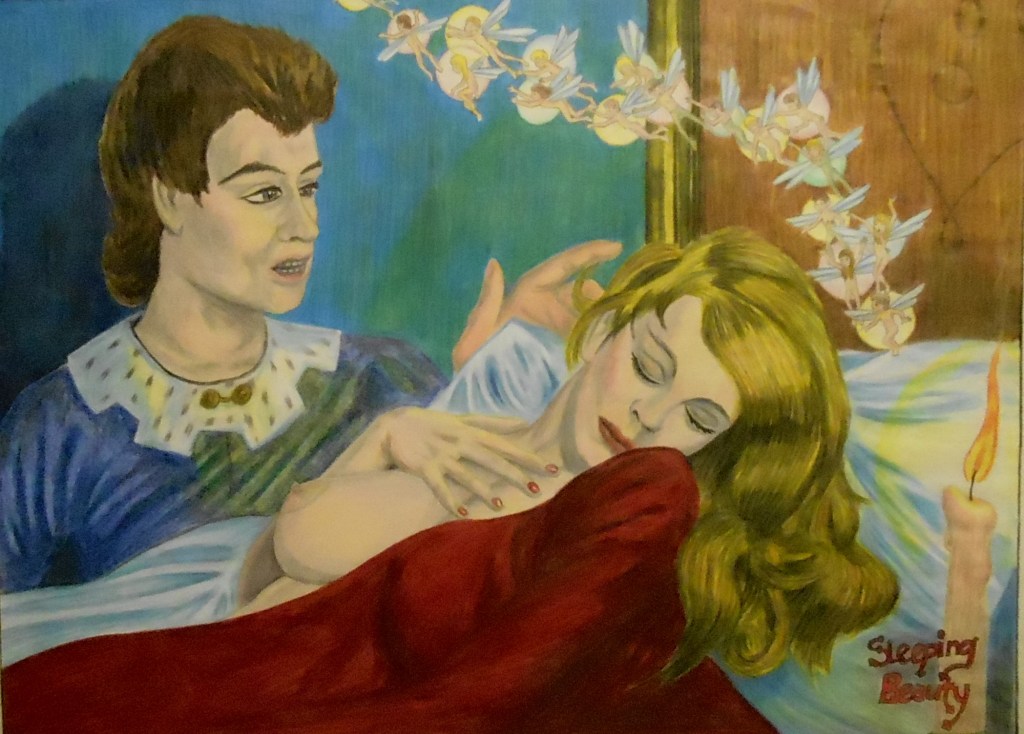
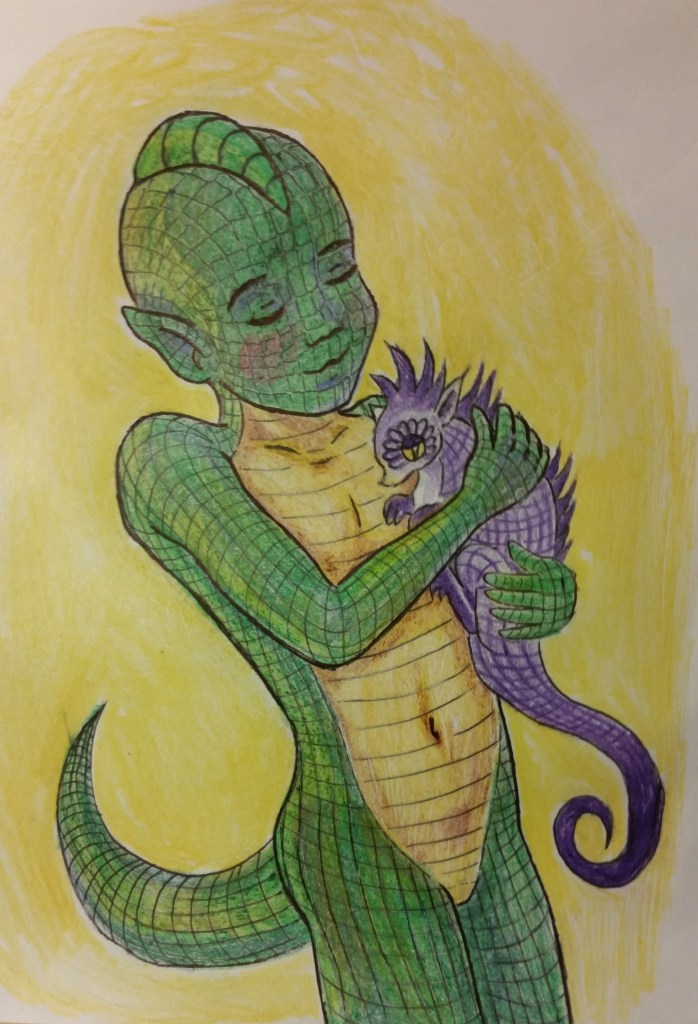
A sonata is a musical exercise in three or four movements that is basically instrumental in nature. You may have noticed that the movements are loosely defined here by the accompanying pictures, of which there are three. And it is silent only in the way that the instruments I am using themselves make no noise in the physical world. The only sounds as I type these words are the hum of an old air conditioner and the whirr of my electric fan. Yet my mind is filled with crescendos of violins and cellos, bold brass, and soft woodwinds. The voice saying these words aloud only in my head is me. Not the me you hear when I talk or the me I can hear on recordings of my own voice, but rather the me that I always hear from the inside. And the voice is not so much “saying” as “singing”.
Writing makes music. The writer can hear it. The reader can too. And whether I croon it to make you cry, or trill it to make you laugh, I am playing the instrument. And so, the final notes of the sonata are these. Be happy. Be well. And listen for the music.
I wish I had answers. I woke up with a slight sore throat this morning. I have a cough that comes and goes. That is nothing new for me and my allergies this time of year. Still… it might be COVID. I could be dead before the end of the week. My power to affect anything in the world right now is very limited. I have to wait in Texas until early voting starts on October 13th, a very ominously-numbered day. I still have to finish and publish book number 18. And I feel like it is a very good novel. But I may be too ill to write that last chapter today. And it would be a shame to leave this world without finishing it.
We must never give up hope.
We must remember where we came from.
And look for new dawns more than colorful sunsets.
Who Do You Listen To?
There was a time when you could turn on the TV news and listen to what you were fairly confident was actually news. Walter Cronkite on CBS always seemed to really “Tell it like it is.” He never seemed to put a spin on anything. No one doubted anything he said when he reported space missions from NASA or the assassination of JFK. You never had to wonder, “What is Cronkite’s real agenda?” His agenda was always to tell me the news of the day.
The question of politics and ideas was always one of, “Which flavor tastes best in my own personal opinion?” Because I was weirdly and excessively smart as a kid, I often listened to some of the smartest people accessible to a black-and-white RCA television set.
William F. Buckley Jr. and Gore Vidal were both identifiably smarter than me. I loved to listen to them argue. They were equally matched. They respected each other’s intellect, but they hated each other with a passion. Buckley was a Fascist-leaning conservative ball of hatred with a giant ego. Vidal was a self-contradictory Commie-pinko bastard child of liberal chaos with an equally giant ego. I never agreed with either of them on anything, but their debates taught me so much about life and politics that I became a dyed-in-the-wool moderate because of them. They were the key evidence backing up the theory that you needed two sides in the political argument to hammer out good ideas of solid worth. And, though I didn’t trust either side of the argument fully, I always trusted that both were basing their ideas on facts.
Then along came Richard Nixon and the faith-shaking lies of Watergate. The media began to be cast as the villain as they continued to show the violence and horrors of Vietnam on TV and tell us about campus unrest and the terrible outcomes of things like the Kent State Massacre. The President suggested routinely that the media was not using facts as much as it was using opinions to turn people away from the Nixon administration’s answer to the problems of life in the USA. I tried to continue believing in the Republican president right up until he resigned and flew away in that helicopter with his metaphorical tail between his legs (I am trying to suggest he was a cowardly dog, not that I want to make a lewd joke about poor Dick Nixon… or is that Little Dick Nixon, the man who let me down?)
And then along comes Ronald Reagan, the man acting as a “Great President” because he was a veteran actor and knew how to play the part. And with him came Fox News.
Roger Ailes, a former adviser to Nixon, got together with media mogul Rupert Murdoch, a man who would commit any crime necessary to sell more newspapers, and created a news channel that would pump out conservative-leaning propaganda that would leave Joseph Goebbels envious. I make it a rule to only listen to them and their views on anything when I feel the need to get one-foot-hopping, fire-spitting mad about something. So, since, I am a relatively happy person in spite of a long, hard life, you can understand why I almost never watch Fox News. They are truly skilled at making me mad and unhappy. And I suspect they do the same for everyone. They deal in outrage more than well-thought-out ideas.
News media came under a cloud that obscured the border between facts and partisan opinions. And conservatives seemed to have a monopoly on the shouty-pouty angry news. So, I began to wonder where to turn for a well-reasoned and possibly more liberal discussion of what was politically and ethically real. I found it in the most surprising of places.
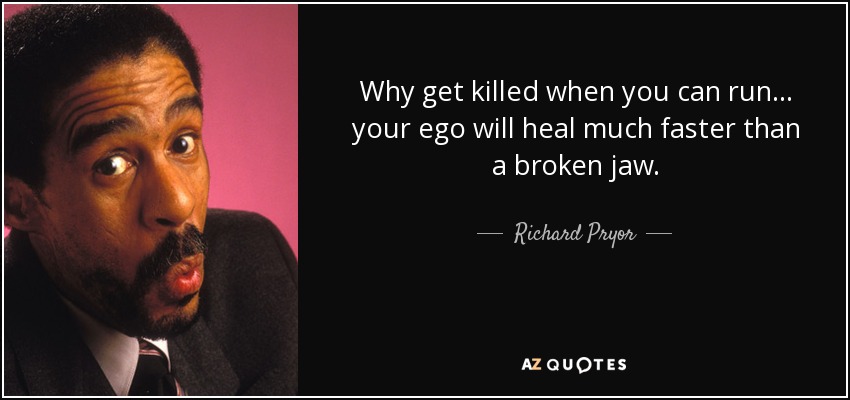
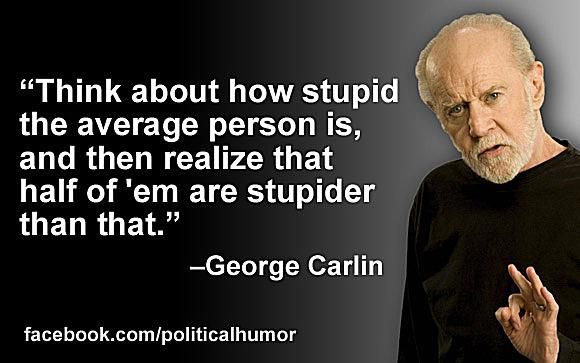
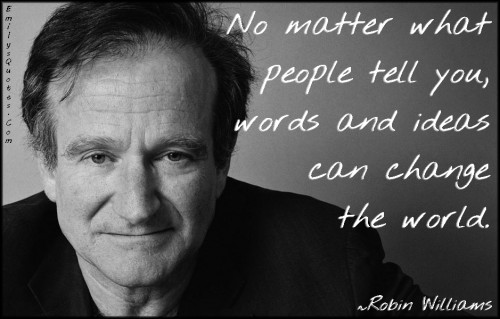
I turned to the “Excuse me, this is the news” crews on Comedy Central where Jon Stewart and Stephen Colbert were busy remaking news reporting as a form of comedy entertainment. It is hard work to take real news and turn it into go-for-the-chuckles statements of fact that make you go, “Hmm, that’s right, isn’t it?” Stewart and Colbert consistently examine how other news organizations hurl, vomit forth, and spin the news, and by so doing, they help you examine the sources, get at the truth, and find the dissonance in the songs everyone else is singing. And these are very smart men. As I said, the intellectual work they do is very difficult, harder than merely telling it like it is. I know because I have tried to do the same myself. And is it really “fake news”? It seems to me like it is carefully filtered news, with the poisons of propaganda either surgically removed, or neutralized with antidotes of reason and understanding.
So, Mickey listens to comedians to get his news. Is that where you expected this article to end up? If not, where do you get your news?
Leave a comment
Filed under angry rant, commentary, conspiracy theory, humor, insight, politics, review of television, strange and wonderful ideas about life
Tagged as Donald Trump, history, News, news media, news reporting, politics, Trump, Walter Cronkite, writing