
I read a lot of other people’s blogs for a lot of reasons. As an old writing teacher and retired Grammar Nazi, I love to see where writers are on the talent spectrum. I have read everything from the philosophy of Camus and Kant to the beginning writing of ESL kids who are illiterate in two languages. I view it like a vast flower garden of varied posies where even the weeds can be considered beautiful. And like rare species of flower, I notice that many of the best blossoms out there in the blogosphere are consistent with their coloring and patterns. In other words, they have a theme.
So, do I have an over-all theme for my blog? It isn’t purely poetical like some of the poetry blogs I like to read. I really only write comically bad poetry. It has photos in it, but it isn’t anything like some of the photography blogs I follow. They actually know how to photograph stuff and make it look perfect and pretty. It is not strictly an art blog. I do a lot of drawing and cartooning and inflict it upon you in this blog. But I am not a professional artist and can’t hold a candle to some of the painters and artists I follow and sometimes even post about. I enjoy calling Trump President Pumpkinhead, but I can’t say that my blog is a political humor blog, or that I am even passable as a humorous political commentator.
One thing that I can definitely say is that I was once a teacher. I was one of those organizers and explainers who stand in front of diverse groups of kids five days a week for six shows a day and try to make them understand a little something. Something wise. Something wonderful. Something new. Look at the video above if you haven’t already watched it. Not only does it give you a sense of the power of holding the big pencil, it teaches you something you probably didn’t realize before with so much more than mere words.

But can I say this is an education blog? No. It is far too silly and pointless to be that. If you want a real education blog, you have to look for someone like Diane Ravitch’s blog. Education is a more serious and sober topic than Mickey.
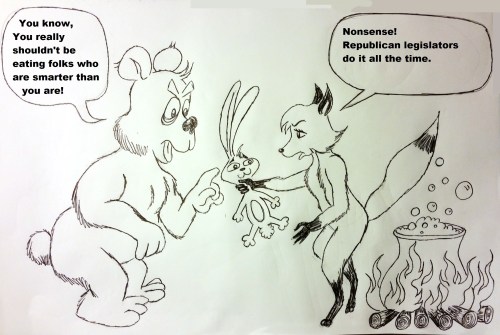
By the way, were you worried about the poor bunny in that first cartoon getting eaten by the fox and the bear? Well, maybe this point from that conversation can put your mind at ease.
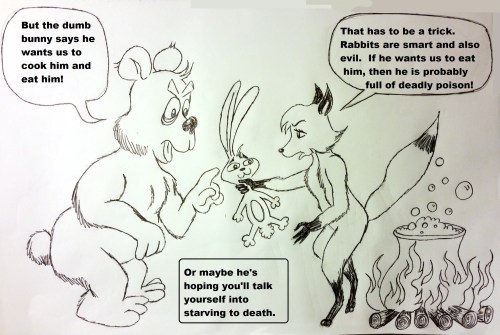
Mickey is tricky and gets good mileage out of his cartoons.
You may have gotten the idea that I like Bobby McFerrin by this point in my post. It is true. Pure genius and raw creative talent fascinate me. Is that the end point of my journey to an answer about what the heck this blog is about? Perhaps. As good an answer as any. But I think the question is still open for debate. It is the journey from thought through many thoughts to theme that make it all fun. And I don’t anticipate that journey actually ending anytime soon.

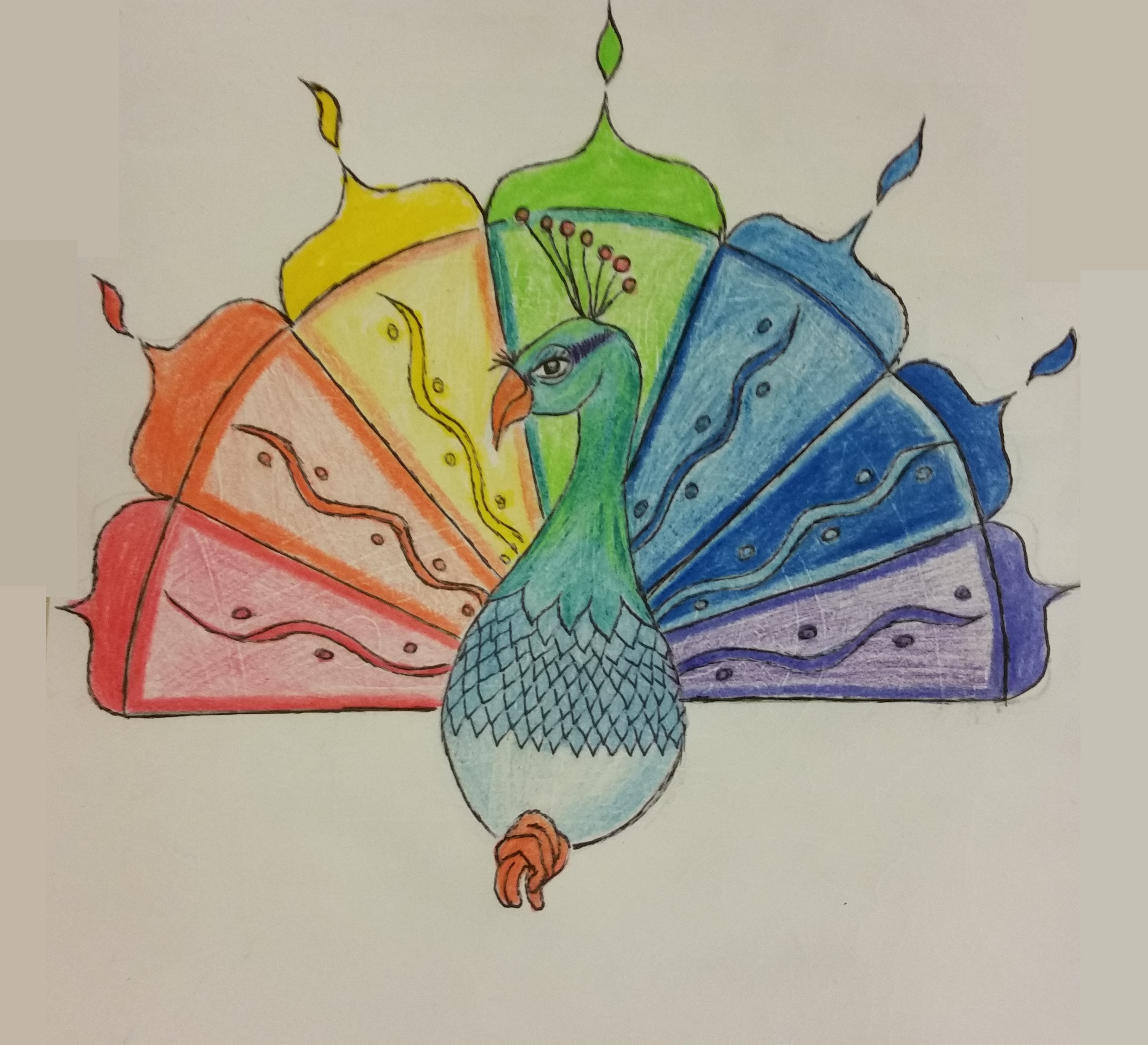
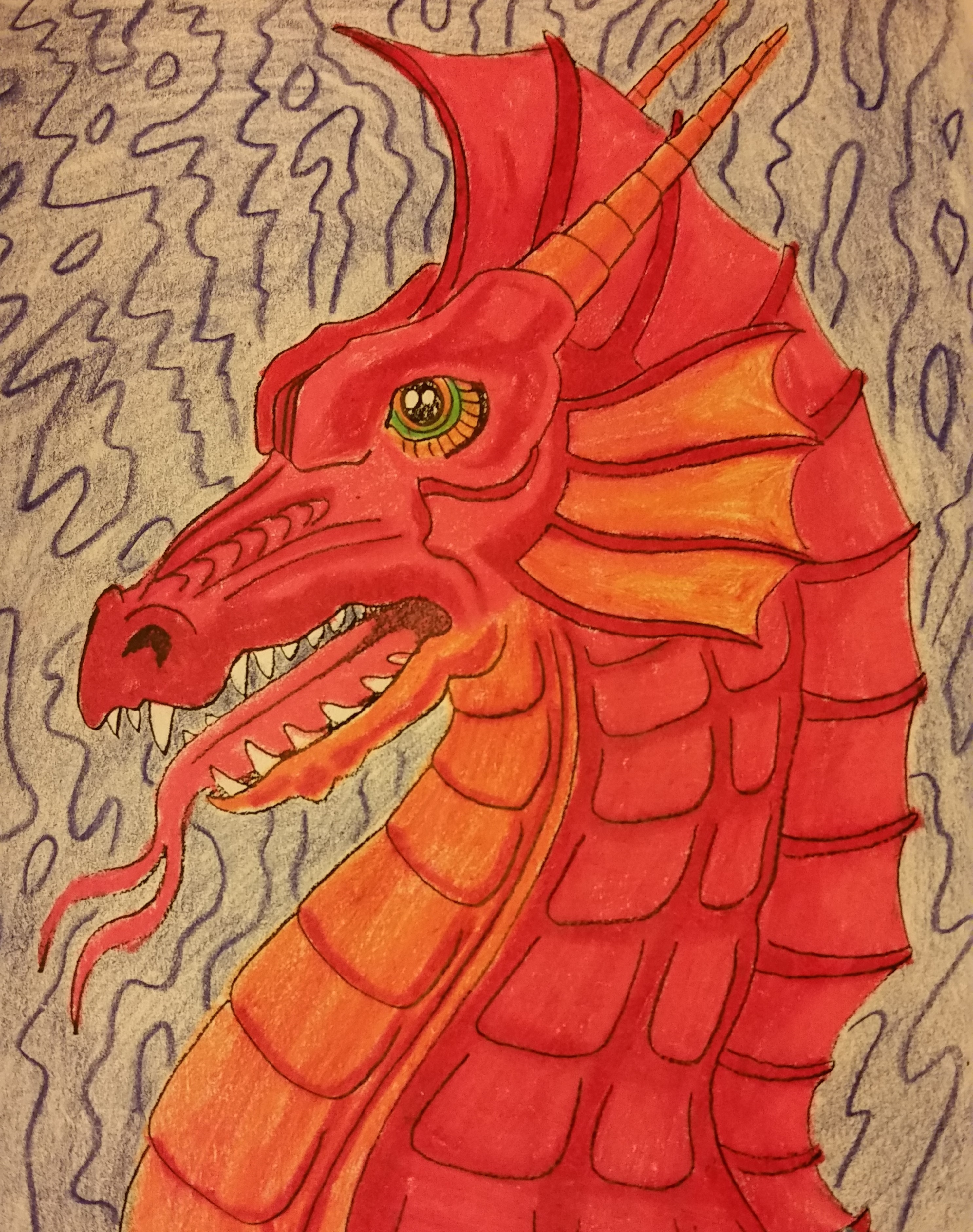



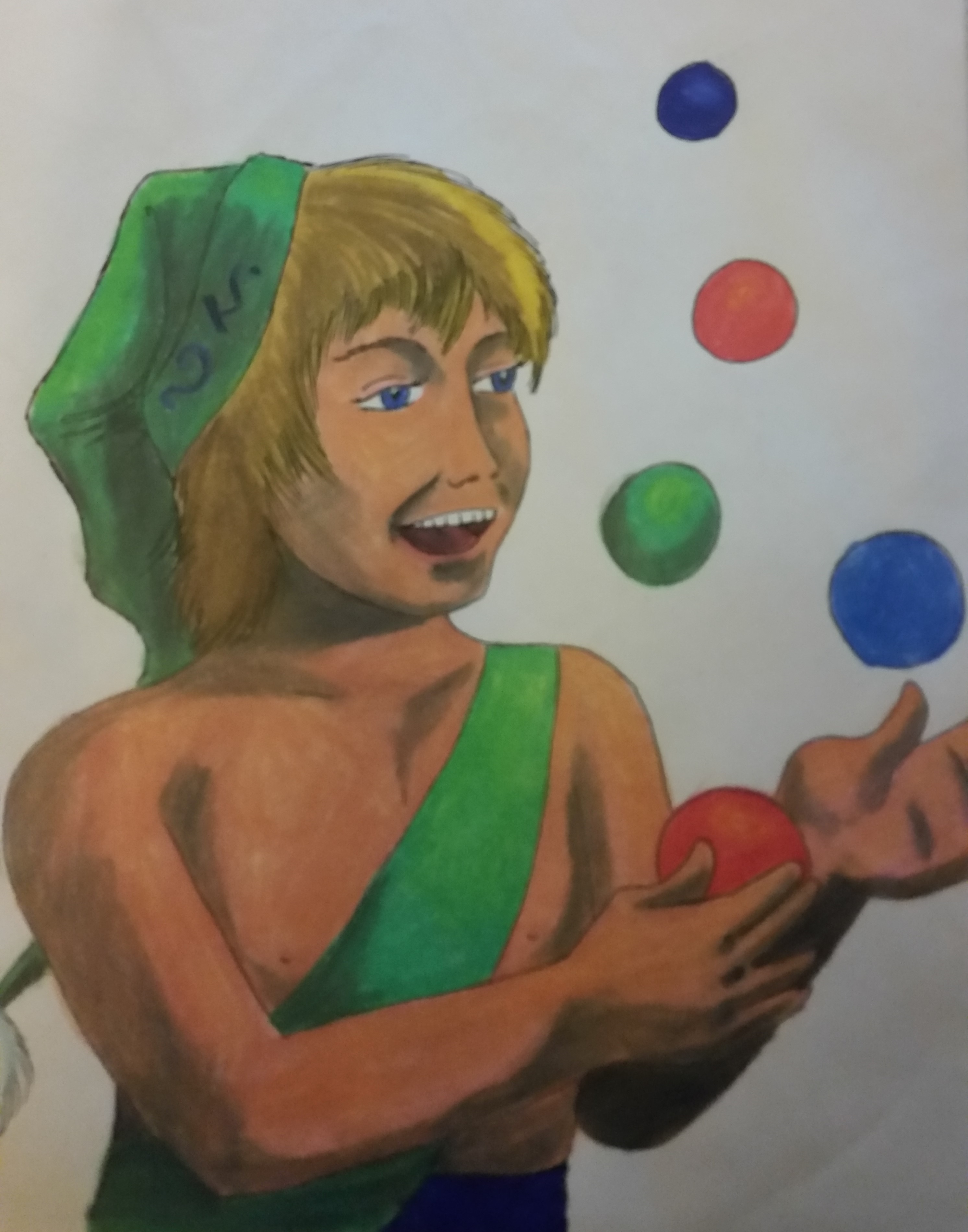
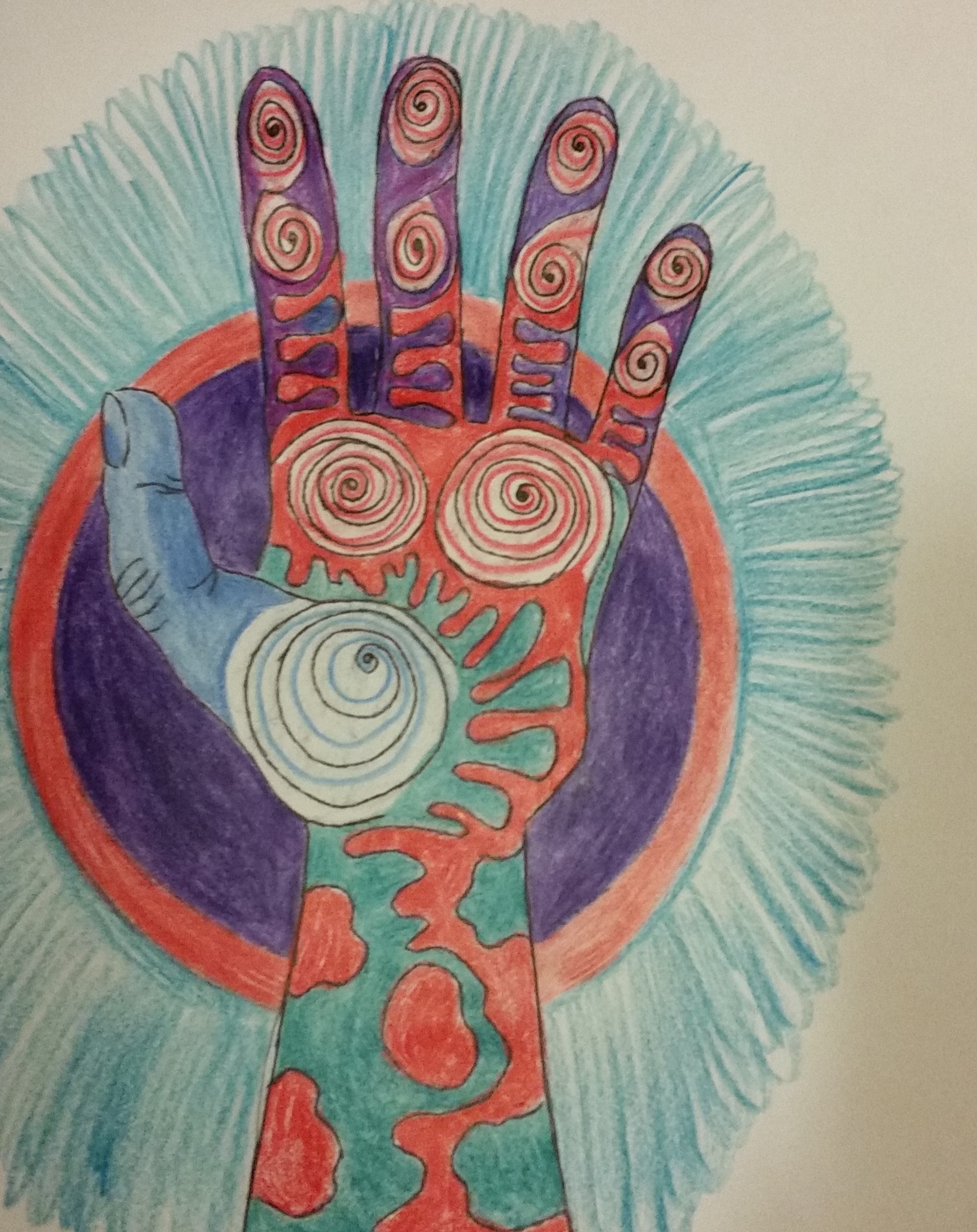
 Catch a Falling Star
Morning Has Broken
Today is off to a miserable start. I heard on the radio that David Bowie has died. Ziggy Stardust… the Goblin King… The Man Who Fell to Earth… the Thin White Duke…is gone. And even though since high school in the 1970’s I have never been quite sure how I felt about his music, I wept. The man was a musical maker of lyrical poetry. He could make you feel really really terrible… but he always made you feel. And he made me depressed as he led me through the Labyrinth… but he also made me soar… on the wings of a barn owl. It was about facing the darkness and finding your way. Finding the way out. Singing the Little Drummer Boy with Bing Crosby, but not actually singing it… making peace on Earth instead. Sometimes things are just so weirdly beautiful it hurts.
I dropped my daughter off at her middle school, and then Jody Dean & the Morning Team played this on the radio.
I wept again. Darkness is my old friend… I have lived with and through depression after depression. My own… my wife’s… my children’s… And it is a miracle I have lived this long without succumbing to the Darkness. It took Robin Williams. It took Ernest Hemingway. But somehow, the Goblin King always goaded me onward, to find the answer at the end of the Labyrinth. “You… you have no power over me.” And then I am okay once again.
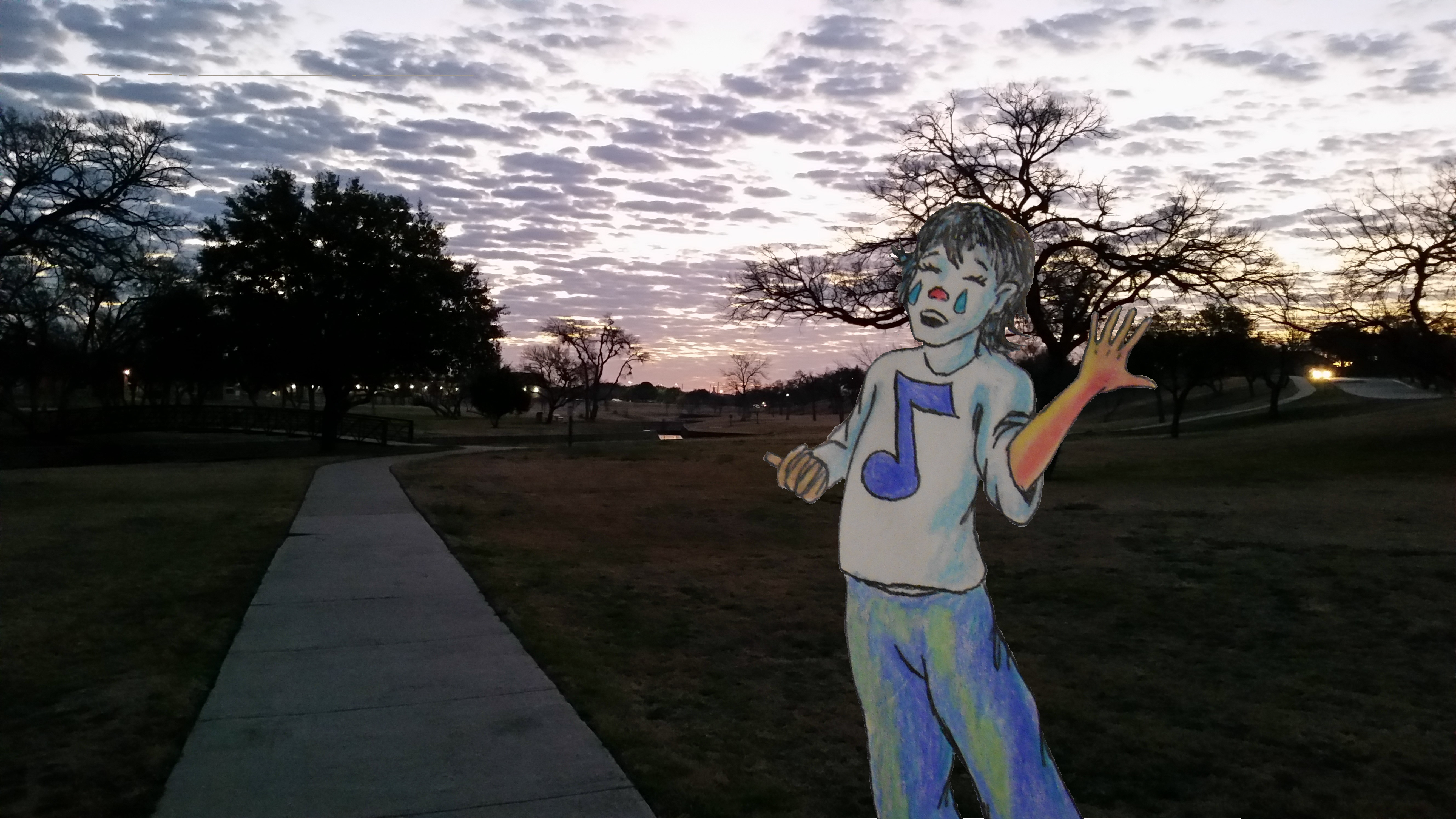
I captured the dawn once again this morning. Once again I failed to truly ensnare the subtle reds and pinks and purples that were actually there. But there it is, anyhow. The morning has broken. The blackbird has spoken. The morning is new.
My heart is still sore this morning. The dog didn’t help when she spilled the trash to get at the napkins with bacon grease on them. We may have a dog-skin rug as a doormat later today. But David Bowie left so many words and ideas behind to comfort me. Is he one of those “neon gods we made”? Of course he is. But as the owl flutters off in the closing credits, we can take comfort in the knowledge that no one is ever really gone. And we can always anticipate some… Serious Moonlight.
This is, of course, an old post revisited.
2 Comments
Filed under commentary, music, photo paffoonies, poetry
Tagged as battling depression, bowie, David Bowie, depression, loss, love and life and laughter, music, News, photo Paffooney, rock