
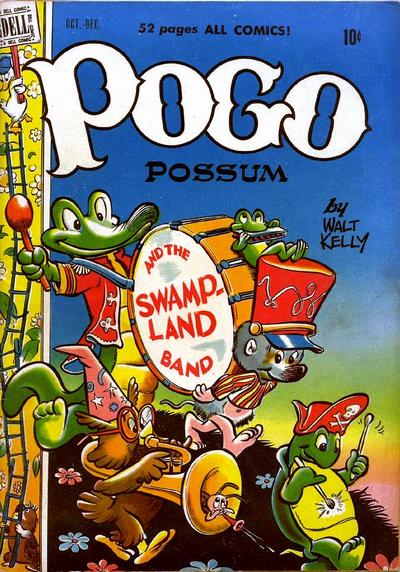
I gave you fair warning. Pogo has been coming to Mickey’s Catch a Falling Star Blog for a while now. So, if you intended to avoid it, TOO BAD! You are here now in Okefenokee Swamp with Pogo and the gang, and subject to Mickey’s blog post about Walt Kelly and his creations.
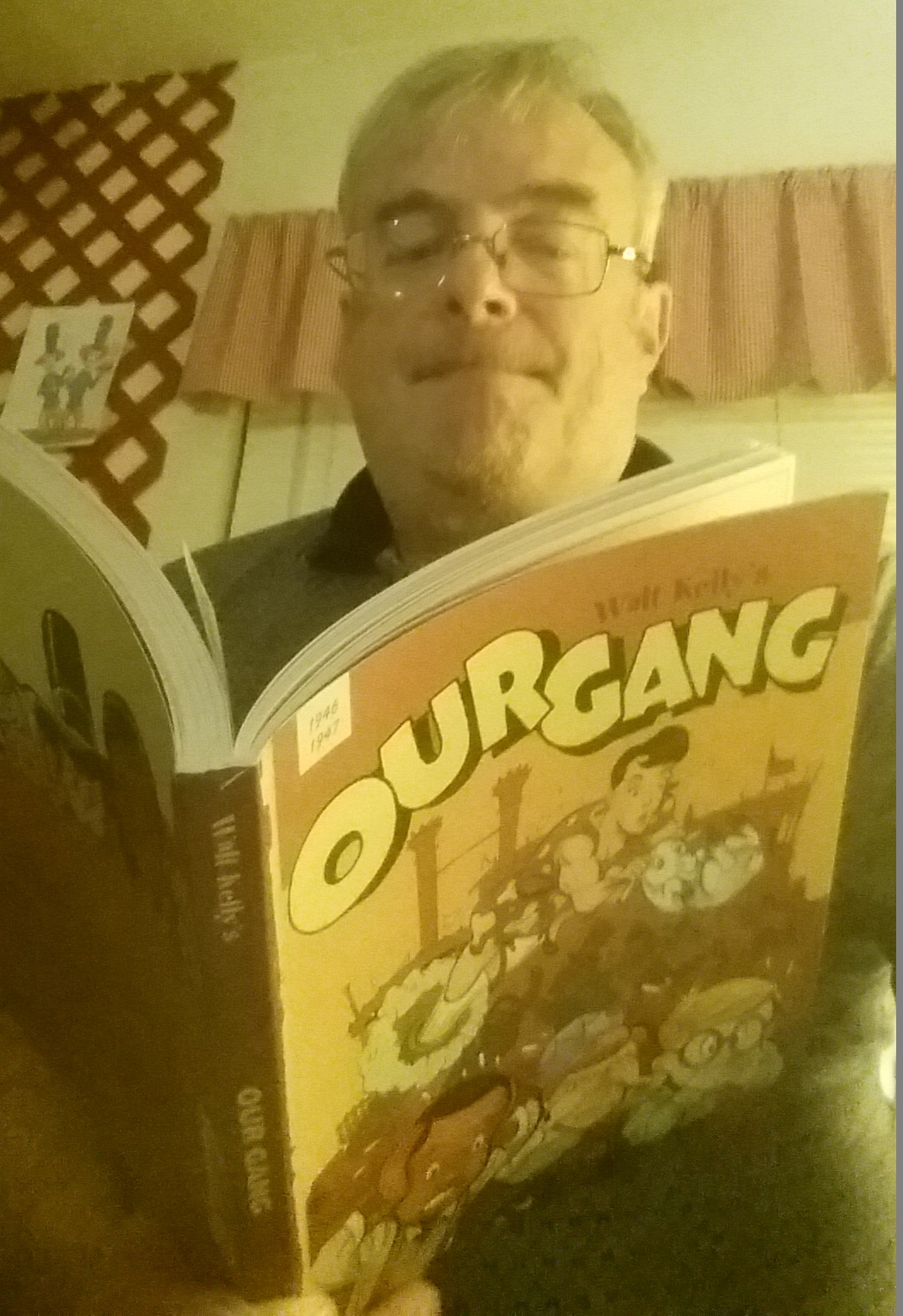
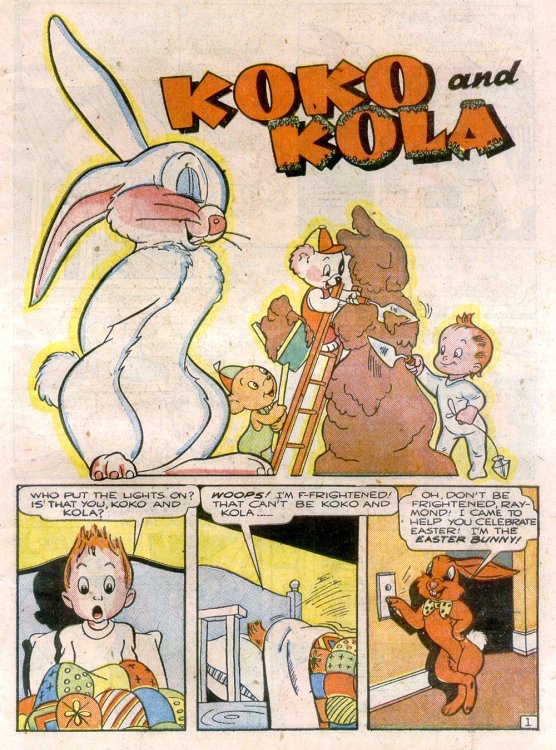
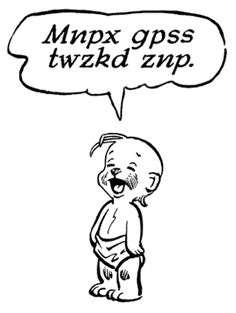
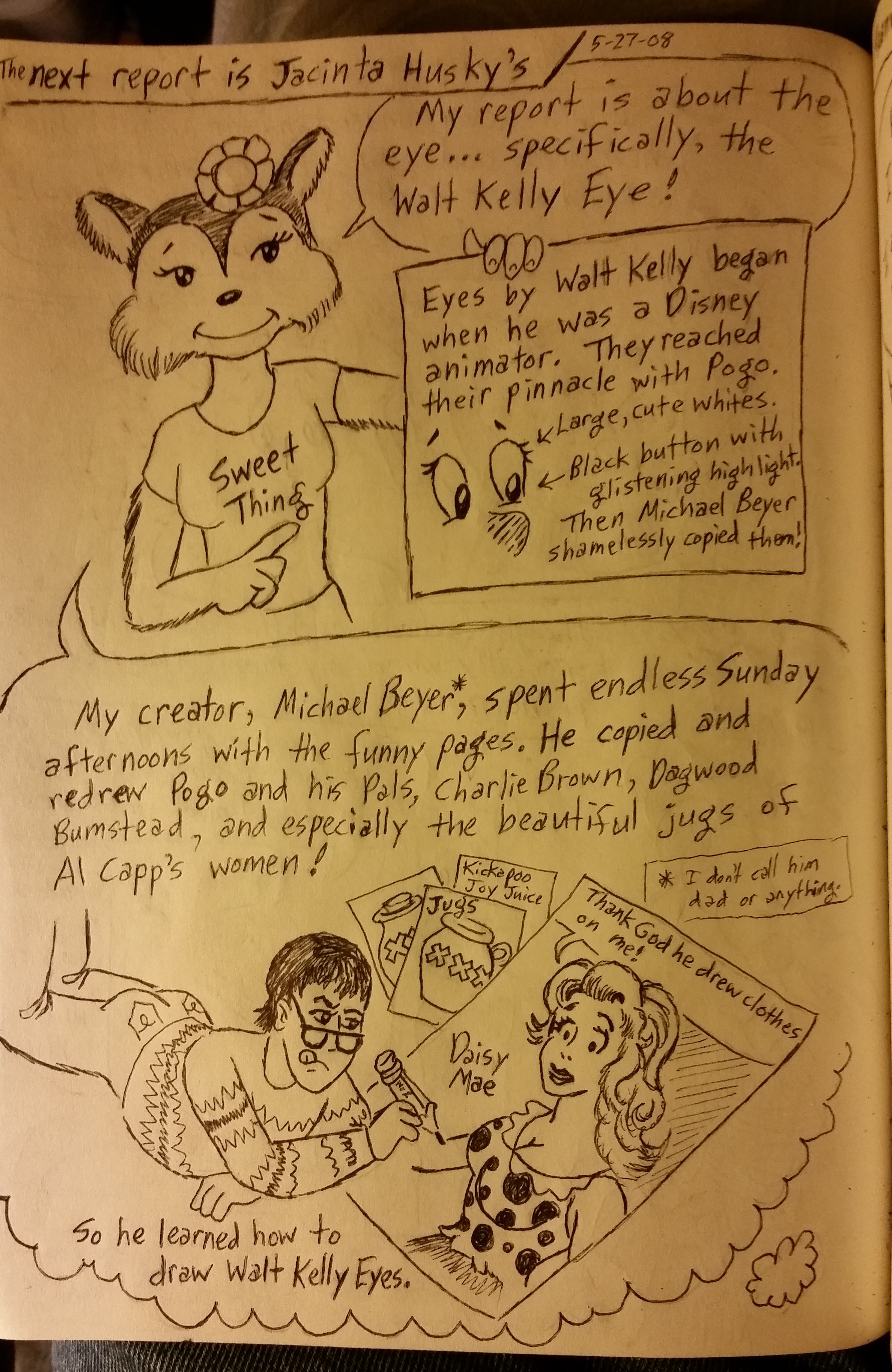
Walt Kelly began his cartoon hall-of-fame career in 1936 at Walt Disney Studios. If you watch the credits in Pinocchio, Fantasia, and Dumbo, you will see Walt listed as an animator and Disney artist. In fact, he had almost as much influence on the Disney graphic style as Disney had on him. He resigned in 1941 to work at Dell Comics where he did projects like the Our Gang comics that you see Mickey smirking at here, the Uncle Wiggly comics, Raggedy Ann and Andy comics, and his very own creations like Pogo, which would go on to a life of its own in syndicated comics. He did not return to work at Disney, but always credited Disney with giving him the cartoon education he would need to reach the stratosphere.
ask.metafilter.com
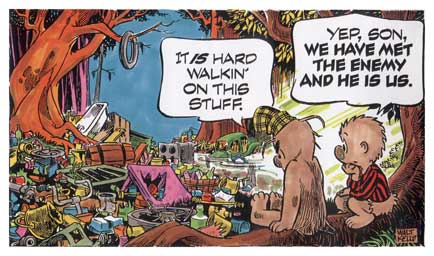
Walt Kelly’s Earth Day comic
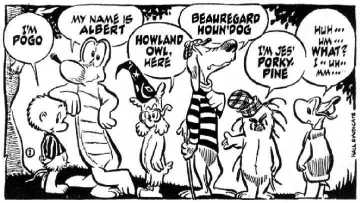
Pogo is an alternate universe that is uniquely Walt Kelly’s own. It expresses a wry philosophy and satirical overview of our society that is desperately needed in this time of destructive conservative politics and deniers of science and good sense.
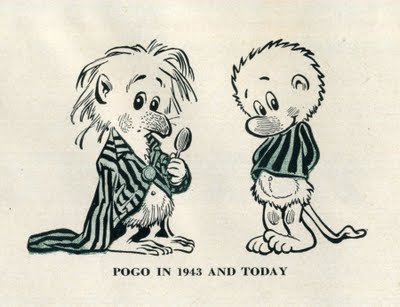
maxriffner.com
Pogo himself is an every-man character that we are supposed to identify with the most. He is not the driver of plots and doings in the swamp, rather the victim and unfortunate experiencer of those unexpectable things. Life in Okefenokee is a long series of random events to make life mostly miserable but always interesting if approached with the right amount of Pogo-ism.
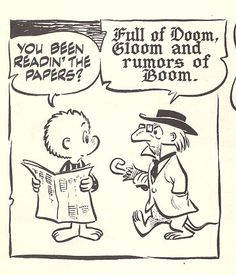
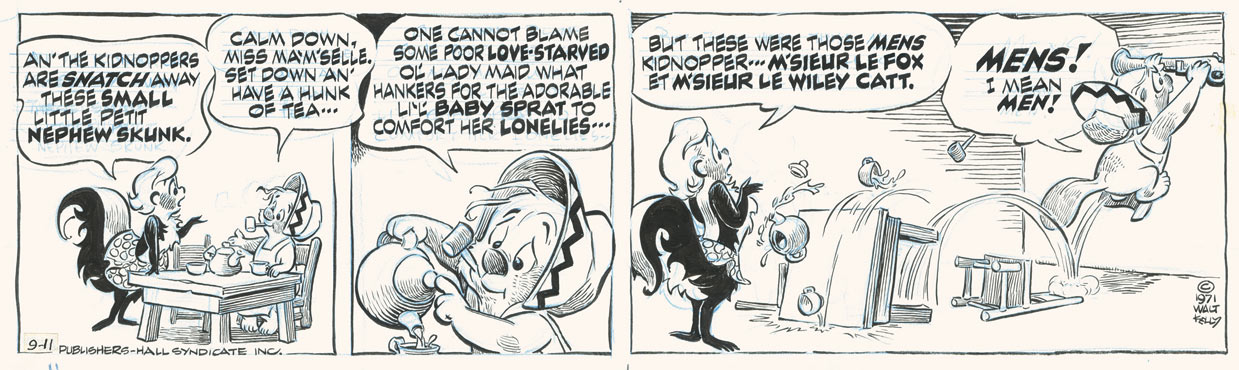
And Pogo was always filled with cute and cuddly as well as ridiculous.
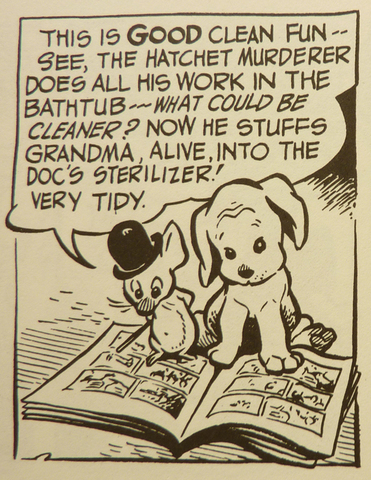
As a boy, I depended on the comic section of the Sunday paper to make sense of the world for me. If I turned out slightly skewed and warped in certain ways, it is owing to the education I myself was given by Pogo, Lil Abner, Dagwood Bumstead, and all the other wizards from the Sunday funnies. There was, of course, probably no bigger influence on my art than the influence of Walt Kelly.
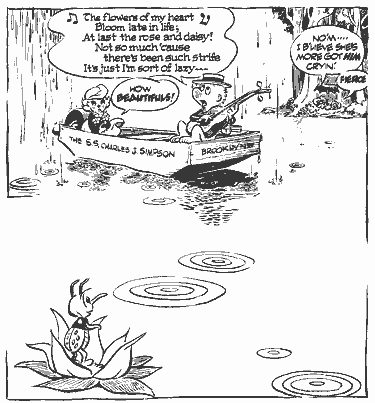
So what more can I say about Walt Kelly? I haven’t yet reached the daily goal of 500 words. And yet, the best way to conclude is to let Walt speak for himself through the beautiful art of Pogo.





The Cowboy Code
When I was a boy playing cowboys and Indians with cap pistols and rubber tomahawks, we all knew that cowboys had a code. The guy in the white hat always shoots straight. He knows right from wrong. He only shoots the bad guy. He even shoots the gun out of the bad guy’s hand if he can. Westerns are about right and wrong, good and bad, and the unyieldingly good knights of plains.
And boys believe what they see on TV and in the movie theaters. People who make television shows never lie, do they? In fact, Wyatt Earp was based on a real guy who really lived and really shot the bad guys at the gosh-darn real OK Corral.
Daniel Boone was a real guy too. He faced the opening up of new lands full of deadly dangers. And when Fess Parker played him in 1964, wearing Davy Crockett’s coonskin hat, he walked the earth like a guardian angel, making everyone safe by the end of the episode. He even knew which Indians were good and which were bad. Mingo was always on Daniel’s side. And when they spoke to each other about the dangers they faced, it was never about killing the people they feared. It was about doing what is was right, about helping the community at Boonesboro to survive. Being encouraging… looking forward to a more settled future created by following the cowboy frontier code.
So, I am left wondering what ever happened to the cowboy code? I listen to Republican presidential candidates talking about dipping bullets in pig’s blood to kill Muslims, and building walls against Mexican immigrants, and why our right to carry assault rifles is sacred, and I wonder what happened. Didn’t they experience the same education from the television versions of the Great American Mythology? Didn’t they learn the code too?
I am old enough now to know that cap guns are not real guns and you cannot solve problems by shooting somebody. But that was never the point of the cowboy code. We need straight-shooters again in our lives, not to shoot people, but to tell the unvarnished truth. We need wise people who can tell who are the good Indians and who are the bad We need them to shoot the weapons out of the bad guys’ hands. And I know that’s asking for leaders to be larger than life and be more perfect than a man can actually be. But Daniel Boone was a real man. Myths and legends start with a fundamental truth.
Leave a comment
Filed under autobiography, commentary, cowboys, humor, insight, philosophy, politics, Uncategorized
Tagged as arizona, autobiography, childhood beliefs, cowboy code, Daniel Boone, humor, politics, Red Ryder, Roy Rogers, satire, writing, Wyatt Earp