Tag Archives: artwork

The Jester, The Fumbler, The Fool

Much of what I love about good story telling is bound up in the nature of the fool character, or the wise fool, if you will.  Shakespeare is probably the consummate creator of fool characters.  Jaques in As You Like It, Falstaff in Henry IV and Henry V, the King’s Fool in King Lear, and even Polonius in Hamlet.  The fool is essential to the story because he serves several important purposes.  He is a foil for main characters in the unraveling of the plot, providing exposition through dialogue, wit and wisdom in commenting on the events, and pratfalls and innuendos for the further amusement of the audience.  He is the Harpo Marx character, Chaplin’s Little Tramp, any Red Skelton character, Lou Costello, Jerry Lewis, and every foolish talking animal in cartoon adventures like Scooby Doo.

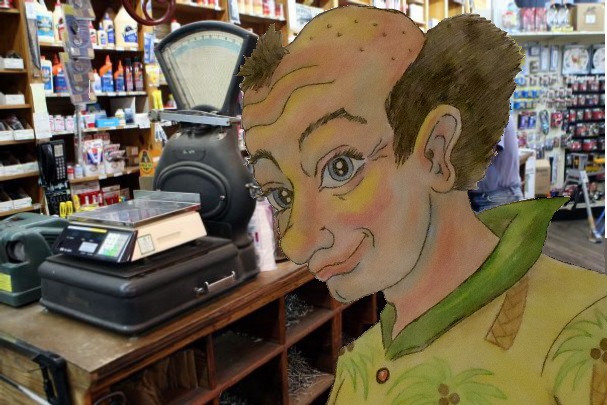
So, I have tried to include the clown in my stories of childhood in Iowa, the land of imagination and corn.  In my newest novel, Snow Babies, the key clown is Harker Dawes, a good-hearted bumbler who has bought the hardware store in Norwall, Iowa and quickly managed to turn it into a bankrupted and foolishly failed business.  He is in control of essential supplies for a small town to use in surviving a raging blizzard, but he is also totally incompetent and capable of creating as many problems as his store can solve.  He is a bachelor uncle living with his brother’s family of three, and he becomes one of the people most responsible for taking in the four orphans from the bus.

Image

Today’s Paffooney is a picture of Harker in his store.  Of course, I can’t tell you the name of the real-life person that Harker is based on.  But I can tell you that I drew this portrait by combining his real-life mug with the features of Rowan Atkinson.  In fact, if a miracle happens and they make this story into a movie, Rowan Atkinson would be perfect for the part.  His first name is even the real name of the town that becomes Norwall in my story.  Stewart’s Hardware Store is no longer there anymore.  Even the building is gone, but the image in the background is close to the antique feel of that wonderful old place.

Leave a comment

Filed under Uncategorized

People All Have Worth

2nd Doctor  I know that you are probably immediately listing all the reasons that my title is totally wacky monkey-thinking in your head.  And if you want to lay into me in the comments, you are more than welcome.  But the reality is that teachers have to develop the mindset that all kids can learn and all people have value… no matter what.  That can be hard to accept when you factor in how corrupted, warped, and badly-taught so many people have turned out to be.  It honestly seems, sometimes, that when faced with the facts of how people act… being violent, or greedy, self-centered, thoughtless, un-caring, and willfully stupid… that they really don’t even have value to others if you kill them, let them rot, and try to use them as fertilizer.  The plants you fertilize with that stuff will come up deformed.

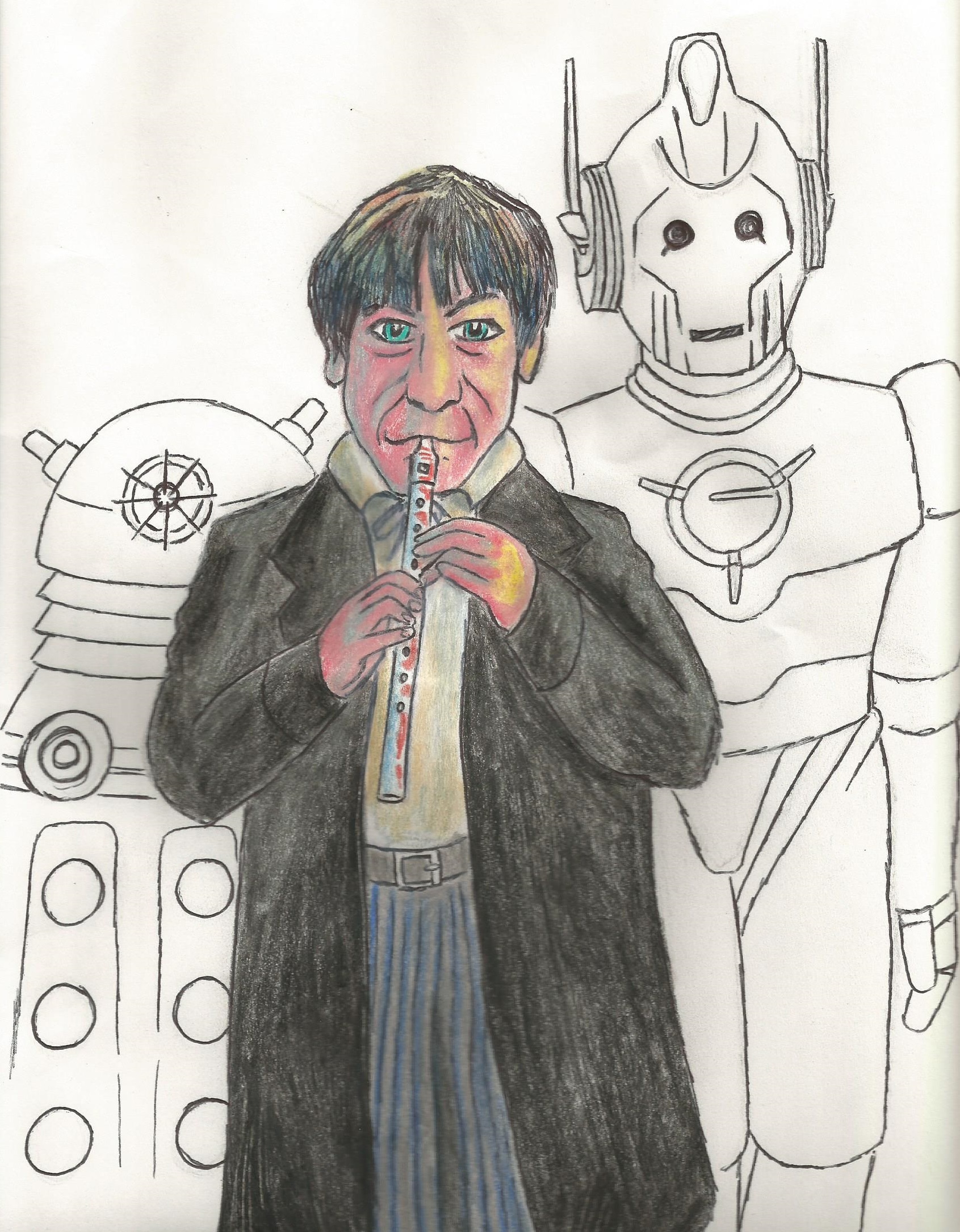
But the Doctor I have pictured here, the Second Doctor played by Patrick Troughton always seemed to find Earth people delightful.  Alien people too, for that matter, unless they were soulless mobile hate receptacles in robotic trash cans like the Daleks, or mindless machines powered by stolen human brains like the Cybermen.  There is, indeed, music in every soul, even if some of it is a little bit discordant and awkward.  And people are not born evil.  The classic study done on Brazilian street kids showed that even with no resources to share and living empty, hopeless lives, the children helped one another, comforted one another, and refused to exploit one another.  As a teacher you get to know every type that there is.  And there are stupid kids (deprived of essential resources necessary to learning), and evil kids (lashing out at others for the pain inflicted upon them), and needy kids (who can never get enough of anything you might offer and always demand more, MORE, MORE!)  Sometimes they drive you insane and make you want to resign and leave the country to go count penguins in Antarctica.  But the Doctor is right.  No matter what has been done to them, if you get to know them, and treat them as individual people rather than as problems… they are delightful!  Andrew

So let me show you a few old drawings of people.

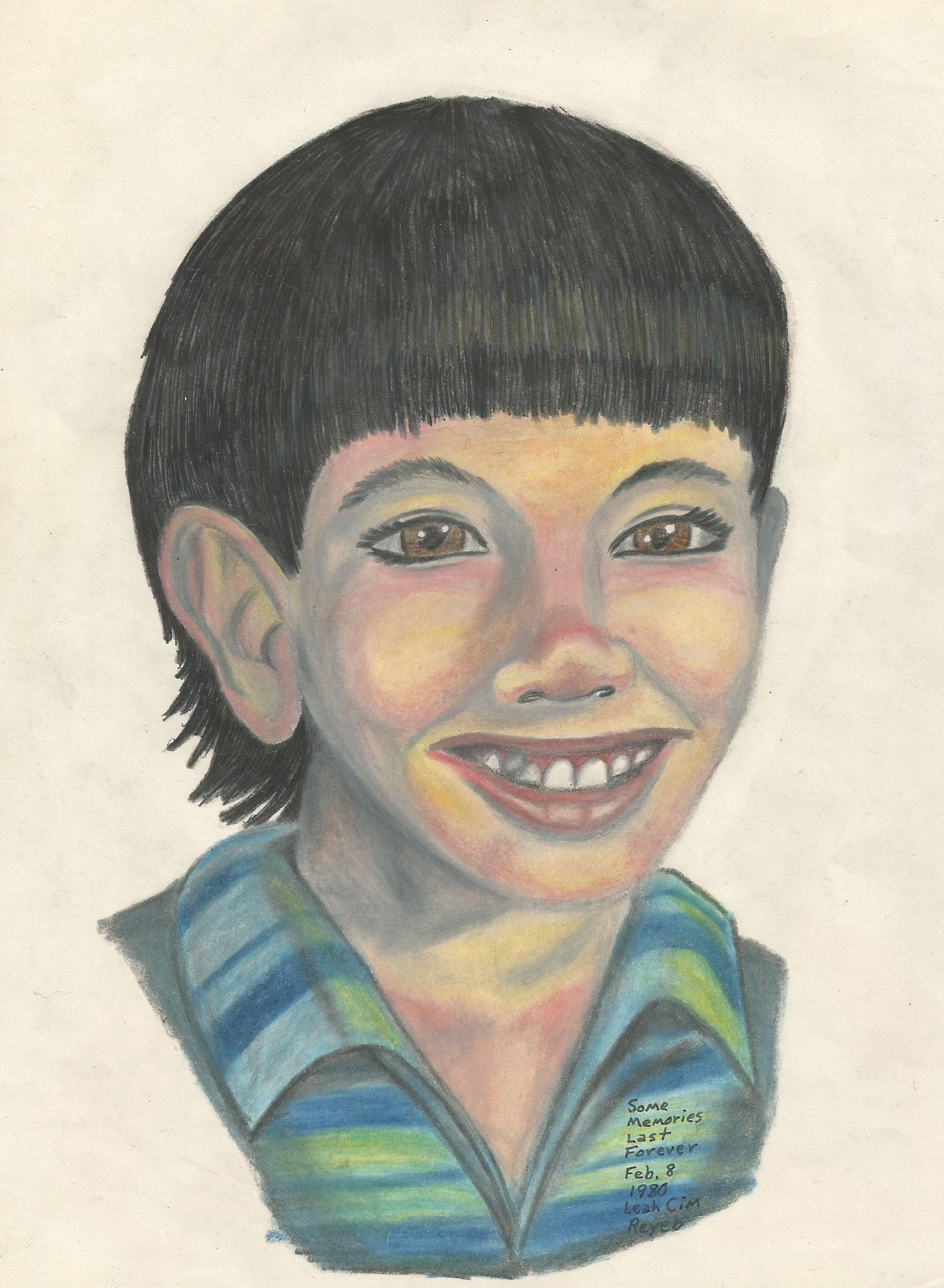
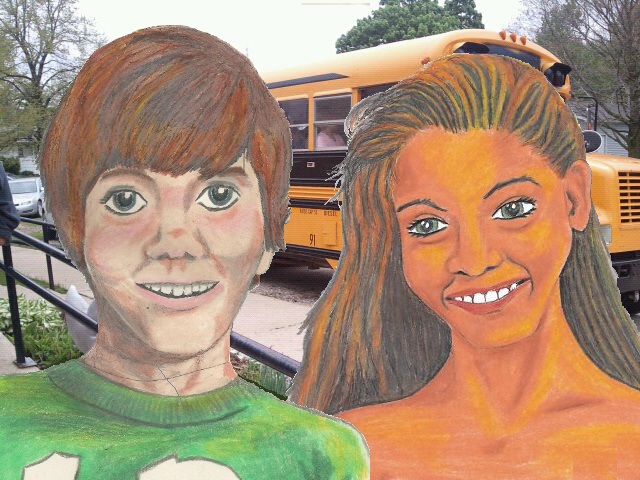
Cute people like Andrew here.

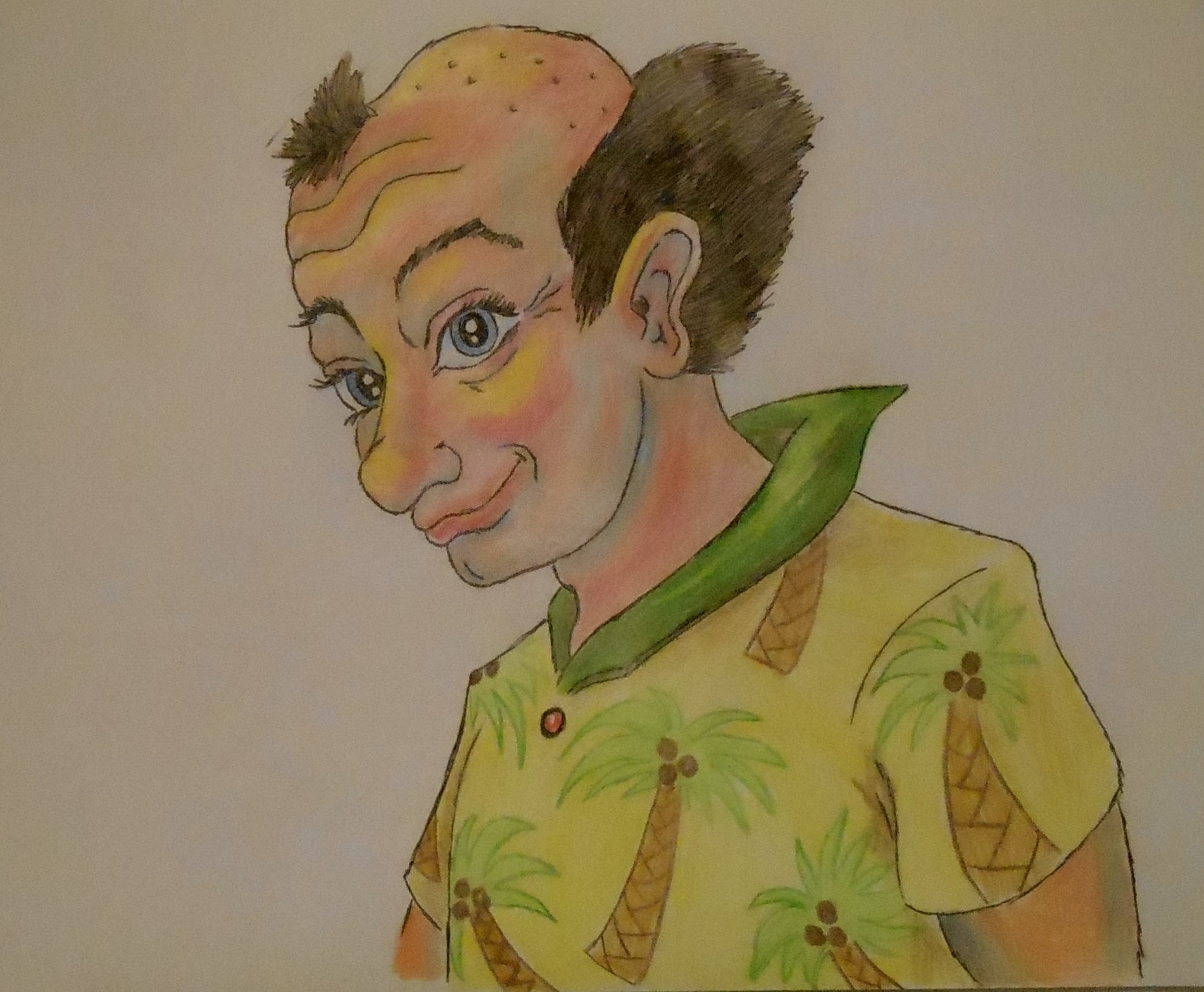
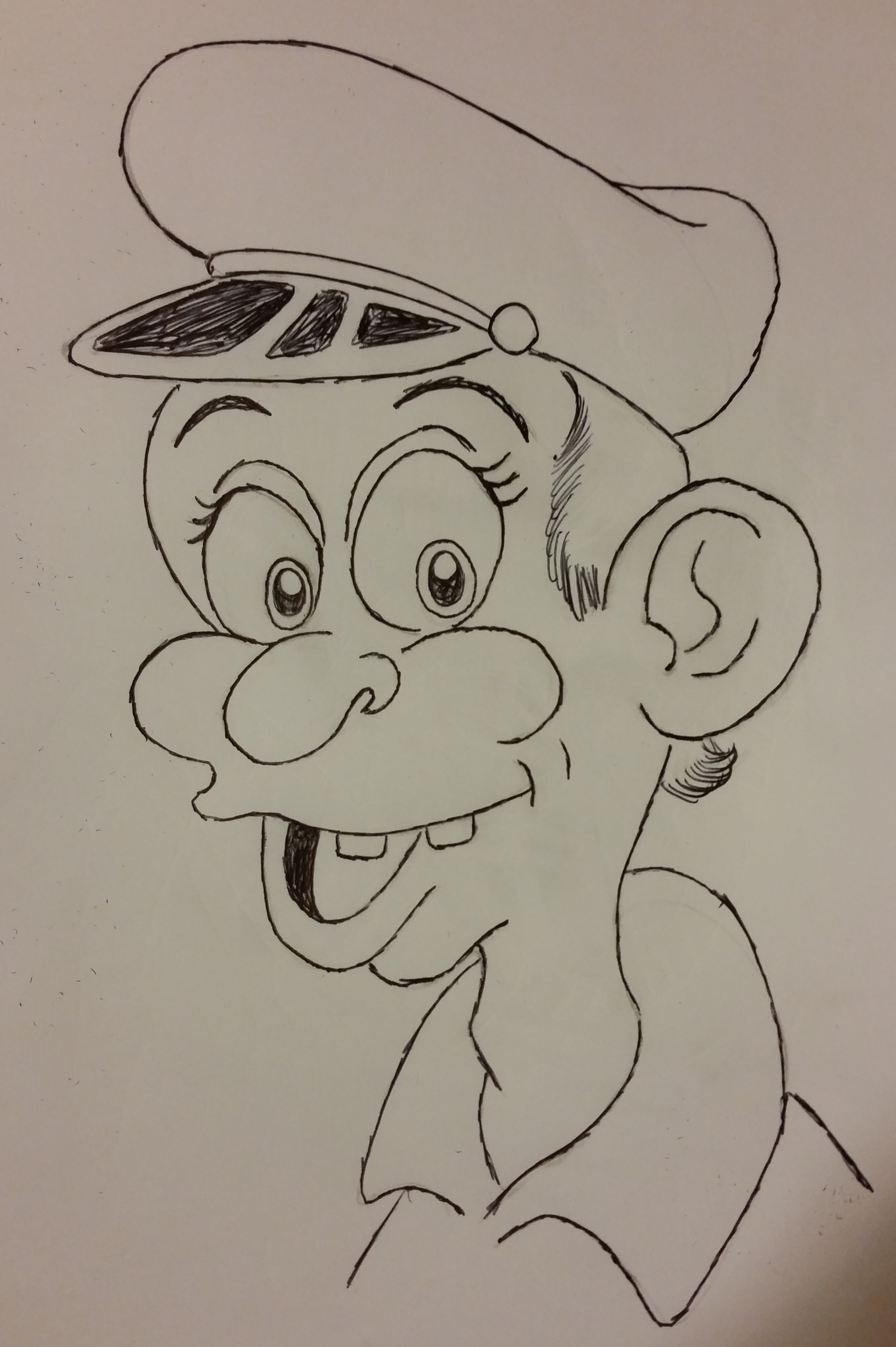
Or possibly stupid and goofy people who never get things right.

Harker

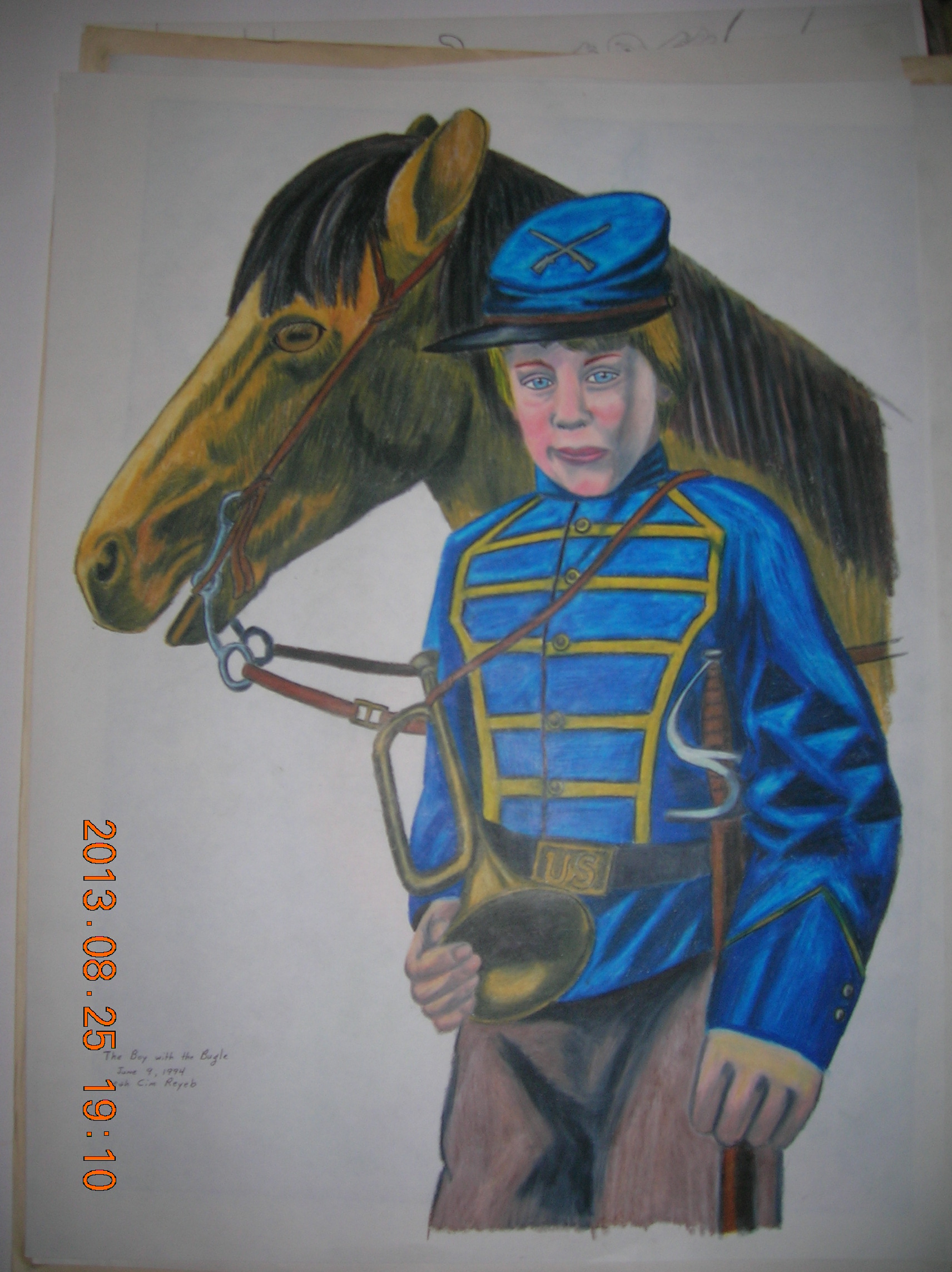
Or long-dead people who made their contributions long ago, and sacrificed everything to make our lives different… if not better.DSCN4448

Supe n Sherry_nOr young people who live and learn and hopefully love…

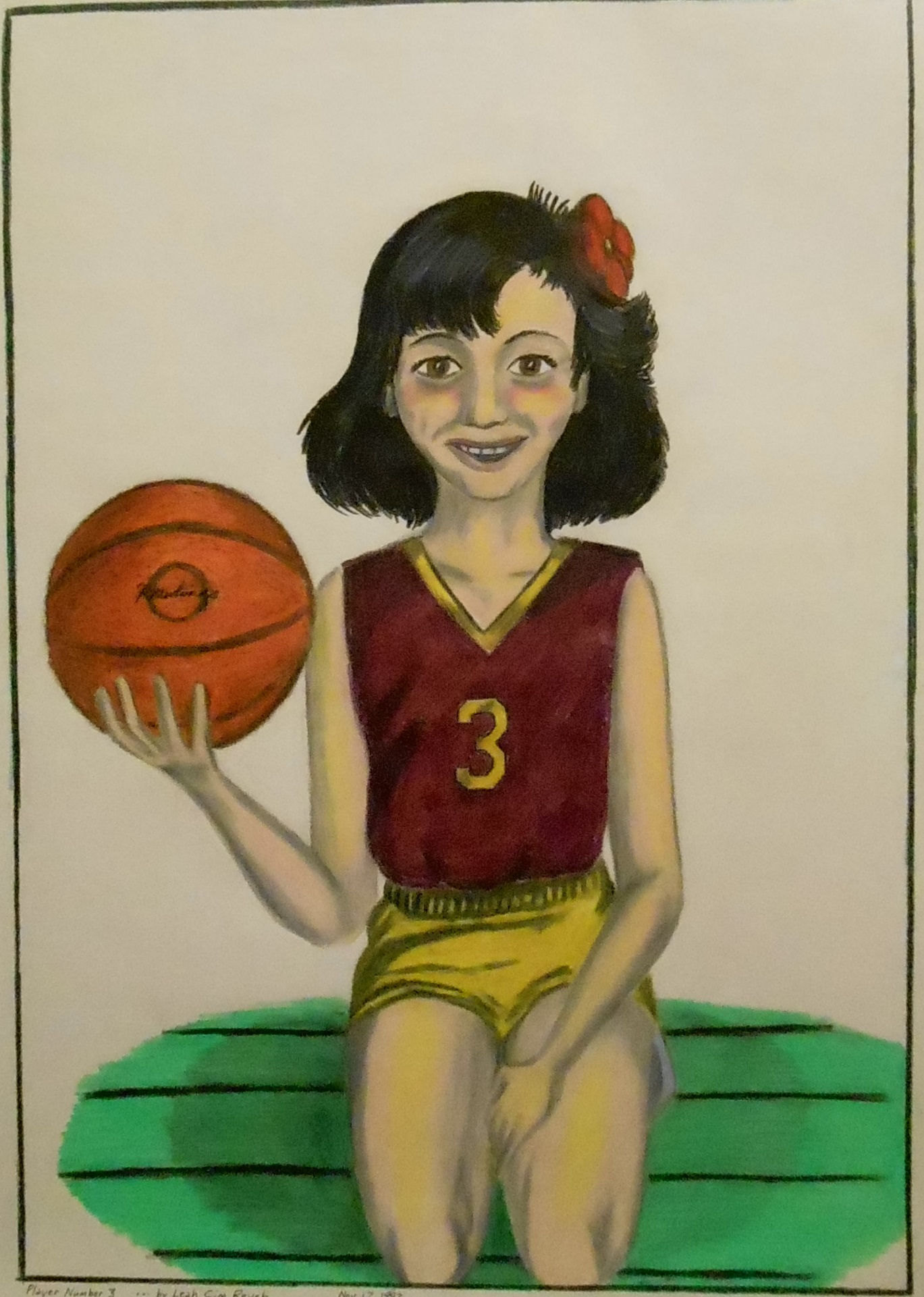
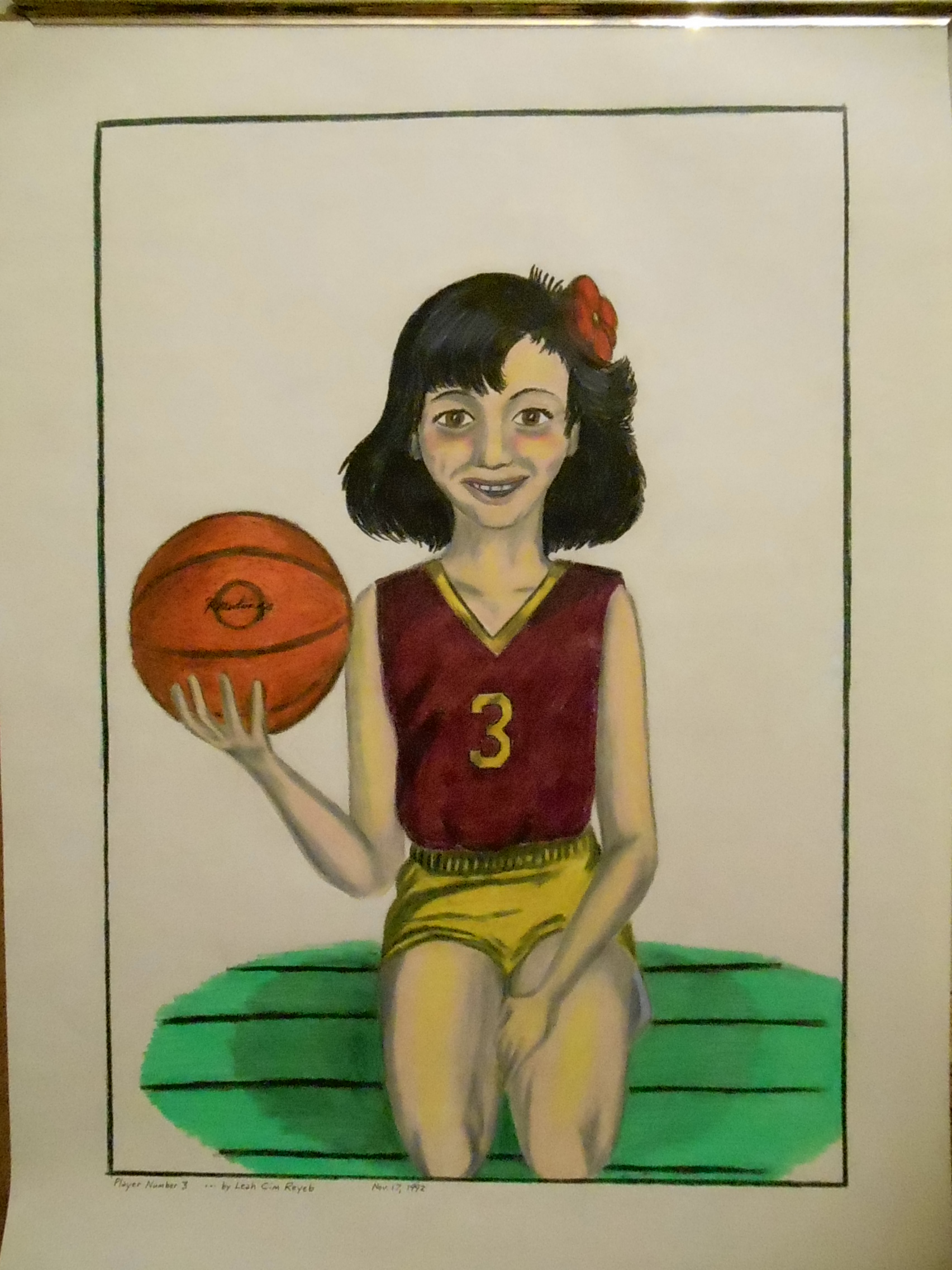
And try really hard at whatever they do… whether they have talent or not.

Player3

And hope and dream and play and laugh…

And sometimes hate… (but hopefully not too much)…

And can probably tell that I really like to draw people…

Because God made them all for a reason…

even if we will never find out what that reason is.

2 Comments

Filed under art my Grandpa loved, humor, Paffooney, philosophy

Top This!

fuddy duddy

“Dad?” asked the Princess, “I heard a funny word in school today.  What does Fuddy-Duddy mean?”

“Oh, that’s a good word,” I said.  “It means an old fogey… a stick-in-the-mud.”

“A what?”

“A fussy old guy who likes to have everything his way.  Like, if you accuse your father of being one… which you often do… he’s a fuddy-duddy daddy.”

“Ooh!  I get it!” said Henry, chiming in.  “And if your father is evil, then he’s a fuddy-duddy baddie daddy!

“Yes,” I said, “and if it makes him sad to be evil, he’s a fuddy-duddy saddie baddie daddy!

“If you are not sure he’s really your father,” said the Princess adding a one-up, “he’s a fuddy-duddy saddie baddie maybe daddy!

“Yeah!” said Henry.  “And if you suspect he may have fallen into a time machine and been turned back into an infant, he’s a fuddy-duddy saddie baddie maybe baby daddy!

“Now that he’s a baby again he will surely want to watch his favorite TV show again,” I said with a tear of nostalgia in my eye, “he’ll be a fuddy-duddy saddie baddie maybe baby Howdy Doody daddy!

“What’s Howdy Doody, Daddy?” asked the Princess.

“No,” said Henry, “now you’ve spoiled it.  It just ain’t funny any more.”

“Yes it is!  He’s become a funny bunny fuddy-duddy hoo-dad doo-dad saddie baddie maybe rabies hoo-dah doo-dah…”

“Just stop,” said Henry.  “You always carry things too far.”

“Right you are!” I said.  “See this grin?  It means I win!”

“AW, Daaad!” they both said at the same time.


4 Comments

Filed under humor, Paffooney, pen and ink, Uncategorized, word games

Chuck Dickens and the Origins of Writing

Image

Don’t make the mistake of thinking I have any earthly idea where writing comes from or how it began.  I am only talking personal history here, nothing grander or more meaningful.  This post is only self-referential hoo-haw, which is a fancy way of interpreting “conceited crap”.

So, the truth is, I am writing about Charles Dickens because he is the author I most want to become.  True, I rant on and on about Twain and his humor.  And a good deal of my artwork owes everything to Disney, but everything I am good at in writing is based on Dickens.

The first actual Dickens novel that I read was accomplished during my extended illness as a high school sophomore.  I read in bed, both at home and in the hospital, from my library copy of The Old Curiosity Shop.  I was enthralled by the journey and subsequent tragedy of Little Nell.  I thoroughly loathed the villain Daniel Quilp and was roundly thrilled by his well-deserved fatal comeuppance.  It was my first encounter with the master of characters.  I followed that reading with a biography of Dickens that revealed to me for the first time that his characters were based on real people.  Mr. Micawber in David Copperfield was actually Dickens’ own father.  Little Nell was the cousin he dearly loved who died in his arms.    The crafty Fagin was a caricature of a well-known fence named Soloman, a Jew of infamous reputation, but not without his redeeming quality of caring for the orphaned poor.  So it is that I have chosen to make my silly stories about real people in much the same way Dickens did.  If you are now worried that since you know me, you may end up in my books, never fear.  I change names and splice characters together.  You will have to make an effort to recognize yourself.  And, besides, nobody reads my books anyway.

I also like the way Dickens uses young characters and follows them over time as they grow and change.  Oliver Twist was the first child protagonist in English literature.  David Copperfield, Nicholas Nickleby, and Pip in Great Expectations are also like that.  David Copperfield, in fact, is Chuck’s own fictionalized self.  I fully intend to do the same.  It is the reason my books fall into the Young Adult category.  I also intend to employ the same kind of gentle, innocent humor that Dickens used.  I mean to portray things that are funny in a disarming, absurdist way rather than resorting to attack humor and bad words.

There it is, then, my tribute to Charles Dickens, a writer who makes me be who I am and write what I write.  I am not supposed to do Christmas posts because of my avowed religion, but you can consider this to be as close as I can come.  The author of A Christmas Carol… it doesn’t get much more Christmassy than that.

Leave a comment

Filed under Uncategorized

Nerd Class

Skoolgurlz

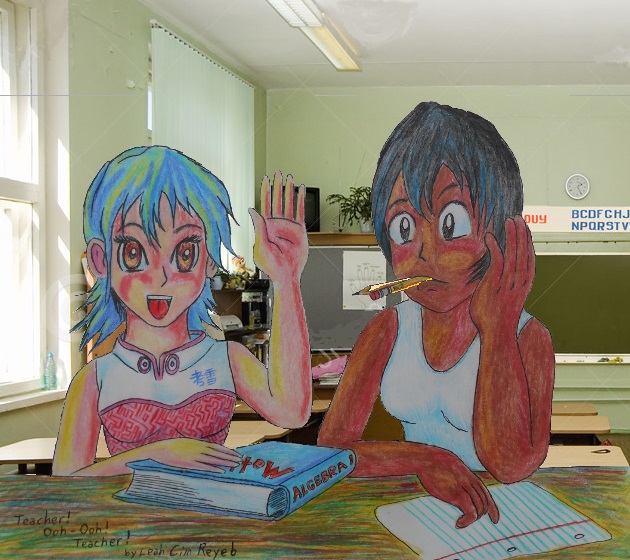
Back in the 1980’s I was given the gift of teaching the Chapter I program students in English.  This was done because Mrs. Soulwhipple was not only a veteran English teacher, but also the superintendent’s wife.  She was the one gifted with all the star kids, the A & B students, the ones that would be identified as the proper kids to put into our nascent Gifted and Talented Program.  That meant that I would get all the kids that were C, D, & F in most of their classes, the losers, the Special Edwards, the learning disabled, the hyper rocketeers of classroom comedy, and the trouble makers.  And I was given this gift because, not only was I not a principal’s or superintendent’s wife, but I actually learned how to do it and became good at it.  How did I do that, you might ask?  I cheated.  I snooped into the Gifted and Talented teacher training, learned how to differentiate instruction for the super-nerd brain, and then used the stolen information to write curriculum and design activities for all my little deadheads (and they didn’t even know who the Grateful Dead were, so that’s obviously not what I meant).    I treated the little buggers like they were all GT students.  Voila!  If you tell a kid they are talented, smart, and worthy of accelerated instruction… the little fools believe it, and that is what they become.Aeroquest ninjas

Even the goofy teacher is capable of believing the opposite of what is obvious and starts treating them like super-nerds because he actually believes it.  I soon had kids that couldn’t read, but were proud of their abstract problem-solving skills.  I had kids that could enhance the learning of others with their drawing skills, their singing ability, and their sense of what is right and what is wrong.  I had them doing things that made them not only better students for me, but in all their classes.  And I did not keep the methods to my madness a secret, either.  I got so good at coercing other teachers to try new ideas and methods that I got roped into presenting some of the in-service training that all Texas teachers are required by law to do.  And unlike so many other boring sessions we all sat through, I presented things I was doing in the actual classroom that other teachers could also use with success.  The other teachers tried my activities and sometimes made them work better than I did.

Teacher

Yes, I know this all sounds like bragging.  And I guess it probably is.  But it worked.  My kids kept getting better on the standardized tests and the State tests that Texas education loves so much.  And Mrs. Soulwhipple was still the superintendent’s wife, but she did not stay a teacher forever.  She eventually went to a new school district with her husband.  And guess who they started thinking of when the question of who would be the next teacher for the nerd classes was considered.  That’s right, little ol’ Reluctant Rabbit… that goofy man who drew pictures on the board and made kids read like a reading-fiend… me.

So, a new era began in Cotulla.  In addition to still getting to teach all the deadheads (because they weren’t going to trust those precious children to anyone else, naturally), I began teaching at least one edition of Mr. B’s famous Nerd Class every school year.  We actually assigned long novels and great pieces of literature for the kids to read and discuss and study in depth.  Novels like To Kill a Mockingbird by Harper Lee and Across Five Aprils by Irene Hunt were read.  We began talking about “big ideas”, “connections to the wider world”, and how “things always change”.  We began taking on ideas like making our world better and how to help our community.  Kids began to think they were learning things that were important.  We did special units on Exploring Our Solar System, The World of Mark Twain, Finding the Titanic, and The Tragedy of Native American History.  And we spent as much as a third of the year on each.  I am myself cursed with a high IQ and a very disturbing amount of intelligence.  I am the deepest living stockpile of useless facts and trivia that most of my students would ever meet in their lifetimes.  And even I was challenged by some of the learning we took on.  That’s the kind of thing that makes a teaching career fun.  It kept me teaching and meeting new students and new challenges long after my health issues made it a little less than sensible to keep going.  And if I manage to tell you a few Nerd Class stories in the near future, then at least you stand a chance of knowing a little bit about what-the-heck I am talking about.  So be prepared for the worst.  I am retired now, and have plenty of time for long-winded stories about being a teacher.


Leave a comment

Filed under humor, Paffooney, teaching, Uncategorized

Making Portraits

scan0005

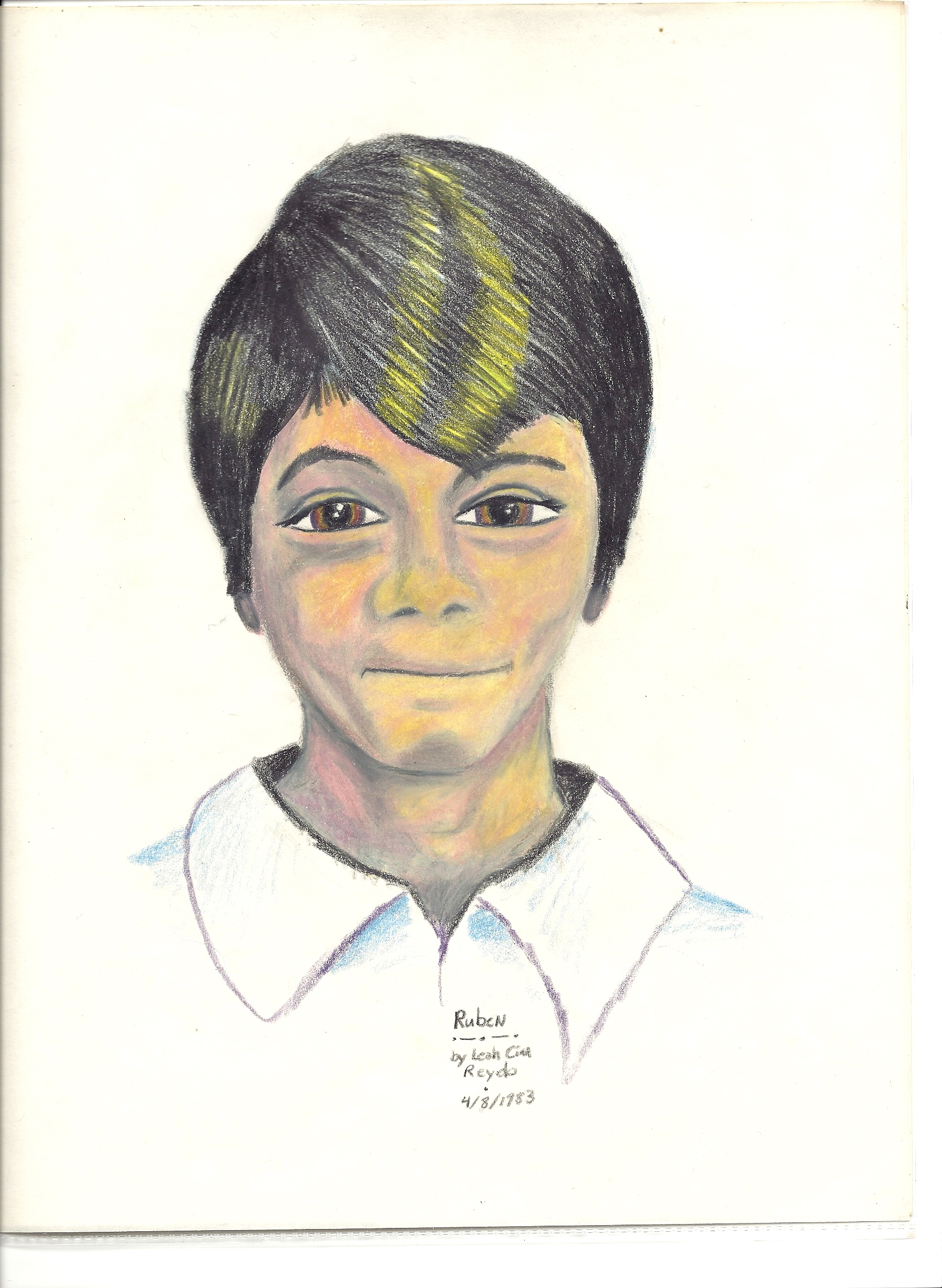
My biggest regret as a cartoonist and waster of art supplies is the fact that I am not the world’s best portrait artist.  I can only rarely make a work of art look like a real person.  Usually the subject has to to be a person I love or care deeply about.  This 1983 picture of Ruben looks very like him to me, though he probably wouldn’t recognize himself here as the 8th grader who told me in the fall of 1981 that I was his favorite teacher.  That admission on his part kept me from quitting and failing as a first year teacher overwhelmed by the challenges of a poor school district in deep South Texas.

scan0006

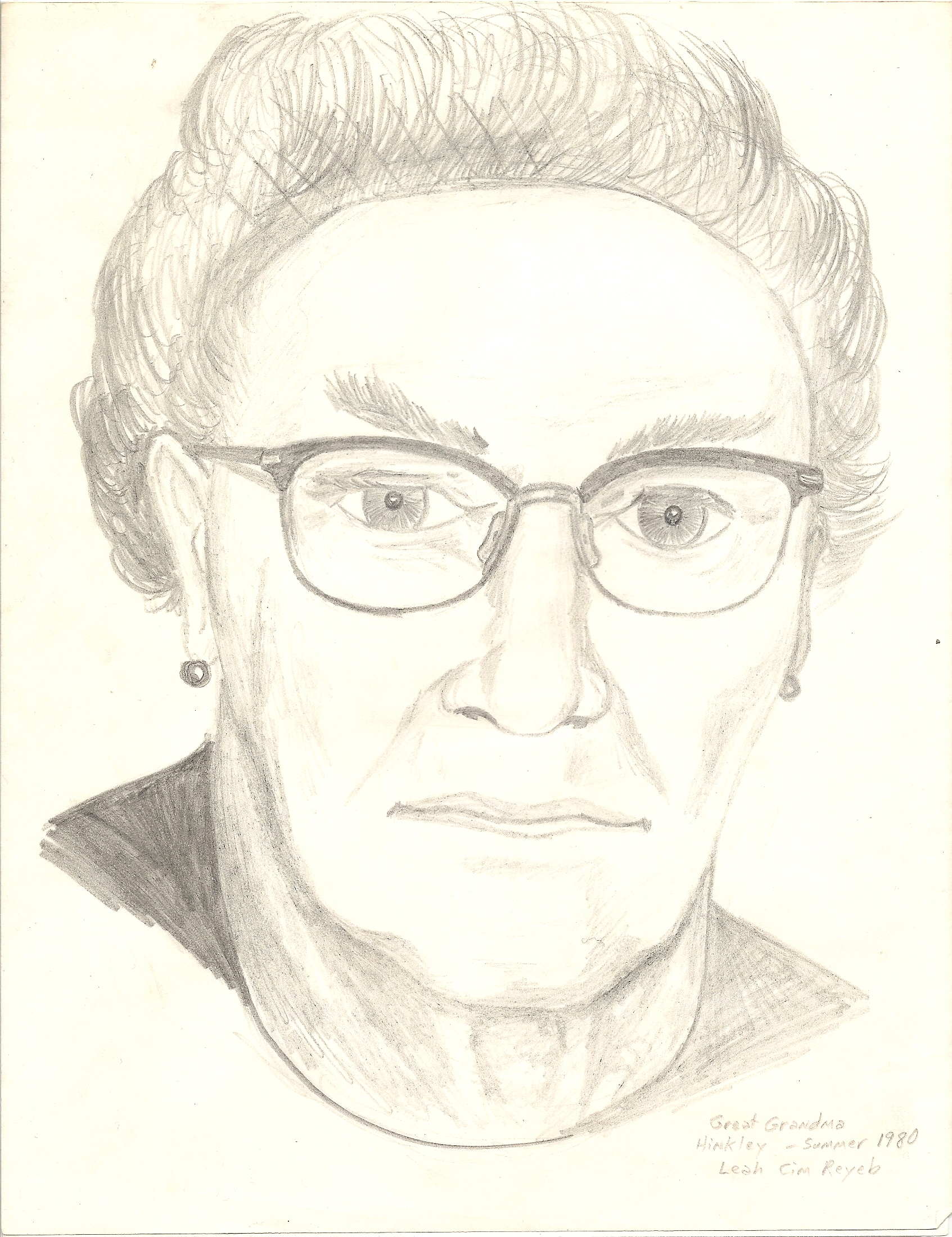
My Great Grandma Hinckley was really great.

My great grandmother on my mother’s side passed away as the 1970’s came to an end.  I tried to immortalize her with a work of art.  I drew the sketch above to make a painting of her.  All my relatives were amazed at the picture.  They loved it immensely.  I gave the painting to my Grandma Aldrich, her second eldest daughter.  And it got put away in a closet at the farmhouse.  It made my grandma too sad to look at every day.  So the actual painting is still in a closet in Iowa.

scan0007

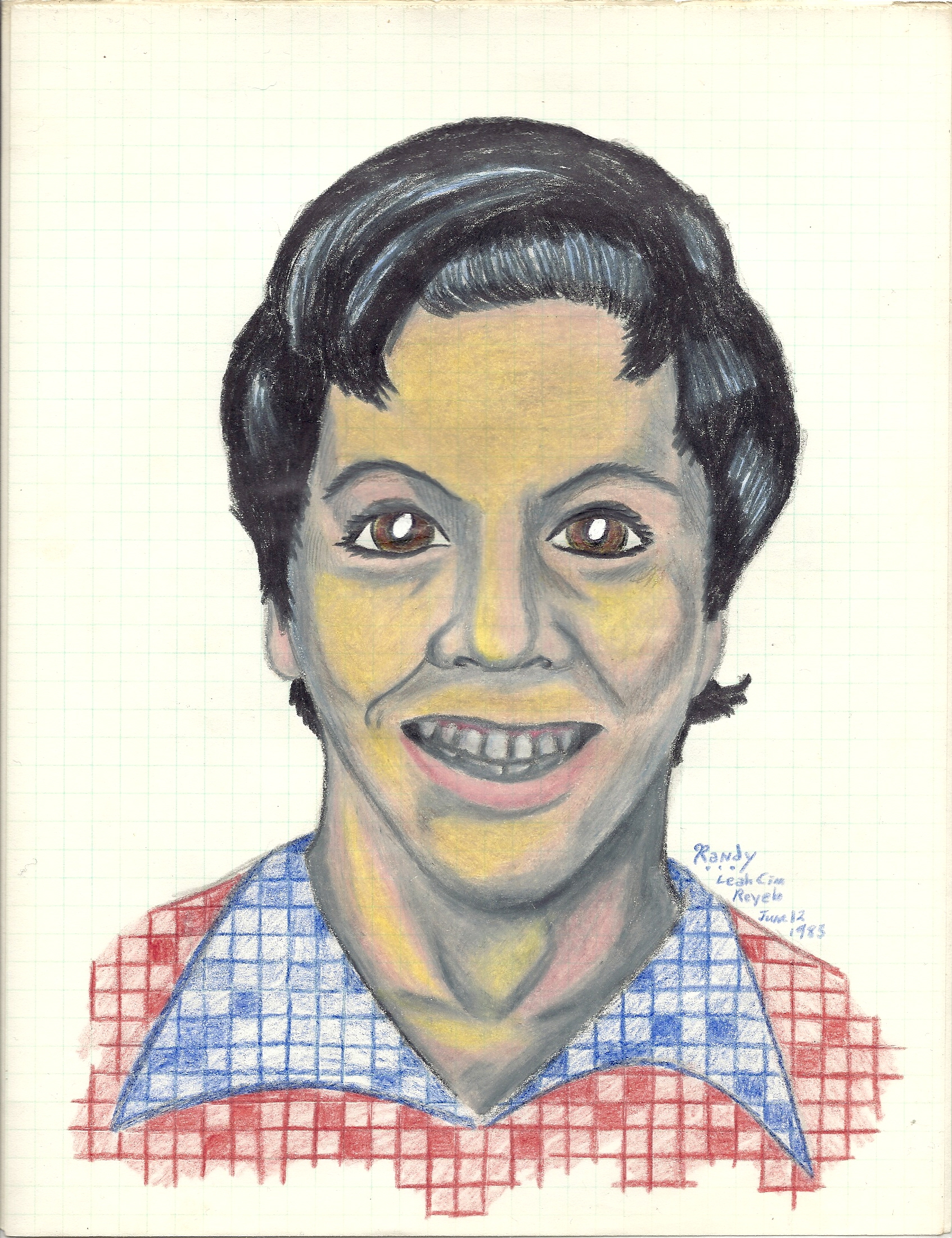
There were, of course, numerous students that made my life a living heck, especially during my early years as a teacher.  But I was one of those unusual teachers (possibly insane teachers) who learned to love the bad kids.  Love/hate relationships tend to endure in your memory almost as long as the loving ones.  I was always able to pull the good out of certain kids… at least in portraits of them.

dscn4715

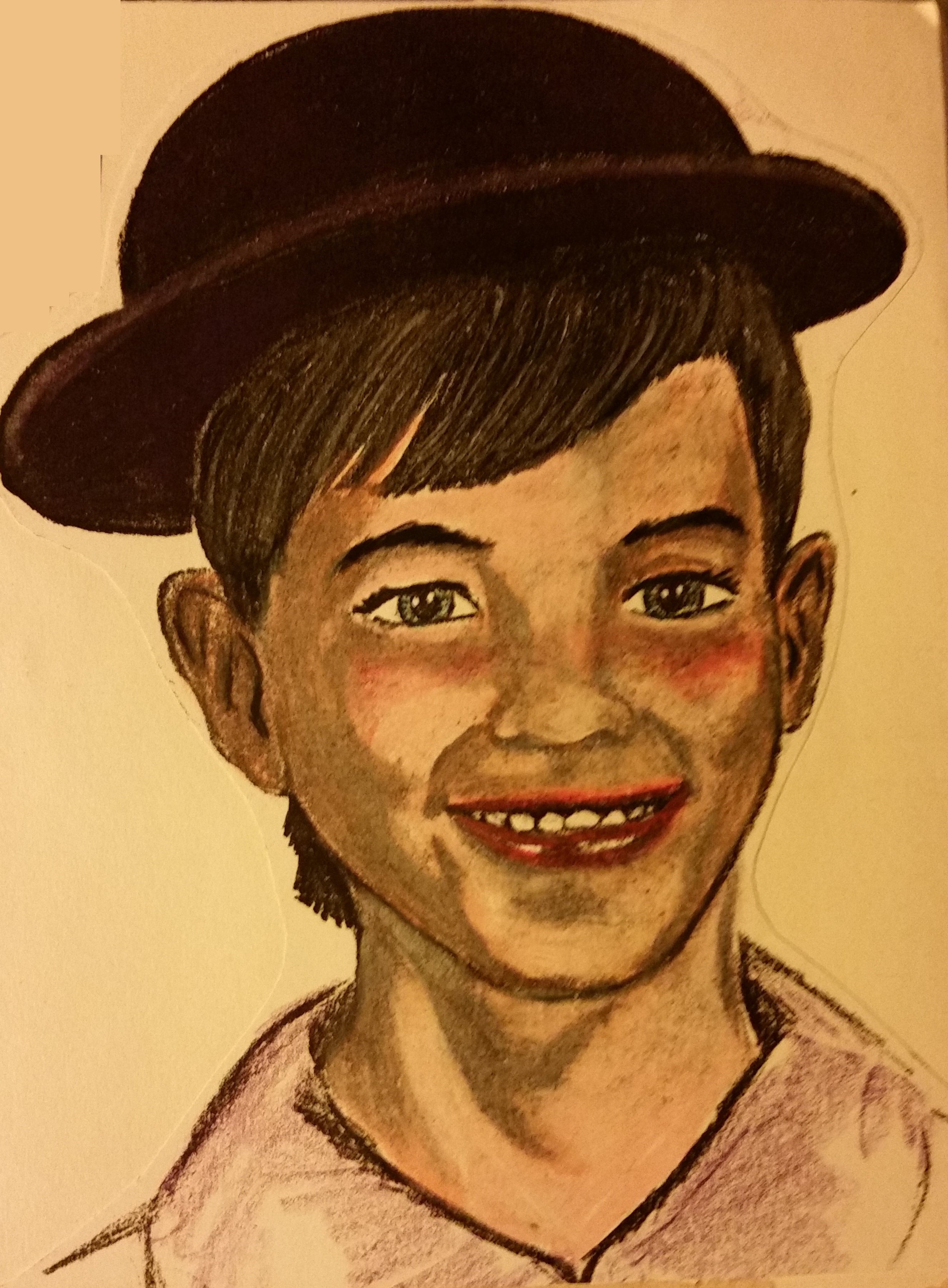
When kids pose for pictures, they are not usually patient enough to sit for a portrait artist.  I learned early on to work from photographs, though it has the disadvantage of being only two-dimensional.  Sometimes you have to cartoonify the subject to get the real essence of the person you are capturing in artiness.

But I can’t get to the point of this essay without acknowledging the fact that any artist who tries to make a portrait, is not a camera.  The artist has to put down on paper or canvas what he sees in his own head.  That means the work of art is filtered through the artist’s goofy brain and is transformed by all his quirks and abnormalities.  Therefore any work of art, including a portrait that looks like its subject, is really a picture of the artist himself.  So, I guess I owe you some self portraits to compare.

20160424_180408

Yeah, that’s me at 10… so what?

3 Comments

Filed under art criticism, artwork, autobiography, humor, kids, Paffooney, self portrait, strange and wonderful ideas about life

I Go Pogo!

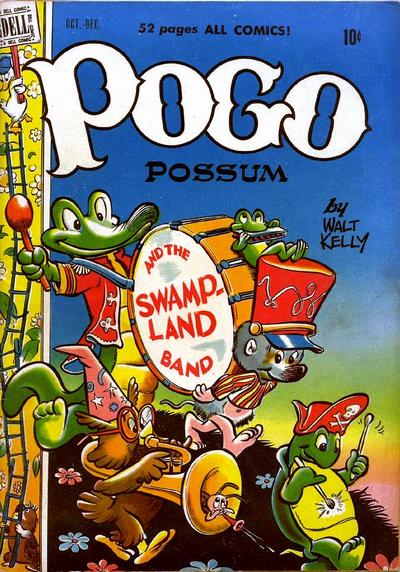
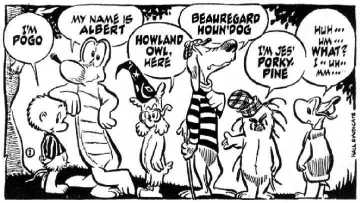
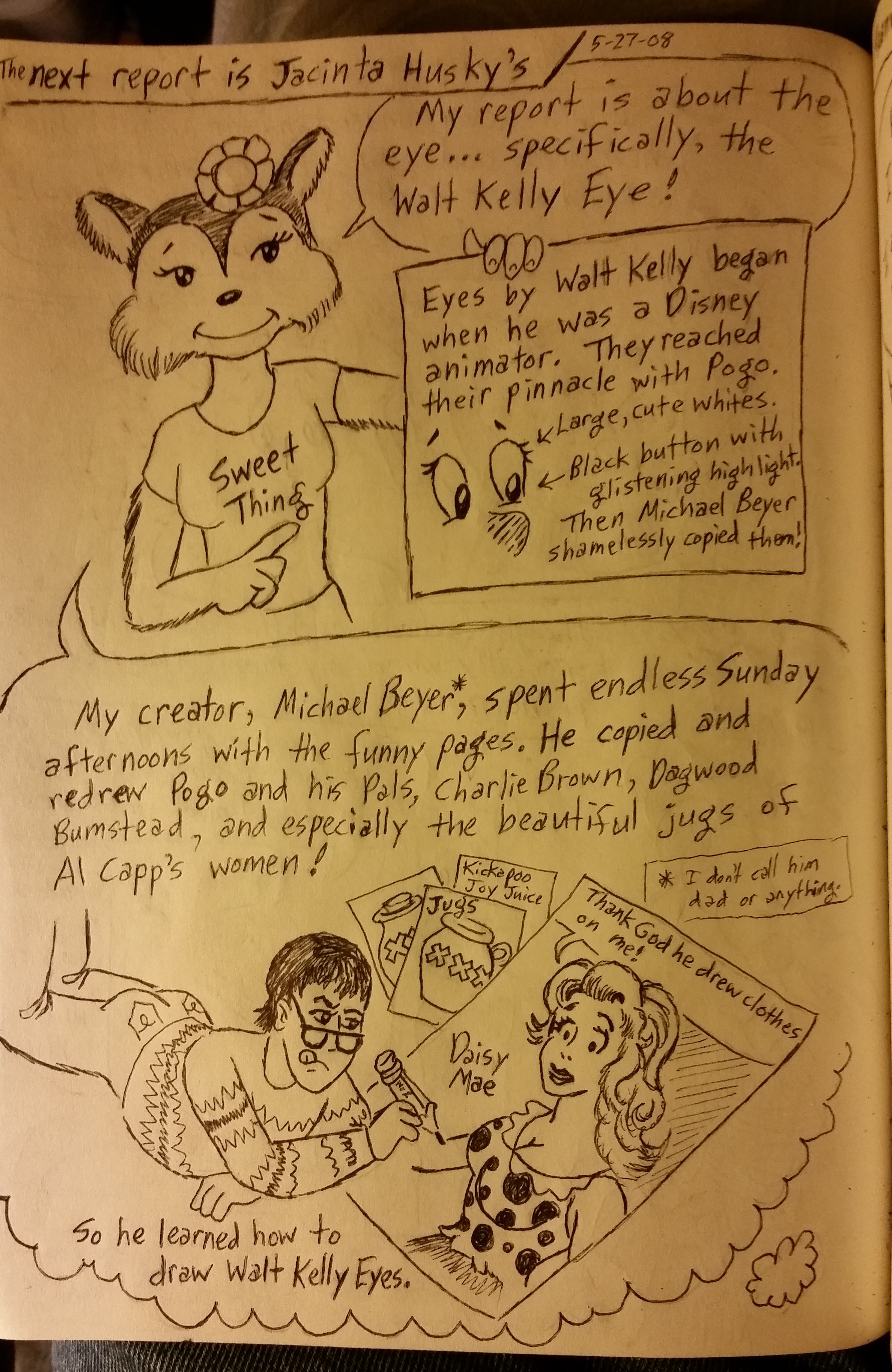
I gave you fair warning.  Pogo has been coming to Mickey’s Catch a Falling Star Blog for a while now.  So, if you intended to avoid it, TOO BAD!  You are here now in Okefenokee Swamp with Pogo and the gang, and subject to Mickey’s blog post about Walt Kelly and his creations.

20151023_100825

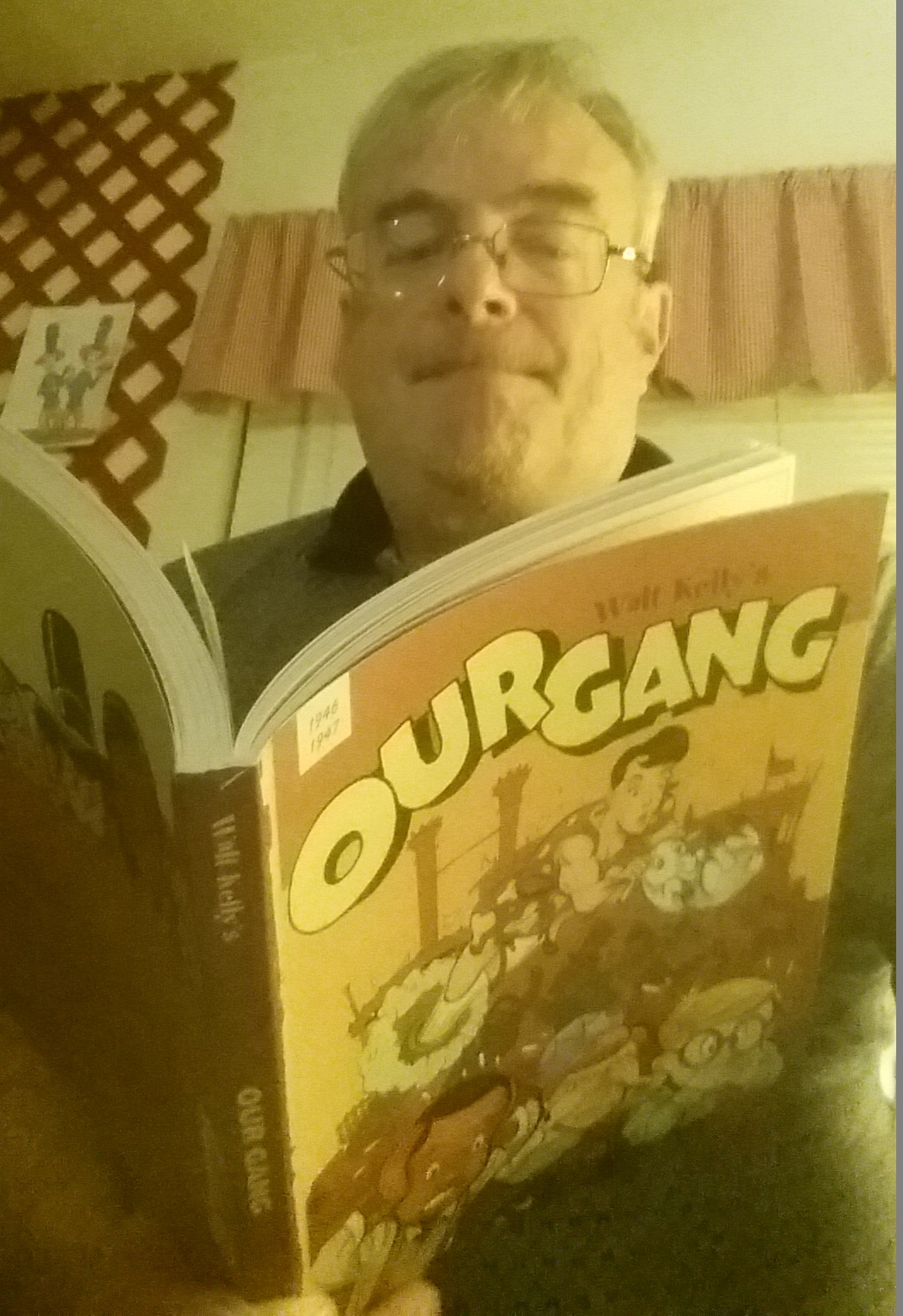
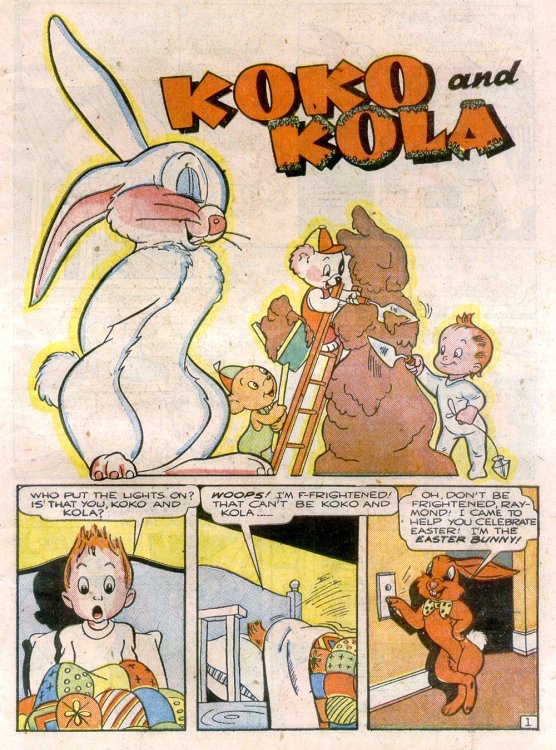
Walt Kelly began his cartoon hall-of-fame career in 1936 at Walt Disney Studios.  If you watch the credits in Pinocchio, Fantasia, and Dumbo, you will see Walt listed as an animator and Disney artist.  In fact, he had almost as much influence on the Disney graphic style as Disney had on him.  He resigned in 1941 to work at Dell Comics where he did projects like the Our Gang comics that you see Mickey smirking at here, the Uncle Wiggly comics, Raggedy Ann and Andy comics, and his very own creations like Pogo, which would go on to a life of its own in syndicated comics.  He did not return to work at Disney, but always credited Disney with giving him the cartoon education he would need to reach the stratosphere.

04-03pogo

ask.metafilter.com

ask.metafilter.com

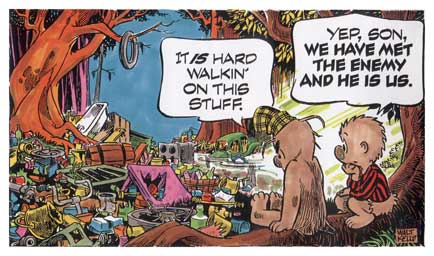
Walt Kelly's Earth Day comic

Walt Kelly’s Earth Day comic

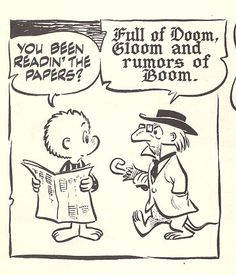
Pogo is an alternate universe that is uniquely Walt Kelly’s own.  It expresses a wry philosophy and satirical overview of our society that is desperately needed in this time of destructive conservative politics and deniers of science and good sense.

maxriffner.com

maxriffner.com

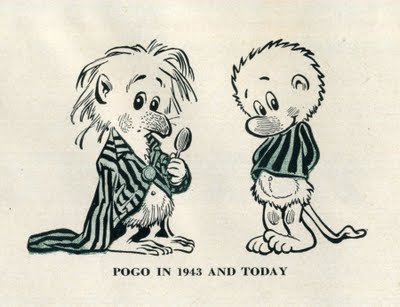
Pogo himself is an every-man character that we are supposed to identify with the most.  He is not the driver of plots and doings in the swamp, rather the victim and unfortunate experiencer of those unexpectable things. Life in Okefenokee is a long series of random events to make life mostly miserable but always interesting if approached with the right amount of Pogo-ism.

b227c4eae078c85a27fc90a1f879019dPogoDaily8111971

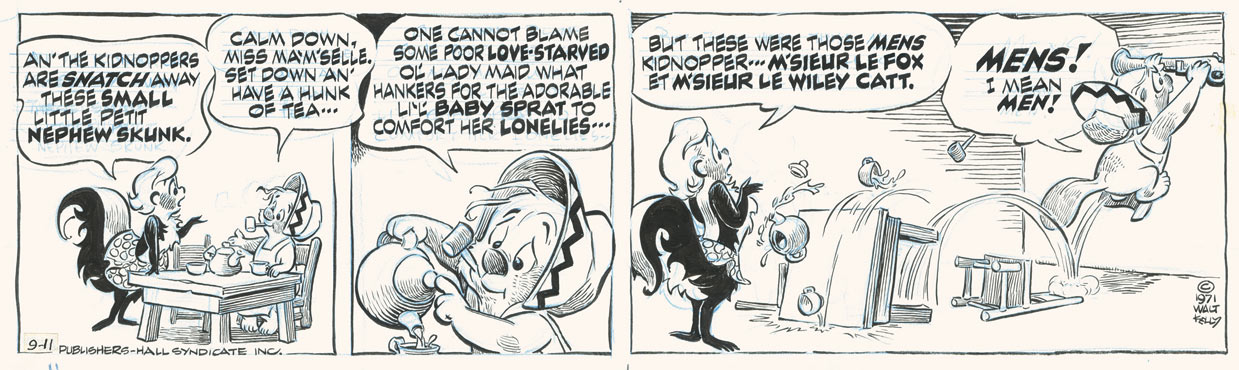
And Pogo was always filled with cute and cuddly as well as ridiculous.

4e6f409ce9cc60572a222854e621f0f62205_splashpanel_pogo_6002128_ver1.0_640_480

As a boy, I depended on the comic section of the Sunday paper to make sense of the world for me.  If I turned out slightly skewed and warped in certain ways, it is owing to the education I myself was given by Pogo, Lil Abner, Dagwood Bumstead, and all the other wizards from the Sunday funnies.  There was, of course, probably no bigger influence on my art than the influence of Walt Kelly.

20151024_121836

So what more can I say about Walt Kelly?  I haven’t yet reached the daily goal of 500 words.  And yet, the best way to conclude is to let Walt speak for himself through the beautiful art of Pogo.

Pogo and Mamzelle

Leave a comment

Filed under cartoon review, cartoons, humor, Paffooney

Fantasia

Mickey

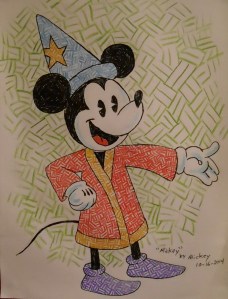
I learned a lot of what I know about cartooning by copying Disney characters.  Now, I know that this post could potentially get me into trouble, because  I am posting on a blog I use for marketing, an imitation Disney character, a very famous and very copyrighted character.  Disney has been known to sue school districts for showing Disney movies in class without expressed written permission.  They have become cruelly litigious since transforming from Uncle Walt’s Wonderful World of Color into an evil multi-national corporate media empire whose spokesperson is a mouse.  So I beg you to pardon my transgressions due to love and debt I have to the work in the title of this piece.  Consider this fan art, like the pictures I posted of the Phantom and Captain America (who is also now owned by Disney).

Fantasia is for me the Book of Life.

The movie starts with Bach’s masterpiece, Toccata and Fugue in D Minor This amazing piece reminds me of earliest childhood memories.  It begins with sound and the instruments that make it, becoming shapes and lines and movements and, eventually cloud forms.  It is the beginning of perception, like modern art itself, the raw energy and emerging forms that I began to perceive as an infant, but could not define or distinguish clearly.

Next comes  Nutcracker Suite by Pyotr Ilyich Tchaikovsky.  This is the explorations of nature and the magic of existence as a mere child.  It uses Tchaikovsky’s sugar-plum ballet music to depict hours of play and learning and investigation and wonder.  In it I see myself as a young child, viewing all the color and beauty through wide eyes.

Then comes The Sorcerer’s Apprentice by Paul Dukas.  In this piece, the child in me, like Mickey the apprentice, for the first time bites off more than I could chew.  I overstep my protective boundaries and get myself into a serious fix that has to be undone by the parent stepping in at the end, and not only fixing it, but delivering the consequences to my ignorant behind with a broom.  Of course, we all know I will do it again.  Every child does.  But next time I will get it right.

This is followed by Rite of Spring by Igor Stravinsky.  Here the child is child no longer.  I watch the amoeba become dinosaurs to harsh and dissonant music.  I learn about the world, growing and evolving, finding out that life is full of hard lessons.  Life and Death play out there struggle, and the learning concludes when you reached the parched and hopeless climax, the realization that everything, no matter how big or powerful, ends in death and failure.  Dust returns to dust.

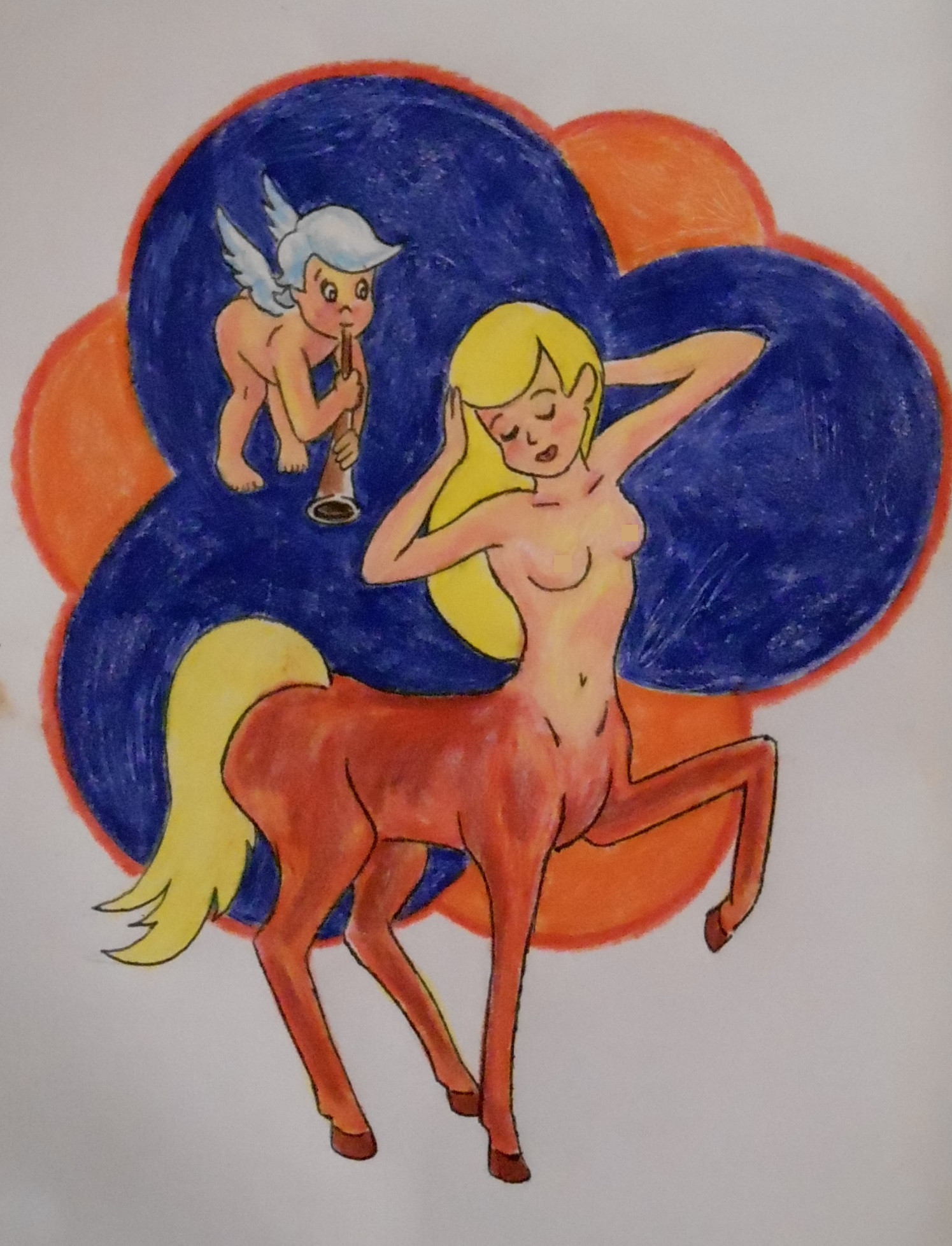
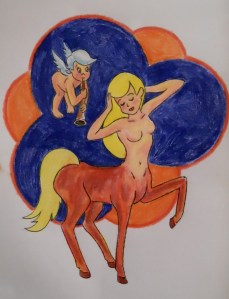
The film then blossoms into The Pastoral Symphony by Ludwig van Beethoven.  This mythical landscape of cute cherubs and satyrs, bare-breasted centaurettes, and Greek Gods rendered in pastel hues represents the blooming of romance, lust, and love.  There is celebration, complete with Dionysus and his invention, wine.  There is courtship, attraction, and bonding.  When the cherubs pull the curtain closed on the centaur couple, we also know what is happening behind the curtain even if it weren’t for the cherub whose butt becomes a red heart.  And, of course, there is a great storm that comes along, both in the pastoral music and the action of the cartoon, representing the volatility and strife that occurs when we dare to love another.  It does, however, subside for life to continue refreshed.
Disney centaur 2

The next piece is  Dance of the Hours by Amilcare Ponchielli.  This comedy of ballerina ostriches and hippos, bubble-dancing elephants, and aggressively dancing gators, is the domestic, married life.  It is a comedy of graceful awkwardness, beauty and humor rolled into the same cake and cooked with irony and wit.  And, of course, just like real life, everything is eventually carried away by the wind… until the next dance.

And finally, Night on Bald Mountain by Modest Mussorgsky and Ave Maria by Franz Schubert is the end of life.  First comes the pain and suffering of death, ruled over by Chernabog the Devil.  He commands the torture and heartless ritual that I am subject to even now, in the twilight of life.  The flesh and the bones yield to his trans-formative whims.  We must all dance to his music until the striking of dawn.  Then he is defeated and the spirit soars, free of body and definable form to the rousing strains of Ave Maria.  We journey through the cathedral forest towards the everlasting light, and the movie, like my life, will be done.  But I do not despair, because life, like the movie itself, can be endlessly replayed and is eternal.

I was not able to see this movie for the first time until college, attending a screening at Iowa State.  When it came out on VHS in the 80’s, I bought two, one to keep and store safely, unopened, and one to watch until it fell apart.  I also bought the DVD when it came out with Fantasia 2000.  I cannot count how many times I have seen this movie.  I even showed it to my classes as I was about to retire, and didn’t secure written permission.  But it was only this week, feeling ill and terribly mortal again that I realized… Fantasia tells the story of my life.


Leave a comment

Filed under Uncategorized

Things You Probably Ought to Know about Mickey

As Mickey’s go, the one who is writing this is a moderately interesting example of the breed.  Still, there are things you probably ought to be made aware of.  A sort of precautionary thing…

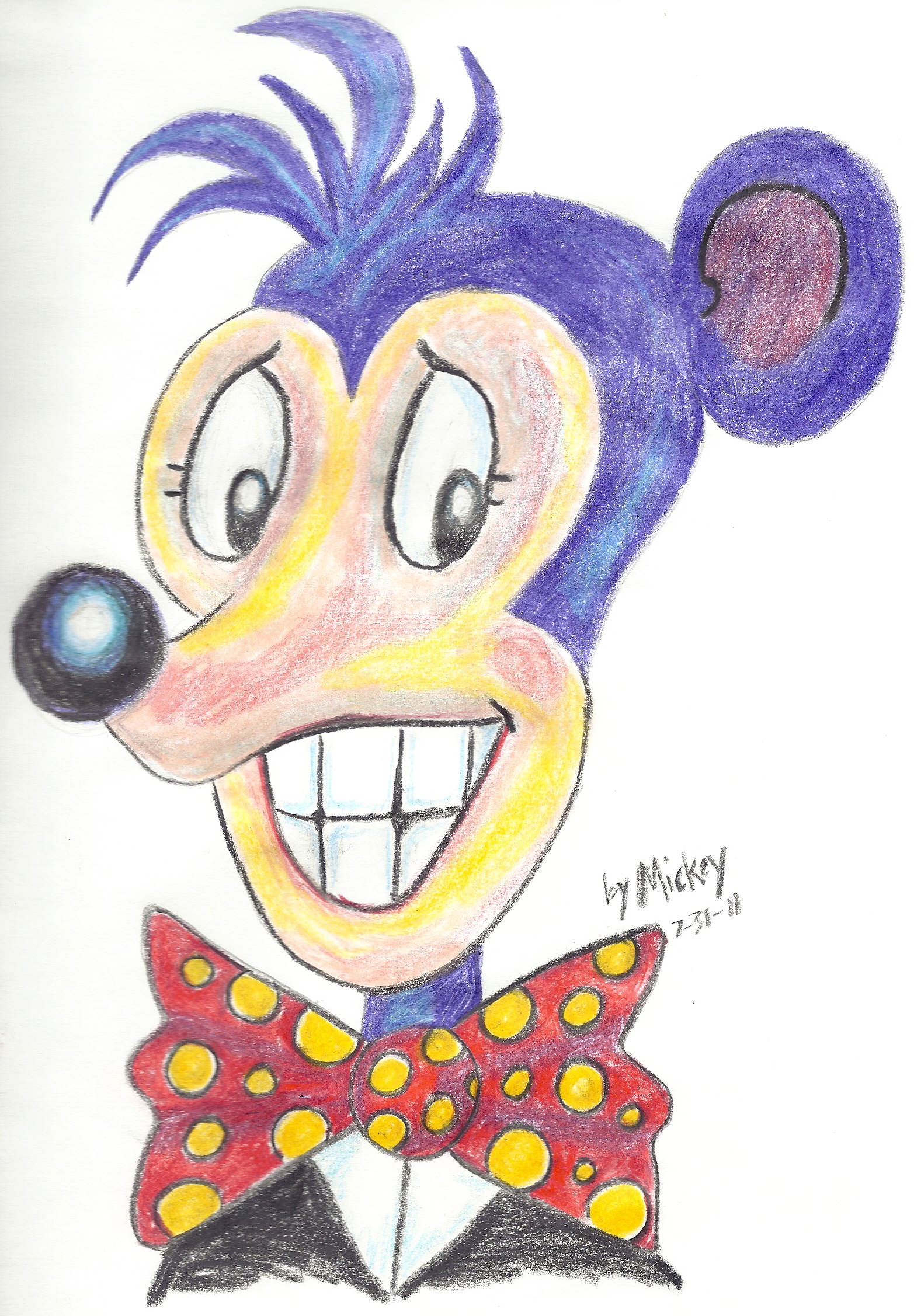
First of all, this particular Mickey is an Iowegian.  That means he comes from Iowa, the State where the tall corn grows.  It is a prime reason why his jokes are corny and his ears have been popped (oh, and he does actually have two, unlike the picture Paffooney where only one is showing).  His fur is not actually purple.  If anything now, it is mostly silver-gray.  But the Paffooney is a magical portrait, and purple is the color of magic.  He has a goofy, and sometimes fatal grin.  You may not be able to prove that he has ever actually grinned someone to death, but it is likely he could always dig somebody up.
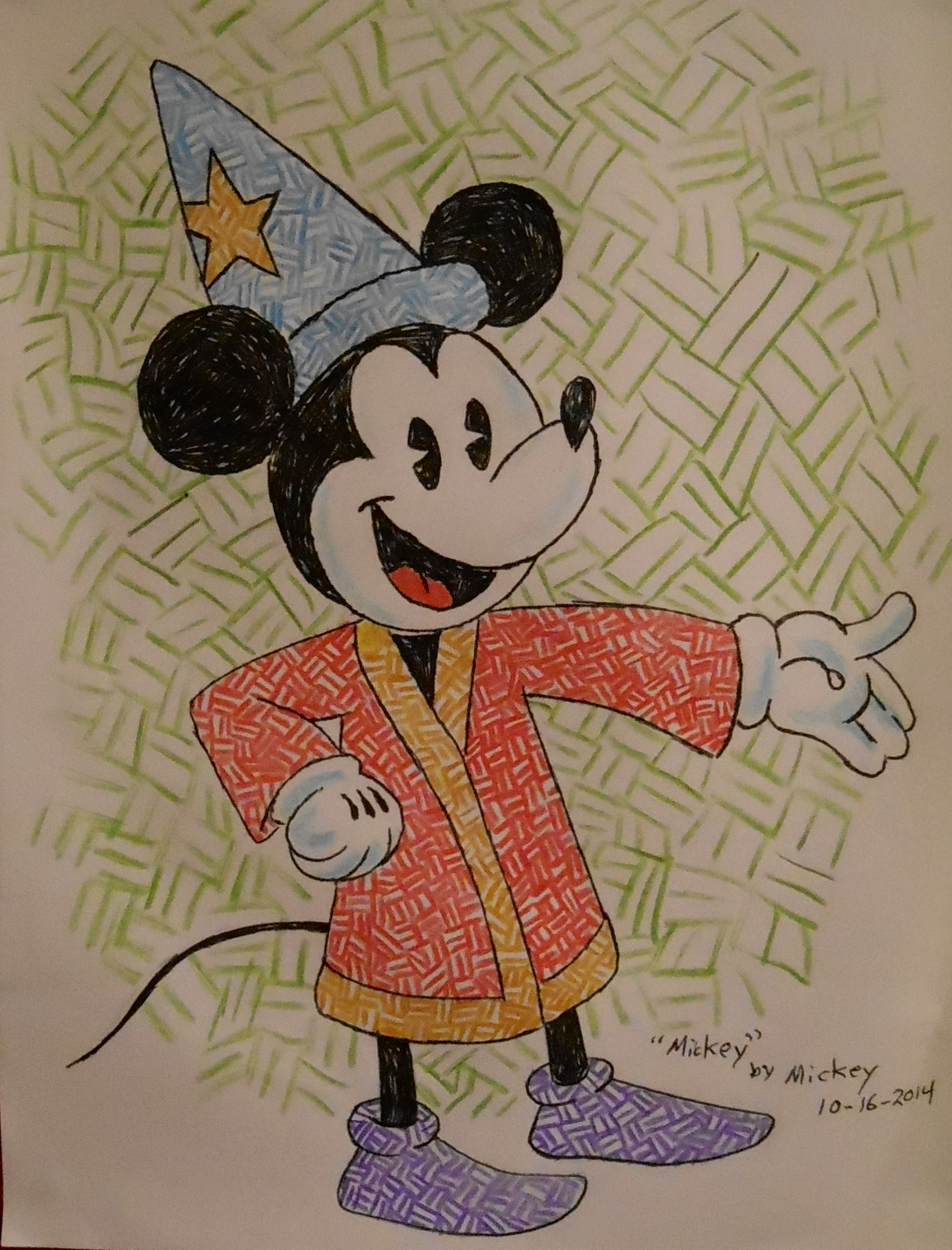
Another irrefutable fact about this Mickey, unlike many many Mickeys, is that he used to actually be a public school teacher.  He taught the little buggers for thirty-one years, plus two years as a substitute teacher.  He did twenty-four of those years in middle school… twenty-three of those in one school in South Texas.  His mostly Hispanic students managed to teach him every bad word in Spanglish… err, Texican… err, Tex-Mex… or is it Taco Bell?  Anyway, they taught him every bad word except for the word for cooties… you know, piojos.  He learned that word from an old girl friend.

A despicable thing about him… (you know despicable, right?  It’s that word that Sylvester the cat always uses) is that he actually likes kids.  That’s just not normal for someone who teaches them.  Teachers are supposed to hate kids, aren’t they?  But he never did.  It is true that he yelled at them sometimes, but he never did that because he hated them.  He did that only for fun.  And he actually apologized to kids sometimes when they got into behavioral trouble, because he said it was the teacher’s fault if kids are bad, and, besides, the kids are so surprised by that, that they forget all about the behavior and can be flammoozled into acting good.

The last and most wicked thing you need to know about Mickey is that he cartoons up a storm sometimes.  He loves to draw everything that is wacky and weird.  He has more goofball colored pencil tricks than a Charles Shultz and a Dr. Seuss rolled together in a sticky lump with a George Herriman stuck on top in place of a cherry.  He steals ideas and techniques from other artists and steals jokes from comedians, undertakers, and random juvenile delinquents.  He also puts together lists of wacky oddball details that don’t quite fit together and weaves it into purple paisley prose (somewhere in this whole messy blog thing he has also defined purple paisley prose and how to make it… in case you were curious.)

So there you have it.  The Truth about Mickey.  The sordid, simpering, solitary facts about Mickey.  The straight poop.  (wait a minnit!  How did poop get there?  Not again!  I thought I had cured that!)

scan0001

2 Comments

Filed under Uncategorized

Silly Tyger!

I think I posted this picture once before and told you it was inspired by William Blake’s poem The Tyger!  That is still true.  I wasn’t telling a lie, at least, I don’t believe I was.  So the poem goes like this;

The Tyger

BY WILLIAM BLAKE

Tyger Tyger, burning bright,
In the forests of the night;
What immortal hand or eye,
Could frame thy fearful symmetry?
In what distant deeps or skies.
Burnt the fire of thine eyes?
On what wings dare he aspire?
What the hand, dare seize the fire?
And what shoulder, & what art,
Could twist the sinews of thy heart?
And when thy heart began to beat,
What dread hand? & what dread feet?
What the hammer? what the chain,
In what furnace was thy brain?
What the anvil? what dread grasp,
Dare its deadly terrors clasp!
When the stars threw down their spears
And water’d heaven with their tears:
Did he smile his work to see?
Did he who made the Lamb make thee?
Tyger Tyger burning bright,
In the forests of the night:
What immortal hand or eye,
Dare frame thy fearful symmetry?
Tyger
The idea is that the Tyger represents some unknowable evil that we must fear and respect because it is beyond our understanding.  But the kid in the picture seems to be unafraid.  Was that a mistake?  Or was I really thinking this?
CalvinHobbes
Apologies to Bill Watterson for stealing his cartoon for this post.  I needed a more dangerous-looking Tyger than the one I had.

Leave a comment

Filed under Uncategorized