Yes, there is very definitely a possibility that there is more than one me.
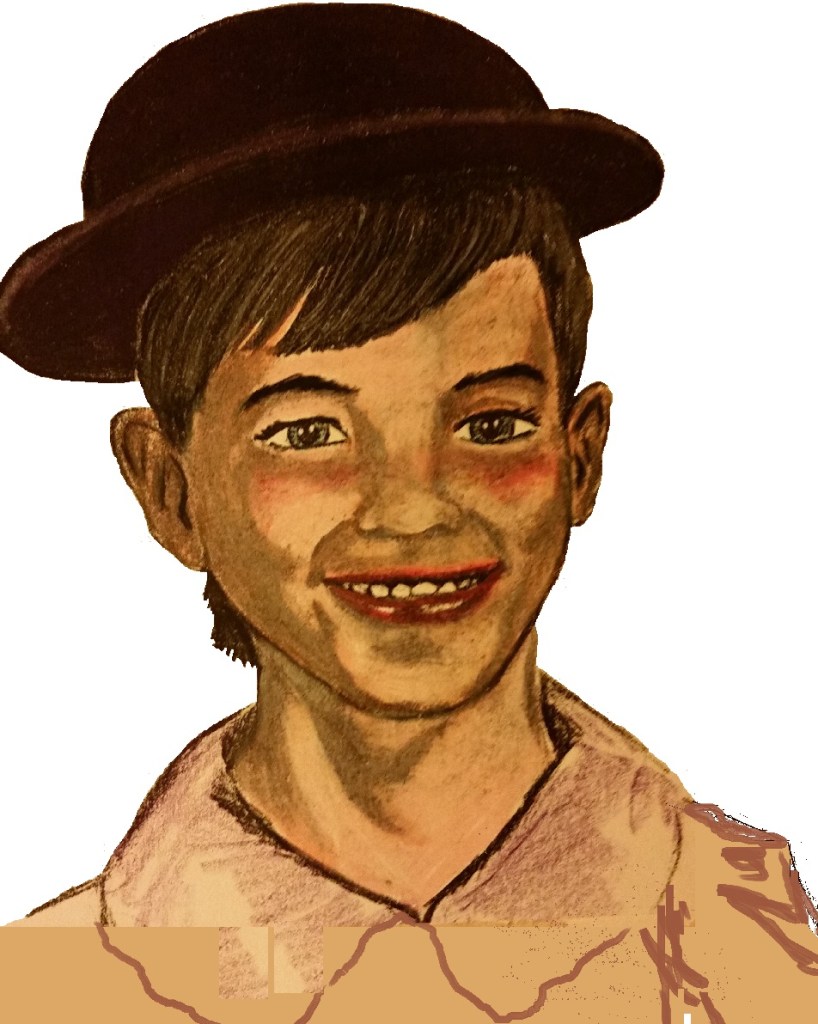
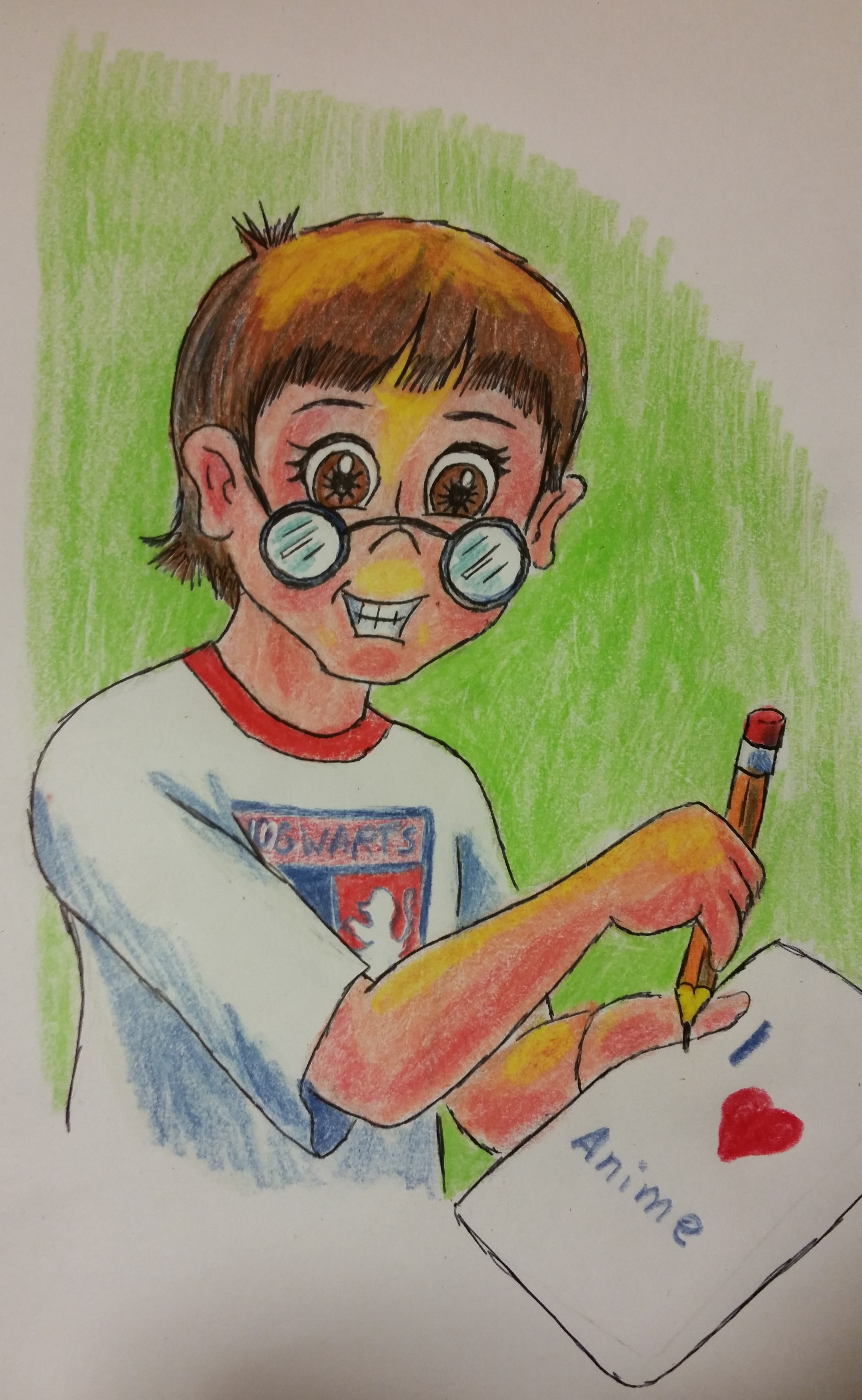
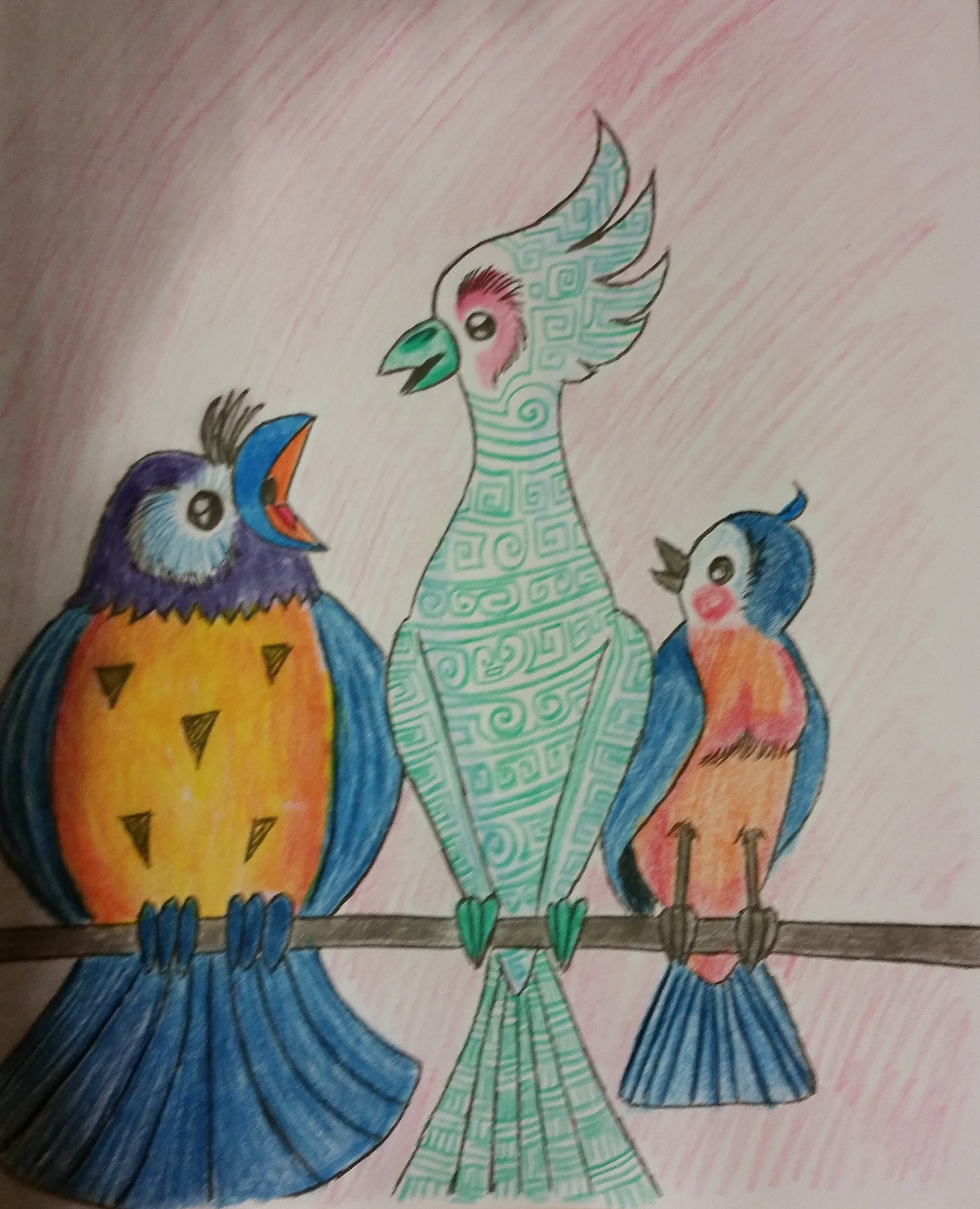
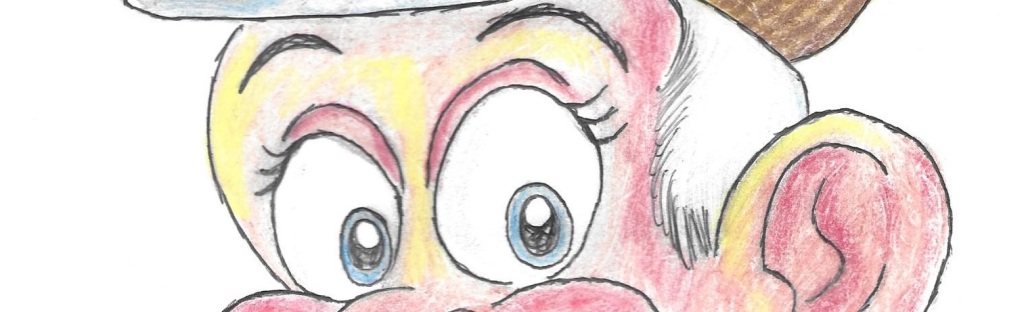
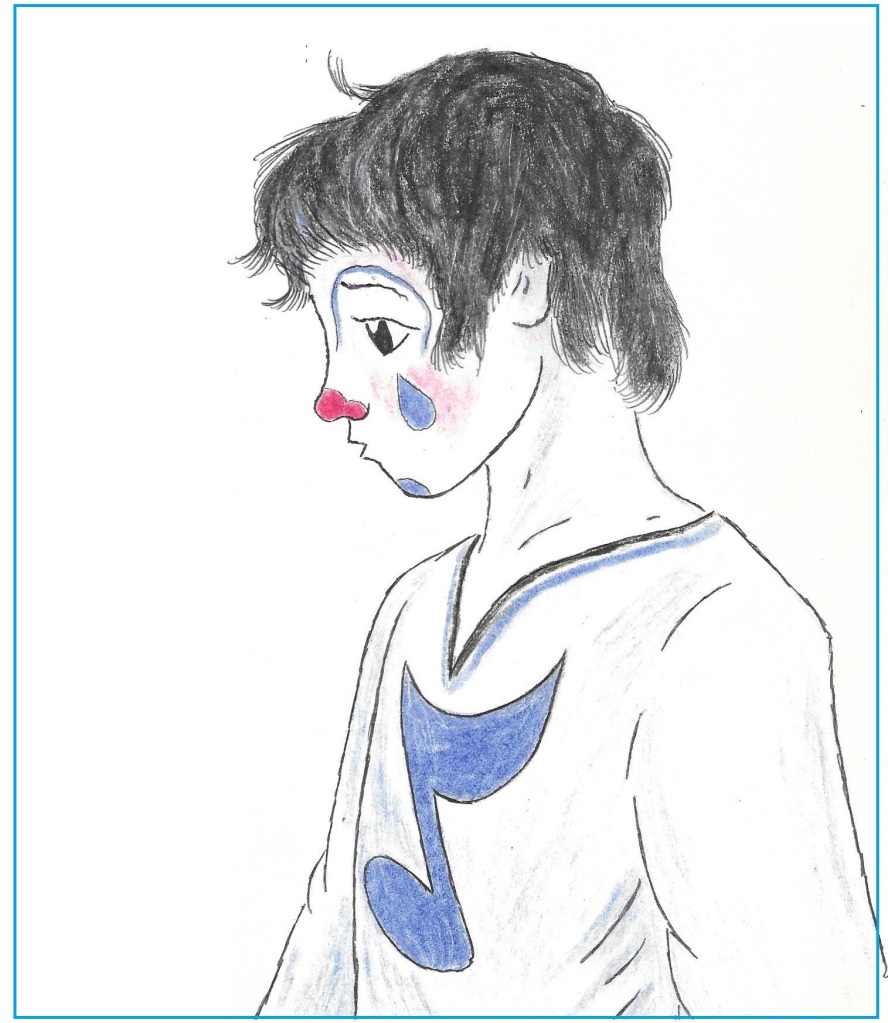
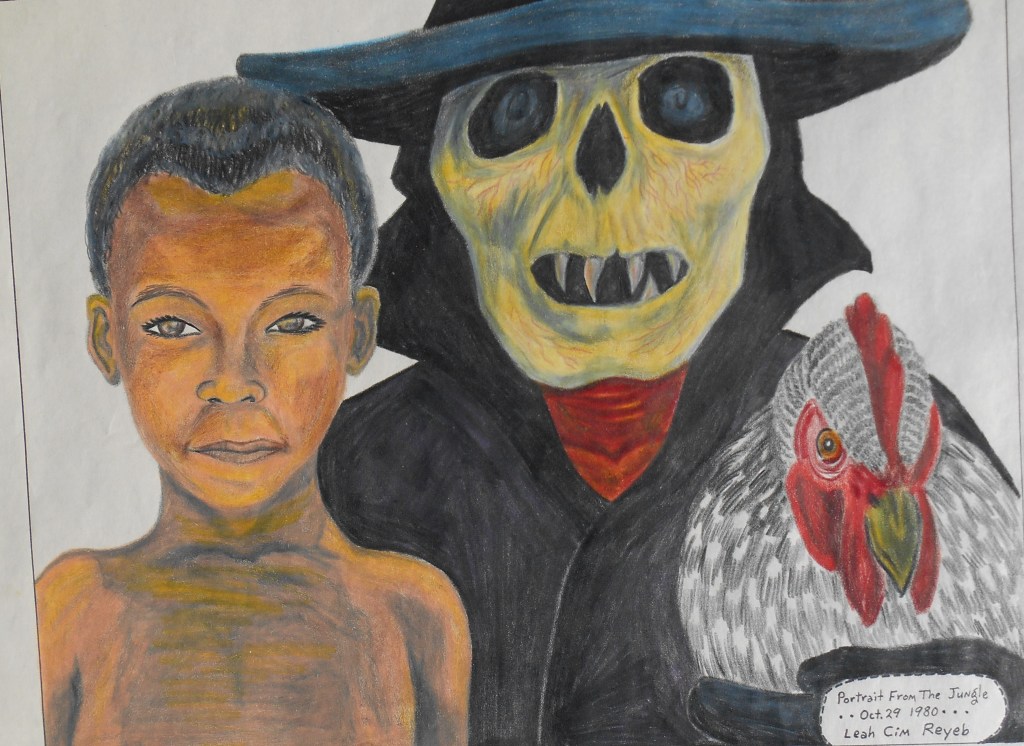
If you look carefully at the colored pencil drawing above, you will see that it is titled “The Wizard of Edo” and signed by someone called Leah Cim Reyeb. A sinister sounding Asian name, you think? I told college friends that my research uncovered the fact that he was an Etruscan artist who started his art career more than two thousand years ago in a cave in France. But, of course, if you are clever enough to read the name backward, you get, “beyeR miC haeL”. So, that stupid Etruscan cave artist is actually me.
It turns out that it is a conceit about signing my name as an artist that I stole from an old episode of The Dick Van Dyke Show and have used for well over two decades through college and my teaching career.
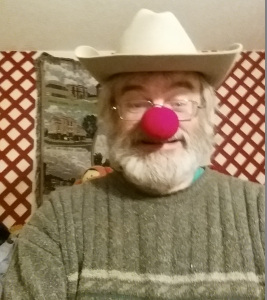
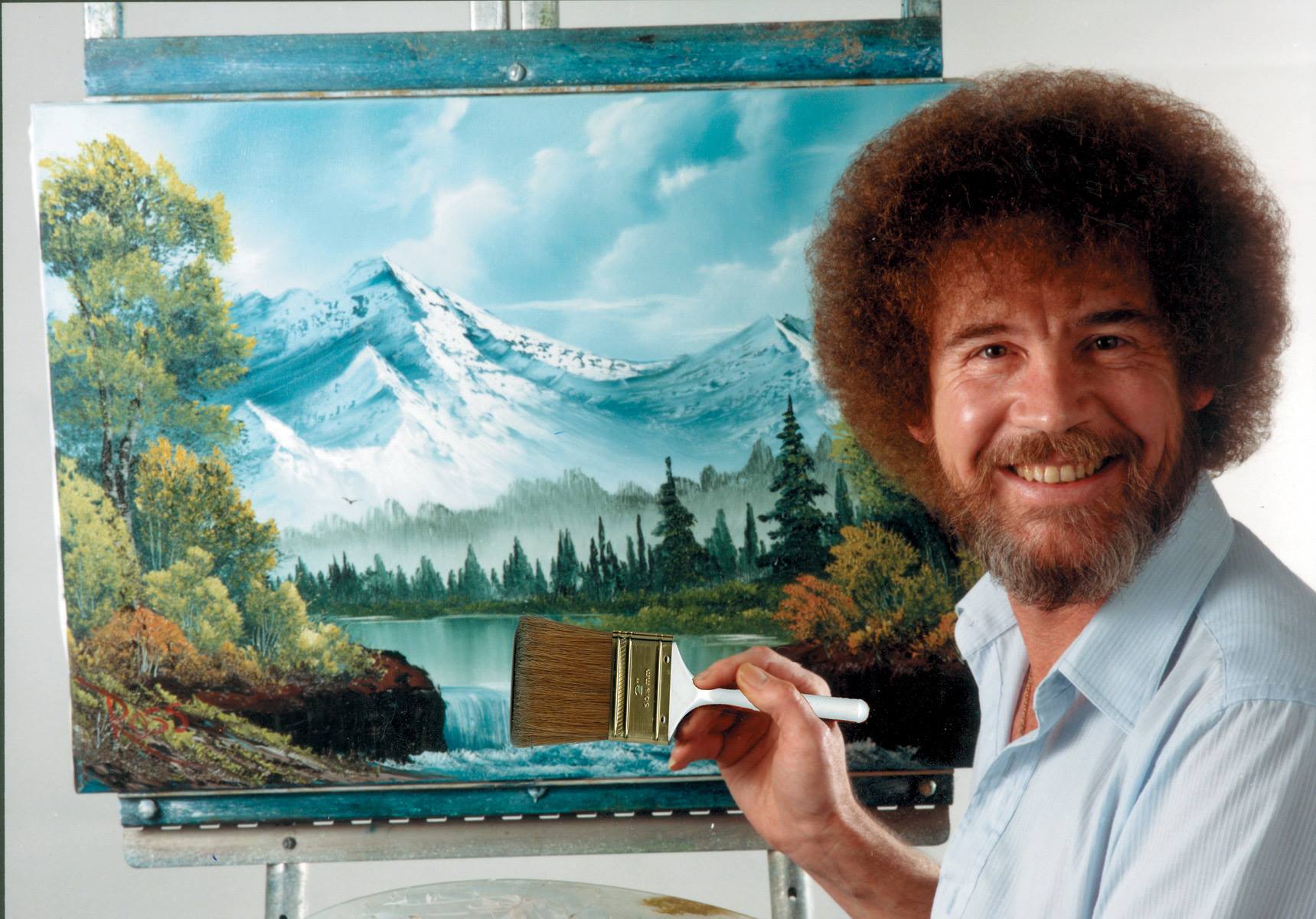
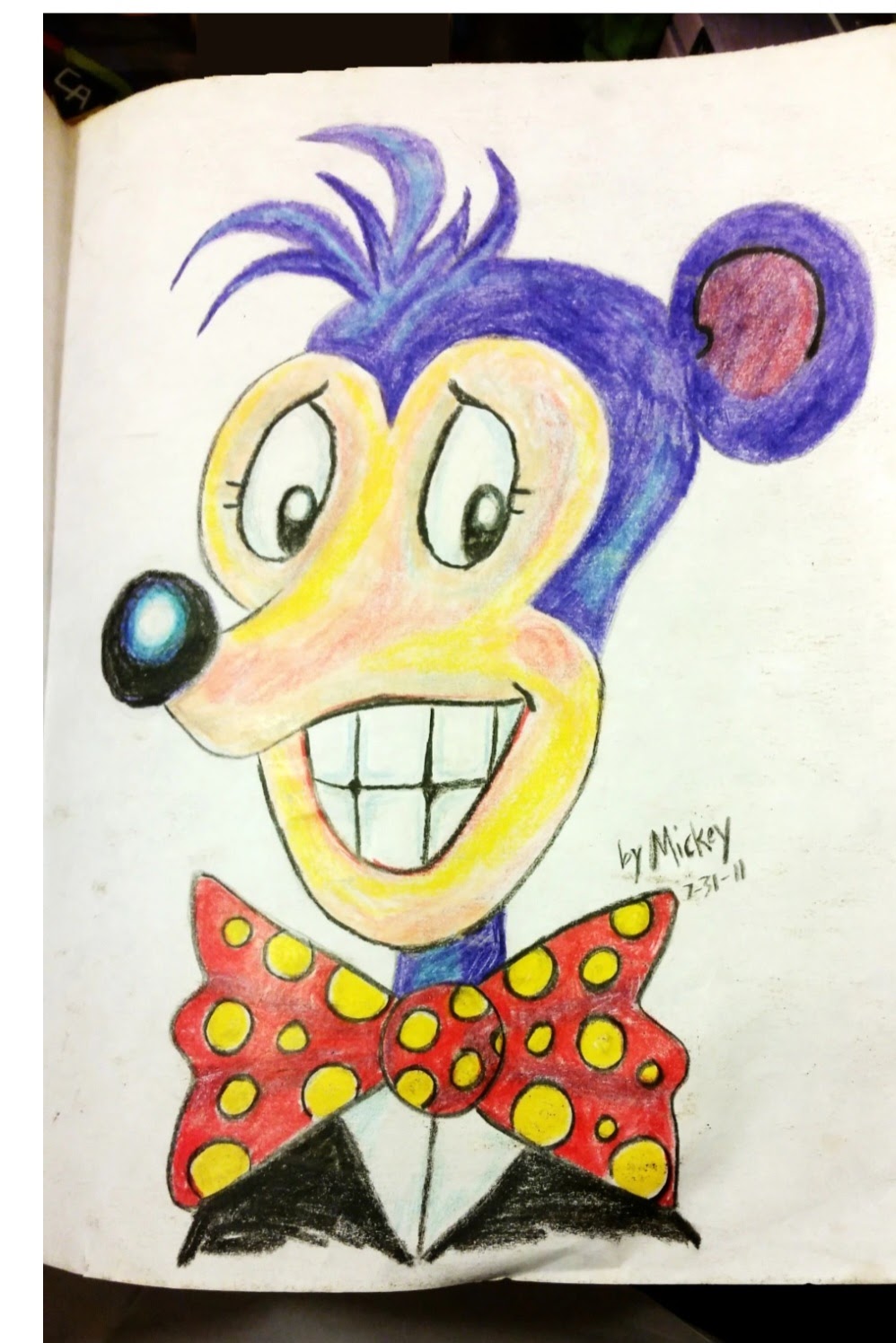
And of course, the cartoonist me is Mickey. Mickey also writes this blog. Mickey is the humorist identity that I use to write all my published novels and blog posts since I published the novel Catch a Falling Star.
Michael Beyer is the truest form of my secret identity. That was my teacher name. It was often simplified by students to simply “Mr. B”. I was known by that secret identity for 31 years.
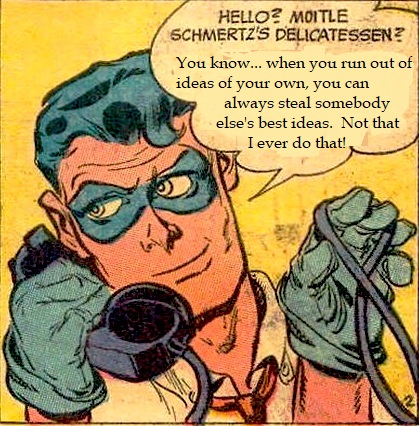
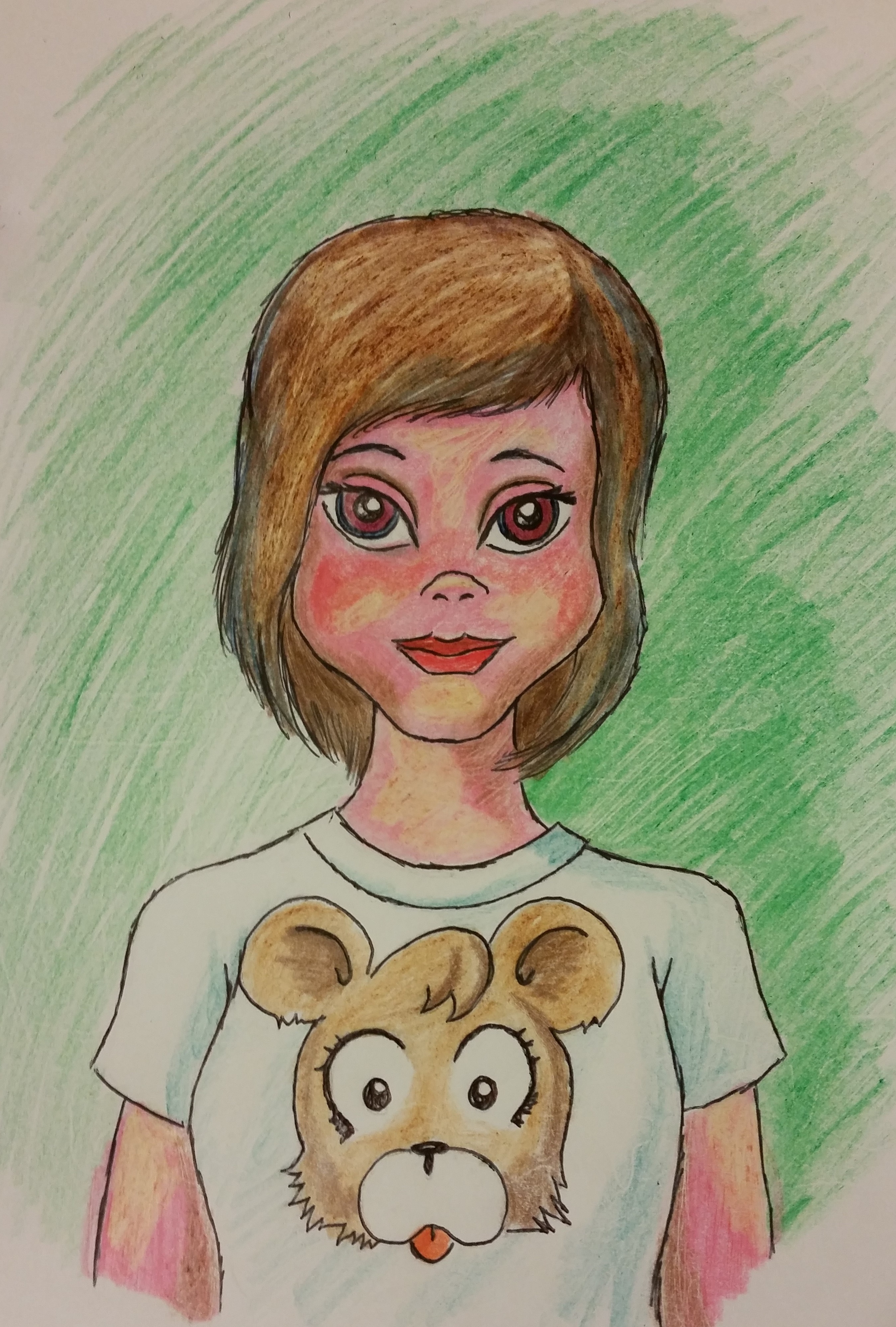
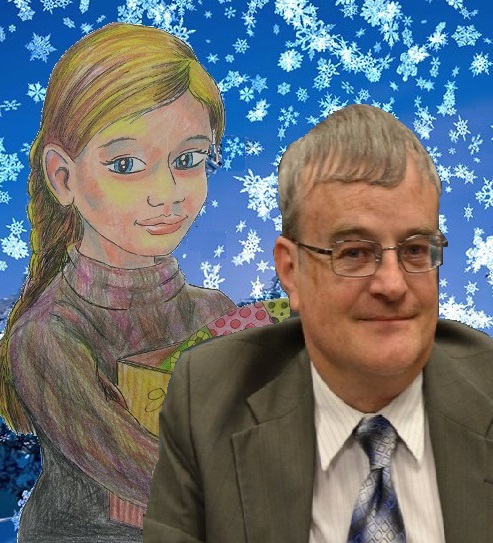
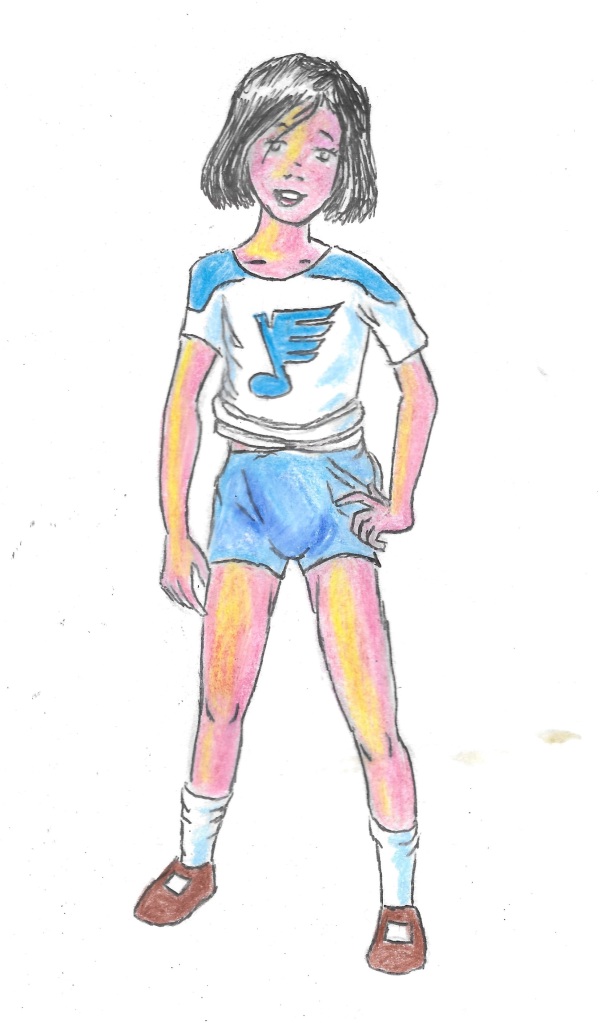
Even more sinister are my various fictional identities occurring in my art and my fiction. You see one of them in this Paffooney. The name Dr. Seabreez appears in Catch a Falling Star as the Engineer who makes a steam engine train fly into space in the 1890’s with alien technology. He appears again in The Bicycle-Wheel Genius as a time-traveler.
The young writer in the novel Superchicken, Branch Macmillan, is also me. As is the English teacher Lawrance “Rance” Kellogg used in multiple novels.
So, disturbing as it may be to realize, there is more than one name and identity that signifies me. But if you are a writer of fiction, a cartoonist, an artist, or a poet, you will probably understand this idea better. And you may even have more than one you too.
The difference between who you want to be and who you are is humbling.
The recipe for humble pie requires good, clear eyesight.
And you need a reliable mirror that only shows the flaws in the reflected image, not in the mirror itself.
And you need to look at every detail in the whole of you. Even the secret things that you tend to conceal from everybody, especially yourself.
And writing a novel, if you do it right, is a form of baking humble pie.
The good and the not-so-good is reflected in reviews, which are often written with mirrors that have flaws.
But what you see, if you are honest with yourself, can show you that, even though you are far from perfect, you are exactly what you are supposed to be.
Yes, I read this book. Yes, it scared the poop out of me. Yes, it made me cry. This is a uniquely horrific horror story that is so realistic that you know that it has actually happened in real life somewhere, sometime. Only the names of the characters would be different.
I have a deep abiding respect for Richard Peck as a writer. He earned that with his books A Year Down Yonder and A Long Way from Chicago. Those books made me laugh so hard it blew chocolate milk out of my nose. And, yes, I was drinking chocolate milk at the time. They are so realistic because the people in those stories are real people. I know those people personally. Of course, they have different names in real life.
But Are You In the House Alone? is a very different book from those other two masterpieces. It tears your heart out and eats your liver because it is a first person narrative in the voice of a high school girl being stalked by a sexual predator. Everything that happens to Gail in the high school, at home, and at the house where she babysits is hyper-real with horror movie levels of attention to detail. I don’t wish to be a spoiler for this well-written book, but the narrator does not die in the book and it definitely does not have a happy ending. For anyone who has the amount of empathy I do, and in many ways becomes the narrator-character by reading, reading a book like this can physically hurt. A teacher like me has lived through horrible things like this happening to students before, it even happened to me as a boy, and it adds the slings and arrows of those things being re-lived as you read.
This is not the only book that has ever done this sort of damage to my heart strings. I remember the pain from the conclusion of Dickens’ The Old Curiosity Shop. You root for Little Nell and boo Daniel Quilp. But the bad guy wins. No happy ending can linger in the harp-strings of your memory-feeling song as long as a tragic outcome does. I was there with Scout in that ridiculous costume in the dark when Bob Ewell was attacking her brother Jem in Harper Lee’s To Kill a Mockingbird. That story was filled with wise and laughable things, but the stark horror of that climactic moment nearly wiped all the good feelings away, if not for the heroics of ghostly Boo Radley whose timely intervention brings it all back before the novel ends. It horrifies me to admit it, but I was there, too, in the moment when the boys all turn on Simon on the beach with their sharpened sticks in William Golding’s Lord of the Flies. They mistook him for the monster. I still haven’t fully recovered from that reading trauma.
The thing about books that hurt to read which makes it essential that I never try to avoid them, is that they can add more depth and resonance to your soul than any light and fluffy piece ever could. Life is much more like Lord of the Flies than it is Chitty Chitty Bang Bang. I am sadder but wiser for having read Are You In the House Alone? I am recommending it to other readers like me who don’t so much live to read as they read in order to live. Not because it is easy and good to read, but because it is hard and essential to read. It will hurt you. But it will leave you like it leaves its narrator, damaged, but both alive and purely resolved to carry on.
Sometimes the only thing you really want out of life is just to get by. You get tired of always having to climb the danged highest mountain. You get tired of trying to swim the danged deepest sea.
Sometimes all you want to do is doodle-bop!… To draw in pen and ink and post your derfiest doofenwacky doodles so you can just make your way through another danged day.
You aim a lot for different, and undeniably original… because no one thinks like you… certainly no one who is real and has a real brain. You are gifted with an “other-ness”, a sing-songy simpering something that makes you want to doodle and do what no man has done before. (Does that sentence exist anywhere else in all of literature? Even if there is some alternate dimension with infinite monkeys typing on infinite typewriters? What’s a typewriter, you say? Danged millennials!)
I really can’t help it, you know. I was a middle school teacher for 24 years. That sort of thing has mental health consequences. And if you wring the sponges in your stupid old brain hard enough and long enough… doodle-bop! comes out.
Turtle boy’s magic iron of irony!!!
And you have to wonder why some of the stuff that is in your stupid old head is even in there. Why is it that sometimes the words “Argyle socks are filled with rocks” are drifting through the vast empty spaces in the logic centers of your brain? There has to be a reason for everything, doesn’t there?
I do believe I have made myself chuckle at least a dozen chuck-tacular times in the chuck-a-tational crafting of this cheddar-cheesy post. But it only really counts if I can make you girlishly giggle or guy-like guffaw with my word-munching and cartoony paffoonies.
The terror-filled cartoon car chase that is life as usual.
You may have noticed that everything is black and white, even though it doesn’t have to be. Good versus evil, hot versus cold, everything can be divided up simplistically… but the really profound part of simplicity is vibrating reverberations of complexity that lie just underneath. Words have meaning, even though they are just a bunch of crooked squiggles marked on a page. (Yes, I know… “or typed on a computer screen”. Danged millennials!)
And so, this is my doodle-bop! Probably not the doodliest or the boppiest doodle-bop! I could have bopped… but there it is. I have made it through another sorta creative post without losing my mind… Honest! I did not lose it. It is merely temporarily misplaced for a moment. It will be back in its proper place tomorrow… probably.
Yes, this is a picture of a rock. But it is no ordinary rock. Okay, that’s not precisely true. It is a gray metamorphic rock roughly square in shape with numerous flecks of white and a white strip along the top. As rocks go, it probably couldn’t be more ordinary, more rocky in its soul. But, as with all things in this life, the importance and true meaning lies in the context. This is a pocket rock. It spent a quarter of a century riding around in my pants pocket. I have held it in my hand millions of times.
The Rowan Community Center, seen in this picture I used for the cover of Magical Miss Morgan, is the last part of the old Rowan school still standing.
In 1980, my Great Grandma Hinckley died. That was also the year my folks had to move to Texas because of the transfer my Dad’s seedcorn company gave him to its cotton seed division. It was one year before I got my teaching degree. And it was the year they tore down the building where I went to school for grades 1 through 6. That summer, as I walked around the demolition site, I found the homely gray rock that was nearly as square as I was, and because I was already feeling homesick before I actually left home, I picked it up and stuck it in my pocket. It was a little square piece of home.
That rock went with me to college. It went with me to both Disneyland and Walt Disney World in Florida. It has been to Washington D.C. It has been in the depths of caves in Kentucky and Missouri and Texas. It has been high in the sky in my pocket in an airplane. It has been to beaches on both the Atlantic and Pacific sides of the U.S. It has visited both Mexico and Canada. It his been to Las Vegas. And it even rode in the subways of New York City.
And possibly the most interesting part of this pocket rock’s career happened in Texas schools. It was with me in my pocket constantly from 1980 to 2004. I finally took it out of my pocket and placed it in an old cigar box that once belonged to my grandfather and I have kept keepsakes in since I was a kid.
And I have thought a lot about this ordinary rock that isn’t really ordinary on closer inspection. At one point or another I thought about using it as a skipping stone at both the Atlantic and the Pacific. In 2004 when I was considering the pocket watch broken by it and the car key accidentally bent against it, it almost wound up in Lake Superior. I put in my cigar box and it has remained exiled there since. Will I have it buried with me, in my pocket? No, probably not. My wife plans to have me cremated. Hopefully, though, not until I am already dead. This rock has pretty much been a symbol of my soul, travelling with me, teaching with me, jingling the pocket change when I walk… And it will continue to exist when the thinking and writing parts of Mickey are gone.
But even rocks are not immortal. Sometime in the future something will happen to it. It will end up someplace unexpected or changed by grinding, melting, or chemical reaction into some other form. But no matter what happens to it ultimately, the meaning of it, the context, the places it has been and the things that it has done will still be true, still have happened to it. And, ultimately, it will still be just like me.
This post is about writer doubt. And Stephen King. Do those two things go together? If they don’t then Mickey is an awful writer and does not know how to do what he does. It would mean Mickey is icky.
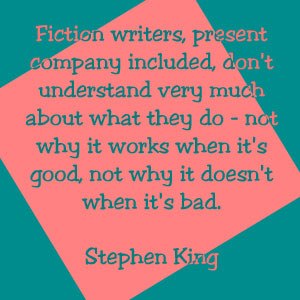
I used to think Stephen King was a totally over-rated writer. Back in the early eighties I read Carrie, King’s first novel, and got halfway throughFirestarter, and had to give up. Partly because the book was overdue at the library, and also because I found the books mechanical and somewhat joyless in the writing. I thought he suffered greatly in comparison to writers I was in love with at the time like Ray Bradbury and Thomas Mann. I began to tell others that King was somewhat icky.
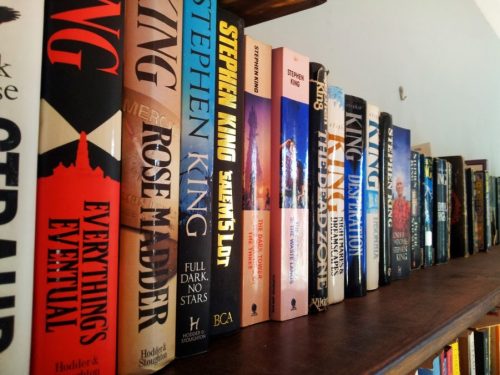
But King was obviously also somewhat successful. He began to get his books made into movies and people who don’t read discovered the evil genius of a man who tells stories to scare them and laces them with a bit of real humanity, real human feeling, and love.
I saw it first in Stand by Me. That movie, starring young Wil Wheaton as the Steven King autobiographical character, really touched my heart and really made for me a deep psyche-to-psyche connection to somebody who wasn’t just a filmmaker, but somebody who was, at heart, a real human being, a real story-teller.
Now, the psyche I was connecting to may very well have been Rob Reiner, a gifted story-teller and film-maker. But it wasn’t the only King movie that reached me. The television mini-series made from It touched a lot more than just the fear centers of my brain as well. And people whose opinions I respect began telling me that the books The Dark Tower Trilogy and Misery were also amazing pieces of literature.
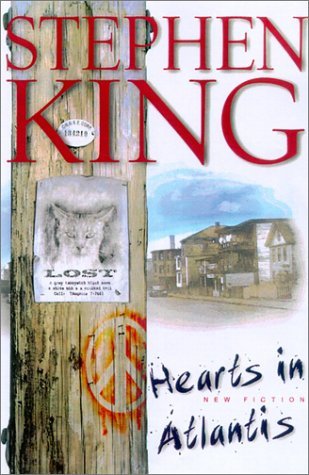
So I picked up a copy of Hearts in Atlantis at Half-Price Books and began reading a Stephen King novel for the first time since the 80’s. MY HOLY GOD! King is not a little bit icky. He is so NOT ICKY that it makes Mickey sicky to have ever thought King was even a little bit icky! Here is a writer who loves to write. He whirls through pages with the writer’s equivalent of ballet moves, pirouettes of prose, grand jetés of character building, and thematic arabesque penchées on every side of the stage. I love what I have discovered in a writer I thought was somewhat icky. Growth and power, passion and precision, a real love of both the words and the story. He may not know what he is doing. But I know. And I love it.
And so, while I have been editing the first novel I ever wrote, Superchicken, to make it ready for self-publishing, I have begun to ask myself the self-critical question, “Is Mickey really icky when he writes?” My first novel is full of winces and blunders and head-banging wonders that make me want to throw the whole thing out. But I can’t throw it out. It is the baby in the first bathwater that I ever drew from the tap. The answer to the questions of Micky ickiness have yet to be determined, and not by me. I guess I have to leave it up to you.
I am, however, an expert on how NOT to write a good poem.
A truly terrible poem might begin with an over-extended metaphor.
It might begin by saying, “A poem is like a fairy tale, filmed in black and white on 35 mm film stock, with Orson Wells as the director.”
And for the meat of the poem, you use details about the fairy acrobats having an accident on the trapeze, and the circus train derails and has a terrible accident, and the clown never takes his makeup off because he’s on the run from the police… and you totally forget that the movie “The Greatest Show on Earth” was directed by Cecil B. DeMille and filmed in color.
And you have a tendency to “squinch” the rhymes, rhyming “good” with “food” and “dud” with “odd,” and at the same time you put trochaic warts all over the iambic pentameter because as a poet you are not William Shakespeare, and you are not even Buddy Rich because the rhythm sounds more like banging trashcan lids than drumbeats.
In the middle of the poem somewhere it suddenly becomes free verse without a rhyme scheme or reason for the change. And the theme circles back on itself and does a pretzel twist with no logic to salt it with.
And you are a terrible poet like Mickey because, when you write a poem you don’t realize;
the gemstone at the center of your poem must go from your mind, to pen, to paper, to eye of the reader, to mind… and finally to heart…
And the blaze of its beauty must be strong enough to resonate…
and be able to SHAKE THE BONES OF THE UNIVERSE.
And you can’t do it because you don’t even get the irony of that rule.
Nobody who wants to be a writer gets by with just writing and never reading anything by anybody else. It is too easy to devolve into some kind of human mushroom that way, thinking only thoughts a mushroom could think, all fungus-like and having no chlorophyll of their own. You never learn to decode other people and other people’s thinking if you don’t read other people’s thoughts crystallized in writing.
And not every other writer is Robert Frost. Or even Jack Frost who thinks he’s Gene Kelly. There has to be some interpretation, some digging for understanding. What did that writer mean when she said political correctness was like a tongue disease? And what does it mean when a commenting troll calls me a nekkid poofter? Is that how he spells “exceptional genius”? I think it is. Trolls are not smart.
I know people have to make an effort to understand me. When I write, I am writing under the delusion that I can produce literary quality off the top of my head. In fact, I can barely produce hair off the top of my head, and it is gray when I do it. See what I did there? It is the kind of joke a surrealist makes, pretending the idiomatic expression you use is to be taken literally when it doesn’t literally make sense. That kind of nonsense is what my readers have to put up with, and probably also the reason why most of them just look at the pictures. If you have to think too hard when you read, your brain could over-heat and your hair could catch fire. I like that kind of purple paisley prose that folds back in on itself and makes you think in curlicues. But most people don’t. Most people don’t have fire-proof hair like I do.
Of course, there is the opposite problem too. Some writers are not hard to understand at all. They only use simple sentences. They only use ideas that lots of other people have used before. You don’t have to think about what they write. You only need to react. They are the reasons that words like “trite”, “hackneyed”, “boring”, and “cliche” exist in English. But simple, boring writing isn’t written by stupid people. Hemingway is like that. Pared down to the basics. No frills. Yet able to yield complex thoughts, insights, and relationships.
Sometimes, it doesn’t even take a word to make the point. For instance, why, in the picture, is Fluttershy trying to drink out of the toilet in the dollhouse bathroom? For that matter, why does a doll house even need a bathroom? Applejack doesn’t even fit in that yellow bathtub. I know. I tried to stuff her in there for this picture. And, as you read this, doesn’t this paragraph tell you a lot about me that you probably didn’t even want to know?
When I am reading the writing of others, I am looking for a cornucopia of things. I want to not only understand their ideas, I want to detect the limping footprints across the murder scene of their paragraphs and come to know the deeper things about them as well. I spent years decoding and trying to understand the writing of preliterate kids in my middle school English classes in order to be able to teach them to write better. And I learned that no writer is a bad writer as long as they are using readable words. I also learned that very few writers are James Joyce or Marcel Proust. Thank God for that! And given enough time I can read anything by anybody and learn something from it. I read a lot. And it may not always make me a better writer to read it, but it always has value. It is always worth doing.
I do write poetry. But I must admit, I am not a serious poet. I am a humorist at heart, so I tend to write only goofy non-serious poems like this one;
So here is a poem that rhymes but has too much “but-but-but” in it. A poem about pants should not have too many “buts” in it. One butt per pair, please. So this is an example of spectacularly bad poetry. Why do we need bad poetry? Because it’s funny. And it serves as a contrast to the best that poetry has to offer.
As a teacher I remember requiring students to memorize and recite Robert Frost’s poem, “The Road Not Taken”. Now this sort of assignment is a rich source of humorous stories for another day. Kids struggle to memorize things. Kids hate to get up in front of the class and speak with everybody looking at them. You get a sort of ant-under-a- magnifying-glass-in-the-sun sort of effect. But in order to truly get the assignment right and get the A+, you have to make that poem your own. You have to live it, understand it, and when you reach that fork in the road in your own personal yellow wood, you have to understand what Frost was saying in that moment. That is the life experience poetry has a responsibility to give you.
Hopefully I gave that experience to at least a few of my students.
Bad poetry makes you more willing to twirl your fingers of understanding in the fine strands of good poetry’s hair. (Please excuse that horrible metaphor. I do write bad poetry, after all.)
But all poetry is the same thing. Poetry is “the shortest, clearest, best way to see and touch the honest bones of the universe through the use of words.” And I know that definition is really bad. But it wasn’t written on this planet. (Danged old Space Goons!) Still, knowing that poetry comes from such a fundamental place in your heart, you realize that even bad poetry has value. So, I will continue writing seriously bad poetry in the funniest way possible. And all of you real poets who happen to read this, take heart, I am making your poetry look better by comparison.
This holiday is going to be different. Different from the holiday I grew up with. Different than the celebrationless non-holiday I lived with for twenty years. And different from the new traditions we established, my kids and I, as we pulled away from my wife’s religion. The pandemic affects everything.
I was born into a family of Iowa Methodists living in North Central Iowa in a tiny farm town called Rowan.
I remember Christmas being the most magical time of year. I believed in Santa Claus. I felt like the Christmas magic that we saw in seasonal specials on TV in black and white were so real… the realest reality there could be…even if Andy Williams wasn’t the host of the program. Candy canes and Christmas trees and sitting on Santa’s lap being terrified of getting it wrong… and making him think I was asking for a talking Chatty Kathy doll even though I was a boy… FOR MY SISTER, SANTA! FOR MY SISTER… Oh, gawd, that really went wrong. And we had family gatherings where we ate pot-luck family meals with Swedish meatballs and turkey and mashed potatoes with brown gravy and casseroles of fifteen different kinds and nuts and candy…eating ourselves into a semi-stupor as we also did only three and a half weeks before at Thanksgiving.
And presents. Everybody gave presents. And Christmas Carols in Church.
But time goes on. You grow out of believing in Santa Claus. You even grow out of believing in Andy Williams. Perry Como was better. And it was getting so commercial. And Christmas shows we loved as kids seemed so simple and lame when watched again as young adults.
And then I married a Jehovah’s Witness. If you are not aware of it, Christmas originated as a pagan holiday, the Roman Saturnalia. It was a night of feasts and orgies and excess. And Jehovah’s Witnesses believe their beliefs are the only true beliefs, and celebrating Christmas is of Satan. I celebrated Christmas for the last time in 1994. I married in 1995.
For the next twenty years I did not celebrate Christmas. At least, not out loud where Brothers and Sisters in the Truth could hear. And the season became very austere and sanitized for me by the religious integrity of those around me in the faith.
But there were friends in the faith that lost their faith and left the congregation permanently. And the people around me changed. And I was beset by illnesses, mine and my family’s. And Jehovah’s Witnesses are very good at helping the sick. But, apparently only for others, not me and mine. They began turning away.
I am probably disfellowshipped now. They have turned away from me, and I am now isolated from all those who used to be friends and acquaintances. My wife is still a member of the congregation. And this is good because she desperately needs to believe. It is a good life for her and keeps her relatively well. But I know they disfellowshipped me, even though nobody told me so like they always do in such cases. My wife barely talks to me now. And this is probably because members of the congregation are supposed to shun the disfellowshipped, even if they are family.
But I bare no one ill will. That may be part of the problem. The Bible directive is to “Hate what is bad.” And blood transfusions and psychiatry are both bad things according to the Witnesses’ understanding of Bible commands.
I didn’t need any transfusions, and though I have significant stress and diabetic depression, I was never hospitalized for that. But I did kinda fake some disfellowshippable offenses so that I would be the one, and my wife would still be able to be a Witness. She needs it more than I do.
And, to be quite honest, I need to feel a little bit of Christmas now in my old age and infirmity. After all, it is a holiday all about making sacrifices in order to give gifts to others. I know that this post will make Jehovah’s Witnesses cringe. But now that they are shunning me, I guess they won’t be seeing this anyway. And I wish them a Merry Christmas in spite of it all.
Humble Pie
The difference between who you want to be and who you are is humbling.
The recipe for humble pie requires good, clear eyesight.
And you need a reliable mirror that only shows the flaws in the reflected image, not in the mirror itself.
And you need to look at every detail in the whole of you. Even the secret things that you tend to conceal from everybody, especially yourself.
And writing a novel, if you do it right, is a form of baking humble pie.
The good and the not-so-good is reflected in reviews, which are often written with mirrors that have flaws.
But what you see, if you are honest with yourself, can show you that, even though you are far from perfect, you are exactly what you are supposed to be.
Leave a comment
Filed under artwork, autobiography, commentary, empathy, feeling sorry for myself, irony, Paffooney, self portrait, strange and wonderful ideas about life