Category Archives: commentary

My Bookish Journey

My journey as a writer actually began in grade school. I was writing Star Trek-like comics from the time I was in the fourth and fifth grade, ten and eleven years old. I called my comics Zebra Fleet, about the last fleet in the Star League on the distant, far reaches of the Milky Way Galaxy.

I started writing book-length stories in college, at Iowa State University. They weren’t all science fiction. They began to be more and more about the time and place where I grew up, Rowan, Iowa in the 1960s and 1970s They involved the people I knew there and then. My family, my friends, the people of Rowan, and random Iowegians. I based important characters on people I actually knew, mostly those I knew quite well. But I changed and swapped character details to hide their identities a little bit, and I gave them names that were mixed and matched and borrowed from the 1977 Ames, Iowa phone book. Dettbarn, Efram, Sumpter, Bircher, Clarke, MacMillan, White, and Murphy all came from there. Niland came from a famous alumni of the University of Iowa who played for the Dallas Cowboys.

In order to have food to eat and money to spend as an adult, I had to take my BA in English and add to it an MA in Education to get a job as a teacher. I took my closet full of nascent novels and moved to Texas where my dad’s job took my parents before I graduated college. There I added hundreds of characters who were perfect for Young Adult novels as I got to know real kids and learned about their real lives. I changed their names, details, and often cultures as I added them to my stories.

Other than a couple of shots in the dark as submissions of cartoons and manuscripts to publishers, I mostly kept my stories in the closet and focused more on teaching (which, to be fair, is also a form of story-telling.) I put my handful of rejection letters in the closet too.

But then, I got laid off for two years due to health and a wicked witch as a principal, and I spent my non-job-hunting time writing a novel about my science-fiction role-playing games with former students. It was called AeroQuest.

I managed to find a publisher for that book. But it was a bogus sort of experience. They paid me an advance of one dollar. Then they had me sign a seven-year contract in 2007. No editor or proofreader even worked for them. I basically had to edit and format the book myself. All they did is intentionally flub-up some titles and sections of text in the printed form. This was part of the master plan to get me to pay for an extensive fix to the mistakes they made. The only marketing they did was to send a notice for my over-priced paperback to the list of friends and relatives that they required me to make for them. Publish America is no longer in business. They were closed down by a class-action lawsuit from the authors they had tricked into paying them thousands of dollars for totally defective publishing services. Since I didn’t pay them any scam pennies, I didn’t get any of the money from the lawsuit. I only got my publishing rights back.

So, I went back to whole-heartedly teaching. Then, in 2012 I completed another manuscript that I thought was the best work that I had ever done. I submitted it to I-Universe publishers. They read it and loved it. As it turned out, they were in the process of being acquired by Penguin Books. They were the closest thing to a mainstream publisher that would entertain submissions by new and unproven authors like me.

They, of course, were offering a publishing package that included working with real editors and marketing personnel. But I had to go a bit into debt to swing the price. So, I was still paying someone to publish my book correctly. But, as a step in my author’s journey, it was invaluable. I got to work closely with an experienced editor who had previously worked for both MacMillan and Harcourt, two mainstream traditional publishers.

My book was given the stock cover you see here despite the cover requests I made and got approved. My original ask was apparently too expensive to print. There is no girl flying a kite in the story at all, let alone at night. It is a story about incompetent aliens trying to invade a small town in Iowa. I had requested a flying saucer with a kite flying behind it.

That first real publisher, though, made me into a real writer. The I-Universe marketeers got me listed as a winner of the Editor’s Choice Award. And they put that award and the Rising Star award on every paperback copy they printed. Everyone who read the book seemed to really like it. They set me up with this blog, space on their website for my book and bio, and they put me in touch with Barnes and Noble to talk about “meet the author” sessions to promote getting the book on their shelves. But a trip to the hospital with pneumonia and the end of the room on my Discover Card caused me to bring an end to my marketing campaign. I ended up with two five-star reviews and sixteen dollars-worth of royalties.

At this point in the story, temporarily stalled, I must start touting the part two of my essay for today. I should warn you, I have a lot more negative things to say about publishing next time.

Leave a comment

Filed under autobiography, commentary, novel writing, Paffooney, publishing, writing

Living in the World I Once Drew

The Grain Mill

It is normal for the world we live in to inspire us to draw pictures of it. But architects do the opposite. They imagine a world we could live in, and then build it.

David and Me in Cotulla

Sometimes, like in the picture above, I draw real people in imaginary places. Other times I draw imaginary people and put them in real places.

Gyro and Billy on the planet Pan Galactica A

Sometimes I put imaginary people in imaginary places. (I photo-shopped this planet myself.)

Superchicken and Sherry before school

In fiction, I am re-casting my real past as something fictional, so the places I draw with words in descriptions need to be as real as my amber-colored memory can manage.

Valerie and her skateboard in front of the Congregational Church

When I use photos, though, I have to deal with the fact that over time, places change. The church does not look exactly like it did in the 1980s when this drawing is set.

Drawing things I once saw, and by “drawing” I mean “making pictures,” is how I recreate myself to give my own life meaning.

Leave a comment

Filed under artwork, autobiography, collage, commentary, humor, illustrations, imagination, Paffooney, photo paffoonies

Dancing With Alan Watts

It seems sometimes, in a Judaeo-Christian society, that we are a constantly being scrutinized by a rather harsh all-knowing God who rewards getting the faith-words accurately correct, to the letter, and the faith-based actions perfect, without a single mistake. And He punishes missteps of word or deed with pain and suffering and the potential of an eternity in Sheol or Hell. And that is a tough God to live with. He is like a teacher who uses his or her God-like powers to reward or punish to lead his students all down an exacting, narrow path to a destination that does not have room for everyone when they arrive.

It doesn’t take long in childhood for a highly intelligent person to realize before childhood is over that this cosmology is actually a load of horse pucky. It didn’t even take long for somebody as semi-stupid as me.

What I like about listening on YouTube to Alan Watts’s wisdom is that he gives us an alternative way of seeing the universe and ourselves. This he can offer through his studies of Eastern and Buddhist philosophies. Everything appealing in John Lennon’s signature song, “Imagine,” comes from Lennon’s love of listening to Alan Watts’ lectures. He is obviously a wise guy.

Alan Watts teaches us the pathways that lead to finding yourself, who you truly are, and how you fit into the universe as a whole. When Carl Sagan says that we are all made of star-stuff, he is not only telling us what is literally true, as the elements our bodies were formed from were literally made in the nuclear forges at the centers of stars that later exploded in nova bursts to scatter the elements across the skies of everywhere. He is also telling us that what Alan Watts says is metaphorically true, that everything in the universe is part of the same thing and we are all one in this way.

There is plenty to worry about in my little life. I could easily drop dead at any time from any one of my six incurable diseases or even the return of the skin cancer I beat in 1983. I suffer from the consequences of disease daily, as I have for many years now. My sins are many. I broke my promise the other day to never show you the horrors of my naked body on this blog. I constantly eat the wrong thing and continue to do things that I know are bad for the environment and the health of my body. I am prejudiced against racists, stupidity, and the actions of dedicated Trump-lovers. In many ways I deserve God’s wrath and brutal correction. I have come to truly believe that climate change is going to end life on Earth. I am horrible.
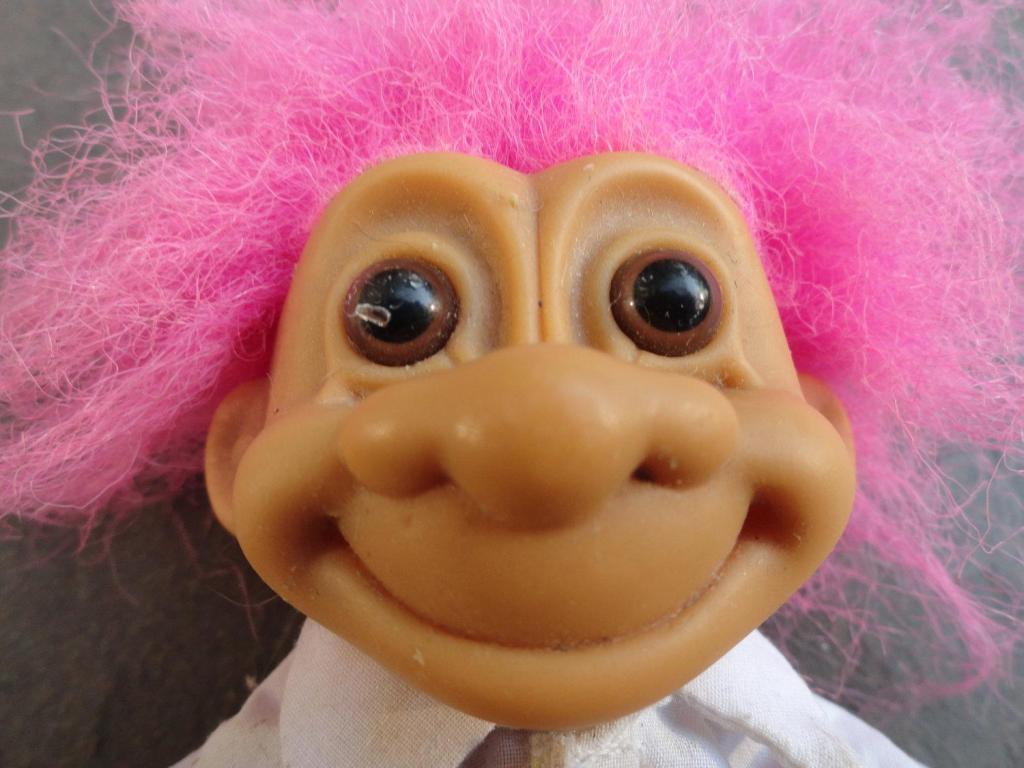
But I have learned from Alan Watts that all of those concerns mean nothing. I don’t believe in Heaven or an afterlife. But I do not fear death. I am one with the universe. And the universe goes on even if I do not. And I will always be a part of it, even after I am no longer alive. The universe has a mind and is intelligent And I take part in that because one small part of that intelligence is me, and lives in my head.

There is comfort to be found in the words of Alan Watts. And living in pain as I do, I really need that comfort most of the time. That is why I have attempted to share a bit of that comfort with you.

Leave a comment

Filed under artists I admire, commentary, feeling sorry for myself, finding love, foolishness, healing, health, humor, Paffooney, philosophy

Wake Up Sunday Morning!

2017-01

As weekly rituals go, one of the most important ones came every Sunday morning when I was a kid.  My parents were 50’s people.  By that I mean they were teenagers and young adults during the post war boom of the 1950’s when everything seemed hopeful and bright and alive with wonderful possibilities.  As a kid in the 1960’s the Sunday morning routine was this;

content

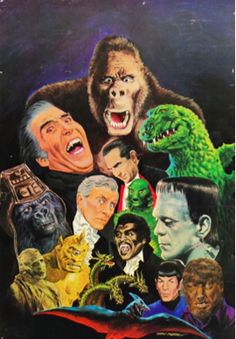
  • Wake up grouchy from staying up too late to sneak a look at the late-night monster movie on Saturday.
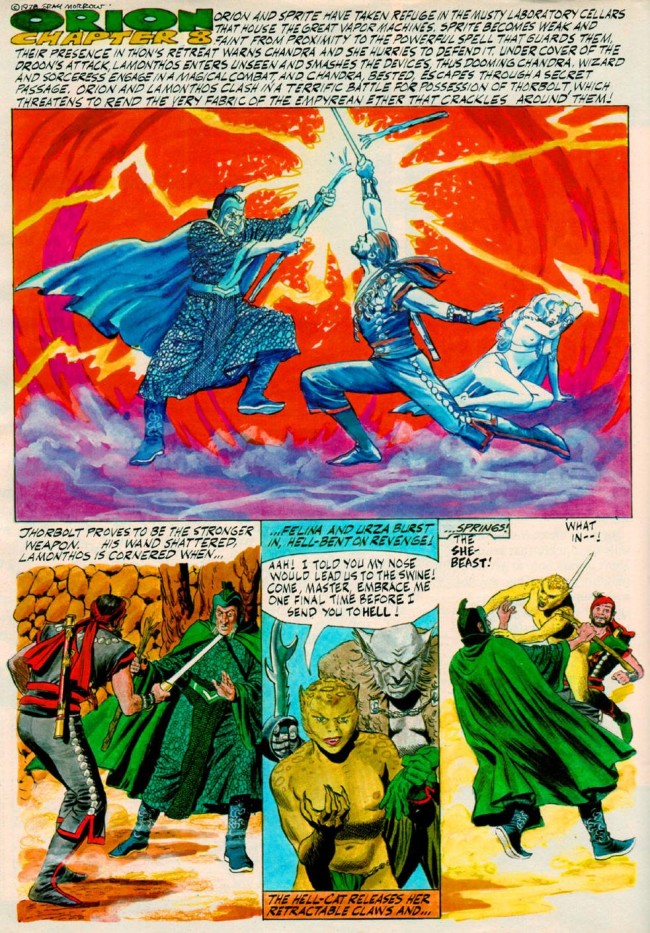
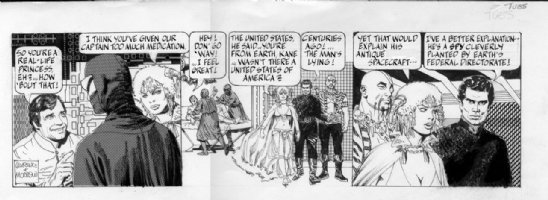
  • Read the funny papers.
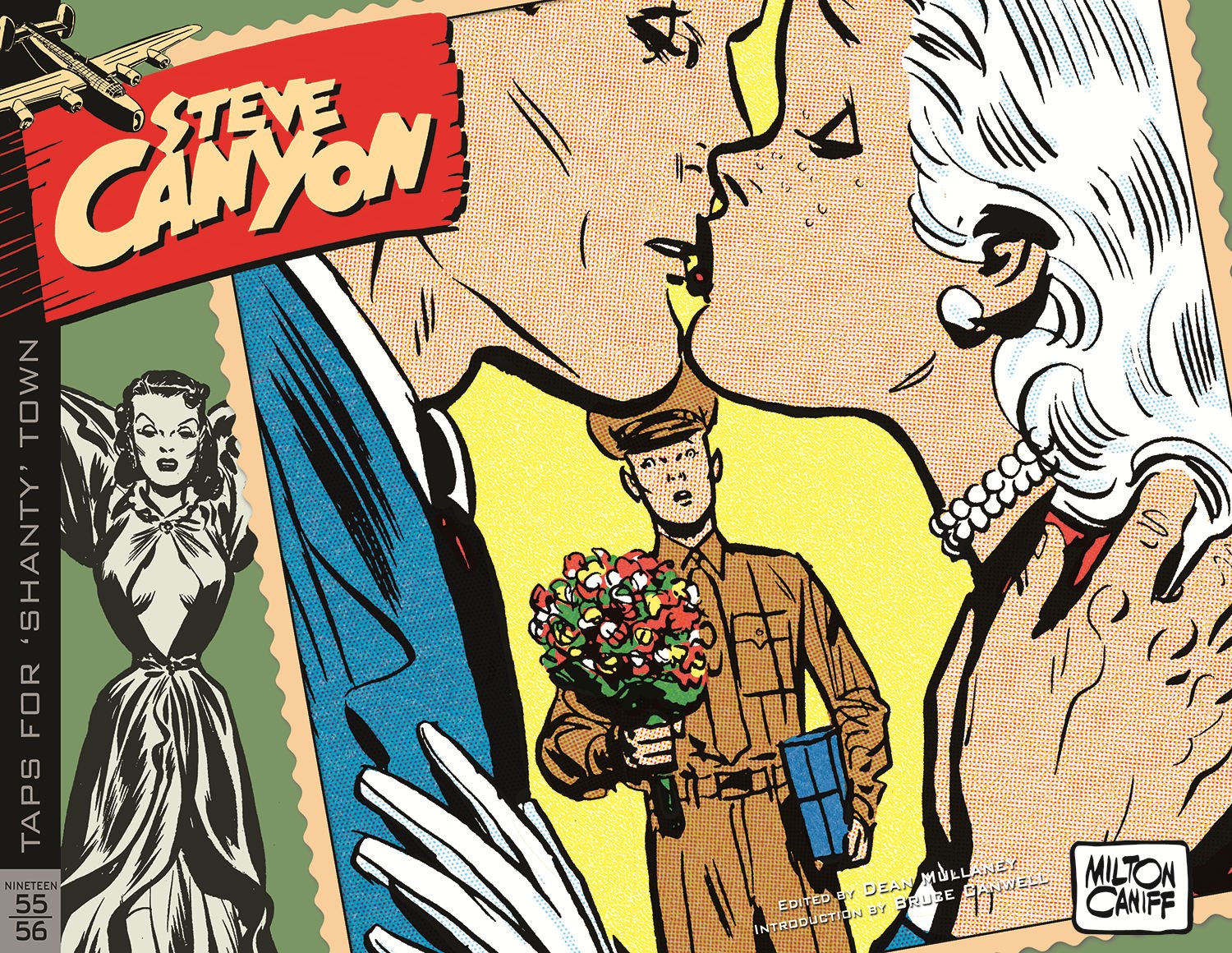
  • Learn life lessons from Family Circus, Dagwood Bumstead, Pogo, Lil’ Abner, and Steve Canyon.
  • Eat scrambled eggs and toast for breakfast.
  • Complain about having to go to church and Sunday school.
  • Go to Sunday School and church at the Methodist Church in Rowan, Iowa.
  • Complain about having to go to church every Sunday on the way home from church.
  • Pray over Sunday dinner and be really, actually thankful for all the positive good things in life.

Obviously the most important thing in that routine was complaining, because I listed it twice.  But when it got down to it, we were thankful for all the good things about life.  We were positive people.  We sometimes listened to Norman Vincent Peale on the radio.  We knew we ought to be positive and thankful and love goodness and be kind.

familycircus_custom-2e676e025b685bfca2827c77158115437c142847-s6-c30


Somewhere along the way, though, the world forgot the life lessons of Family Circus.

Somehow we managed to screw things up.

Environmental scientists like Paul Ehrlich, who wrote The Population Bomb, warned us that the world could soon be ending.  And we ignored them.

Richard Nixon taught us not to trust politicians any more.

We stopped believing in things like the wholesome goodness of scrambled eggs.

content (1)

We let corruption in our government and inequality in the economic sphere become the norm.  The greedy people who were cynical and had no empathy for the rest of us took over.  That is how we ended up with someone like Donald Trump.  Racism, fear, and complaining now rule the emotional landscape in America and most of the world.

So, what is the answer?  What do we do?

Well, The Family Circus is still out there.  We can learn from it, laugh a little, and apply some of those life lessons.  Especially this one;

family-circus-cartoon-clipart-1

Leave a comment

Filed under cartoons, comic strips, commentary, goofy thoughts, humor, inspiration, strange and wonderful ideas about life

How To Write A Mickian Essay

mickeynose

I know the last thing you would ever consider doing is to take up writing essays like these.  What kind of a moronic bingo-boingo clown wants to take everything he or she knows, put it in a high-speed blender and turn it all into idea milkshakes?

But I was a writing teacher for many years.  And now, being retired and having no students to yell at when my blood pressure gets high, the urge to teach it again is overwhelming.

So, here goes…

c360_2017-01-02-10-17-06-058

Once you have picked the silly, pointless, or semi-obnoxious idea you want to shape the essay around, you have to write a lead.  A lead is the attention-grabbing device or booby-trap for readers that will draw them into your essay.  In a Mickian essay, whose purpose is to entertain, or possibly bore you in a mildly amusing manner, or cause you enough brain damage to make you want to send me money (this last possibility never seems to work, but I thought I’d throw it in there just in case), the lead is usually a  “surpriser”, something so amazingly dumb or off-the-wall crazy that you just have to read, at least a little bit, to find out if this writer is really that insane or what.  The rest of the intro paragraph that is not part of the lead may be used to draw things together to suggest the essay is not simply a chaotic mass of silly words in random order.  It can point the reader down the jungle path that he or she can take to come out of the other end of the essay alive.

Once started on this insane quest to build an essay that will strangle the senses and mix up the mind of the reader, you have to carry out the plan in three or four body paragraphs.  This is where you have to use those bricks of brainiac bull-puckie that you have saved up to be the concrete details in the framework of the main rooms of the little idea-house you are constructing.  If you were to number or label these main rooms, this one you are reading now would, for example, be Room #2, or B, or “the second body paragraph”.  And as you read this paragraph, you should be thinking in the voice of your favorite English teacher of all time.  The three main rooms in this example idea house are beginning, middle, and end.  You could also call them introduction, body, and conclusion.  These are the rooms of your idea house that the reader will live in during his or her brief stay (assuming they don’t run out of the house screaming after seeing the clutter in the entryway).

Teacher

The last thing you have to do is the concluding paragraph.  (Of course, you have to realize that we are not actually there yet in this essay.  This is Room C in the smelly chickenhouse of this essay, the third body paragraph.)  The escape hatch on the essay that may potentially explode into fireworks of thoughts, daydreams, or plans for something better to do with your life than a read an essay written by an insane former middle school English teacher at any moment, is a necessary part of the whole process.  This is where you have to remind them of what the essay is basically about, and leave them with the thought that you want to haunt them in their nightmares later.  The last thing that you say in the essay is the thing they are the most likely to remember.  So you need to save the best for last.

So, here, finally, is the exit door to this masterfully mixed-up Mickian Essay.  It is a simple, and straightforward structure.  The introduction containing the lead is followed by three or four body paragraphs that develop the idea and end in a conclusion that summarizes or simply restates the overall main idea.  And now you know why all of my former students either know how to construct an essay, or have several years left in therapy sessions with a psychiatrist.

Leave a comment

Filed under commentary, education, humor, Paffooney, teaching, writing, writing teacher

I Hope You Dance…

When you walk to the front of the classroom and take up the big pencil in front of a group of young teens and twelve-year-olds, there is a strong pressure to learn how to sing and dance. That, of course, is a metaphor. I was always too arthritic and clunky in my movements to literally dance. But I looked out over a sea of bored and malevolence-filled eyes, slack and sometimes drooling mouths attached to hormone-fueled and creatively evil minds. And I was being paid to put ideas in their heads. Specifically boring and difficult ideas that none of them really wanted in their own personal heads. So I felt the need to learn to dance, to teach in ways that were engaging like good dance tunes, and entertaining in ways that made them want to take action, to metaphorically get up and dance along with me.

I wanted them to enjoy learning the way I did.

But the music of the teacher is not always compatible with the dance style of the individual learner. The secret behind that is, there is absolutely no way to prompt them to dance along with you until you learn about the music already playing in their stupid little heads. (And you can’t, of course ever use the word “stupid” out loud, no matter how funny or true the word is,) You have to get to know a kid before you can teach them anything.

The discordant melodies and bizarre tunes you encounter when you talk to them is like dancing in a minefield blindfolded. Some don’t have enough to eat at home and have to survive off of the nutrition-less food they get in the school cafeteria’s free-and-reduced lunch program. Some of them have never heard a single positive thing from the adults at home, enduring only endless criticism, insults, and sometimes fists. Some of them fall in love you. Some due to hormones. Some due to the fact that you treat them like a real human being. Some because they just stupidly assume that everyone dances to the same tunes they hear in their own personal head.

Some of them automatically hate you because they know that if you hear their own secret music in their own self-loathing heads, you will never accept it. They hate you because you are a teacher and teachers always hate them. Some of them, deep down, are as loathsome as they think they are.

But, if you find the right music, you can get any of them, even all of them, to dance. It might be hard to find. It might be a nearly impossible task to learn to play that music once you find it. But it can be done.

And if you get them to dance to your music, to dance along with you, I can’t think of anything more rewarding, anything more life-fulfilling. Have you ever tried it for yourself? If you are not a teacher, how about with your own children or the children related to you? Everybody should learn to dance this dance I am talking about in metaphors. At least once in your life. It is addictive. You will want to dance more. So the next time the music starts and you get the chance… I hope you’ll dance!

Leave a comment

Filed under commentary, education, kids, metaphor, Paffooney, teaching

The Art of Being Mickey

I have published my eighth novel in the last six years. (This is, of course, a re-post of an old essay.) Sure, it is through mostly self-publishing of novels that no one but me has ever read. Catch a Falling Star and Snow Babies both had a professional editor, one who had worked for Harcourt and one who worked for PDMI. Magical Miss Morgan has had a proofreader who made numerous stupid mistake errors that I had to change back to the original meticulously by hand. But all three of those novels won an award or were finalists in a young adult novel contest. I do have reason to believe I am a competent writer and better even than some who have achieved commercial success.

But what is the real reason that I am so intent on producing the maximum amount of creative work possible in this decade? Well, to be coldly objective, I am a diabetic who cannot currently afford insulin. I have been betrayed by the for-profit healthcare system that treats me as a source of unending profit. I am like a laying hen in the chicken house, giving my eggs of effort away to a farmer who means to eat my very children if time and circumstance allows. I am the victim of six incurable diseases and conditions that I got most likely as a result of exposure to toxic farm chemicals in the early 70’s. I am also a cancer survivor from a malignant melanoma in 1983, and for three years now I have not been able to get the preventative cancer tests I am supposed to be receiving every year for the rest of my life. My prostate could very well be cancerous as I write this. If that is so, it will kill me unawares, because I don’t even want to know about having a disease I can’t possibly afford to fight all over again.’

So, the basic reason I am going through the most productive and creative period of my entire life is because I have a great rage to create before I die and I could be dying as soon as tonight. All of the countless stories in my head clamoring to be written down before it is too late cry out to me desperately for my immediate attention.

I will, then, continue to write stories and draw cartoons and other Paffoonies for as long as I am still able, and possibly even afterward. I have, after all, threatened repeatedly to become a ghostwriter after I die. And, yes, I understand when you scream at my essay that that is not what a ghostwriter is. But if a woman can channel the ghost of Franz Schubert and finish his unfinished symphony…(https://en.wikipedia.org/wiki/Rosemary_Brown_(spiritualist))

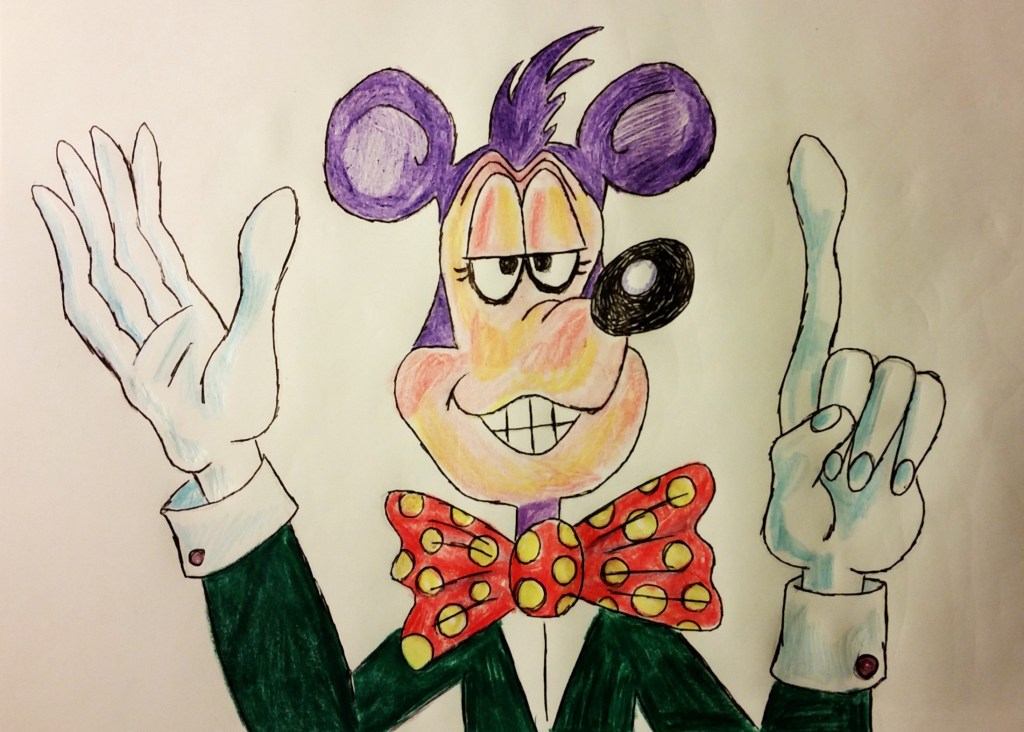
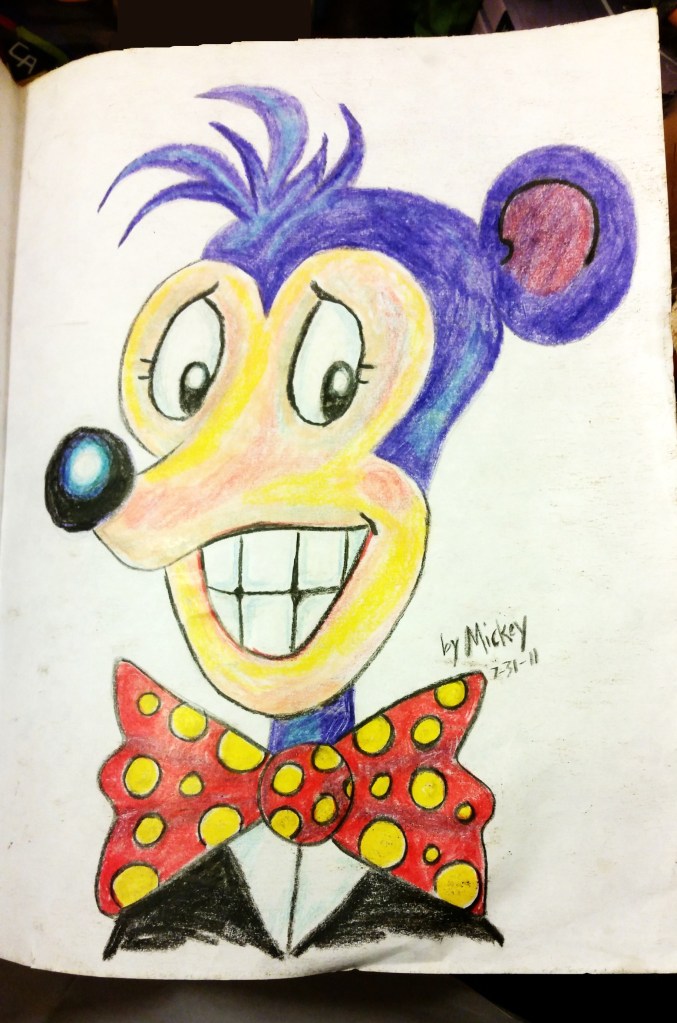
—then I should also be able to tell my stories from beyond the grave. I have been percolating them in my head and writing and drawing them in whole or in part since 1974. I have too much time and too many daydreams wrapped up in them to let it all just evaporate into the ether. In summation, I am claiming stupidly that my novels, crack-brained and wacky as they are, are somehow destined to exist, either because of me or in spite of me. So just be happy that I write what I write, for there is an art to being Mickey, and I am the one artist and writer who is the best Mickey possible if truly there ever was a real Mickey.

Leave a comment

Filed under battling depression, commentary, goofy thoughts, humor, novel writing, Paffooney

Who Do You Listen To?

There was a time when you could turn on the TV news and listen to what you were fairly confident was actually news.  Walter Cronkite on CBS always seemed to really “Tell it like it is.”  He never seemed to put a spin on anything.  No one doubted anything he said when he reported space missions from NASA or the assassination of JFK.  You never had to wonder, “What is Cronkite’s real agenda?”   His agenda was always to tell me the news of the day.

color-cronkite-trib-web

The question of politics and ideas was always one of, “Which flavor tastes best in my own personal opinion?”  Because I was weirdly and excessively smart as a kid, I often listened to some of the smartest people accessible to a black-and-white RCA television set.

1438481192428-cached

1814127_orig

William F. Buckley Jr. and Gore Vidal were both identifiably smarter than me.  I loved to listen to them argue.  They were equally matched.  They respected each other’s intellect, but they hated each other with a passion.  Buckley was a Fascist-leaning conservative ball of hatred with a giant ego.  Vidal was a self-contradictory Commie-pinko bastard child of liberal chaos  with  an equally giant ego.  I never agreed with either of them on anything, but their debates taught me so much about life and politics that I became a dyed-in-the-wool moderate because of them.  They were the key evidence backing up the theory that you needed two sides in the political argument to hammer out good ideas of solid worth.  And, though I didn’t trust either side of the argument fully, I always trusted that both were basing their ideas on facts.

George Will
When I was young I identified as a Republican like my father, and thought George Will was a reasonable opinion-leader.  After all, a man who loves baseball can’t be a bad guy.

Then along came Richard Nixon and the faith-shaking lies of Watergate.  The media began to be cast as the villain as they continued to show the violence and horrors of Vietnam on TV and tell us about campus unrest and the terrible outcomes of things like the Kent State Massacre.  The President suggested routinely that the media was not using facts as much as it was using opinions to turn people away from the Nixon administration’s answer to the problems of life in the USA.  I tried to continue believing in the Republican president right up until he resigned and flew away in that helicopter with his metaphorical tail between his legs (I am trying to suggest he was a cowardly dog, not that I want to make a lewd joke about poor Dick Nixon… or is that Little Dick Nixon, the man who let me down?)

And then along comes Ronald Reagan, the man acting as a “Great President” because he was a veteran actor and knew how to play the part.  And with him came Fox News.

Roger Ailes, a former adviser to Nixon, got together with media mogul Rupert Murdoch, a man who would commit any crime necessary to sell more newspapers, and created a news channel that would pump out conservative-leaning propaganda that would leave Joseph Goebbels envious.  I make it a rule to only listen to them and their views on anything when I feel the need to get one-foot-hopping, fire-spitting mad about something.  So, since, I am a relatively happy person in spite of a long, hard life, you can understand why I almost never watch Fox News.  They are truly skilled at making me mad and unhappy.  And I suspect they do the same for everyone.  They deal in outrage more than well-thought-out ideas.

and

News media came under a cloud that obscured the border between facts and partisan opinions.  And conservatives seemed to have a monopoly on the shouty-pouty angry news.  So, I began to wonder where to turn for a well-reasoned and possibly more liberal discussion of what was politically and ethically real.  I found it in the most surprising of places.

jon-stewart-stephen-colbert-late-show-rnc

I turned to the “Excuse me, this is the news” crews on Comedy Central where Jon Stewart and Stephen Colbert were busy remaking news reporting as a form of comedy entertainment.  It is hard work to take real news and turn it into go-for-the-chuckles statements of fact that make you go, “Hmm, that’s right, isn’t it?”  Stewart and Colbert consistently examine how other news organizations  hurl, vomit forth, and spin the news, and by so doing, they help you examine the sources, get at the truth, and find the dissonance in the songs everyone else is singing.  And these are very smart men.  As I said, the intellectual work they do is very difficult, harder than merely telling it like it is.  I know because I have tried to do the same myself.  And is it really “fake news”?  It seems to me like it is carefully filtered news, with the poisons of propaganda either surgically removed, or neutralized with antidotes of reason and understanding.

So, Mickey listens to comedians to get his news.  Is that where you expected this article to end up?  If not, where do you get your news?

Leave a comment

Filed under angry rant, commentary, conspiracy theory, humor, insight, politics, review of television, strange and wonderful ideas about life

Contradictions

You know what a contradiction is, don’t you? It is whatever comes out of your wife’s mouth whenever you make a statement asserting that whatever you said is factually true. She will promptly and always explain to you how wrong you are… loudly… and in great detail. No matter if you happen to be provably right or not.

What’s that, you say? I’m wrong about that too? Of course, I am, dear. I only deserve the catfood cookies.

The fact is, if you raise your hand and give the teacher the correct answer often enough, you get a certain reputation amongst your classmates. Instead of continuing to call you, “dumbhead,” or “stupidhead,” or the simplified form of “caca-poo-poo-head” like they endearingly call everybody else, they begin calling you pejoratives like “Einstein,” or “Brainiac,” or “Supernerd, taah tah taaah!” And they begin pointing out in detail everything that is wrong about you. How you dress… how you talk… especially how you laugh. You have become the enemy. You must be contradicted.

“You are wrong, Mickey!”

“So, I get to be Dumbhead again?”

“No. you are still “Supernerd, taah tah taaah!” But you are wrong. We all think so, so that must be right.”

The truth is, Life itself is a contradiction. Considering the violence and hostility of the physical universe towards life, it is a miracle that anything at all is alive in the universe. The chaos of everything guarantees that if you are born into the miracle of life, then at some point, caused by a nearly infinite variety of possible aids to chaos, you will die. Order is whittled away into chaos. Civilizations fall eventually. Things die all the time.

But if all order must, by physical laws of the universe, be broken down into chaos, then, how is it that we have any order at all in the first place? Where does order come from? I’d give you a possible answer. But I would just be contradicted by the majority

Except for fundamentalist Christians who would say, “Let me think for a moment about why you are still wrong… and then I’ll tell you what I think the Bible says about why you are actually still wrong.”

One thing about being “only book-smart, but without common sense” that makes being contradicted all the time worth it, is that the more challenged the answers you come up with are, the more deeply you dig into them, and the more of a real-world understanding of why I am wrong about everything begins to make a bit more sense. Or not. Because I’m probably wrong in your estimation anyway.

Leave a comment

Filed under commentary, humor, inspiration, Paffooney, philosophy

Winsor McCay

One work of comic strip art stands alone as having earned the artist, Winsor McCay, a full-fledged exhibition at the Metropolitan Museum of Art in New York City.  Little Nemo in Slumberland is a one-of-a-kind achievement in fantasy art.

Winsor McCay lived from his birth in Michigan in 1869 to his finale in Brooklyn in 1934.  In that time he created volumes full of his fine-art pages of full-page color newspaper cartoons, most in the four-color process.  

The New Year’s page 1909

As a boy, he pursued art from very early on, before he was twenty creating paintings turned into advertising and circus posters.  He spent his early manhood doing amazingly detailed half-page political cartoons built around the editorials of Arthur Brisbane,  He then became a staff artist for the Cincinnati Times Star Newspaper, illustrating fires, accidents, meetings, and notable events.  He worked in the newspaper business with American artists like Winslow Homer and Frederick Remington who also developed their art skills through newspaper illustration.  He moved into newspaper comics with numerous series strips that included Dreams of the Rarebit Fiend and Little Nemo in Slumberland.  And he followed that massive amount of work up by becoming the “Father of the Animated Cartoon” with Gertie the Dinosaur, with whom he toured the US giving public performances as illustrated in the silent film below; 

The truly amazing thing about his great volume of work was the intricate detail of every single panel and page.  It represents a fantastic amount of work hours poured into the creation of art with an intense love of drawing.  You can see in the many pages of Little Nemo how great he was as a draftsman, doing architectural renderings that rivaled any gifted architect.  His fantasy artwork rendered the totally unbelievable and the creatively absurd in ways that made them completely believable.

I bought my copy of Nostalgia Press’s Little Nemo collection in the middle 70’s and have studied it more than the Bible in the intervening years.  Winsor McCay taught me many art tricks and design flourishes that I still copy and steal to this very day.

No amount of negative criticism could ever change my faith in the talents of McCay.  But since I have never seen a harsh word written against him, I have to think that problem will never come up.

My only regret is that the wonders of Winsor McCay, being over a hundred years old, will not be appreciated by a more modern generation to whom these glorious cartoon artworks are not generally available. 

Leave a comment

Filed under art my Grandpa loved, artists I admire, artwork, book review, cartoon review, cartoons, comic strips, commentary