Yes, in some ways, I have Peter Pan syndrome. I have never truly grown up. But not in the ways that really matter in life.
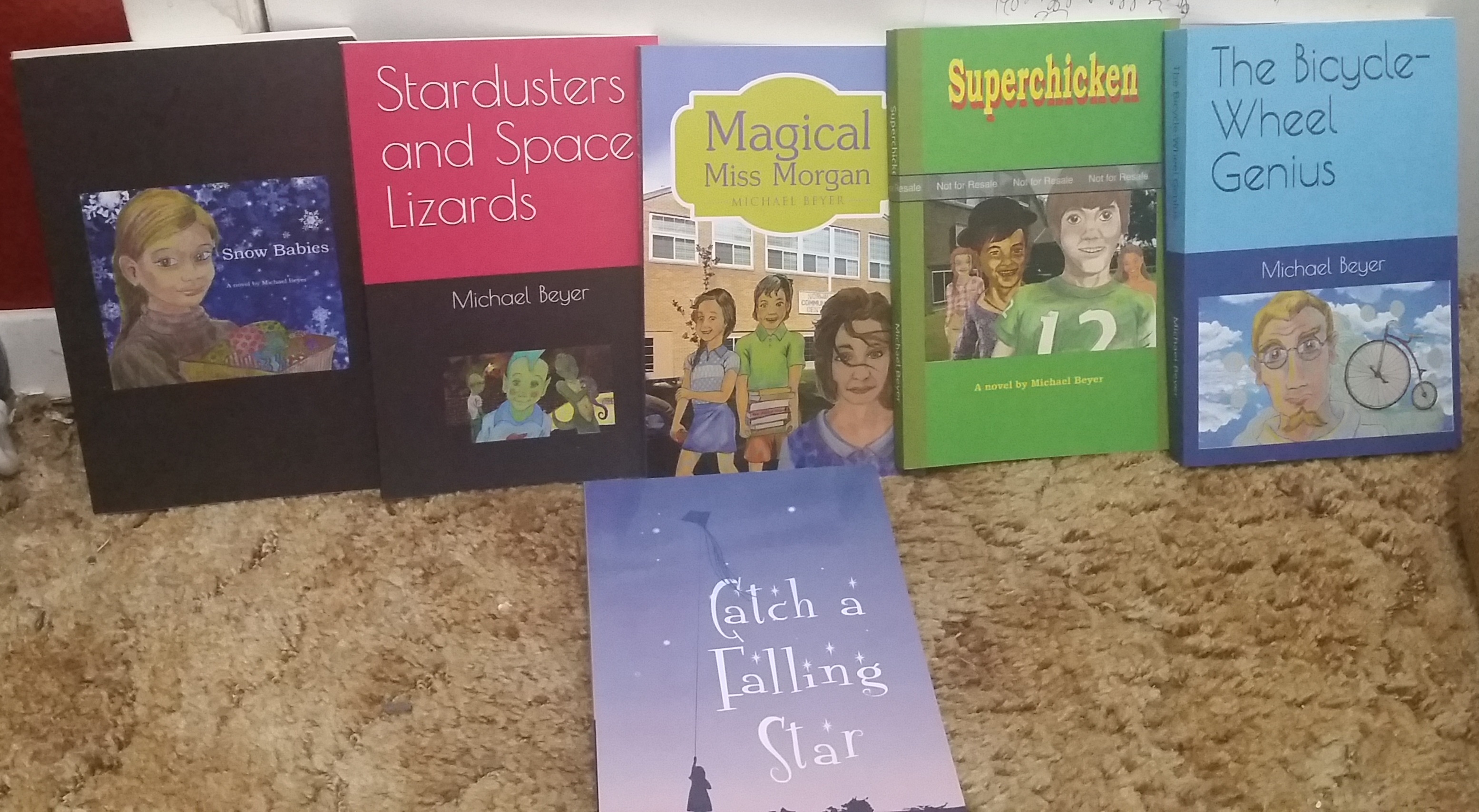
As a writer of fiction, I put all my effort into writing young adult novels. My main characters are mostly children from roughly around eight years old to teens who are almost adults.
But it is not as G-rated as Nancy Drew. I have issues that creep in to become the monster under the bed. My childhood was not all naked innocence and sunshine.
Don’t get me wrong. I had wonderful parents. And wonderful grandparents. And the little town of Rowan, Iowa, becomes the town of Norwall in all my Earthbound fiction. It was a very magical, if boring, place to grow up. I lived in town, but my uncles and grandparents lived on working farms. I knew farm life. I knew how you fed animals, trained animals, and helped them reproduce. I knew that farm animals die. And, sometimes, people die too. Even people who are important to you and whom you depend on.
And at the ripe old age of ten, I was sexually assaulted by an older boy. It is hard to talk about that even now, 52 years later. It wasn’t so much a sex act that I was forced to commit. It was more of a sexual torture thing. He took his pleasure from twisting my private parts, making me hurt intensely, telling me all the while not to scream or call out for help. I think I even passed out at one point. There was no pleasure in it for me in any way. In fact, once he let me go with more threats, I promptly turned it into a repressed memory for twelve years. It turned me from an outgoing, leader-of-the-gang type kid into a miserable wallflower. It made me contemplate suicide as a teen. It led to some self-harm that my parents never actually figured out, burning my lower back against the heater grate and making small burn scars on my arms and legs. It kept me from falling in love with a girl until my thirties. And it made me turn myself inside out through drawings, cartoons, and storytelling.
The Baby Werewolf
Some of the key stories I have turned into novels were created because of what happened to me, the horror at the center of my childhood. The monster in my novel, The Baby Werewolf, and the serial killer in Fools and Their Toys were both inspired by him, and were both a reaction to what he did to me.
And do you know what he means to me now? I have forgiven him. He passed away a few years ago of a heart condition. I avoided him and his family from when it happened until now. I never told anyone what he did to me. I never sought any kind of revenge or justice for his act. To this day I still haven’t revealed his name to anyone, though I have been able to talk about it in this blog since he died. He has paid his price. The scales are balanced. I am healed. That is enough.
What he gave me, though, was a gift of purpose and an ability to fight the darkness with a strategy of sharing every tactic I have learned about defending myself from predators, depression, and crippling self-loathing in novel form. I shared those tactics as well during my years as a teacher and mentor to kids who had problems like mine for which my solutions sometimes also served as answers. I was able to put into thematic form the positive answers to the question every kid asks themselves somewhere along the road to adulthood, “Am I a monster because of what I have done and what has happened to me?”
The answer, of course, is, “No, I am not a monster.” But kids like me desperately need someone to tell them that and give them reasons why it is true. Fiction can do that. At least, I believe that it can.
And so, I write YA novels, novels for kids trying to become adults. And what good does that do if nobody ever reads my books? Or even this blog post which some of you who actually read my blog posts have probably given up on as too hard to read several paragraphs ago? It keeps me young. At 62 I still think like a twelve-year-old. Admittedly a wise-beyond-his-years twelve-year-old. I have never grown up in my mind where it counts. And maybe it even makes me able to fly like Peter Pan. But no jumping off roofs to find out for sure.
The way I handle the computer tends to be the way I handle life as a whole. Thirteen tabs open at the same time, eleven of them not responding, and me cussing the machine for not working properly.
Spring has come. In fact, Spring Break has come. My daughter the Princess and I were planning to plant flowers in the yard where the pool used to be. We started work yesterday spreading compost on the flower bed and churning the soil. But we should’ve done it sooner. It was too much for tired muscles to finish yesterday. Then the rains came last night. It would’ve been perfect to plant the seeds yesterday, then have God water them naturally at night. But plans don’t go anywhere near perfectly. Thirteen tabs are open and twelve are not responding.
In my novel, The Baby Werewolf, the murderer is now unmasked and he has started on his final killing spree. But as I was supposed to write the next Canto the last two nights, I found myself overwhelmed and overtired. I got no further writing done. I vowed to do it tonight, but the time change has left me no less tired and overwhelmed. Thirteen tabs not responding.
So here I sit, paralyzed by entropy and worriedly contemplating the eventual heat death of the universe. What to do? What to do?
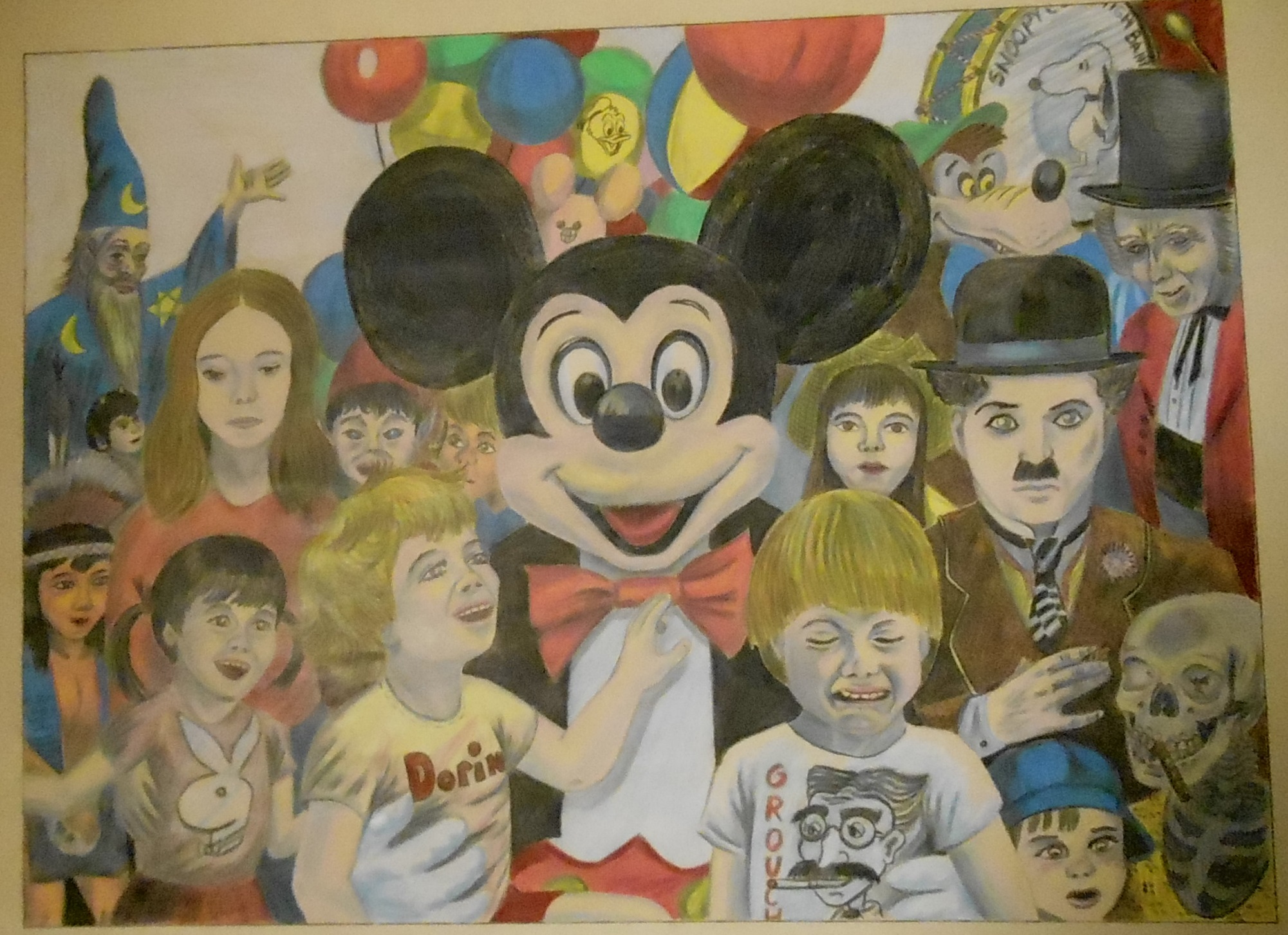
Mickey’s inevitable answer… Mickey opens a new tab and keeps on writing. Did you think he had an actual plan for the rest of his life? Of course not. He planned on retiring from teaching and writing for about three years, and then dropping dead from one of his six incurable diseases. Guess what? This June will be twelve complete years. Who knows how many more?
My 1967 Captain Action Steve Canyon action figure.
I have always been a deeply devoted fan of the Sunday funnies. And one of the reasons I read the comics religiously was the work of Milt Caniff. His comic strips, Terry and the Pirates, Male Call, and Steve Canyon set a standard for the age of action comics and adventure strips.
I read his comics in the 1960’s and 1970’s and always it was Steve Canyon. But this, of course, was not his first strip. I would discover in my college years the wonders of Terry and the Pirates. When Caniff started the strip before World War II, he set it in China, but actually knew nothing about China. So he did research. He learned about people who became oriental hereditary pirate families and organizations. He learned to draw authentic Chinese settings. His comedy relief characters, Connie and the Big Stoop, were rather racist parodies of Chinamen and were among the reasons that the original strip had to mature into his later work in Steve Canyon. But perhaps the most enduring character from the strip was the mysterious pirate leader known as the Dragon Lady.
Steve Canyon is a fascinating study in the comic arts. When he left the Terry and the Pirates strip in 1946, it went on without him. It was owned by the Chicago Tribune-New York Daily News distribution syndicate, not Caniff himself. Steve Canyon would change that. He created it and owned it himself, making Caniff one of only two or three comics artists who actually owned their own creations. Canyon started out as a civilian pilot, but enlisted in the Air Force for the Korean War and would remain in the Air Force for the remainder of the strip. Some of the characters in the strip were based on real people. His long-time friend Charlie Russhon, a former photographer and Lieutenant in the Air Force who went on to be a technical adviser for James Bond films was the model for the character Charlie Vanilla, the man with the ice cream cone. Madame Lynx was based on the femme fatale spy character played by Illona Massey in the 1949 Marx Brothers’ movie Love Happy. Caniff designed Pipper the Piper after John Kennedy and Miss Mizzou after Marilyn Monroe.
I am not the only cartoonist who was taken with the work of Milt Caniff. The effects of his ground-breaking work can be seen to influence the works of comic artists like Jack Kirby, Bob Kane, John Romita Sr., and Doug Wildey. If you are anything like the comic book nut I am, than you are impressed by that list, even more so if I listed everyone he influenced. Milt Caniff was a cartoonists’ cartoonist. He was one of the founders of the National Cartoonists’ Society and served two terms as its president in 1948 and 1949. He is also a member of the Will Eisner Comic Book Hall of Fame.
Comic book artwork grabs me constantly and makes me wonder about the lives behind the pen and ink. Artists basically draw themselves. Whether you are drawing Tarzan, Buck Rogers, or Flash Gordon… when you draw them, you are drawing yourself. My first encounter with Gray Morrow was when he drew Orion in Heavy Metal Magazine (the English version of the French Metal Hurlant).
He was capable of drawing both the grotesque and the beautiful. Violent action juxtaposed with soft and romantic moments filled with subtle colors and complex emotion. I began thinking that Gray Morrow must be a complex and interesting human being. I was soon to discover his other selves. He was the artist behind the Buck Rogers strip starting in 1979. He and Marvel writer Roy Thomas co-created the muck monster Man-Thing.
He also worked on Tarzan, Flash Gordon, and The Illustrated Roger Zelazny. Unfortunately he died in 2001 at age 67. Luckily an artist puts himself into his work, and for that reason we still have Gray Morrow with us. It is a kind of immortality.
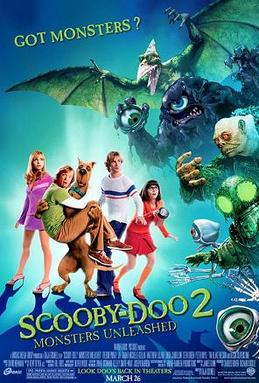
This cover from Monsters Unleashed gives you an idea of how well Gray Morrow could draw.
A new day dawns. It leaves me wondering. Who am I today? Who will I be tomorrow?
The opportunity to have any sort of control over who and what I am is coming to a close. I don’t really know how much longer I have before pain and illness dissolve me into nothingness. But death is not the end of existence. I may be forgotten totally by the day after next Thursday, but my existence will still have become a permanent fact. Yes, I am one of those dopey-derfy-think-too-much types known as an existentialist.
I am feeling ill again. Any time that happens may be the last time. But that doesn’t worry me.
The important thing is that the dance continues. It doesn’t matter who the dancers are, or who supplies the music.
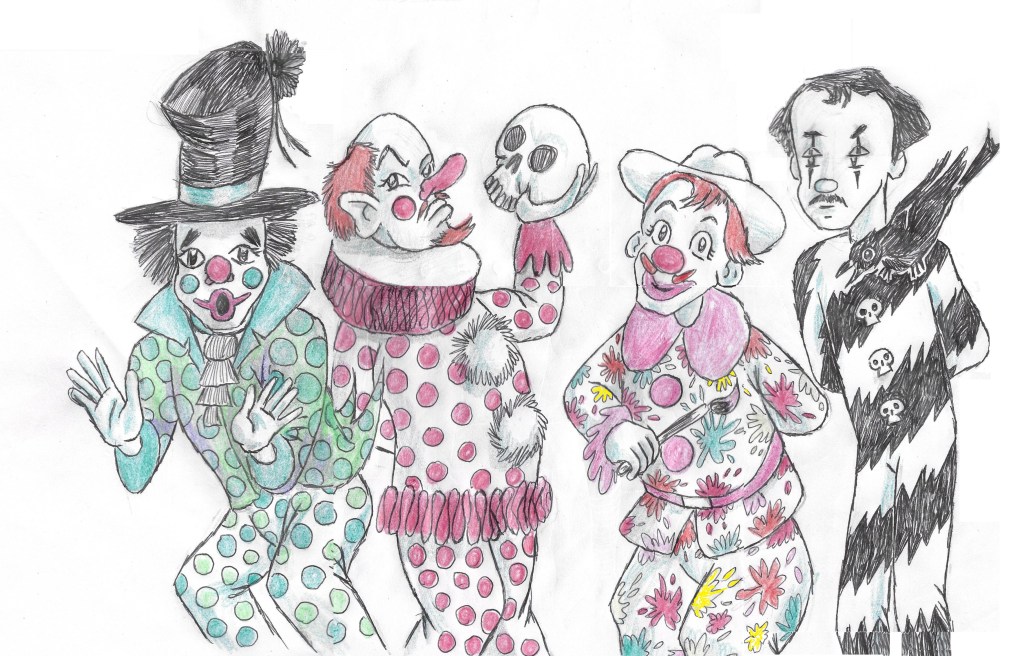
We can be clowns if we choose to be.
We can safely be fools if we really can’t help it.
An awful lot of awful things go into who and what we are. Those things make us full of awe. They make us awesome. Aw, shucks. What an awful thing to say.
But what is all this stuff and nonsense really about today?
It’s just Mickey being Mickey… Mickey for another day.
It’s not really poetry. It certainly isn’t wisdom. It’s a little bit funny, and only mildly depressing… for a change.
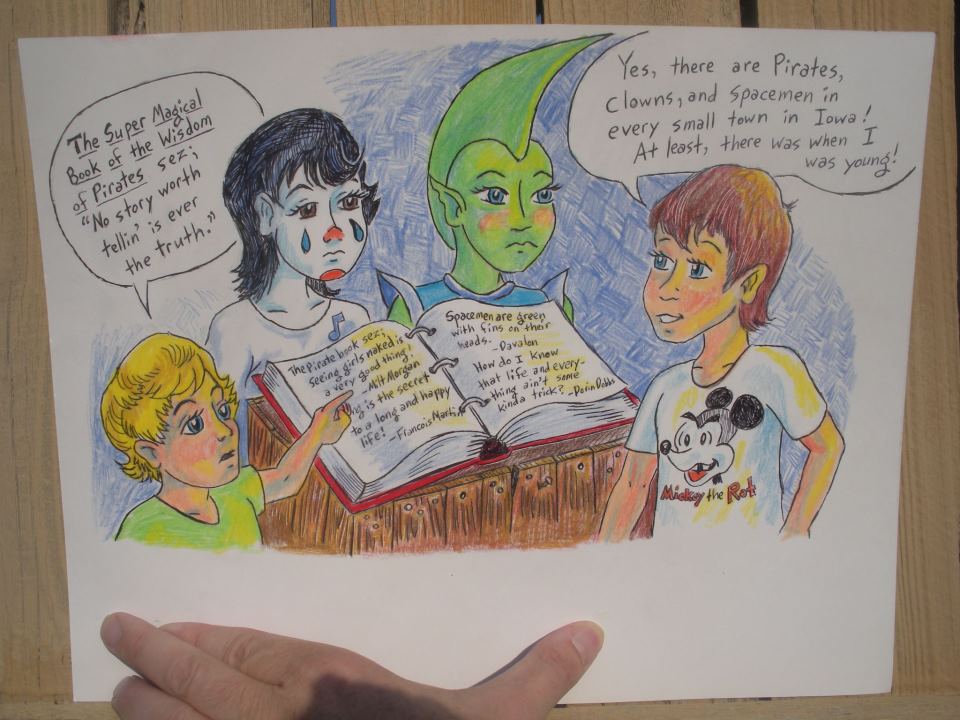
It’s just Mickey being Mickey. And a partially Paffooney gallery.
My bloodwork first revealed my diabetes in the Summer of 2000. So, the first of my two grateful notations is my diabetes. Surprise you, does it? There are very good reasons why this bad thing that happened to me has helped me more in life than some of the things most people identify as the best things in life.
Diabetes is a chemical nightmare that you fall into by a compounding of your worst daily habits. Your body turns food into a form that your blood carries to every cell in your body to provide the energy that every living cell runs on. But that form of chemical is glucose, a sugar. And sugar is not only the fuel for cellular life and activity, it is a poison.
Blood sugar is like highly combustible gasoline in an internal combustion engine. If you have too much gas causing too large of an explosion with every spark from the sparkplug, the longer you run it with your foot on the gas, the more likely you are to blow the engine up. This is the reason diabetes causes heart attacks, strokes, and can damage or destroy so many of your body’s essential organs.
The regulatory liquid that controls the sugar’s poison power is insulin. It is produced in the pancreas as a peptide hormone, a chemical that cooks and flavors the blood sugar to make it delicious enough to be more easily eaten up by the cells of the body. But sometimes the pancreas gets lazy or overworked enough to become rebellious and it stops producing enough insulin to cook the sugar. And sometimes, as in my case, the pancreas begins producing insulin who simply aren’t very good cooks. I have way too much insulin in my bloodstream, but it is wimpy and weak and couldn’t win a sugar cook-off if my life depended upon it. And my life does depend on it.
The reason I am grateful for diabetes is the plethora of fundamental life lessons that I had to learn in order to keep living a good life.
How well you can think and feel and move around depends on how well you manage what you eat.
Candy is out. If you like sweetness in your meals, natural fruit sugars like fructose, especially when combined with helpful, cancer-suppressing antioxidants like you find in strawberries, are a much better choice. Niacin is the name of a chemical you need to know when choosing what to eat. Niacin helps balance your blood sugar level, making your insulin gain levels in cooking skill chemically. You find niacin in foods like peanut butter, pork sausage, chicken wings, and mushrooms, as well as many other foods. For nearly twenty-one years, I have regulated my blood sugar successfully by making adjustments to my dietary habits.
And that leads to the other thing that I am grateful for. I am grateful for my ability to change my daily habits when necessary. I have learned that even deeply entrenched habits can be altered over time by small changes I make, noting them and constantly examining my progress. It has not only helped me navigate numerous health problems, but it has also aided me in completing my 5-year Chapter 13 bankruptcy. So, I am grateful for diabetes and changeable habits.
It is, of course, one of the most powerful, masterful, and best-known pieces of music ever written.
Mozart completed the “little serenade” in Vienna in 1787, but it wasn’t published until 1827, long after Mozart’s untimely death.
The Serenade is incorrectly translated into English as “A Little Night Music”. But this is and always has been the way I prefer to think of it. A creation of Mozart written shortly before he hopped aboard the ferryman’s boat and rode off into the eternal night. It is the artifact that proves the art of the master who even has the word “art” as a part of his name. A little music to play on after the master is gone to prove his universal connection to the great silent symphony that is everything in the universe singing silently together.
It is basically what I myself am laboring now to do. I have been dancing along the edge of the abyss of poverty, suffering, and death since I left my teaching job in 2014. I will soon be taking my own trip into night aboard the ferryman’s dreaded boat. And I feel the need to put my own art out there in novel and cartoon form before that happens.
I am not saying that I am a master on the level of a Mozart. My name is not Mickart. But I do have a “key’ in the name Mickey. And it will hopefully unlock something worthwhile for my family and all those I loved and leave behind me. And hopefully, it will provide a little night music to help soothe the next in line behind me at the ferryman’s dock.
Yes, I am a coot. I became a coot in 2014 when I retired. I have the hair in the ears to prove it. I sometimes forget to wear pants. The dog is learning to hide from me on days when my arthritis makes me cranky.
So I am a practicer of the ancient art of being a cranky old coot. I have opinions. I share them with others foolishly. And I am summarily told to, “Shut up, you danged old coot!” And, of course, I don’t shut up because that would be a violation of number five in the by-laws of cootism. Obnoxiousness is our only reason for still being alive.
Lately, my group of coots on Facebook (who call themselves a “pack” like wolves, but, in truth, a group of coots is called an “idiocy”) are talking about politics… very loudly salted with firmly held opinions, beliefs, and bad words in several languages. I mean, it’s texting each other on memes we disagree about, but we do it LOUDLY, like that, in all caps. We also do it in such an infuriating manner because, if no one ever bothers to tell us to “Shut the hell up!” we will begin to suspect we have actually died and gone to purgatory where we are still being obnoxious, but nobody knows we are doing it. That is rubbing coot fur in the wrong direction.
The radical right (otherwise known as coot paradise) have been cooting up a storm about school shootings and gun control of late. They have more or less turned their ire on me because, knowing I was a school teacher, they have seized on the Coot in Chief’s notion of arming teachers to protect schools. Obviously, a majority of old coots agree that requiring a few “volunteer” teachers to conceal carry and learn how to handle a school shooter crisis situation with a gun instead of the way teachers are actually trained and practiced on handling such a situation, is the only economical way to defend schools from crazed lunatics with assault weapons. Of course, it is definitely more economical than hiring full-time police officers to handle security because “volunteer” teachers does not mean that they are necessarily willing to do it, but rather that they are doing it without pay. And of course, they shout at me things like, “Why don’t you just admit that you are too scared and unpatriotic to carry a gun as a teacher, and cowardly allow some female teacher with a big pistol to step in and do the job for you?” That is a very coot thing to say, and is hard to adequately counter, because if you try to argue using logic other than coot-logic, like the notion that since a majority of teachers in this country are female, you are asking women who are fierce enough to do the job (and I have known more than a few who would take it on no matter how hopeless their prospects) to take a handgun that the principal bought at Walmart with money from the Coke machine in the hall and face down a suicidal maniac with an assault rifle, you will not even be heard over the cacophony of coot braying and chest-thumping, let alone be understood.
And, for some reason, coots love Trump. Maybe because they feel he is truly one of them. He is older than dirt. He has an epically bad comb-over to hide his bald spot. He says bad words very loudly in front of women, children, and everybody. He says, “Believe me,” especially when telling lies. And he’s not afraid to fart in public and blame it on the dog. I admit to insulting Trump in front of them only because I like to see coot faces fold up in extra wrinkles, and coot heads turn various shades of angry red and apoplectic purple.
So, yes. I am a coot. Not proud to be one… that I can remember, but a coot nonetheless.
Like every real, honest-to-God writer, I am on a journey. Like all the good ones and the great ones, I am compelled to find it…
“What is it?” you ask.
“I don’t know,” I answer. “But I’ll know it when I see it.”
“The answer?” you ask. “The secret to everything? Life, the universe, and everything? The equation that unifies all the theories that physicists instinctively know are all one thing? The treasure that pays for everything?”
Yes. That. The subject of the next book. The next idea. Life after death. The most important answer.
And I honestly believe that once found, then you die. Life is over. You have your meaning and purpose. You are fulfilled. Basically, I am writing and thinking and philosophizing to find the justification I need to accept the end of everything.
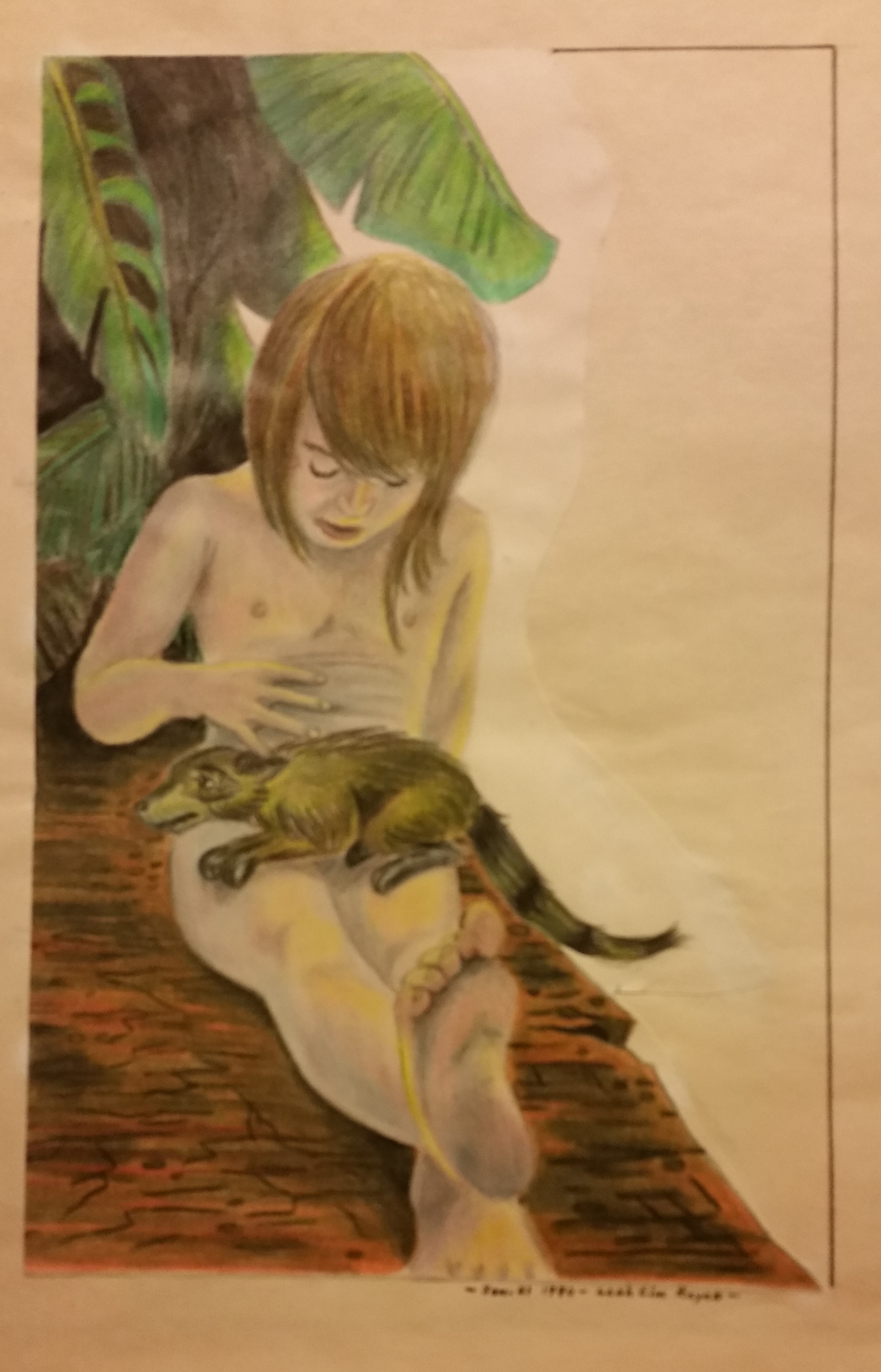
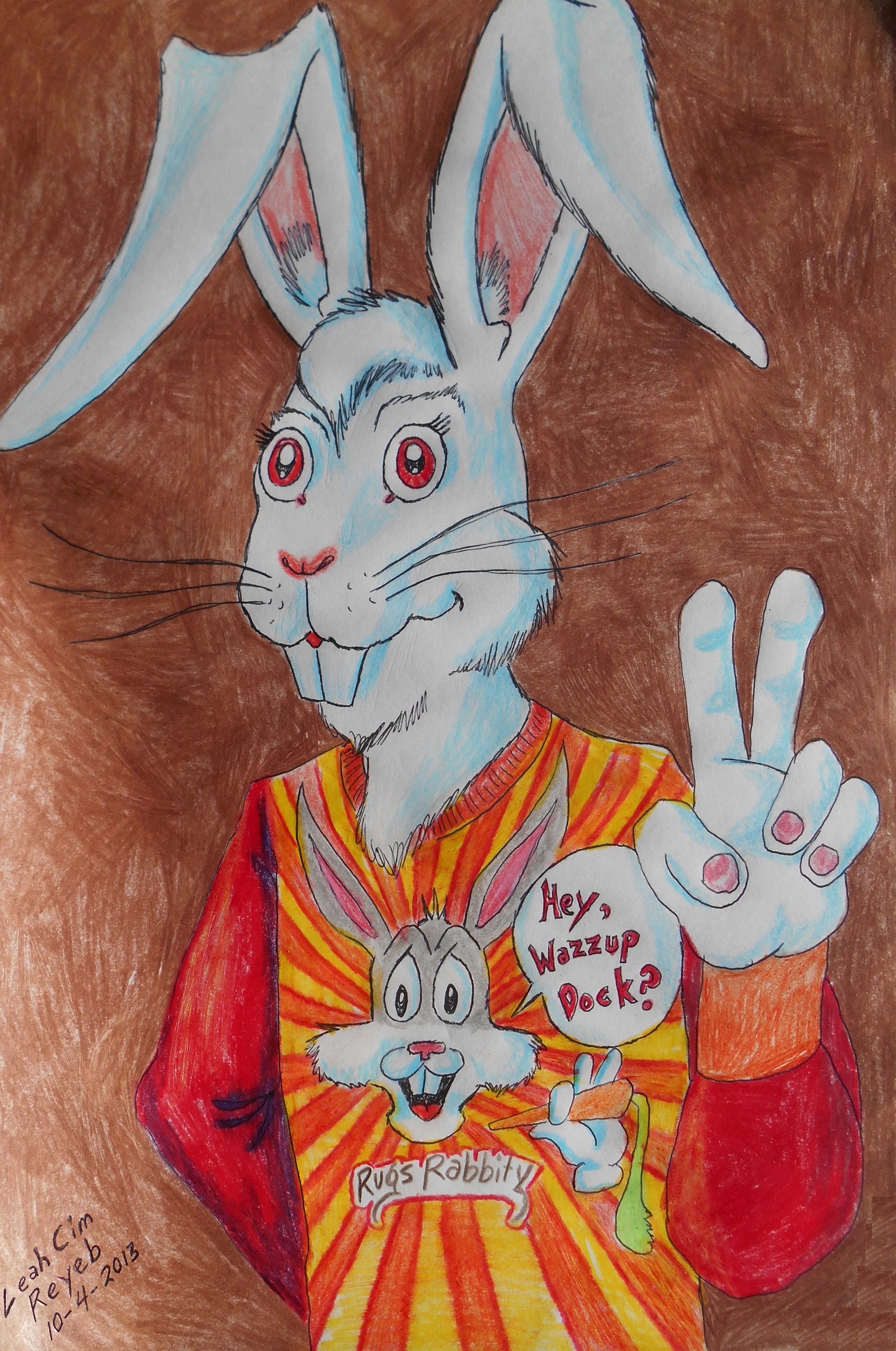
Leah Cim Reyeb is me, Michael Beyer written backwards.
And you know what? The scariest thing about this post is that I never intended to write these particular words when I started typing. I was going to complain about the book-review process. It makes me think that, perhaps, I will type one more sentence and then drop dead. But maybe not. I don’t think I’ve found it yet.
The thing I am looking for, however, is not an evil thing. It is merely the end of the story. The need no longer to tell another tale.
When a book closes, it doesn’t cease to exist. My life is like that. It will end. Heck, the entire universe may come to an end, though not in our time. And it will still exist beyond that time. The story will just be over. And other stories that were being told will continue. And new ones by new authors will begin. That is how infinity happens.
I think, though, that the ultimate end of the Bookish Journey lies with the one that receives the tale, the listener, the reader, or the mind that is also pursuing the goal and thinks that what I have to say about it might prove useful to his or her own quest.
I was going to complain about the book reviewer I hired for Catch a Falling Star who wrote a book review for a book by that name that was written by a lady author who was not even remotely me. And I didn’t get my money back on that one. Instead I got a hastily re-done review composed from details on the book jacket so the reviewer didn’t have to actually read my book to make up for his mistake. I was also going to complain about Pubby who only give reviewers four days to read a book, no matter how long or short it is, and how some reviewers don’t actually read the book. They only look at the other reviews on Amazon and compose something from there. Or the review I just got today, where the reviewer didn’t bother to read or buy the book as he was contracted to do, and then gave me a tepid review on a book with no other reviews to go by, and the Amazon sales report proves no one bought a book. So, it is definitely a middling review on a book that the reviewer didn’t read. Those are things I had intended to talk about today.
But, in the course of this essay, I have discovered that I don’t need to talk about those tedious and unimportant things. What matters really depends on what you, Dear Reader, got from this post. The ultimate McGuffin is in your hands. Be careful what you do with it. I believe neither of us is really ready to drop dead.
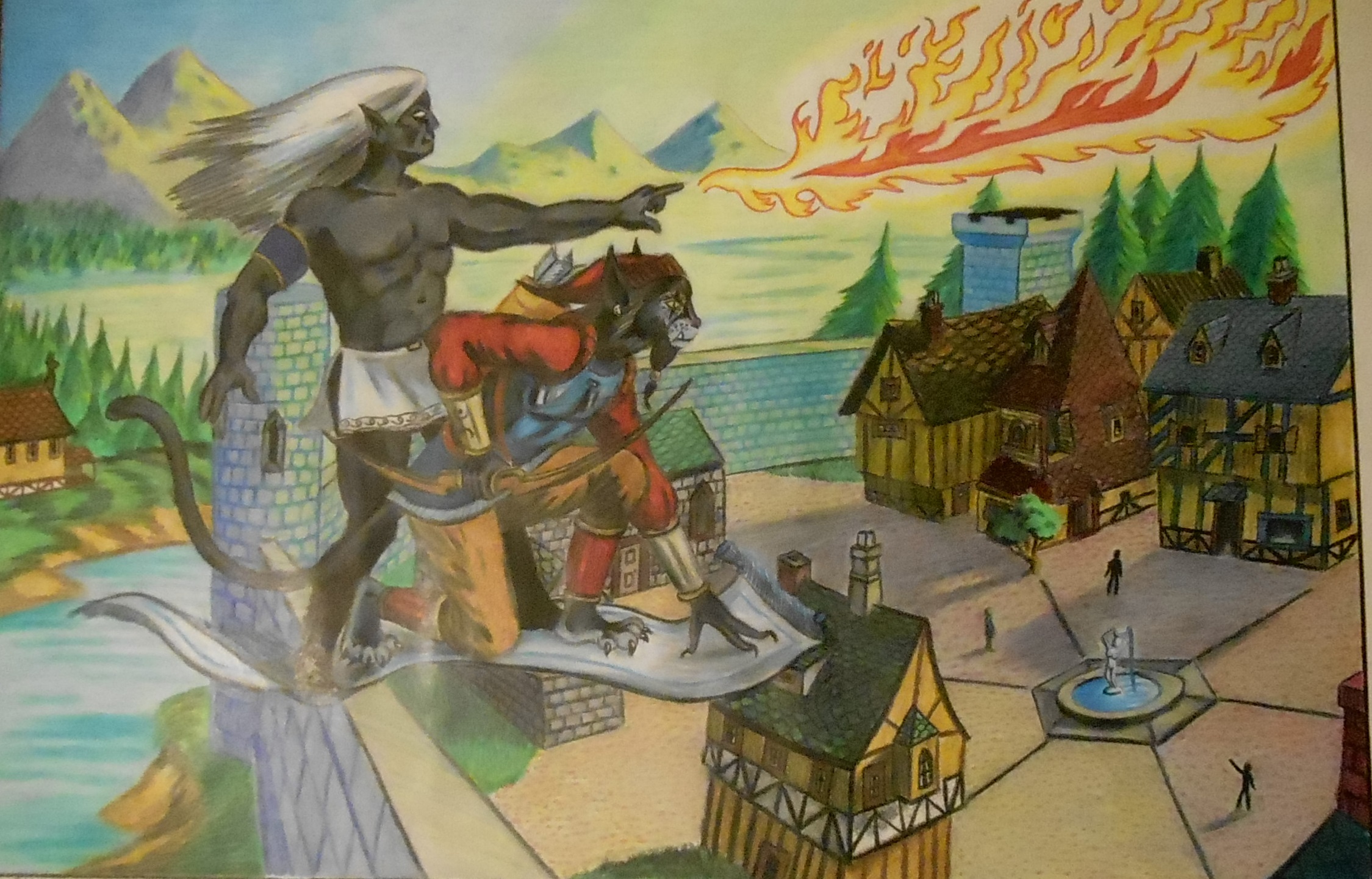
My journey as a writer actually began in grade school. I was writing Star Trek-like comics from the time I was in the fourth and fifth grade, ten and eleven years old. I called my comics Zebra Fleet, about the last fleet in the Star League on the distant, far reaches of the Milky Way Galaxy.
I started writing book-length stories in college, at Iowa State University. They weren’t all science fiction. They began to be more and more about the time and place where I grew up, Rowan, Iowa in the 1960s and 1970s They involved the people I knew there and then. My family, my friends, the people of Rowan, and random Iowegians. I based important characters on people I actually knew, mostly those I knew quite well. But I changed and swapped character details to hide their identities a little bit, and I gave them names that were mixed and matched and borrowed from the 1977 Ames, Iowa phone book. Dettbarn, Efram, Sumpter, Bircher, Clarke, MacMillan, White, and Murphy all came from there. Niland came from a famous alumni of the University of Iowa who played for the Dallas Cowboys.
In order to have food to eat and money to spend as an adult, I had to take my BA in English and add to it an MA in Education to get a job as a teacher. I took my closet full of nascent novels and moved to Texas where my dad’s job took my parents before I graduated college. There I added hundreds of characters who were perfect for Young Adult novels as I got to know real kids and learned about their real lives. I changed their names, details, and often cultures as I added them to my stories.
Other than a couple of shots in the dark as submissions of cartoons and manuscripts to publishers, I mostly kept my stories in the closet and focused more on teaching (which, to be fair, is also a form of story-telling.) I put my handful of rejection letters in the closet too.
But then, I got laid off for two years due to health and a wicked witch as a principal, and I spent my non-job-hunting time writing a novel about my science-fiction role-playing games with former students. It was called AeroQuest.
I managed to find a publisher for that book. But it was a bogus sort of experience. They paid me an advance of one dollar. Then they had me sign a seven-year contract in 2007. No editor or proofreader even worked for them. I basically had to edit and format the book myself. All they did is intentionally flub-up some titles and sections of text in the printed form. This was part of the master plan to get me to pay for an extensive fix to the mistakes they made. The only marketing they did was to send a notice for my over-priced paperback to the list of friends and relatives that they required me to make for them. Publish America is no longer in business. They were closed down by a class-action lawsuit from the authors they had tricked into paying them thousands of dollars for totally defective publishing services. Since I didn’t pay them any scam pennies, I didn’t get any of the money from the lawsuit. I only got my publishing rights back.
So, I went back to whole-heartedly teaching. Then, in 2012 I completed another manuscript that I thought was the best work that I had ever done. I submitted it to I-Universe publishers. They read it and loved it. As it turned out, they were in the process of being acquired by Penguin Books. They were the closest thing to a mainstream publisher that would entertain submissions by new and unproven authors like me.
They, of course, were offering a publishing package that included working with real editors and marketing personnel. But I had to go a bit into debt to swing the price. So, I was still paying someone to publish my book correctly. But, as a step in my author’s journey, it was invaluable. I got to work closely with an experienced editor who had previously worked for both MacMillan and Harcourt, two mainstream traditional publishers.
My book was given the stock cover you see here despite the cover requests I made and got approved. My original ask was apparently too expensive to print. There is no girl flying a kite in the story at all, let alone at night. It is a story about incompetent aliens trying to invade a small town in Iowa. I had requested a flying saucer with a kite flying behind it.
That first real publisher, though, made me into a real writer. The I-Universe marketeers got me listed as a winner of the Editor’s Choice Award. And they put that award and the Rising Star award on every paperback copy they printed. Everyone who read the book seemed to really like it. They set me up with this blog, space on their website for my book and bio, and they put me in touch with Barnes and Noble to talk about “meet the author” sessions to promote getting the book on their shelves. But a trip to the hospital with pneumonia and the end of the room on my Discover Card caused me to bring an end to my marketing campaign. I ended up with two five-star reviews and sixteen dollars-worth of royalties.
At this point in the story, temporarily stalled, I must start touting the part two of my essay for today. I should warn you, I have a lot more negative things to say about publishing next time.
Being a Child for More Than 60 Years
Yes, in some ways, I have Peter Pan syndrome. I have never truly grown up. But not in the ways that really matter in life.
As a writer of fiction, I put all my effort into writing young adult novels. My main characters are mostly children from roughly around eight years old to teens who are almost adults.
But it is not as G-rated as Nancy Drew. I have issues that creep in to become the monster under the bed. My childhood was not all naked innocence and sunshine.
Don’t get me wrong. I had wonderful parents. And wonderful grandparents. And the little town of Rowan, Iowa, becomes the town of Norwall in all my Earthbound fiction. It was a very magical, if boring, place to grow up. I lived in town, but my uncles and grandparents lived on working farms. I knew farm life. I knew how you fed animals, trained animals, and helped them reproduce. I knew that farm animals die. And, sometimes, people die too. Even people who are important to you and whom you depend on.
And at the ripe old age of ten, I was sexually assaulted by an older boy. It is hard to talk about that even now, 52 years later. It wasn’t so much a sex act that I was forced to commit. It was more of a sexual torture thing. He took his pleasure from twisting my private parts, making me hurt intensely, telling me all the while not to scream or call out for help. I think I even passed out at one point. There was no pleasure in it for me in any way. In fact, once he let me go with more threats, I promptly turned it into a repressed memory for twelve years. It turned me from an outgoing, leader-of-the-gang type kid into a miserable wallflower. It made me contemplate suicide as a teen. It led to some self-harm that my parents never actually figured out, burning my lower back against the heater grate and making small burn scars on my arms and legs. It kept me from falling in love with a girl until my thirties. And it made me turn myself inside out through drawings, cartoons, and storytelling.
Some of the key stories I have turned into novels were created because of what happened to me, the horror at the center of my childhood. The monster in my novel, The Baby Werewolf, and the serial killer in Fools and Their Toys were both inspired by him, and were both a reaction to what he did to me.
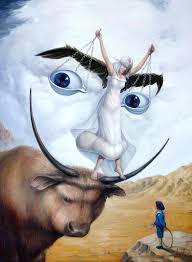
And do you know what he means to me now? I have forgiven him. He passed away a few years ago of a heart condition. I avoided him and his family from when it happened until now. I never told anyone what he did to me. I never sought any kind of revenge or justice for his act. To this day I still haven’t revealed his name to anyone, though I have been able to talk about it in this blog since he died. He has paid his price. The scales are balanced. I am healed. That is enough.
What he gave me, though, was a gift of purpose and an ability to fight the darkness with a strategy of sharing every tactic I have learned about defending myself from predators, depression, and crippling self-loathing in novel form. I shared those tactics as well during my years as a teacher and mentor to kids who had problems like mine for which my solutions sometimes also served as answers. I was able to put into thematic form the positive answers to the question every kid asks themselves somewhere along the road to adulthood, “Am I a monster because of what I have done and what has happened to me?”
The answer, of course, is, “No, I am not a monster.” But kids like me desperately need someone to tell them that and give them reasons why it is true. Fiction can do that. At least, I believe that it can.
And so, I write YA novels, novels for kids trying to become adults. And what good does that do if nobody ever reads my books? Or even this blog post which some of you who actually read my blog posts have probably given up on as too hard to read several paragraphs ago? It keeps me young. At 62 I still think like a twelve-year-old. Admittedly a wise-beyond-his-years twelve-year-old. I have never grown up in my mind where it counts. And maybe it even makes me able to fly like Peter Pan. But no jumping off roofs to find out for sure.
Leave a comment
Filed under commentary
Tagged as surviving sexual assault