
It seems sometimes, in a Judaeo-Christian society, that we are a constantly being scrutinized by a rather harsh all-knowing God who rewards getting the faith-words accurately correct, to the letter, and the faith-based actions perfect, without a single mistake. And He punishes missteps of word or deed with pain and suffering and the potential of an eternity in Sheol or Hell. And that is a tough God to live with. He is like a teacher who uses his or her God-like powers to reward or punish to lead his students all down an exacting, narrow path to a destination that does not have room for everyone when they arrive.
It doesn’t take long in childhood for a highly intelligent person to realize before childhood is over that this cosmology is actually a load of horse pucky. It didn’t even take long for somebody as semi-stupid as me.

What I like about listening on YouTube to Alan Watts’s wisdom is that he gives us an alternative way of seeing the universe and ourselves. This he can offer through his studies of Eastern and Buddhist philosophies. Everything appealing in John Lennon’s signature song, “Imagine,” comes from Lennon’s love of listening to Alan Watts’ lectures. He is obviously a wise guy.
Alan Watts teaches us the pathways that lead to finding yourself, who you truly are, and how you fit into the universe as a whole. When Carl Sagan says that we are all made of star-stuff, he is not only telling us what is literally true, as the elements our bodies were formed from were literally made in the nuclear forges at the centers of stars that later exploded in nova bursts to scatter the elements across the skies of everywhere. He is also telling us that what Alan Watts says is metaphorically true, that everything in the universe is part of the same thing and we are all one in this way.
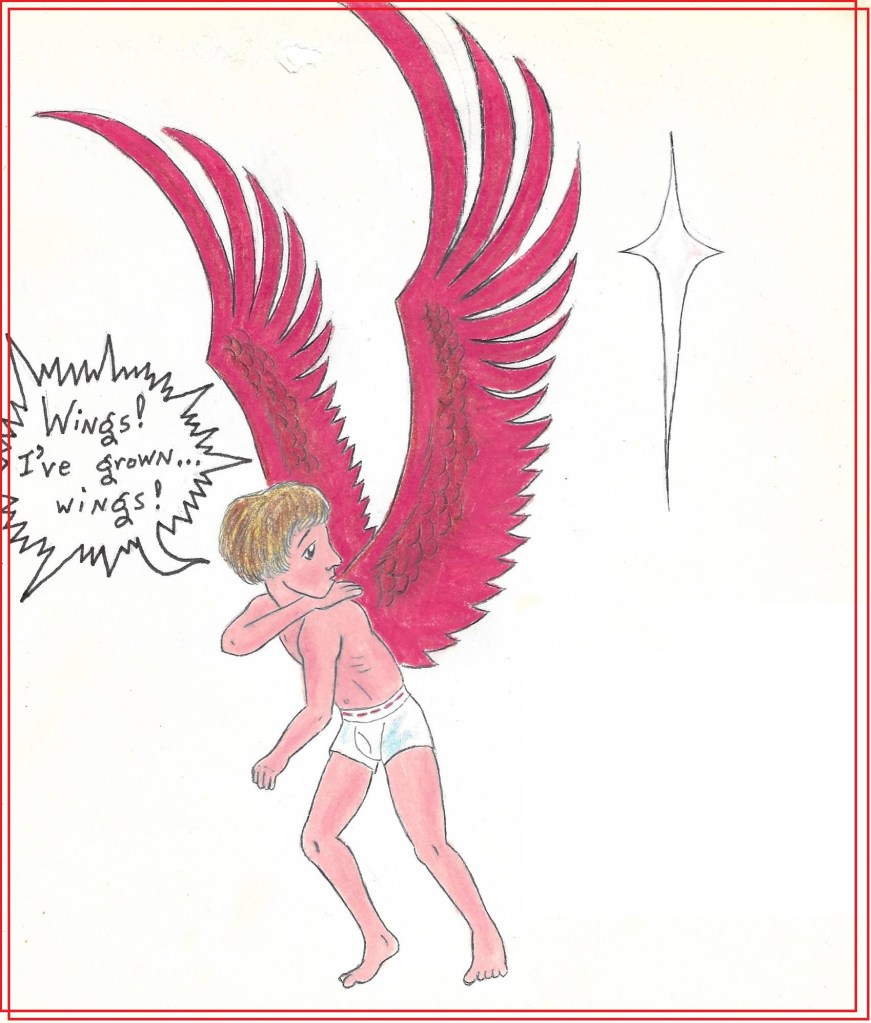
There is plenty to worry about in my little life. I could easily drop dead at any time from any one of my six incurable diseases or even the return of the skin cancer I beat in 1983. I suffer from the consequences of disease daily, as I have for many years now. My sins are many. I broke my promise the other day to never show you the horrors of my naked body on this blog. I constantly eat the wrong thing and continue to do things that I know are bad for the environment and the health of my body. I am prejudiced against racists, stupidity, and the actions of dedicated Trump-lovers. In many ways I deserve God’s wrath and brutal correction. I have come to truly believe that climate change is going to end life on Earth. I am horrible.
But I have learned from Alan Watts that all of those concerns mean nothing. I don’t believe in Heaven or an afterlife. But I do not fear death. I am one with the universe. And the universe goes on even if I do not. And I will always be a part of it, even after I am no longer alive. The universe has a mind and is intelligent And I take part in that because one small part of that intelligence is me, and lives in my head.
There is comfort to be found in the words of Alan Watts. And living in pain as I do, I really need that comfort most of the time. That is why I have attempted to share a bit of that comfort with you.





The Philosopher King’s Quest
Marcus Aurelius was a Roman Emperor, one of the good ones, not like Caligula, Nero, or even Commodus, his son who was emperor after him.
But what made him good? Obviously, the fact that he was beloved by the Roman people, even the senators and the very people who would’ve benefited personally by his failure and demise.
He was a good administrator who benefited the people with public works. He was a good military leader who maintained the Pax Romana until he died in 180 A.D.
Of course, his son, Commodus, blew that all up by being such an incompetent dictator that his own Praetorian Guard assassinated him (as portrayed in the movie Gladiator, though that movie also made him out to be his father’s murderer, of which there is no real evidence)
But my friend Emperor Marcus was so much more than just a good ruler. He was a good man. And this is due almost entirely to the fact that he was a well-known Stoic Philosopher.
He embraced the philosophy of the Greek philosopher and Roman slave Epictetus. Stoicism is the belief that you, as an individual, do not control anything in the outside world to the degree you can control yourself. It is not the things, people, and events around you that matter, since you can’t control those. It is your own set of principles that you have to put in place and adhere to that affect the outcomes in life. In fact, you should view setbacks and roadblocks to your accomplishments not as negative things, but as a learning opportunity. Learn all you can while you may, and at every opportunity. The Stoic welcomes hardship because the overcoming of hardships shapes the man or woman you will become.
I found this philosophy to be the only way forward on some days during my teaching career. I was always more successful in meeting challenges head-on as they arose in front of me. Delaying, making excuses, or running away are all easier to do than that. But those other wimpy tactics never yield the success you can have by defeating your opposition and hardships face-to-face. Of course, you have to remember too that overcoming opposition does not have a selfish quality if you are a Stoic. In fact, you must respect all men, even your enemies. Marcus Aurelius, in response to victory in battle won by having thirsty troops offer a Christian prayer and then have their problem solved by a fortuitous rain storm, told the Senate they must no longer persecute Christians. They were to be considered good Roman citizens, no matter what their religion was.
Marcus Aurelius made it clear in his writings, the Meditations written in Greek, that, “In order to win the day, you must first win the morning.” To him this meant you had to be an early riser, tackling each problem of the day as it came up in the order they happened, morning to night.
So, the Philosopher King’s Quest, by this Stoic philosophy, is managed by first putting yourself right. You must examine your beliefs, test your hypotheses, and prove yourself to yourself before trying to tackle the world.
Leave a comment
Filed under commentary, compassion, heroes, Paffooney, philosophy
Tagged as marcus-aurelius, mindfulness, philosophy, stoic, Stoicism