Tag Archives: literature

The Lyrical Imperative

Creativity

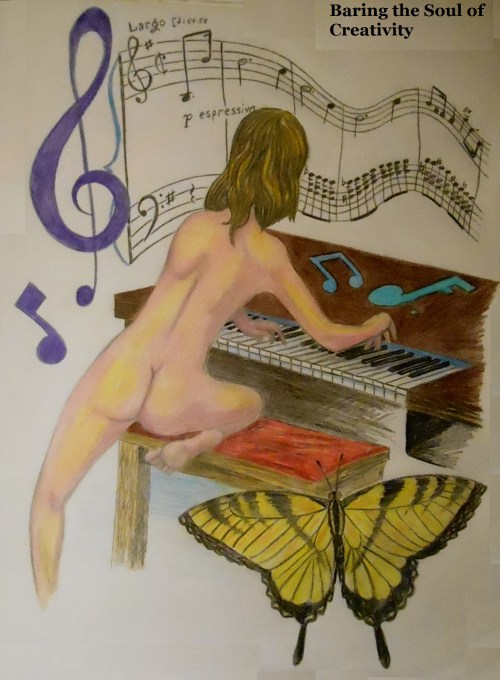
I am always amazed by the fact that things which are inherently silent in nature make music in your mind.  Writing is like that for me.  Drawing is like that.  And so is photography.  That is an actual musical score from Chopin in the background.  My son recognized it from a book of piano pieces I bought for him because he reads music and can turn those squiggle-bugs on the fence into the right plinkety-plunks on a keyboard.  But there is more music in that picture besides.  The nude young girl at the keyboard softly rendered in velvety colored pencil tones is also musical in nature, for more than just the fact of fingers on a silent colored pencil keyboard.  The lyrical loops of black and yellow in the wings of the tiger swallowtail butterfly also make music in my head, sprightly piano music like Chopin’s, or possibly Vivaldi’s violins.

Did you listen to the music?  I don’t mean Vivaldi’s, although if you haven’t heard it, you certainly should.  I mean the music in the words.  The music has to be there for me for the writing to be good.  That’s why I consider Ray Bradbury and Walt Whitman to be masters and Stephenie Meyer and E. L. James to be unreadable hacks.  The beat and the flow of the words need to be patterned and patient and wily.   Do you not hear it in that last sentence? The alliteration of the first two adjectives set off by the counterpoint of the stressed-unstressed beats of the third?  How can I explain this?

Iambic pentameter is the true genius of Shakespeare’s plays.  What the heck is iambic pentameter, you ask?  Well, I realize you have probably never needed to teach poetry to seventh graders, a truly impossible but infinitely rewarding task.  So let me tell you.  Units of stress called iambs consist of an unstressed syllable followed by a stressed syllable.  So naturally, if iambs are put into pentameter, then there must be five of them in a line of iambic pentameter poetry.  It is a simple, rhythmic way to say something profound and interesting.  The classic example is the first line of Shakespeare’s Sonnet 18;

Shall I compare thee to a summer’s day?

Translating that into X’s and O’s where X=stressed and O=unstressed;

O X O X O X O X O X

It’s simple, five oxes, all in a line.  Except that last one about oxes is actually O X O X X O O O O X, a less simple pattern, yet still organized on the beat.  Two iambs, a dactyl and an anapest.  Okay, now I am talking like a poetry geek, and I have to stop it before I hurt someone.

The whole point is, words should be musical, even when they are not the words to a song.  And now I must close on the verge of starting a ten-thousand word thesis.  I shall shut up now.  Here endeth the lesson.

Leave a comment

Filed under colored pencil, education, foolishness, goofy thoughts, humor, metaphor, music, Paffooney, poetry, strange and wonderful ideas about life

An Autobiography of Mickey

20160102_102647

Last night I watched again Part I of Ken Burns’ Mark Twain.   I think it reminds me of who I am as a writer.  No, I am not being all big-head arrogant and full of myself.  I devoured certain writers as a youth, consumed them whole.  Charles Dickens was my first passion, followed by J.R.R. Tolkien, and then Mark Twain.  Of all of them, Samuel Clemens is the most like me.  He was from the Midwest, born and raised in Missouri along the Mississippi River.  I am from the Midwest, born and raised in Iowa along the Iowa River.  He endured hardship and tragedy as a youth, losing his little brother in a riverboat accident, and he dealt with it by humor.  I endured a sexual assault from an older boy, and dealt with it by… well, you get the picture.  We are alike, him and I.  We both draw upon the place we grew up, the people we have known, and the events of our youth to create stories.

farmgirl1

It is a pretty big responsibility to follow in his footsteps, and I will probably never live to see the success and the wealth that came to him.  But I have a responsibility to the people I knew and the time that gave rise to me to tell their story.  I need to build a network of stories that resonate the truth of existence that I have been witness to.  A big responsibility… and I probably will not live up to it.  But I have to try.

Being a writer is somewhat like being cursed.  The words burn inside, needing to get out, needing to be heard.   I have stories that need to be told, and they will be told, even if only to file away in the closet again.  Like Mark Twain, I am good at feeling sorry for myself.  And the Mickey part of me, the writer part of me, is just like Mark Twain, a writer persona, and not the real man himself.  I am simply the container for something that has to exist and has to tell stories.  It is not a bad thing to be.  But the more I get to know it, the more I would not wish the destiny on others.

Forgive how sad and bunglingly boorish this post is.  But sometimes there are thoughts I simply have to think.  And as a writer, I am bound to write down the silly things that I think.

Leave a comment

Filed under autobiography, humor, Paffooney, Uncategorized

An Autobiography of Mickey


20160102_102647

Last night I watched again Part I of Ken Burns’ Mark Twain.   I think it reminds me of who I am as a writer.  No, I am not being all big-head arrogant and full of myself.  I devoured certain writers as a youth, consumed them whole.  Charles Dickens was my first passion, followed by J.R.R. Tolkien, and then Mark Twain.  Of all of them, Samuel Clemens is the most like me.  He was from the Midwest, born and raised in Missouri along the Mississippi River.  I am from the Midwest, born and raised in Iowa along the Iowa River.  He endured hardship and tragedy as a youth, losing his little brother in a riverboat accident, and he dealt with it by humor.  I endured a sexual assault from an older boy, and dealt with it by… well, you get the picture.  We are alike, him and I.  We both draw upon the place we grew up, the people we have known, and the events of our youth to create stories.

farmgirl1

It is a pretty big responsibility to follow in his footsteps, and I will probably never live to see the success and the wealth that came to him.  But I have a responsibility to the people I knew and the time that gave rise to me to tell their story.  I need to build a network of stories that resonate the truth of existence that I have been witness to.  A big responsibility… and I probably will not live up to it.  But I have to try.

Being a writer is somewhat like being cursed.  The words burn inside, needing to get out, needing to be heard.   I have stories that need to be told, and they will be told, even if only to file away in the closet again.  Like Mark Twain, I am good at feeling sorry for myself.  And the Mickey part of me, the writer part of me, is just like Mark Twain, a writer persona, and not the real man himself.  I am simply the container for something that has to exist and has to tell stories.  It is not a bad thing to be.  But the more I get to know it, the more I would not wish the destiny on others.

Forgive how sad and bunglingly boorish this post is.  But sometimes there are thoughts I simply have to think.  And as a writer, I am bound to write down the silly things that I think.

Leave a comment

Filed under autobiography, humor, Paffooney, Uncategorized

Chuck Dickens and the Origins of Writing

Image

Don’t make the mistake of thinking I have any earthly idea where writing comes from or how it began.  I am only talking personal history here, nothing grander or more meaningful.  This post is only self-referential hoo-haw, which is a fancy way of interpreting “conceited crap”.

So, the truth is, I am writing about Charles Dickens because he is the author I most want to become.  True, I rant on and on about Twain and his humor.  And a good deal of my artwork owes everything to Disney, but everything I am good at in writing is based on Dickens.

The first actual Dickens novel that I read was accomplished during my extended illness as a high school sophomore.  I read in bed, both at home and in the hospital, from my library copy of The Old Curiosity Shop.  I was enthralled by the journey and subsequent tragedy of Little Nell.  I thoroughly loathed the villain Daniel Quilp and was roundly thrilled by his well-deserved fatal comeuppance.  It was my first encounter with the master of characters.  I followed that reading with a biography of Dickens that revealed to me for the first time that his characters were based on real people.  Mr. Micawber in David Copperfield was actually Dickens’ own father.  Little Nell was the cousin he dearly loved who died in his arms.    The crafty Fagin was a caricature of a well-known fence named Soloman, a Jew of infamous reputation, but not without his redeeming quality of caring for the orphaned poor.  So it is that I have chosen to make my silly stories about real people in much the same way Dickens did.  If you are now worried that since you know me, you may end up in my books, never fear.  I change names and splice characters together.  You will have to make an effort to recognize yourself.  And, besides, nobody reads my books anyway.

I also like the way Dickens uses young characters and follows them over time as they grow and change.  Oliver Twist was the first child protagonist in English literature.  David Copperfield, Nicholas Nickleby, and Pip in Great Expectations are also like that.  David Copperfield, in fact, is Chuck’s own fictionalized self.  I fully intend to do the same.  It is the reason my books fall into the Young Adult category.  I also intend to employ the same kind of gentle, innocent humor that Dickens used.  I mean to portray things that are funny in a disarming, absurdist way rather than resorting to attack humor and bad words.

There it is, then, my tribute to Charles Dickens, a writer who makes me be who I am and write what I write.  I am not supposed to do Christmas posts because of my avowed religion, but you can consider this to be as close as I can come.  The author of A Christmas Carol… it doesn’t get much more Christmassy than that.

Leave a comment

Filed under Uncategorized

Tess of the D’Urbervilles (by Thomas Hardy)

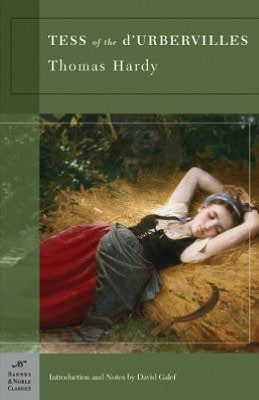
9781411433267_p0_v1_s260x420I decided I wanted to be a novelist because of Charles Dickens.  I loved the way he told a story with vivid characters, rising and falling crises, and story arcs that arrive at a happily-ever-after, or a how-sad-but-sweet-the-world-is ultimate goal.  Sometimes he reached both destinations with the same story, like in David Copperfield or The Old Curiosity Shop.  I have wanted to write like that since I read The Old Curiosity Shop in 9th Grade.

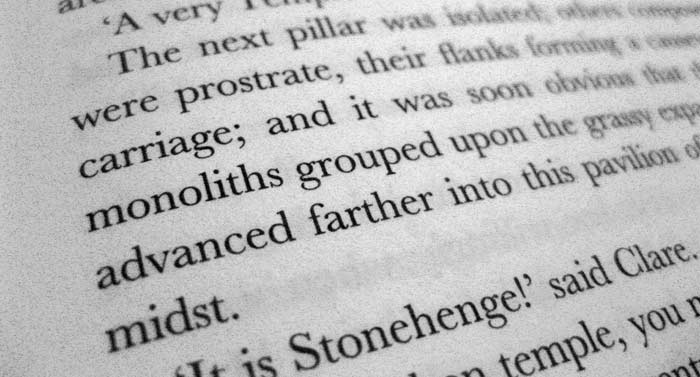
Thomas Hardy has a lot in common with Chuck.  I mean, more than just being old Victorian coots.  Hardy knows the Wessex countryside, Blackmoor and Casterbridge with the depth and understanding that Dickens bestows on London.  Hardy can delineate a character as clearly and as keenly as Dickens, as shown by Diggory Venn, the Reddleman in Return of the Native, or Tess Durbyfield in the novel I am reading at the moment.  These characters present us with an archetypal image and weave a story around it that speaks to themes with soul-shaking depth.  Whereas Dickens will amuse and make us laugh at the antics of the Artful Dodger or Mr. Dick or Jerry Cruncher from a Tale of Two Cities, Hardy makes us feel the ache and the sadness of love wrecked by conflict with the corrupt and selfish modern world.  Today I read a gem of a scene with the three milkmaids, Izz, Retty, and Marian looking longingly out the window at the young gentleman Angel Clare.  Each wants the young man to notice her and fall in love with her.  Sad-faced Izz is a dark-haired and brooding personality.  Round-faced Marian is more jolly and happy-go-lucky.  Young Retty is entirely bound up by shyness and the uncertainty of youth.  Yet each admits to her crush and secret hopes.  Tess, meanwhile, overhears all of it, all the time knowing that Angel is falling in love with her.  And worse yet, she has sworn to herself never to let another man fall in love with her because of the shameful way Alec D’Urberville took advantage of her, a quaint old phrase that in our time would mean date rape.  There is such bittersweet nectar to be had in the characterizations and plots of these old Victorian novels.  They are more than a hundred years old, and thus, not easy to read, but worth every grain of effort you sprinkle upon it.  I am determined now to finish rereading Tess of the Durbervilles, and further determined to learn from it, even if it kills me.

6a01538e2072a3970b015432b611a2970c

Leave a comment

Filed under Uncategorized

Tom Sawyer Abroad (Book Review)

20161017_162015

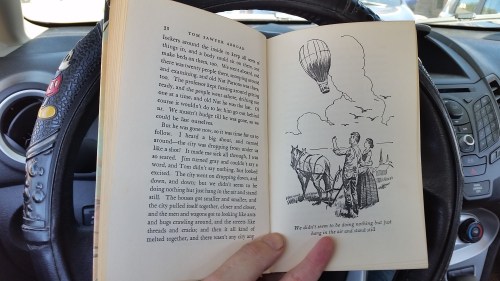
Yep, I read about being an “erronort” traveling in a balloon while sitting in a parking lot in my car.

Believe it or not, I read this entire 100+-year-old book in my car while waiting for my daughter and my son in school parking lots.  What a perfectly ironic way to read a soaring imaginary adventure written by Mark Twain, which has been mostly forgotten by the American reading public.

c360_2016-10-30-10-26-22-635

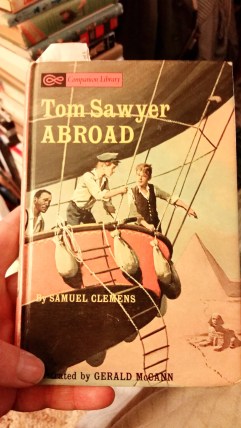
My copy of this old book is a 1965 edition published for school libraries of a book written in 1894.  It tells the story of how Tom and Huck and Jim steal a ride on a balloon at a town fair from a somewhat mentally unhinged professor of aeronautical science.  The balloon, which has space-age travel capabilities due to the professor’s insane genius, takes them on an accidental voyage to Africa.

Of course, the insane professor intends to kill them all, because that’s what insane geniuses do after they prove how genius-y they really are.  But as he tries to throw Tom into the Atlantic, he only manages to plunge himself through the sky and down to an unseen fate.  The result being a great adventure for the three friends in the sands of the Sahara.  They face man-eating lions, mummy-making sandstorms, and a chance to land on the head of the Sphinx.

The entire purpose of this book is to demonstrate Twain’s ability to be a satirical stretcher of the truth, telling jokes and lies through the unreliable narrator’s voice of Huck Finn.

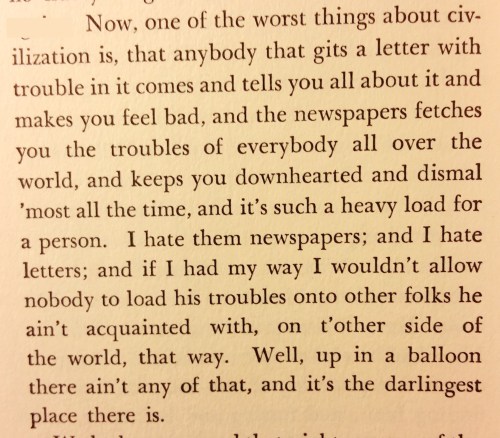
Here is a quoted passage from the book to fill up this review with words and maybe explain just a bit what Twain is really doing with this book;

c360_2016-10-30-10-48-45-630

Notice how I doubled my word count there without typing any of the words myself?  Isn’t the modern age wonderful?

But there you have it.  This book is about escaping every-day newspaper worries.  In a time of Presidential Candidate Donald Trump, global warming, and renewed threats of thermonuclear boo-boos with Russia, this proved to be the perfect book to float away with on an imaginary balloon to Africa.  And the book ends in a flash when Aunt Polly back in Hannibal wants Tom back in time for breakfast.  I really needed to read this book when I picked it up to read it.

Leave a comment

Filed under book reports, book review, foolishness, good books, humor, imagination, Mark Twain, old books, strange and wonderful ideas about life

A Poet Called William Shakespeare

Who was William Shakespeare?

If you’re sure you know, then let me shake your world.

We know who Mark Twain was. Sam Clemens never kept that a secret.

Shakesspere, Shakysper, Shaxpeer, Schakespeire, Shackper, Shexpere, Shaxkspere and Shakspeyre.

All of these refer to our boy WIlly in the records of the time.

Even those that he misspelled when he signed them himself.

If you believe he was the glovemaker’s son, the theater owner, and the character actor

Who lived in a house in Blackfriars, London, and grew up in Stratford on Avon,

I will not disrespect you for your beliefs.

But that man, if he was the greatest of all poets, owned no library of his own,

Nor had such a thing available,

Nor ever left the area of Southern England where his entire life was lived,

Nor evidenced any sort of formal schooling beyond the earliest schooling.

Reading English and Latin at the King’s School of Stratford,

Though nothing beyond the age of fourteen.

These things we are mostly sure of;

Ben Jonson knew the real William Shakespeare.

The real William Shakespeare knew Christopher Marlowe,

And the patron of his poem books, the Earl of Southhampton,

Probably knew the real Bill too.

What we know about the real William Shakespeare comes from his work.

This was perhaps the most literate man who ever lived.

Thirty-seven plays, 154 Sonnets, and two narrative poems

Demonstrate he knew the Italian countryside,

He knew the ways of European courts, especially the English court.

He understood points of English law.

He accurately portrayed emotions like depression, hatred, love, and madness.

He knew the stories of Hamlet, Prince of Denmark, Othello the Moor, and King Lear and his daughters,

Though he did not invent any of those stories collected from other lands.

So, who was William Shakespeare really?

Francis Bacon? Kit Marlowe raised from the dead? Edward DeVere, the Earl of Oxford?

Or a combination of men coordinated by Sir Francis Bacon’s secret plan?

We will never know for certain. But we can ask him through his work.

The iambic pentameter of William Shakespeare still lives and reveals the mind of Shakespeare.

Though the true name behind the pen name will never be revealed.

Leave a comment

Filed under Uncategorized

Naked Innocence

20180105_082611

To be clear, I will have to write a post called Naked Experience to go with this post.  It is a William Blake style of thing.  You know, that English Romantic Poet guy who was into drawing naked people even more than me?  The writer of Songs of Innocence and Experience?  You know, this stuff;

Well, maybe you don’t know.  But Blake gave the world the metaphor of the innocent lamb and the tyger of experience (tyger is his spelling, not mine, and it didn’t blow up the spell checker, even though it made the thing unhappy with me again).  There is a certain something I have learned about nakedness that I mean to innocently convey.  I learned it from anatomy drawing class and spending time with nudists.  Naked is not evil.  Naked is not pornography.  Nakedness, itself, is a very good thing.

Alandiel

At this point the avid clothing-wearers among you are probably saying to yourself, “This guy is nuts!  If God had wanted us to be nude, then we wouldn’t have been born with clothes on.”  And I must admit, I cannot argue with logic like that.

But on a more serious note, I believe nudity is a fundamentally essential part of the nature of art.  After all, pictures of naked people are a central part of what people have been drawing since they first started etching them with charcoal on cavern walls.  And all art, including this blog, is about the human experience.  What it means to be human.  What it feels like to be alive on this Earth and able to feel.

creativity

And there is nothing sinister and immoral in drawing nudes to portray that fact.  I am trying to show metaphorically the music of existence, the pace, the symmetry, the musical score…  It isn’t focused on the private bits, what some call the naughty parts, even when those things are present in the picture.  “How dare that naughty Mickey show the naked back end of that butterfly!  It ought to have pants on at least!”  Yes, I am making a mockery of that outrage itself.  I am not a pornographer.  These pictures were not created to engender any prurient interests.  These pictures are part of Blake’s lamb.  They will not bite you.  Though blue-nosed people who wish to control what others think may very well bite me for daring to say so.

I have posted a lot of writing and artwork on this blog that I held for the longest time to be completely private and personal.   I hardly ever showed any of it to anybody before I posted it here.  But I am old.  I no longer have secrets.  I am capable of telling you everything even though I have never met most of you in real life.  And I have no shame.  I have become comfortable with emotional and intellectual nudity.  And when I am dead, the body I have kept hidden from the world for so long will be no more.  It’s just a thought.  It’s a naked thought.  And it is completely innocent.

Leave a comment

Filed under artists I admire, artwork, commentary, humor, nudes, Paffooney, strange and wonderful ideas about life

Shakespeare is NOT Bacon

3475b987-6c5d-4699-ba5d-e6008559028f

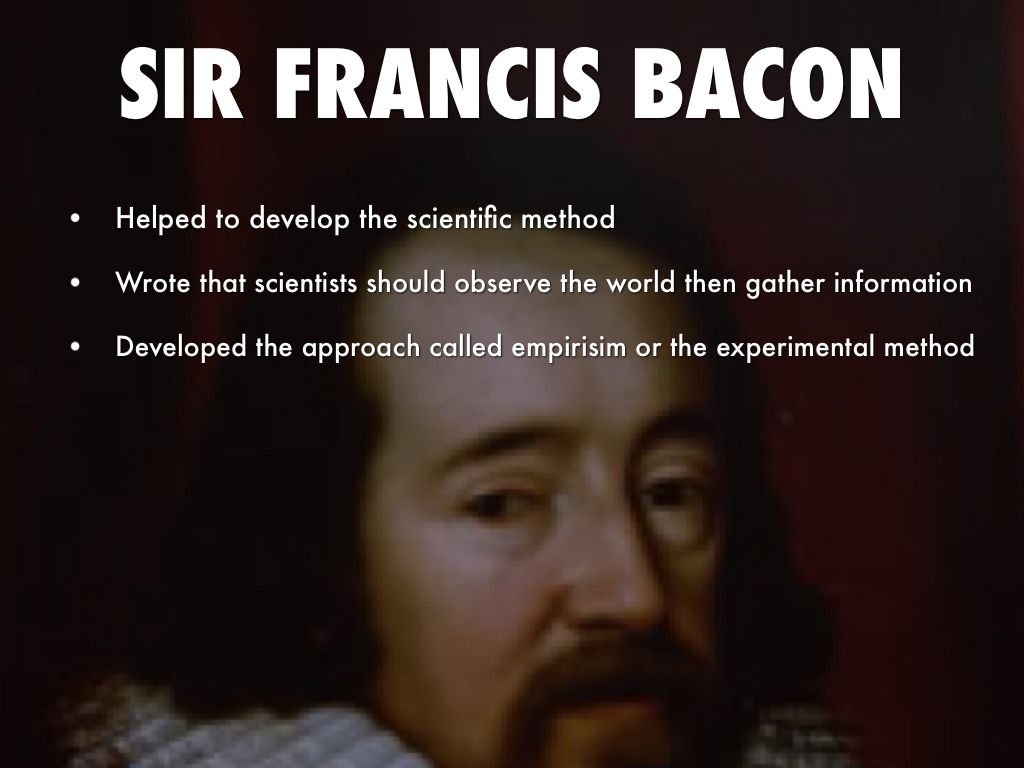
(The graphic above should say “Empiricism,” not “Empirism.”  Ir is a typo.

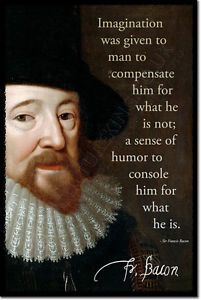
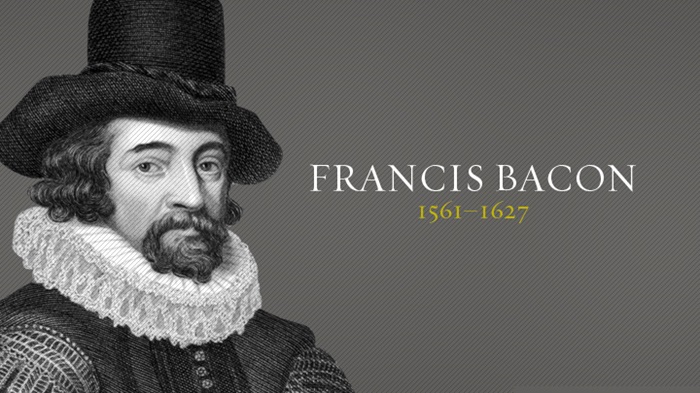
Yes, Sir Francis Bacon is at least as interesting and obscure as William Shakespeare.  But let me assure you, I can confidently state, “Shakespeare is NOT Bacon!”  He is not eggs either… or any other breakfast food.  Sir Francis Bacon was the breakfast, the first meal in the great Elizabethan banquet of literature, poetry, and culture.  And William Shakespeare is a more important main course, the royal dinner, as it were.  But it has to be acknowledged that Bacon was essential to the very existence of William Shakespeare.  Breakfast always comes before dinner.

t2ec16dhjgoffvtvhuebslhohksvg-60_35

In 1845 a female author by the name of Delia Bacon (nothing suspicious about that coincidence, by the way) put forward an idea that William Shakespeare’s plays were actually written by a group of men under the leadership of Sir Francis Bacon.  She thought the group intended to inculcate into English culture an advanced system of politics and philosophy which they themselves could not take credit for publicly.  She would later write a book in 1857 called The Philosophy of the Plays of Shakspere Unfolded which advanced the notion that the plays were written for Baconian purposes beyond mere theatrical entertainment.  Numerous people, including the American poet Ralph Waldo Emerson supported her in her quest to find proof, sending her to England to research the crazy conspiracy theories she founded by noting ciphers in the plays, and in the essays of Bacon, that led her to believe all she had to do was dig up the gravestone of Shaksper in the chapel at Stratford to find written proof in Bacon’s own hand that he was, in fact, the author or primary motivator of the plays of William Shakespeare.  She spent one cold and creepy night in the chapel, just her and her spade and her crow bar, along with the bones of the Stratford guy, trying to work up the courage to do a bit of grave-robbing… and failing.    It is a good story, but very poor archaeology.  She was denounced by the literary historians and establishment figures who supported the Stratford guy.  They said her scholarship was sloppy, her cipher analysis goofy and unfounded, and her conclusions more questionable than a pig in theatrical make-up.  (My words, not theirs.  English critic George Henry Townsend was entirely too stuffy and boring to simply be quoted here.)

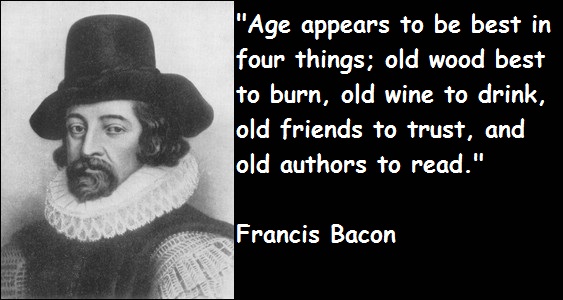
francis-bacon-quotes-francis-bacon-quotes

Now, I, of course, strongly disagree with the Bacon lady.  As I said in the very title, “Shakespeare is NOT Bacon.”  But I do think there was merit in sniffing out old Frankie’s scent and fingerprints on the whole Shakespeare/Shaksper thing.  The Stratford guy was not Shakespeare either.  When he died in 1616 there was no public outcry at the loss of England’s most popular poet and playwright.  Even King James who was Shakespeare’s number one fan and constant audience member, didn’t mourn the passing of the actor/theater-owner/businessman from Stratford.

Francis Bacon, on the other hand, was a powerful intellect, educated in the ways of science, the law, and government in the Elizabethan age.  Bacon gathered other men of powerful intellect and accomplishment at Gray’s Inn to hold debates about things philosophical and things scientifical.  It is not unreasonable to imagine that the man who really wrote the plays attributed to Shakespeare sat at that table and participated in those debates.  And Sir Frankie had good reason to keep lots of this business a secret.  There exists evidence that though he was apparently happily married to a fourteen-year-old girl, he did a little bit of swaying toward the other gender too, a thing not too popular with the average Anglican Englishman.  He also dabbled a bit in the occult (think witches in Macbeth sort of thing).   And his essays indicate a strong correlation to the philosophies and ideals of the German Rosicrucian Movement.  In 1593 during a Roman Catholic plot against Queen Elizabeth, Frankie managed to take a position on the investigation that totally offended the old virgin queen.  He was on the outs with Liz for the rest of her difficult and anger-management-challenged life.  He did rise to prominence under her successor, James I, but never-the-less managed to die amidst total ruin and scandal.  There is a lot in Frankie’s life to indicate that he had a direct influence on the content of Shakespeare’s plays.  Some of the characters in the plays may actually be, at least in part, based on Frankie himself.  But  this guy never hung out with the Stratford guy that anyone knows of.

So, if Shakespeare is NOT Bacon, or eggs either… and the Stratford guy isn’t Shakespeare, then who is?  Come on!  You knew I had a lot more to say about this crazy conspiracy thing, right?

67489

Leave a comment

Filed under conspiracy theory, education, foolishness, goofy thoughts, humor, philosophy, strange and wonderful ideas about life, William Shakespeare

The Heart of Shakespeare

3a8307f6bb01311fc90478857d32e891

Despite my skepticism about the accepted wisdom in regard to the historical William Shakespeare, I do deeply love the body of work that is Shakespeare.  My most favorite play is The Tempest, the final play in the canon.  I also have read and loved As You Like It, Romeo and Juliet, Hamlet, A Midsummer Night’s Dream, The Merchant of Venice, Henry V, Richard III, Julius Caesar, Macbeth, Othello,  and King Lear.  I know that is not all of the plays, but that is probably more than most people have read.  And of course, as an English major in college, and later as a teacher, I have actually analyzed, compared, studied, and taught some of these plays.  So, the Shakespeare I know is the Shakespeare of the writer’s own mind, his communicated wit and wisdom, imagination and intellect.

shakespeare

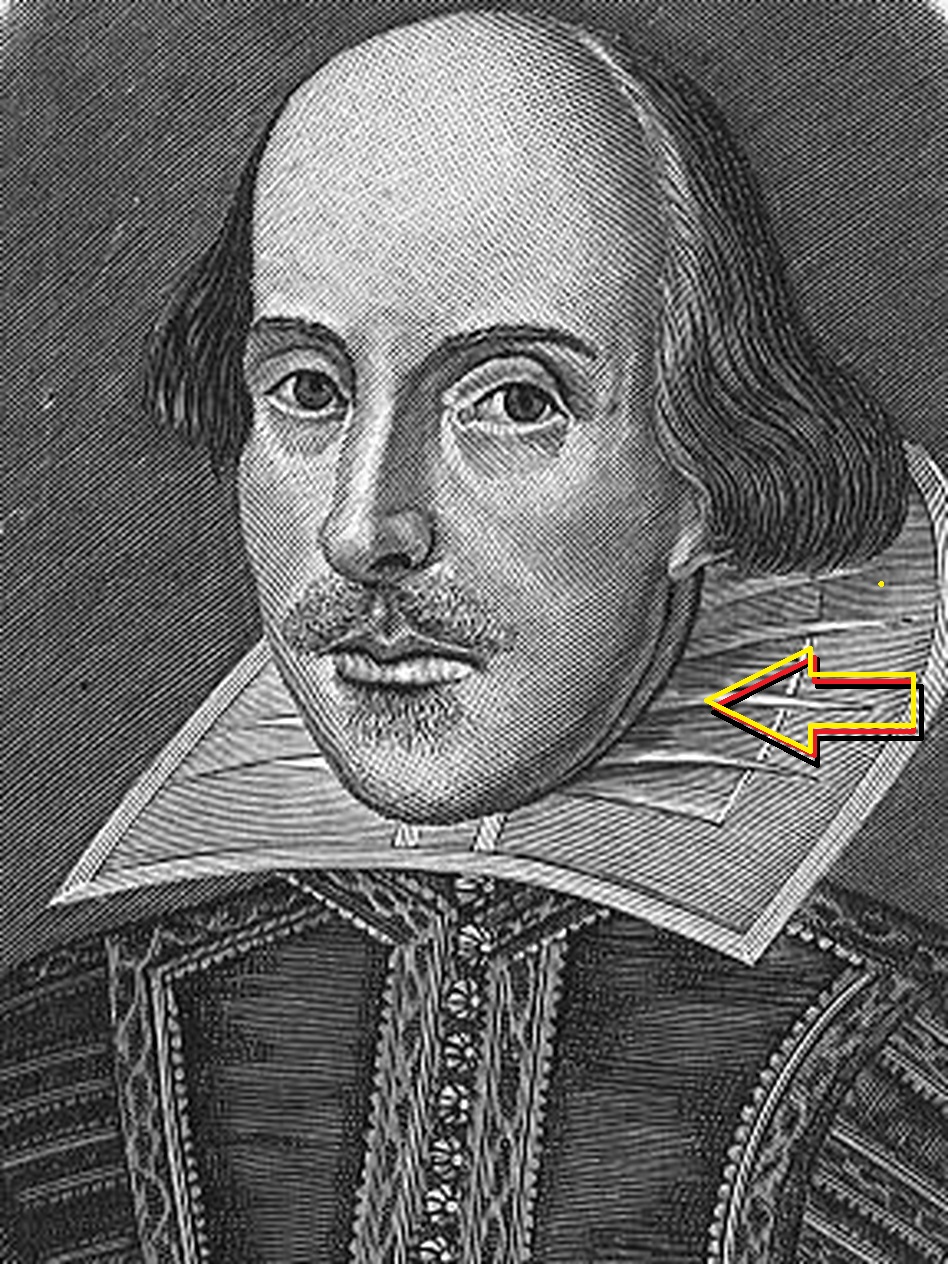
And I do not have any disdain or disrespect to give the Stratford guy.  To say that, in the Elizabethan world, the actor son of a tradesman with only a grammar school education could not have been the mind behind the literary masterworks is foolish.  The Stratford guy owned and operated the Globe theater at a time when “the play was the thing”.  All of London society, rich and poor, gloried in the theater, and Shakespeare did for Elizabethan plays what Babe Ruth did for baseball.  He was a good enough business man to make himself a decent fortune.  Although, apparently, this world-shaking author didn’t spend any of his money on owning books, which in my experience is extremely rare among writers.  His life, bound up in an urban existence that never traveled outside of the country also somehow produced great works that were set in places in Europe, especially Italy, that described those settings in accurate detail.  As a working actor, he also apparently had the time to study law and somehow learn the inner workings of the royal courts of more than one country.  And the plots were not original.  He took existing stories that already were a part of European literature and lore and wove them into rich tapestries of human striving, laughable foibles, and a deep understanding of basic human character.  But I do have doubts that the businessman and actor from Stratford was the real writer of the plays.

I have already told you that I don’t believe Sir Francis Bacon was secretly Shakespeare.  Christopher Marlowe wasn’t either.  And I have unsuccessfully made a case against Shakspere, the Stratford guy.  So who could possibly be the real William Shakespeare?  Well, I am not going to be able to make a decent case for him in the 100 words that I have left to end this essay with.  So there has to be more to come.  (And stop screaming obscenities at the computer screen.  I am going to reveal the name before the end of this essay.  And I promise not to make my case for him in coming days too boring and horrible.)  I have to show why I believe that the true heart of Shakespeare could only have beaten within the body of Edward deVere, the Earl of Oxford.

Leave a comment

Filed under conspiracy theory, goofy thoughts, humor, strange and wonderful ideas about life, William Shakespeare