(This old post from 2016 comes from a time when I owned a laptop with keys that would stick in place, especially with the zoom keys and delete key. It took me months to learn how to correct the problem.)
My computer is wearing out. It blew up the WordPress posting sight on my screen to where the letters in the title are once again an inch tall. The chances that it will suddenly wipe out everything I have typed and save a blank post over the whole thing almost instantly is making me tired. To combat the problem, I must constantly keep a backup copy on Microsoft Word, which may also grow or shrink for no apparent reason. It gets frustrating, and I am old, ill, and quite tired. But I am also only a month away from two entire years of posting every single day, a feat I am not ready to fail at this close to the end. So let me show something from my cartoon collections stolen from the internet at large.
From the Lola Bunny file;
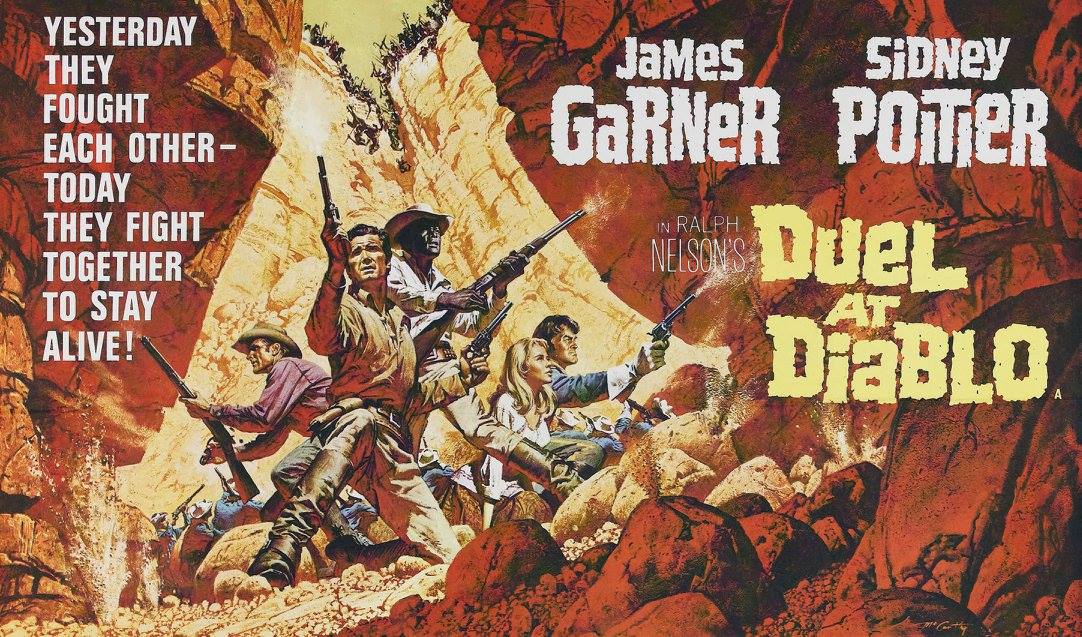
From Movie Art;
From Hanna-Barbera Toons;
And these are all things I could’ve written a 500-word post about with unique and possibly yawn-inducing Mickian insights, but today I would rather not. Today I take the “picture is worth a thousand words” thing and give you 17,000 thousand words worth of not having to listen to me.
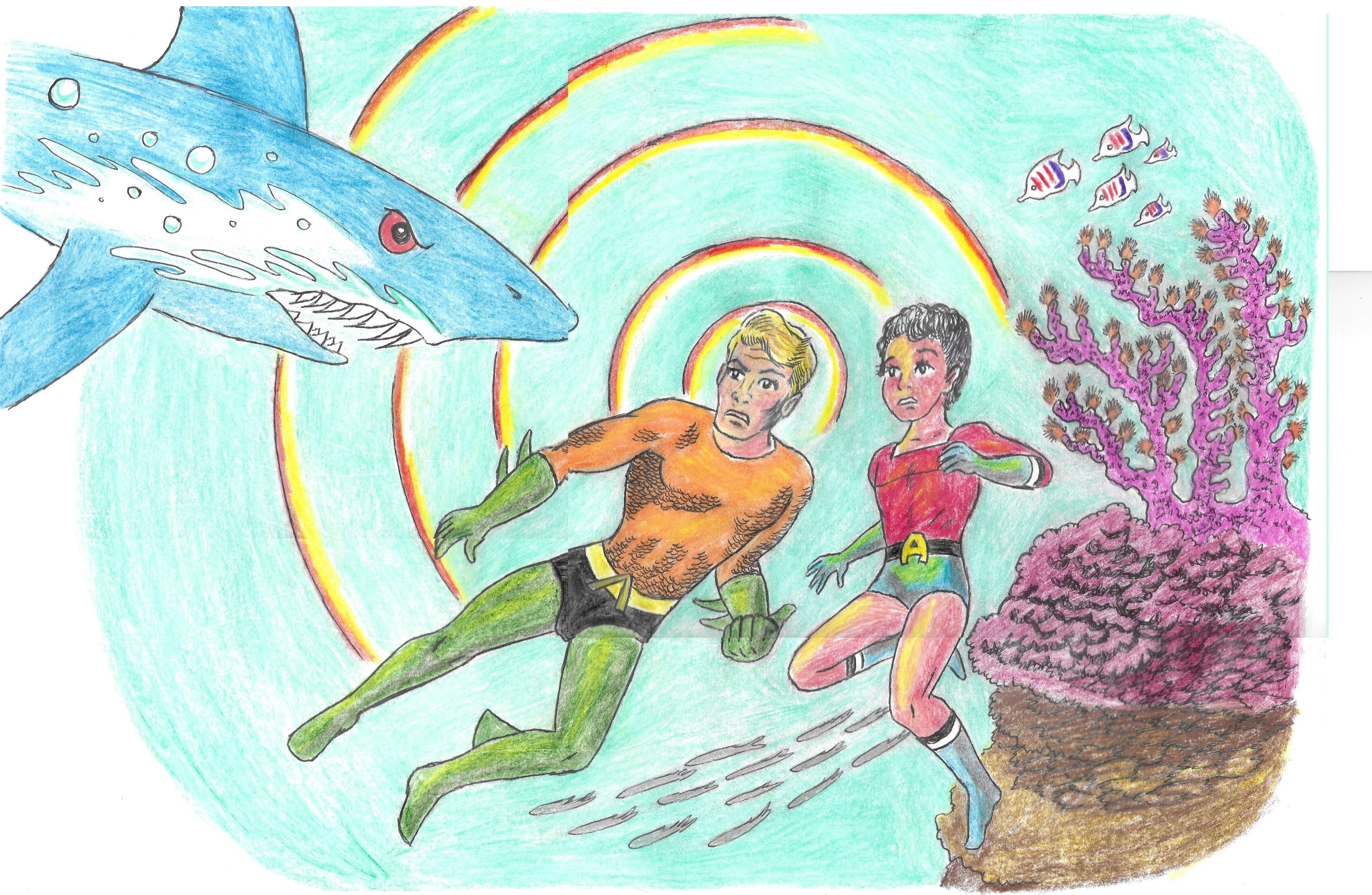
Today’s Paffooney is a tribute to a childhood hero, Aquaman. I drew the picture from a comic book inspiration source coming from DC Comics in the 1960’s. Aquaman is a B-level superhero with not nearly so many fans as the big three, Batman, Superman, and Wonder Woman. He was, however, my second favorite after Spiderman. He was more important to me than the Avengers. And this was strange, because I only had the chance to read the sacred comic books in the old barbershop in uptown Rowan. I only remember about two different issues that I was able to read during the long wait for a haircut. (Haircuts on Saturday took forever, because all the bald and crew-cut farmers would take forever getting their hair cut. And they hardly had any hair! I think the barber cut each hair individually.)
Aquaman and Aqualad would journey together in an incredible undersea world of sea monsters, giant fish, scuba divers, villains like Black Manta, and Mera, a real hot underwater babe. Topo the octopus could play comic relief by playing musical instruments or getting drunk on old lost kegs of pirate rum. I became a part of the adventure. I’m not sure whether I imagined myself more as Aquaman himself, or Aqualad. Aqualand was dressed all in red and blue, my favorite colors. I liked his blue swim-trunks. I myself could never wear swim trunks without a fatal case of embarrassment over my knobby knees and hairy legs. I admired Aqualad’s smooth and muscled boy-legs, though not without some shame and embarrassment. Some suggest that the relationship between Aquaman and Aqualad was a homo-erotic thing just like Batman and Robin. But, hey… NO IT WASN’T! It was a hero and sidekick that mirrored the complex relationship between a father and son. My father and I could never talk at any deeper level than Aquaman talked to Aqualad. Yet my father had super-powers for solving my problems and helping me do things and make things. Yes, I think I loved Aquaman because he reminded me of my own father in his quiet competence.
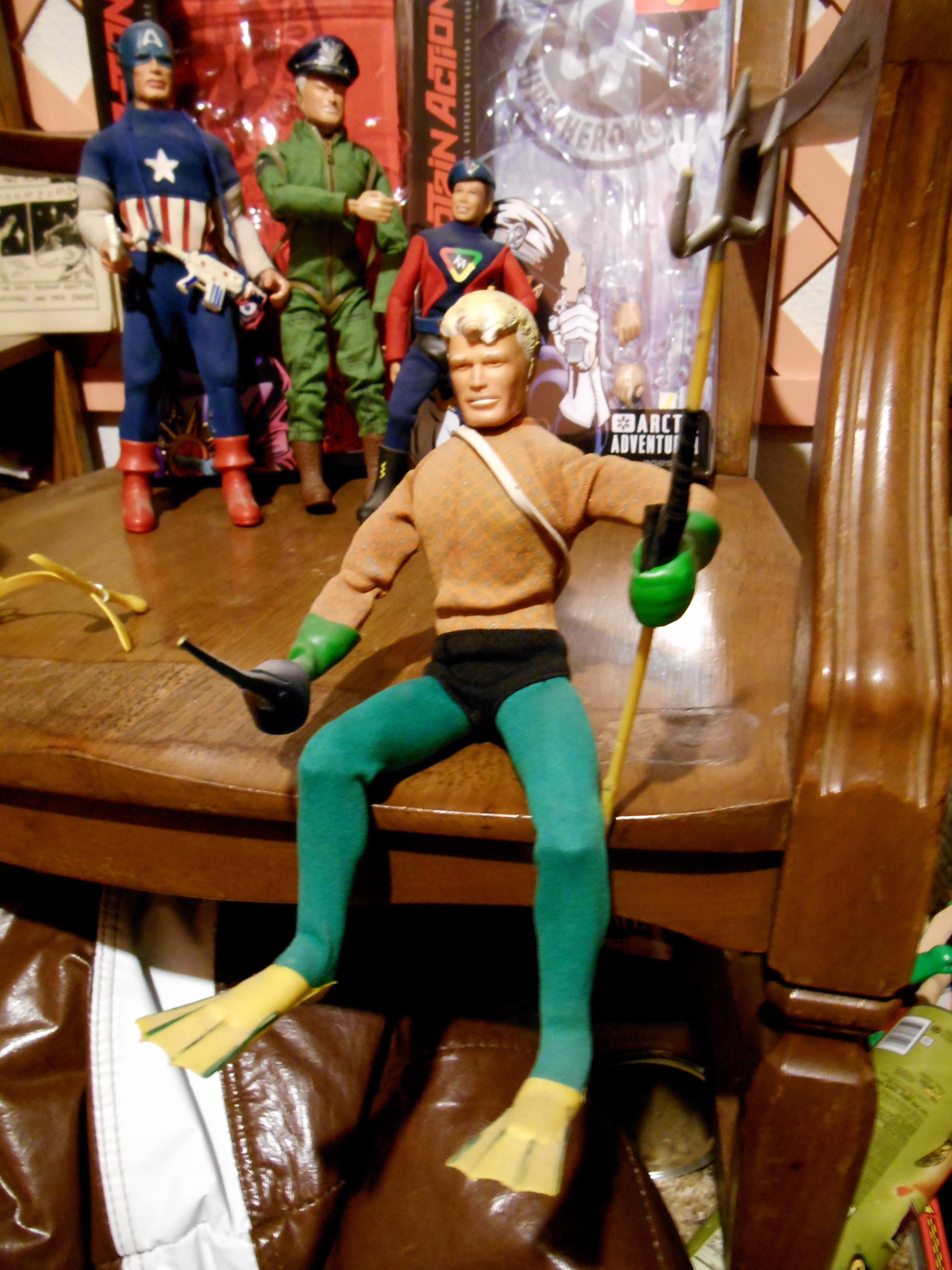
And I had a Captain Action Aquaman costume, a Christmas present and wonderful treasure. I played with it so much that only the broken trident, mask, and swim fins remain. The rest was all broken and unraveled and disintegrated from being played with. The Aquaman in my Captain Action collection has replacement parts in it to make it more complete. Yes, I spent time and money putting that toy back together so that I might play with it yet again.
So why is the super-powered King of the Sea so important to me? After all, his super powers are to breathe underwater and telepathically talk to fish. I think, reading back over this stupid little essay, that the most important theme is the father-son thing. I never owned a single Aquaman comic book as a kid, but I watched him on Saturday morning TV. He was one of the Superfriends. And my father had been in the Navy on Aircraft Carriers. Yes, Aquaman is my favorite because Aquaman is secretly my father.
Tom Sawyer without the straw hat, as created by Lois Beyer
You may already know about my doll-collecting mania. You may have already called the mental health people to come take care of the problem, and they just haven’t arrived at my door yet with the white coat that has the extra long sleeves. But you may not know that my mother is a doll-maker and has something to do with my doll-collecting hoarding disorder.
In the early 1990’s my mother and I put our money together and bought a kiln while we were visiting my sister’s family out in California. It wasn’t the most expensive model, but it wasn’t the cheapest, either. We both had enough experience with ceramics that we didn’t want to buy a burning box that was merely going to blow our porcelain projects to kingdom come. Mother had doll-making friends in Texas who taught her about firing greenware and glazing and porcelain paint and all the other arcane stuff you have to know to make expensive hand-made dolls. Now, honestly, at the start we could’ve made some money at it selling to seriously ill doll collectors and other kooks, but we were not willing to part with our early art, and by the time we were ready to do more than just have an expensive hobby, everyone who would’ve paid money for the product was making their own. So dreams of commercial success were supplanted by the hobbyist’s mania that made more and more charming little things to occasionally display at the county fair.
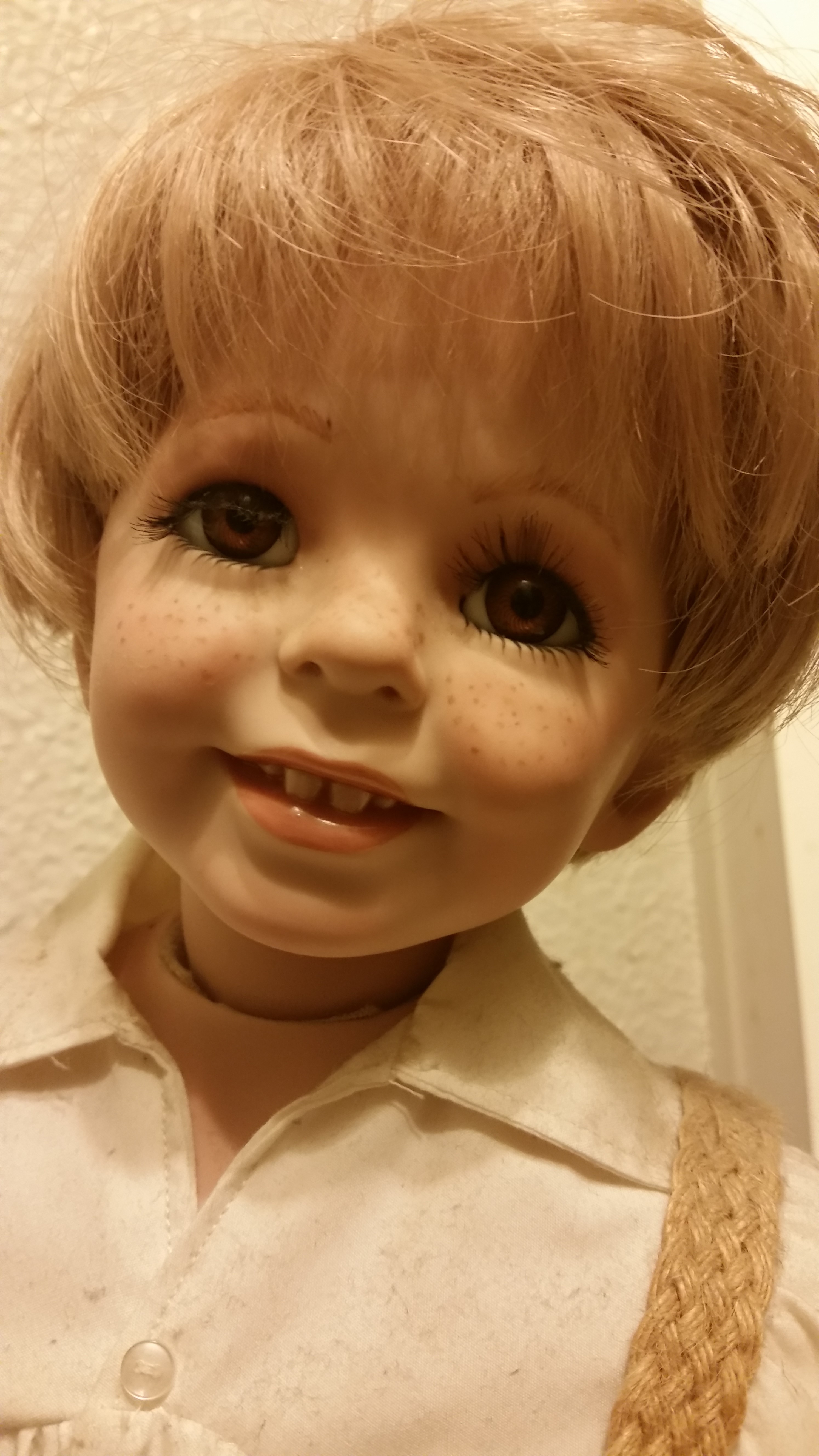
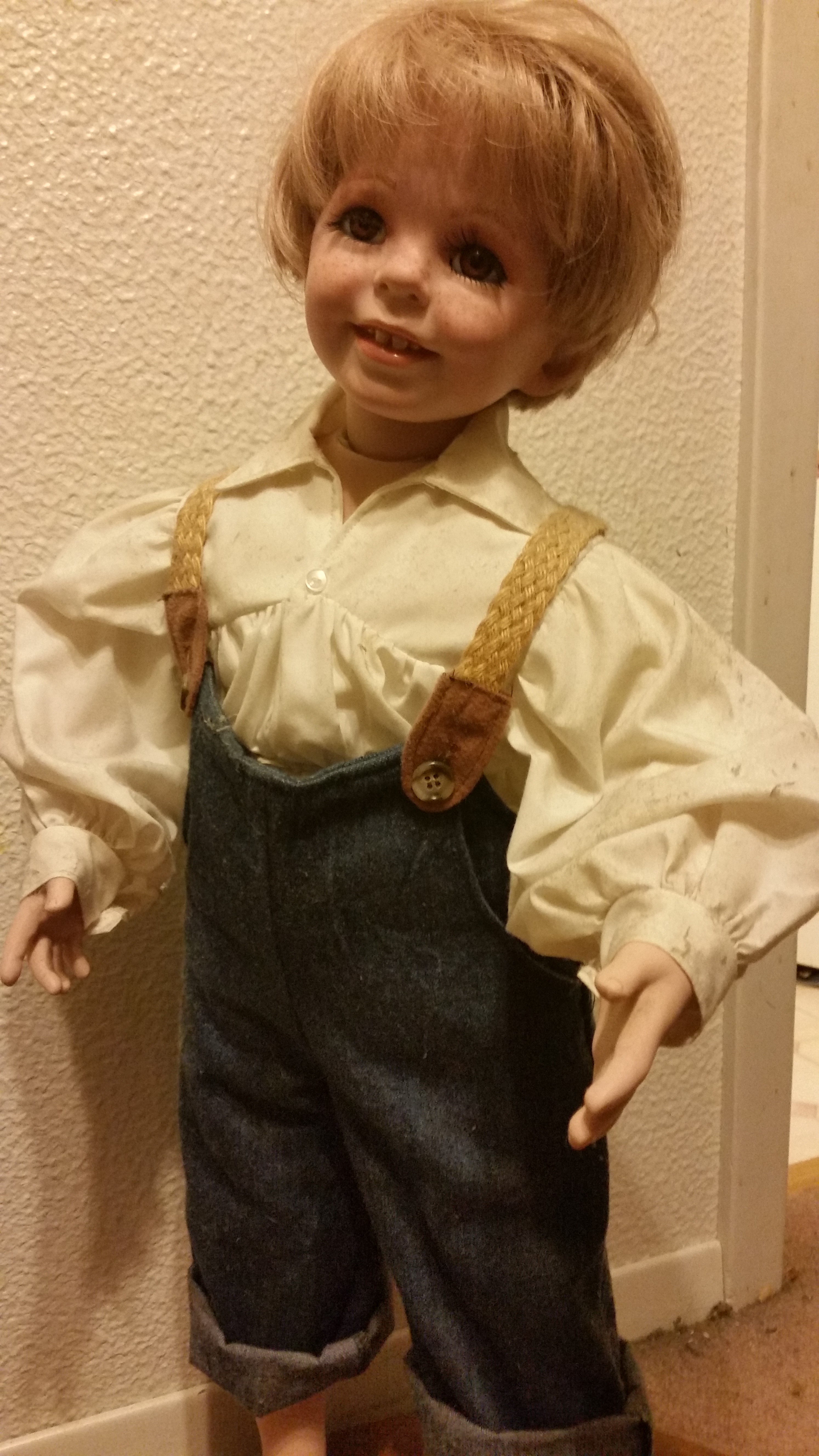
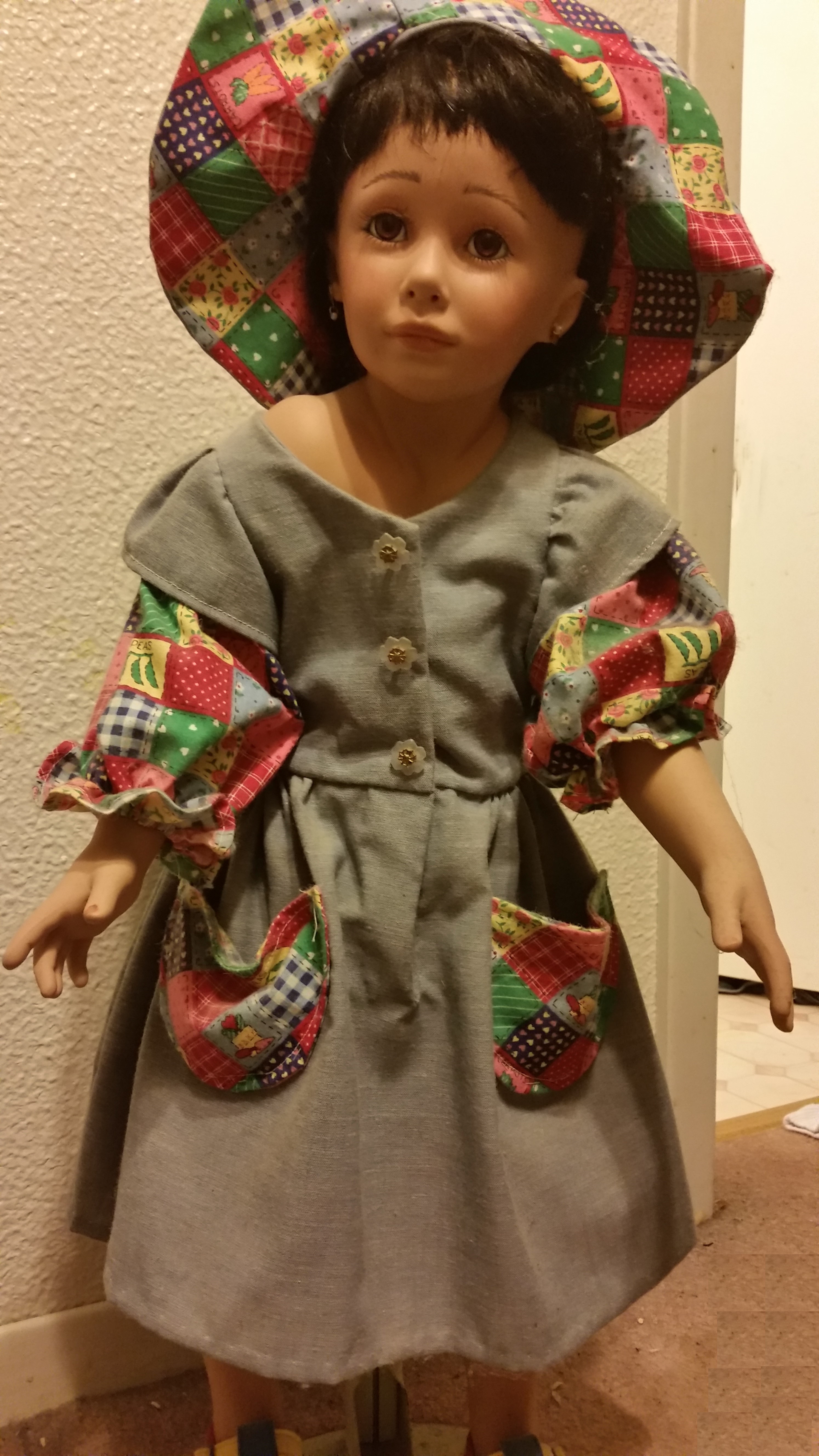
The two dolls I have left to share on my blog from that era were both crafted by my mother. She lovingly fired the porcelain body parts, painted the faces by hand, and created the wardrobe on her Singer sewing machine. I made some dolls too, but never with the wondrous craft and care that made my mother’s dolls beyond compare.
Tom Sawyer was originally a boy doll who was supposed to be able to hold a model train in his hands. My mother had the pattern for the little engineer’s uniform and hat that she would use on another doll instead. He is named after the Tom Sawyer clothing pattern that my mother bought and sewed together to dress him in. He has a cloth and stuffing body underneath his clothes together with porcelain head, hands, and bare feet.
The other doll I have left to brag unctuously about is a doll named Nicole after the niece my wife and I have who this doll bears a striking resemblance to. She displays a beautiful little girl’s sundress with quilted accent colors that my mother sewed from escratch with the help of a pattern she was truly fond of and used more than once.
These dolls were gifts to my wife and I, presented shortly after my mother bought out my share of the kiln when she retired and moved back to the frosty land of the Iowegians. I haven’t kept them as thoroughly dusted and cobweb-free as they deserve because I have been a somewhat lazy and slovenly son… but I do love them almost as much as (and sometimes more depending on recent behavior) my own children. (After all, porcelain kids rarely make a mess, overspend allowances, or hog the television too much.)
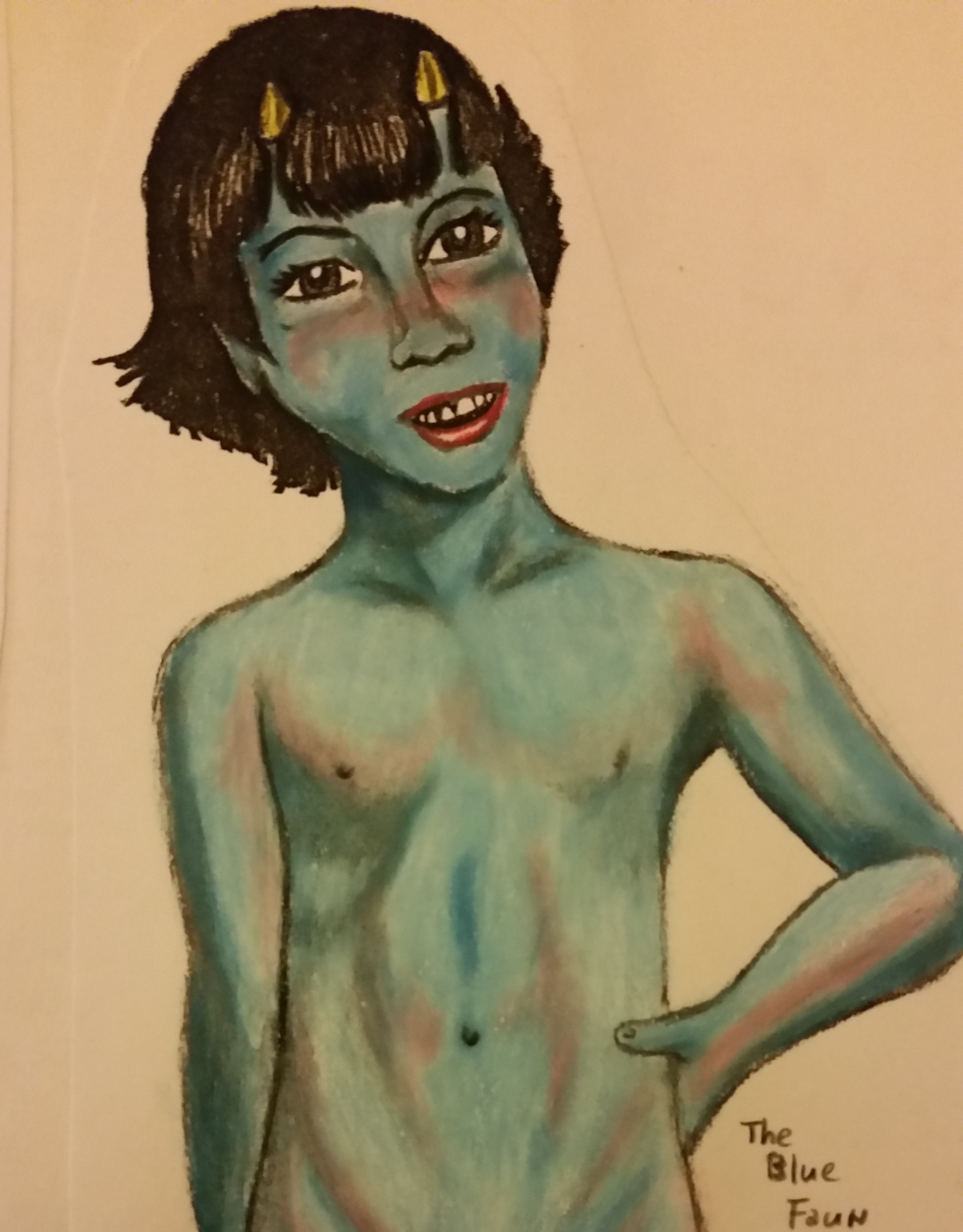
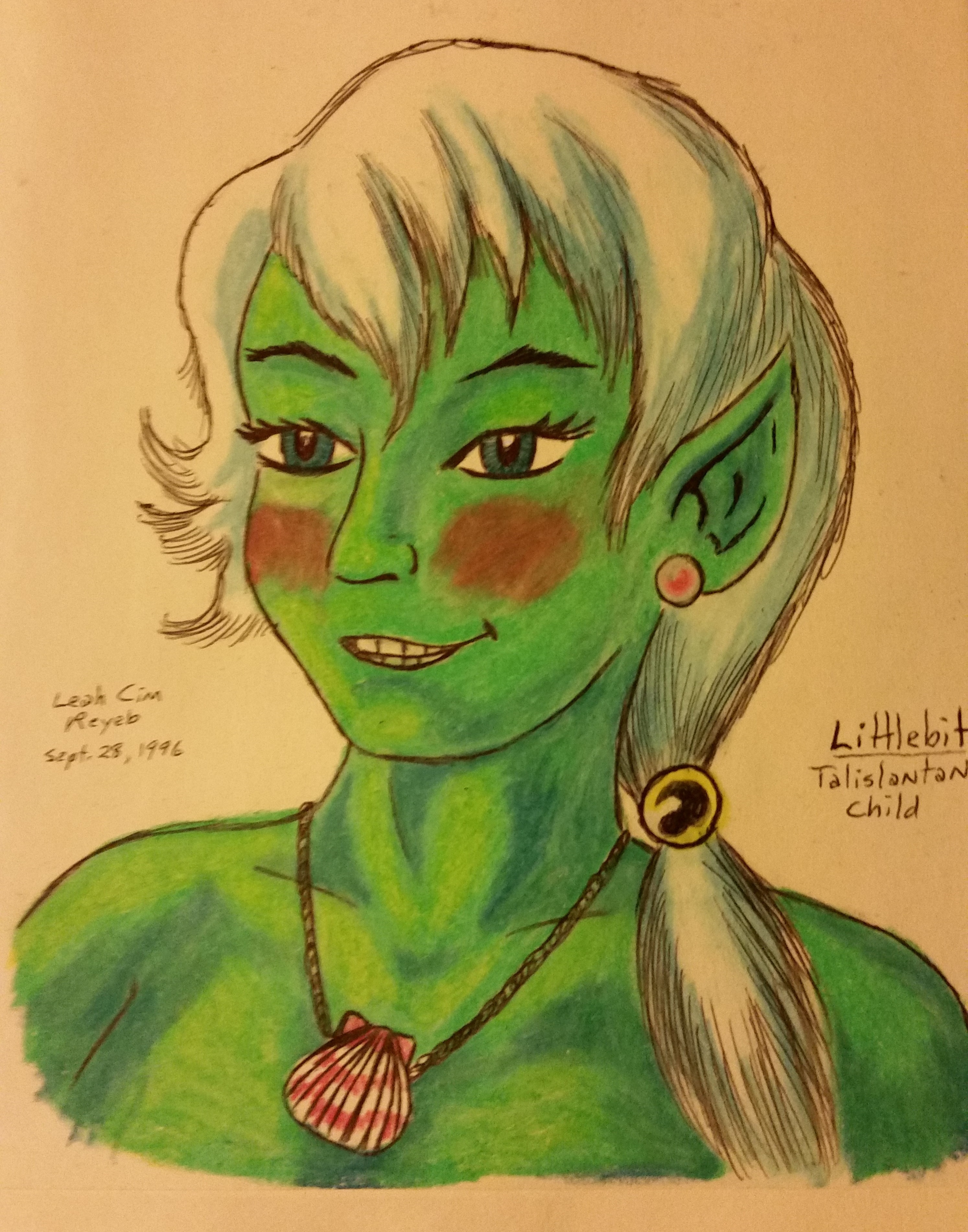
The Blue Faun who represents the lovely melancholy sensuality that informs my wordy little life.
When I was in Iowa last, and had a chance to see the younger of my two sisters, Mary Ann, she told me flat out that she really liked my most recent blog posts and that I should give up all together on my gloomy pessimistic ones. This, of course, was confusing to me because all my blog posts are relentlessly gloomy and never make anyone smile, so I did not know for certain what she was responding to.
As I have shared on more than one occasion, I suffer from six incurable diseases and am a cancer survivor. I don’t plan on living more than decade further at my most optimistic, and I told you recently that I am a confirmed pessimist. At worst, I could be dropping dead from stroke or heart attack as soon as I post this silly sour old post. I will be absolutely delighted to live long enough to finish another novel or two and maybe even see them published. I keep close track of my remaining hours because each one is rare and precious to me, even the ones that are quite painful and hard. So gloomy is as gloomy does. I am constantly celebrating that I have lived this long already. How depressing is that? … the celebrating every day thing, I mean?
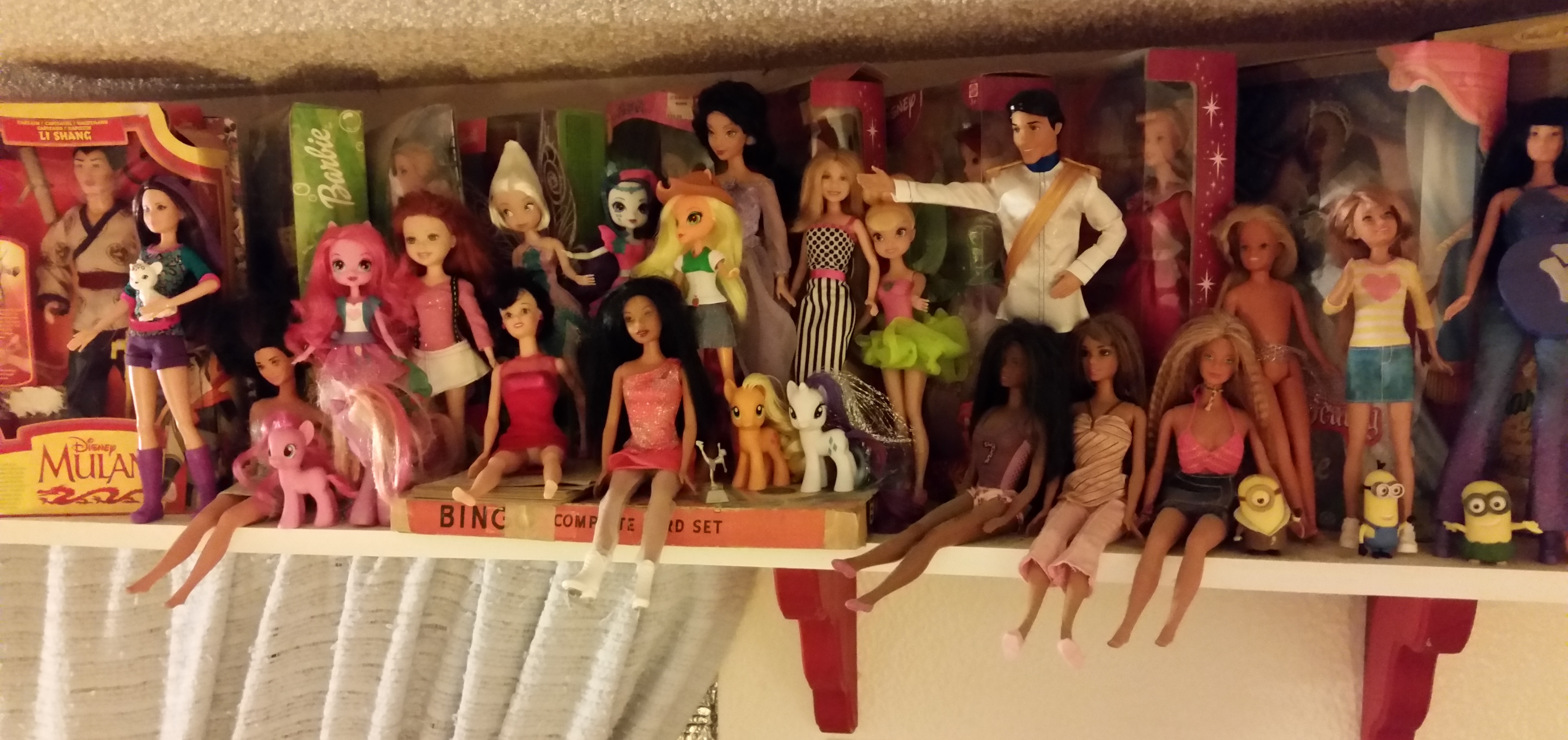
And of all the people who suspect I might be a fish sticks and custard sort of person, Mary Ann is not one of them. She watches Doctor Who and knows that that is exactly what I am. I am goofy and scatter-brained and a barely contained barrel of weird energy and misplaced enthusiasm. I do stuff like fill my bedroom Barbie shelf with bizarre and kitschy little 12-inch people.
The Barbie Shelf
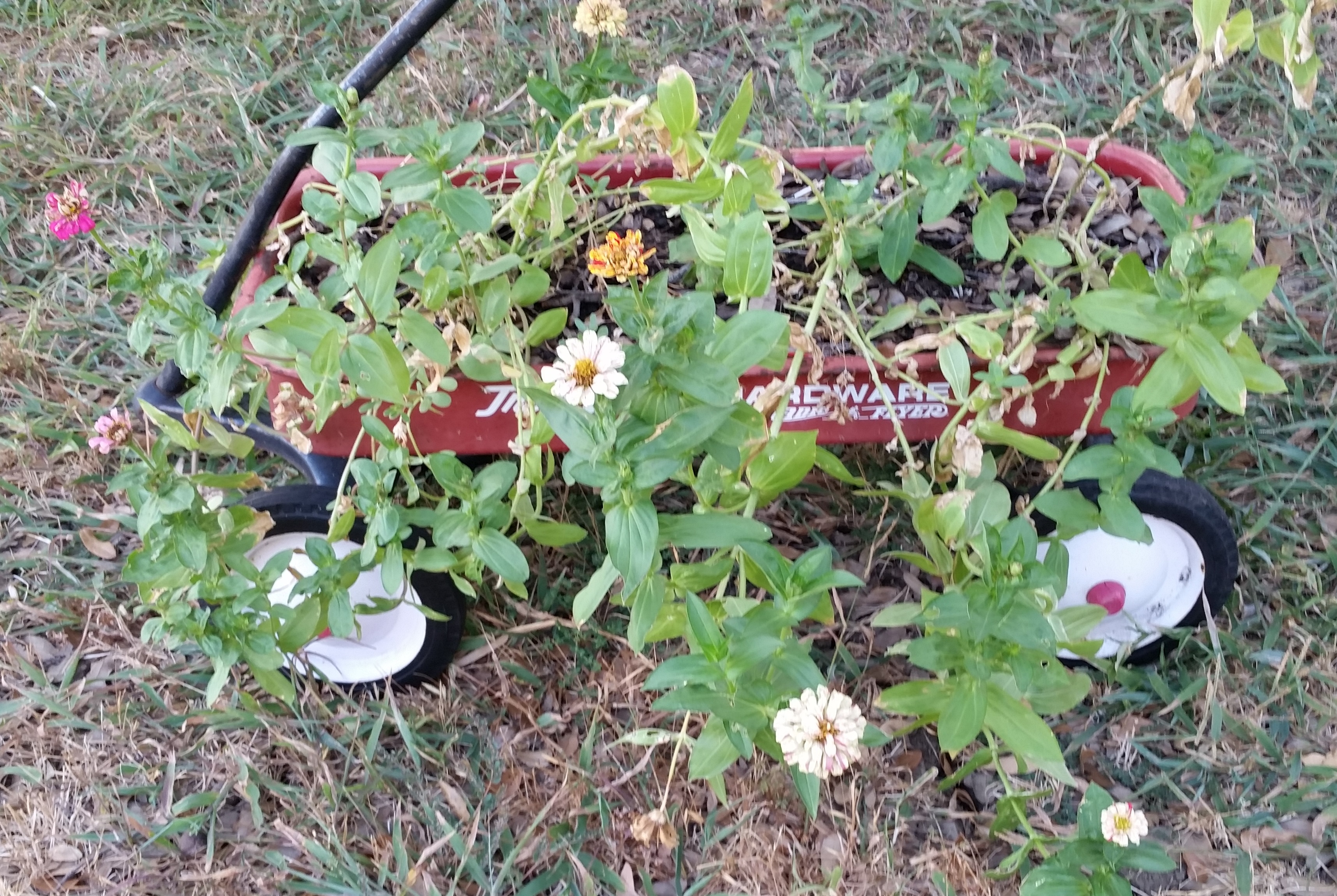
I appreciate melancholy and being blue, because the hollows of the valleys of depression make you appreciate the giddy heights so much more. And I do realize that I am stringing big words and goopy metaphors together to sound all literary and brooding… but that’s what real geniuses whom I am trying to emulate do to reach the highest heights. They run down through the valley at the fastest possible pace to build up enough speed to shoot up the side of the mountain on the other side. It is a Wiley Coyote trick for using cartoon physics in your own favor. It is the reason I am still tending the flower wagon, trying to coax zinnias into blossoming during the depressingly renewed Texas drought. It is the reason I keep adding to my collection of sunrises. The dark blue pieces of the puzzle of life provide the contrast that help you define the puzzle picture of the brightest sunshine and light.
The blossoms in the flower wagon reached a new record number today, despite the heat.
Sunrise on a school day when I don’t have to go to school because I am retired.
Why did Batman have Robin the Boy Wonder? Not only that, but why Bucky and Captain America? Green Arrow and Speedy? Aquaman and Aqualad? Superman and Krypto the Super Dog? Fredric Wertham, the Seduction of the Innocents and the Comics Code guy, would have you believe that they were there to make young boys turn gay and violent. But that was nonsense, wasn’t it? Better change Krypto for photographer Jimmy Olsen just in case.
But if that was merely nonsense, why was it such a part of the formula?
As a D & D dungeon master, I have my own theory about sidekicks and their function in story-telling.
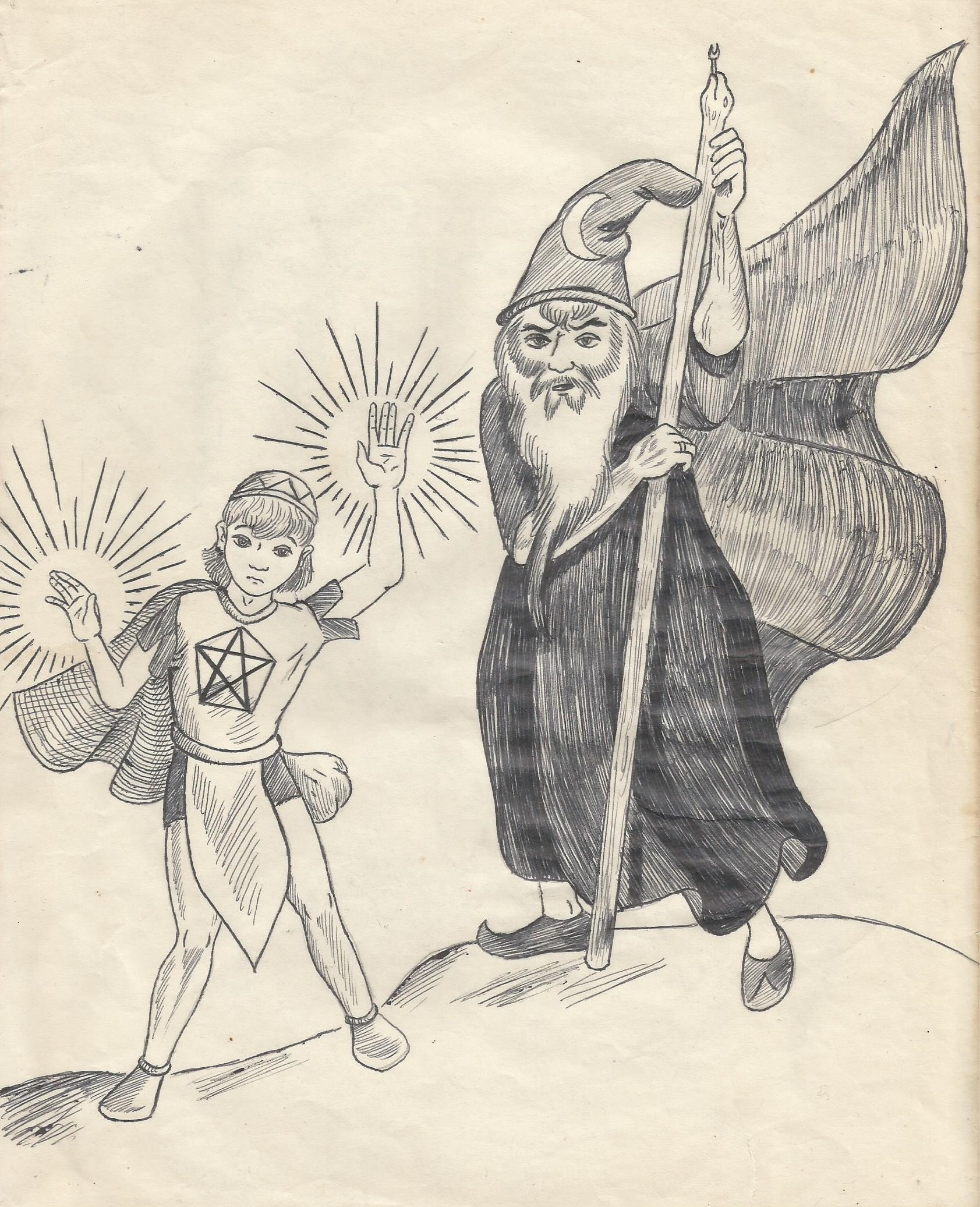
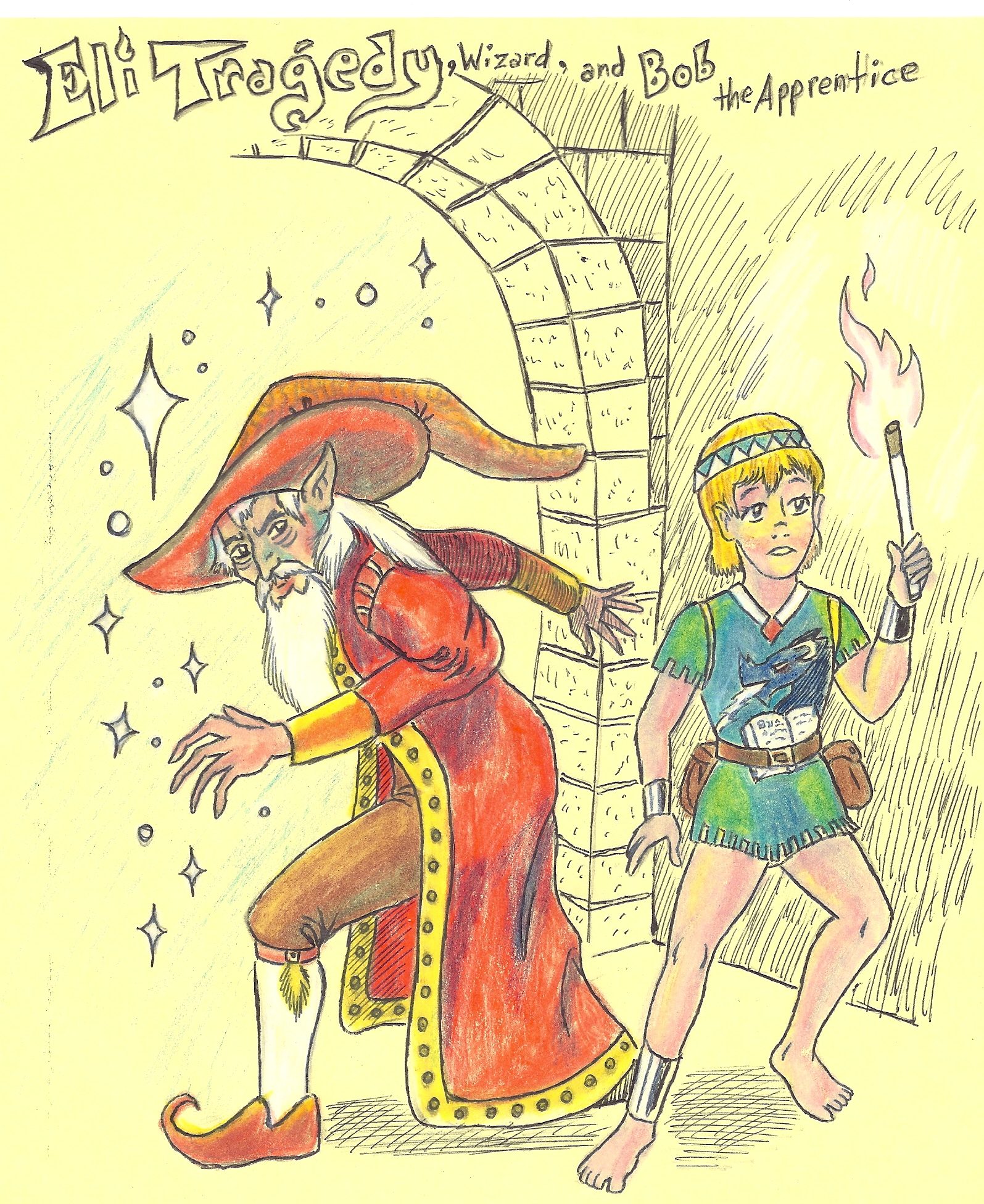
Young sidekicks were an important part of the stories I told as a game master because the players in my games were mostly adolescent boys themselves. It was the same as the primary readers of Batman comics in the 1950’s of Wertham’s Comics Code. The young hero or adventurer character, most often in the form of a non-player character, was someone they could relate to because of age. They had more in common with the sidekick than the lead hero. It helped to draw them into the story and make it relevant.
As a storytelling device, you often find the young apprentice character in novels written for younger audiences. Think of David Eddings’ Belgariad, or Lloyd Alexander’s Chronicles of Prydain, or Treasure Island by Robert Louis Stevenson. The characters of Garion the youngster in the Belgariad, Taran the young protagonist of Prydain, and certainly Jim Hawkins of Treasure Island.
So, with that realization, I incorporated youthful characters, both boys and girls, as apprentices and student-adventurers.
Initially it proved to be a hard thing. Wizards and sorcerers, according to D & D rules, can take an apprentice once they reach level three. But first-level characters as apprentices are vulnerable because damage done by third level monsters wipes out the meager hit point reserves of a beginner character. After several traumatic deaths of beloved sidekicks, the player characters begin to take steps to protect them better in combat, or quickly learn where to find priests with resurrection spells who work really cheap.
Of course, these characters are useful for more than just creating combat complications. They are really useful for comic relief. The missteps, mistakes, and total botch-jobs that these inexperienced younger characters create can make us laugh, make us sweat a little to correct it, and move the plot forward in interesting ways that I, as the game master, wouldn’t have otherwise planned.
So, hopefully, Mr. Wertham’s ghost isn’t hovering over my D & D game thinking it is all a plot to create a generation of violent, gay youths. Hopefully he can see that it is all a part of a well-established story-telling literary device that actually helps to educate and deepen the understanding of youths. But it is swiftly becoming irrelevant what Wertham’s ghost thinks anyway. I haven’t played D & D for a while now. My sons and daughter now have their own groups of friends, playing under different dungeon masters with different dice. But hopefully, the need for youthful sidekicks will remain.
I told you before that I make a lousy movie critic because I watch anything and everything and like most of it. You don’t believe me? You can look it up through this link; The Uncritical Critic
I hate to tell you this, but it is almost exactly the same for books too.
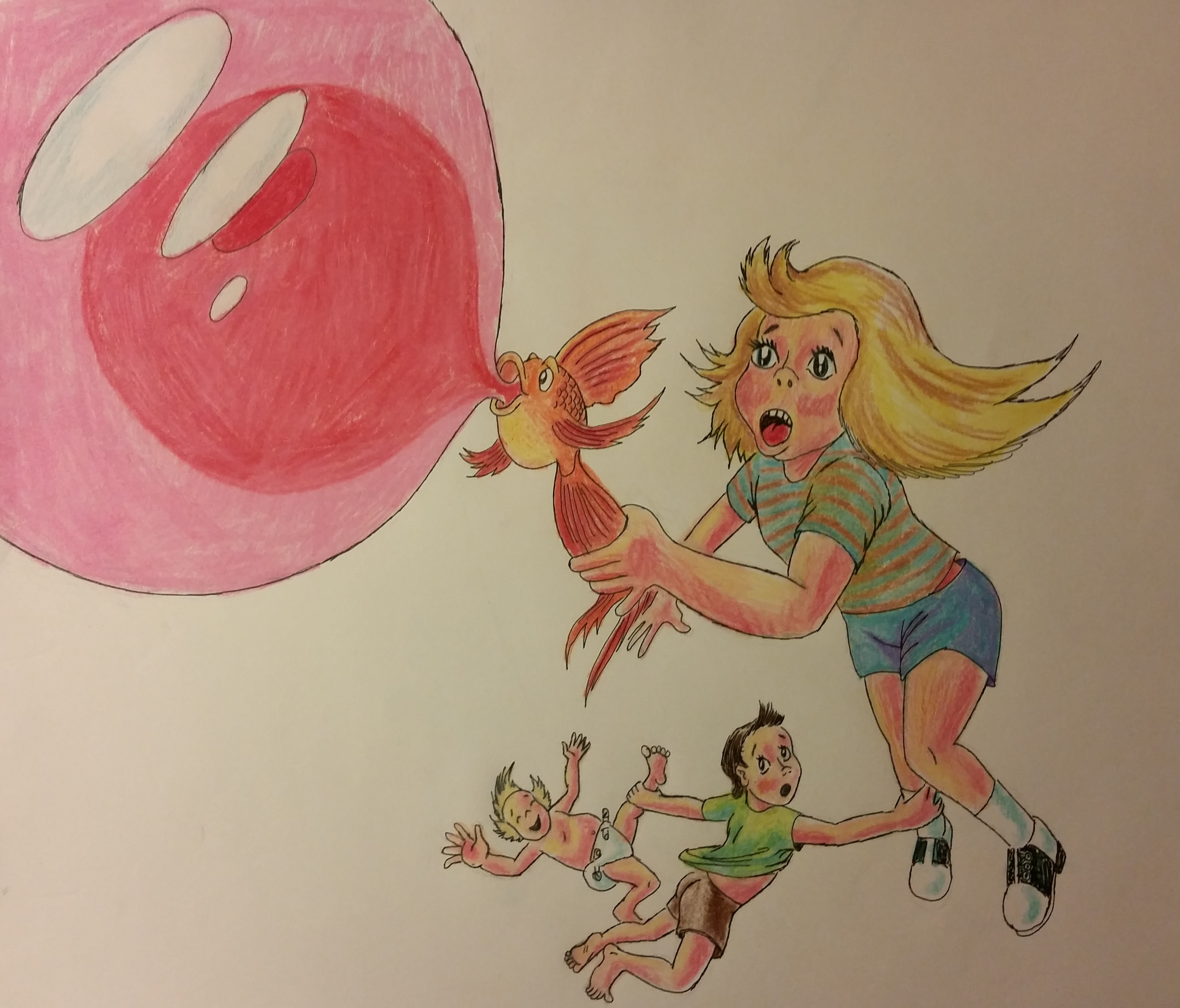
The Paffooney is an illustration for a proposed collaboration on a children’s book. My friend and fellow author Stuart R. West (Stuart’s Blogspot about Aliens) had a story about three kids taking a balloon ride when they accidentally gave the goldfish bubble gum to chew ignoring their mother’s warning that dire consequences would follow. He decided the project was too ridiculous to follow through on, or at least my Paffooney power wasn’t up to making sense of his brilliant literature, and the book did not happen. And I am sorry about that because I couldn’t wait to find out how it turns out. I love weird and wild stories of all kinds. And, unfortunately, I love them uncritically.
So, what kind of books would a goofy uncritical critic actually recommend? Let me lay some bookishness on ya then.
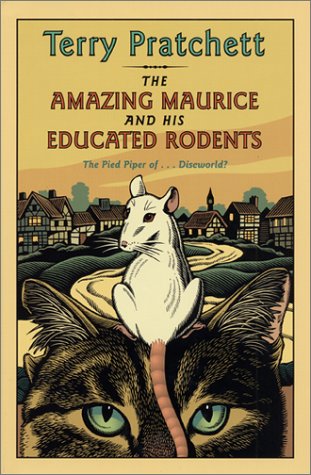
Here is the review I wrote for Goodreads on Terry Pratchett’s The Amazing Maurice and His Educated Rodents.
I have always felt, since the day I first picked up a copy of Mort by Terry Pratchett, that he was an absolute genius at humor-and-satire style fantasy fiction. In fact, he is a genius compared to any author in any genre. He has a mind that belongs up there with Mark Twain, Charles Dickens, and William Faulkner… or down there as the case may well be. This book is one of his best, though that is a list that includes most of his Discworld novels. Amazing Maurice is a magically enhanced cat with multiple magically enhanced mice for minions. And the cat has stumbled on a sure fire money-making scheme that completely encompasses the myth of Pied Piper of Hamlin. In fact, it puts the myth in a blender, turns it on high, and even forgets to secure the lid. It is funny, heartwarming, and changes the way you look at mice and evil cats. This is a book to be read more than once and laughed at for the rest of your life.
You see what I mean? I uncritically praise books that make me laugh and think deeply about things at the same time. It is as if I don’t have any standards at all if something is brilliantly written and makes a deep and influential impression on me.
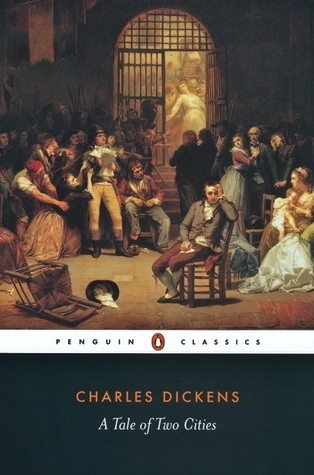
Here’s another book that I love so much I can’t be properly critical when I reread it. A Tale of Two Cities by Charles Dickens. I cannot help but be taken in by the unrequited love the dissolute lawyer Sydney Carton had for the beautiful refugee from the French Revolution, Lucy Manette. Tragic love stories melt my old heart. And I can’t help but root for Charles Darnay as well, even though I know what’s going to happen in Paris at the Bastille because I have read this book three times and seen the Ronald Coleman movie five times. I also love the comical side characters like Jerry Cruncher the grave-robber and hired man as well as Miss Pross, the undefeatable champion of Miss Lucy and key opposer to mad Madam Defarge.
I simply cannot be talked out of praising the books I read… and especially the books I love. I am totally uncritical as a reader, foolishly only looking for things I like about a book. Real critics are supposed to read a book and make faces that remind you of look on my little brother’s face when I had to help him use an outhouse for the first time. (Oh, what a lovely smell that was!) (And I mean that sarcastically!) Real critics are supposed to tell you what they hated about the book and what was done in such a juvenile and unprofessional way that it spoiled all other books forever. That’s right isn’t it? Real critics are supposed to do that? Maybe I am glad I’m not a real critic.
I was a school teacher for thirty-one years, and in spite of the immense amount of brain damage that builds up over time, especially as a middle-school teacher, I think I know what we’ve been doing wrong.
We need to take a look at an education system where things are working better than they are here.
Now, I know you probably didn’t click on the boring video about school. Heck, you probably aren’t even reading this sentence. But I can summarize it and put it in easy-to-understand words. Finland does not have to educate as many poor and disadvantaged kids as this country does. The video gives five ways that Finland does it better, but all of them boil down to the basic notion that the country is more homogeneous and uniformly middle-class than ours is. Still, we can learn things from them.
The first of the five ways that Finland does it better is a difference in government. While U.S. governmental safety-net programs blame people who need food stamps for being lazy (even though some of them work 40-hour work weeks in minimum-wage jobs), Finland gives a huge package to parents of everything they might need as soon as their child is born. As long as the child is in school, the government does many things to support the family’s efforts to educate them. Imagine what we could accomplish here if we invested some of the vast fortune we give to corporations in subsidies into educating poor black and Hispanic children instead. Children have a hard time learning in school when they come to school hungry. If we could only feed them better, the way the Fins do, we would revolutionize our classrooms.
The second point the video makes is the biggest suds-maker every time I get on my teacher’s soap box. They don’t give kids homework and they only give them one standardized test when they leave high school. I have recently covered this topic more thoroughly in a post in which I was able to ridicule Florida governor Rick “Skeletor” Scott. (Boy, did I enjoy doing that.) But I won’t go into all of that again here.
The third thing is respecting teachers. In Finland they treat teachers with the kind of respect that they give to doctors and lawyers. How cool is that? In Texas, calling someone a teacher is an epithet. If a teacher is liked or even loved by their students, administrators are encouraged to keep a closer eye on them to figure out what’s wrong. Students are supposed to hate their teachers and sit all day filling out mind-numbing test-preparation worksheets. Imagine what it could be like if teachers weren’t the scum of the earth. They might actually have students convinced that learning goes on in their classrooms.
The fourth point is that Finland does not try to cram more and more memorized details into young brains so they can spit it all back out on a test. They take students thoroughly into the subject of study, and at a slower, easier pace. They dive deep into the river of learning instead of wade through the wide and shallow parts. All questions get answered. And by that, I mean, student questions, not teacher questions. The learning is student-centered.
Finally, the video states that Finland simply has fewer social ills in their country to get in the way of good quality education. But even though the work is harder in this country, the potential is really there to go far beyond what Finland is capable of. We have a natural resource that is totally untapped in this nation. We don’t develop the minds of a majority of our children in any meaningful way. And I can tell you from having done it, you can teach a poor or disadvantaged child to think. You can give them the tools for academic, economic, and personal success. You can make them into valuable human beings. But you should never forget, they are already precious beyond measure. We just ignore and trash that inherent value. So, the information is out there about how to do a better job of educating our children. We need to follow through.
Being an artist is a matter of genetics, luck, and loads of practice. I began drawing when I was only four or five years old. I drew skulls and skeletons, crocodiles and deer on everything. My kindergarten and first grade teachers were constantly gritting their teeth over the marked-up margins of every workbook and worksheet. I drew and colored on everything. I eventually got rather good, drawing in pencil, crayon, ink, and as you see here, colored pencil. I loved to draw the people and things around me. I also drew the things of my imagination. I drew my best girl, Alicia, and I drew the half-cobra half-man that lived in the secret cavern under our house. I drew a picture of the house across the underpass from Grandma Mary’s house. I drew cardinals, and I drew Snoopy cartoons. I drew my sports heroes in football and hockey, Donny Anderson and Gordie Howe. I drew monsters with fangs and fuzzy animals with huge soulful eyes. I still draw and it’s mostly the same things that I drew when I was a child. I will post more of the drawings here in the near future to dazzle you with my talents and ridiculous sense of the absurd.
I inherited art talent from my father’s side of the family. He could always draw fairly well, though he only used the talent to draw things he meant to build or create in his workshop. He was a practical man who loved to tinker and make things work in a useful manner. He had no love or need for that which is fanciful and fantastic. I suspect, though, that he encouraged my artistical flights of fancy because it spoke to an unfulfilled portion of his own creative instinct. My Great Aunt Viola was also an artist. She loved to paint flowers on porcelain and create delicate beauty in items like plates and vases. Her art was more fanciful than my Dad’s art, but it still had a certain Midwestern practicality at its roots.
I hoped early on to be a cartoonist or comic-book artist. I loved to draw wildly imaginative things. The first cartoons I created were all about outer space. I wrote stories and drew pictures of Zebra Fleet, a Star-Trek-like space force that kept peace in an area of space inhabited by dog-headed humanoids. It was fanciful and goofy at the same time. Since then I tried my hand at a Cowboys and Indians cartoon strip, built around the massacre of Custer’s command at the Little Bighorn. I researched the Indians of the Dakotah, Crow, Shoshone, and Hidatsa Tribes for my cartoon. I learned to love drawing feathers, totems, magic men, shamans, shirt men, and lovely Indian girls. Nowadays I draw the adventures of weird little Toons from Animal Town and the various strange places in Fantastica. Teenage Panda Girls go out for cheerleading and fail, seeking to wreak revenge on Animal Town. Hairy Bear is a Grizzly with a tiny body and a huge reputation earned by fantastical hair growths and the ability to make large hair-pieces. The Four Bares are a family of bears who live at Newt’s Naturist camp and turn Animal Town upside down when they insist on their right as top-of-the-food-chain predators to go anywhere they like naked. If you are lucky, I will never be a published cartoonist. I made a serious stab at it. I came close in two different job interviews and one major submission, but I have arthritis, and it attacked my hands at just the right time to make me a school teacher instead of a cartoonist.
Drawing has become for me a hobby and a lifestyle all about the color and the symbol. I try to cram as much story and meaning into every figure or picture I do. Each drawing is precious, and I must squeeze as much as I can from each one, because drawing has become so hard to do and is such a rare thing. I lean towards the blue in my cartoons. There is a certain Blue Period about my melancholy work and life. Things turn out wrong at the end of my stories and there is no happily ever after. When the nighttime comes, I have to go to sleep with the urge to draw more. I’ll draw more in the next life, or maybe in my dreams.
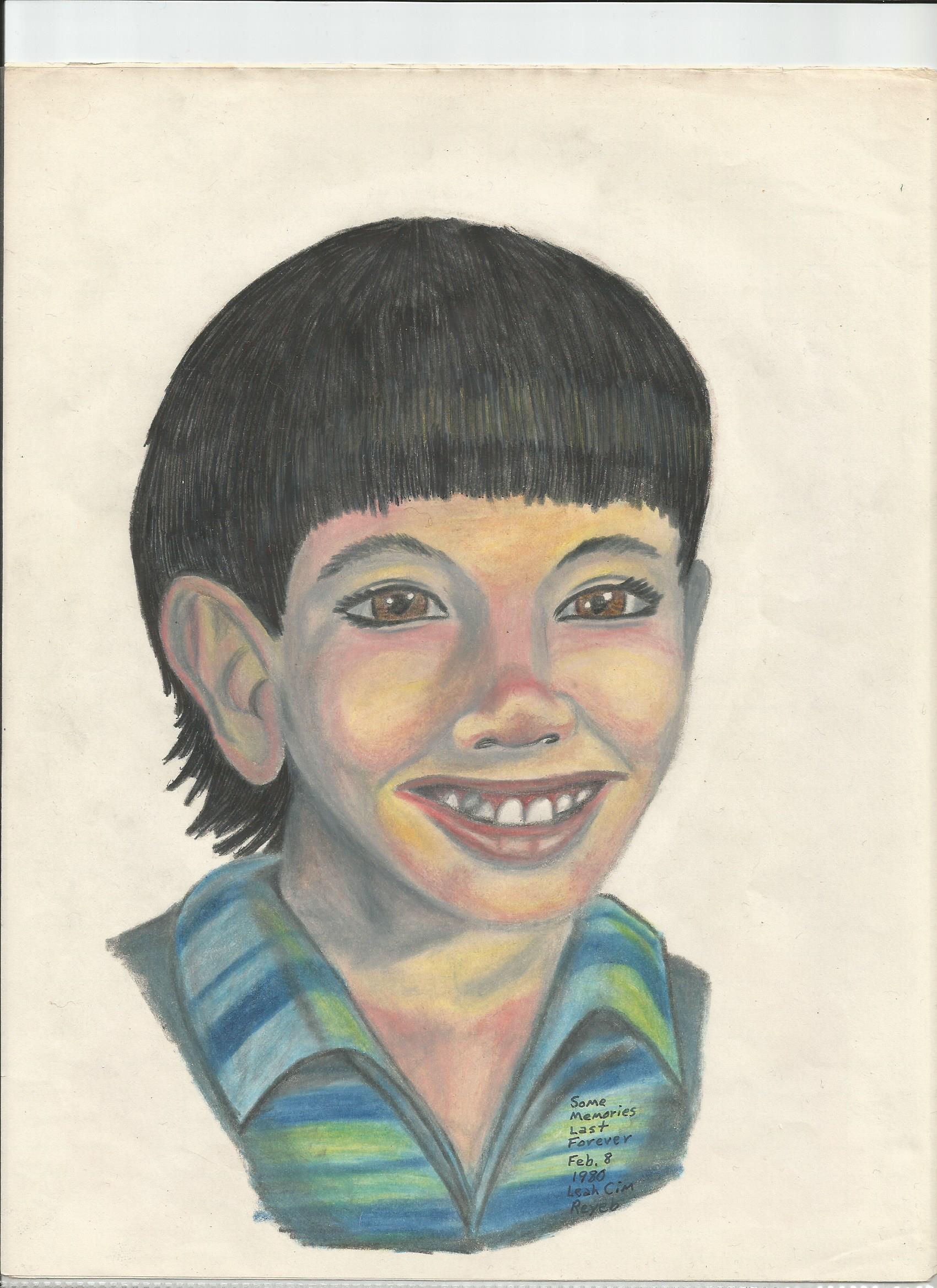
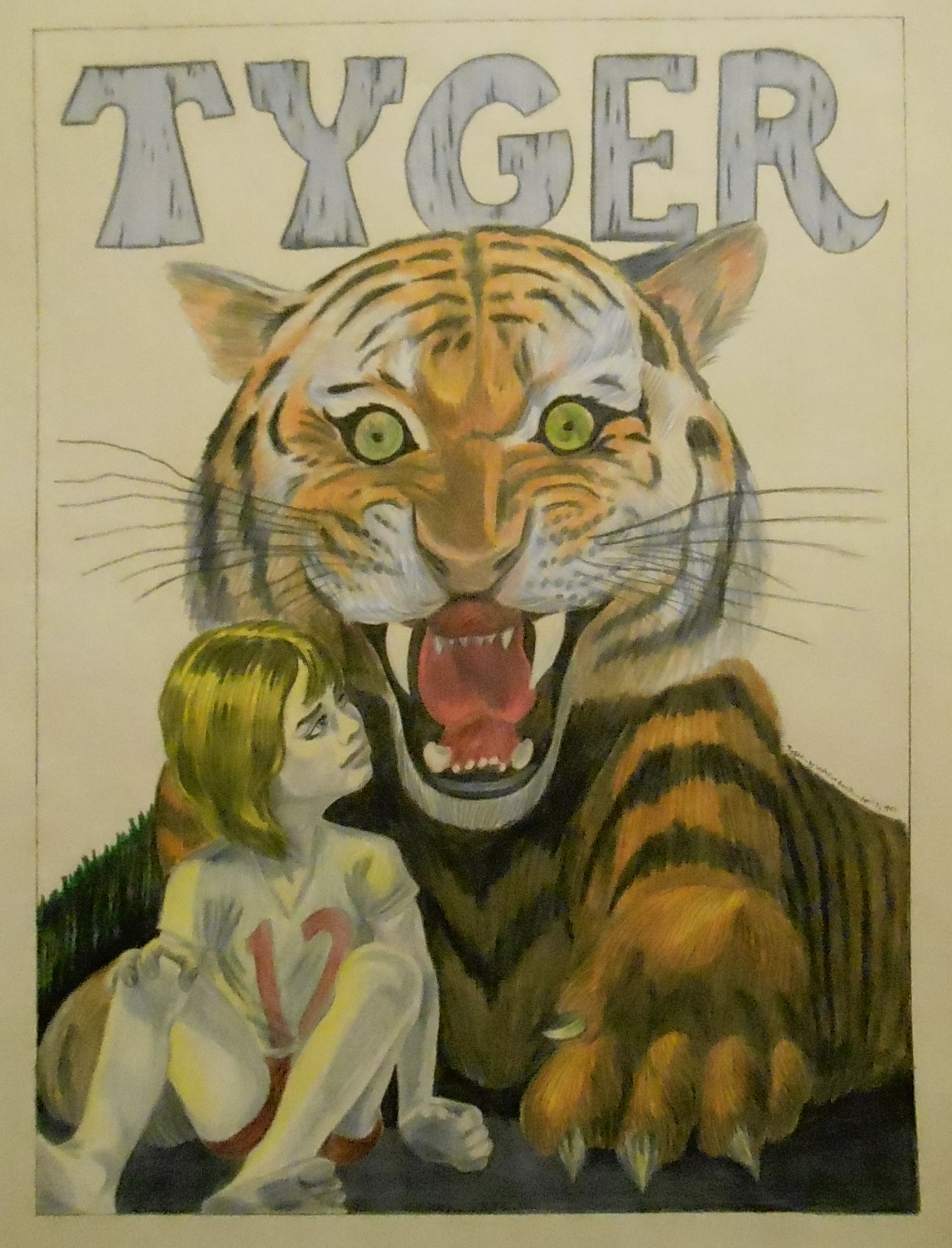
I think I posted this picture once before and told you it was inspired by William Blake’s poem The Tyger! That is still true. I wasn’t telling a lie, at least, I don’t believe I was. So the poem goes like this;
The idea is that the Tyger represents some unknowable evil that we must fear and respect because it is beyond our understanding. But the kid in the picture seems to be unafraid. Was that a mistake? Or was I really thinking this?
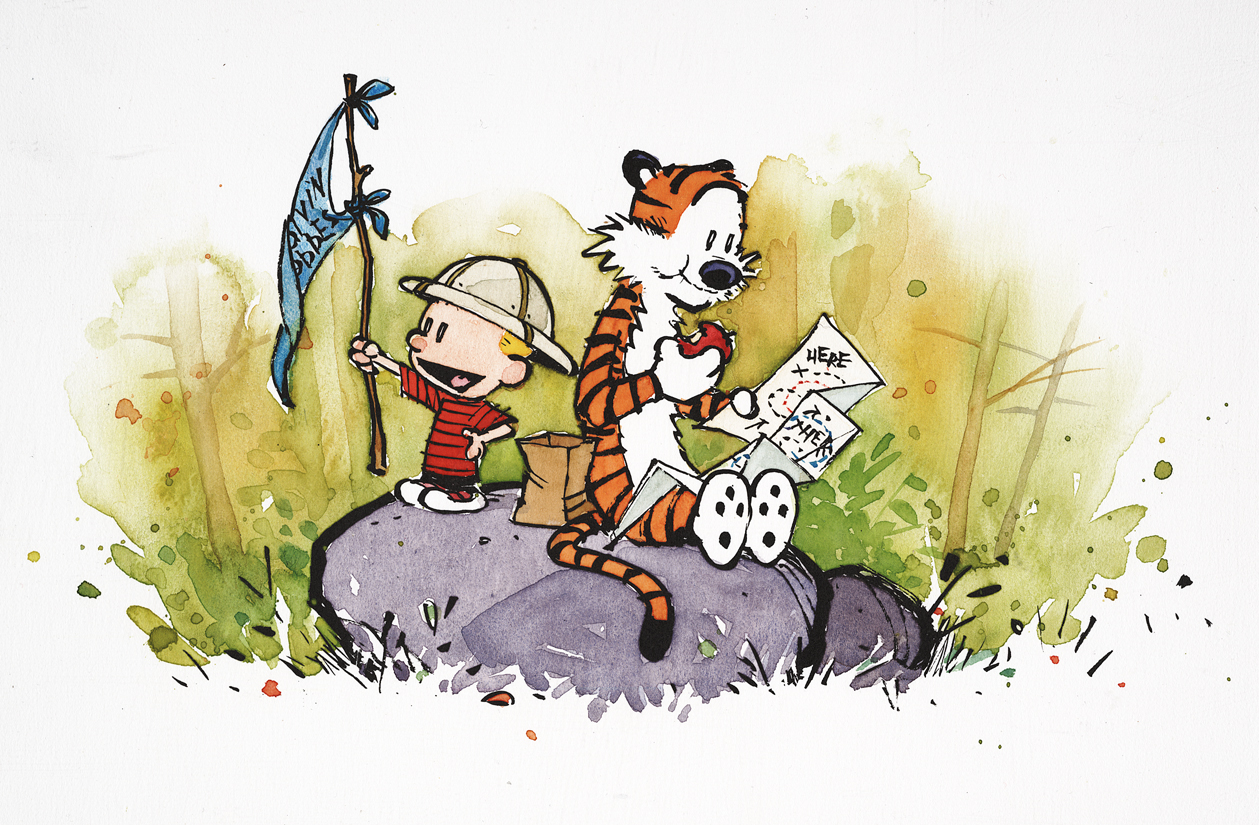
Apologies to Bill Watterson for stealing his cartoon for this post. I needed a more dangerous-looking Tyger than the one I had.
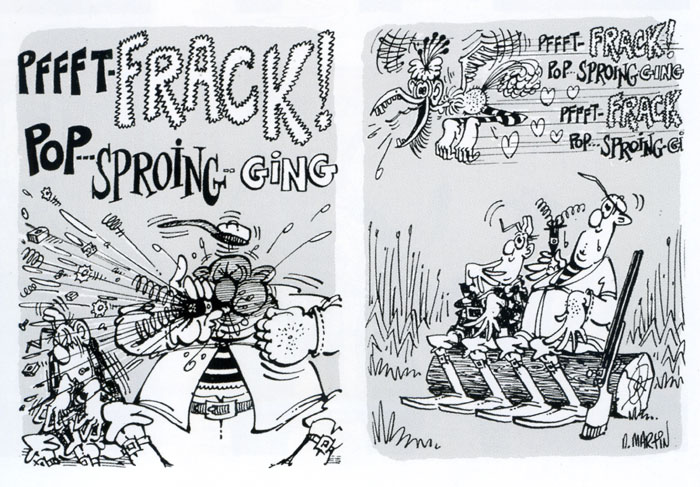
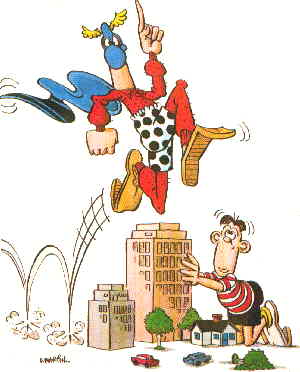
Born in 1931 and lasting in this crazy, mixed-up world until the year 2000, Don Martin was a mixy, crazed-up cartoonist for Mad Magazine who would come to be billed as “Mad Magazine’s Maddest Artist.” His greatest work was done during his Mad years, from 1956 (the year I was born… not a coincidence, I firmly believe) until his retirement in 1988. And I learned a lot from him by reading his trippy toons in Mad from my childhood until my early teacher-hood.
His style is uniquely recognizable and easily identifiable. Nobody cartoons a Foon-man like Don Martin.
The googly eyes are always popped in surprise. The tongue is often out and twirling. Knees and elbows always have amazingly knobbly knobs. Feet have an extra hinge in them that God never thought of when he had Adam on the drawing board.
And then there is the way that Martin uses sound effects. Yes, cartoons in print don’t make literal sounds, but the incredible series of squeedonks and doinks that Martin uses create a cacophony of craziness in the mind’s ear.
And there is a certain musicality in the rhyming of the character names he uses. Fester Bestertester was a common foil for slapstick mayhem, and Fonebone would later stand revealed by his full name, Freenbeen I. Fonebone.
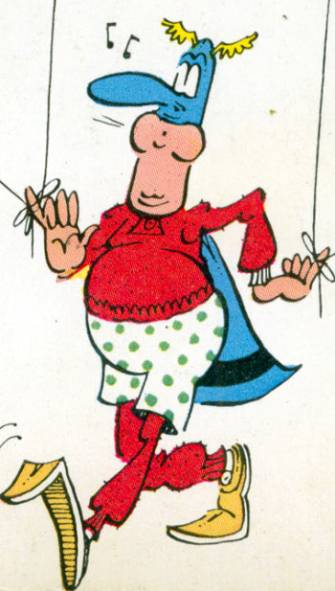
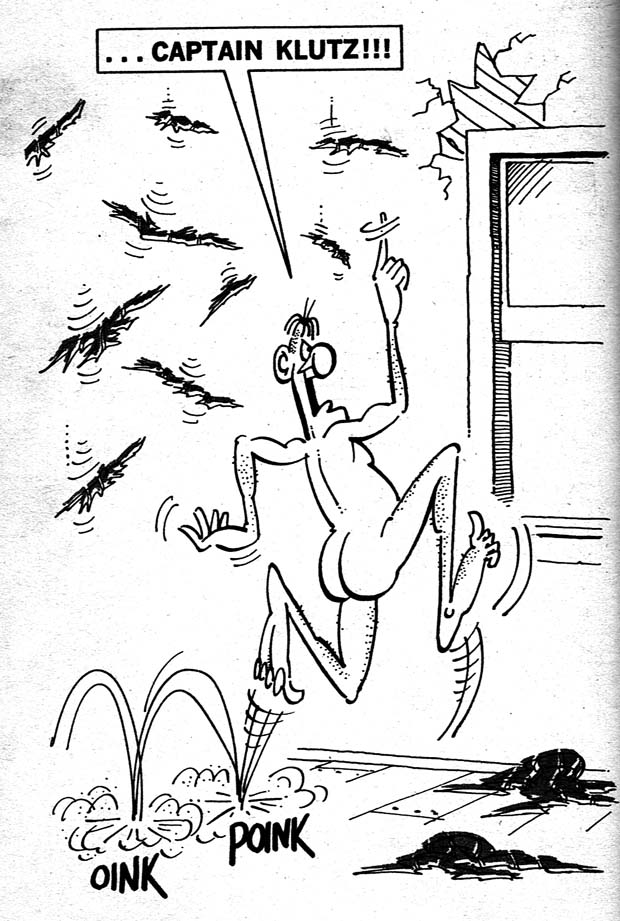
And, of course, one of his most amazingly adventurous ne’er-do-well slapstick characters was the immeasurable Captain Klutz!
Here, there, and everywhere… on the outside he wears his underwear… it’s the incredible, insteadable, and completely not edible… Captain Klutz!
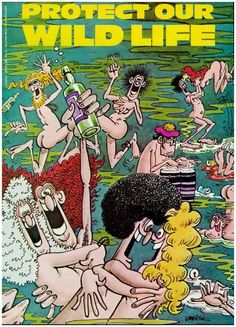
If you cannot tell it from this tribute, I deeply love the comic genius who was Don Martin, Mad Magazine’s Maddest Artist. Like me he was obsessed with nudists and drawing anatomy. Like me he was not above making up words with ridiculous-sounding syllables. And like me he was also a purple-furred gorilla in a human suit… wait! No, he wasn’t, but he did invent Gorilla-Suit Day, where people in gorilla suits might randomly attack you as you go about your daily life, or gorillas in people suits, or… keep your eye on the banana in the following cartoon.
So, even though I told you about Bruce Timm and Wally Wood and other toon artists long before I got around to telling you about Don Martin, that doesn’t mean I love them more. Don Martin is wacky after my own heart, and the reason I spent so much time immersed in Mad Magazine back in the 60’s, 70’s, and 80’s.












Why School Should Be Cool
I was a school teacher for thirty-one years, and in spite of the immense amount of brain damage that builds up over time, especially as a middle-school teacher, I think I know what we’ve been doing wrong.
We need to take a look at an education system where things are working better than they are here.
Now, I know you probably didn’t click on the boring video about school. Heck, you probably aren’t even reading this sentence. But I can summarize it and put it in easy-to-understand words. Finland does not have to educate as many poor and disadvantaged kids as this country does. The video gives five ways that Finland does it better, but all of them boil down to the basic notion that the country is more homogeneous and uniformly middle-class than ours is. Still, we can learn things from them.
The first of the five ways that Finland does it better is a difference in government. While U.S. governmental safety-net programs blame people who need food stamps for being lazy (even though some of them work 40-hour work weeks in minimum-wage jobs), Finland gives a huge package to parents of everything they might need as soon as their child is born. As long as the child is in school, the government does many things to support the family’s efforts to educate them. Imagine what we could accomplish here if we invested some of the vast fortune we give to corporations in subsidies into educating poor black and Hispanic children instead. Children have a hard time learning in school when they come to school hungry. If we could only feed them better, the way the Fins do, we would revolutionize our classrooms.
The second point the video makes is the biggest suds-maker every time I get on my teacher’s soap box. They don’t give kids homework and they only give them one standardized test when they leave high school. I have recently covered this topic more thoroughly in a post in which I was able to ridicule Florida governor Rick “Skeletor” Scott. (Boy, did I enjoy doing that.) But I won’t go into all of that again here.
The third thing is respecting teachers. In Finland they treat teachers with the kind of respect that they give to doctors and lawyers. How cool is that? In Texas, calling someone a teacher is an epithet. If a teacher is liked or even loved by their students, administrators are encouraged to keep a closer eye on them to figure out what’s wrong. Students are supposed to hate their teachers and sit all day filling out mind-numbing test-preparation worksheets. Imagine what it could be like if teachers weren’t the scum of the earth. They might actually have students convinced that learning goes on in their classrooms.
The fourth point is that Finland does not try to cram more and more memorized details into young brains so they can spit it all back out on a test. They take students thoroughly into the subject of study, and at a slower, easier pace. They dive deep into the river of learning instead of wade through the wide and shallow parts. All questions get answered. And by that, I mean, student questions, not teacher questions. The learning is student-centered.
Finally, the video states that Finland simply has fewer social ills in their country to get in the way of good quality education. But even though the work is harder in this country, the potential is really there to go far beyond what Finland is capable of. We have a natural resource that is totally untapped in this nation. We don’t develop the minds of a majority of our children in any meaningful way. And I can tell you from having done it, you can teach a poor or disadvantaged child to think. You can give them the tools for academic, economic, and personal success. You can make them into valuable human beings. But you should never forget, they are already precious beyond measure. We just ignore and trash that inherent value. So, the information is out there about how to do a better job of educating our children. We need to follow through.
Here endeth the lesson.
Leave a comment
Filed under angry rant, commentary, education, humor, insight, teaching
Tagged as education, Finland's education system, humor, learning, lessons learned, teachers, teaching, teaching better, writing