I am a writer because I write.
I write because I have to.
I have to because somebody has to control the words.
People are made of words. Their identity, their inner self, their reason for existence… all made of words. The very thoughts in their heads are… words.
If I want to control the words I am made of, then I must be the writer who writes his own story.
I don’t want anyone else to write the words that essentially become me. Do you?
Of course, authors create characters. Even autobiographers create characters. Carl Sandburg could no more make his words into Lincoln than a bird can make its tweets into a cat. Sandburg can, however, help us to understand Lincoln as Carl Sandburg understands the words that are Lincoln.
Lincoln probably did not have the words for “bikini girls” in his head when he wrote those words in the second quote. But somebody thought that the picture would help us understand the words. By all accounts, Lincoln was not a particularly happy man leading a particularly happy life. But he showed us the meaning of his words when he stood firm against the strong winds of harsh words and bad ideas in a terrible time. And he was as happy about it as he made up his mind to be.
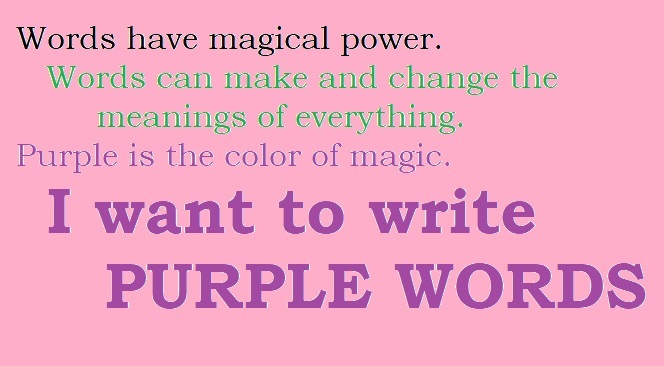
I, too, have not lived a particularly happy life. But I was always the “teacher with a sense of humor” in the classroom, and students loved me for it. Funny people are often not happy people. But they make themselves out of funny words because laughter heals pain, and jokes are effective medicine. And so I choose to write comedy novels. Novels that are funny even though they are about hard things like freezing to death, losing loved ones, being humiliated, being molested, and fear of death. Magical purple words can bring light to any darkness. I am the words I choose to write in my own story. The words not only reveal me, they make me who I am. And it is up to me to write those words. Other people might wish to do it for me. But they really can’t. The words are for me alone to write.
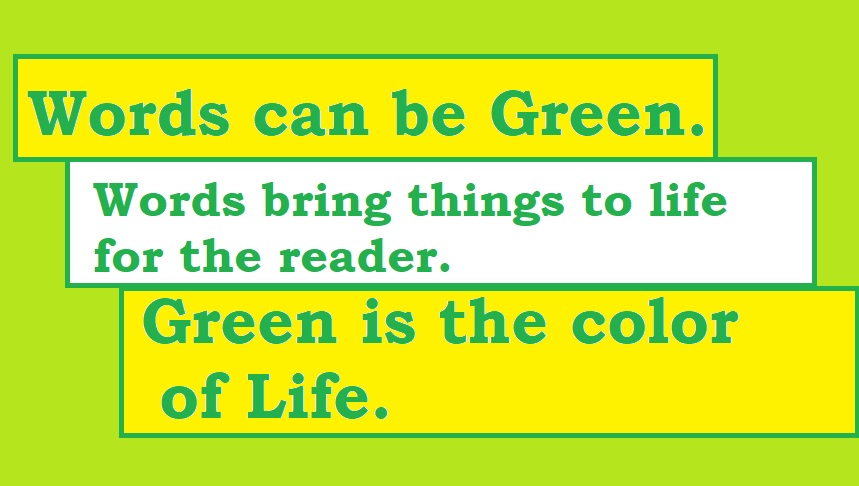
And so it is imperative that I write my words in the form of my novels, my essays, and this goofy blog post. I am writing myself to life, even if no one ever reads my writing.
I have not been a very successful marketer of my own book. But I have made attempts to get help with it. This book review is an example of that. I have chosen to reproduce the interview here as a way of ditching my responsibility for writing anything new in this post.
Interview with Michael Beyer, author of “Catch a Falling Star”
A common misconception entwined with authors is that they are socially inept, how true is that?
Quite true… the person who goes on to become a successful author is the sociopath who sits in the back of the classroom during his freshman year of high school watching everybody through pop-bottle-bottom glasses and taking notes on everything everyone else is doing or saying. But, the rub is that you cannot successfully write anything without learning how to talk to people first. This is why most of them take years to get their books successfully completed. It is also why some authors have closets full of manuscripts that no one has ever seen.
Do all authors have to be grammar Nazis?
Alle begrüßen die heiligen Worte! Yes, authors must pass through the grammar Nazi stage, even if they are to become grammar anarchists like Kurt Vonnegut or Terry Pratchett. You have to know the rules you are breaking before you can break them without simply being stupid.
If you could have been the original author of any book, what would it have been and why?
My own book. The good books that are out there are good only because you couldn’t rewrite it and make it any better than it already is. I also don’t want to waste my time re-writing a dumb book or an evil book or a goofy book… well, I might have to think twice about the goofy book.
What makes this particular genre you are involved in so special?
I was a public school English teacher for 31 years in Texas. I write YA novels because, not only are kids my main audience, but also my primary source material. All the best fantasy, science fiction, and humor ideas can be accidentally happened upon and written down somewhere in a middle school classroom. All the best characters and clowns too.
What works best for you: Typewriters, fountain pen, dictate, computer or longhand?
For twenty years I wrote everything out in longhand in spiral notebooks. It took considerable work to copy it all out on a typewriter. Then some nut invented that computer thing, and an even nuttier nut showed me how to use one. The world will live to regret those two big mistakes.
When did it dawn upon you that you wanted to be a writer?
I started writing things down in the back of the classroom when I was about twelve. Before that I told stories to everyone who would listen… or couldn’t escape listening. My sisters still blame me for recurring nightmares and my grade school best friend still reminds me that I am not actually a changeling left on Earth by Martians. I guess I haven’t actually made up my mind yet about becoming a writer.
How often do you write?
Are you asking how many times a day? Or how often I stop writing? The second one is easier to answer… never.
Do you have a set schedule for writing, or are you one of those who write only when they feel inspired?
I write whenever life doesn’t interfere. Now that I am retired from teaching I write every morning for at least an hour and at least 500 finished words. But I am writing in my head even when I am at Wal-Mart returning the sneakers my daughter begged me for because I wasn’t smart enough not to buy pink ones.
How hard was it to sit down and actually start writing something?
About as hard as it is to remember to breathe. As an English teacher I always made it my policy to write any writing assignment I ever assigned to my students. Other members of the faculty all knew that I was willing to write anything that needed writing, and the State of Texas requires teachers to write huge stacks of B.S. daily. So at least some of their lesson plans look suspiciously like mine.
Writers are often associated with loner tendencies; is there any truth to that?
I know a lot of other writers who are stressed by being around stupid people too much. But, as a former school teacher, I like people… especially kid people… even the stupid ones.
Do you think writers have a normal life like others?
No. I don’t have to explain that one, do I? The world does not have as many writers as there are normal people. There has to be a reason for that, don’t you think?
Do you set a plot or prefer going wherever an idea takes you?
I have in the past mapped out elaborate road-maps of plot and character motivation. I never followed a single one to the “X marks the spot”. You only find treasure if you learn to dig for treasure along the way.
What, according to you, is the hardest thing about writing?
Quitting for the session. I try always to leave something unwritten that I wanted to say to pick up next time… and it often brings me back to do some more well before I had planned to.
What would you say is the easiest aspect of writing?
Everything about writing is hard. I do it easily now only because I have worked at it since I was twelve. Years of practice and re-writing, trying new things and failing badly, trying again and failing again, ironing out the wrinkles and then putting them back in… It takes effort, just like building the Great Wall of China, one brick at a time… but isn’t it a danged big old wall now?
Have you ever experienced “Writer’s Block”? How long do they usually last?
Dang! How am I ever going to answer that? I have to really think about it. Maybe I can answer by next Tuesday.
Any tips you would like to share to overcome it?
Well, I guess that wasn’t really that hard after all. All I did was write something down as soon as it came into my head. If it turns out to be a stupid idea, computers make it easy to erase and replace. I told you that you were going to regret that particular invention, didn’t I?
Do you read much and if so who are your favorite authors?
Terry Pratchett, Michael Crichton, Louis L’Amour, R. A. Salvatore, William Faulkner, William Shakespeare, J.R.R. Tolkein, Madeleine L’Engle, Ernest Hemingway, Mark Twain… and these are just the authors I have read three or more books from (over ten from each of the first four) Reading allows me to live more than one life.
Over the years, what would you say has improved significantly in your writing?
My ability to finish a story to the point I don’t feel that it has to be totally re-written.
What is the most important thing about a book in your opinion?
Whether it makes you laugh or makes you cry or both, the most important thing is that one sweet-sad moment when you have to tell yourself, “Yes,this is true.”
If you had the choice to rewrite any of your books, which one would it be and why?
I am busy rewriting all of them now, except for the two I already have published, and I am busily thinking about at least one of those.
What is your take on the importance of a good cover and title?
Something about the title and cover has to entice the reader into making the mistake of picking the book up and looking inside. It is the essential booby trap that makes or breaks a book.
Have you ever designed your own book cover?
Yes. And so far publishers have ignored my wishes every time. I have found a small publisher called PDMI that may let me do the cover illustrations for the book they have foolishly agreed to publish.
Does a bad review affect your writing?
If I get a review that honestly defines the problem the reader had with my work, then of course I will try to fix the problem. Most bad reviews however are of the sort where very little thought went into it, and the only purpose was to vent and take something out on me as the author. It doesn’t always seem to be reflecting my writing… rather the prejudices that stand between the reader and my work.
Any advice you would like to give to your younger self?
Don’t worry about looking like an idiot, because you will, and you are, and the only thing you can do about it is write more and worry less.
What did you want to become when you were a kid?
I told my parents when I was five that I wanted to be a clown. When I was in junior high I decided I wanted to be a writer and a cartoonist. I said in high school that the last thing I would ever want to be is a teacher. So I went to college and learned to be a teacher, and along the way I got to be the other three things as well.
Do you recall the first ever book/novel you read?
The White Stag by Kate Seredy. I picked it off the classroom reading shelf in third grade because it had a plain red cover… the dust jacket was long lost. I believed that wonderful things were concealed by plain and ordinary appearances. I kept it for three months and read it at least four times. My teacher thought I was crazy. But by the end of fourth grade she asked for my help reading the book Ribsy by Beverly Cleary aloud to the whole class. I turned into a surprisingly good oral reader, and had from that first book onwards developed a lifelong love of reading.
Which book inspired you to begin writing?
I suppose it was Robert Louis Stevenson’s Treasure Island which I read in the fourth grade. It colored all the stories I told my friends and cousins in our little Iowa town. I loved adventure. I loved N. C. Wyeth’s illustrations in the edition my Grandma had in her house. I knew from halfway through the first chapter that I had to be like young Jim Hawkins and tell a story like that.
Did you ever think you would be unable to finish your first novel?
Yes. For most of the twenty-two years it took me to finally reach the last page.
Do you read any of your own work?
How can I write anything without reading it? I like to go back regularly to re-read as much as I can, and every time I do that, I get to the point that I almost think I actually know that dumb old guy who wrote that nonsense.
Tell us about your writing style, how is it different from other writers?
I can’t say, really. When I am writing I hear the voices in my head not as my own voice, but as the characters in the story. The characters are all people I know, though every character has some part of me mixed in too. I try to write what makes me laugh and makes me cry and makes me feel good inside… and I leave it up to the reader to try to feel that too.
Do your novels carry a message?
Every novel has to be full of metaphor and meaning. If we can’t as readers jump inside the characters and walk around in their lives for a bit, then what was the point of even writing it? There is no one message. There is a multitude of messages. And readers should maybe read stuff backwards and upside down to look for clues. You never know what else might be in there. Maybe Elvis is really alive and ordering chili every day at a Wendy’s in Michigan and that can only be revealed by reading the paragraph on page 23 in reverse order.
How much of yourself do you put into your books?
Jeez! I have to work hard to keep some stuff out of my books and save it for myself. Otherwise there would soon be nothing left of me. I don’t have any secrets left in life that aren’t found in my writing somewhere. I keep my ears out of my writing, or else what would I hear with? I keep my fingers out too so I have something to draw pictures with. I use much more of me than I should.
Have you ever incorporated something that happened to you in real life into your novels?
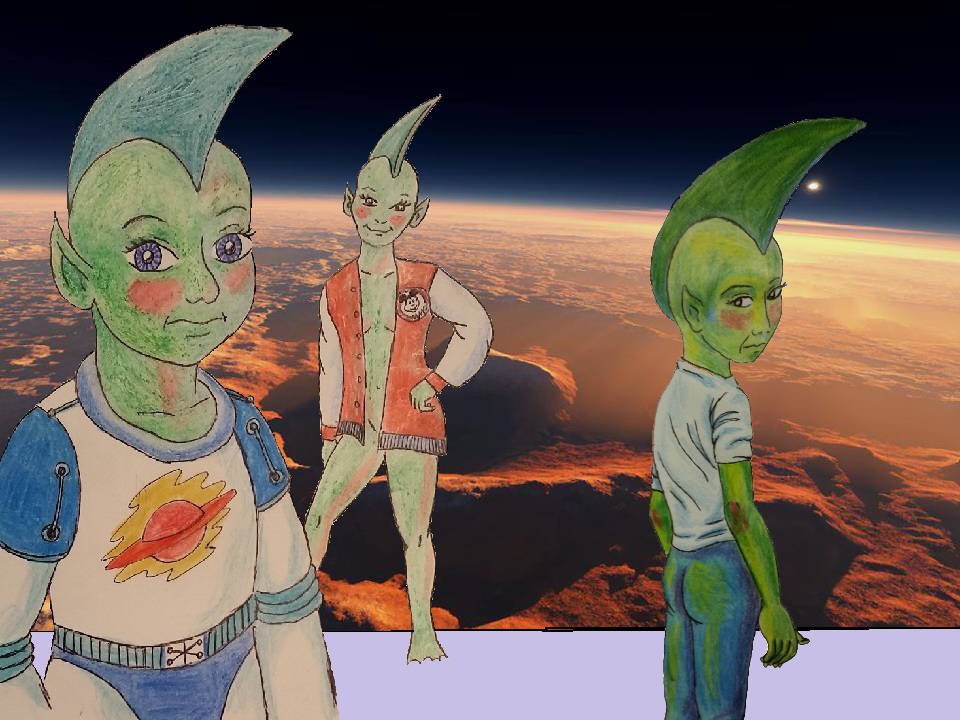
Yes. My friend Robert remembers when the aliens tried and failed to invade my hometown when we were boys. That became the basis for Catch a Falling Star. Of course, I changed a few things, because if Robert realized which character in the book was him, he’d probably want to punch me in the nose. The characters in my stories are all students I have taught, kids I grew up with, and people I have known. Even the really weird ones were real once upon a time. Sorry, Robert, but it’s true.
How realistic are your books?
I write humorous books about science fiction subjects and fantasy adventures. They are filled with lies and exaggerations. So everything is photo realistic. You believe me, don’t you?
What books have influenced your life the most?
Tolkien’s Lord of the Rings trilogy, Douglas Adams’ Hitchhiker’s Guide to the Galaxy trilogy… er quadrilogy… or maybe five-ilogy… I don’t know…, and Frank Herbert’s Dune. I have a thing for realistic fiction.
Are there any books that you are currently reading and why?
I started reading Terry Pratchett’s Hogfather because it is the only Terry Pratchett book I own that I haven’t read yet, and I haven’t gotten hold of a copy of Hat Full of Sky already.
Have any new writers grasped your interest recently?
I love John Green’s books Paper Towns and The Fault in Our Stars.
Is there anything you are currently working on that may intrigue the interest of your readers?
I am trying to get published a novel called Snow Babies. It is a fantasy-comedy about freezing to death in a blizzard and it has snow ghosts and clowns in it. That is a rather fast and flippant summation about a book that I think will make you cry a little and laugh a lot, but it is also fairly accurate. I am hoping the publisher I signed the contract with stays in business long enough to publish it. They have also made the mistake of allowing me to submit a cover illustration.
Who are your books mostly dedicated to?
I dedicate what I write to the people I have known and used as characters. I dedicate my writing to former students, friends, family, and co-workers, because what other reason could I have for writing?
It is often believed that almost all writers have had their hearts broken at some point in time, does that remain true for you as well?
My heart breaks every time a child fails in the classroom. My heart breaks every time I see something incredibly beautiful that I know will not last much longer. I have fallen in love at least five times, and had my heart broken by that at least ten times, maybe more. The scars you carry on the inside either fester and kill you, or they turn over time into pearls, the same way oysters deal with irritants inside their shells, and they can also be called “books you have to write” once they become pearls.
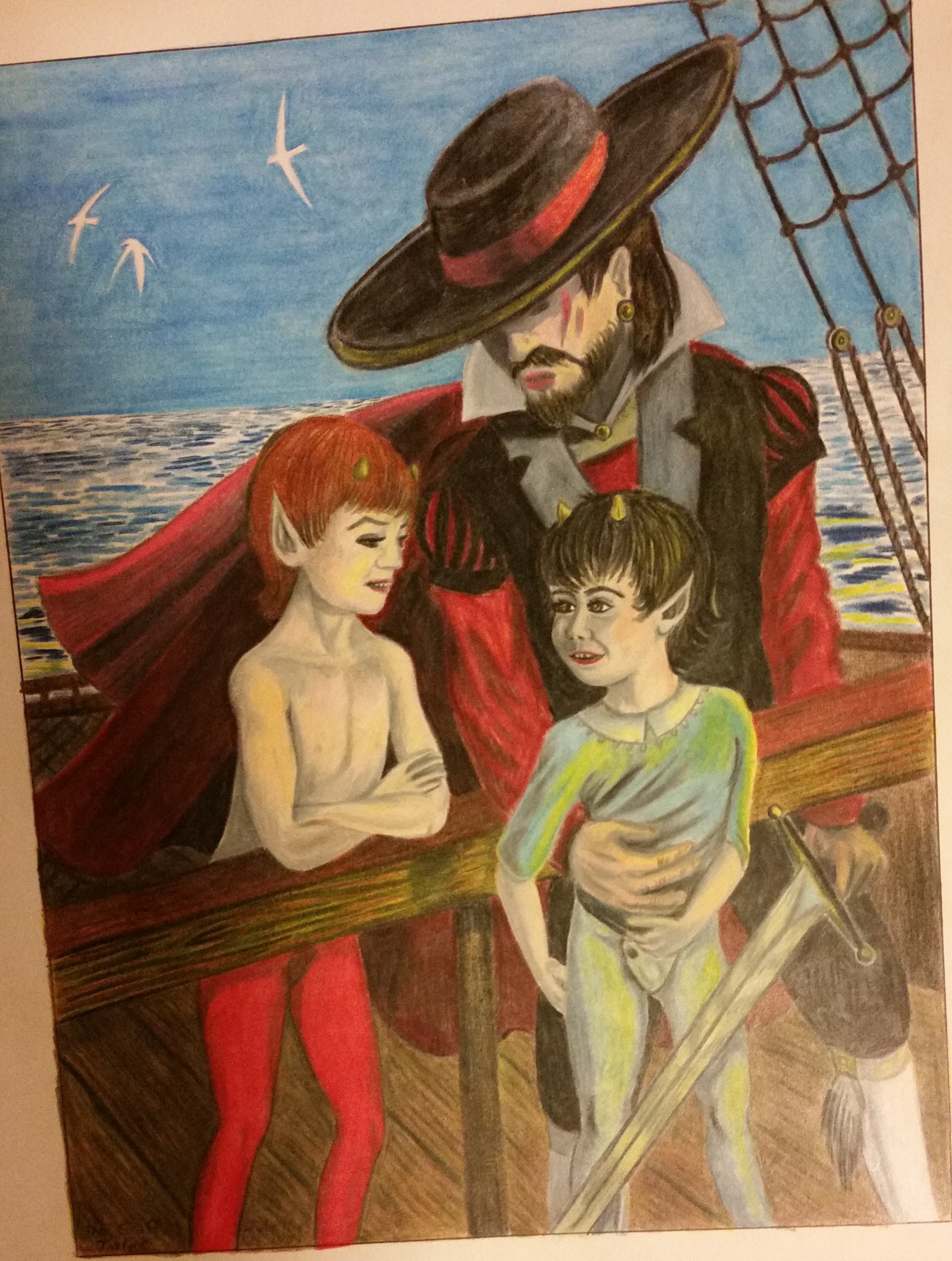
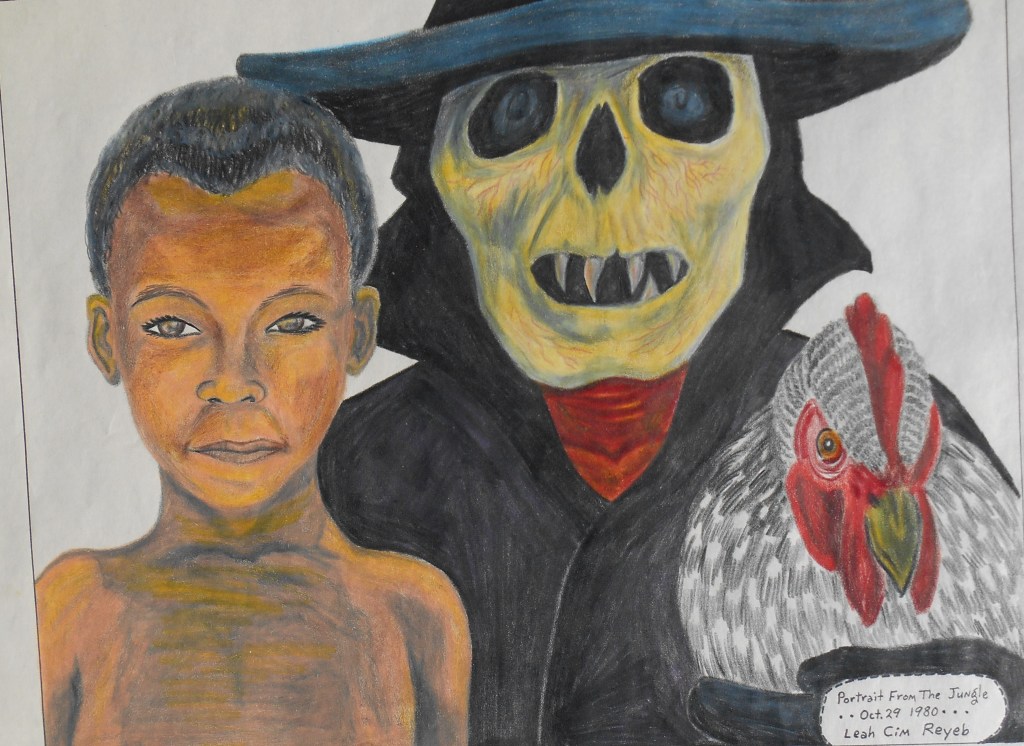
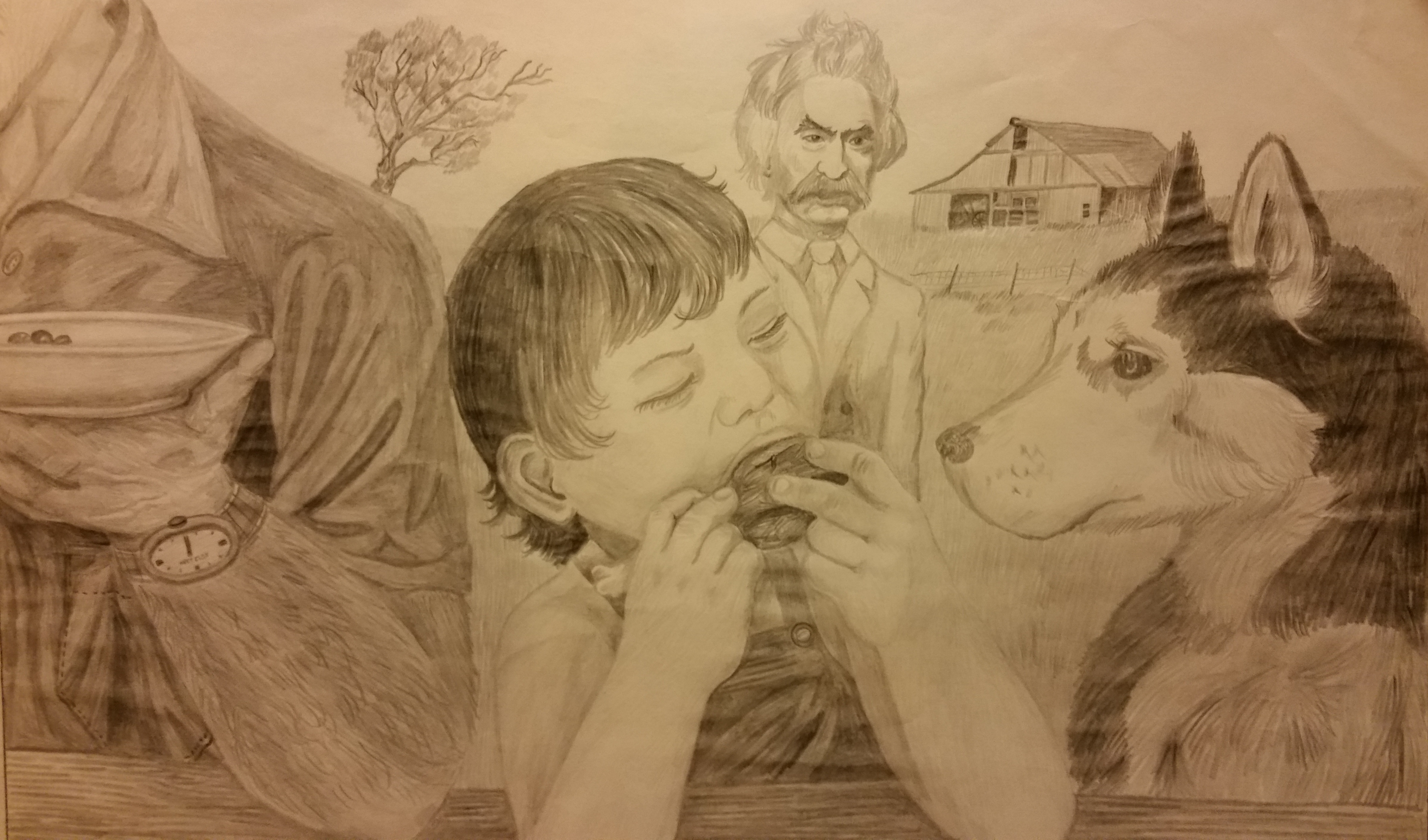
My first novel-length piece of writing was attempted in college. I finished it in four years. It was a pirate tale about a young man, a pirate named Graff the Changeling. You see him in this illustration I created in 1980 with his two young sons, Rene and Emery. Because their mother was a fairy, the boys have pointed ears and horns. It was an attempt at serious fantasy adventure fiction that was so awful, it became a comedy before it was through. I called it The Graff Tales, and I still have it. But I promise you, I will never, ever try to publish the horrible thing. My sisters served as my beta readers for this story. They both liked the oral stories I told, and they eagerly awaited something like they remembered from our shared childhood. They both were a bit disappointed by my first prose attempt. There was a knight called Sir Rosewall in the story. He was a hapless knighted fool who lived in poverty and swore to reclaim his honor with great deeds, but as he goes to sea as a kidnapped sailor, all he manages to do is fall down a lot and bump his large head frequently. In the first scene when he enters the story, long about chapter four, he exits a cottage and has to punt a piglet to get out without falling down. This pig-punting thing was repeated more than once with this character. My sisters joked that the “pig-in-the-doorway” motif would be my lasting contribution to literature. Fortunately for me, it was not. I am probably the only one who even remembers there was such a novel.
But my biggest failing with writing and storytelling was always that I could be too creative. The story featured a flying pirate ship that was raised from the bottom of the ocean by fairy magic. The crew were re-animated skeletons. The gorilla who lived on the island where the ship’s survivors had been marooned would also join the crew. His name was Hairy Arnold. One villain was the pirate captain Horner, a man with a silver nose-piece because he had lost his real nose to a cannon shot. Another was a red-bearded dandy named Captain Dangerous. But the biggest villain of all was the Heretic, who turned out to be a demon in human guise. It was all about escaping from pirates who wanted to kill you and hitting soldiers with fish in the fish market. There were crocodile-headed men and little child-like fairies called Peris that lived in the city where Graff was trapped and transformed into a monster by the Heretic.
My plot was too convoluted and my characters too wildly diverse and unlikely. The result was something far too bizarre to be serious fiction. The only way it could actually be interpreted was as a piece of comedy. There-in lay the solution to my identity problem as a writer. I had to stop trying to be serious. My imagination too often bent the rules of physics and reality. So I had to stop trying for realism and believability.
In the end all the main characters die. All except for young Rene who becomes a pirate hunter. Of course, I follow Graff and Emery through to heaven because, well, it was a first person narrative and the narrator died. So, I vowed to myself that I would never let this horrible piece of nonsense see the light of day. I would never try to publish it, rewrite it, or even tell anyone about it. And so to this very day I… oopsie.
I have looked deeply and longingly at my own writing time and again trying to determine what is good and what is poorly done and what is the best that I have written. How does one examine what is good? What are the standards that you must meet?
I had a writing teacher who was teaching a class in fiction writing and said to us, “You write fiction to create that special bittersweet something, that je ne sais quoi, that you need in order to come to terms with reality. Everything necessary to say something that satisfies a nameless desire.” I wish I remembered his name so I could credit him with having said that wise thing. Or, at any rate, I wish I could remember the name of the wise guy that he was quoting.
So, basically I am trying to capture in prose something that I have no idea what it is, but both you and I will know it if we see it. Easy-peasy, right?
Good fiction that I have read and liked makes me feel something. If it is truly literary quality, like the novels of Charles Dickens, Terry Pratchett, and Mark Twain, it will make me both laugh and cry. Funny things balanced by things that hurt to know and make you weep for characters that you have come to love. If it is a downer kind of novel, as some very good bits of science fiction and horror fiction are, it will make you laugh a little, cry a little, and think a lot; think with dread, or despair, or even impossible hope. Steven King, George Orwell, H.P. Lovecraft, and Ray Bradbury are good examples of this.
I am grappling with how you do that. I am not fool enough to think I am some sort of literary great. I am a school teacher writing stories for school children, stories I wanted to hear when I was a kid. Stories of good versus evil, good people coming together in the face of chaos. Heroes, villains, and clowns being heroic, villainous, or foolish. And themes that both warm and chill your little blue heart.
. So, what can I do besides keep on writing and keep on trying and keep on begging people, fools, and children to try reading my writing because they will like it, even if it is the least best thing I have written?
Poppensparkle invited Twinklebottom to enter the upper room of Pippen’s Tower in the castle known as Cair Tellos. Poppy’s face revealed great concern as she led Twinkle to the coffee table in what her young husband constantly called Poppy’s Worry Spot.
“So, what’s on your mind today? Why did you so urgently need to see me?” Twinkle said.
“It’s the creator. He’s not been well. And that’s concerning at his advanced age.”
“You mean the Slow One who writes our story? The one our existence depends on? How old is he?”
“He says he is 568 years old, but he writes fiction, so he lies a lot. In faery years he’s 138, so I guess he is probably almost 70 in human years.”
“Goodness, Poppy! If he dies, we all disappear into nothingness.”
“Yes, that’s the way being a faery works. We depend on the fools who believe in us.”
“So, what is wrong with him?”
“In January, one of those two crowns on his molar teeth that broke off during the pandemic got seriously infected. He had both teeth yanked out by a psycho lady dentist who nearly pulled his skeleton out of his body during the extraction of the stubborn infected tooth. He had to take lots of antibiotics and was in a lot of pain. He had trouble eating.”
“That sounds horrible, but survivable. Old Slow Ones go through that sort of thing routinely. The old lady who has dementia and talks to me all the time had all her upper teeth pulled out and something called a denichurr put in its place.”
“Yes, but that wasn’t the end of his health troubles. In the middle of January, he had to pee out four small kidney stones. That hurt an awful lot, and he got seriously infected somehow. He has this weird colon problem called diverticulosis, a condition where the large intestine is full of unexpected pockets that collect extra feces that stops moving and can become infected too.”
“So, he was also full of shit.”
“Um, yes. He had to get a shot of a super-powerful antibiotic in his behind, given to him by a lady nurse. He also needed an antibacterial powder that he had to stir into water, drinking 80 ounces of water or more a day. And he had to take lots and lots of laxatives too. At least seven days worth.”
“So, he got to know the household porcelain well.”
“It makes me glad that faeries are differently made and never have to poop.”
“You and me both, Poppy. So, is he dying?”
“I don’t think so. But I wish I knew how to help. He’s a weird old guy, but likable and funny. And we need him to stay alive and tell our story.”
“I know a dark faery I can consult,” said Twinkle stupidly.”
“Oh, that’s a truly terrible idea!”
An hour later, Twinklebottom sat in Dangerheart’s underground tea room.
“…So, that’s what is wrong with Mickey the creator. Is there anything you can do to help?”
Dangerheart grinned evilly. “I was watching through my crystal ball as the old hag stuck the needle in his butt. I laughed long and hard about that.”
“It isn’t really a crystal ball. It’s a Slow One child’s shooting marble.”
“It lets me scry on foolish mortals like the creator though. And I love seeing him get embarrassed or put through pain. I’m only sorry I didn’t get to see the psycho dentist yank the infected molar out. That would’ve been a hoot.”
“Isn’t there something you can do to help?”
“Well, he already went to the emergency room on Friday and after they scanned him and poked him and took his blood, they found out the infection was gone. They couldn’t do anything more for him with their science stuff. The pee doctor gave him some expensive pills that turn your pee blue. Surely there is no evil magic that I could apply that would be any funnier than that.”
“You think we don’t need to worry about him anymore?”
“I wouldn’t say that. President Pumpkinhead Trump will probably take away his Medicare and that will probably kill him. That should be funny to watch.”
“So, you think we are all doomed? The world will not remember us after our storyteller dies, and we will all fade away into nothingness?”
“Of course, we’re doomed. And you sure use the word So a lot. Or was that sew?”
No, this isn’t some kind of multiple-book book review. This is an ungodly silly claim that I can actually read three books at once. Silly, but true.
Now, I don’t claim to be a three-armed mutant with six eyes or anything. And I am relatively sure I only have one brain. But, remember, I was a school teacher who could successfully maintain a lesson thread through discussions that were supposed to be about a story by Mark Twain, but ventured off to the left into whether or not donuts were really invented by a guy who piloted a ship and stuck his pastries on the handles of the ships’ wheel, thus making the first donut holes, and then got briefly lost in the woods of a discussion about whether or not there were pirates on the Mississippi River, and who Jean Lafitte really was, and why he was not the barefoot pirate who stole Cap’n Crunch’s cereal, but finally got to the point of what the story was really trying to say. (How’s that for mastery of the compound sentence?) (Oh, so you could do better? Really? You were in my class once, weren’t you.) I am quite capable of tracking more than one plot at the same time. And I am not slavishly devoted to finishing one book before I pick up the next.
I like reading things the way I eat a Sunday dinner… a little meatloaf is followed by a forkful of mashed potatoes, then back to meat, and some green peas after that… until the whole plate is clean.
Treasure Islandby Robert Louis Stevenson is the meatloaf. I have read it before, just as I have probably had more meatloaf in my Iowegian/Texican lifetime than any other meat dish. It’s pretty much a middle-America thing. And Treasure Island is the second book I ever read. So you can understand how easy a re-read would be. I am reading it mostly while I am sitting in the high school parking lot waiting to pick up the Princess after school is out.
Lynn Johnston’s For Better or Worse is also an old friend. I used to read it in the newspaper practically every day. I watched those kids grow up and have adventures almost as if they were members of my own family. So the mashed potatoes part of the meal is easy to digest too.
So that brings me to the green peas. Green peas are good for you. They are filled with niacin and folic acid and other green stuff that makes you healthier, even though when the green peas get mashed a bit and mix together with the potatoes, they look like boogers, and when you are a kid, you really can’t be sure. Terry Pratchett and Stephen Baxter wrote this book The Long War together. And while I love everything Terry Pratchett does, including the book he wrote with Neil Gaiman, I am having a hard time getting into this one. Parts of it seem disjointed and hard to follow, at least at the beginning. It takes work to choke down some of it. Peas and potatoes and boogers, you know.
But this isn’t the first time I have ever read multiple books at the same time. In fact, I don’t remember the last time I finished a book and the next one wasn’t at least halfway finished too. So it can be done. Even by sane people.
Much of what I love about good story telling is bound up in the nature of the fool character, or the wise fool, if you will. Shakespeare is probably the consummate creator of fool characters. Jaques in As You Like It, Falstaff in Henry IV and Henry V, the King’s Fool in King Lear, and even Polonius in Hamlet. The fool is essential to the story because he serves several important purposes. He is a foil for main characters in the unraveling of the plot, providing exposition through dialogue, wit and wisdom in commenting on the events, and pratfalls and innuendos for the further amusement of the audience. He is the Harpo Marx character, Chaplin’s Little Tramp, any Red Skelton character, Lou Costello, Jerry Lewis, and every foolish talking animal in cartoon adventures like Scooby Doo.
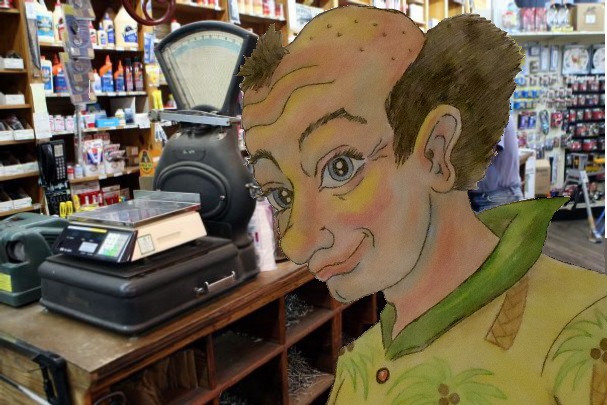
So, I have tried to include the clown in my stories of childhood in Iowa, the land of imagination and corn. In my newest novel, Snow Babies, the key clown is Harker Dawes, a good-hearted bumbler who has bought the hardware store in Norwall, Iowa and quickly managed to turn it into a bankrupted and foolishly failed business. He is in control of essential supplies for a small town to use in surviving a raging blizzard, but he is also totally incompetent and capable of creating as many problems as his store can solve. He is a bachelor uncle living with his brother’s family of three, and he becomes one of the people most responsible for taking in the four orphans from the bus.
Today’s Paffooney is a picture of Harker in his store. Of course, I can’t tell you the name of the real-life person that Harker is based on. But I can tell you that I drew this portrait by combining his real-life mug with the features of Rowan Atkinson. In fact, if a miracle happens and they make this story into a movie, Rowan Atkinson would be perfect for the part. His first name is even the real name of the town that becomes Norwall in my story. Stewart’s Hardware Store is no longer there anymore. Even the building is gone, but the image in the background is close to the antique feel of that wonderful old place.
I entered the classroom silently. Death doesn’t have to make any sound when it enters a room, but I remember many times when I entered a classroom in a fully enraged-lion roar. Probably too many times.
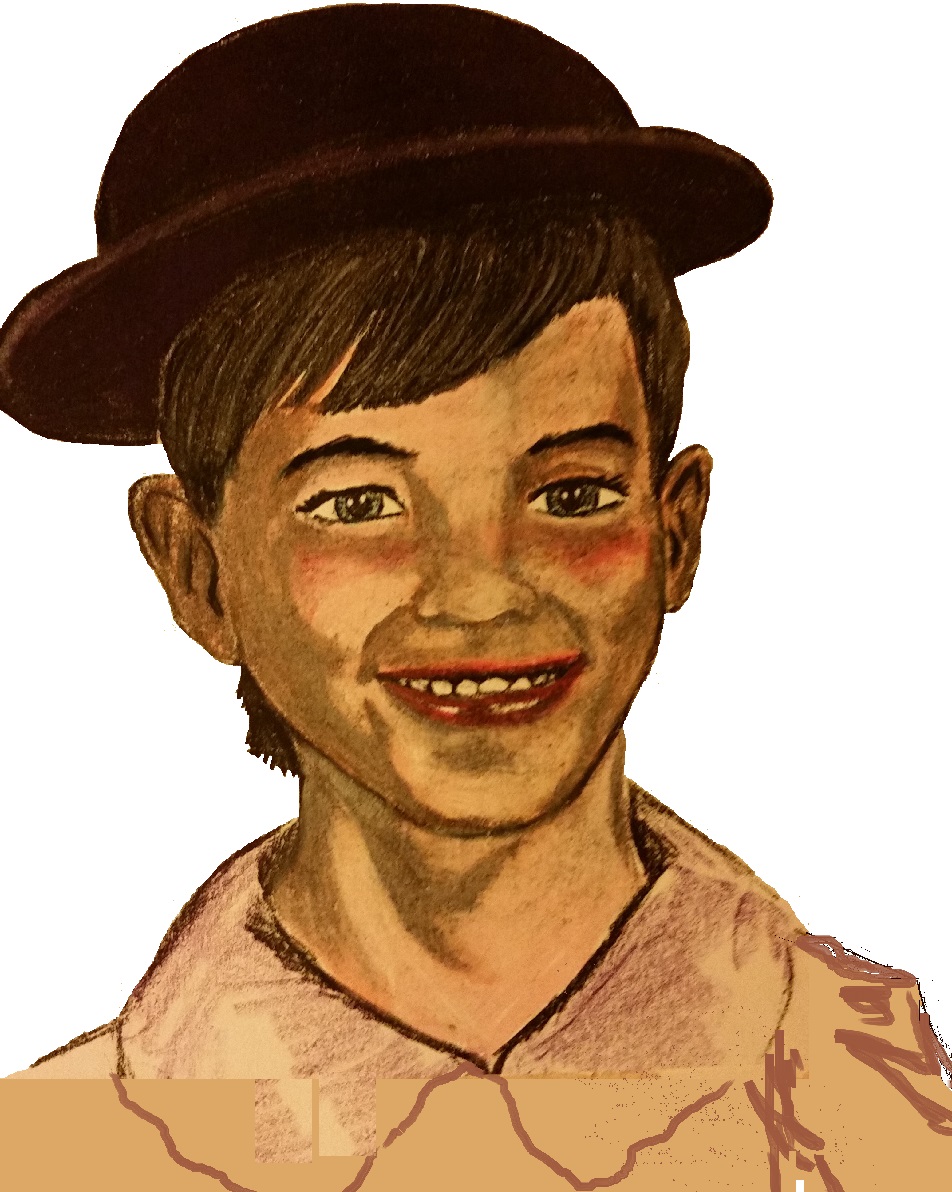
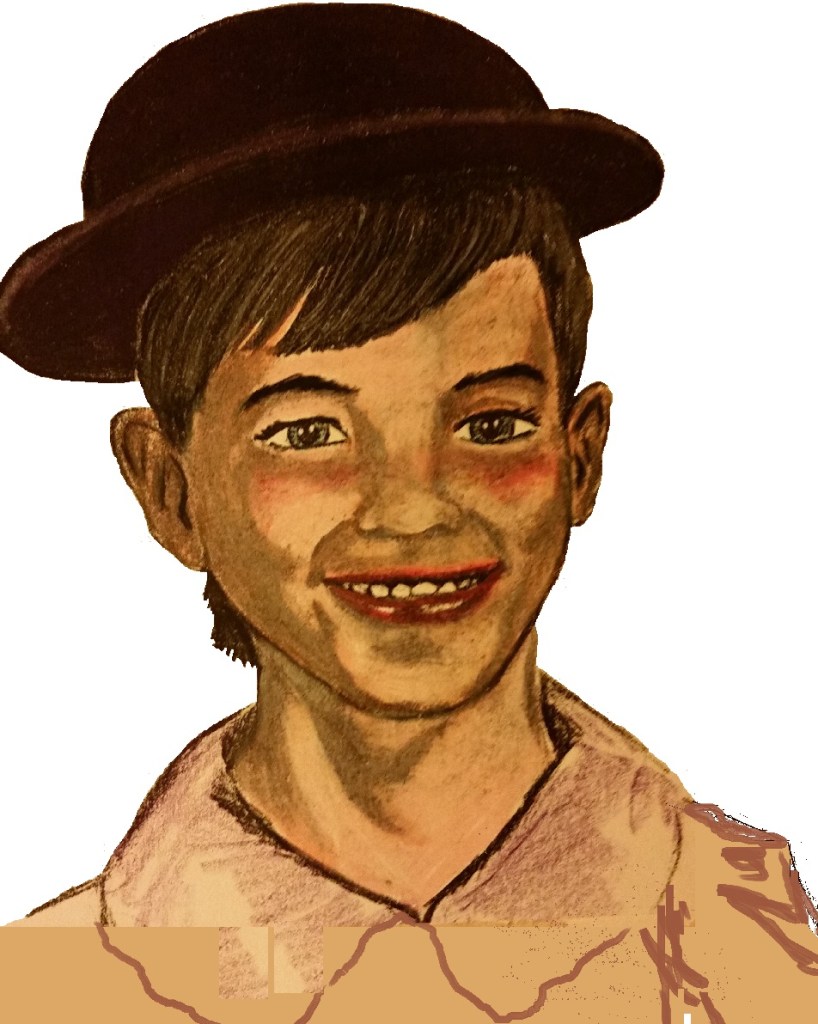
This time it was a small lesson to a small class. Little Mickey, ten years old, was sitting there in a front-row desk. He was wearing that stupid purple derby hat that he always wore in his imagination. And he was wearing nothing else besides.
I gave him that old death-eye stare of disapproval. He grinned and shrugged. “Hey, I like to write about nudists, okay? They tell the truth more than most people.”
I simply nodded.
Sitting the next row over, in the front seat also, middle-aged Mickey was slumped in his seat like the cynical, world-weary teacher-thing he actually was. I nodded disapprovingly at him too. “I know, I know,” he said. “My time is running out. I have to get started on my writing plan for real this time. My stories will never get written if I don’t.”
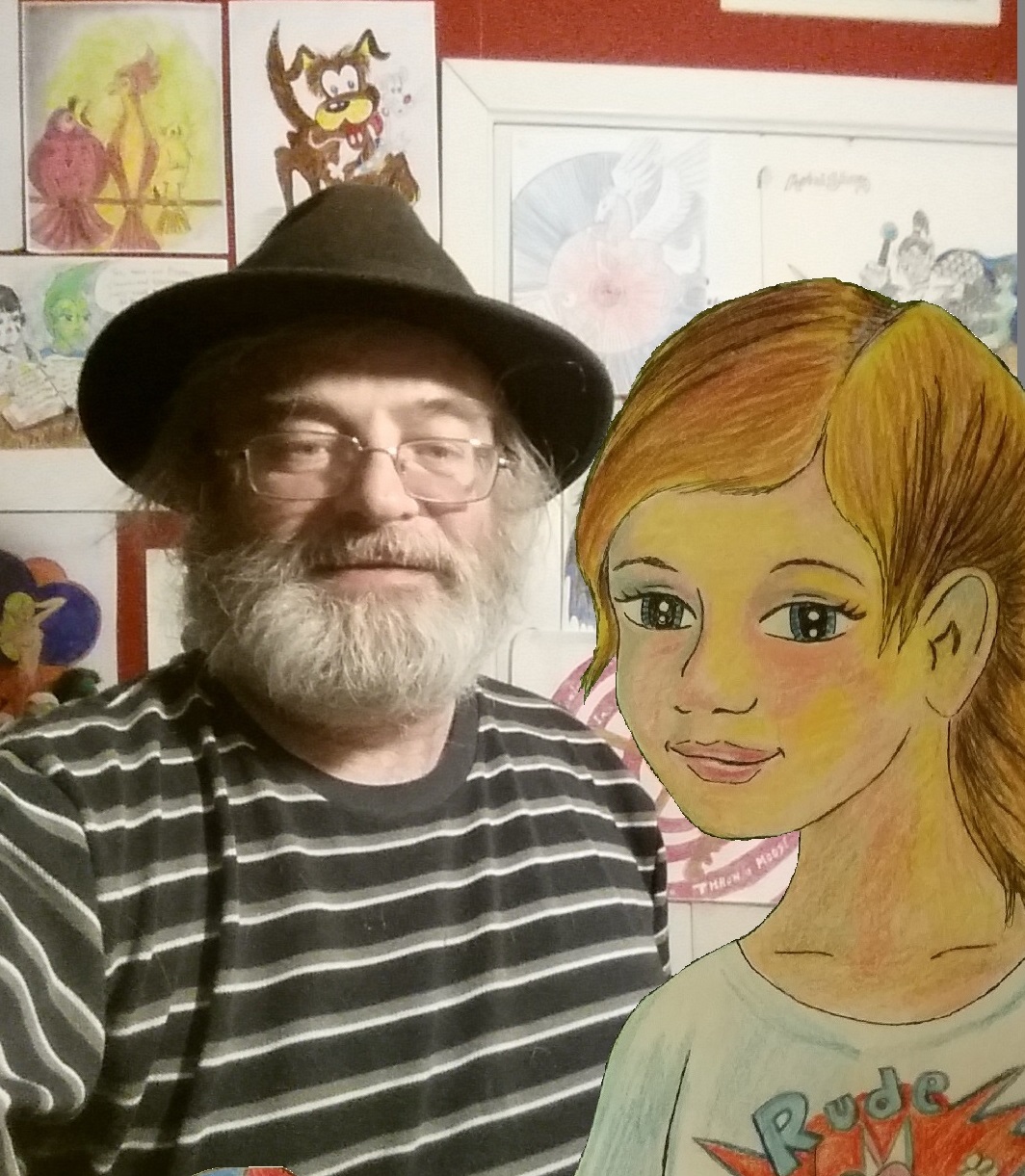
The third seat in the third row contained Old Coot Mickey with his wrinkled clothes, his long Gandalf-hair, and his frizzy author’s beard. He grinned his goofy grin at me and nodded at me cheekily. “I’ve got fourteen novels written and published now. Taint my fault that nobody ever reads ’em. They are mostly good stories, too.”
I rolled my eyes at the dark ceiling.
On the chalkboard I wrote out. Today’s Lesson Is…
“I know! I know!” shouted little Mickey, naked except for his purple hat. “The next novel is A Field Guide to Fauns. It is all about nudists in a nudist camp. I am definitely down with that!”
“Is that really a good idea, though?” asked middle-aged Mickey. “I think I was meant to be a writer of Young Adult novels, like the ones I taught so often in class. I know how those books are structured. I know their themes and development inside and out. I know how to write that stuff.”
“But the little naked guy has it right. You have ta be truthful in novels, even as you tell your danged lies.” Old Coot Mickey made his point by punctuating it with a wrinkled hand thumping on the top of his desk. “You have written novels with characters forcing other characters to make porn films in The Baby Werewolf, and sexual assault of a child in Fools and Their Toys, and lots of naked folks, and betrayal and death… All of that is the kinda stuff kids really want ta read. And them stories don’t glorify that stuff neither. Stories can help fight agin that stuff.”
“Remember, that stuff is hard to write about because I actually went through some of that stuff in my own life. It’s possible for even a fiction book to be just too real for a YA novel.” Middle-aged Mickey had entered fighting mode with his fists on his hips.
“But the underlying truth is why you had to write those stories to begin with. You have truth to tell… But in fiction form,” argued little Mickey.
“And horrible experiences turn into beautiful survival stories and heroes’ journeys with time and thoughtfulness and art,” said Old Coot Mickey.
I agreed with all three of me. I nodded and smiled.
“But you are Death, aren’t you?” asked middle-aged Mickey.
“And you’ve come to take away at least Old Coot Mickey!” declared little Mickey.
“You’ve got me all wrong,” I answered all three of me. “I am not Death. I am Nobody.“
The past two months have been a rollercoaster in the dark in a rail car that is barely set properly on the tracks. Every curve I didn’t see coming was a potential derailment and crash. A potential fatal crash.
President Pumpkinhead has been crashing and destroying government services left and right. My Medicare (which I am still paying increasingly high premiums for) is at risk of being totally cut, as is the Medicaid and Social Security that people more poverty stricken than me may lose. The military leadership has been overturned for less competent and lower-ranking officers who are more Pumpkinhead-friendly. The Department of Justice is now set up to unleash a revenge campaign, firing politically neutral officers, judges, and lawyers for less competent and more wishy-washy ones. Will they come for me? Probably not for a while. Big list. But eventually.
And my health woes have taken a darker turn. A broken crown that turned into a dangerously infected broken molar had to be extracted, along with a second broken molar. I ended up with a large dental bill that the dentist’s office tried to help me finance resulting in a credit denial that will stick me with a large bill I cannot pay. That started at the beginning of January and is finishing in the credit denial today. I also had a second serious infection of my urinary tract that required the heaviest possible antibiotics I could take without dying. That was overlapping some sort of flu-like virus and the passing of two, or possibly four, kidney stones. I am floored with lifeforce fully spent… but not quite dead.
Could any of this have been avoided? Any of this dumb stuff? I voted for the nice black lady who took over from the really old but really good President. So did my daughter. We didn’t want the Pumpkinhead to win. And I really would’ve liked Medicare to help me pay for necessary dental work, but you apparently have to fill out a long form by a certain date back in October as explained in a letter I never got in September. I have no idea where the other dumb stuff came from or how it could’ve been prevented.
So, I am now done complaining about all this dumb stuff. I will probably survive it. Maybe not. But probably. It would depend on where the rail car actually went off the rails resulting in a fatal crash I didn’t yet learn about.
Last night I watched again Part I of Ken Burns’ Mark Twain. I think it reminds me of who I am as a writer. No, I am not being all big-head arrogant and full of myself. I devoured certain writers as a youth, consumed them whole. Charles Dickens was my first passion, followed by J.R.R. Tolkien, and then Mark Twain. Of all of them, Samuel Clemens is the most like me. He was from the Midwest, born and raised in Missouri along the Mississippi River. I am from the Midwest, born and raised in Iowa along the Iowa River. He endured hardship and tragedy as a youth, losing his little brother in a riverboat accident, and he dealt with it by humor. I endured a sexual assault from an older boy, and dealt with it by… well, you get the picture. We are alike, him and I. We both draw upon the place we grew up, the people we have known, and the events of our youth to create stories.
It is a pretty big responsibility to follow in his footsteps, and I will probably never live to see the success and the wealth that came to him. But I have a responsibility to the people I knew and the time that gave rise to me to tell their story. I need to build a network of stories that resonate the truth of existence that I have been witness to. A big responsibility… and I probably will not live up to it. But I have to try.
Being a writer is somewhat like being cursed. The words burn inside, needing to get out, needing to be heard. I have stories that need to be told, and they will be told, even if only to file away in the closet again. Like Mark Twain, I am good at feeling sorry for myself. And the Mickey part of me, the writer part of me, is just like Mark Twain, a writer persona, and not the real man himself. I am simply the container for something that has to exist and has to tell stories. It is not a bad thing to be. But the more I get to know it, the more I would not wish the destiny on others.
Forgive how sad and bunglingly boorish this post is. But sometimes there are thoughts I simply have to think. And as a writer, I am bound to write down the silly things that I think.

 Of course, authors create characters. Even autobiographers create characters. Carl Sandburg could no more make his words into Lincoln than a bird can make its tweets into a cat. Sandburg can, however, help us to understand Lincoln as Carl Sandburg understands the words that are Lincoln.


 I, too, have not lived a particularly happy life. But I was always the “teacher with a sense of humor” in the classroom, and students loved me for it. Funny people are often not happy people. But they make themselves out of funny words because laughter heals pain, and jokes are effective medicine. And so I choose to write comedy novels. Novels that are funny even though they are about hard things like freezing to death, losing loved ones, being humiliated, being molested, and fear of death. Magical purple words can bring light to any darkness. I am the words I choose to write in my own story. The words not only reveal me, they make me who I am. And it is up to me to write those words. Other people might wish to do it for me. But they really can’t. The words are for me alone to write.
 And so it is imperative that I write my words in the form of my novels, my essays, and this goofy blog post. I am writing myself to life, even if no one ever reads my writing.




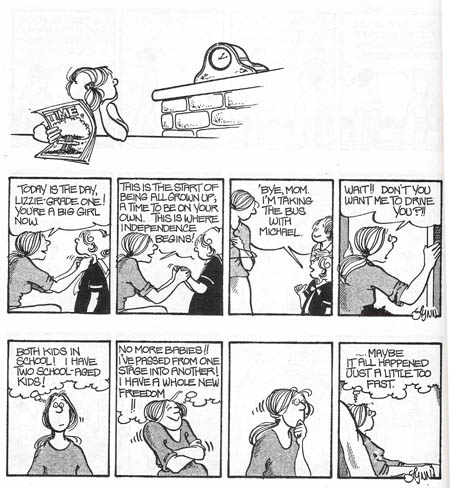 Lynn Johnston’s For Better or Worse is also an old friend. I used to read it in the newspaper practically every day. I watched those kids grow up and have adventures almost as if they were members of my own family. So the mashed potatoes part of the meal is easy to digest too.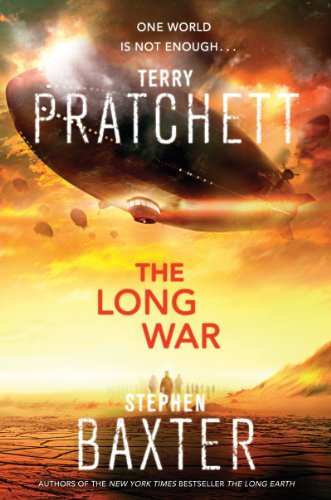
 Catch a Falling Star