Tag Archives: book review

‘Tis the Season…

Yesterday I posted one of my patented conspiracy-theory posts which was intended primarily to give my three kids more practice at using their Eye-fu skills. You know, that ancient Chinese martial art of using the dramatic eye-roll to combat the embarrassing way elderly parents have of saying what they actually think for the sole purpose of humiliating their much-more sensible offspring. So, today I need to humbly contemplate the many reasons I will not get any Christmas presents this year and begin to generate some holiday spirit to lighten the mood of what is likely to be a rather lonely Christmas season.

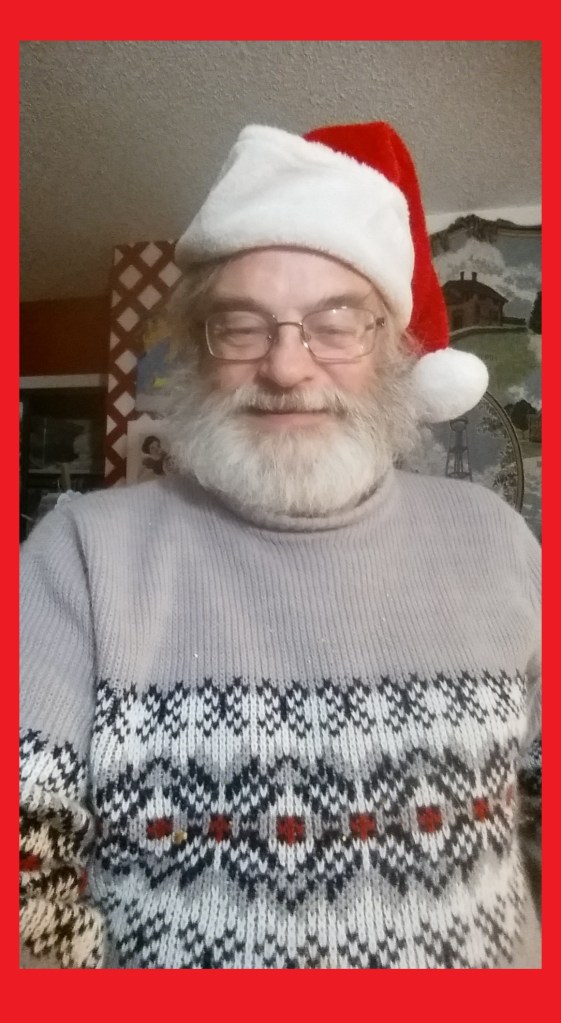
So, here’s a selfie from old Grumpy Klaus, wearing the aggravated countenance of the Jolly One looking at the Naughty List to determine who gets the bricks and who gets the lumps of coal… and who gets referred to Old Krampus.

Ho ho ho… kinda…

Having married a Jehovah’s Witness twenty-six years ago, I have gotten mostly out of the habit of celebrating Christmas. The Witnesses believe that holidays with pagan origins are from Satan, and bad for you. But it has been almost seven years now since they decided I was from Satan too, and so I stopped believing in knocking on doors and trying to get homeowners to reject their own form of Christianity because we are somehow more right than they are, and if they don’t swear off celebrating Christmas they are doomed. Among the many other things you have to swear off of for that religion. Like swearing.

Don’t get me wrong… Jehovah’s Witnesses are wonderful, loving people who care about others and whose religious teachings are more helpful than harmful over all… just like all other Christians who aren’t ISIS-level radicals. (The Westboro Baptists leap to mind for some reason.) If you really need religion, it is a good one to have. But even though my wife still needs to be one, I have begun to feel like I do not.

I personally cherish the holiday traditions I grew up with, and I really wish I could have shared those with my children. (This is another point for practicing Eye-fu right here.) I fear however. that like most devoutly religious parents, we managed to raise three devout agnostics and atheists. I have trained them in the last four years to like the tradition of making and eating gingerbread houses and gingerbread men. That’s probably of pagan origin too, but it’s too late now to save my sorry old soul from gingerbread.

Anyway, I am trying to look forward to the season of Peace on Earth once again. And though I will be celebrating mostly alone and ill and condemned by gingerbread, I do have pleasant memories. I can still reach my sisters and my mother by phone. They share some of those memories. And my kids will be around enough to eat the gingerbread castle I bought for this year.

Leave a comment

Filed under commentary, feeling sorry for myself, gingerbread, grumpiness, humor, Paffooney, religion

Ugly Christmas Sweaters and the Criticizing of Them

In the Midwest

where I spent my childhood and early youth, there is a great tradition of making fun of the exceptionally eye-bonking ski sweaters and Norwegian-middle-layer clothing that dads and grandads are given as presents less often than only neckties.

Yes, they are functional in the land of 100-degree-below-zero wind-chill. And they also work as defenders of your male virginity when you are in college in Iowa. But we make fun of them not out of derision, but of love. These are gifts, after all, that are given on winter birthdays and Christmas because the giver loves you. And the creative criticism of them is given only as a sign of appreciation for what they are truly for.

And if you tried to click on the X’s on this sweater of mine, and it did not immediately close on your screen, that’s because this one has special meaning. I didn’t get this as a Christmas gift. I inherited it from my father who died in November 2020. And it will keep my heart warm now until it falls apart, or until the time comes to pass it on to my own eldest son.

What…

this essay is actually about is the nature of good criticism.

The fact that this one is a red Christmas tree decorated with lawn flamingos is not the actual point. One has to look past the flaws and try to judge the effectiveness of how it achieves… or fails to achieve… its intended purpose… apparently to keep rats and small birds out of your yard… or from within a hundred yards of the thing.

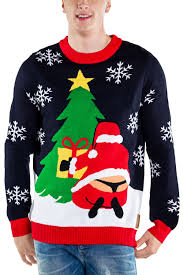
And…

if I were to be offended by the revelation of Santa’s sexy black thong, then the thing to do as a proper critic is not to use my power to condemn it, but not to take up the critique of it at all. I mean, if you are actually offended by the thing, you would not want to offer an opinion that some would take as a challenge.

“What? You are telling me that I can’t like Santa’s sexy black thong? I will not only like it, I will love it! And I will buy one for myself.”


Following…

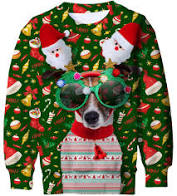
the philosophy of the uncritical critic, I would only review this green nightmare sweater of a Christmas mutant demon-dog if I really liked it. Of course, since you are seeing a review of it here, it means I am actually quite charmed by the sweater itself, and amused by whatever seventy-plus-year-old grandmama that has the kitsch-defiant attitude that allows her to proudly wear it… even if it was given to her as a gift by a relative she probably doesn’t really like but, never tells them so.
Doing book reviews one after another (as I have been doing for Pubby in order to get reviews on my own books in return) I have done a lot of the uncritical critic bit. Some of the people I have been reviewing the books of should never have tried to write a book in the first place. But do I tell them that? Of course not. If I have taken the trouble to read the whole book, even though it may be horrible, I am not going to pour cold water on their flame. I have done reviews with innumerable editorial suggestions of what would make it a better story, or a better non-fiction book, or children’s book, or poetry book, or self-help book… I have read terrible books of all of these kinds. And I know the authors did not rewrite the books as I suggested. But in my many years as a writing teacher, I have learned well that you must always point out the fledgling writers’ strengths and ask them to build on those. And some will. Besides the points I earn to spend on reviews of Mickian books, that is reward enough.

Ugly Christmas sweaters and the criticizing of them is how American culture works. Being good at negotiating that fact is a critical skill, especially in the Midwest. But nothing compared to having talent in the wearing of them.

Leave a comment

Filed under book reports, book review, commentary, writing, writing teacher

Dave Barry

dave barry and alan zweibel
dave barry

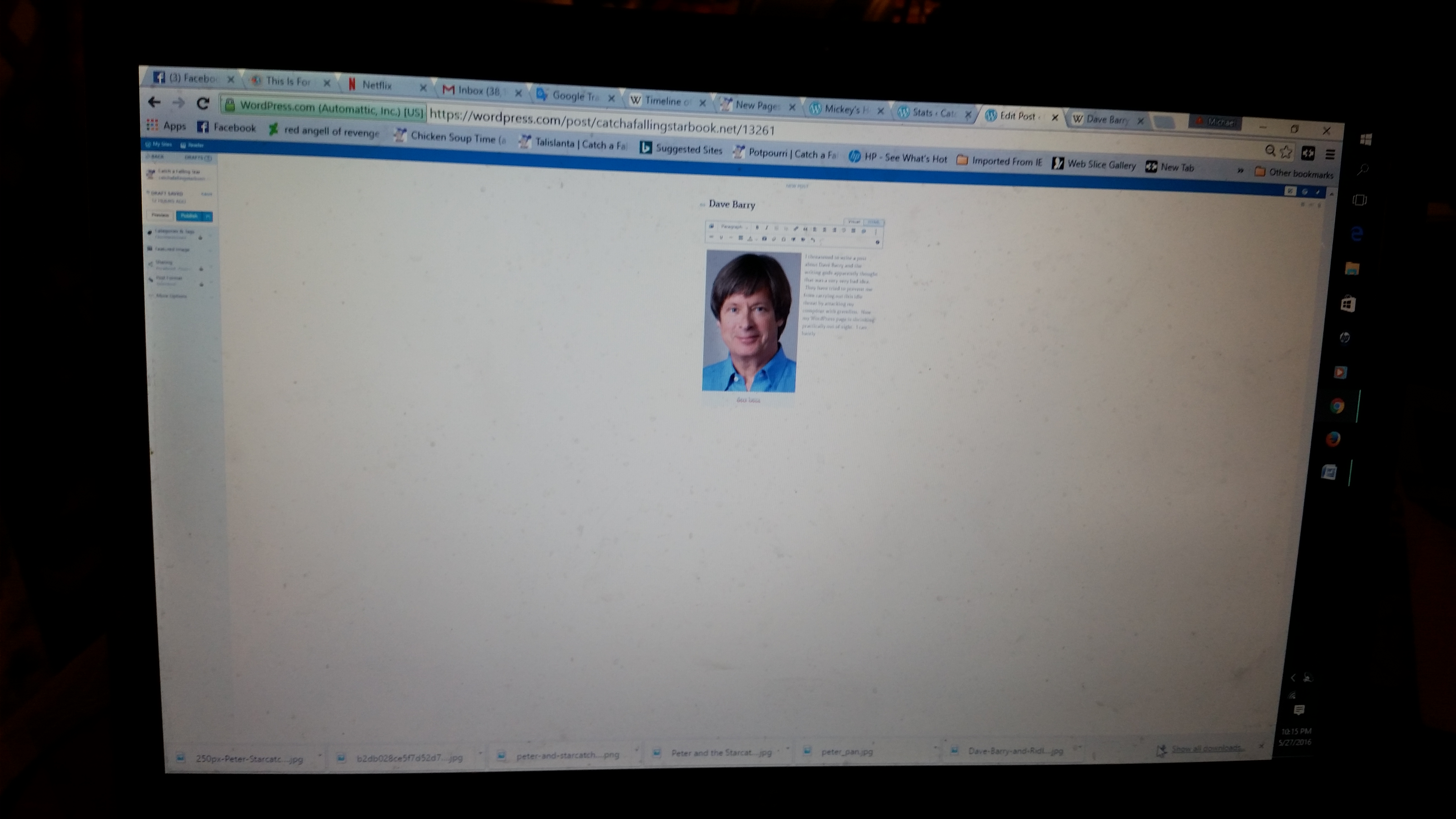
I threatened to write a post about Dave Barry and the writing gods apparently thought that was a very very bad idea.  They have tried to prevent me from carrying out this idle threat by attacking my computer with gremlins.  Now my WordPress page is shrinking practically out of sight.  I can barely  see what I am typing.  You don’t believe me?  Here’s what it looks like at the moment;

20160527_095532

They obviously tricked me into pressing the secret shrink button on my computer, and I have no idea where to find the un-shrink features.  Not only that, but my Facebook page is automatically translating everything it can into French.  They really don’t want me to tell you about Dave Barry.  And why do you suppose that is?

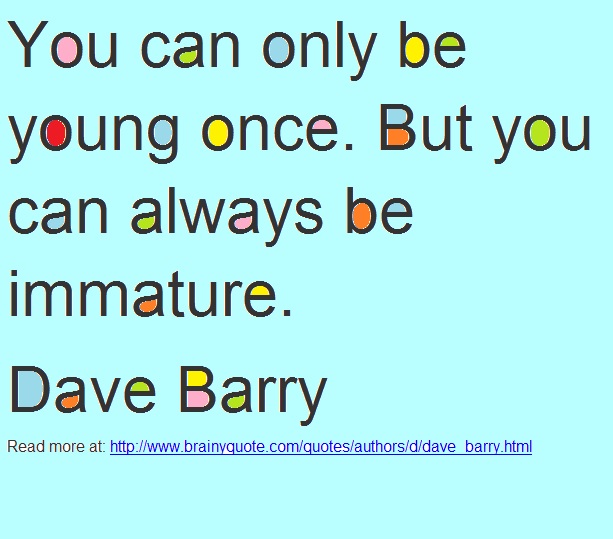
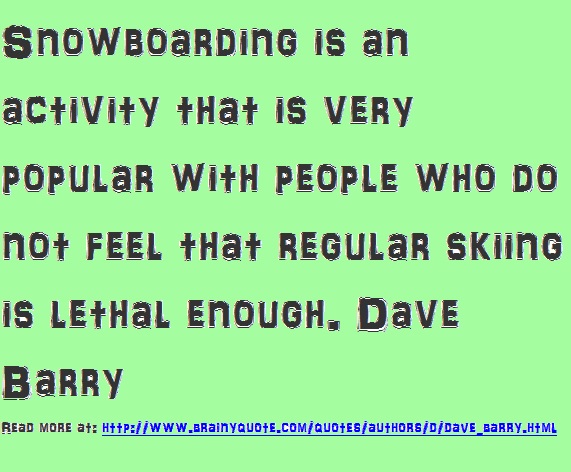
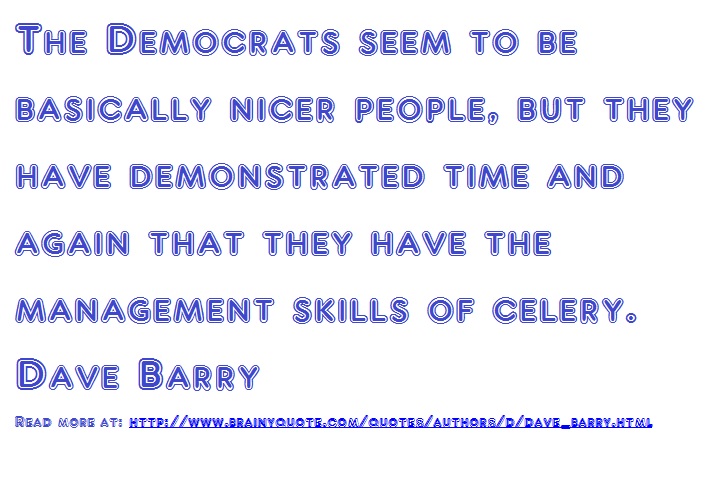
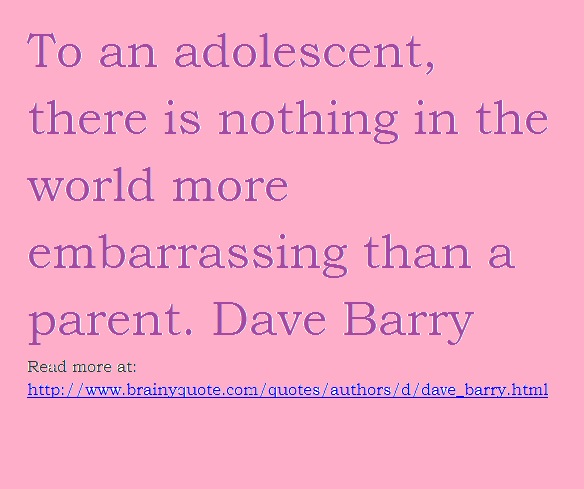
Well, Dave Barry may actually be me from a parallel dimension.  He started writing for The Miami Herald in the early 80’s, at about the same time I started teaching.  He retired from that in 2004 after winning a Pulitzer Prize and started writing humorous novels…. the same thing I started doing when I left the job I loved and was good at.  Okay, so I am stretching the analogy to the point that all the buttons are popping off its shirt… but the point is, we are alike in some ways and I admire his work and I steal things from it whenever I possibly can.  Like this post.  I deeply admire the way he can say witty and pithy things.  Like some of these quotes;

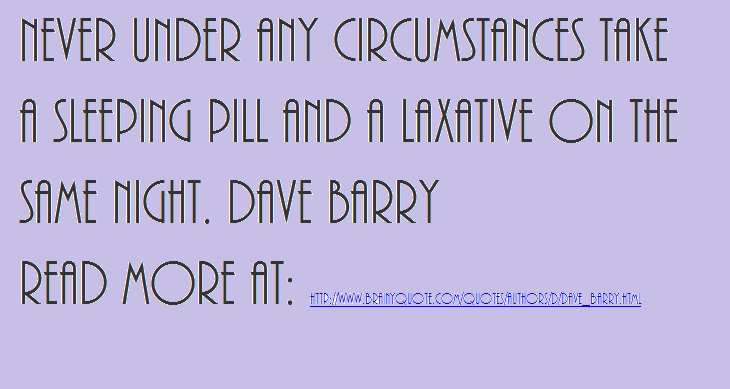
dave44
dave55
dave2
dave3
dave4

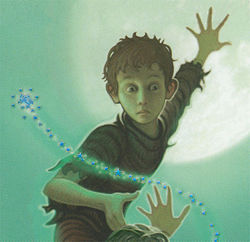
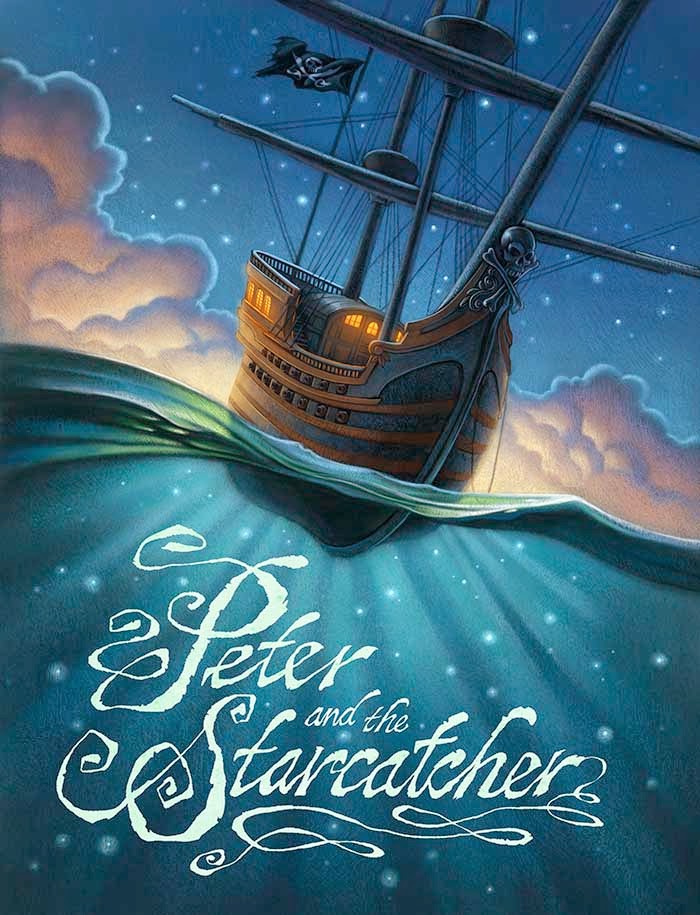
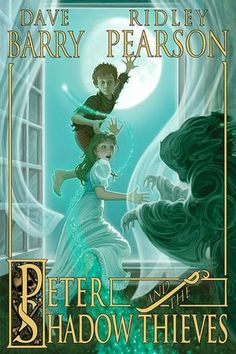
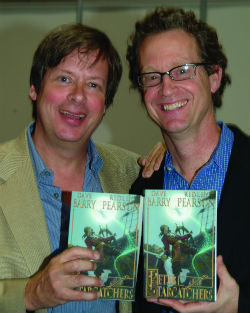
So, you see, he is very good at doing what I want to be good at.  He is a humor columnist and all-around imitation Mark Twain.  And I have read and loved his novels.  Especially the Peter Pan things he writes with a partner.

Dave-Barry-and-Ridley-Pearson-250px
Dave Barry and Ridley Pearson

So, I will leave this post here even though I could talk for hours about how Dave Barry makes me laugh.  I have to stop.  the words on the screen keep getting smaller and smaller, and my old eyes are about to fall out of my head.

Leave a comment

Filed under commentary, horror movie, humor, Uncategorized

The Art of Being Mickey

I have published my eighth novel in the last six years. Sure, it is through mostly self-publishing of novels that no one but me has ever read. Catch a Falling Star and Snow Babies both had a professional editor, one who had worked for Harcourt and one who worked for PDMI. Magical Miss Morgan has had a proofreader who made numerous stupid-mistake errors that I had to change back to the original meticulously by hand. But all three of those novels won an award or were finalists in a young adult novel contest. I do have reason to believe I am a competent writer and better even then some who have achieved commercial success.

But what is the real reason that I am so intent on producing the maximum amount of creative work possible in this decade? Well, to be coldly objective, I am a diabetic who cannot currently afford insulin. I have been betrayed by the for-profit healthcare system that treats me as a source of unending profit. I am like a laying hen in the chicken house, giving my eggs of effort away to a farmer who means to eat my very children if time and circumstance allows. I am the victim of six incurable diseases and conditions that I got most likely as a result of exposure to toxic farm chemicals in the early 70’s. I am also a cancer survivor from a malignant melanoma in 1983, and for three years now I have not been able to get the preventative cancer tests I am supposed to be receiving every year for the rest of my life. My prostate could very well be cancerous as I write this. If that is so, it will kill me unawares, because I don’t even want to know about having a disease I can’t possibly afford to fight all over again.’

So, the basic reason I am going through the most productive and creative period of my entire life is because I have a great rage to create before I die and I could be dying as soon as tonight. All of the countless stories in my head clamoring to be written down before it is too late cry out to me desperately for my immediate attention.

I will, then, continue to write stories and draw cartoons and other Paffoonies for as long as I am still able, and possibly even afterward. I have, after all, threatened repeatedly to become a ghostwriter after I die. And, yes, I understand when you scream at my essay that that is not what a ghostwriter is. But if a woman can channel the ghost of Franz Schubert and finish his unfinished symphony…(https://en.wikipedia.org/wiki/Rosemary_Brown_(spiritualist))

—then I should also be able to tell my stories from beyond the grave. I have been percolating them in my head and writing and drawing them in whole or in part since 1974. I have too much time and too many daydreams wrapped up in them to let it all just evaporate into the ether. In summation, I am claiming stupidly that my novels, crack-brained and wacky as they are, are somehow destined to exist, either because of me or in spite of me. So just be happy that I write what I write, for there is an art to being Mickey, and I am the one artist and writer who is the best Mickey possible if truly there ever was a real Mickey.

Leave a comment

Filed under battling depression, commentary, goofy thoughts, humor, novel writing, Paffooney

Living in the Spider Kingdom

Life seems to be getting harder and harder. And I realize that a big part of that perception is the fact that my health is deteriorating quickly. This is a humor blog, but it has been getting more and more serious and more and more grim as the grim reaper becomes more and more a central character in my own personal story.

My perception of reality, however, is best explained by a passage in a novel that spoke to me in college. It comes from the novel, the Bildungsroman by Thomas Mann called Der Zauberberg, in English, The Magic Mountain. In the scene, Hans Castorp is possibly freezing to death, and he hallucinates a pastoral mountainside scene where children are happily playing in the sunshine. Possibly Heaven? But maybe not. As he goes into a stone building and finds a passage down into the ground, he sees wrinkled, ugly, horrible hags gathered around a child’s corpse, eating it. And this vision explains the duality at the center of the meaning of life.

For every good thing, there is an equal and opposite bad thing that balances it out. There is no understanding what perfection and goodness mean without knowing profanity and evil. Just as you can’t understand hot without cold nor light without darkness. And you don’t get to overturn the way it is. You try your hardest to stay on the heads side of the coin knowing that half the time life falls to tails.

So, what good does it do me to think about and write about things like this? Well, it makes for me a sort of philosophical gyroscope that spins and dances and helps me keep my balance in the stormy sea of daily life. I deal with hard things with humor and a sense of literary irony. I make complex metaphors that help me throw a rope around the things that hurt me.

We are living now in the Spider Kingdom. Hard times are here again. The corrupt and corpulent corporate spiders are spinning the many webs we are trapped in. As metaphorical as it is, we wouldn’t have the government we currently have and be suffering the way we are if that weren’t true.

But no bad thing nor no good thing lasts forever. The wheel goes round and round. The top of the wheel reaches the bottom just as often as the bottom returns to the top. So, it will all pass if we can only hold out long enough.

Leave a comment

Filed under commentary, empathy, feeling sorry for myself, humor, metaphor, Paffooney, philosophy

Reading Assignments

Yesterday I revealed that I have no earthly clue how to be a best-selling author with a blog and a brand and all those other things that marketing racketeers keep pettifogging at me about.  I may not know anything about marketing and being an author, but I do know how to be a writer.  I have learned to say things flat out when they are on my mind and I know how to do the two essential things that a writer has to know how to do… I can practice writing every day, and I can read.

If you are one of those few who actually read my blog regularly, you may remember some talk about the classic novel, Tess of the D’Urbervilles.  Believe it or not, I know how to read and understand great books.  You can find me on  Goodreads.com to see some of the wonderful things I have been reading, and to decide if you might like them too.  If you are not on Goodreads already, why not?  That is now your next assignment, young reader.  Oops.   You know what they say, “Old English teachers never die, they just lose their class.”

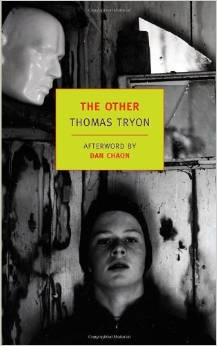
Today’s little self-imposed book report is about a book that I read my senior year in high school, 1975.  It is called The Other by Thomas Tryon.  It is a book that was made into a movie.  The author is also a Hollywood actor that has been in many films.  He wrote the screenplay for the movie version.  But I have to tell you, the movie pales in comparison to the book itself.  Movies simply cannot give you the rich depth of atmosphere and the delicate psychological nuances that a book can.  Movies show you something.  A book can explain something in detail.  And that is a key difference.

downlotheroad

Michael Beyer‘s review

Dec 22, 14  ·  edit
Read in April, 1975
This is a fascinating book for it’s ornate description of long-ago New England life, and the eerie way old houses and long-gone people can twist and mangle our lives. It is a psychological horror story about twin boys, Niles and Holland Perry. They are polar opposites. Niles is warm and loving. But Holland is distant, cold, and sinister. Their grandmother Ada, a lovely old woman with deep Russian roots, has taught the boys to play an ESP-sort of game, reaching out with their minds to feel what a bird feels, or a squirrel, or a magician to find out how he did a certain disappearing trick. She has no idea that the mind-game will have such a devastating effect on both the twins and ruin so many peoples’ lives. I cannot say more without revealing the magic the author uses to bring this book to a totally unexpected and devastating conclusion. This book is not everyone’s cup of tea… and it may be many readers’ cup of arsenic… but it worked its spell on me. I recommend it if you wish to be chilled to the bone marrow.
Fools
I am reading this book now for the third time.  It is rare that I read a book more than once, because every time through changes your perception of it and risks making you dislike it.  But certain books are immune to that effect.  And I am re-reading it now because I want to closely analyze the techniques he used to create his surprise ending.  There-in lies the reason for this reading assignment that I have given myself.  That is how I roll as a writer.

Leave a comment

Filed under book review, NOVEL WRITING

Holy Bagumba!

newbery2014

I have just finished reading a wonderful book.  It is a young adult novel bordering on being a children’s book.  It won the 2014 Newbery Medal for best work of children’s literature.  But it is a book of so many dimensions that it totally defies categories.  Librarians with butterfly nets who want to pin this book down on their library shelves will be pointlessly waving their nets at it like they believe it’s a butterfly, but it will soar away from them like an eagle.

c360_2016-11-06-09-59-56-962

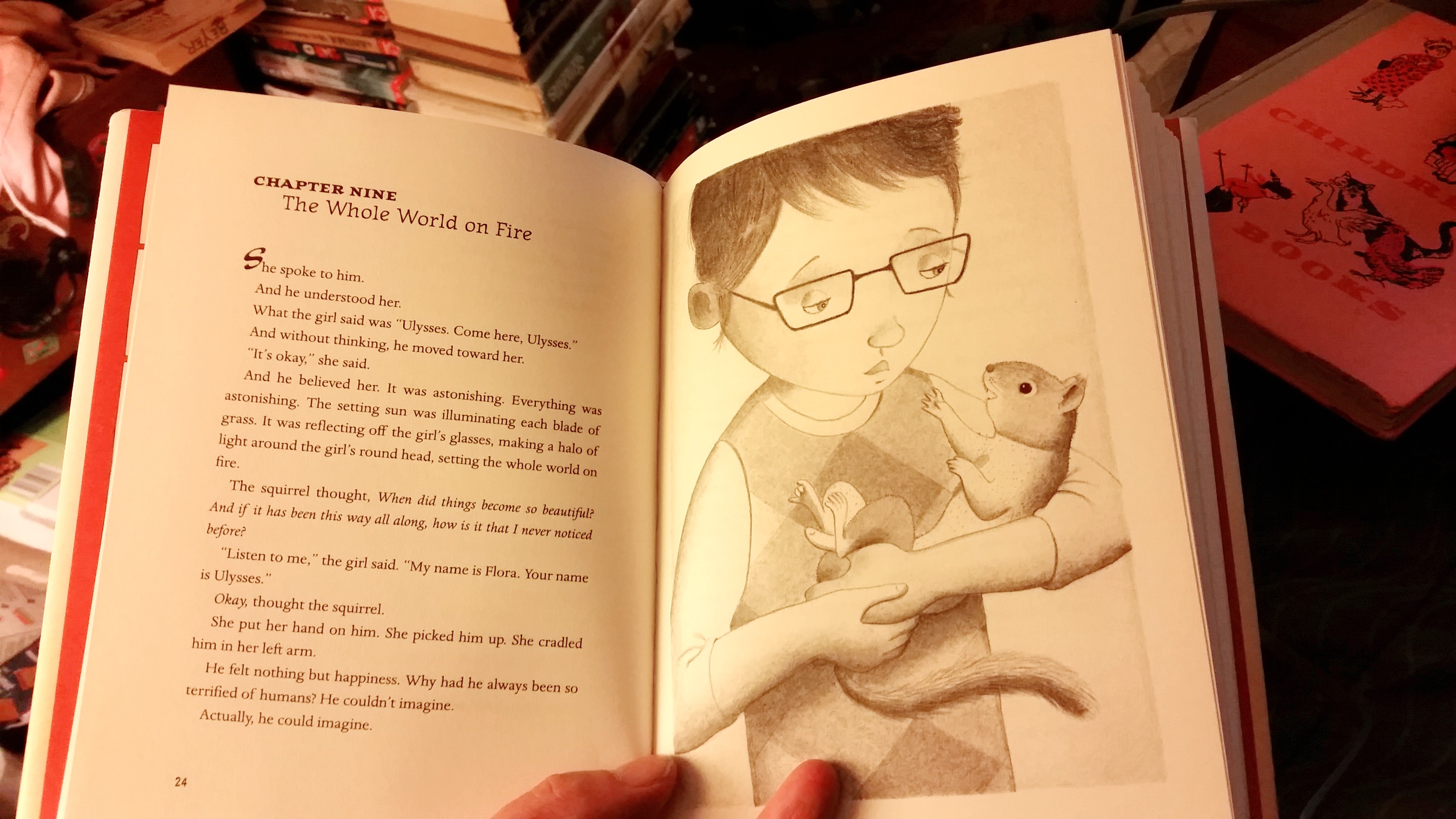
Flora & Ulysses (the Illuminated Adventures) is a combination book of many different things.  G. K. Cambell’s cartoony paffoonies add to and amplify the story to the point that sometimes it becomes a graphic novel.

Flora herself is a comic-book lover and follower of the adventures of a comic-book superhero named Incandesto.  Ulysses the squirrel is run over by a rogue vacuum cleaner and the accident graces him with super powers (the ability to fly and throw cats and write poetry).  And Flora rescues and befriends this newly minted superhero and sets him on a path that pits him against the only super-villain available, Flora’s own mother.

c360_2016-11-06-10-00-47-864

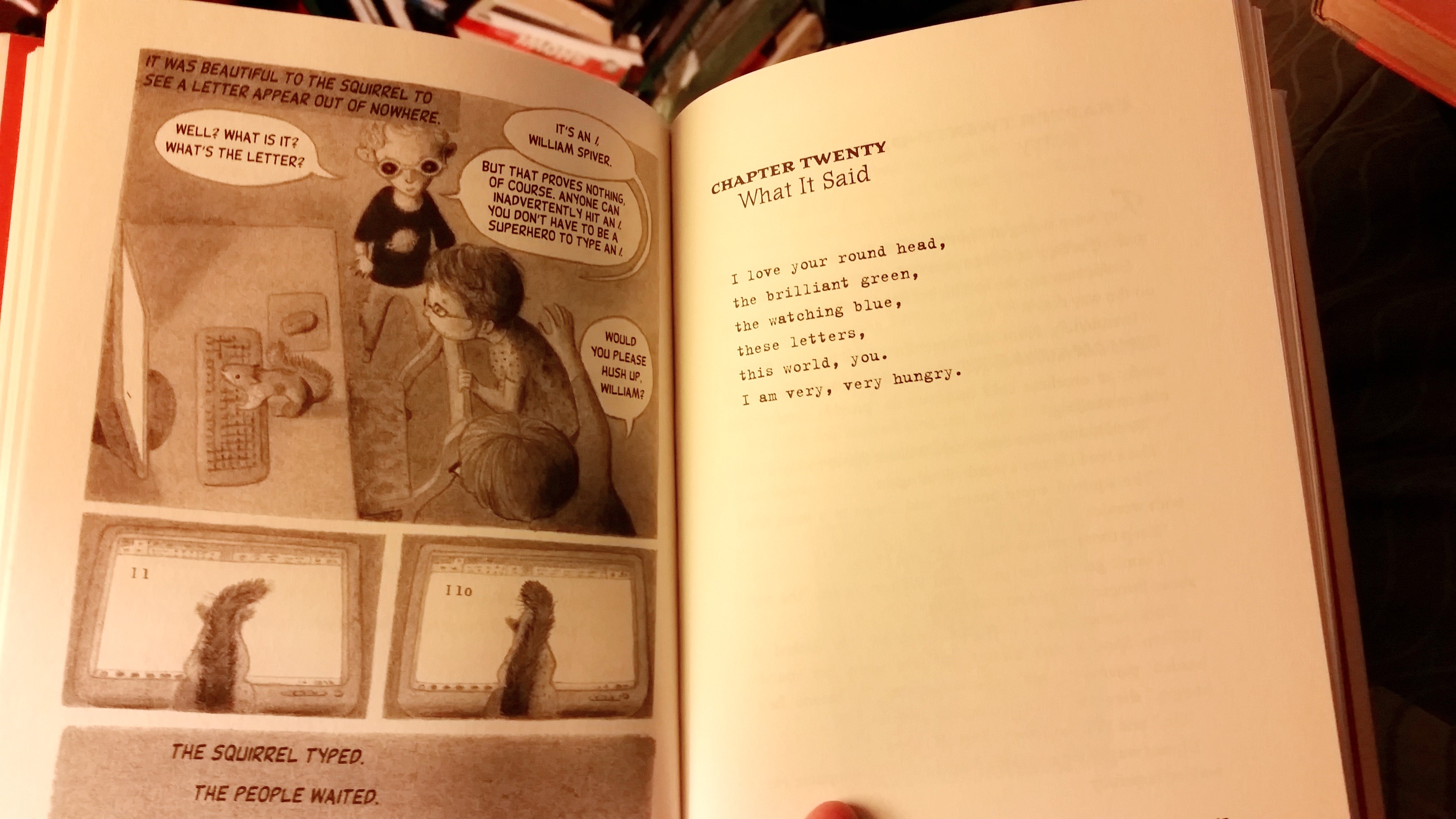
At certain points, through metaphor, elegance, and supreme focus, the story itself becomes poetry.  But, of course, when the poem ends with a line about the squirrel being hungry, it becomes humorous poetry, simply by the juxtaposition of the sublime with the ridiculous.

bk_all

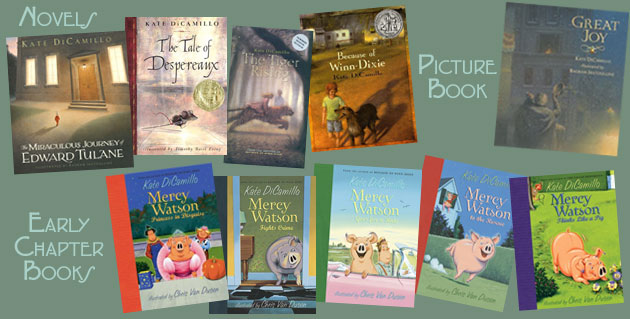
As a writer, Kate DiCamillo is a master of everything I want to be.  She is as much a masterful story-teller as Mark Twain, Ernest Hemingway, or William Faulkner.  But many people will be put off by the fact that she is a children’s author.  They will ignore her stories because how could a children’s author affect their lives in any way?  But if you are a reader who can think and feel about things in a book, she will make you laugh and make you cry and make you not afraid to die… for love of a good book.

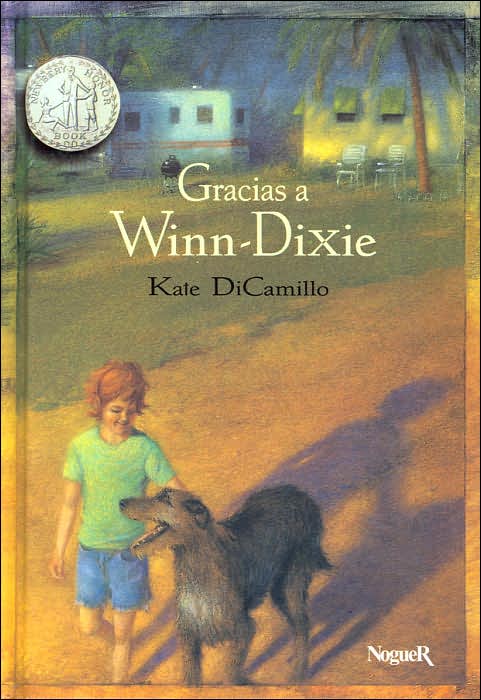
Let me also suggest a few of her other wonderful, wonderful books;

winn-dixie

2 Comments

Filed under book reports, book review, commentary, good books, humor, metaphor, poetry, reading

Tom Sawyer Abroad (Book Review)

20161017_162015

Yep, I read about being an “erronort” traveling in a balloon while sitting in a parking lot in my car.

Believe it or not, I read this entire 100+year-old book in my car while waiting for my daughter and my son in school parking lots.  What a perfectly ironic way to read a soaring imaginary adventure written by Mark Twain and mostly forgotten about by the American reading public.

c360_2016-10-30-10-26-22-635

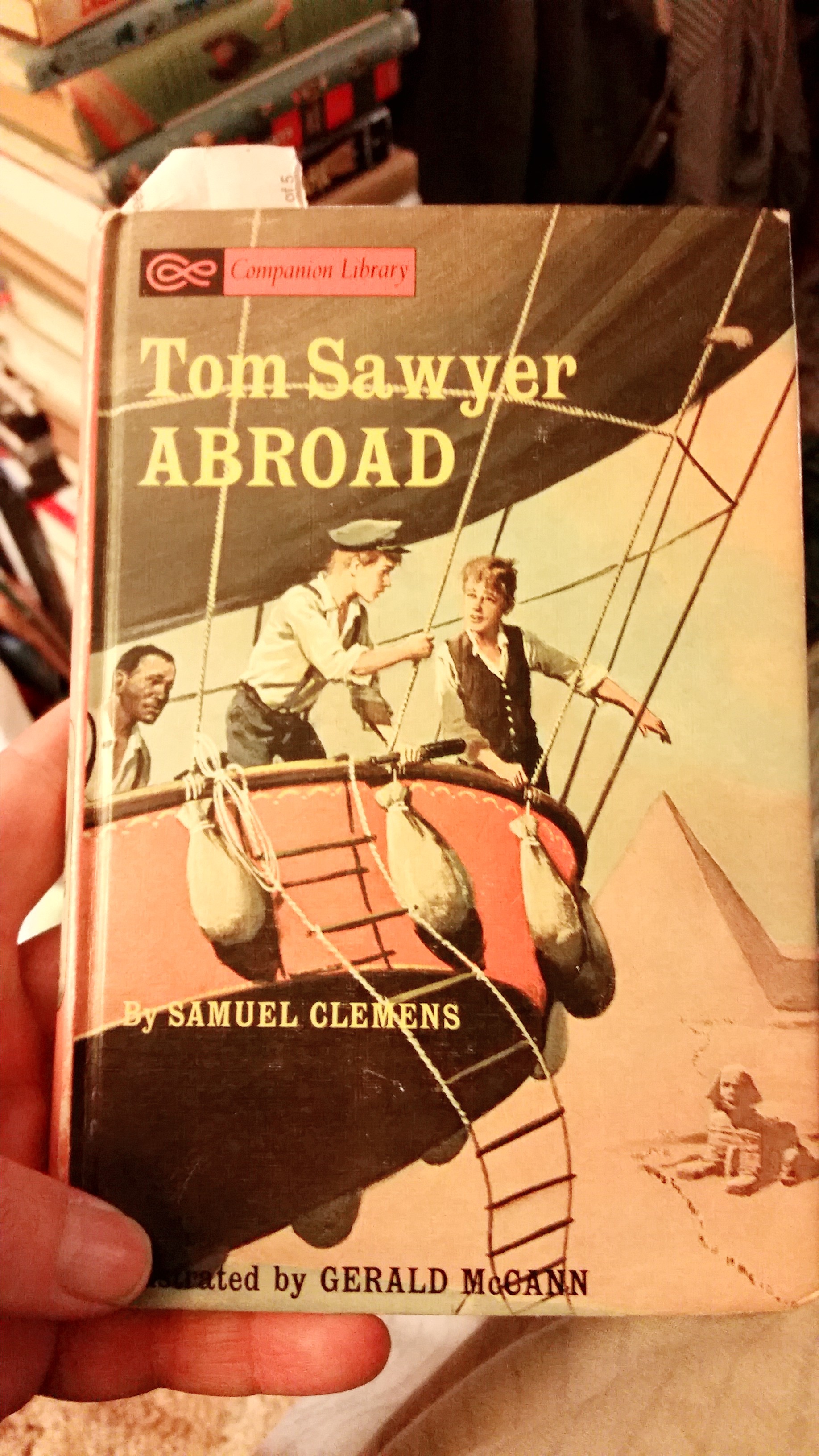
My copy of this old book is a 1965 edition published for school libraries of a book written in 1894.  It tells the story of how Tom and Huck and Jim steal a ride on a balloon at a town fair from a somewhat mentally unhinged professor of aeronautical science.  The balloon, which has space-age travel capabilities due to the professor’s insane genius, takes them on an accidental voyage to Africa.

Of course, the insane professor intends to kill them all, because that’s what insane geniuses do after they prove how genius-y they really are.  But as he tries to throw Tom into the Atlantic, he only manages to plunge himself through the sky and down to an unseen fate.  The result being a great adventure for the three friends in the sands of the Sahara.  They face man-eating lions, mummy-making sandstorms, and a chance to land on the head of the Sphinx.

The entire purpose of this book is to demonstrate Twain’s ability to be a satirical stretcher of the truth, telling jokes and lies through the unreliable narrator’s voice of Huck Finn.

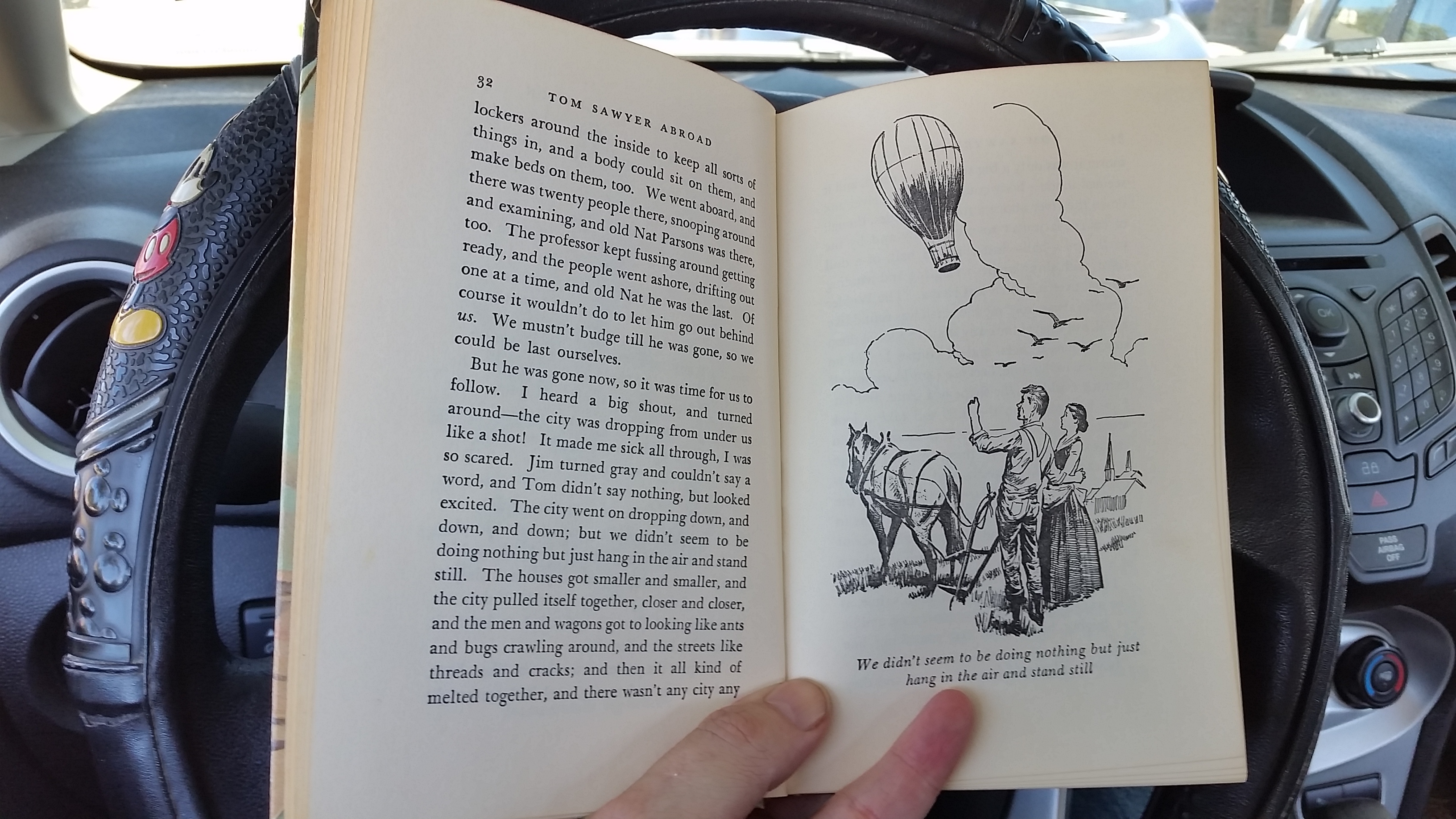
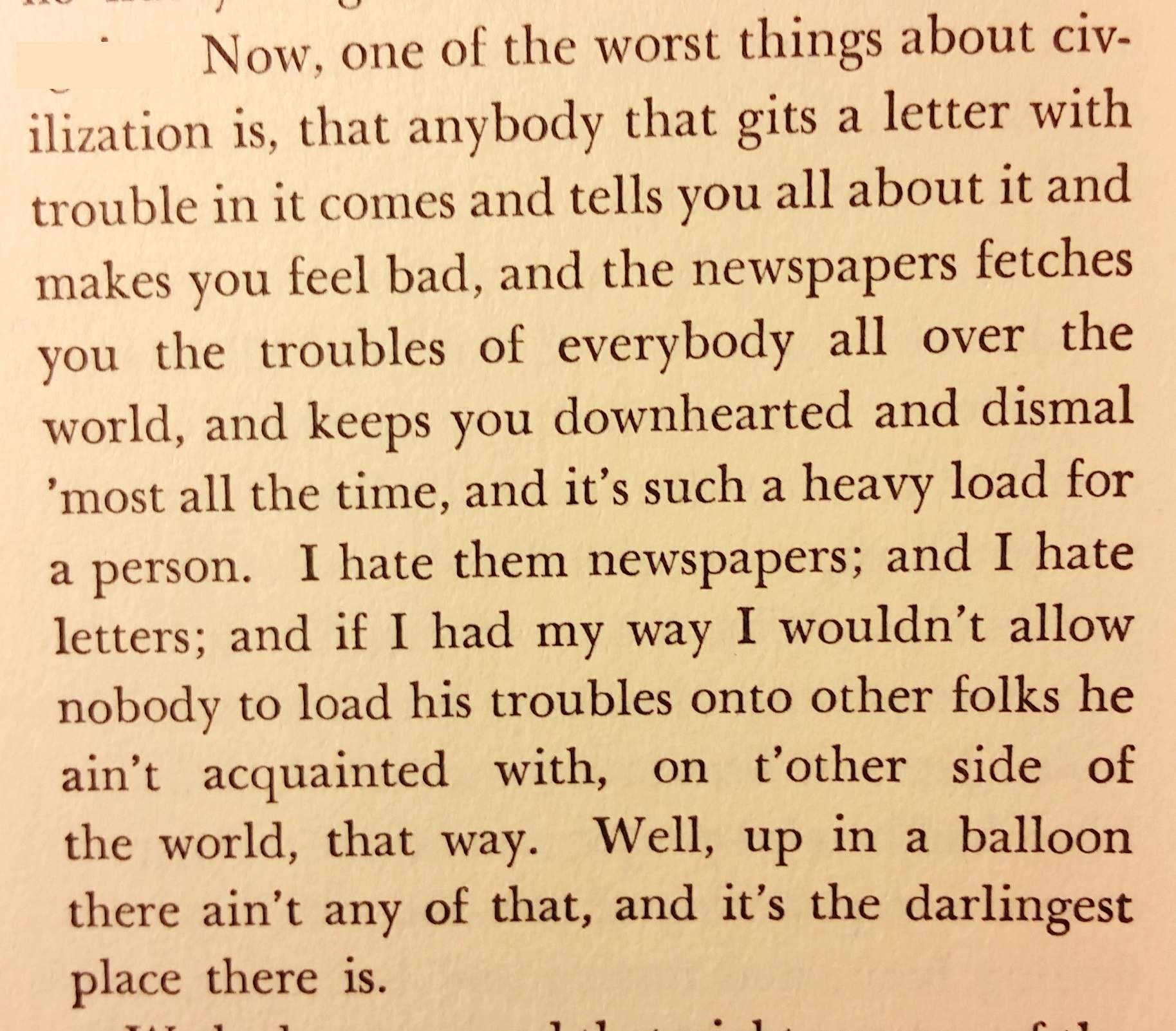
Here is a quoted passage from the book to fill up this review with words and maybe explain just a bit what Twain is really doing with this book;

c360_2016-10-30-10-48-45-630

Notice how I doubled my word count there without typing any of the words myself?  Isn’t the modern age wonderful?

But there you have it.  This book is about escaping every-day newspaper worries.  In a time of Presidential Candidate Donald Trump, global warming, and renewed threats of thermonuclear boo-boos with Russia, this proved to be the perfect book to float away with on an imaginary balloon to Africa.  And the book ends in a flash when Aunt Polly back in Hannibal wants Tom back in time for breakfast.  I really needed to read this book when I picked it up to read it.

2 Comments

Filed under book reports, book review, foolishness, good books, humor, imagination, Mark Twain, old books, strange and wonderful ideas about life

Slade House (a book by David Mitchell)

As a writer of novels, like all passable to good writers of novels, I read novels. Not just any novels. Novels that are the kind of novels I aspire to write myself.

David Mitchell is one of those novelists who can write the way I want to write. His stories are detailed and yet, compelling enough to follow wherever the story leads you. Characters are vivid and seem to have an actual life beyond the pages of the novel. And there is a chance that you will meet them again in another David Mitchell novel, even if they died in the previous David Mitchell novel you read. He writes across swaths of time and gives the story a sense of history.

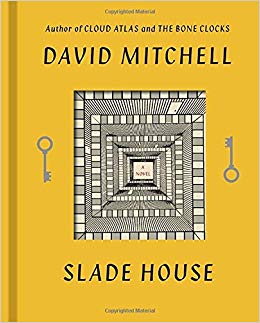
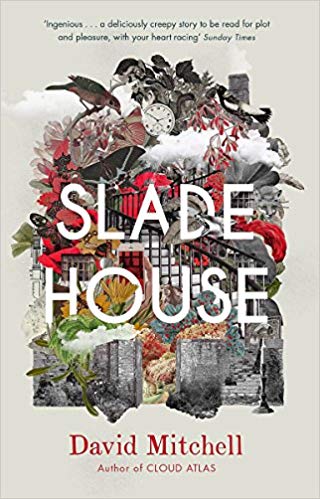
Slade House is basically a haunted house story, a horror story about a house that is itself a sort of ghost. It can only be entered by a single small iron door that only appears in an alleyway every nine years. And every time it does appear, in October of 1979, 1988, 1997, 2006… , at least one somebody will go in and never come out again.

The story is side-linked to the masterpiece Mitchell novel, The Bone Clocks. It is also a plot less convoluted and multifaceted than Bone Clocks and Cloud Atlas, so much easier to follow

David Mitchell is an author I study to learn about writing and storytelling. I don’t copy him. I do take note of his bag of tricks, his writer’s toolbox, so to speak, and I pick up and play with those same tools and magician’s secrets. I would like to suggest that if you truly wish to be a writer of fiction, you must put David Mitchell’s books on your must-read-before-I-die list. If you can’t put Mitchell on that list, then here are a few others on my list; Michael Crichton, Terry Pratchett, Neil Gaiman, Louis L’Amour, Charles Dickens, Thomas Hardy, H.P. Lovecraft, Steven King, Mark Twain, and J. K. Rowling. It should be obvious that these names are all on my list for different reasons. And if you don’t read David Mitchell, there are artisan’s techniques there you can get nowhere else. But you are the reader. And if you have chosen to read this far through this essay, then you are at least fool enough to want to know the things I am telling you in this book review.

As a storyteller, David Mitchell is Rumpelstiltskin. He weaves straw into gold. And if you are canny and careful enough of a reader, you can gain some of that value from his work without giving up your firstborn.

Leave a comment

Filed under book review, ghost stories, horror writing, writing teacher

Books That Make You Hurt

242757

Yes, I read this book.  Yes, it scared the poop out of me.  Yes, it made me cry.  This is a uniquely horrific horror story that is so realistic that you know that it has actually happened in real life somewhere, sometime.  Only the names of the characters would be different.

I have a deep abiding respect for Richard Peck as a writer.  He earned that with his books A Year Down Yonder and A Long Way from Chicago.  Those books made me laugh so hard it blew chocolate milk out of my nose.  And, yes, I was drinking chocolate milk at the time.  They are so realistic because the people in those stories are real people.  I know those people personally.  Of course, they have different names in real life.

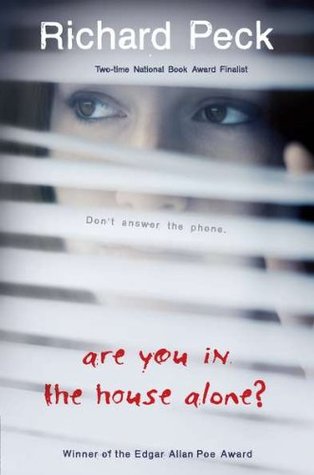
But Are You In the House Alone? is a very different book from those other two masterpieces.  It tears your heart out and eats your liver because it is a first person narrative in the voice of a high school girl being stalked by a sexual predator.  Everything that happens to Gail in the high school, at home, and at the house where she babysits is hyper-real with horror movie levels of attention to detail.  I don’t wish to be a spoiler for this well-written book, but the narrator does not die in the book and it definitely does not have a happy ending.  For anyone who has the amount of empathy I do, and in many ways becomes the narrator-character by reading, reading a book like this can physically hurt.  A teacher like me has lived through horrible things like this happening to students before, it even happened to me as a boy, and it adds the slings and arrows of those things being re-lived as you read.

This is not the only book that has ever done this sort of damage to my heart strings.  I remember the pain from the conclusion of Dickens’ The Old Curiosity Shop.  You root for Little Nell and boo Daniel Quilp.  But the bad guy wins.  No happy ending can linger in the harp-strings of your memory-feeling song as long as a tragic outcome does.  I was there with Scout in that ridiculous costume in the dark when Bob Ewell was attacking her brother Jem in Harper Lee’s To Kill a Mockingbird.  That story was filled with wise and laughable things, but the stark horror of that climactic moment nearly wiped all the good feelings away, if not for the heroics of ghostly Boo Radley whose timely intervention brings it all back before the novel ends.  It horrifies me to admit it, but I was there, too, in the moment when the boys all turn on Simon on the beach with their sharpened sticks in William Golding’s Lord of the Flies.  They mistook him for the monster.  I still haven’t fully recovered from that reading trauma.

The thing about books that hurt to read which makes it essential that I never try to avoid them, is that they can add more depth and resonance to your soul than any light and fluffy piece ever could.  Life is much more like Lord of the Flies than it is Chitty Chitty Bang Bang.  I am sadder but wiser for having read Are You In the House Alone?  I am recommending it to other readers like me who don’t so much live to read as they read in order to live.  Not because it is easy and good to read, but because it is hard and essential to read.  It will hurt you.  But it will leave you like it leaves its narrator, damaged, but both alive and purely resolved to carry on.

2 Comments

Filed under book reports, book review, horror writing, insight, inspiration, irony, old books, reading