Category Archives: book review

The Uncritical Critic Likes to Read Books Too!

I told you before that I make a lousy movie critic because I watch anything and everything and like most of it.  You don’t believe me?  You can look it up through this link; The Uncritical Critic

I hate to tell you this, but it is almost exactly the same for books too.

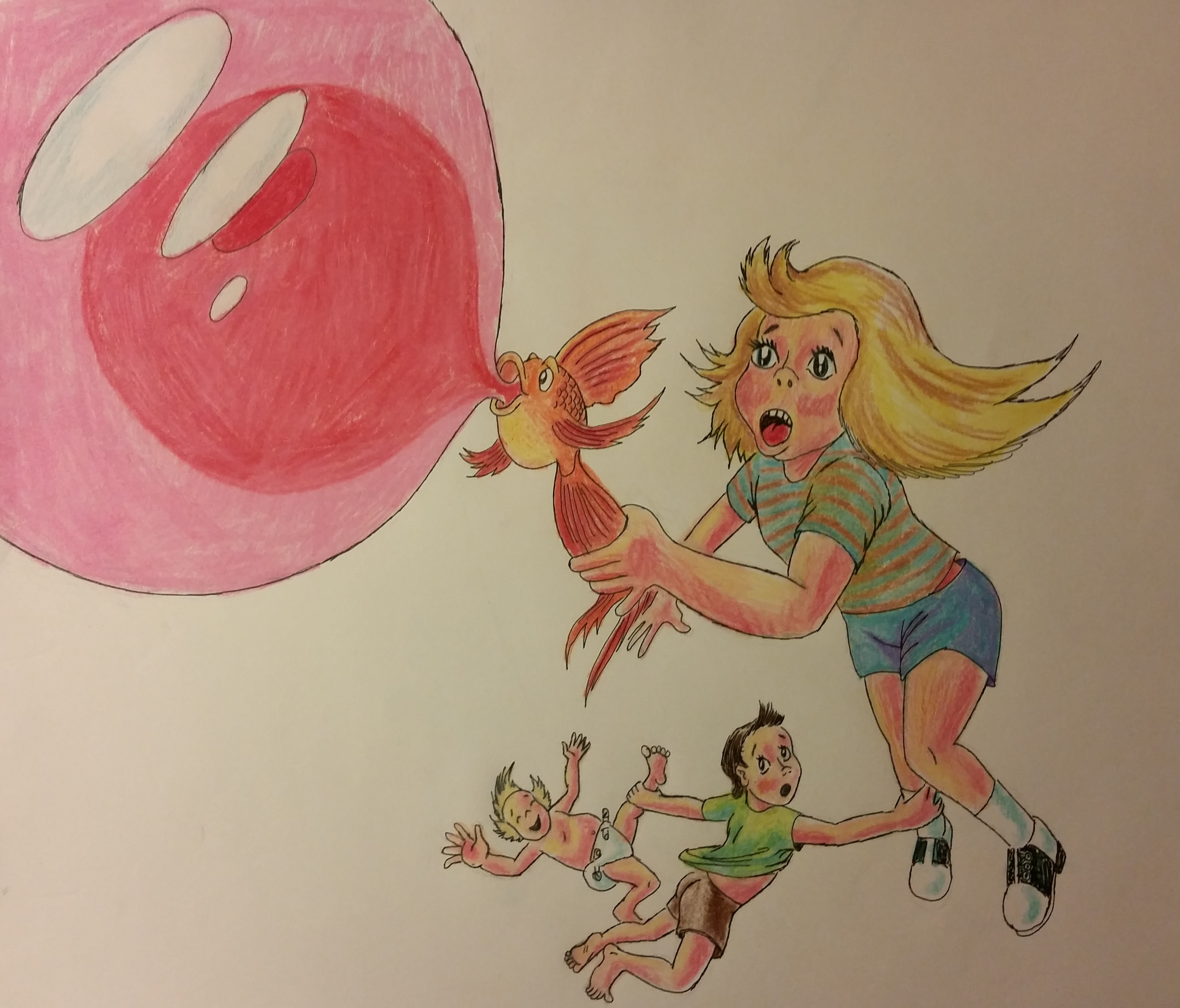
flying goldfish

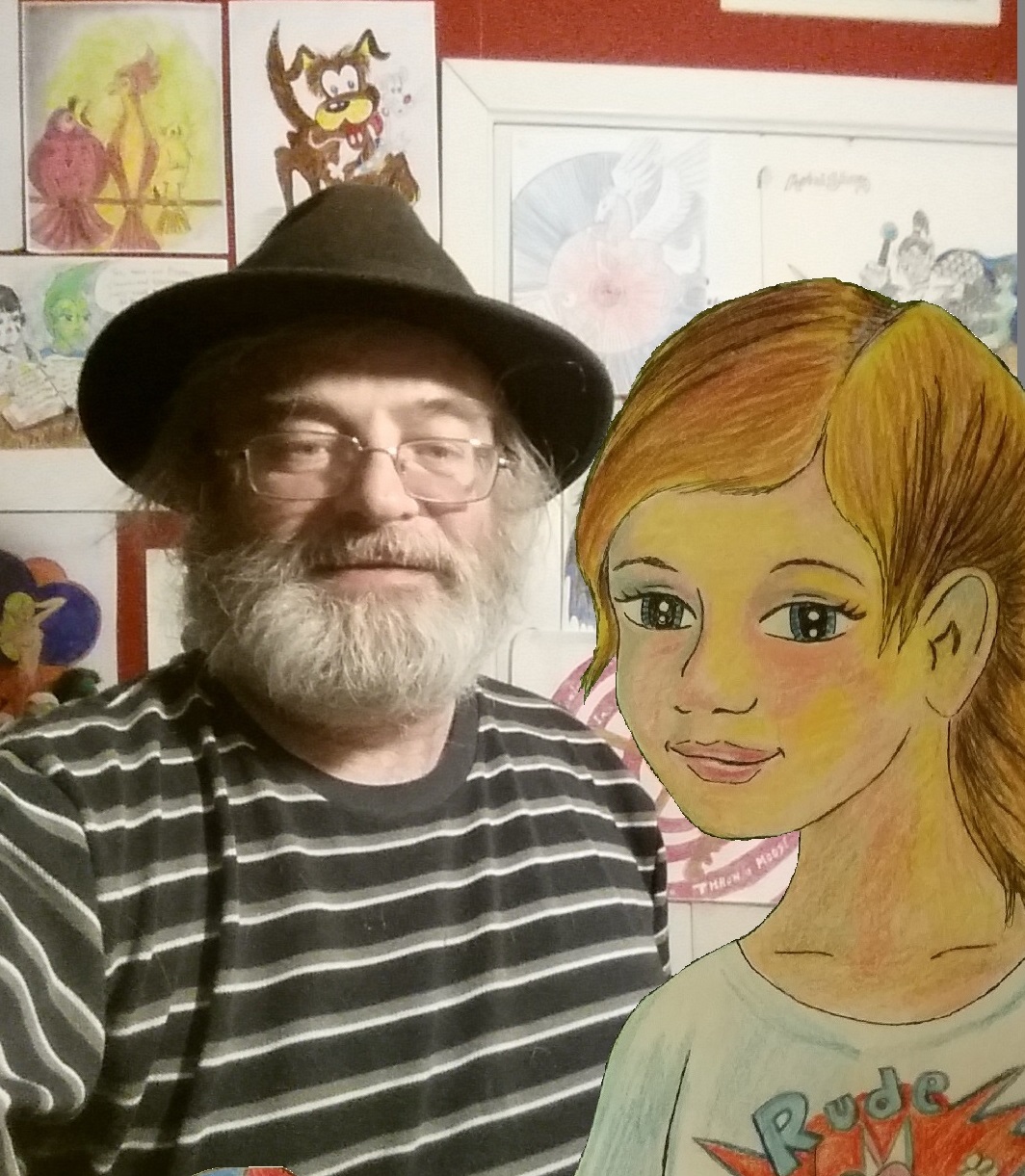
The Paffooney is an illustration for a proposed collaboration on a children’s book.  My friend and fellow author Stuart R. West (Stuart’s Blogspot about Aliens) had a story about three kids taking a balloon ride when they accidentally gave the goldfish bubble gum to chew ignoring their mother’s warning that dire consequences would follow.  He decided the project was too ridiculous to follow through on, or at least my Paffooney power wasn’t up to making sense of his brilliant literature, and the book did not happen.  And I am sorry about that because I couldn’t wait to find out how it turns out.  I love weird and wild stories of all kinds.  And, unfortunately, I love them uncritically.

So, what kind of books would a goofy uncritical critic actually recommend? Let me lay some bookishness on ya then.

34534

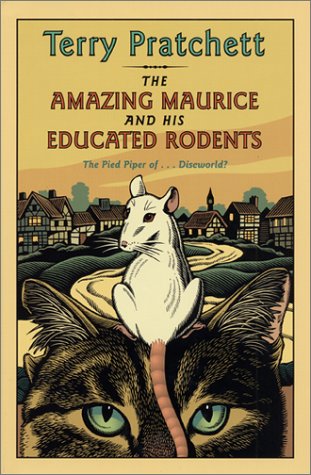
Here is the review I wrote for Goodreads on Terry Pratchett’s The Amazing Maurice and His Educated Rodents.

I have always felt, since the day I first picked up a copy of Mort by Terry Pratchett, that he was an absolute genius at humor-and-satire style fantasy fiction. In fact, he is a genius compared to any author in any genre. He has a mind that belongs up there with Mark Twain, Charles Dickens, and William Faulkner… or down there as the case may well be. This book is one of his best, though that is a list that includes most of his Discworld novels.
Amazing Maurice is a magically enhanced cat with multiple magically enhanced mice for minions. And the cat has stumbled on a sure fire money-making scheme that completely encompasses the myth of Pied Piper of Hamlin. In fact, it puts the myth in a blender, turns it on high, and even forgets to secure the lid. It is funny, heartwarming, and changes the way you look at mice and evil cats.
This is a book to be read more than once and laughed at for the rest of your life.

You see what I mean?  I uncritically praise books that make me laugh and think deeply about things at the same time.  It is as if I don’t have any standards at all if something is brilliantly written and makes a deep and influential impression on me.

1953

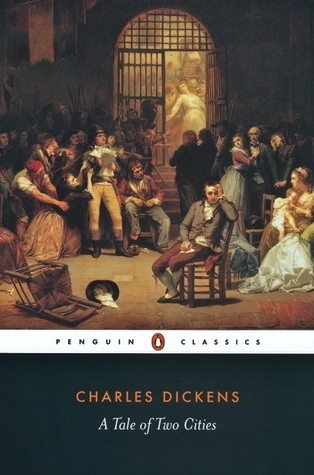
Here’s another book that I love so much I can’t be properly critical when I reread it.  A Tale of Two Cities by Charles Dickens.  I cannot help but be taken in by the unrequited love the dissolute lawyer Sydney Carton had for the beautiful refugee from the French Revolution, Lucy Manette.  Tragic love stories melt my old heart.  And I can’t help but root for Charles Darnay as well, even though I know what’s going to happen in Paris at the Bastille because I have read this book three times and seen the Ronald Coleman movie five times.  I also love the comical side characters like Jerry Cruncher the grave-robber and hired man as well as Miss Pross, the undefeatable champion of Miss Lucy and key opposer to mad Madam Defarge.

I simply cannot be talked out of praising the books I read… and especially the books I love.  I am totally uncritical as a reader, foolishly only looking for things I like about a book.  Real critics are supposed to read a book and make faces that remind you of look on my little brother’s face when I had to help him use an outhouse for the first time.  (Oh, what a lovely smell that was!)  (And I mean that sarcastically!)  Real critics are supposed to tell you what they hated about the book and what was done in such a juvenile and unprofessional way that it spoiled all other books forever.  That’s right isn’t it?  Real critics are supposed to do that?  Maybe I am glad I’m not a real critic.

Leave a comment

Filed under book review, humor, Paffooney

The Magic Strings of Frankie Presto (a book review)

29100120

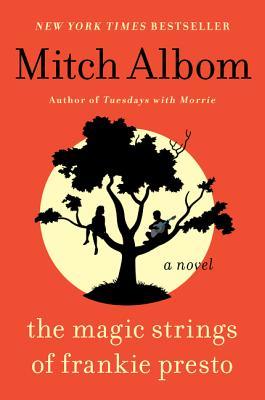
The Magic Strings of Frankie Presto: A Novel
by Mitch Albom (Goodreads Author)

Michael Beyer‘s review

Jul 23, 2017

It was amazing!

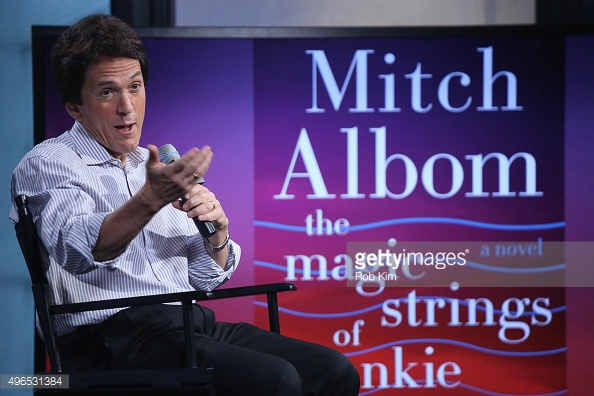
This book is a miracle. It makes words into music and fills your imagination with some of the most beautiful guitar music ever played. It introduces you not only to a very convincing portrait of a fictional musician and Rock and Roll icon, but a vast array of very real musicians and show people who agreed to be used as a part of the story, approved the sections about them, and even helped Mitch Albom to compose it. These include notable music makers like Lyle Lovett, Darlene Love, Tony Bennett, Paul Stanley, and Burt Bacharach. The story itself transcends its fictional form, giving us a look at a musical history whose scope goes from the Spanish Civil War of the 1930’s to Woodstock, and on to the present day. It even gives us glimpses into the distant musical past, framing the story with the song Lágrima by the classical guitarist Francisco Tárrega. And all this music the book fills your mind with is actually performed only in your imagination and memory. Albom proves again with this book how his mastery of language makes him an absolute master story-teller.

496531384

And now, here is me trying to make sense out of a reading experience that made my figurative heart grow wings and soar into the clouds in ways brought forth only by the strains of a sweet, classical Spanish guitar.

Stories like this one make a unique music in the mind, and though it is all fiction, occurring silently in the theater of your mind, you hear the music in your heart.  This story elicited the music of Rodrigo’s Adagio throughout, a piece I know intimately.  I myself have never written a musical book the way this fiction book was written.  But I know now that I have to try.  Poetry becomes song lyrics, right?  There is a connection between a good archetypal story about life and love and laughter, and the bittersweet strains of music on a Spanish guitar.

I truly and utterly fell in love with this beautiful book.  Mitch Albom is a genius… for a Detroit Tigers baseball fan.  And I would not risk telling you anything that might spoil such a beautiful story.  All I can say is, don’t read it… listen to it as you would a piece of beautiful music.  Listen to it and love it.

Leave a comment

Filed under book review, Celebration, classical music, humor, music, novel, strange and wonderful ideas about life

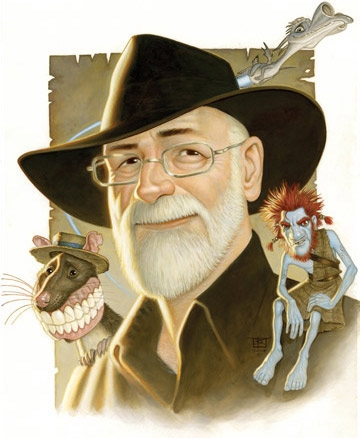
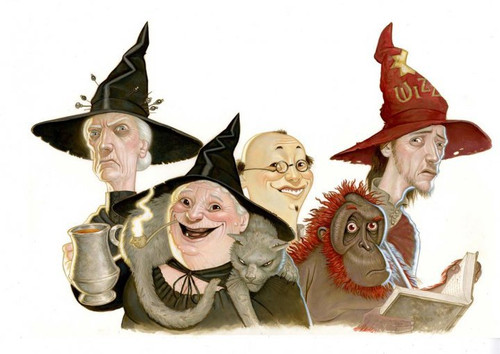
Terry Pratchett, the Grand Wizard of Discworld

image borrowed from TVtropes.com

image borrowed from TVtropes.com

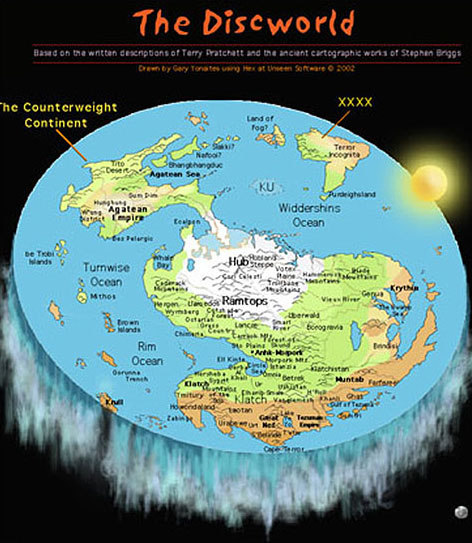
I firmly believe that I would never have succeeded as a teacher and never gotten my resolve wrapped around the whole nonsense package of being a published author if I hadn’t picked up a copy of Mort, the first Discworld novel by Terry Pratchett that I ever encountered.  I started reading the book as a veteran dungeon-master at D&D role-playing games and also as a novice teacher, having a world of difficulty trying to swim up the waterfalls of Texas education fast enough to avoid the jagged rocks of failure at the bottom.  I was drinking ice tea when I started reading it.  More of that iced tea shot out my nose while reading and laughing than went down my gullet.  I almost put myself in the hospital with goofy guffaws over Death’s apprentice and his comic adventures on a flat world riding through space and time on the backs of four gigantic elephants standing on the back of a gigantic-er turtle swimming through the stars.  Now, I know you have no earthly idea what this paragraph even means, unless you read Terry Pratchett.  And believe me, if you don’t, you have to start.  If you don’t die laughing, you will have discovered what may well be the best humorist to ever put quill pen to scroll and write.  And if you do die laughing, well, there are worse ways to go, believe me.

lasthero

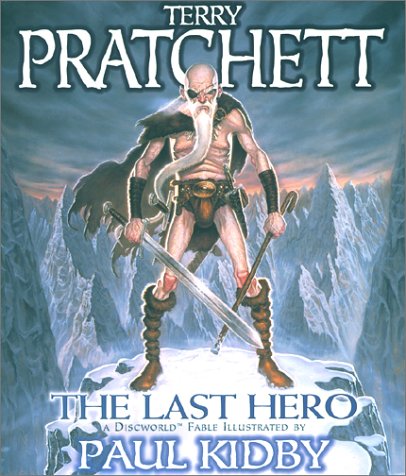
Discworld novels are fantasy-satire that make fun of Tolkien and Conan the Barbarian (written by Robert E. Howard, not the barbarian himself) and the whole world of elves and dwarves and heroes and dragons and such.  You don’t even have to love fantasy to like this stuff.  It skewers fantasy with spears of ridiculousness (a fourth level spell from the Dungeons of Comedic Magic for those fellow dungeon masters out there who obsessively keep track of such things).  The humor bleeds over into the realms of high finance, education, theater, English and American politics, and the world as we know it (but failed to see from this angle before… a stand-on-your-head-and-balance-over-a-pit-of-man-eating-goldfish sort of angle).

makingmoneycover

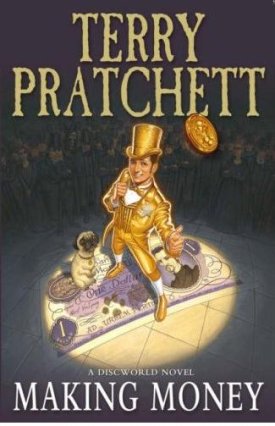
Terry Pratchett’s many wonderful books helped me to love what is ugly, because ugly is funny, and if you love something funny for long enough, you understand that there is a place in the world even for goblins and trolls and ogres.  Believe me, that was a critical lesson for a teacher of seventh graders to learn.  I became quite fond of a number of twelve and thirteen year old goblins and trolls because I was able see through the funny parts of their inherent ugliness to the hidden beauty that lies within (yes, I know that sounds like I am still talking about yesterday’s post, but that’s because I am… I never stop blithering about that sort of blather when it comes to the value hidden inside kids).

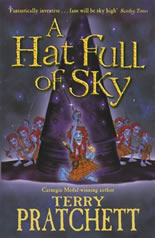
a-hatful-of-sky

I have made it a personal goal to read every book ever written by Terry Pratchett.  And that goal is now within reach because even though he is an incredibly prolific writer, he has passed on withing the last year.  He now only has one novel left that hasn’t reached bookstores.  Soon I will only need to read a dozen more of his books to finish his entire catalog of published works.  And I am confident I will learn more lessons about life and love and laughter by reading what is left, and re-reading some of the books in my treasured Terry Pratchett paperback collection.  Talk about your dog-eared tomes of magical mirth-making lore!  I know I will never be the writer he was.  But I can imitate and praise him and maybe extend the wonderful work that he did in life.  This word-wizard is definitely worth any amount of work to acquire and internalize.  Don’t take my convoluted word for it.  Try it yourself.

borrowed from artistsUK.com

borrowed from artistsUK.com

map

Leave a comment

Filed under book review, humor, NOVEL WRITING

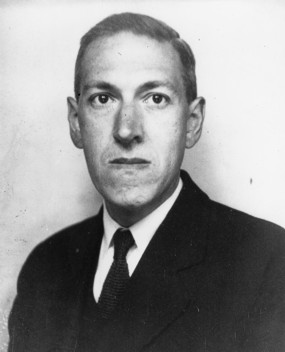
H.P. Lovecraft, The Master of Madness

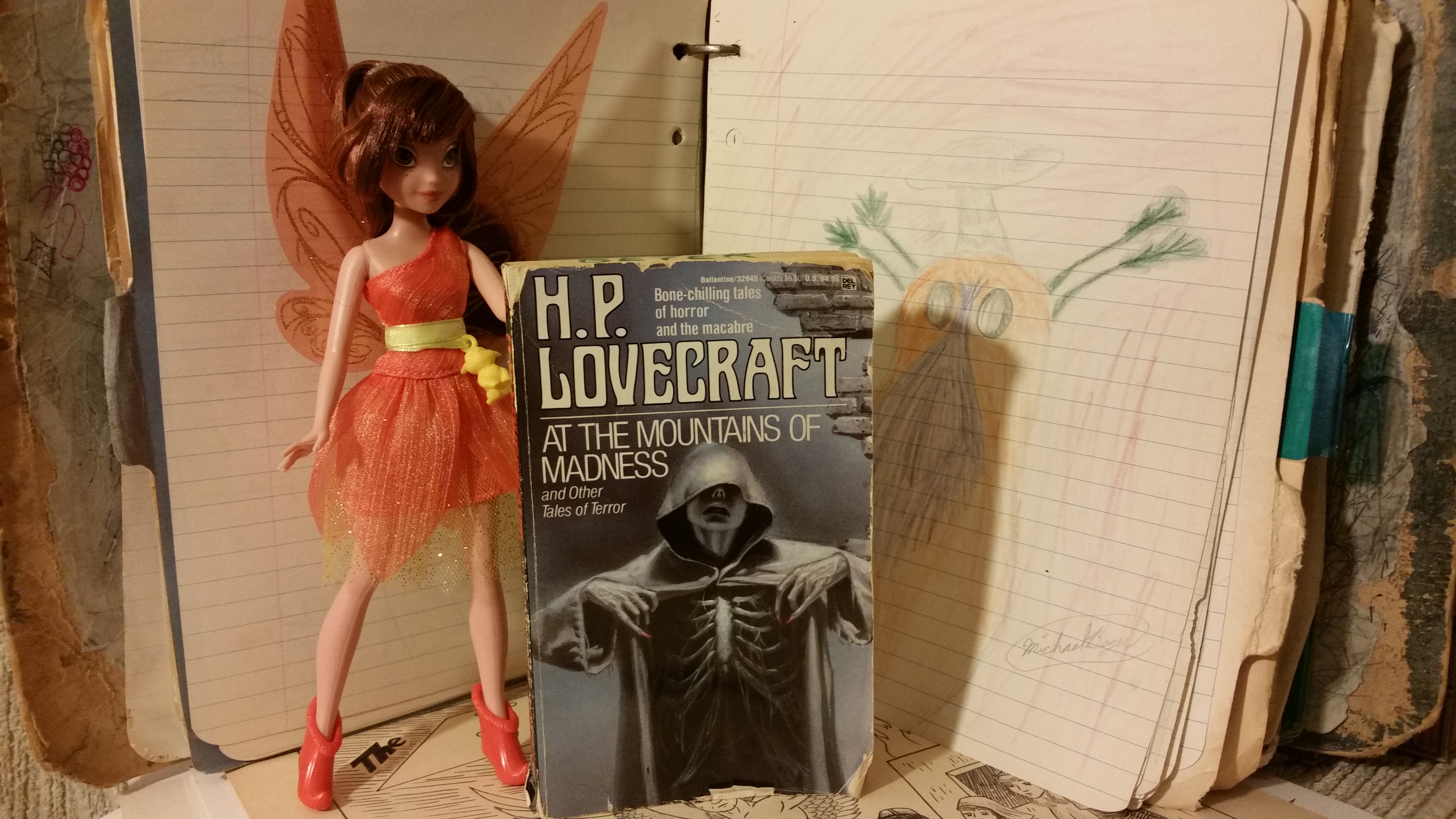
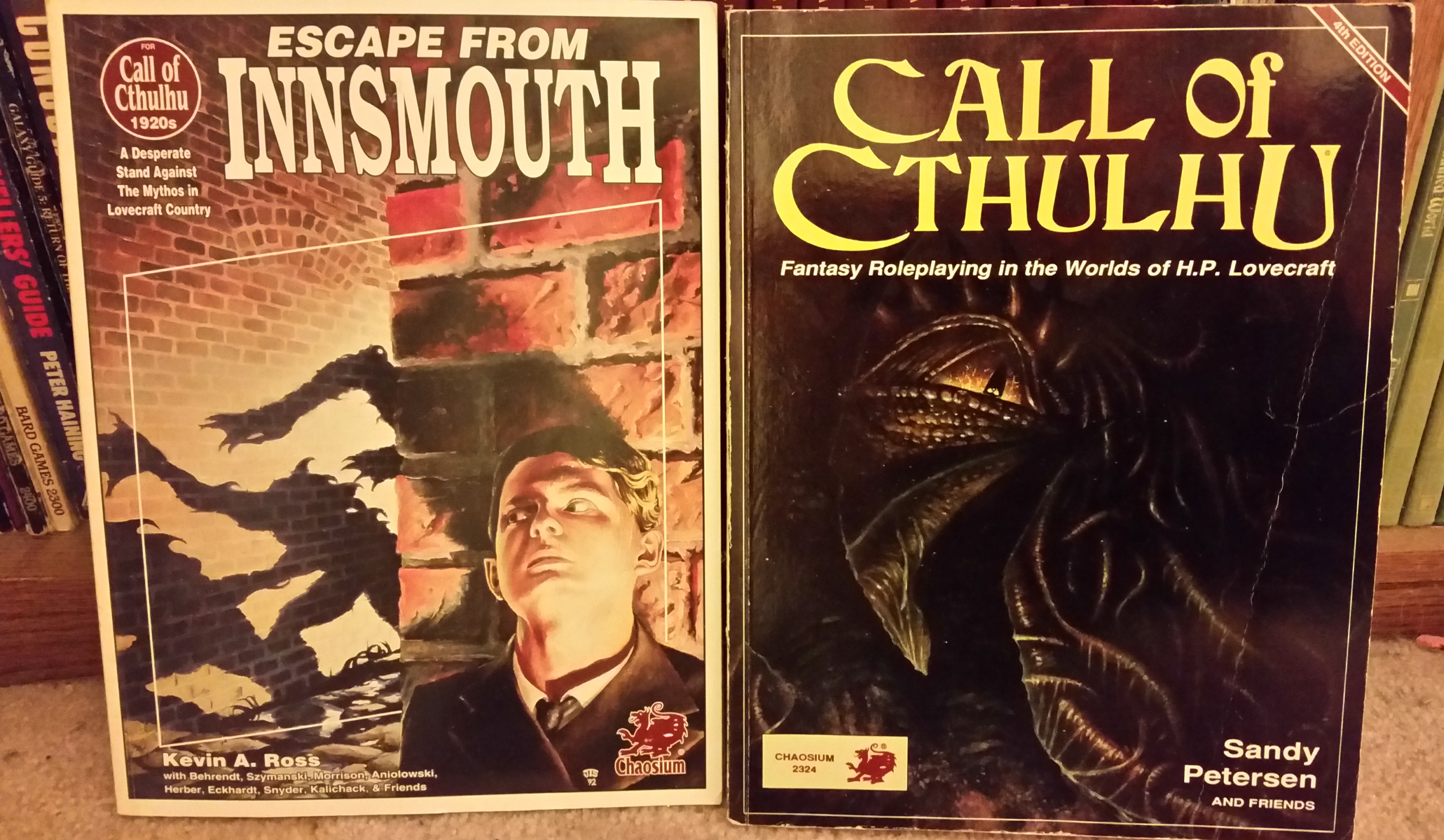
20150904_141036

When I was but a young teacher, unmarried, and using what free time I had to play role-playing games like Dungeons & Dragons and Traveller with students and former students and fatherless boys, I came across a game that really creeped me out.  And it was quite popular with the kids who relied on me to fill their Saturday afternoons with adventure.  It led me on a journey through the darkness to find a fascination with the gruesome, the macabre, and the monstrous.  The Call of Cthulhu game brought me to the doorsteps of Miskatonic University and the perilous portals of the infected fishing village of Innsmouth.  It introduced me to the nightmare world of Howard Phillips Lovecraft.

“H. P. Lovecraft, June 1934” by Lucius B. Truesdell
20150904_135636

Old H.P. is as fascinating a character as any of the people who inhabit his deeply disturbing horror tales.  He was a loner and a “nightbird” but with little social contact in the real world.  He lived a reclusive life that included a rather unsuccessful “contract” marriage to an older woman and supporting himself mostly by burning through his modest inheritance.  As a writer, he got his start by so irritating pulp fiction publishers with his letters-page rants that he was challenged to write something for a contest article, and won a job as a regular contributor to “Weird Tales” pulp magazine.  He was so good that he was offered the editorship of the magazine, but true to form, he turned it down.  He resembled most the dreamer characters who accessed the Dreamlands in various ways, but let their mortal lives wither as they explored unknown continents in the Dreamlands and the Mountains of the Moon.  He created a detailed mythos in his stories about Cthulhu and Deep Ones and the Elder Gods.  He died a pauper, well before his stories received the acclaim they have today.

I have to say that I was so enamored of his stories that I had to read them as fast as I could acquire them from bookstores and libraries all over Texas.  My favorites include, The Shadow Over Innsmouth, The Dunwich Horror, and At the Mountains of Madness.  But reading these stories lost me hour upon hour of sleep, and developed in me a habit of sleeping with the lights on.  In Lovecraft’s fiction, sins of your ancestors hang like thunderheads over your life, and we are punished for original sin.  A man’s fate can be determined before he is born, and events hurl him along towards his appointed doom.  H.P. makes you feel guilty about being alive, and he shakes you to the core with unease about the greater universe we live in, a cold, unfeeling universe that has no love for mankind, and offers no shelter from the horrors of what really goes on beyond the knowing of mortal men.

Loving the stories of H.P. Lovecraft is about deeper things than just loving a good scare.  If you are looking for that in a book, read something by Stephen King.  H.P. will twist the corners of your soul, and make you think deep thoughts to keep your head above water in deep pools of insanity.  I know some of his books belong in yesterday’s post, but we are not talking about happy craziness today.  This is the insanity of catharsis and redemption.

Leave a comment

Filed under book review, humor, photo paffoonies

Catch a Falling Star – Book Review

mewall24

I finally got the book review from Serious Reading.  If you are actually interested, you can find it here;

Seriousreading.com Book Review

I have not been a very successful marketer of my own book.  But I have made attempts to get help with it.  This book review is an example of that.  I have chosen to reproduce the interview here as a way of ditching my responsibility for writing anything new in this post.

Interview with Michael Beyer, author of “Catch a Falling Star”

A common misconception entwined with authors is that they are socially inept, how true is that?

Quite true… the person who goes on to become a successful author is the sociopath who sits in the back of the classroom during his freshman year of high school watching everybody through pop-bottle-bottom glasses and taking notes on everything everyone else is doing or saying. But, the rub is that you cannot successfully write anything without learning how to talk to people first. This is why most of them take years to get their books successfully completed. It is also why some authors have closets full of manuscripts that no one has ever seen.

Do all authors have to be grammar Nazis?

Alle begrüßen die heiligen Worte! Yes, authors must pass through the grammar Nazi stage, even if they are to become grammar anarchists like Kurt Vonnegut or Terry Pratchett. You have to know the rules you are breaking before you can break them without simply being stupid.

If you could have been the original author of any book, what would it have been and why?

My own book. The good books that are out there are good only because you couldn’t rewrite it and make it any better than it already is. I also don’t want to waste my time re-writing a dumb book or an evil book or a goofy book… well, I might have to think twice about the goofy book.

What makes this particular genre you are involved in so special?

I was a public school English teacher for 31 years in Texas. I write YA novels because, not only are kids my main audience, but also my primary source material. All the best fantasy, science fiction, and humor ideas can be accidentally happened upon and written down somewhere in a middle school classroom. All the best characters and clowns too.

What works best for you: Typewriters, fountain pen, dictate, computer or longhand?

For twenty years I wrote everything out in longhand in spiral notebooks. It took considerable work to copy it all out on a typewriter. Then some nut invented that computer thing, and an even nuttier nut showed me how to use one. The world will live to regret those two big mistakes.

When did it dawn upon you that you wanted to be a writer?

I started writing things down in the back of the classroom when I was about twelve. Before that I told stories to everyone who would listen… or couldn’t escape listening. My sisters still blame me for recurring nightmares and my grade school best friend still reminds me that I am not actually a changeling left on Earth by Martians. I guess I haven’t actually made up my mind yet about becoming a writer.

How often do you write?

Are you asking how many times a day? Or how often I stop writing? The second one is easier to answer… never.

Do you have a set schedule for writing, or are you one of those who write only when they feel inspired?

I write whenever life doesn’t interfere. Now that I am retired from teaching I write every morning for at least an hour and at least 500 finished words. But I am writing in my head even when I am at Wal-Mart returning the sneakers my daughter begged me for because I wasn’t smart enough not to buy pink ones.

How hard was it to sit down and actually start writing something?

About as hard as it is to remember to breathe. As an English teacher I always made it my policy to write any writing assignment I ever assigned to my students. Other members of the faculty all knew that I was willing to write anything that needed writing, and the State of Texas requires teachers to write huge stacks of B.S. daily. So at least some of their lesson plans look suspiciously like mine.

Writers are often associated with loner tendencies; is there any truth to that?

I know a lot of other writers who are stressed by being around stupid people too much. But, as a former school teacher, I like people… especially kid people… even the stupid ones.

Do you think writers have a normal life like others?

No. I don’t have to explain that one, do I? The world does not have as many writers as there are normal people. There has to be a reason for that, don’t you think?

Do you set a plot or prefer going wherever an idea takes you?

I have in the past mapped out elaborate road-maps of plot and character motivation. I never followed a single one to the “X marks the spot”. You only find treasure if you learn to dig for treasure along the way.

What, according to you, is the hardest thing about writing?

Quitting for the session. I try always to leave something unwritten that I wanted to say to pick up next time… and it often brings me back to do some more well before I had planned to.

What would you say is the easiest aspect of writing?

Everything about writing is hard. I do it easily now only because I have worked at it since I was twelve. Years of practice and re-writing, trying new things and failing badly, trying again and failing again, ironing out the wrinkles and then putting them back in… It takes effort, just like building the Great Wall of China, one brick at a time… but isn’t it a danged big old wall now?

Have you ever experienced “Writer’s Block”? How long do they usually last?

Dang! How am I ever going to answer that? I have to really think about it. Maybe I can answer by next Tuesday.

Any tips you would like to share to overcome it?

Well, I guess that wasn’t really that hard after all. All I did was write something down as soon as it came into my head. If it turns out to be a stupid idea, computers make it easy to erase and replace. I told you that you were going to regret that particular invention, didn’t I?

Do you read much and if so who are your favorite authors?

Terry Pratchett, Michael Crichton, Louis L’Amour, R. A. Salvatore, William Faulkner, William Shakespeare, J.R.R. Tolkein, Madeleine L’Engle, Ernest Hemingway, Mark Twain… and these are just the authors I have read three or more books from (over ten from each of the first four) Reading allows me to live more than one life.

Over the years, what would you say has improved significantly in your writing?

My ability to finish a story to the point I don’t feel that it has to be totally re-written.

What is the most important thing about a book in your opinion?

Whether it makes you laugh or makes you cry or both, the most important thing is that one sweet-sad moment when you have to tell yourself, “Yes,this is true.”

If you had the choice to rewrite any of your books, which one would it be and why?

I am busy rewriting all of them now, except for the two I already have published, and I am busily thinking about at least one of those.

What is your take on the importance of a good cover and title?

Something about the title and cover has to entice the reader into making the mistake of picking the book up and looking inside. It is the essential booby trap that makes or breaks a book.

Have you ever designed your own book cover?

Yes. And so far publishers have ignored my wishes every time. I have found a small publisher called PDMI that may let me do the cover illustrations for the book they have foolishly agreed to publish.

Does a bad review affect your writing?

If I get a review that honestly defines the problem the reader had with my work, then of course I will try to fix the problem. Most bad reviews however are of the sort where very little thought went into it, and the only purpose was to vent and take something out on me as the author. It doesn’t always seem to be reflecting my writing… rather the prejudices that stand between the reader and my work.

Any advice you would like to give to your younger self?

Don’t worry about looking like an idiot, because you will, and you are, and the only thing you can do about it is write more and worry less.

What did you want to become when you were a kid?

I told my parents when I was five that I wanted to be a clown. When I was in junior high I decided I wanted to be a writer and a cartoonist. I said in high school that the last thing I would ever want to be is a teacher. So I went to college and learned to be a teacher, and along the way I got to be the other three things as well.

Do you recall the first ever book/novel you read?

The White Stag by Kate Seredy. I picked it off the classroom reading shelf in third grade because it had a plain red cover… the dust jacket was long lost. I believed that wonderful things were concealed by plain and ordinary appearances. I kept it for three months and read it at least four times. My teacher thought I was crazy. But by the end of fourth grade she asked for my help reading the book Ribsy by Beverly Cleary aloud to the whole class. I turned into a surprisingly good oral reader, and had from that first book onwards developed a lifelong love of reading.

Which book inspired you to begin writing?

I suppose it was Robert Louis Stevenson’s Treasure Island which I read in the fourth grade. It colored all the stories I told my friends and cousins in our little Iowa town. I loved adventure. I loved N. C. Wyeth’s illustrations in the edition my Grandma had in her house. I knew from halfway through the first chapter that I had to be like young Jim Hawkins and tell a story like that.

Did you ever think you would be unable to finish your first novel?

Yes. For most of the twenty-two years it took me to finally reach the last page.

Do you read any of your own work?

How can I write anything without reading it? I like to go back regularly to re-read as much as I can, and every time I do that, I get to the point that I almost think I actually know that dumb old guy who wrote that nonsense.

Tell us about your writing style, how is it different from other writers?

I can’t say, really. When I am writing I hear the voices in my head not as my own voice, but as the characters in the story. The characters are all people I know, though every character has some part of me mixed in too. I try to write what makes me laugh and makes me cry and makes me feel good inside… and I leave it up to the reader to try to feel that too.

Do your novels carry a message?

Every novel has to be full of metaphor and meaning. If we can’t as readers jump inside the characters and walk around in their lives for a bit, then what was the point of even writing it? There is no one message. There is a multitude of messages. And readers should maybe read stuff backwards and upside down to look for clues. You never know what else might be in there. Maybe Elvis is really alive and ordering chili every day at a Wendy’s in Michigan and that can only be revealed by reading the paragraph on page 23 in reverse order.

How much of yourself do you put into your books?

Jeez! I have to work hard to keep some stuff out of my books and save it for myself. Otherwise there would soon be nothing left of me. I don’t have any secrets left in life that aren’t found in my writing somewhere. I keep my ears out of my writing, or else what would I hear with? I keep my fingers out too so I have something to draw pictures with. I use much more of me than I should.

Have you ever incorporated something that happened to you in real life into your novels?

Yes. My friend Robert remembers when the aliens tried and failed to invade my hometown when we were boys. That became the basis for Catch a Falling Star. Of course, I changed a few things, because if Robert realized which character in the book was him, he’d probably want to punch me in the nose. The characters in my stories are all students I have taught, kids I grew up with, and people I have known. Even the really weird ones were real once upon a time. Sorry, Robert, but it’s true.

How realistic are your books?

I write humorous books about science fiction subjects and fantasy adventures. They are filled with lies and exaggerations. So everything is photo realistic. You believe me, don’t you?

What books have influenced your life the most?

Tolkien’s Lord of the Rings trilogy, Douglas Adams’ Hitchhiker’s Guide to the Galaxy trilogy… er quadrilogy… or maybe five-ilogy… I don’t know…, and Frank Herbert’s Dune. I have a thing for realistic fiction.

Are there any books that you are currently reading and why?

I started reading Terry Pratchett’s Hogfather because it is the only Terry Pratchett book I own that I haven’t read yet, and I haven’t gotten hold of a copy of Hat Full of Sky already.

Have any new writers grasped your interest recently?

I love John Green’s books Paper Towns and The Fault in Our Stars.

Is there anything you are currently working on that may intrigue the interest of your readers?

I am trying to get published a novel called Snow Babies. It is a fantasy-comedy about freezing to death in a blizzard and it has snow ghosts and clowns in it. That is a rather fast and flippant summation about a book that I think will make you cry a little and laugh a lot, but it is also fairly accurate. I am hoping the publisher I signed the contract with stays in business long enough to publish it. They have also made the mistake of allowing me to submit a cover illustration.

Who are your books mostly dedicated to?

I dedicate what I write to the people I have known and used as characters. I dedicate my writing to former students, friends, family, and co-workers, because what other reason could I have for writing?

It is often believed that almost all writers have had their hearts broken at some point in time, does that remain true for you as well?

My heart breaks every time a child fails in the classroom. My heart breaks every time I see something incredibly beautiful that I know will not last much longer. I have fallen in love at least five times, and had my heart broken by that at least ten times, maybe more. The scars you carry on the inside either fester and kill you, or they turn over time into pearls, the same way oysters deal with irritants inside their shells, and they can also be called “books you have to write” once they become pearls.


Leave a comment

Filed under book review, humor, publishing, writing

Three Books at Once

No, this isn’t some kind of multiple-book book review.  This is an ungodly silly claim that I can actually read three books at once.  Silly, but true.

Now, I don’t claim to be a three-armed mutant with six eyes or anything.  And I am relatively sure I only have one brain.  But, remember, I was a school teacher who could successfully maintain a lesson thread through discussions that were supposed to be about a story by Mark Twain, but ventured off to the left into whether or not donuts were really invented by a guy who piloted a ship and stuck his pastries on the handles of the ships’ wheel, thus making the first donut holes, and then got briefly lost in the woods of a discussion about whether or not there were pirates on the Mississippi River, and who Jean Lafitte really was, and why he was not the barefoot pirate who stole Cap’n Crunch’s cereal, but finally got to the point of what the story was really trying to say.  (How’s that for mastery of the compound sentence?)  (Oh, so you could do better?  Really?  You were in my class once, weren’t you.)  I am quite capable of tracking more than one plot at the same time.  And I am not slavishly devoted to finishing one book before I pick up the next.

I like reading things the way I eat a Sunday dinner… a little meatloaf is followed by a forkful of mashed potatoes, then back to meat, and some green peas after that…  until the whole plate is clean.

Treasure Island by Robert Louis Stevenson is the meatloaf.  I have read it before, just as I have probably had more meatloaf in my Iowegian/Texican  lifetime than any other meat dish.  It’s pretty much a middle-America thing.  And Treasure Island is the second book I ever read.  So you can understand how easy a re-read would be.  I am reading it mostly while I am sitting in the high school parking lot waiting to pick up the Princess after school is out.

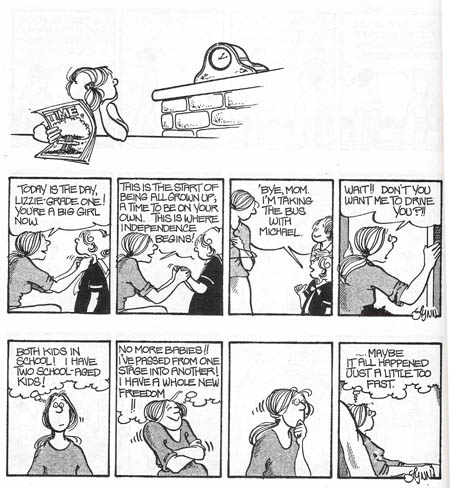
fbofw1Lynn Johnston’s For Better or Worse is also an old friend.  I used to read it in the newspaper practically every day.  I watched those kids grow up and have adventures almost as if they were members of my own family.  So the mashed potatoes part of the meal is easy to digest too.
51+ETSVSDJL

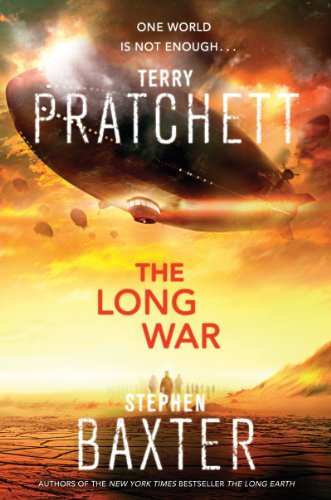
So that brings me to the green peas.  Green peas are good for you.  They are filled with niacin and folic acid and other green stuff that makes you healthier, even though when the green peas get mashed a bit and mix together with the potatoes, they look like boogers, and when you are a kid, you really can’t be sure.  Terry Pratchett and Stephen Baxter wrote this book The Long War together.  And while I love everything Terry Pratchett does, including the book he wrote with Neil Gaiman, I am having a hard time getting into this one.  Parts of it seem disjointed and hard to follow, at least at the beginning.  It takes work to choke down some of it.  Peas and potatoes and boogers, you know.

But this isn’t the first time I have ever read multiple books at the same time.  In fact, I don’t remember the last time I finished a book and the next one wasn’t at least halfway finished too.  So it can be done.  Even by sane people.

Leave a comment

Filed under book review, comic strips, education, goofy thoughts, humor, old books, philosophy, reading

My Bookish Journey (Finale)

by Maxfield Parrish

Like every real, honest-to-God writer, I am on a journey. Like all the good ones and the great ones, I am compelled to find it…

“What is it?” you ask.

“I don’t know,” I answer. “But I’ll know it when I see it.”

“The answer?” you ask. “The secret to everything? Life, the universe, and everything? The equation that unifies all the theories that physicists instinctively know are all one thing? The treasure that pays for everything?”

Yes. That. The subject of the next book. The next idea. Life after death. The most important answer.

And I honestly believe that once found, then you die. Life is over. You have your meaning and purpose. You are fulfilled. Basically, I am writing and thinking and philosophizing to find the justification I need to accept the end of everything.

Leah Cim Reyeb is me, Michael Beyer written backwards.

And you know what? The scariest thing about this post is that I never intended to write these particular words when I started typing. I was going to complain about the book-review process. It makes me think that, perhaps, I will type one more sentence and then drop dead. But maybe not. I don’t think I’ve found it yet.

The thing I am looking for, however, is not an evil thing. It is merely the end of the story. The need no longer to tell another tale.

When a book closes, it doesn’t cease to exist. My life is like that. It will end. Heck, the entire universe may come to an end, though not in our time. And it will still exist beyond that time. The story will just be over. And other stories that were being told will continue. And new ones by new authors will begin. That is how infinity happens.

I think, though, that the ultimate end of the Bookish Journey lies with the one that receives the tale, the listener, the reader, or the mind that is also pursuing the goal and thinks that what I have to say about it might prove useful to his or her own quest.

I was going to complain about the book reviewer I hired for Catch a Falling Star who wrote a book review for a book by that name that was written by a lady author who was not even remotely me. And I didn’t get my money back on that one. Instead I got a hastily re-done review composed from details on the book jacket so the reviewer didn’t have to actually read my book to make up for his mistake. I was also going to complain about Pubby who only give reviewers four days to read a book, no matter how long or short it is, and how some reviewers don’t actually read the book. They only look at the other reviews on Amazon and compose something from there. Or the review I just got today, where the reviewer didn’t bother to read or buy the book as he was contracted to do, and then gave me a tepid review on a book with no other reviews to go by, and the Amazon sales report proves no one bought a book. So, it is definitely a middling review on a book that the reviewer didn’t read. Those are things I had intended to talk about today.

But, in the course of this essay, I have discovered that I don’t need to talk about those tedious and unimportant things. What matters really depends on what you, Dear Reader, got from this post. The ultimate McGuffin is in your hands. Be careful what you do with it. I believe neither of us is really ready to drop dead.

Leave a comment

Filed under book review, commentary, humor, illustrations, novel writing, Paffooney, publishing, reading, strange and wonderful ideas about life, writing

My Bookish Journey (Part IV)

Once I settled into a publishing plan where I was basically in control of the whole process, the center of my world became the execution of my overall plan to commit acts of actual literature. I had to decide what I wanted to write and the reasons why I was going to write it.

Surrealist Reasons for the Season.

I began the most serious part of my journey into authorship once I was fully retired from my last teaching job. And the darkest part of that truth is that if I weren’t ill enough to be forced to leave teaching, I would still be doing that. It is what God made me for, if there is a God. But since I am stuck in this retirement reality, I really have to use fiction for what fiction-writing is for.

And let me assure you, I know what writing fiction needs to mean for me. I need to rewrite the story of my life in the surreal reality of perceived truth. And what does that mean in simple words? I have to lie a lot. Because fiction is lying in order to reveal the truth.

Two of the most important books I wrote tell the same story for the same purpose.

The Two Stories are really One Story.

I had a childhood full of monsters. And who I became in adult life was not done in spite of what those monsters did to me, but because of it. I was sexually assaulted as a ten-year-old. What he did to me was not pleasurable in any way. He tortured me because causing pain turned him on. I was severely traumatized by the experience. So much so that I experienced PTSD-induced amnesia for a while. These two books are about my fear of monsters and evil, and the deeply embedded fear that when directly faced with evil, I would not know what it really was.

Things in the two novels are not exactly what they seem.

Torrie Brownfield, the Baby Werewolf, is not a monster. He is a boy who suffers from a genetic hair disorder called hypertrichosis, the same disorder that caused the star of Barnum’s freak show, Jojo the dog-faced boy, to have excessive hair growth.

He looks like a monster, but he is really the sweetest, most innocent character in the story.

..

..

..

The Cobble Sisters, both Sherry and Shelly, are nudists. That is a detail that was both kinda true about the real twin girls that inspired the characters, and true enough about these characters in the story to make fans of my fiction from real nudists I befriended on Twitter.

The nudism, however, symbolizes innocence and truthfulness. Sherry labors in both books to get the other members of the Pirates’ Liars’ Club to accept nudism and try it for themselves. Sherry tells them repeatedly that nudists are more honest than other people because they don’t hide anything about themselves.

The ultimate villain of both novels is, ironically, one who hides everything and manipulates from the shadows.

Grandma Gretel is the main character of Recipes for Gingerbread Children. She is a story-teller that has to come to terms with her own monsters from the past. She is a survivor of the Holocaust during WWII. She lost her entire family to the monsters of the Third Reich.

Ironically, she is the one who, through stories and her own keen perceptions, reveals the ultimate villain and his evil. She also, through stories, is coming to terms with her own trauma and loss.

So, what I am saying about my bookish journey at this point is that I have to write the novels I am writing because they allow me to rewrite the world I live in and the facts of my past life in it. I am rewriting myself. I am becoming the me I need to be by writing.

Of course, I am not yet done talking about my bookish journey. Keep an eye out for Part V.

Leave a comment

Filed under book review, humor, novel writing, Paffooney, writing

Where I’d Like to Be (a book by Frances O’Roark Dowell)

490978

This book made me cry—and that is not unusual, even though I am a 68-year-old man. A Tale of Two Cities by Charles Dickens made me cry—at the end, not during the funny parts. But this book was about a lonely eleven-year-old girl trying to make friends. Why should that make me cry?
But it is also a bittersweet tale of memorable child characters who have nowhere left to turn but each other, and their imaginations. The poetic sting of it can make a grown man cry. You should read it. You will understand then.

Leave a comment

Filed under art criticism, book reports, book review, characters, compassion, empathy, good books, humor, strange and wonderful ideas about life

Mickey the Reader

scan0001

I like to think that I am different than other readers, that the quirky, insane way I practice reading makes me somehow unique and individual.  But if you have read very much of my goofy little blog, you probably realize already that I am a deeply deluded idiot most of the time.  So let me explain a little about how I go about reading.

  1.  I am basically guilty of reading anything and everything I can get my hands on.  And the stupid internet puts an infinite variety in your hands.  Some of it is toxic and probably will kill me… or land me in jail.  (Does the NSA really care about what Mickey is reading?)
  2. Here is an example of my internet reading this morning;  Diane Ravitch’s Education Blog , An Article from British NaturismRachel Poli’s Article about Fantasy Writing, and Naked Carly Art’s post about creating a painting.  My browser history portrays me at times as some kind of communist brainiac pornography-loving terrorist painter or something.  I hope the NSA is using telepaths to investigate me, because the reasons I look at a lot of this stuff is important.  It is a good thing I don’t write mystery novels so they would be upset down in the NSA break room about my searching out creative ways to kill people.
  3. Besides being Eclectic  with a capital “E”, I am also obsessive.  My daily reading project now is Garrison Keillor’s novel, Lake Wobegon Days.

I only spend about an hour a day reading this novel, but I am totally immersed in it.  I am living inside that book, remembering the characters as real people and talking to them like old friends.  I tried to read that book before and couldn’t make progress because I like so much to listen to Keillor tell stories on A Prairie Home Companion on the radio and it just wasn’t the same entirely in print.  When he tells a story, he pauses a lot.  In fact, that moment when he stops to let you reflect on what he just said is critical to the humor because you have to stop and savor the delicious irony of the scene.  His pauses are funnier than the words.  Man, if he just stood there and didn’t talk at all, you would probably die laughing from it.  So, in order to get into the book, I had to read it with Garrison’s voice in my head, pausing frequently the way he does.  Now the stories of Clarence Bunsen and Pastor Inqvist break me up all over again.  I will soon acquire and read everything he has ever written.  I truly love Garrison Keillor.

quote-welcome-to-lake-wobegon-where-all-the-women-are-strong-all-the-men-are-good-looking-and-all-the-garrison-keillor-99801

54673-28

So there is a description of how strange a practicing reader I am.  Think about how you read.  Is the NSA watching you too?  Do you ever read two books at the same time?  Do you read everything and anything in front of you?  If you are self-reflective at all, even if you are not pathological about it the way Mickey is, you may well decide that as strange as my reading habits are, they are probably normal compared to yours.

lakewobegonart620pw

Leave a comment

Filed under book reports, book review, Garrison Keillor, goofy thoughts, humor, reading, strange and wonderful ideas about life