
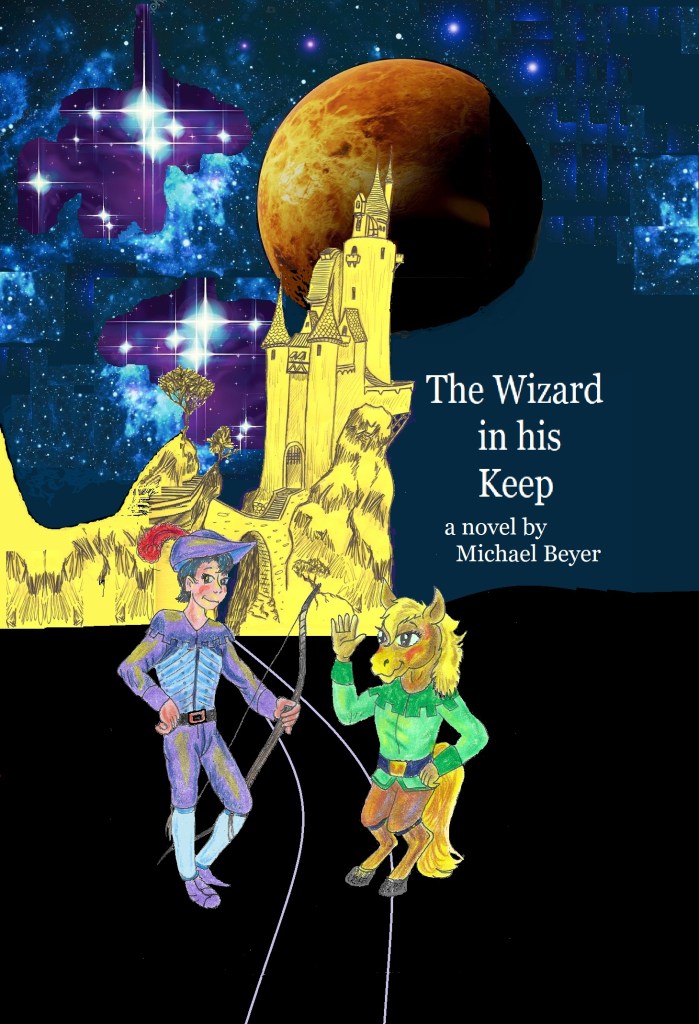
My title for today has at least a double meaning, if not a triple or fourple one.
“Fourple?” you say.
Yes, four plus the color purple. Purple, after all is the dominant color used in the video game “The Legend of Hoodwink“.
And, of course, the video game is not real. It is the virtual reality video game used in the story as the secret land that the orphans and their mother’s friend flee the authorities to live in after the deaths of the Brown family’s parents.
So, I have been living in the world of Glammis, the imaginary game world inside a mainframe supercomputer. I started this story back in the 1980’s, inspired just a little bit by the Disney movie Tron. Of course there are all kinds of more current technological details to employ to make the story more up to date. The story has been reset to 1999. (I don’t write stories set in the 21st Century. I just don’t. Mark Twain never set one in the 20th.) And one of the ways to create the game-world of the story is to draw pictures of it that I can use as illustrations in the book.
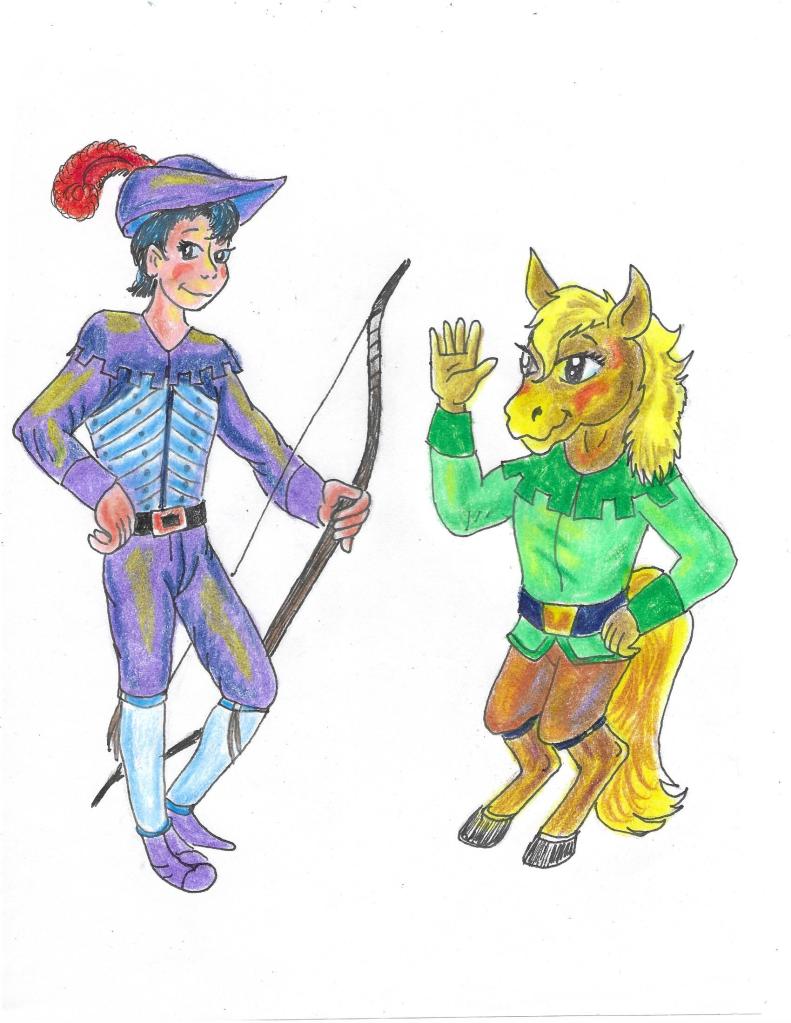
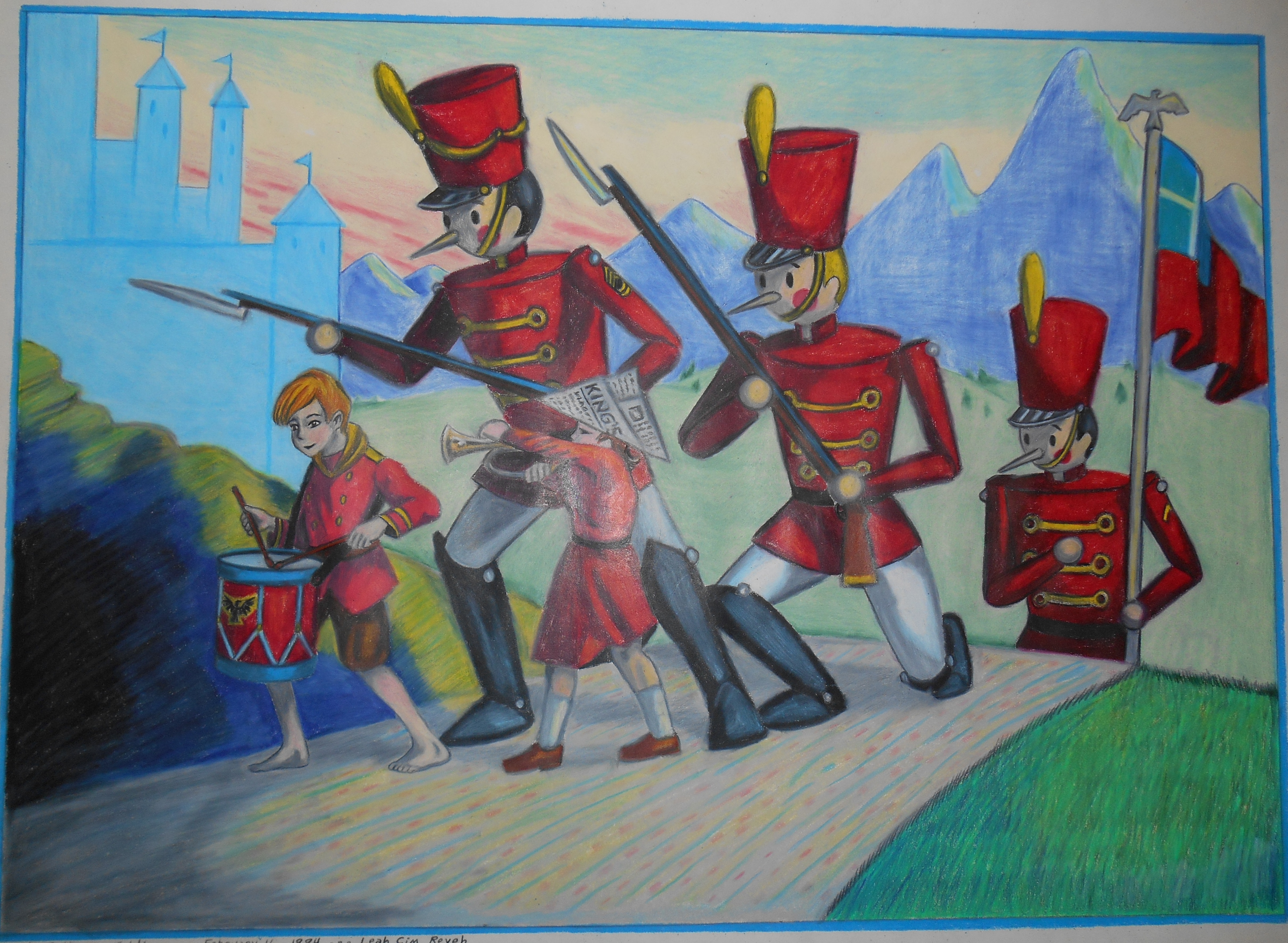
Hoodwink and Babbles (the horse-headed Kelpie) are both game characters that play key roles in the story. They transform from game characters following the script to real people fighting for their lives and honor in the course of the story.
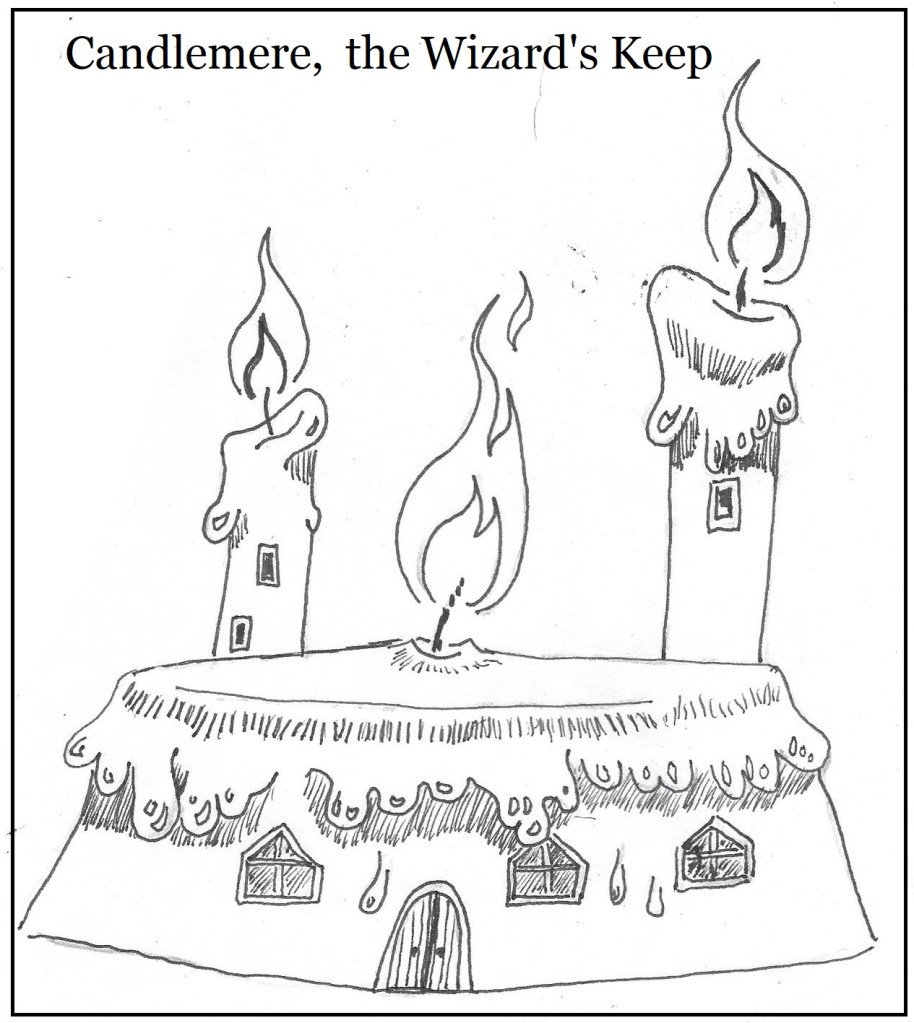
A key setting is the candle-castle called Candlemere, for obvious reasons. The wizard, Milt Morgan, lives there, though he is a real person from Iowa living in Texas as a game designer.
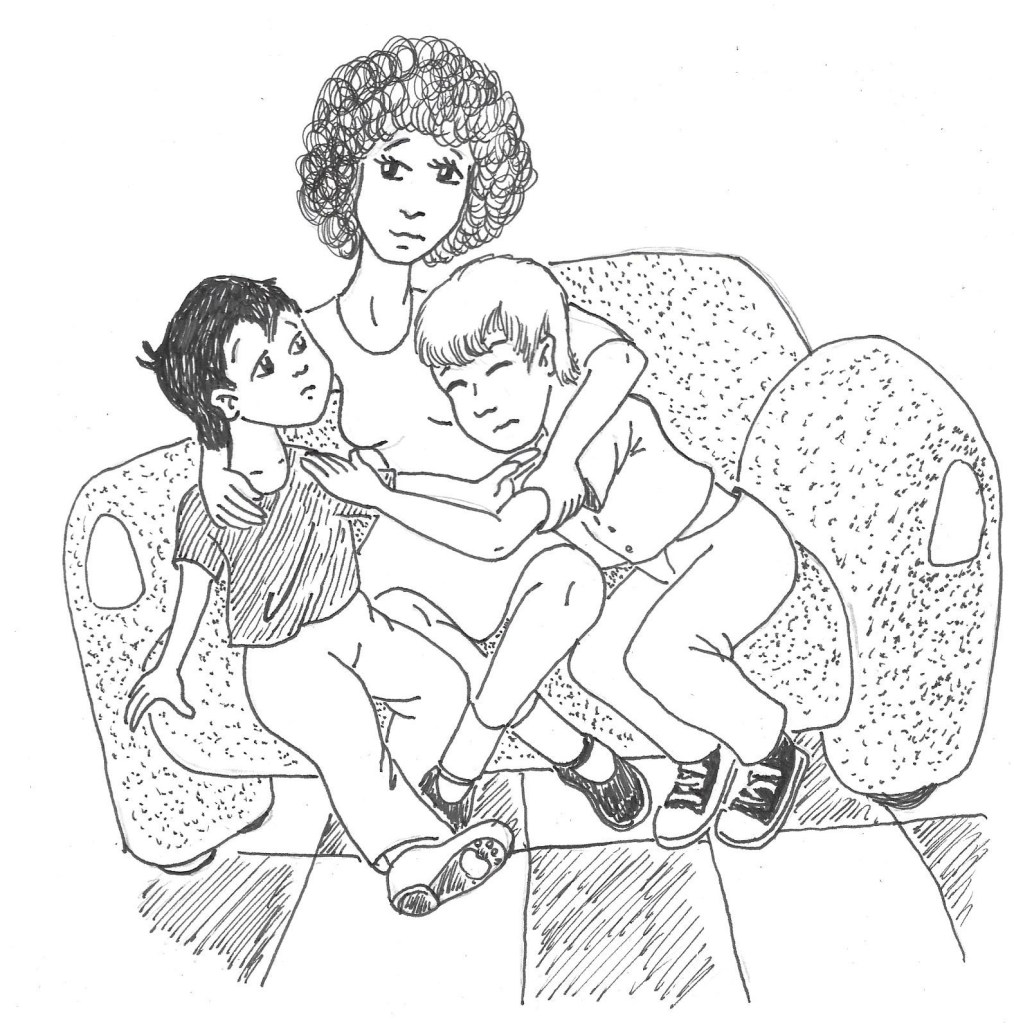
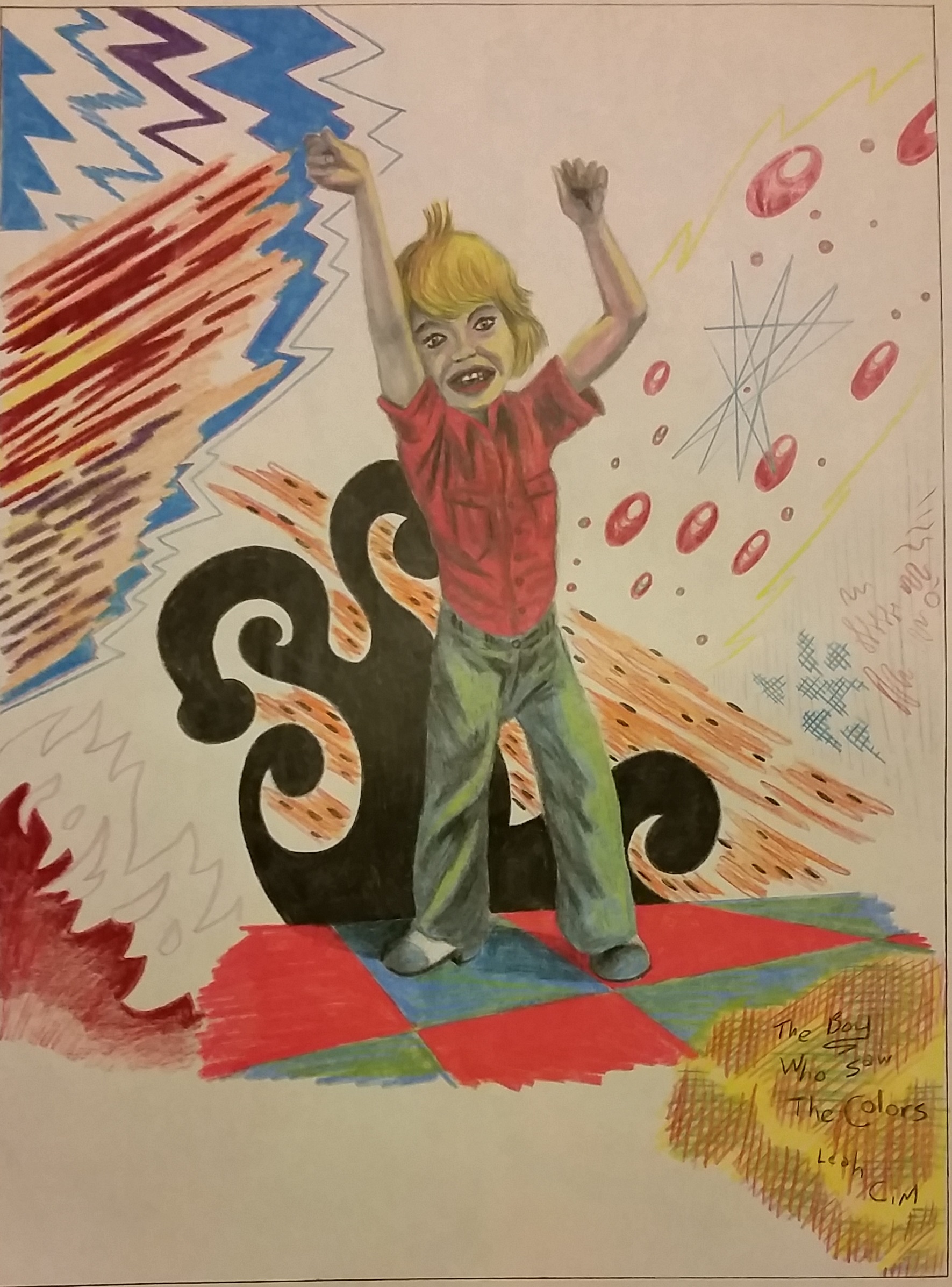
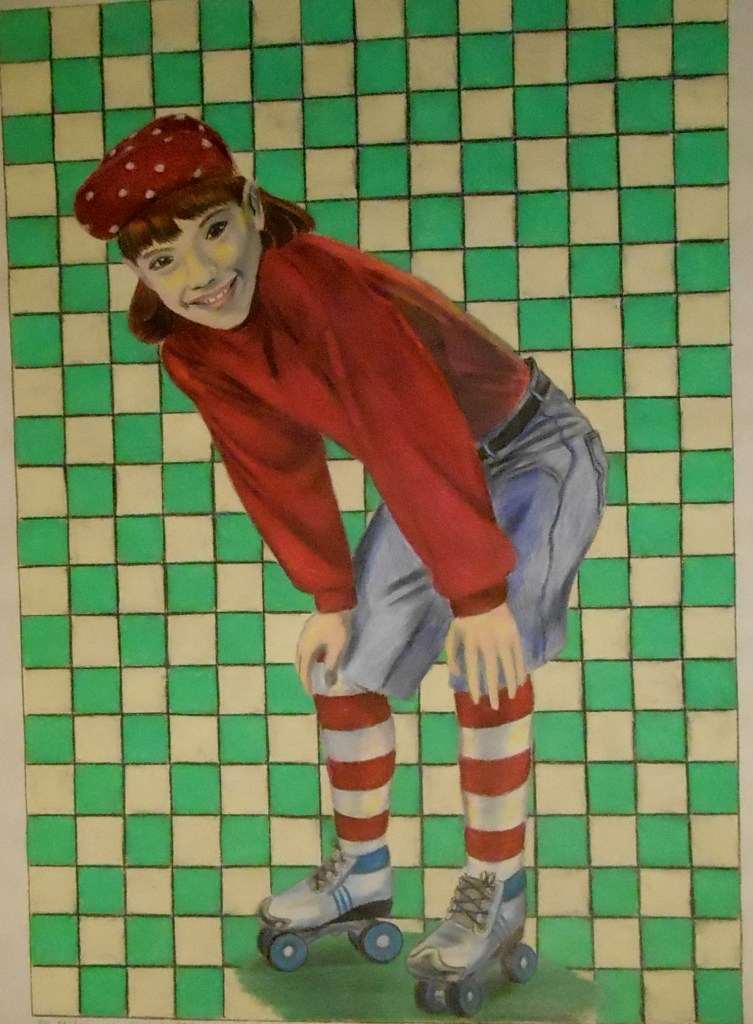
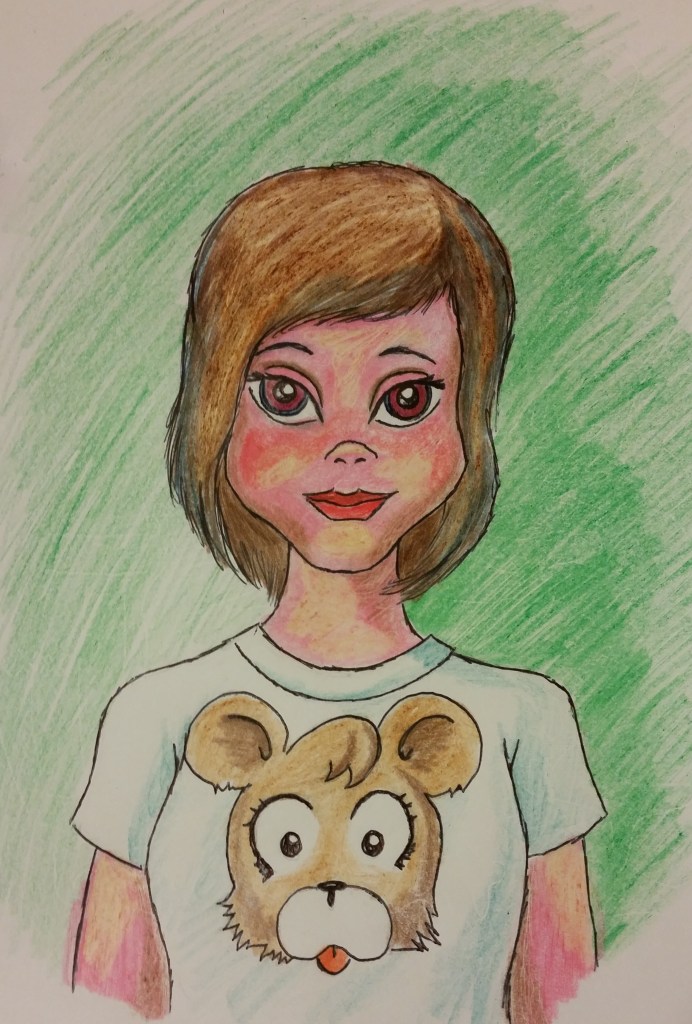
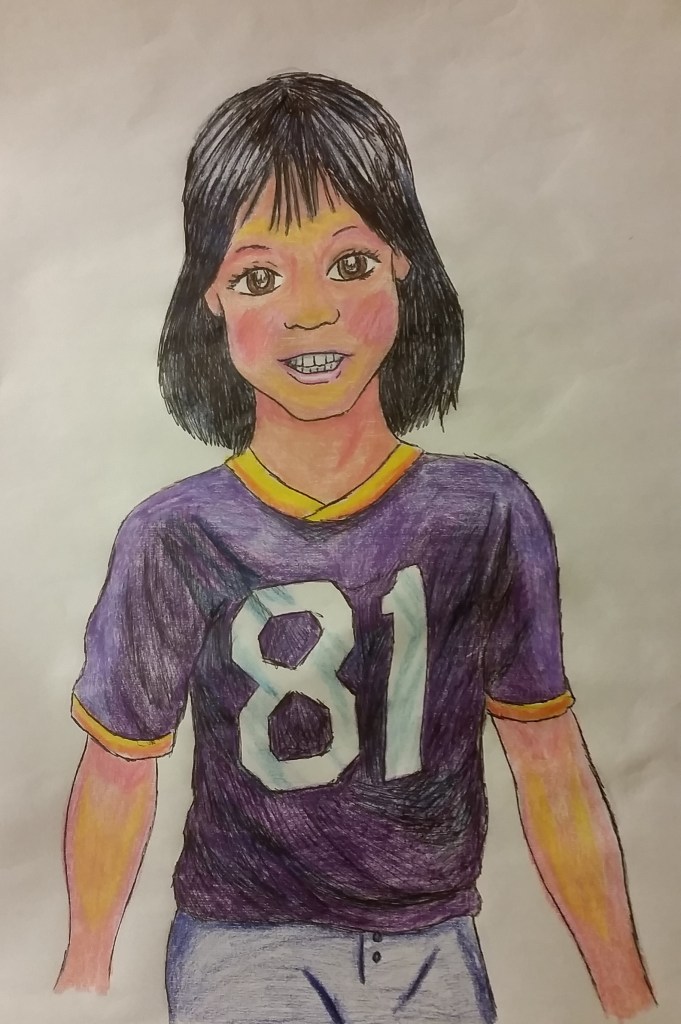
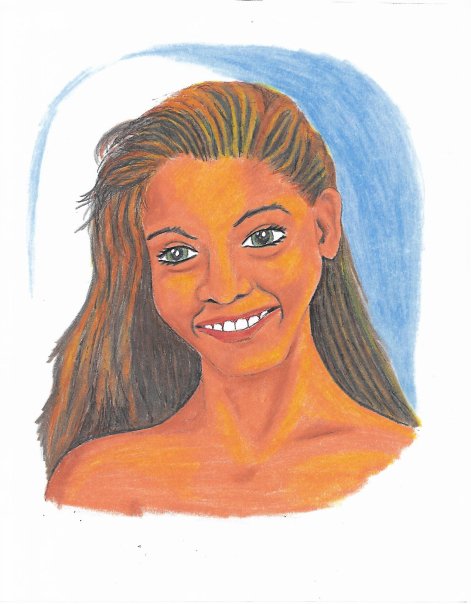
These are the three orphans that Milt Morgan has rescued after the car crash. Mortie Brown, Daisy Brown, and Johnny Brown now live in Glammis after the deaths of their parents, Brom and Stacy Brown.
The three orphans are being pursued in the real world by an FBI agent, a relentless tracker and pursuer named Agent Brent Clarke. What the kids don’t know is that Agent Clarke is trying to find them for their grandparents that they don’t realize are still alive. And Clarke is also their uncle, their mother’s older brother.
In the video game, they are pursued by the evil Daniel Quilp, who is in the video game playing the wicked King Murdstone of the Chelsrod’s Spire. He is not a relative. He is secretly the enemy of their parents and the wizard Milt Morgan.
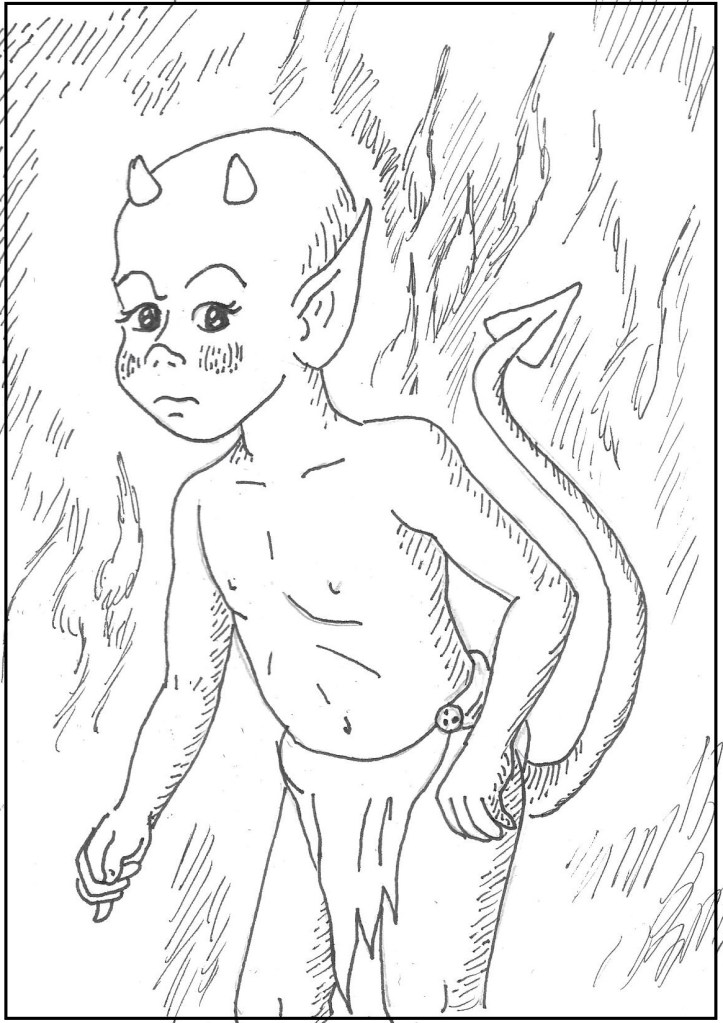
The servant of Murdstone in the game is Errol of the Devylkind. He is more than he appears to be as well. He is another player character who is also very much acquainted with Daisy in the real world, and has a huge crush on her.
But, at present, I haven’t yet reached that part of the story, the latter half of Act One. Instead, I am today establishing setting further by narrating the visit to BrooglieTown, the home of the chocolate dwarves (literally made of chocolate and not a racist faux pas by any means.)
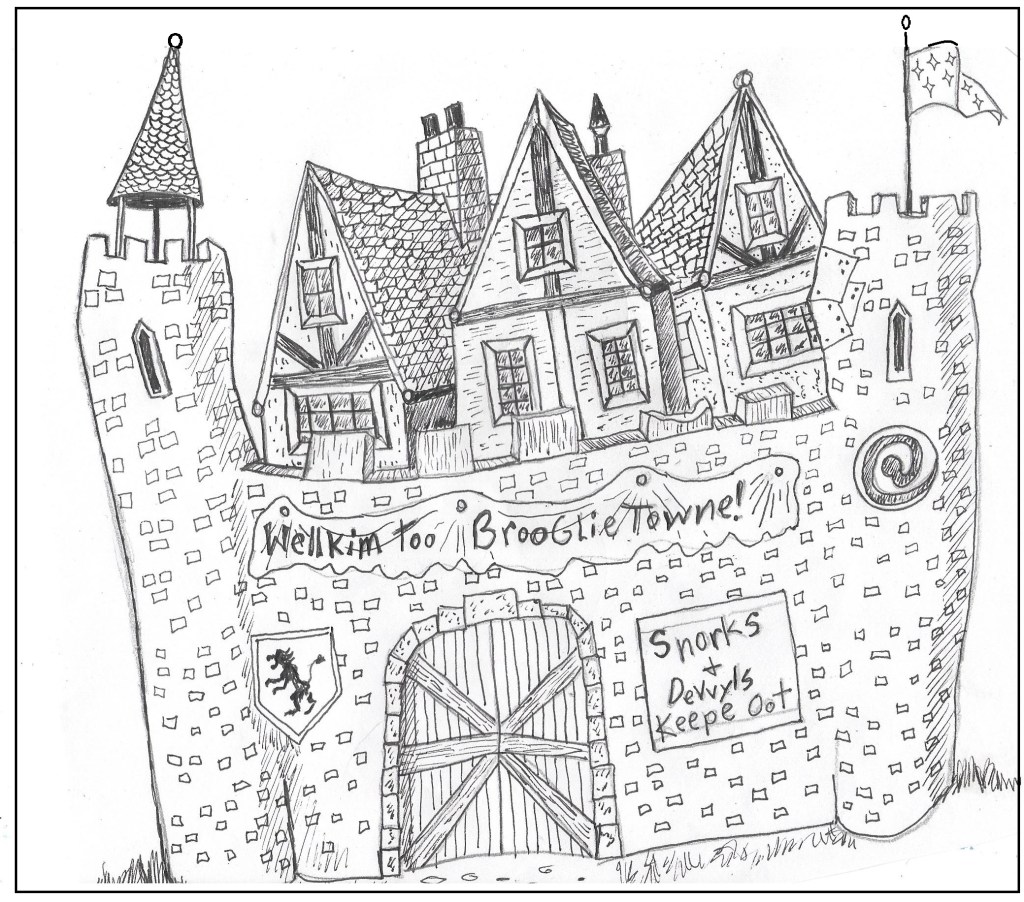
So, in the middle of writing a novel, I am describing the world-building I have been doing… and drawing… while pretty much living in this made-up game world due to the ongoing pandemic and intense heat of Texas in July. It is a better place to be living for now, though it is soon to heat up too as the plot gets churning and the Devylkind, rather hot-blooded fantasy characters, get further involved.







 Catch a Falling Star
The Real Magic in that Old Home Town
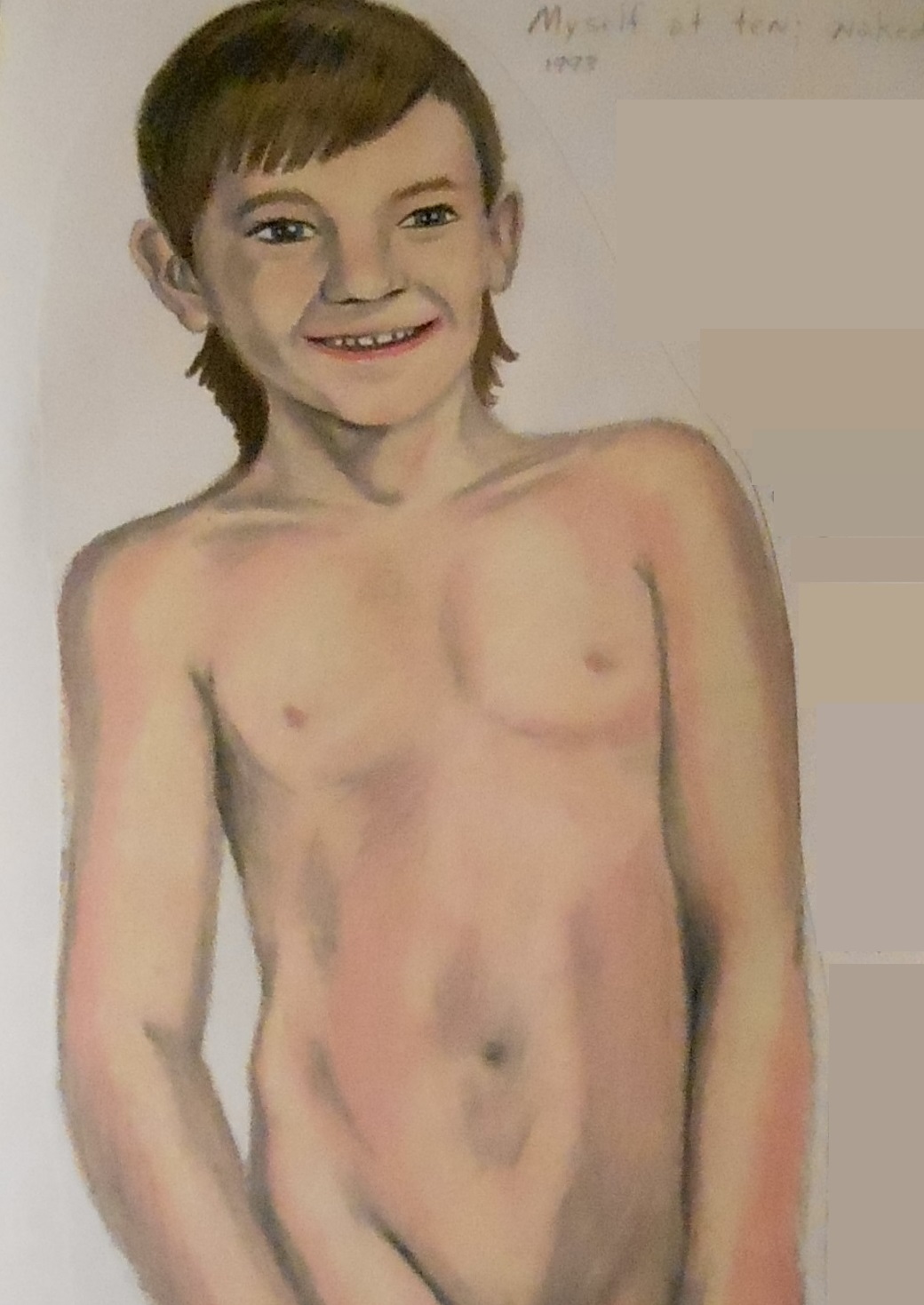
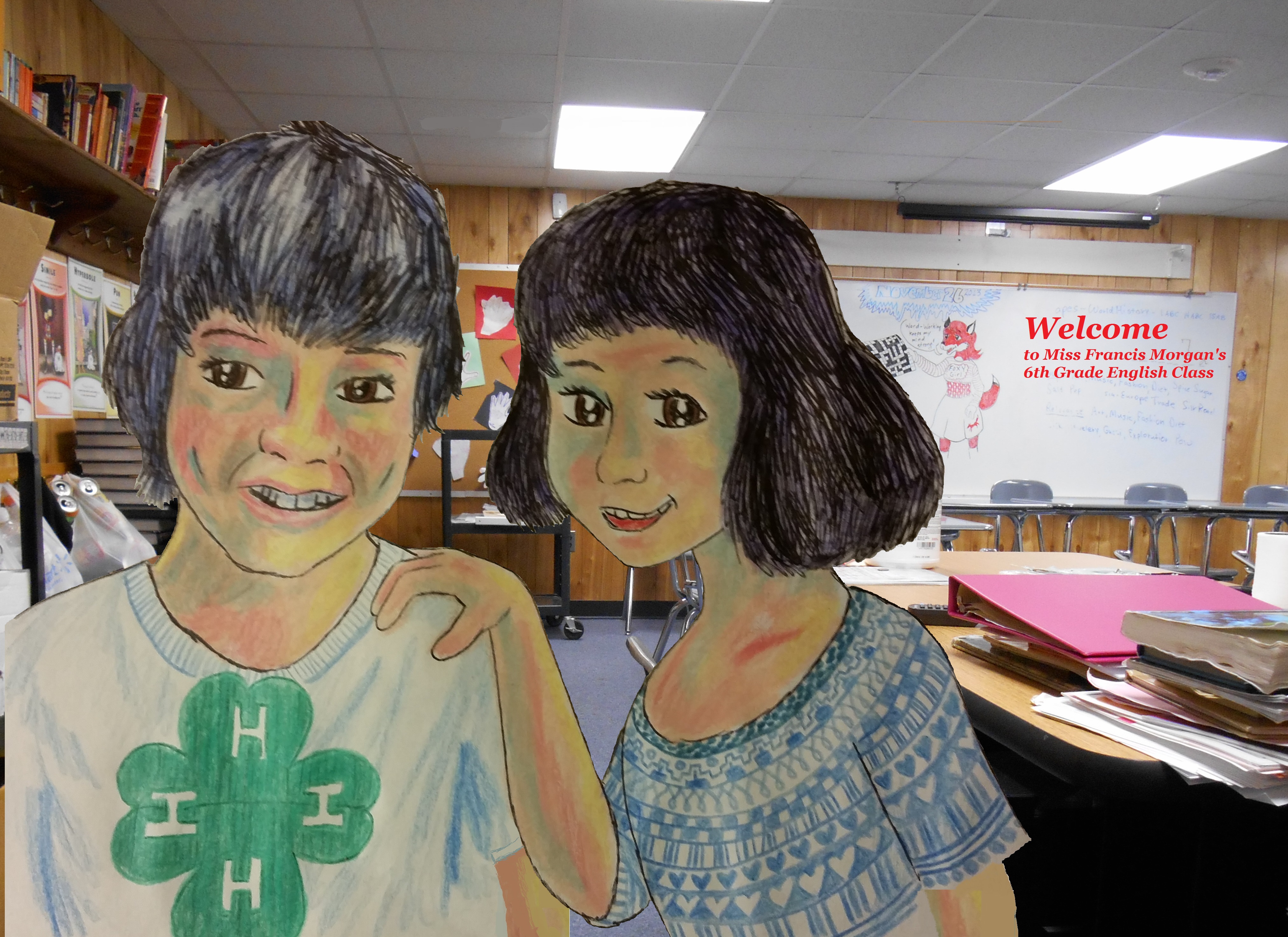
Rowan, Iowa… Not the place I was born, but the place where I got to be a stupid kid, and have the lessons of the good and god-fearing life hammered into my head hard enough to make a dent and make it stay with me for more than half a century. I got to go to grade school there. I learned to read there, especially in Miss Mennenga’s third and fourth grade class. Especially in that old copy of Treasure Island with the N.C, Wyeth illustrations in it, the one Grandma Aldrich kept in the upstairs closet in their farm house. I got to see my first naked girl there. I learned a lot of things about sex from my friends there, and none of them were true. I played 4-H softball there, and made a game-saving catch in center field… in the same game where my cousin Bob hit the game-winning home run. But those were things kids did everywhere. It didn’t make me special. There was no real magic in it.
Being a farm-kid’s kid taught me the importance of doing your chores, every day and on time. If you didn’t do them, animals could get sick, animals could die, crops could be spoiled, the chickens could get angry and petulant and peck your hands when you tried to get the eggs. Cows could get grumpy and kick the milk bucket. Cats could vow revenge if you didn’t direct a spray or two at their little faces as they lined up to watch you milk the cows. And you never knew for sure what a vengeful cat might do to you later, as cats were evil. They might jump on the keyboard during your piano recital. They might knock the turkey stuffing bowl off the top of the dryer when Mom and Grandma and several aunts were cooking Thanksgiving Dinner. And I know old black Midnight did that on purpose because he got to snatch some off the floor before it could be reached by angry aunts with brooms and dustpans. And all of it was your fault if it all led back to not doing your chores, and not doing them exactly right.
But, even though we learned responsibility and work ethic from our chores, that was not the real home-town magic either. I wasn’t technically a real farm kid. Sure, I picked up the eggs in the chicken house at Grandpa and Grandma Aldrich’s farm more than once. And I did, in fact, help with milking machines and even milking cows by hand and squirting cats in the faces at Uncle Donny’s farm. I walked beans, going up and down the rows to pull and chop weeds out of the bean fields at Uncle Larry’s farm. I drove a tractor at Great Uncle Alvin’s farm. But I didn’t have to do any of those things every single day. My mother and my father both grew up on farms. But we lived in town. So, my work ethic was probably worth only a quarter of what the work ethic of any of my friends in school was truly worth. I was a bum kid by comparison. Gary G. and Kevin K, both real farm kids and older than me, explained this to me one day behind the gymnasium with specific examples and fists.
Being a farm kid helped to forge my character. But that was really all about working hard, and nothing really to do with magic.
I truly believe the real magic to be found in Rowan, Iowa, my home town, was the fact that it was boring. It was a sleepy little town, that never had any real event… well, except maybe for a couple of monster blizzards in the 60’s and 70’s, and the Bicentennial parade and tractor pull on Main Street in 1976, and a couple of costume contests in the 1960’s held in the Fire Station where I had really worked hard on the costumes, a scarecrow one year, and an ogre the next, where I almost won a prize. But nothing that changed history or made Rowan the center of everything.
And therein lies the magic. I had to look at everything closely to find the things and strategies that would take me to the great things and places where I wanted to end up. I learned to wish upon a star from Disney movies. I learned about beauty of body and soul from the girls that I grew up with, most of them related. And I invented fantastical stories with the vivid imagination I discovered lurking in my own stupid head. I embarrassed Alicia Stewart by telling everyone that I could prove she was a Martian princess, kidnapped and brought to Earth by space pirates that only I knew how to defeat. And I learned to say funny things and make people laugh… but in ways that didn’t get me sent to the principal’s office in school. Yes, it was the magic of my own imagination. And boring Iowa farm towns made more people with magic in them than just me. John Wayne was one. Johnny Carson was one also. And have you heard of Elijah Wood? Or the painter Grant Wood? Or the actress Cloris Leachman?
Yep. We were such stuff as dreams were made on in small towns in Iowa. And that is real magic.
Leave a comment
Filed under autobiography, commentary, dreaming, farm boy, farming, foolishness, goofy thoughts, humor, magic, Paffooney
Tagged as animals, cows, family, farm, farming, life, love, writing