Catch a Falling Star – Book Review

mewall24

I finally got the book review from Serious Reading.  If you are actually interested, you can find it here;

Seriousreading.com Book Review

I have not been a very successful marketer of my own book.  But I have made attempts to get help with it.  This book review is an example of that.  I have chosen to reproduce the interview here as a way of ditching my responsibility for writing anything new in this post.

Interview with Michael Beyer, author of “Catch a Falling Star”

A common misconception entwined with authors is that they are socially inept, how true is that?

Quite true… the person who goes on to become a successful author is the sociopath who sits in the back of the classroom during his freshman year of high school watching everybody through pop-bottle-bottom glasses and taking notes on everything everyone else is doing or saying. But, the rub is that you cannot successfully write anything without learning how to talk to people first. This is why most of them take years to get their books successfully completed. It is also why some authors have closets full of manuscripts that no one has ever seen.

Do all authors have to be grammar Nazis?

Alle begrüßen die heiligen Worte! Yes, authors must pass through the grammar Nazi stage, even if they are to become grammar anarchists like Kurt Vonnegut or Terry Pratchett. You have to know the rules you are breaking before you can break them without simply being stupid.
If you could have been the original author of any book, what would it have been and why?

My own book. The good books that are out there are good only because you couldn’t rewrite it and make it any better than it already is. I also don’t want to waste my time re-writing a dumb book or an evil book or a goofy book… well, I might have to think twice about the goofy book.

What makes this particular genre you are involved in so special?

I was a public school English teacher for 31 years in Texas. I write YA novels because, not only are kids my main audience, but also my primary source material. All the best fantasy, science fiction, and humor ideas can be accidentally happened upon and written down somewhere in a middle school classroom. All the best characters and clowns too.

What works best for you: Typewriters, fountain pen, dictate, computer or longhand?

For twenty years I wrote everything out in longhand in spiral notebooks. It took considerable work to copy it all out on a typewriter. Then some nut invented that computer thing, and an even nuttier nut showed me how to use one. The world will live to regret those two big mistakes.

When did it dawn upon you that you wanted to be a writer?

I started writing things down in the back of the classroom when I was about twelve. Before that I told stories to everyone who would listen… or couldn’t escape listening. My sisters still blame me for recurring nightmares and my grade school best friend still reminds me that I am not actually a changeling left on Earth by Martians. I guess I haven’t actually made up my mind yet about becoming a writer.

How often do you write?

Are you asking how many times a day? Or how often I stop writing? The second one is easier to answer… never.

Do you have a set schedule for writing, or are you one of those who write only when they feel inspired?

I write whenever life doesn’t interfere. Now that I am retired from teaching I write every morning for at least an hour and at least 500 finished words. But I am writing in my head even when I am at Wal-Mart returning the sneakers my daughter begged me for because I wasn’t smart enough not to buy pink ones.

How hard was it to sit down and actually start writing something?

About as hard as it is to remember to breathe. As an English teacher I always made it my policy to write any writing assignment I ever assigned to my students. Other members of the faculty all knew that I was willing to write anything that needed writing, and the State of Texas requires teachers to write huge stacks of B.S. daily. So at least some of their lesson plans look suspiciously like mine.

Writers are often associated with loner tendencies; is there any truth to that?

I know a lot of other writers who are stressed by being around stupid people too much. But, as a former school teacher, I like people… especially kid people… even the stupid ones.

Do you think writers have a normal life like others?

No. I don’t have to explain that one, do I? The world does not have as many writers as there are normal people. There has to be a reason for that, don’t you think?

Do you set a plot or prefer going wherever an idea takes you?

I have in the past mapped out elaborate road-maps of plot and character motivation. I never followed a single one to the “X marks the spot”. You only find treasure if you learn to dig for treasure along the way.

What, according to you, is the hardest thing about writing?

Quitting for the session. I try always to leave something unwritten that I wanted to say to pick up next time… and it often brings me back to do some more well before I had planned to.

What would you say is the easiest aspect of writing?

Everything about writing is hard. I do it easily now only because I have worked at it since I was twelve. Years of practice and re-writing, trying new things and failing badly, trying again and failing again, ironing out the wrinkles and then putting them back in… It takes effort, just like building the Great Wall of China, one brick at a time… but isn’t it a danged big old wall now?

Have you ever experienced “Writer’s Block”? How long do they usually last?

Dang! How am I ever going to answer that? I have to really think about it. Maybe I can answer by next Tuesday.

Any tips you would like to share to overcome it?

Well, I guess that wasn’t really that hard after all. All I did was write something down as soon as it came into my head. If it turns out to be a stupid idea, computers make it easy to erase and replace. I told you that you were going to regret that particular invention, didn’t I?

Do you read much and if so who are your favorite authors?

Terry Pratchett, Michael Crichton, Louis L’Amour, R. A. Salvatore, William Faulkner, William Shakespeare, J.R.R. Tolkein, Madeleine L’Engle, Ernest Hemingway, Mark Twain… and these are just the authors I have read three or more books from (over ten from each of the first four) Reading allows me to live more than one life.

Over the years, what would you say has improved significantly in your writing?

My ability to finish a story to the point I don’t feel that it has to be totally re-written.

What is the most important thing about a book in your opinion?

Whether it makes you laugh or makes you cry or both, the most important thing is that one sweet-sad moment when you have to tell yourself, “Yes,this is true.”

If you had the choice to rewrite any of your books, which one would it be and why?

I am busy rewriting all of them now, except for the two I already have published, and I am busily thinking about at least one of those.

What is your take on the importance of a good cover and title?

Something about the title and cover has to entice the reader into making the mistake of picking the book up and looking inside. It is the essential booby trap that makes or breaks a book.

Have you ever designed your own book cover?

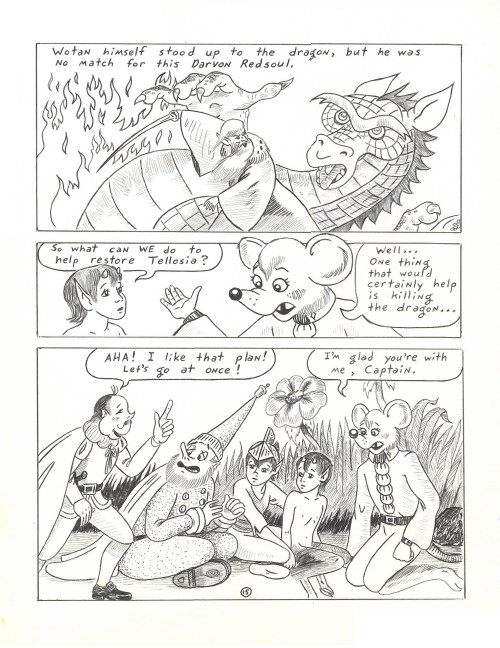
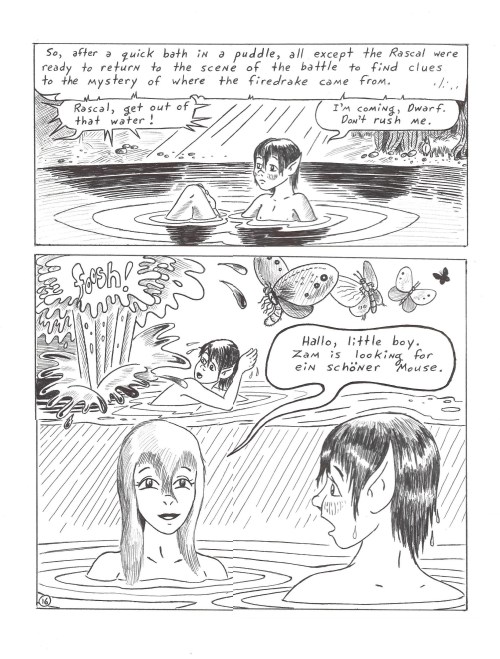
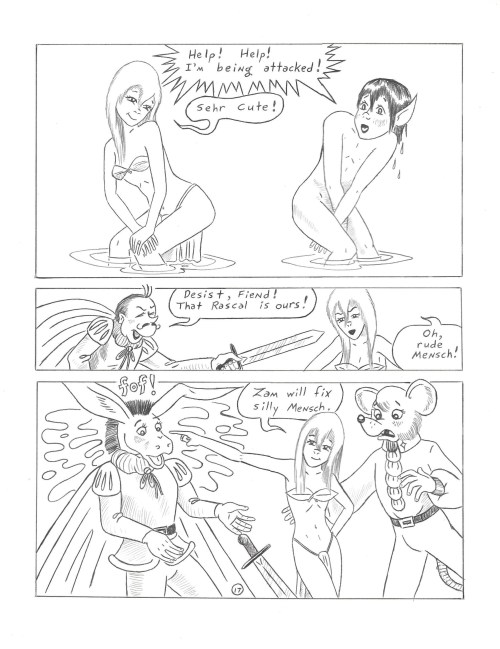
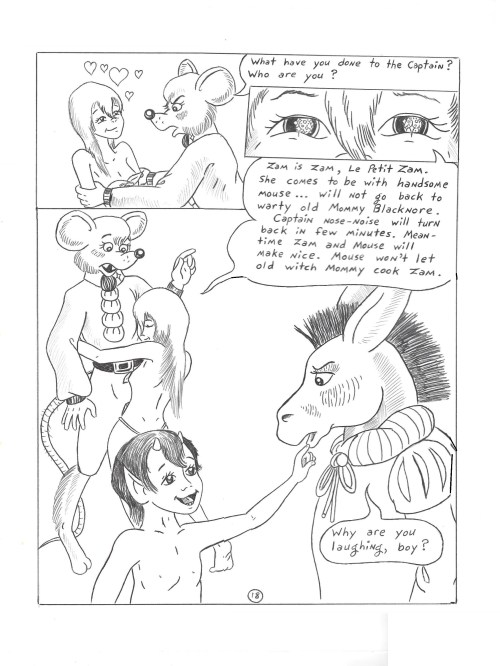
Yes. And so far publishers have ignored my wishes every time. I have found a small publisher called PDMI that may let me do the cover illustrations for the book they have foolishly agreed to publish.

Does a bad review affect your writing?

If I get a review that honestly defines the problem the reader had with my work, then of course I will try to fix the problem. Most bad reviews however are of the sort where very little thought went into it, and the only purpose was to vent and take something out on me as the author. It doesn’t always seem to be reflecting my writing… rather the prejudices that stand between the reader and my work.

Any advice you would like to give to your younger self?

Don’t worry about looking like an idiot, because you will, and you are, and the only thing you can do about it is write more and worry less.

What did you want to become when you were a kid?

I told my parents when I was five that I wanted to be a clown. When I was in junior high I decided I wanted to be a writer and a cartoonist. I said in high school that the last thing I would ever want to be is a teacher. So I went to college and learned to be a teacher, and along the way I got to be the other three things as well.

Do you recall the first ever book/novel you read?

The White Stag by Kate Seredy. I picked it off the classroom reading shelf in third grade because it had a plain red cover… the dust jacket was long lost. I believed that wonderful things were concealed by plain and ordinary appearances. I kept it for three months and read it at least four times. My teacher thought I was crazy. But by the end of fourth grade she asked for my help reading the book Ribsy by Beverly Cleary aloud to the whole class. I turned into a surprisingly good oral reader, and had from that first book onwards developed a lifelong love of reading.

Which book inspired you to begin writing?

I suppose it was Robert Louis Stevenson’s Treasure Island which I read in the fourth grade. It colored all the stories I told my friends and cousins in our little Iowa town. I loved adventure. I loved N. C. Wyeth’s illustrations in the edition my Grandma had in her house. I knew from halfway through the first chapter that I had to be like young Jim Hawkins and tell a story like that.

Did you ever think you would be unable to finish your first novel?

Yes. For most of the twenty-two years it took me to finally reach the last page.

Do you read any of your own work?

How can I write anything without reading it? I like to go back regularly to re-read as much as I can, and every time I do that, I get to the point that I almost think I actually know that dumb old guy who wrote that nonsense.

Tell us about your writing style, how is it different from other writers?

I can’t say, really. When I am writing I hear the voices in my head not as my own voice, but as the characters in the story. The characters are all people I know, though every character has some part of me mixed in too. I try to write what makes me laugh and makes me cry and makes me feel good inside… and I leave it up to the reader to try to feel that too.

Do your novels carry a message?

Every novel has to be full of metaphor and meaning. If we can’t as readers jump inside the characters and walk around in their lives for a bit, then what was the point of even writing it? There is no one message. There is a multitude of messages. And readers should maybe read stuff backwards and upside down to look for clues. You never know what else might be in there. Maybe Elvis is really alive and ordering chili every day at a Wendy’s in Michigan and that can only be revealed by reading the paragraph on page 23 in reverse order.

How much of yourself do you put into your books?

Jeez! I have to work hard to keep some stuff out of my books and save it for myself. Otherwise there would soon be nothing left of me. I don’t have any secrets left in life that aren’t found in my writing somewhere. I keep my ears out of my writing, or else what would I hear with? I keep my fingers out too so I have something to draw pictures with. I use much more of me than I should.

Have you ever incorporated something that happened to you in real life into your novels?

Yes. My friend Robert remembers when the aliens tried and failed to invade my hometown when we were boys. That became the basis for Catch a Falling Star. Of course, I changed a few things, because if Robert realized which character in the book was him, he’d probably want to punch me in the nose. The characters in my stories are all students I have taught, kids I grew up with, and people I have known. Even the really weird ones were real once upon a time. Sorry, Robert, but it’s true.

How realistic are your books?

I write humorous books about science fiction subjects and fantasy adventures. They are filled with lies and exaggerations. So everything is photo realistic. You believe me, don’t you?

What books have influenced your life the most?

Tolkien’s Lord of the Rings trilogy, Douglas Adams’ Hitchhiker’s Guide to the Galaxy trilogy… er quadrilogy… or maybe five-ilogy… I don’t know…, and Frank Herbert’s Dune. I have a thing for realistic fiction.

Are there any books that you are currently reading and why?

I started reading Terry Pratchett’s Hogfather because it is the only Terry Pratchett book I own that I haven’t read yet, and I haven’t gotten hold of a copy of Hat Full of Sky already.

Have any new writers grasped your interest recently?

I love John Green’s books Paper Towns and The Fault in Our Stars.

Is there anything you are currently working on that may intrigue the interest of your readers?

I am trying to get published a novel called Snow Babies. It is a fantasy-comedy about freezing to death in a blizzard and it has snow ghosts and clowns in it. That is a rather fast and flippant summation about a book that I think will make you cry a little and laugh a lot, but it is also fairly accurate. I am hoping the publisher I signed the contract with stays in business long enough to publish it. They have also made the mistake of allowing me to submit a cover illustration.

Who are your books mostly dedicated to?

I dedicate what I write to the people I have known and used as characters. I dedicate my writing to former students, friends, family, and co-workers, because what other reason could I have for writing?

It is often believed that almost all writers have had their hearts broken at some point in time, does that remain true for you as well?

My heart breaks every time a child fails in the classroom. My heart breaks every time I see something incredibly beautiful that I know will not last much longer. I have fallen in love at least five times, and had my heart broken by that at least ten times, maybe more. The scars you carry on the inside either fester and kill you, or they turn over time into pearls, the same way oysters deal with irritants inside their shells, and they can also be called “books you have to write” once they become pearls.


Leave a comment

Filed under book review, humor, publishing, writing

Mr. Bean

Rowan Atkinson is a genius comedian, and the character of Mr. Bean is the greatest work he has done, the best proof of his genius.  As someone who works at humor and tries to get it right, I have to analyze and carefully study the work of the master.  How does he do it?  What does it all mean?  And what can I learn from it?

a1b

Atkinson not only created the character, he co-wrote the entire television series and controls every aspect of the performance as the central character.  Mr. Bean is the bumbling every-man, going through horrific troubles because of the cascade effect of simple little errors.  We laugh at him because we have all been there.  Tasting the hot sauce leads to a meltdown that causes chaos and disaster for the entire store.  Overcoming fear of heights makes him the center of attention for the entire pool-house when can’t overcome the urge to use the diving board, and yet, can’t make himself jump off.  We have all lived the nightmare of being trapped naked in the hotel hallway, locked out of our room, just when the hallway becomes crowded.

There is a certain charm to Mr. Bean.  He is a childlike character, blissfully unaware of how much he doesn’t know about the complex society around him.  He has a teddy bear that sleeps with him and comforts him.  He lays out his supplies for the big exam, and he’s thought of practically everything he will possibly need, but basic physics fails him and makes the pencils keep rolling out of place.

Rowan Atkinson is a master of the art form because he has such tremendous control of his rubberized goofy face and manic body.  He can drive his goofy little yellow car from a sofa mounted on top.  He can change clothes while driving.  Just watching him shave with an electric razor is a total hoot.

1379883_546824888720851_2133355741_n

It is mostly physical comedy, almost slapstick, and yet it is not the broad unfeeling poke-in-the-eye you get with the Three Stooges.  Most of the real damage is done to himself, though pompous and deserving people are often near enough to get a helping of it smack in the face.  A lot of it is practically pantomime, with hardly any real dialogue.  Much of it, like the sword fight with the bumblebee using a butter knife, is simply silly.

a3b

The movie, Mr. Bean’s Holiday, extends the character by making him actually interact with other characters, though in his own inimitable Mr. Bean way.  The limited dialogue thing is amplified by the fact that he is traveling in France and does not speak French.  Still, he interacts with the boy he accidentally kidnaps, the girl who wants to be a movie star whom he helps in her quest by an accident at the Cannes Film Festival, and the movie director whom he almost kills but ends up saving his career with a hit home movie.

Mr. Bean makes the ridiculous an art form by helping us to laugh at ourselves as we are beset by all the little troubles of life that Bean magically floats through.

So, now I have told you why I love Rowan Atkinson as a comedian.  He is a comedic genius.  Of course, you knew that already, right?

Leave a comment

Filed under artists I admire, comedians, humor, review of television, sharing from YouTube

Doing AI-Enhanced Art on Applehead Andy

I started this goofy-cartoon art project with a sixteen-year-old cartoon character I drew in 2009. Applehead Andy was a stupid young boy who claimed he was only stupid because he had an apple for a head. He was initially a marionette made out of fruit by the puppet-maker Paghetto. When the Purple Fairy gave him life, he created in him a flaw where any time he needed to tell a lie, he stupidly told the truth. This resulted in Andy always having to say, “I know I am stupid, but it is because I have an apple for a head.” I drew it on white paper with pen and ink and colored pencils.

Here he is in his apple-headed glory after the last colored-pencil bit was added.

Here he is again as I have now used Picsart AI Photo Editor to add an apple-blossom background.

And then I asked AI Mirror to reinterpret him as a Manga-style character. This made him look more human and much less apple.

And then with AI Mirror again, I reimagined him as a more realistic cartoon human, though I forgot to make certain that the AI program knew he was a boy, not a girl. So, Applehead Andrea.

Leave a comment

Filed under Uncategorized

Doodle Day

20160422_093417

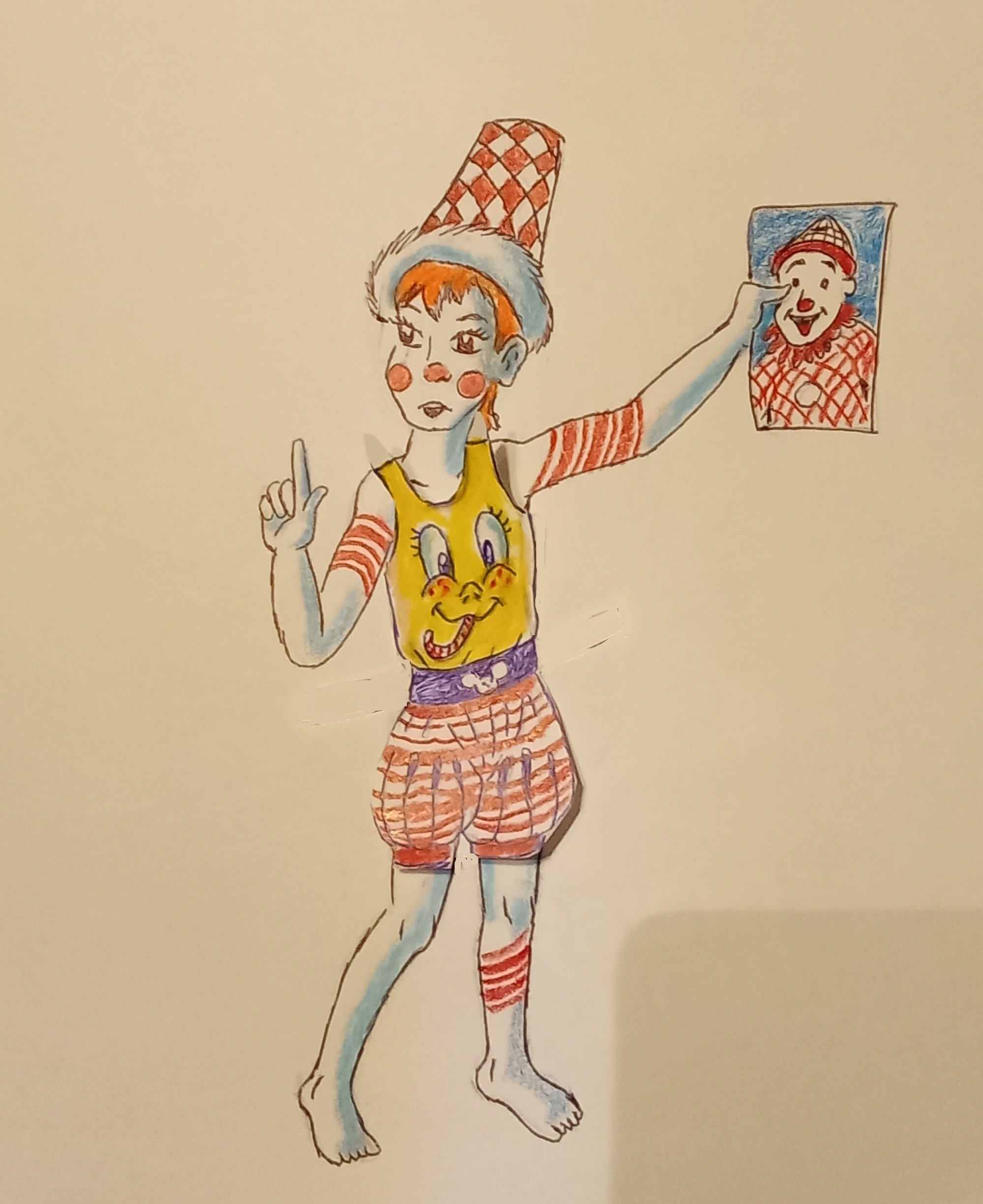
If you do art, then you also doodle.  Really!  No matter how hard you may try to keep it a secret, you doodle, and people all know it.  So, since the secret is out… Here are some of my doodles.  This jester-sort-of-half-white-clown was a doodle yesterday while watching TV… something I do with my hands while my mind is doing something else.

20160422_093445

Here’s another doodle… same day, different piece of paper, different TV show.

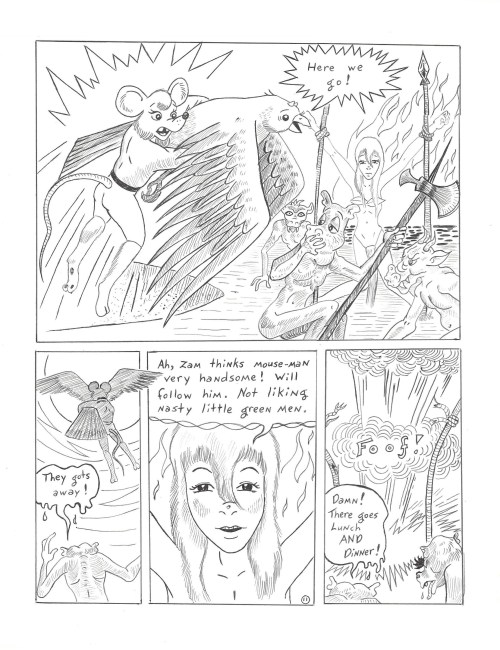
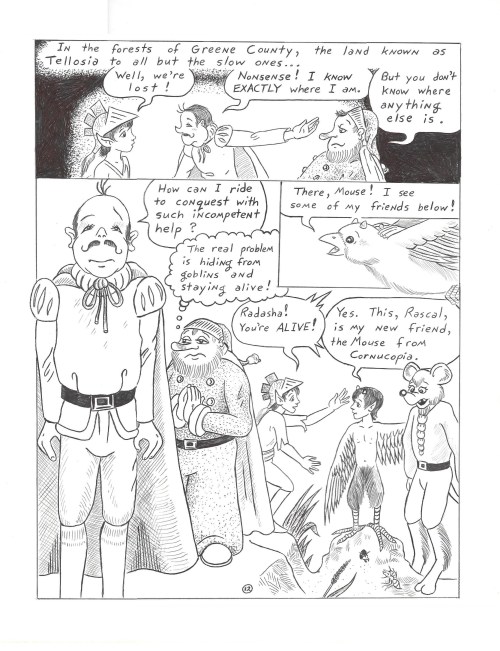
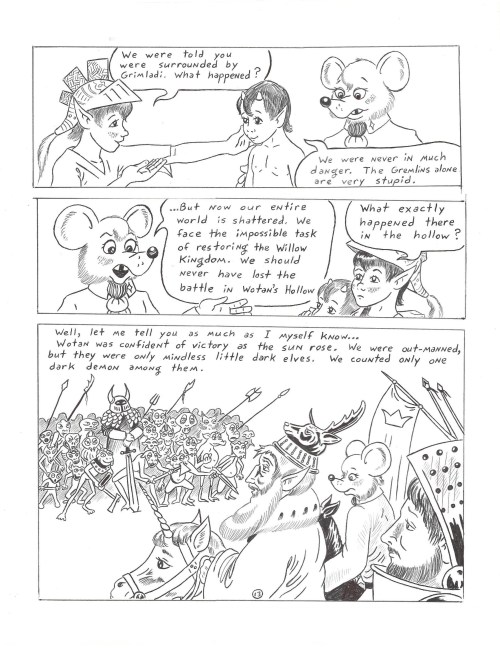
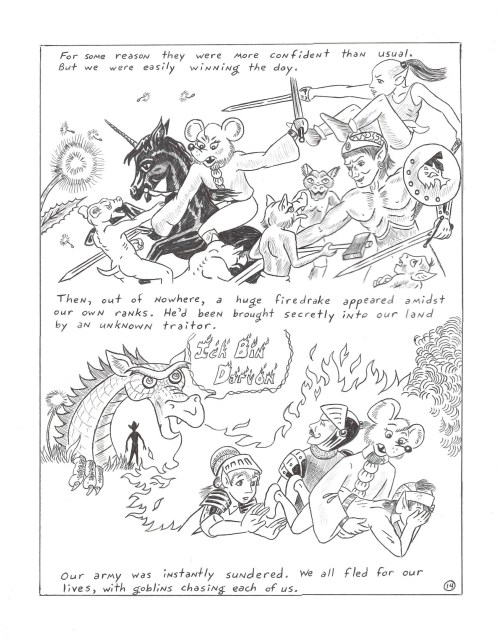
But not all doodles are meandering swirls and girls.  I have a whole book of home-made cartoons that start with a blank page and end up with a page that furthers whatever curious cartoon story I am trying to make.  Here are a few examples of that.

Now, I know your doodles probably look nothing like mine.  My doodles are seriously demented.  I have doodled enough that I have seriously worry about going blind.  And my doodles are influenced by a lifetime of bad arty-habits.   But they do give me practice.  They also help me think.  They relieve stress.  And they make an easy and somewhat racy post.

Leave a comment

Filed under artwork, cartoons, doodle, humor, Paffooney, strange and wonderful ideas about life

Pirate Novels

20160424_174313

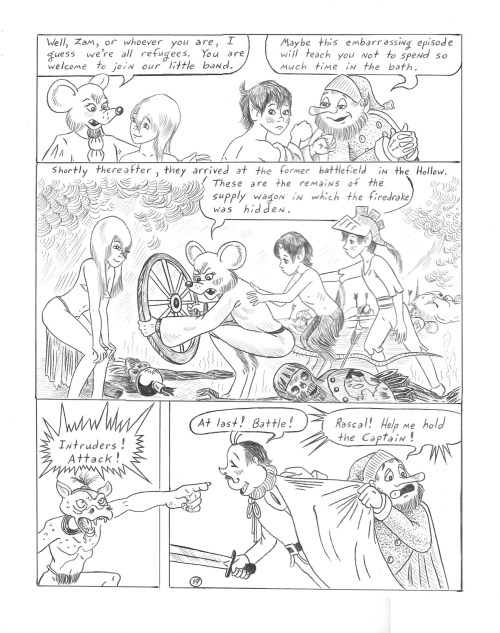
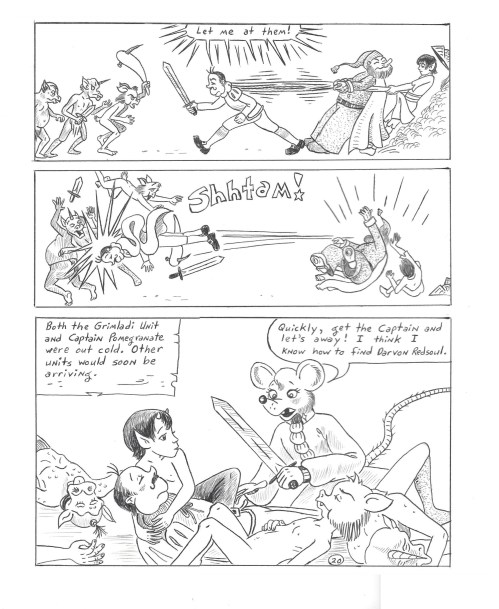
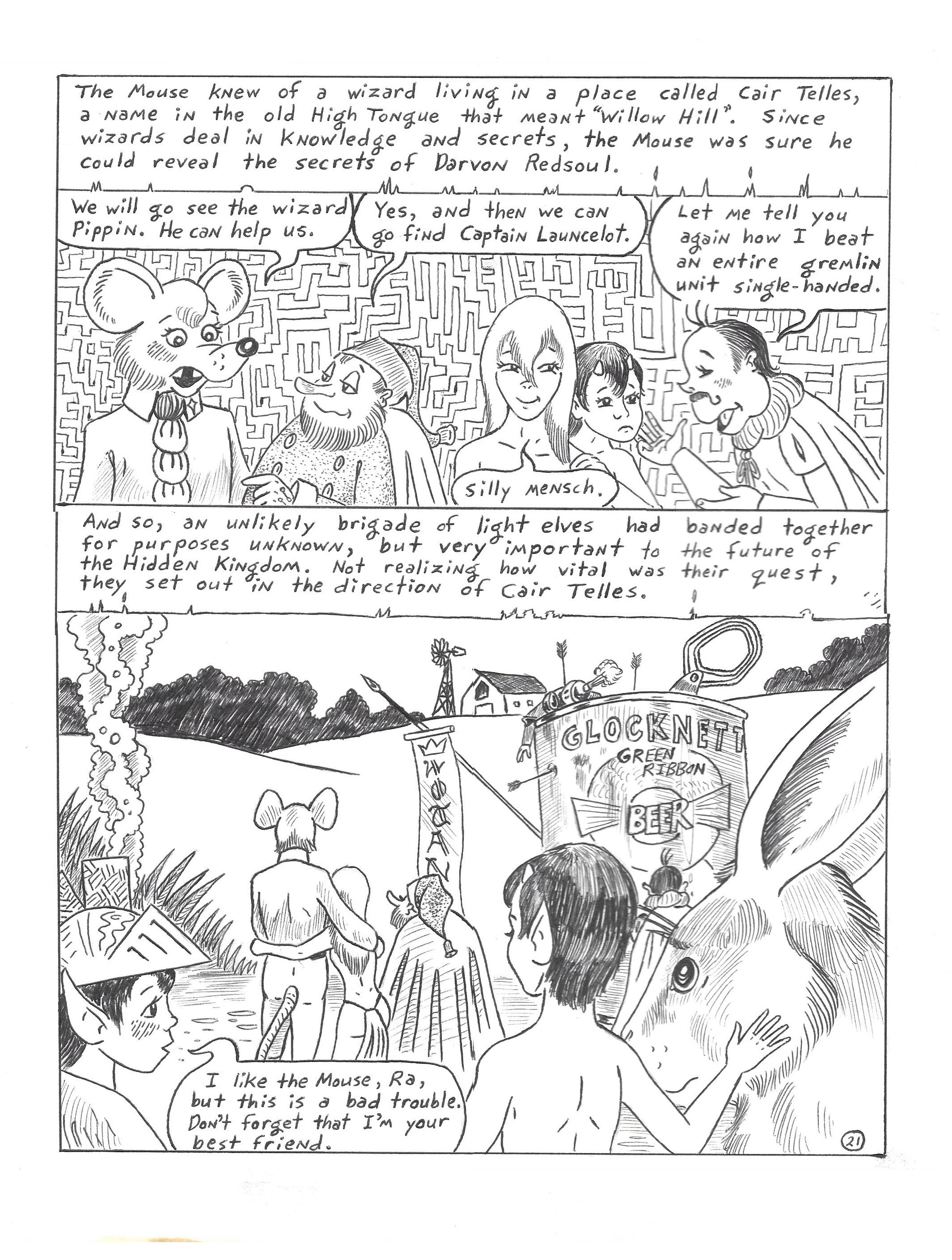
My first novel-length piece of writing was attempted in college.  I finished it in four years.  It was a pirate tale about a young man, a pirate named Graff the Changeling.  You see him in this illustration I created in 1980 with his two young sons, Rene and Emery.  Because their mother was a fairy, the boys have pointed ears and horns.    It was an attempt at serious fantasy adventure fiction that was so awful, it became a comedy before it was through.  I called it The Graff Tales, and I still have it.  But I promise you, I will never, ever try to publish the horrible thing.  My sisters served as my beta readers for this story.  They both liked the oral stories I told, and they eagerly awaited something like they remembered from our shared childhood.  They both were a bit disappointed by my first prose attempt.  There was a knight called Sir Rosewall in the story.  He was a hapless knighted fool who lived in poverty and swore to reclaim his honor with great deeds, but as he goes to sea as a kidnapped sailor, all he manages to do is fall down a lot and bump his large head frequently.  In the first scene when he enters the story, long about chapter four, he exits a cottage and has to punt a piglet to get out without falling down.  This pig-punting thing was repeated more than once with this character.  My sisters joked that the “pig-in-the-doorway” motif would be my lasting contribution to literature.  Fortunately for me, it was not.  I am probably the only one who even remembers there was such a novel.

But my biggest failing with writing and storytelling was always that I could be too creative.  The story featured a flying pirate ship that was raised from the bottom of the ocean by fairy magic.  The crew were re-animated skeletons.  The gorilla who lived on the island where the ship’s survivors had been marooned would also join the crew.  His name was Hairy Arnold.  One villain was the pirate captain Horner, a man with a silver nose-piece because he had lost his real nose to a cannon shot.  Another was a red-bearded dandy named Captain Dangerous.  But the biggest villain of all was the Heretic, who turned out to be a demon in human guise.  It was all about escaping from pirates who wanted to kill you and hitting soldiers with fish in the fish market.  There were crocodile-headed men and little child-like fairies called Peris that lived in the city where Graff was trapped and transformed into a monster by the Heretic.

My plot was too convoluted and my characters too wildly diverse and unlikely.  The result was something far too bizarre to be serious fiction.  The only way it could actually be interpreted was as a piece of comedy.  There-in lay the solution to my identity problem as a writer.  I had to stop trying to be serious.  My imagination too often bent the rules of physics and reality.  So I had to stop trying for realism and believability.


In the end all the main characters die.  All except for young Rene who becomes a pirate hunter.  Of course, I follow Graff and Emery through to heaven because, well, it was a first person narrative and the narrator died.  So, I vowed to myself that I would never let this horrible piece of nonsense see the light of day.  I would never try to publish it, rewrite it, or even tell anyone about it.  And so to this very day I… oopsie.

1 Comment

Filed under artwork, autobiography, humor, illustrations, NOVEL WRITING, Paffooney, Uncategorized

Gooseberry Pie

I would like to contend that a blog is a form of self-portrait.  Do you want to argue with me?  Have a piece of Gooseberry Pie….

You see, gooseberries aren’t made from geese.  They don’t look like gooses… er, goosei… um, geese.  They aren’t the favorite food of a goose, unless, maybe…  Mother Goose.  The name is a corrupted form of the Dutch word kruisbes , or possibly the German Krausbeere.   You know, because people who speak English don’t know how to talk right.  They don’t have anything to do with geese.  In the same way, a person’s name doesn’t really help you understand the person that wears it.  You have to dig deeper.  Do you know, I have never actually tasted gooseberry pie?  I have seen and even picked the gooseberries.  They are danged ugly, spikey-furred snot-green berries.  I am not tempted in any way to put one in my mouth.  And yet, I should not judge gooseberry pie before I taste a piece.  I know people who adore gooseberry pie.  Maybe you are one of them.

The point is, blogs are exactly the same thing.  An artist, a writer, a producer of something, or a day-dreamy noodling goober has put together a blog to display their wares, show off their creations, and share their words and wisdom.  You have to look at them, warts and all, and actually take a bite.  You have to try them out and test them.  Follow them over time.  Read, absorb, and appreciate… not merely zoom through and look at the pictures… and maybe click “like” at the bottom of the post.

Of course, I admit, I do the very thing I am advising you not to do.  The first few times I visit a blog, I scan through and only focus on a few things that catch my falling stars.  (oop!  Shame on me… I should say “catch my fancy”.  Forgive me for lapsing into Mickian brain farts for a moment there).  But if I am lured into coming back, I dip deeper and read more… tasting it thoroughly, as it were…  And much of what I taste there will end up in my own recipe somewhere down the line.  I begin to learn who that blogger is, and their writing style… sometimes even their thinking style (though I don’t read minds… only smell brain farts and odoriferous mental cooking smells) and I picture them as people in my minds eye.  Sometimes I wonder if they match in real life the person I am picturing.  Of course, the answer is no.  People don’t look like what you think they should look like.  They don’t even look like what they think they look like either… even in photos.  So let me end this goofy pie-based argument about why blogs are self portraits with a few self portraits I have created that aren’t really what I look like , even if it is a photo.

selfie 001
Me in the mirror, 1980
mewall24
Scary pictures of the artist as a creepy old man…


Self Portrait vxv
The novelist me…


wizzyme
A wizard selfie taken at Mad Ludwig’s Castle in Bavaria.


20160301_1245m23x
Who I am and who I was…


20151026_223658
Seriously grumpy me…

Gag!  Enough of the gooseberries already!  Or are they gross-berries?  I think that I really don’t look anything like me anymore.

Leave a comment

Filed under artwork, autobiography, blog posting, goofiness, goofy thoughts, humor, metaphor, Uncategorized

Synesthesia (Part One; French Blue Monday)

This link will help you understand Synesthesia

Francois spotlight

Yes, Mondays are blue.  Specifically French blue.  Every day of the week has its own color.  Sunday is golden yellow, Tuesday is a yellow-ochre,  Wednesday is indigo blue and sometimes changes to blue violet, Thursday is burnt orange, and Friday is solid wood brown, and of course Saturday is rich pure red while Mondays are not just any blue… they are French blue.  I learned the names of these colors from being a painter and using oil paints.  I experience these colors every week and they help me maintain the calendar in my stupid old head.  I began to realize when I first heard about the colors of the wind in the Disney movie Pocahontas that there was something to this everyday thing, something different in the way I see the world.  I have in the last few years learned that this condition has a name.  It is called synesthesia.

Image

It has been suggested to me by more than a few people that I don’t really perceive the world the same way “normal people do”.  When I was growing up, and going to school, I never had trouble remembering to capitalize the first word in a sentence.  I did however, have a great deal of difficulty with capital letters on nouns.  Looking back on that difficulty now, I can say without a doubt that I was having trouble not because I didn’t know the difference between proper nouns and common nouns.  It was because things like the word “dog” or “chair” had to begin with the right color.  Dogs are blue when you are talking about the color of the letters in the word.  But small “d” is blue-green, not true blue.  It doesn’t fit as well as the dark blue capital “D”.  And chairs are orange-red when you write them down, while the small “c” appears light green by itself.

sunnyface2

Sundays are Sun-days, and that’s why they are golden yellow.

I am told that most synesthetes are taken by surprise when they learn that they are seeing things differently than other people do.  I certainly was.  I always got funny looks whenever I described Thursdays as orange, or the month of November as sky blue.  My classmates in 4th grade thought I was nuts… of course, it wasn’t just for the orange Thursdays thing.  I was not a normal kid in any real sense of the word.  I always suspected that if I could look at the world through other people’s eyes, I would probably see the color green as what I called red, or that glowing halo that surrounded things when organ music played in the Methodist church would no longer be there.  But once I learned how synesthesia works I knew it was true.   The visual part of the brain can be scanned to show activity, and lights up on the scanner as if the brain is seeing bright colors when Beethoven’s Ninth Symphony is being played while the subject of the scan is actually blindfolded.  I am told that synesthesia is more common in left-handed girls.  My daughter, the Princess, tells me that she also sees color on printed numbers and letters.  She is left handed and also gifted at drawing.  I suspect she inherited the synesthesia from me.

Creativity

Synesthesia probably explains what this nonsense is all about.

Now, I acknowledge the fact that my synesthesia is self-diagnosed and not proven by any of the methods the articles I have read about the condition talked about.  But my personal experiences always seem to fall in line with descriptions of letter/number/color combinations and music/color combinations that I have read about.  And if I do have it, it is not the same as any of my six incurable diseases.  It is not a bad condition to have.  In an artistic sense, it might actually be a good thing.  I could use some good for a change.  Good doesn’t usually come from weirdness… not my weirdness, anyway.  (Oh, and capital “G” is lime green… as is the word Goodness).

Leave a comment

Filed under artwork, autobiography, strange and wonderful ideas about life, Uncategorized

Synesthesia (Part Two; The Color of Music)

Okay, so on the synesthesia tests I didn’t score as a synesthete on the music/color test.  But I was extremely synesthetic on the tests for color/months/days of the week.  I was a little over the mark on letter/number/colors synesthesia too, but it was more a problem with manipulating the color-selector device when I don’t have a mouse to use on my laptop.  The test for music did not test the way I see colors with music.  They wanted me to respond to what color each individual note seemed to be, and that isn’t even close to the way I experience it.  For me, the perfect description of how synesthesia works for me is Bach’s Tocata and Fugue in D minor as it is depicted in Fantasia.

I was shocked when I first saw it.  The colors are wrong for this piece, but the visual experience is almost exactly how I experience music, especially wordless instrumental music.  The only problem with this piece is that the overall color schemes are wrong.  But this comes about because every synesthete sees the colors differently.  And I have no doubt that at least one of the artists who created this had synesthesia.  If there were more reds, yellows, and magenta in the opening and more indigo contrasted with silver later, this interpretation would be perfect.

DSCN4453

Music synesthetically works in two directions for me.  The picture above, called The Wings of Imagination, makes me think of La Mer by Claude Debussy.

If you listen to the piece, don’t look at the YouTube illustration, look at my picture if you want to see the music the way I do.  The following song, Don’t Worry, Be Happy, is a multicolored song that I can best express with the colors in the picture I call Rainbow Peacock.

Rainbow peacock

The full range of primary colors together in one picture, or one song, always means completeness, fullness, and happiness to me.  If there is absence of one or more of the basic colors from the color wheel, the mood and emotion present in the song or picture is altered to something other than happiness.  The Firebird Suite by Igor Stravinsky goes from the indigo and navy blue of fear and confusion to instances of angry red and feverish orange.  It would look something like this in the theater of my imagination;

20160424_181130

And one of my favorite instrumental pieces of all times, Prelude to the Afternoon of the Faun by Claude Debussy, is full of melancholy and sexual tension, deeply felt vibrations in the depths of my stomach, and would look like my picture Sleeping Beauty with its teal and blue melancholia juxtaposed with candle-lit yellows and wood brown mixed feelings of joy and anxiety.

Beauty

Now, if you have waded through all of this goofy color-and-music analysis from a source whose sanity is questionable at best, you probably have no earthly idea what any of it has to do with anything.  But if you have that aha!-moment and see it all clearly too, then I suspect you probably are a synesthete too.  Poor you.  It is not a treatable condition.  But it is also not a burden.  Learn to enjoy it.  It resonates in your very soul.

Leave a comment

Filed under humor, Paffooney, strange and wonderful ideas about life, Uncategorized

Today is a New Day, but Same Old Me

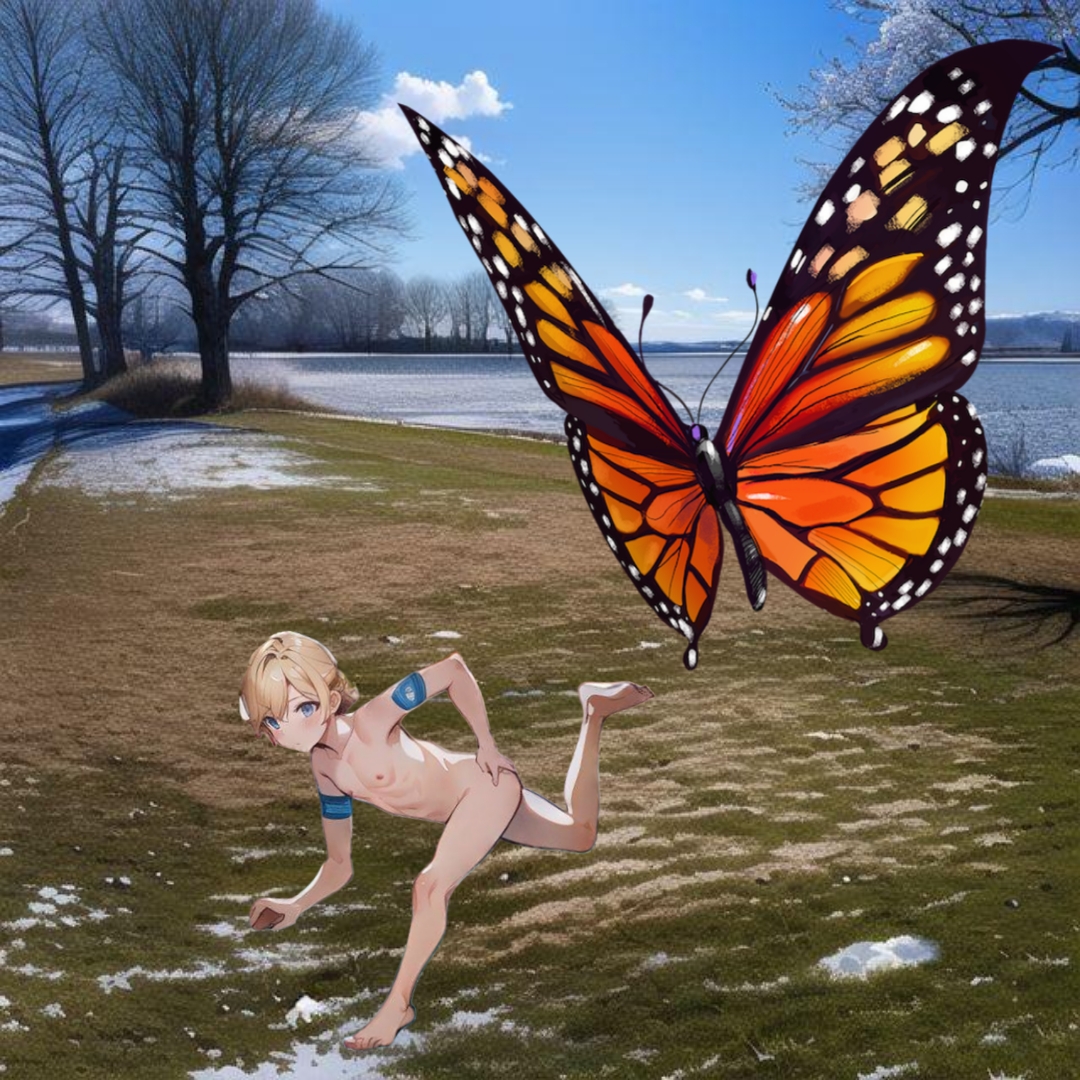
Yes, that is not a real photo. It is a cartoon photoshopped onto a Picsart background. It is still me playing games with images.

Will Eisener’s Spirit is always taking time out of his busy immortal retirement to tell Moitle Schmertz’s Delicatessen about Mickey’s life problems, but only because it brings a smile to the things that crank Mickey’s irritation, gears. Everybody loves smiling irritations, right? And I do it because making humor out of foibles is cool. Especially when you get to use words like foibles, irritations, immortal, and delicatessen all in the same paragraph.

Facebook has repeatedly warned and threatened me about nudes in my illustrations. And a few days ago they suspended my account for three days and removed the Surrealism post over the naked faun. Will they get me again for the nude Ricky doll? He’s wearing a backpack or possibly a sack.

So, I am still complaining about many things and talking about flying saucers being real. That’s all I really need to do for today. Okay?

Leave a comment

Filed under Uncategorized

It’s Not Easy Being Green

It’s not easy being green…. the color of so many ordinary things…

Especially as you grow older.

Because green is the color of growth and youth and life. But those things seem beyond the grasp of your outstretched fingers on your spotty and wrinkled old hand.

I am definitely no longer green like Littlebit, the Oceanian ship’s boy from the seas of Talislanta and the pirate ship, Black Dragon.

And, yes, an Iowa boy living as far away from an ocean as you can get in the United States, in all directions, you are bound to dream of pirate ships and the high seas, especially when you’re twelve and your favorite book is Treasure Island.

But now that you are old, green is more often your color because you don’t feel well… again… every day….

B

But there is still bright green in dreams.

You can still go there and be a child again in memories and your imagination.

It’s just that now the green is written down in sentences, paragraphs, chapters, and cantos.

And talking to your kids about movies, art and artists, stories and writers of stories…

Did you know the favorite color of all three of my children is green?

I have known it since they were small and I could sing to them songs by Kermit the Frog, like “Rainbow Connections” and “It’s Not Easy Being Green.”

And with paint, you make green by combining the blue of sadness with the yellow of sunshine and happiness.

And it’s not easy being green…

But it’s beautiful…

And it’s what I want to be.

Leave a comment

Filed under artwork, autobiography, coloring, feeling sorry for myself, humor, Paffooney, poetry