
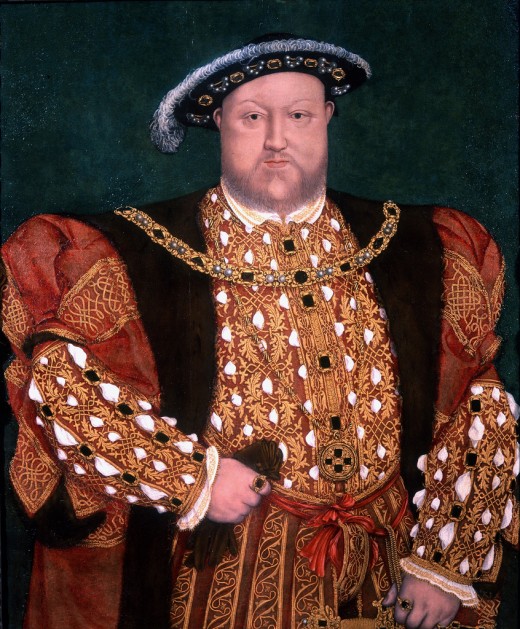
The case has been made in an article by John Welford (https://owlcation.com/humanities/Did-King-Henry-VIII-Have-A-Genetic-Abnormality) that English King Henry the VIII may have suffered from a genetic disorder commonly known as “having Kell blood” which may have made having a living male heir almost impossible with his first two wives. The disorder causes frequent miscarriages in the children sired, something that happened to Henry seven times in the quest for a living male heir. If you think about it, if Henry did not have this particular physical conflict at the root of his dynasty, he might’ve fathered a male heir with his first wife, Catherine of Aragon. Then there would’ve been no opening for the machinations of Anne Boleyn. It follows that Elizabeth would not have been born. Then no Elizabethan Age; no sir Francis Drake, Spain might’ve landed their armada, no Church of England, possibly no William Shakespeare, and then Mickey would never have gotten castigated by scholars of English literature for daring to state in this blog that the actor who came from Stratford on Avon and misspelled his own name numerous times was not the author of Shakespeare’s plays.
History would’ve been very different. One might even say “sucky”. Especially if one is the clown who thinks Shakespeare didn’t write Shakespeare.
Conflict and struggle is necessary to the grand procession of History. If things are too easy and conflict is not necessary, lots of what we call “invention” and “progress” will not happen. Society is not advanced by its quiet dignity and static graces. It is advanced and transformed by its revolutions, its wars, its seemingly unconquerable problems… its conflicts.
1962
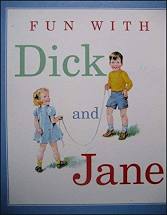
Similarly, a novel, a story, a piece of fiction is no earthly good if it is static and without conflict. A happy story about a puppy and the children who love him eating healthy snacks and hugging each other and taking naps is NOT A STORY. It is the plot of a sappy greeting card that never leaves the shelf in the Walmart stationary-and-office-supplies section. Dick and Jane stories had a lot of seeing in them. But they never taught me anything about reading until the alligator ate Spot, and Dick drowned while trying to pry the gator’s jaws apart and get the dog back. And Jane killed the alligator with her bare hands and teeth at the start of what would become a lifelong obsession with alligator wrestling. And yes, I know that never actually happened in a Dick and Jane book, except in the evil imagination of a bored child who was learning to be a story-teller himself in Ms. Ketchum’s 1st Grade Class in 1962.
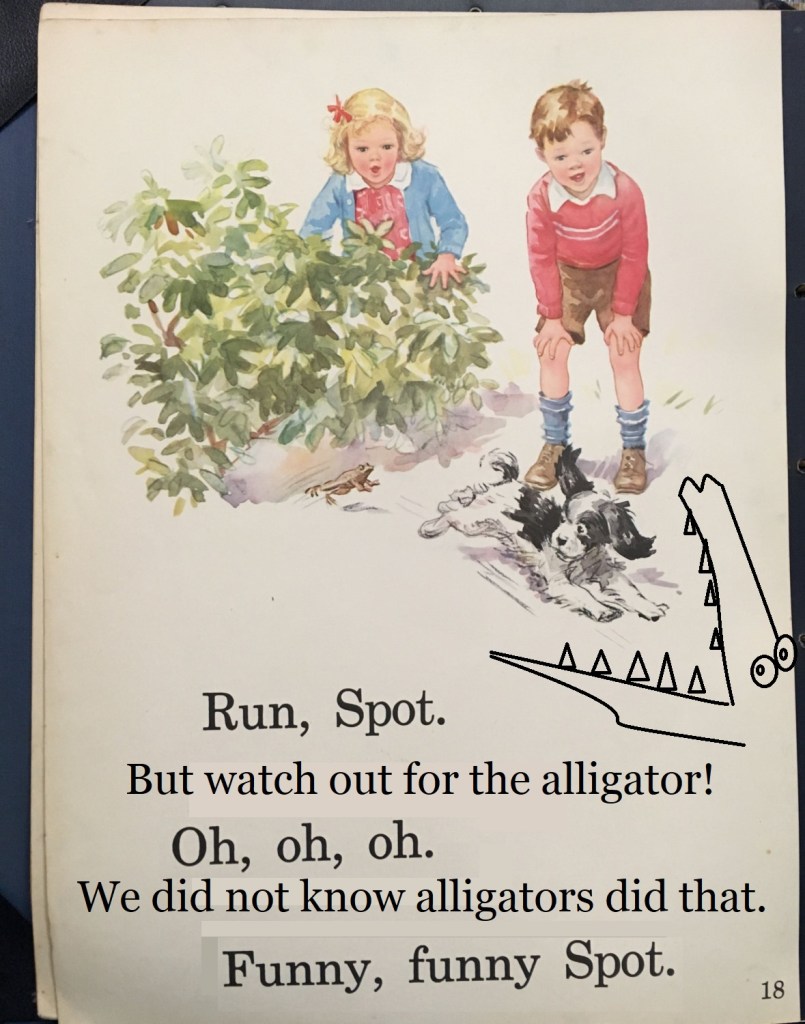
Yes, I admit to drawing in Ms. Ketchum’s set of first-grade reading books. I was a bad kid in some ways.
But the point is, no story, even if it happens to have a “live happily ever after” at the end of it, can be only about happiness. There must be conflict to overcome.
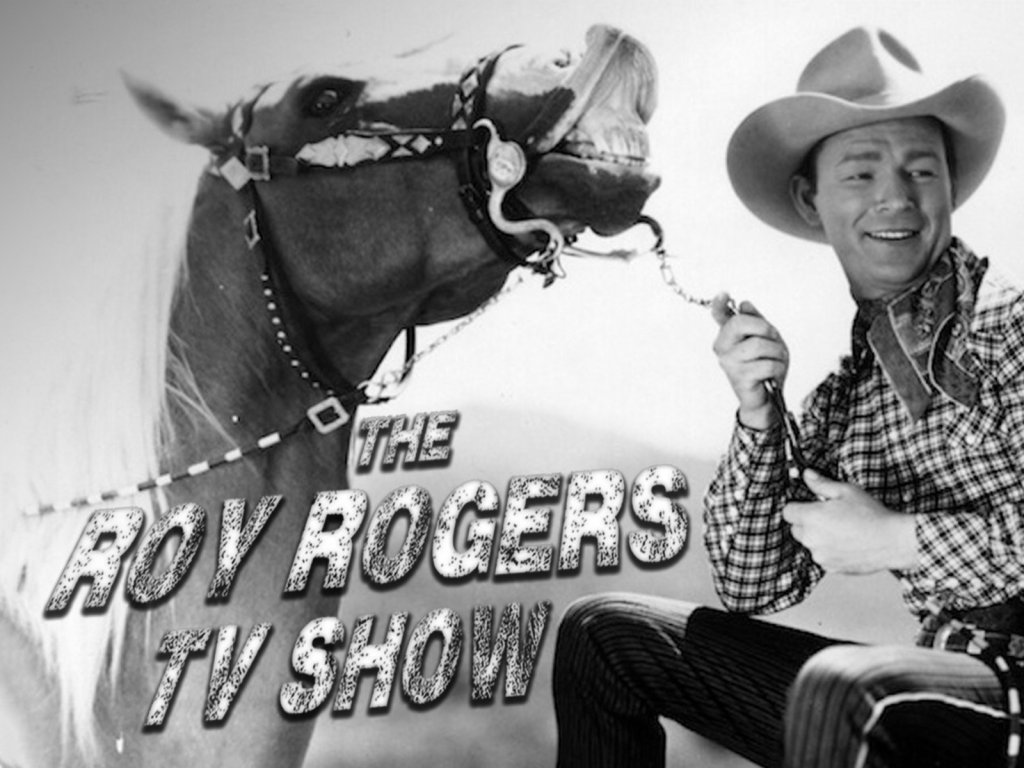
There are no heroes in stories that have no villains whom the heroes can shoot the guns out of the hands of. Luke Skywalker wouldn’t exist without Darth Vader, even though we didn’t learn that until the second movie… or is it the fifth movie? I forget. And James Bond needs a disposable villain that he can kill at the end of the movie, preferably a stupid one who monologues about his evil plan of writing in Ms. Ketchum’s textbooks, before allowing Bond to escape from the table he is tied down to while surrounded by pencil-drawn alligators in the margins of the page.
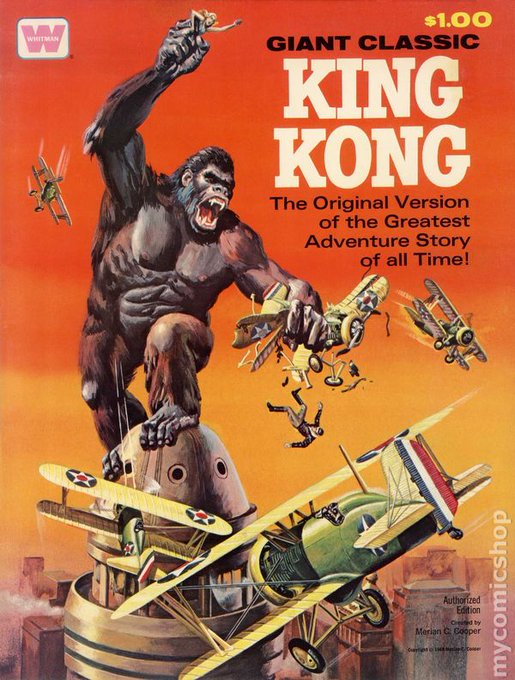
We actually learn by failing at things, by getting hurt by the biplanes of an angry difficult life. If we could just get away with eating all the Faye Wrays we wanted and never have a conflict, never have to pay a price, how would we ever learn the life-lesson that you can’t eat Faye Wray, even if you go to the top of the Empire State Building to be alone with her. Of course, that lesson didn’t last for Kong much beyond hitting the Manhattan pavement. But life is like that. Not all stories have a happy ending. Conflicts are not always resolved in a satisfying manner. A life with no challenges is not a life worth living.
So, my title today is “Conflict is Essential“. And that is an inescapable truth. Those who boldly face each new conflict the day brings will probably end up saying bad words quite a lot, and fail at things a lot, and even get in trouble for drawing in their textbooks, but they will fare far better than those who are afraid and hang back. (I do not know for sure that this is true. I really just wanted to say “fare far” in a sentence because it is a palindrome. But I accept that such a sentence may cause far more criticism and backlash than it is worth. But that is conflict and sorta proves my point too.)


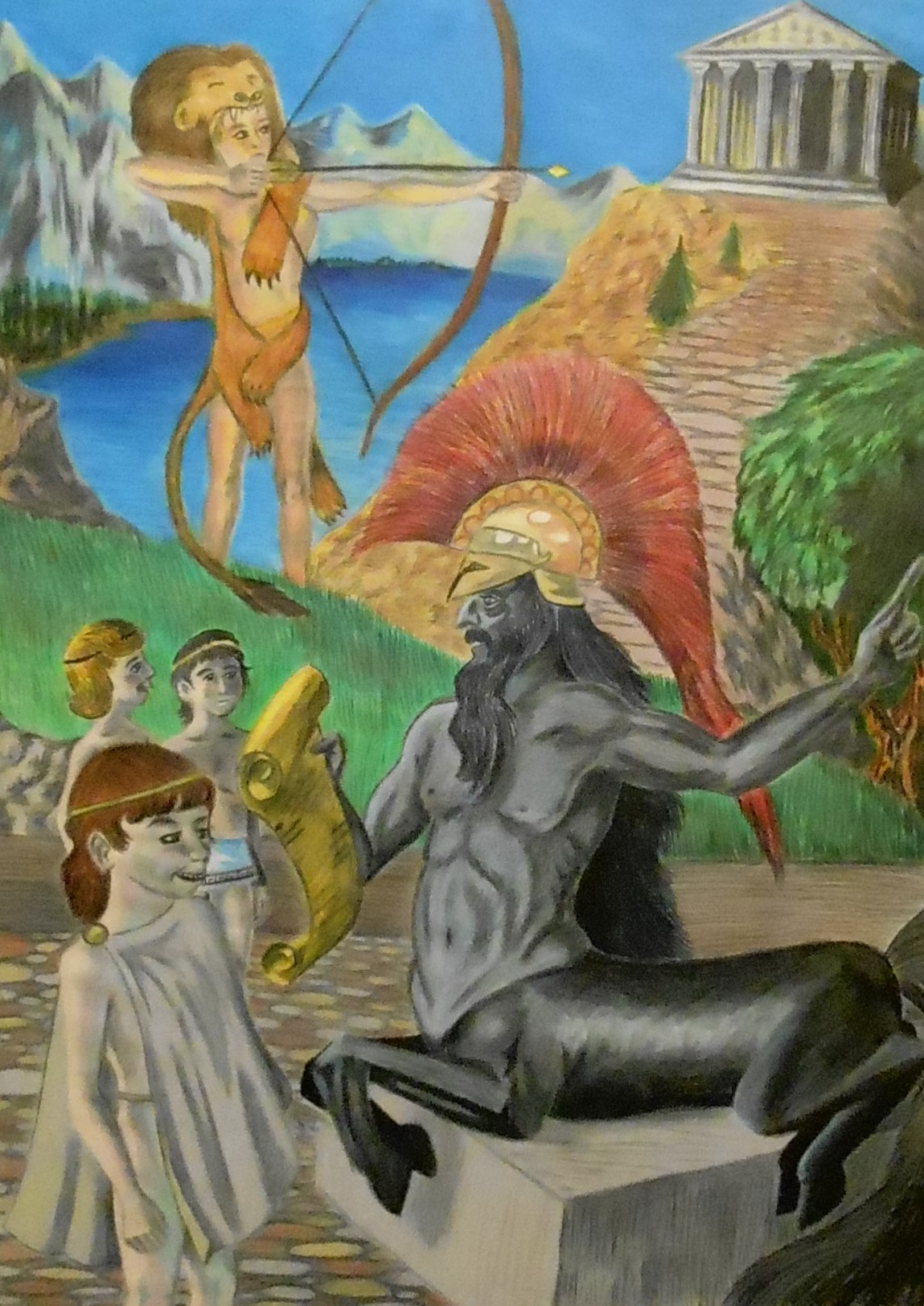










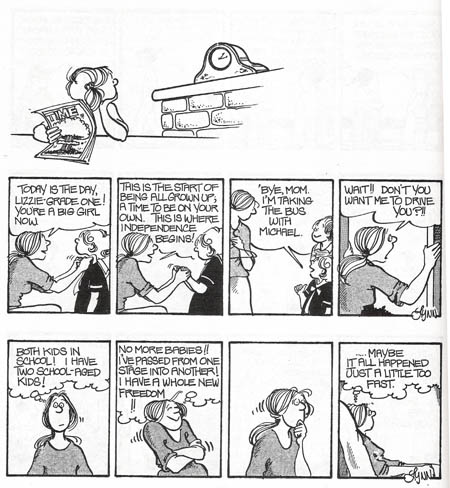 Lynn Johnston’s For Better or Worse is also an old friend. I used to read it in the newspaper practically every day. I watched those kids grow up and have adventures almost as if they were members of my own family. So the mashed potatoes part of the meal is easy to digest too.








The Philosopher King’s Quest
Marcus Aurelius was a Roman Emperor, one of the good ones, not like Caligula, Nero, or even Commodus, his son who was emperor after him.
But what made him good? Obviously, the fact that he was beloved by the Roman people, even the senators and the very people who would’ve benefited personally by his failure and demise.
He was a good administrator who benefited the people with public works. He was a good military leader who maintained the Pax Romana until he died in 180 A.D.
Of course, his son, Commodus, blew that all up by being such an incompetent dictator that his own Praetorian Guard assassinated him (as portrayed in the movie Gladiator, though that movie also made him out to be his father’s murderer, of which there is no real evidence)
But my friend Emperor Marcus was so much more than just a good ruler. He was a good man. And this is due almost entirely to the fact that he was a well-known Stoic Philosopher.
He embraced the philosophy of the Greek philosopher and Roman slave Epictetus. Stoicism is the belief that you, as an individual, do not control anything in the outside world to the degree you can control yourself. It is not the things, people, and events around you that matter, since you can’t control those. It is your own set of principles that you have to put in place and adhere to that affect the outcomes in life. In fact, you should view setbacks and roadblocks to your accomplishments not as negative things, but as a learning opportunity. Learn all you can while you may, and at every opportunity. The Stoic welcomes hardship because the overcoming of hardships shapes the man or woman you will become.
I found this philosophy to be the only way forward on some days during my teaching career. I was always more successful in meeting challenges head-on as they arose in front of me. Delaying, making excuses, or running away are all easier to do than that. But those other wimpy tactics never yield the success you can have by defeating your opposition and hardships face-to-face. Of course, you have to remember too that overcoming opposition does not have a selfish quality if you are a Stoic. In fact, you must respect all men, even your enemies. Marcus Aurelius, in response to victory in battle won by having thirsty troops offer a Christian prayer and then have their problem solved by a fortuitous rain storm, told the Senate they must no longer persecute Christians. They were to be considered good Roman citizens, no matter what their religion was.
Marcus Aurelius made it clear in his writings, the Meditations written in Greek, that, “In order to win the day, you must first win the morning.” To him this meant you had to be an early riser, tackling each problem of the day as it came up in the order they happened, morning to night.
So, the Philosopher King’s Quest, by this Stoic philosophy, is managed by first putting yourself right. You must examine your beliefs, test your hypotheses, and prove yourself to yourself before trying to tackle the world.
Leave a comment
Filed under commentary, compassion, heroes, Paffooney, philosophy
Tagged as marcus-aurelius, mindfulness, philosophy, stoic, Stoicism