
Filed under artwork, drawing, humor, illustrations, imagination, Paffooney
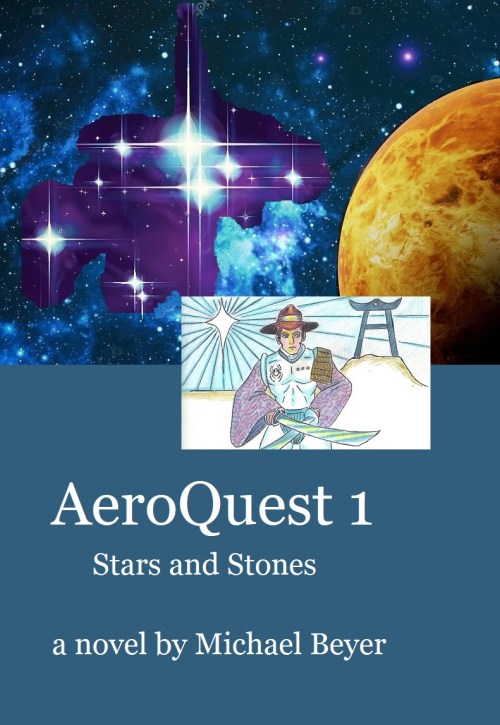
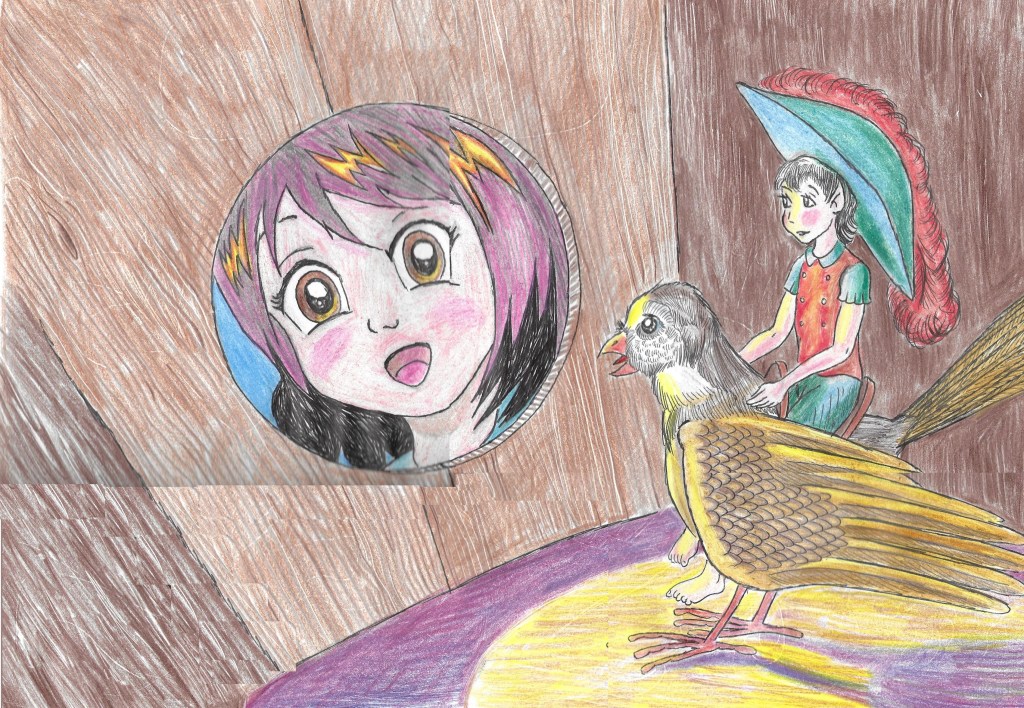
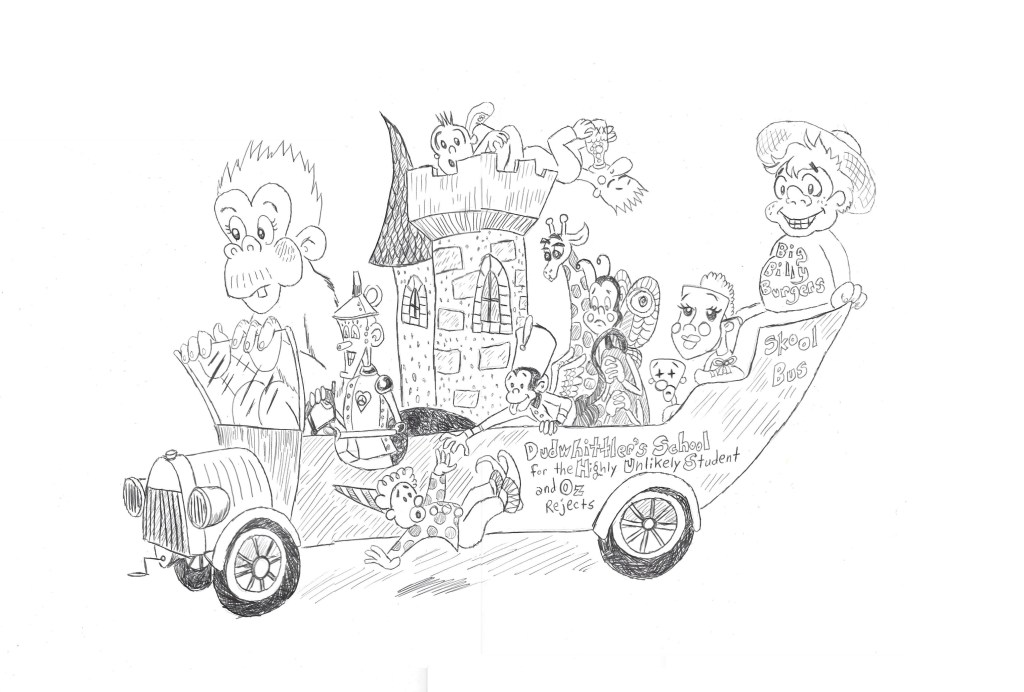
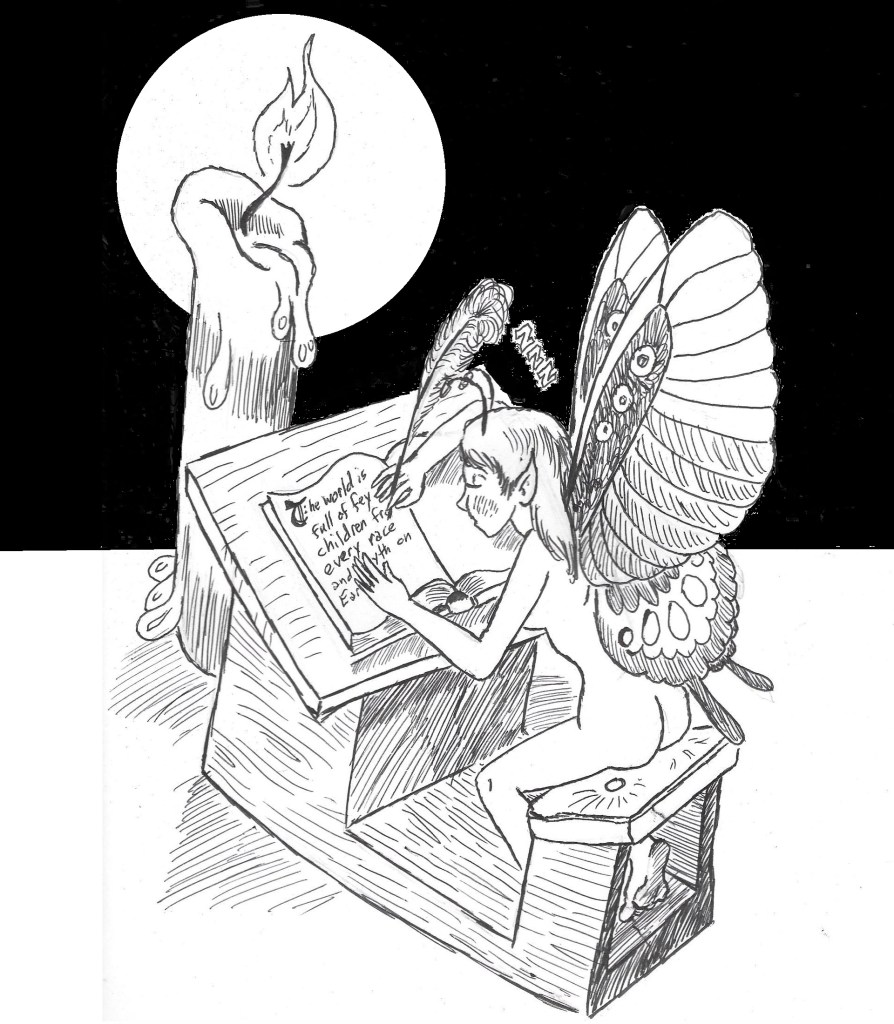
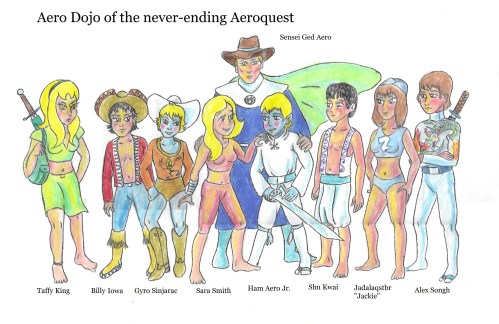
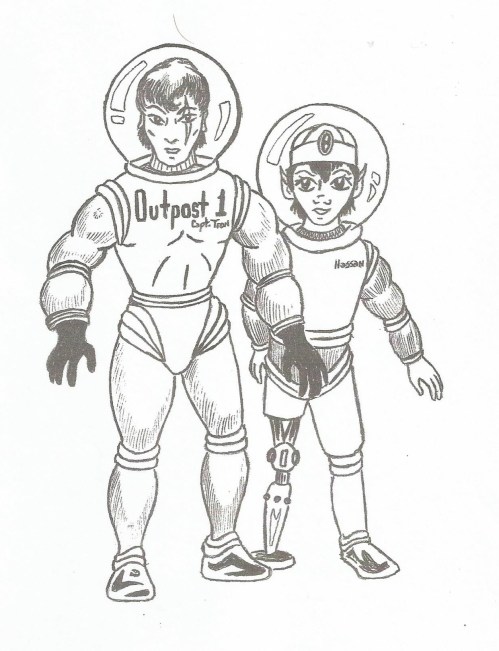
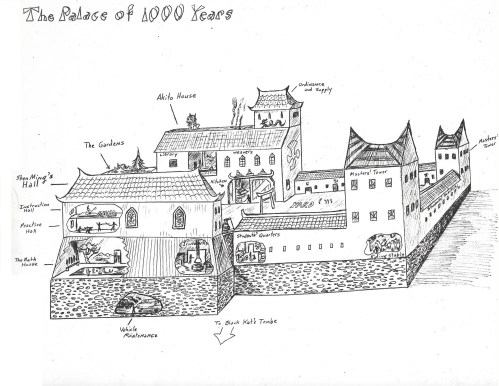
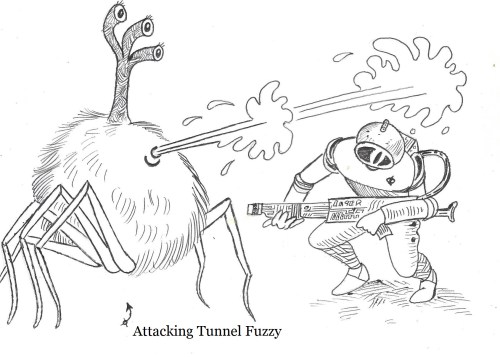
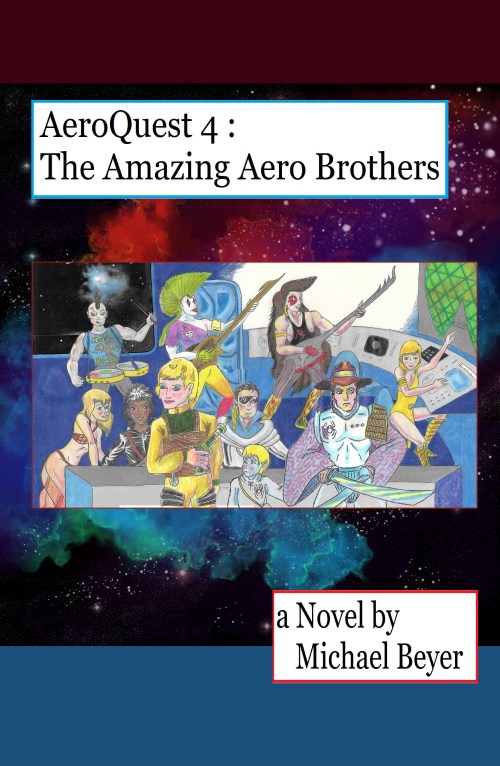
These are the pieces of art and illustrations that are going into the re-writing project of my novel Aeroquest.
I decided to totally rework the novel and illustrate it more fully because it was always supposed to be a science-fiction satire and parody that was more cartoonish than literary.
It is a story about a teacher conquering a space empire. It arose from a science-fiction role-playing game that filled my days in the 1980’s and early 90’s.
It parodies Star Wars, Star Trek, Flash Gordon, Buck Rodgers, Dune, and much more besides. And it includes many of my own wacky inventions about what the future might hold in store.
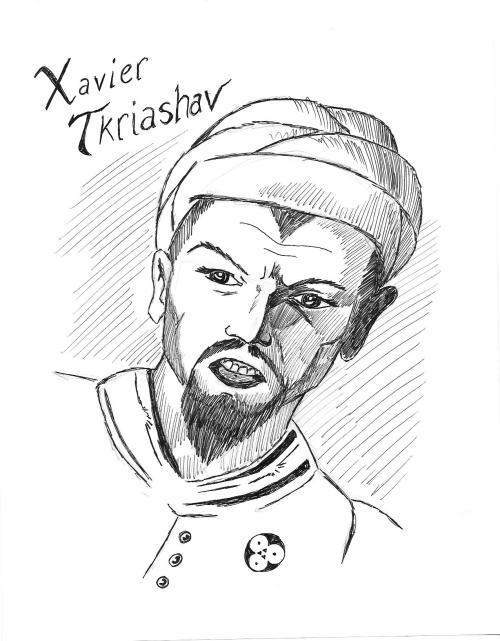
This important character was a parody of Professor X of the X-men, from the comic books and well before the movies.
It was a simple matter to give him psionic powers and transfer him into outer space. Oh, and get him out of the wheel chair too.
The character’s creator was the son of the local high school science teacher.
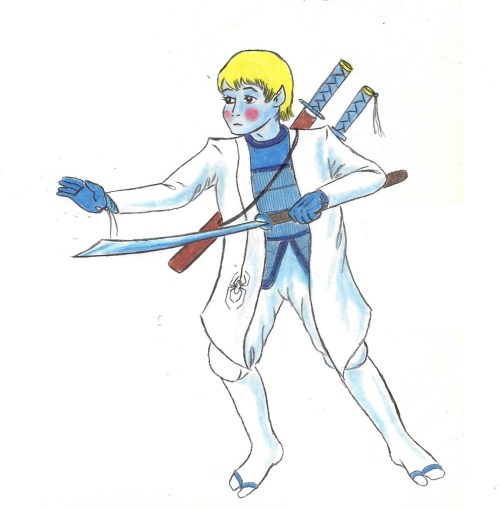
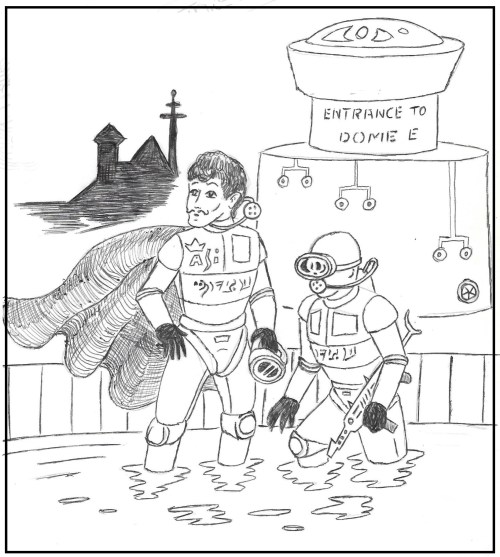
Combat is an important part of the role-playing game.
We became well-versed on weapons and tactics… and how to manipulate the rolls of the dice… by cheating if necessary.
How else do heroes overcome impossible odds?
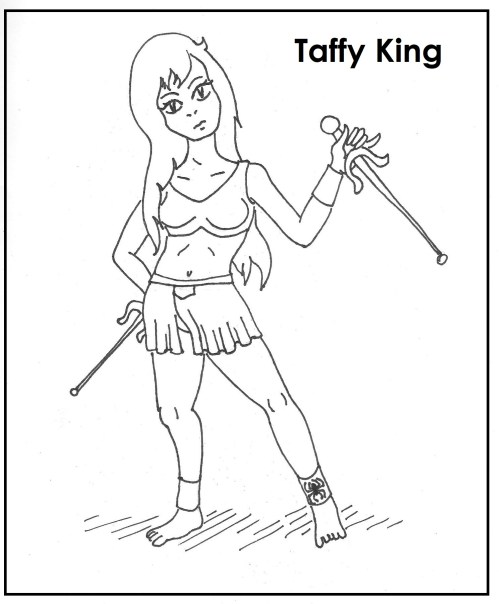
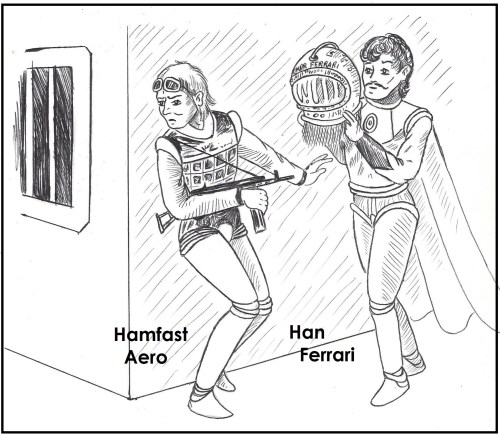
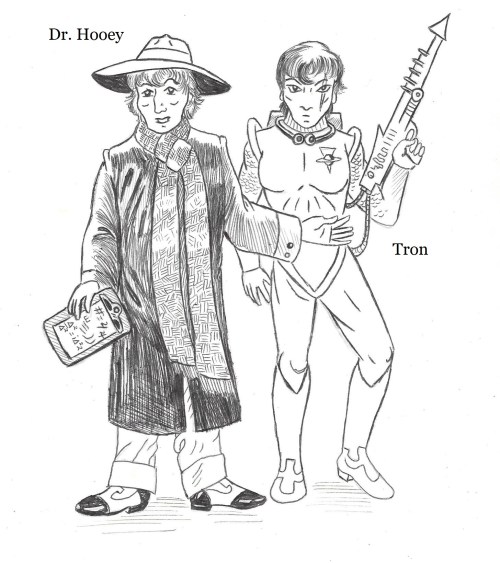
Again with the parody characters that came from player-character ideas stolen from TV and the movies.
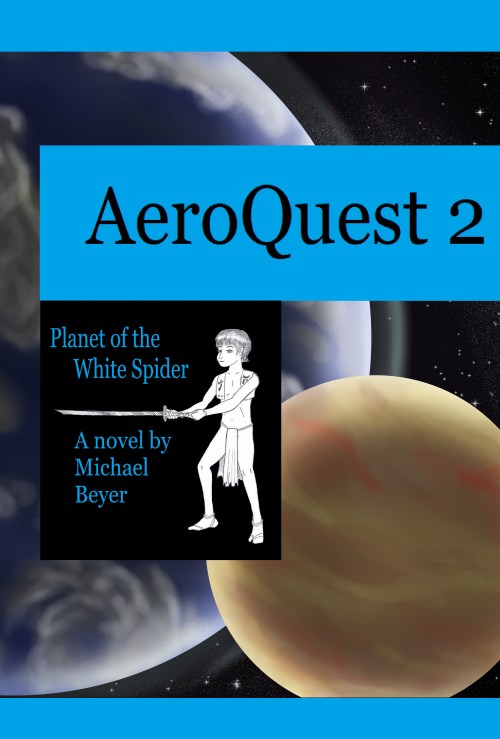
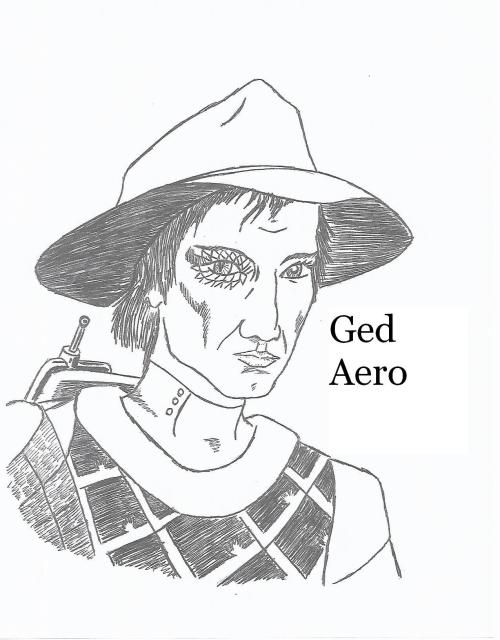
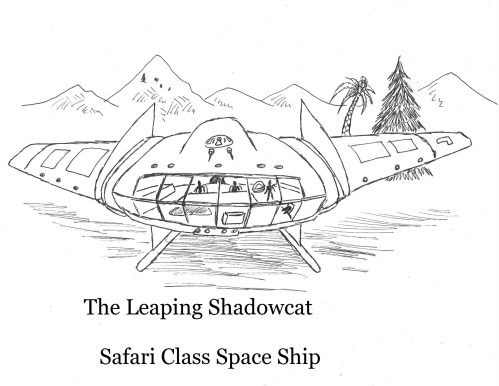
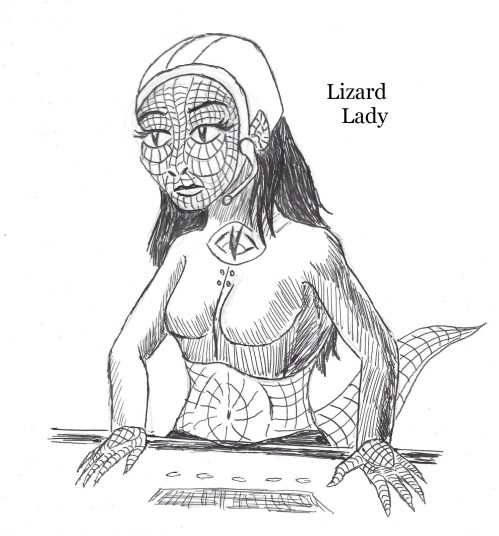
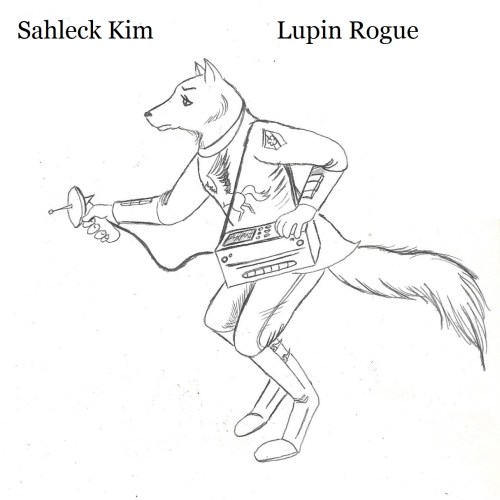
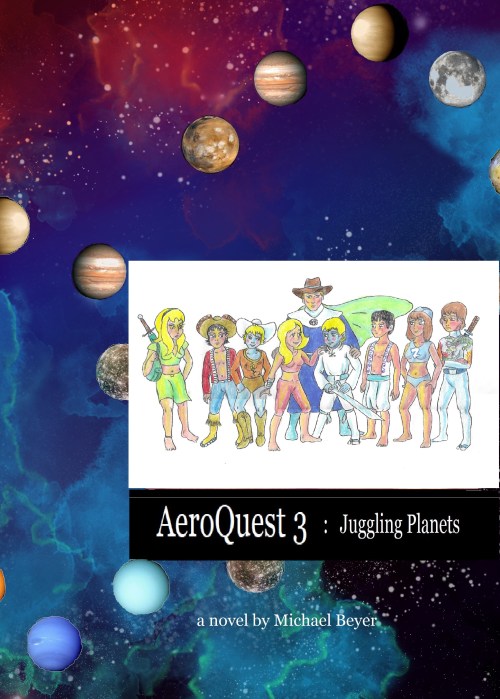
I am near to completing this third novel in the series.
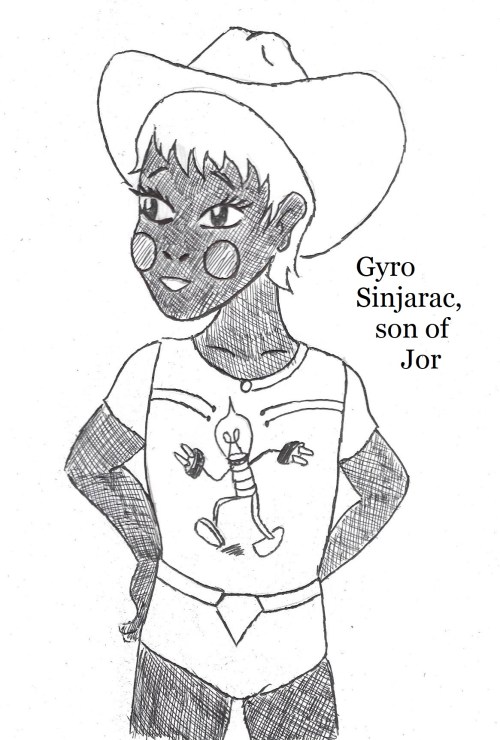
The Nebulon aliens, though very human-like, are blue of skin. That is not easy to depict in a black-and-white drawing.
Filed under aliens, artwork, heroes, humor, illustrations, imagination, novel, novel plans, Paffooney

The 1957 Pink and White Mercury of Imagination
I don’t have writer’s block. I can write as long as I can think and move my fingers on the keyboard to crystallize that thinking into words. The Pink and White Mercury of Imagination is always moving, either driving forward in the present and towards the future, or in reverse, rewriting the past. It is never parked.
But somewhere along the way today, the route got sidetracked onto a looping detour.
Hence, this car-themed drive through the idea-capturing process.
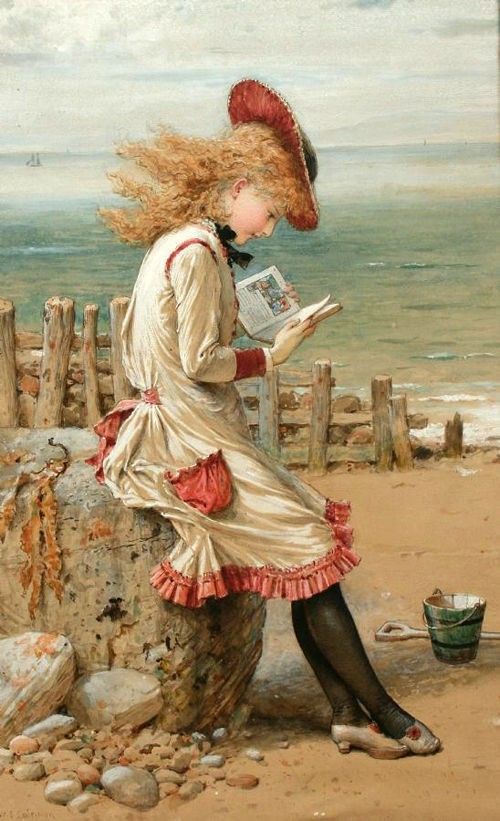
A picture of me reading painted long ago and not with me in the picture..
I started reading a new novel. It is a 500-plus-pager by Kate Morton called Distant Hours. It is a Gothic novel, but in a very different way from the one I am writing in The Baby Werewolf. That book starts as a first person narrative, and then flashes back to the past as a series of third person narratives focused on single characters per section. My novel is a first person narrative throughout, though told by three different narrators. It would make an interesting writing analysis post, but I haven’t read enough of that novel nor completed mine to a point where I can compare and contrast them. And those of you who get bored easily have already tuned out and just looked at the pictures by this point.
I also thought about writing a post about Uber-driving conversations and how that impacts the quality of my driver-service. But the best stuff there can’t be revealed without breaking confidences. Doctors, lawyers, bartenders, and Uber drivers are tasked with providing a touch of confidentiality.
I wanted to complain more about Trump and evil Republicans. But that gets far too tiring. And if the collection of my posts on WordPress is like a flower garden, the political rants I do are definitely the garden-choking weeds.
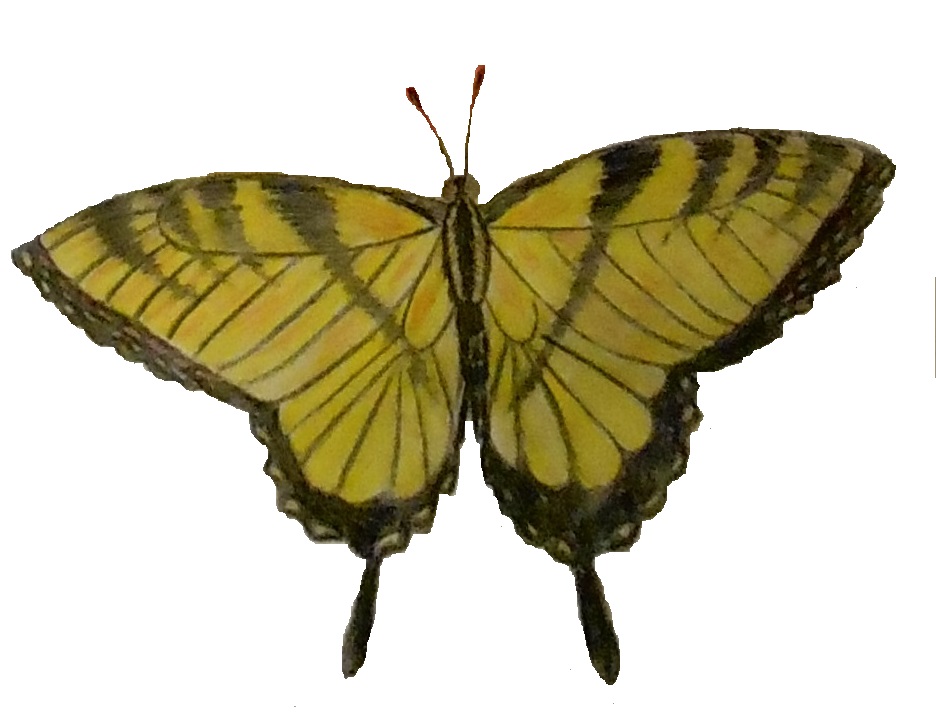
A much better thing for my garden is to chase the flitting butterflies of near-perfect ideas with a butterfly net made of idea lists like this particular post.
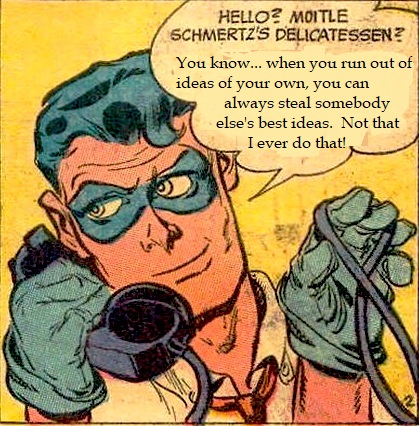
So, it is true that I never actually have writer’s block. I do get writer’s detours, writer’s delays, and writer’s just-not-satisfieds- with-those-ideas sorts of things. But not today. I made the problems the topic and the topic wrote itself.
Filed under artists I admire, artwork, imagination, irony, Uncategorized, writing, writing humor
Filed under artwork, drawing, humor, illustrations, imagination, Paffooney
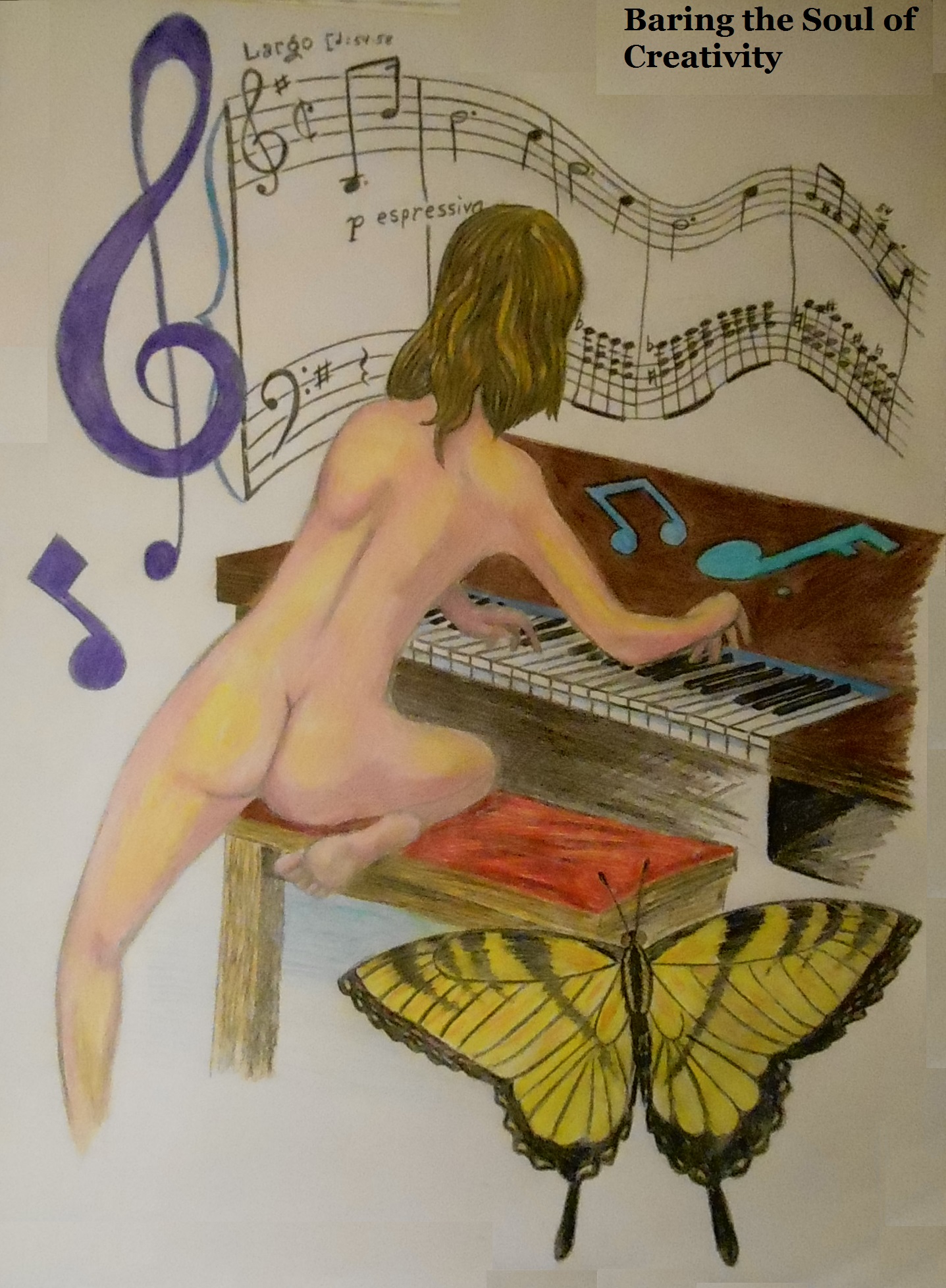
Being a writer is a life of music that happens only in your head. You hear voices constantly. They pulse rhythmically with insights and ideas that have to be written down and remembered. Otherwise the music turns clashing-cymbals dark and depressing. Monday I wrote a deeply personal thank you to the Methodist minister who saved my life when I was a boy. I posted a YouTube music video by the acapella group Pentatonix with that essay in a vain attempt to give you an idea of the music in my head when I composed that very difficult piece to give myself a measure of peace.
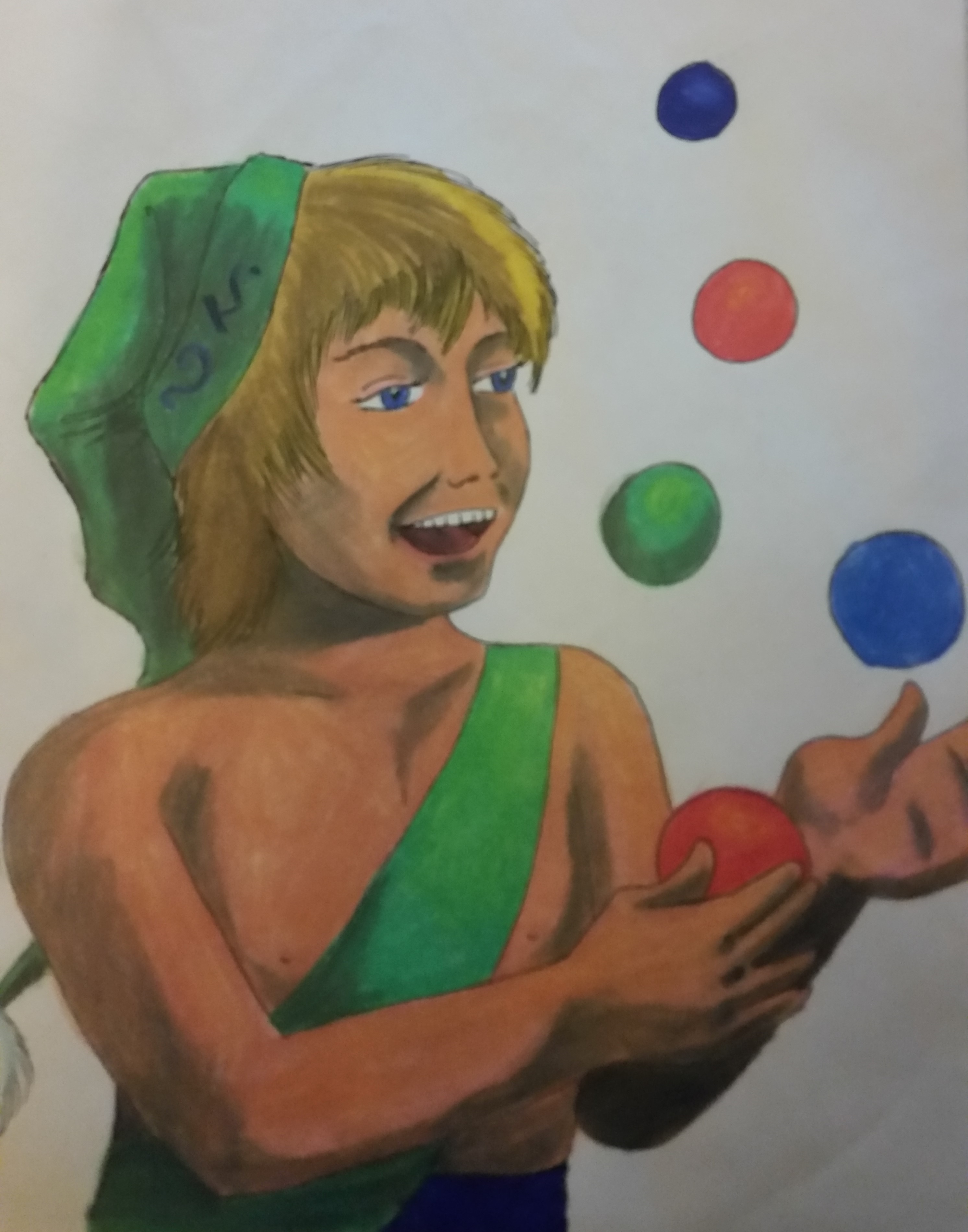
I realize that I am not writing poetry here. Poetry can so easily slip into melody and music because of rhythm and meter and rhyme. And yet, words to me are always about singing, about performing, about doing tricks with metaphor and meaning, rhythm, convoluted sentence structure, and other sneaky things that snake-oil salesman do to get you to think what you are hearing is precisely what you needed to hear. The Sonata of Silence… did you notice the alliteration of the silvery letter “S” in that title? The beat of the syllables? Da-daah-da a da-da? The way a mere suggestion of music can bring symphonic sounds to your ear of imagination as you read? The way a simple metaphor, writing is music, can be wrapped into an essay like a single refrain in a symphonic piece?
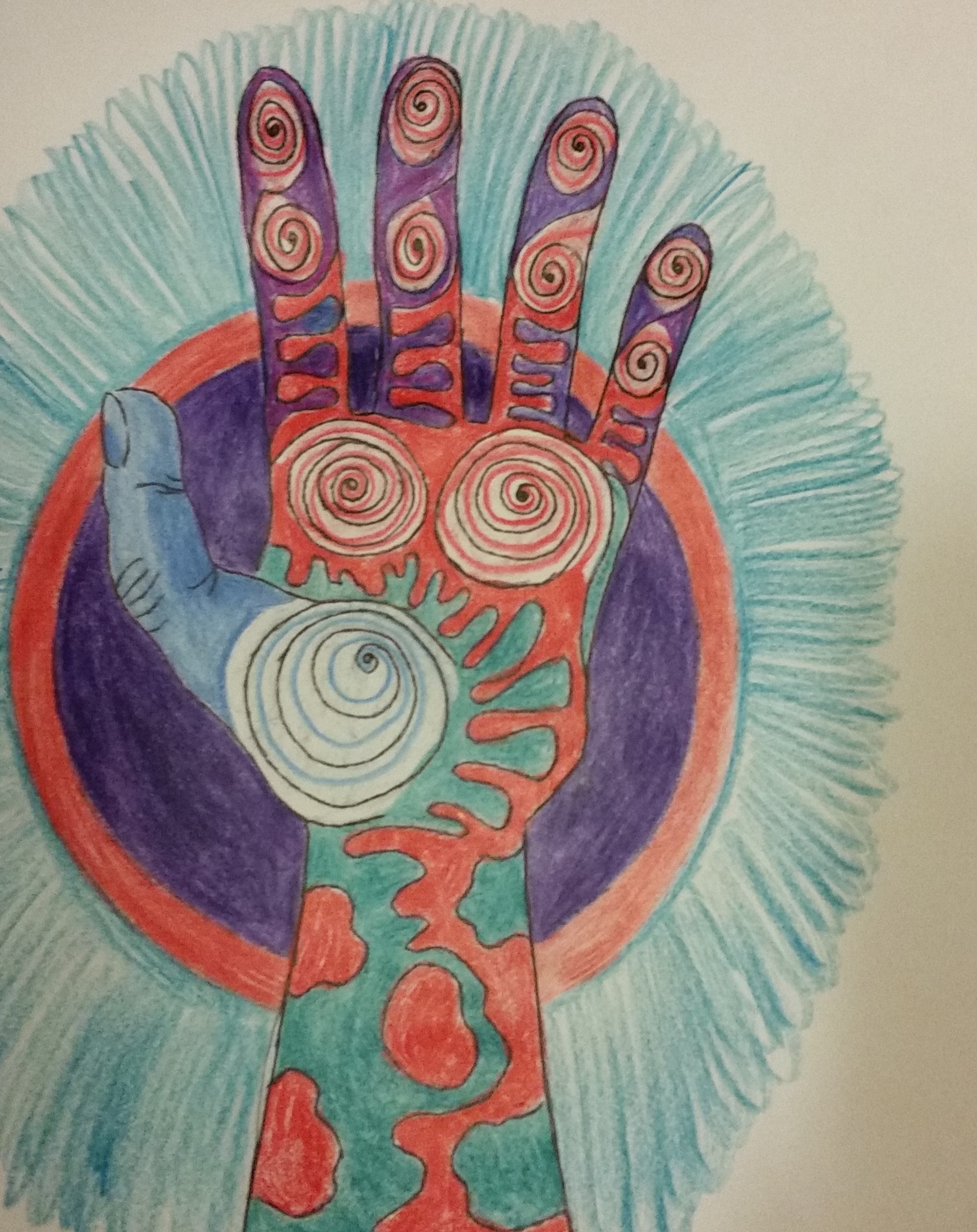
A sonata is a musical exercise in three or four movements that is basically instrumental in nature. You may have noticed that the movements are loosely defined here by the accompanying pictures, of which there are three. And it is silent only in the way that the instruments I am using themselves make no noise in the physical world. The only sounds as I type these words are the hum of an old air conditioner and the whirr of my electric fan. Yet my mind is filled with crescendos of violins and cellos, bold brass, and soft woodwinds. The voice saying these words aloud only in my head is me. Not the me you hear when I talk or the me I can hear on recordings of my own voice, but rather the me that I always hear from the inside. And the voice is not so much “saying” as “singing”.
Writing makes music. The writer can hear it. The reader can too. And whether I croon it to make you cry, or trill it to make you laugh, I am playing the instrument. And so, the final notes of the sonata are these. Be happy. Be well. And listen for the music.
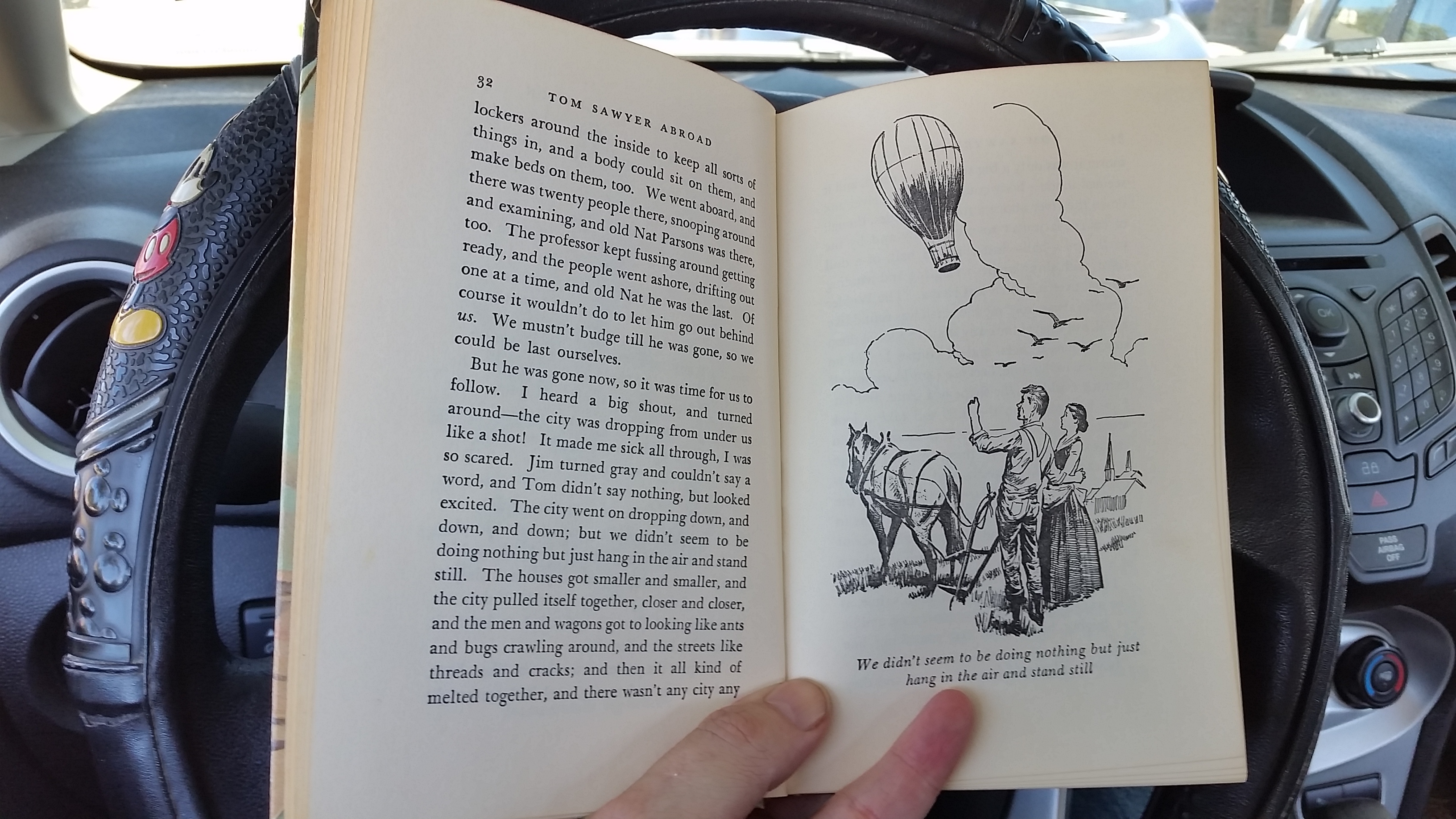
Yep, I read about being an “erronort” traveling in a balloon while sitting in a parking lot in my car.
Believe it or not, I read this entire 100+-year-old book in my car while waiting for my daughter and my son in school parking lots. What a perfectly ironic way to read a soaring imaginary adventure written by Mark Twain, which has been mostly forgotten by the American reading public.
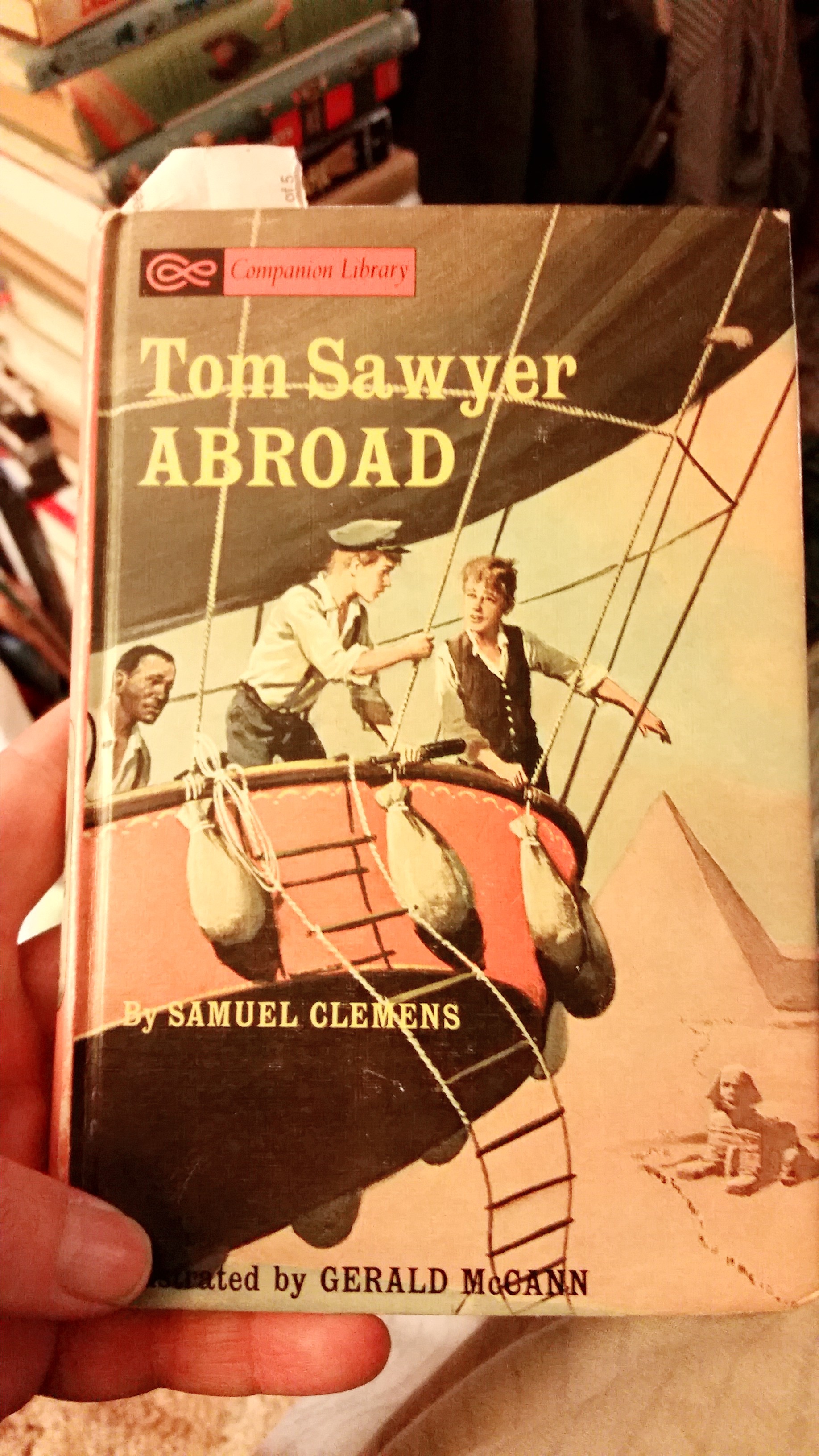
My copy of this old book is a 1965 edition published for school libraries of a book written in 1894. It tells the story of how Tom and Huck and Jim steal a ride on a balloon at a town fair from a somewhat mentally unhinged professor of aeronautical science. The balloon, which has space-age travel capabilities due to the professor’s insane genius, takes them on an accidental voyage to Africa.
Of course, the insane professor intends to kill them all, because that’s what insane geniuses do after they prove how genius-y they really are. But as he tries to throw Tom into the Atlantic, he only manages to plunge himself through the sky and down to an unseen fate. The result being a great adventure for the three friends in the sands of the Sahara. They face man-eating lions, mummy-making sandstorms, and a chance to land on the head of the Sphinx.
The entire purpose of this book is to demonstrate Twain’s ability to be a satirical stretcher of the truth, telling jokes and lies through the unreliable narrator’s voice of Huck Finn.
Here is a quoted passage from the book to fill up this review with words and maybe explain just a bit what Twain is really doing with this book;
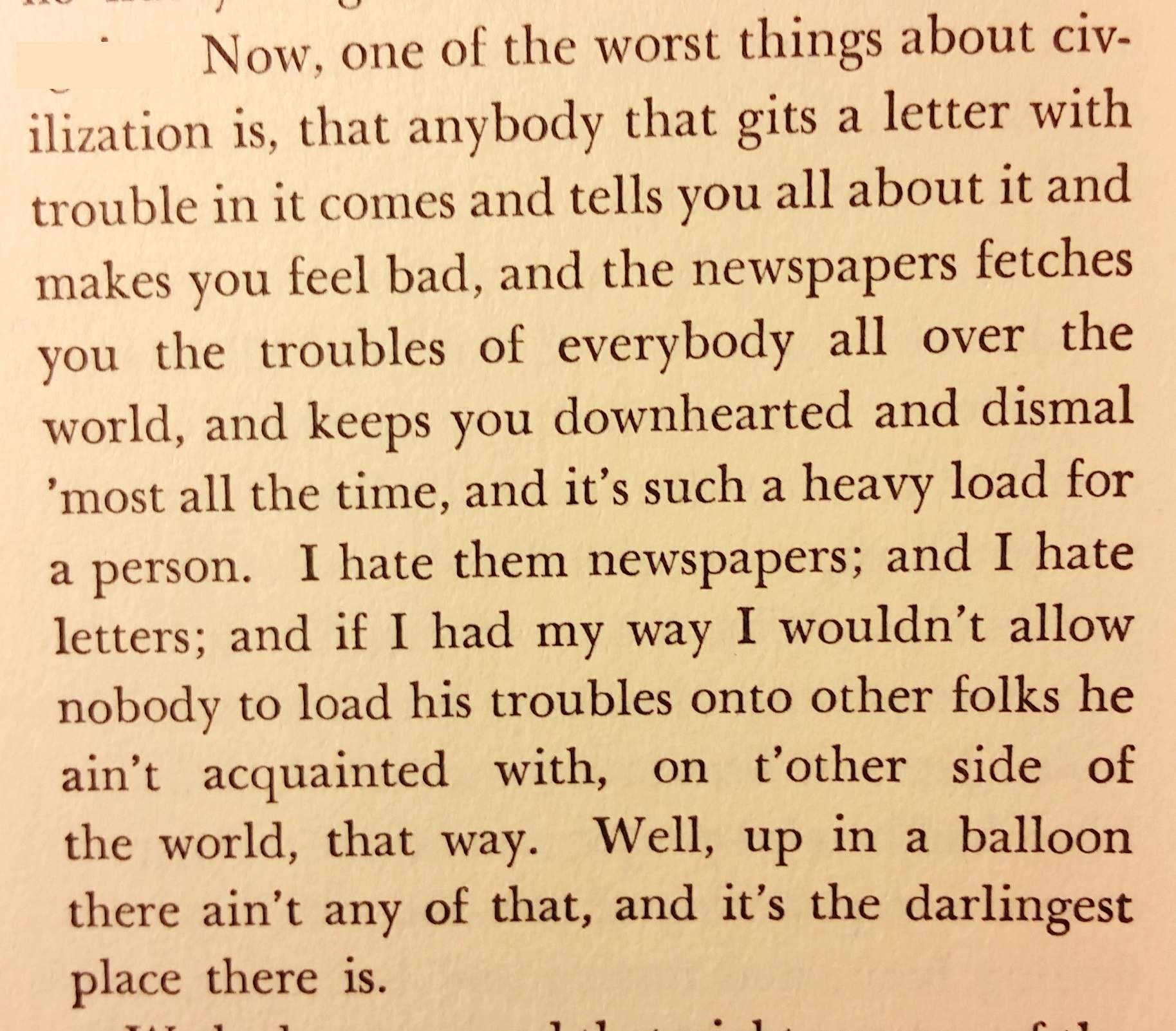
Notice how I doubled my word count there without typing any of the words myself? Isn’t the modern age wonderful?
But there you have it. This book is about escaping every-day newspaper worries. In a time of Presidential Candidate Donald Trump, global warming, and renewed threats of thermonuclear boo-boos with Russia, this proved to be the perfect book to float away with on an imaginary balloon to Africa. And the book ends in a flash when Aunt Polly back in Hannibal wants Tom back in time for breakfast. I really needed to read this book when I picked it up to read it.

Barbie’s little sister, Stacy, is an incredible nerd (for a plastic doll from Mickey’s doll collection.) She is constantly using one of the laptops to keep up with the latest news in Science. Lately, she has been thrilled to see pictures start rolling in from the James Webb Space Telescope, the superior imaging system to its predecessor, the Hubble Space Telescope.
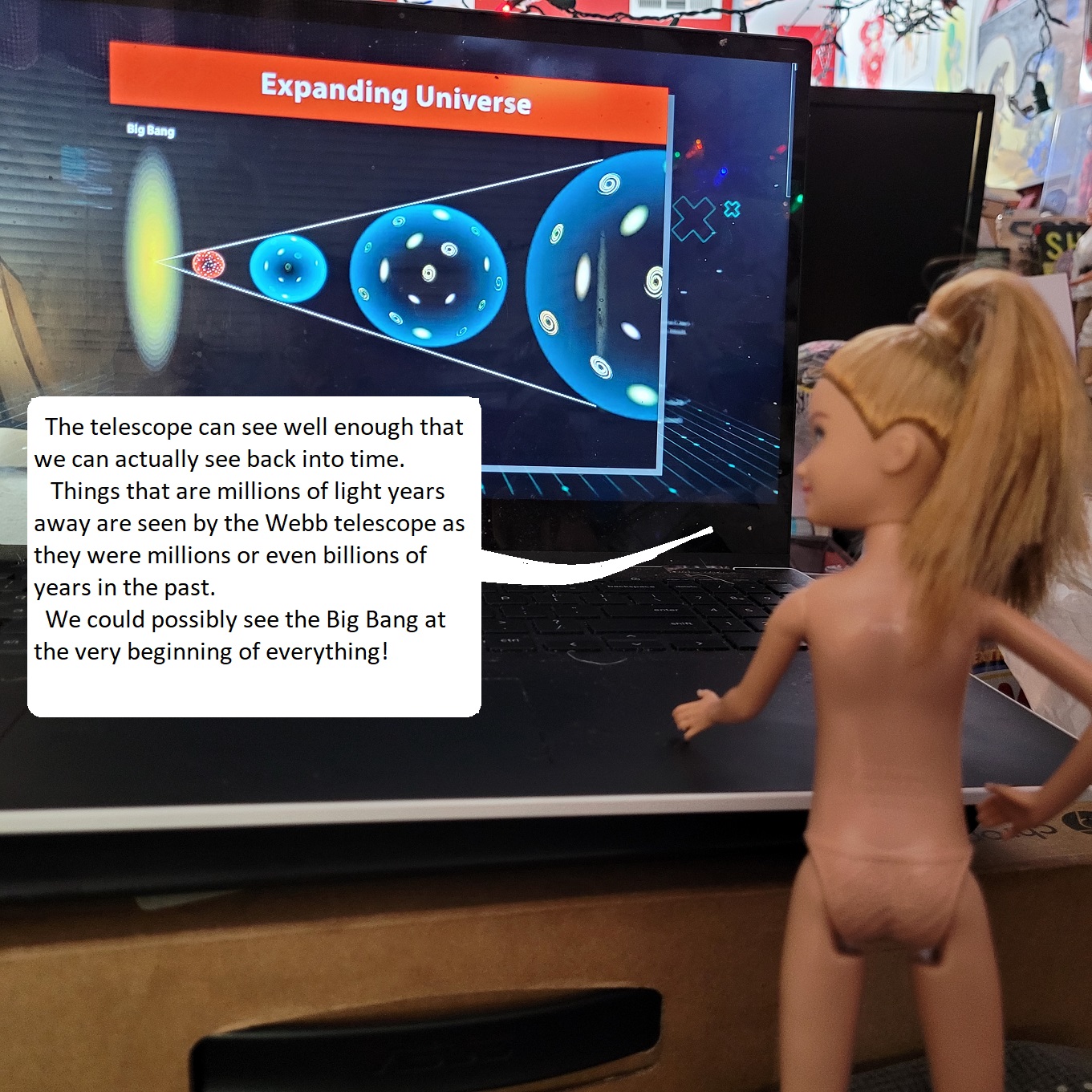
You may have noticed that Stacy surfs the internet in the nude. She is not a porn-obsessed pervert or anything. She simply found research online that indicated that nudists are happier in many ways than people who are addicted to always wearing clothes. She joined the AANR (American Association for Nude Recreation,) found a local landed nudist club to join and discovered how lovely it is to play in the sunshiny air totally bare.
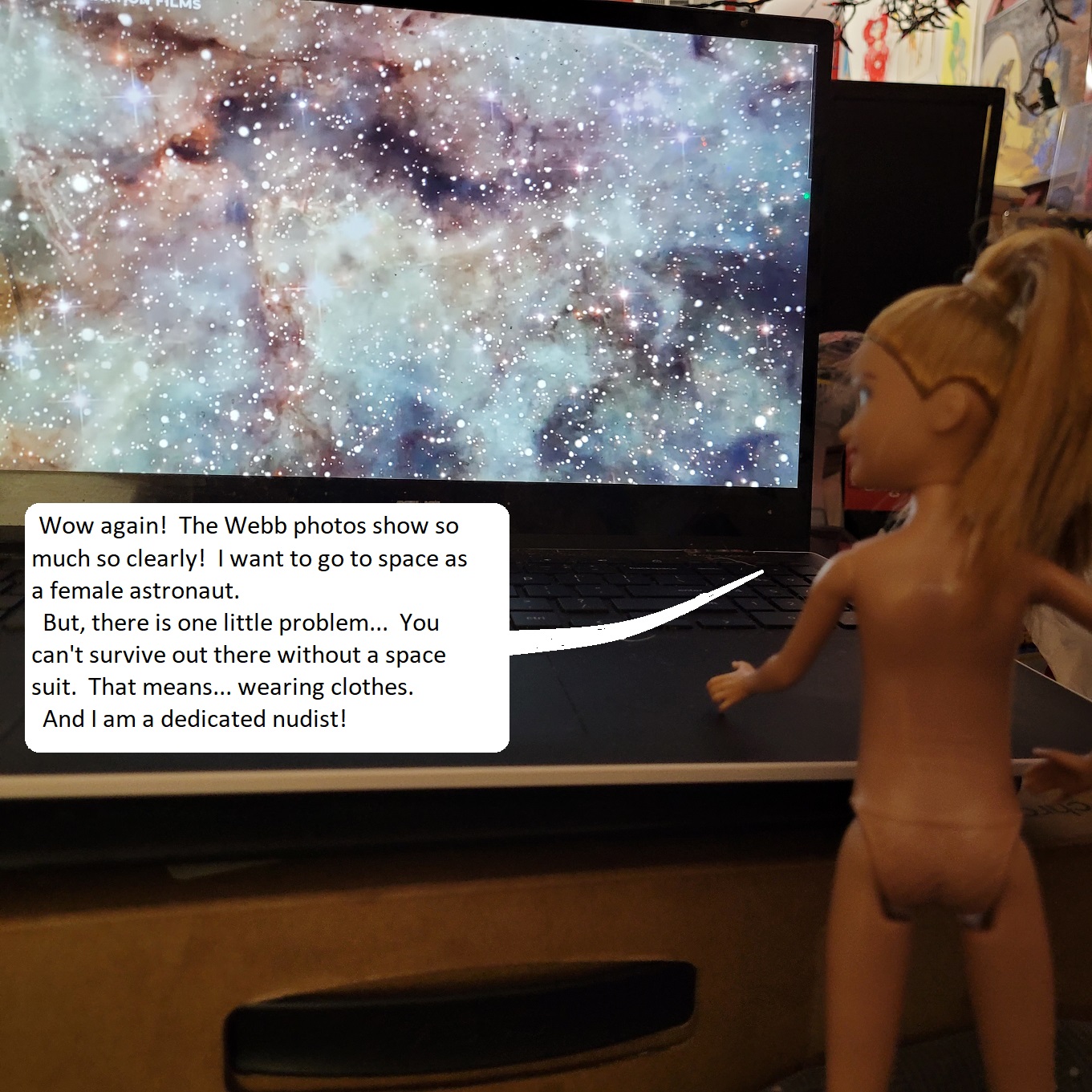
If you knew Stacy the way I know Stacy, you would realize she now has a real dilemma. She is very intelligent… but her head is made of plastic, and so it stubbornly resists compromises once an idea has found its way inside.

This is called internal conflict. But never fear. Stacy is highly intelligent, smarter than Skipper, and even smarter than her oldest sister Barbie. This is why she is the only sister so dedicated to nudism.

So, Barbie pointed out to Stacy that, being made of plastic, exposure to outer space will simply freeze her solid. And as long as she avoids getting dropped by a doofus while she’s frozen and brittle, and she gets thawed out slowly enough at the end of the journey, she should be fine. Now, all she has to do is convince Mickey to sell her to an astronaut who is not a doofus but is just goofy enough to take a doll into outer space. So, now Stacy is researching non-doofus goofy astronauts online, further preventing Mickey from writing something dumb.
Filed under Barbie and Ken, doll collecting, humor, imagination, photo paffoonies, satire, science fiction
Sometimes the only thing you really want out of life is just to get by. You get tired of always having to climb the danged highest mountain. You get tired of trying to swim the danged deepest sea.
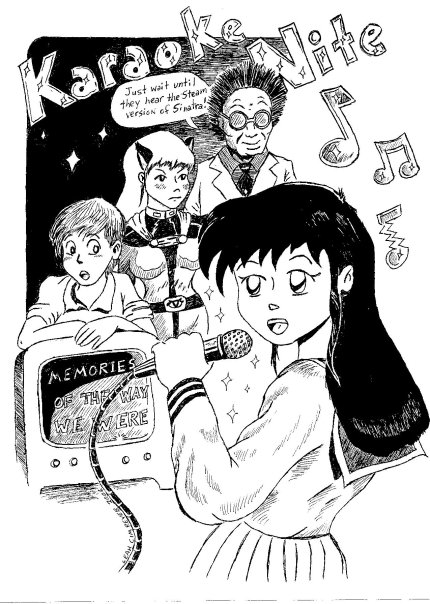 Sometimes all you want to do is doodle-bop!… To draw in pen and ink and post your derfiest doofenwacky doodles so you can just make your way through another danged day.
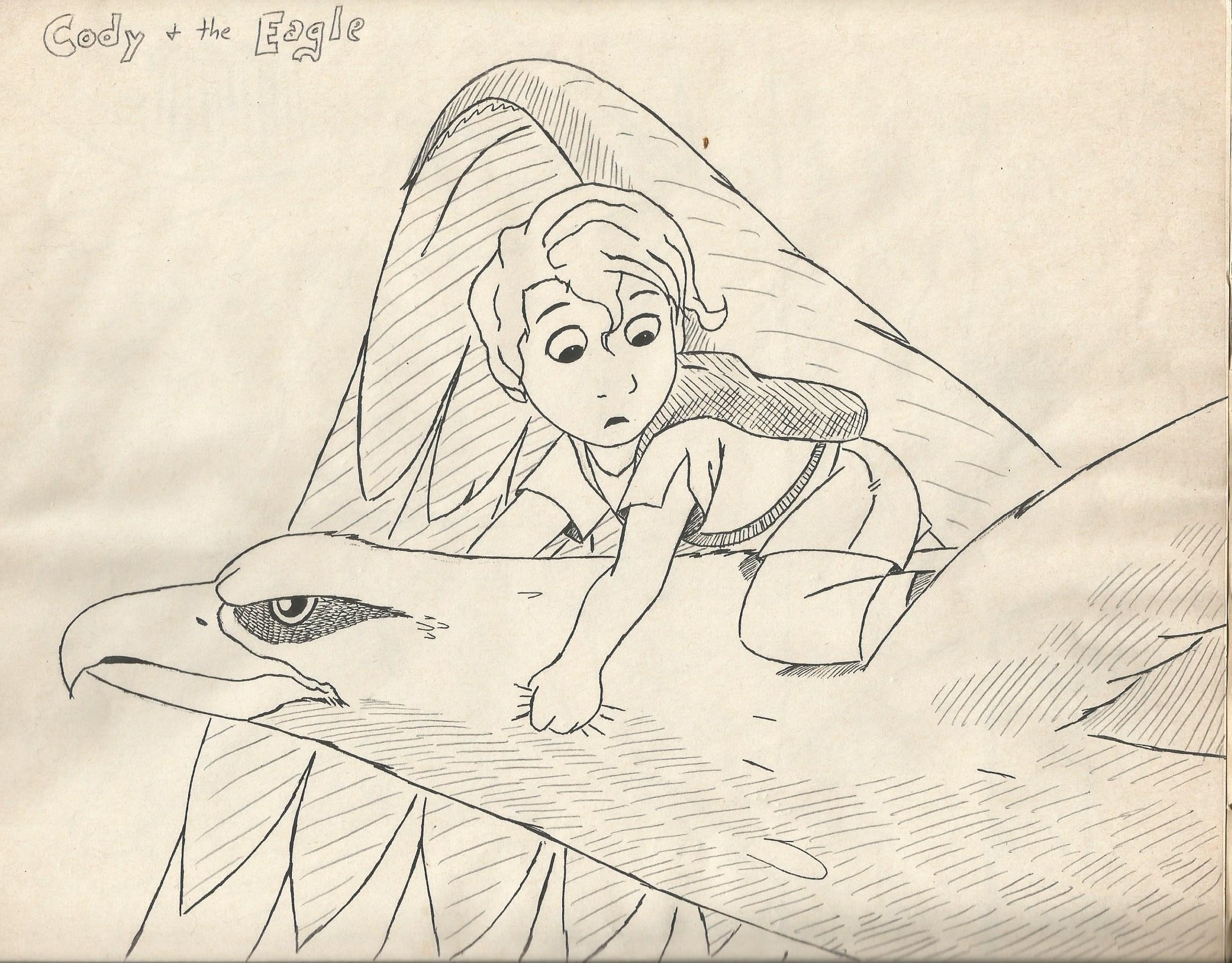
You aim a lot for different, and undeniably original… because no one thinks like you… certainly no one who is real and has a real brain. You are gifted with an “other-ness”, a sing-songy simpering something that makes you want to doodle and do what no man has done before. (Does that sentence exist anywhere else in all of literature? Even if there is some alternate dimension with infinite monkeys typing on infinite typewriters? What’s a typewriter, you say? Danged millennials!)
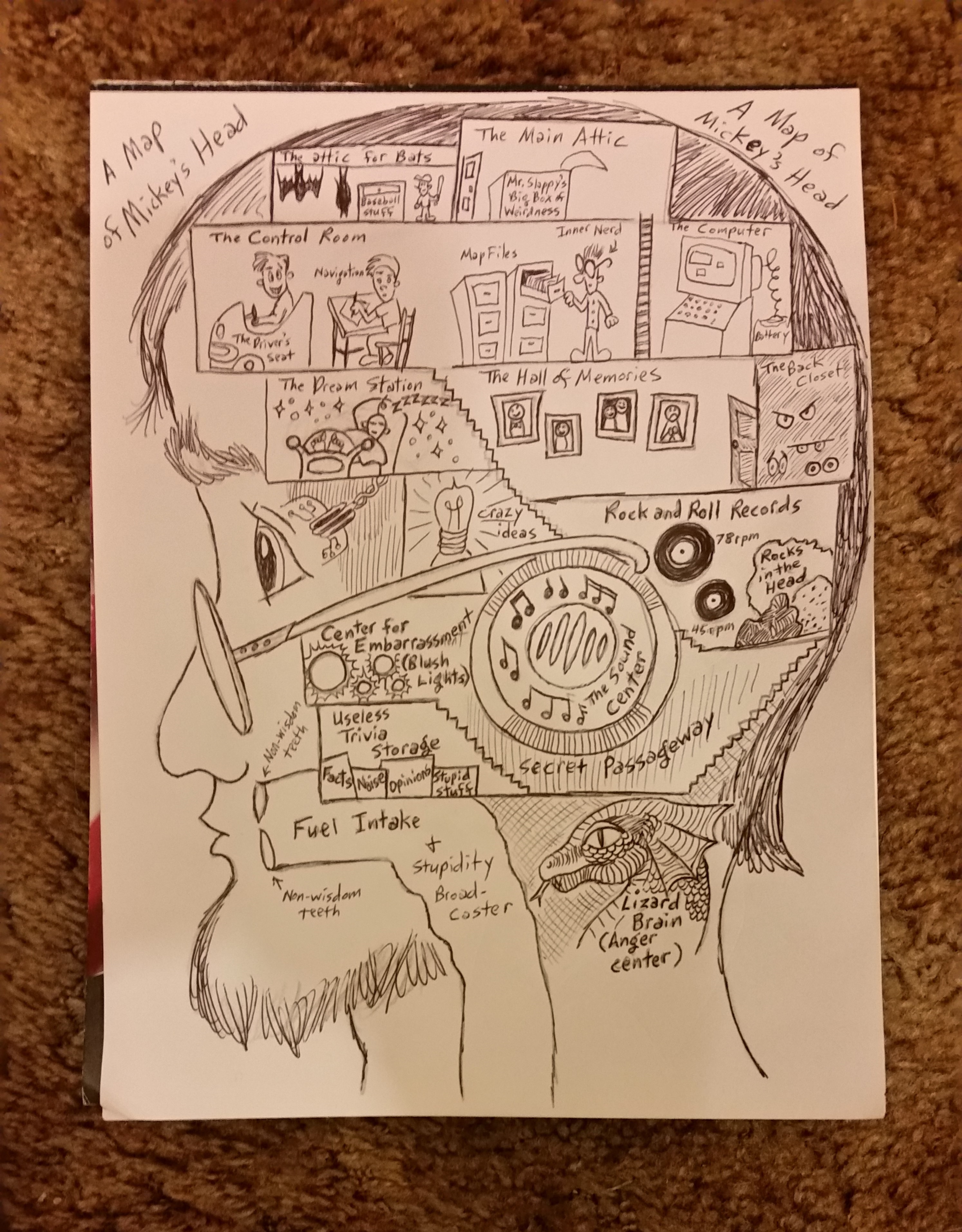
I really can’t help it, you know. I was a middle school teacher for 24 years. That sort of thing has mental health consequences. And if you wring the sponges in your stupid old brain hard enough and long enough… doodle-bop! comes out.
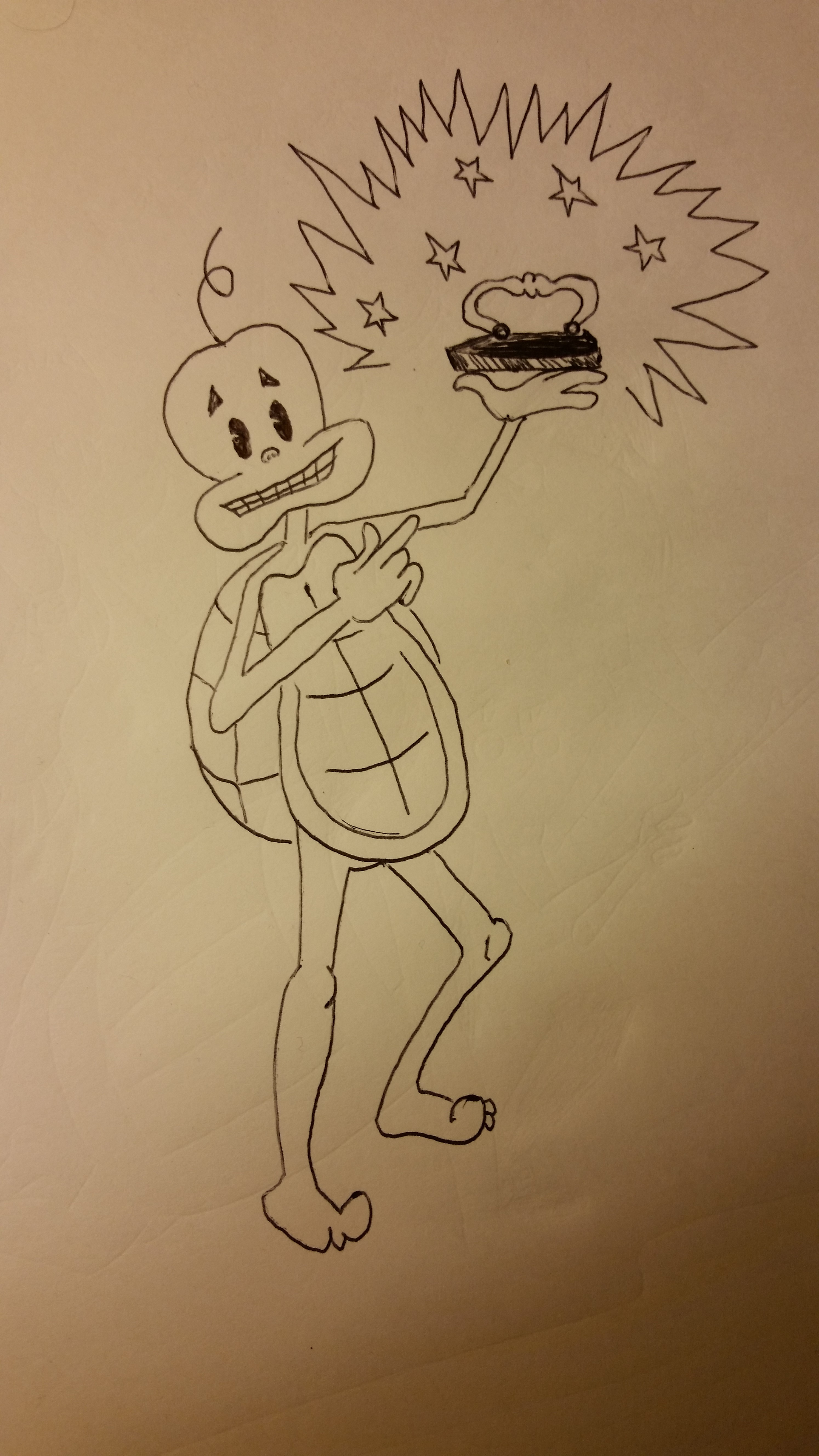
Turtle boy’s magic iron of irony!!!
And you have to wonder why some of the stuff that is in your stupid old head is even in there. Why is it that sometimes the words “Argyle socks are filled with rocks” are drifting through the vast empty spaces in the logic centers of your brain? There has to be a reason for everything, doesn’t there?
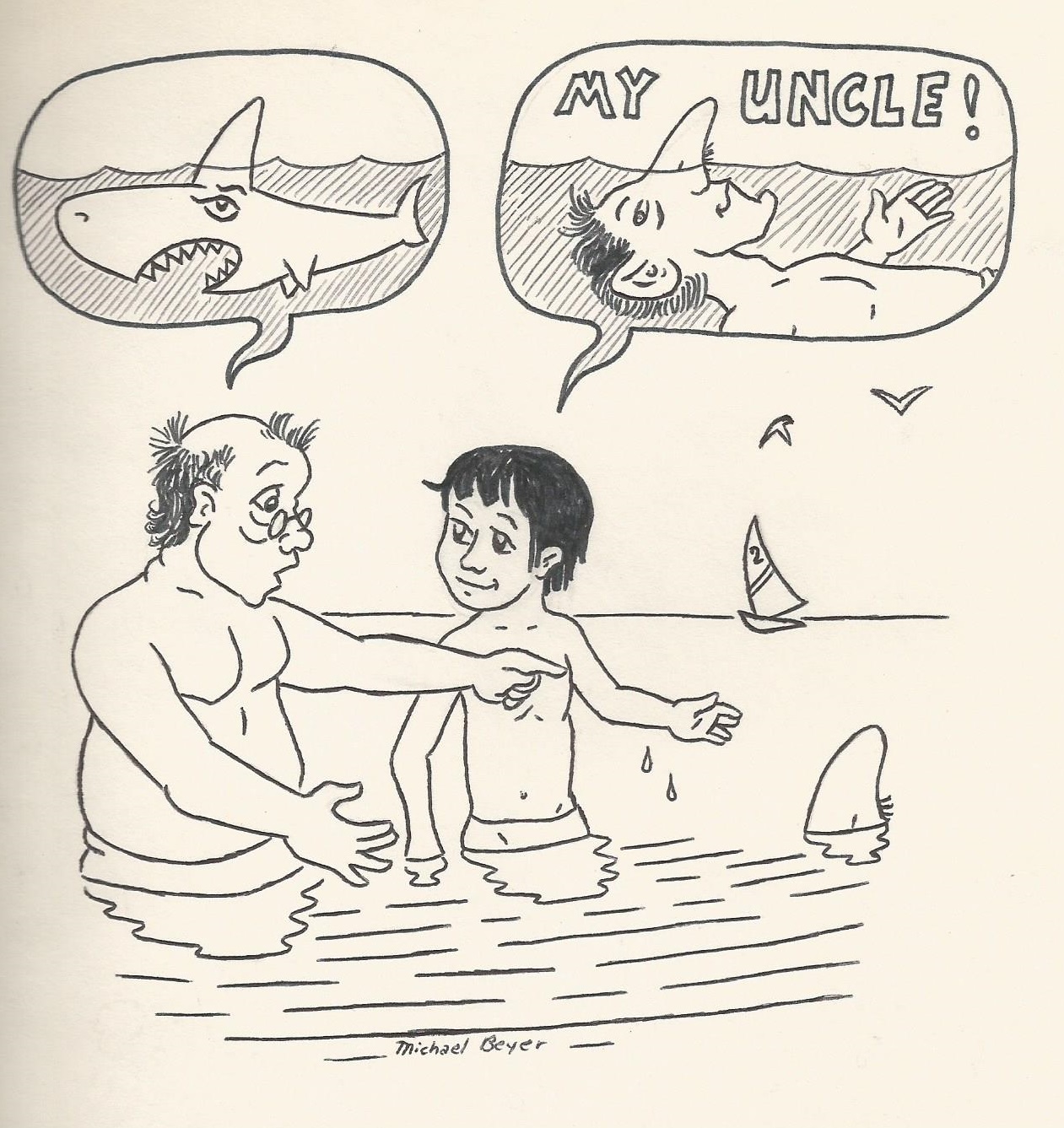
I do believe I have made myself chuckle at least a dozen chuck-tacular times in the chuck-a-tational crafting of this cheddar-cheesy post. But it only really counts if I can make you girlishly giggle or guy-like guffaw with my word-munching and cartoony paffoonies.
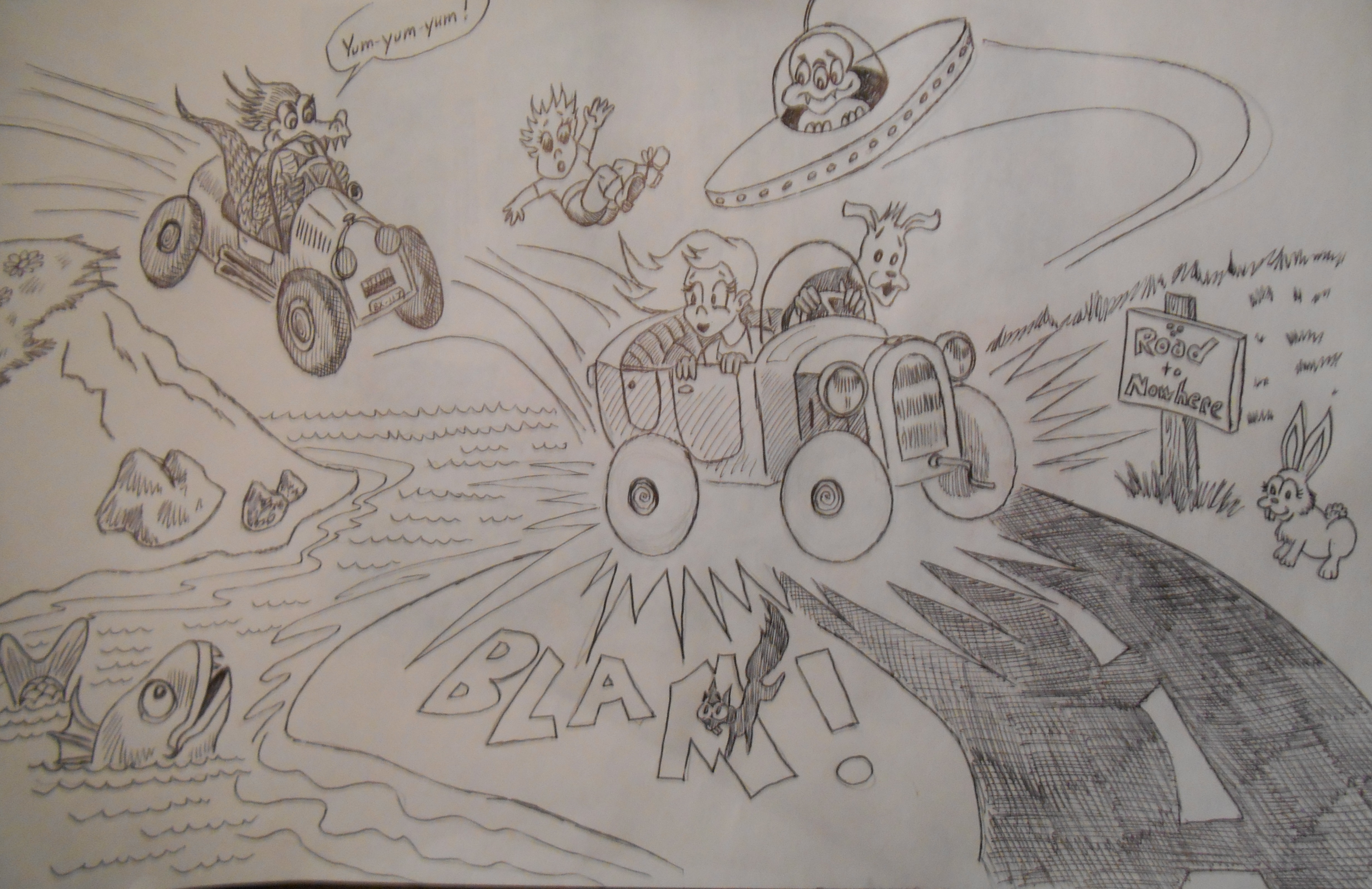
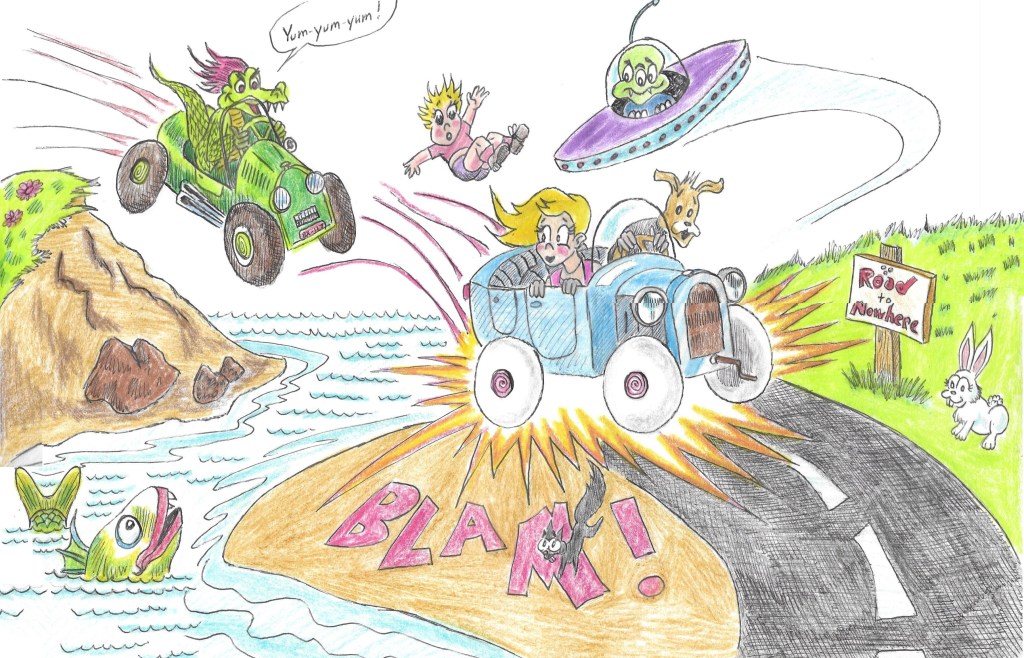
The terror-filled cartoon car chase that is life as usual.
You may have noticed that everything is black and white, even though it doesn’t have to be. Good versus evil, hot versus cold, everything can be divided up simplistically… but the really profound part of simplicity is vibrating reverberations of complexity that lie just underneath. Words have meaning, even though they are just a bunch of crooked squiggles marked on a page. (Yes, I know… “or typed on a computer screen”. Danged millennials!)
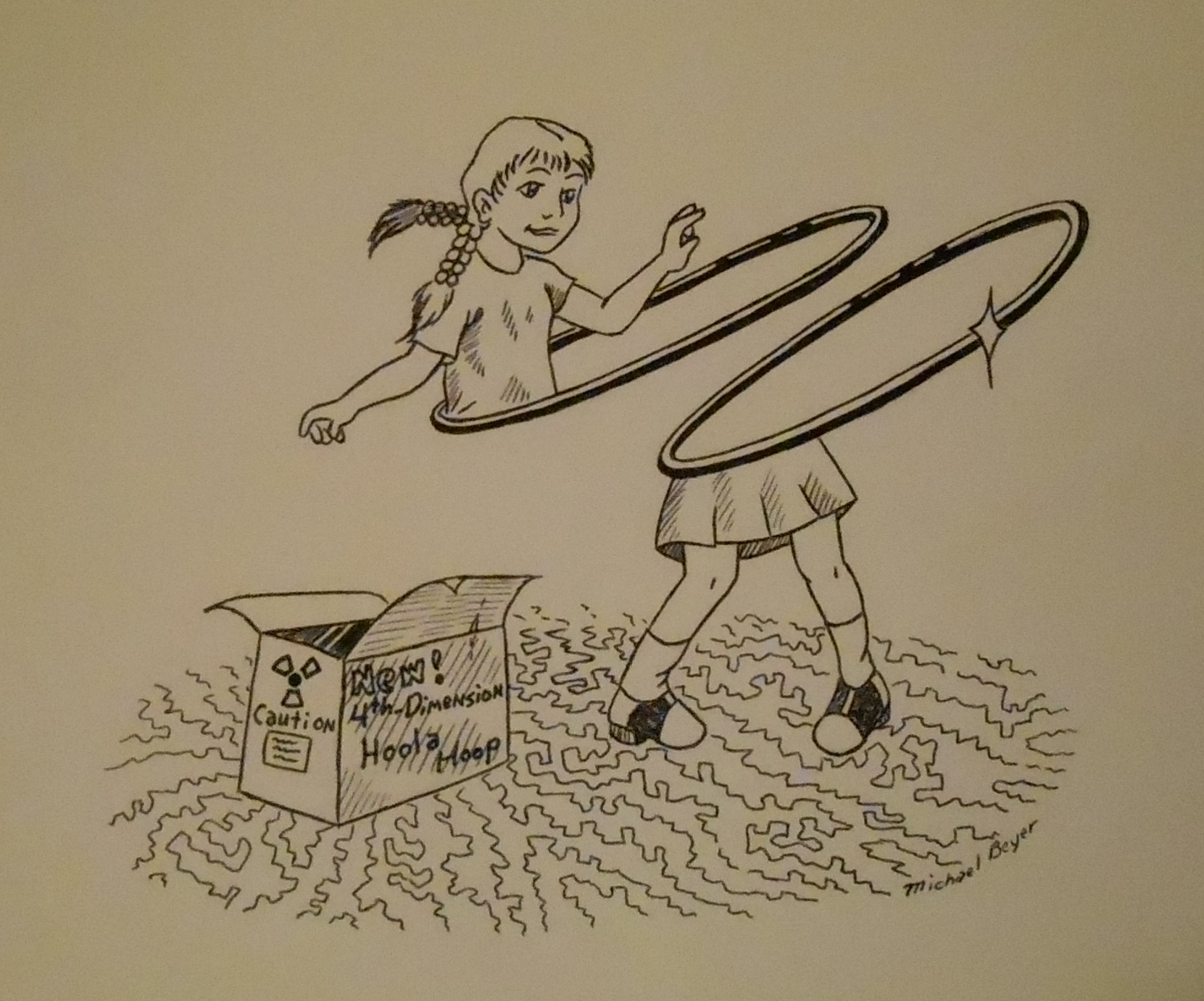
And so, this is my doodle-bop! Probably not the doodliest or the boppiest doodle-bop! I could have bopped… but there it is. I have made it through another sorta creative post without losing my mind… Honest! I did not lose it. It is merely temporarily misplaced for a moment. It will be back in its proper place tomorrow… probably.
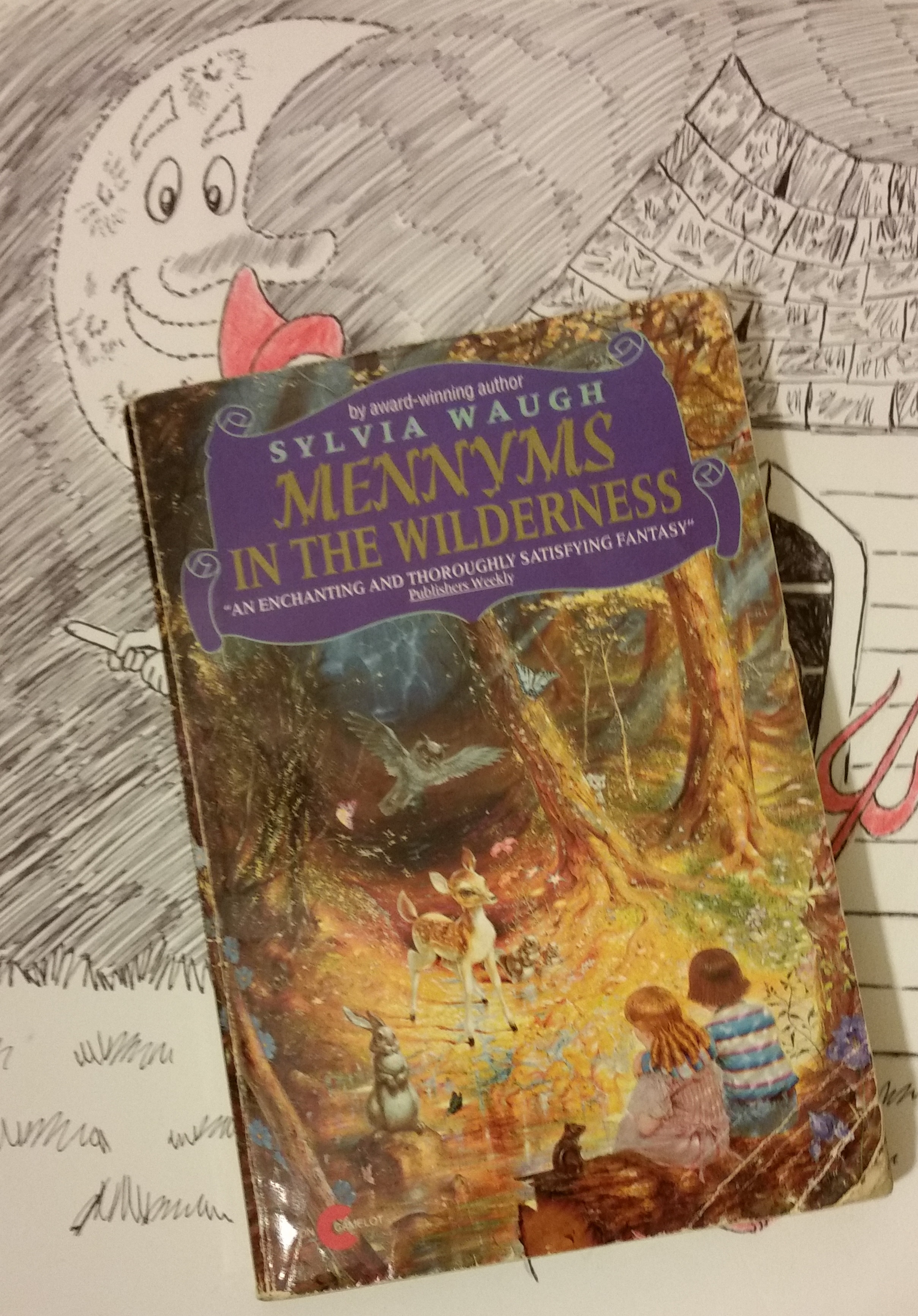
This is the book I have really read, though I intend to acquire the rest.
Sylvia Waugh is a British writer of children’s books who has a lot in common with me. She spent her career as a teacher of grammar. In her late fifties she became a published author. Her book series of the Mennyma is a charming fantasy adventure about dolls so loved by their owner, they actually come to life… and survive her…. and then have to make their way in a world that would be horrified by them and might easily seek to destroy them.
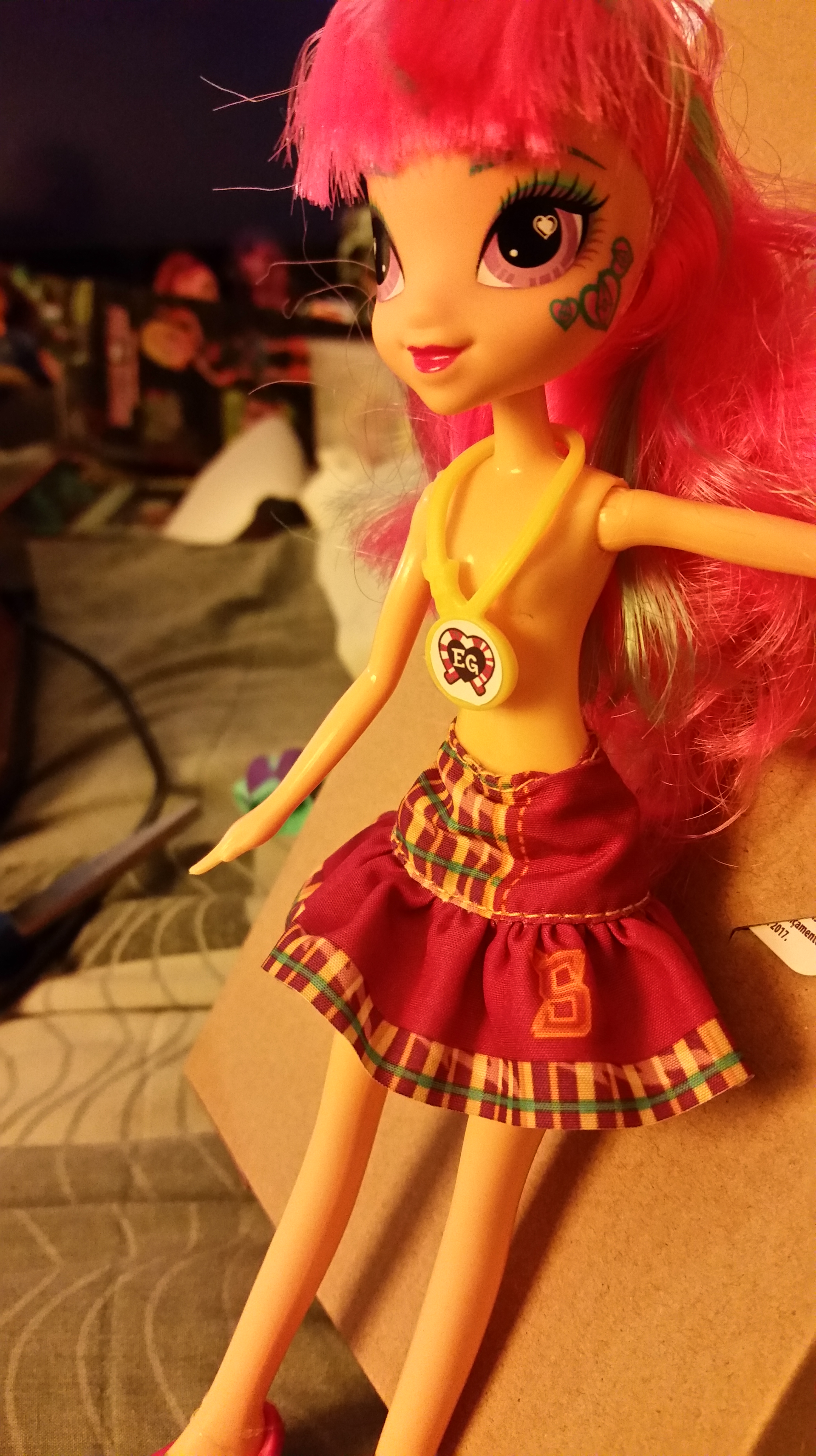
Hopefully none of my dolls come to life after I croak. After years of collecting, they nearly outnumber humanity.
But rest assured, the dolls in this sweet-natured children’s book series would never prove evil. The books are more fantasy-comedy than horror story. In fact, they are impossibly far away from horror.
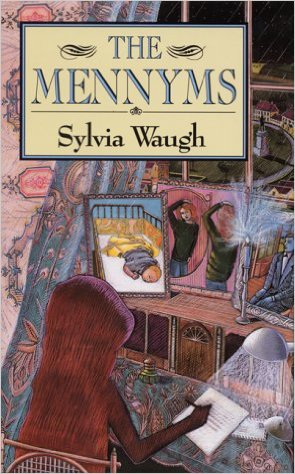
The original book.
Joshua Mennym is the head of a family of life-size rag dolls. He pretends to be a middle-aged man. He generally keeps his distance from the general public, because, up close, his basic rag-doll-ness would stand revealed. Rag dolls are not supposed to walk and talk, let alone have families and live in a home of their own. His wife is Vinetta Mennym, also a rag doll. Together they are parents to the ten-year old twins, Poopie, the boy, and Wimpey, the girl.
The teenage twins are Pilbeam and Soobie. Pilbeam is the girl and constant companion of the elder teenage sister, Appleby. Soobie is the boy and blue. Why their former owner, Kate Penshaw, made him with a blue head and blue feet and blue hands is a mystery both to the Mennyyms and to me. It causes him to be the one most likely to cause exposure of the family secret because even at a distance he does not look like a “real people” person.
Baby Googles is the smallest of the family, constantly cared for by the nanny, Miss Quigley, who is also considered a Mennym because she is also a doll.
Grandpa Magnus Mennym lives in the attic with Grandma and takes care of the household bills. He writes scholarly works on the English Civil War and publishes them for a modest income which comes through the mail. Granny Tulip is also relied upon for her wisdom and experience whenever a problem with keeping the family secret comes up.
Each book in the series contains a different adventure revolving around the realistic comedy generated by impossible people trying so hard to be real. I absolutely love the adventures, even the ones I haven’t read yet. And I know that the only way you could possibly love these books too is if you share my loony love of the fantastically impossible that turns out to be real. After reading these books, I fully intend to keep a very close eye on my own doll collection.
Filed under artists I admire, book review, doll collecting, good books, humor, imagination, old books


Imaginary Friends
When you know someone has an imaginary friend, something like Elwood’s six-foot invisible rabbit called Harvey, don’t you immediately think that person is crazy? I do. But I have imaginary people as friends. I think most writers do. So am I crazy? Probably. But hopefully it is a good kind of crazy.
It began with imaginary friends from books. The Cat in the Hat was my friend. Jim Hawkins was my friend, as was Mowgli and all the members of the Swiss Family Robinson. They entered my dreams and my daydreams. I told them my troubles the same way I listened to theirs through their stories.
I began to have imaginary friends that came from my own imagination too.
I used to tell my mere human friends about my friend Davalon from outer space. I told them that he was real and secretly visited me at night to talk about being able to learn about humans on earth by walking around invisibly and watching them. I got so involved with these stories that my sixth grade class began saying, “Michael is from Mars.”
When I was a teenager, I began having conversations with a faun. His name was Radasha. He was a creature from Greek Myth, a sensual Dionysian creature who, in his child body, was both younger than me and way older than me. I didn’t realize until much later in life that he was the result of my repressed memories of a childhood sexual assault that I was the victim of. I could talk to him about my fear of nakedness. I could tell him about my blossoming interests in naked girls and their bodies. I could talk to him about all the things I was somehow too terrified to talk to my male friends about, even though none of them had the same reluctance to discuss sex. Ra was imaginary. But he helped me heal.
Then the story-telling seriously began. I used Davalon as one of the main characters in my novel Catch a Falling Star. I created Torrie Brownfield, the baby werewolf to express the feelings I had as a boy about being a monster and secretly terrible and deformed. Torrie is a normal boy with a condition called hypertrichosis. I am working on The Baby Werewolf now. And then there’s lovely Valerie Clarke. She is the main character of Snow Babies which is a finished novel, edited and proofread and ready to publish. It is I book I will have to find another way to publish since the recent death of PDMI Publishing. She is not a me-character, based on my own thoughts and feelings. She is based on former classmates and students who told me things that express the sadness and isolation of growing up female. So she is even more imaginary than my other characters.
They become real people to me. They have their own point of view. They talk to me and I learn things from them. But they are imaginary. So am I crazy? Yes… as a loon. And happy as Elwood P. Dowd to be that way.
Leave a comment
Filed under artwork, autobiography, being alone, characters, commentary, humor, imagination, insight, Paffooney, strange and wonderful ideas about life
Tagged as book review, book reviews, books, fiction, writing