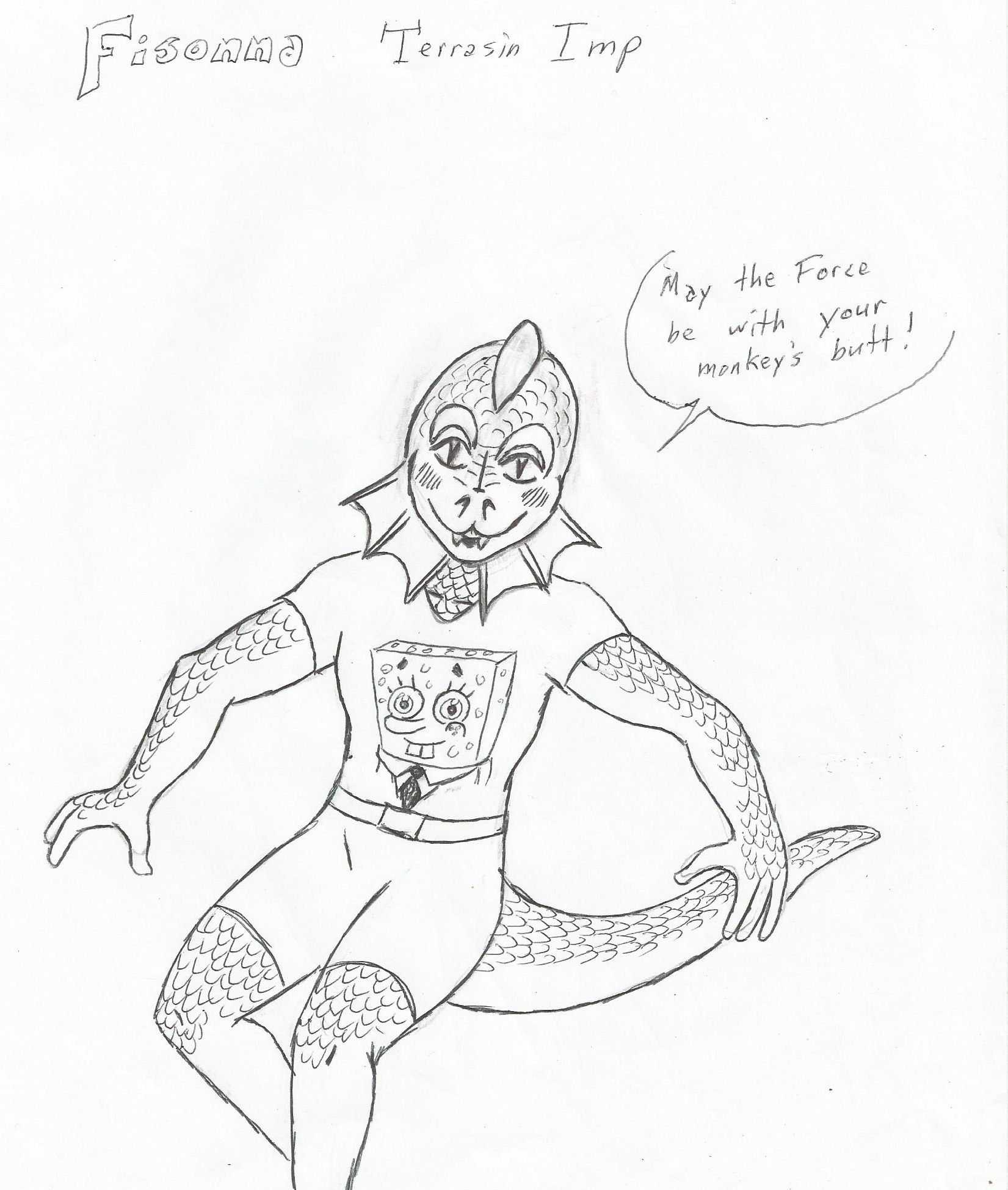
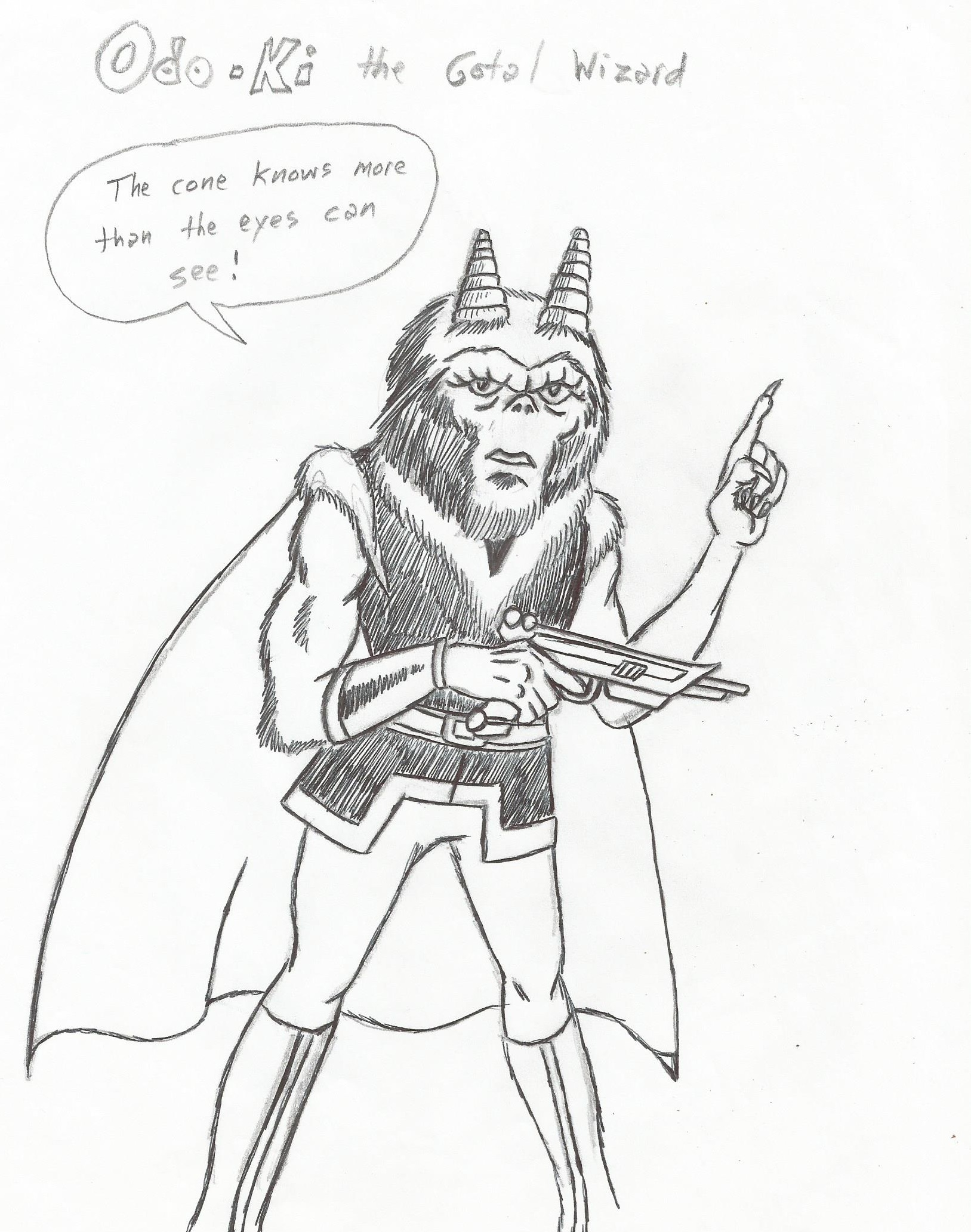
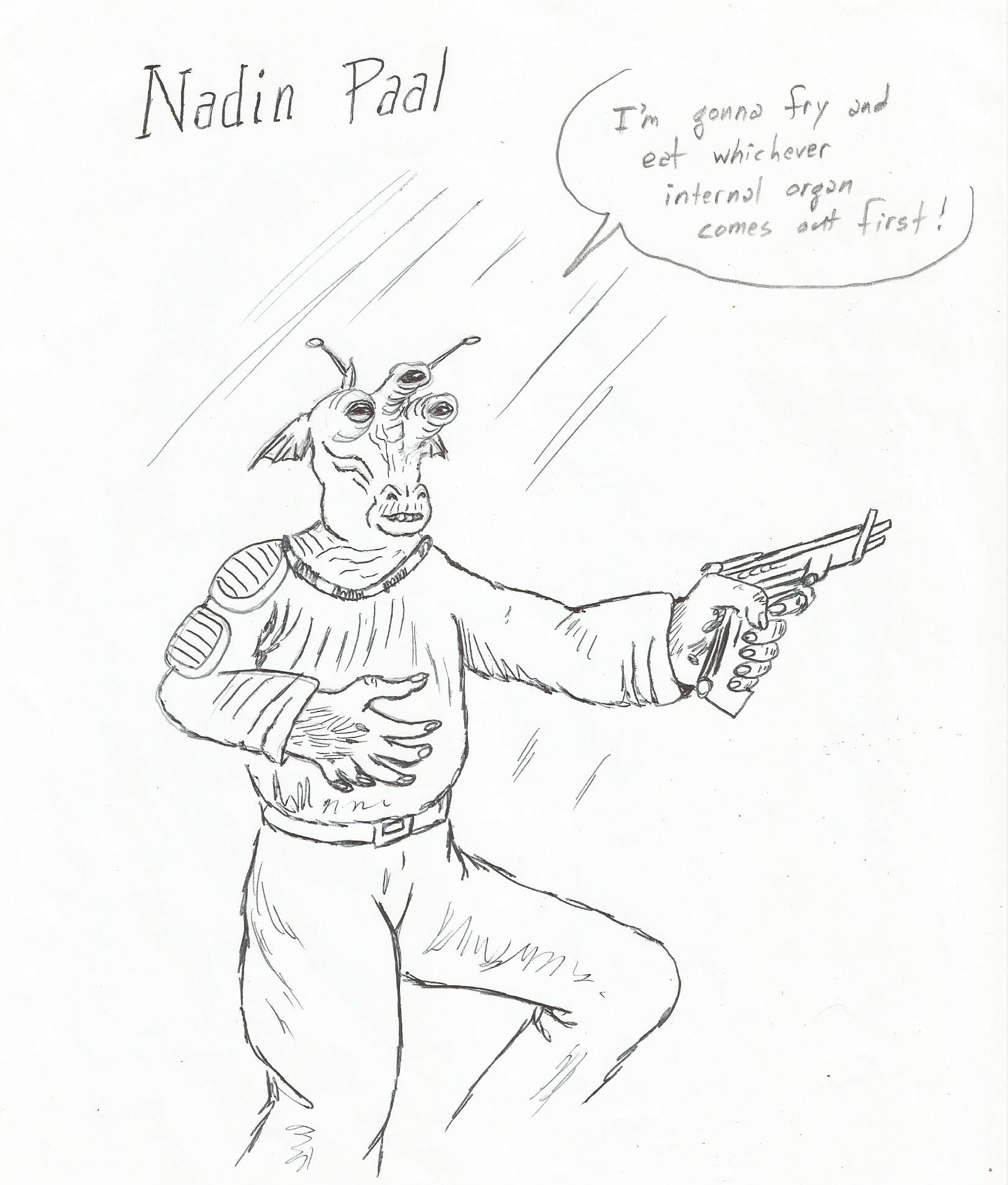
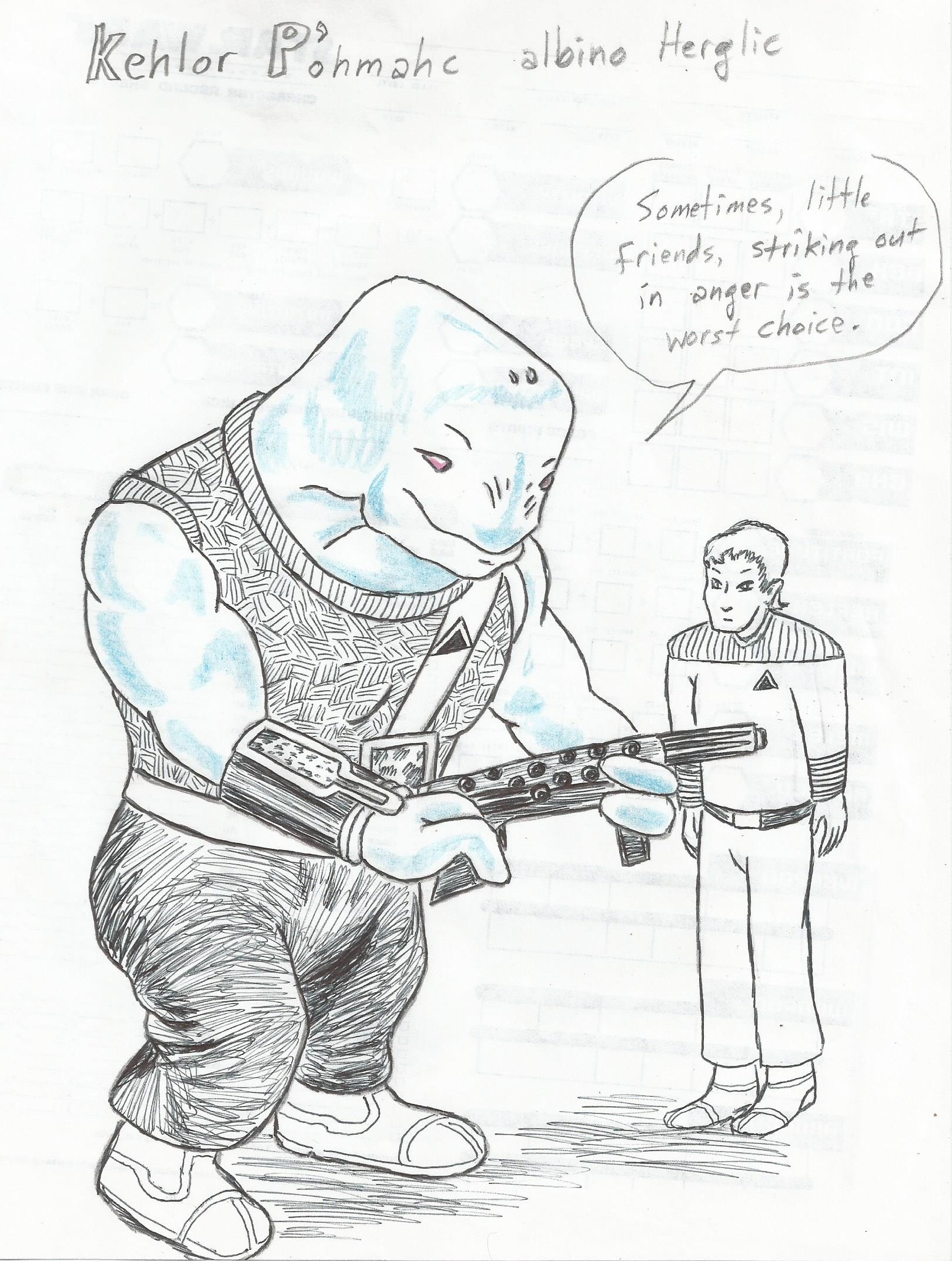
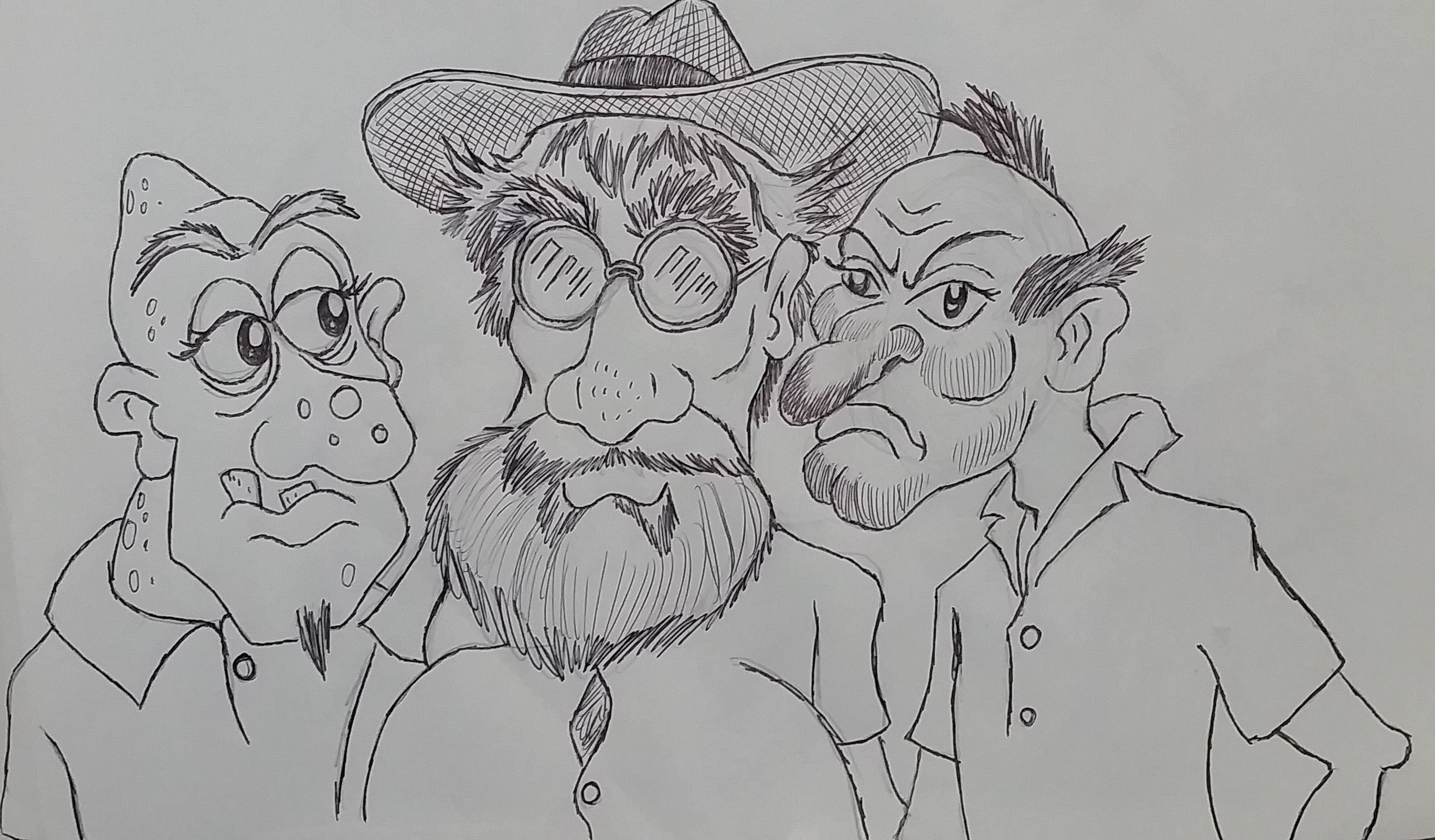
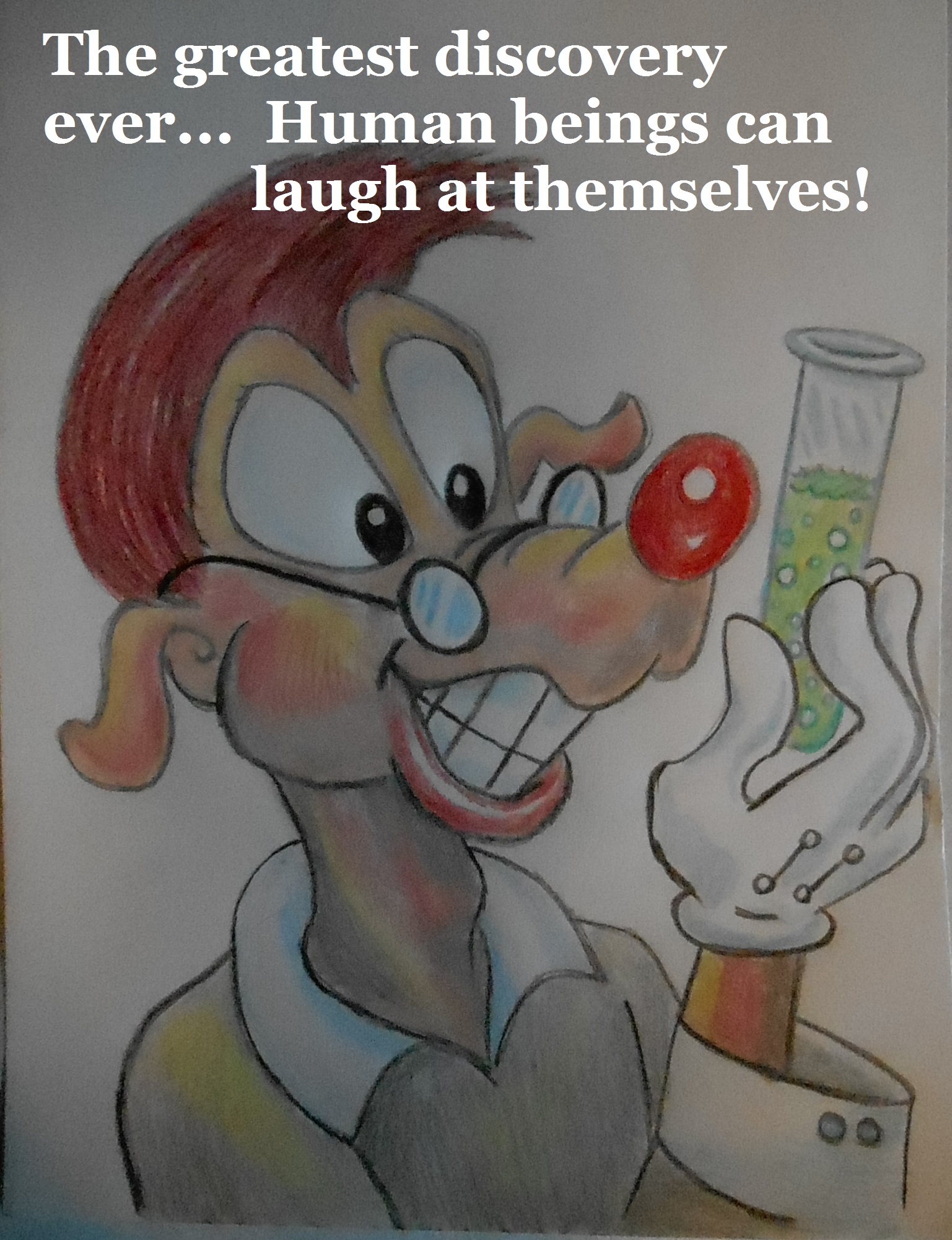
Here you see me doing some serious art-starting. I am working on ideas about how clowns can be compassionate. I am hoping this is true, because I am one… a clown, I mean. But I have some serious noodle and doodle work to do. So I will start with a doodle of Klown Kops from Klowntown’s finest. More will be explained later… and more will be doodled too.
At Mother’s breakfast table we were always encouraged to talk about stuff. That was a given. It was how families operated in the 60’s and 70’s. Mom and Dad not only listened to the mindless drivel coming out of the childish mouths of me, my two sisters, and my stinky little brother, but they also tended to hold forth about things they wished to teach us. We learned Methodist-Church-flavored Christianity and Eisenhower-Republican values. Ike had been president when I was born and got most of the credit for the post-war boom in the economy. We were middle-class people with solid middle-class values.
And then I had the bad sense to grow up and start thinking for myself. Nixon had let me down big-time when I was in high school. I had defended him against my McGovern-leaning loony liberal friends. My best friend was a preacher’s kid, a Methodist preacher’s kid. His father actually believed in progressive nonsense about sex-education for children and helping to feed the poor. And then Nixon turned out to be a liar, a coverer-upper, a cheat, and a bad-word-user. I suspect, though my Dad never admitted it, that he may have voted for Carter over Ford. It was my first time voting, and it actually felt good to use my vote to strike back at the party that betrayed my trust.
Religion, too. In the late seventies a man named Carl Sagan put on a TV show called Cosmos. The man bedazzled my father and I with Science. He taught us that every molecule of us was composed of atoms that could only have been forged in the cosmic furnaces in the centers of stars. He showed us how spectroscopy of the stars could show us what they were made of. He showed us the meaning of Einstein’s special Theory of Relativity. He pulled the universe together for us in a way that could not be undone. And he did it without calling upon the name and blessings of God. But he pointed out that we are connected to everything in the universe and everything is connected to us. To me, that seemed to define God. My religion was changing from Christianity to Saganism. Of course, Mom heard that as “paganism”. Breakfast table talking changed into early morning arguments. We didn’t exactly throw chairs at each other, but some pretty heated and pretty large ideas went flying through the air. Religion and politics became the banned topics at the breakfast table.
So that brings me to the Paffooney points for today. This blog has turned into a place where a disobedient son, a horrible sort of “free-thinker” type of radical hippie pinko goofball, can talk about the loony-liberal progressive ideas that have taken over his good-little Eisenhower-Republican little-boy mind. I spent the last post talking existentially about my religious beliefs. My conservative, old-fashioned friends and family call me an atheist now, but I truly believe in God. It’s just, I recognize the factors behind Christian myths. I bow to the wisdom of Scientists like Sagan, Neil DeGrasse Tyson, and Stephen Hawking… as well as hippie psychologists like Alan Watts… and literary heroes like J.R.R. Tolkien and C.S, Lewis.
I am proud to be an Iowegian (a Mickian word for being from Iowa), yet my birth-State produces gawd-awful Tea Party politicians like Steve King and Joni Ernst. The stuff that comes out of their mouths doesn’t even make good fertilizer. But they are comedy gold. Will Rogers would have pointed out that the jokes will write themselves. All the humorist would have to do is consult the front page of the newspaper. I also live in Texas where the debate over secession from the United States still goes on with new Governor Greg Abbott, a man who is a Rick Perry clone, except that he hasn’t bothered to put on glasses as much to make him smarter. And Texans are looking forward to the next Republican president in 2016. Both Rick Perry and Ted Cruz are running. That doubles Texas’ chances, right? (Boy, howdy, did that missed prediction from 2016 age poorly!) With Global Warming not being accepted as a real thing, the need for giving all our money to the Koch brothers and the Walton family being recognized by both parties in Congress, and looming war with foreign nations that have the bad sense to be “Muslim in nature”, the future looks kinda bleak. But it is a great time to be a humorist, and I am guessing I won’t be doing very much talking at the breakfast table for a while.
I know that you are probably immediately listing all the reasons that my title is totally wacky monkey-thinking in your head. And if you want to lay into me in the comments, you are more than welcome. But the reality is that teachers have to develop the mindset that all kids can learn and all people have value… no matter what. That can be hard to accept when you factor in how corrupted, warped, and badly-taught so many people have turned out to be. It honestly seems, sometimes, that when faced with the facts of how people act… being violent, or greedy, self-centered, thoughtless, un-caring, and willfully stupid… that they really don’t even have value to others if you kill them, let them rot, and try to use them as fertilizer. The plants you fertilize with that stuff will come up deformed.
But the Doctor I have pictured here, the Second Doctor played by Patrick Troughton always seemed to find Earth people delightful. Alien people too, for that matter, unless they were soulless mobile hate receptacles in robotic trash cans like the Daleks, or mindless machines powered by stolen human brains like the Cybermen. There is, indeed, music in every soul, even if some of it is a little bit discordant and awkward. And people are not born evil. The classic study done on Brazilian street kids showed that even with no resources to share and living empty, hopeless lives, the children helped one another, comforted one another, and refused to exploit one another. As a teacher you get to know every type that there is. And there are stupid kids (deprived of essential resources necessary to learning), and evil kids (lashing out at others for the pain inflicted upon them), and needy kids (who can never get enough of anything you might offer and always demand more, MORE, MORE!) Sometimes they drive you insane and make you want to resign and leave the country to go count penguins in Antarctica. But the Doctor is right. No matter what has been done to them, if you get to know them, and treat them as individual people rather than as problems… they are delightful!
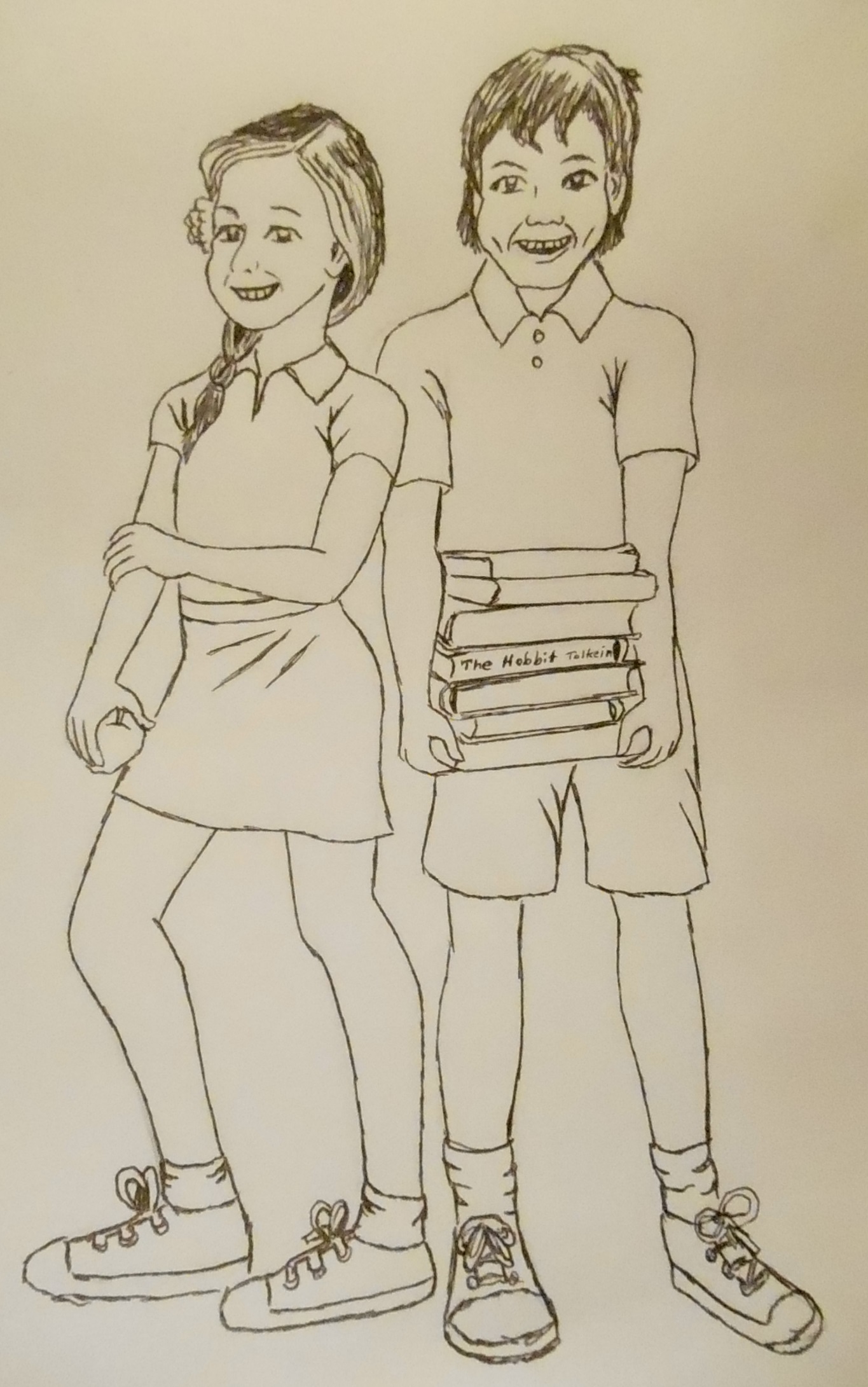
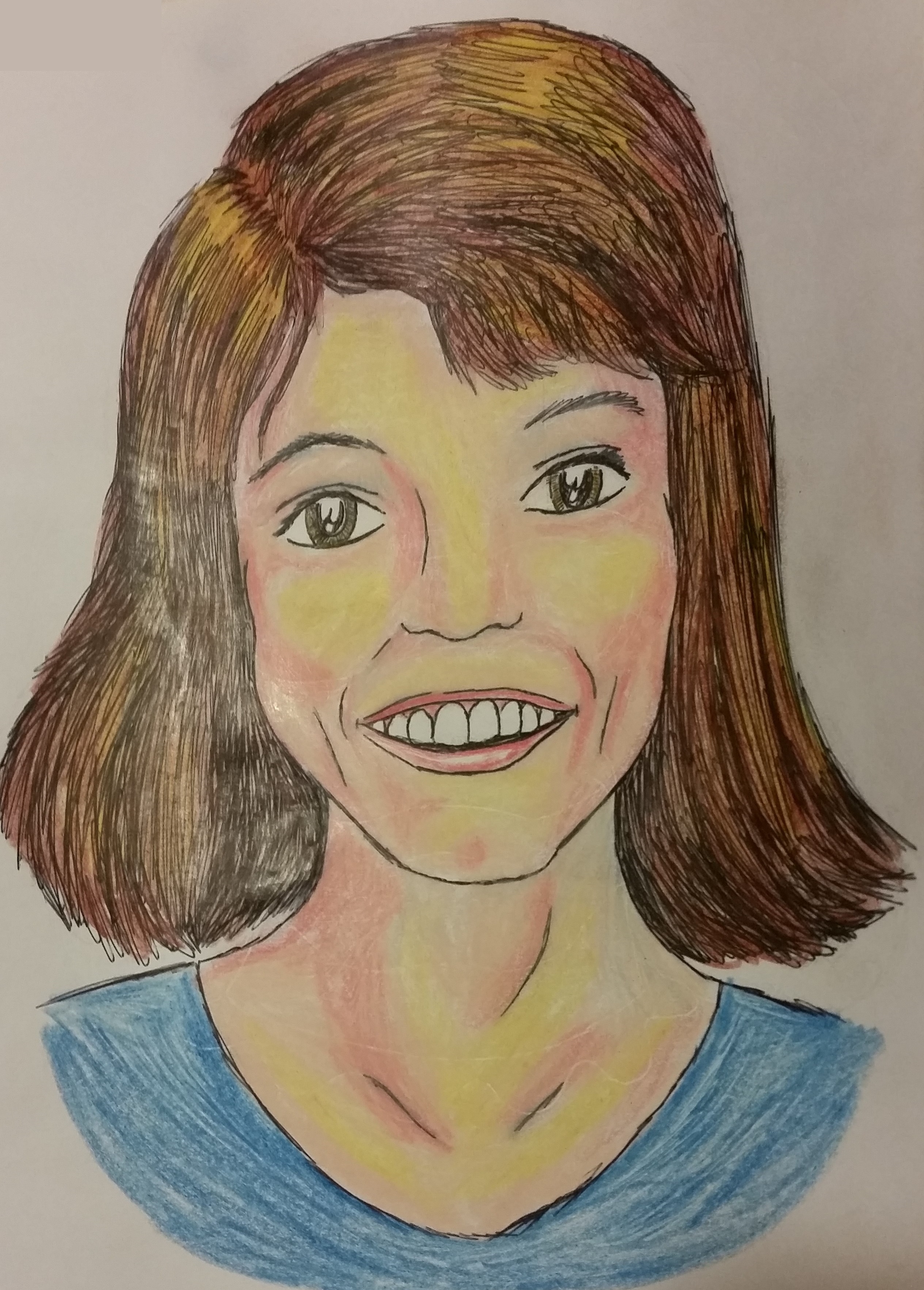
So let me show you a few old drawings of people.
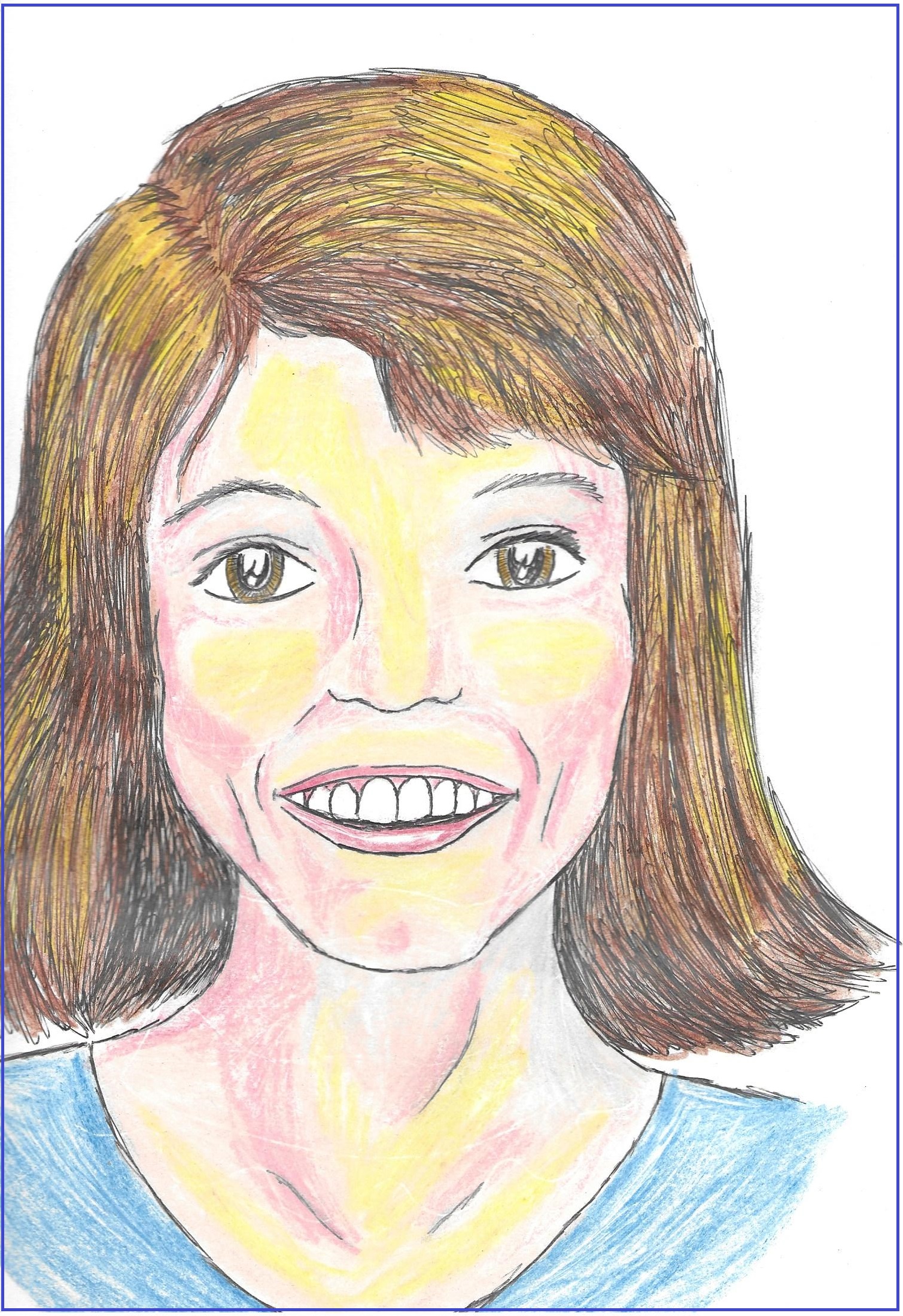
Cute people like Andrew here.
Or possibly stupid and goofy people who never get things right.
Or long-dead people who made their contributions long ago, and sacrificed everything to make our lives different… if not better.
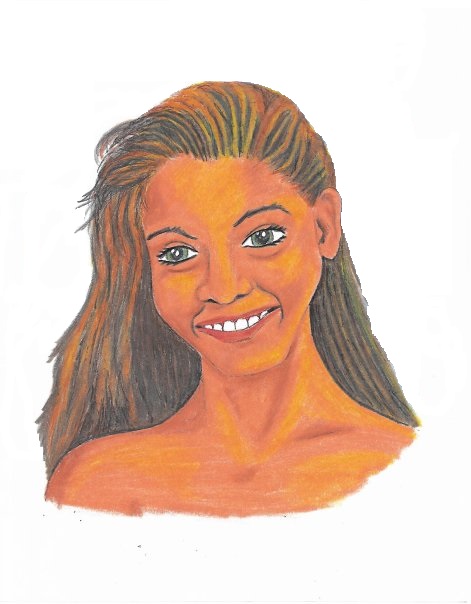
Or young people who live and learn and hopefully love…
And try really hard at whatever they do… whether they have talent or not.
And hope and dream and play and laugh…
And sometimes hate… (but hopefully not too much)…
And can probably tell that I really like to draw people…
Because God made them all for a reason…
even if we will never find out what that reason is.
Like every real, honest-to-God writer, I am on a journey. Like all the good ones and the great ones, I am compelled to find it…
“What is it?” you ask.
“I don’t know,” I answer. “But I’ll know it when I see it.”
“The answer?” you ask. “The secret to everything? Life, the universe, and everything? The equation that unifies all the theories that physicists instinctively know are all one thing? The treasure that pays for everything?”
Yes. That. The subject of the next book. The next idea. Life after death. The most important answer.
And I honestly believe that once found, then you die. Life is over. You have your meaning and purpose. You are fulfilled. Basically, I am writing and thinking and philosophizing to find the justification I need to accept the end of everything.
Leah Cim Reyeb is me, Michael Beyer written backwards.
And you know what? The scariest thing about this post is that I never intended to write these particular words when I started typing. I was going to complain about the book-review process. It makes me think that, perhaps, I will type one more sentence and then drop dead. But maybe not. I don’t think I’ve found it yet.
The thing I am looking for, however, is not an evil thing. It is merely the end of the story. The need no longer to tell another tale.
When a book closes, it doesn’t cease to exist. My life is like that. It will end. Heck, the entire universe may come to an end, though not in our time. And it will still exist beyond that time. The story will just be over. And other stories that were being told will continue. And new ones by new authors will begin. That is how infinity happens.
I think, though, that the ultimate end of the Bookish Journey lies with the one that receives the tale, the listener, the reader, or the mind that is also pursuing the goal and thinks that what I have to say about it might prove useful to his or her own quest.
I was going to complain about the book reviewer I hired for Catch a Falling Star who wrote a book review for a book by that name that was written by a lady author who was not even remotely me. And I didn’t get my money back on that one. Instead I got a hastily re-done review composed from details on the book jacket so the reviewer didn’t have to actually read my book to make up for his mistake. I was also going to complain about Pubby who only give reviewers four days to read a book, no matter how long or short it is, and how some reviewers don’t actually read the book. They only look at the other reviews on Amazon and compose something from there. Or the review I just got today, where the reviewer didn’t bother to read or buy the book as he was contracted to do, and then gave me a tepid review on a book with no other reviews to go by, and the Amazon sales report proves no one bought a book. So, it is definitely a middling review on a book that the reviewer didn’t read. Those are things I had intended to talk about today.
But, in the course of this essay, I have discovered that I don’t need to talk about those tedious and unimportant things. What matters really depends on what you, Dear Reader, got from this post. The ultimate McGuffin is in your hands. Be careful what you do with it. I believe neither of us is really ready to drop dead.
Once you become a published author, the next step is truly humbling. You have to become conversant in the language of Bookish. It is the language of marketing, the language of book promotion, the inexhaustible lexicon of bullish book-hawking.
This blog, Catch a Falling Star, was one of the first steps in that process. The I-Universe Marketing Specialist set it up for me and guided me through the first six months of writing an author’s blog. Still, it was mostly a matter of teaching myself how to blog. The marketing department of I-Universe Publishing also put me in touch with an author’s group on Facebook who would eventually become PDMI Publishing, the publisher that Snow Babies would eventually kill. I learned a lot about both marketing and the realities of publishing from that group, most of whom I am still in touch with on Facebook in spite of Facebook’s transition into the recruitment arm of the MAGA Fascist Armada.
I-Universe was also responsible for starting me on Twitter. Hoo-Boy! Twitter is a different universe than I live in. At the outset all I did with Twitter is re-post my blog entries. I had no followers at all… well, besides what I believe were catfish, spammers, and trolls. Between 2013 and 2017 I believe I only surfed on the rough white-caps of Twitter a total of two times.
But I reached seven books published and hadn’t sold any at all when I came to the conclusion that I had to actually tweet with the twit-wits on Twitter.
Of those first seven books, three of them had nudist characters in them. Primarily the Cobble Sisters, based on the combination of my twin cousins who were not nudists, a set of twins I knew from Iowa who were not my cousins and also not nudists, and twin blond girls I taught in Texas who spent time talking about visiting nude beaches and trying to embarrass me by inviting me to visit the one in Austin at Lake Travis known as Hippie Hollow. The books were Superchicken, Recipes for Gingerbread Children, and The Baby Werewolf. My connection to nudism came through a former girlfriend who worked with me in school and whose sister and brother-in-law lived in the clothing-optional apartment complex in Austin.
So, when I started Tweeting like a songbird with a tin ear for music, I attracted some really odd followers. Other writers, sure. But gay Russians living in England? Tom Hiddleston’s fan club? People who desperately need to talk about the Prophecies of Thoth? They all responded to free-book promotions. And they not only followed me, but engaged with me in ways that appeared in the Twitter notifications. And then came the Twitter nudists.
Now, I admit that I took the foolish step of taking a blogging assignment from a nudist website, promising to visit a nudist park in Texas and write about my impressions of being a first-time nudist. I struggled with my sense of self-worth and body image and finally went to Bluebonnet Nudist Park in Alvord, Texas. I wrote the post and advertised my novels with the nudist website.
And then, Ted Bun, a naturist novelist from England, but running a nudist bed and breakfast in France, made me a member of his nudist-writer group on Twitter. I became connected to nudists enough to write an actual nudist novel, just to see if I could do it.
Nudists not only follow me on Twitter now, but they follow me here on WordPress too.
So, my writer’s Bookish Journey has taken some weird turns, but I am beginning to sell books and getting good reviews from readers. Apparently the secret to selling books is to get completely naked amongst other naked people. I still can’t claim to know anything at all about marketing, though. I am seriously illiterate in the whole Bookish language.
Creating myself as an author meant making some conscious choices at the beginning. I made some very clear ones. First of all, I intended to write as much about my real life as I possibly could. Accepting, of course, the fact that my real life was infested with imaginary people and events. There was the faun that slept in my bed with me every night in the form of a large, black pillow my sister made for me as a 4-H project. There were the three-inch-tall fairies that had a complete underground empire that surfaced at the roots of the old willow tree by the Rowan school building and community center. There was the gryphon that circled the skies looking constantly to swoop down and eat me at any opportunity. So, it wasn’t as much about realism as it was surrealism. It was necessary to protect my traumatized psyche from the damage I sustained as a ten-year-old.
Of course, I had literary heroes and inspirations to go by. I read some key books as a college student that deeply influenced how I wanted to write.
Winesburg, Ohio is the first major influence that affected the stories I began writing in my college years. Sherwood Anderson was writing about his own hometown in this short-story cycle, basing Winesburg on his home town of Clyde, Ohio in the very early 1900s.
Arguably he wrote stories about real people from his renamed home town. Thus, I renamed Rowan, my home town, Norwall, mixing up the letters from Rowan and adding two letter “L’s.” His stories were all themed about the loneliness and longings of a small Midwestern town. I would make mine about breaking out of the cages loneliness builds with the people who surround you.
I also determined that like Mark Twain, I would give my characters a sense of realism by basing them on real people from Rowan, Belmond (where I went to high school), and Cotulla, Texas (where I would teach for 23 years.) And I would change some basically minor physical details to hide their true identities behind names I found in the Ames, Iowa phone book from 1978. But I always tried to give them their authentic voices, though that often meant translating Texican and Hispanish into Iowegian.
And like Twain vowed to write stories only about the 19th Century, I decided to only set my stories in the last half of the 20th Century.
Of course, imagination is not easily limited, so I had to also accept that some of my stories of the science-fiction persuasion would be set in the 56th Century in the Orion Spur of the Sagittarius Spiral Arm of the Milky Way Galaxy.
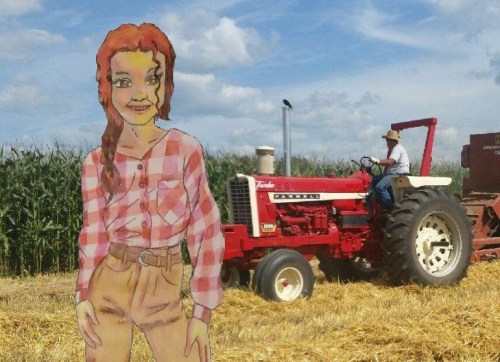
And even before I discovered the genius of David Mitchell through his spectacular novel, Cloud Atlas, I had begun to explore how stories could be expanded and connected and revisited through shared characters, shared histories, and shared places, all of which develop, grow, or deteriorate over time. All things are connected, after all. Anita Jones from that first picture, and Brent Clarke in the last picture were both in the first novel, Superchicken, set in 1974, and Anita appears as an adult in Sing Sad Songs set in 1985, while Brent appears in the last novel in my timeline, The Wizard in his Keep, set in 1999.
Once I settled into a publishing plan where I was basically in control of the whole process, the center of my world became the execution of my overall plan to commit acts of actual literature. I had to decide what I wanted to write and the reasons why I was going to write it.
Surrealist Reasons for the Season.
I began the most serious part of my journey into authorship once I was fully retired from my last teaching job. And the darkest part of that truth is that if I weren’t ill enough to be forced to leave teaching, I would still be doing that. It is what God made me for, if there is a God. But since I am stuck in this retirement reality, I really have to use fiction for what fiction-writing is for.
And let me assure you, I know what writing fiction needs to mean for me. I need to rewrite the story of my life in the surreal reality of perceived truth. And what does that mean in simple words? I have to lie a lot. Because fiction is lying in order to reveal the truth.
Two of the most important books I wrote tell the same story for the same purpose.
The Two Stories are really One Story.
I had a childhood full of monsters. And who I became in adult life was not done in spite of what those monsters did to me, but because of it. I was sexually assaulted as a ten-year-old. What he did to me was not pleasurable in any way. He tortured me because causing pain turned him on. I was severely traumatized by the experience. So much so that I experienced PTSD-induced amnesia for a while. These two books are about my fear of monsters and evil, and the deeply embedded fear that when directly faced with evil, I would not know what it really was.
Things in the two novels are not exactly what they seem.
Torrie Brownfield, the Baby Werewolf, is not a monster. He is a boy who suffers from a genetic hair disorder called hypertrichosis, the same disorder that caused the star of Barnum’s freak show, Jojo the dog-faced boy, to have excessive hair growth.
He looks like a monster, but he is really the sweetest, most innocent character in the story.
..
..
..
The Cobble Sisters, both Sherry and Shelly, are nudists. That is a detail that was both kinda true about the real twin girls that inspired the characters, and true enough about these characters in the story to make fans of my fiction from real nudists I befriended on Twitter.
The nudism, however, symbolizes innocence and truthfulness. Sherry labors in both books to get the other members of the Pirates’ Liars’ Club to accept nudism and try it for themselves. Sherry tells them repeatedly that nudists are more honest than other people because they don’t hide anything about themselves.
The ultimate villain of both novels is, ironically, one who hides everything and manipulates from the shadows.
Grandma Gretel is the main character of Recipes for Gingerbread Children. She is a story-teller that has to come to terms with her own monsters from the past. She is a survivor of the Holocaust during WWII. She lost her entire family to the monsters of the Third Reich.
Ironically, she is the one who, through stories and her own keen perceptions, reveals the ultimate villain and his evil. She also, through stories, is coming to terms with her own trauma and loss.
So, what I am saying about my bookish journey at this point is that I have to write the novels I am writing because they allow me to rewrite the world I live in and the facts of my past life in it. I am rewriting myself. I am becoming the me I need to be by writing.
Of course, I am not yet done talking about my bookish journey. Keep an eye out for Part V.
As I indicated in Part II, I killed PDMI Publishing with my first contest novel, Snow Babies. Not because it was that bad of a novel. Rather, it was the endless compounding of my bad luck over time, caused by the Publishing Gods’ keen desires to keep my stories from being generally read and enjoyed. Fickle and cruel are the Publishing Gods.
I took some of the most memorable events in my time as a teacher, put them in a cook-pot and added a batter made of characters based on real teachers I have taught with, learned from, and copied their methods, mixed it with a wooden whisk made of fairy tales, and then baked it with the high heat of the love of teaching to make the next manuscript I would submit to the same YA Novel contest, the Rossetti Awards.
I thought it was an excellent novel. And, like Snow Babies before it, it made the final round of the judging. And there was a range of prizes for the best in about five categories of YA novel for which Magical Miss Morgan qualified for two of them. If it had taken any of those prizes, it would’ve gained me the attention of major publishers looking for new talent.
Alas, there were more novels in competition in that second contest, and I only won the placement in the final round of judging. The Publishing Gods are powerful and implacable.
I submitted it to another publisher that I meant to kill, and they promptly rejected it. They could not handle many novels, got an avalanche of mostly terrible novels, and rejected mine after the first page didn’t dazzle them enough. My consolation had to be that, even though they didn’t give me a contract, they did die shortly after, being closed the next time I checked on them.
Mike Murphy and Blueberry Bates, two of Miss Morgan’s students
So, I gritted my teeth and tried the pay-to-publish publishers one more time. I chose Page Publishing because they only cost a third of what I-Universe did. I could, at that time, barely still afford it with my partially-restored credit rating.
Unfortunately, as a Publisher, Page was worth only one one-hundredth of the value of I-Universe. They didn’t actually have editors. I basically edited the whole thing myself. Their “editor” only communicated to me once with a proof-read copy that I basically had to re-edit and change everything back to being correct English usage. The major editorial contribution? They tried to change every instance of my use of Miss Morgan to Ms. Morgan. Even in the title. The young bozo-editor didn’t understand that even married female teachers are addressed as “Miss.”
As hard as they tried to mess up the novel for me, almost as badly as Publish America did to AeroQuest, I was pleased with the final outcome and the ten copies they sent me. However, I had already vowed to myself that I would never again trust my work to fly-by-night small publishers. And, of course, no major publisher was accepting unsolicited manuscripts. So, I began my relationship with Amazon Kindle Direct Publishing.
From the time I could first remember, I was always surrounded by stories. I had significantly gifted story-tellers in my life. My Grandpa Aldrich (Mom’s Dad) could spin a yarn about Dolly O’Rourke and her husband, Shorty the Dwarf, that would leave everybody in stitches. (Metaphorical, not Literal)
And my Grandma Beyer (Dad’s Mom) taught me about family history. She told me the story of how my Great Uncle, her brother, died in a Navy training accident during World War II. He was in gun turret aboard a destroyer when something went wrong, killing three in the explosion.
Words have power. They can connect you to people who died before you were ever born. They have the power to make you laugh, or make you cry.
Are you reading my words now? After you have read them, they will be “read.” Take away the “a” and they will change color. They will be “red.” Did you see that trick coming? Especially since I telegraphed it with the colored picture that, if you are a normal reader, you read the “red” right before I connected it to “reading.”
Comedy, the writing of things that can be (can bee, can dee, candee, candy) funny, is a magical sort of word wrangling that is neither fattening nor a threat to diabetes if you consume it. How many word tricks are in the previous sentence? I count 8. But that wholly depends on which “previous sentence” I meant. I didn’t say, “the sentence previous to this one.” There were thirteen sentences previous to that one (including the one in the picture) and “previous” simply means “coming before.” Of course, if it doesn’t simply mean that, remember, lying is also a word trick.
Here’s a magic word I created myself. It was a made-up word. But do a Google picture search on that word and see if you can avoid artwork by Mickey. And you should always pay attention to the small print.
So, now you see how it is. Words have magic. Real magic. If you know how to use them. And it is not always a matter of morphological prestidigitation like this post is full of. It can be the ordinary magic of a good sentence, or a well-crafted paragraph. But it is a wizardry because it takes practice, and reading, and more practice, and arcane theories spoken in the backs of old book shops, and more practice. But anyone can do it. At least… anyone literate. Because the magic doesn’t exist without a reader. So, thank you for being gullible enough for me to enchant you today.
Because I have glaucoma and am probably losing my eyesight during this pandemic, I am going to show you drawings of eyes today. These are Mickey’s boy-eyes.These are Davalon’s eyes, the alien star child of Catch a Falling Star.Dilsey’s eyes. I’ve always had a thing for brown-eyed girls.Dilby’s foolish cartoon eyesFirefang’s eyes. She claims to be a red dragon in human form.Fox eyesThe eyes of Gilchrist the BlacksmithGrampy eyes (Dilsey’s Grampy)Angry duck eyesBeast eyesIsland girl and shipwrecked boy eyesMike and Blueberry’s eyesRadasha’s faun eyes
My Bookish Journey (Finale)
Like every real, honest-to-God writer, I am on a journey. Like all the good ones and the great ones, I am compelled to find it…
“What is it?” you ask.
“I don’t know,” I answer. “But I’ll know it when I see it.”
“The answer?” you ask. “The secret to everything? Life, the universe, and everything? The equation that unifies all the theories that physicists instinctively know are all one thing? The treasure that pays for everything?”
Yes. That. The subject of the next book. The next idea. Life after death. The most important answer.
And I honestly believe that once found, then you die. Life is over. You have your meaning and purpose. You are fulfilled. Basically, I am writing and thinking and philosophizing to find the justification I need to accept the end of everything.
And you know what? The scariest thing about this post is that I never intended to write these particular words when I started typing. I was going to complain about the book-review process. It makes me think that, perhaps, I will type one more sentence and then drop dead. But maybe not. I don’t think I’ve found it yet.
The thing I am looking for, however, is not an evil thing. It is merely the end of the story. The need no longer to tell another tale.
When a book closes, it doesn’t cease to exist. My life is like that. It will end. Heck, the entire universe may come to an end, though not in our time. And it will still exist beyond that time. The story will just be over. And other stories that were being told will continue. And new ones by new authors will begin. That is how infinity happens.
I think, though, that the ultimate end of the Bookish Journey lies with the one that receives the tale, the listener, the reader, or the mind that is also pursuing the goal and thinks that what I have to say about it might prove useful to his or her own quest.
I was going to complain about the book reviewer I hired for Catch a Falling Star who wrote a book review for a book by that name that was written by a lady author who was not even remotely me. And I didn’t get my money back on that one. Instead I got a hastily re-done review composed from details on the book jacket so the reviewer didn’t have to actually read my book to make up for his mistake. I was also going to complain about Pubby who only give reviewers four days to read a book, no matter how long or short it is, and how some reviewers don’t actually read the book. They only look at the other reviews on Amazon and compose something from there. Or the review I just got today, where the reviewer didn’t bother to read or buy the book as he was contracted to do, and then gave me a tepid review on a book with no other reviews to go by, and the Amazon sales report proves no one bought a book. So, it is definitely a middling review on a book that the reviewer didn’t read. Those are things I had intended to talk about today.
But, in the course of this essay, I have discovered that I don’t need to talk about those tedious and unimportant things. What matters really depends on what you, Dear Reader, got from this post. The ultimate McGuffin is in your hands. Be careful what you do with it. I believe neither of us is really ready to drop dead.
Leave a comment
Filed under book review, commentary, humor, illustrations, novel writing, Paffooney, publishing, reading, strange and wonderful ideas about life, writing
Tagged as book review, book reviews, books, reading, writing