

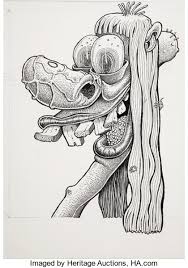
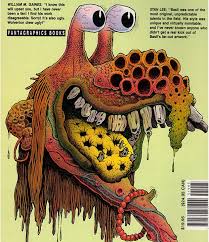
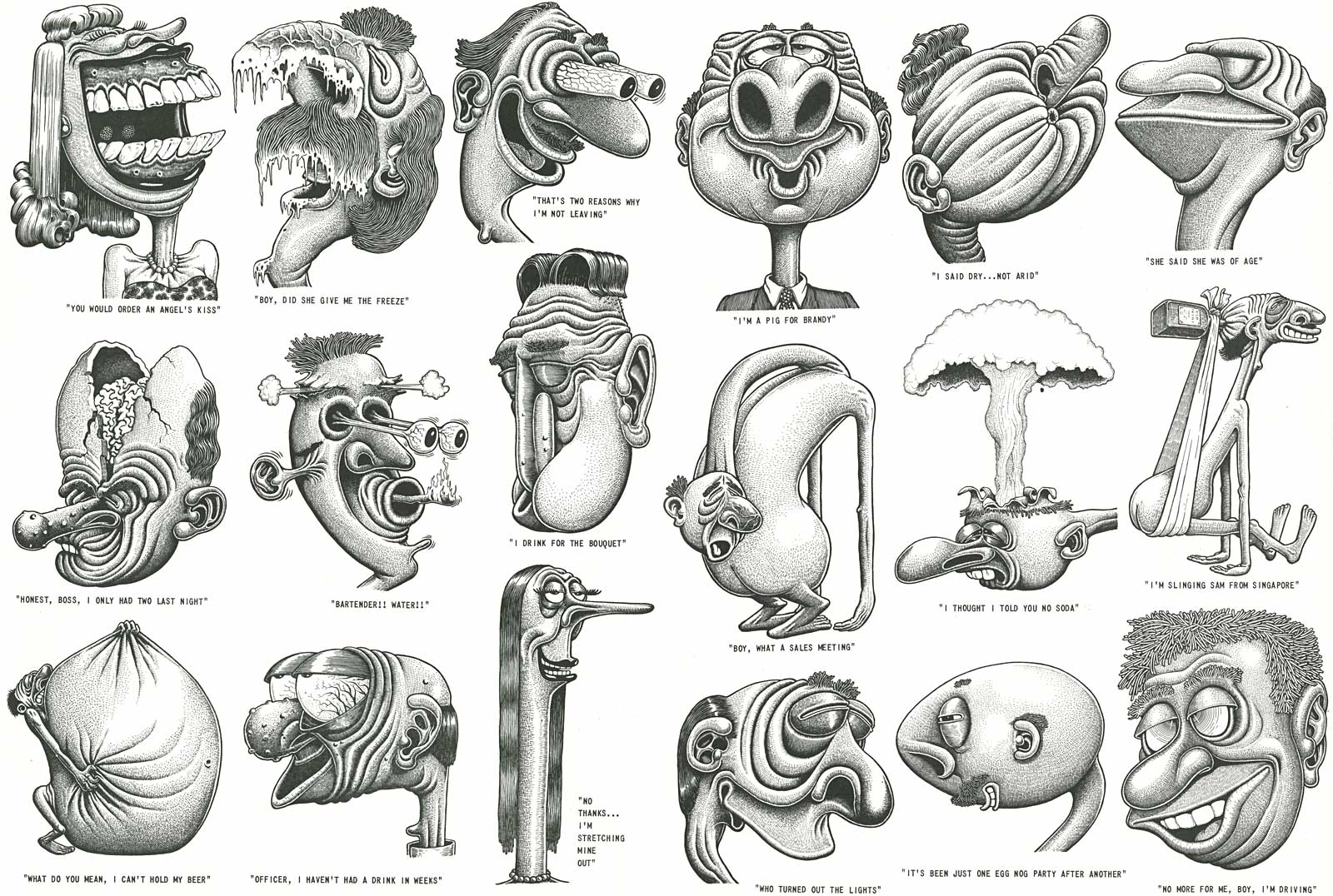
Born in 1931 and lasting in this crazy, mixed-up world until the year 2000, Don Martin was a mixy, crazed-up cartoonist for Mad Magazine who would come to be billed as “Mad Magazine’s Maddest Artist.” His greatest work was done during his Mad years, from 1956 (the year I was born… not a coincidence, I firmly believe) until his retirement in 1988. And I learned a lot from him by reading his trippy toons in Mad from my childhood until my early teacher-hood.

His style is uniquely recognizable and easily identifiable. Nobody cartoons a Foon-man like Don Martin.
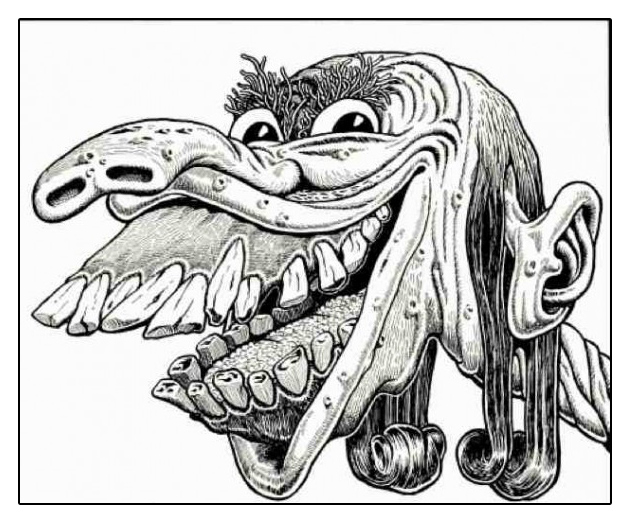
The googly eyes are always popped in surprise. The tongue is often out and twirling. Knees and elbows always have amazingly knobbly knobs. Feet have an extra hinge in them that God never thought of when he had Adam on the drawing board.
And then there is the way that Martin uses sound effects. Yes, cartoons in print don’t make literal sounds, but the incredible series of squeedonks and doinks that Martin uses create a cacophony of craziness in the mind’s ear.
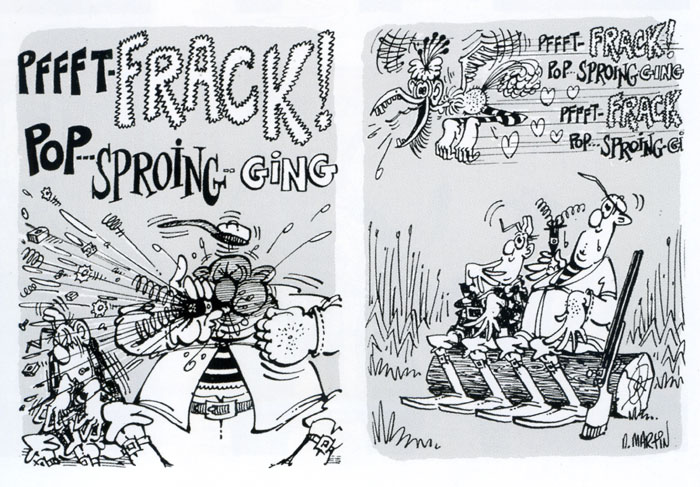
And there is a certain musicality in the rhyming of the character names he uses. Fester Bestertester was a common foil for slapstick mayhem, and Fonebone would later stand revealed by his full name, Freenbeen I. Fonebone.

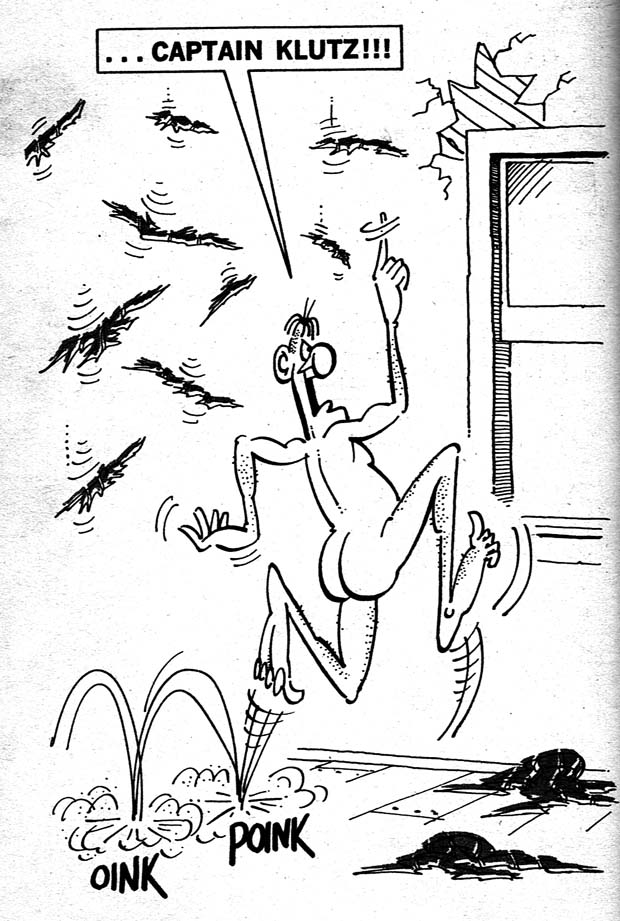
And, of course, one of his most amazingly adventurous ne’er-do-well slapstick characters was the immeasurable Captain Klutz!
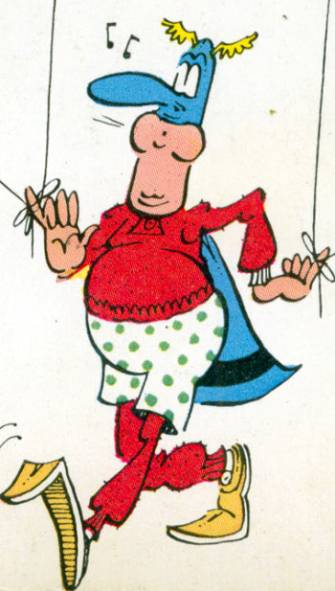
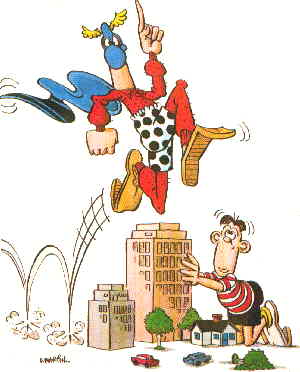
Here, there, and everywhere… on the outside he wears his underwear… it’s the incredible, insteadable, and completely not edible… Captain Klutz!

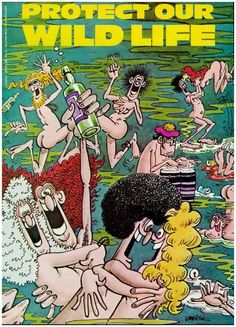
If you cannot tell it from this tribute, I deeply love the comic genius who was Don Martin, Mad Magazine’s Maddest Artist. Like me he was obsessed with nudists and drawing anatomy. Like me he was not above making up words with ridiculous-sounding syllables. And like me he was also a purple-furred gorilla in a human suit… wait! No, he wasn’t, but he did invent Gorilla-Suit Day, where people in gorilla suits might randomly attack you as you go about your daily life, or gorillas in people suits, or… keep your eye on the banana in the following cartoon.

So, even though I told you about Bruce Timm and Wally Wood and other toon artists long before I got around to telling you about Don Martin, that doesn’t mean I love them more. Don Martin is wacky after my own heart, and the reason I spent so much time immersed in Mad Magazine back in the 60’s, 70’s, and 80’s.











 Catch a Falling Star
Winsor McCay
One work of comic strip art stands alone as having earned the artist, Winsor McCay, a full-fledged exhibition at the Metropolitan Museum of Art in New York City. Little Nemo in Slumberland is a one-of-a-kind achievement in fantasy art.
Winsor McCay lived from his birth in Michigan in 1869 to his finale in Brooklyn in 1934. In that time he created volumes full of his fine-art pages of full-page color newspaper cartoons, most in the four-color process.
As a boy, he pursued art from very early on, before he was twenty creating paintings turned into advertising and circus posters. He spent his early manhood doing amazingly detailed half-page political cartoons built around the editorials of Arthur Brisbane, He then became a staff artist for the Cincinnati Times Star Newspaper, illustrating fires, accidents, meetings, and notable events. He worked in the newspaper business with American artists like Winslow Homer and Frederick Remington who also developed their art skills through newspaper illustration. He moved into newspaper comics with numerous series strips that included Dreams of the Rarebit Fiend and Little Nemo in Slumberland. And he followed that massive amount of work up by becoming the “Father of the Animated Cartoon” with Gertie the Dinosaur, with whom he toured the US giving public performances as illustrated in the silent film below;
The truly amazing thing about his great volume of work was the intricate detail of every single panel and page. It represents a fantastic amount of work hours poured into the creation of art with an intense love of drawing. You can see in the many pages of Little Nemo how great he was as a draftsman, doing architectural renderings that rivaled any gifted architect. His fantasy artwork rendered the totally unbelievable and the creatively absurd in ways that made them completely believable.
I bought my copy of Nostalgia Press’s Little Nemo collection in the middle 70’s and have studied it more than the Bible in the intervening years. Winsor McCay taught me many art tricks and design flourishes that I still copy and steal to this very day.
No amount of negative criticism could ever change my faith in the talents of McCay. But since I have never seen a harsh word written against him, I have to think that problem will never come up.
My only regret is that the wonders of Winsor McCay, being over a hundred years old, will not be appreciated by a more modern generation to whom these glorious cartoon artworks are not generally available.
Leave a comment
Filed under art my Grandpa loved, artists I admire, artwork, book review, cartoon review, cartoons, comic strips, commentary
Tagged as Little Nemo in Slumberland, Winsor McCay