
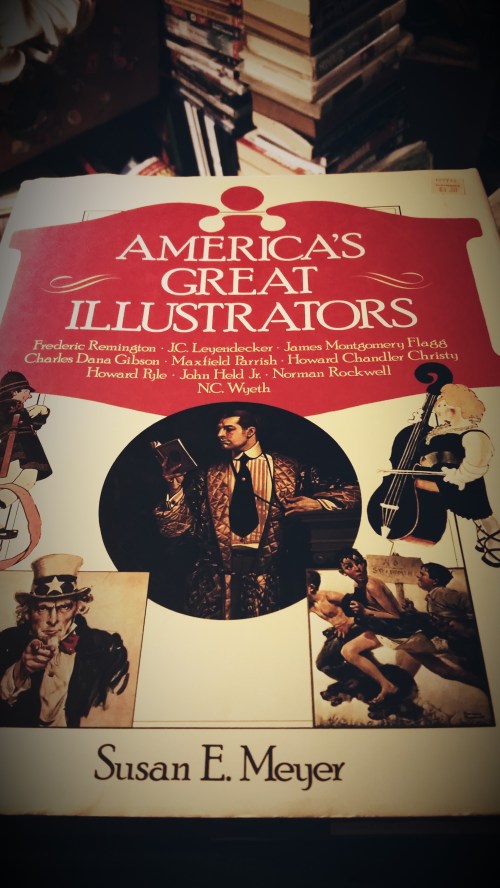
If you cruise the bargain sections in an old used book store like Half-Price Books, eventually you are going to find something priceless. This book I am showing you is that very thing for me.
It was copyrighted in 1978. The inscription inside the front cover says this was a Father’s Day gift on June 19th, 1988. Someone named Gary gifted it to someone named Claude in Burleson, Texas. It was probably a cherished book until someone passed away and the book changed hands in an estate sale.
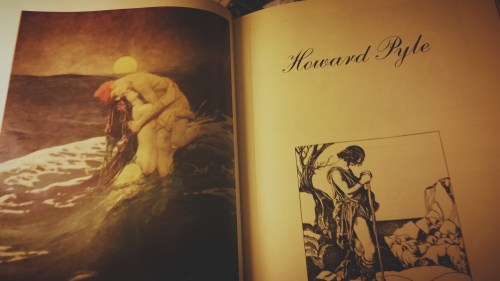
Howard Pyle
The book chronicles the height of the publishing era when being able to print books and reproduce artworks began entertaining the masses. Always before painters and great artists worked for a patron for the purpose of decorating their home in a way that displayed their great wealth. But from the 1880’s to the rise of cinema, magazines and books kept the masses entertained, helped more people to become literate than ever before, and created the stories that made our shared culture and life experiences grow stronger and ever more inventive. The book focuses on the best of the best among a new breed of artist… the illustrators.
These are the ones the book details;
Howard Pyle, N.C. Wyeth, Frederick Remington, Maxfield Parrish, J.C. Leyendecker, Norman Rockwell, Charles Dana Gibson, Howard Chandler Christy, James Montgomery Flagg, and John Held Jr.
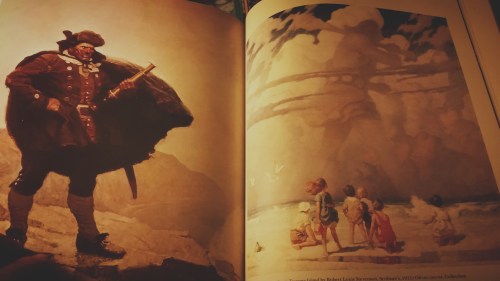
N.C. Wyeth
Wyeth was most famous as a book illustrator for Treasure Island, Kidnapped, other books by Robert Louis Stevenson, Mark Twain, and a famous volume of tales about Robin Hood.
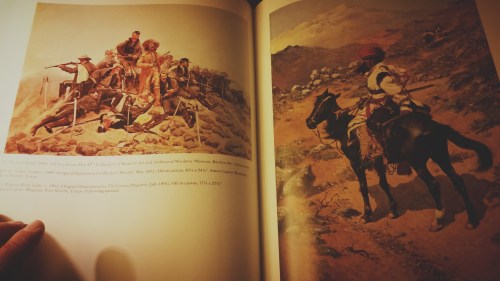
Frederick Remington
Remington is a name you probably know as a maker of Western art. He was a famous painter of cowboys and Indians and the American frontier.
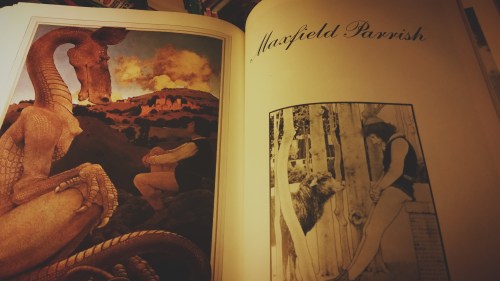
Maxfield Parrish
Maxfield Parrish is my all-time favorite painter. His work is something I gushed about in previous posts because I own other books about his fanciful works painted in Maxfield Parrish blue.
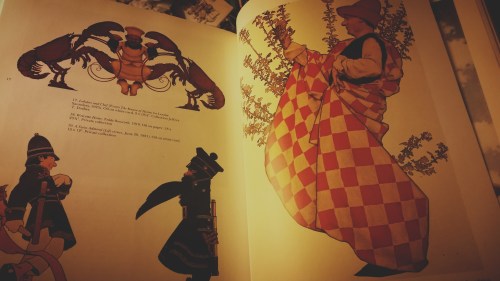
Also Maxfield Parrish
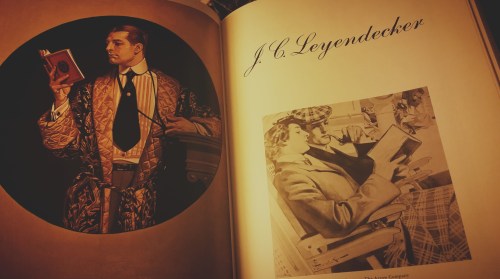
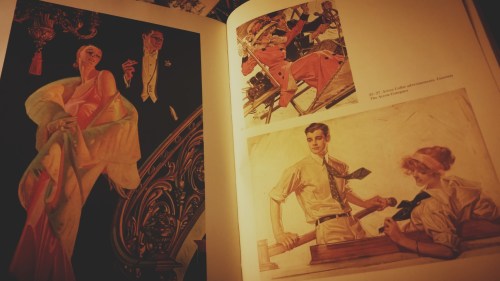
J.C. Leyendecker
You will probably recognize Leyendecker’s work in magazine and advertising illustration as the standard of the Roaring 20’s. His paintings set a style that swept American culture for more than a decade, and still affects how we dress to this very day.
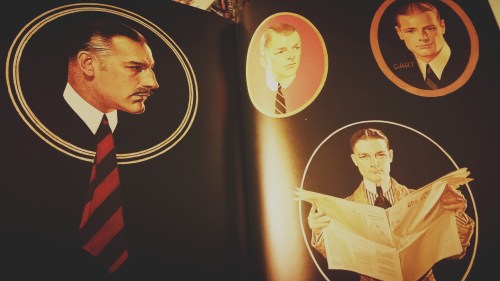
More Leyendecker
Even more from Leyendecker
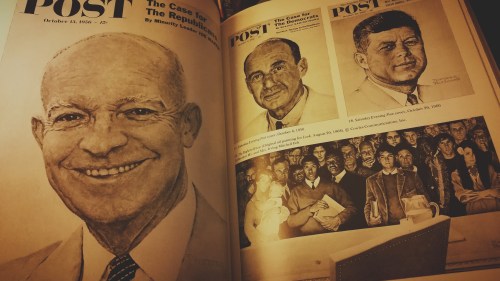
Norman Rockwell
Norman Rockwell and his work for The Saturday Evening Post is still familiar to practically everyone who reads and looks at the illustrations. As you can see he was a master of folksy realism and could do a portrait better than practically anyone.
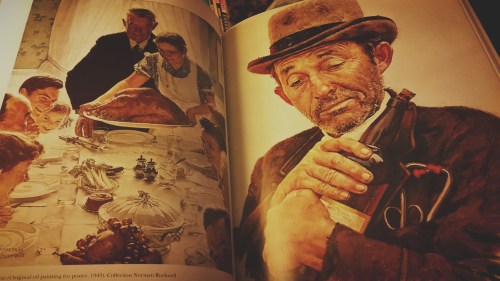
Also Rockwell
I have also written about Norman Rockwell before too. I have half a dozen books that include his works. My wife is from the Philippines and she knew about him before I ever said a word to her about him.
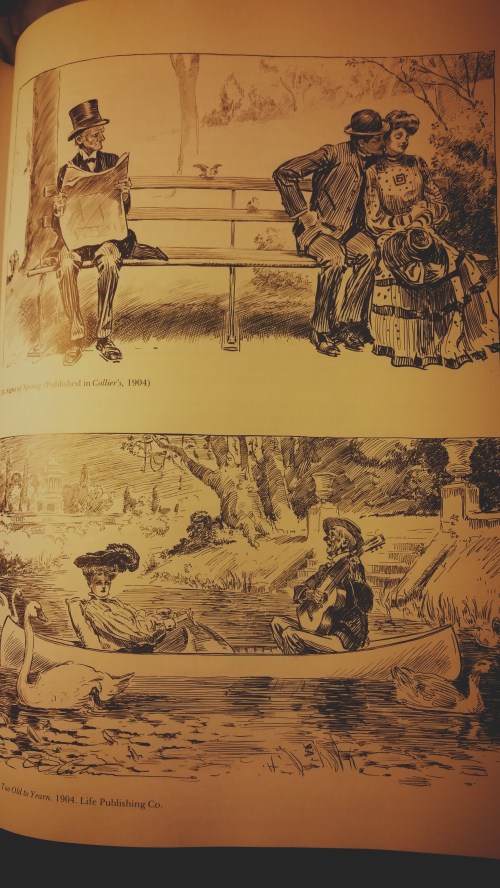
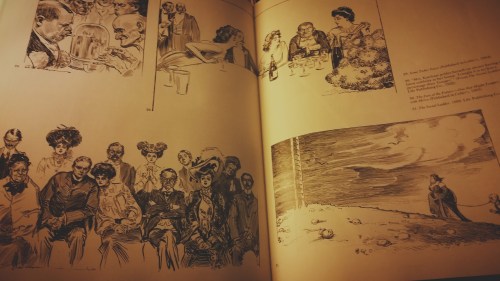
Charles Dana Gibson
As you can plainly see, Gibson was a master of pen and ink. His work for Collier’s and other magazines thrills in simple black and white. More cartoonists than just little ol’ me obsess about how he did what he did.
Also Gibson
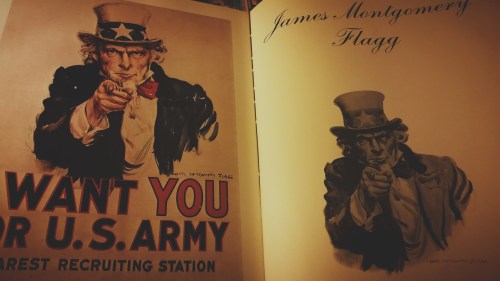
James Montgomery Flagg… with a name like that, who else could it be?
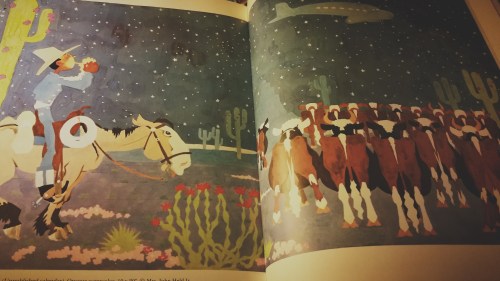
John Held Jr.
The work of Held is stylistically different than all the rest in easily noticeable ways. He’s the guy that made all the big-headed Pinocchio-looking people in the 1920’s. You may have seen his work before, though you probably never knew his name.
This bit of someone else’s treasure hoard will now become a part of my own dragon’s treasure, staying by my bedside for quite a while, while I continue to suck the marrow from each of its bones. I love this book. It is mine, and you can’t have it… unless you find your own copy in a used bookstore somewhere.
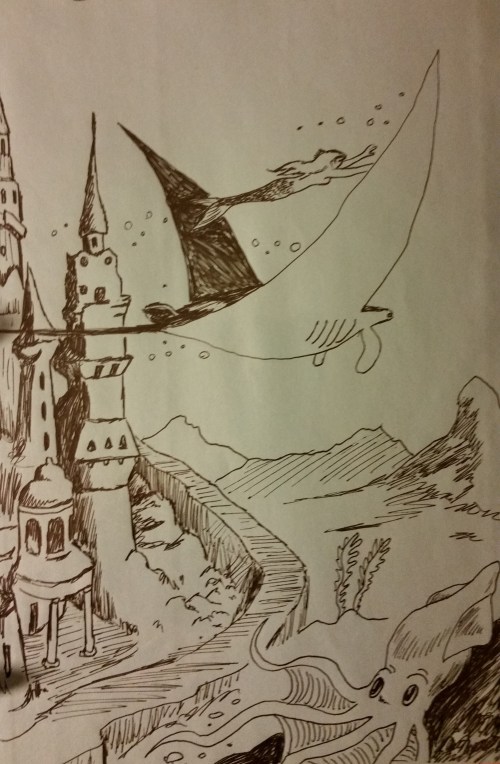
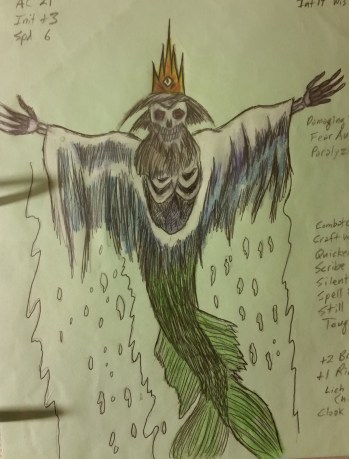
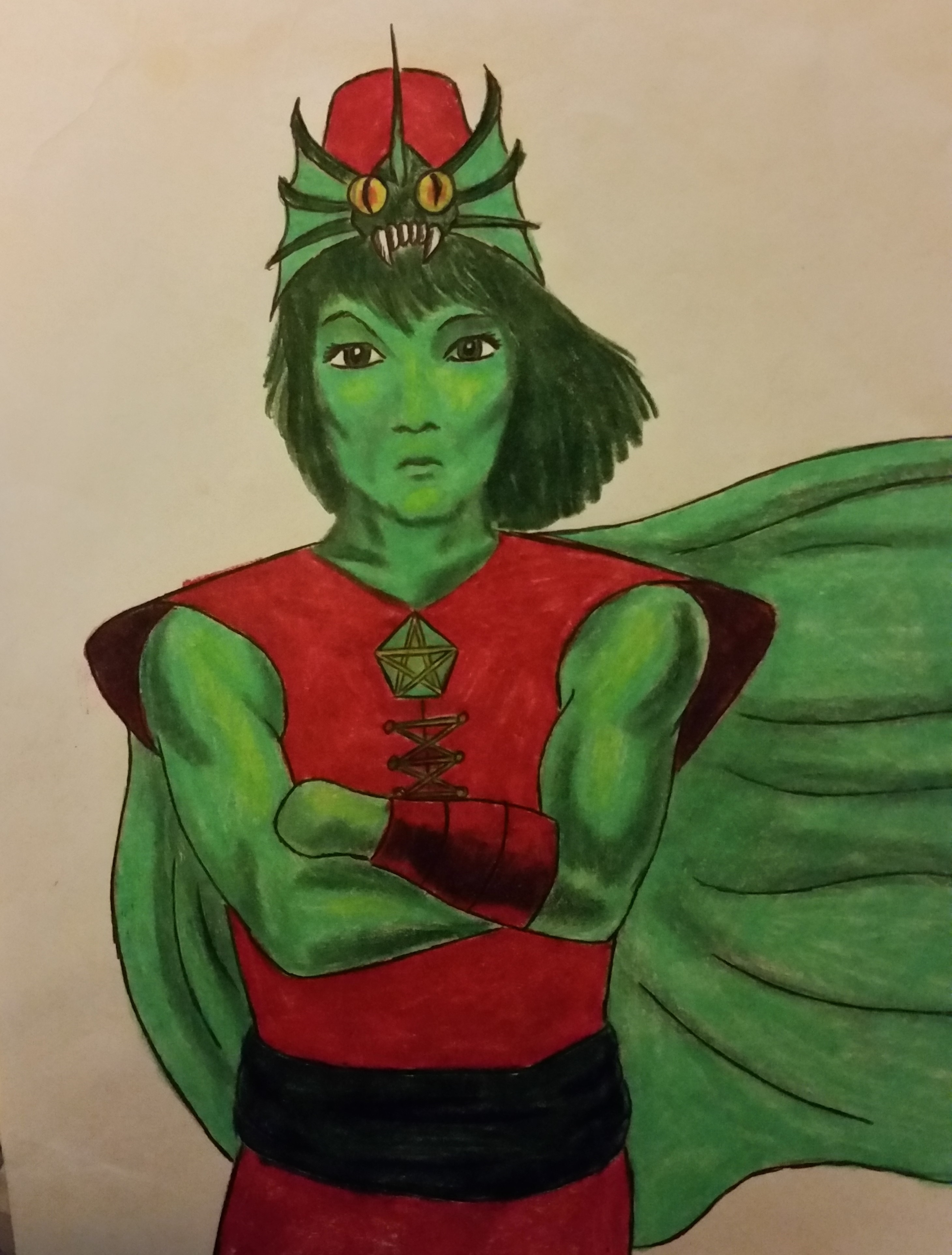
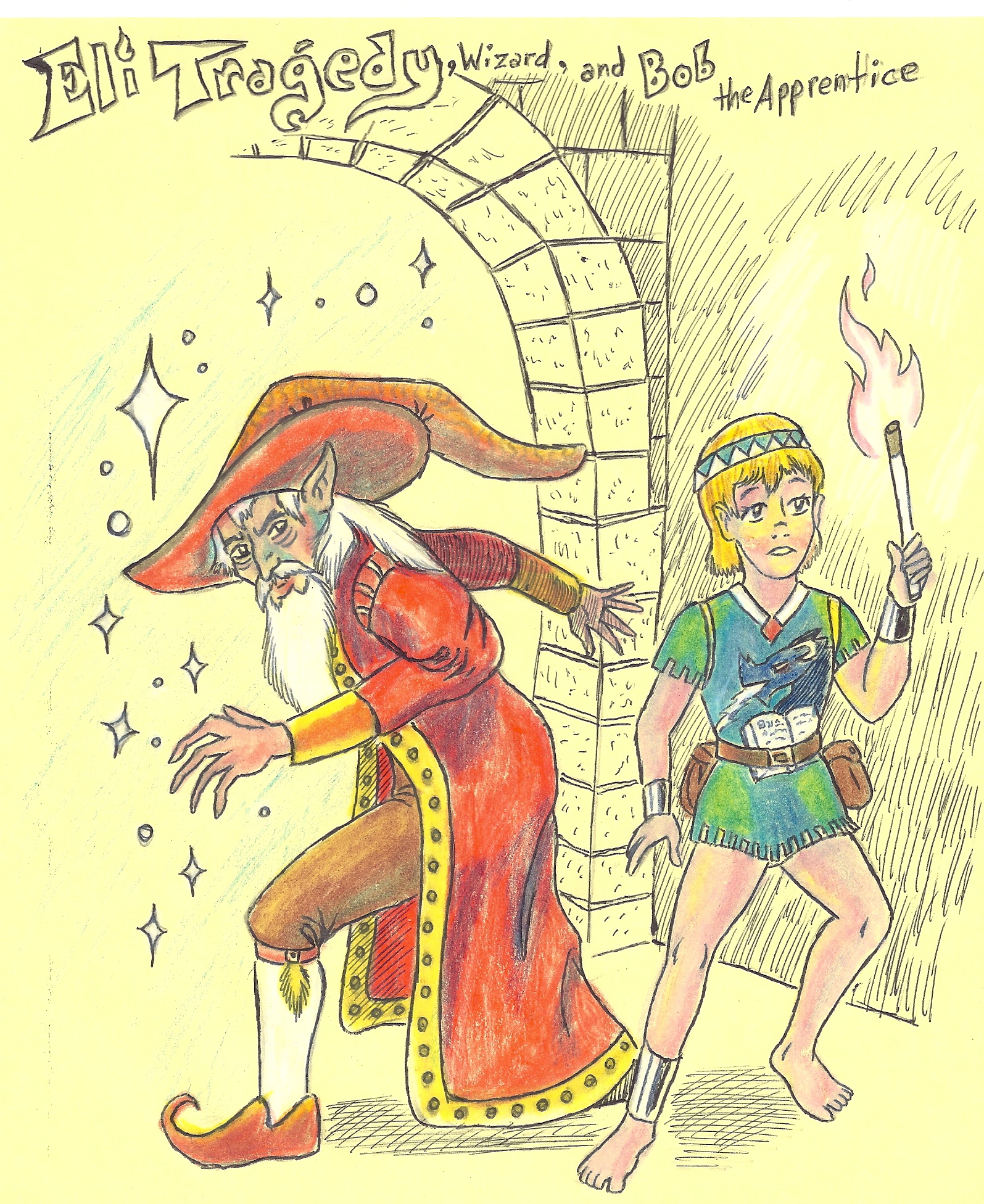
 One of the fascinating features of a table-top role-playing game is the freedom it gives you to go where you could never go in real life. In Dungeons and Dragons we have taken the campaign under the waves among the water-breathers.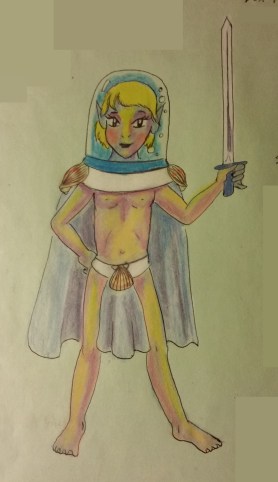








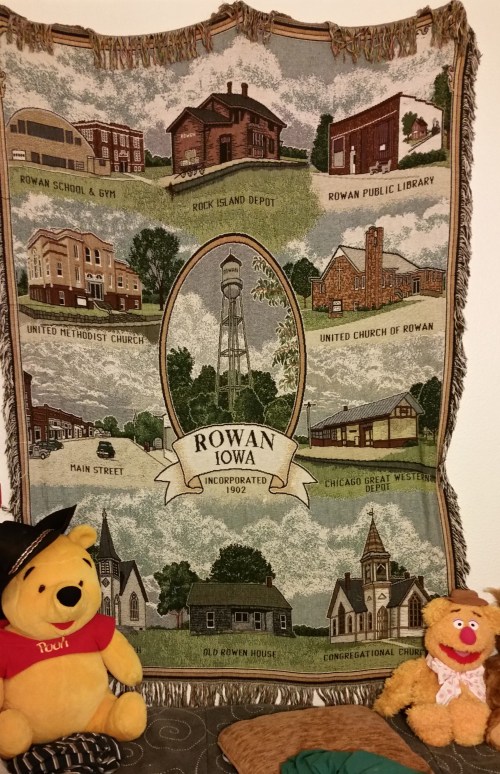
 I have given you a picture Paffooney today of the tapestry created by the town of Rowan, Iowa for its centennial in 2002. I consider Rowan my home town. I was not born there, but it is the scene of most of my childhood. It shaped most of who I am and how I am and what I am. It is the scene of most of my fiction because that’s where the most valuable treasures of Truth are hidden, near the wishing wells of our youth. I keep it on my bedroom wall because, not only do Pooh and Fozzie like it to be there, it is a beautiful thing to look at and reflect upon. It keeps what is most important in my life in focus. I have a lot of physical pain from my six incurable diseases, and pain makes the focus blur at times. But pain is also the source of what wit and wisdom I have to offer. I will continue to contemplate and write and think and create… and draw. I will continue to post at least a portion of the results here. I do desire to make some money with my writing, but that is only a secondary concern. I am not really writing for the people who know me in real life. They already know me and made up their minds about me long ago. They might read this and that and recognize something of themselves, but they are not the ones I am speaking to at this moment. I am talking in prose to those who see my ideas for the very first time with new eyes, no preconceived notions about me. It is for them, the readers I do not personally know, that my magic spells are cast in words.



 Catch a Falling Star
The Clock on the Wall
Who in their right mind writes an essay about a clock on the wall? Well, the “right mind” thing gives me an out. I do watch the clock on the wall. Especially now that I am old, and the sand in the hour glass is running out. The clock on the wall can be quite entertaining. Especially one like the cuckoo clock that hangs in my parents’ front entryway. On the hour, the dancers twirl and the two goofballs in lederhosen saw away at the log they will never be able to cut in two.
My wife and I gave that clock to my parents as a gift for their 50th wedding anniversary. We bought it in Texas and brought it on a visit back to the family farm in Iowa. Having old German relatives as a boy, I remember waiting impatiently for the clock to strike in Great Aunt Selma’s house, anxious to see the cuckoo pop out and the clockwork entertainment do its little mechanical show. I’d have gladly wished on a star for the hours to pass instantly… to see the show again right away… and be older and wiser and able to do more. Back then it seemed like older folks like Aunt Selma lived forever, with her dried-apple face and German accent. Accumulated time seemed to have majesty and power. It was magical.
But now I am old. My joints hurt every time I move. I can’t get out of bed of a morning easily. Parts of me that I used to take for granted no longer work. I have forgotten what it feels like to feel good and full of energy. The time on the face of this old clock hasn’t changed in nearly a decade. My parents don’t keep it wound. We no longer look forward to the clock-Kinder dancing so often. If the clock stays forever at five after four, maybe the grim reaper won’t come knock at the door.
I have always believed that there was magic in old cuckoo clocks. It was a simple, earnest faith in magic that only a child can truly know. But now, as an old man, I remember.
3 Comments
Filed under art my Grandpa loved, autobiography, commentary, family, feeling sorry for myself, humor, metaphor, strange and wonderful ideas about life
Tagged as clock magic, German cuckoo clocks, humor, magic, memory, metaphors for life, time passing