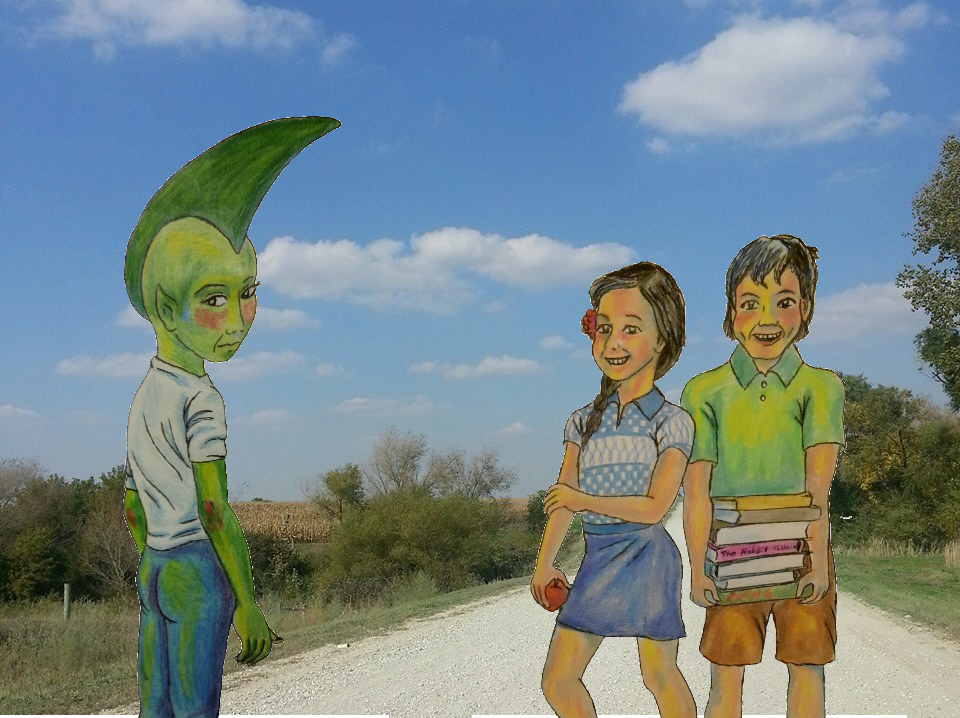
Sometimes the creative brain gets a little too hot and needs time to cool. That means I need a meaningless filler post to maintain my every-day posting. So, I give you a picture of Mike Murphy carrying his girlfriend, Blueberry Bates’ books home from the bus stop on a country road in Iowa. And, of course, they happen to meet an alien named George Jetson, whose father named him after a character on his favorite Earther TV show from the 60’s. It is a strange thing to have your brain over-heat from too many creative neurons firing at the same time. But it can lead to notions of intergalactic peace and cultural exchange… or racist comments like, “Tellerons have heads that look like giant boogers!” But I should be able think more rationally tomorrow. I hope that turns out to be a good thing.
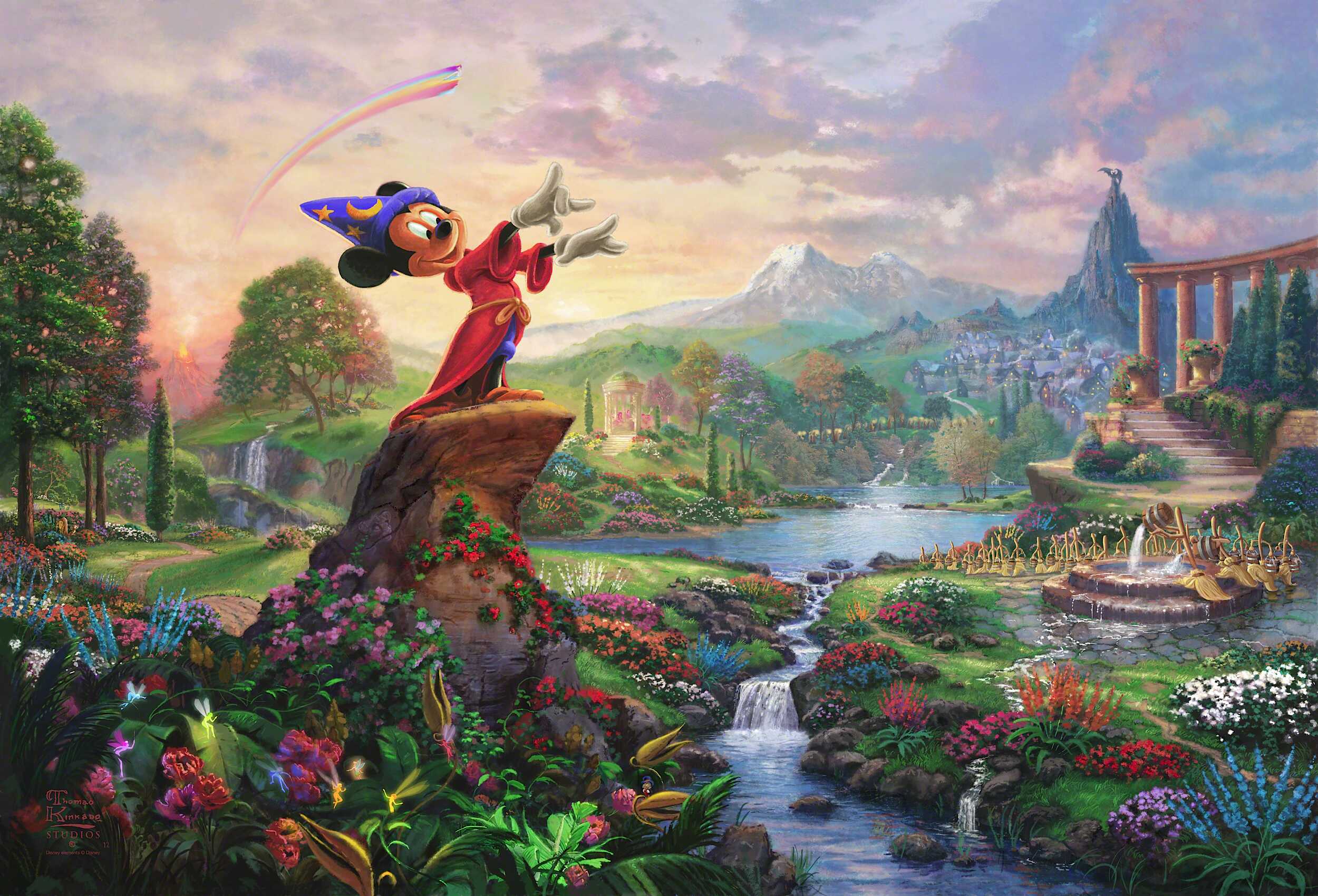
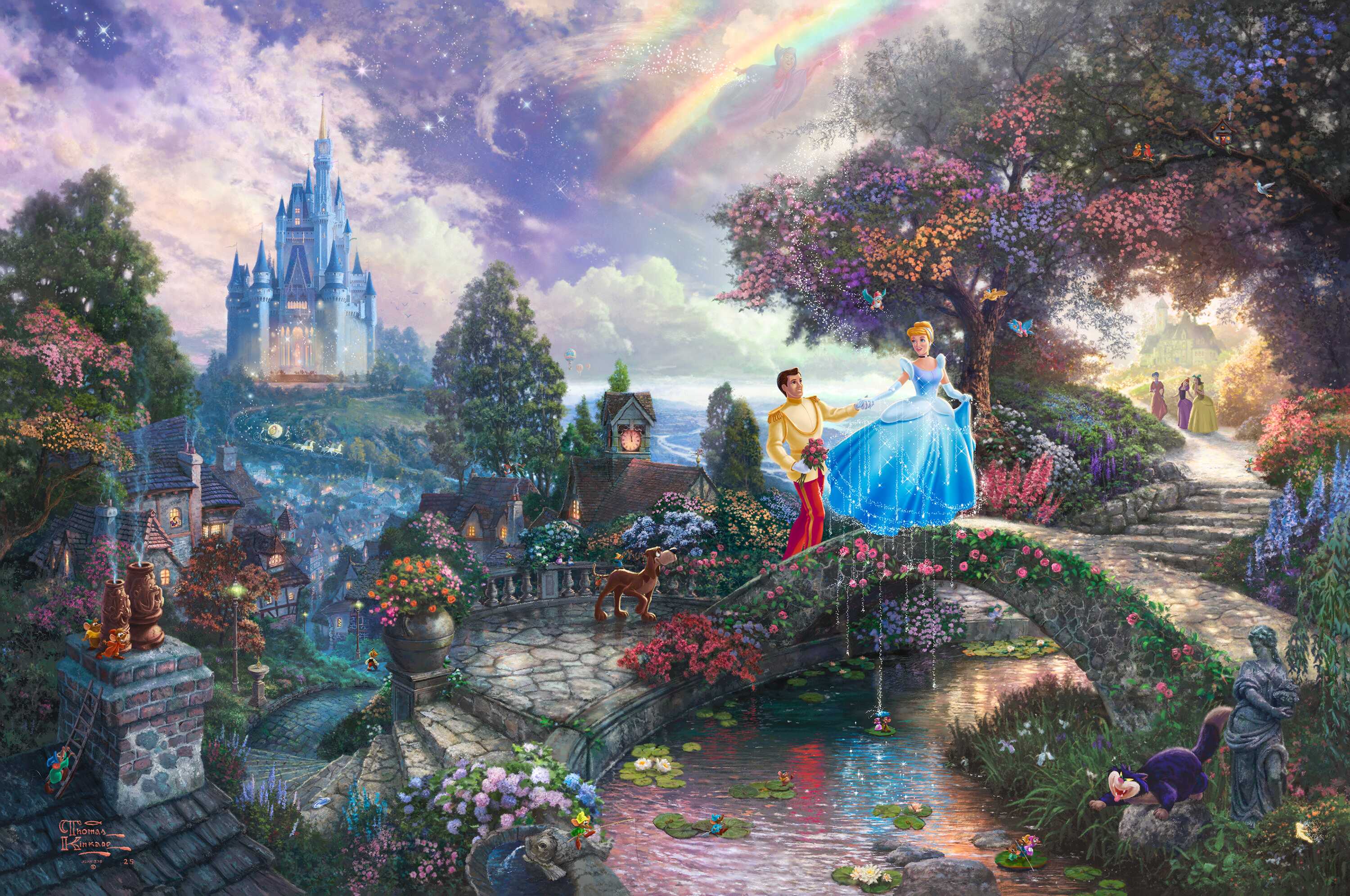
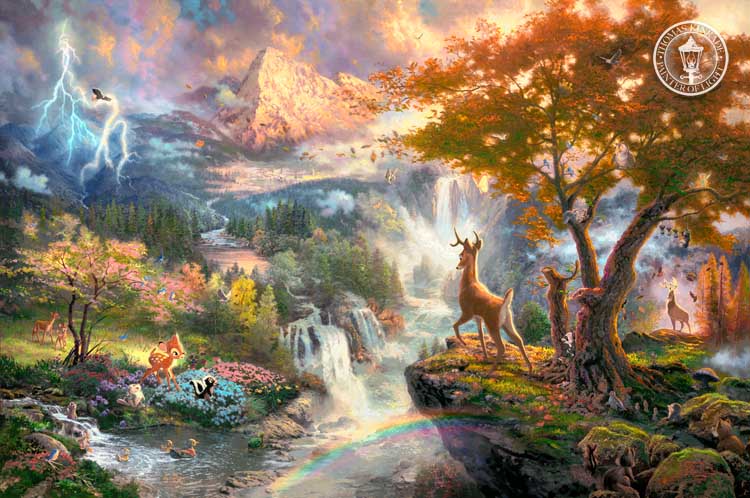
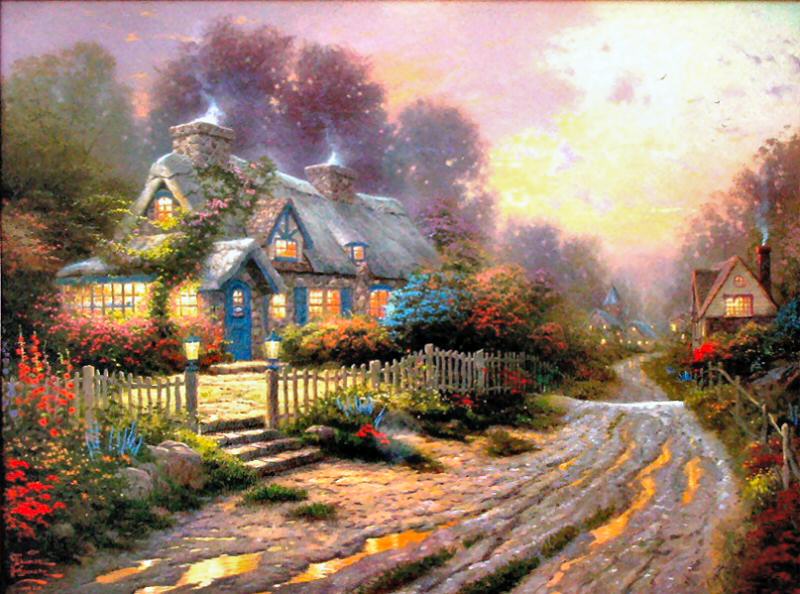
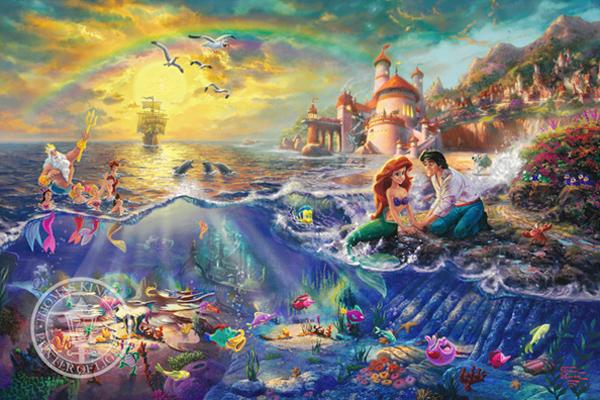
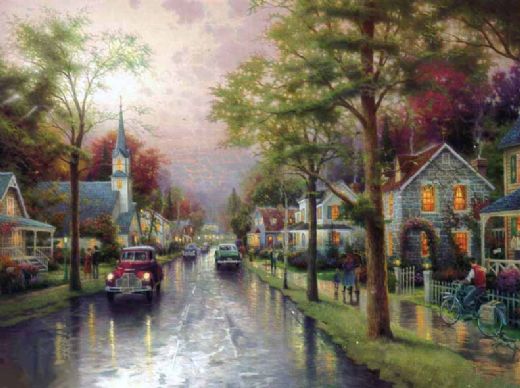
I honestly have a thing for artists that critics hate and common folk like my parents and grandparents loved. Norman Rockwell is a bit like that. He enjoyed commercial success as a magazine illustrator. That is about as far from avant garde art as you can get. But what can I say? I don’t call myself an artist. I am a cartoonist and all around goofball. I don’t do serious art. So the questions surrounding Thomas Kinkade bounce off my tough old non-critical hide like bullets off the orphan of Krypton. I love his pictures for their gaudy splashes of color, his way with depicting puddles and water of all sorts (splashes of splashes), and his rustic homes and landscapes of another era. This is a man who does lovely calendar art and jigsaw puzzle art. He is roundly criticized for factory production of “original” oil paintings which are actually a base he created and made a print of painted over by an “assistant” artist or apprentice. But I don’t care . I like it. And you used to be able to see his originals without going to museums, in art stores at the shopping mall. He is unfortunately dead now. For most great artists, that makes their work more valuable and more precious. Kinkade’s art hangs in so many homes around the country already that his fame has probably already reached its peak. Look at these works that he did for Hallmark and Disney and various other mass-market retail outlets. I dare you not to like it.
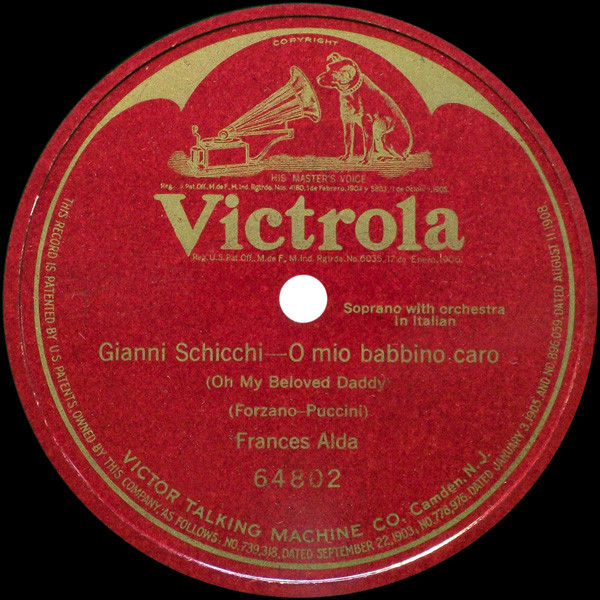
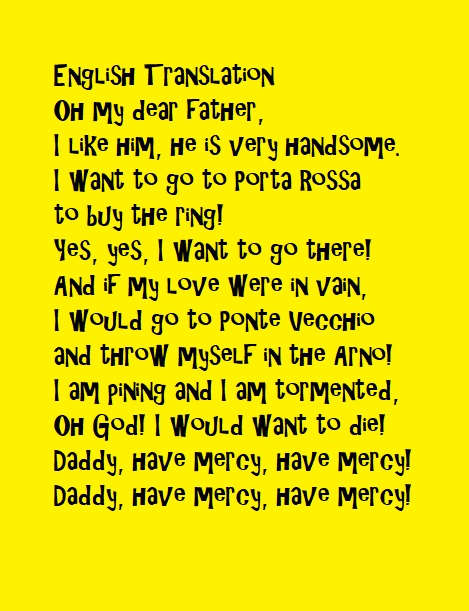
This beautiful song, an operatic aria by Puccini, is from the comic opera Gianni Schicchi. But, more important than that is what the song actually means in context.
In the opera, Gianni Schicchi is a con man intent on swindling a family out of their inheritance and knowing all along that he will be destined to go to hell when he dies. The family is gathered for the reading of the rich man’s will, which is, because this is a comic opera, lost for the time being. Their main concern is for the money, which rumor has it has all been willed to the church. But one among them is actually worthy of inheriting the money, Rinuccio the son of the rich man’s cousin. And, as luck would have it, as it always does in comedies, Rinuccio is the one who, during the manic and desperate search for the will, actually finds it. And assuming he comes out well in the will, he secures a promise from his mother that if he inherits money, he can marry Schicchi’s beautiful daughter Laurretta whom he truly loves.
But when he reads the will, he is devastated. The money all goes to a monastery. He begs Schicchi to help him convince the family that he should marry Laurretta anyway. This Gianni Schicchi tries and finds it harder than turning water into wine. So Schicchi is about to give up when Lauretta finally speaks up for herself through the song,
O Mio Babbino Caro (My Beloved Father)
At this point Schicchi is moved by the beautiful song and even more beautiful love his daughter has surprised him with. He not only agrees to help, but executes a bizarre plan, hiding the rich man’s body and pretending to be him come back to life to rewrite the will. Now the will favors Rinuccio, and over the protests of the family, he inherits the money and marries his true love, Schicchi’s daughter. The opera ends with Schicchi singing his case to the audience, telling them in song that going to hell is worth it to aid true love.
And this, then, is the truth of O Mio Babbino Caro.
Love, expressed through the surprise of hidden talent suddenly revealed, is the most persuasive argument there is.
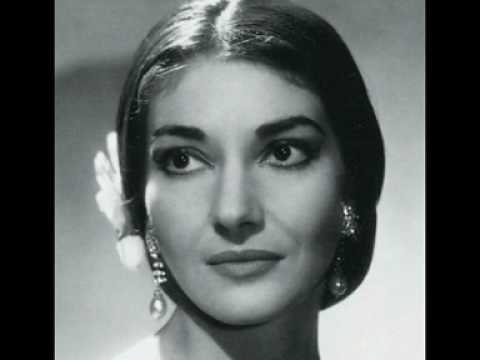
Whether it is the love in the music suddenly discovered in the overwhelming voice of a little girl like Jackie Evancho or Amira Willighagen, or the late great Maria Callas who also sang the role, or even the singer of Puccini’s greatest work who is yet to perform it and make silly old men like me weep for beauty’s sake, the song is the most persuasive argument there is in favor of true love.
That is a thing I desperately want to capture in the novel I am writing now, Sing Sad Songs. Love expressed in music. Love that reverses loss. Love that heals all things. And Love that moves all people. The love that is masterfully sung in O Mio Babbino Caro.
That book is now published and available on Amazon.
Still being under the weather and filled with sinus head-pain, I decided to go back to a subject I love so much that the post will simply write itself. You know I love Norman Rockwell and his art, and I fervently believe that kind of mass media oil-painting does not put him in a lesser category than Rembrandt or Michelangelo or Raphael or any other painter with a ninja turtle namesake. He is a genius, and though he is not a realist in so many ways, his work is more truthful than practically any other kind of painting. If you are taken by surprise and didn’t know I had this passionate obsession, maybe you should go back and look at this post; Norman Rockwell
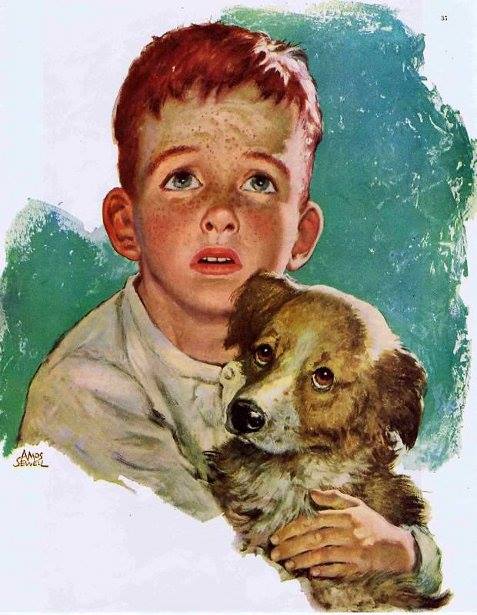
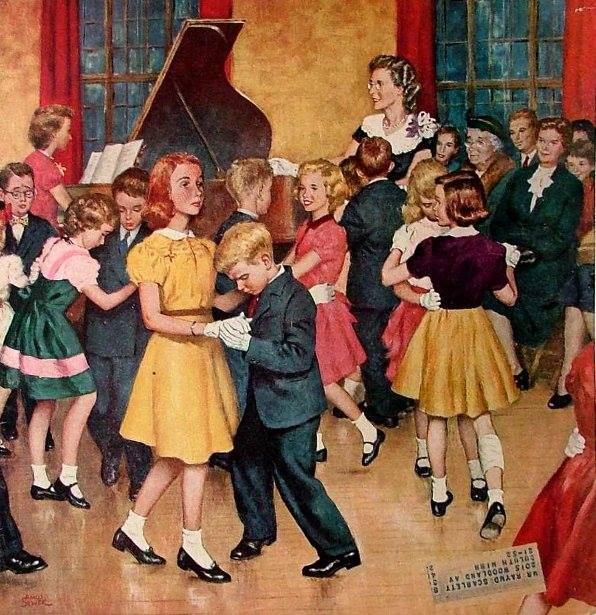
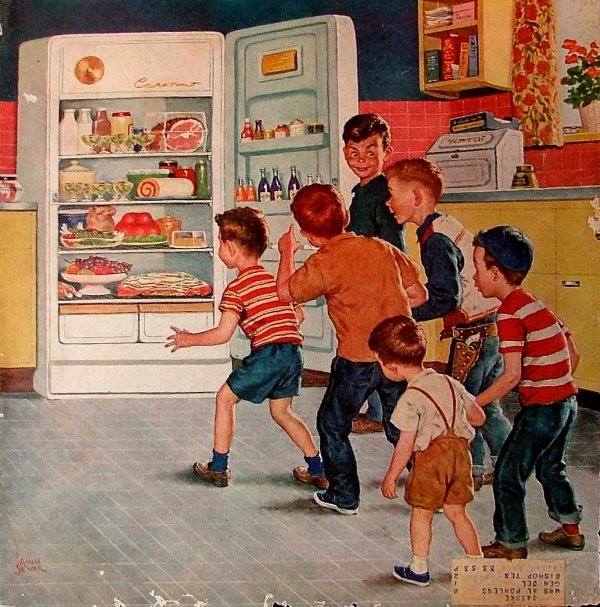
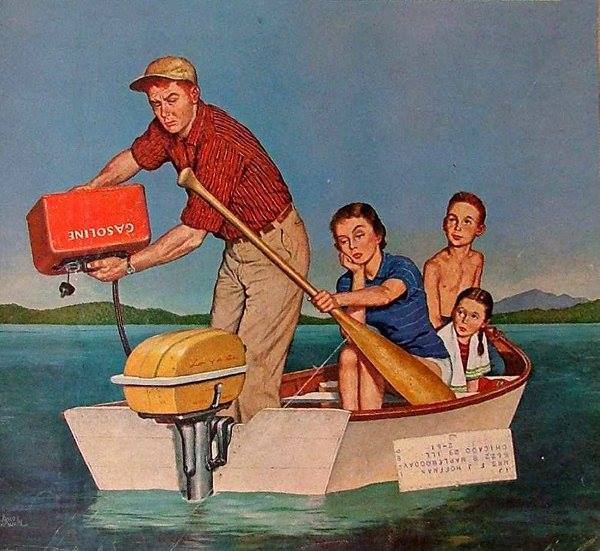
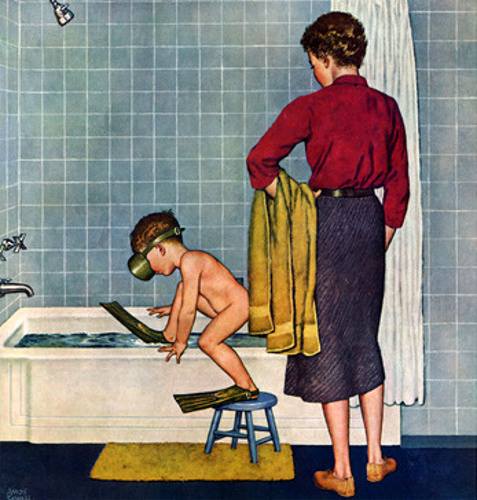
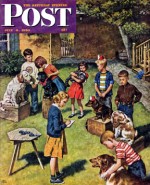
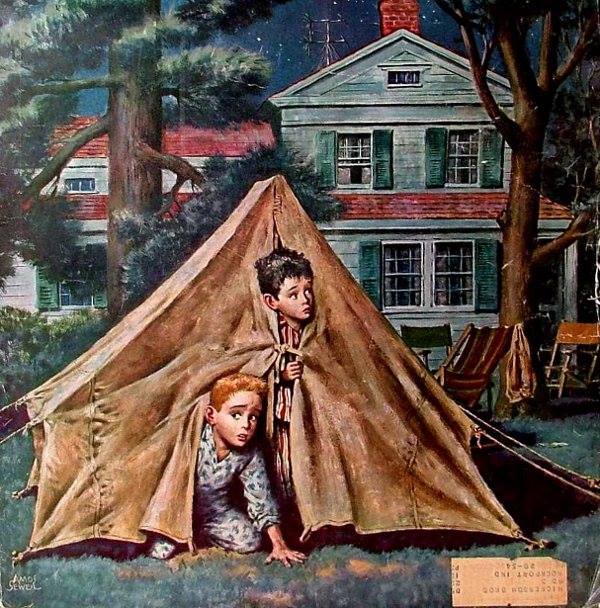
Now that I got that out of my system, here is another Saturday Evening Post artist that is often confused with Rockwell. His name is Amos Sewell.
Sewell was an amateur tennis player who was talented enough to win tournaments. He was an employee of Wells Fargo who was headed towards anything but an art career until he decided to make a leap of faith in 1930. He started as an illustrator for Street and Smith pulp fiction, and soon caught the notice of the big-time magazine markets for his art. He published art for Saturday Evening Post, Country Gentlemen Magazine, and Women’s Day.
Like Rockwell, he was able to find the funny in everyday scenes, like the dance party to the right. That young man at center stage is trying so hard not to step on the feet of the red-headed girl, that you want to laugh, but can’t because it’s obvious how embarrassed he would be, and the charm of the picture leads you to shun the thought of interrupting. The scene is so real the boy would hear you laughing as you looked at the Post cover.
More expert on this kind of art than I am is the Facebook site that I first got turned on to Sewell by. Children in Art History
There is no doubt that Amos Sewell belongs in the same pantheon of artists as Norman Rockwell, Thomas Kinkade, or Paul Detlafsen. They are all artists who achieve in their work exactly what I have always striven for. I want to be able to hold the mirror up to our world the way they did. I want to capture both the fantasy and the reality in the subject of everyday family life. I also want to share this work with you because I cannot stand the idea that such artistic ambrosia could one day be forgotten in archives where no one ever looks at it and feels the message in their heart.
When my health is poor and my day is limited mostly to the bedroom, there are still ways to pass the time that create a tangible something. Something I can hold in my hand. A piece of art.
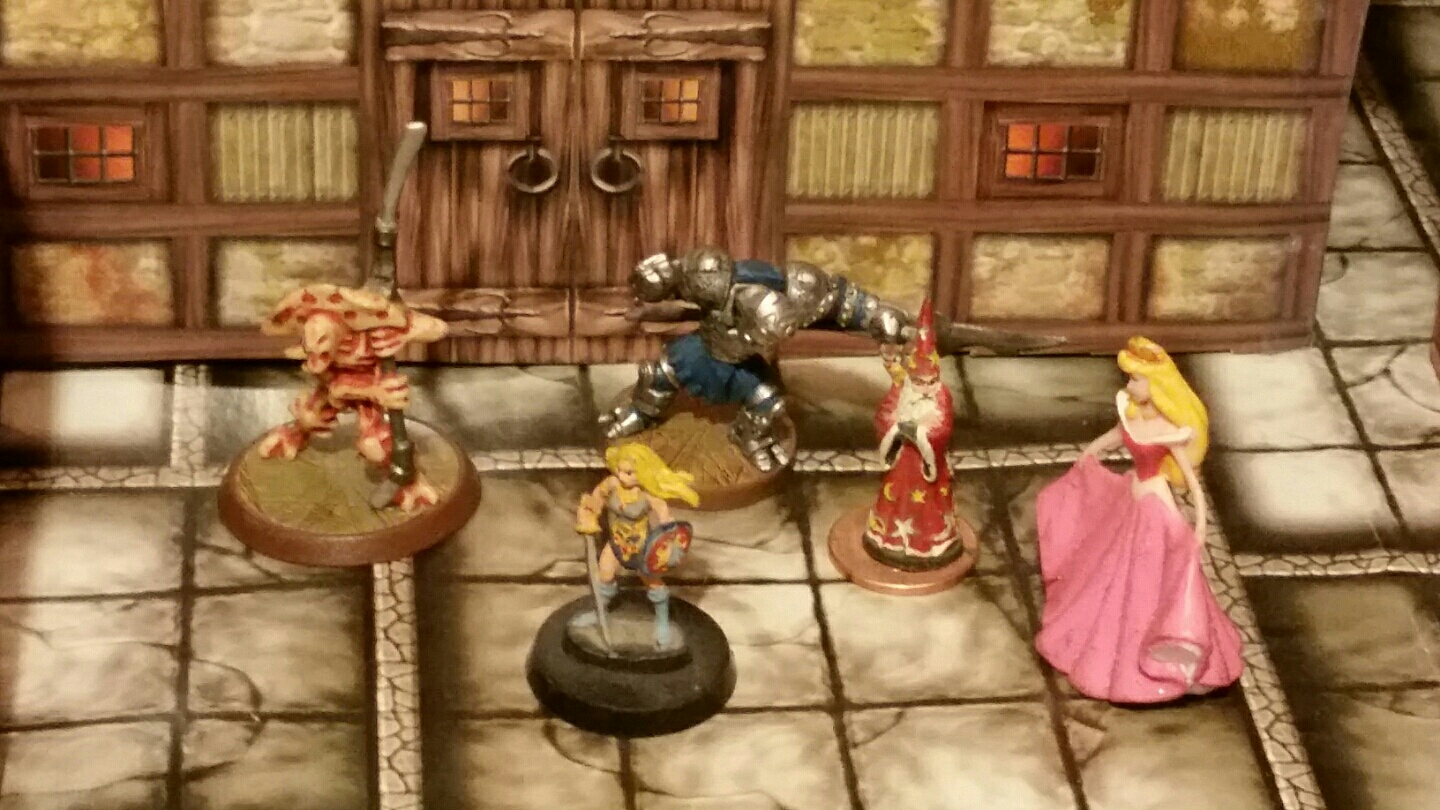
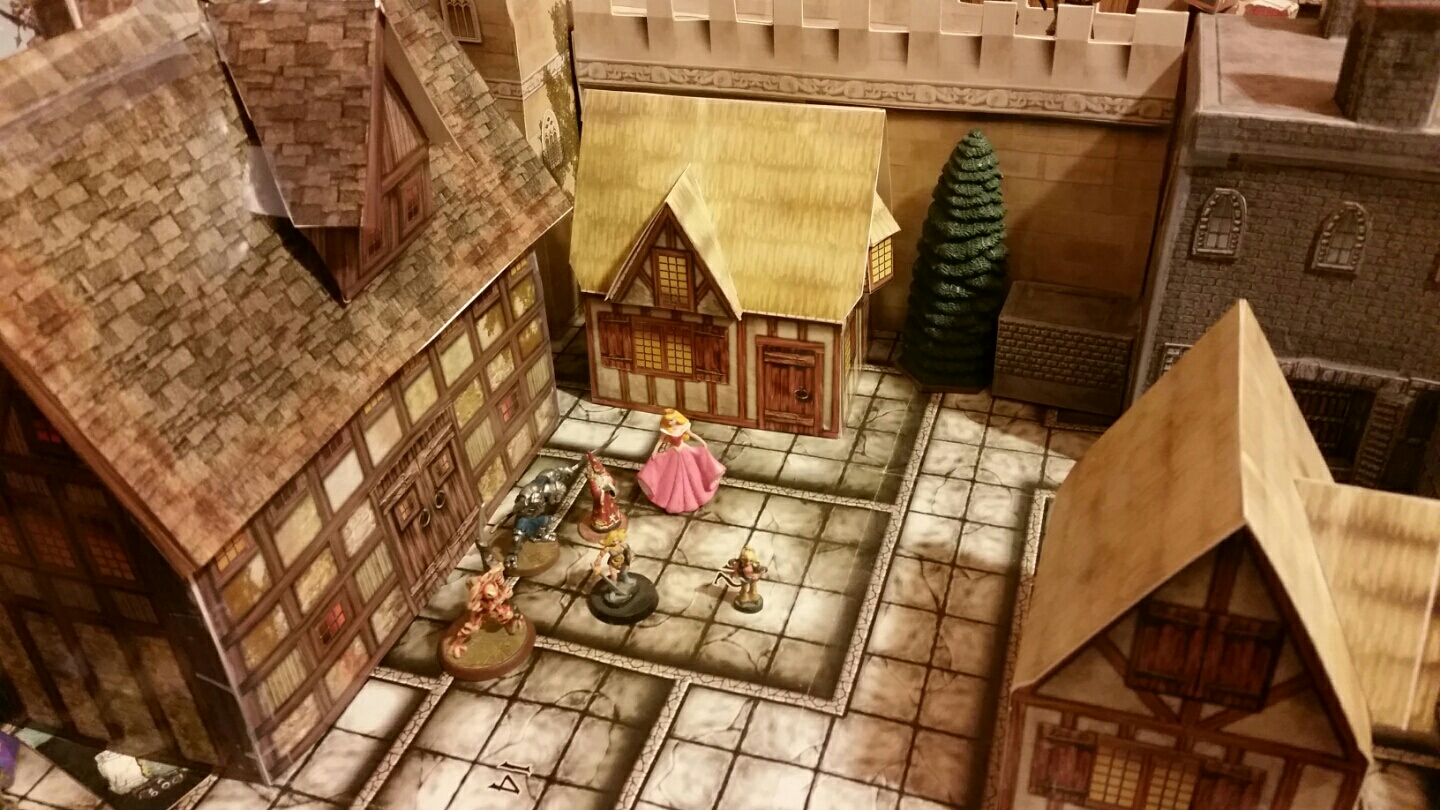
This weekend has meant more work on building my castle out of cardboard. (I am not planning on living in it myself. Imaginary D & D characters live, fight, and die there.)
I actually painted the wizard in red and the Amazon in front myself.
So, I don’t draw all the elements myself. I have found published sources of easy-to-assemble cardboard castle parts. Then, with my arthritic fingers, scissors, tape, glue, and miniature-making muscle memory I proceed to create castles.
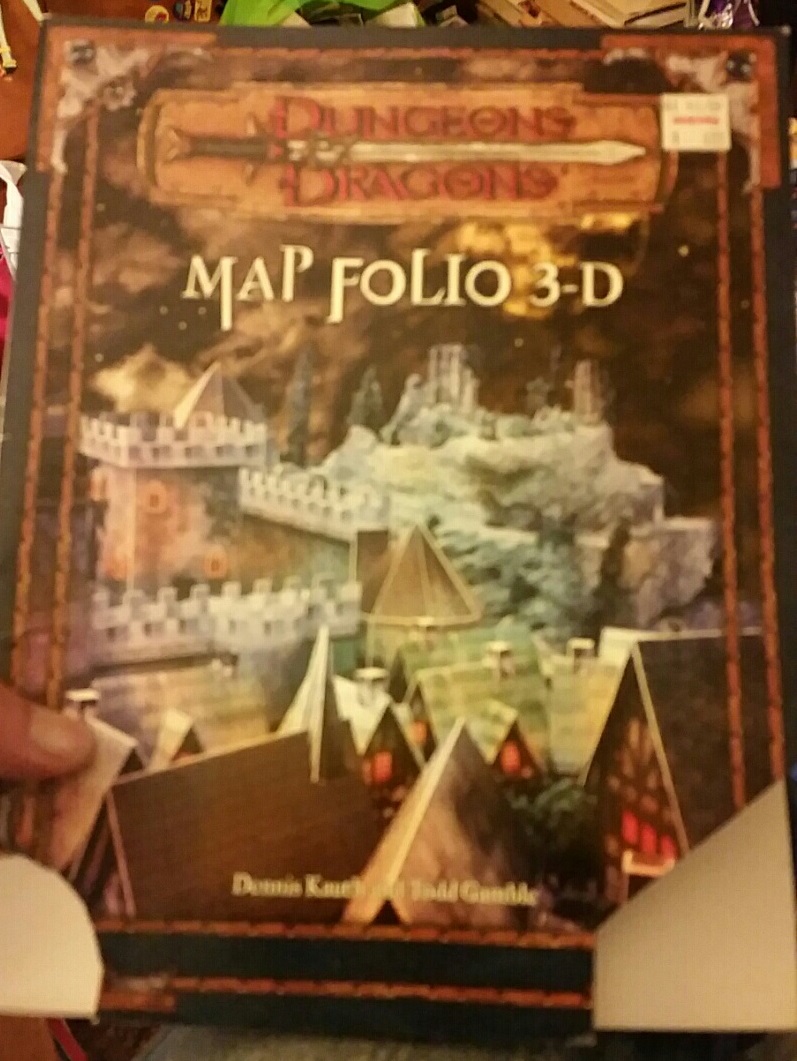
This weekend’s castle-creating came about with the help of a supplement purchased at a book store, my favorite used bookstore.
It was called Map Folio 3-D and was published in the last decade by Wizards of the Coast, a publisher whose D & D products I have been buying since they published Talislanta books in the 1980’s.
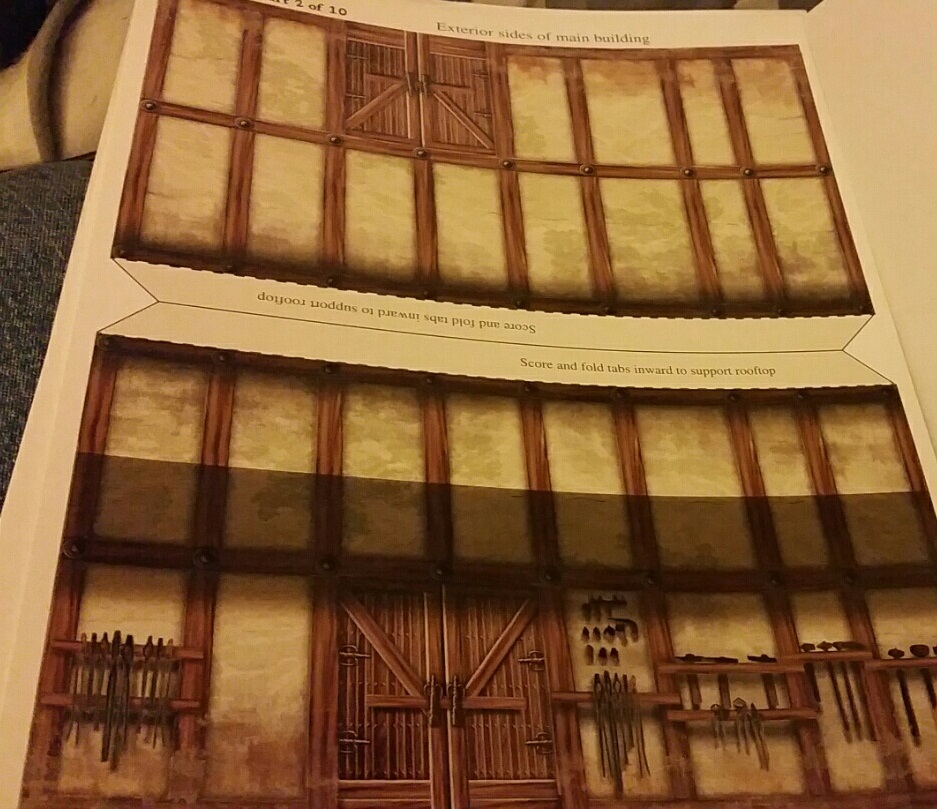
It has cut-out walls and doors and details that you can cut out and slap together.
You may have noticed I even cut designs off the cover to use on my versions of the buildings they designed.
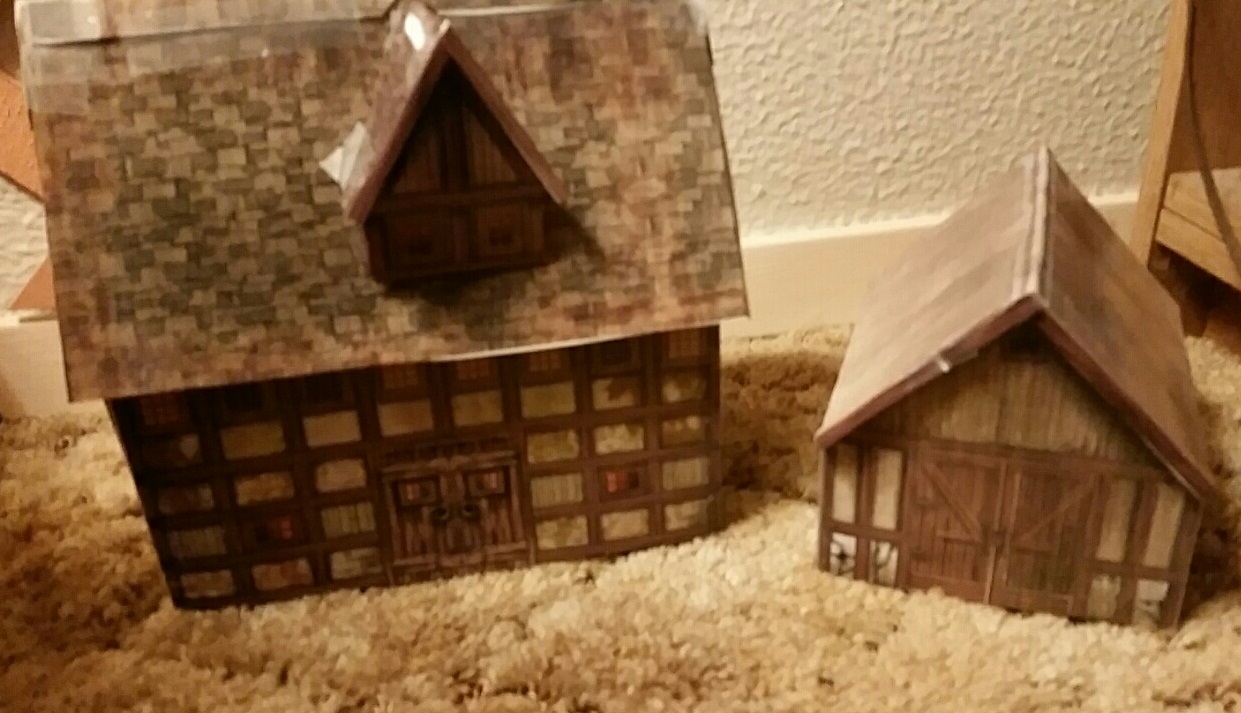
So, that plan took me from this above to this below.
I did the village inn and a barn/workshop. And put into the center of the cardboard castle, it adds a certain je ne sais quoi to the scene.
So there you have it, a little bit of the doofy art-noodling that Mickeys often do.
I do not claim to be prescient. But like any overly smart and perceptive person, I often see what’s going to happen before it happens. Sometimes it is almost as eerie as a Vincent Price movie. Sometimes eerier. After all, on the 60’s Batman TV show, Price played the ridiculous villain Egghead, and was completely creepy while doing it, but still, you know… Egghead.
One thing that I have to predict about the coming darkness is about politics. I mean, the current Republican administration, where it is decisions by all Republicans all the time, has become nothing more than a monster movie. Not merely a bad monster movie, but a super-creepy-bad monster movie with a gigantic orange rubber rooster as the main monster.
This is what the great orange rooster looks like in black and white.
The reason it is bad is because, basically, to become a member of the Republican Party’s elected elite, you basically have to have your heart removed. Heartless, soulless monsters have a tendency to do things like take away Meals on Wheels for invalid seniors, health-care services from Planned Parenthood, and any hope of ever having affordable health insurance that actually pays for health care.
Senator Ted Cruz is grinning about taking away Obamacare
And now, the monsters who have taken control of the theater are pulling out of the Paris Climate Agreement because… well, apparently clean air isn’t good for decaying, desiccated monster skin and shriveled monster lungs that don’t breathe air anyway.
So here are my predictions for the coming darkness.
What people like me will look like in the future. That’s me in the middle.
I won’t live to see it. My body is breaking down at age 60. My lungs are compromised by years of bronchitis and flu. I am diabetic, so my very body chemistry is betraying me. There is a family history of heart disease. And I have already gone broke once on health care bills that the health insurance people really don’t pay for. (They are in the business of collecting premiums, after all, not making people well.)
What a lovely oxygen-free environment we will have!
As the climate changes take away large parts of our food production and resources, and the sea rises to take away land and major cities, people will be at war increasingly over diminishing resources vital to a population of seven billion souls. Graveyards and unburied bodies will become a part of every monster-movie scene.
Kiss me, Baby!
Love will become more complicated, because people who are selfless and put others before even their own life will die out first. The heartless, selfish, and often stupid ones will have the best chance for survival because they put themselves ahead of everyone else, and so have an unfair advantage over those who are not content with mere survival and exhibit self-sacrificing love.
You’ve never had a friend like me. And I can always eat you later if need be.
So, if you find my black-and-white monster movie post upsetting with the darknesses I am sincerely predicting, please remember, this is a satire post in a humor blog. The way it is supposed to work is that you wake up to the factors that make it upsetting and decide to do something for yourself to change them. Everybody doing a lot of the same little thing to make the world better can move mountains and fly to the moon. Big things don’t happen without everybody taking a hand. Maybe we can dream dreams once again and make some good things come true.
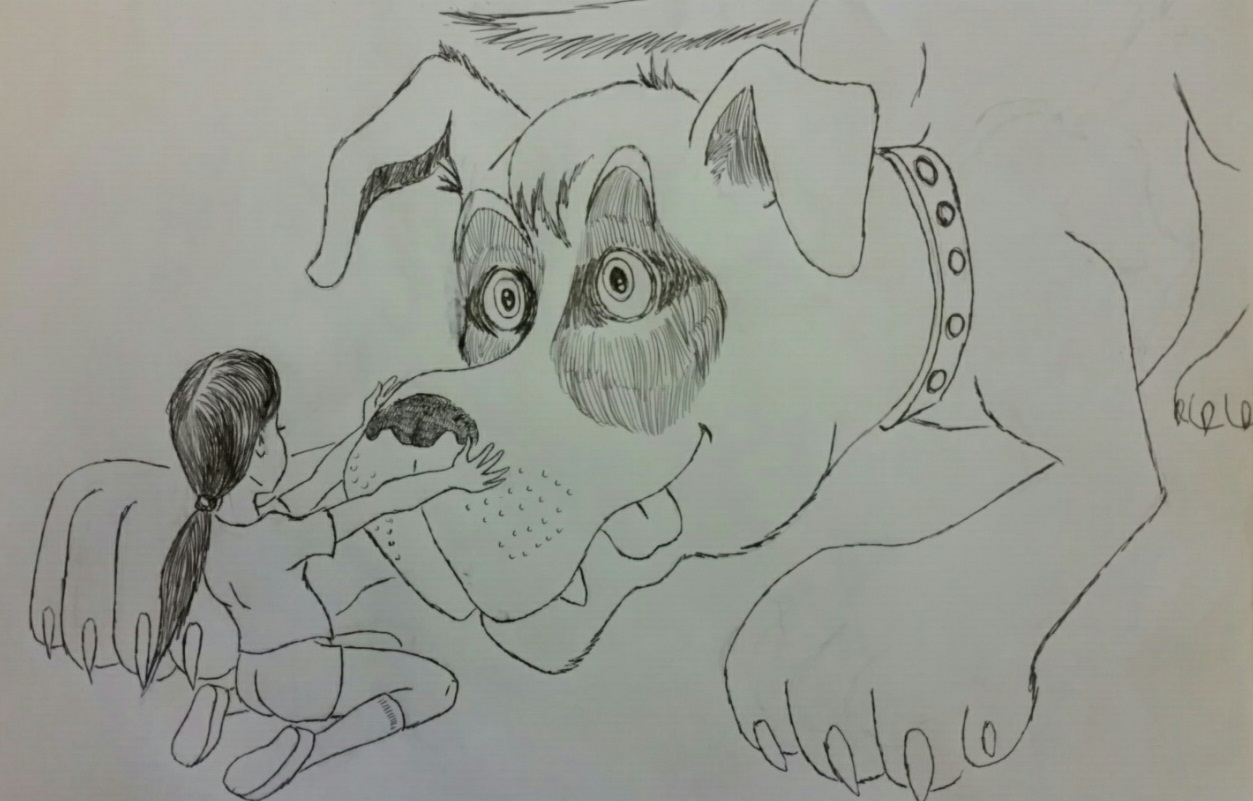
My neighbor, Wendy Wackyname, is the owner of a really big dog. I asked her how she managed a dog that was bigger than a moose and weighed more than an elephant.
“You have to be able to solve problems you never thought you could have,” she said.
“Problems like what?” I stupidly asked.
“Well, a dog that big not only chases cars, but he often catches the littler ones like yours. It became a real problem when he finished chewing on them and wanted to bury them in the back yard. When we lived in Oklahoma, our back yard just wasn’t big enough, and the local police kept wondering about what might be buried there. I guess they had a lot of missing persons cases.”
“Oh, that does sound bad.”
“Yeah, but moving here solved that problem. We now live next to this nice big park with lots of room for a dog to bury stuff.”
“So he isn’t cured of chasing cars?” I asked nervously.
“No. But that isn’t the worst problem. Feeding him is really expensive. We have to buy a truckload of dog food every week. That problem has gotten worse since we left Oklahoma. There used to be a cattle ranch nearby. At least until the last of their stock mysteriously disappeared.”
I decided I should probably change the subject a bit.
“How do you walk a dog that big?” I asked.
“Oh, I don’t. I climb up on his neck and hang on to the collar as hard as I can, and we go for a run. We ended up in Waxahachie, Texas, last week.”
“Does your mother ever let the dog in the house?”
“Oh, no. Foozy is an outside dog. If he wags his tail indoors, he breaks all the furniture in the room. Besides, the doors in this new house aren’t big enough for him to fit through.”
“Wendy, did you ever read those kids’ books about Clifford the Big Red Dog?”
“Oh, sure. But life with Foozy is nothing like that. Giant dogs are a much harder pet to take care of than people think.”
I remembered then how my little dog somehow managed to make five poops a day. Did Foozy do that, too? And how did poor little Wendy go about bagging it and depositing it in the trash? I finally decided I didn’t want to know.
After years of being stored away, I discovered that my mother had hidden a hoard of my old artworks in the upstairs closet in Grandma Aldrich’s house (now my parents’ house).
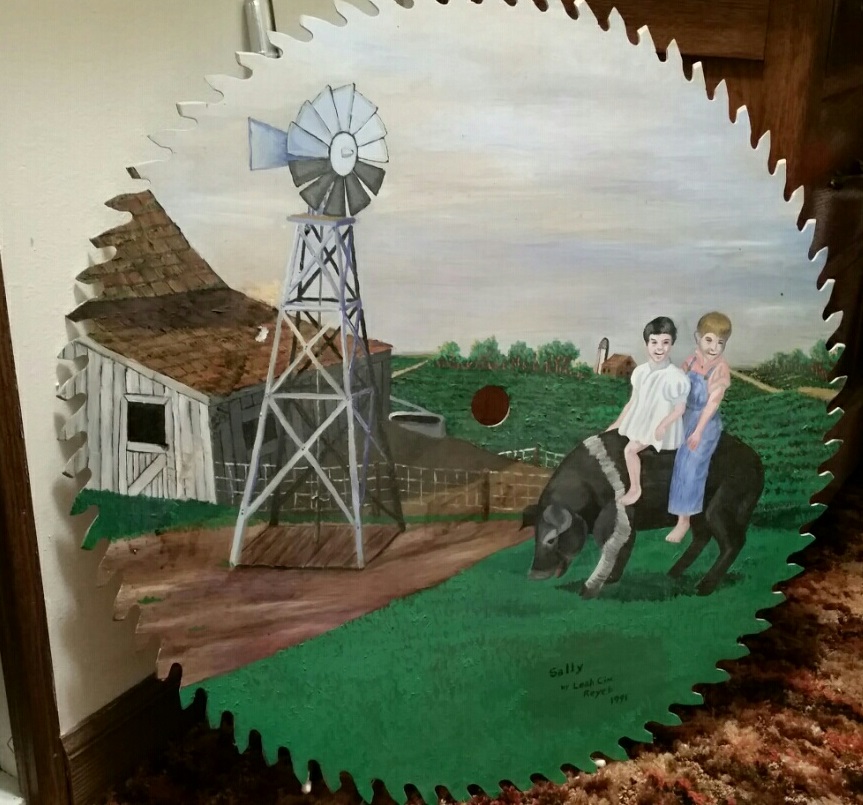
This oil painting was done on an old saw blade at the request of my Grandpa Aldrich. He wanted a farm painting on it, like the one he’d seen in a restaurant during a fishing trip in Minnesota. I chose as the subject Sally the pig. Sally was a hairlip piglet that had to be bottle fed and raised in a box by the stove until later in life she became a favorite pet. Believe it or not, pigs are smarter than the family dog. She became a pig you could ride. And Grandma had taken a precious old photo of my mother and Uncle Larry riding the pig. I used that photo to make this painting. It was also the painting I wanted to find on this trip to Iowa. Searching for it led to finding all the others.
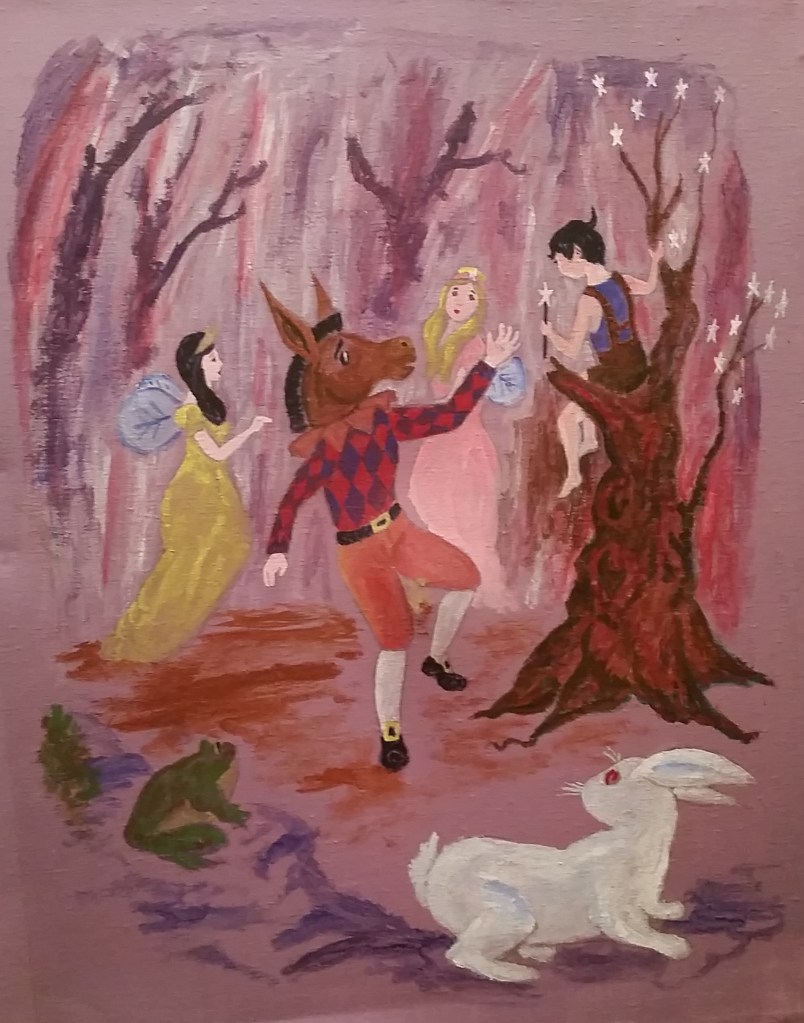
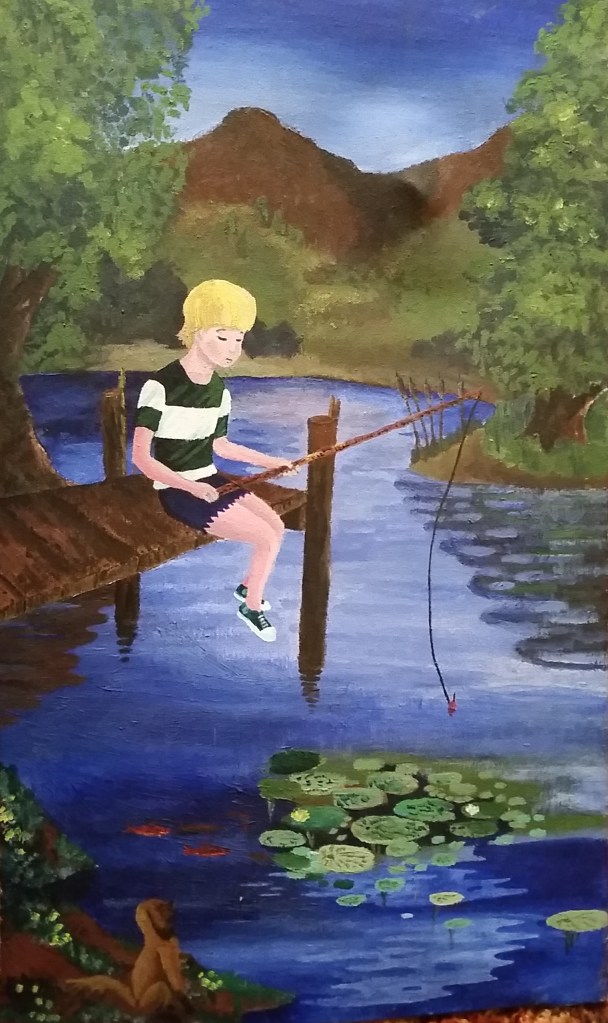
These two are among the earliest paintings I did. They were both done on canvases that I stretched over the frame myself in high school art class. The purple one is a scene from Shakespeare’s Midsummer Night’s Dream. The blue one doesn’t have a title, but you can see what it is. It is an ancient shibboleth water monster lurking under a dock, fishing for young boys to eat.
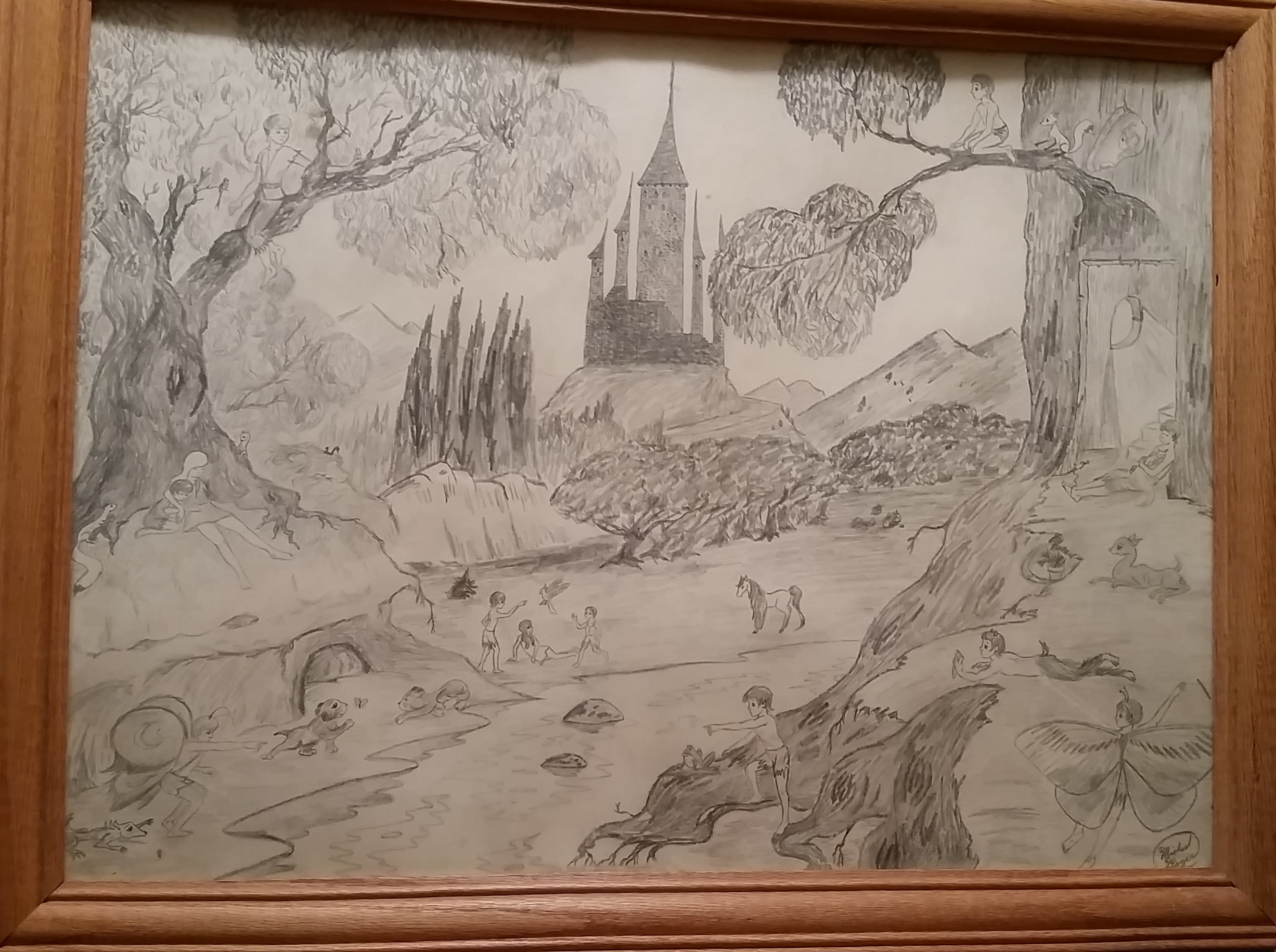
This drawing was done on the front porch in the house in Rowan. It would be years before mom framed it. It is another example of what I could do as a high school kid. In fact, I composed it from art-class sketches I did my senior year in school.
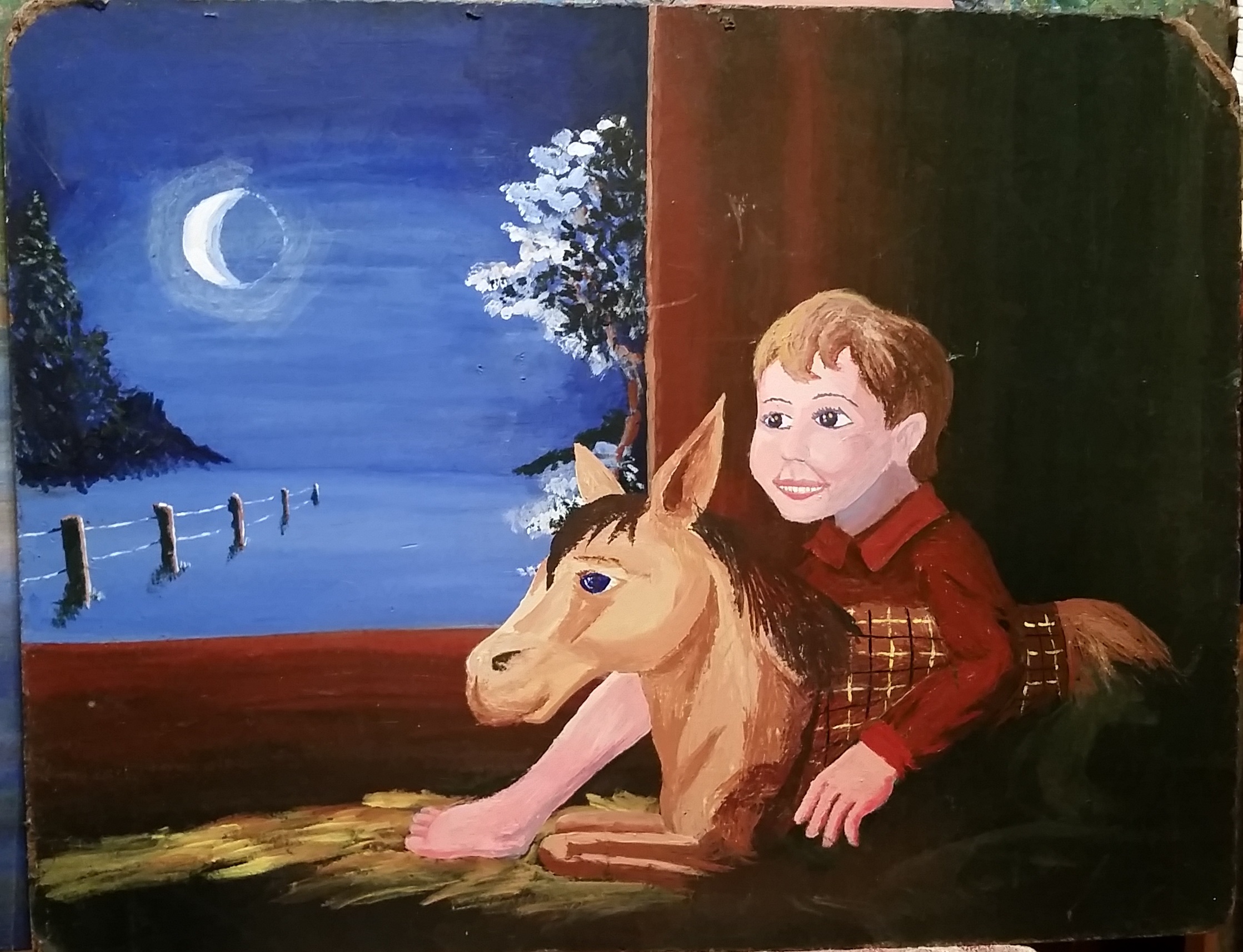
The Boy in the Barn was painted on the remains of an old chalkboard that my sisters, brother, and I had used in grade school.
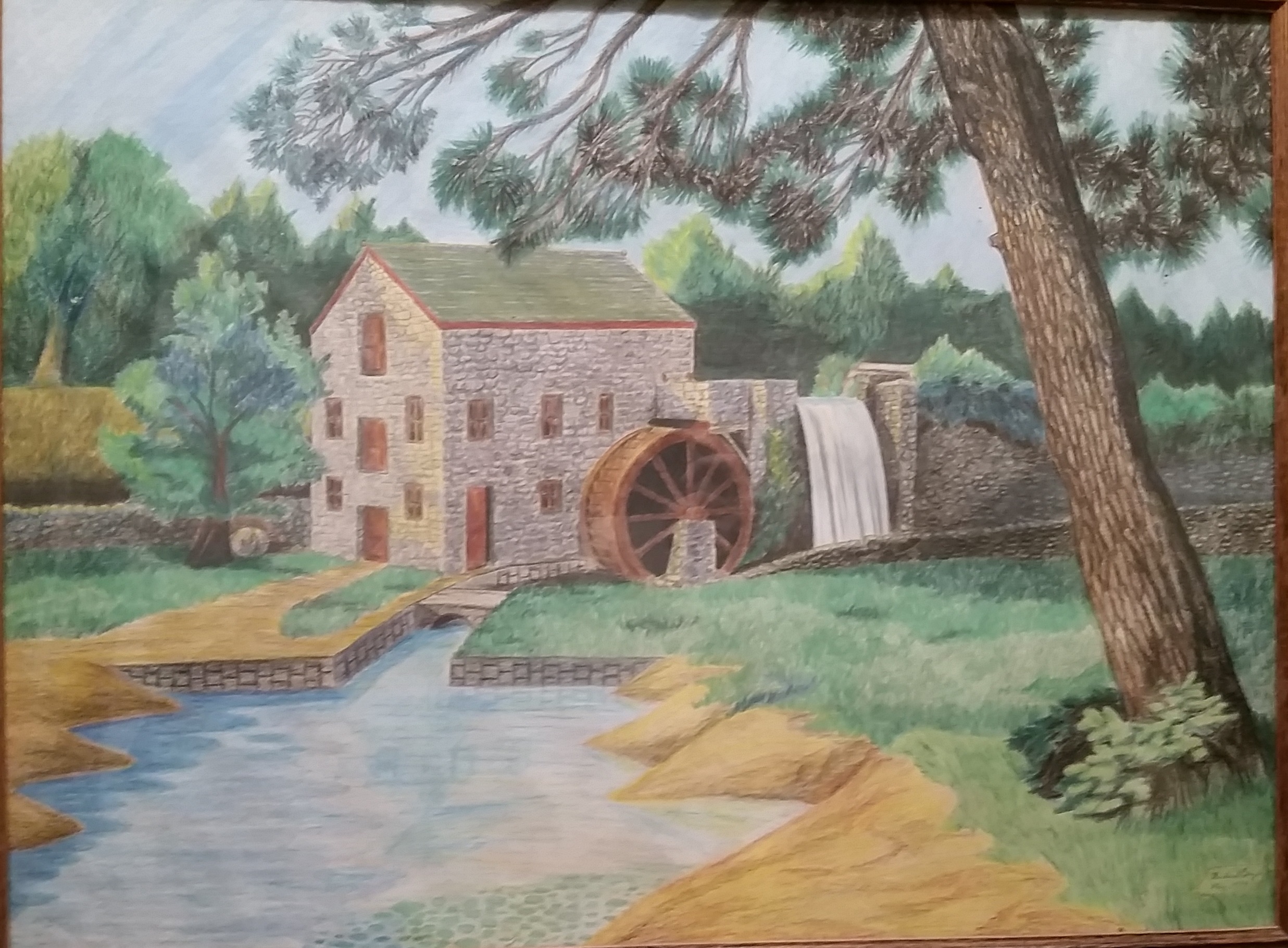
Grandma Aldrich asked for this picture to hang over the sofa in the farmhouse living room. It stayed there for many years.
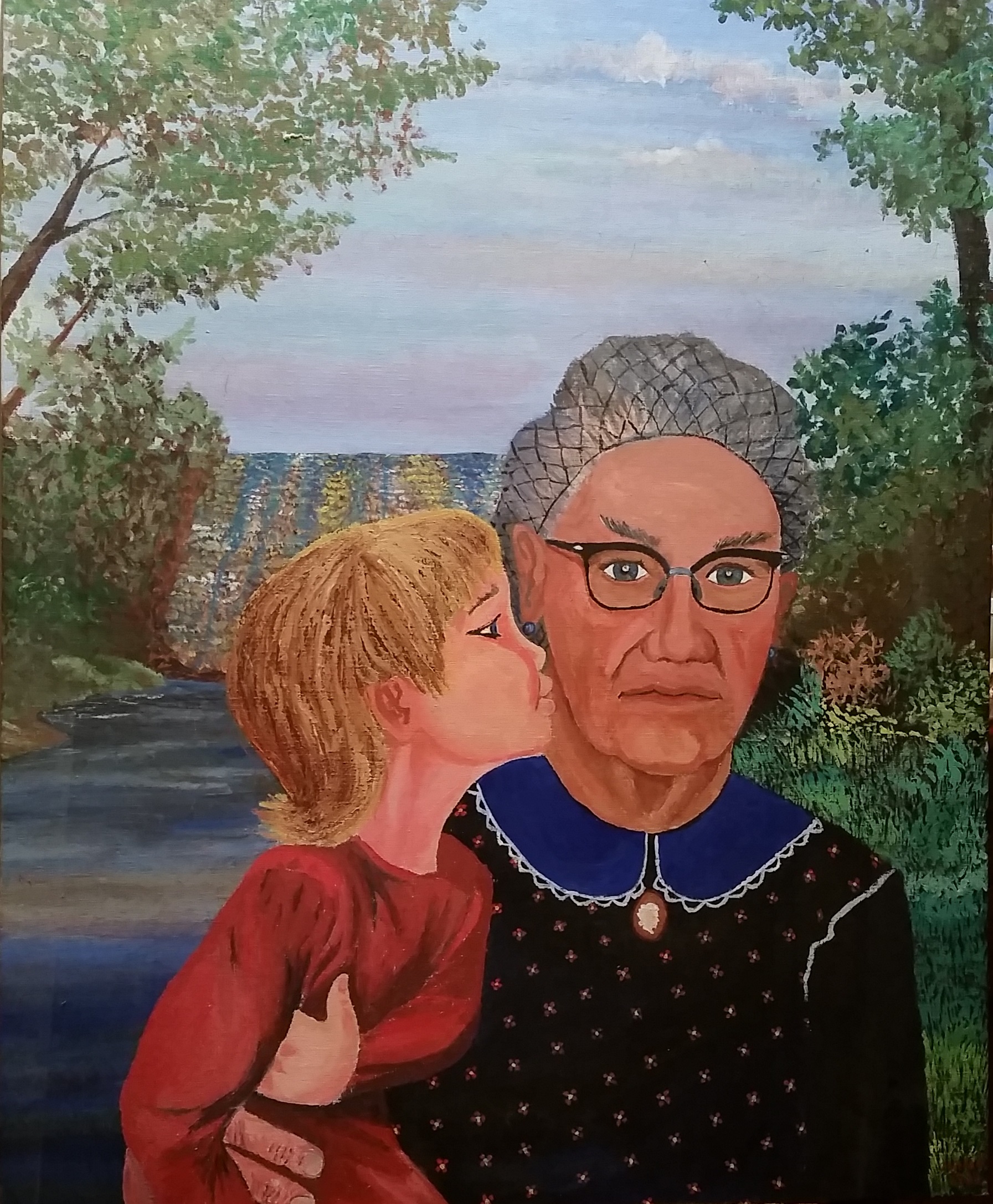
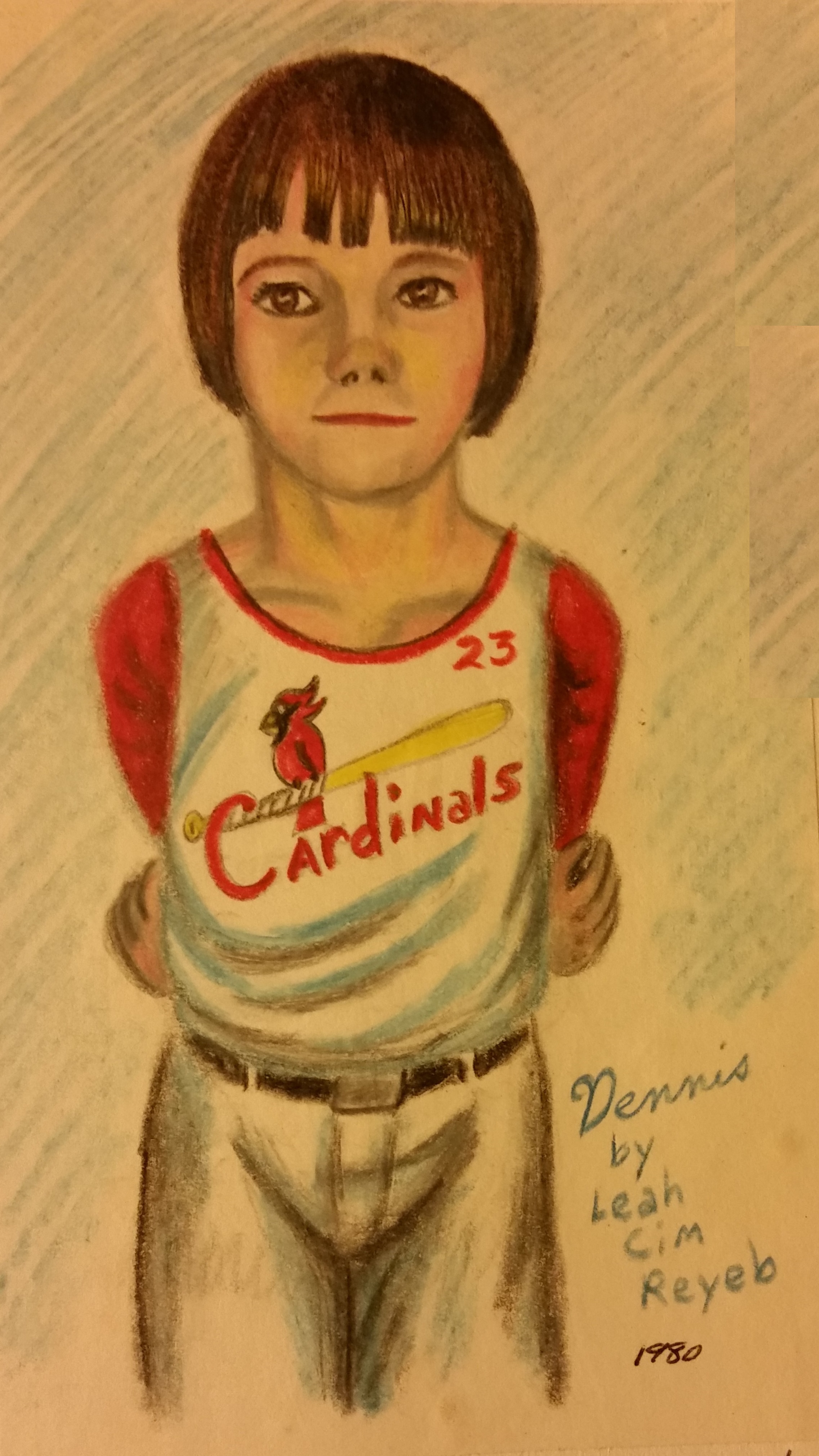
Great Grandma Hinckley passed away in 1980. I created this portrait from a combination of photos and memory. It was too good. It was never hung anywhere because it always made her daughter, my Grandma Aldrich, tear up.
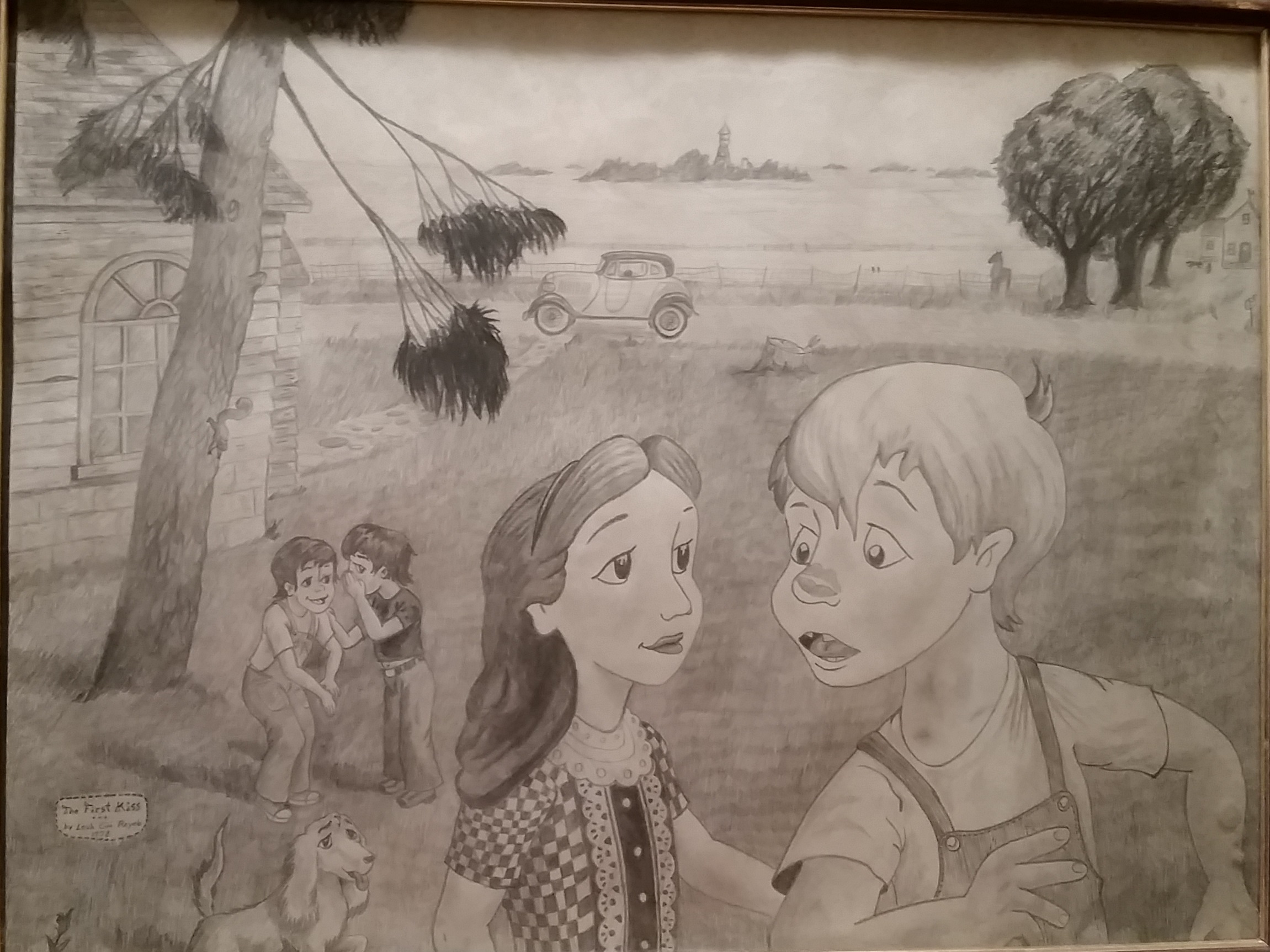
This pencil drawing won a blue ribbon at the Wright County Fair in the late 70’s.
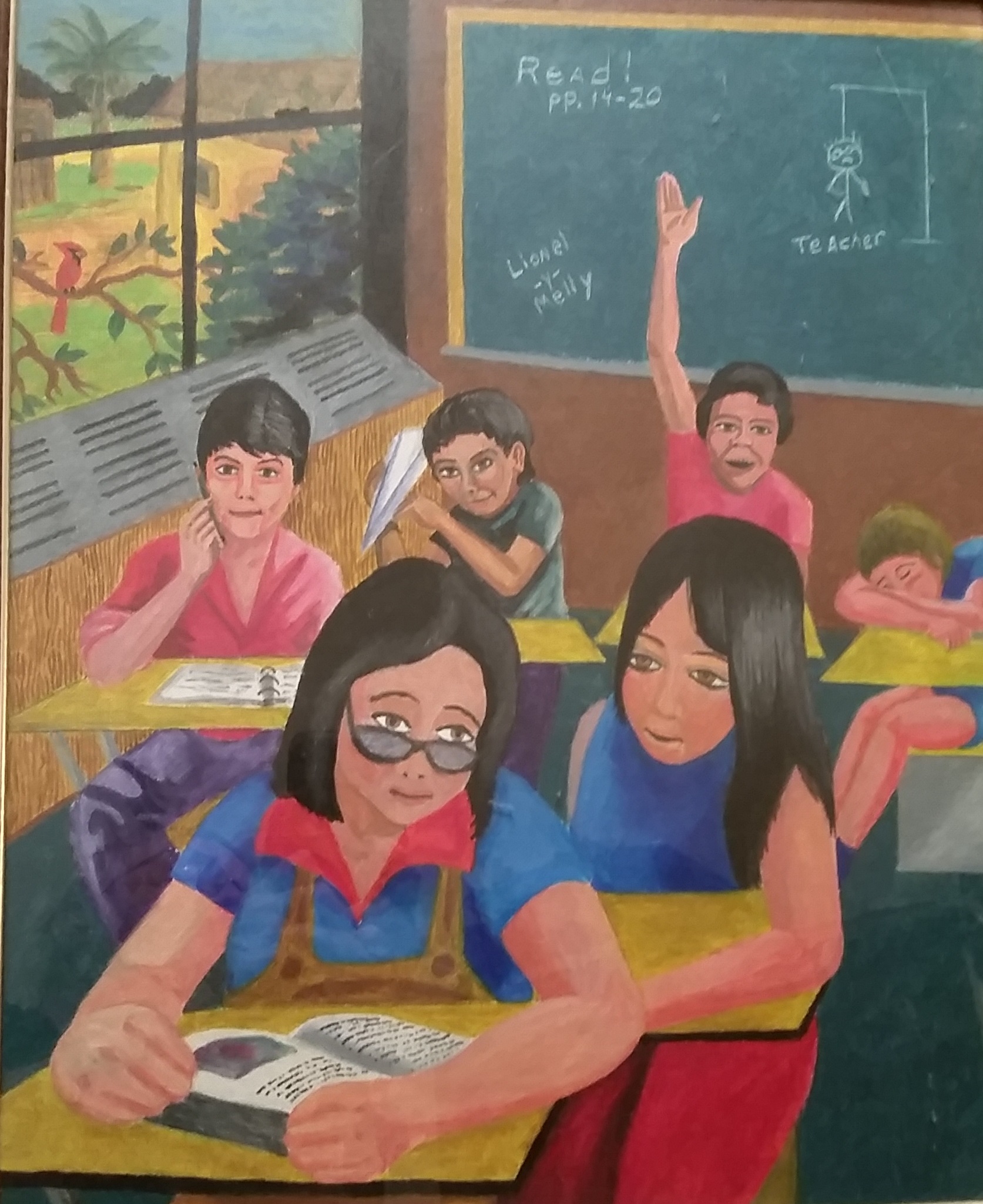
This picture is called First Years are Hard Years. It was painted in 1982 after my first year of teaching at the junior high school in Cotulla, Texas. I painted mostly the good kids. The girl on the lower right would later go on to become a teacher for our school district. I can’t claim to be the one who inspired her, but she did make straight A’s in my class.
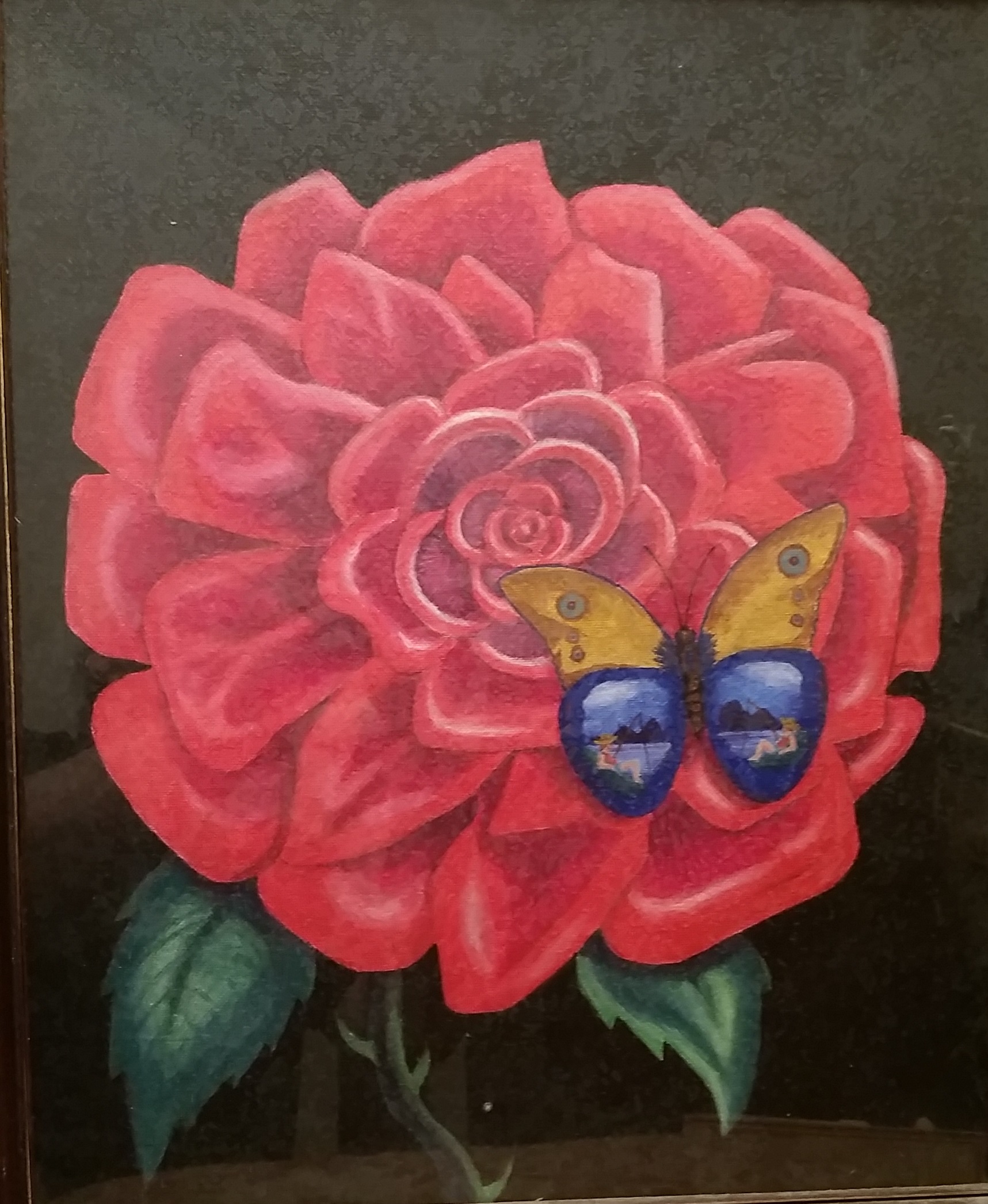
This is called Beauty. It is done in oil crayon on canvas. I did it for my mother to hang in the hallway in the house in Taylor, Texas.
So, it turns out, I unearthed art treasures by searching for the one painting.
I first heard this song as a freshman in college.It struck me that it was hauntingly beautiful… but maybe I wasn’t entirely sure what it meant.
The song is about losing body parts and being okay with that.
That can actually be kinda creepy, right?
It is probably a song about gradually dying.
But that’s not really what it’s about.
I am there now. Peeling, cracking, drying out… my life has reached the downhill run toward the finish line. But I am not worried and not afraid. Life is so much more than hands and eyes and legs and feet. I can lose those things and have no regrets. I am so much more than merely the sum of those physical things.
My spirit soars. And my life is bound up in words and meanings that are now written down, and are at least as imperishable as paper. And may, in fact, be written on a few human hearts here and there.
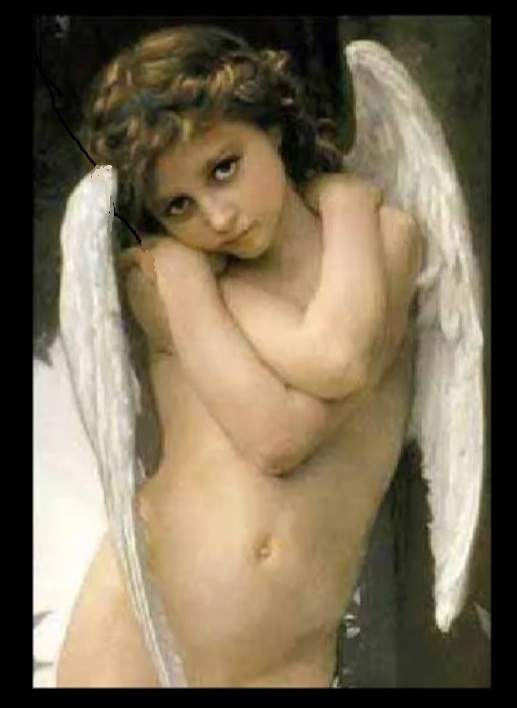
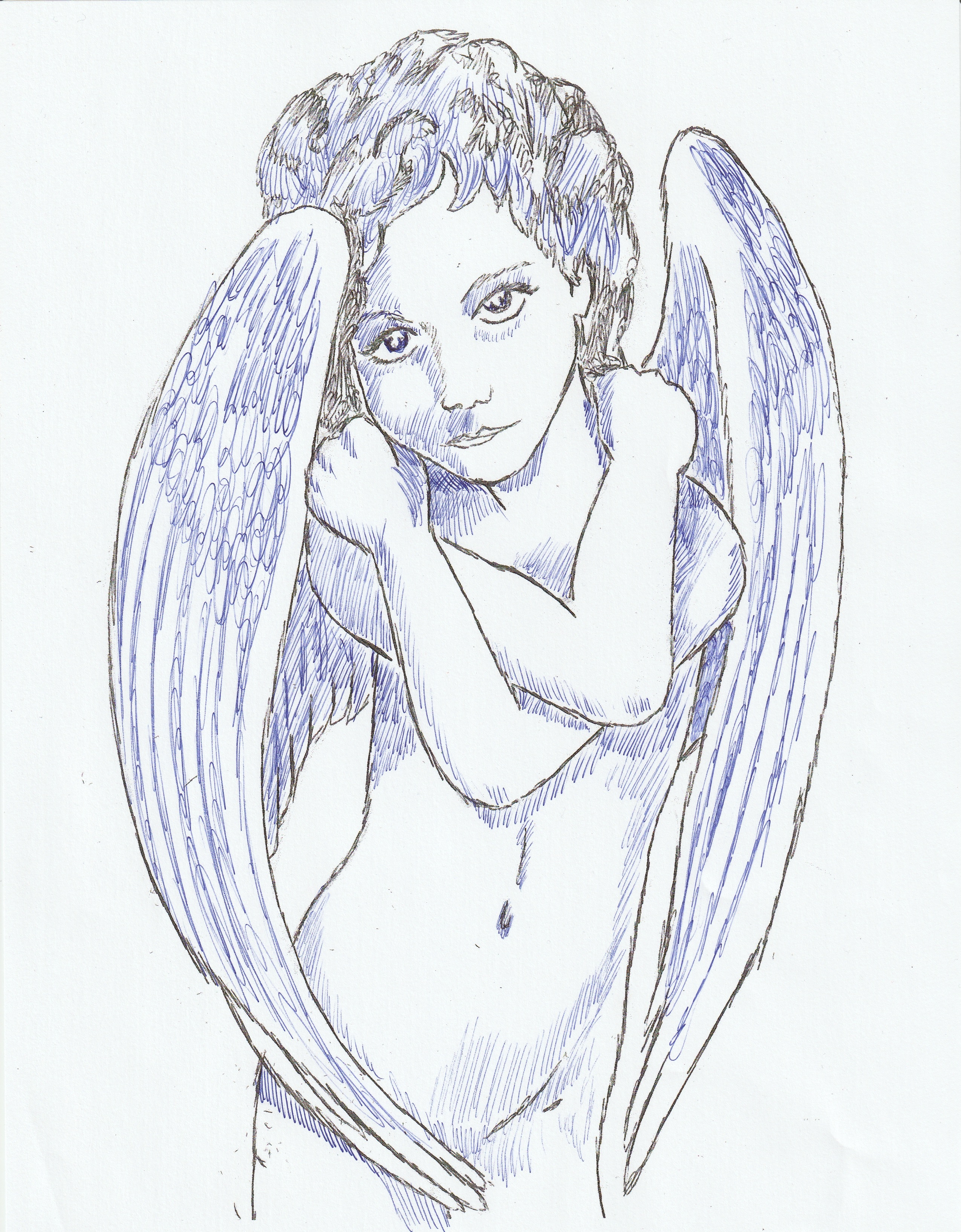
This is a detail from an angel portrait by the French Painter William Adolphe Bouguereau. One way to get better at art is to imitate and reinterpret the works of masters,
So, this is my copy and reinterpretation done in pen and ink. There are glitches here from arthritis that you can spot if you look carefully.
This is a portrait of a pretty young lady that I did from a photo aided by AI Mirror. It is a way to do a competent drawing that corrects the errors that arthritic hands are heir to.






 Catch a Falling Star
The Darkest of the Coming Darkness
I do not claim to be prescient. But like any overly smart and perceptive person, I often see what’s going to happen before it happens. Sometimes it is almost as eerie as a Vincent Price movie. Sometimes eerier. After all, on the 60’s Batman TV show, Price played the ridiculous villain Egghead, and was completely creepy while doing it, but still, you know… Egghead.
One thing that I have to predict about the coming darkness is about politics. I mean, the current Republican administration, where it is decisions by all Republicans all the time, has become nothing more than a monster movie. Not merely a bad monster movie, but a super-creepy-bad monster movie with a gigantic orange rubber rooster as the main monster.
The reason it is bad is because, basically, to become a member of the Republican Party’s elected elite, you basically have to have your heart removed. Heartless, soulless monsters have a tendency to do things like take away Meals on Wheels for invalid seniors, health-care services from Planned Parenthood, and any hope of ever having affordable health insurance that actually pays for health care.
And now, the monsters who have taken control of the theater are pulling out of the Paris Climate Agreement because… well, apparently clean air isn’t good for decaying, desiccated monster skin and shriveled monster lungs that don’t breathe air anyway.
So here are my predictions for the coming darkness.
I won’t live to see it. My body is breaking down at age 60. My lungs are compromised by years of bronchitis and flu. I am diabetic, so my very body chemistry is betraying me. There is a family history of heart disease. And I have already gone broke once on health care bills that the health insurance people really don’t pay for. (They are in the business of collecting premiums, after all, not making people well.)
As the climate changes take away large parts of our food production and resources, and the sea rises to take away land and major cities, people will be at war increasingly over diminishing resources vital to a population of seven billion souls. Graveyards and unburied bodies will become a part of every monster-movie scene.
Love will become more complicated, because people who are selfless and put others before even their own life will die out first. The heartless, selfish, and often stupid ones will have the best chance for survival because they put themselves ahead of everyone else, and so have an unfair advantage over those who are not content with mere survival and exhibit self-sacrificing love.
So, if you find my black-and-white monster movie post upsetting with the darknesses I am sincerely predicting, please remember, this is a satire post in a humor blog. The way it is supposed to work is that you wake up to the factors that make it upsetting and decide to do something for yourself to change them. Everybody doing a lot of the same little thing to make the world better can move mountains and fly to the moon. Big things don’t happen without everybody taking a hand. Maybe we can dream dreams once again and make some good things come true.
Leave a comment
Filed under angry rant, battling depression, commentary, feeling sorry for myself, horror movie, humor, monsters
Tagged as film, horror, movies, reviews, writing