Category Archives: imagination

A $3.00 Treasure Trove

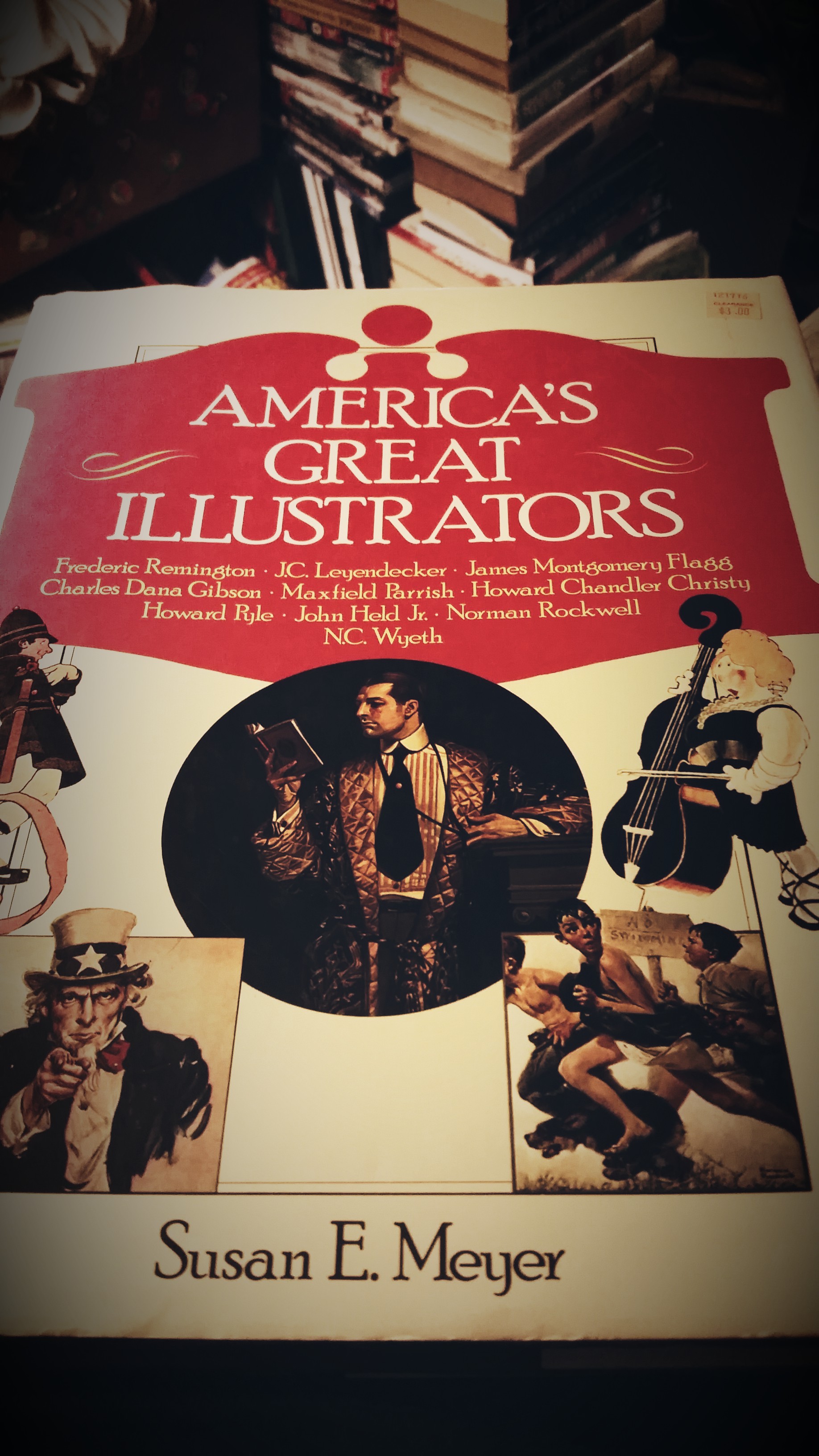
C360_2016-12-21-17-27-40-934.jpg

If you cruise the bargain sections in an old used book store like Half-Price Books, eventually you are going to find something priceless.  This book I am showing you is that very thing for me.

It was copyrighted in 1978.  The inscription inside the front cover says this was a Father’s Day gift on June 19th, 1988.  Someone named Gary gifted it to someone named Claude in Burleson, Texas.  It was probably a cherished book until someone passed away and the book changed hands in an estate sale.
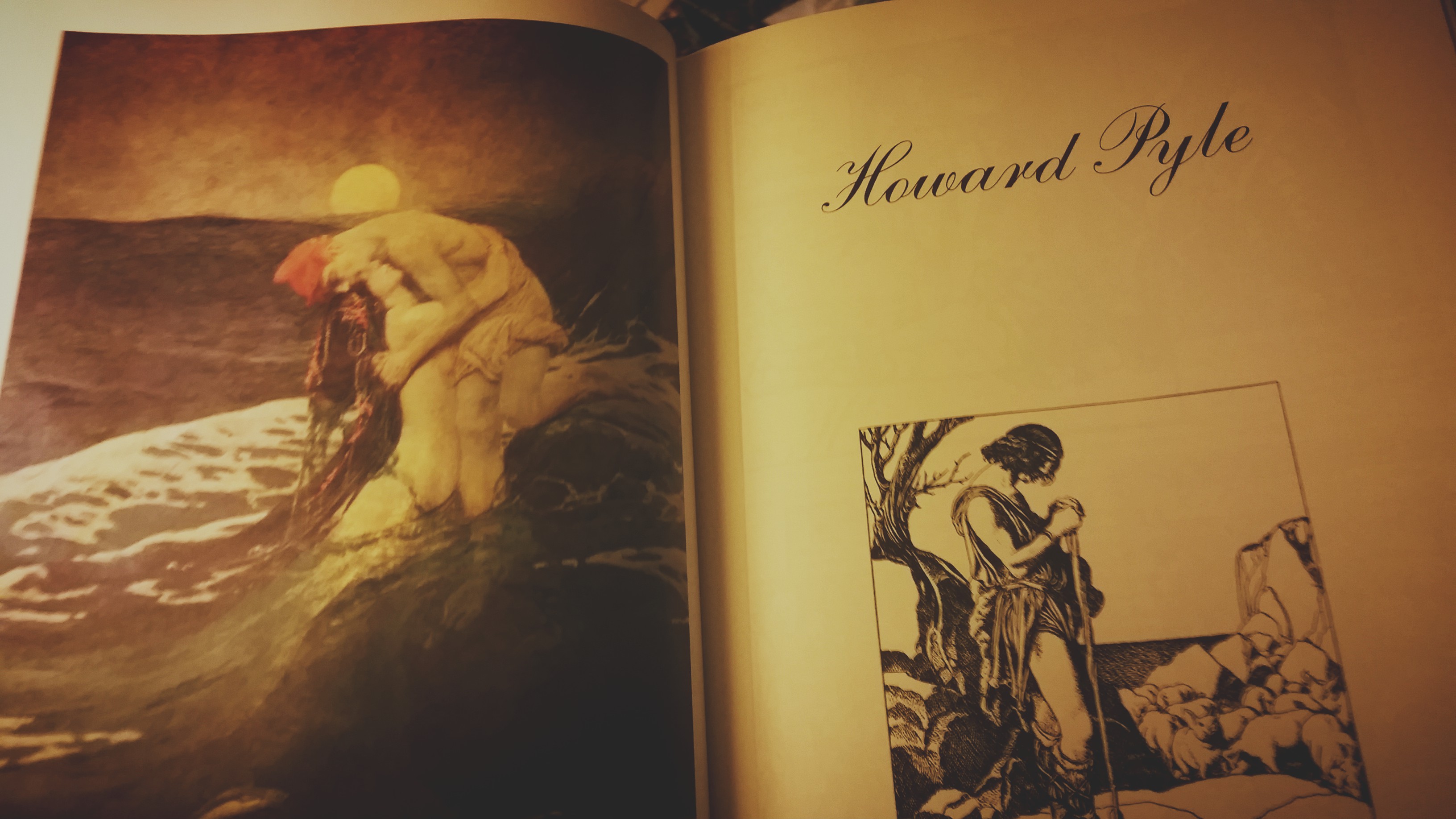
c360_2016-12-21-17-26-52-638

Howard Pyle

The book chronicles the height of the publishing era when being able to print books and reproduce artworks began entertaining the masses.  Always before painters and great artists worked for a patron for the purpose of decorating their home in a way that displayed their great wealth.  But from the 1880’s to the rise of cinema, magazines and books kept the masses entertained, helped more people to become literate than ever before, and created the stories that made our shared culture and life experiences grow stronger and ever more inventive.  The book focuses on the best of the best among a new breed of artist… the illustrators.

These are the ones the book details;

Howard Pyle, N.C. Wyeth, Frederick Remington, Maxfield Parrish, J.C. Leyendecker, Norman Rockwell, Charles Dana Gibson, Howard Chandler Christy, James Montgomery Flagg, and John Held Jr.
c360_2016-12-21-17-26-08-244

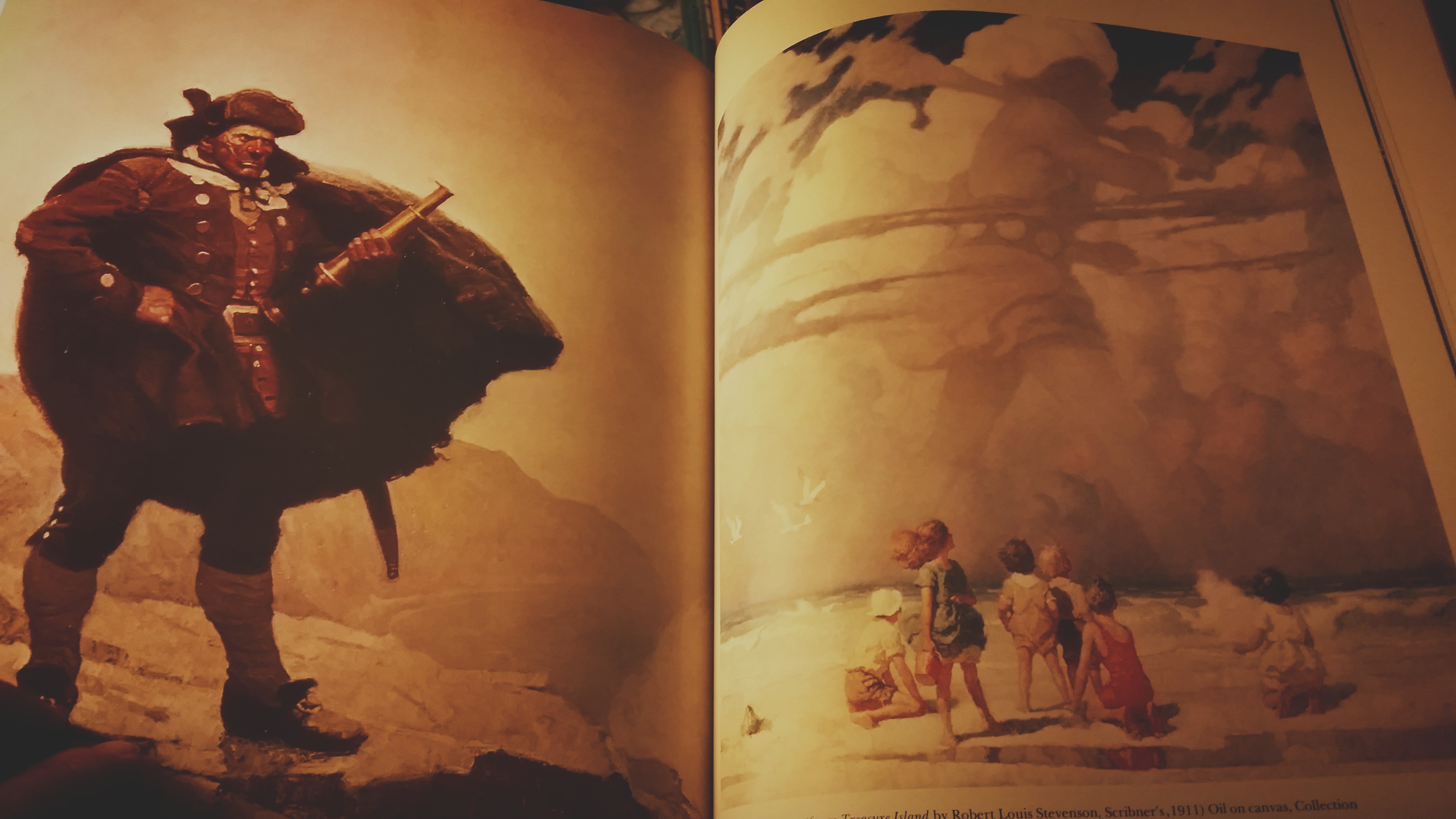
N.C. Wyeth

Wyeth was most famous as a book illustrator for Treasure Island, Kidnapped, other books by Robert Louis Stevenson, Mark Twain,  and a famous volume of tales about Robin Hood.
c360_2016-12-21-17-25-30-575

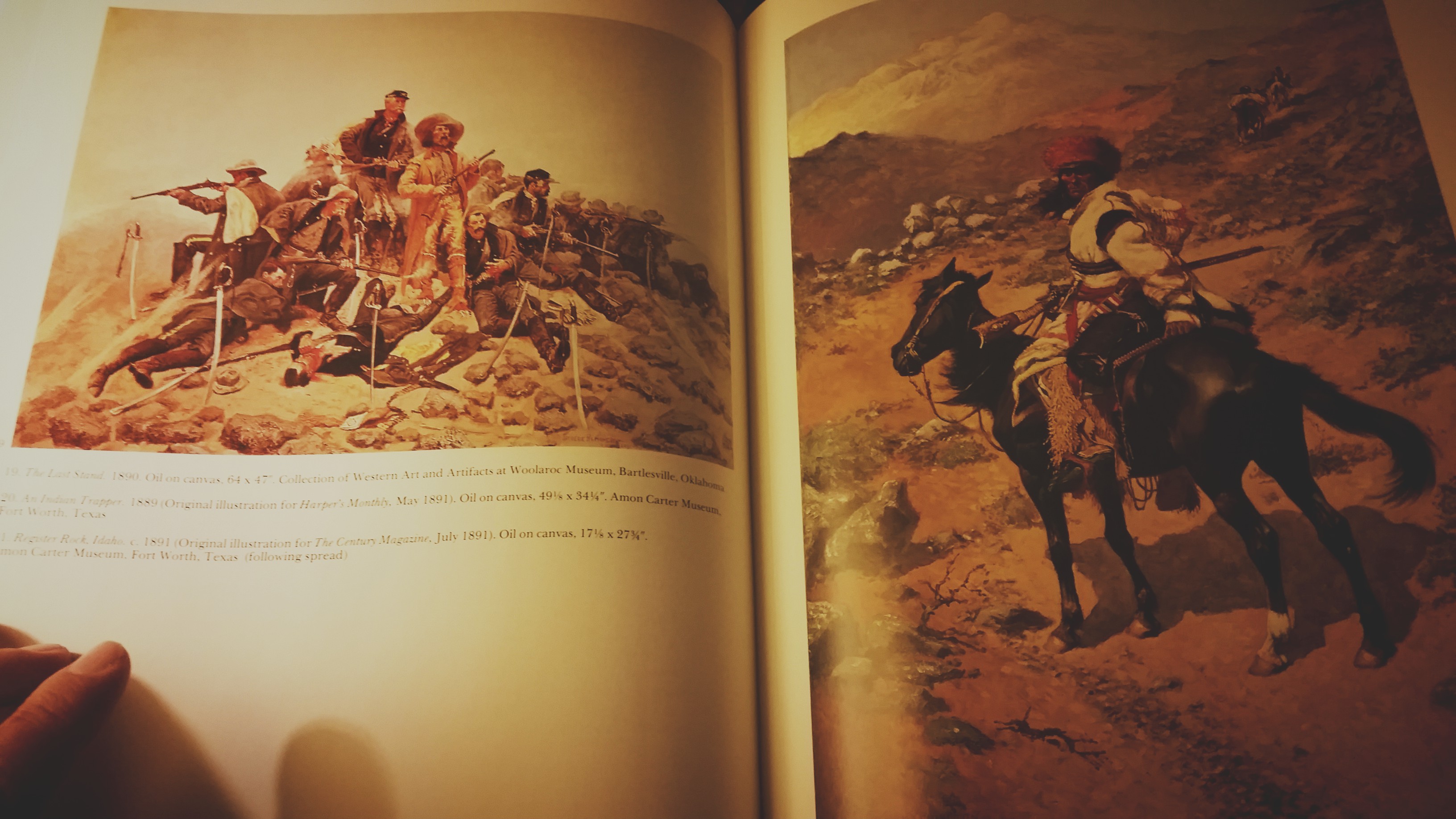
Frederick Remington

Remington is a name you probably know as a maker of Western art.  He was a famous painter of cowboys and Indians and the American frontier.
c360_2016-12-21-17-25-11-104

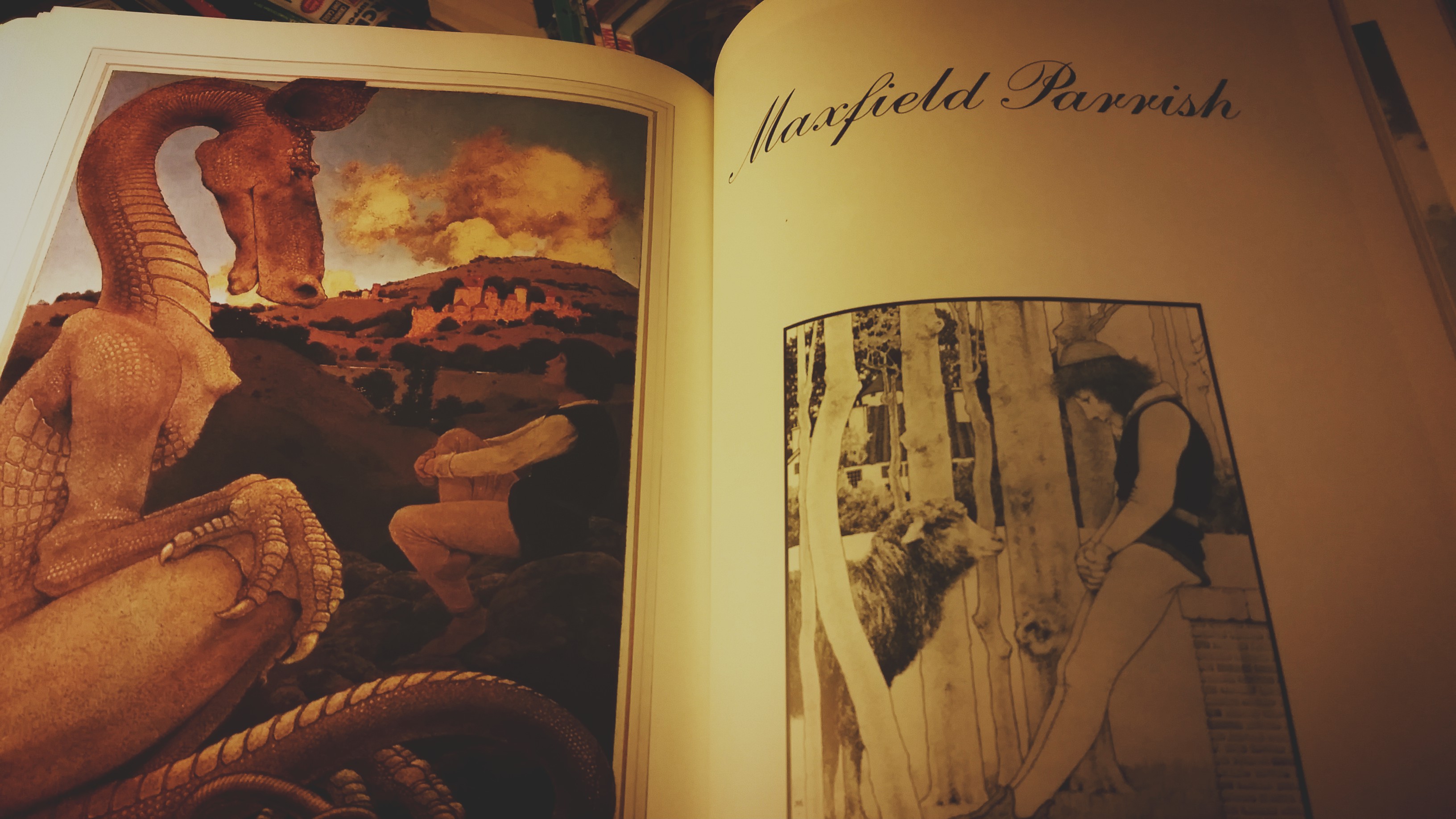
Maxfield Parrish

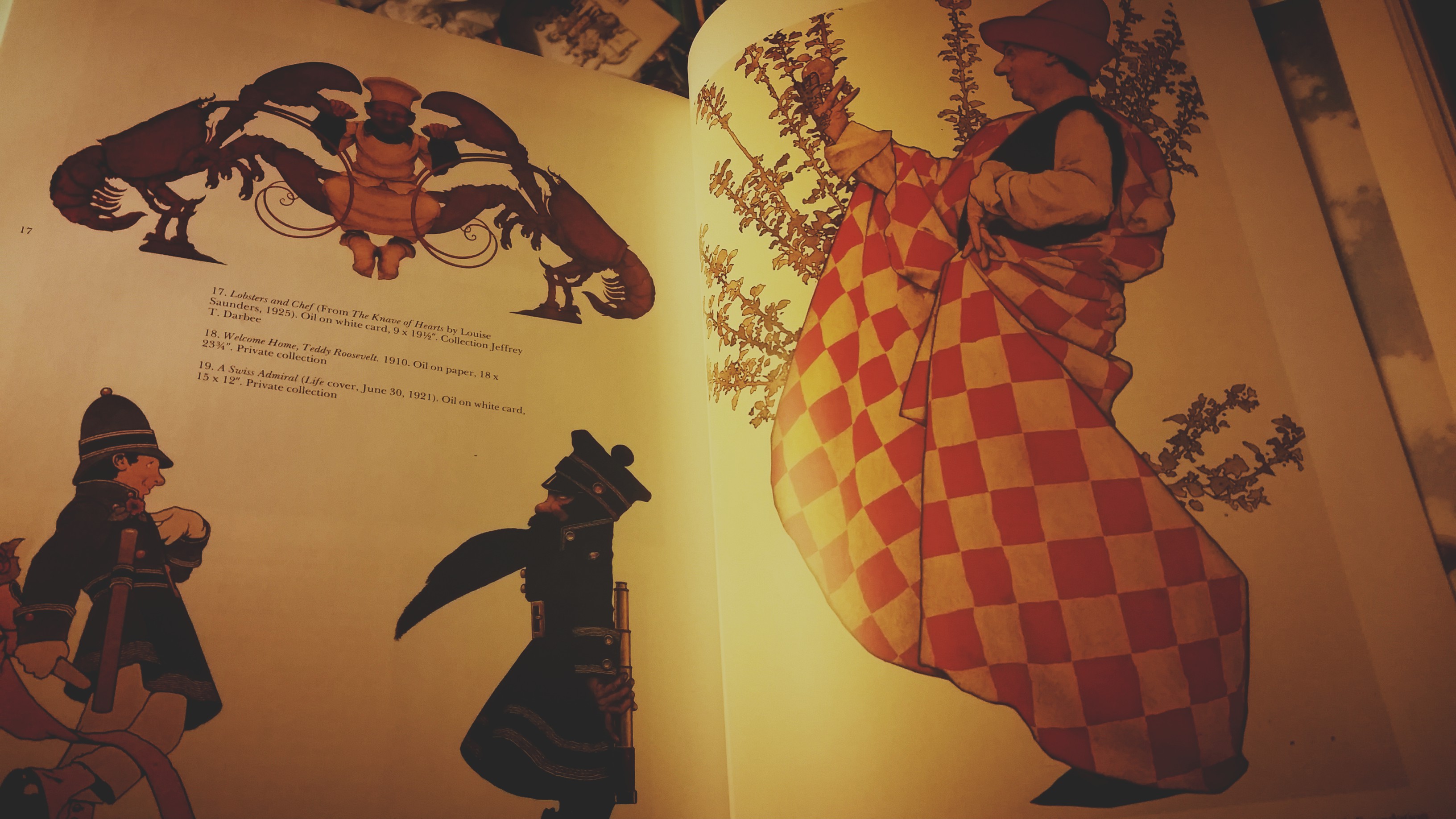
Maxfield Parrish is my all-time favorite painter.  His work is something I gushed about in previous posts because I own other books about his fanciful works painted in Maxfield Parrish blue.
c360_2016-12-21-17-24-36-579

Also Maxfield Parrish


c360_2016-12-21-17-24-09-869

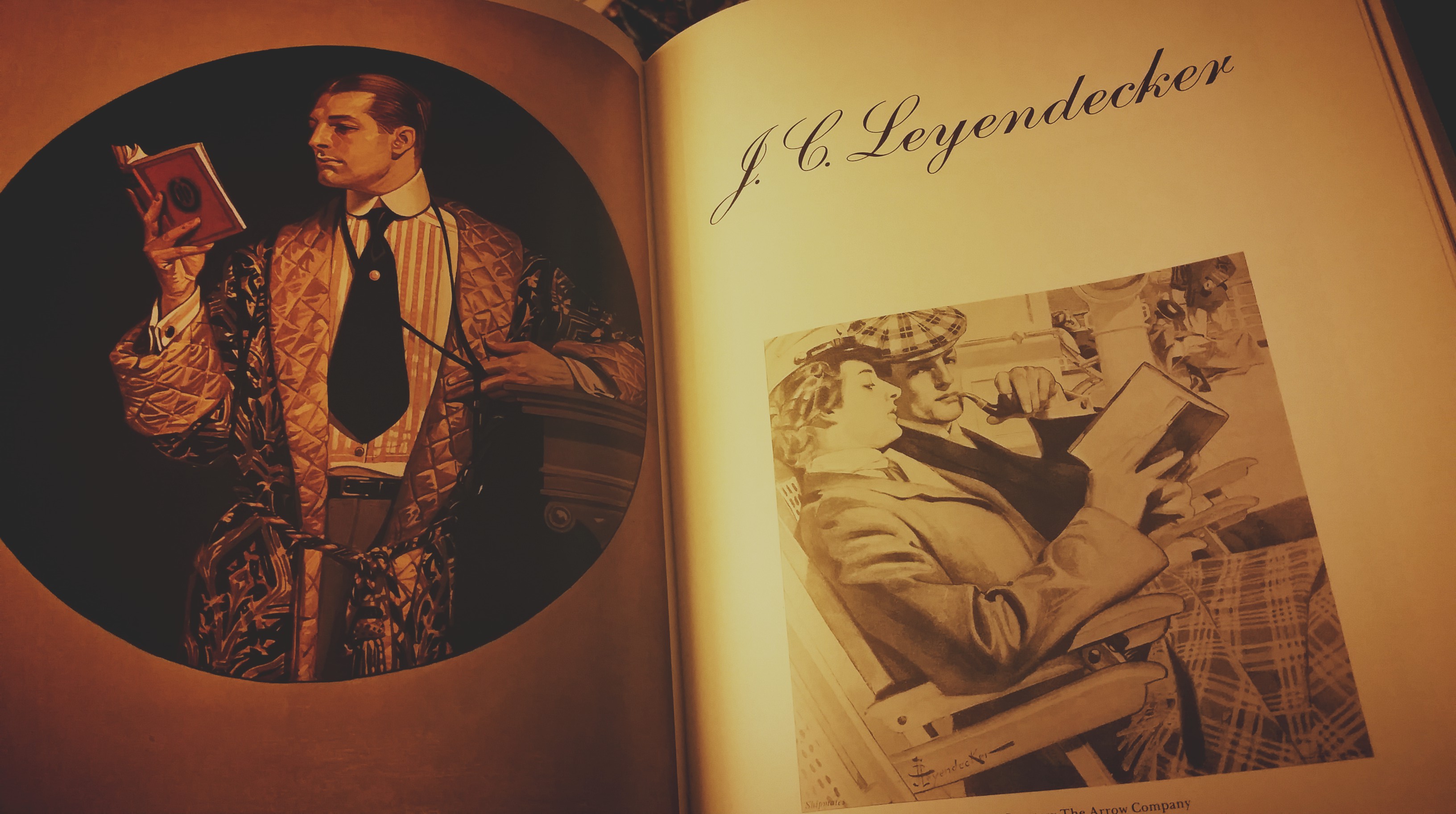
J.C. Leyendecker

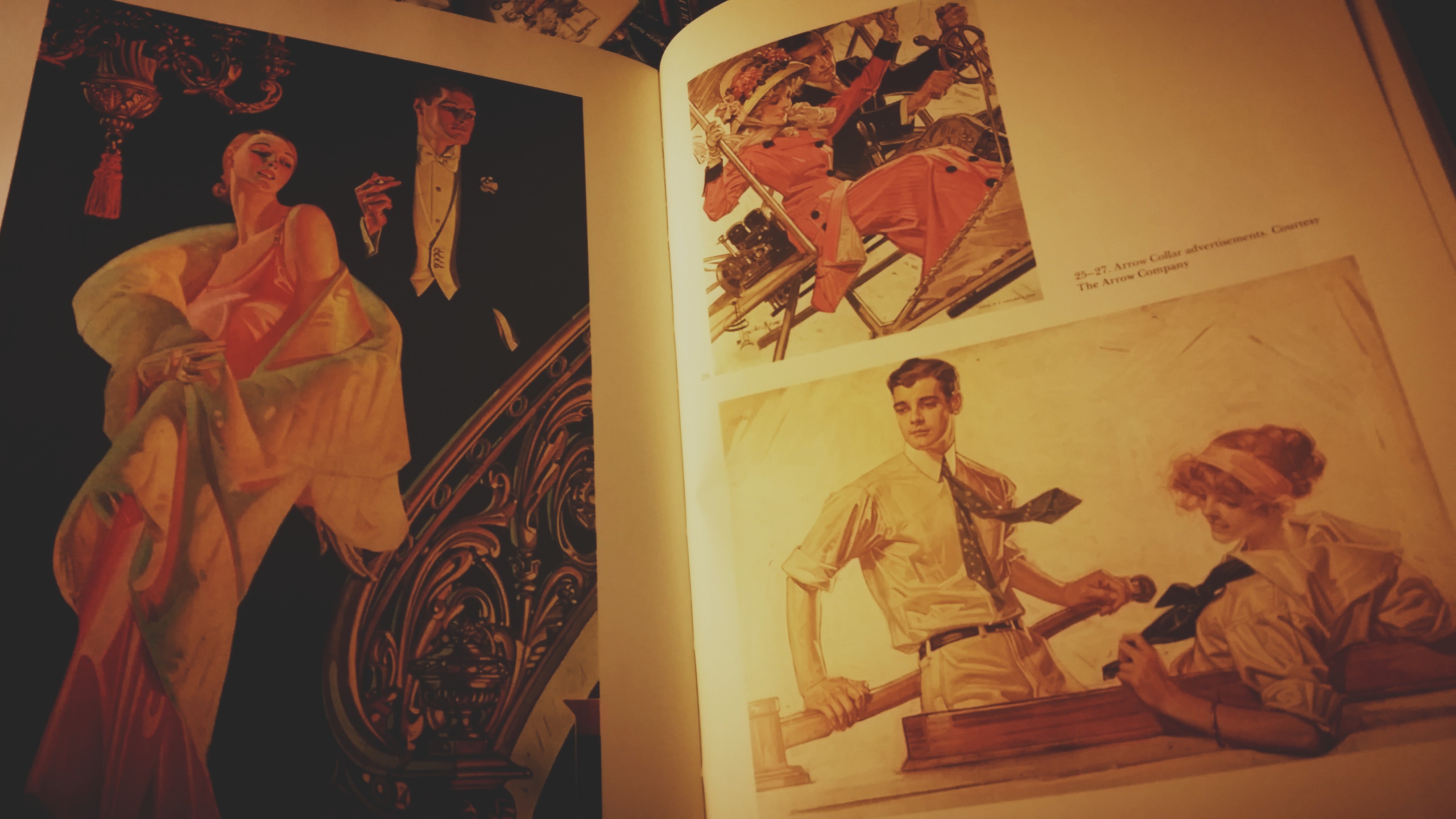
You will probably recognize Leyendecker’s work in magazine and advertising illustration as the standard of the Roaring 20’s.  His paintings set a style that swept American culture for more than a decade, and still affects how we dress to this very day.
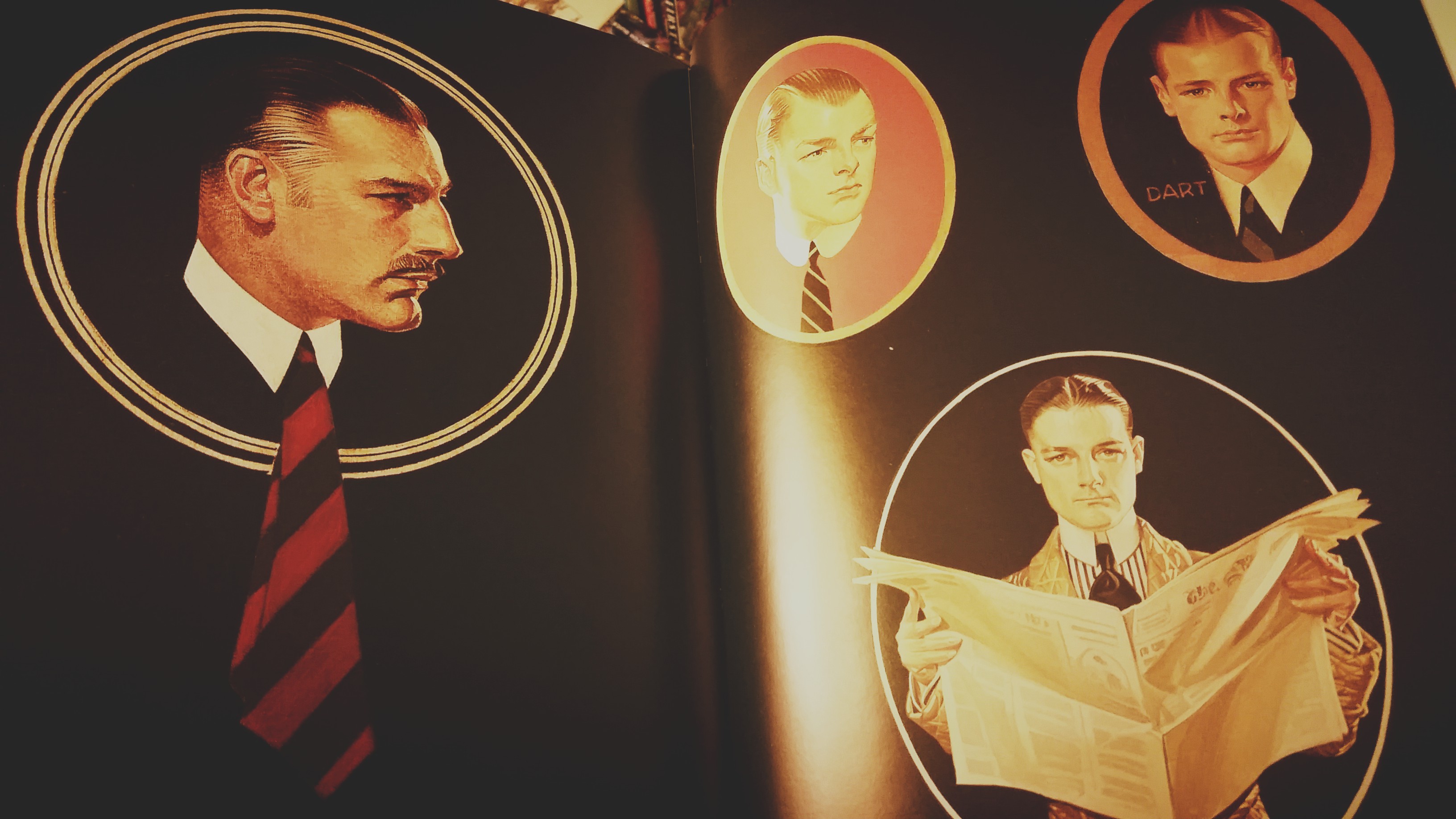
 

c360_2016-12-21-17-23-44-163

More Leyendecker


c360_2016-12-21-17-23-26-011

Even more from Leyendecker


c360_2016-12-21-17-22-58-983

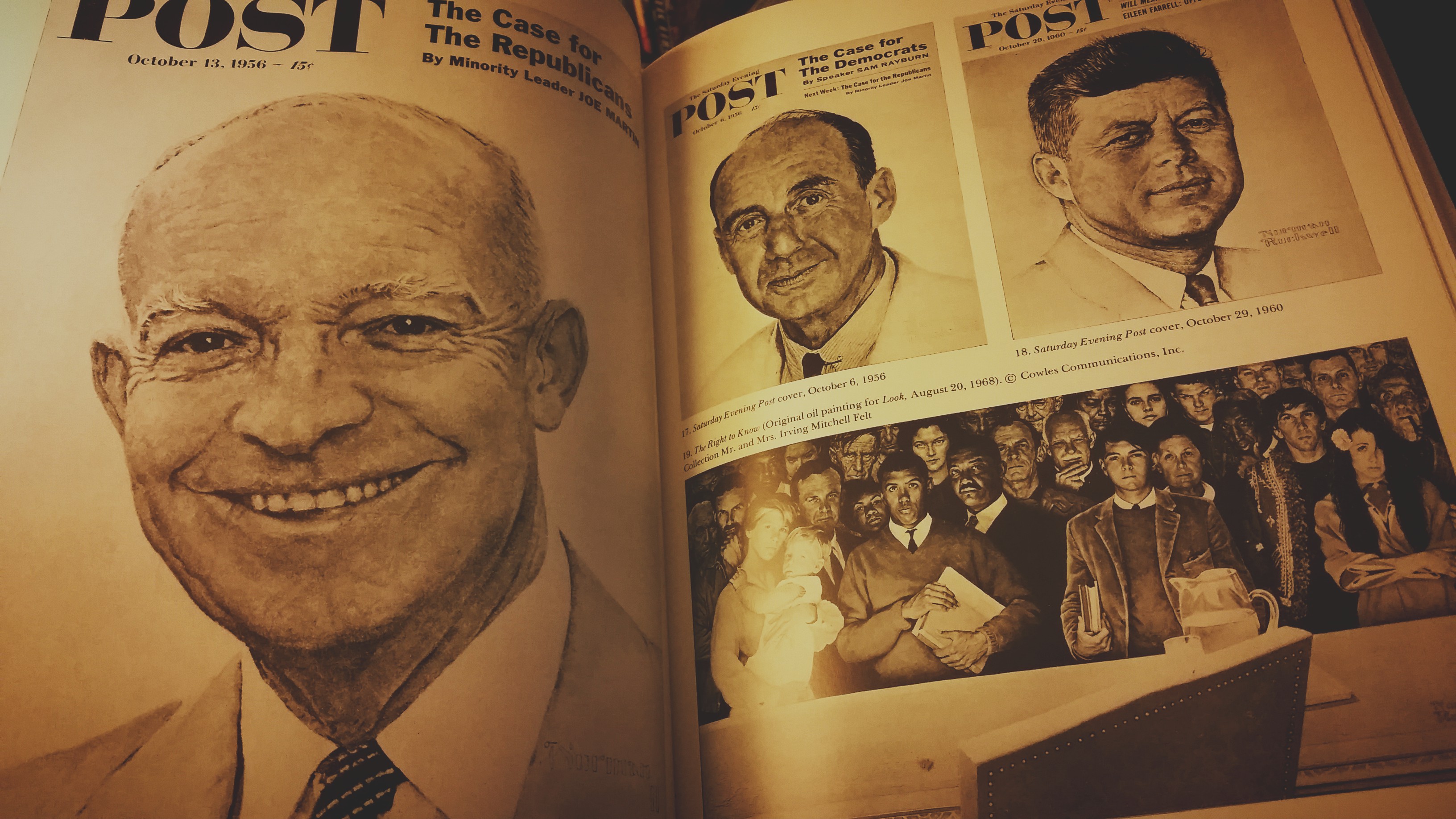
Norman Rockwell

Norman Rockwell and his work for The Saturday Evening Post is still familiar to practically everyone who reads and looks at the illustrations.  As you can see he was a master of folksy realism and could do a portrait better than practically anyone.
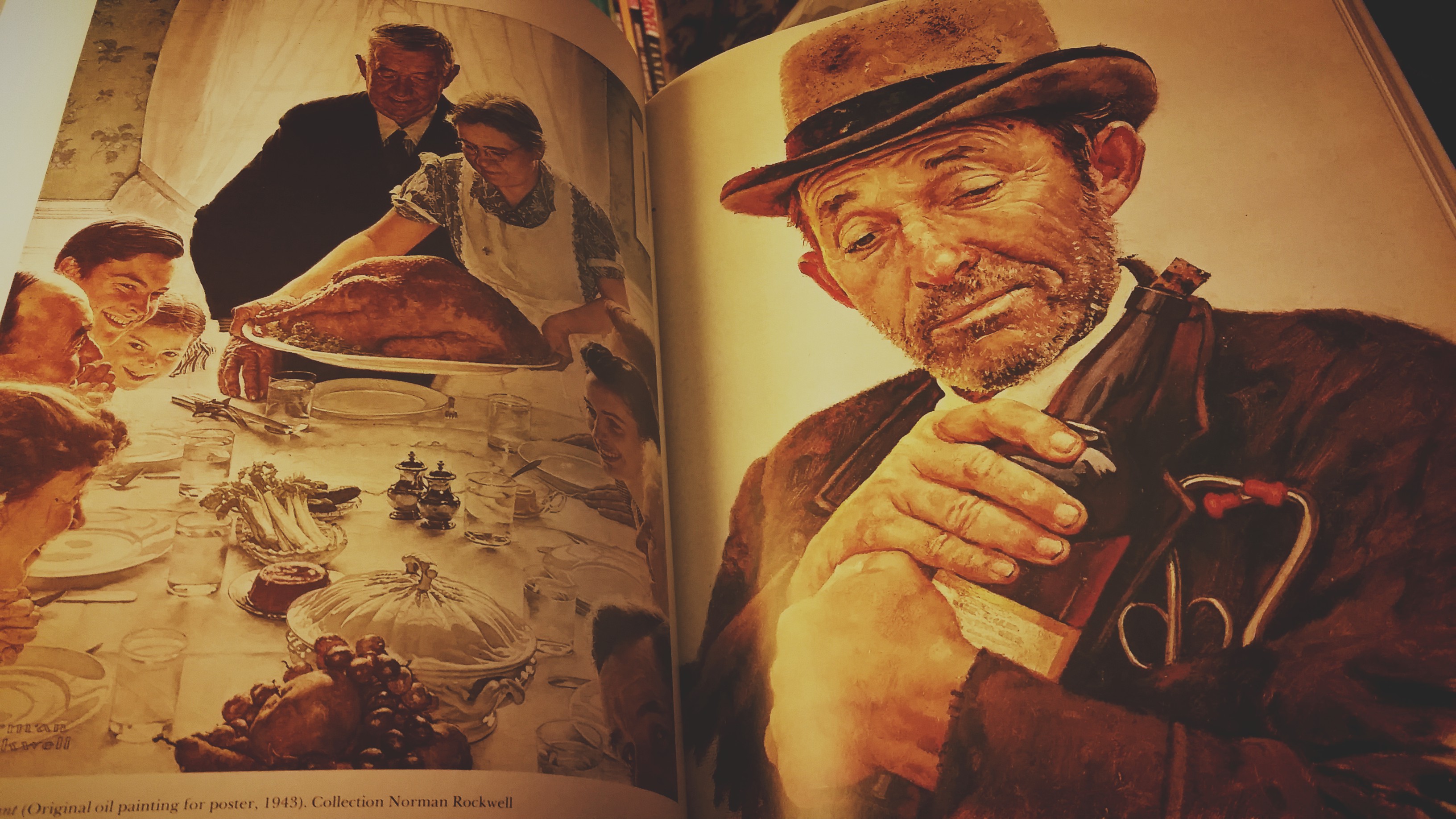
 

c360_2016-12-21-17-22-02-082

Also Rockwell

I have also written about Norman Rockwell before too.  I have half a dozen books that include his works.  My wife is from the Philippines and she knew about him before I ever said a word to her about him.
c360_2016-12-21-17-21-38-237

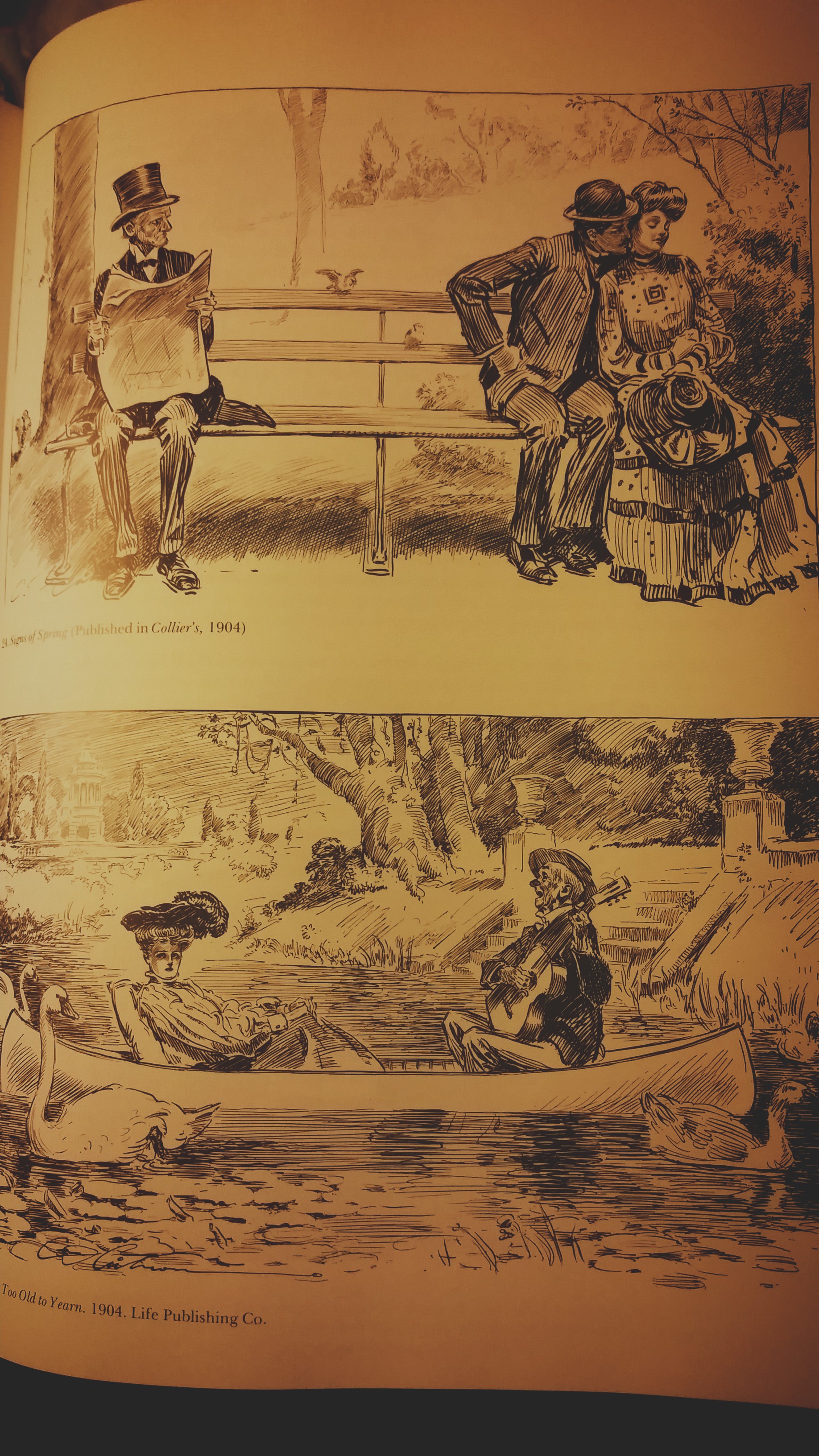
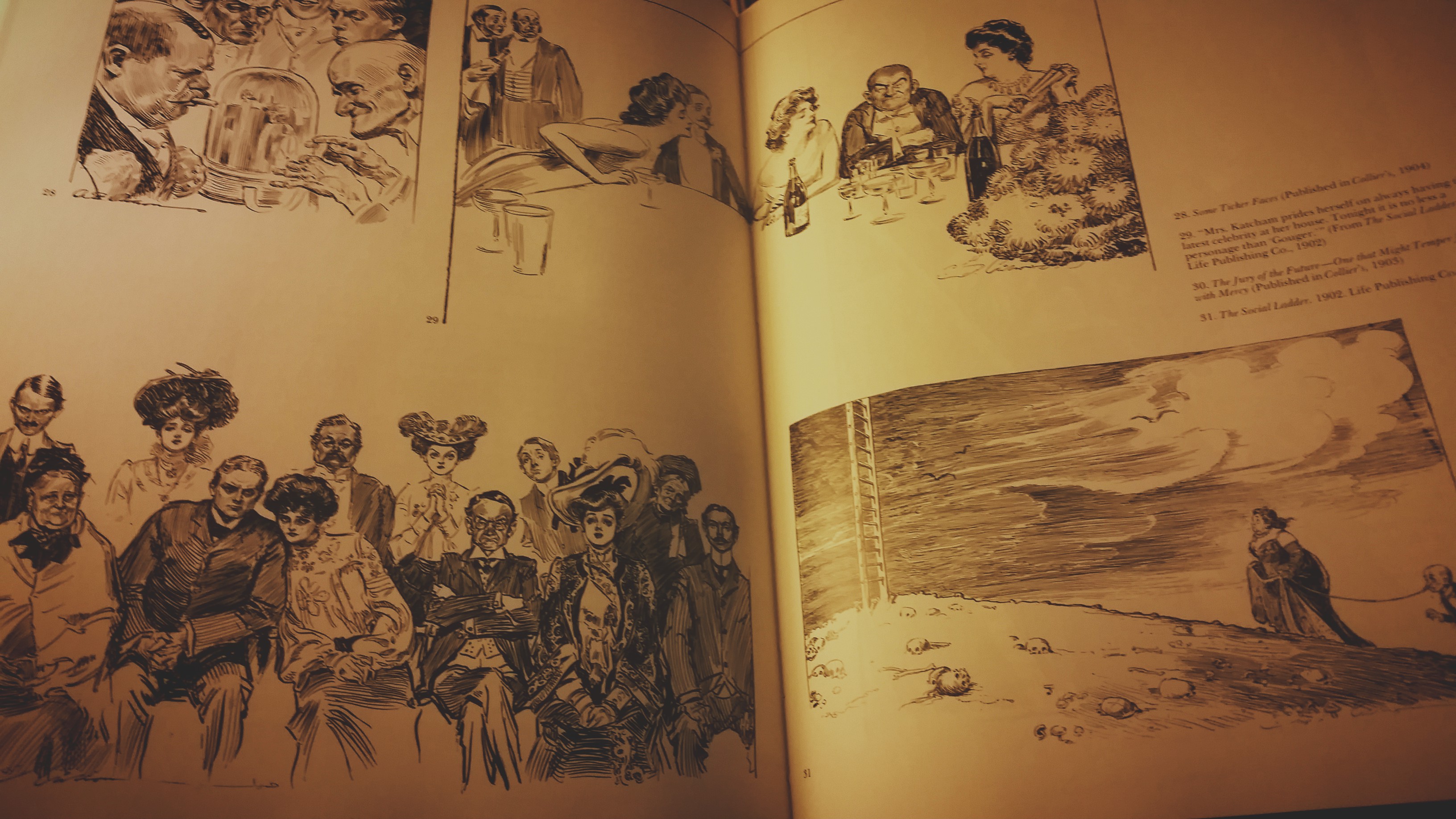
Charles Dana Gibson

As you can plainly see, Gibson was a master of pen and ink.  His work for Collier’s and other magazines thrills in simple black and white.  More cartoonists than just little ol’ me obsess about how he did what he did.
c360_2016-12-21-17-21-14-634

Also Gibson


c360_2016-12-21-17-20-49-992

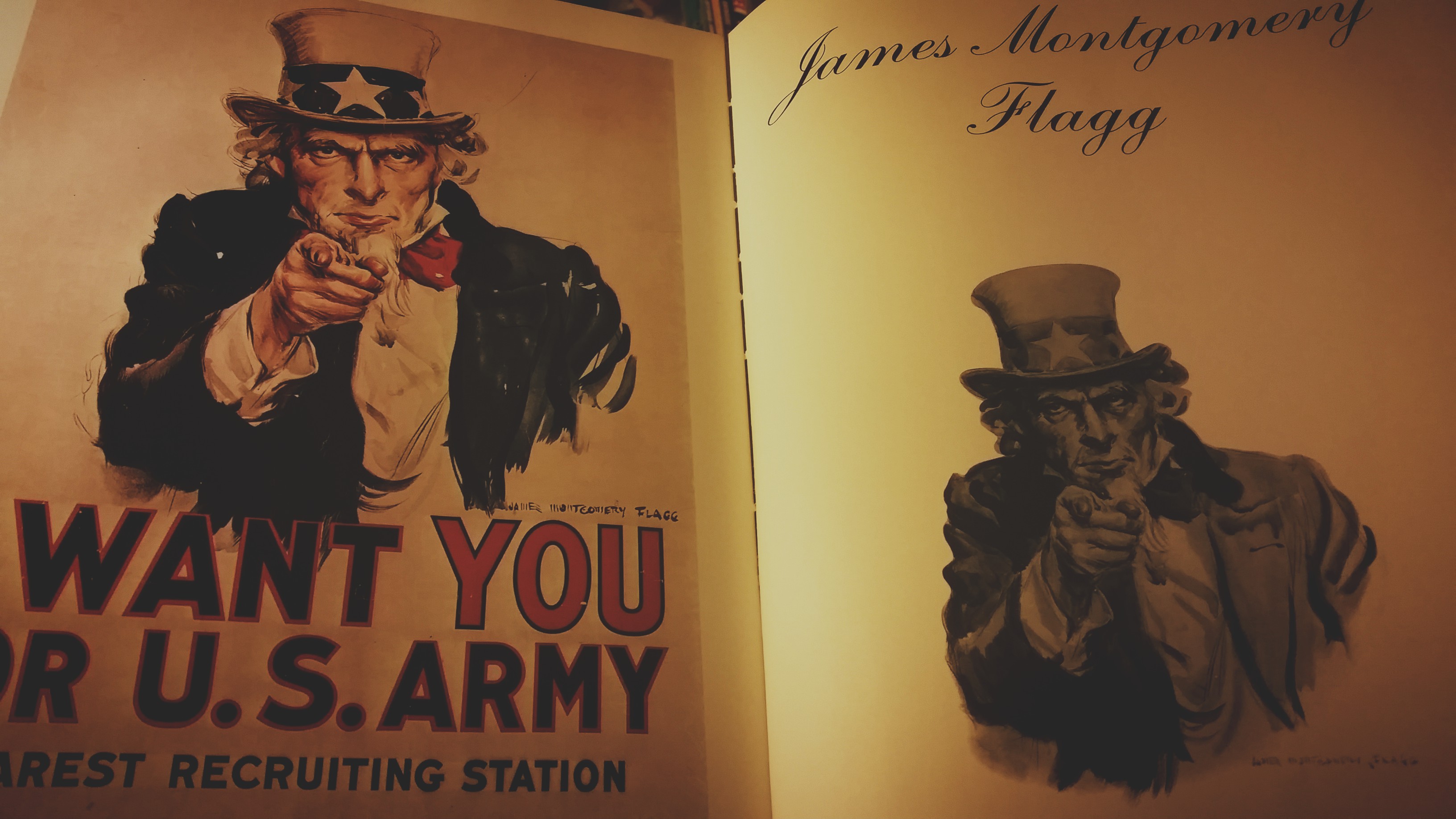
James Montgomery Flagg… with a name like that, who else could it be?
 

c360_2016-12-21-17-20-06-847

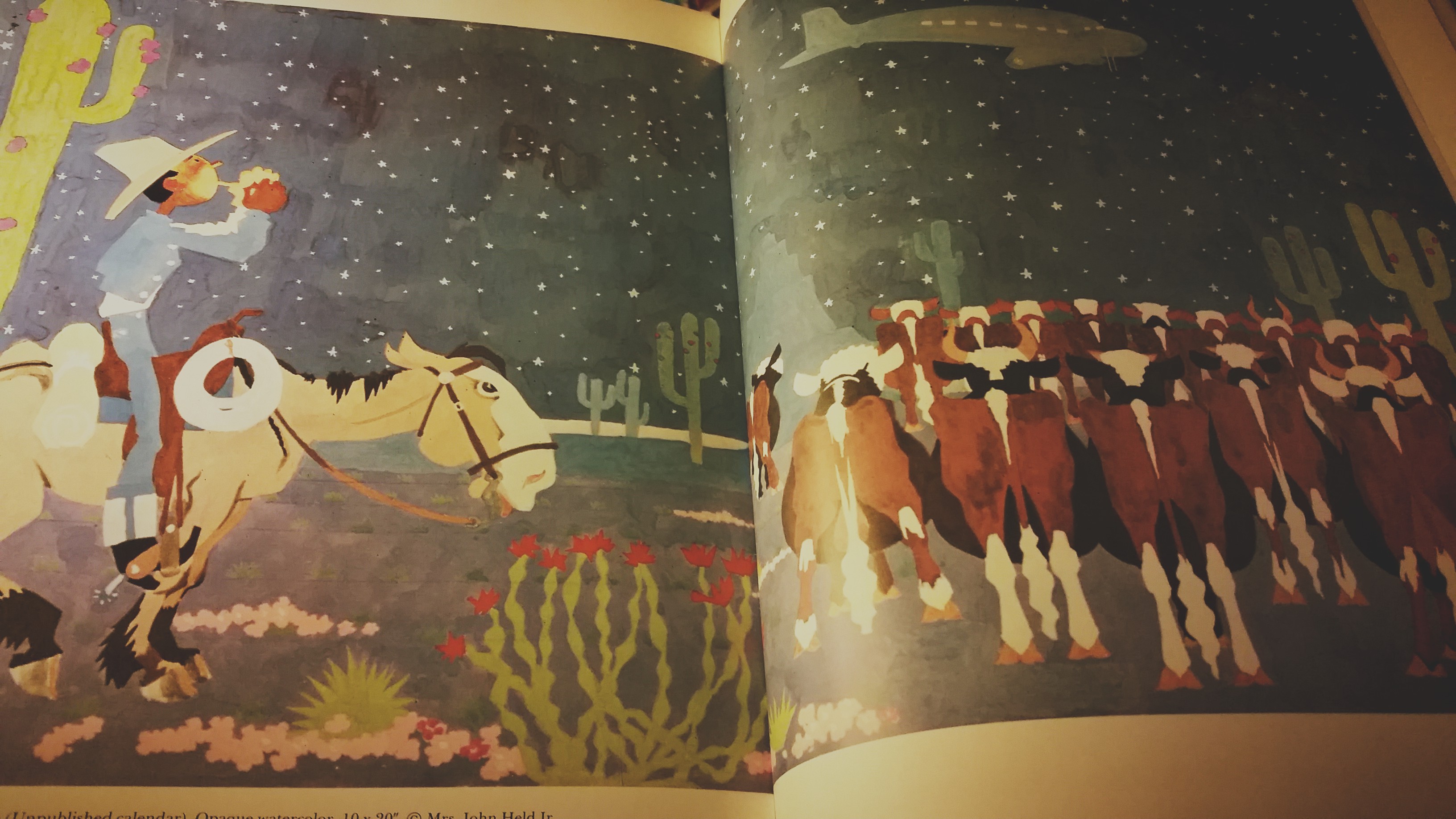
John Held Jr.

The work of Held is stylistically different than all the rest in easily noticeable ways.  He’s the guy that made all the big-headed Pinocchio-looking people in the 1920’s.  You may have seen his work before, though you probably never knew his name.

This bit of someone else’s treasure hoard will now become a part of my own dragon’s treasure, staying by my bedside for quite a while, while I continue to suck the marrow from each of its bones.  I love this book.  It is mine, and you can’t have it… unless you find your own copy in a used bookstore somewhere.
Leave a comment

Filed under art criticism, art my Grandpa loved, book reports, book review, humor, illustrations, imagination, oil painting, old art, old books, pen and ink, Uncategorized

Fascination

I am falling apart. My health is poor and continuing to fail. My memory is suffering from an inability to remember the names of things. I find myself in the kitchen having gone in for a specific purpose, and not being able to remember what that purpose was. That is not to say I am not coping. I have quite a lot of adaptability and significant problem-solving skills. But that will eventually become a losing battle. Especially if I get the virus… any virus. So, what am I going to talk about with a dissolving brain and an hourglass of lifeforce swiftly running out? Fascination. I am fascinated by the details of the process. Like Mr. Spock, I find practically everything, “Fascinating!”

Birds and butterflies

My childhood fascinations turned into obsession first around natural things. When my mother would go to Vey Osier’s Beauty Salon, Vey had this fascinating parrot that was probably a hundred years old and knew how to swear really, really foully. I remember that being the only reason I was willing to go there and wait for Mom to get her hair fussed up (What my Grandpa Aldrich, her father, used to call it.)

I remember waiting for hours to hear that bird say the magic F-word or the horrible S-word. Or even the zillion other bad words I didn’t know anything about when I was seven. And, of course, I never did. The bird was mute the whole time during who-knows-how-many visits. But I did get to look endlessly at that green parrot’s amazing nutcracker bill that Vey always assured us would snap our fingers off like biting a salted pretzel if we got them anywhere close to the bill.

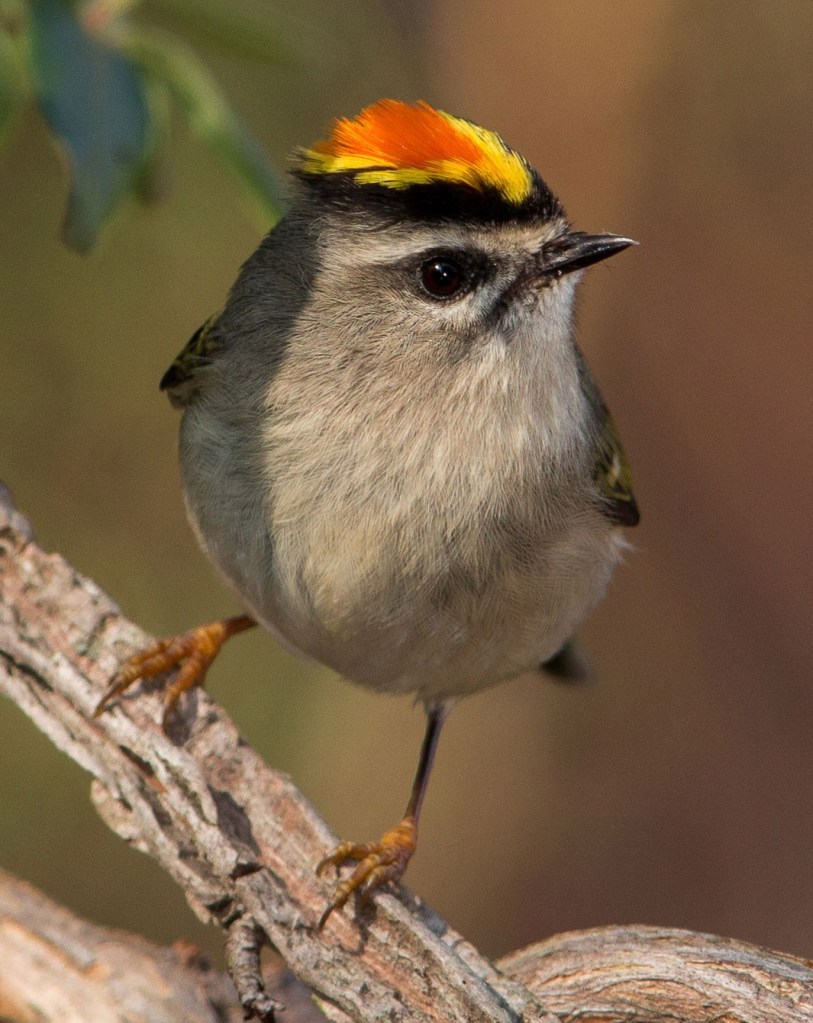
And when I was nine I was given as a present a plastic model kit of a Golden-Crowned Kinglet (the bird in that first picture). My relatives knew I was a burgeoning artist since my teachers constantly complained about all the skeletons, crocodiles, and monsters I drew in the margins of my school workbooks. So, I had a plastic bird to paint with all the necessary paints, but no idea what the bird looked like. We had to go all the way to Mason City to Grandma Beyer’s house because we called up there and checked, and, sure enough, there was a colored picture in the K volume of her Collier’s Encyclopedia. I painted it so accurately, the danged thing looked almost alive.

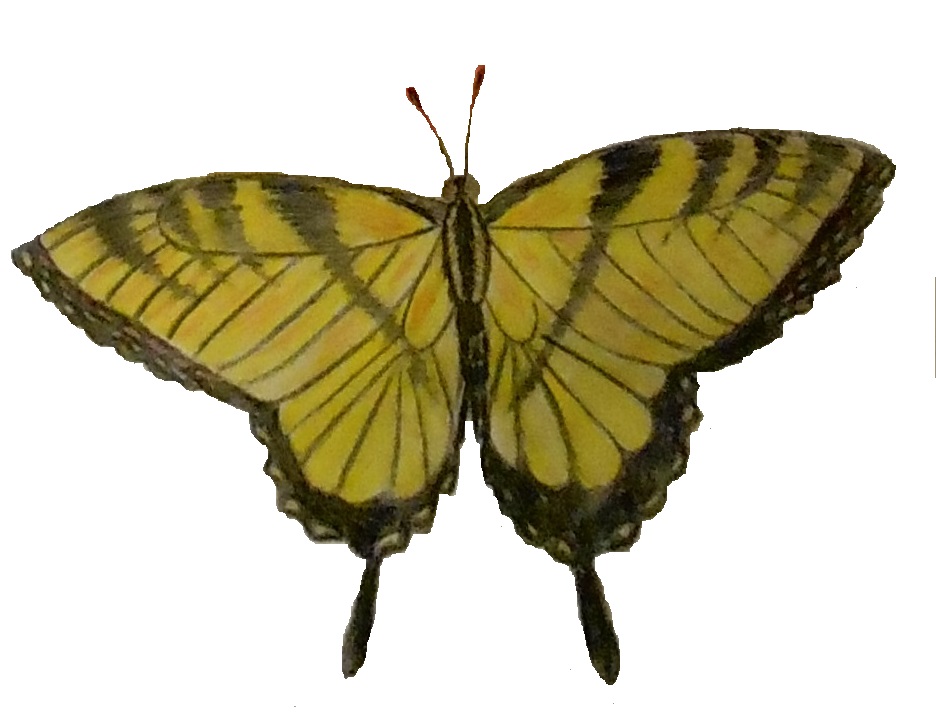
And if you have ever seen any of my butterfly posts, you know I became a butterfly hunter before ever entering junior high school, where Miss Rubelmacher, the rabid seventh-grade science teacher, made that obsession a hundred times worse. (She didn’t actually have rabies, just a reputation of requiring excessively hard-to-find life-science specimens like a nasturtium that bloomed in October in Iowa, or a Mourning Cloak butterfly.

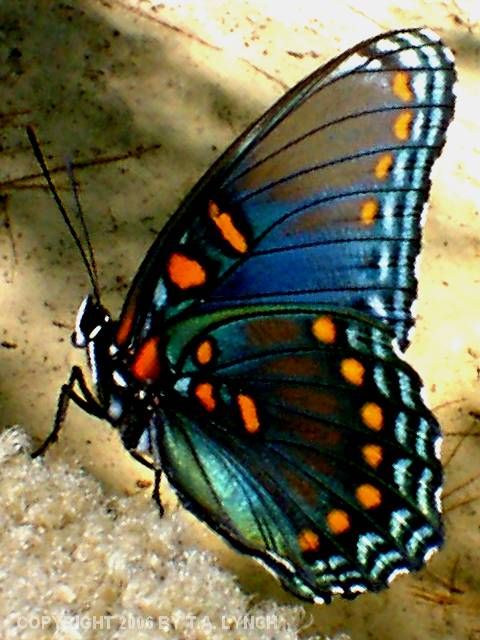
I was able to find for her numerous Red-Spotted Purples like the one in the picture. I got them off the grill of Dad’s Ford, as well as in Grandpa Aldrich’s grove. And I eventually caught a pair of Mourning Cloaks as well on Grandpa Aldrich’s apple trees, though not until summer after seventh grade was over for me. I could tell you about my quest to catch a Tiger Swallowtail, too. But that’s an entirely different essay, written for an entirely different thematic reason.

Needless to say, my bird fascination led me to become an amateur bird-watcher with a great deal of useless naturalist information crammed into my juvenile bird-brain about birds. Especially Cardinals. And my fascination with butterflies opened my eyes to a previously invisible world of fascinating and ornately-decorated bugs. (Of course, I should’ve said “insects” instead of “bugs” since I absolutely did learn the difference.) And I still to this day know what a Hairstreak Butterfly looks like, what a Luna Moth is (Think Lunesta Commercials,) and how you have to look at the underside of the lower wings to correctly identify a Moonglow Fritillary Butterfly.

During my lifetime, my fascinations have become legion. I became obsessed with the comic books done by artist Wally Wood, especially Daredevil. I became obsessed with Disney movies, especially the animated ones like The Rescuers, The Jungle Book, Pinocchio, and Fantasia. I rode the bucking bronco of a fascination with the Roswell Crash (and the actual alien space ships I am almost certain the U.S. Army recovered there.) And so many other things that it would make this essay too long, and would probably bore you into a death-like coma. So, here’s what I have learned by being fascinated with my own fascinations;

  1. You do not want to play me in a game of Trivial Pursuit for money, even now that my memory is like swiss cheese.
  2. I have a real ability to problem-solve because I know so many useless details that can be combined in novel ways to come up with solutions to problems.
  3. I can write interesting essays and engaging novels because I have such a plethora of concrete details and facts to supplement my sentences and paragraphs with.
  4. It can be really, really boring to talk to me about any of my fascinations unless I happen to light the same color of fire in your imagination too. Or unless you arrived at that same fascination before I brought it up.

Leave a comment

Filed under birds, bugs, commentary, humor, imagination, insight

The Silent Sonata

creativity

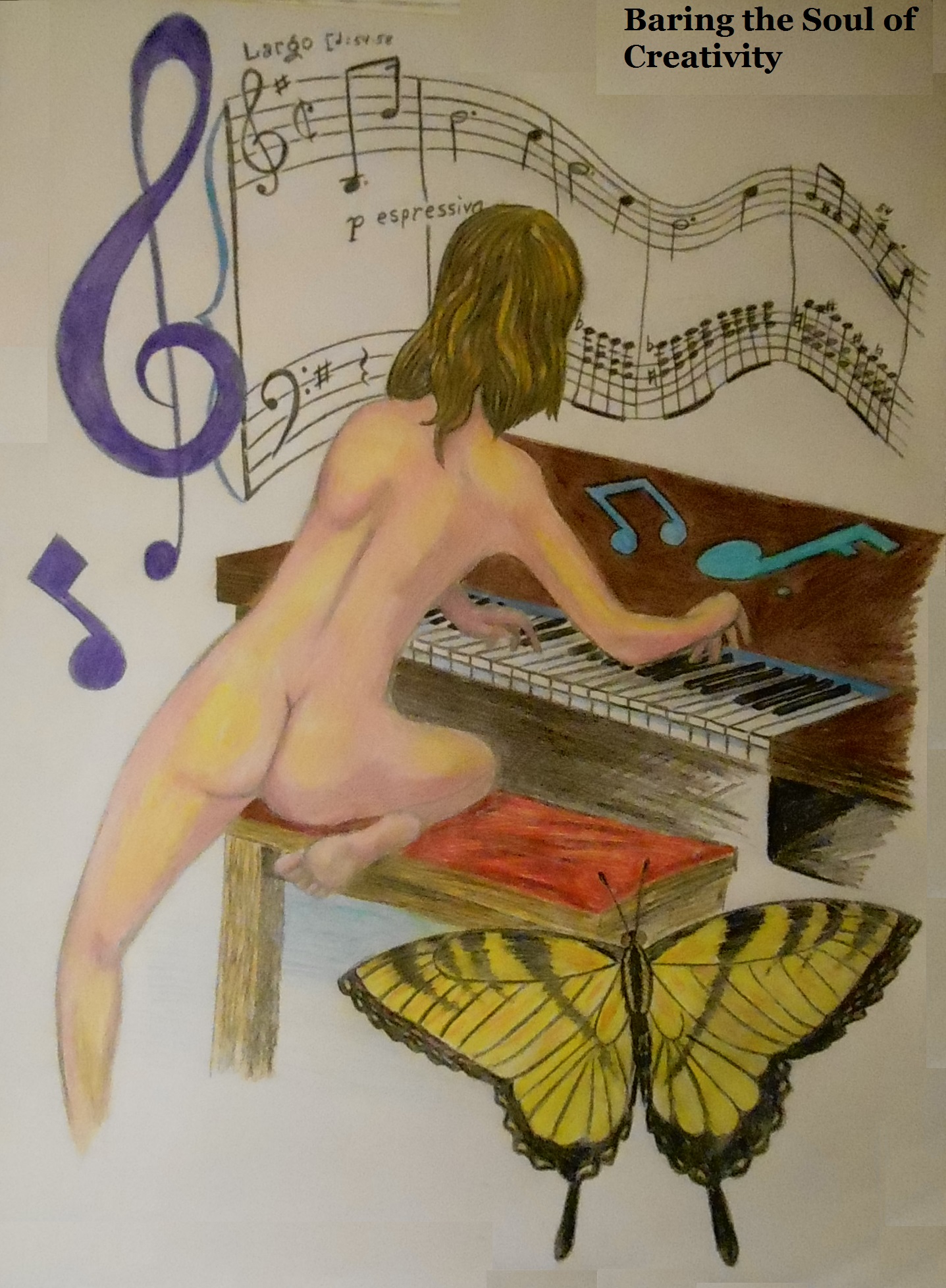
Being a writer is a life of music that happens only in your head.  You hear voices constantly.  They pulse rhythmically with insights and ideas that have to be written down and remembered.  Otherwise  the music turns clashing-cymbals dark and depressing.  Monday I wrote a deeply personal thank you to the Methodist minister who saved my life when I was a boy.  I posted a YouTube music video by the acapella group Pentatonix with that essay in a vain attempt to give you an idea of the music in my head when I composed that very difficult piece to give myself a measure of peace.

filch

I realize that I am not writing poetry here.  Poetry can so easily slip into melody and music because of rhythm and meter and rhyme.  And yet, words to me are always about singing, about performing, about doing tricks with metaphor and meaning, rhythm, convoluted sentence structure, and other sneaky things that snake-oil salesman do to get you to think what you are hearing is precisely what you needed to hear.  The Sonata of Silence…  did you notice the alliteration of the silvery letter “S” in that title?  The beat of the syllables?  Da-daah-da a da-da?  The way a mere suggestion of music can bring symphonic sounds to your ear of imagination as you read?  The way a simple metaphor, writing is music, can be wrapped into an essay like a single refrain in a symphonic piece?
psoriasis

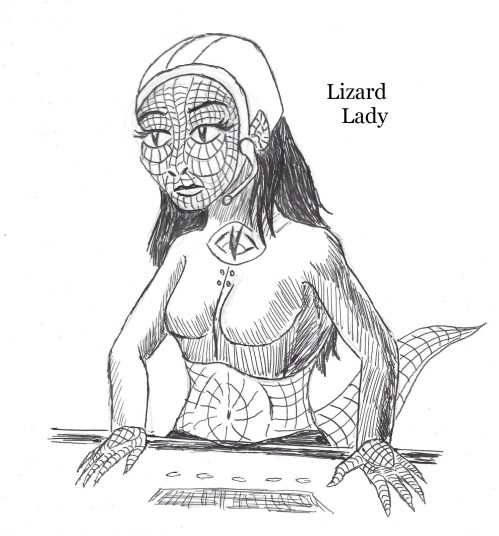
A sonata is a musical exercise in three or four movements that is basically instrumental in nature.  You may have noticed that the movements are loosely defined here by the accompanying pictures, of which there are three.  And it is silent only in the way that the instruments I am using themselves make no noise in the physical world.  The only sounds as I type these words are the hum of an old air conditioner and the whirr of my electric fan.  Yet my mind is filled with crescendos of violins and cellos, bold brass, and soft woodwinds.  The voice saying these words aloud only in my head is me.  Not the me you hear when I talk or the me I can hear on recordings of my own voice, but rather the me that I always hear from the inside.  And the voice is not so much “saying” as “singing”.

Writing makes music.  The writer can hear it.  The reader can too.  And whether I croon it to make you cry, or trill it to make you laugh, I am playing the instrument.  And so, the final notes of the sonata are these.  Be happy.  Be well.  And listen for the music.

Leave a comment

Filed under imagination, insight, inspiration, music, Paffooney, strange and wonderful ideas about life

Tom Sawyer Abroad (Book Review)

20161017_162015

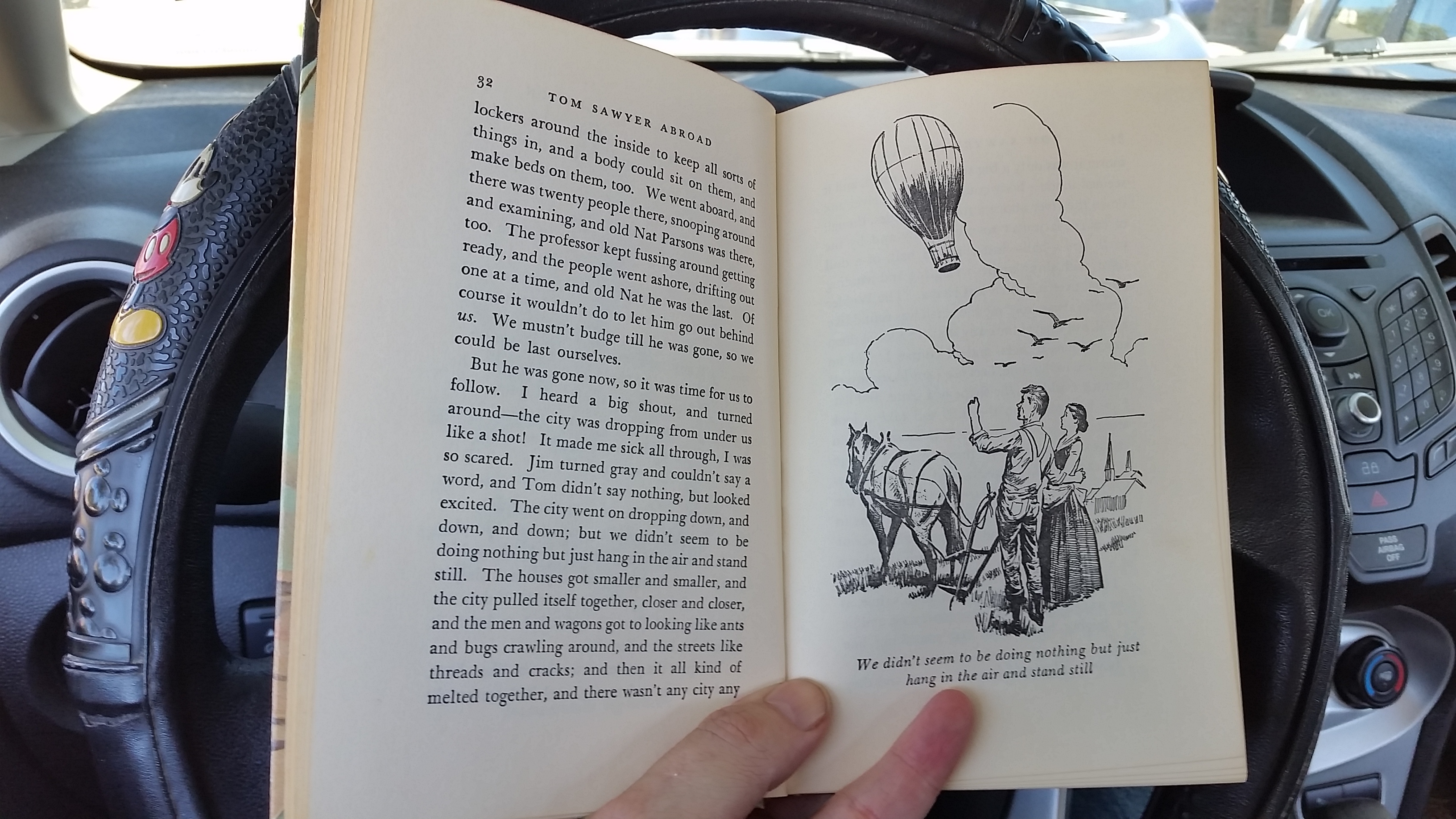
Yep, I read about being an “erronort” traveling in a balloon while sitting in a parking lot in my car.

Believe it or not, I read this entire 100+-year-old book in my car while waiting for my daughter and my son in school parking lots.  What a perfectly ironic way to read a soaring imaginary adventure written by Mark Twain, which has been mostly forgotten by the American reading public.

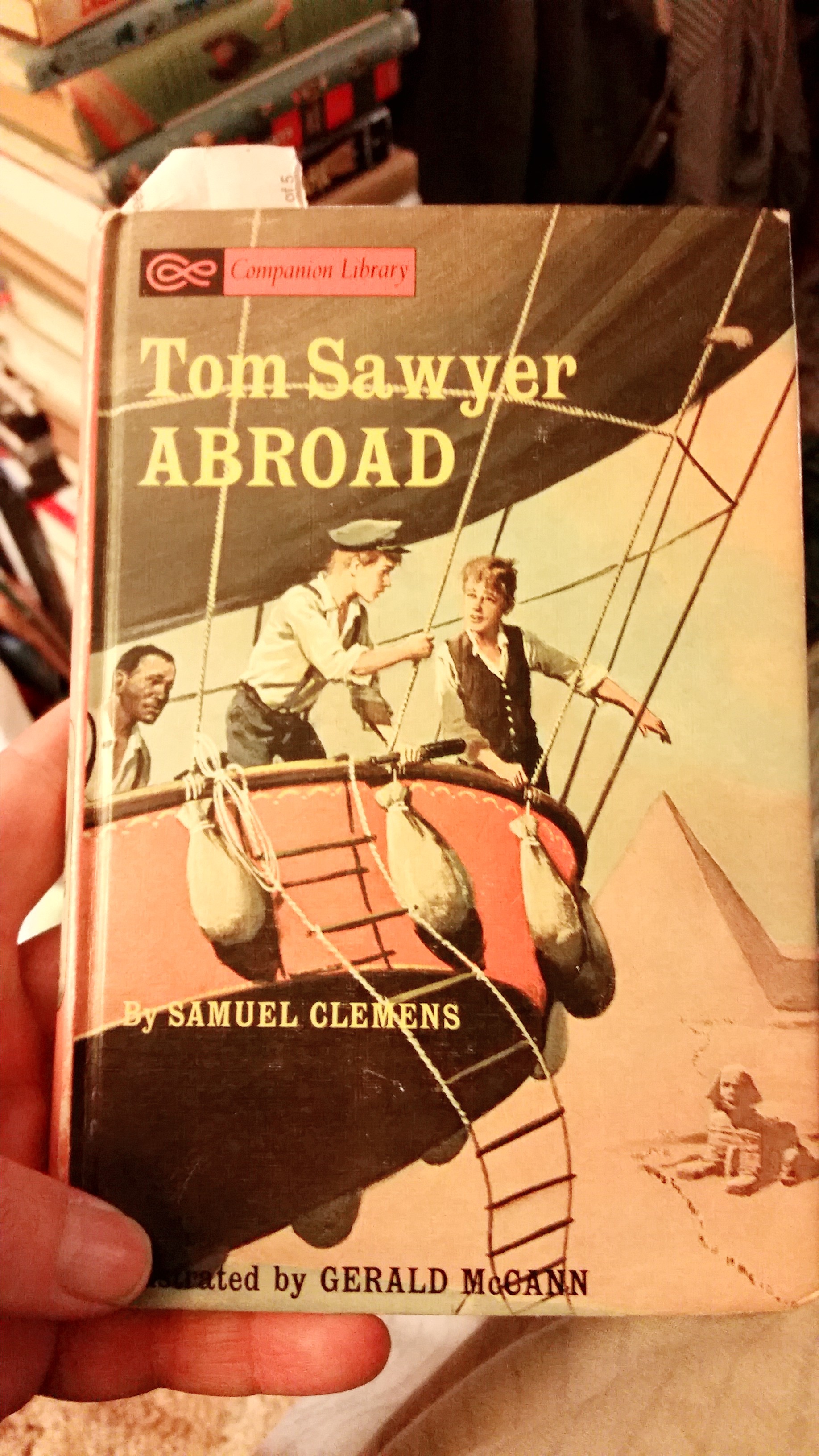
c360_2016-10-30-10-26-22-635

My copy of this old book is a 1965 edition published for school libraries of a book written in 1894.  It tells the story of how Tom and Huck and Jim steal a ride on a balloon at a town fair from a somewhat mentally unhinged professor of aeronautical science.  The balloon, which has space-age travel capabilities due to the professor’s insane genius, takes them on an accidental voyage to Africa.

Of course, the insane professor intends to kill them all, because that’s what insane geniuses do after they prove how genius-y they really are.  But as he tries to throw Tom into the Atlantic, he only manages to plunge himself through the sky and down to an unseen fate.  The result being a great adventure for the three friends in the sands of the Sahara.  They face man-eating lions, mummy-making sandstorms, and a chance to land on the head of the Sphinx.

The entire purpose of this book is to demonstrate Twain’s ability to be a satirical stretcher of the truth, telling jokes and lies through the unreliable narrator’s voice of Huck Finn.

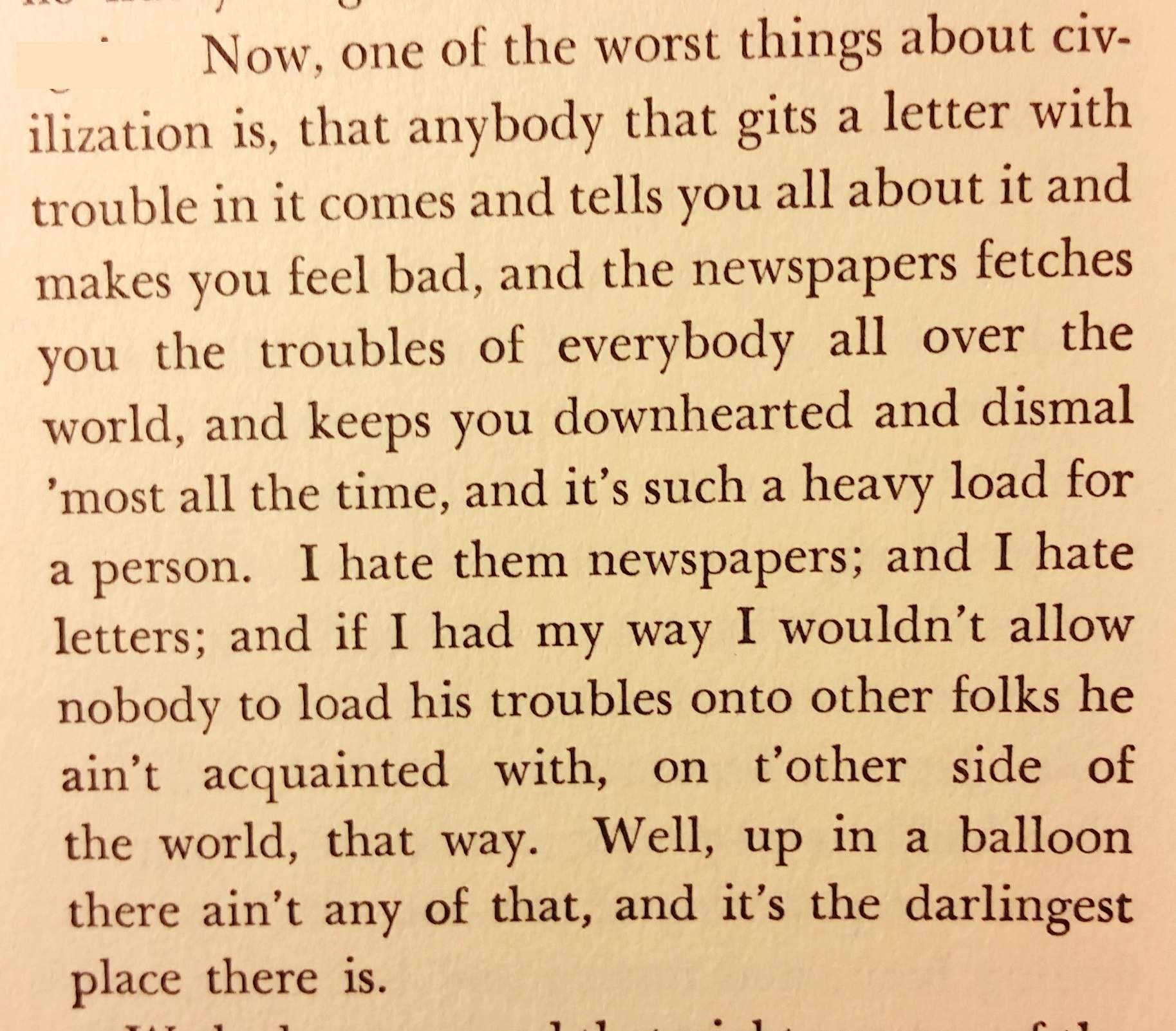
Here is a quoted passage from the book to fill up this review with words and maybe explain just a bit what Twain is really doing with this book;

c360_2016-10-30-10-48-45-630

Notice how I doubled my word count there without typing any of the words myself?  Isn’t the modern age wonderful?

But there you have it.  This book is about escaping every-day newspaper worries.  In a time of Presidential Candidate Donald Trump, global warming, and renewed threats of thermonuclear boo-boos with Russia, this proved to be the perfect book to float away with on an imaginary balloon to Africa.  And the book ends in a flash when Aunt Polly back in Hannibal wants Tom back in time for breakfast.  I really needed to read this book when I picked it up to read it.

Leave a comment

Filed under book reports, book review, foolishness, good books, humor, imagination, Mark Twain, old books, strange and wonderful ideas about life

Imaginary Friends

Toccata and Fugue

When you know someone has an imaginary friend, something like Elwood’s six-foot invisible rabbit called Harvey, don’t you immediately think that person is crazy?  I do.  But I have imaginary people as friends. I think most writers do.  So am I crazy?  Probably. But hopefully it is a good kind of crazy.

It began with imaginary friends from books.  The Cat in the Hat was my friend.  Jim Hawkins was my friend, as was Mowgli and all the members of the Swiss Family Robinson.  They entered my dreams and my daydreams.  I told them my troubles the same way I listened to theirs through their stories.

I began to have imaginary friends that came from my own imagination too.

galtorr-primexvx

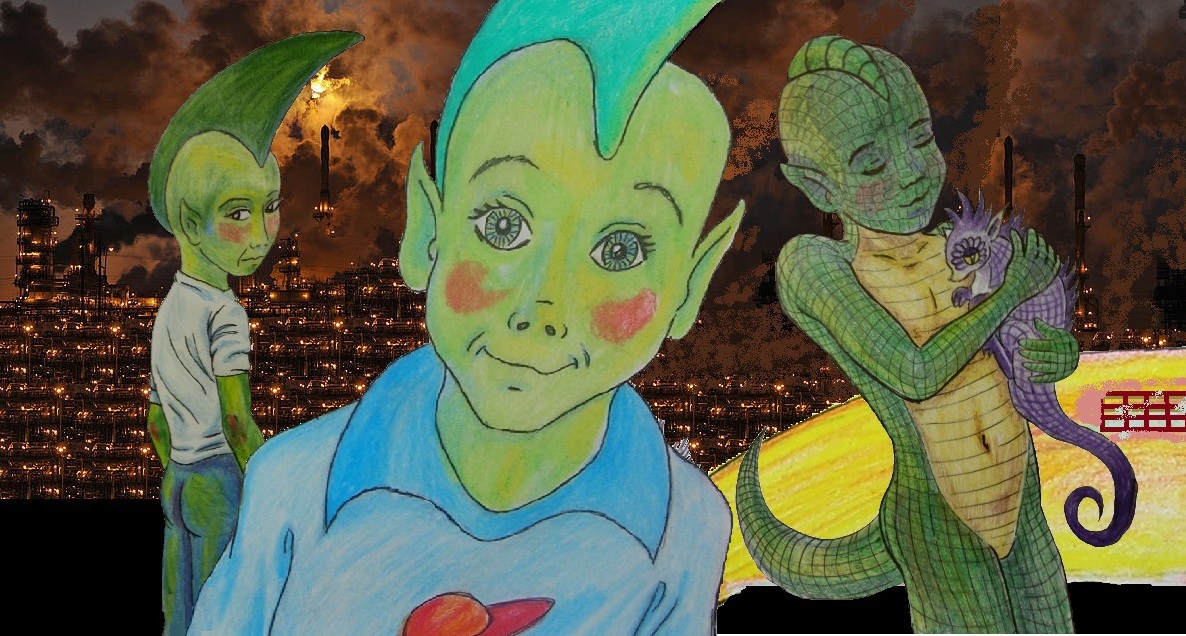
I used to tell my mere human friends about my friend Davalon from outer space.  I told them that he was real and secretly visited me at night to talk about being able to learn about humans on earth by walking around invisibly and watching them.  I got so involved with these stories that my sixth grade class began saying, “Michael is from Mars.”

Island Girl2z

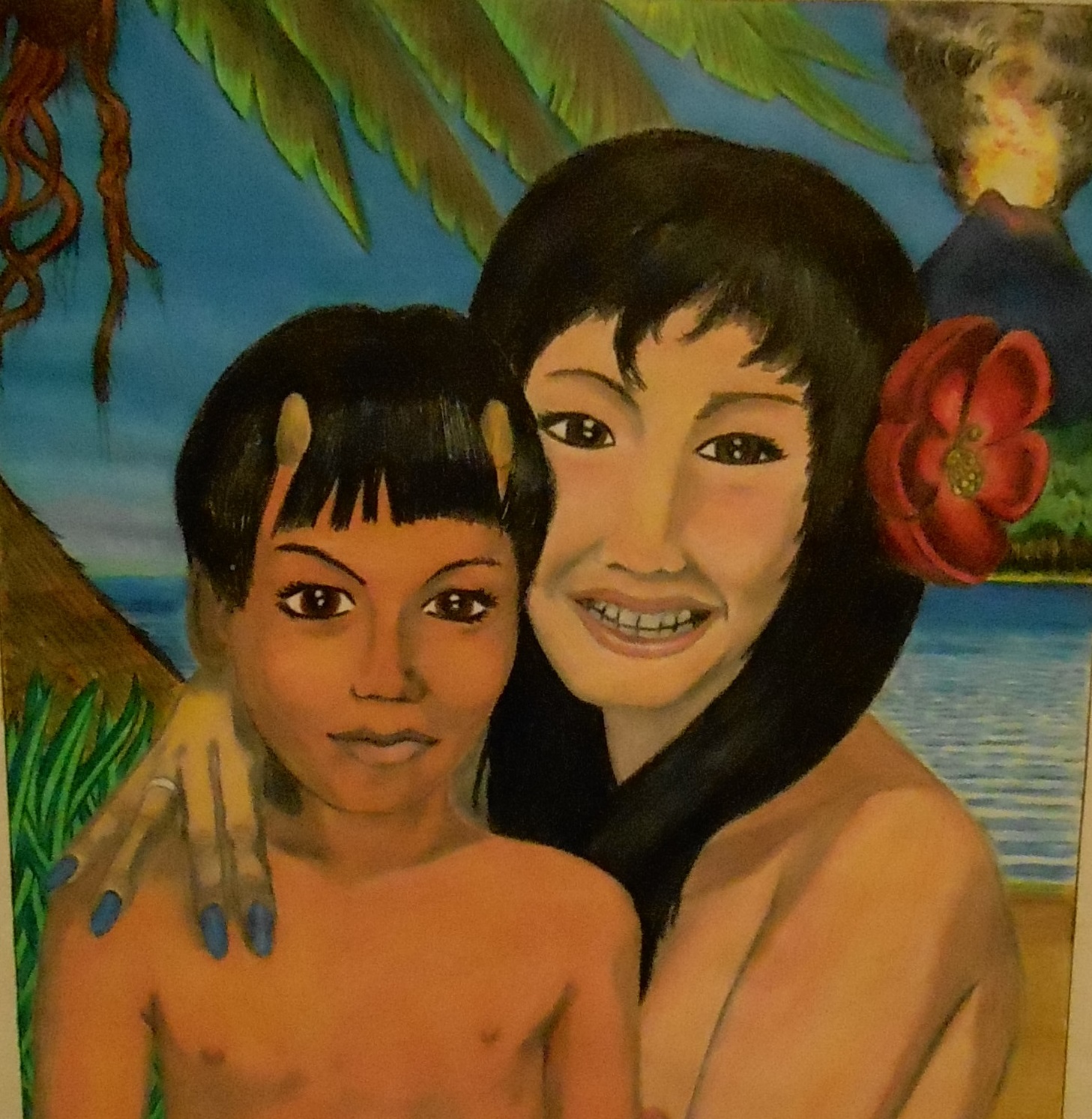
When I was a teenager, I began having conversations with a faun.  His name was Radasha.  He was a creature from Greek Myth, a sensual Dionysian creature who, in his child body, was both younger than me and way older than me.  I didn’t realize until much later in life that he was the result of my repressed memories of a childhood sexual assault that I was the victim of.  I could talk to him about my fear of nakedness.  I could tell him about my blossoming interests in naked girls and their bodies.  I could talk to him about all the things I was somehow too terrified to talk to my male friends about, even though none of them had the same reluctance to discuss sex.  Ra was imaginary.  But he helped me heal.

Then the story-telling seriously began.  I used Davalon as one of the main characters in my novel Catch a Falling Star.  I created Torrie Brownfield, the baby werewolf to express the feelings I had as a boy about being a monster and secretly terrible and deformed.  Torrie is a normal boy with a condition called hypertrichosis.  I am working on The Baby Werewolf now.  And then there’s lovely Valerie Clarke.  She is the main character of Snow Babies which is a finished novel, edited and proofread and ready to publish.  It is I book I will have to find another way to publish since the recent death of PDMI Publishing.  She is not a me-character, based on my own thoughts and feelings.  She is based on former classmates and students who told me things that express the sadness and isolation of growing up female.  So she is even more imaginary than my other characters.

They become real people to me.  They have their own point of view. They talk to me and I learn things from them.  But they are imaginary.  So am I crazy?   Yes… as a loon.  And happy as Elwood P. Dowd to be that way.

Leave a comment

Filed under artwork, autobiography, being alone, characters, commentary, humor, imagination, insight, Paffooney, strange and wonderful ideas about life

Story-Telling for Art Day

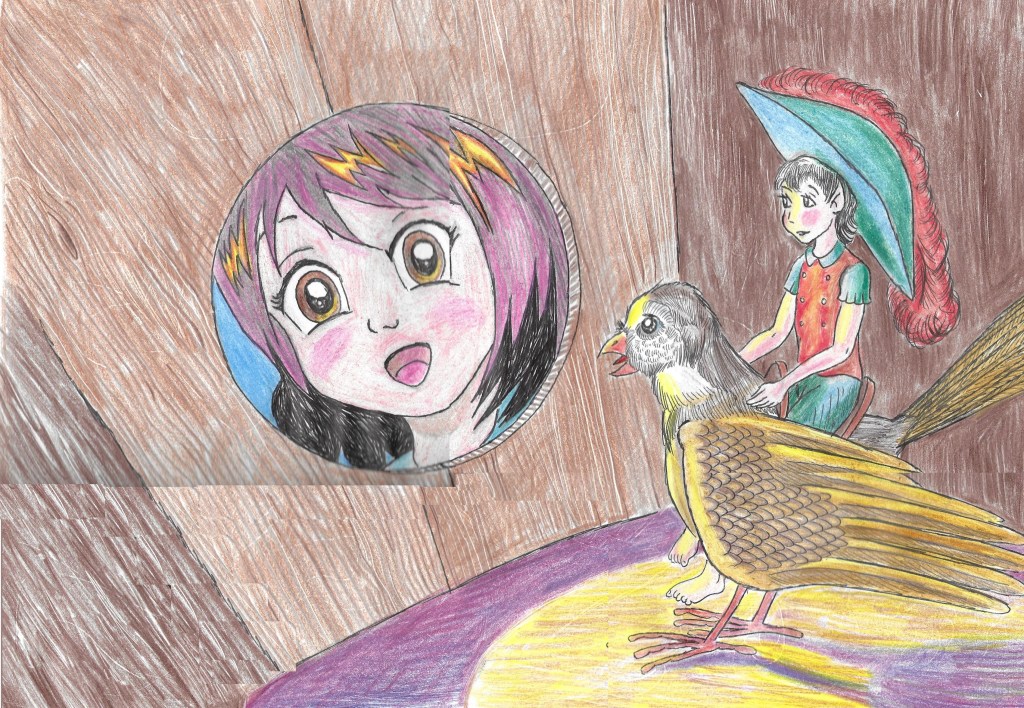
One never knows what mysteries can be uncovered inside the bird house.
The plot of the story depends on what happens next in the picture.
Details make the real story clear.
Pictures tell a story even if the story-teller falls asleep in the process.
A picture can spin a fairy-tale even if it doesn’t show a plot.
Pictures easily establish a setting.
Pictures can allude to many, many other things.

Leave a comment

Filed under artwork, drawing, humor, illustrations, imagination, Paffooney

Aeroquest Art So Far

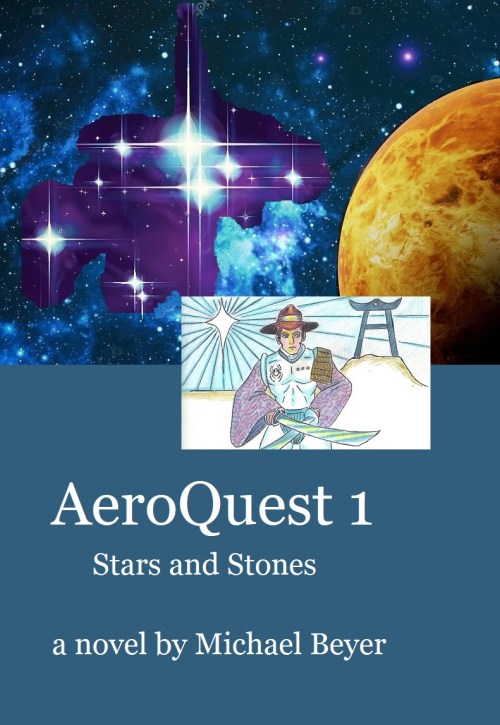
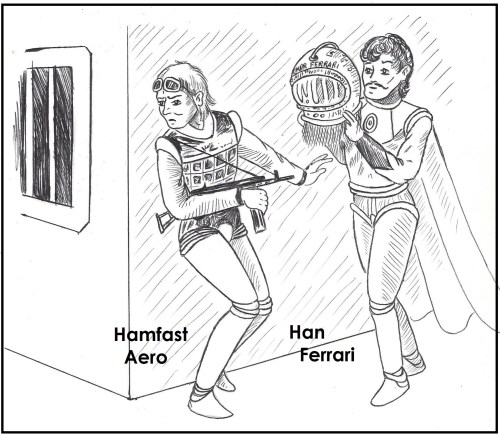
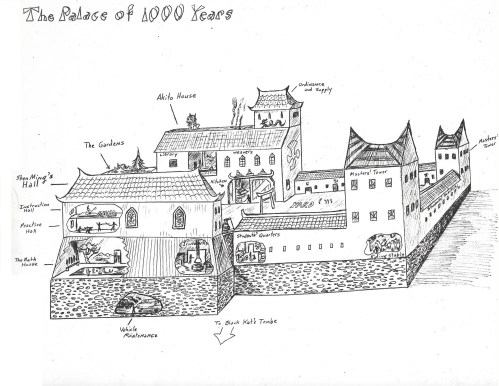
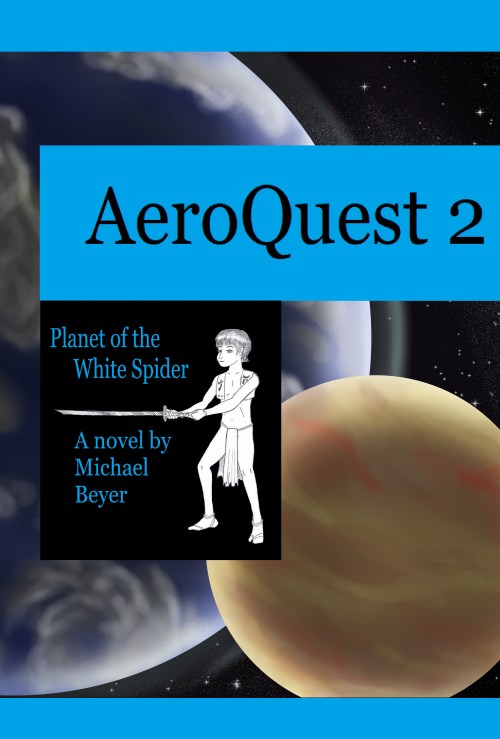
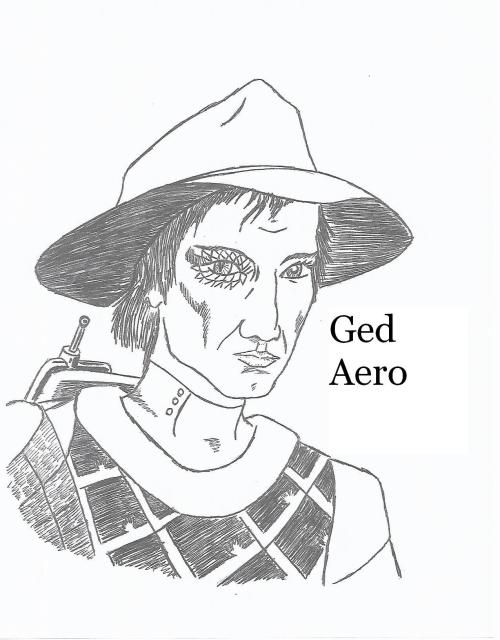
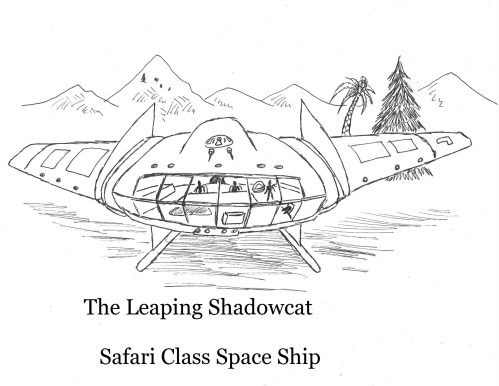
These are the pieces of art and illustrations that are going into the re-writing project of my novel Aeroquest.

I decided to totally rework the novel and illustrate it more fully because it was always supposed to be a science-fiction satire and parody that was more cartoonish than literary.

It is a story about a teacher conquering a space empire. It arose from a science-fiction role-playing game that filled my days in the 1980’s and early 90’s.

It parodies Star Wars, Star Trek, Flash Gordon, Buck Rodgers, Dune, and much more besides. And it includes many of my own wacky inventions about what the future might hold in store.

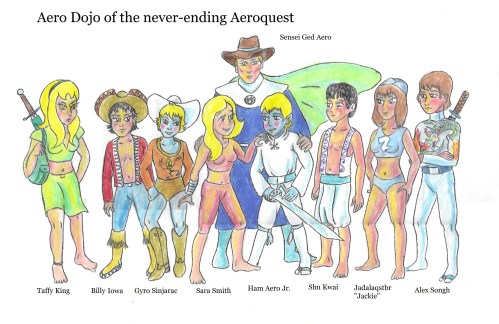
Here is the original teacher in space and some of his first class of students.

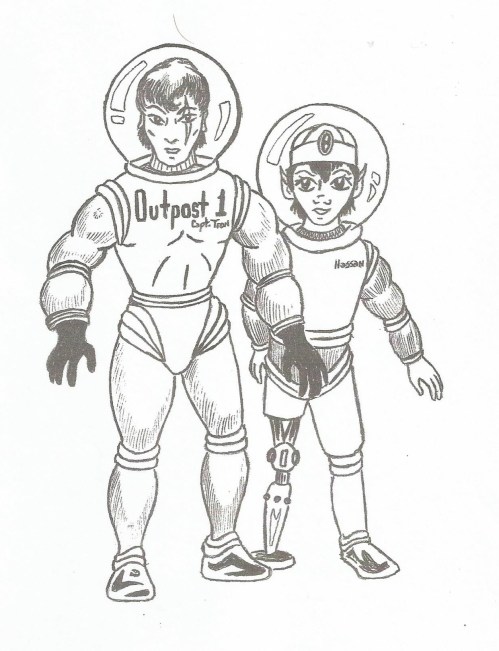
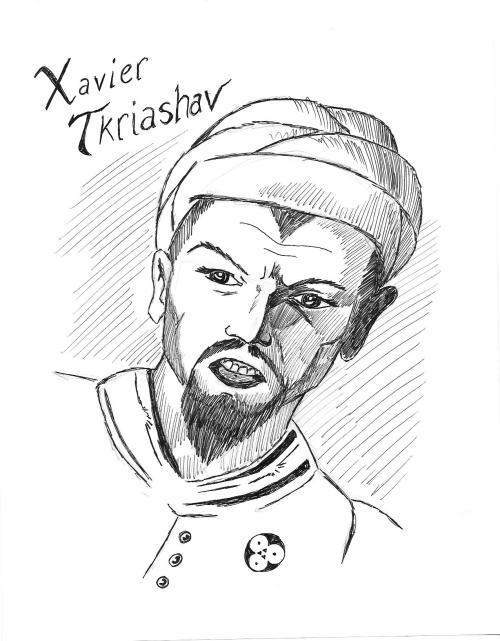
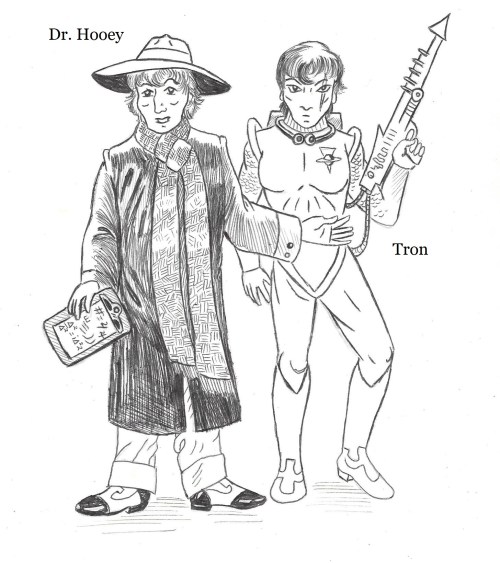
Many of the main characters are based on the actual role-playing characters made up by the boys and young men who played the game with me. Many had to be re-named, however, because, like Tron Blastarr above, they often had movie-character names.

This important character was a parody of Professor X of the X-men, from the comic books and well before the movies.

It was a simple matter to give him psionic powers and transfer him into outer space. Oh, and get him out of the wheel chair too.

The character’s creator was the son of the local high school science teacher.

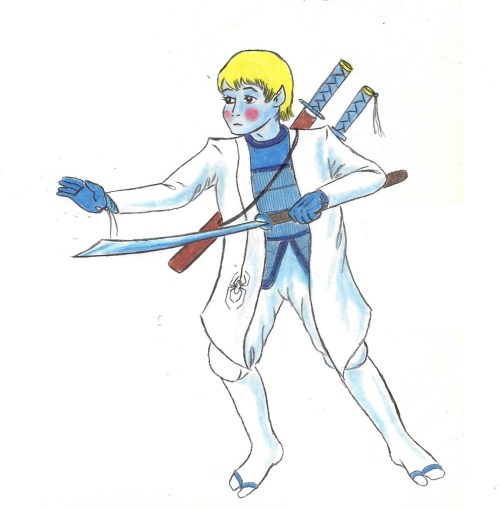
Ninja powers were a thing with teenage boys in the 80’s.

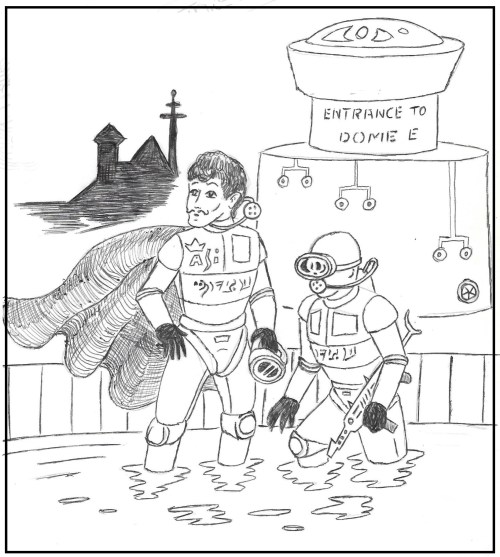
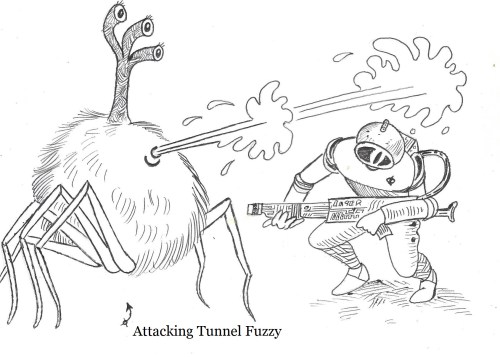
Combat is an important part of the role-playing game.

We became well-versed on weapons and tactics… and how to manipulate the rolls of the dice… by cheating if necessary.

How else do heroes overcome impossible odds?

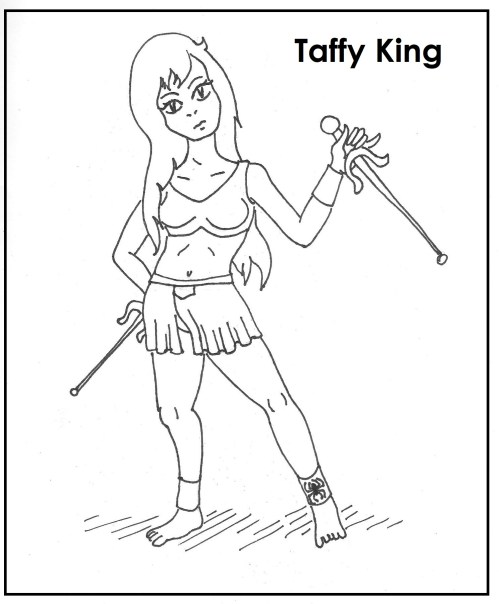
Two more player characters that play a critical role in the novels.

Again with the parody characters that came from player-character ideas stolen from TV and the movies.

Aliens are necessary to this kind of story.

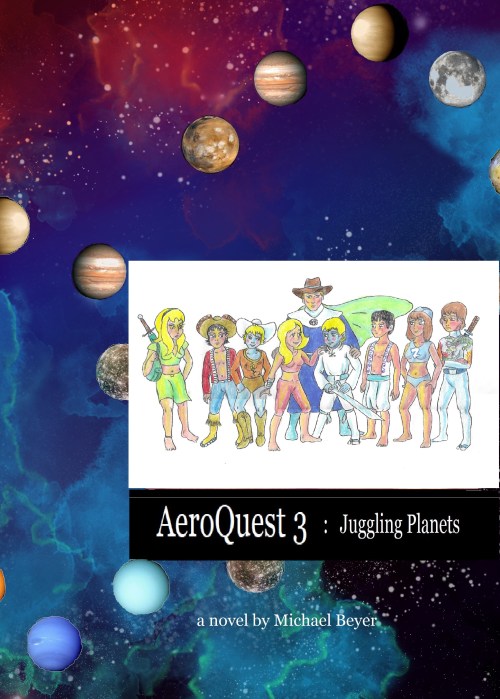
I am near to completing this third novel in the series.

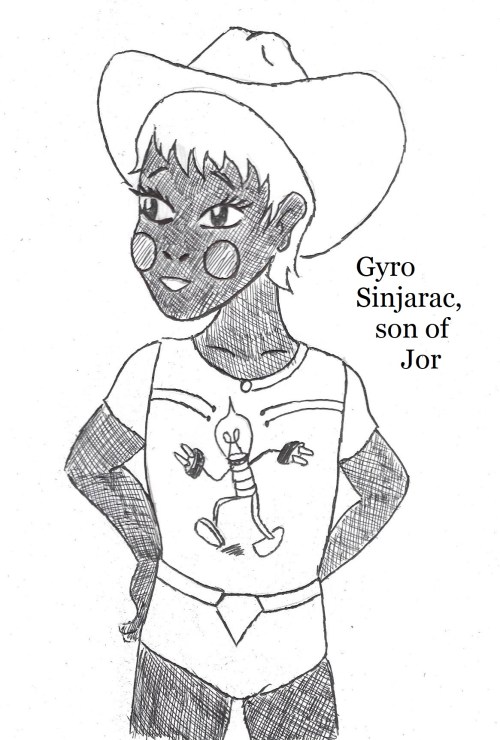
The Nebulon aliens, though very human-like, are blue of skin. That is not easy to depict in a black-and-white drawing.

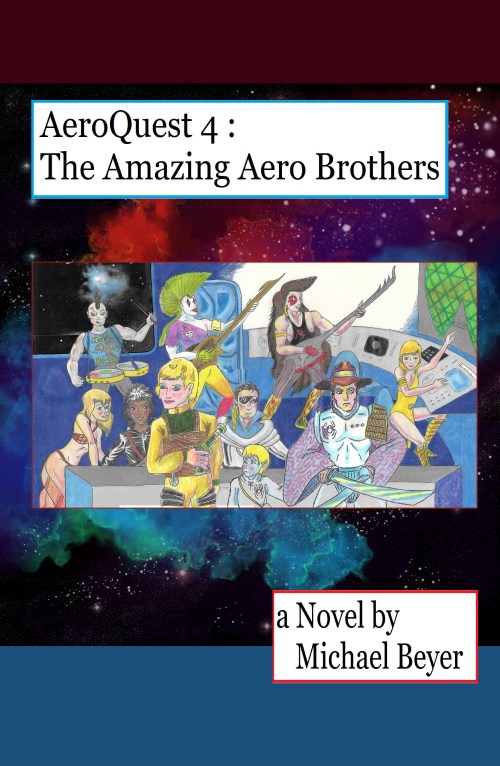
The initial idea for the fourth novel’s cover.

Leave a comment

Filed under aliens, artwork, heroes, humor, illustrations, imagination, novel, novel plans, Paffooney

Writer’s Block on a Thursday

1957-Mercury-Monterey-600x375

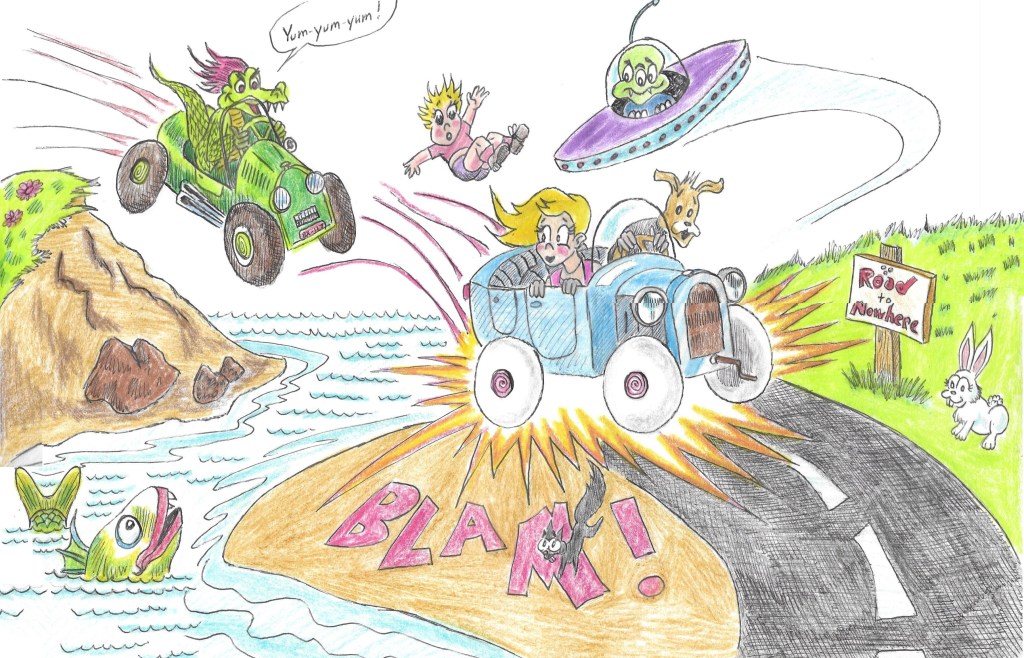
The 1957 Pink and White Mercury of Imagination

I don’t have writer’s block.  I can write as long as I can think and move my fingers on the keyboard to crystallize that thinking into words.  The Pink and White Mercury of Imagination is always moving, either driving forward in the present and towards the future, or in reverse, rewriting the past.  It is never parked.

But somewhere along the way today, the route got sidetracked onto a looping detour.

Hence, this car-themed drive through the idea-capturing process.

DUvc8bXXkAIFTBp

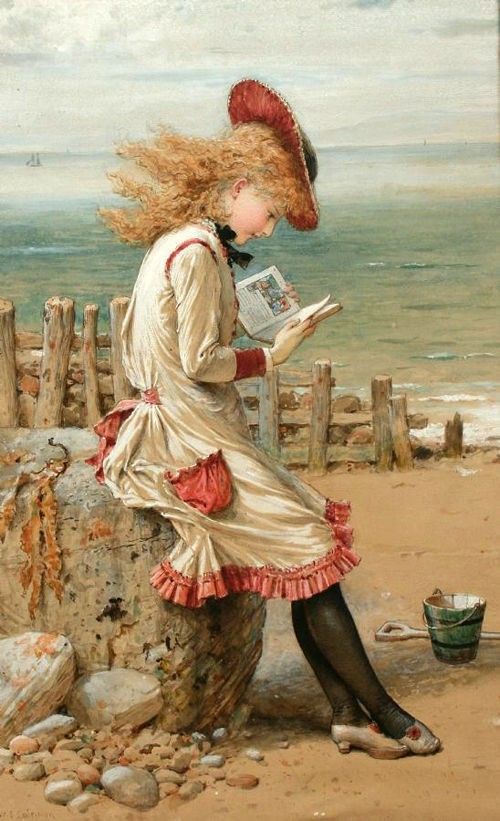
A picture of me reading painted long ago and not with me in the picture..

I started reading a new novel.  It is a 500-plus-pager by Kate Morton called Distant Hours.  It is a Gothic novel, but in a very different way from the one I am writing in The Baby Werewolf.   That book starts as a first person narrative, and then flashes back to the past as a series of third person narratives focused on single characters per section.  My novel is a first person narrative throughout, though told by three different narrators.  It would make an interesting writing analysis post, but I haven’t read enough of that novel nor completed mine to a point where I can compare and contrast them.  And those of you who get bored easily have already tuned out and just looked at the pictures by this point.

I also thought about writing a post about Uber-driving conversations and how that impacts the quality of my driver-service.  But the best stuff there can’t be revealed without breaking confidences.  Doctors, lawyers, bartenders, and Uber drivers are tasked with providing a touch of confidentiality.

I wanted to complain more about Trump and evil Republicans.  But that gets far too tiring.  And if the collection of my posts on WordPress is like a flower garden, the political rants I do are definitely the garden-choking weeds.

swallowtail

A much better thing for my garden is to chase the flitting butterflies of near-perfect ideas with a butterfly net made of idea lists like this particular post.

will-eisnerabc

So, it is true that I never actually have writer’s block.  I do get writer’s detours, writer’s delays, and writer’s just-not-satisfieds- with-those-ideas sorts of things.  But not today.  I made the problems the topic and the topic wrote itself.

Leave a comment

Filed under artists I admire, artwork, imagination, irony, Uncategorized, writing, writing humor

Story-Telling for Art Day

One never knows what mysteries can be uncovered inside the bird house.
The plot of the story depends on what happens next in the picture.
Details make the real story clear.
Pictures tell a story even if the story-teller falls asleep in the process.
A picture can spin a fairy-tale even if it doesn’t show a plot.
Pictures easily establish a setting.
Pictures can allude to many, many other things.

Leave a comment

Filed under artwork, drawing, humor, illustrations, imagination, Paffooney

The Silent Sonata

creativity

Being a writer is a life of music that happens only in your head.  You hear voices constantly.  They pulse rhythmically with insights and ideas that have to be written down and remembered.  Otherwise  the music turns clashing-cymbals dark and depressing.  Monday I wrote a deeply personal thank you to the Methodist minister who saved my life when I was a boy.  I posted a YouTube music video by the acapella group Pentatonix with that essay in a vain attempt to give you an idea of the music in my head when I composed that very difficult piece to give myself a measure of peace.

filch

I realize that I am not writing poetry here.  Poetry can so easily slip into melody and music because of rhythm and meter and rhyme.  And yet, words to me are always about singing, about performing, about doing tricks with metaphor and meaning, rhythm, convoluted sentence structure, and other sneaky things that snake-oil salesman do to get you to think what you are hearing is precisely what you needed to hear.  The Sonata of Silence…  did you notice the alliteration of the silvery letter “S” in that title?  The beat of the syllables?  Da-daah-da a da-da?  The way a mere suggestion of music can bring symphonic sounds to your ear of imagination as you read?  The way a simple metaphor, writing is music, can be wrapped into an essay like a single refrain in a symphonic piece?
psoriasis

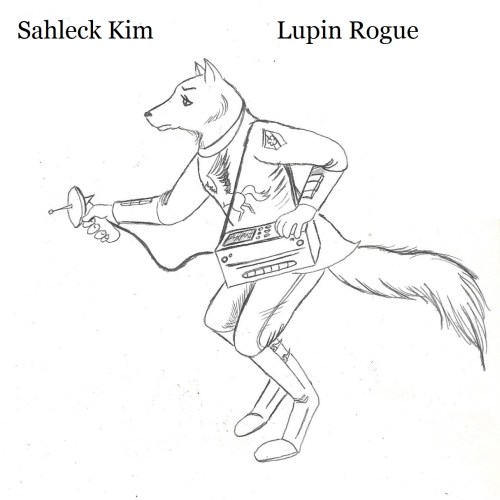
A sonata is a musical exercise in three or four movements that is basically instrumental in nature.  You may have noticed that the movements are loosely defined here by the accompanying pictures, of which there are three.  And it is silent only in the way that the instruments I am using themselves make no noise in the physical world.  The only sounds as I type these words are the hum of an old air conditioner and the whirr of my electric fan.  Yet my mind is filled with crescendos of violins and cellos, bold brass, and soft woodwinds.  The voice saying these words aloud only in my head is me.  Not the me you hear when I talk or the me I can hear on recordings of my own voice, but rather the me that I always hear from the inside.  And the voice is not so much “saying” as “singing”.
Writing makes music.  The writer can hear it.  The reader can too.  And whether I croon it to make you cry, or trill it to make you laugh, I am playing the instrument.  And so, the final notes of the sonata are these.  Be happy.  Be well.  And listen for the music.

Leave a comment

Filed under imagination, insight, inspiration, music, Paffooney, strange and wonderful ideas about life