
Self-reflection is the bane of stupid people. Essentially, they don’t want to risk encountering evidence that they actually are stupid. It would shatter their world to learn that they are idiots and most of what they believe is true is actually wrong. This fact goes a long way towards explaining why the Republican Party in its current form even exists, let alone the actions of the current mutant Cheetos monster that pilots their agenda and hates healthcare, the Special Olympics, and Puerto Rico.
So, if I am doing a self–reflection piece today, then that proves I am not a stupid person, right? What do you mean you agree with that? Yes, I can actually hear you mentally answering my questions as you read this. And if you believe that, then you have proven that even relatively smart people like you and I are capable of stupid thinking.
I believe in some stupid things, even though I think I am not stupid.
An example of this stupidity factor is my lingering belief that I am a nudist. I mean, I am rarely ever nude any more. I keep most of me covered up constantly because when my psoriasis plaques dry out they tend to flake and itch and force me to scratch to the point of infected bloody sores.

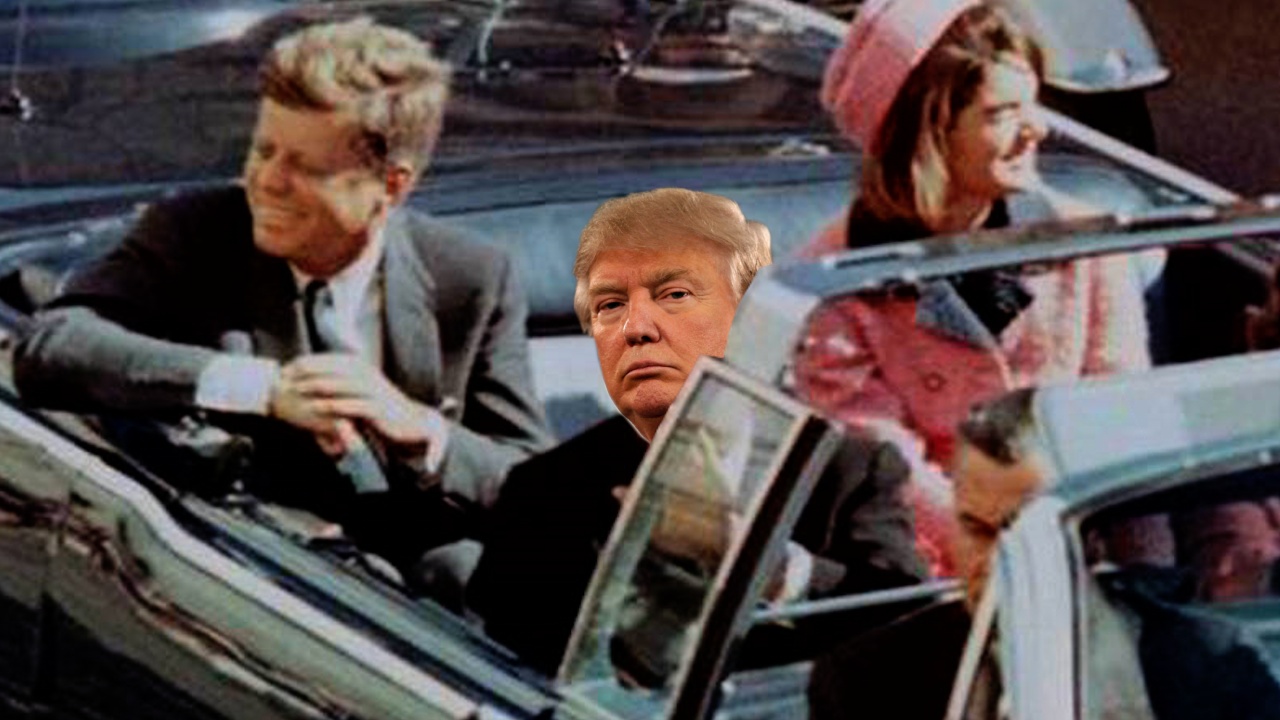
Obviously this is not totally a photograph from the 60’s. That does not make it a total lie either, though.
I have been pretty much accepted as a member of the nudist community on Twitter. I enjoy the artful pictures of nude people they share with me. And since I did a couple of blog posts for nudist websites, there are actually completely nude pictures of me available on the internet. I can be found on Truenudists.com for one, if your eyes can stand the horror. But I have only been to a nudist park, the Bluebonnet Nudist Park in Alvord, Texas. twice as an actual nudist. I can tell you, they were very hot days even though I was not wearing clothes. I am comfortable with nudity. I am comfortable around nude people. I fully accept it all as a non-sexual thing. But am I really a nudist? Or am I only playing at it? If you follow me on Twitter, then you know I don’t retweet pictures of naked people. I engage a lot with other writers there, and most of them are not also nudists, or even open-minded about naturism. I write about nudists in some of my books, but they are not about nudism, and most of them don’t even mention it. So, what good does it do me to think I am a nudist? Well, the very idea of it does a heckuva good job of embarrassing my wife and daughter. So, I do get some crazy-old-coot satisfaction out of it. Otherwise it simply proves that rational and otherwise intelligent people can be committed to irrational ideas.
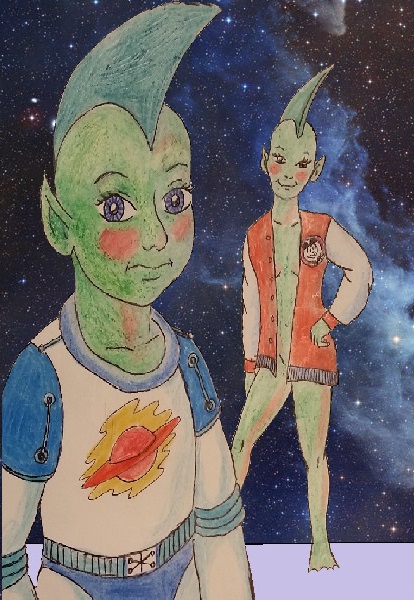
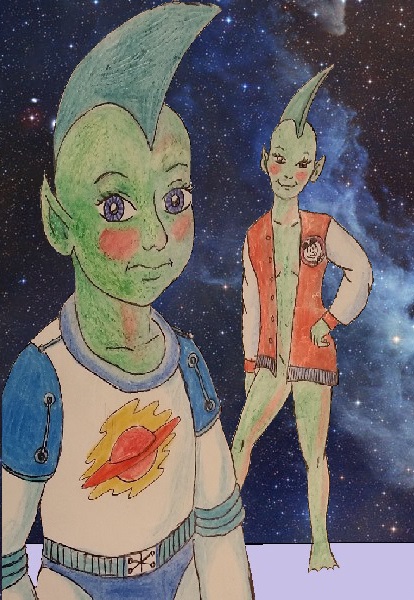
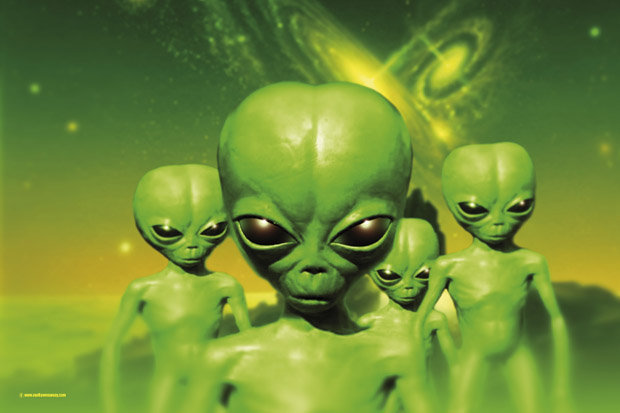
I am also of the often mocked and ridiculed opinion that not only are alien beings from other worlds real, they are capable of space travel and have been visiting us for as long as there has been an us. I did not always believe this, however. Before I wrote my novel Catch a Falling Star I believed as Carl Sagan said on the original Cosmos that it is wrong to accept things without proof, and true results are testable. My novel was about aliens who watched a lot of Earther TV and learned to speak English from watching I Love Lucy reruns, I wanted to make the aliens different from humans, but at the same time, alike with humans in the most fundamental ways that translate easily into humor and relatability. Not all of my hero-characters were Earth humans.

As I did research on the internet (a tool I didn’t have when I originally created the story in the 1970s), I found a ton of researchers and writers and con men and MUFON and the Disclosure Project and nuclear physicists and astronauts Gordon Cooper and Edgar Mitchell who were all believers and mostly not stupid. Wow! What a huge and complicated hoax! Why would anybody believe , based on so little tangible evidence, and so much contradictory evidence, that the government’s position could possibly be right? I learned that I now believed, until significant further proof comes along, that I believe stupidly in alien visitors.
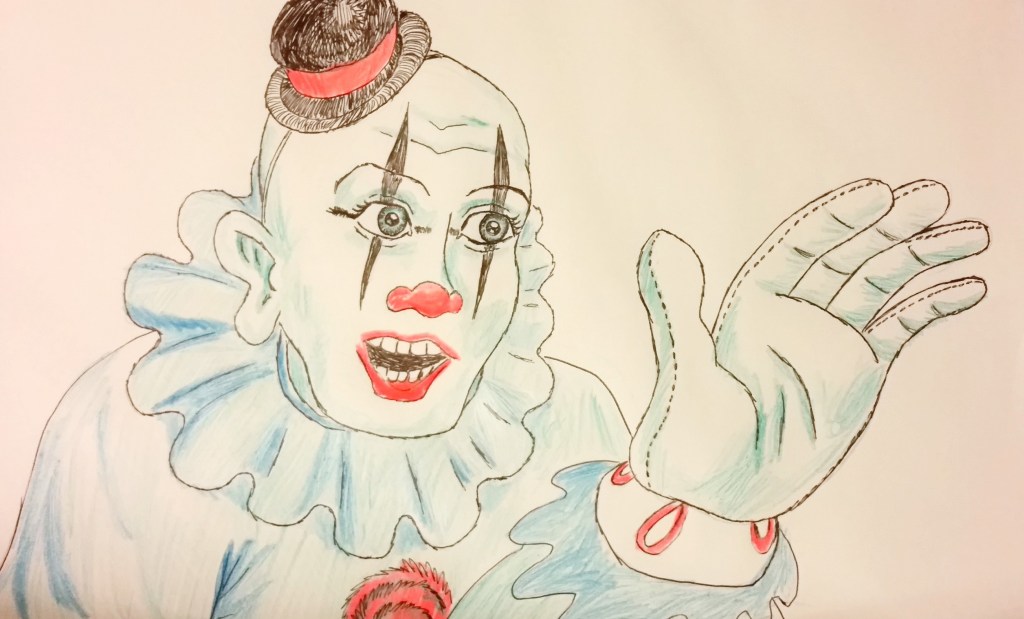
Today’s self-reflection post has now proven that I am a stupid old coot who thinks he is a nudist and an insightful conspiracy theorist. But the results of my look into the mirror have not made me upset about my stupidity. Maybe I am simply satisfied nudism is healthy and the universe is more complex than I am capable of understanding. Whatever the case, that’s enough with the mirror for today. You have to keep such dangerous weapons out of the hands of clowns.









 Catch a Falling Star
Who Do You Listen To?
There was a time when you could turn on the TV news and listen to what you were fairly confident was actually news. Walter Cronkite on CBS always seemed to really “Tell it like it is.” He never seemed to put a spin on anything. No one doubted anything he said when he reported space missions from NASA or the assassination of JFK. You never had to wonder, “What is Cronkite’s real agenda?” His agenda was always to tell me the news of the day.
The question of politics and ideas was always one of, “Which flavor tastes best in my own personal opinion?” Because I was weirdly and excessively smart as a kid, I often listened to some of the smartest people accessible to a black-and-white RCA television set.
William F. Buckley Jr. and Gore Vidal were both identifiably smarter than me. I loved to listen to them argue. They were equally matched. They respected each other’s intellect, but they hated each other with a passion. Buckley was a Fascist-leaning conservative ball of hatred with a giant ego. Vidal was a self-contradictory Commie-pinko bastard child of liberal chaos with an equally giant ego. I never agreed with either of them on anything, but their debates taught me so much about life and politics that I became a dyed-in-the-wool moderate because of them. They were the key evidence backing up the theory that you needed two sides in the political argument to hammer out good ideas of solid worth. And, though I didn’t trust either side of the argument fully, I always trusted that both were basing their ideas on facts.
Then along came Richard Nixon and the faith-shaking lies of Watergate. The media began to be cast as the villain as they continued to show the violence and horrors of Vietnam on TV and tell us about campus unrest and the terrible outcomes of things like the Kent State Massacre. The President suggested routinely that the media was not using facts as much as it was using opinions to turn people away from the Nixon administration’s answer to the problems of life in the USA. I tried to continue believing in the Republican president right up until he resigned and flew away in that helicopter with his metaphorical tail between his legs (I am trying to suggest he was a cowardly dog, not that I want to make a lewd joke about poor Dick Nixon… or is that Little Dick Nixon, the man who let me down?)
And then along comes Ronald Reagan, the man acting as a “Great President” because he was a veteran actor and knew how to play the part. And with him came Fox News.
Roger Ailes, a former adviser to Nixon, got together with media mogul Rupert Murdoch, a man who would commit any crime necessary to sell more newspapers, and created a news channel that would pump out conservative-leaning propaganda that would leave Joseph Goebbels envious. I make it a rule to only listen to them and their views on anything when I feel the need to get one-foot-hopping, fire-spitting mad about something. So, since, I am a relatively happy person in spite of a long, hard life, you can understand why I almost never watch Fox News. They are truly skilled at making me mad and unhappy. And I suspect they do the same for everyone. They deal in outrage more than well-thought-out ideas.
News media came under a cloud that obscured the border between facts and partisan opinions. And conservatives seemed to have a monopoly on the shouty-pouty angry news. So, I began to wonder where to turn for a well-reasoned and possibly more liberal discussion of what was politically and ethically real. I found it in the most surprising of places.
I turned to the “Excuse me, this is the news” crews on Comedy Central where Jon Stewart and Stephen Colbert were busy remaking news reporting as a form of comedy entertainment. It is hard work to take real news and turn it into go-for-the-chuckles statements of fact that make you go, “Hmm, that’s right, isn’t it?” Stewart and Colbert consistently examine how other news organizations hurl, vomit forth, and spin the news, and by so doing, they help you examine the sources, get at the truth, and find the dissonance in the songs everyone else is singing. And these are very smart men. As I said, the intellectual work they do is very difficult, harder than merely telling it like it is. I know because I have tried to do the same myself. And is it really “fake news”? It seems to me like it is carefully filtered news, with the poisons of propaganda either surgically removed, or neutralized with antidotes of reason and understanding.
So, Mickey listens to comedians to get his news. Is that where you expected this article to end up? If not, where do you get your news?
Leave a comment
Filed under angry rant, commentary, conspiracy theory, humor, insight, politics, review of television, strange and wonderful ideas about life
Tagged as Donald Trump, history, News, news media, news reporting, politics, Trump, Walter Cronkite, writing