Category Archives: commentary

My Bookish Journey (Finale)

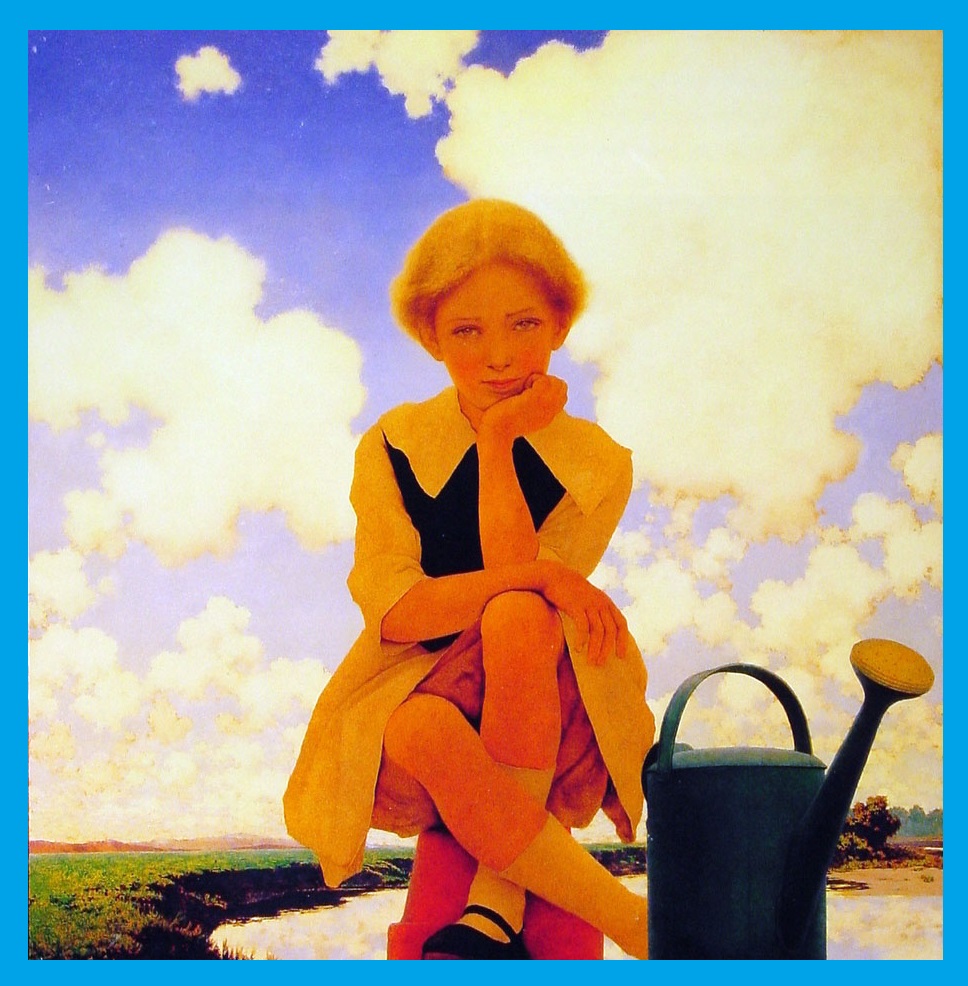
by Maxfield Parrish

Like every real, honest-to-God writer, I am on a journey. Like all the good ones and the great ones, I am compelled to find it…

“What is it?” you ask.

“I don’t know,” I answer. “But I’ll know it when I see it.”

“The answer?” you ask. “The secret to everything? Life, the universe, and everything? The equation that unifies all the theories that physicists instinctively know are all one thing? The treasure that pays for everything?”

Yes. That. The subject of the next book. The next idea. Life after death. The most important answer.

And I honestly believe that once found, then you die. Life is over. You have your meaning and purpose. You are fulfilled. Basically, I am writing and thinking and philosophizing to find the justification I need to accept the end of everything.

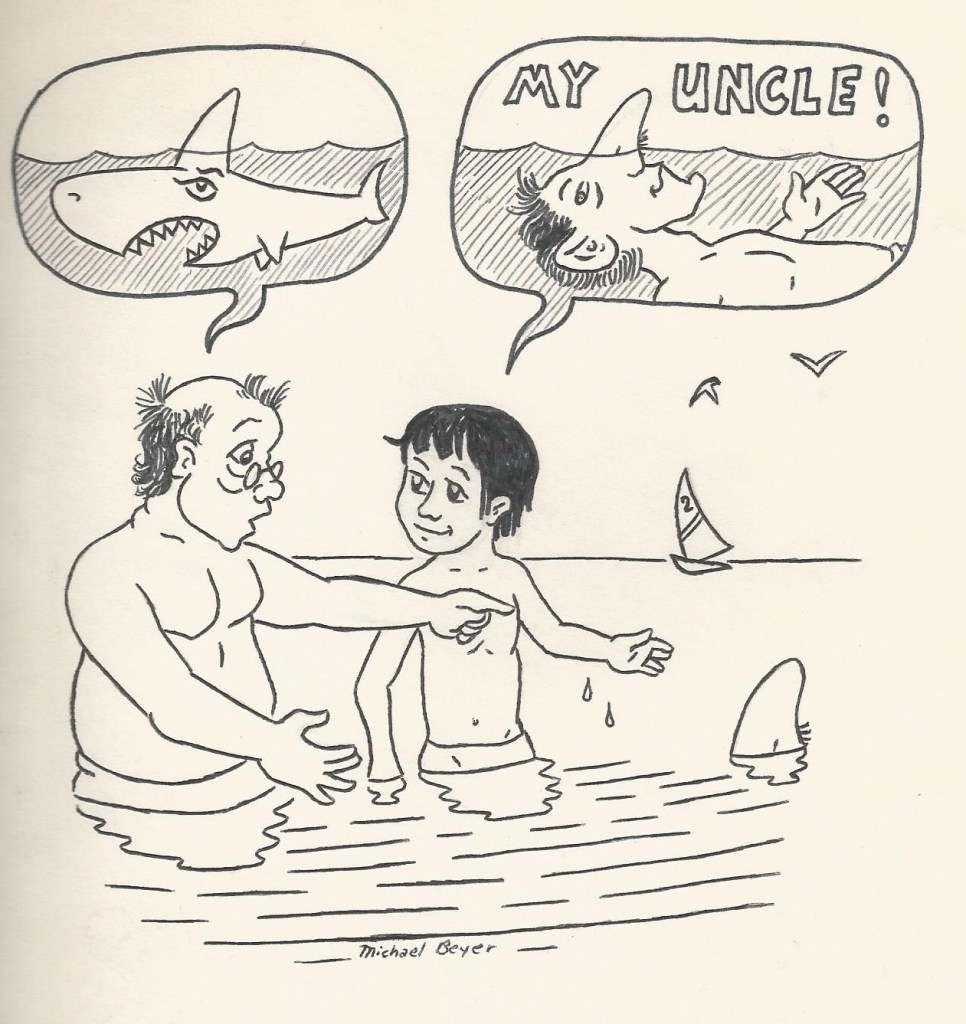
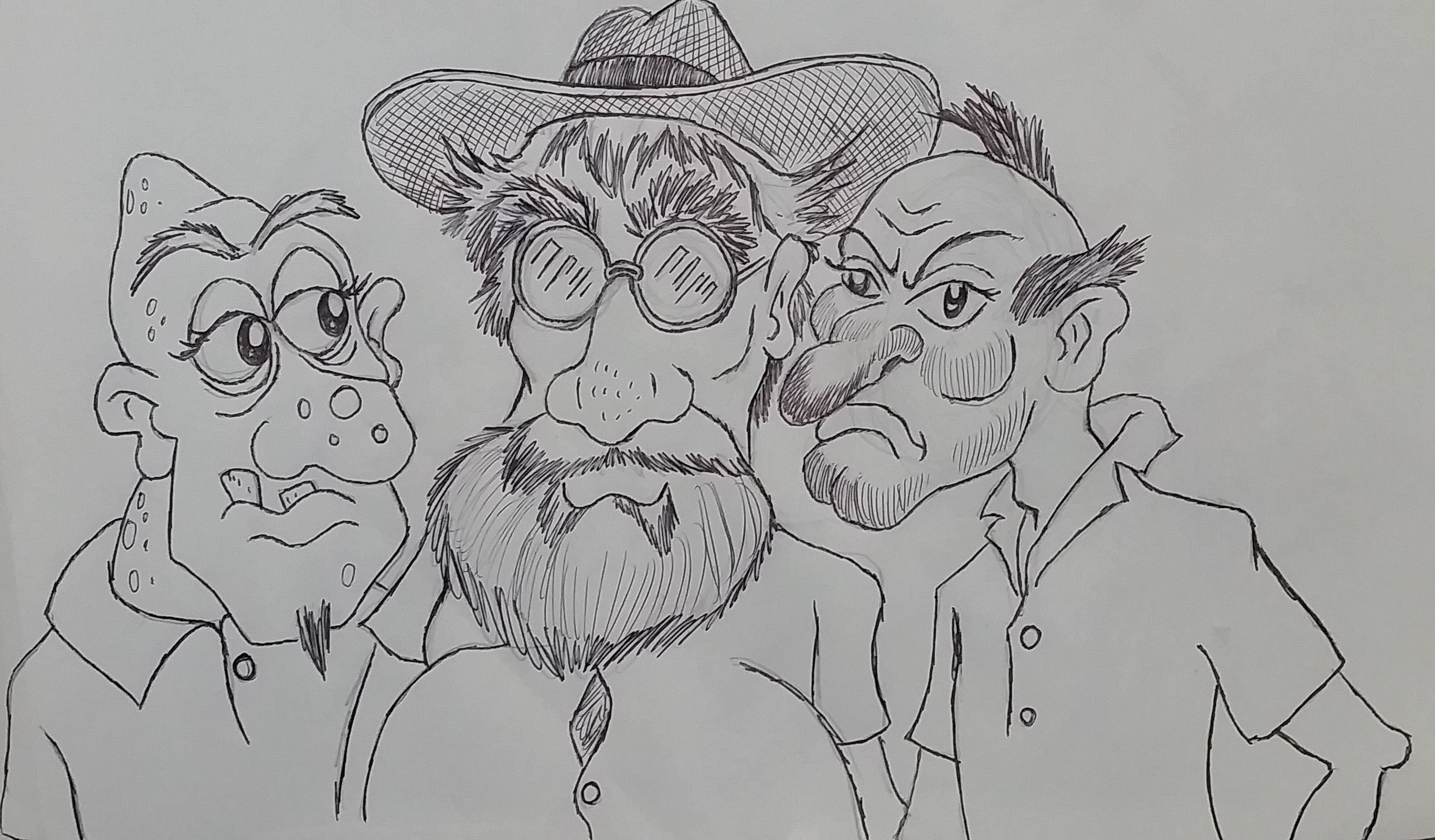
Leah Cim Reyeb is me, Michael Beyer written backwards.

And you know what? The scariest thing about this post is that I never intended to write these particular words when I started typing. I was going to complain about the book-review process. It makes me think that, perhaps, I will type one more sentence and then drop dead. But maybe not. I don’t think I’ve found it yet.

The thing I am looking for, however, is not an evil thing. It is merely the end of the story. The need no longer to tell another tale.

When a book closes, it doesn’t cease to exist. My life is like that. It will end. Heck, the entire universe may come to an end, though not in our time. And it will still exist beyond that time. The story will just be over. And other stories that were being told will continue. And new ones by new authors will begin. That is how infinity happens.

I think, though, that the ultimate end of the Bookish Journey lies with the one that receives the tale, the listener, the reader, or the mind that is also pursuing the goal and thinks that what I have to say about it might prove useful to his or her own quest.

I was going to complain about the book reviewer I hired for Catch a Falling Star who wrote a book review for a book by that name that was written by a lady author who was not even remotely me. And I didn’t get my money back on that one. Instead I got a hastily re-done review composed from details on the book jacket so the reviewer didn’t have to actually read my book to make up for his mistake. I was also going to complain about Pubby who only give reviewers four days to read a book, no matter how long or short it is, and how some reviewers don’t actually read the book. They only look at the other reviews on Amazon and compose something from there. Or the review I just got today, where the reviewer didn’t bother to read or buy the book as he was contracted to do, and then gave me a tepid review on a book with no other reviews to go by, and the Amazon sales report proves no one bought a book. So, it is definitely a middling review on a book that the reviewer didn’t read. Those are things I had intended to talk about today.

But, in the course of this essay, I have discovered that I don’t need to talk about those tedious and unimportant things. What matters really depends on what you, Dear Reader, got from this post. The ultimate McGuffin is in your hands. Be careful what you do with it. I believe neither of us is really ready to drop dead.

Leave a comment

Filed under book review, commentary, humor, illustrations, novel writing, Paffooney, publishing, reading, strange and wonderful ideas about life, writing

My Bookish Journey

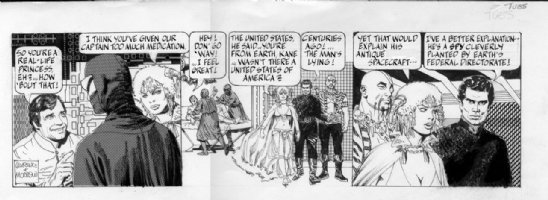
My journey as a writer actually began in grade school. I was writing Star Trek-like comics from the time I was in the fourth and fifth grade, ten and eleven years old. I called my comics Zebra Fleet, about the last fleet in the Star League on the distant, far reaches of the Milky Way Galaxy.

I started writing book-length stories in college, at Iowa State University. They weren’t all science fiction. They began to be more and more about the time and place where I grew up, Rowan, Iowa in the 1960s and 1970s They involved the people I knew there and then. My family, my friends, the people of Rowan, and random Iowegians. I based important characters on people I actually knew, mostly those I knew quite well. But I changed and swapped character details to hide their identities a little bit, and I gave them names that were mixed and matched and borrowed from the 1977 Ames, Iowa phone book. Dettbarn, Efram, Sumpter, Bircher, Clarke, MacMillan, White, and Murphy all came from there. Niland came from a famous alumni of the University of Iowa who played for the Dallas Cowboys.

In order to have food to eat and money to spend as an adult, I had to take my BA in English and add to it an MA in Education to get a job as a teacher. I took my closet full of nascent novels and moved to Texas where my dad’s job took my parents before I graduated college. There I added hundreds of characters who were perfect for Young Adult novels as I got to know real kids and learned about their real lives. I changed their names, details, and often cultures as I added them to my stories.

Other than a couple of shots in the dark as submissions of cartoons and manuscripts to publishers, I mostly kept my stories in the closet and focused more on teaching (which, to be fair, is also a form of story-telling.) I put my handful of rejection letters in the closet too.

But then, I got laid off for two years due to health and a wicked witch as a principal, and I spent my non-job-hunting time writing a novel about my science-fiction role-playing games with former students. It was called AeroQuest.

I managed to find a publisher for that book. But it was a bogus sort of experience. They paid me an advance of one dollar. Then they had me sign a seven-year contract in 2007. No editor or proofreader even worked for them. I basically had to edit and format the book myself. All they did is intentionally flub-up some titles and sections of text in the printed form. This was part of the master plan to get me to pay for an extensive fix to the mistakes they made. The only marketing they did was to send a notice for my over-priced paperback to the list of friends and relatives that they required me to make for them. Publish America is no longer in business. They were closed down by a class-action lawsuit from the authors they had tricked into paying them thousands of dollars for totally defective publishing services. Since I didn’t pay them any scam pennies, I didn’t get any of the money from the lawsuit. I only got my publishing rights back.

So, I went back to whole-heartedly teaching. Then, in 2012 I completed another manuscript that I thought was the best work that I had ever done. I submitted it to I-Universe publishers. They read it and loved it. As it turned out, they were in the process of being acquired by Penguin Books. They were the closest thing to a mainstream publisher that would entertain submissions by new and unproven authors like me.

They, of course, were offering a publishing package that included working with real editors and marketing personnel. But I had to go a bit into debt to swing the price. So, I was still paying someone to publish my book correctly. But, as a step in my author’s journey, it was invaluable. I got to work closely with an experienced editor who had previously worked for both MacMillan and Harcourt, two mainstream traditional publishers.

My book was given the stock cover you see here despite the cover requests I made and got approved. My original ask was apparently too expensive to print. There is no girl flying a kite in the story at all, let alone at night. It is a story about incompetent aliens trying to invade a small town in Iowa. I had requested a flying saucer with a kite flying behind it.

That first real publisher, though, made me into a real writer. The I-Universe marketeers got me listed as a winner of the Editor’s Choice Award. And they put that award and the Rising Star award on every paperback copy they printed. Everyone who read the book seemed to really like it. They set me up with this blog, space on their website for my book and bio, and they put me in touch with Barnes and Noble to talk about “meet the author” sessions to promote getting the book on their shelves. But a trip to the hospital with pneumonia and the end of the room on my Discover Card caused me to bring an end to my marketing campaign. I ended up with two five-star reviews and sixteen dollars-worth of royalties.

At this point in the story, temporarily stalled, I must start touting the part two of my essay for today. I should warn you, I have a lot more negative things to say about publishing next time.

4 Comments

Filed under autobiography, commentary, novel writing, Paffooney, publishing, writing

Dancing With Alan Watts

It seems sometimes, in a Judaeo-Christian society, that we are a constantly being scrutinized by a rather harsh all-knowing God who rewards getting the faith-words accurately correct, to the letter, and the faith-based actions perfect, without a single mistake. And He punishes missteps of word or deed with pain and suffering and the potential of an eternity in Sheol or Hell. And that is a tough God to live with. He is like a teacher who uses his or her God-like powers to reward or punish to lead his students all down an exacting, narrow path to a destination that does not have room for everyone when they arrive.

It doesn’t take long in childhood for a highly intelligent person to realize before childhood is over that this cosmology is actually a load of horse pucky. It didn’t even take long for somebody as semi-stupid as me.

What I like about listening on YouTube to Alan Watts’s wisdom is that he gives us an alternative way of seeing the universe and ourselves. This he can offer through his studies of Eastern and Buddhist philosophies. Everything appealing in John Lennon’s signature song, “Imagine,” comes from Lennon’s love of listening to Alan Watts’ lectures. He is obviously a wise guy.

Alan Watts teaches us the pathways that lead to finding yourself, who you truly are, and how you fit into the universe as a whole. When Carl Sagan says that we are all made of star-stuff, he is not only telling us what is literally true, as the elements our bodies were formed from were literally made in the nuclear forges at the centers of stars that later exploded in nova bursts to scatter the elements across the skies of everywhere. He is also telling us that what Alan Watts says is metaphorically true, that everything in the universe is part of the same thing and we are all one in this way.

There is plenty to worry about in my little life. I could easily drop dead at any time from any one of my six incurable diseases or even the return of the skin cancer I beat in 1983. I suffer from the consequences of disease daily, as I have for many years now. My sins are many. I broke my promise the other day to never show you the horrors of my naked body on this blog. I constantly eat the wrong thing and continue to do things that I know are bad for the environment and the health of my body. I am prejudiced against racists, stupidity, and the actions of dedicated Trump-lovers. In many ways I deserve God’s wrath and brutal correction. I have come to truly believe that climate change is going to end life on Earth. I am horrible.

But I have learned from Alan Watts that all of those concerns mean nothing. I don’t believe in Heaven or an afterlife. But I do not fear death. I am one with the universe. And the universe goes on even if I do not. And I will always be a part of it, even after I am no longer alive. The universe has a mind and is intelligent And I take part in that because one small part of that intelligence is me, and lives in my head.

There is comfort to be found in the words of Alan Watts. And living in pain as I do, I really need that comfort most of the time. That is why I have attempted to share a bit of that comfort with you.

Leave a comment

Filed under artists I admire, commentary, feeling sorry for myself, finding love, foolishness, healing, health, humor, Paffooney, philosophy

How To Write A Mickian Essay

mickeynose

I know the last thing you would ever consider doing is to take up writing essays like these.  What kind of a moronic bingo-boingo clown wants to take everything he or she knows, put it in a high-speed blender and turn it all into idea milkshakes?

But I was a writing teacher for many years.  And now, being retired and having no students to yell at when my blood pressure gets high, the urge to teach it again is overwhelming.

So, here goes…

c360_2017-01-02-10-17-06-058

Once you have picked the silly, pointless, or semi-obnoxious idea you want to shape the essay around, you have to write a lead.  A lead is the attention-grabbing device or booby-trap for readers that will draw them into your essay.  In a Mickian essay, whose purpose is to entertain, or possibly bore you in a mildly amusing manner, or cause you enough brain damage to make you want to send me money (this last possibility never seems to work, but I thought I’d throw it in there just in case), the lead is usually a  “surpriser”, something so amazingly dumb or off-the-wall crazy that you just have to read, at least a little bit, to find out if this writer is really that insane or what.  The rest of the intro paragraph that is not part of the lead may be used to draw things together to suggest the essay is not simply a chaotic mass of silly words in random order.  It can point the reader down the jungle path that he or she can take to come out of the other end of the essay alive.

Once started on this insane quest to build an essay that will strangle the senses and mix up the mind of the reader, you have to carry out the plan in three or four body paragraphs.  This is where you have to use those bricks of brainiac bull-puckie that you have saved up to be the concrete details in the framework of the main rooms of the little idea-house you are constructing.  If you were to number or label these main rooms, this one you are reading now would, for example, be Room #2, or B, or “the second body paragraph”.  And as you read this paragraph, you should be thinking in the voice of your favorite English teacher of all time.  The three main rooms in this example idea house are beginning, middle, and end.  You could also call them introduction, body, and conclusion.  These are the rooms of your idea house that the reader will live in during his or her brief stay (assuming they don’t run out of the house screaming after seeing the clutter in the entryway).

Teacher

The last thing you have to do is the concluding paragraph.  (Of course, you have to realize that we are not actually there yet in this essay.  This is Room C in the smelly chickenhouse of this essay, the third body paragraph.)  The escape hatch on the essay that may potentially explode into fireworks of thoughts, daydreams, or plans for something better to do with your life than a read an essay written by an insane former middle school English teacher at any moment, is a necessary part of the whole process.  This is where you have to remind them of what the essay is basically about, and leave them with the thought that you want to haunt them in their nightmares later.  The last thing that you say in the essay is the thing they are the most likely to remember.  So you need to save the best for last.

So, here, finally, is the exit door to this masterfully mixed-up Mickian Essay.  It is a simple, and straightforward structure.  The introduction containing the lead is followed by three or four body paragraphs that develop the idea and end in a conclusion that summarizes or simply restates the overall main idea.  And now you know why all of my former students either know how to construct an essay, or have several years left in therapy sessions with a psychiatrist.

Leave a comment

Filed under commentary, education, humor, Paffooney, teaching, writing, writing teacher

Special Snowflakes

snowflake12

When conservative cultural warriors, Twitter Trolls, or dyspeptic gasbags like Rush Limbaugh call you a “Special Snowflake”, I have discovered, to my chagrin, that they don’t mean it as a compliment.  In their self-centered, egotistical world you have to be as emotionally tough and able to “take it” as they believe (somewhat erroneously to my way of thinking) they themselves are.  They have no time for political correctness, safe spaces, or, apparently, manners polite enough not to get you killed on the mean streets where they never go.  Being a retired school teacher who was once in charge of fragile young psyches trying to negotiate a cruel Darwinian world, I think I disagree with them.

in-snow-big

Have you ever tried to draw a snowflake?  Believe me, it is difficult.  Snowflakes are hexagonal star-shapes with enough lace and  filigrees in them to make it a nightmare to draw it with painfully arthritic hands.  The one above took me an hour with ruler and compass and colored pencils, and it still doesn’t look as good as a first grader can create with scissors and folded paper.  Much better to use a computer program to spit them out with mathematical precision and fractal beauty.  That’s how all the tiny ones in the background were created.  But even a computer can’t recreate the fragile, complicated beauty of real snowflakes.

You see how the fragile crystalline structures will break in spots, melt in spots, attach to others, and get warped or misshapen?  That is the reason no two snowflakes are alike, even though they all come from the same basic mathematically precise patterns generated by ice crystals.  Life changes each one in a different way.

4f0f6392eb9ed-image

And that, of course, is the reason this essay is really about people rather than mere physical artifacts of cold weather.  Our fragilities and frailties are earned, and they make us who we are.  I have a squinky eye like Popeye from playing baseball and getting hit by a pitch.  I have a big toe that won’t bend from playing football.  They both represent mistakes that I learned from the hard way.

As a teacher, I learned that bipolar disorder and anxiety disorders are very real things.  I lost a job once to one of those.  And I spent a long night talking someone out of suicide one horrible December.  Forgive me, I had to take fifteen minutes just there to cry again.  I guess I am just a “special snowflake”.  But the point is, those things are real.  People really are destroyed by them sometimes.  And they deserve any effort I can make to protect them or help them make it through the night.

snowflake1

But people are like snowflakes.  They are all complex.  They are all beautiful in some way.  They are all different.  No two are exactly the same.

snowflake13

And I really think boorish bastards have no right to insist that we need to take safe spaces and sanctuaries away from them.  Every snowflake has worth.  Winter snow leaves moisture for seedlings to get their start every spring.  If you are a farmer, you should know this and appreciate snowflakes.  And snowflakes can be fascinating.  Even goofy ones like me.

snowflake_with_cartoon_face_0521-1012-0818-0641_smu

Leave a comment

Filed under 1000 Voices Speak for Compassion, artwork, battling depression, commentary, compassion, humor, metaphor, Paffooney, self portrait, Snow Babies, strange and wonderful ideas about life

Morning Has Broken

Today is off to a miserable start.  I heard on the radio that David Bowie has died.  Ziggy Stardust… the Goblin King… The Man Who Fell to Earth… the Thin White Duke…is gone.  And even though since high school in the 1970’s I have never been quite sure how I felt about his music, I wept.  The man was a musical maker of lyrical poetry.  He could make you feel really really terrible… but he always made you feel.  And he made me depressed as he led me through the Labyrinth… but he also made me soar… on the wings of a barn owl.  It was about facing the darkness and finding your way.   Finding the way out.  Singing the Little Drummer Boy with Bing Crosby, but not actually singing it… making peace on Earth instead.  Sometimes things are just so weirdly beautiful it hurts.

I dropped my daughter off at her middle school, and then Jody Dean & the Morning Team played this on the radio.

I wept again.  Darkness is my old friend…  I have lived with and through depression after depression.  My own… my wife’s… my children’s…  And it is a miracle I have lived this long without succumbing to the Darkness.  It took Robin Williams.  It took Ernest Hemingway.  But somehow, the Goblin King always goaded me onward, to find the answer at the end of the Labyrinth.  “You… you have no power over me.”  And then I am okay once again.

20160111_072715

I captured the dawn once again this morning.  Once again I failed to truly ensnare the subtle reds and pinks and purples that were actually there.  But there it is, anyhow.  The morning has broken.  The blackbird has spoken.  The morning is new.

My heart is still sore this morning.  The dog didn’t help when she spilled the trash to get at the napkins with bacon grease on them.  We may have a dog-skin rug as a doormat later today.  But David Bowie left so many words and ideas behind to comfort me.  Is he one of those “neon gods we made”?  Of course he is.  But as the owl flutters off in the closing credits, we can take comfort in the knowledge that no one is ever really gone.  And we can always anticipate some… Serious Moonlight.

This is, of course, an old post revisited.

2 Comments

Filed under commentary, music, photo paffoonies, poetry

A Mr. Holland Moment

Life is making music.  We hum, we sing to ourselves, movie music plays in our head as the soundtrack to our daily life. At least, it does if we stop for a moment and dare to listen.   We make music in many different ways.  Some play guitar.  Some are piano players.  And some of us are only player pianos.  Some of us make music by writing a themed paragraph like this one.  Others make an engine sing in the automotive shop.  Still others plant gardens and make flowers or tomatoes grow.  I chose teaching kids to read and write.  The music still swells in my ears four years after retiring.

The 1995 movie, Mr. Holland’s Opus, is about a musician who thinks he is going to write a magnificent classical orchestra opus while teaching music at a public high school to bring in money and allow him time to compose and be with his young wife as they start a new family.

But teaching is not, of course, what he thought it was.  He has to learn the hard way that it is not an easy thing to open up the closed little clam shells that are the minds of students and put music in.  You have to learn who they are as people first.  You have to learn to care about what goes on in their lives, and how the world around them makes them feel… and react to what you have to teach.  Mr. Holland has to learn to pull them into music appreciation using rock and roll and music they like to listen to, teaching them to understand the sparkles and beats and elements that make it up and can be found in all music throughout their lives.  They can even begin to find those things in classical music, and appreciate why it has taken hold of our attention for centuries.

And teaching is not easy.  You have to make sacrifices.  Big dreams, such as a magnum opus called “An American Symphony”, have to be put on the shelf until later.  You have children, and you find that parenting isn’t easy either.  Mr. Holland’s son is deaf and can never actually hear the music that his father writes from the center of his soul.  And the issue of the importance of what you have to teach becomes something you have to fight for.  Budget cuts and lack of funding cripples teachers in every field, especially if you teach the arts.  Principals don’t often appreciate the value of the life lessons you have to give.  Being in high school band doesn’t get you a high paying job later.

But in the end, at the climax of the movie, the students all come back to honor Mr. Holland.  They provide a public performance of his magnum opus, his life’s work.  And the movie ends with a feeling that it was all worth it, because what he built was eternal, and will be there long after the last note of his music is completely forgotten.  It is in the lives and loves and memories of his students, and they will pass it on.

But this post isn’t a movie review.  This post is about my movie, my music.  I was a teacher in the same way Mr. Holland was.  I learned the same lessons about being a teacher as he did.  I had the same struggles to learn to reach kids.  And my Mr. Holland moment wasn’t anywhere near as big and as loud as Mr. Holland’s.  His was performed on a stage in front of the whole school and alumni.  His won Richard Dreyfus an Academy Award for Best Actor.  But his was only fictional.

Mine was real.  It happened in a portable building on the Naaman Forest High School campus.  The students and the teacher in the classroom next door threw a surprise party for me.  They made a lot of food to share, almost all of which I couldn’t eat because of diabetes.  And they told me how much they would miss me, and that they would never forget me.  And I had promised myself I would never cry about having to retire.  But I broke my promise.  In fact, I am crying now ten years later.  But they are not tears of sadness.  My masterwork has now reached its last, bitter-sweet notes.  The crescendos have all faded.  But the music of our lives will still keep playing.  And not even death can silence it completely.

Leave a comment

Filed under artwork, autobiography, commentary, happiness, insight, kids, movie review, teaching

Short and Sweet

No, I am not talking about a midget girlfriend today.

I am talking about brevity.

Some of the best writing gets directly to the point.

You have to know how to say exactly what you want to say.

Then say it.

Like, “Tootie is a Cutie.”

And once said, the point made is…

Sheer poetry.

Leave a comment

Filed under commentary, goofiness, humor, poetry

Living in the Spider Kingdom

Life seems to be getting harder and harder. And I realize that a big part of that perception is the fact that my health is deteriorating quickly. This is a humor blog, but it has been getting more and more serious and more and more grim as the grim reaper becomes more and more a central character in my own personal story.

My perception of reality, however, is best explained by a passage in a novel that spoke to me in college. It comes from the novel, the Bildungsroman by Thomas Mann called Der Zauberberg, in English, The Magic Mountain. In the scene, Hans Castorp is possibly freezing to death, and he hallucinates a pastoral mountainside scene where children are happily playing in the sunshine. Possibly Heaven? But maybe not. As he goes into a stone building and finds a passage down into the ground, he sees wrinkled, ugly, horrible hags gathered around a child’s corpse, eating it. And this vision explains the duality at the center of the meaning of life.

For every good thing, there is an equal and opposite bad thing that balances it out. There is no understanding what perfection and goodness mean without knowing profanity and evil. Just as you can’t understand hot without cold nor light without darkness. And you don’t get to overturn the way it is. You try your hardest to stay on the heads side of the coin knowing that half the time life falls to tails.

So, what good does it do me to think about and write about things like this? Well, it makes for me a sort of philosophical gyroscope that spins and dances and helps me keep my balance in the stormy sea of daily life. I deal with hard things with humor and a sense of literary irony. I make complex metaphors that help me throw a rope around the things that hurt me.

We are living now in the Spider Kingdom. Hard times are here again. The corrupt and corpulent corporate spiders are spinning the many webs we are trapped in. As metaphorical as it is, we wouldn’t have the government we currently have and be suffering the way we are if that weren’t true.

But no bad thing nor no good thing lasts forever. The wheel goes round and round. The top of the wheel reaches the bottom just as often as the bottom returns to the top. So, it will all pass if we can only hold out long enough.

Leave a comment

Filed under commentary, empathy, feeling sorry for myself, humor, metaphor, Paffooney, philosophy

I Hope You Dance…

When you walk to the front of the classroom and take up the big pencil in front of a group of young teens and twelve-year-olds, there is a strong pressure to learn how to sing and dance. That, of course, is a metaphor. I was always too arthritic and clunky in my movements to literally dance. But I looked out over a sea of bored and malevolence-filled eyes, slack and sometimes drooling mouths attached to hormone-fueled and creatively evil minds. And I was being paid to put ideas in their heads. Specifically boring and difficult ideas that none of them really wanted in their own personal heads. So I felt the need to learn to dance, to teach in ways that were engaging like good dance tunes, and entertaining in ways that made them want to take action, to metaphorically get up and dance along with me.

I wanted them to enjoy learning the way I did.

But the music of the teacher is not always compatible with the dance style of the individual learner. The secret behind that is, there is absolutely no way to prompt them to dance along with you until you learn about the music already playing in their stupid little heads. (And you can’t, of course ever use the word “stupid” out loud, no matter how funny or true the word is,) You have to get to know a kid before you can teach them anything.

The discordant melodies and bizarre tunes you encounter when you talk to them is like dancing in a minefield blindfolded. Some don’t have enough to eat at home and have to survive off of the nutrition-less food they get in the school cafeteria’s free-and-reduced lunch program. Some of them have never heard a single positive thing from the adults at home, enduring only endless criticism, insults, and sometimes fists. Some of them fall in love you. Some due to hormones. Some due to the fact that you treat them like a real human being. Some because they just stupidly assume that everyone dances to the same tunes they hear in their own personal head.

Some of them automatically hate you because they know that if you hear their own secret music in their own self-loathing heads, you will never accept it. They hate you because you are a teacher and teachers always hate them. Some of them, deep down, are as loathsome as they think they are.

But, if you find the right music, you can get any of them, even all of them, to dance. It might be hard to find. It might be a nearly impossible task to learn to play that music once you find it. But it can be done.

And if you get them to dance to your music, to dance along with you, I can’t think of anything more rewarding, anything more life-fulfilling. Have you ever tried it for yourself? If you are not a teacher, how about with your own children or the children related to you? Everybody should learn to dance this dance I am talking about in metaphors. At least once in your life. It is addictive. You will want to dance more. So the next time the music starts and you get the chance… I hope you’ll dance!

Leave a comment

Filed under commentary, education, kids, metaphor, Paffooney, teaching