

I like to think that I am different than other readers, that the quirky, insane way I practice reading makes me somehow unique and individual. But if you have read very much of my goofy little blog, you probably realize already that I am a deeply deluded idiot most of the time. So let me explain a little about how I go about reading.
- I am basically guilty of reading anything and everything I can get my hands on. And the stupid internet puts an infinite variety in your hands. Some of it is toxic and probably will kill me… or land me in jail. (Does the NSA really care about what Mickey is reading?)
- Here is an example of my internet reading this morning; Diane Ravitch’s Education Blog , An Article from British Naturism, Rachel Poli’s Article about Fantasy Writing, and Naked Carly Art’s post about creating a painting. My browser history portrays me at times as some kind of communist brainiac pornography-loving terrorist painter or something. I hope the NSA is using telepaths to investigate me, because the reasons I look at a lot of this stuff is important. It is a good thing I don’t write mystery novels so they would be upset down in the NSA break room about my searching out creative ways to kill people.
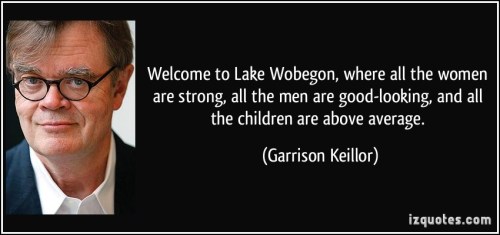
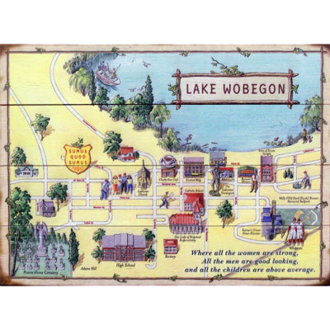
- Besides being Eclectic with a capital “E”, I am also obsessive. My daily reading project now is Garrison Keillor’s novel, Lake Wobegon Days.


I only spend about an hour a day reading this novel, but I am totally immersed in it. I am living inside that book, remembering the characters as real people and talking to them like old friends. I tried to read that book before and couldn’t make progress because I like so much to listen to Keillor tell stories on A Prairie Home Companion on the radio and it just wasn’t the same entirely in print. When he tells a story, he pauses a lot. In fact, that moment when he stops to let you reflect on what he just said is critical to the humor because you have to stop and savor the delicious irony of the scene. His pauses are funnier than the words. Man, if he just stood there and didn’t talk at all, you would probably die laughing from it. So, in order to get into the book, I had to read it with Garrison’s voice in my head, pausing frequently the way he does. Now the stories of Clarence Bunsen and Pastor Inqvist break me up all over again. I will soon acquire and read everything he has ever written. I truly love Garrison Keillor.
So there is a description of how strange a practicing reader I am. Think about how you read. Is the NSA watching you too? Do you ever read two books at the same time? Do you read everything and anything in front of you? If you are self-reflective at all, even if you are not pathological about it the way Mickey is, you may well decide that as strange as my reading habits are, they are probably normal compared to yours.

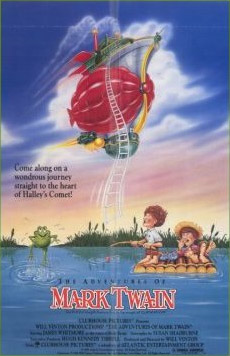 During my middle-school teaching years I also bought and read copies of The Prince and the Pauper, Roughing It, and Life on the Mississippi. I would later use a selection from Roughing It as part of a thematic unit on Mark Twain where I used Will Vinton’s glorious claymation movie, The Adventures of Mark Twain as a way to painlessly introduce my kids to the notion that Mark Twain was funny and complex and wise.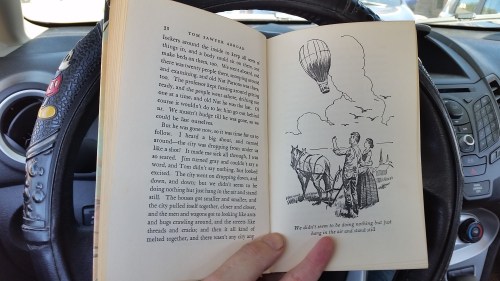
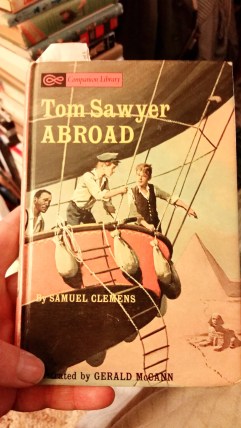
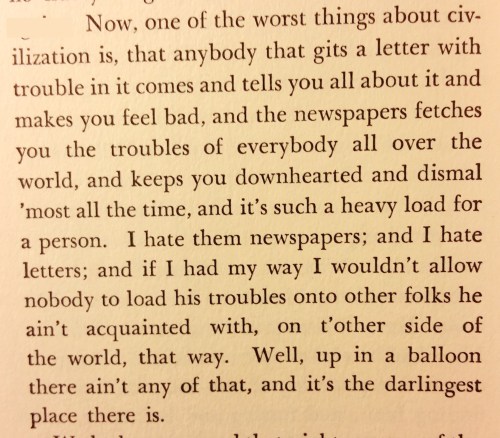
















 During my middle-school teaching years I also bought and read copies of The Prince and the Pauper, Roughing It, and Life on the Mississippi. I would later use a selection from Roughing It as part of a thematic unit on Mark Twain where I used Will Vinton’s glorious clay-mation movie, The Adventures of Mark Twain as a way to painlessly introduce my kids to the notion that Mark Twain was funny and complex and wise.
 Catch a Falling Star
The Alchemist by Paulo Coelho
Some books come along telling a story that has to be taken seriously in ways that don’t make sense in any normal way. The Alchemist is one of those books.
What is an alchemist, after all?
An alchemist uses the medieval forms of the art of chemistry to transmute things, one thing becoming another thing.
Coelho in this book is himself an alchemist of ideas. He uses this book to transmute one idea into another until he digs deep enough into the pile of ideas to finally transmute words into wisdom.
There is a great deal of wisdom in this book, and I can actually share some of it here without spoiling the story.
Here are a few gemstones of wisdom from the Alchemist’s treasure chest;
“It’s the possibility of having a dream come true that makes life interesting…” (p.13)
“It’s the simple things in life that are the most extraordinary; only wise men are able to understand them.” (p.17)
“All things are one. And, when you want something, all the universe conspires in helping you to achieve it.” (p.24)
“And when he had gone only a short distance, he realized that, while they were erecting the stall, one of them had spoken Arabic and the other Spanish. And they had understood each other perfectly well. There must be a language that doesn’t depend on words, the boy thought.” (p.45)
All of these quotes from the book, as you can see, come from the first third of the book. There are many more treasures to be found in this book. I should not share them with you here. Just as the main character of the story learns, you have to do the work for yourself. But this book is not only an enjoyable read, but a map for how you can execute your own journey towards your “Personal Legend”. In fact, you may find that the book tells you not only how to go about making a dream come true, but, if you are already on that journey successfully, it tells you what things you are already doing right.
Leave a comment
Filed under book reports, book review, commentary, good books, magic, strange and wonderful ideas about life, wisdom, wizards
Tagged as book review, books, fantasy, fiction, magical books, mystical books, reading, the Alchemist by Paulo Coelho