Tag Archives: music

I Hope You Dance…

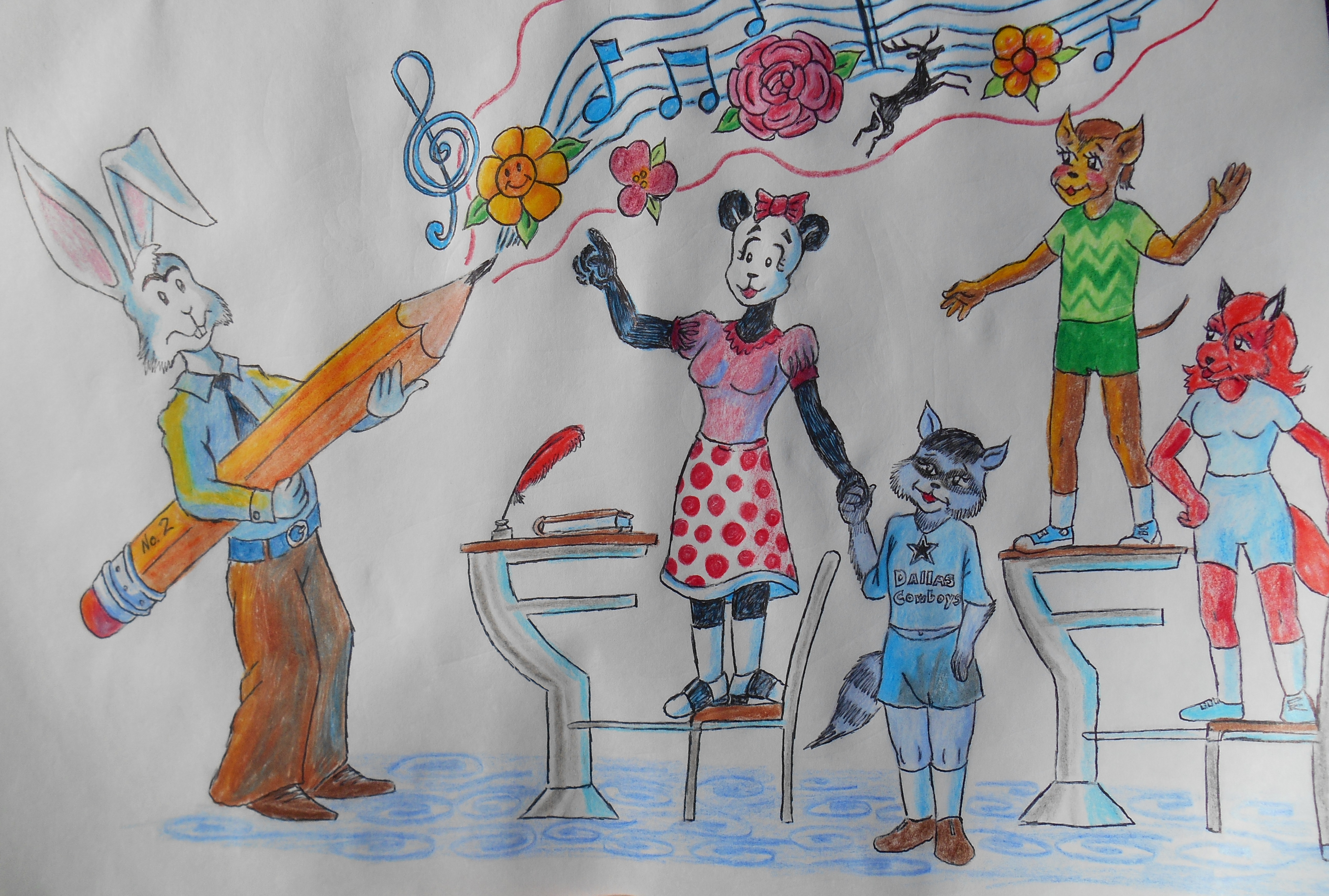
When you walk to the front of the classroom and take up the big pencil in front of a group of young teens and twelve-year-olds, there is a strong pressure to learn how to sing and dance. That, of course, is a metaphor. I was always too arthritic and clunky in my movements to literally dance. But I looked out over a sea of bored and malevolence-filled eyes, slack and sometimes drooling mouths attached to hormone-fueled and creatively evil minds. And I was being paid to put ideas in their heads. Specifically boring and difficult ideas that none of them really wanted in their own personal heads. So I felt the need to learn to dance, to teach in ways that were engaging like good dance tunes, and entertaining in ways that made them want to take action, to metaphorically get up and dance along with me.

I wanted them to enjoy learning the way I did.

But the music of the teacher is not always compatible with the dance style of the individual learner. The secret behind that is, there is absolutely no way to prompt them to dance along with you until you learn about the music already playing in their stupid little heads. (And you can’t, of course ever use the word “stupid” out loud, no matter how funny or true the word is,) You have to get to know a kid before you can teach them anything.

The discordant melodies and bizarre tunes you encounter when you talk to them is like dancing in a minefield blindfolded. Some don’t have enough to eat at home and have to survive off of the nutrition-less food they get in the school cafeteria’s free-and-reduced lunch program. Some of them have never heard a single positive thing from the adults at home, enduring only endless criticism, insults, and sometimes fists. Some of them fall in love you. Some due to hormones. Some due to the fact that you treat them like a real human being. Some because they just stupidly assume that everyone dances to the same tunes they hear in their own personal head.

Some of them automatically hate you because they know that if you hear their own secret music in their own self-loathing heads, you will never accept it. They hate you because you are a teacher and teachers always hate them. Some of them, deep down, are as loathsome as they think they are.

But, if you find the right music, you can get any of them, even all of them, to dance. It might be hard to find. It might be a nearly impossible task to learn to play that music once you find it. But it can be done.

And if you get them to dance to your music, to dance along with you, I can’t think of anything more rewarding, anything more life-fulfilling. Have you ever tried it for yourself? If you are not a teacher, how about with your own children or the children related to you? Everybody should learn to dance this dance I am talking about in metaphors. At least once in your life. It is addictive. You will want to dance more. So the next time the music starts and you get the chance… I hope you’ll dance!

Leave a comment

Filed under commentary, education, kids, metaphor, Paffooney, teaching

“It’s a Hard-Knock Life… for Us”

download

Yes, this is another in a series of reviews from the Uncritical Critic where I gush endlessly and almost mindlessly about movies, TV, books, and other sorts of stories that I love.  And just like other reviews that I have done, writing mainly to myself, this will probably bore you to the point of having to sandpaper  your tush just to stay conscious through it.  But I do, in fact, have a social conscience.  I do care about things moral and ethical.  That’s why I’m not going to talk about this Annie;

images

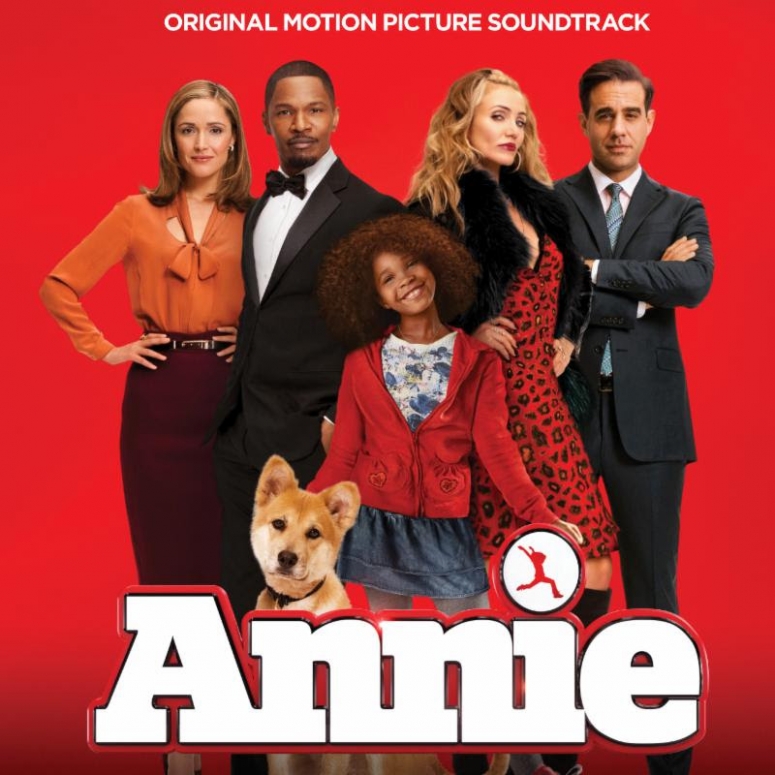
I want to talk about this one;

annie-2014-soundtrack.jpg

I am not sure how any of my white, conservative friends can work up such an angry fizzyblackengrrr about the remake of the musical using black actors as the principles.  I am not saying I don’t see color and I don’t notice the changes in the basic story to make it fit a more different-race-friendly cultural magnetism.  I am saying I love the changes.

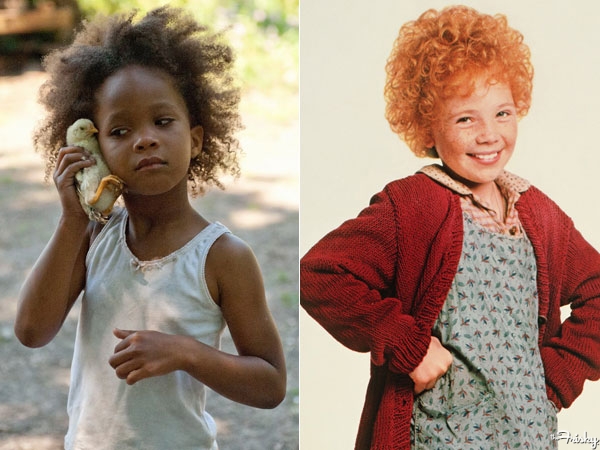
quvenzhane-wallis-annie-600x450

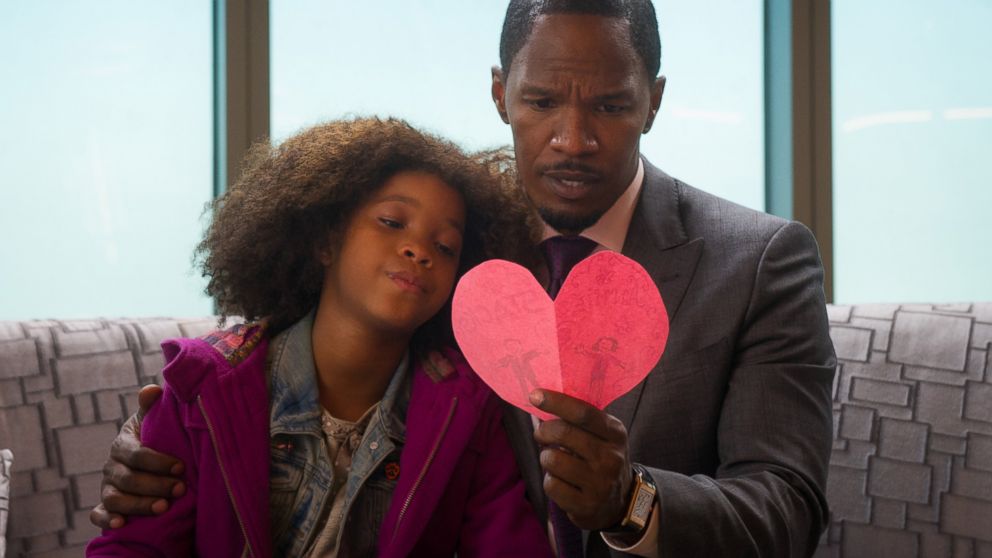
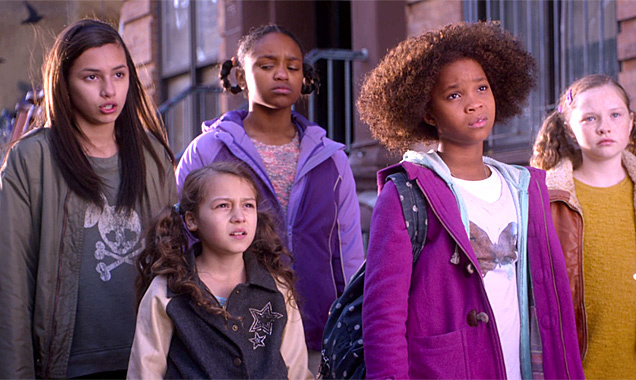
Quvenzhane Wallis is one of those little girls that, if she were actually an orphan, would be adopted in record time.  She sings, dances, and exudes a personal charisma to a degree that is not only perfect for this particular musical, but is not an act.  It is obviously her real, perky, upbeat self.  I would adopt her instantly even though I don’t have the finances, energy, or good health necessary to make that kind of commitment any more.  And the changes made to the songs, setting, and themes of the basic story I think are not only brilliant, but so very appropriate to our times.  The story of an orphan connecting to a lonely, power-hungry billionaire is transformed by the idea of finding the best way to connect the family that you not only want, but desperately need.  The Daddy Warbucks character, played brilliantly by Jamie Foxx, is able to realize his connection to his own lost father as he transforms himself into the father figure that Annie needs.  Songs are added and dialogue is changed in ways to bring out these complex themes of love and need.  It is a very different story from the one found in the Aileen Quinn/Carol Burnett film of the 1980’s.  And it is a story that needs to be told.

annie

“You are never fully dressed without a smile!” is an important theme for any person of color, or any outsider in our American society today.  The troubles and strife related to race tension, violence, and the American struggle to rid itself of racism are best faced with a kind of confident optimism that this musical was always intended to be a vehicle for.

It is a statement about the basic goodness of human beings.  This version of the musical even redeems the vile Miss Hannigan, leaving her at the end with a change of heart and a Hispanic boyfriend.  So, I really think that anyone who has a problem with this remake of a beloved musical made by Jay-Z, Will and Jada Pinkett Smith ought to examine the real reasons they feel troubled by it.  I think they really ought to let go of all baggage, especially the alligator-skin bags of racism, and just immerse themselves in this wonderful movie full of singy and dancy stuff.


Leave a comment

Filed under humor, movie review, music, racial profiling, red States, strange and wonderful ideas about life

I Love to Laugh

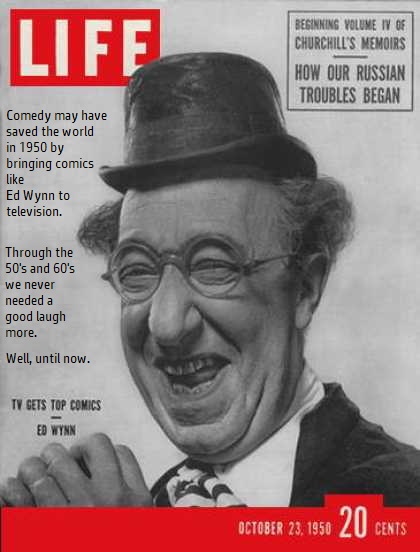
“Mickey, why can’t you be more serious, the way smart people are?”

“Well, now, my dear, I think I take humor very seriously.”

“How can you say that?  You never seem to be serious for more than a few seconds in a row.”

“I can say it in a high, squeaky, falsetto voice so I sound like Mickey Mouse.”

“You know that’s not what I mean.”

“I can also burp it… Well, maybe not so much since I was in junior high.”

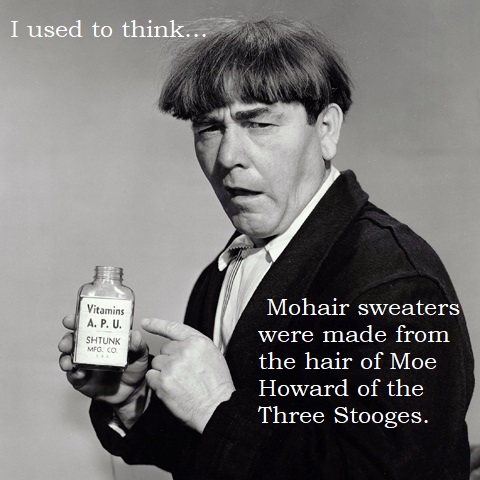
THREE STOOGES, THE

“I distinctly remember getting in trouble in Mrs. Mennenga’s third grade class in school for pantomiming pulling my beating heart out of my chest and accidentally dropping it on the floor.  She lectured me about being more studious.  But I made Alicia sitting in the row beside me laugh.  It was all worth it.  And the teacher was right.  I don’t remember anything from the lesson on adding fractions we were supposed to be doing.  But I remember that laugh.  It is one precious piece of the golden treasure I put in the treasure chest of memories I keep stored in my heart.”

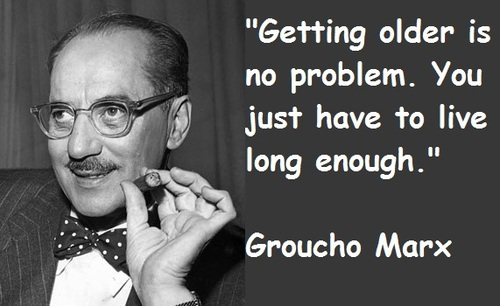
Groucho

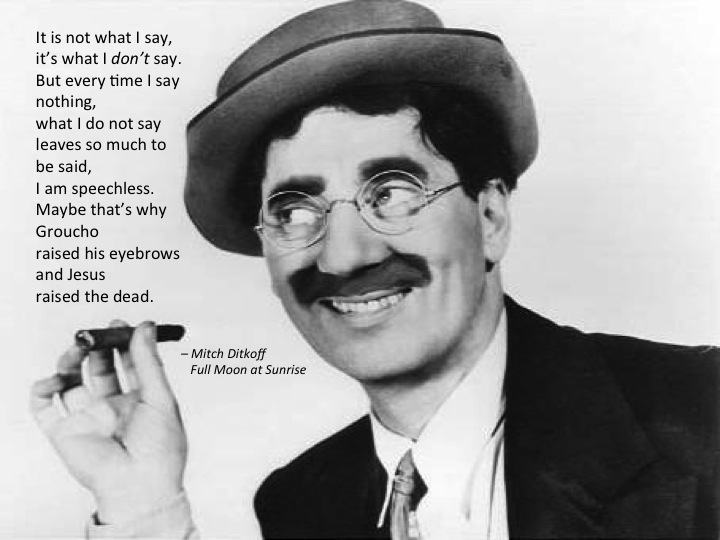
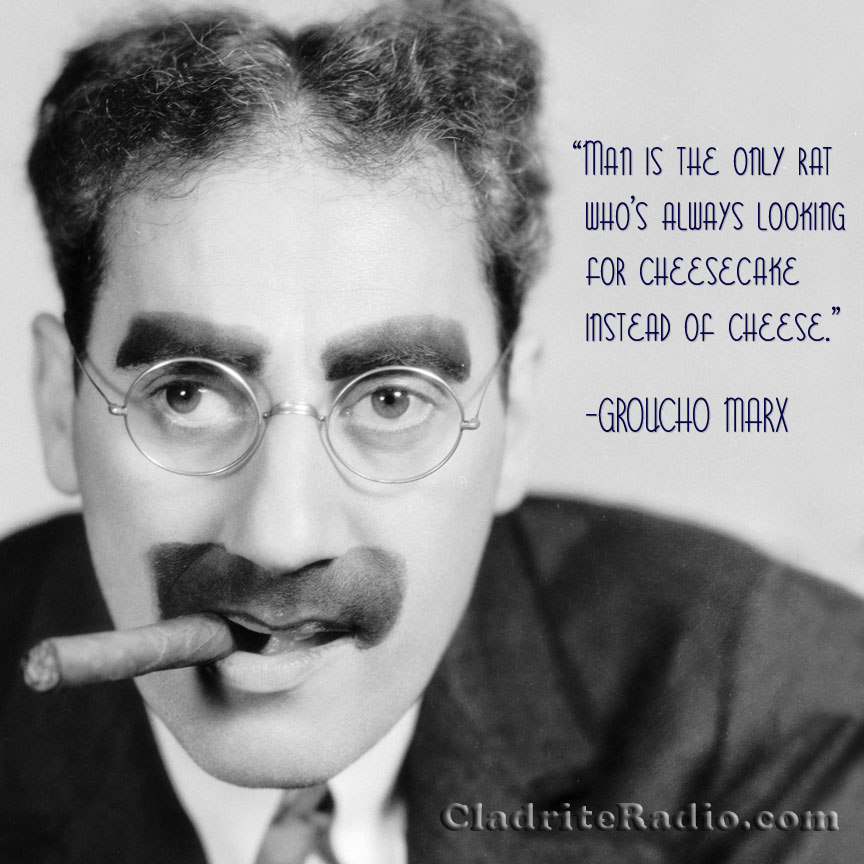
“I always listened to the words Groucho Marx was saying, even though he said them awfully fast and sneaky-like.  I listened to the words.  Other characters didn’t seem to listen to him.  He didn’t seem to listen to them.  Yet, how could he respond like he did if he really wasn’t listening?  In his answers were always golden bits of wisdom.  Other people laughed at his jokes when the laugh track told them to.  I laughed when I understood the wisdom.”

727-1

“Laughing is a way of showing understanding.  Laughing is a way of making yourself feel good.  Laughing is good for your brain and your heart and your soul.  So, I want to laugh more.  I need to laugh more.  I love to laugh.”

Leave a comment

Filed under autobiography, comedians, commentary, goofiness, goofy thoughts, humor, irony, Paffooney, strange and wonderful ideas about life, wisdom

Dancing Towards the Brighter Light

Yes, this was written in 2017, but somehow, every word still applies.

mr8kecd

In Texas a little girl who has cerebral palsy committed the crime of crossing a border patrol station near Laredo on the way to having life-saving gall bladder surgery.  So the border patrol followed her to the hospital, waited until the surgery was finished, and then took her to a detention facility for deportation.  Wow!

We are a heartless people.  We elect heartless representatives to congress to make heartless laws to punish people for being poor, or not being white, or not being patriotic enough at football games during the playing of the national anthem.  We elected an orange-faced creature with bad hair to the presidency rather than electing a human being with a beating heart.   And why did we do that?  Because too many people were in favor of health care laws and regulations that help people we don’t like.  We elected him to send a message to all the people we don’t like.  That message was, “Screw you, why don’t you just die already?”  We like that message because we are a heartless people.


xx5

But while we are only thinking of ourselves and vowing to let everybody else go to hell, somewhere the music of the dance begins to play.  Hear it yet?

Somewhere children are laughing.

Somewhere Santa Claus is real.

Holidays are approaching and, with indictments sealed and in the hands of prosecutors, possible impeachment looms.  The happy dance is about to begin again.

Or maybe it never really went away.  People did care, do care, about the crisis in Puerto Rico.  After the hurricane, Dippy Donald Dimwit tossed paper towels to survivors, apparently suggesting that all he needed to do was that to symbolically get all the people cleaning up while holding on to their own bootstraps and pulling with all their might.  Apparently heartless people believe you can levitate if you pull upwards on bootstraps.  But Tesla gifted the city of San Juan with solar panels and batteries and started set-up of an island-based solar power grid to get Puerto Rico back online in the modern world.  And Elon Musk is taking the steps towards building the future that the pumpkinhead in chief can’t even conceive in his empty pumpkin head.  The music sways and builds.  The dancers circle each other and first steps in ballet shoes begin.

We are a heartless people.  We suffer in our cubicles alone, angry at a heartless world.  “Why don’t you love me?” each one of us cries, “aren’t I worthy of love?”  But crying never solved a problem.  No, counting our regrets and hoarding the list of wrongs done to us never started a heart to beating.  But the music builds.  Try smiling at that hard-working clerk who takes your information at the DMV, and then thanking them at the end for their hard work even though they have to deny you the permit because there are more bits of paperwork that have to be found and signed.  Try making a joke in line at the post office that makes the other hundred and ten people actually laugh while waiting interminably.  Do your best to bring light to the darkness, not for yourself, but for other people.  The music builds.  Do you know the steps to the dance?  No?  Well, the steps won’t matter if you begin to move to the music, begin to glide… And the heart starts pumping, and we begin to feel alive again.  Hallelujah!  We are dancing towards the light again.

Leave a comment

Filed under compassion, empathy, forgiveness, healing, insight, inspiration, strange and wonderful ideas about life

The Silent Sonata

creativity

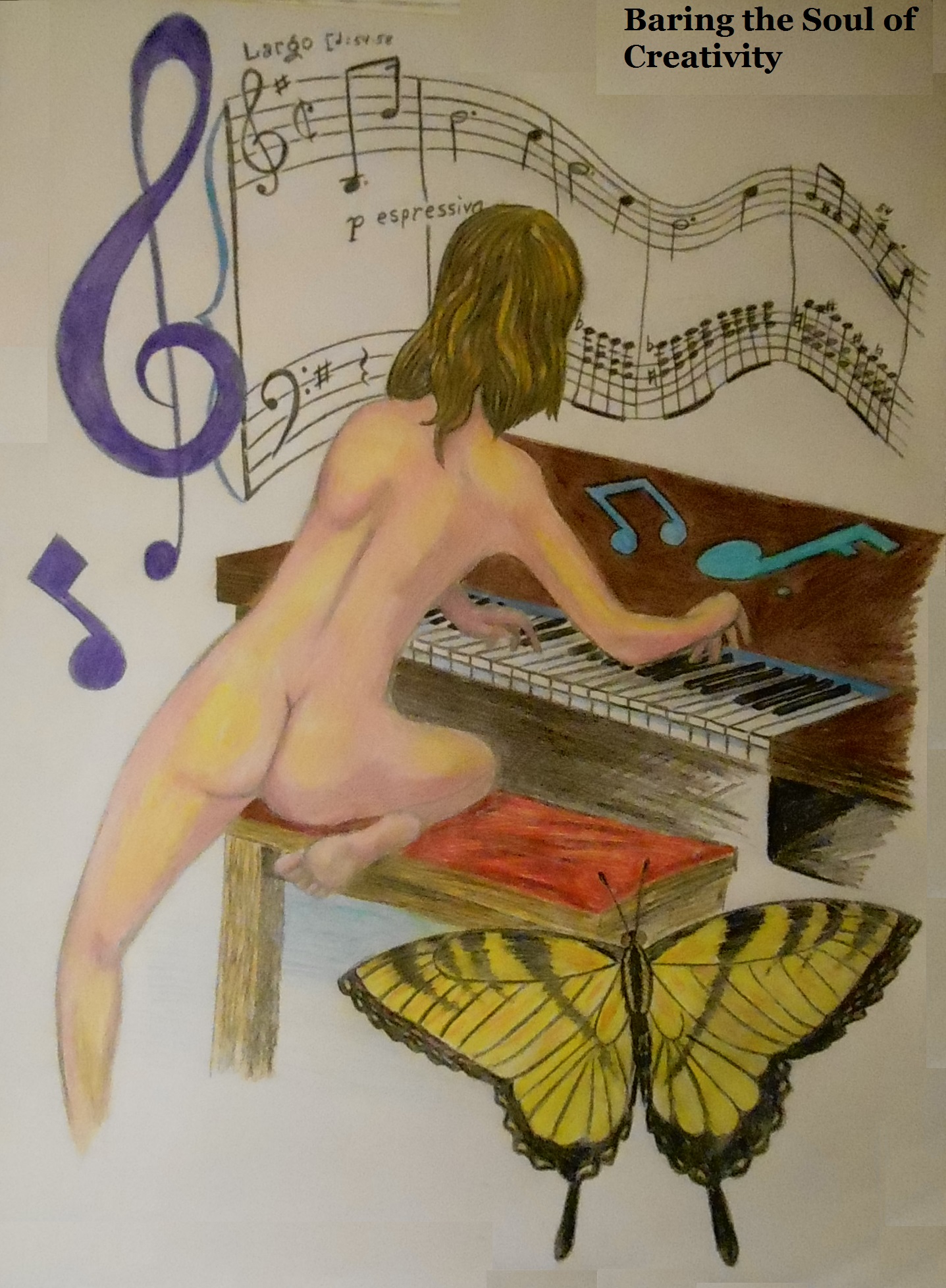
Being a writer is a life of music that happens only in your head.  You hear voices constantly.  They pulse rhythmically with insights and ideas that have to be written down and remembered.  Otherwise  the music turns clashing-cymbals dark and depressing.  Monday I wrote a deeply personal thank you to the Methodist minister who saved my life when I was a boy.  I posted a YouTube music video by the acapella group Pentatonix with that essay in a vain attempt to give you an idea of the music in my head when I composed that very difficult piece to give myself a measure of peace.

filch

I realize that I am not writing poetry here.  Poetry can so easily slip into melody and music because of rhythm and meter and rhyme.  And yet, words to me are always about singing, about performing, about doing tricks with metaphor and meaning, rhythm, convoluted sentence structure, and other sneaky things that snake-oil salesman do to get you to think what you are hearing is precisely what you needed to hear.  The Sonata of Silence…  did you notice the alliteration of the silvery letter “S” in that title?  The beat of the syllables?  Da-daah-da a da-da?  The way a mere suggestion of music can bring symphonic sounds to your ear of imagination as you read?  The way a simple metaphor, writing is music, can be wrapped into an essay like a single refrain in a symphonic piece?

psoriasis

A sonata is a musical exercise in three or four movements that is basically instrumental in nature.  You may have noticed that the movements are loosely defined here by the accompanying pictures, of which there are three.  And it is silent only in the way that the instruments I am using themselves make no noise in the physical world.  The only sounds as I type these words are the hum of an old air conditioner and the whirr of my electric fan.  Yet my mind is filled with crescendos of violins and cellos, bold brass, and soft woodwinds.  The voice saying these words aloud only in my head is me.  Not the me you hear when I talk or the me I can hear on recordings of my own voice, but rather the me that I always hear from the inside.  And the voice is not so much “saying” as “singing”.

Writing makes music.  The writer can hear it.  The reader can too.  And whether I croon it to make you cry, or trill it to make you laugh, I am playing the instrument.  And so, the final notes of the sonata are these.  Be happy.  Be well.  And listen for the music.

Leave a comment

Filed under imagination, insight, inspiration, music, Paffooney, strange and wonderful ideas about life

Mickey Mouse Club Music

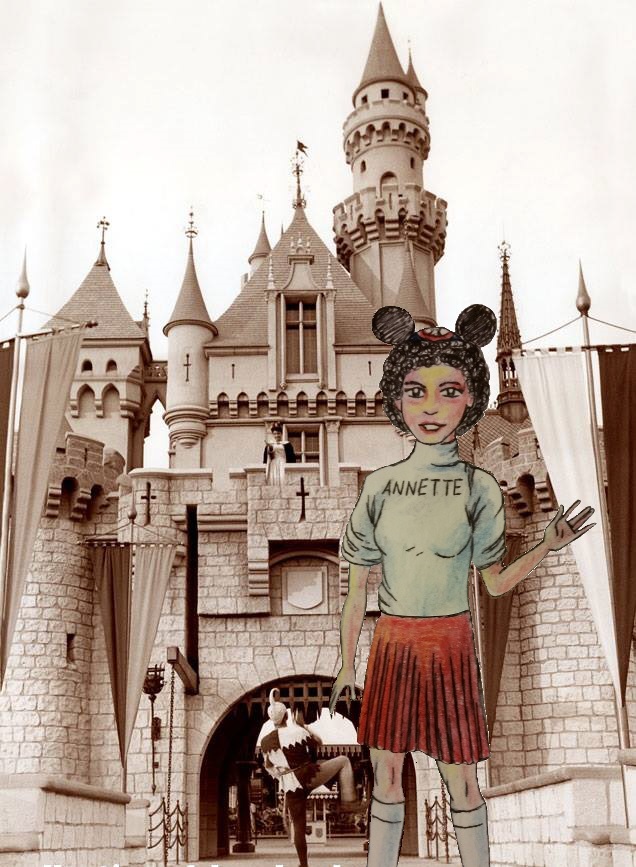
Today’s essay was inspired by Annette Funicello’s Facebook page.  I was marveling at how a teen idol and Disney child star could have such a large following and leave such large footprints on social media when she is not only all grown out of her child-stardom, but is actually quite dead.   I, however, who am technically still alive, work very very hard at this author-self-promotion-thingy, and I hardly make any headway at all in the ocean of the internet.  So, I did what I always do when faced with the imponderables of this writing life.  I drew a picture.  I drew Annette naked.  Well, that’s not entirely accurate either.  I put clothes on her because, well, young-adult-genre authors don’t always have to think like a teenager.

annette

You see, I am not mad at Annette.  And my hormones no longer control the other things that once made me deeply regret the fact that Disney never let Annette appear in movies in a bikini, even in the movies that were not Disney movies.  When you’re twelve, there are different priorities than when you are 68.  Hormones don’t do all of my thinking any more… at least, that’s what I tell my wife.

And part of what I still love most about Annette is the music.  The Mickey Mouse Club was always about talented kids.  They could sing and dance and play the drums, and they were as easily professional quality as many of the adults… and cuter to boot.  Talented children have been a significant portion of my life.  As an English teacher in middle school, I taught kids that were Annette’s MMC age.  I taught them how to write and how to read, and occasionally I had to find other talents to promote and help those kids become winners in the great game of life.  And, it may be cruel to say it bluntly, but some kids are downright ugly.  Not merely ugly in terms of what they looked like, but how they acted and how they thought and how they felt about things.  Racism runs deeply through children who’ve been taught thoroughly by parents before the teacher even meets them.  Sometimes you have to dig around really deeply in the black pits of their personalities to find something bright and shiny enough to put the spotlight on.   But it is always worth it.  ALL CHILDREN HAVE TREASURE BURIED INSIDE THEM.  And it deeply hurts that too many adults in every community can’t be bothered to dig for it.

Annette in DLandn

I grafted a background on my picture of Annette to stress the fact that she is not naked in my picture.  She was a very public figure and a good portion of her personal treasure was that screen personality that showed through and sparkled in every role.  My favorite Annette piece is the movie Babes in Toyland, which I saw for the first time at Grandma Beyer’s house in Mason City on her color TV.  The songs from that movie still play in my dreams.

Leave a comment

Filed under humor, Paffooney, teaching

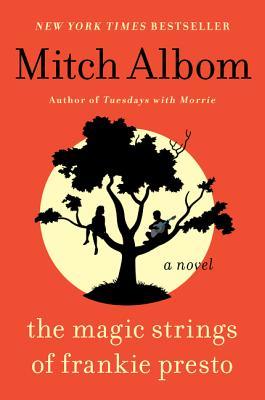
The Magic Strings of Frankie Presto (a book review)

29100120

The Magic Strings of Frankie Presto: A Novel
by Mitch Albom (Goodreads Author)

Michael Beyer‘s review

Jul 23, 2017

It was amazing!

This book is a miracle. It makes words into music and fills your imagination with some of the most beautiful guitar music ever played. It introduces you not only to a very convincing portrait of a fictional musician and Rock and Roll icon, but a vast array of very real musicians and show people who agreed to be used as a part of the story, approved the sections about them, and even helped Mitch Albom to compose it. These include notable music makers like Lyle Lovett, Darlene Love, Tony Bennett, Paul Stanley, and Burt Bacharach. The story itself transcends its fictional form, giving us a look at a musical history whose scope goes from the Spanish Civil War of the 1930’s to Woodstock, and on to the present day. It even gives us glimpses into the distant musical past, framing the story with the song Lágrima by the classical guitarist Francisco Tárrega. And all this music the book fills your mind with is actually performed only in your imagination and memory. Albom proves again with this book how his mastery of language makes him an absolute master story-teller.

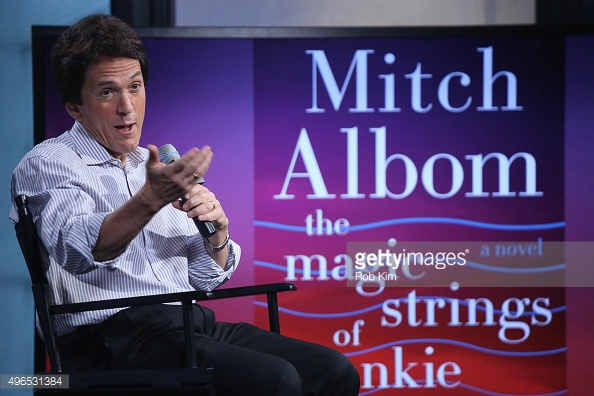
496531384

And now, here is me trying to make sense out of a reading experience that made my figurative heart grow wings and soar into the clouds in ways brought forth only by the strains of a sweet, classical Spanish guitar.

Stories like this one make a unique music in the mind, and though it is all fiction, occurring silently in the theater of your mind, you hear the music in your heart.  This story elicited the music of Rodrigo’s Adagio throughout, a piece I know intimately.  I myself have never written a musical book the way this fiction book was written.  But I know now that I have to try.  Poetry becomes song lyrics, right?  There is a connection between a good archetypal story about life and love and laughter, and the bittersweet strains of music on a Spanish guitar.

I truly and utterly fell in love with this beautiful book.  Mitch Albom is a genius… for a Detroit Tigers baseball fan.  And I would not risk telling you anything that might spoil such a beautiful story.  All I can say is, don’t read it… listen to it as you would a piece of beautiful music.  Listen to it and love it.

Leave a comment

Filed under book review, Celebration, classical music, humor, music, novel, strange and wonderful ideas about life

What the Heck is this Blog About?

I read a lot of other people’s blogs for a lot of reasons.  As an old writing teacher and retired Grammar Nazi, I love to see where writers are on the talent spectrum.  I have read everything from the philosophy of Camus and Kant to the beginning writing of ESL kids who are illiterate in two languages.  I view it like a vast flower garden of varied posies where even the weeds can be considered beautiful.  And like rare species of flower, I notice that many of the best blossoms out there in the blogosphere are consistent with their coloring and patterns.  In other words, they have a theme.

Fox logic

So, do I have an over-all theme for my blog?  It isn’t purely poetical like some of the poetry blogs I like to read.  I really only write comically bad poetry.  It has photos in it, but it isn’t anything like some of the photography blogs I follow.  They actually know how to photograph stuff and make it look perfect and pretty.  It is not strictly an art blog.  I do a lot of drawing and cartooning and inflict it upon you in this blog.  But I am not a professional artist and can’t hold a candle to some of the painters and artists I follow and sometimes even post about.  I enjoy calling Trump President Pumpkinhead, but I can’t say that my blog is a political humor blog, or that I am even passable as a humorous political commentator.

One thing that I can definitely say is that I was once a teacher.  I was one of those organizers and explainers who stand in front of diverse groups of kids five days a week for six shows a day and try to make them understand a little something.  Something wise.  Something wonderful.  Something new.  Look at the video above if you haven’t already watched it.  Not only does it give you a sense of the power of holding the big pencil, it teaches you something you probably didn’t realize before with so much more than mere words.

20150807_135323

But can I say this is an education blog?  No.  It is far too silly and pointless to be that.  If you want a real education blog, you have to look for someone like Diane Ravitch’s blog.  Education is a more serious and sober topic than Mickey.

By the way, were you worried about the poor bunny in that first cartoon getting eaten by the fox and the bear?  Well, maybe this point from that conversation can put your mind at ease.

Fox logic 2

Mickey is tricky and gets good mileage out of his cartoons.

You may have gotten the idea that I like Bobby McFerrin by this point in my post.  It is true.  Pure genius and raw creative talent fascinate me.  Is that the end point of my journey to an answer about what the heck this blog is about?  Perhaps.  As good an answer as any.  But I think the question is still open for debate.  It is the journey from thought through many thoughts to theme that make it all fun.  And I don’t anticipate that journey actually ending anytime soon.


Leave a comment

Filed under humor, insight, inspiration, music, Paffooney, self portrait, strange and wonderful ideas about life, word games, wordplay, writing, writing teacher

Synesthesia (Part Two; The Color of Music)

Okay, so on the synesthesia tests I didn’t score as a synesthete on the music/color test.  But I was extremely synesthetic on the tests for color/months/days of the week.  I was a little over the mark on letter/number/colors synesthesia too, but it was more a problem with manipulating the color-selector device when I don’t have a mouse to use on my laptop.  The test for music did not test the way I see colors with music.  They wanted me to respond to what color each individual note seemed to be, and that isn’t even close to the way I experience it.  For me, the perfect description of how synesthesia works for me is Bach’s Tocata and Fugue in D minor as it is depicted in Fantasia.

I was shocked when I first saw it.  The colors are wrong for this piece, but the visual experience is almost exactly how I experience music, especially wordless instrumental music.  The only problem with this piece is that the overall color schemes are wrong.  But this comes about because every synesthete sees the colors differently.  And I have no doubt that at least one of the artists who created this had synesthesia.  If there were more reds, yellows, and magenta in the opening and more indigo contrasted with silver later, this interpretation would be perfect.

DSCN4453

Music synesthetically works in two directions for me.  The picture above, called The Wings of Imagination, makes me think of La Mer by Claude Debussy.

If you listen to the piece, don’t look at the YouTube illustration, look at my picture if you want to see the music the way I do.  The following song, Don’t Worry, Be Happy, is a multicolored song that I can best express with the colors in the picture I call Rainbow Peacock.

Rainbow peacock

The full range of primary colors together in one picture, or one song, always means completeness, fullness, and happiness to me.  If there is absence of one or more of the basic colors from the color wheel, the mood and emotion present in the song or picture is altered to something other than happiness.  The Firebird Suite by Igor Stravinsky goes from the indigo and navy blue of fear and confusion to instances of angry red and feverish orange.  It would look something like this in the theater of my imagination;

20160424_181130

And one of my favorite instrumental pieces of all times, Prelude to the Afternoon of the Faun by Claude Debussy, is full of melancholy and sexual tension, deeply felt vibrations in the depths of my stomach, and would look like my picture Sleeping Beauty with its teal and blue melancholia juxtaposed with candle-lit yellows and wood brown mixed feelings of joy and anxiety.

Beauty

Now, if you have waded through all of this goofy color-and-music analysis from a source whose sanity is questionable at best, you probably have no earthly idea what any of it has to do with anything.  But if you have that aha!-moment and see it all clearly too, then I suspect you probably are a synesthete too.  Poor you.  It is not a treatable condition.  But it is also not a burden.  Learn to enjoy it.  It resonates in your very soul.

Leave a comment

Filed under humor, Paffooney, strange and wonderful ideas about life, Uncategorized

Toccata and Fugue in D Minor

Johann Sebastian Bach may or may not have written his organ masterpiece, Toccata and Fugue in D Minor in 1704. All we know for sure is that the combined efforts of Johannes Ringk, who saved it in manuscript form in the 1830’s, and Felix Mendelssohn who performed it and made it a hit you could dance to during the Bach Revival in 1840 made it possible to still hear its sublime music today. Okay, maybe not dance to exactly… But without the two of them, the piece might have been lost to us in obscurity.

The Toccata part is a composition that uses fast fingerings and a sprightly beat to make happy hippie type music that is really quite trippy. The Fugue part (pronounced Fyoog, not Fuggwee which I learned to my horror in grade school music class) is a part where one part of the tune echoes another part of the tune and one part becomes the other part and then reflects it all back again. I know that’s needlessly confusing, but at least I know what I mean. That is not always a given when I am writing quickly like a Toccata.

I have posted two different versions for you to listen to in this musical metaphor nonsensical posticle… err… Popsicle… err… maybe just post. One is the kinda creepy organ version like you might find in a Hammer Films monster movie in the 1970’s. The other is the light and fluffy violin version from Disney’s Fantasia. I don’t really expect you to listen to both, but listening to one or the other would at least give you a tonal hint about what the ever-loving foolishness I am writing in this post is really all about.

You see, I find sober thoughts in this 313-year-old piece of music that I apply to the arc of my life to give it meaning in musical measure.
Toccata and Fugue

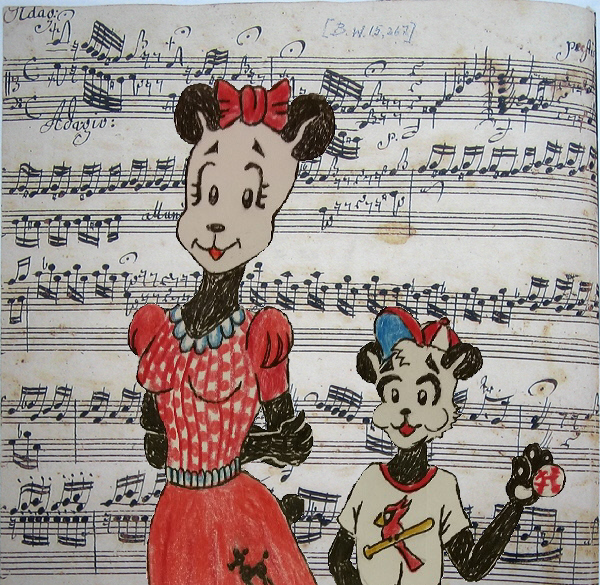
This is the Paffooney of this piece, a picture of my wife in her cartoon panda incarnation, along with the panda persona of my number two son. The background of this Paffooney is the actual Ringk manuscript that allowed Bach’s masterwork not to be lost for all time.

My life was always a musical composition, though I never really learned piano other than to pick out favorite tunes by ear. But the Bach Toccata and Fugue begins thusly;

The Toccata begins with a single-voice flourish in the upper ranges of the keyboard, doubled at the octave. It then spirals toward the bottom, where a diminished seventh chord appears (which actually implies a dominant chord with a minor 9th against a tonic pedal), built one note at a time. This resolves into a D major chord.

I interpret that in prose thusly;

Life was bright and full of promise when I was a child… men going to the moon, me learning to draw and paint, and being smarter than the average child to the point of being hated for my smart-asserry and tortured accordingly. I was sexually assaulted by an older boy and spiraled towards the bottom where I was diminished for a time and mired in a seventh chord of depression and despair. But that resolved into a D major chord when the realization dawned that I could teach and help others to learn the music of life.

And then the Fugue begins in earnest. I set the melody and led my students to repeat and reflect it back again. Over and over, rising like a storm and skipping like a happy child through the tulips that blossom as the showers pass. Winding and unwinding in equal measure, my life progressed to a creaky old age. But the notes of regret in the conclusion are few. The reflections of happinesses gained are legion. I have lived a life I do not regret. I may not have my music saved in the same way Johann Sebastian did, but I am proud of the whole of it. And whether by organ or by violin, it will translate to the next life, and will continue to repeat. What more can a doofus who thinks teaching and drawing and telling stories are a form of music ask for from life?
Leave a comment

Filed under Uncategorized