
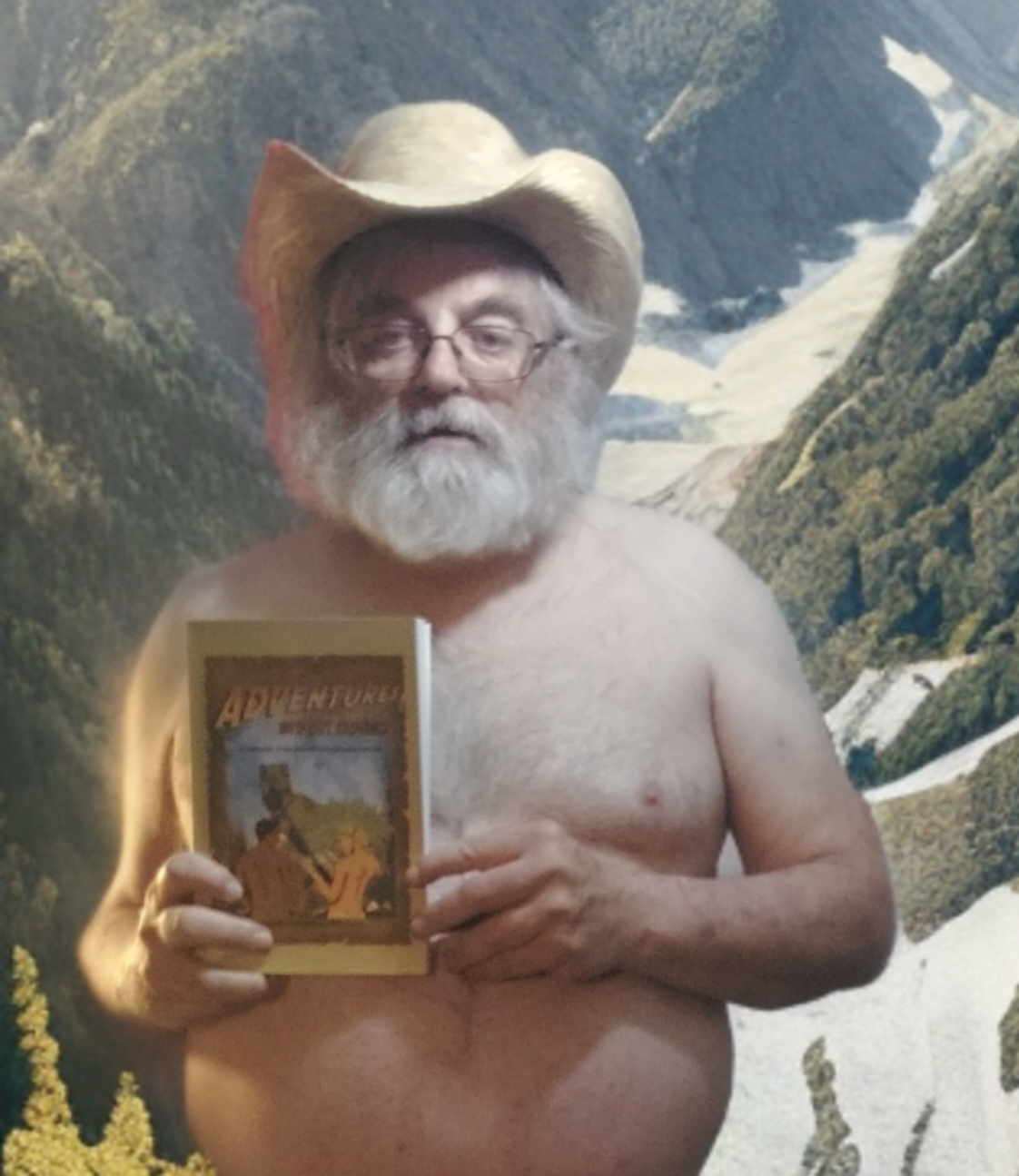
I recently got my very first unsolicited review on a book I had written when Mr. Ted Bun, one of the leaders of the nudist writer group on Twitter gave me a five star review on Recipes for Gingerbread Children.
I was grateful and reviewed one of his books on Twitter in return.
But it was totally unsolicited. I didn’t even know any of my book promotions had penetrated such an odd corner of the internet. The story does have nudists in it, but that is not what the book is really about. Mr. Bun acknowledged that much in his review, and still liked it and called it well-written.
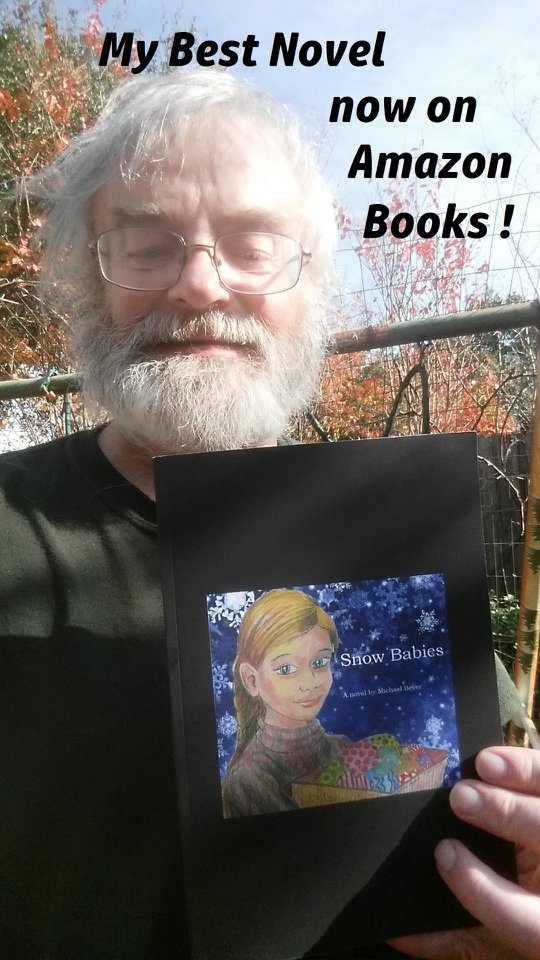
My first Amazon book promotion, offering the Kindle version of Snow Babies for free, produced the same kind of fruit. I started by sending a paperback copy to the girl I grew up with that I named the main character after. Valerie read the book to her grandchildren and then sent me this message;
Valerie– Hi Michael! I wanted to let you know that I finished reading your book a couple of days ago, and that I thought it was really good! You used so many colorful descriptions of the characters, that I felt like I could really picture the whole scene! I also enjoyed how you used several people’s names and surrounding towns from our past that brought back good memories. It kept my interest and made me excited to keep reading to see how things turned out! I appreciated how you ended it, too! Thanks again, so much for sharing it with me. I plan to share it with a friend of mine to read and then return to me! Do the Rowan and Belmond libraries have copies of your books? I would be happy to talk to the Belmond library about it, if you haven’t already! I will spread the word, and keep writing! Val
Me– I donated a couple of books to Rowan and one to Belmond. But I have written a lot more since
They don’t have Snow Babies. I am so glad you liked the book. It is one of the best things I have ever written.
Valerie– You can be proud of your hard work! Next time I’m in the library, I will take Snow Babies with me and show them. I know they like to support local authors! 🙂
Me– Thank you for the help. I really appreciate it.

Then I find this tweet on Twitter from a fellow author who responded to my book promotion week.
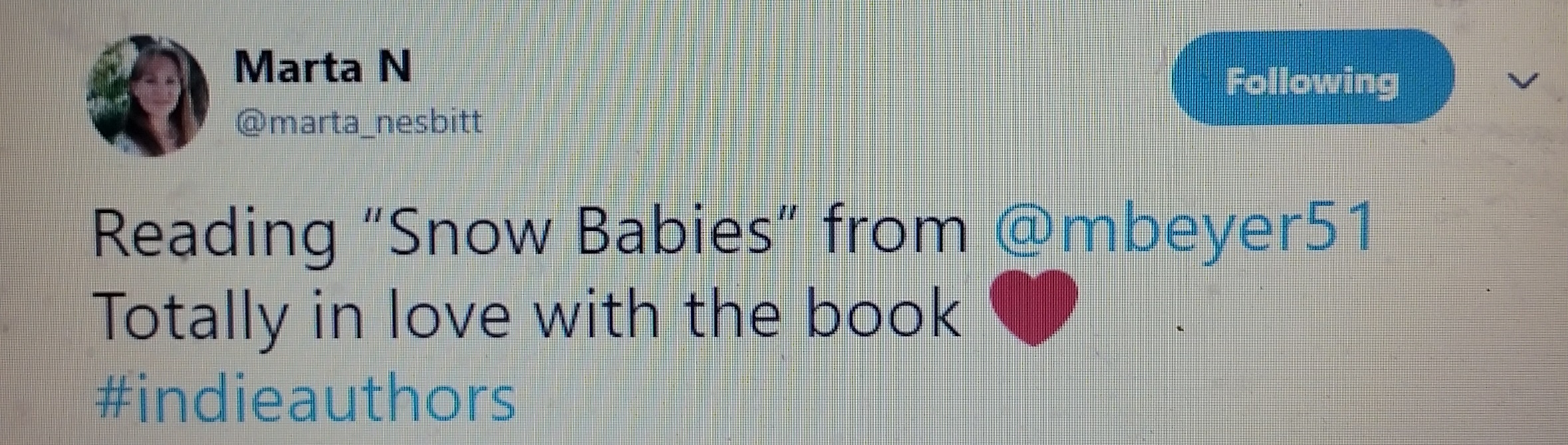

She read Snow Babies and loved it and shared this review with me before she posted it on Amazon.
Headline: This book has a potential to become a classic
The story takes you to Norwall, a secluded midwestern town where people are expecting a snow blizzard to arrive in couple of hours. Among strangers coming to the town during the blizzard are four very special boys, a hobo, a bus driver, a drunken old lady, a stupid salesman, a couple of newly-weds and a lady following the four boys. Each of them, as well as the local people, has their own interesting story and their stories start to intertwine while the town gets buried in snow.
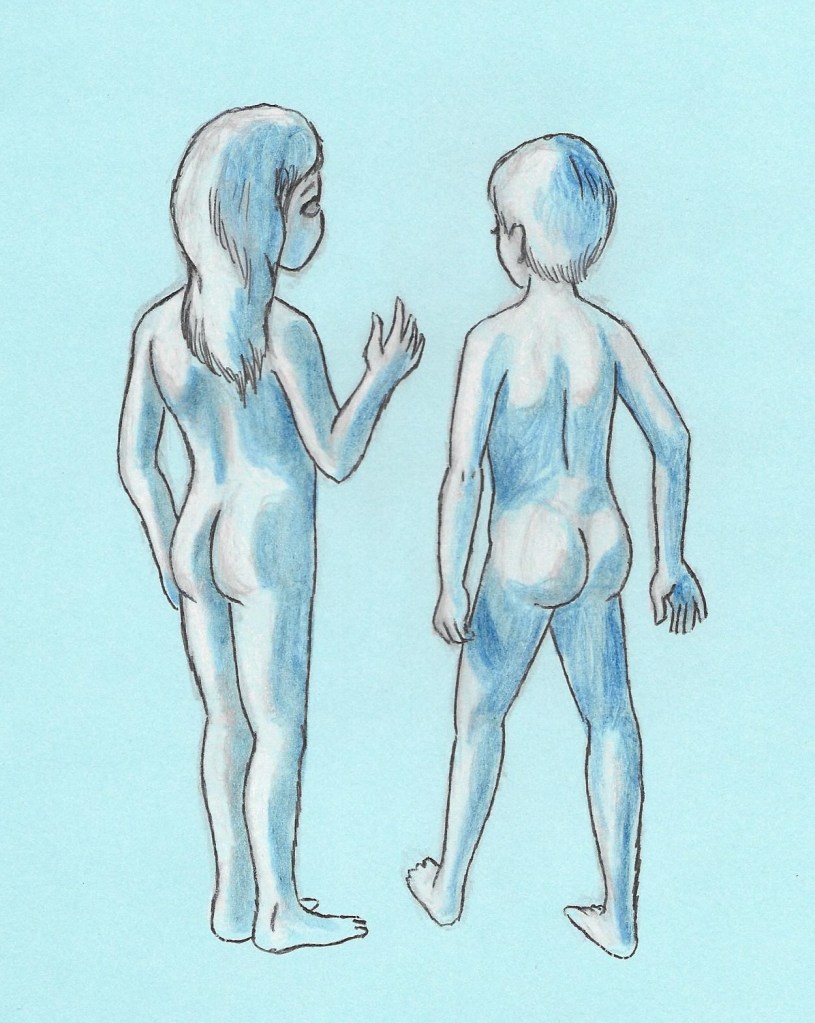
Some from the locals and the newcomers start to see white naked kids in the snow. In the course of events, they learn that those white kids are so called “snow babies”. According to what people say, those who see snow babies, are supposed to die during the blizzard.
The author has a talent for depicting situations in an impressive manner, so they can be humorous and touching at the same time. His mature narrative style enables you to learn deeply but in a light way about individual characters and understand their motives. Interesting are the hobo´s droppings of philosophical reflections and life wisdoms from Walt Whitman’s book. Simultaneously, in connection with snow babies, the author keeps you in suspense until the end. The story is not predictable, and the ending left me smiling and absorbed in thought.
I honestly fell in love with this book from the first page. It is like a fresh breeze compared to a number of today’s books written in similar patterns.
*****
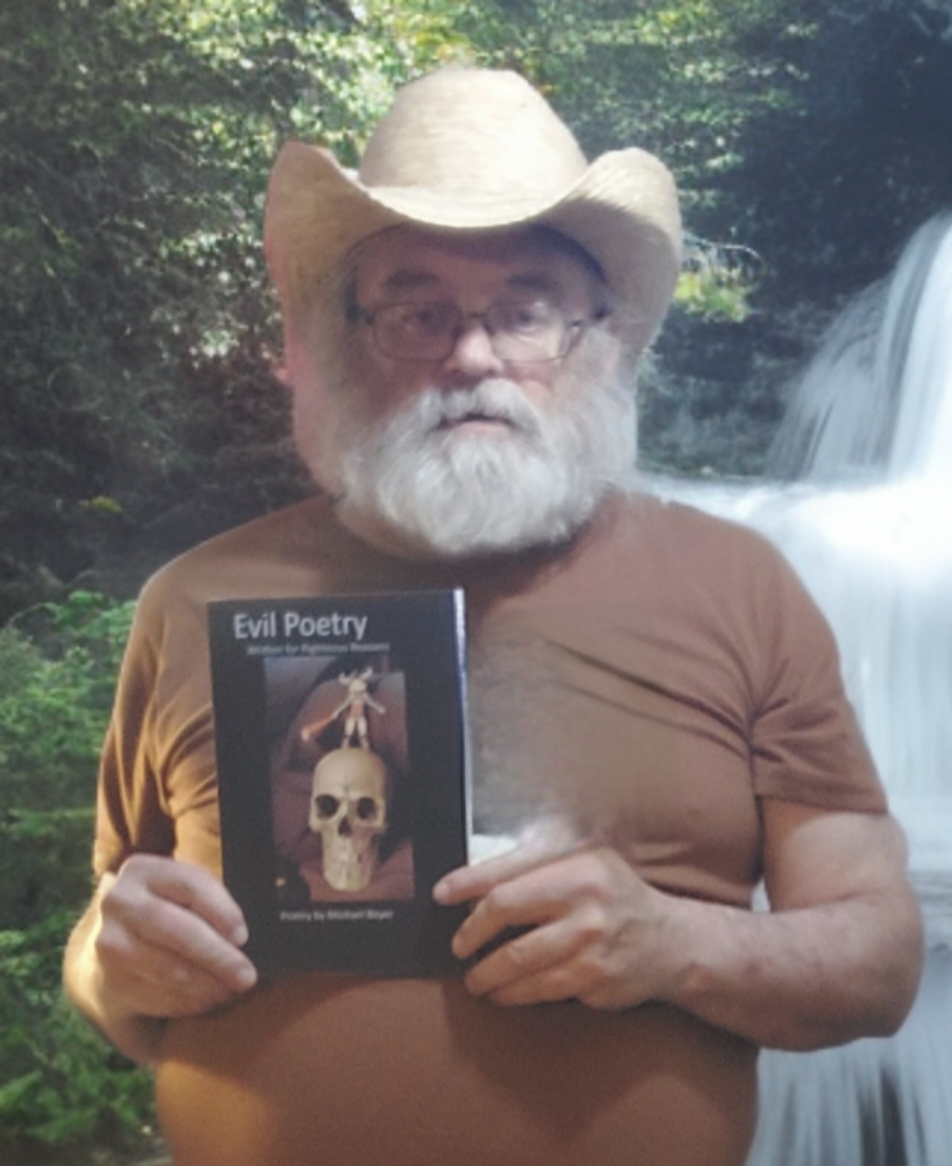
I am amazed that people are beginning to read my books and like them… even love them. I wasn’t expecting that to happen until after I was dead. It is a good feeling that took me by surprise.
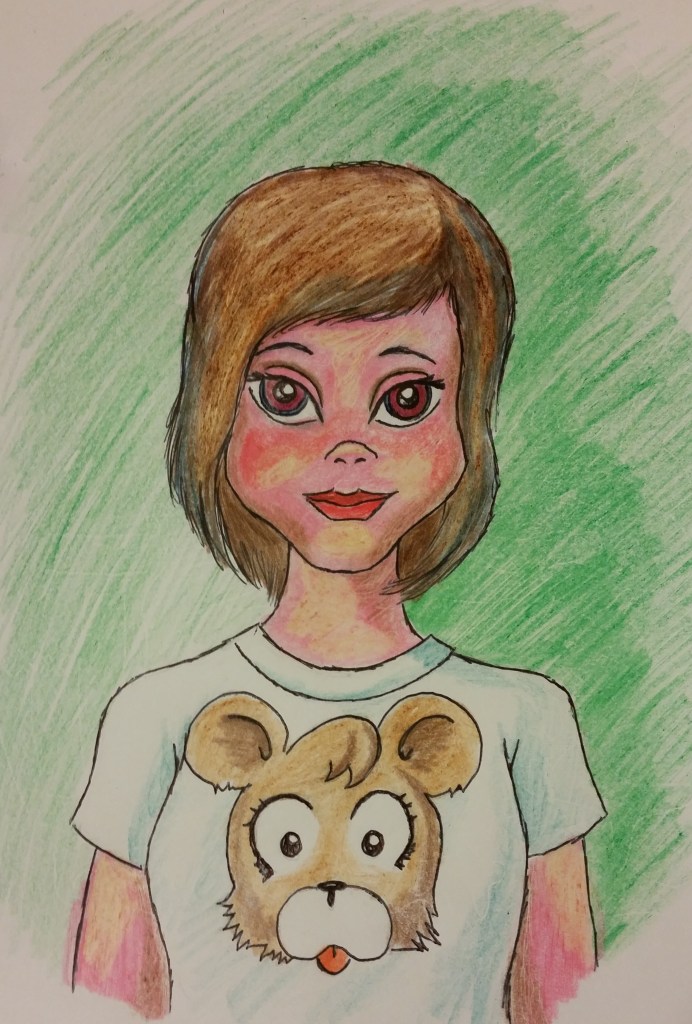
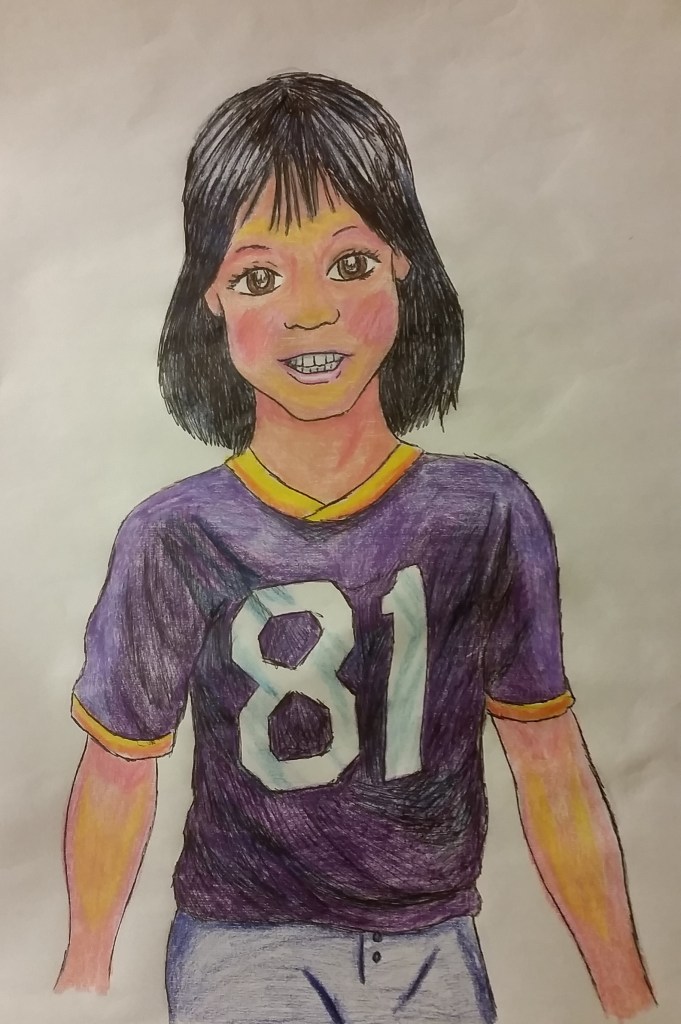
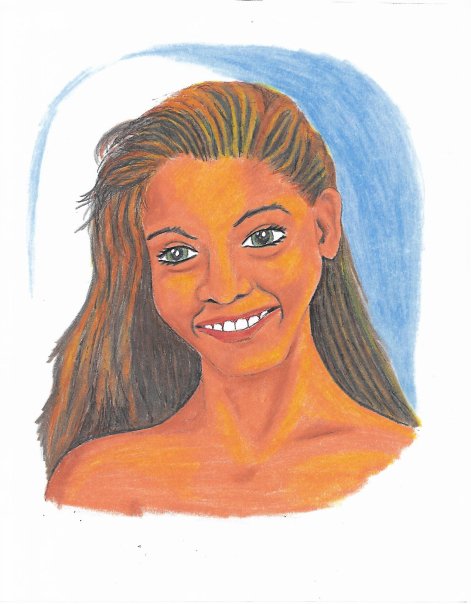

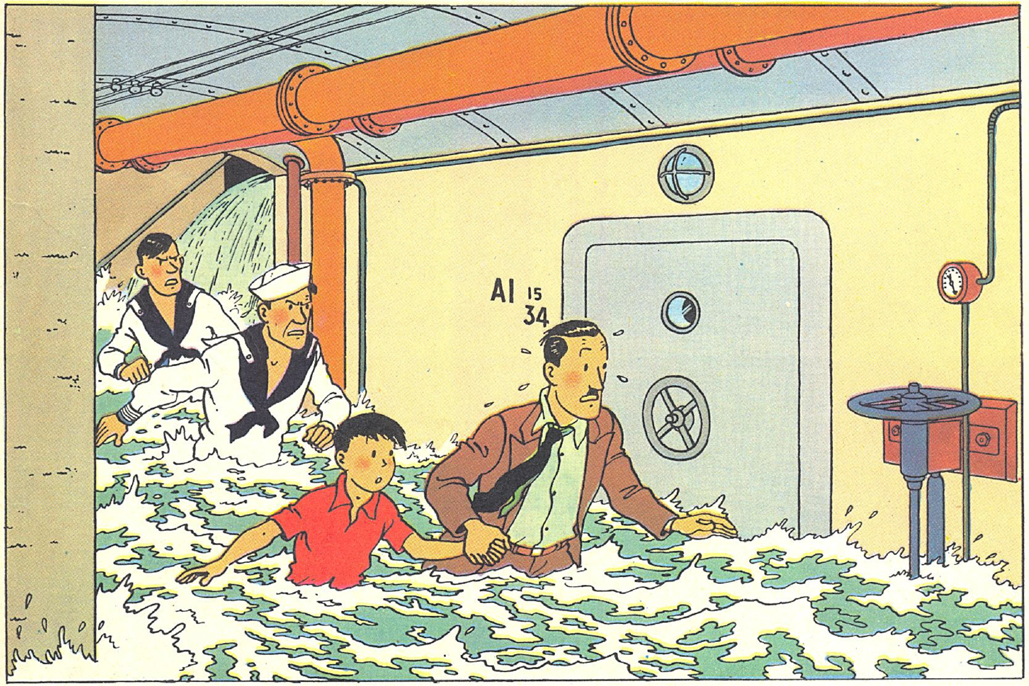











How It Should Be… According to Mickey
My bicycle was red. It was red and looked just like the ones that Captain Kangaroo had in his commercials that we watched on a black-and-white TV every day before we walked or rode our bicycle to school, across town a whole long seven blocks away. After school I could ride it out a whole mile and a half to Jack’s farm with Bobby and Richard and Mark the preacher’s kid to go skinny dipping in the cold creek in Jack’s South pasture. Jack was younger than any of us except Bobby. And it was a golden age.
Spiderman comic books and Avengers comic books cost twelve cents to own, but they were forbidden. And as much as we sneaked them and passed them around until they fell apart, usually in Bobby’s hands, we never knew that Dr. Wertham had gone to Congress to make our parents believe that comic books would make us gay and violent. He was a psychiatrist who wrote a book, so even if you didn’t believe him, you had to worry about such things.
I believed in Santa Claus until 1967. And after I found out, I only despaired a tiny little bit, because I began to understand you have to grow up. And adults can lie to you, even if they don’t do it to be mean. And the world is a hard place. And the golden age ended in November of 1963 when JFK was assassinated.
In June of 1968 I rode my bicycle out to the Bingham Park woods, Once there, I took off all my clothes and put them in the bicycle basket, and then I rode up and down the walking paths through the trees with nothing between me and God but my skin. I had a serious think about how life should be. All the while I was terrified that someone might see me. I was naked and vulnerable. A mere two years before that I had been sexually assaulted and was terrified of older boys, especially when I was naked and vulnerable. But I was a fan of the St. Louis Cardinals and Bob Gibson. They were repeated World Series winners. And they beat the Yankees in the series in 1964. And more important than that, cardinals were the little red songbirds who never flew away when the winter came. You don’t give up in the face of hardship. You face the trouble. No matter how deep the snow may pile up.
And in 1969, the first man to walk on the moon showed that a Star Trek world was in reach of mankind. Star Trek was on every afternoon after school. I watched a lot of those episodes at Verner’s house on his family’s black-and-white TV. The Klingons were always bested or beaten because the crew of the Enterprise outsmarted them. You can solve the problems of the universe with science. I know this because of all the times Mr. Spock proved it to me not just by telling me so, but by showing me how you do it. And what you can achieve is greatly enhanced if you work together like Spock and Kirk and Bones… and sometimes Scotty always did.
So, what is the way it should be? What did Mickey decide while naked in the forest like a Dakota Sioux shaman on a spirit-quest?
JFK’s 104th birthday was on May 29th. Dr. Wertham has been dead for 40 years. Bob Gibson was 85 when he passed away in October of last year. Captain Kirk turned 90 in March of this year.
The Golden age is long gone. There is no single set of rules that can clearly establish how it should be now. But I like those ideas of how it should be that I established for myself while naked on a Schwinn Spitfire in a forest long ago.
Leave a comment
Filed under autobiography, cardinals, comic book heroes, commentary, humor, inspiration, oldies, Paffooney, philosophy
Tagged as bicycle, book reviews, cycling, travel, writing