Tag Archives: book reviews

A $3.00 Treasure Trove

C360_2016-12-21-17-27-40-934.jpg

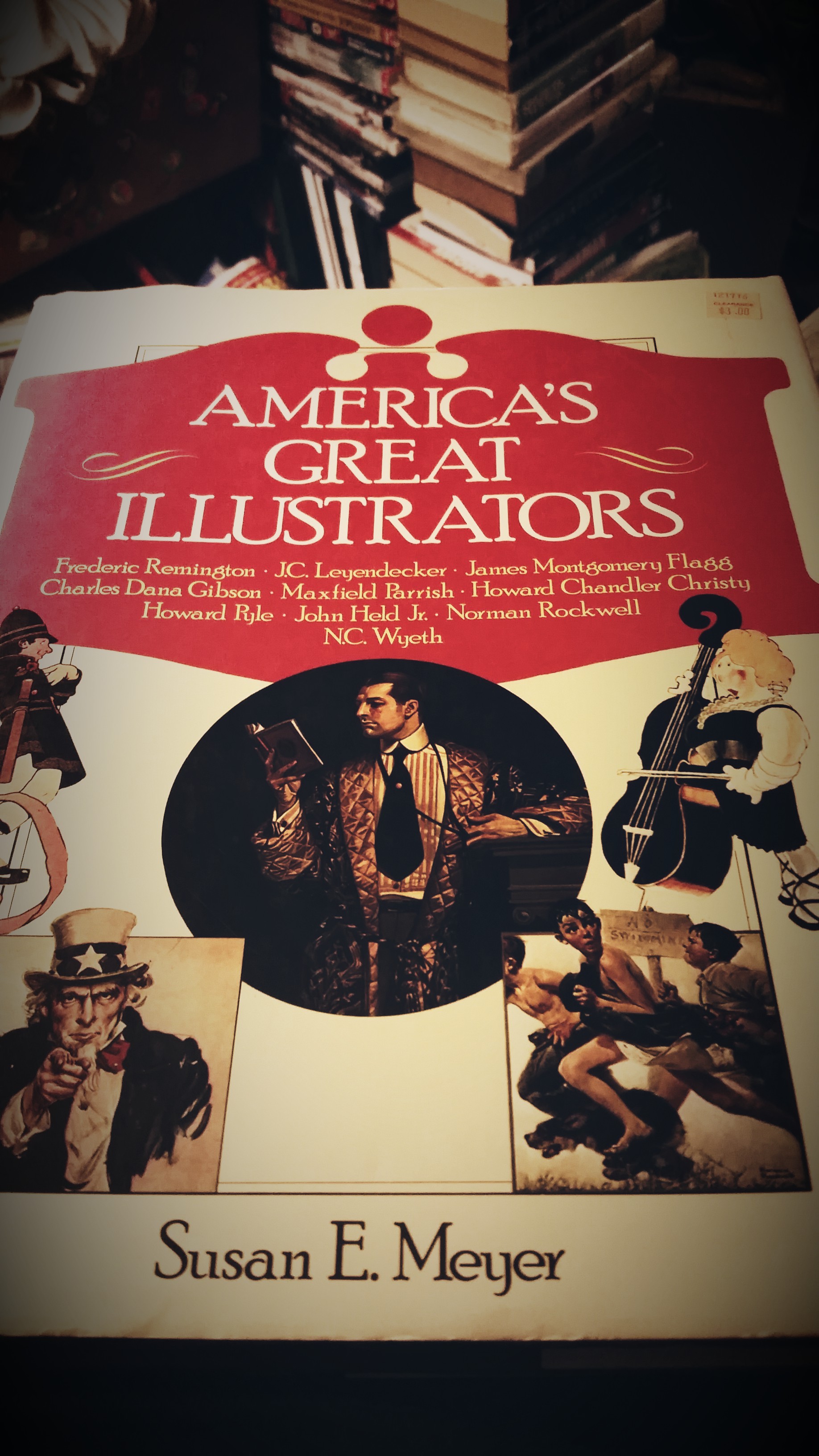
If you cruise the bargain sections in an old used book store like Half-Price Books, eventually you are going to find something priceless.  This book I am showing you is that very thing for me.

It was copyrighted in 1978.  The inscription inside the front cover says this was a Father’s Day gift on June 19th, 1988.  Someone named Gary gifted it to someone named Claude in Burleson, Texas.  It was probably a cherished book until someone passed away and the book changed hands in an estate sale.

c360_2016-12-21-17-26-52-638

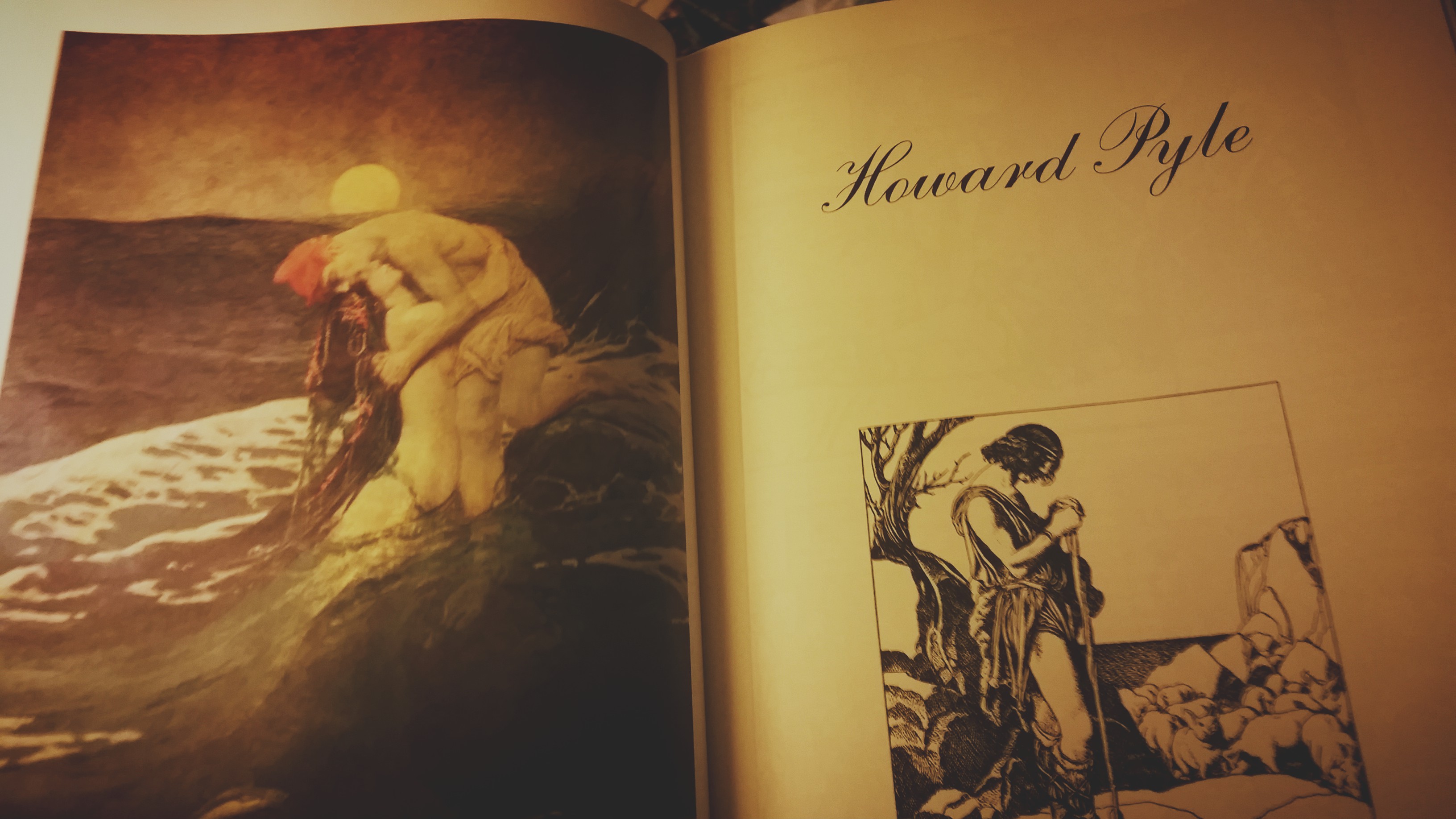
Howard Pyle

The book chronicles the height of the publishing era when being able to print books and reproduce artworks began entertaining the masses.  Always before painters and great artists worked for a patron for the purpose of decorating their home in a way that displayed their great wealth.  But from the 1880’s to the rise of cinema, magazines and books kept the masses entertained, helped more people to become literate than ever before, and created the stories that made our shared culture and life experiences grow stronger and ever more inventive.  The book focuses on the best of the best among a new breed of artist… the illustrators.

These are the ones the book details;

Howard Pyle, N.C. Wyeth, Frederick Remington, Maxfield Parrish, J.C. Leyendecker, Norman Rockwell, Charles Dana Gibson, Howard Chandler Christy, James Montgomery Flagg, and John Held Jr.

c360_2016-12-21-17-26-08-244

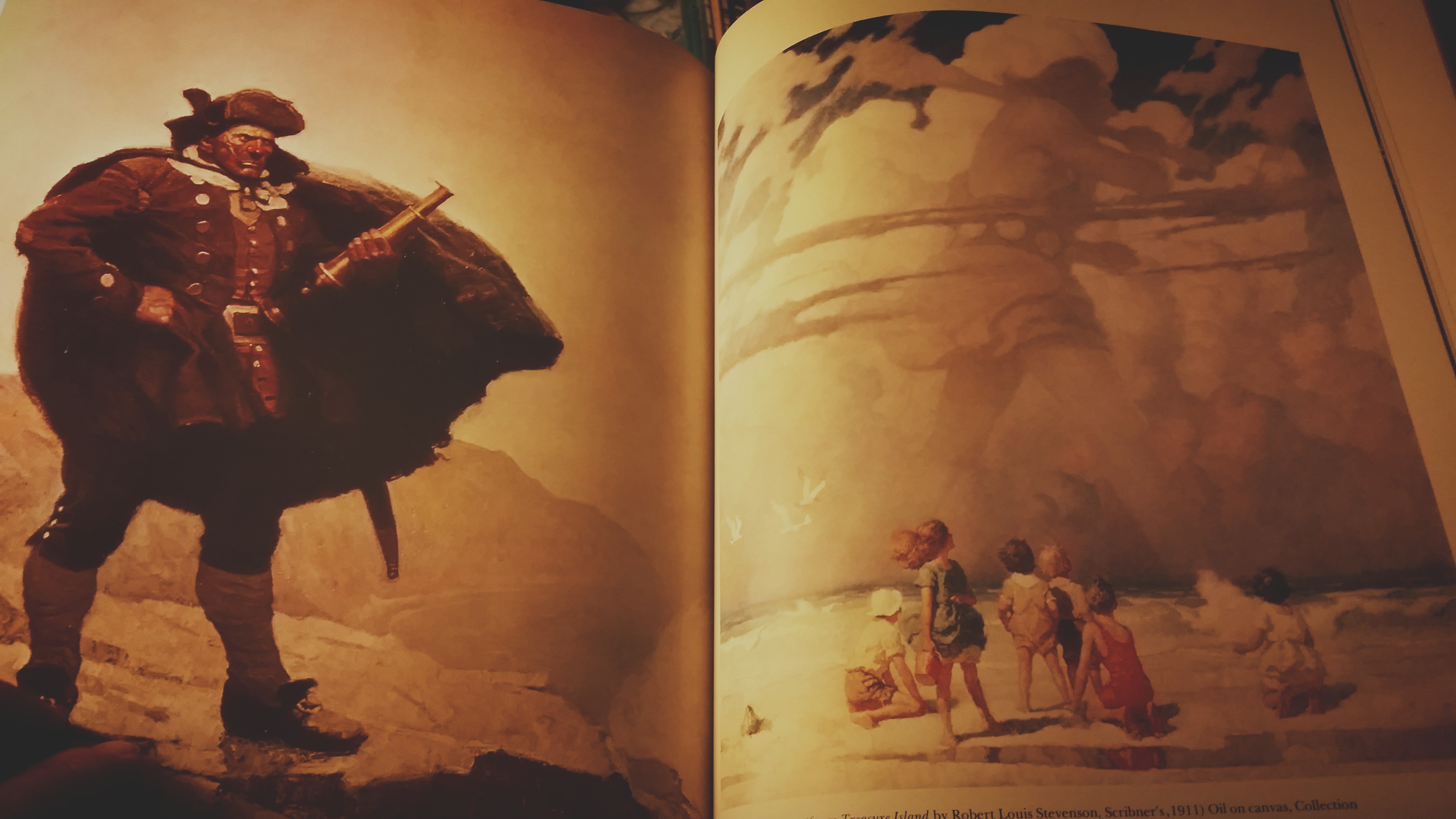
N.C. Wyeth

Wyeth was most famous as a book illustrator for Treasure Island, Kidnapped, other books by Robert Louis Stevenson, Mark Twain,  and a famous volume of tales about Robin Hood.

c360_2016-12-21-17-25-30-575

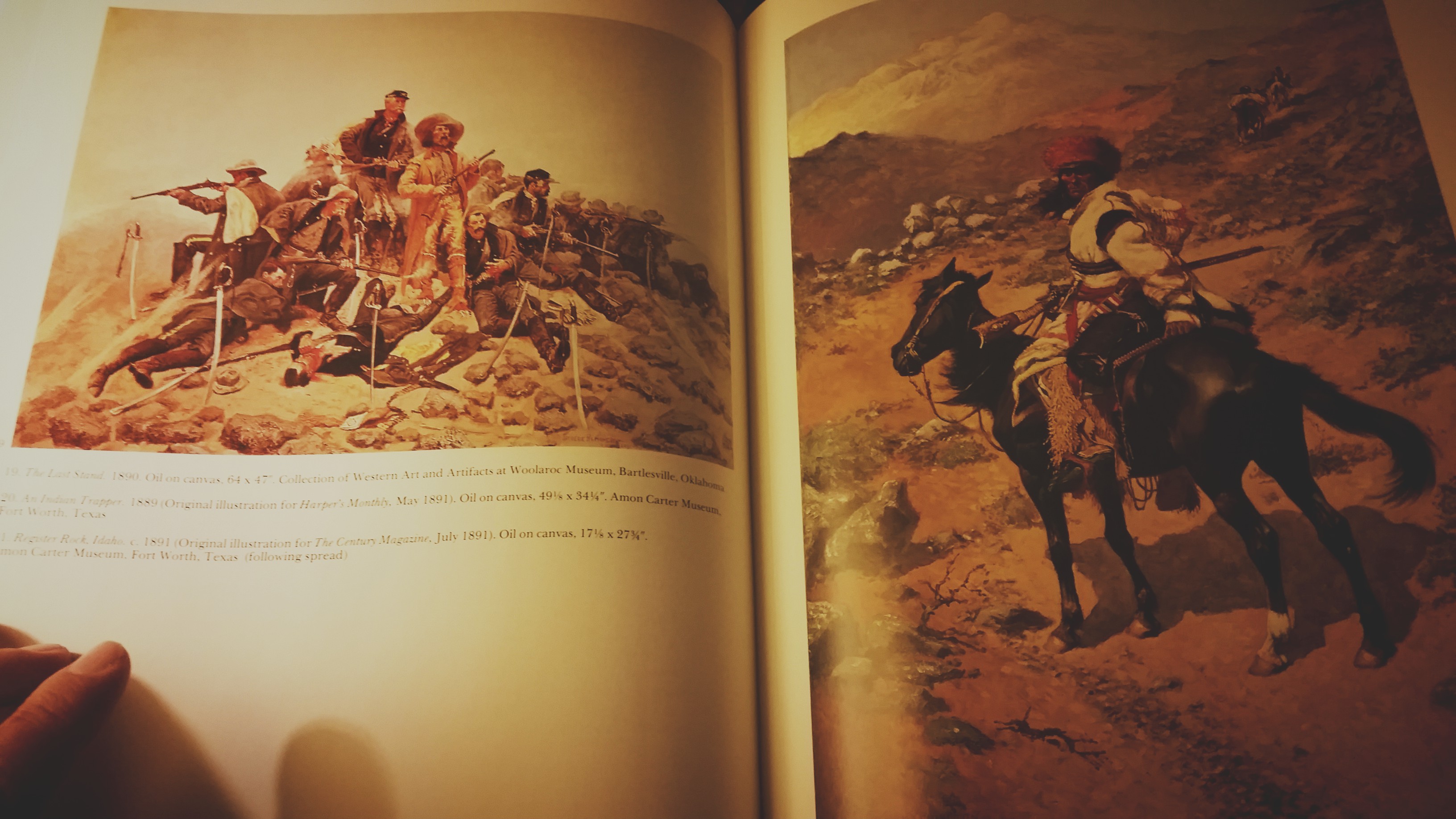
Frederick Remington

Remington is a name you probably know as a maker of Western art.  He was a famous painter of cowboys and Indians and the American frontier.

c360_2016-12-21-17-25-11-104

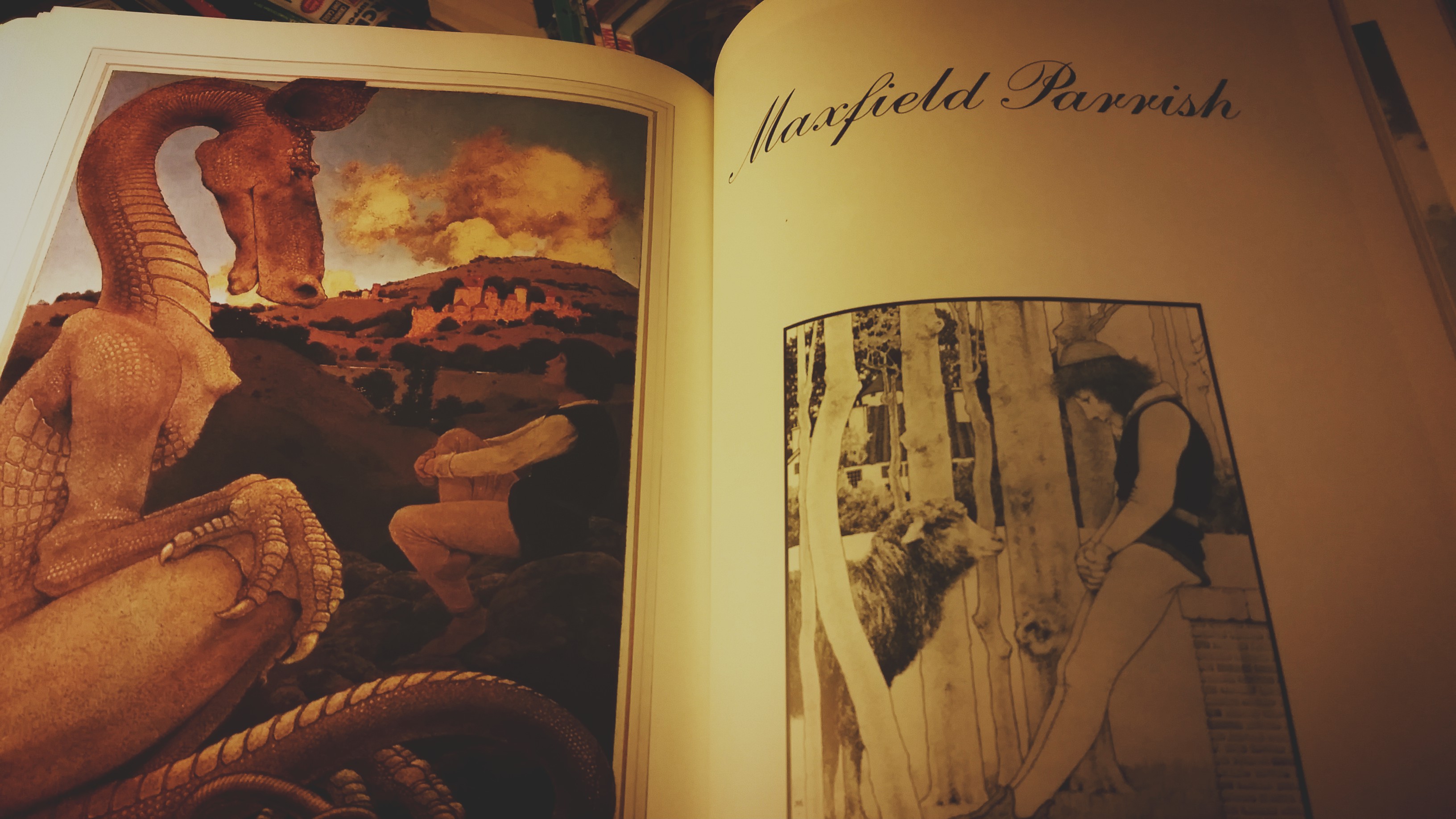
Maxfield Parrish

Maxfield Parrish is my all-time favorite painter.  His work is something I gushed about in previous posts because I own other books about his fanciful works painted in Maxfield Parrish blue.

c360_2016-12-21-17-24-36-579

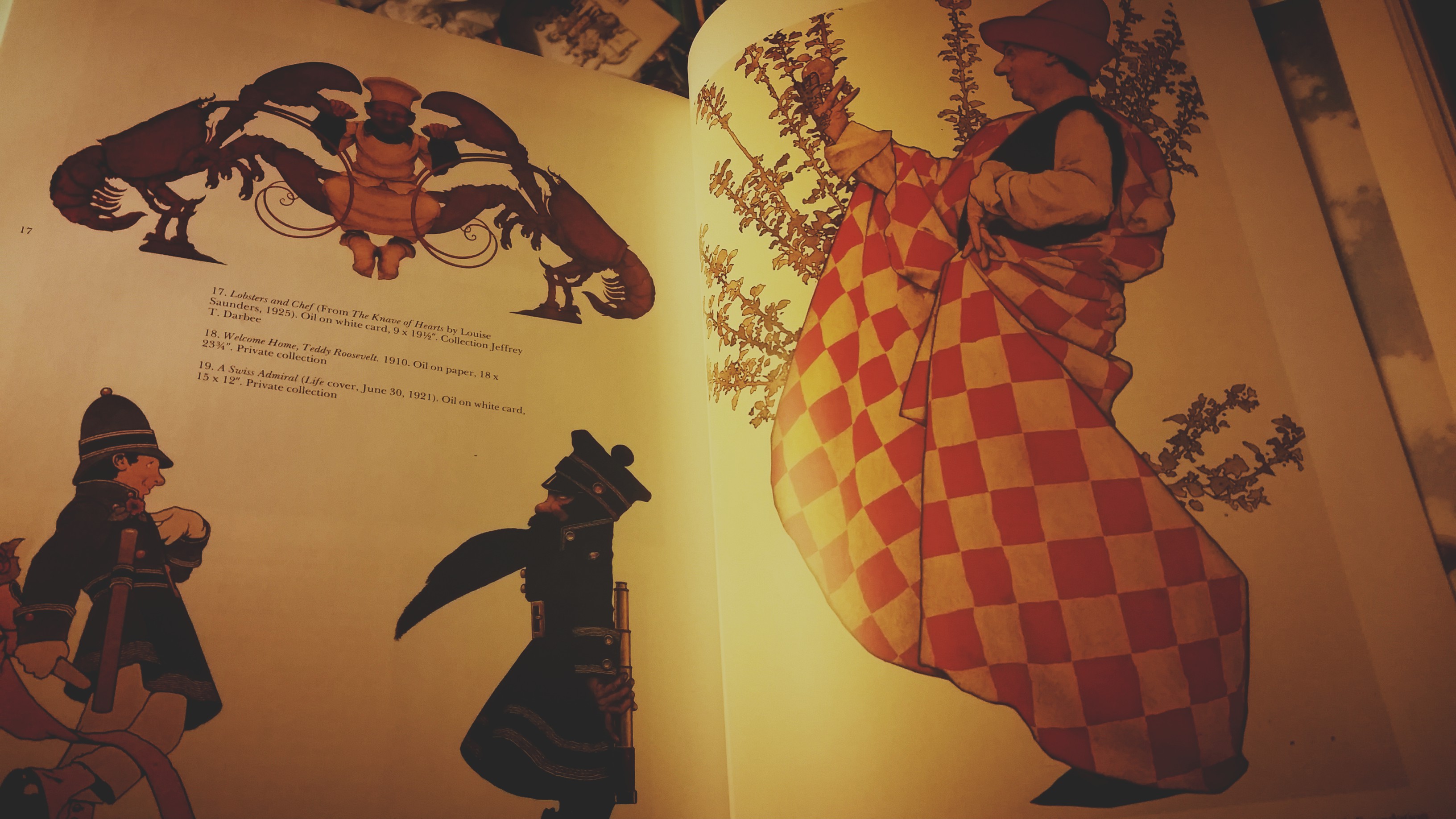
Also Maxfield Parrish


c360_2016-12-21-17-24-09-869

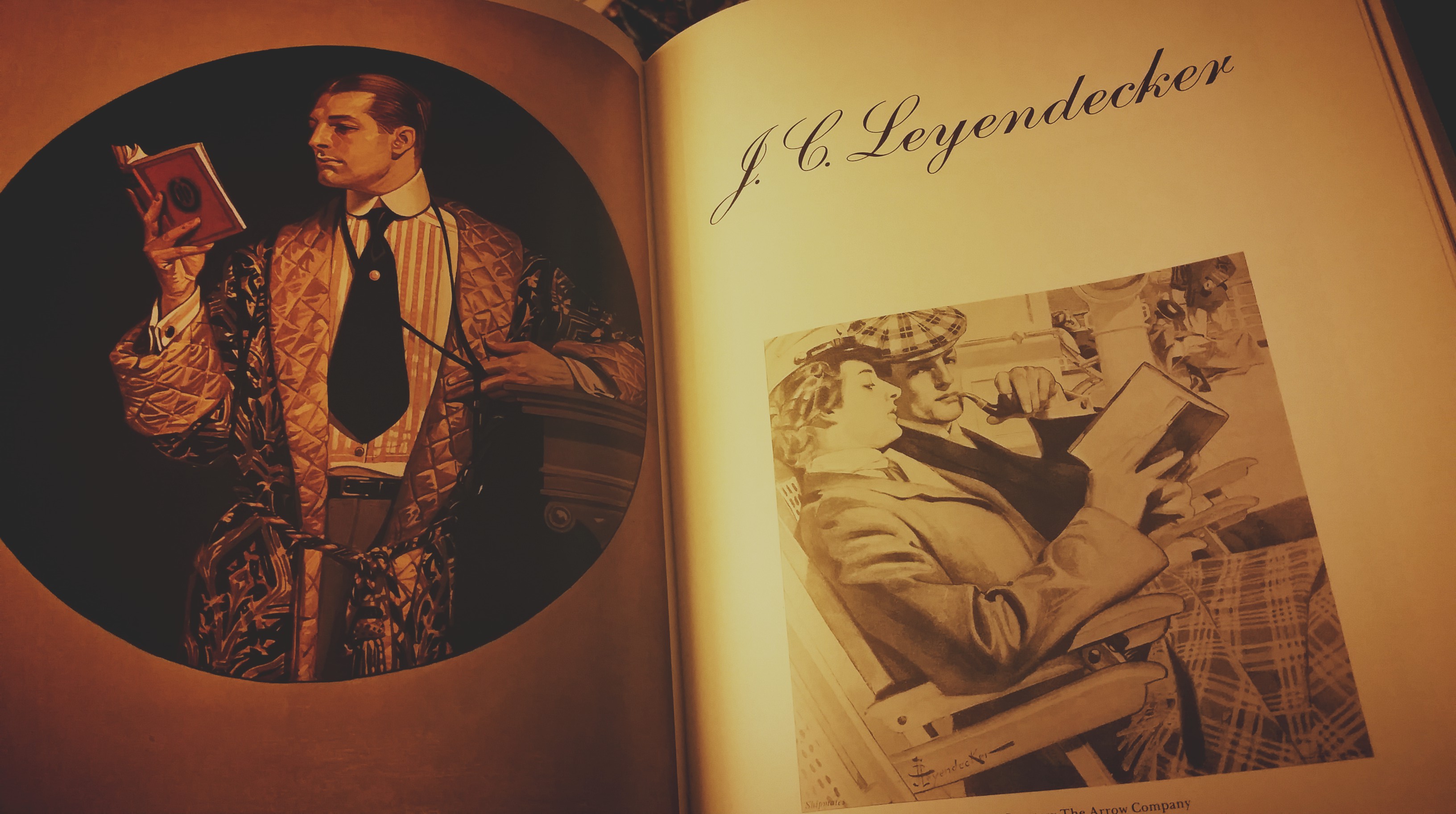
J.C. Leyendecker

You will probably recognize Leyendecker’s work in magazine and advertising illustration as the standard of the Roaring 20’s.  His paintings set a style that swept American culture for more than a decade, and still affects how we dress to this very day.


c360_2016-12-21-17-23-44-163

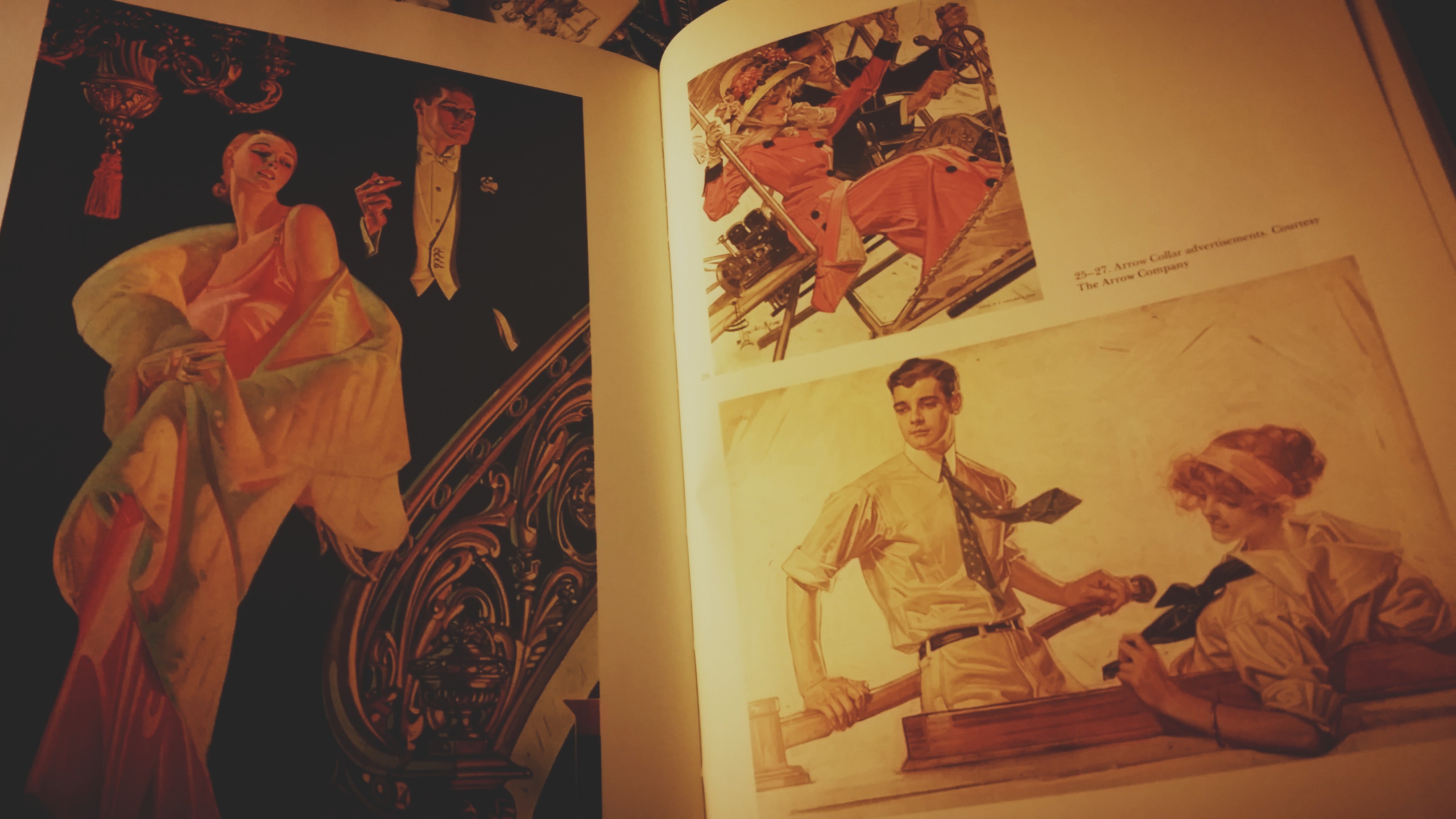
More Leyendecker


c360_2016-12-21-17-23-26-011

Even more from Leyendecker


c360_2016-12-21-17-22-58-983

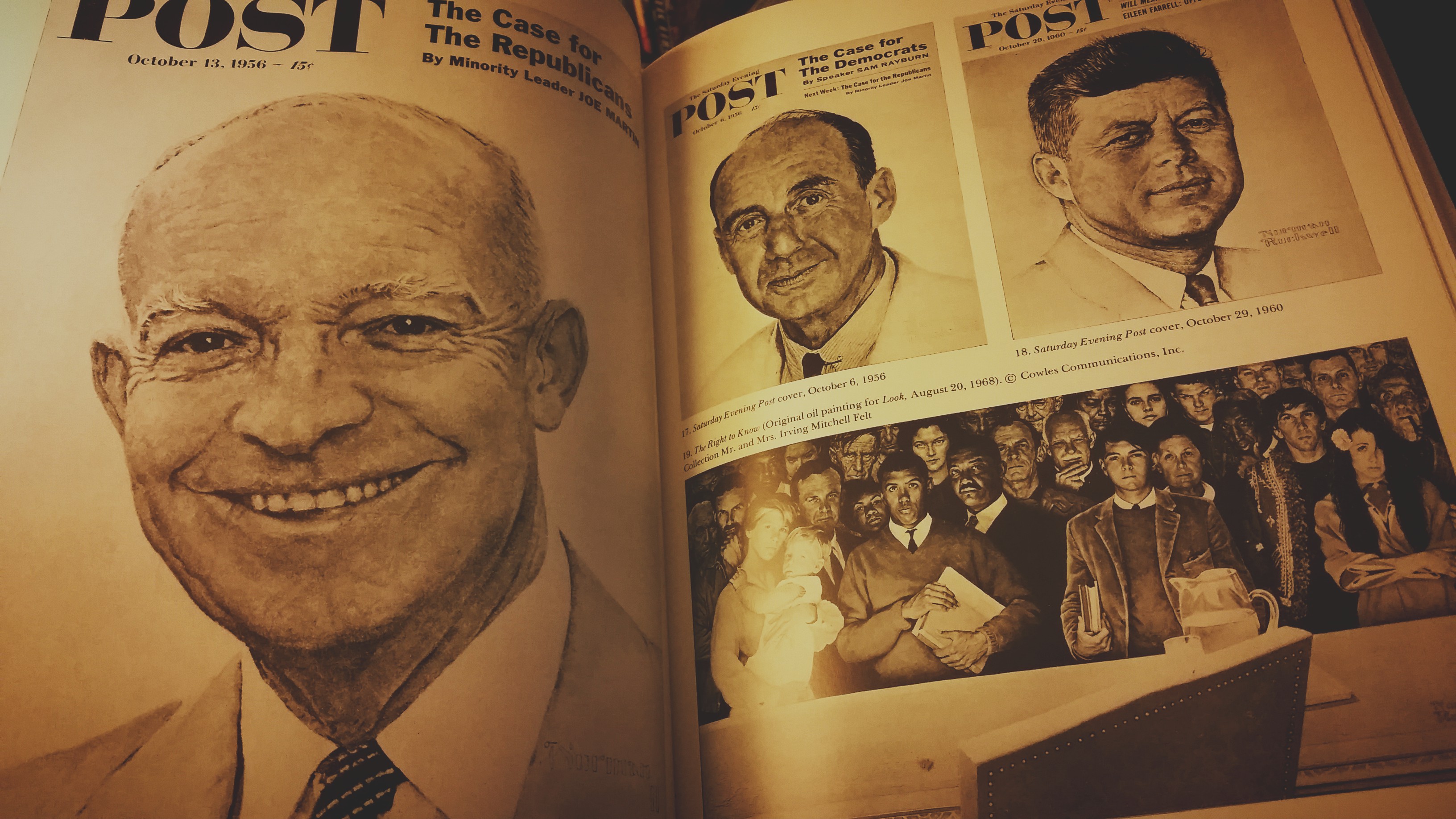
Norman Rockwell

Norman Rockwell and his work for The Saturday Evening Post is still familiar to practically everyone who reads and looks at the illustrations.  As you can see he was a master of folksy realism and could do a portrait better than practically anyone.


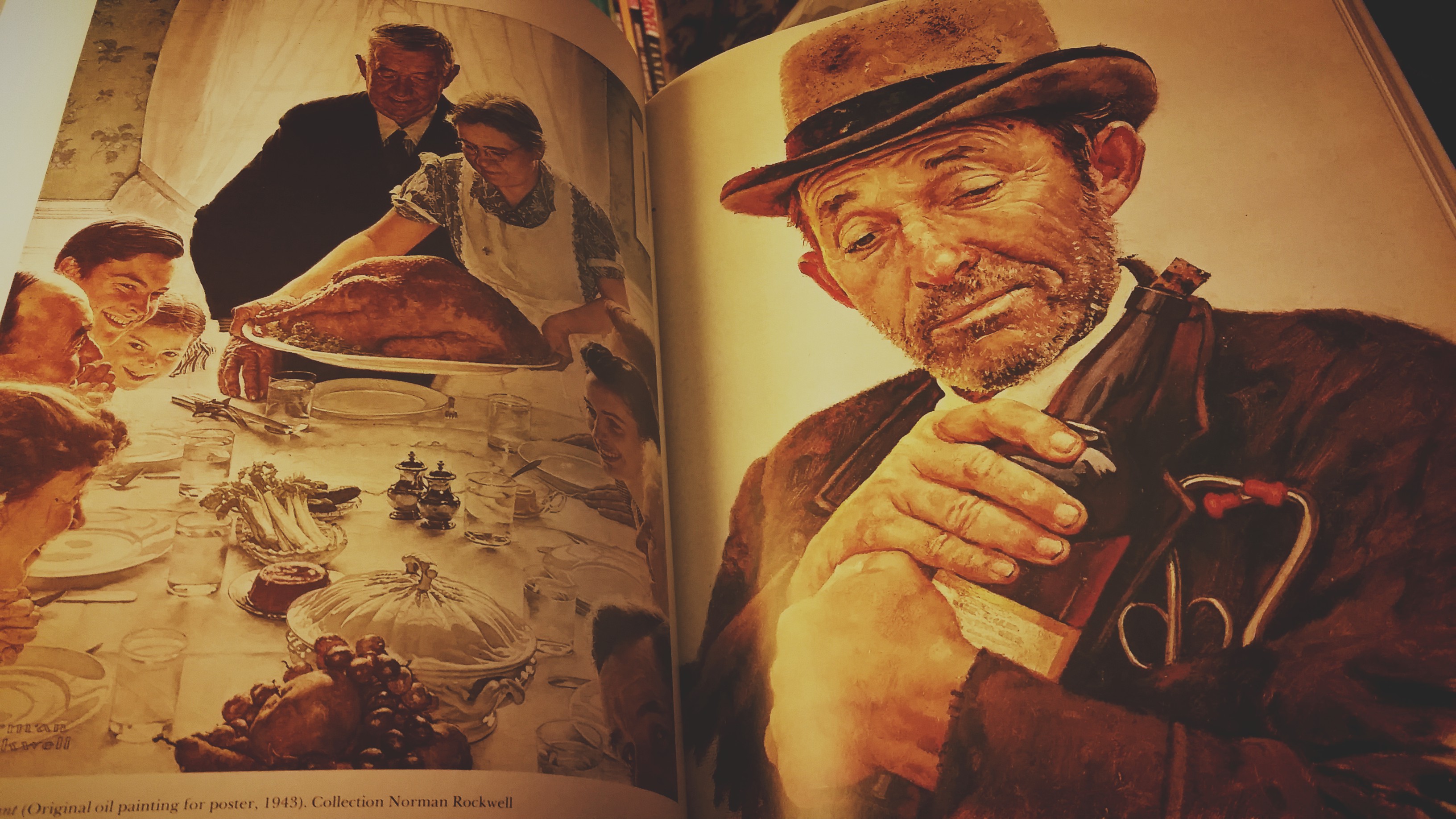
c360_2016-12-21-17-22-02-082

Also Rockwell

I have also written about Norman Rockwell before too.  I have half a dozen books that include his works.  My wife is from the Philippines and she knew about him before I ever said a word to her about him.
c360_2016-12-21-17-21-38-237

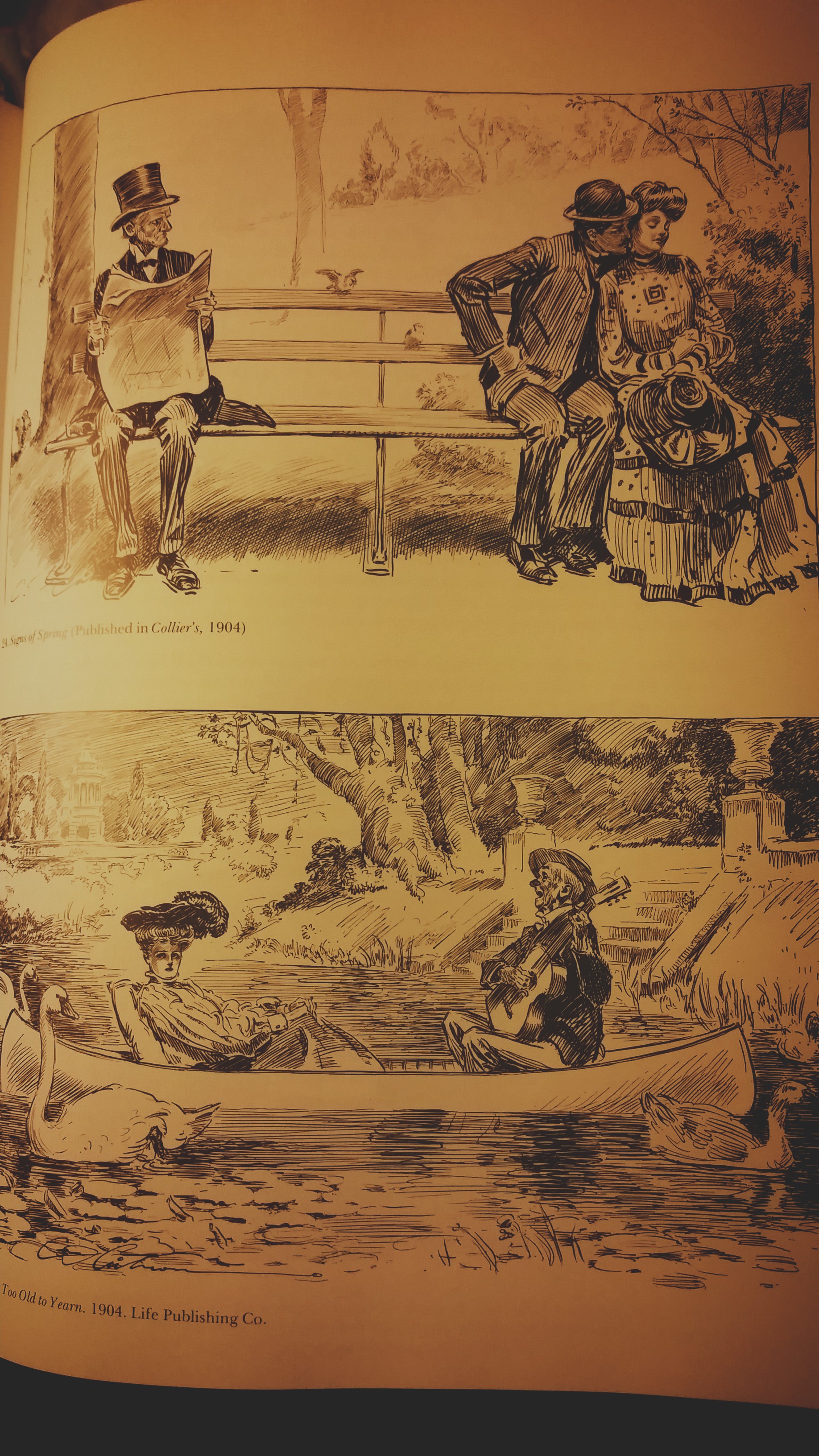
Charles Dana Gibson

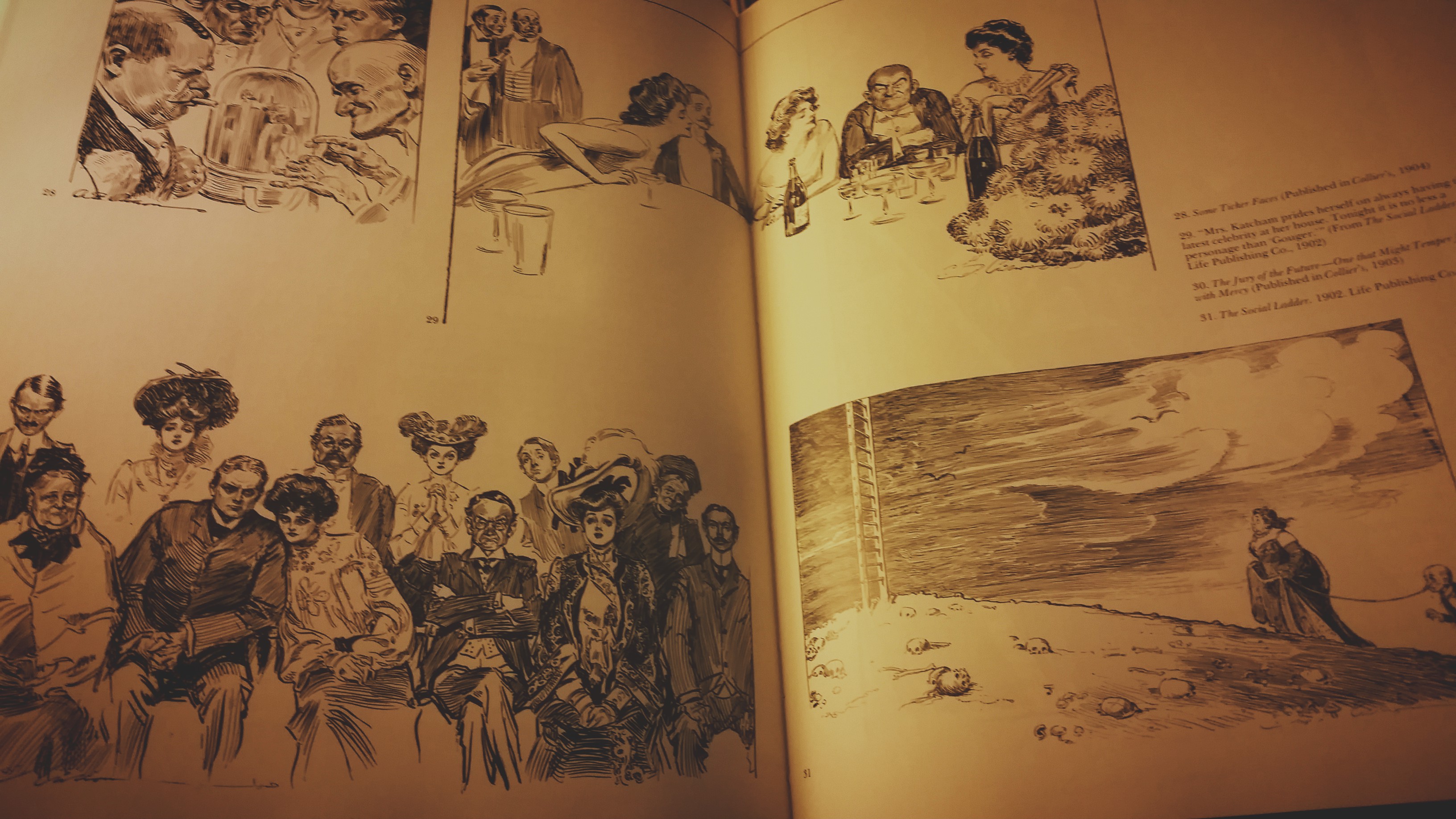
As you can plainly see, Gibson was a master of pen and ink.  His work for Collier’s and other magazines thrills in simple black and white.  More cartoonists than just little ol’ me obsess about how he did what he did.

c360_2016-12-21-17-21-14-634

Also Gibson


c360_2016-12-21-17-20-49-992

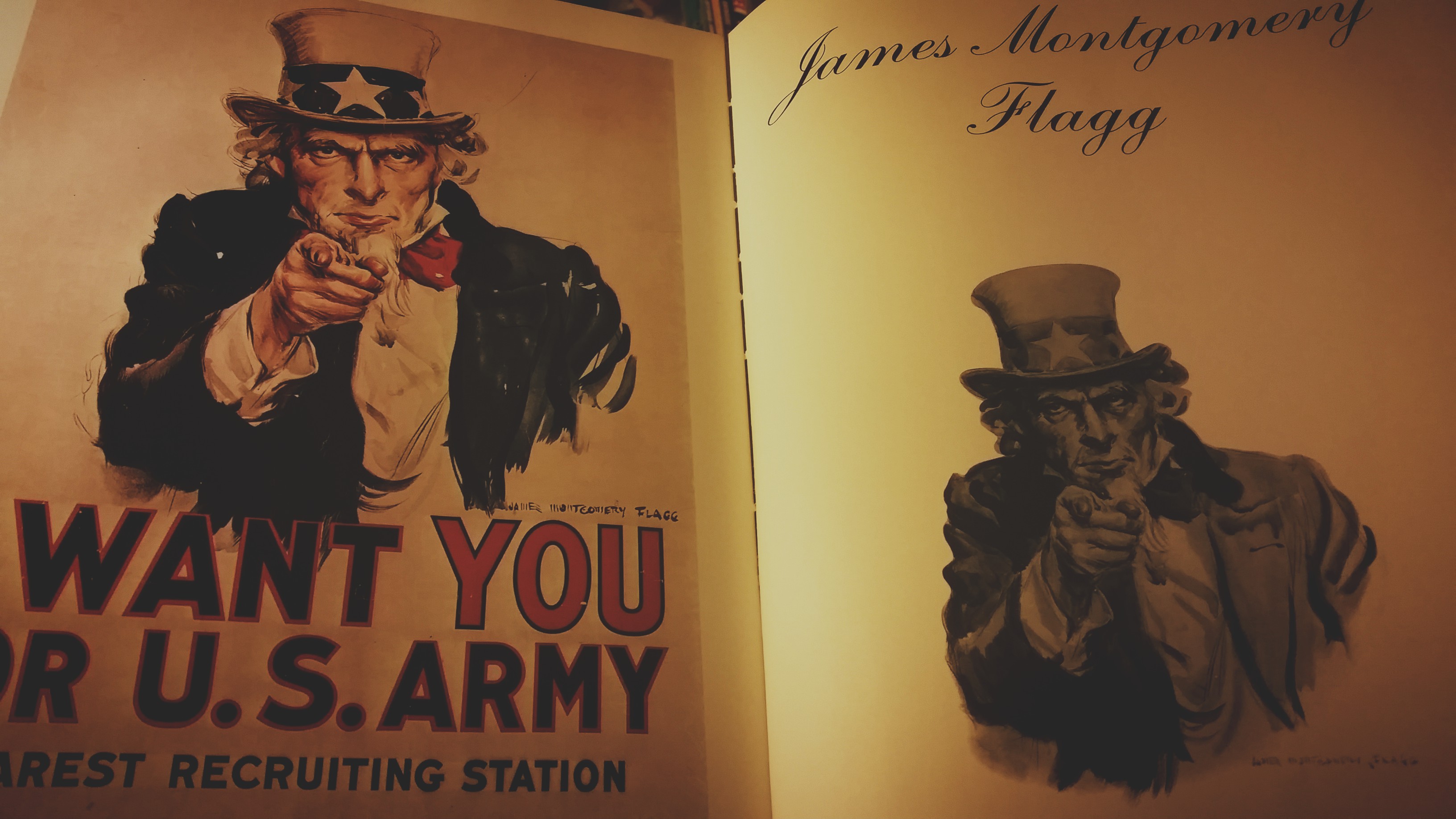
James Montgomery Flagg… with a name like that, who else could it be?


c360_2016-12-21-17-20-06-847

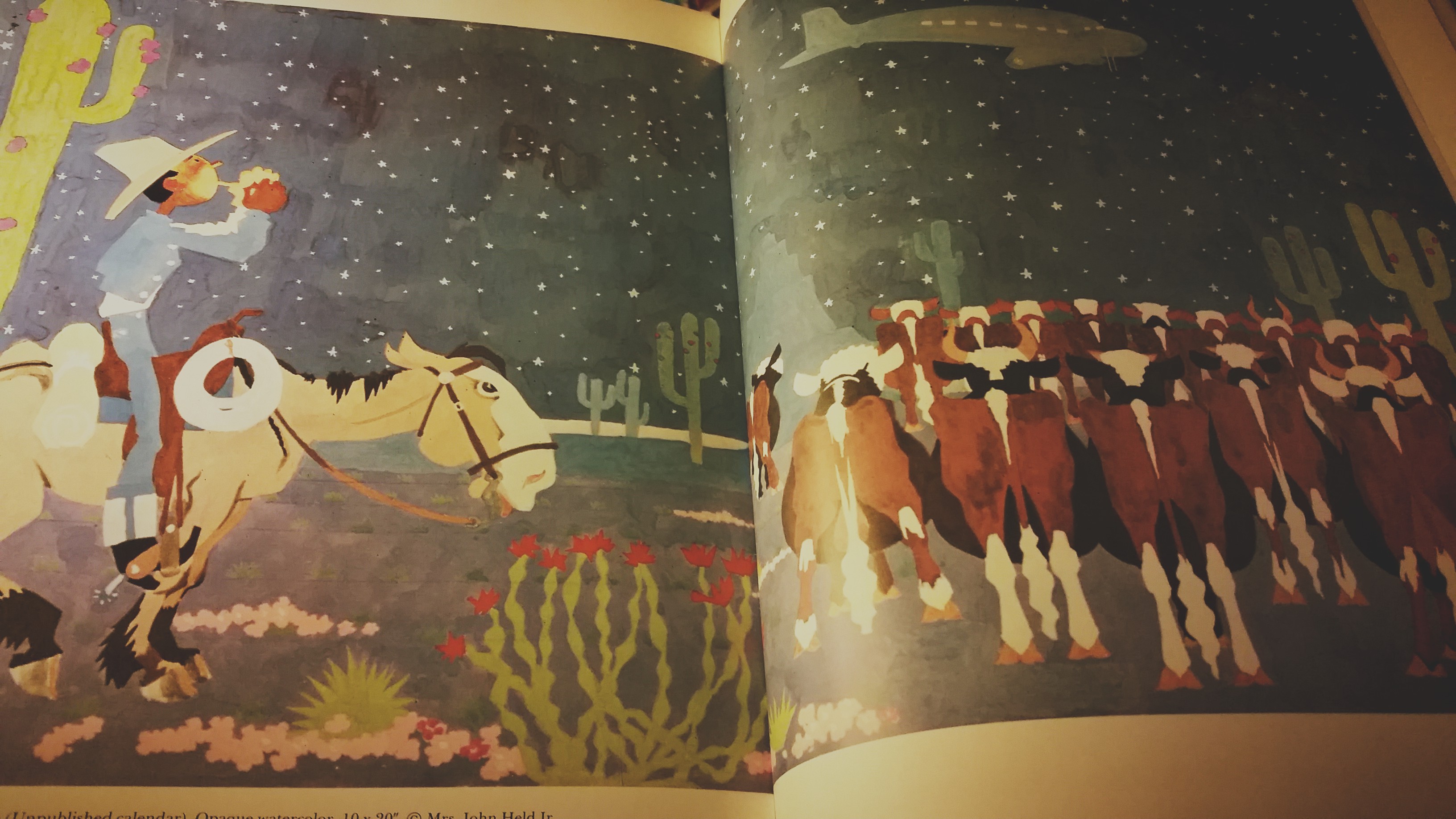
John Held Jr.

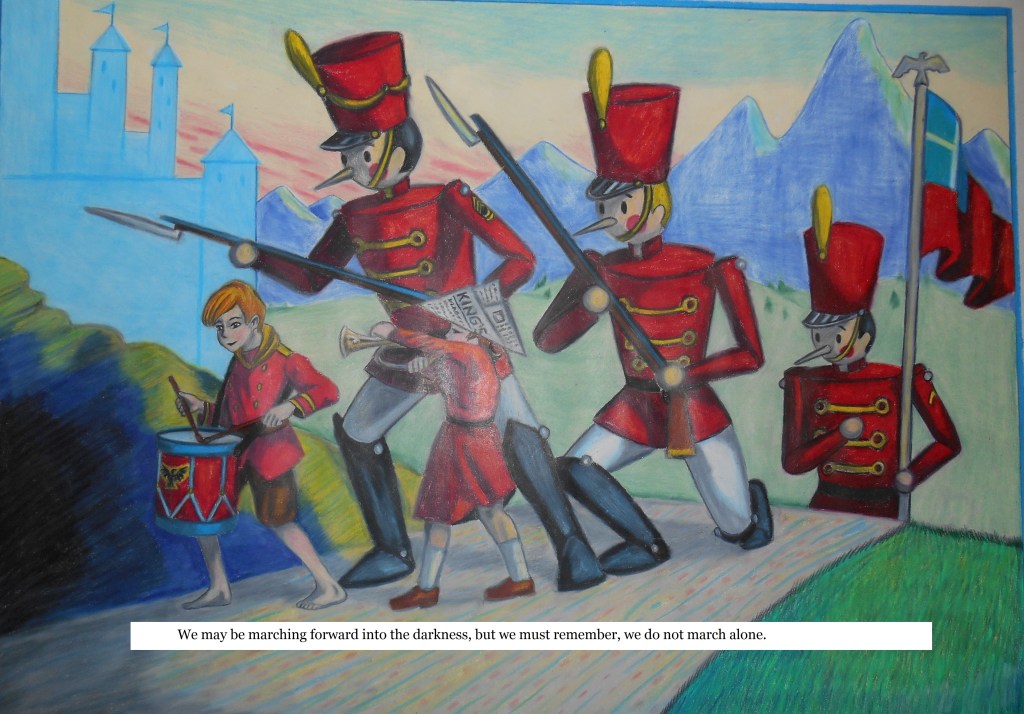
The work of Held is stylistically different than all the rest in easily noticeable ways.  He’s the guy that made all the big-headed Pinocchio-looking people in the 1920’s.  You may have seen his work before, though you probably never knew his name.

This bit of someone else’s treasure hoard will now become a part of my own dragon’s treasure, staying by my bedside for quite a while, while I continue to suck the marrow from each of its bones.  I love this book.  It is mine, and you can’t have it… unless you find your own copy in a used bookstore somewhere.

Leave a comment

Filed under art criticism, art my Grandpa loved, book reports, book review, humor, illustrations, imagination, oil painting, old art, old books, pen and ink, Uncategorized

What Are You Reading, Mickey?

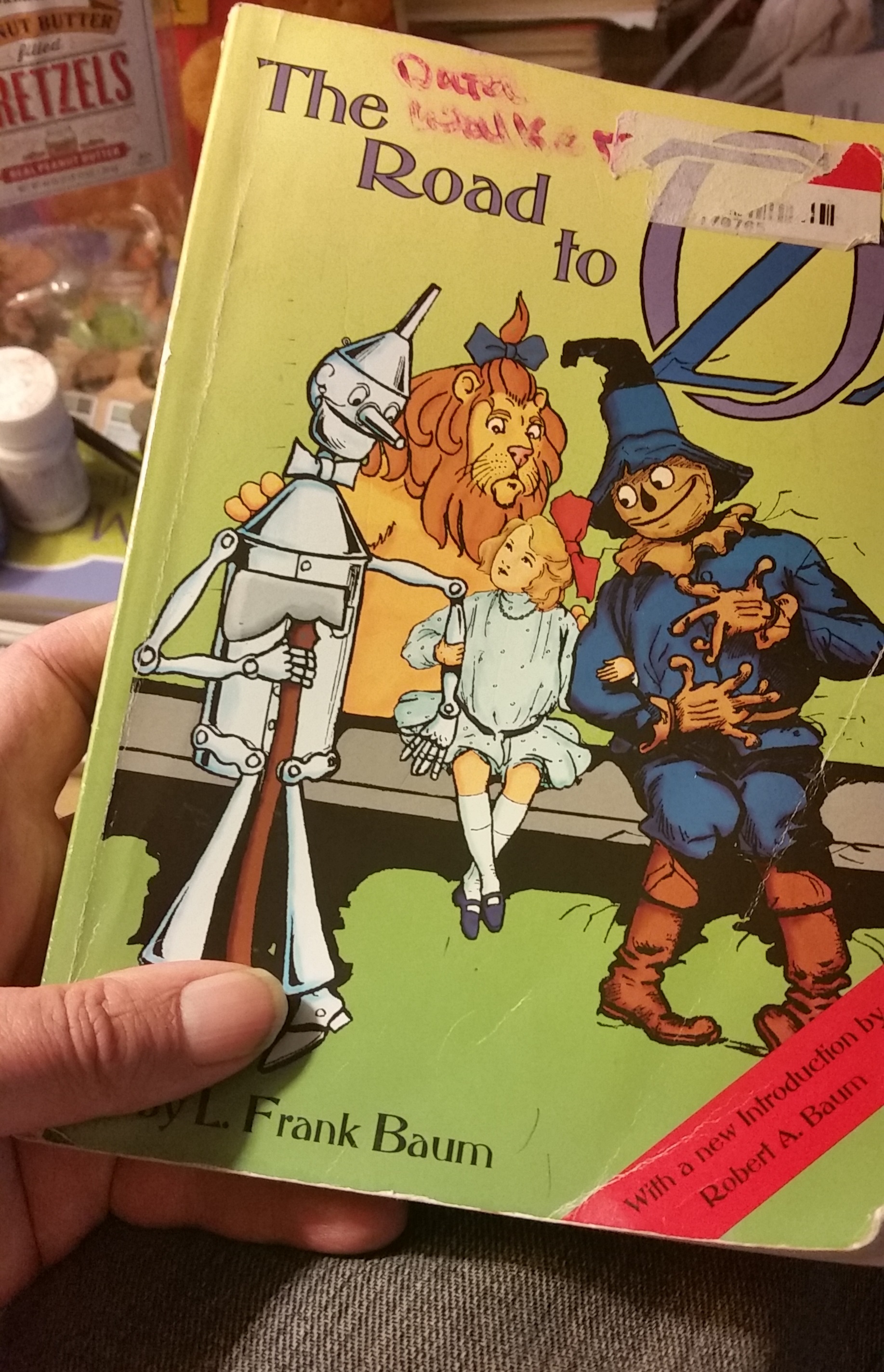
Well, I have a thing for collecting old books. This one is 100 years old. It is a modern edition, though, re-published in 2003.

Here’s my Goodreads review;

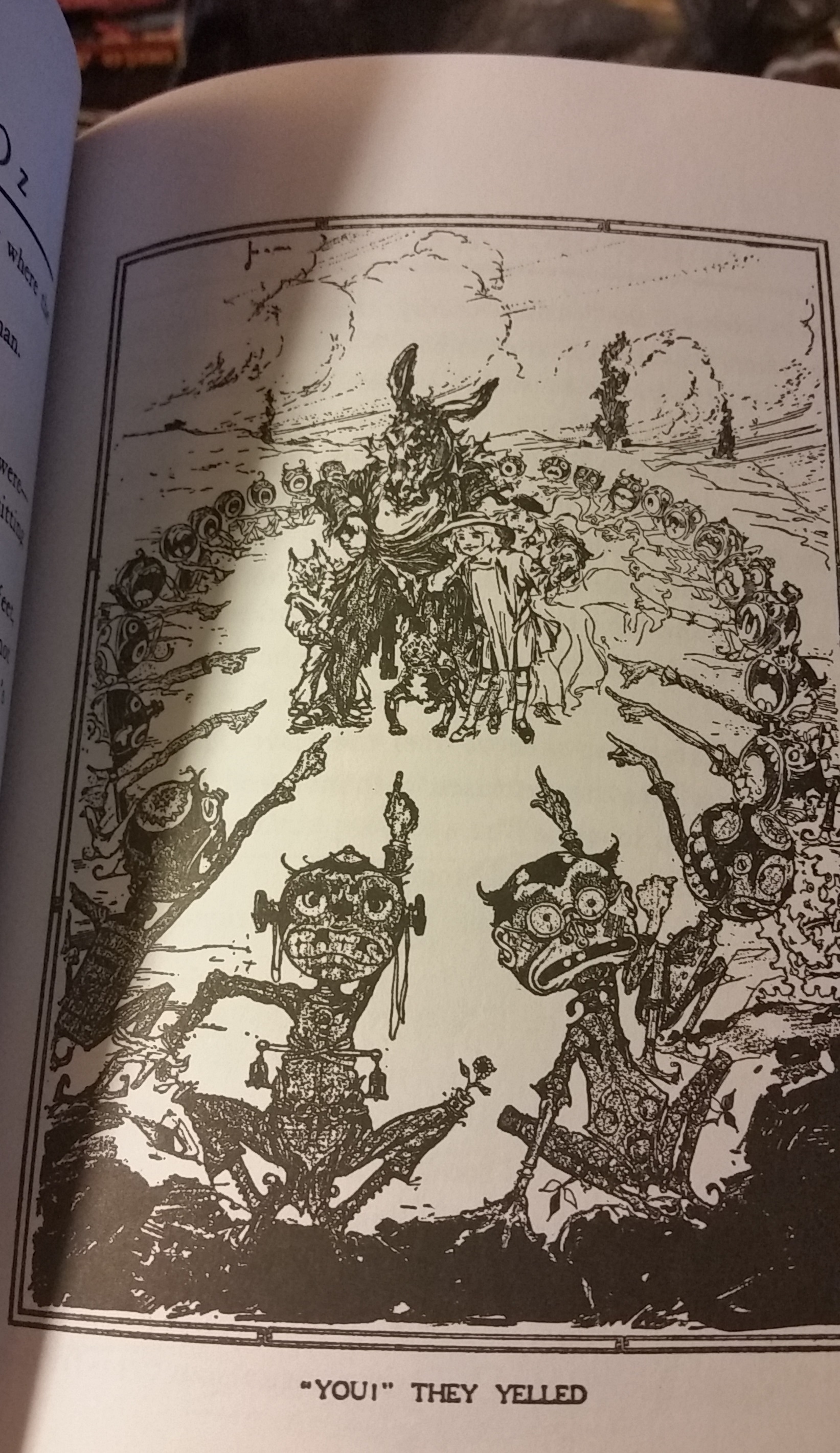
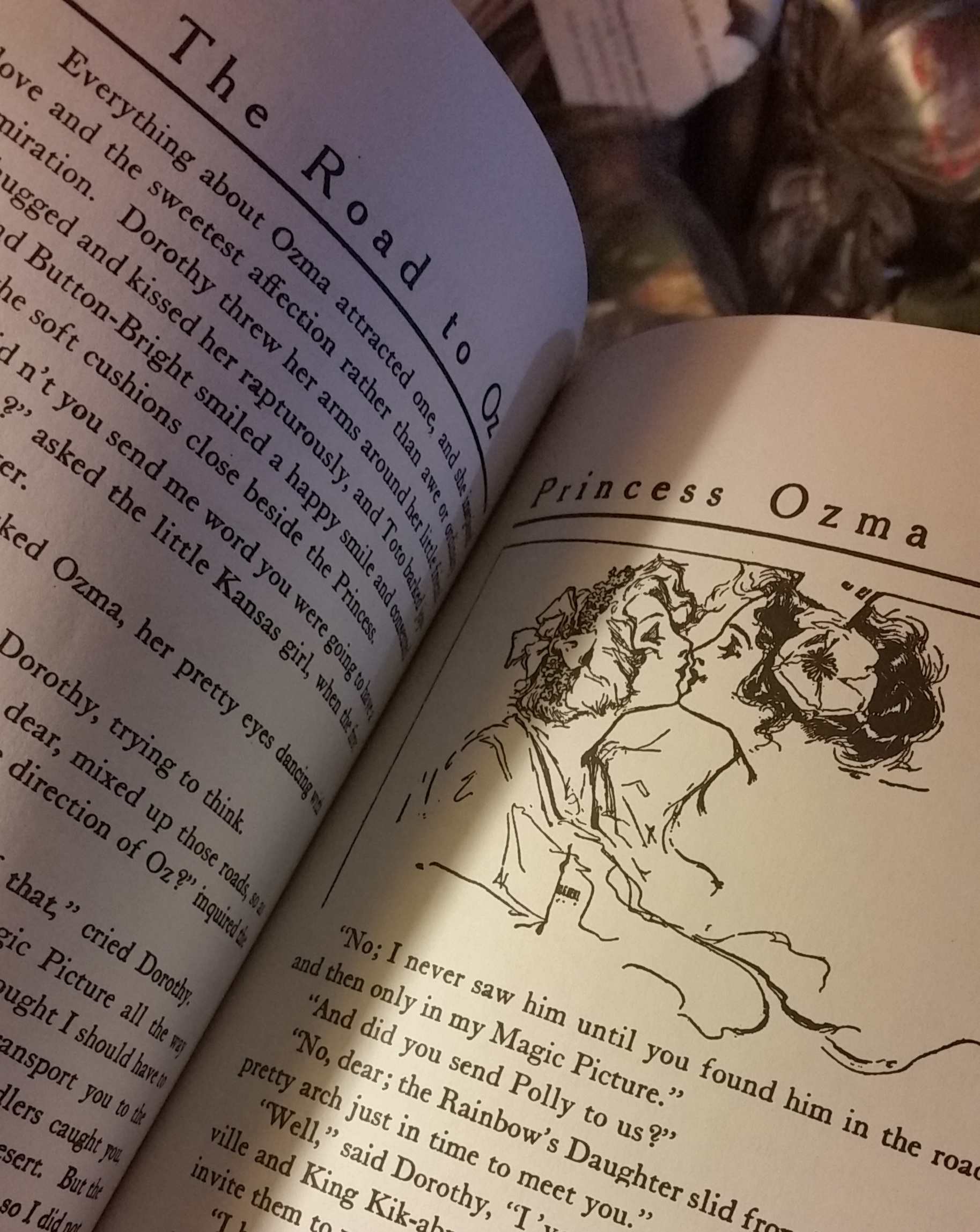
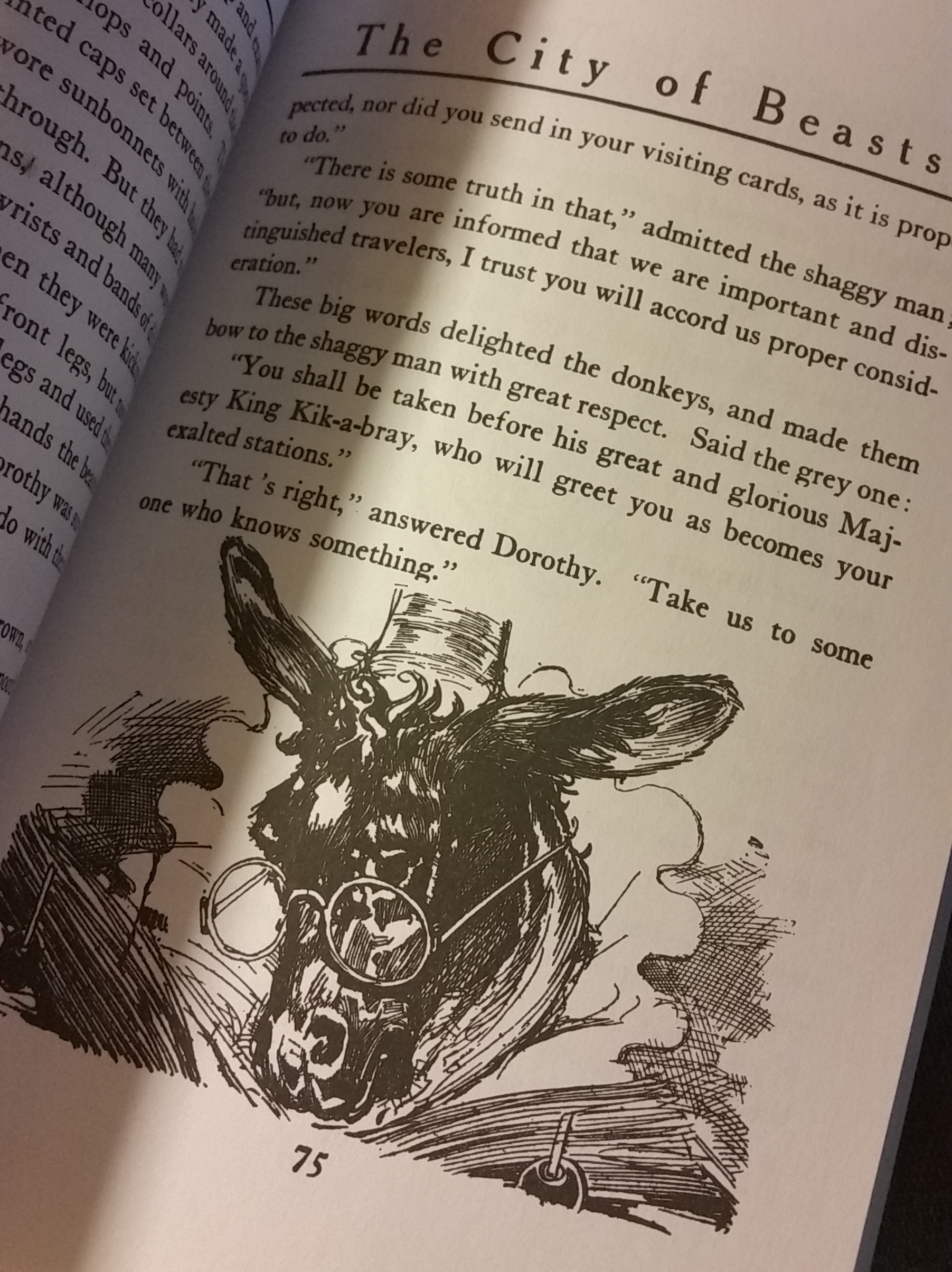
This book is an ancient treasure in many ways, being now more than 100 years old. The illustrations by John O’Neill, too, have a very antique charm. The book is a little short on plot. Dorothy wanders off from the Kansas farm, meets the hobo Shaggy Man, and Button Bright, one of the stupidest little boys in literature. They meet old friends along the way; Jack Pumpkinhead, H.M. Wogglebug T.E., the Tin Man, the Scarecrow, the Cowardly Lion, the Hungry Tiger, Tik Tok the mechanical man, Billina the Talking Yellow Chicken, and the living Sawhorse. And they all end the story at Princess Ozma”s birthday party where Santa Claus is the favorite guest. This is a potboiler novel for Baum, obviously written only because the readers all begged for it, and it has a lot in it to be enjoyed by true fans of Oz, but not much in the way of suspense or excitement. It can easily be summed up in the words of Button Bright, “I don’t know,” which he says in answer to every question.

I find the illustrations more compelling than the story itself, but I have to admit that the story itself is incredibly visual.

I love this book, even though I don’t respect it much as a storyteller myself. But it is the fourth Oz book I have read since childhood. And it isn’t because of the story. Frank L. Baum is a genius at creating loveable and memorable characters. And these illustrations are wonderful. The Shaggy Man with the head of a donkey? Absolutely fabulous! You can’t beat that. (Well, you can. But whether he’s a donkey or a man, it’s still a crime. )

Leave a comment

Filed under book reports, book review, humor, Uncategorized

Small Town Inspirations

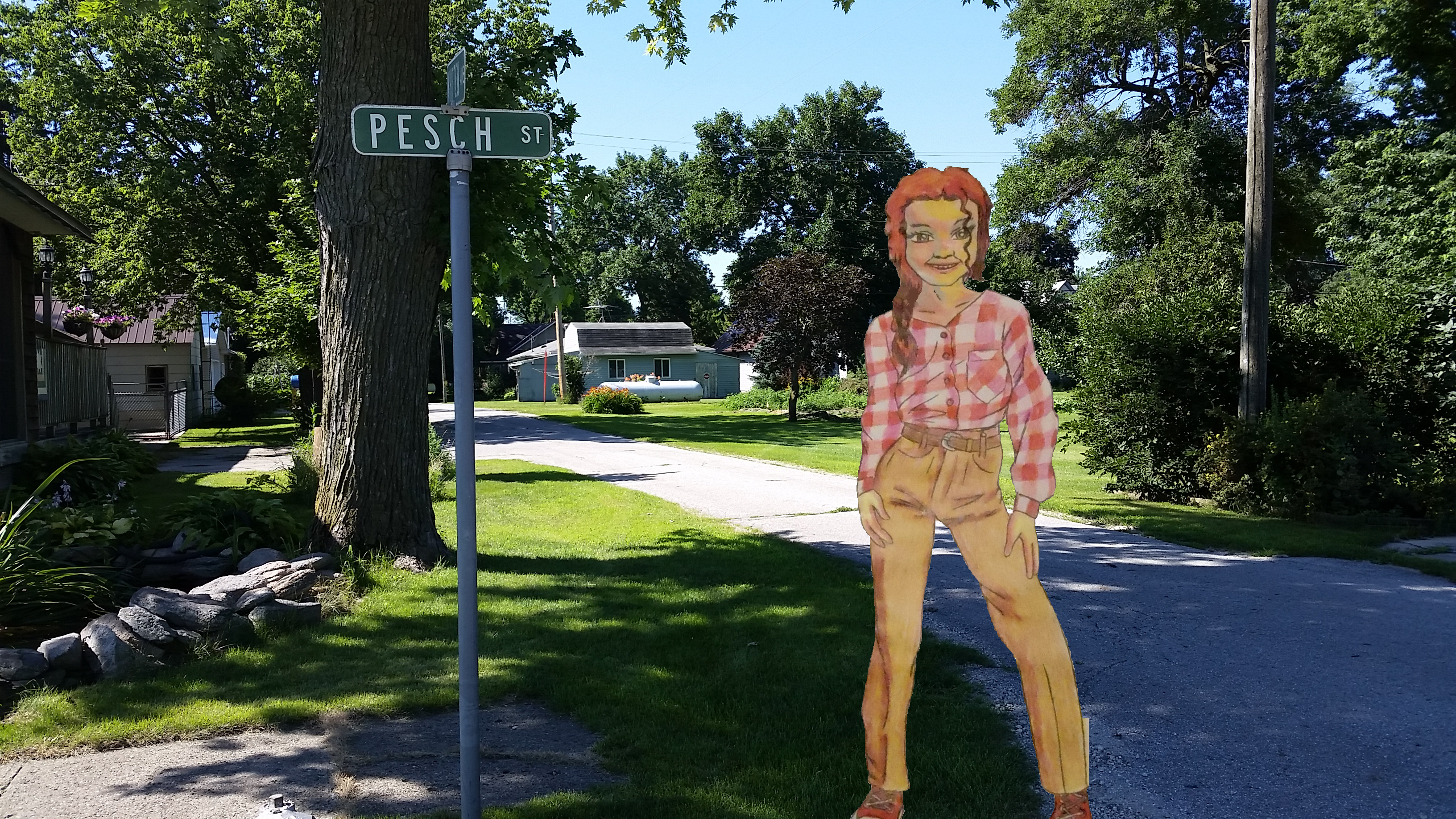
Pesch Street

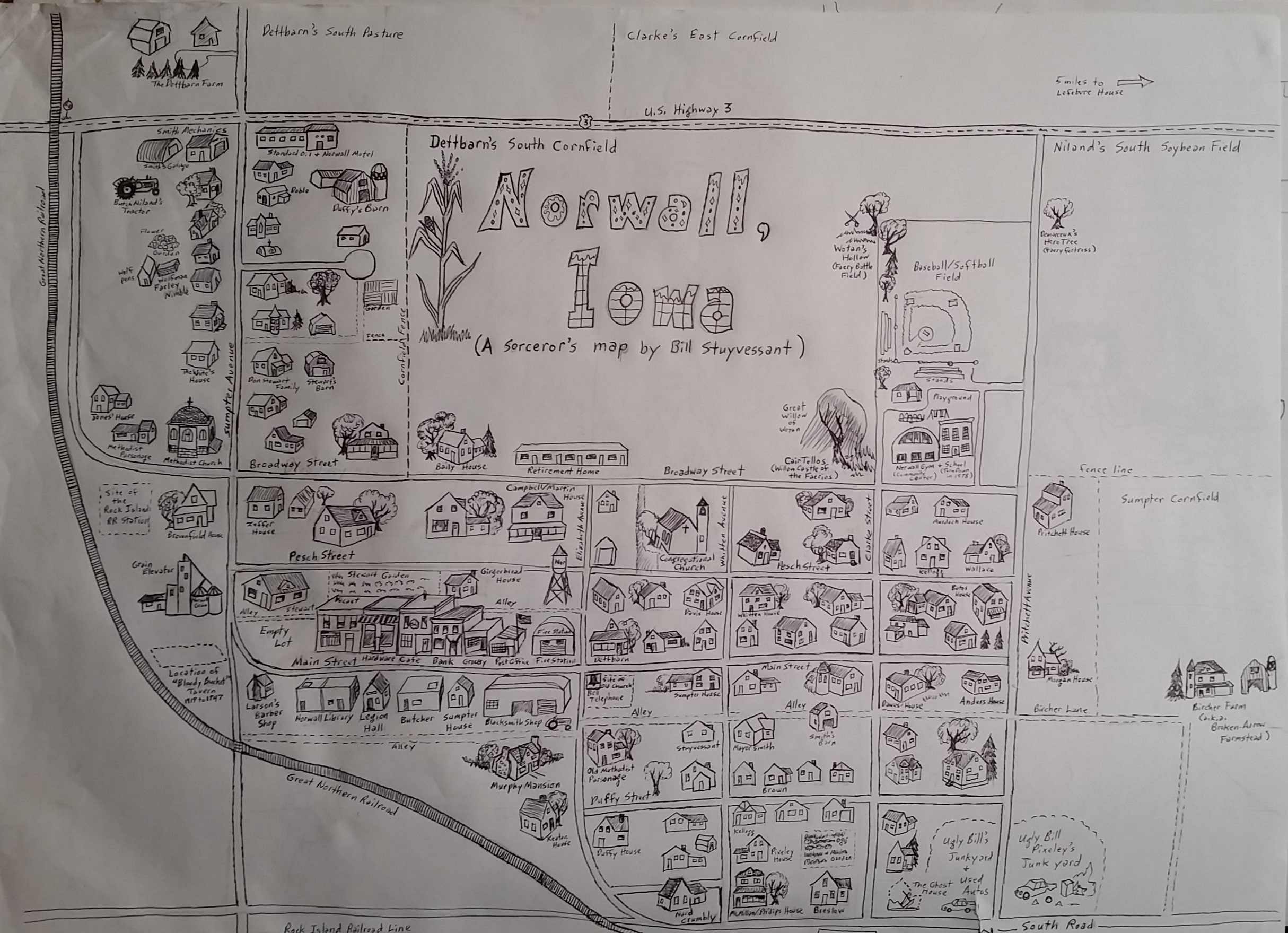
I grew up in a small rural town in North Central Iowa.  It was a place that was, according to census, home to 275 people.  That apparently counted the squirrels.  (And I should say, the squirrels were definitely squirrelly.  They not only ate nuts, they became a nut.)  It was a good place to grow up in the 60’s and 70’s.  But in many ways, it was a boring place.

20171023_085521

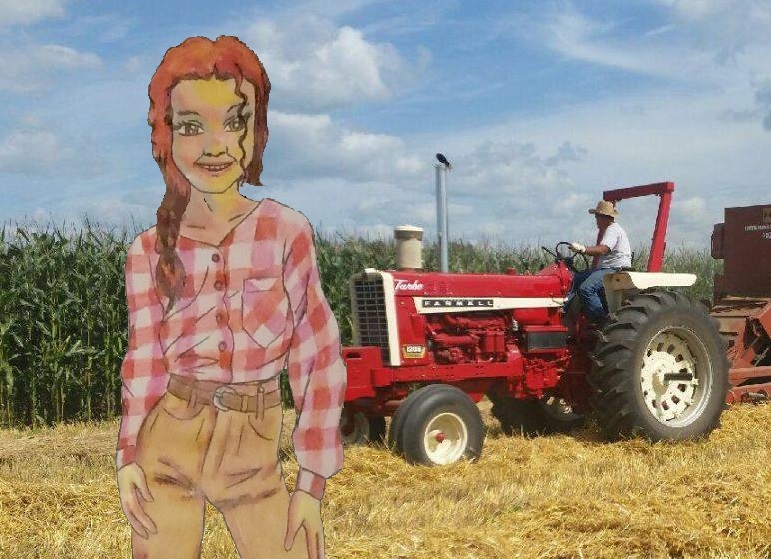
Yes, there were beautiful farmer’s daughters to lust after and pine for and be humiliated by.  There was a gentle, supportive country culture where Roy Rogers was a hero and some of the best music came on Saturdays on Hee Haw where there was a lot of pickin’ and grinnin’ going on.  There were high school football games on Friday nights, good movies at the movie theaters in Belmond and Clarion, and occasional hay rides for the 4-H Club and various school-related events like Homecoming.

20160726_100749

I lived in a world where I was related to half the people in the county, and I knew at least half of the other half.  People told stories about other people, some of them incredibly mean-spirited, some of them mildly mean, and some of them, though not many, that were actually good and actually true.  I learned about telling good stories from my Grandpa Aldrich who could tell a fascinating tale of Dolly who owned the part of town called locally “Dollyville” and included the run-down vacant structure the kids all called the Ghost House.   He also told about Dolly’s husband, Shorty the dwarf, who was such a mean drunk and went on epic temper tirades that often ended only when Dolly hospitalized him with a box on the ear.  (Rumor had it that there were bricks in the box.)

And I realized that through story-telling, the world became whatever you said that it was.   I could change the parts of life I didn’t love so much by lying… er, rather, by telling a good story about them.  And if people heard and liked the stories enough, they began to believe and see life more the way I saw it myself.  A good story could alter reality and make life better.  I used this power constantly as a child.

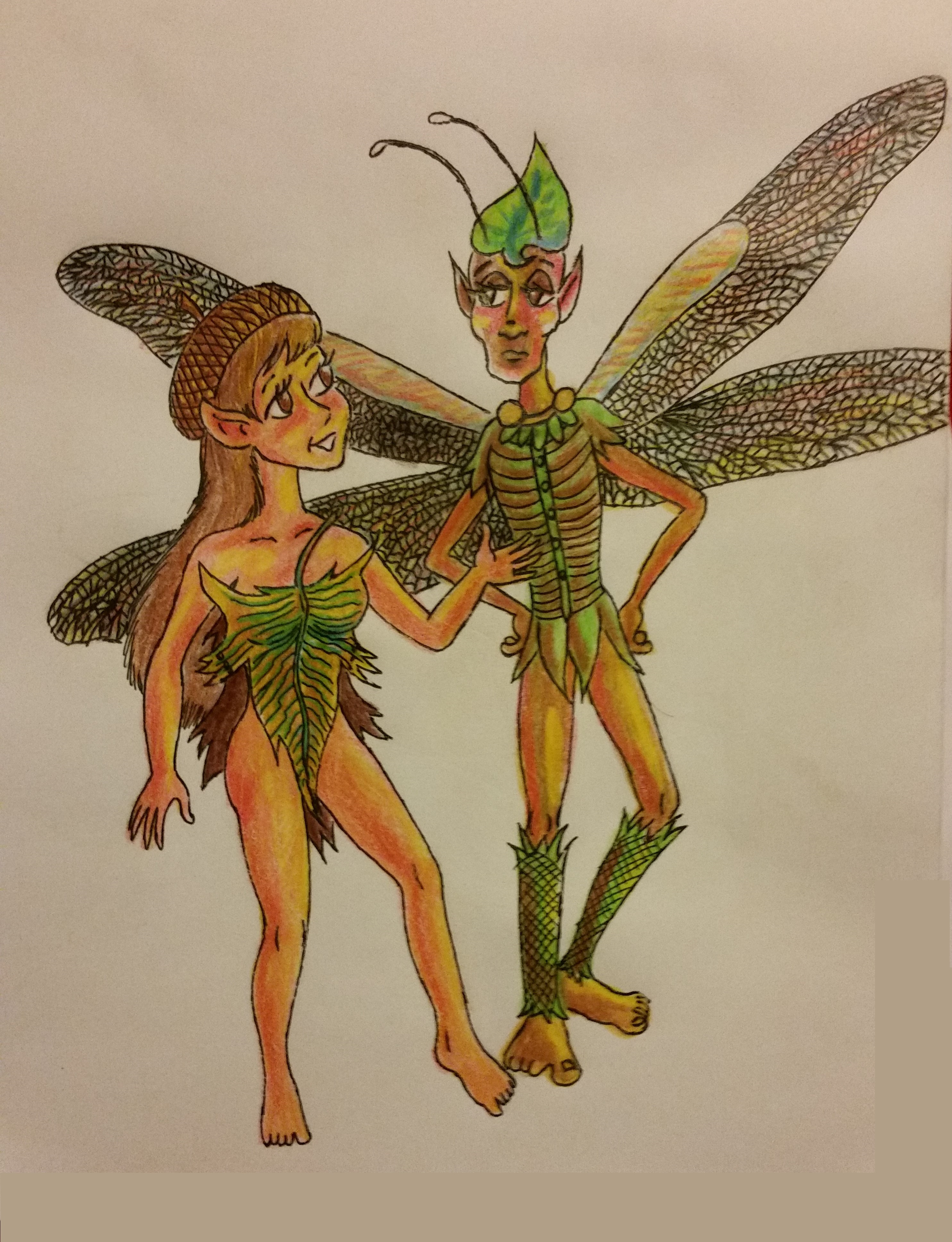
There were invisible aliens invading Iowa constantly when I was a boy.  Dragons lived in the woods at Bingham Park, and there were tiny little fairy people everywhere, in the back yard under the bushes, in the attic of the house, and building cities in the branches of neglected willow trees.

Donner n Silkie

I reached out to the world around me as an artist, a cartoonist, and a story-teller and plucked details and colors and wild imaginings like apples to bake the apple pie that would much later in my life feed the novels and colored-pencil pictures that would make up my inner life.  The novels I have written and the drawings I have made have all come from being a small town boy who dreamed big and lived more in stories than in the humdrum everyday world.

Leave a comment

Filed under artwork, autobiography, colored pencil, dreaming, fairies, farm boy, goofy thoughts, humor, NOVEL WRITING, Paffooney, strange and wonderful ideas about life

Tom Sawyer Abroad (Book Review)

20161017_162015

Yep, I read about being an “erronort” traveling in a balloon while sitting in a parking lot in my car.

Believe it or not, I read this entire 100+-year-old book in my car while waiting for my daughter and my son in school parking lots.  What a perfectly ironic way to read a soaring imaginary adventure written by Mark Twain, which has been mostly forgotten by the American reading public.

c360_2016-10-30-10-26-22-635

My copy of this old book is a 1965 edition published for school libraries of a book written in 1894.  It tells the story of how Tom and Huck and Jim steal a ride on a balloon at a town fair from a somewhat mentally unhinged professor of aeronautical science.  The balloon, which has space-age travel capabilities due to the professor’s insane genius, takes them on an accidental voyage to Africa.

Of course, the insane professor intends to kill them all, because that’s what insane geniuses do after they prove how genius-y they really are.  But as he tries to throw Tom into the Atlantic, he only manages to plunge himself through the sky and down to an unseen fate.  The result being a great adventure for the three friends in the sands of the Sahara.  They face man-eating lions, mummy-making sandstorms, and a chance to land on the head of the Sphinx.

The entire purpose of this book is to demonstrate Twain’s ability to be a satirical stretcher of the truth, telling jokes and lies through the unreliable narrator’s voice of Huck Finn.

Here is a quoted passage from the book to fill up this review with words and maybe explain just a bit what Twain is really doing with this book;

c360_2016-10-30-10-48-45-630

Notice how I doubled my word count there without typing any of the words myself?  Isn’t the modern age wonderful?

But there you have it.  This book is about escaping every-day newspaper worries.  In a time of Presidential Candidate Donald Trump, global warming, and renewed threats of thermonuclear boo-boos with Russia, this proved to be the perfect book to float away with on an imaginary balloon to Africa.  And the book ends in a flash when Aunt Polly back in Hannibal wants Tom back in time for breakfast.  I really needed to read this book when I picked it up to read it.

Leave a comment

Filed under book reports, book review, foolishness, good books, humor, imagination, Mark Twain, old books, strange and wonderful ideas about life

Slade House (a book by David Mitchell)

As a writer of novels, like all passable to good writers of novels, I read novels. Not just any novels. Novels that are the kind of novels I aspire to write myself.

David Mitchell is one of those novelists who can write the way I want to write. His stories are detailed and yet, compelling enough to follow wherever the story leads you. Characters are vivid and seem to have an actual life beyond the pages of the novel. And there is a chance that you will meet them again in another David Mitchell novel, even if they died in the previous David Mitchell novel you read. He writes across swaths of time and gives the story a sense of history.

Slade House is basically a haunted house story, a horror story about a house that is itself a sort of ghost. It can only be entered by a single small iron door that only appears in an alleyway every nine years. And every time it does appear, in October of 1979, 1988, 1997, 2006… , at least one somebody will go in and never come out again.

The story is side-linked to the masterpiece Mitchell novel, The Bone Clocks. It is also a plot less convoluted and multifaceted than Bone Clocks and Cloud Atlas, so much easier to follow

David Mitchell is an author I study to learn about writing and storytelling. I don’t copy him. I do take note of his bag of tricks, his writer’s toolbox, so to speak, and I pick up and play with those same tools and magician’s secrets. I would like to suggest that if you truly wish to be a writer of fiction, you must put David Mitchell’s books on your must-read-before-I-die list. If you can’t put Mitchell on that list, then here are a few others on my list; Michael Crichton, Terry Pratchett, Neil Gaiman, Louis L’Amour, Charles Dickens, Thomas Hardy, H.P. Lovecraft, Steven King, Mark Twain, and J. K. Rowling. It should be obvious that these names are all on my list for different reasons. And if you don’t read David Mitchell, there are artisan’s techniques there you can get nowhere else. But you are the reader. And if you have chosen to read this far through this essay, then you are at least fool enough to want to know the things I am telling you in this book review.

As a storyteller, David Mitchell is Rumpelstiltskin. He weaves straw into gold. And if you are canny and careful enough of a reader, you can gain some of that value from his work without giving up your firstborn.

Leave a comment

Filed under book review, ghost stories, horror writing, writing teacher

David Mitchell is Genius!

Yes, David Mitchell is a very smart man… a very smart English man.  (That isn’t to say that his genius is any less genius than an American Genius.  Just that he is a genius who also happens to be English)

51zTXrZVMqL._SX350_BO1,204,203,200_

And I, of course, don’t mean this David Mitchell either, though this David Mitchell is also a genius and also from England.  I have to tell you, though I have always loved British humor, this particular tongue of silver fascinates me enough to make me binge on hoards of old episodes of “Would I Lie to You?” from the BBC on YouTube.  He’s a quick-wit, Brit-wit, smooth-talking  bit-wit who can make you laugh even when he’s playing a thick-wit… which he is certainly not. Continue reading

Leave a comment

Filed under artists I admire, book reports, book review, comedians, humor

Books That Make You Hurt

242757

Yes, I read this book.  Yes, it scared the poop out of me.  Yes, it made me cry.  This is a uniquely horrific horror story that is so realistic that you know that it has actually happened in real life somewhere, sometime.  Only the names of the characters would be different.

I have a deep abiding respect for Richard Peck as a writer.  He earned that with his books A Year Down Yonder and A Long Way from Chicago.  Those books made me laugh so hard it blew chocolate milk out of my nose.  And, yes, I was drinking chocolate milk at the time.  They are so realistic because the people in those stories are real people.  I know those people personally.  Of course, they have different names in real life.

But Are You In the House Alone? is a very different book from those other two masterpieces.  It tears your heart out and eats your liver because it is a first person narrative in the voice of a high school girl being stalked by a sexual predator.  Everything that happens to Gail in the high school, at home, and at the house where she babysits is hyper-real with horror movie levels of attention to detail.  I don’t wish to be a spoiler for this well-written book, but the narrator does not die in the book and it definitely does not have a happy ending.  For anyone who has the amount of empathy I do, and in many ways becomes the narrator-character by reading, reading a book like this can physically hurt.  A teacher like me has lived through horrible things like this happening to students before, it even happened to me as a boy, and it adds the slings and arrows of those things being re-lived as you read.

This is not the only book that has ever done this sort of damage to my heart strings.  I remember the pain from the conclusion of Dickens’ The Old Curiosity Shop.  You root for Little Nell and boo Daniel Quilp.  But the bad guy wins.  No happy ending can linger in the harp-strings of your memory-feeling song as long as a tragic outcome does.  I was there with Scout in that ridiculous costume in the dark when Bob Ewell was attacking her brother Jem in Harper Lee’s To Kill a Mockingbird.  That story was filled with wise and laughable things, but the stark horror of that climactic moment nearly wiped all the good feelings away, if not for the heroics of ghostly Boo Radley whose timely intervention brings it all back before the novel ends.  It horrifies me to admit it, but I was there, too, in the moment when the boys all turn on Simon on the beach with their sharpened sticks in William Golding’s Lord of the Flies.  They mistook him for the monster.  I still haven’t fully recovered from that reading trauma.

The thing about books that hurt to read which makes it essential that I never try to avoid them, is that they can add more depth and resonance to your soul than any light and fluffy piece ever could.  Life is much more like Lord of the Flies than it is Chitty Chitty Bang Bang.  I am sadder but wiser for having read Are You In the House Alone?  I am recommending it to other readers like me who don’t so much live to read as they read in order to live.  Not because it is easy and good to read, but because it is hard and essential to read.  It will hurt you.  But it will leave you like it leaves its narrator, damaged, but both alive and purely resolved to carry on.

I have written one too.

Leave a comment

Filed under book reports, book review, horror writing, insight, inspiration, irony, old books, reading

Being Ignored

I have never been an attention-seeker. In the Elysian Fields of modern society, I have never really been the honeybee. I have always been the flower. I had a reputation in high school for being the quiet nerd who ends up surprising you immensely in speech class, at the science fair, or at the art show. I was the one they all turned to when everybody in the conversation had already had their chance to strut and pontificate and say dumb things, and they were finally ready to get the solution to the problem being discussed, or the best suggestion on where to begin to find it.

When I became the teacher of the class instead of the student, I had to make major changes. I had to go from being patient, quiet, and shy to being the fearless presenter, forceful, sharp as an imparter of knowledge, and able to be easily understood, even by the kids whom you couldn’t legally call stupid, but were less than smart, and not in a pleasant Forrest Gump sort of way.

Shyness is only ever overcome by determination and practice. The standard advice given is to picture your audience naked so that you are not intimidated by them. But if your audience is seventh graders, you have to be extra careful about that. They are metaphorically naked all the time, ready at a moment’s notice to explode out of any metaphorical clothing they have learned to wear to cover the things that they wish to keep to themselves about themselves. And while you want them to open up and talk to you, you don’t want the emotional nakedness of having them sobbing in front of the entire class, or throwing things at you in the throes of a mega-tantrum over their love-life and the resulting soap operas of betrayal and revenge. And you definitely don’t want any literal nakedness in your classroom. (Please put your sweat pants back on, Keesha. Those shorts are not within the limits of the dress code.) Calling attention to yourself and what you have to say, because you are being paid to do so, is a critical, yet tricky thing to do. You want them looking at you, and actually thinking about what you are saying (preferably without imagining you naked, which they will do at any sort of unintentional slip or accidental prompting.) The ones who ignore you are a problem that has to be remedied individually and can eat up the majority of your teaching time.

I trained myself to be fairly good at commanding the attention of the room.

But now that I am retired, things have changed. I can still command attention in the room, which I proved to myself by being a successful substitute teacher last year. But I no longer have a captive audience that I can speak to five days a week in a classroom. Now my audience is whoever happens to see this blog and is intrigued enough by the title and pictures to read my words.

Now that I am retired and only speaking to the world at large through writing, I am ignored more than ever before. Being ignored is, perhaps, the only thing I do anymore. It is the new definition of Mickey. Mickey means, “He who must be ignored. Not partially, but wholly… and with malice.”

I put my blog posts on Facebook and Twitter where I know for a fact that there are people who know me and would read them and like them if they knew that they were there. But the malevolent algorithms on those social media sites guarantee that none of my dozens of cousins, old school friends, and former students will see them. Only the single ladies from Kazakhstan and members of the Butchers Union of Cleveland see my posts. Why is this? I do not know. Facebook and Twitter ignore me when I ask.

My books, though liked by everybody who has actually read and responded to them, are lost in a vast ocean of self-published books, most of which are not very good and give a black eye to self-published authors in general. I recently got another call from I-Universe/Penguin Books publishers about Catch a Falling Star, the one book I still have with them. They are concerned that my book, which is on their Editor’s Choice list, is not performing as well as their marketing people think it should. But to promote it, I would have to pay four hundred dollars towards the marketing campaign, even though they are already subsidizing it by fifty percent. They tell me they believe in my book. But apparently not enough to pay for 100% of the promotion.

I have decided to invest in a review service that will cost me about twenty dollars a month. But my confidence is not high. The last time I paid somebody to review a book, they reviewed a book with the same title as mine from a different author. That service still owes me money.

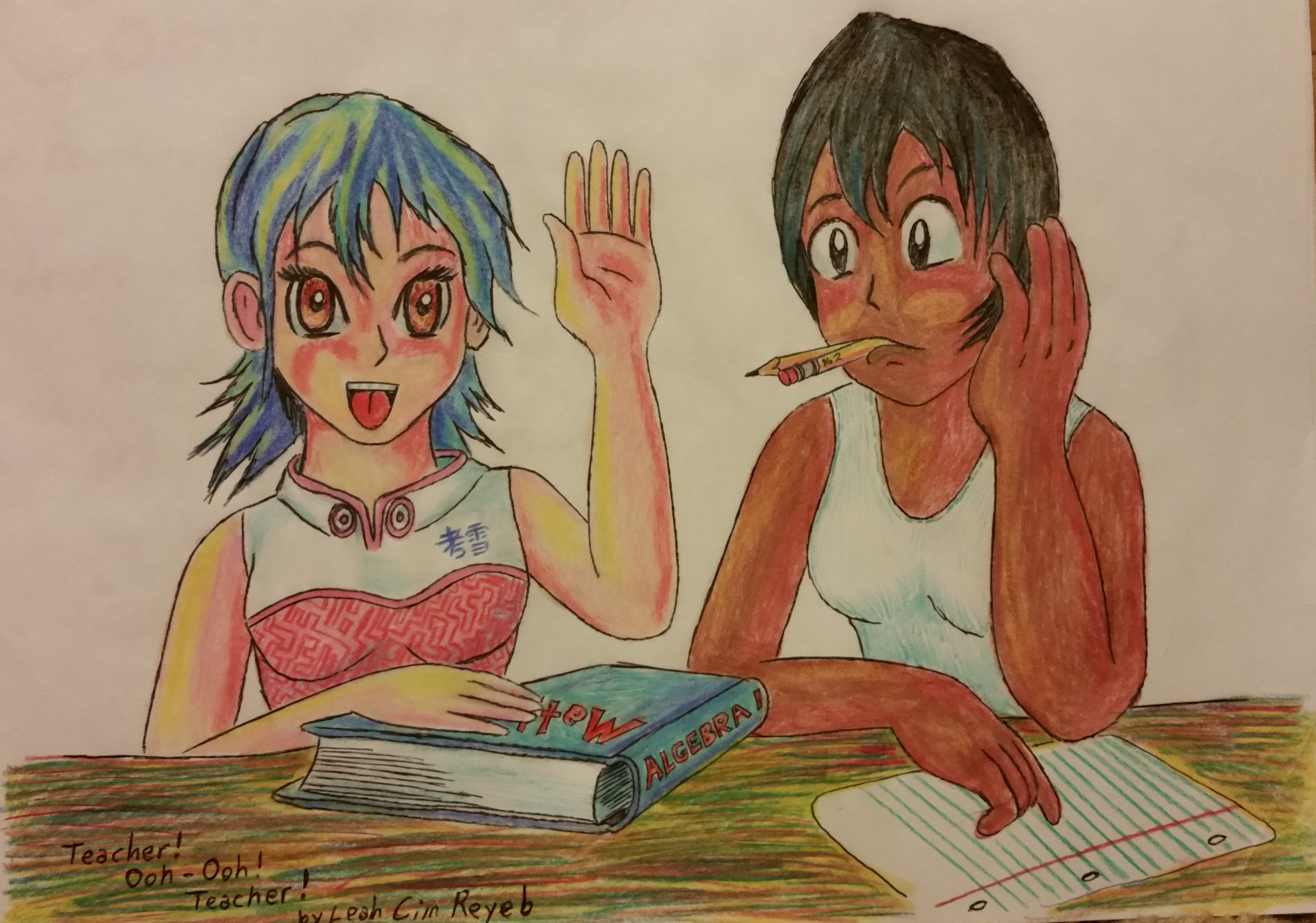
But the only reason it is a problem that I am being thoroughly ignored these days is that an author needs to be read to fulfill his purpose in life. Maybe pictures of pretty girls in this post will help. But, even if they don’t, well, I had their attention once upon a time. And since my purpose as a teacher is already fulfilled, perhaps that will be enough for one lifetime.

Leave a comment

Filed under artwork, autobiography, education, humor, Paffooney, publishing, teaching

Imaginary Friends

Toccata and Fugue

When you know someone has an imaginary friend, something like Elwood’s six-foot invisible rabbit called Harvey, don’t you immediately think that person is crazy?  I do.  But I have imaginary people as friends. I think most writers do.  So am I crazy?  Probably. But hopefully it is a good kind of crazy.

It began with imaginary friends from books.  The Cat in the Hat was my friend.  Jim Hawkins was my friend, as was Mowgli and all the members of the Swiss Family Robinson.  They entered my dreams and my daydreams.  I told them my troubles the same way I listened to theirs through their stories.

I began to have imaginary friends that came from my own imagination too.

galtorr-primexvx

I used to tell my mere human friends about my friend Davalon from outer space.  I told them that he was real and secretly visited me at night to talk about being able to learn about humans on earth by walking around invisibly and watching them.  I got so involved with these stories that my sixth grade class began saying, “Michael is from Mars.”

Island Girl2z

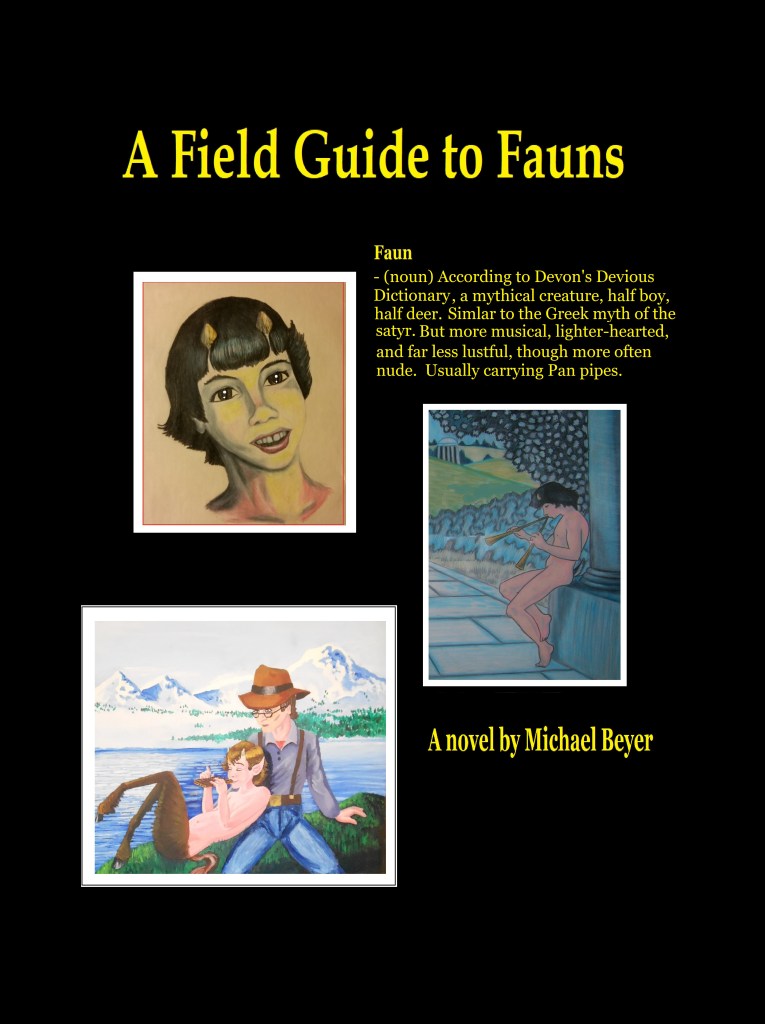
When I was a teenager, I began having conversations with a faun.  His name was Radasha.  He was a creature from Greek Myth, a sensual Dionysian creature who, in his child body, was both younger than me and way older than me.  I didn’t realize until much later in life that he was the result of my repressed memories of a childhood sexual assault that I was the victim of.  I could talk to him about my fear of nakedness.  I could tell him about my blossoming interests in naked girls and their bodies.  I could talk to him about all the things I was somehow too terrified to talk to my male friends about, even though none of them had the same reluctance to discuss sex.  Ra was imaginary.  But he helped me heal.

Then the story-telling seriously began.  I used Davalon as one of the main characters in my novel Catch a Falling Star.  I created Torrie Brownfield, the baby werewolf to express the feelings I had as a boy about being a monster and secretly terrible and deformed.  Torrie is a normal boy with a condition called hypertrichosis.  I am working on The Baby Werewolf now.  And then there’s lovely Valerie Clarke.  She is the main character of Snow Babies which is a finished novel, edited and proofread and ready to publish.  It is I book I will have to find another way to publish since the recent death of PDMI Publishing.  She is not a me-character, based on my own thoughts and feelings.  She is based on former classmates and students who told me things that express the sadness and isolation of growing up female.  So she is even more imaginary than my other characters.

They become real people to me.  They have their own point of view. They talk to me and I learn things from them.  But they are imaginary.  So am I crazy?   Yes… as a loon.  And happy as Elwood P. Dowd to be that way.

Leave a comment

Filed under artwork, autobiography, being alone, characters, commentary, humor, imagination, insight, Paffooney, strange and wonderful ideas about life

Mickey’s Commencement Speech

Before you go into panic mode, let me clearly state: No college or high school was actually foolish enough to invite Mickey to give the commencement address to its graduates. So, don’t worry about a generation of our youth actually taking to heart the advice Mickey is about to give and ruining our world for the next twenty years. This is just the insane drivel that Mickey would say if some superintendent, principal, or college dean were actually stupid enough to ask.

This is not Mickey. It is either George Applebee, or it is Red Skelton pretending to be George, depending on how literal or gullible your brain is.

The most impressive commencement speech I remember from my life in education was given in 1974 by my favorite high school English teacher, Mr. Sorum. He was a gifted speaker and told a mean joke whenever a joke was needed to make the point.

He talked for forty-five minutes about “Taking the next bite of the hot dog.”

Of course, he was talking about a metaphor where the hot dog was a life of being a good citizen and living in service to the greater good. High school graduation, in this speech, was the first bite of the hot dog. Some of us were listening to what Mr. Sorum was actually saying. My second bite of the hot dog was to get an English degree from Iowa State University. My third bite was a teaching degree from the University of Iowa. The fourth was choosing a life of service by being a public school English teacher. So, I followed his advice.

Most of my class, though, took that speech to mean life was all about eating hot dogs. Was I wrong? Do I need to rethink my life?

This is not Mickey either. This is Boris Karloff in makeup having a cigarette, or possibly being Frankenstein’s monster.

If I am going to give advice to today’s graduates, the advice I would have to give is, “For God’s sakes, don’t choose to be a public school teacher! Do you have any idea how hard that job is for how little reward (practically none of it in money?)”

So, what advice do I have for actually doing something with your life that helps with the common good?

The most important one; “After you go to the bathroom, flush! Gol dangit! And afterwards, wash your danged hands!

You wouldn’t believe what kind of bacteriological nightmares are being placed in your hand daily if you have a job where you are supposed to regularly shake hands.

This is Mickey. Or possibly a two-eyed cyclops giving the world the ultimate stink-eye.

Another key recommendation;; “Stop being so gosh-darned ugly!”

Of course, you know that this is not a matter of whether you have a pretty face or you scare rats in dark rooms. This is a matter of behavior. A matter of how many people you hate and treat with scorn and injustice, as well as who you routinely hate, and why you hate them. Hating anyone for any reason is not good for their health and is even worse for yours.

And a final thought about how to improve the world; “Figure out what and who you love in this world. Everyone needs to have something and someone to love and work at sharing your life energy with.” People need other people and they need a purpose, even if they have to forge that purpose out of cardboard, imagination, and thin air.

If, by chance, you can already handle all of these things that idiot Mickey is lecturing you about, especially if these things come naturally to you, then totally ignore that first dumb thing Mickey said. Think seriously about becoming a teacher. What you have we desperately need more of. And with your expertise passed on to others, we might just be able to make more of it.

Leave a comment

Filed under Uncategorized