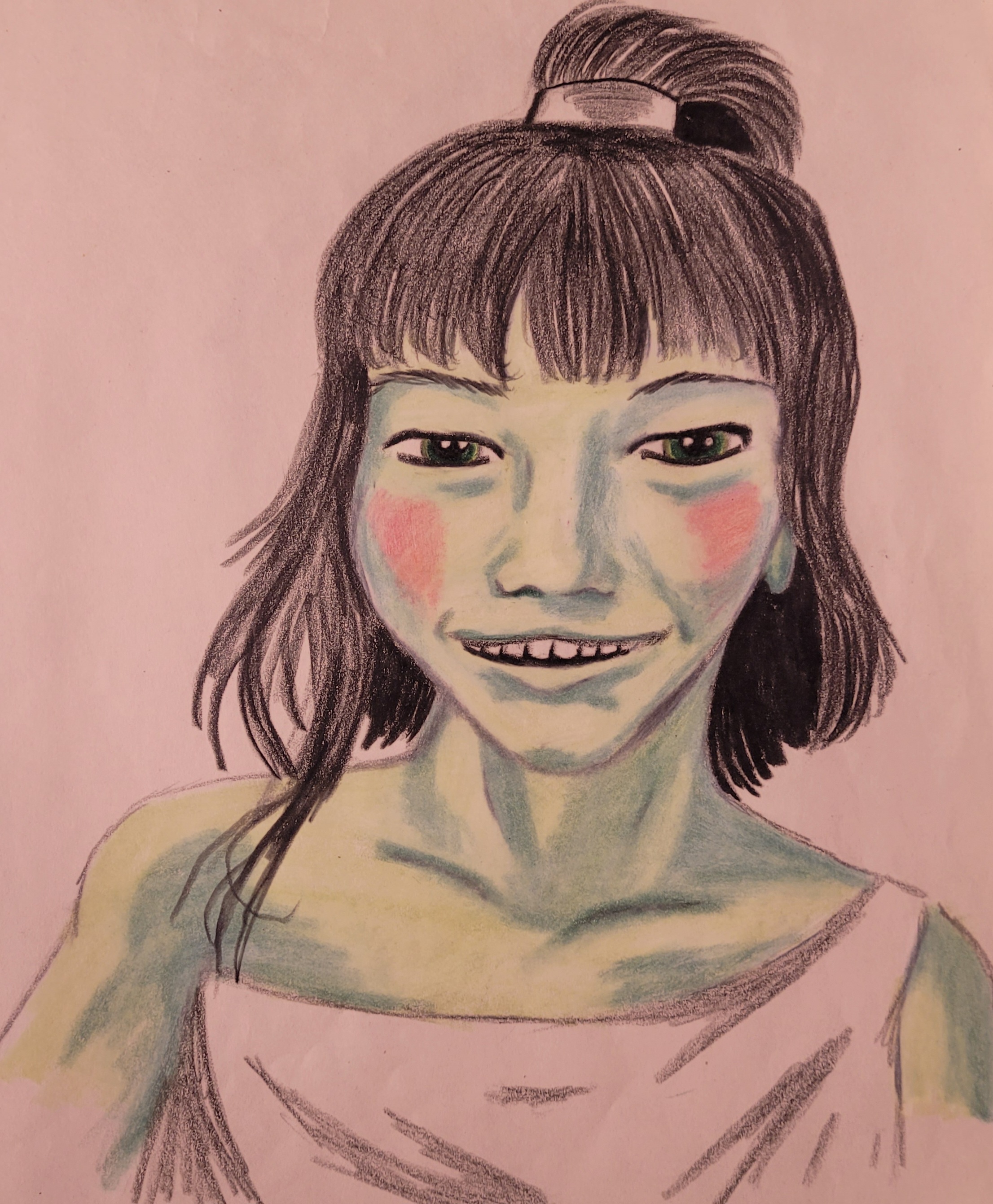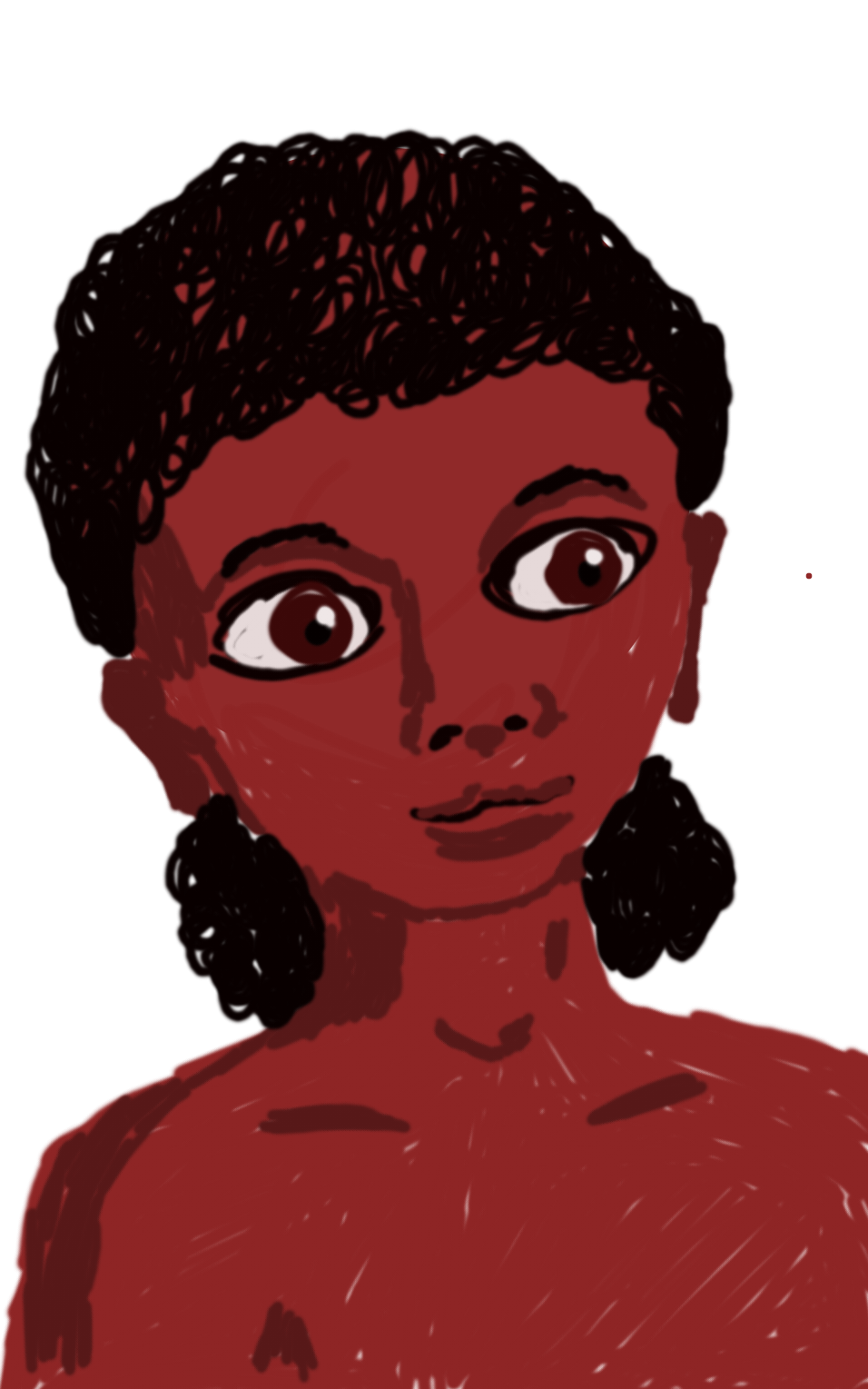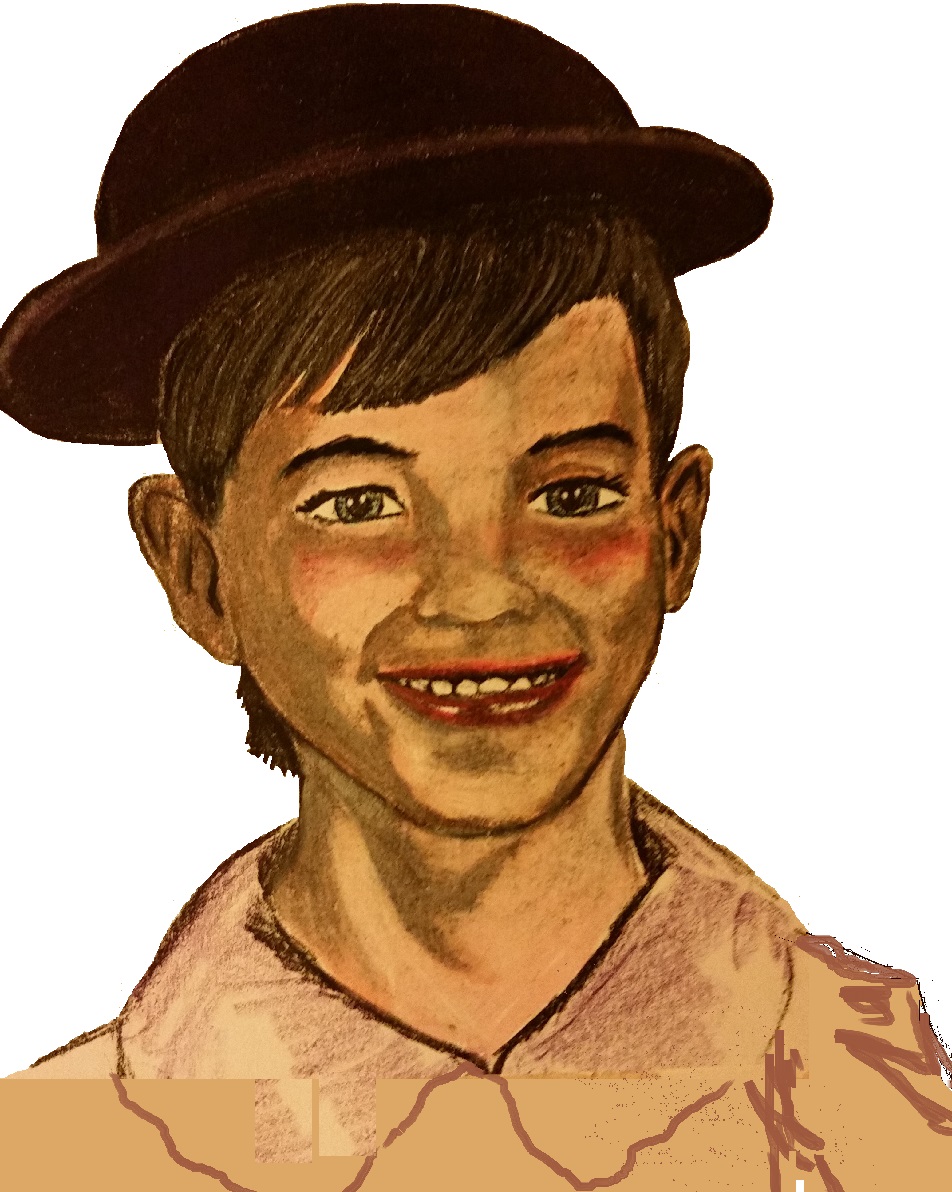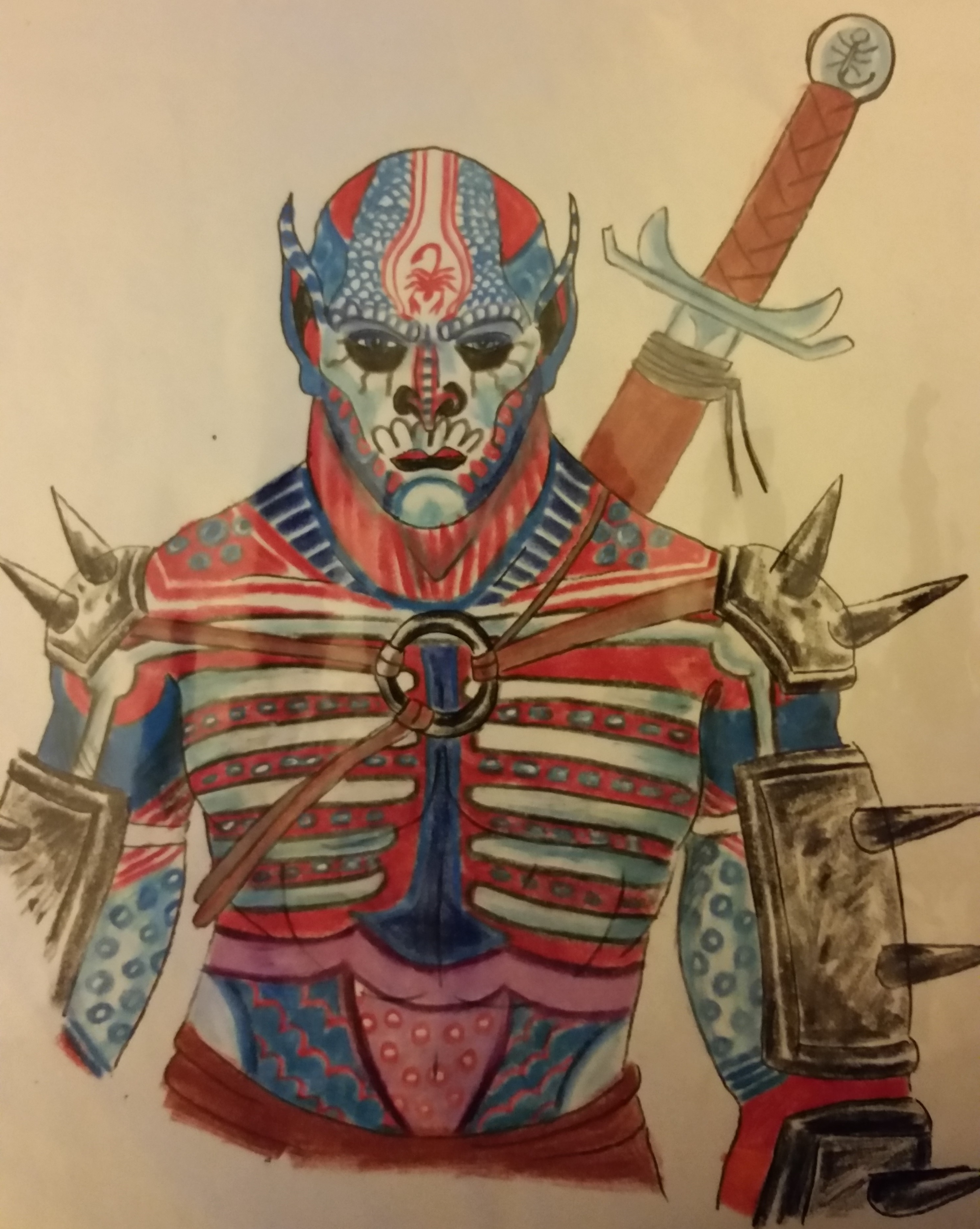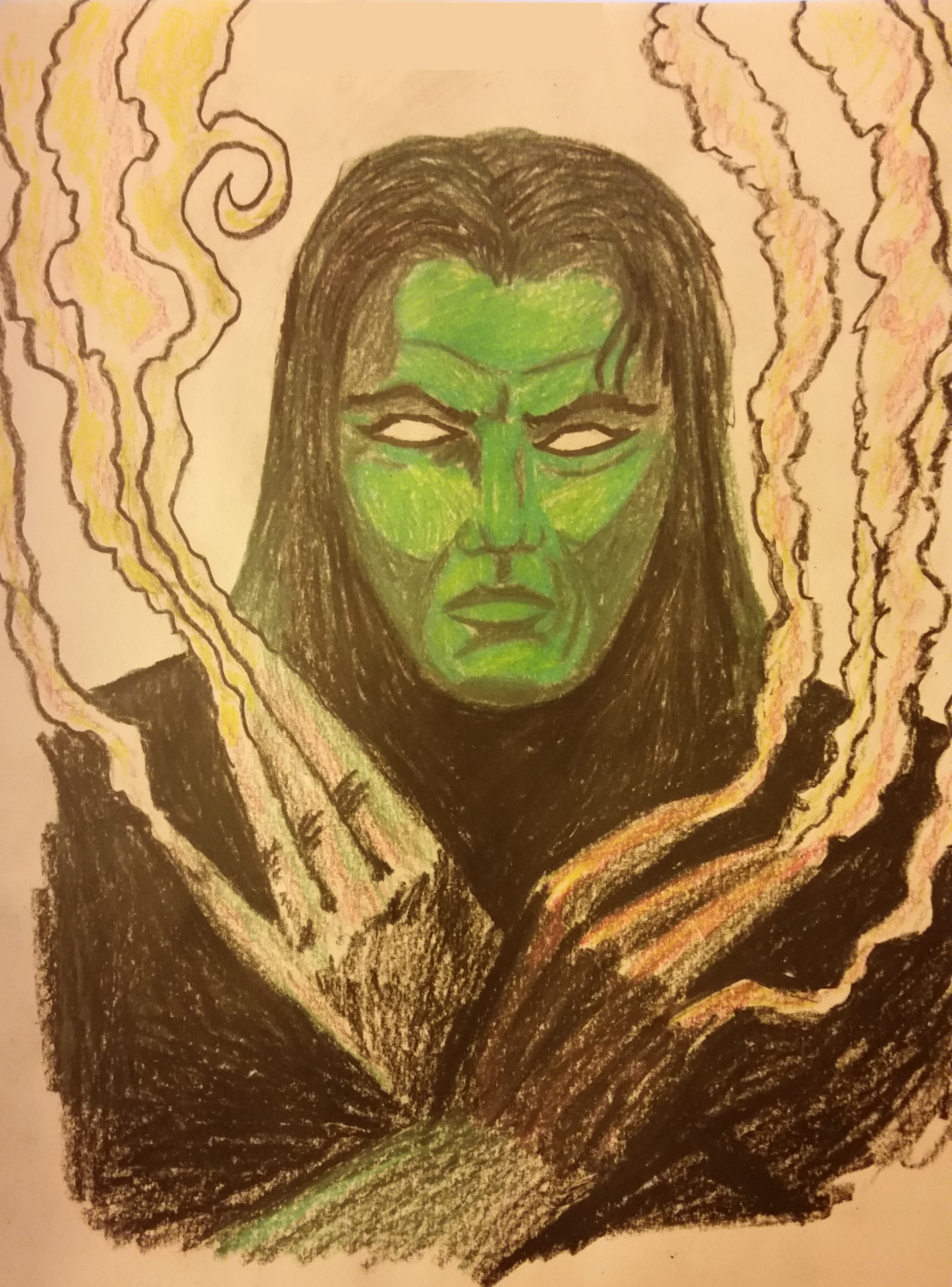
In this week’s Paffooney remix, I have pictured the little boy crooner Francois Martin on the main street of Norwall. Why have I done such a foolish thing? Why have I drawn a boy singing silently a song that only I can hear in my silly old head? In fact, why do I label them Cantos instead of Chapters? Of course, the answer to these rhetorical questions is metaphorical. I look at my writing as being poetry, or, more accurately, as music rather than mere prose. It is a metaphor central to my being, writing is putting the inner music of my mind down on paper.
Here is a secret to powerful writing. Connect ideas with metaphors. A metaphor is a direct comparison of two unlike things to create an analogy, an echo of an idea that gives resonance to a notion. Sorry, I’m an English teacher. It’s in my genes. But metaphors can serve as the essential connections, as glue to put paragraphs and scenes together.
Let me show you a metaphor. Here is a short poem, the natural environment where many metaphors live;
The Cookie
Once I had a cookie… But every time I took a bite, It became smaller and smaller…
With each bite I had less and less cookie left.
But when it was gone, the sweet taste of it…
Lingered on… as memory.
The central metaphor of this poem is comparing the cookie to my life. I am getting older. I have six incurable diseases, some of them life threatening. I have been thinking about mortality a lot lately. So what is the point of the poem? That even when the last bite is taken, and there is no more cookie… when I am dead, there is the memory of me. Not my memory. The memory of me in the minds of my family, my children, my students, and other people who have come to know me. That memory makes whatever goodness that is in me worth living for.
Okay, a metaphor explained is kinda like a bug that’s been dissected for a science fair. Its innards are revealed and labeled. The beauty is gone. It’s kinda icky.
What works better, is a metaphor that the readers can readily grasp on their own. The beauty has to be discovered, not dissected and explained. Let me try again;
The Boy and the Boat
The boy looked to the horizon where wild and wooly white-caps roiled upon the sea.
“Lord help me,” he said, “the sea is so large, and my boat is so small…”
I can hear what you are thinking. “That’s too simple and ordinary. If it’s a metaphor, then it’s a really stupid one.” Well, I heard someone thinking that, even if it was not you.
Let me add a bit of information to help you connect things as I do. When I was ten years old, a fifteen-year-old neighbor boy sexually assaulted me. I told no one. I was so devasted by the event that I repressed the memory until I reached the age of twenty two. In high school, my suicidal thoughts and darkest depressions were caused by this event even though I couldn’t even recall. To this day I have not explained to mother and father what happened. I can only bring myself to tell you now because my abuser died of heart failure last summer. It was a life event of overwhelming darkness, pain, and soul scorching. Now look at “The Boy and the Boat” again. Has the meaning changed for you the way it does for me?
Now, I know that the last paragraph was a totally unfair use of harsh reality to make a point about metaphor and meaning. So let me give you one last poem… a sillier one. You can make of it whatever you will;
The Grin
The wrinkly, bewhiskered old man
Had a smile like a plate of moldy spaghetti
In the afternoon sun.


A Mr. Holland Moment
Life is making music. We hum, we sing to ourselves, movie music plays in our head as the soundtrack to our daily life. At least, it does if we stop for a moment and dare to listen. We make music in many different ways. Some play guitar. Some are piano players. And some of us are only player pianos. Some of us make music by writing a themed paragraph like this one. Others make an engine sing in the automotive shop. Still others plant gardens and make flowers or tomatoes grow. I chose teaching kids to read and write. The music still swells in my ears four years after retiring.
The 1995 movie, Mr. Holland’s Opus, is about a musician who thinks he is going to write a magnificent classical orchestra opus while teaching music at a public high school to bring in money and allow him time to compose and be with his young wife as they start a new family.
But teaching is not, of course, what he thought it was. He has to learn the hard way that it is not an easy thing to open up the closed little clam shells that are the minds of students and put music in. You have to learn who they are as people first. You have to learn to care about what goes on in their lives, and how the world around them makes them feel… and react to what you have to teach. Mr. Holland has to learn to pull them into music appreciation using rock and roll and music they like to listen to, teaching them to understand the sparkles and beats and elements that make it up and can be found in all music throughout their lives. They can even begin to find those things in classical music, and appreciate why it has taken hold of our attention for centuries.
And teaching is not easy. You have to make sacrifices. Big dreams, such as a magnum opus called “An American Symphony”, have to be put on the shelf until later. You have children, and you find that parenting isn’t easy either. Mr. Holland’s son is deaf and can never actually hear the music that his father writes from the center of his soul. And the issue of the importance of what you have to teach becomes something you have to fight for. Budget cuts and lack of funding cripples teachers in every field, especially if you teach the arts. Principals don’t often appreciate the value of the life lessons you have to give. Being in high school band doesn’t get you a high paying job later.
But in the end, at the climax of the movie, the students all come back to honor Mr. Holland. They provide a public performance of his magnum opus, his life’s work. And the movie ends with a feeling that it was all worth it, because what he built was eternal, and will be there long after the last note of his music is completely forgotten. It is in the lives and loves and memories of his students, and they will pass it on.
But this post isn’t a movie review. This post is about my movie, my music. I was a teacher in the same way Mr. Holland was. I learned the same lessons about being a teacher as he did. I had the same struggles to learn to reach kids. And my Mr. Holland moment wasn’t anywhere near as big and as loud as Mr. Holland’s. His was performed on a stage in front of the whole school and alumni. His won Richard Dreyfus an Academy Award for Best Actor. But his was only fictional.
Mine was real. It happened in a portable building on the Naaman Forest High School campus. The students and the teacher in the classroom next door threw a surprise party for me. They made a lot of food to share, almost all of which I couldn’t eat because of diabetes. And they told me how much they would miss me, and that they would never forget me. And I had promised myself I would never cry about having to retire. But I broke my promise. In fact, I am crying now ten years later. But they are not tears of sadness. My masterwork has now reached its last, bitter-sweet notes. The crescendos have all faded. But the music of our lives will still keep playing. And not even death can silence it completely.
1 Comment
Filed under artwork, autobiography, commentary, happiness, insight, kids, movie review, teaching
Tagged as education, music, music-education, teachers, teaching