This post is about writer doubt. And Stephen King. Do those two things go together? If they don’t then Mickey is an awful writer and does not know how to do what he does. It would mean Mickey is icky.
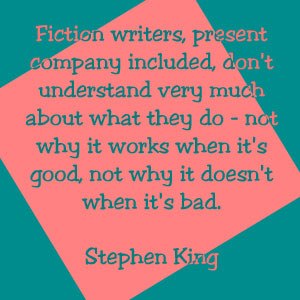
I used to think Stephen King was a totally over-rated writer. Back in the early eighties I read Carrie, King’s first novel, and got halfway through Firestarter, and had to give up. Partly because the book was overdue at the library, and also because I found the books mechanical and somewhat joyless in the writing. I thought he suffered greatly in comparison to writers I was in love with at the time like Ray Bradbury and Thomas Mann. I began to tell others that King was somewhat icky.
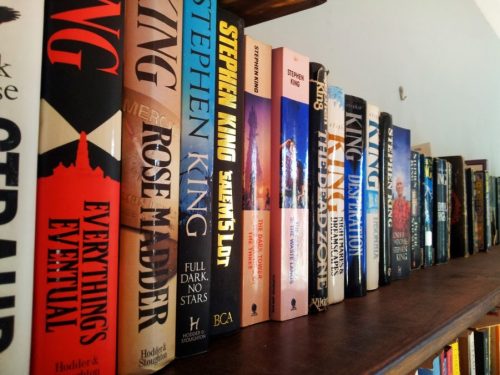
But King was obviously also somewhat successful. He began to get his books made into movies and people who don’t read discovered the evil genius of a man who tells stories to scare them and laces them with a bit of real humanity, real human feeling, and love.
I saw it first in Stand by Me. That movie, starring young Wil Wheaton as the Steven King autobiographical character, really touched my heart and really made for me a deep psyche-to-psyche connection to somebody who wasn’t just a filmmaker, but somebody who was, at heart, a real human being, a real story-teller.


Now, the psyche I was connecting to may very well have been Rob Reiner, a gifted story-teller and film-maker. But it wasn’t the only King movie that reached me. The television mini-series made from It touched a lot more than just the fear centers of my brain as well. And people whose opinions I respect began telling me that the books The Dark Tower Trilogy and Misery were also amazing pieces of literature.
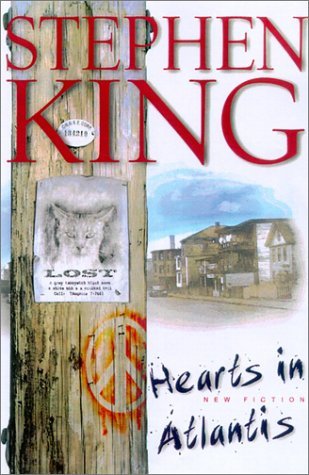
So I picked up a copy of Hearts in Atlantis at Half-Price Books and began reading a Stephen King novel for the first time since the 80’s. MY HOLY GOD! King is not a little bit icky. He is so NOT ICKY that it makes Mickey sicky to have ever thought King was even a little bit icky! Here is a writer who loves to write. He whirls through pages with the writer’s equivalent of ballet moves, pirouettes of prose, grand jetés of character building, and thematic arabesque penchées on every side of the stage. I love what I have discovered in a writer I thought was somewhat icky. Growth and power, passion and precision, a real love of both the words and the story. He may not know what he is doing. But I know. And I love it.

And so, while I have been editing the first novel I ever wrote, Superchicken, to make it ready for self-publishing, I have begun to ask myself the self-critical question, “Is Mickey really icky when he writes?” My first novel is full of winces and blunders and head-banging wonders that make me want to throw the whole thing out. But I can’t throw it out. It is the baby in the first bathwater that I ever drew from the tap. The answer to the questions of Micky ickiness have yet to be determined, and not by me. I guess I have to leave it up to you.
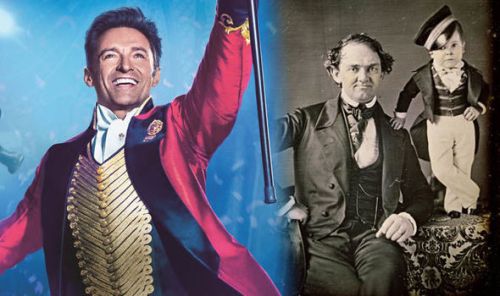


![Clofillia, Josphine [Madame Clofullia, P.T. Barnum's "Bearded Lady of Geneva"]. Daguerreotype by Thomas M. Easterly, 1853. Photographs and Prints Collections. Missouri History Museum. Easterly 321. NS 17387. Scan © 2008, Missouri History Museum.](https://i0.wp.com/catchafallingstarbook.net/wp-content/uploads/2018/04/beardedlady.jpg?w=273&h=154&ssl=1 "beardedlady")