Category Archives: Paffooney
Writing a Horror Story

I am now closing in on the publication of The Baby Werewolf, a novel whose story began with a nightmare in 1978. It was a dream I had about being a monster. I woke up in a cold sweat and realized, to my complete horror, that I had been repressing the memory of being sexually assaulted for twelve years, the thing that almost brought me to suicide in 1973 and that I couldn’t put into words when I talked to counselors and ministers and friends who tried to keep me alive without even knowing that that was what the dark black words were about.
I don’t normally write horror stories. Yes, it is true, a character of some sort dies at the end of practically every novel I have ever written, but those are comedies. I am sort of the anti-Shakespeare in that sense. The Bard wrote comedies that ended with weddings and tragedies that end in death. So, since my comedies all seem to end in death, I guess if I ever write a tragedy, it will have to end with a wedding.

But writing this horror story is no joke for me, though I admit to using humor in it liberally. It is a necessary act of confession and redemption for me to put all those dark and terrible feelings into words.
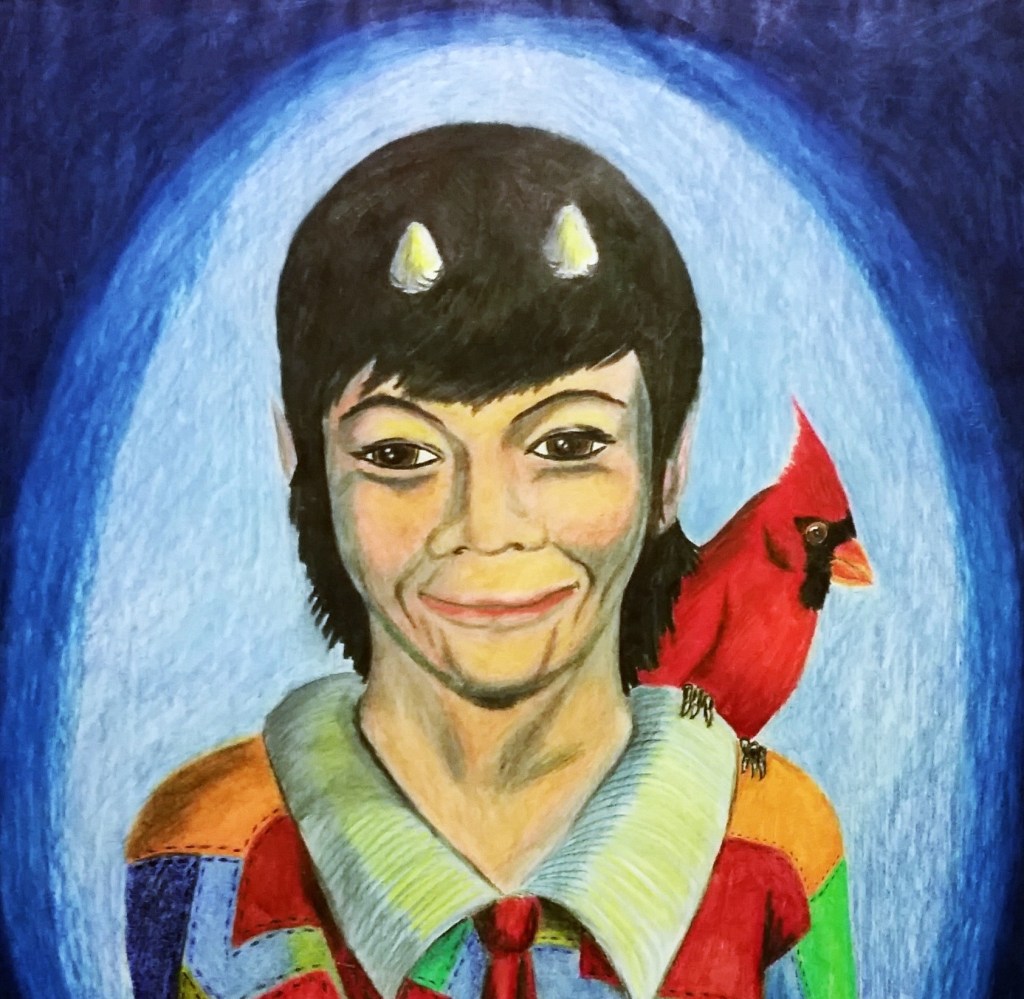
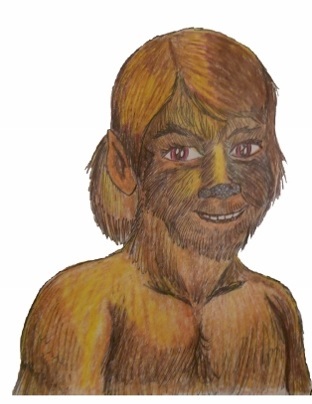
The main theme of the story is coming to grips with feeling like you are a monster when it is actually someone else’s fault that you feel that way. Torrie, the main character, is not the real werewolf of the story. He is merely a boy with hypertrichosis, the werewolf-hair disorder. He has been made to feel like a monster because of the psychological and physical abuse heaped upon him by the real werewolf of the story, an unhappy child pornographer and abuser who is enabled by other adults who should know better and who should not be so easily fooled. The basis of the tale is the suffering I myself experienced as a child victim.
It is not easy to write a story like this, draining pain from scars on my own soul to paint a portrait of something that still terrifies me to this day, even though I am more than sixty years old and my abuser is now dead. But as I continue to reread and edit this book, I can’t help but feel like it has been worth the pain and the striving. No one else in the entire world may ever want to read this book, but I am proud of it. It allowed me to put a silver bullet in the heart of a werewolf who has been chasing me for fifty-two years. And that’s how the monster movie in my head is supposed to end, with the monster dead, even though I know the possibility of more monsters in the darkness still exists.
Filed under autobiography, horror writing, humor, NOVEL WRITING, Paffooney
The Art of Being Mickey

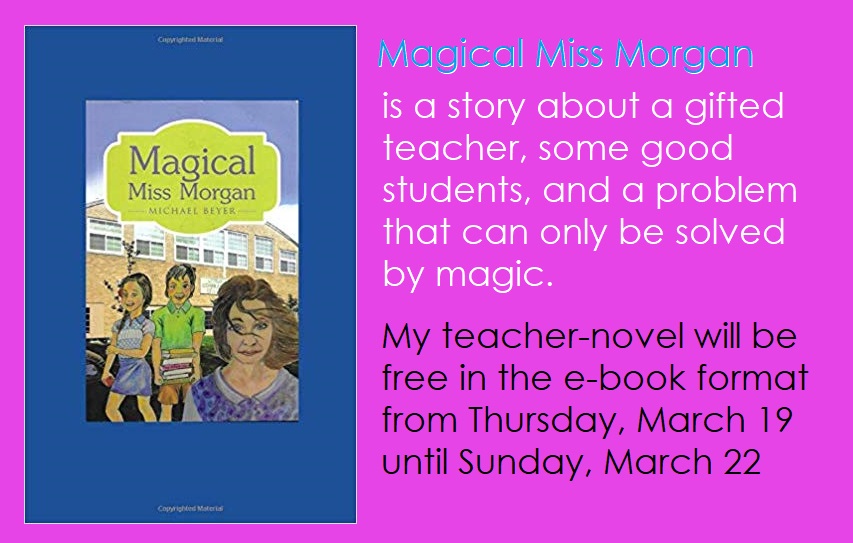
I have published my eighth novel in the last six years. (This is, of course, a re-post of an old essay.) Sure, it is through mostly self-publishing of novels that no one but me has ever read. Catch a Falling Star and Snow Babies both had a professional editor, one who had worked for Harcourt and one who worked for PDMI. Magical Miss Morgan has had a proofreader who made numerous stupid mistake errors that I had to change back to the original meticulously by hand. But all three of those novels won an award or were finalists in a young adult novel contest. I do have reason to believe I am a competent writer and better even than some who have achieved commercial success.
But what is the real reason that I am so intent on producing the maximum amount of creative work possible in this decade? Well, to be coldly objective, I am a diabetic who cannot currently afford insulin. I have been betrayed by the for-profit healthcare system that treats me as a source of unending profit. I am like a laying hen in the chicken house, giving my eggs of effort away to a farmer who means to eat my very children if time and circumstance allows. I am the victim of six incurable diseases and conditions that I got most likely as a result of exposure to toxic farm chemicals in the early 70’s. I am also a cancer survivor from a malignant melanoma in 1983, and for three years now I have not been able to get the preventative cancer tests I am supposed to be receiving every year for the rest of my life. My prostate could very well be cancerous as I write this. If that is so, it will kill me unawares, because I don’t even want to know about having a disease I can’t possibly afford to fight all over again.’

So, the basic reason I am going through the most productive and creative period of my entire life is because I have a great rage to create before I die and I could be dying as soon as tonight. All of the countless stories in my head clamoring to be written down before it is too late cry out to me desperately for my immediate attention.
I will, then, continue to write stories and draw cartoons and other Paffoonies for as long as I am still able, and possibly even afterward. I have, after all, threatened repeatedly to become a ghostwriter after I die. And, yes, I understand when you scream at my essay that that is not what a ghostwriter is. But if a woman can channel the ghost of Franz Schubert and finish his unfinished symphony…(https://en.wikipedia.org/wiki/Rosemary_Brown_(spiritualist))
—then I should also be able to tell my stories from beyond the grave. I have been percolating them in my head and writing and drawing them in whole or in part since 1974. I have too much time and too many daydreams wrapped up in them to let it all just evaporate into the ether. In summation, I am claiming stupidly that my novels, crack-brained and wacky as they are, are somehow destined to exist, either because of me or in spite of me. So just be happy that I write what I write, for there is an art to being Mickey, and I am the one artist and writer who is the best Mickey possible if truly there ever was a real Mickey.
Filed under battling depression, commentary, goofy thoughts, humor, novel writing, Paffooney
The Interstellar Bad Poetry Challenge

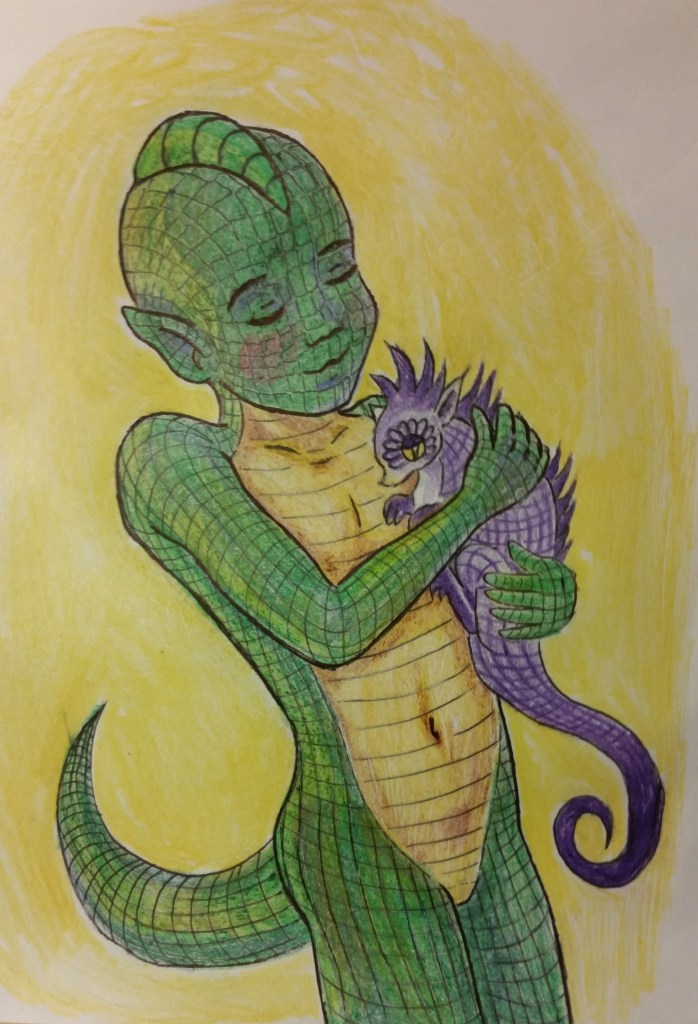
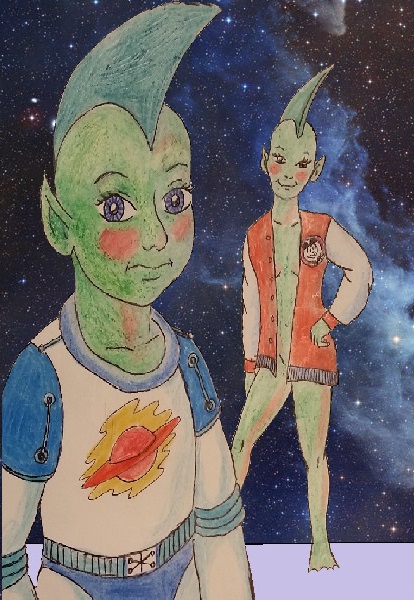
The Ixcanixian Cultural Ambassador from the Squeelix Sector of the Planet Ixcanix sent me an e-mail about his planet’s newest idea for a cultural exchange. He calls it the “Ixcanixian Spleegle Gorn Vorpaloop” which translates to the “Ixcanixian Interstellar Bad Poetry Challenge”. At least, it does if I am conjugating the verb “Vorpaloop” correctly. It is difficult because you have to drop the silent “y” before adding the “aloop” without causing it to explode. I know it is probably a very bad idea to present it here on this planet, but he talked me into it by promising to promote my novel Catch a Falling Star on his homeworld and at least two other planets in the Bugeye Federation.
Here are the rules for the alien poetry contest;
- Entries can only come from planets in the Orion Spur of the Sagittarius Spiral Arm of the Milky Way Galaxy. (So, for you non-astronomers out there, we on Earth do qualify.)
- All poets must be less intelligent than the Mud-Eaters of Paralaxos IV as they will be employed as judges of what poetry is truly bad. (Again, Earth qualifies as we have recently re-elected Trump and also allow Nigel Farage of Great Britain to continue to exist.)
- Entries must not be so long that the total weight of letters exceed critical mass and form black holes in the intergalactic servers when uploaded.
- Vogons need not apply. Their poetry is so bad that they would automatically win, causing the death of trillions of bad poetry readers in the galaxy.
- Entries must not cause thermonuclear reactions with cesium.
- Please refrain from confusing good poetry with bad poetry. The Vornloos of Talos XII are looking for poetry they can weaponize, and no one wants a poetry contest winner to suddenly create World Peace on Talos XII. That would be bad for the galaxy as a whole in ways that are very difficult to explain.
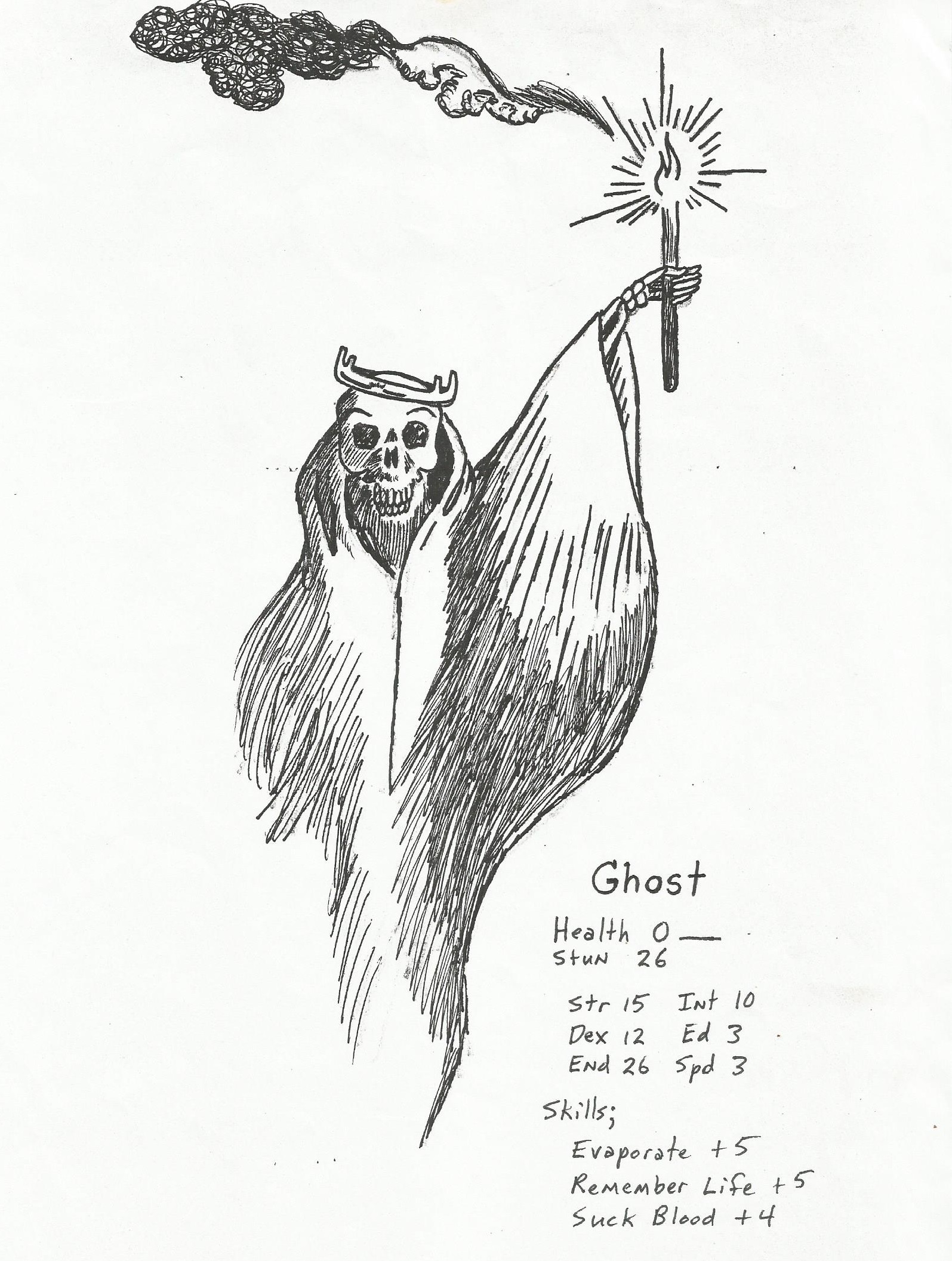
A sample of interstellar bad poetry is included here to inspire the kind of poetry we seek.
Ratzen Bargle’s Bisketoon (a love poem by Touperary Kloob, Poet Laureate of Antares VI)
Ratzen Bargle was a Doofus,
From the planet Rufus-Ploofiss,
And he had a lovely bride,
With a head not tall, but twice as wide.
She had three eyes, and two were green.
She had the loveliest fleen you’ve ever seen.
And as they sat ‘neath a wayward moon,
He kissed his lovely bisketoon.
Immediately before naught was said,
She bit off his tiny three-eyed head.
And then she ate him bones and all
With sauce that really becomes the fall.
And so it is on Rufus-Ploofiss,
That males all die with one last roof-kiss.
Because they sit under wayward moons
With their lovely, hungry bisketoons.
Should you have the unfortunate urge to participate in this senseless and probably suicidal poetry contest, you are welcome to offer four-line poems in the comment section, or email longer poems to Mickey at mbeyer51@gmail.com. I will attempt to transmit the worst offers to the Ixcanixians as soon as I get my interstellar flooglebeeder transmitting again. I will also post winners in a future alien poetry blog.
I have been warned that prizes range from instant execution by the Lizard Lords of Galtorr Prime to a beat up copy of Mickey’s 2012 novel Catch a Falling Star. So, good luck with the bad poetry.
I must confess, I did not submit any of my terrible poetry as I don’t want any of the prizes.
Filed under aliens, goofiness, humor, Paffooney, pen and ink, poem, poetry, satire, science fiction
Sugar-Free Johnny

He was one of my all-time favorite students. I know I say that about an awful lot of kids. I can’t help it. Once you get to know them well enough to teach them anything, you tend to be hooked for life. They are your kid. You are their teacher. And that means almost as much as if they were born to you.
I first got to know Johnny on one frightful morning in September of 1984. He was a tiny, frail little seventh-grade boy sitting in the second seat of the second row. And as I was trying to get them to read a short story in the literature book, he kept nodding off, falling asleep. Sleeping is not an effective reading strategy. Three times I tried to wake him up and get him on task. He could have told me then, but he was painfully shy, and the only word I had heard from him was, “Here,” spoken during roll call. So, the fourth time I took him outside the classroom door to ask him what was wrong. He was deathly pale.
“What’s wrong? What do we need to do to make it better?”
He looked towards the boys’ restroom. “I gotta go…”
I told him to go, then followed him down to the restroom because I knew it was something serious. Serious enough to leave my class unattended. But they were deathly quiet, because unlike me, they knew what was wrong. I found him throwing up in the trash can. He told me he was sick in a barely audible voice.
Immediately I went to the office and told the secretary that he was ill.
“They have juice for him in the refrigerator in the ESL room,” Ms. Lawler said. “I’m sorry we haven’t gotten the nurse’s list out to teachers yet. He’s got juvenile diabetes.”
Whoa! I didn’t know much about diabetes then, but I did know it was too deadly of a thing to allow myself not to know everything I needed to know. At the time the school nurse had to take care of all four campuses in the school district, and she was only at the Junior High on Thursdays.
Thankfully, over time, not only did I learn more about handling that disease, but medical science did too. When I would later develop adult-onset diabetes in 2000, treatment for diabetics would become much more effective, rendering the disease far less destructive.
As for Johnny himself, he became a part of the small group of housing-project kids who would come to my apartment on Saturdays, and sometimes after school to hang out, use my computer, and play table-top role-playing games. I made a special effort to engage Johnny in conversations about a little of everything. He was a very bright boy when he felt well. I got to know his seriously diabetic mother too. And his older sister would later become a nurse at the local doctor’s office, so I got to know her as well. Johnny didn’t have a father at the time, which also applied to each of the other boys from the project, except for the Camacho brothers whose father was a seriously depressed Vietnam veteran. I suppose that’s why Johnny became like a son to me, one of five boys who at the time treated me like a second father. I taught him. I entertained him. And occasionally I cooked for him.
One of my two girlfriends at the time that I was mentoring Johnny liked to give him sugar-free candy. She got so accustomed to always having some available at her place that she actually got hooked on it herself.
In school Johnny opened up the way a cactus flower blooms when it gets a little rain. He began to talk to other kids a lot. He made himself into a group leader, and he even went out for high school football. Truthfully, I was amazed by him on the football field. He played defensive back. And he played like a star. I watched him intercept the ball about three times and run it back the other way. The coaches soon felt about him the same way I did. He was part of their family too.

And it turns out that being physically fit practically cures juvenile diabetes.
He got stronger and healthier with each season. He gave me the football portrait not because I had anything to do with his success, but because he loved me. I have hugged that boy three times in my lifetime, and each time is a cherished memory that I hope to carry with me to Xibalba, the Mayan Land of the Dead.
When I developed diabetes myself, Johnny’s older sister kept track of my wellness charts herself. Johnny’s family was experienced with handling diabetes, and they looked after me like a member of their family.
The last time I saw Johnny it was in the hallway at school. It was only a year before I left Cotulla for good. He had come especially to see me. I didn’t even recognize him at first because I hadn’t seen him for a decade. I wanted to talk to him and catch up. But I had to pick up my eldest son that day from second grade as he had been ill. I was not feeling well myself. So, I asked for a rain check. He still had that beautiful smile. And he didn’t tell me that that was the only chance he had to see me before leaving town again. It broke my heart when they told me that later.
But I see him again now as I tell you the story of Sugar-Free Johnny. He was probably the sweetest kid I ever taught. He will always be a part of my story. And apparently I am part of his story too.
Islands of Identity

Who am I?
Why do I do the things that I do?
No man is an island. John Donne the English poet stated that. And Ernest Hemingway quoted it… and wove it into his stories as a major theme… and proceeded to try to disprove it. We need other people. I married an island girl from the island of Luzon in the Philippines. She may have actually needed me too, though she will never admit it.

When I was a young junior high school teacher in the early eighties, they called me Mr. Gilligan. My classroom was known as Gilligan’s Island. This came about because a goofball student in the very first class on the very first day said, “You look like Gilligan’s Island!” By which he meant I reminded him of Bob Denver, the actor that played Gilligan. But as he said it, he was actually accusing me of being an island. And no man is an island. Thank you, Fabian, you were sorta dumb, but I loved you for it.

You see, being Gilligan on Gilligan’s Island was not a bad thing to be. It was who I was as a teacher. Nerdy, awkward, telling stories about when I was young, and my doofy friends like Skinny Mulligan. Being a teacher gave me an identity. And Gilligan was stranded on the Island with two beautiful single women, Mary Ann and Ginger. Not a bad thing to be. And I loved teaching and telling stories to kids who would later be the doofy students in new stories.
But we go through life searching for who we are and why we are here. Now that I am retired, and no longer a teacher… who am I now? We never really find the answer. Answers change over time. And so do I.
Contradictions

You know what a contradiction is, don’t you? It is whatever comes out of your wife’s mouth whenever you make a statement asserting that whatever you said is factually true. She will promptly and always explain to you how wrong you are… loudly… and in great detail. No matter if you happen to be provably right or not.
What’s that, you say? I’m wrong about that too? Of course, I am, dear. I only deserve the catfood cookies.

The fact is, if you raise your hand and give the teacher the correct answer often enough, you get a certain reputation amongst your classmates. Instead of continuing to call you, “dumbhead,” or “stupidhead,” or the simplified form of “caca-poo-poo-head” like they endearingly call everybody else, they begin calling you pejoratives like “Einstein,” or “Brainiac,” or “Supernerd, taah tah taaah!” And they begin pointing out in detail everything that is wrong about you. How you dress… how you talk… especially how you laugh. You have become the enemy. You must be contradicted.
“You are wrong, Mickey!”
“So, I get to be Dumbhead again?”
“No. you are still “Supernerd, taah tah taaah!” But you are wrong. We all think so, so that must be right.”

The truth is, Life itself is a contradiction. Considering the violence and hostility of the physical universe towards life, it is a miracle that anything at all is alive in the universe. The chaos of everything guarantees that if you are born into the miracle of life, then at some point, caused by a nearly infinite variety of possible aids to chaos, you will die. Order is whittled away into chaos. Civilizations fall eventually. Things die all the time.
But if all order must, by physical laws of the universe, be broken down into chaos, then, how is it that we have any order at all in the first place? Where does order come from? I’d give you a possible answer. But I would just be contradicted by the majority
Except for fundamentalist Christians who would say, “Let me think for a moment about why you are still wrong… and then I’ll tell you what I think the Bible says about why you are actually still wrong.”

One thing about being “only book-smart, but without common sense” that makes being contradicted all the time worth it, is that the more challenged the answers you come up with are, the more deeply you dig into them, and the more of a real-world understanding of why I am wrong about everything begins to make a bit more sense. Or not. Because I’m probably wrong in your estimation anyway.
Filed under commentary, humor, inspiration, Paffooney, philosophy
Celebration, Old Art Revisited

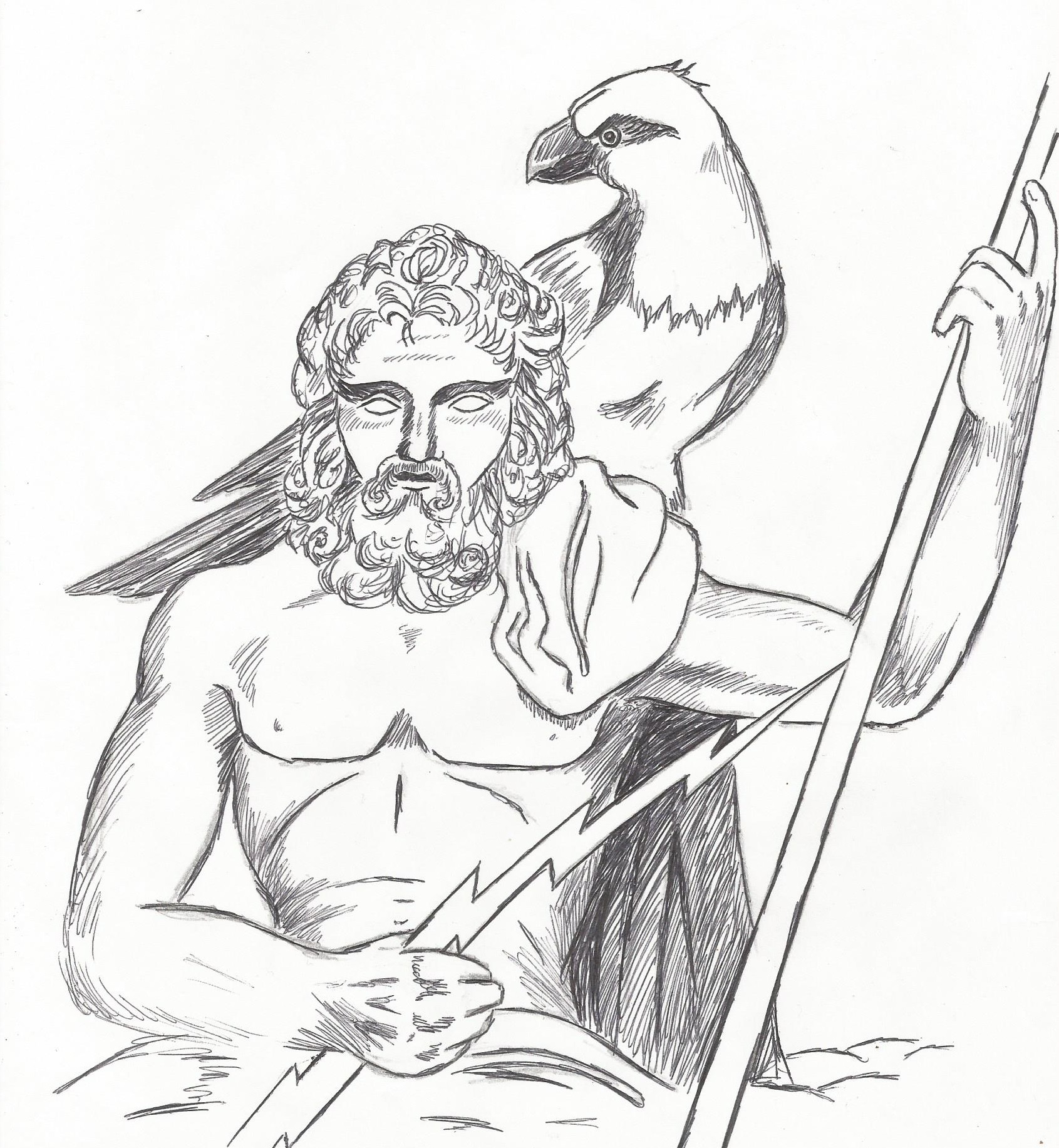
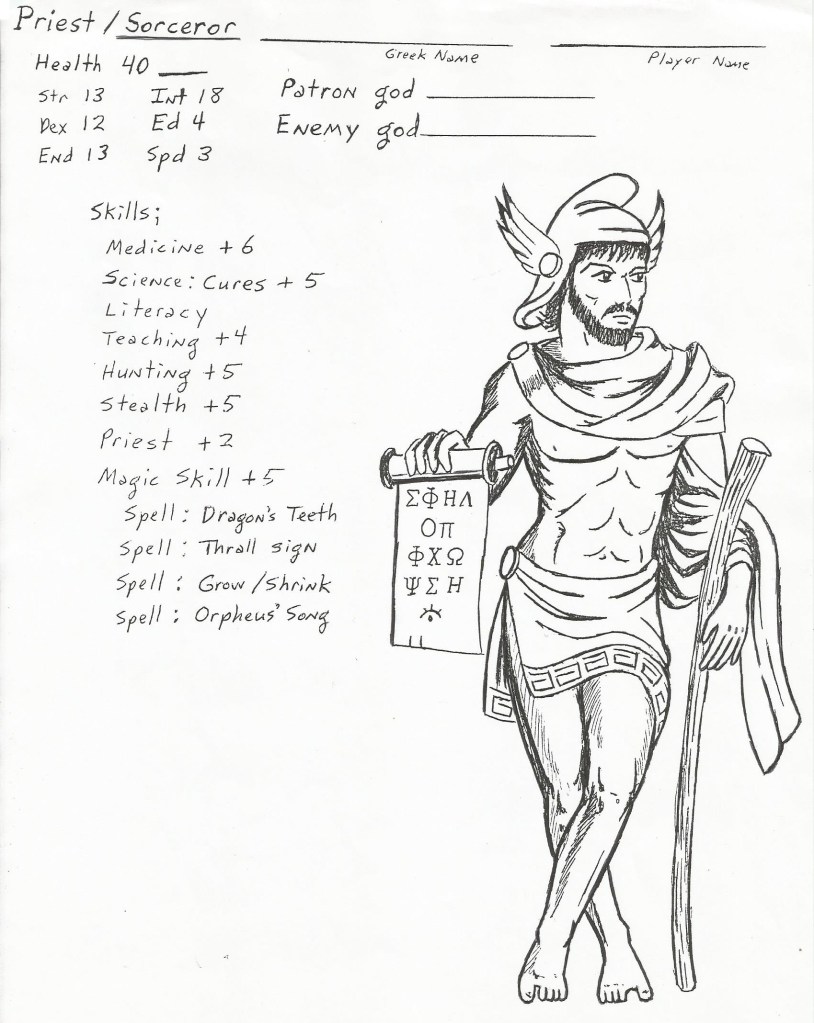
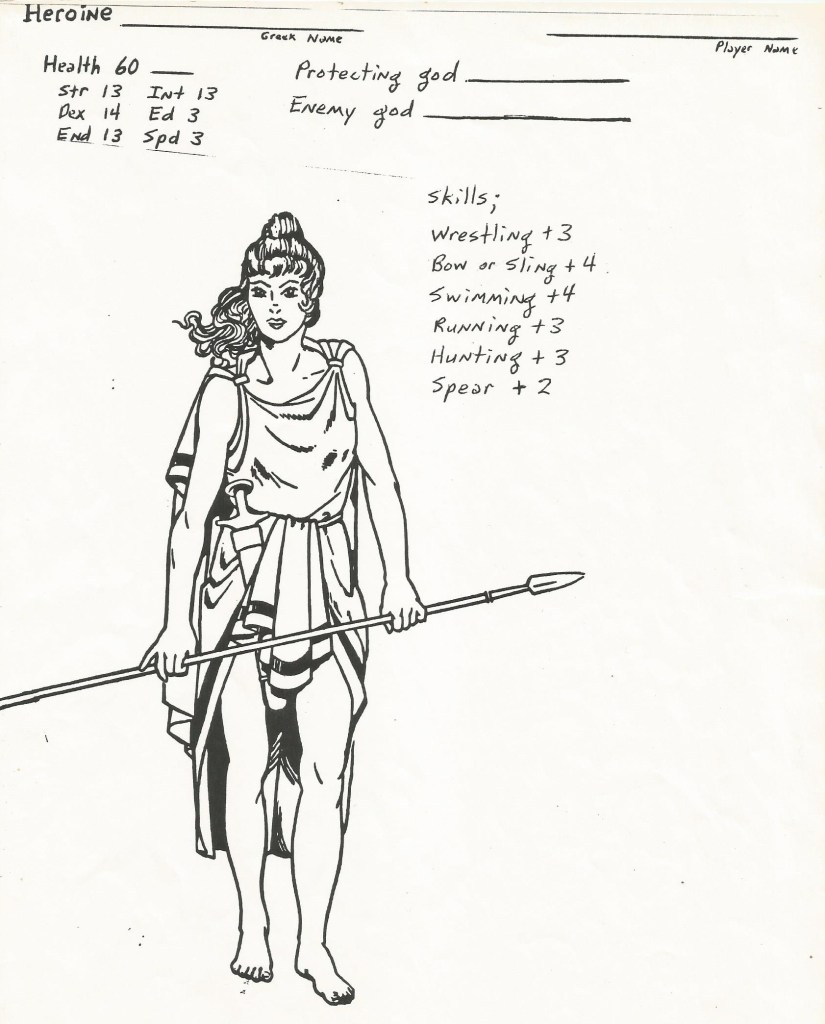
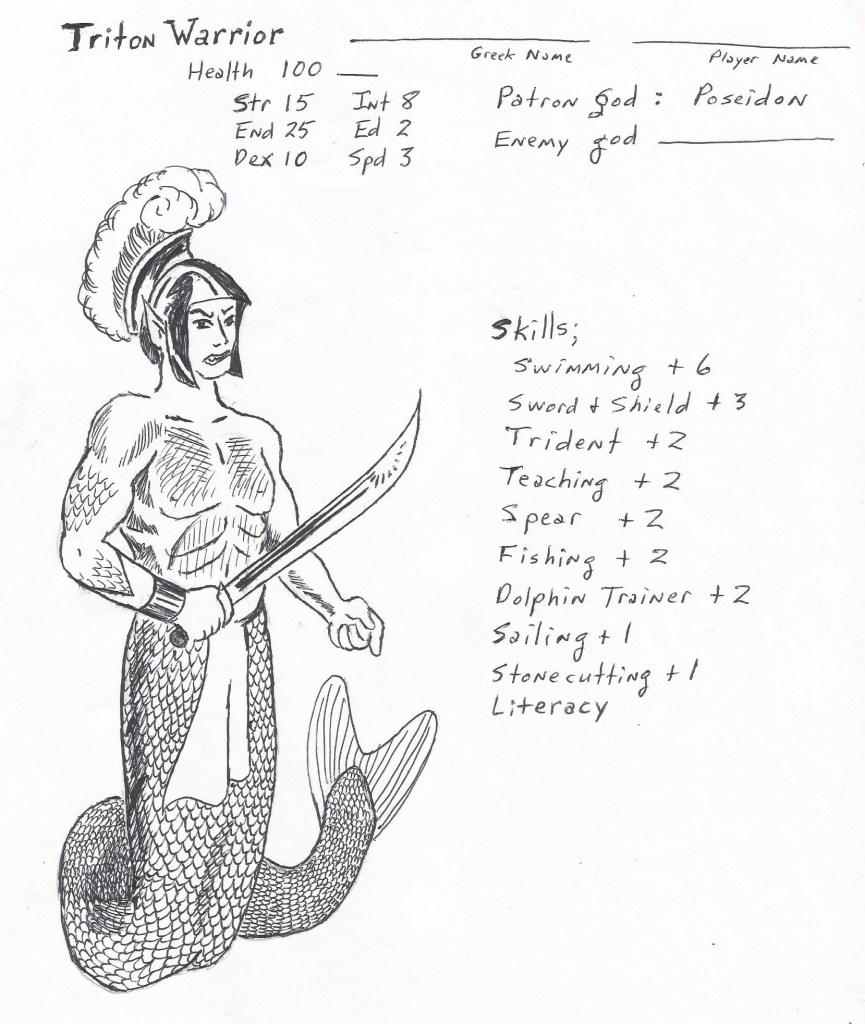
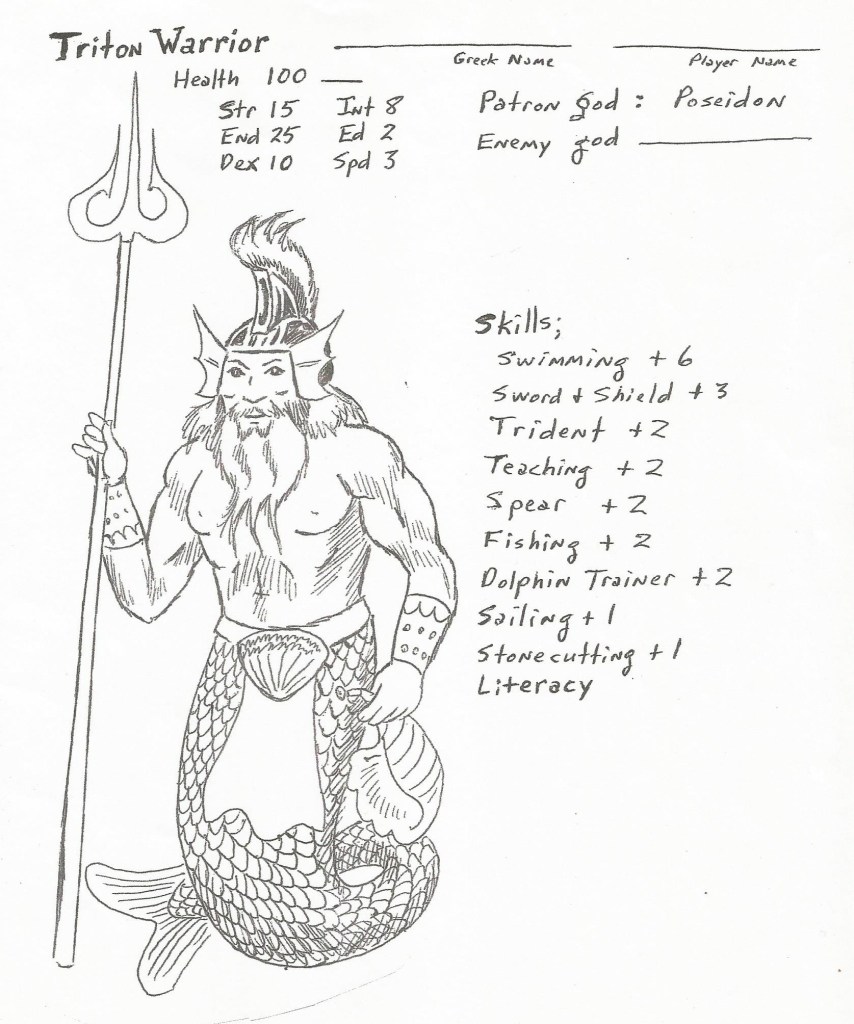
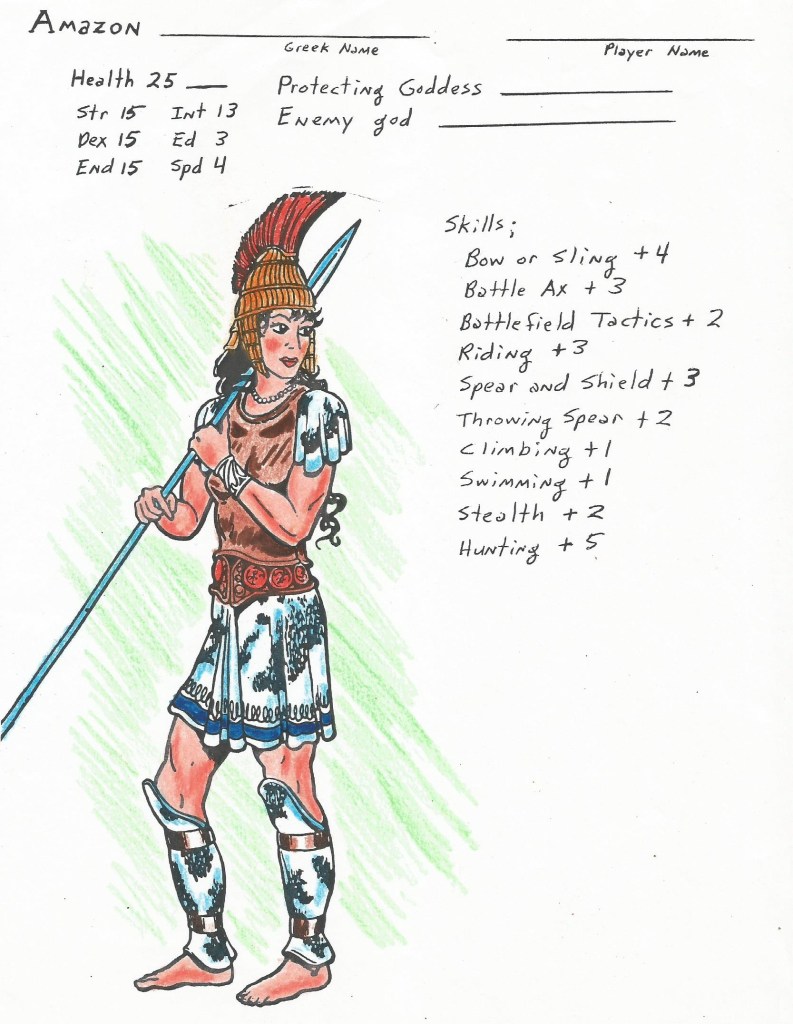
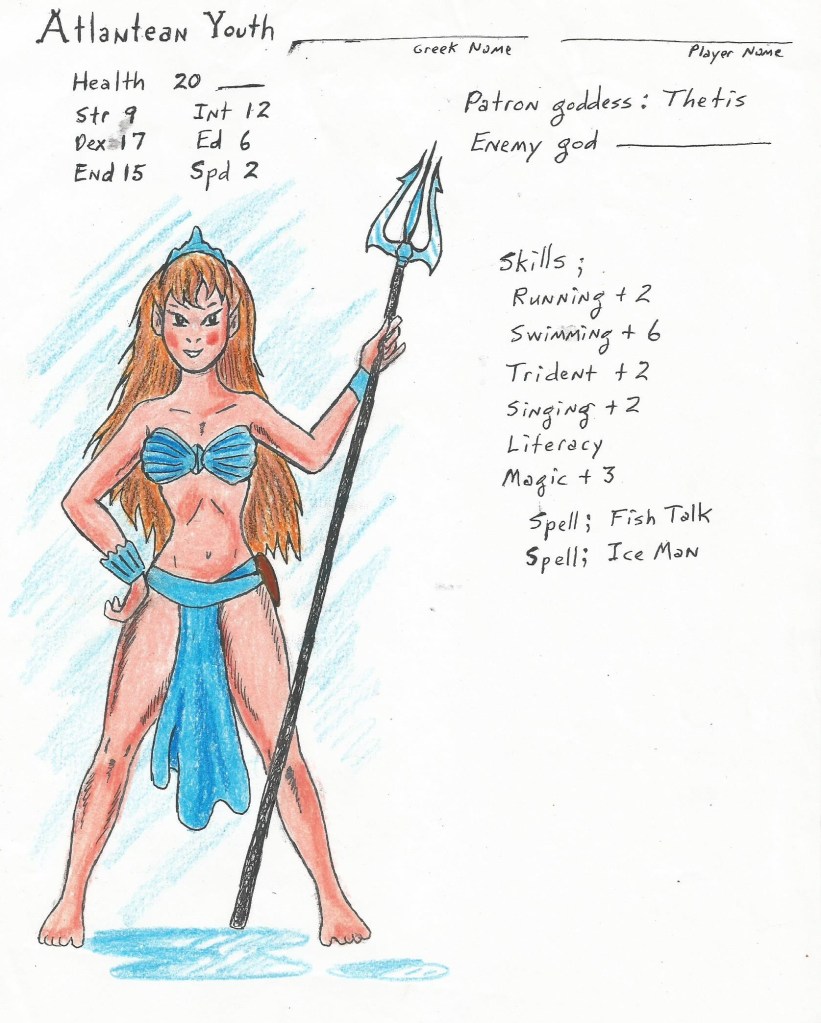
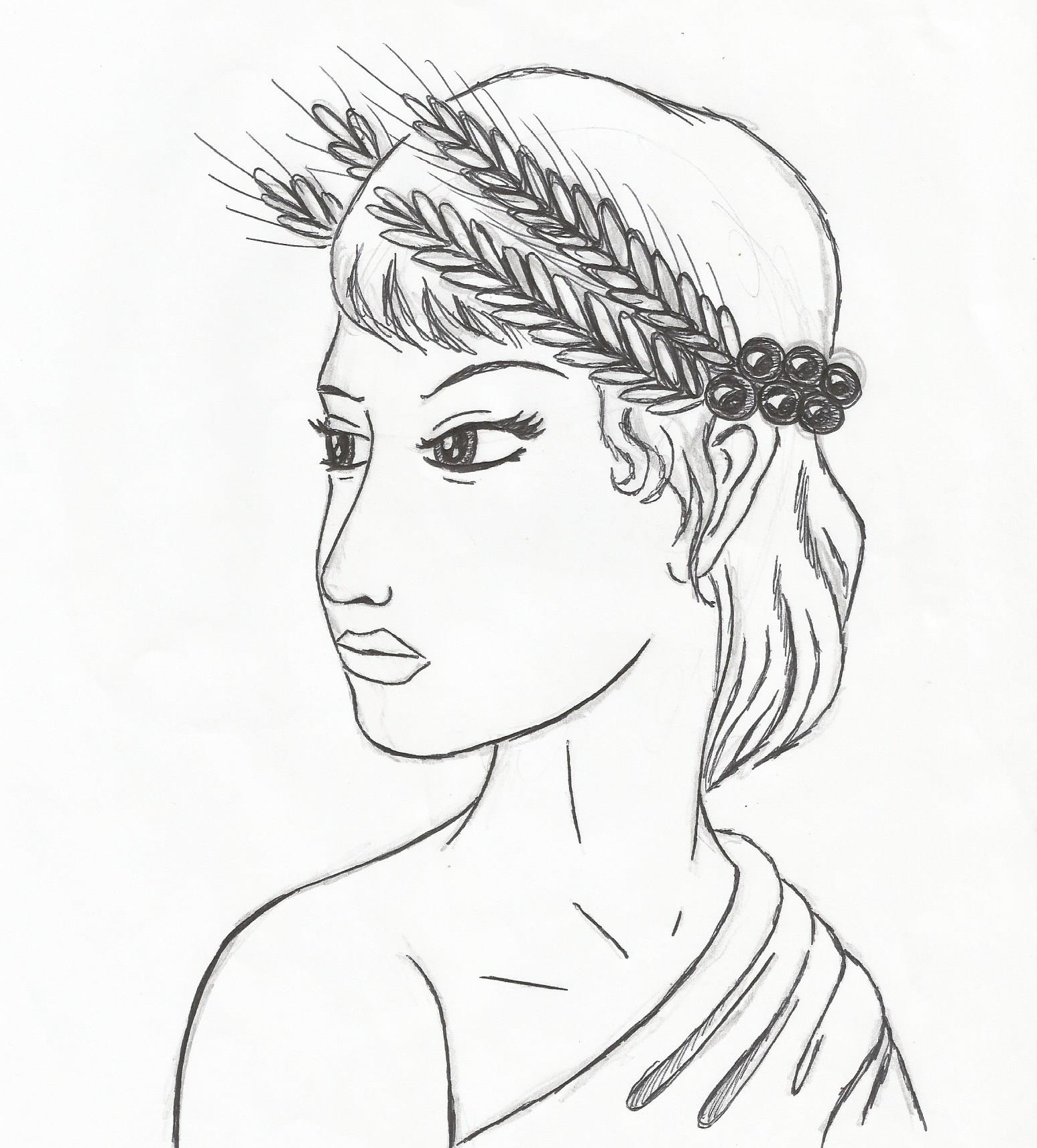
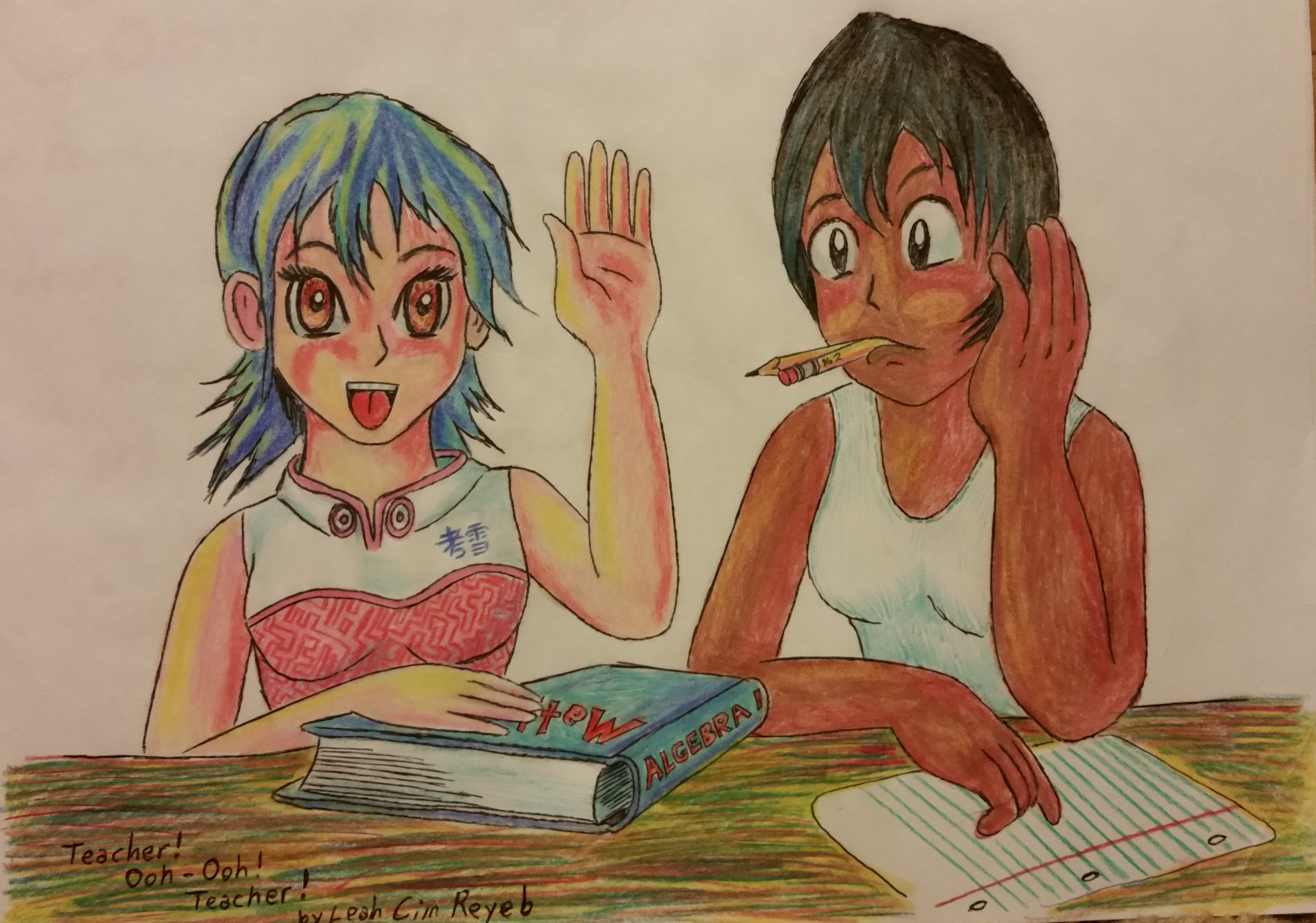
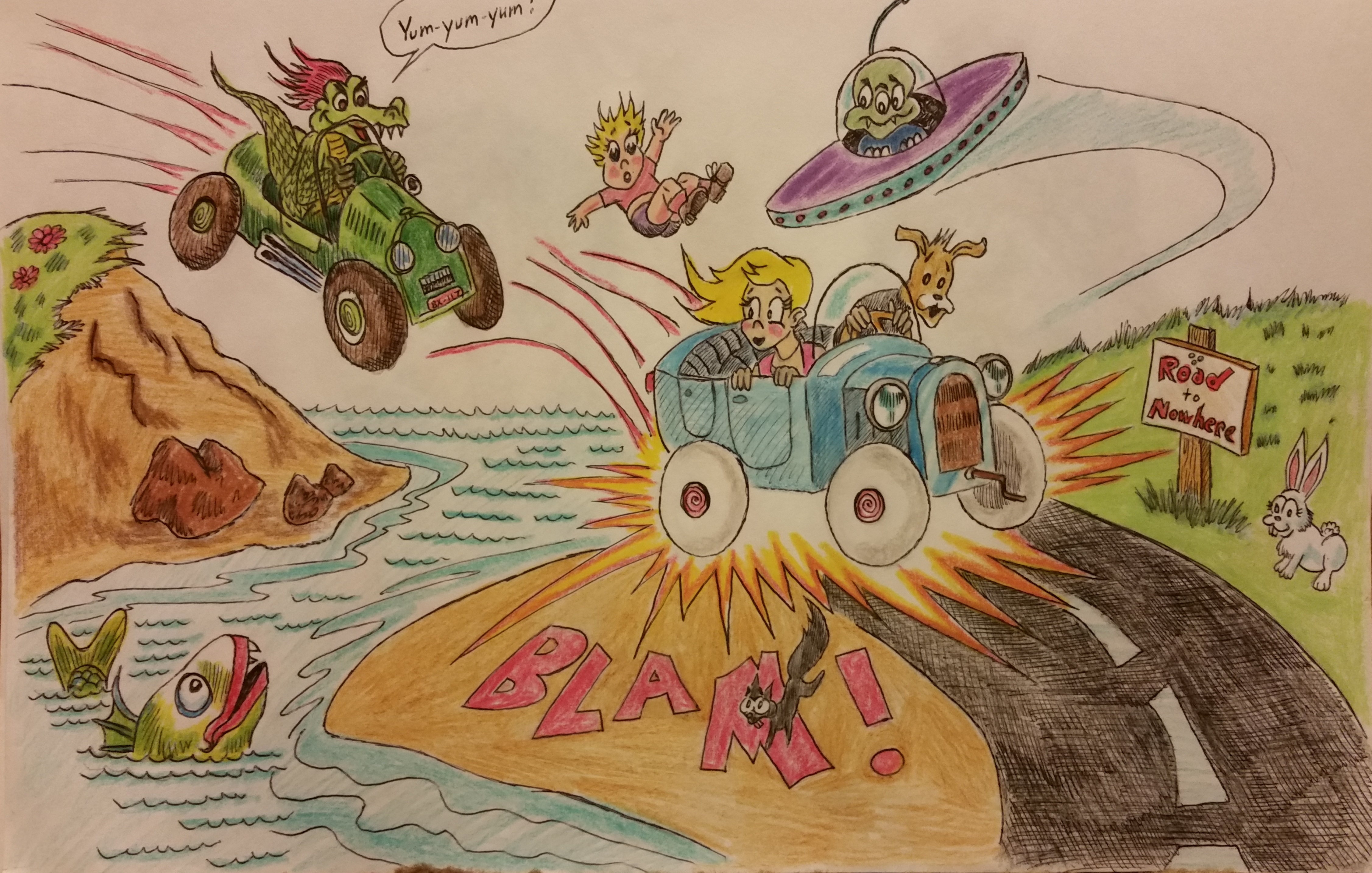
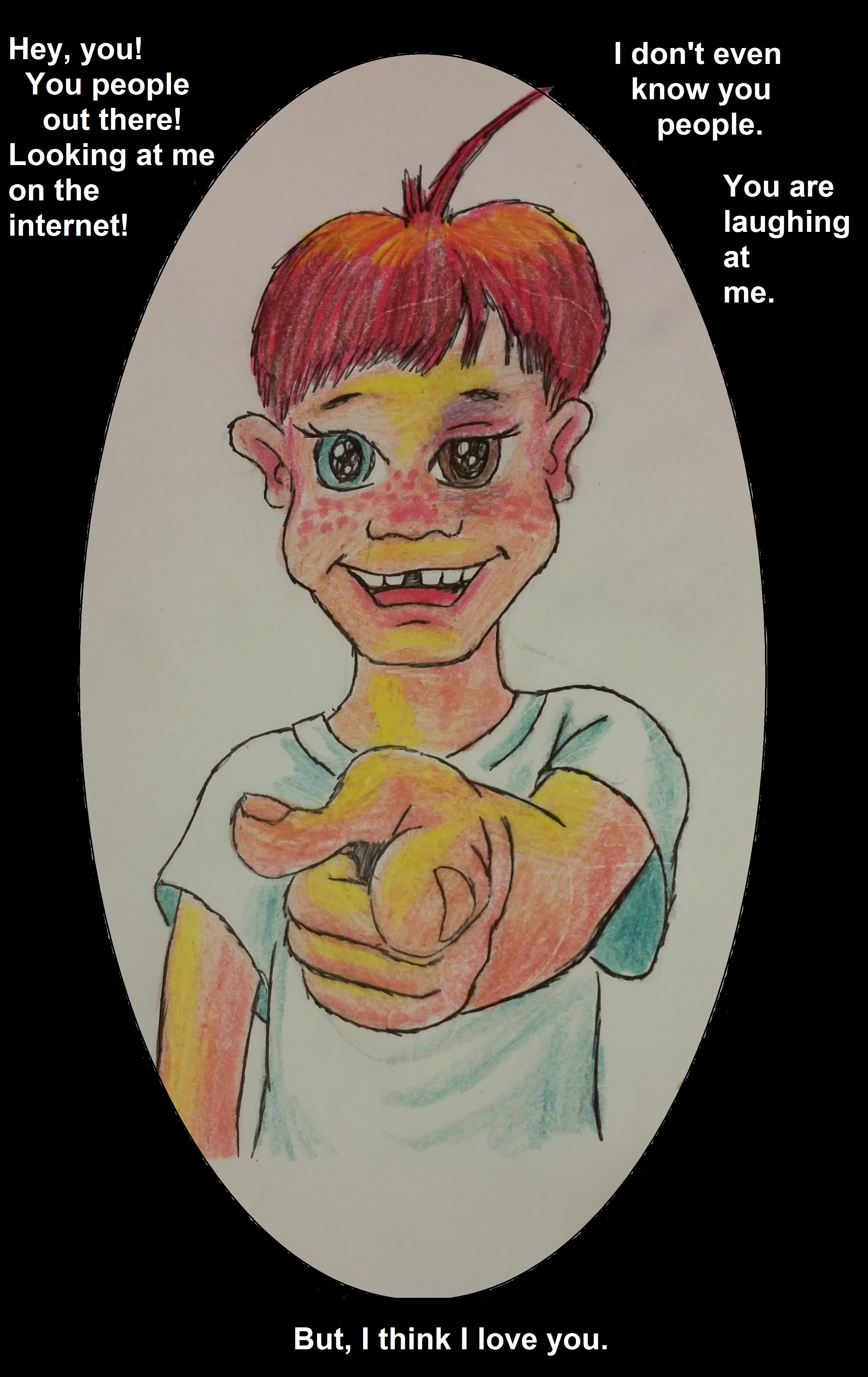
These are some of my favorite drawings from the past.


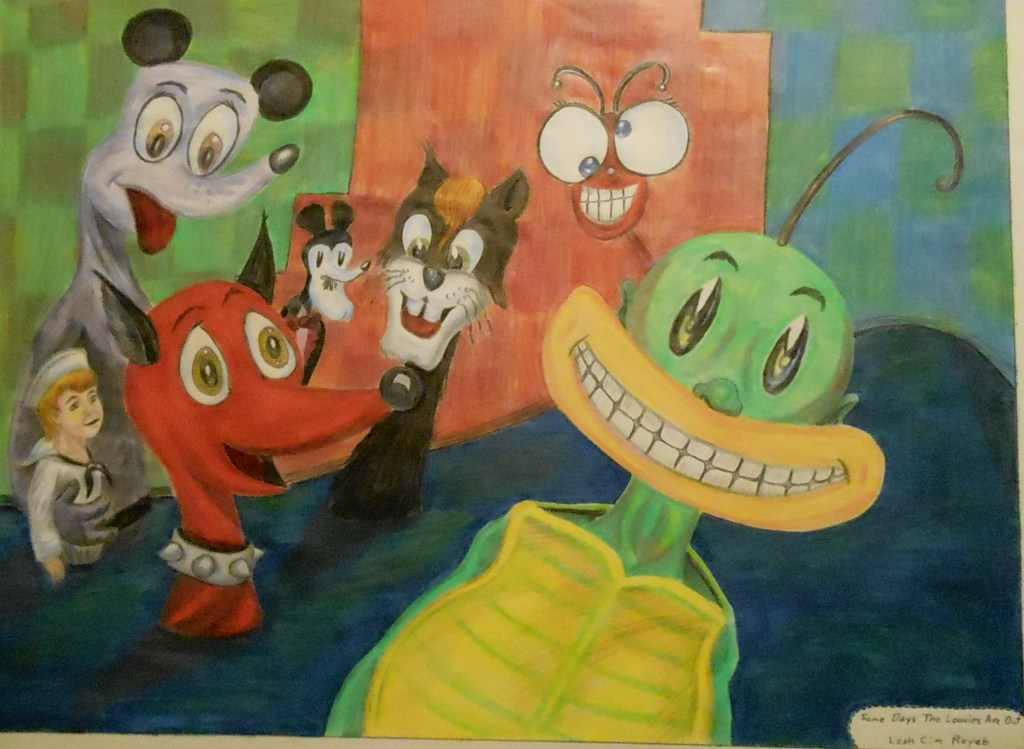
You may have noticed that my blog is about surrealist art, fantasy fiction for young adults, and a somewhat strange idea of what humor is all about.


Filed under announcement, artwork, blog posting, Paffooney


I Hope You Dance…
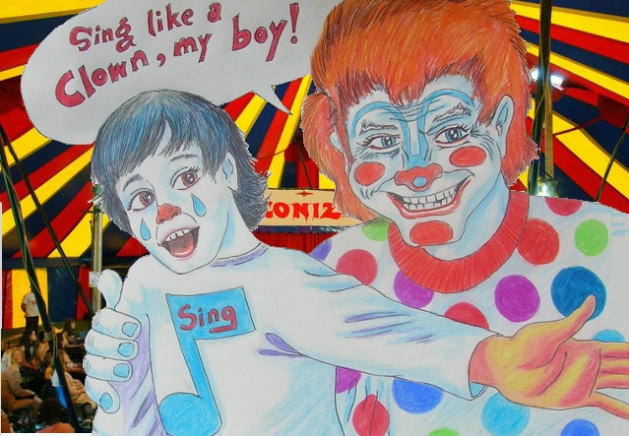
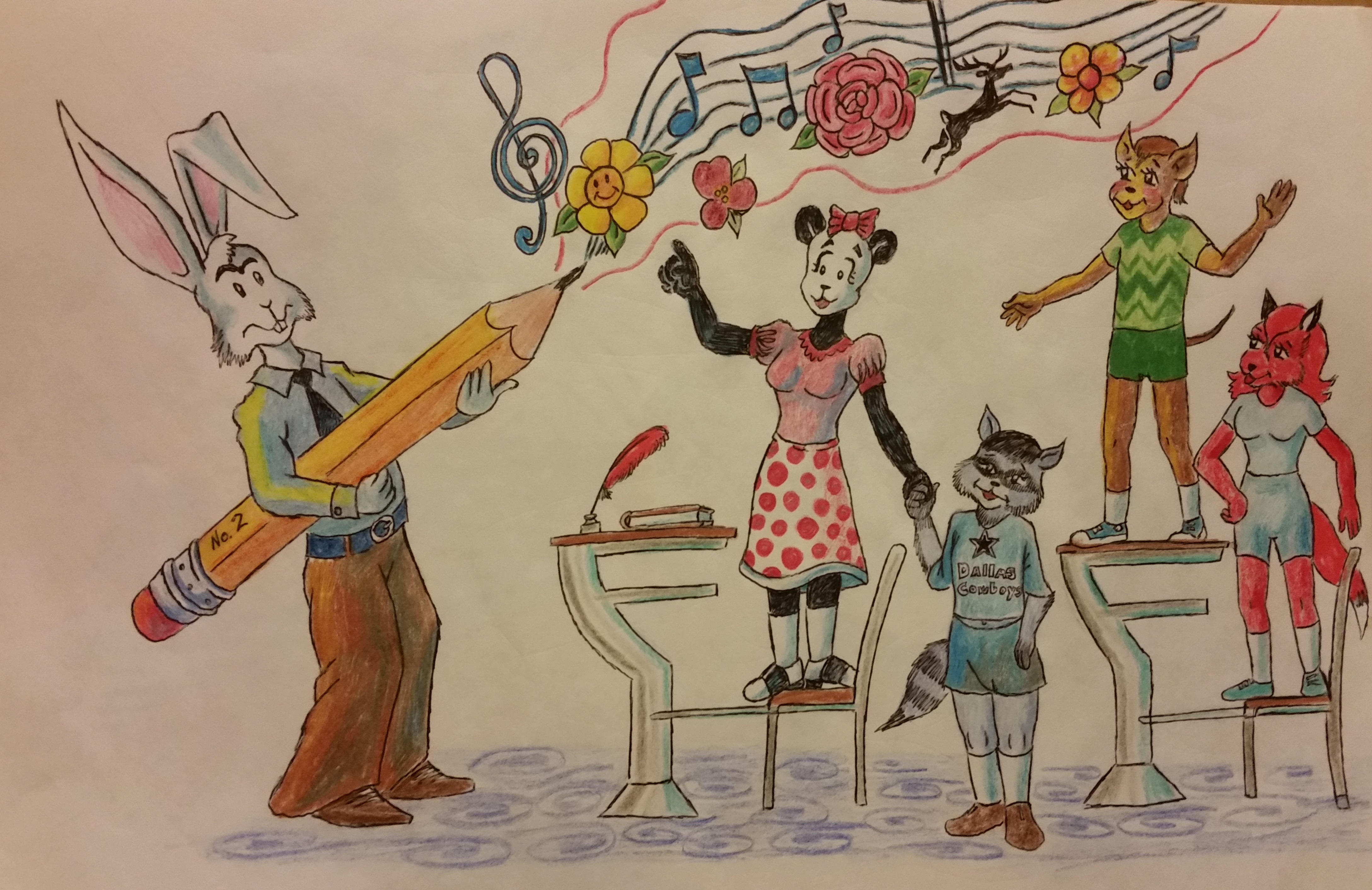
When you walk to the front of the classroom and take up the big pencil in front of a group of young teens and twelve-year-olds, there is a strong pressure to learn how to sing and dance. That, of course, is a metaphor. I was always too arthritic and clunky in my movements to literally dance. But I looked out over a sea of bored and malevolence-filled eyes, slack and sometimes drooling mouths attached to hormone-fueled and creatively evil minds. And I was being paid to put ideas in their heads. Specifically boring and difficult ideas that none of them really wanted in their own personal heads. So I felt the need to learn to dance, to teach in ways that were engaging like good dance tunes, and entertaining in ways that made them want to take action, to metaphorically get up and dance along with me.
I wanted them to enjoy learning the way I did.
But the music of the teacher is not always compatible with the dance style of the individual learner. The secret behind that is, there is absolutely no way to prompt them to dance along with you until you learn about the music already playing in their stupid little heads. (And you can’t, of course ever use the word “stupid” out loud, no matter how funny or true the word is,) You have to get to know a kid before you can teach them anything.
The discordant melodies and bizarre tunes you encounter when you talk to them is like dancing in a minefield blindfolded. Some don’t have enough to eat at home and have to survive off of the nutrition-less food they get in the school cafeteria’s free-and-reduced lunch program. Some of them have never heard a single positive thing from the adults at home, enduring only endless criticism, insults, and sometimes fists. Some of them fall in love you. Some due to hormones. Some due to the fact that you treat them like a real human being. Some because they just stupidly assume that everyone dances to the same tunes they hear in their own personal head.
Some of them automatically hate you because they know that if you hear their own secret music in their own self-loathing heads, you will never accept it. They hate you because you are a teacher and teachers always hate them. Some of them, deep down, are as loathsome as they think they are.
But, if you find the right music, you can get any of them, even all of them, to dance. It might be hard to find. It might be a nearly impossible task to learn to play that music once you find it. But it can be done.
And if you get them to dance to your music, to dance along with you, I can’t think of anything more rewarding, anything more life-fulfilling. Have you ever tried it for yourself? If you are not a teacher, how about with your own children or the children related to you? Everybody should learn to dance this dance I am talking about in metaphors. At least once in your life. It is addictive. You will want to dance more. So the next time the music starts and you get the chance… I hope you’ll dance!
Leave a comment
Filed under commentary, education, kids, metaphor, Paffooney, teaching
Tagged as art, being a teacher, dance, empathy, featured, features, music, News, recession, science, tea-party, theatre, writing