Category Archives: music

“It’s a Hard-Knock Life… for Us”

download

Yes, this is another in a series of reviews from the Uncritical Critic where I gush endlessly and almost mindlessly about movies, TV, books, and other sorts of stories that I love.  And just like other reviews that I have done, writing mainly to myself, this will probably bore you to the point of having to sandpaper  your tush just to stay conscious through it.  But I do, in fact, have a social conscience.  I do care about things moral and ethical.  That’s why I’m not going to talk about this Annie;
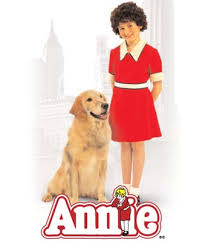
images

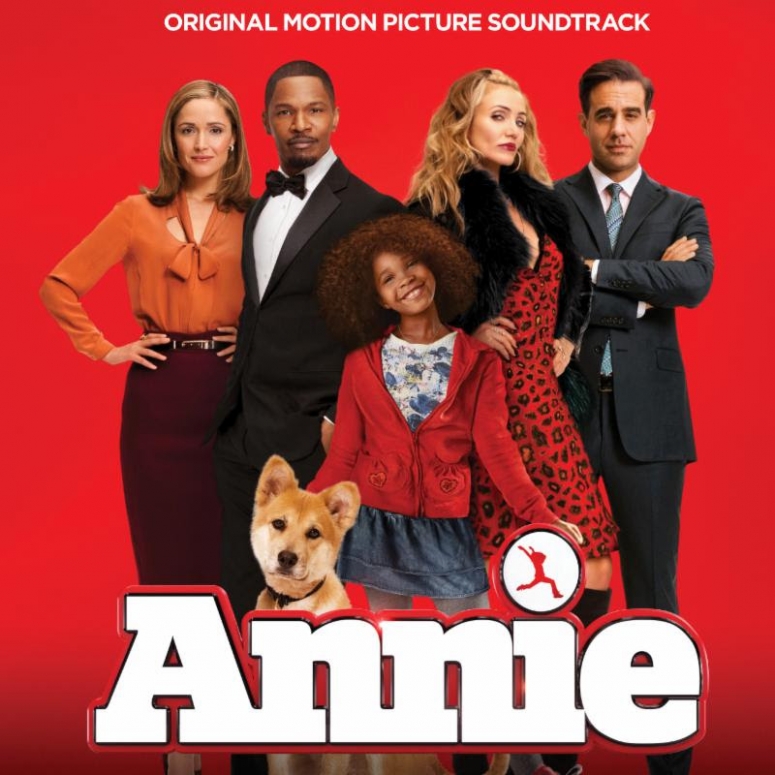
I want to talk about this one;

annie-2014-soundtrack.jpg

I am not sure how any of my white, conservative friends can work up such an angry fizzyblackengrrr about the remake of the musical using black actors as the principles.  I am not saying I don’t see color and I don’t notice the changes in the basic story to make it fit a more different-race-friendly cultural magnetism.  I am saying I love the changes.
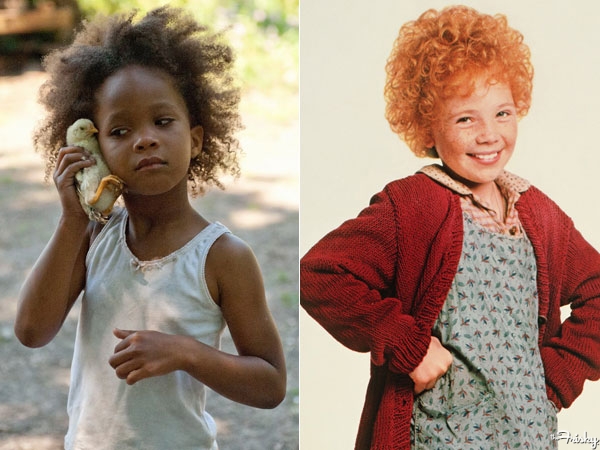
quvenzhane-wallis-annie-600x450

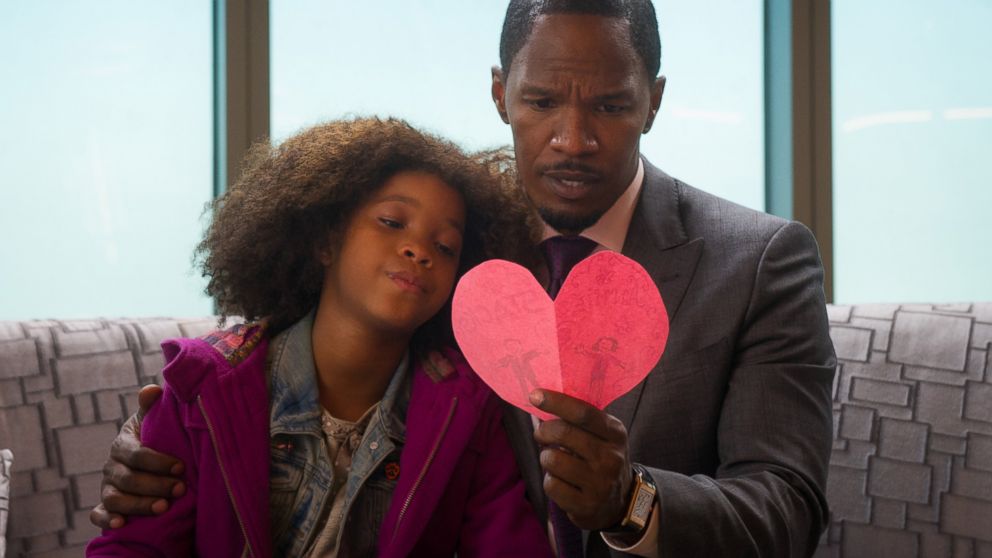
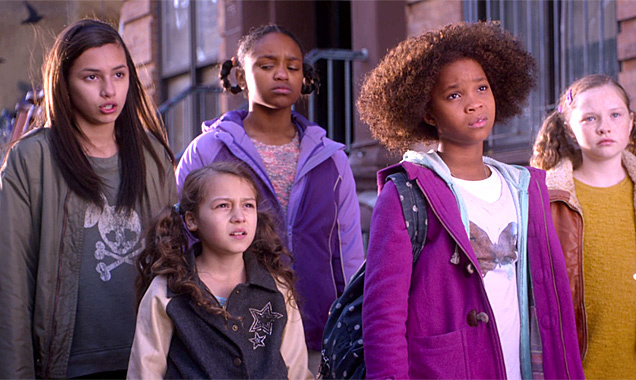
Quvenzhane Wallis is one of those little girls that, if she were actually an orphan, would be adopted in record time.  She sings, dances, and exudes a personal charisma to a degree that is not only perfect for this particular musical, but is not an act.  It is obviously her real, perky, upbeat self.  I would adopt her instantly even though I don’t have the finances, energy, or good health necessary to make that kind of commitment any more.  And the changes made to the songs, setting, and themes of the basic story I think are not only brilliant, but so very appropriate to our times.  The story of an orphan connecting to a lonely, power-hungry billionaire is transformed by the idea of finding the best way to connect the family that you not only want, but desperately need.  The Daddy Warbucks character, played brilliantly by Jamie Foxx, is able to realize his connection to his own lost father as he transforms himself into the father figure that Annie needs.  Songs are added and dialogue is changed in ways to bring out these complex themes of love and need.  It is a very different story from the one found in the Aileen Quinn/Carol Burnett film of the 1980’s.  And it is a story that needs to be told.

annie

“You are never fully dressed without a smile!” is an important theme for any person of color, or any outsider in our American society today.  The troubles and strife related to race tension, violence, and the American struggle to rid itself of racism are best faced with a kind of confident optimism that this musical was always intended to be a vehicle for.


It is a statement about the basic goodness of human beings.  This version of the musical even redeems the vile Miss Hannigan, leaving her at the end with a change of heart and a Hispanic boyfriend.  So, I really think that anyone who has a problem with this remake of a beloved musical made by Jay-Z, Will and Jada Pinkett Smith ought to examine the real reasons they feel troubled by it.  I think they really ought to let go of all baggage, especially the alligator-skin bags of racism, and just immerse themselves in this wonderful movie full of singy and dancy stuff.
 

Leave a comment

Filed under humor, movie review, music, racial profiling, red States, strange and wonderful ideas about life

The Silent Sonata

creativity

Being a writer is a life of music that happens only in your head.  You hear voices constantly.  They pulse rhythmically with insights and ideas that have to be written down and remembered.  Otherwise  the music turns clashing-cymbals dark and depressing.  Monday I wrote a deeply personal thank you to the Methodist minister who saved my life when I was a boy.  I posted a YouTube music video by the acapella group Pentatonix with that essay in a vain attempt to give you an idea of the music in my head when I composed that very difficult piece to give myself a measure of peace.

filch

I realize that I am not writing poetry here.  Poetry can so easily slip into melody and music because of rhythm and meter and rhyme.  And yet, words to me are always about singing, about performing, about doing tricks with metaphor and meaning, rhythm, convoluted sentence structure, and other sneaky things that snake-oil salesman do to get you to think what you are hearing is precisely what you needed to hear.  The Sonata of Silence…  did you notice the alliteration of the silvery letter “S” in that title?  The beat of the syllables?  Da-daah-da a da-da?  The way a mere suggestion of music can bring symphonic sounds to your ear of imagination as you read?  The way a simple metaphor, writing is music, can be wrapped into an essay like a single refrain in a symphonic piece?

psoriasis

A sonata is a musical exercise in three or four movements that is basically instrumental in nature.  You may have noticed that the movements are loosely defined here by the accompanying pictures, of which there are three.  And it is silent only in the way that the instruments I am using themselves make no noise in the physical world.  The only sounds as I type these words are the hum of an old air conditioner and the whirr of my electric fan.  Yet my mind is filled with crescendos of violins and cellos, bold brass, and soft woodwinds.  The voice saying these words aloud only in my head is me.  Not the me you hear when I talk or the me I can hear on recordings of my own voice, but rather the me that I always hear from the inside.  And the voice is not so much “saying” as “singing”.

Writing makes music.  The writer can hear it.  The reader can too.  And whether I croon it to make you cry, or trill it to make you laugh, I am playing the instrument.  And so, the final notes of the sonata are these.  Be happy.  Be well.  And listen for the music.

Leave a comment

Filed under imagination, insight, inspiration, music, Paffooney, strange and wonderful ideas about life

Chances Are…

Postable Paffoonies

Chances are… I could wear a foolish grin, like a Johnny Mathis Moon in the sky…

I could waltz… all alone in a dark room, never seizing on the chances to fly…

But there’s a time… meant to let the summer in…

And love songs… all make me wonder… Why?

Silly, I know.  But silly and surreal is how I go, how I deal with the time.  A song in my head leads to rhythm and metaphor and rhyme.  And it takes me from old winter and the waning of the moon… to the silly month of June… And my dancing shoes were never quite so spry.

Chances are… if you really read this, you will know I am depressed.

My life is all unfairly messed.

And I barely can get dressed…

To go tripping cross the floor, dancing awkwardly toward the door, ’cause I’m in need of so much more.

But in a poem I find it… the very reason that I rhymed it… like the crooning song that’s stuck in my old head…

I will catch it, and I’ll bind it, like a fool who hopes you’ll find it, and the treasure will be revealed before we’re dead…

Chances are… that you hear that silly tune, as it reels across the page in silent spread.  And the song will slowly stop, as I dance a final hop, and the answer is brightly shining in my head.

Leave a comment

Filed under Depression, feeling sorry for myself, finding love, healing, humor, magic, music, Paffooney, poetry

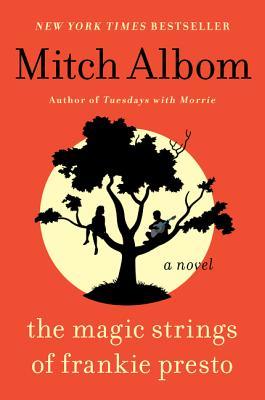
The Magic Strings of Frankie Presto (a book review)

29100120

The Magic Strings of Frankie Presto: A Novel
by Mitch Albom (Goodreads Author)

Michael Beyer‘s review

Jul 23, 2017

It was amazing!

This book is a miracle. It makes words into music and fills your imagination with some of the most beautiful guitar music ever played. It introduces you not only to a very convincing portrait of a fictional musician and Rock and Roll icon, but a vast array of very real musicians and show people who agreed to be used as a part of the story, approved the sections about them, and even helped Mitch Albom to compose it. These include notable music makers like Lyle Lovett, Darlene Love, Tony Bennett, Paul Stanley, and Burt Bacharach. The story itself transcends its fictional form, giving us a look at a musical history whose scope goes from the Spanish Civil War of the 1930’s to Woodstock, and on to the present day. It even gives us glimpses into the distant musical past, framing the story with the song Lágrima by the classical guitarist Francisco Tárrega. And all this music the book fills your mind with is actually performed only in your imagination and memory. Albom proves again with this book how his mastery of language makes him an absolute master story-teller.

496531384

And now, here is me trying to make sense out of a reading experience that made my figurative heart grow wings and soar into the clouds in ways brought forth only by the strains of a sweet, classical Spanish guitar.

Stories like this one make a unique music in the mind, and though it is all fiction, occurring silently in the theater of your mind, you hear the music in your heart.  This story elicited the music of Rodrigo’s Adagio throughout, a piece I know intimately.  I myself have never written a musical book the way this fiction book was written.  But I know now that I have to try.  Poetry becomes song lyrics, right?  There is a connection between a good archetypal story about life and love and laughter, and the bittersweet strains of music on a Spanish guitar.

I truly and utterly fell in love with this beautiful book.  Mitch Albom is a genius… for a Detroit Tigers baseball fan.  And I would not risk telling you anything that might spoil such a beautiful story.  All I can say is, don’t read it… listen to it as you would a piece of beautiful music.  Listen to it and love it.

Leave a comment

Filed under book review, Celebration, classical music, humor, music, novel, strange and wonderful ideas about life

What the Heck is this Blog About?

I read a lot of other people’s blogs for a lot of reasons.  As an old writing teacher and retired Grammar Nazi, I love to see where writers are on the talent spectrum.  I have read everything from the philosophy of Camus and Kant to the beginning writing of ESL kids who are illiterate in two languages.  I view it like a vast flower garden of varied posies where even the weeds can be considered beautiful.  And like rare species of flower, I notice that many of the best blossoms out there in the blogosphere are consistent with their coloring and patterns.  In other words, they have a theme.

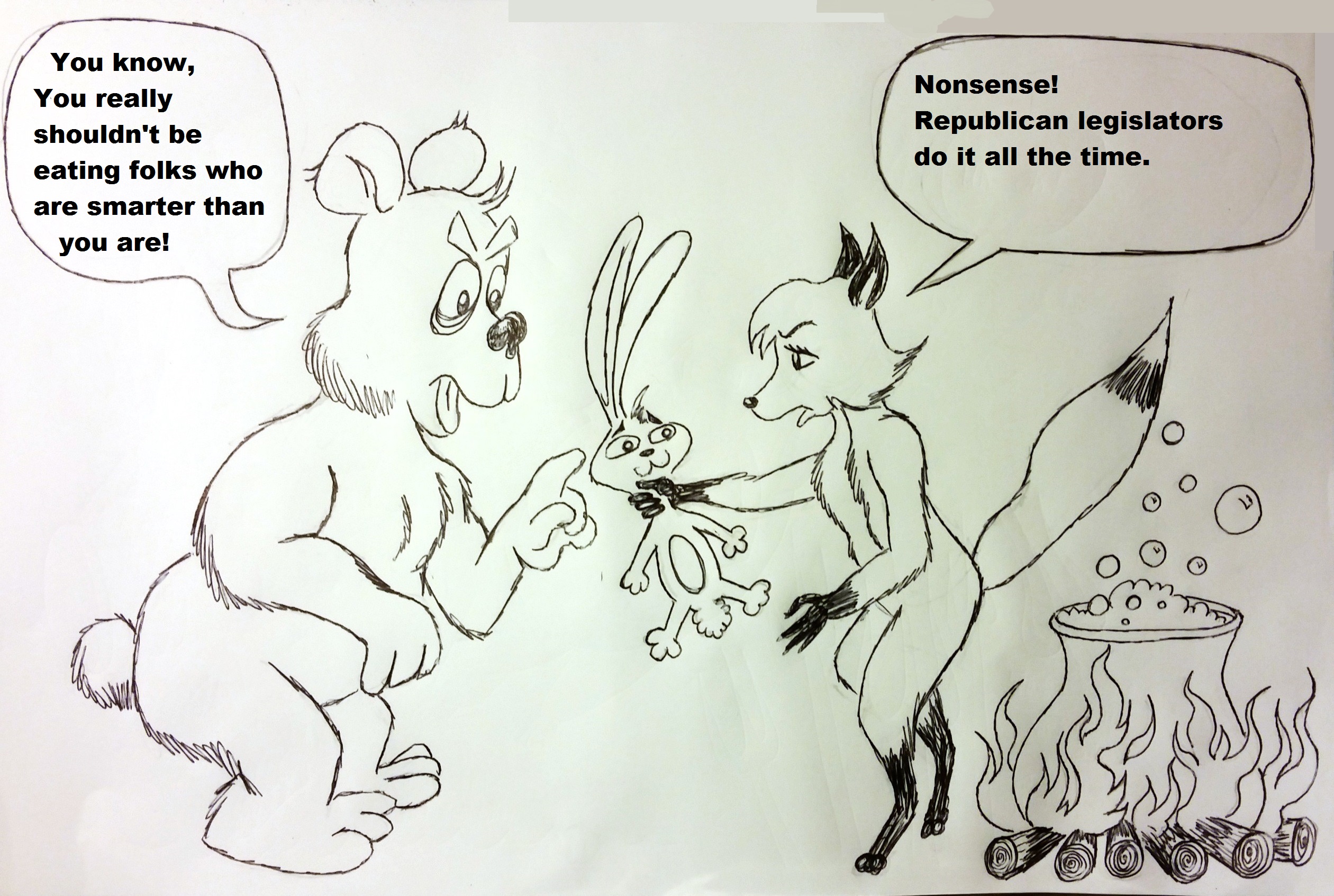
Fox logic

So, do I have an over-all theme for my blog?  It isn’t purely poetical like some of the poetry blogs I like to read.  I really only write comically bad poetry.  It has photos in it, but it isn’t anything like some of the photography blogs I follow.  They actually know how to photograph stuff and make it look perfect and pretty.  It is not strictly an art blog.  I do a lot of drawing and cartooning and inflict it upon you in this blog.  But I am not a professional artist and can’t hold a candle to some of the painters and artists I follow and sometimes even post about.  I enjoy calling Trump President Pumpkinhead, but I can’t say that my blog is a political humor blog, or that I am even passable as a humorous political commentator.

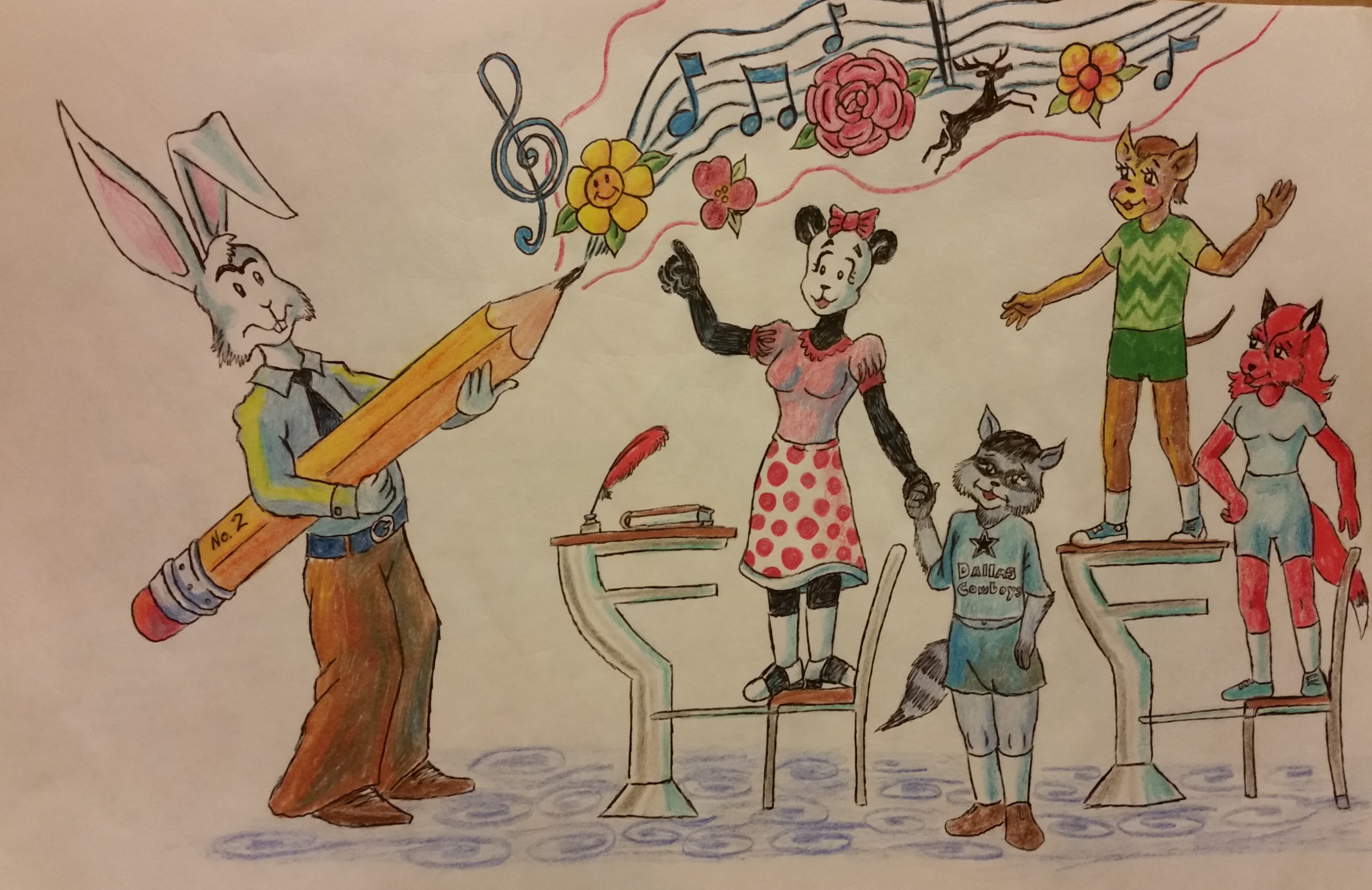
One thing that I can definitely say is that I was once a teacher.  I was one of those organizers and explainers who stand in front of diverse groups of kids five days a week for six shows a day and try to make them understand a little something.  Something wise.  Something wonderful.  Something new.  Look at the video above if you haven’t already watched it.  Not only does it give you a sense of the power of holding the big pencil, it teaches you something you probably didn’t realize before with so much more than mere words.

20150807_135323

But can I say this is an education blog?  No.  It is far too silly and pointless to be that.  If you want a real education blog, you have to look for someone like Diane Ravitch’s blog.  Education is a more serious and sober topic than Mickey.

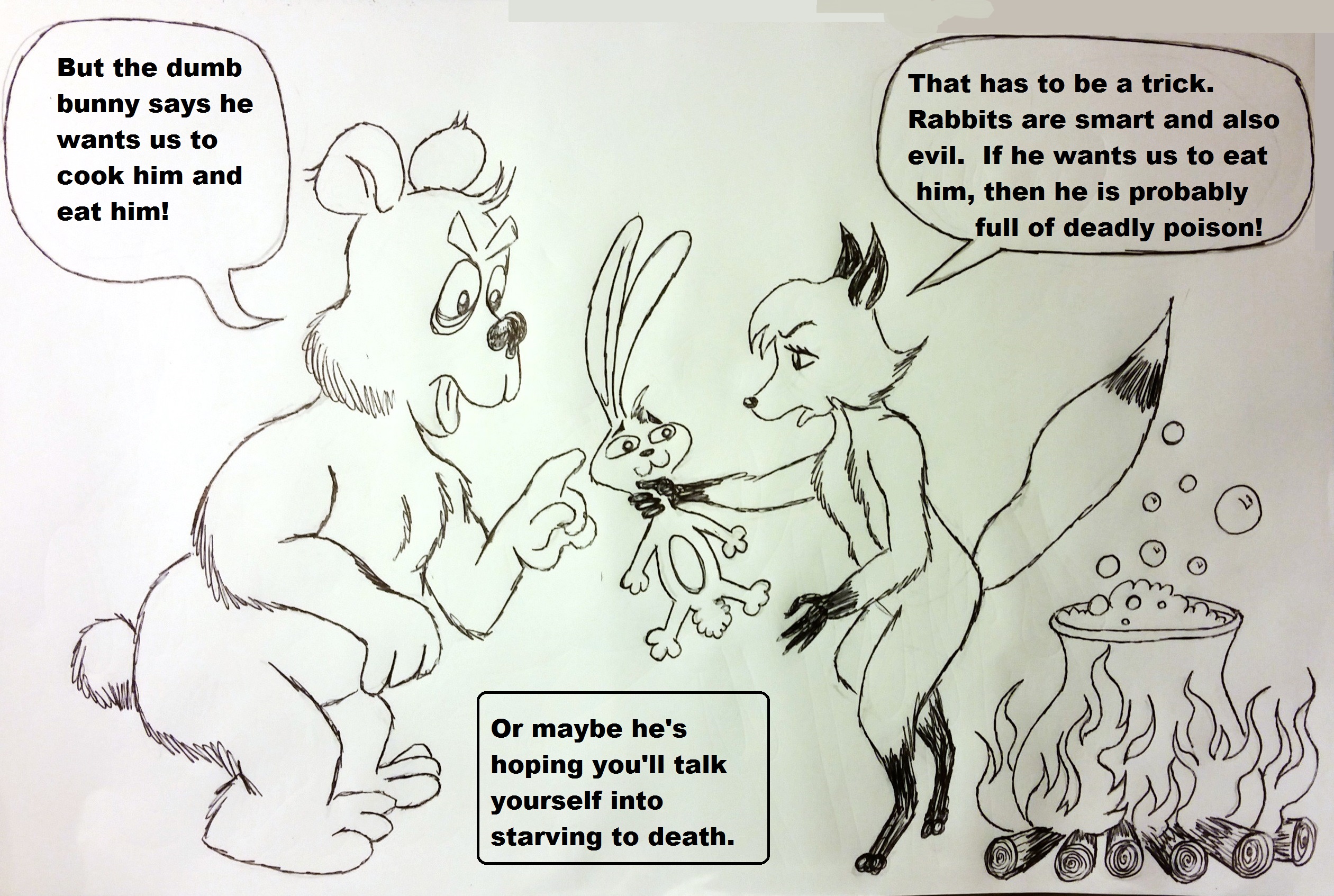
By the way, were you worried about the poor bunny in that first cartoon getting eaten by the fox and the bear?  Well, maybe this point from that conversation can put your mind at ease.

Fox logic 2

Mickey is tricky and gets good mileage out of his cartoons.

You may have gotten the idea that I like Bobby McFerrin by this point in my post.  It is true.  Pure genius and raw creative talent fascinate me.  Is that the end point of my journey to an answer about what the heck this blog is about?  Perhaps.  As good an answer as any.  But I think the question is still open for debate.  It is the journey from thought through many thoughts to theme that make it all fun.  And I don’t anticipate that journey actually ending anytime soon.


Leave a comment

Filed under humor, insight, inspiration, music, Paffooney, self portrait, strange and wonderful ideas about life, word games, wordplay, writing, writing teacher

The Lyrical Imperative

Creativity

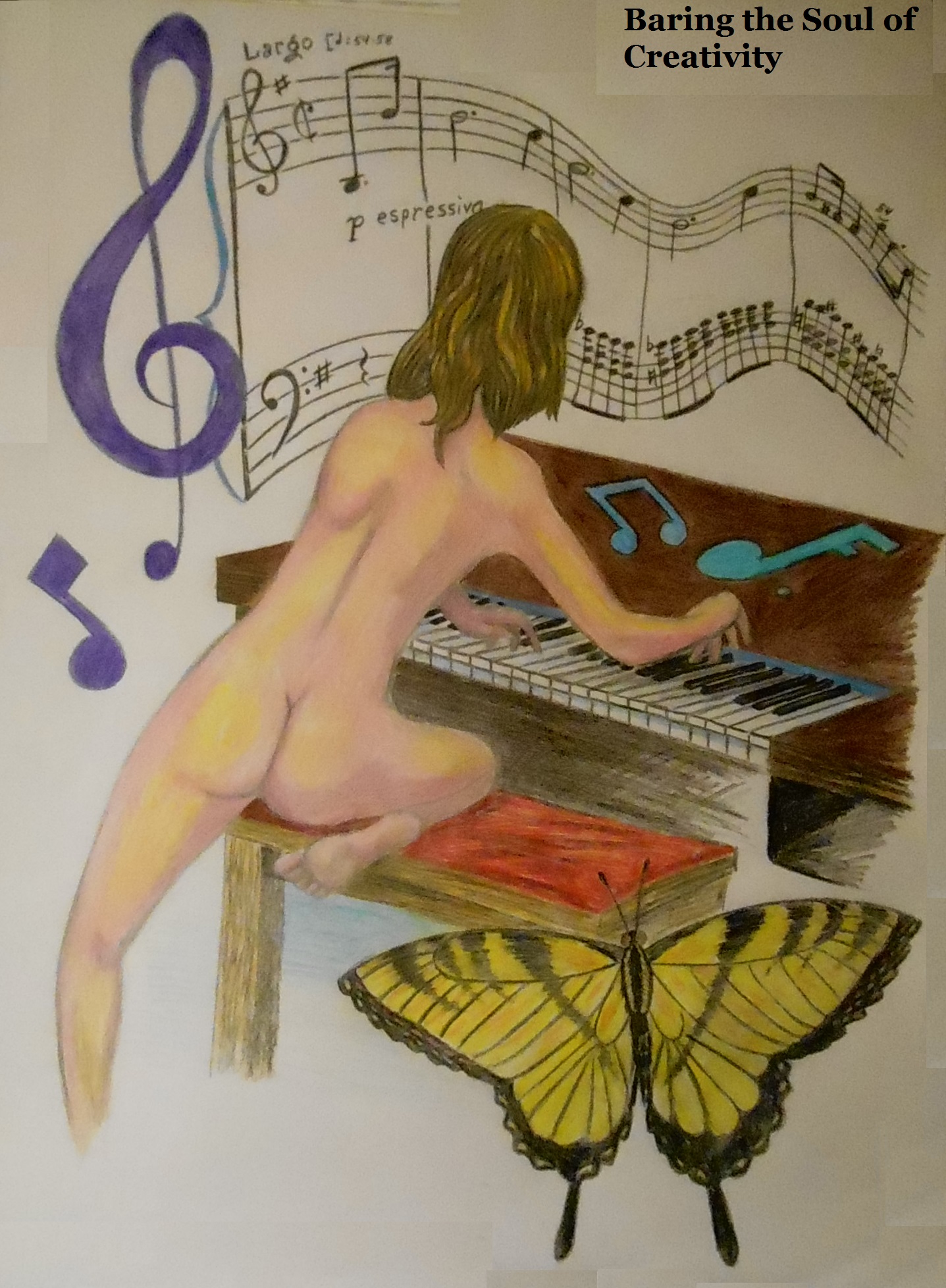
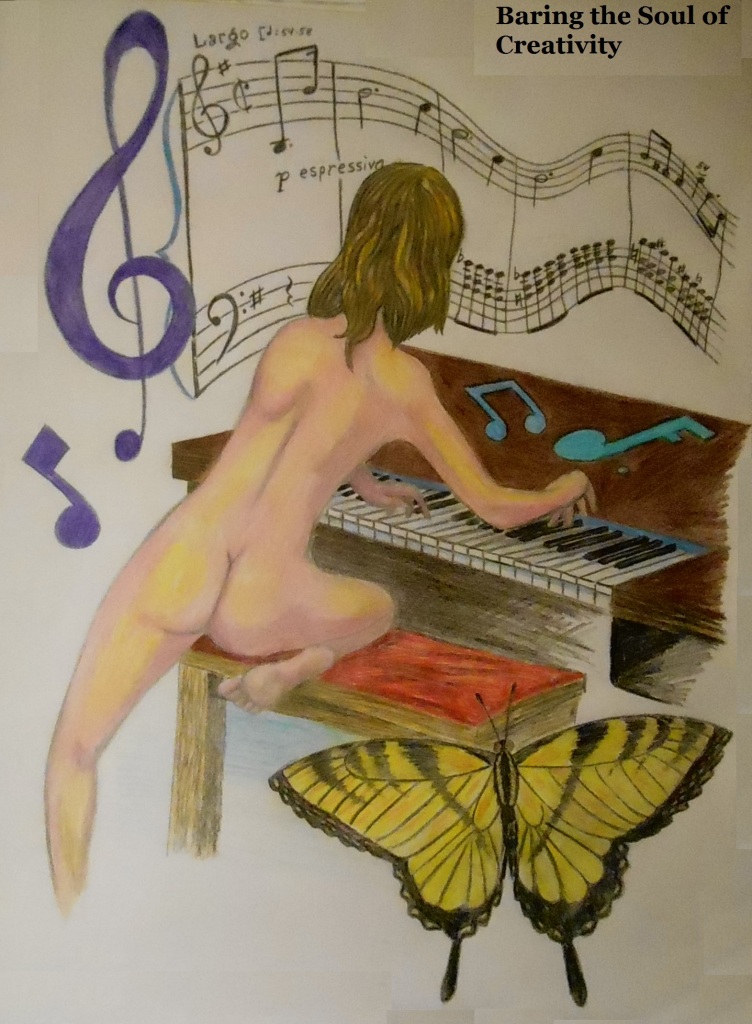
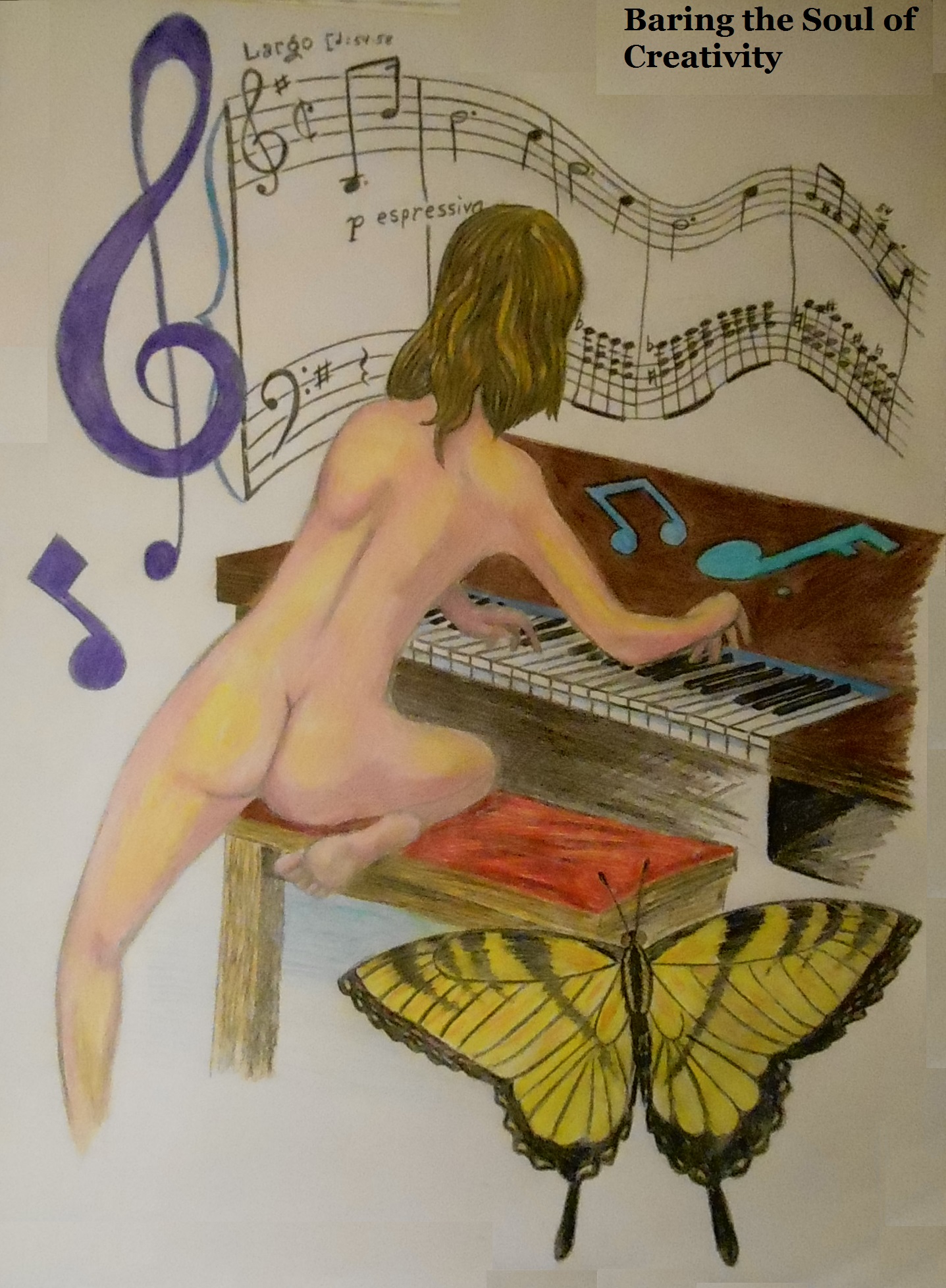
I am always amazed by the fact that things which are inherently silent in nature make music in your mind.  Writing is like that for me.  Drawing is like that.  And so is photography.  That is an actual musical score from Chopin in the background.  My son recognized it from a book of piano pieces I bought for him because he reads music and can turn those squiggle-bugs on the fence into the right plinkety-plunks on a keyboard.  But there is more music in that picture besides.  The nude young girl at the keyboard softly rendered in velvety colored pencil tones is also musical in nature, for more than just the fact of fingers on a silent colored pencil keyboard.  The lyrical loops of black and yellow in the wings of the tiger swallowtail butterfly also make music in my head, sprightly piano music like Chopin’s, or possibly Vivaldi’s violins.

Did you listen to the music?  I don’t mean Vivaldi’s, although if you haven’t heard it, you certainly should.  I mean the music in the words.  The music has to be there for me for the writing to be good.  That’s why I consider Ray Bradbury and Walt Whitman to be masters and Stephenie Meyer and E. L. James to be unreadable hacks.  The beat and the flow of the words need to be patterned and patient and wily.   Do you not hear it in that last sentence? The alliteration of the first two adjectives set off by the counterpoint of the stressed-unstressed beats of the third?  How can I explain this?

Iambic pentameter is the true genius of Shakespeare’s plays.  What the heck is iambic pentameter, you ask?  Well, I realize you have probably never needed to teach poetry to seventh graders, a truly impossible but infinitely rewarding task.  So let me tell you.  Units of stress called iambs consist of an unstressed syllable followed by a stressed syllable.  So naturally, if iambs are put into pentameter, then there must be five of them in a line of iambic pentameter poetry.  It is a simple, rhythmic way to say something profound and interesting.  The classic example is the first line of Shakespeare’s Sonnet 18;

Shall I compare thee to a summer’s day?

Translating that into X’s and O’s where X=stressed and O=unstressed;

O X O X O X O X O X

It’s simple, five oxes, all in a line.  Except that last one about oxes is actually O X O X X O O O O X, a less simple pattern, yet still organized on the beat.  Two iambs, a dactyl and an anapest.  Okay, now I am talking like a poetry geek, and I have to stop it before I hurt someone.

The whole point is, words should be musical, even when they are not the words to a song.  And now I must close on the verge of starting a ten-thousand word thesis.  I shall shut up now.  Here endeth the lesson.

Leave a comment

Filed under colored pencil, education, foolishness, goofy thoughts, humor, metaphor, music, Paffooney, poetry, strange and wonderful ideas about life

Morning Has Broken

Today is off to a miserable start.  I heard on the radio that David Bowie has died.  Ziggy Stardust… the Goblin King… The Man Who Fell to Earth… the Thin White Duke…is gone.  And even though since high school in the 1970’s I have never been quite sure how I felt about his music, I wept.  The man was a musical maker of lyrical poetry.  He could make you feel really really terrible… but he always made you feel.  And he made me depressed as he led me through the Labyrinth… but he also made me soar… on the wings of a barn owl.  It was about facing the darkness and finding your way.   Finding the way out.  Singing the Little Drummer Boy with Bing Crosby, but not actually singing it… making peace on Earth instead.  Sometimes things are just so weirdly beautiful it hurts.

I dropped my daughter off at her middle school, and then Jody Dean & the Morning Team played this on the radio.

I wept again.  Darkness is my old friend…  I have lived with and through depression after depression.  My own… my wife’s… my children’s…  And it is a miracle I have lived this long without succumbing to the Darkness.  It took Robin Williams.  It took Ernest Hemingway.  But somehow, the Goblin King always goaded me onward, to find the answer at the end of the Labyrinth.  “You… you have no power over me.”  And then I am okay once again.

20160111_072715

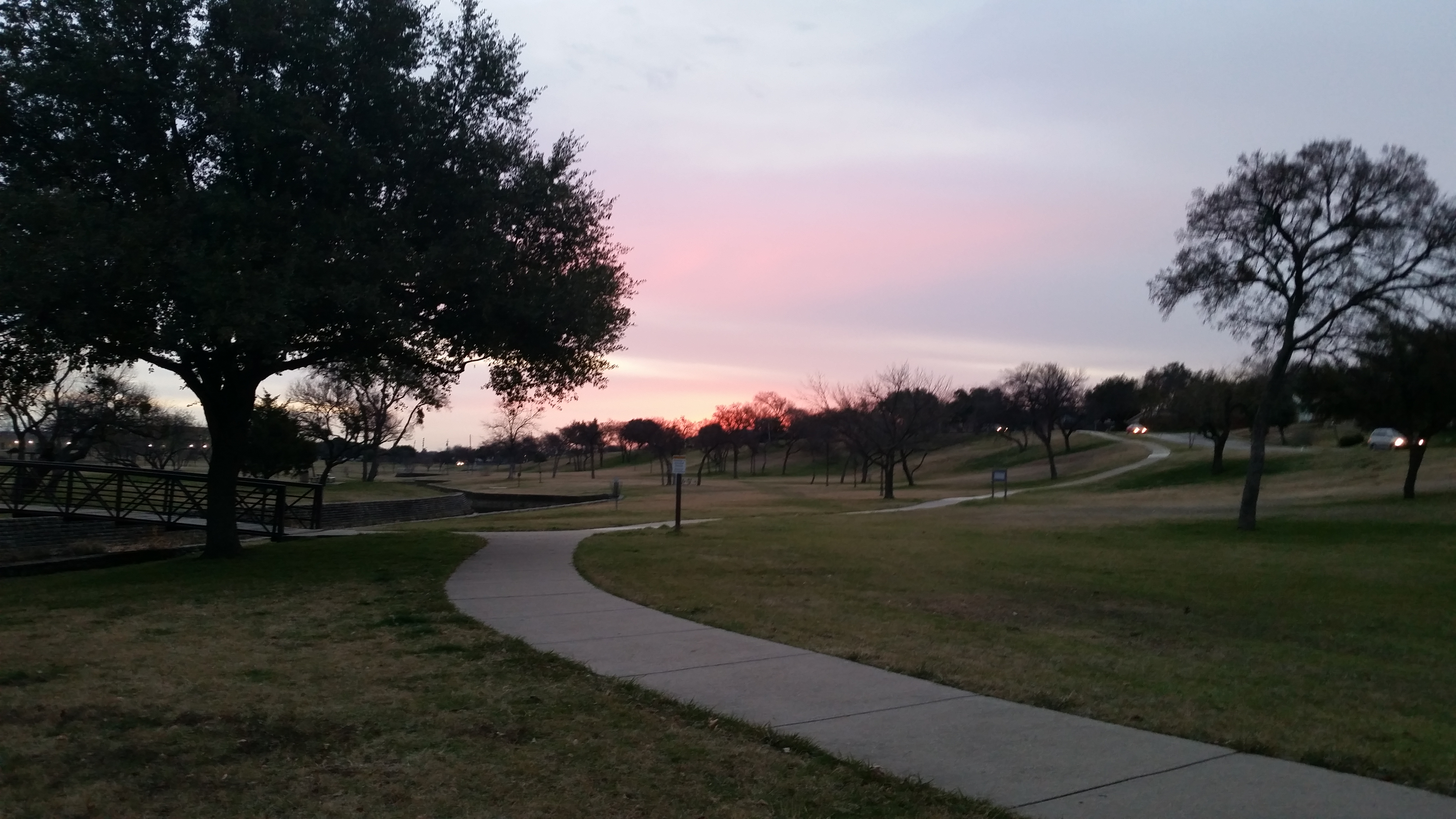
I captured the dawn once again this morning.  Once again I failed to truly ensnare the subtle reds and pinks and purples that were actually there.  But there it is, anyhow.  The morning has broken.  The blackbird has spoken.  The morning is new.

My heart is still sore this morning.  The dog didn’t help when she spilled the trash to get at the napkins with bacon grease on them.  We may have a dog-skin rug as a doormat later today.  But David Bowie left so many words and ideas behind to comfort me.  Is he one of those “neon gods we made”?  Of course he is.  But as the owl flutters off in the closing credits, we can take comfort in the knowledge that no one is ever really gone.  And we can always anticipate some… Serious Moonlight.

This is, of course, an old post revisited.

2 Comments

Filed under commentary, music, photo paffoonies, poetry

The Silent Sonata

creativity

Being a writer is a life of music that happens only in your head.  You hear voices constantly.  They pulse rhythmically with insights and ideas that have to be written down and remembered.  Otherwise  the music turns clashing-cymbals dark and depressing.  Monday I wrote a deeply personal thank you to the Methodist minister who saved my life when I was a boy.  I posted a YouTube music video by the acapella group Pentatonix with that essay in a vain attempt to give you an idea of the music in my head when I composed that very difficult piece to give myself a measure of peace.

filch

I realize that I am not writing poetry here.  Poetry can so easily slip into melody and music because of rhythm and meter and rhyme.  And yet, words to me are always about singing, about performing, about doing tricks with metaphor and meaning, rhythm, convoluted sentence structure, and other sneaky things that snake-oil salesman do to get you to think what you are hearing is precisely what you needed to hear.  The Sonata of Silence…  did you notice the alliteration of the silvery letter “S” in that title?  The beat of the syllables?  Da-daah-da a da-da?  The way a mere suggestion of music can bring symphonic sounds to your ear of imagination as you read?  The way a simple metaphor, writing is music, can be wrapped into an essay like a single refrain in a symphonic piece?

psoriasis

A sonata is a musical exercise in three or four movements that is basically instrumental in nature.  You may have noticed that the movements are loosely defined here by the accompanying pictures, of which there are three.  And it is silent only in the way that the instruments I am using themselves make no noise in the physical world.  The only sounds as I type these words are the hum of an old air conditioner and the whirr of my electric fan.  Yet my mind is filled with crescendos of violins and cellos, bold brass, and soft woodwinds.  The voice saying these words aloud only in my head is me.  Not the me you hear when I talk or the me I can hear on recordings of my own voice, but rather the me that I always hear from the inside.  And the voice is not so much “saying” as “singing”.

Writing makes music.  The writer can hear it.  The reader can too.  And whether I croon it to make you cry, or trill it to make you laugh, I am playing the instrument.  And so, the final notes of the sonata are these.  Be happy.  Be well.  And listen for the music.

Leave a comment

Filed under imagination, insight, inspiration, music, Paffooney, strange and wonderful ideas about life

Eine Kleine Nachtmusik

It is, of course, one of the most powerful, masterful, and best-known pieces of music ever written.

Mozart completed the “little serenade” in Vienna in 1787, but it wasn’t published until 1827, long after Mozart’s untimely death.

The Serenade is incorrectly translated into English as “A Little Night Music”. But this is and always has been the way I prefer to think of it. A creation of Mozart written shortly before he hopped aboard the ferryman’s boat and rode off into the eternal night. It is the artifact that proves the art of the master who even has the word “art” as a part of his name. A little music to play on after the master is gone to prove his universal connection to the great silent symphony that is everything in the universe singing silently together.

It is basically what I myself am laboring now to do. I have been dancing along the edge of the abyss of poverty, suffering, and death since I left my teaching job in 2014. I will soon be taking my own trip into night aboard the ferryman’s dreaded boat. And I feel the need to put my own art out there in novel and cartoon form before that happens.

I am not saying that I am a master on the level of a Mozart. My name is not Mickart. But I do have a “key’ in the name Mickey. And it will hopefully unlock something worthwhile for my family and all those I loved and leave behind me. And hopefully, it will provide a little night music to help soothe the next in line behind me at the ferryman’s dock.

Leave a comment

Filed under artwork, cartoons, classical music, commentary, feeling sorry for myself, Hidden Kingdom, magic, metaphor, music, Paffooney

O Mio Babbino Caro

R-4036541-1353123762-4914.jpeg

This beautiful song, an operatic aria by Puccini, is from the comic opera Gianni Schicchi.  But, more important than that is what the song actually means in context.

In the opera, Gianni Schicchi is a con man intent on swindling a family out of their inheritance and knowing all along that he will be destined to go to hell when he dies.  The family is gathered for the reading of the rich man’s will, which is, because this is a comic opera, lost for the time being.  Their main concern is for the money, which rumor has it has all been willed to the church.  But one among them is actually worthy of inheriting the money, Rinuccio the son of the rich man’s cousin.  And, as luck would have it, as it always does in comedies, Rinuccio is the one who, during the manic and desperate search for the will, actually finds it.  And assuming he comes out well in the will, he secures a promise from his mother that if he inherits money, he can marry Schicchi’s beautiful daughter Laurretta whom he truly loves.

But when he reads the will, he is devastated.  The money all goes to a monastery.  He begs Schicchi to help him convince the family that he should marry Laurretta anyway.  This Gianni Schicchi tries and finds it harder than turning water into wine.  So Schicchi is about to give up when Lauretta finally speaks up for herself through the song,

O Mio Babbino Caro (My Beloved Father)

At this point Schicchi is moved by the beautiful song and even more beautiful love his daughter has surprised him with.  He not only agrees to help, but executes a bizarre plan, hiding the rich man’s body and pretending to be him come back to life to rewrite the will.  Now the will favors Rinuccio, and over the protests of the family, he inherits the money and marries his true love, Schicchi’s daughter.  The opera ends with Schicchi singing his case to the audience, telling them in song that going to hell is worth it to aid true love.

m570024353_1

And this, then, is the truth of O Mio Babbino Caro.

Love, expressed through the surprise of hidden talent suddenly revealed, is the most persuasive argument there is.

Whether it is the love in the music suddenly discovered in the overwhelming voice of a little girl like Jackie Evancho or Amira Willighagen, or the late great Maria Callas who also sang the role, or even the singer of Puccini’s greatest work who is yet to perform it and make silly old men like me weep for beauty’s sake, the song is the most persuasive argument there is in favor of true love.

hqdefault (2)

That is a thing I desperately want to capture in the novel I am writing now, Sing Sad Songs.  Love expressed in music.  Love that reverses loss.  Love that heals all things.  And Love that moves all people.  The love that is masterfully sung in O Mio Babbino Caro.

Francois spotlight

That book is now published and available on Amazon.

Leave a comment

Filed under art criticism, classical music, daughters, humor, music, Paffooney, strange and wonderful ideas about life