Category Archives: book review

Like Herding the Wind (A Book Review)

25967846

This is a review I did on Goodreads of a book by an Indie author I met through PDMI Publishing.  It is the first book of hers that I have read, but I couldn’t help but try to promote it.  So here is what I wrote on Goodreads (hoping that I don’t make her beautiful story into an instant worst-seller);

Good science fiction is usually based on an engaging premise that makes you think about it long after the story is finished. Cindy Koepp’s book is like that. The Eshuvani race of aliens crash land their generation ship on the planet Earth in 1612, in the region of Saxony in the Holy Roman Empire. They encounter the human race with weapons drawn. But a brave and dedicated human cleric defuses the situation and convinces two peoples to learn about each other peacefully. The Eshuvani are converted to Christianity and with their superior technology, choose to try to peacefully share a planet rather than go to war as an alien invader.

But an even more fascinating thing about this book is that it doesn’t choose to be about that first-contact event. It is a hard-boiled police procedural novel set in 1965. Two police forces, one Eshuvani, and the other human, are faced with the problem of alien terrorists attacking the human police for reasons unknown. It leads to a story filled with suspense, murder, kidnapping, and racial tensions blooming into violence between two different races.

So this book is a murder mystery and a story of anti-terrorist police procedure at the same time as it is a form of science fiction known as alternate history. It leads you to want more stories set in the same alternate reality. And it is filled with engaging characters about whom you want to know more.

Amaya, the kiand or captain of the Eshuvani law enforcers, is an instantly likable character whom you can’t help but root for as she struggles with loss of her family and her former partner, the inexplicable difficulties and road-blocks put in her way by her own government, and the need to form a new functioning department out of young and untried Eshuvani officers… all while being hunted and attacked occasionally by the terrorists.

Ed Osborn is her human counterpart, and also her “urushalon”, her inter-species adopted child. He has the difficult task of trying to fight off the Eshuvani terrorists who seem to have his men in the center of the cross-hairs of their weapon-sights, while at the same time trying to teach his men about an alien race and culture that they are trying to work beside and integrate with.

This novel is definitely worth the read for science fiction lovers, and people who like to think deep thoughts about how we would react to an entire race of beings forcing us to share our planet, just as their journey was also interrupted with difficult choices forced upon them.
3 Comments

Filed under book review, science fiction

Mennyms (A Book Review)

20160611_100605

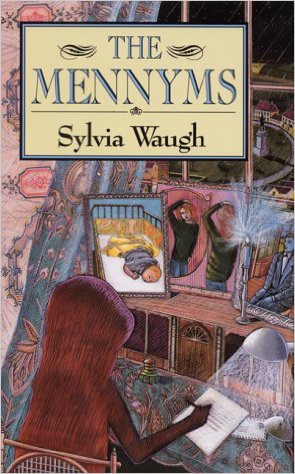
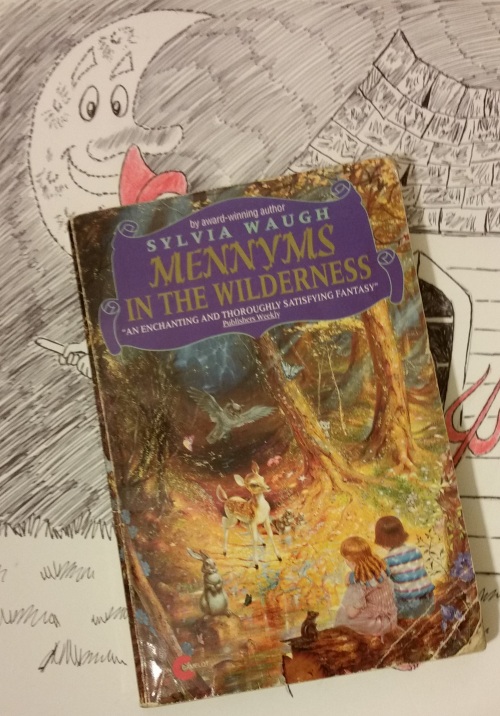
This is the book I have really read, though I intend to acquire the rest.

Sylvia Waugh is a British writer of children’s books who has a lot in common with me.  She spent her career as a teacher of grammar.  In her late fifties she became a published author.  Her book series of the Mennyma is a charming fantasy adventure about dolls so loved by their owner, they actually come to life… and survive her…. and then have to make their way in a world that would be horrified by them and might easily seek to destroy them.

20160609_155347

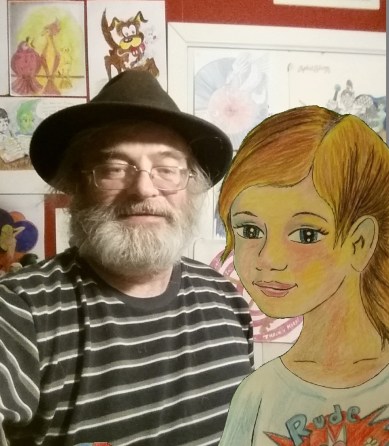
Hopefully none of my dolls come to life after I croak. After years of collecting, they nearly outnumber humanity.

But rest assured, the dolls in this sweet-natured children’s book series would never prove evil.  The books are more fantasy-comedy than horror story.  In fact, they are impossibly far away from horror.

51QZSMA6EKL._SX293_BO1,204,203,200_

The original book.

Joshua Mennym is the head of a family of life-size rag dolls.  He pretends to be a middle-aged man.  He generally keeps his distance from the general public, because, up close, his basic rag-doll-ness would stand revealed.  Rag dolls are not supposed to walk and talk, let alone have families and live in a home of their own.   His wife is Vinetta Mennym, also a rag doll.  Together they are parents to the ten-year old twins, Poopie, the boy, and Wimpey, the girl.

The teenage twins are Pilbeam and Soobie.  Pilbeam is the girl and constant companion of the elder teenage sister, Appleby.  Soobie is the boy and  blue.  Why their former owner, Kate Penshaw, made him with a blue head and blue feet and blue hands is a mystery both to the Mennyyms and to me.   It causes him to be the one most likely to cause exposure of the family secret because even at a distance he does not look like a “real people” person.

Baby Googles is the smallest of the family, constantly cared for by the nanny, Miss Quigley, who is also considered a Mennym because she is also a doll.

Grandpa Magnus Mennym lives in the attic with Grandma and takes care of the household bills.  He writes scholarly works on the English Civil War and publishes them for a modest income which comes through the mail.  Granny Tulip is also relied upon for her wisdom and experience whenever a problem with keeping the family secret comes up.

Each book in the series contains a different adventure revolving around the realistic comedy generated by impossible people trying so hard to be real.  I absolutely love the adventures, even the ones I haven’t read yet.  And I know that the only way you could possibly love these books too is if you share my loony love of the fantastically impossible that turns out to be real.  After reading these books, I fully intend to keep a very close eye on my own doll collection.

Leave a comment

Filed under artists I admire, book review, doll collecting, good books, humor, imagination, old books

Hogfather (a Book Review)

20160414_210029

I finished reading the book Hogfather, by Terry Pratchett,  while sitting in the waiting room as the dentist worked on the wires of my son’s braces in a nearby dentist’s chamber of horrors.  The receptionist and secretary probably thought I was insane for incessantly chortling and making those other rude snorty noises you make when you don’t want to interrupt others with laughing, but can’t help it.  What better way to wait in the cold chambers of dental anxiety than to read a funny, funny book about an assassin named Mr. Teatime who meant to slay the Hogfather, Terry Pratchett’s version of Santa Claus, by stealing children’s teeth from the tooth fairy and using them to control young minds and make them stop believing in the Hogfather, that giver of gifts on the sacred and festive Hogswatch Eve?

Naamloos-11-1024x436

This story has an unusual hero.  Death, that skeletal reaper of souls and talker in ALL CAPITOL LETTERS.  Oh, and not just Death.  His granddaughter Susan is along for the adventure.  So Death puts on the red suit to make people believe in the Hogfather again while Susan tracks down the perpetrators of the tooth fairy plot.

Terry Pratchett’s Discworld novels are full of bizarre but highly developed characters who not only make you laugh, but make you think.  The books can be fairly thick and full of complex ideas, and yet, the pages melt away as you read.  And the people who can hear you laughing about the book will think you are absolutely crazy.

2 Comments

Filed under book reports, book review, humor

Catch a Falling Star – Book Review

mewall24

I finally got the book review from Serious Reading.  If you are actually interested, you can find it here;

Seriousreading.com Book Review

I have not been a very successful marketer of my own book.  But I have made attempts to get help with it.  This book review is an example of that.  I have chosen to reproduce the interview here as a way of ditching my responsibility for writing anything new in this post.

Interview with Michael Beyer, author of “Catch a Falling Star”

A common misconception entwined with authors is that they are socially inept, how true is that?

Quite true… the person who goes on to become a successful author is the sociopath who sits in the back of the classroom during his freshman year of high school watching everybody through pop-bottle-bottom glasses and taking notes on everything everyone else is doing or saying. But, the rub is that you cannot successfully write anything without learning how to talk to people first. This is why most of them take years to get their books successfully completed. It is also why some authors have closets full of manuscripts that no one has ever seen.

Do all authors have to be grammar Nazis?

Alle begrüßen die heiligen Worte! Yes, authors must pass through the grammar Nazi stage, even if they are to become grammar anarchists like Kurt Vonnegut or Terry Pratchett. You have to know the rules you are breaking before you can break them without simply being stupid.

If you could have been the original author of any book, what would it have been and why?

My own book. The good books that are out there are good only because you couldn’t rewrite it and make it any better than it already is. I also don’t want to waste my time re-writing a dumb book or an evil book or a goofy book… well, I might have to think twice about the goofy book.

What makes this particular genre you are involved in so special?

I was a public school English teacher for 31 years in Texas. I write YA novels because, not only are kids my main audience, but also my primary source material. All the best fantasy, science fiction, and humor ideas can be accidentally happened upon and written down somewhere in a middle school classroom. All the best characters and clowns too.

What works best for you: Typewriters, fountain pen, dictate, computer or longhand?

For twenty years I wrote everything out in longhand in spiral notebooks. It took considerable work to copy it all out on a typewriter. Then some nut invented that computer thing, and an even nuttier nut showed me how to use one. The world will live to regret those two big mistakes.

When did it dawn upon you that you wanted to be a writer?

I started writing things down in the back of the classroom when I was about twelve. Before that I told stories to everyone who would listen… or couldn’t escape listening. My sisters still blame me for recurring nightmares and my grade school best friend still reminds me that I am not actually a changeling left on Earth by Martians. I guess I haven’t actually made up my mind yet about becoming a writer.

How often do you write?

Are you asking how many times a day? Or how often I stop writing? The second one is easier to answer… never.

Do you have a set schedule for writing, or are you one of those who write only when they feel inspired?

I write whenever life doesn’t interfere. Now that I am retired from teaching I write every morning for at least an hour and at least 500 finished words. But I am writing in my head even when I am at Wal-Mart returning the sneakers my daughter begged me for because I wasn’t smart enough not to buy pink ones.

How hard was it to sit down and actually start writing something?

About as hard as it is to remember to breathe. As an English teacher I always made it my policy to write any writing assignment I ever assigned to my students. Other members of the faculty all knew that I was willing to write anything that needed writing, and the State of Texas requires teachers to write huge stacks of B.S. daily. So at least some of their lesson plans look suspiciously like mine.

Writers are often associated with loner tendencies; is there any truth to that?

I know a lot of other writers who are stressed by being around stupid people too much. But, as a former school teacher, I like people… especially kid people… even the stupid ones.

Do you think writers have a normal life like others?

No. I don’t have to explain that one, do I? The world does not have as many writers as there are normal people. There has to be a reason for that, don’t you think?

Do you set a plot or prefer going wherever an idea takes you?

I have in the past mapped out elaborate road-maps of plot and character motivation. I never followed a single one to the “X marks the spot”. You only find treasure if you learn to dig for treasure along the way.

What, according to you, is the hardest thing about writing?

Quitting for the session. I try always to leave something unwritten that I wanted to say to pick up next time… and it often brings me back to do some more well before I had planned to.

What would you say is the easiest aspect of writing?

Everything about writing is hard. I do it easily now only because I have worked at it since I was twelve. Years of practice and re-writing, trying new things and failing badly, trying again and failing again, ironing out the wrinkles and then putting them back in… It takes effort, just like building the Great Wall of China, one brick at a time… but isn’t it a danged big old wall now?

Have you ever experienced “Writer’s Block”? How long do they usually last?

Dang! How am I ever going to answer that? I have to really think about it. Maybe I can answer by next Tuesday.

Any tips you would like to share to overcome it?

Well, I guess that wasn’t really that hard after all. All I did was write something down as soon as it came into my head. If it turns out to be a stupid idea, computers make it easy to erase and replace. I told you that you were going to regret that particular invention, didn’t I?

Do you read much and if so who are your favorite authors?

Terry Pratchett, Michael Crichton, Louis L’Amour, R. A. Salvatore, William Faulkner, William Shakespeare, J.R.R. Tolkein, Madeleine L’Engle, Ernest Hemingway, Mark Twain… and these are just the authors I have read three or more books from (over ten from each of the first four) Reading allows me to live more than one life.

Over the years, what would you say has improved significantly in your writing?

My ability to finish a story to the point I don’t feel that it has to be totally re-written.

What is the most important thing about a book in your opinion?

Whether it makes you laugh or makes you cry or both, the most important thing is that one sweet-sad moment when you have to tell yourself, “Yes,this is true.”

If you had the choice to rewrite any of your books, which one would it be and why?

I am busy rewriting all of them now, except for the two I already have published, and I am busily thinking about at least one of those.

What is your take on the importance of a good cover and title?

Something about the title and cover has to entice the reader into making the mistake of picking the book up and looking inside. It is the essential booby trap that makes or breaks a book.

Have you ever designed your own book cover?

Yes. And so far publishers have ignored my wishes every time. I have found a small publisher called PDMI that may let me do the cover illustrations for the book they have foolishly agreed to publish.

Does a bad review affect your writing?

If I get a review that honestly defines the problem the reader had with my work, then of course I will try to fix the problem. Most bad reviews however are of the sort where very little thought went into it, and the only purpose was to vent and take something out on me as the author. It doesn’t always seem to be reflecting my writing… rather the prejudices that stand between the reader and my work.

Any advice you would like to give to your younger self?

Don’t worry about looking like an idiot, because you will, and you are, and the only thing you can do about it is write more and worry less.

What did you want to become when you were a kid?

I told my parents when I was five that I wanted to be a clown. When I was in junior high I decided I wanted to be a writer and a cartoonist. I said in high school that the last thing I would ever want to be is a teacher. So I went to college and learned to be a teacher, and along the way I got to be the other three things as well.

Do you recall the first ever book/novel you read?

The White Stag by Kate Seredy. I picked it off the classroom reading shelf in third grade because it had a plain red cover… the dust jacket was long lost. I believed that wonderful things were concealed by plain and ordinary appearances. I kept it for three months and read it at least four times. My teacher thought I was crazy. But by the end of fourth grade she asked for my help reading the book Ribsy by Beverly Cleary aloud to the whole class. I turned into a surprisingly good oral reader, and had from that first book onwards developed a lifelong love of reading.

Which book inspired you to begin writing?

I suppose it was Robert Louis Stevenson’s Treasure Island which I read in the fourth grade. It colored all the stories I told my friends and cousins in our little Iowa town. I loved adventure. I loved N. C. Wyeth’s illustrations in the edition my Grandma had in her house. I knew from halfway through the first chapter that I had to be like young Jim Hawkins and tell a story like that.

Did you ever think you would be unable to finish your first novel?

Yes. For most of the twenty-two years it took me to finally reach the last page.

Do you read any of your own work?

How can I write anything without reading it? I like to go back regularly to re-read as much as I can, and every time I do that, I get to the point that I almost think I actually know that dumb old guy who wrote that nonsense.

Tell us about your writing style, how is it different from other writers?

I can’t say, really. When I am writing I hear the voices in my head not as my own voice, but as the characters in the story. The characters are all people I know, though every character has some part of me mixed in too. I try to write what makes me laugh and makes me cry and makes me feel good inside… and I leave it up to the reader to try to feel that too.

Do your novels carry a message?

Every novel has to be full of metaphor and meaning. If we can’t as readers jump inside the characters and walk around in their lives for a bit, then what was the point of even writing it? There is no one message. There is a multitude of messages. And readers should maybe read stuff backwards and upside down to look for clues. You never know what else might be in there. Maybe Elvis is really alive and ordering chili every day at a Wendy’s in Michigan and that can only be revealed by reading the paragraph on page 23 in reverse order.

How much of yourself do you put into your books?

Jeez! I have to work hard to keep some stuff out of my books and save it for myself. Otherwise there would soon be nothing left of me. I don’t have any secrets left in life that aren’t found in my writing somewhere. I keep my ears out of my writing, or else what would I hear with? I keep my fingers out too so I have something to draw pictures with. I use much more of me than I should.

Have you ever incorporated something that happened to you in real life into your novels?

Yes. My friend Robert remembers when the aliens tried and failed to invade my hometown when we were boys. That became the basis for Catch a Falling Star. Of course, I changed a few things, because if Robert realized which character in the book was him, he’d probably want to punch me in the nose. The characters in my stories are all students I have taught, kids I grew up with, and people I have known. Even the really weird ones were real once upon a time. Sorry, Robert, but it’s true.

How realistic are your books?

I write humorous books about science fiction subjects and fantasy adventures. They are filled with lies and exaggerations. So everything is photo realistic. You believe me, don’t you?

What books have influenced your life the most?

Tolkien’s Lord of the Rings trilogy, Douglas Adams’ Hitchhiker’s Guide to the Galaxy trilogy… er quadrilogy… or maybe five-ilogy… I don’t know…, and Frank Herbert’s Dune. I have a thing for realistic fiction.

Are there any books that you are currently reading and why?

I started reading Terry Pratchett’s Hogfather because it is the only Terry Pratchett book I own that I haven’t read yet, and I haven’t gotten hold of a copy of Hat Full of Sky already.

Have any new writers grasped your interest recently?

I love John Green’s books Paper Towns and The Fault in Our Stars.

Is there anything you are currently working on that may intrigue the interest of your readers?

I am trying to get published a novel called Snow Babies. It is a fantasy-comedy about freezing to death in a blizzard and it has snow ghosts and clowns in it. That is a rather fast and flippant summation about a book that I think will make you cry a little and laugh a lot, but it is also fairly accurate. I am hoping the publisher I signed the contract with stays in business long enough to publish it. They have also made the mistake of allowing me to submit a cover illustration.

Who are your books mostly dedicated to?

I dedicate what I write to the people I have known and used as characters. I dedicate my writing to former students, friends, family, and co-workers, because what other reason could I have for writing?

It is often believed that almost all writers have had their hearts broken at some point in time, does that remain true for you as well?

My heart breaks every time a child fails in the classroom. My heart breaks every time I see something incredibly beautiful that I know will not last much longer. I have fallen in love at least five times, and had my heart broken by that at least ten times, maybe more. The scars you carry on the inside either fester and kill you, or they turn over time into pearls, the same way oysters deal with irritants inside their shells, and they can also be called “books you have to write” once they become pearls.


Leave a comment

Filed under book review, humor, publishing, writing

Reading Old Books

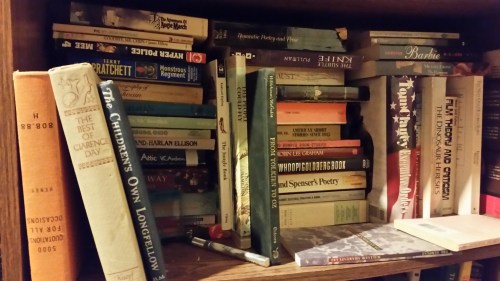
My personal library is a final destination for a multitude of used and well-worn books.

20150815_121507

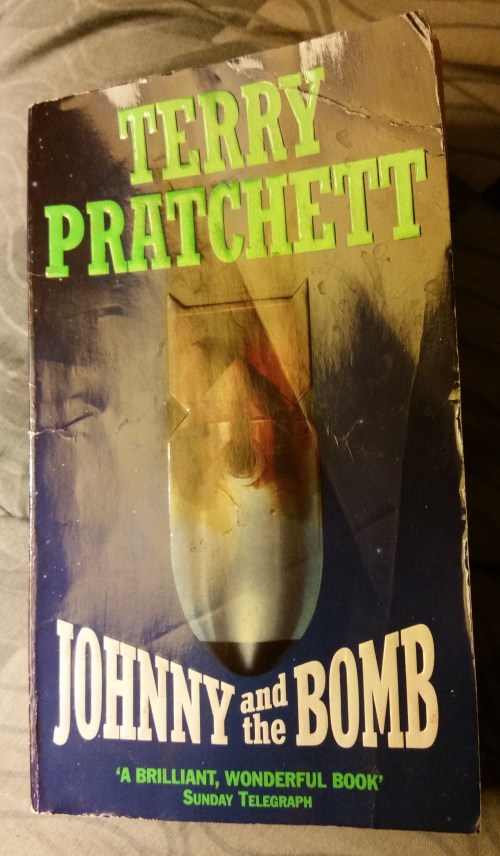
Half-Price Books employees used to know me by name.  They don’t now so much any more, because poor health has cut down on available funds, and they hire new people all the time.  But I have bought a number of books just cruising the Dollar-or-Less shelf.  A case in point is a recent purchase of an old book by one of my all-time favorite authors, Terry Pratchett.

20151208_091456

You can see why it was only worth about fifty cents.  It is all scuffed up and dog-eared from previous owners.  Of course, I know how to mistreat a book as well as the next guy, and some of the books I bought bookstore-new long ago look worse than this one does.  But that’s not what’s important.  The good part is on the inside.  You have to put in some effort to get at it.  It is an extremely funny and highly imaginative book.  Johnny is a kid living in Blackbury, England in 1996 (the present day of the story, though it is about time travel and drifts back to the early 1940’s).  He thinks he is just a stupid kid with more stupid-ness about him than he has pockets to keep it in, but he is blessed with an idiot’s ability to think outside of his own head (whatever the heck that means).  There just happens to be an old bag lady named Mrs. Tachyon who just happens to have a Tesco grocery shopping cart that just happens to be a time machine (or so Johnny and his stupid-kid friends just happen to believe).  Johnny and his stupid-kid friends, Bigmac, Wobbler, and Yo-less (don’t ask, okay) along with the girl Kirsty (who is definitely the opposite of a stupid kid), find Mrs. Tachyon lying in a bloody lump in an alley way, and sort of inherit the shopping cart when they get the old lady to a hospital.  And of course, the shopping cart is very unusual with its bags of mysterious wobbly stuff and its resident hyper-vicious cat named Guilty.  It soon accidentally transports the kids back to 1941 when German bombs (like the one in the title) are falling from the sky on Blackbury.  The very day, in fact, when the street they are standing in is supposed to be destroyed by a German bomb, according to history.

Of course, I can’t help but love any book by Terry Pratchett.  But this one is quirky-wonderful and full of surprises.  I really can’t even tell you more about it without spoiling something magical.  I won’t, however, recommend that you read this book.  After all, I had a lovely time reading it, and you certainly don’t need to share in that.  I can keep it all for myself.  No, don’t even think about trying to find a copy and read it!  I think it is out of print anyway.  Don’t you dare go to Half-Price Books!

I will continue to read and fall in love with old books.  I have a few in my library that haven’t actually gotten around to reading yet.  And I have a large number of books I want to read again.  Old books are the best books, and I will continue to say that… at least until I have a new book of my own coming out.

2 Comments

Filed under book review, good books, humor, Uncategorized

More Books to Make You Crazy

I have now written several goofy book reviews in which I explain some of the goofy books I have read that I blame for my current state of crazily unbalanced intellectualism.  If you decide you would like to be as goofy and crazy as me, for some totally inexplicable reason, you can read some of these oddball choices.

34504Michael Beyer‘s review

Sep 13, 15  
Read in September, 2015


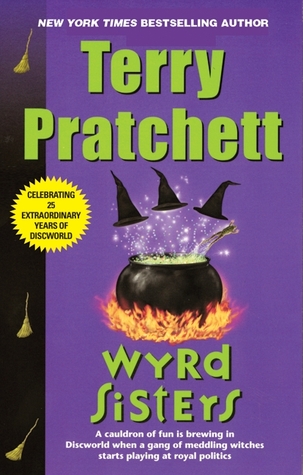
Terry Pratchett wrote books of magical power and satirical alchemical wit, but not a single one of them tops Wyrd Sisters. I believe this is the best book he ever wrote from a collection of several of the best books ever written. The three witches, Granny Weatherwax, Nanny Ogg, and Magrat Garlick call up visions of the witches in MacBeth. But no Shakespearian special effect ever captured the searing ridicule of kings and kingly aspirations as this book about king-making, or king un-making, or witchly interference with the best laid plans of mice and would-be kings. Granny Weatherwax is a witch you never want to meet in real life, but this book portrays the practical-minded old witch so talented at headology with such clarity, that you realize that you have indeed met her in real life… probably more than once. And the book has as unlikely a plot as ever underwent loop-the-loops and barrel rolls in its flight through a book. I have now smeared loopy gushings of hyperbole and weird wordy praises all over this book, and hopefully you will take time out from feeling nauseous long enough to give it a look.
I am also guilty of having a great love for non-fiction books and learning.  So here is a singularly weird choice to obsess about.

Michael Beyer‘s review

Sep 13, 15  
461434by Dennis Craig Smith
Read in September, 2015


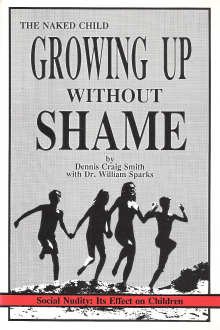
Back in the 1980’s, I had a girlfriend whose sister lived in a clothing-optional apartment complex in Austin, Texas. Visiting there was an exercise in absolute embarrassment and near apoplexy. But it made me curious as well. There were children as well as adults there. Family-oriented nudity? I needed to know more. So, on advice from friends I located a naturist society based in Florida and corresponded with them. I bought a copy of this book from them. It contains a fascinating study, told mostly through collections of anecdotal data, of the effects, and possible effects of living parts of your life completely naked. And the effects it could have on kids. Having grown up with considerable burdens of shame and trepidation about being seen naked, this book helped me to understand that being naked is not necessarily the bad thing I thought it was. I confess to becoming a closet nudist… er, if never letting anyone else see you naked qualifies as being a nudist. And I have met, over time, wonderful people who are totally nutty about being nude. I will never become one of them. But this book helped me to at least understand them better.
I basically got the notion that books make you insane from the next author, a favorite of mine for reasons I can’t begin to explain.

Michael Beyer‘s review

Sep 13, 15
Read in September, 2015


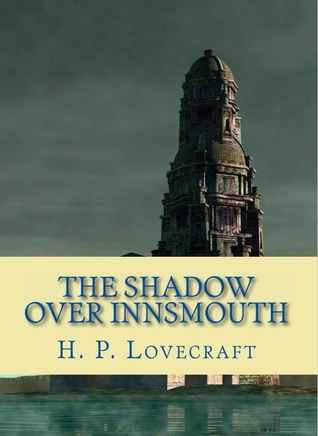
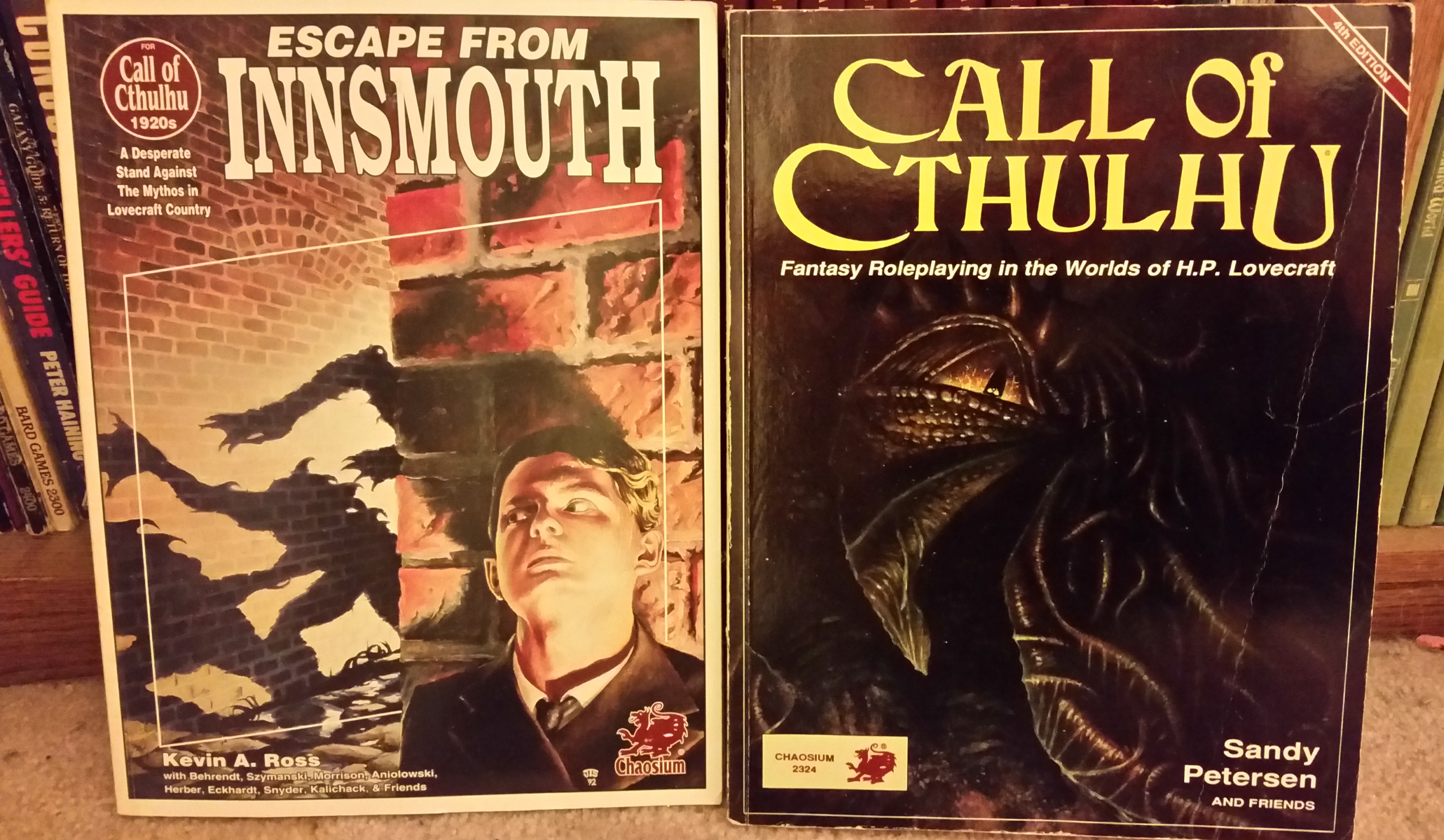
H.P. Lovecraft gives me real nightmares because he is such a master of the arcane arts of creating unease and worry. I have never read another author’s work where the atmosphere of the story leaks toxic chemicals of fear and loathing into your brain quite the way this story does. As you experience the rotting, festering, tainted town of Innsmouth through the eyes of the narrator, your entire being is slowly sauteed in a stew of creepy details, unsettling characters, and an architecture of decay. It is decay of both the actual seaport town, and the mouldering culture of a humanity that long ago yielded to the temptation of ultimate corruption. Frog people from the ocean’s depths could easily be humorous or simply bizarre. But Lovecraft’s slow, relentless reveal makes the unwinding plot absolutely horrifying. If you like a good scare, this book may be too much for you. If you love a bad scare that makes your very skeleton shiver, then this is the perfect book.
All of this book-review nonsense can be found on Goodreads, a critical website for readers and writers, and I have peppered this post with enough links to it that you probably can’t avoid accidentally ending up there.

Leave a comment

Filed under book review, humor

H.P. Lovecraft, The Master of Madness

20150904_141036

When I was but a young teacher, unmarried, and using what free time I had to play role-playing games like Dungeons & Dragons and Traveller with students and former students and fatherless boys, I came across a game that really creeped me out.  And it was quite popular with the kids who relied on me to fill their Saturday afternoons with adventure.  It led me on a journey through the darkness to find a fascination with the gruesome, the macabre, and the monstrous.  The Call of Cthulhu game brought me to the doorsteps of Miskatonic University and the perilous portals of the infected fishing village of Innsmouth.  It introduced me to the nightmare world of Howard Phillips Lovecraft.

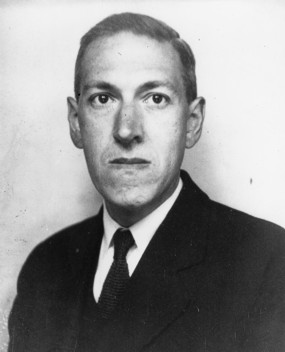
“H. P. Lovecraft, June 1934” by Lucius B. Truesdell

20150904_135636

Old H.P. is as fascinating a character as any of the people who inhabit his deeply disturbing horror tales.  He was a loner and a “nightbird” but with little social contact in the real world.  He lived a reclusive life that included a rather unsuccessful “contract” marriage to an older woman and supporting himself mostly by burning through his modest inheritance.  As a writer, he got his start by so irritating pulp fiction publishers with his letters-page rants that he was challenged to write something for a contest article, and won a job as a regular contributor to “Weird Tales” pulp magazine.  He was so good that he was offered the editorship of the magazine, but true to form, he turned it down.  He resembled most the dreamer characters who accessed the Dreamlands in various ways, but let their mortal lives wither as they explored unknown continents in the Dreamlands and the Mountains of the Moon.  He created a detailed mythos in his stories about Cthulhu and Deep Ones and the Elder Gods.  He died a pauper, well before his stories received the acclaim they have today.

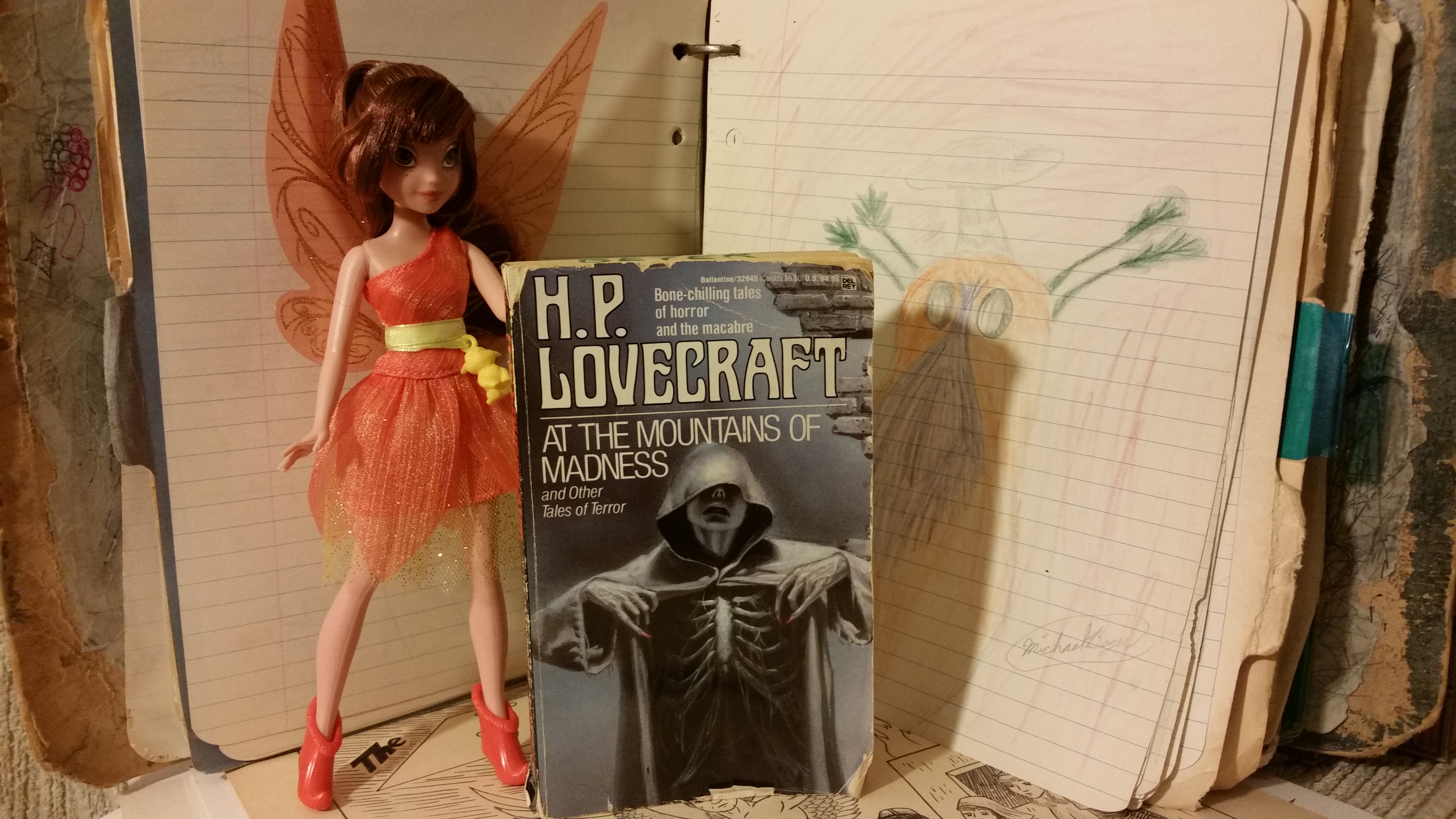
I have to say that I was so enamored of his stories that I had to read them as fast as I could acquire them from bookstores and libraries all over Texas.  My favorites include, The Shadow Over Innsmouth, The Dunwich Horror, and At the Mountains of Madness.  But reading these stories lost me hour upon hour of sleep, and developed in me a habit of sleeping with the lights on.  In Lovecraft’s fiction, sins of your ancestors hang like thunderheads over your life, and we are punished for original sin.  A man’s fate can be determined before he is born, and events hurl him along towards his appointed doom.  H.P. makes you feel guilty about being alive, and he shakes you to the core with unease about the greater universe we live in, a cold, unfeeling universe that has no love for mankind, and offers no shelter from the horrors of what really goes on beyond the knowing of mortal men.

Loving the stories of H.P. Lovecraft is about deeper things than just loving a good scare.  If you are looking for that in a book, read something by Stephen King.  H.P. will twist the corners of your soul, and make you think deep thoughts to keep your head above water in deep pools of insanity.  I know some of his books belong in yesterday’s post, but we are not talking about happy craziness today.  This is the insanity of catharsis and redemption.

Leave a comment

Filed under book review, humor, photo paffoonies

Books You Should Read If You Desire To Go Happily Insane

1974981_807219529309043_6970781313752455000_n

Yesterday I wrote a post about religion that revealed my lack of connection to organized religion (I am still in recovery from fifteen years of trying to be a good Jehovah’s Witness) and my deep connections to God and the Universe and That Which Is Essential.  I feel that it is good evidence for the theory that being too smart, too genius-level know-it-all goofy, is only a step away from sitting in the corner of the asylum with a smile and communicating constantly with Unknown Kadath in his lair in the Mountains of Madness  (a literary allusion to H.P. Lovecraft’s world).  And today I saw a list on Facebook pompously called “100 Books You Should Read If You’re Smart”.  I disagree wholeheartedly with many of the books on that list, and I have actually read about 80 per cent of them.  So it started me thinking… (never a good thing)… about what books I read that led to my current state of being happily mentally ill and beyond the reach of sanity.

2657To Kill a Mockingbird, by Harper Lee is the first book on my list.  The Facebook list had no reasons why to argue with, so here are my reasons why.  This book is written from the innocent and intelligent perspective of a little girl, Scout Finch.  It stars her hero father, Atticus Finch, a small-town southern lawyer who has to defend a black man from false charges of rape of a white woman.  This book makes clear what is good in people, like faith and hope and practicality… love of flowers, love of secrets, and the search for meaning in life.  It reveals the secrets of a secretive person like Boo Radley. It also makes clear what is bad in people, like racism, lying, mean-spirited manipulations, lust, and vengeance.  And it shows how the bad can win the day, yet still lose the war.  No intelligent reader who cares about what it means to be human can go without reading this book.

49628

Cloud Atlas, by David Mitchell is the second book on my list.  This is really not one book.  It is a complex puzzle-box of very different stories nested one inside the next and twisted together with common themes and intensely heroic and fallible characters.  Reading this book tears at the hinges between the self and others.  It reveals how our existence ripples and resonates through time and other lives.  It will do serious damage to your conviction that you know what’s what and how the world works.  It liberates you from the time you live in at the moment.

77203

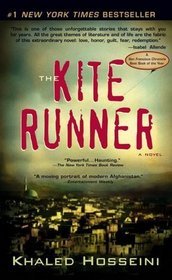
The Kite Runner, by Khaled Hosseini is the third book on the list.  This will give you an idea of how fragile people truly are, and how devastating a single moment of selfishness can be in a life among the horrors of political change and human lust and greed.  No amount of penance will ever be enough for the main character of this book to make up for what he did to his best and only friend… at least until he realizes that penance is not all there is… and that it is never too late to love.

19063

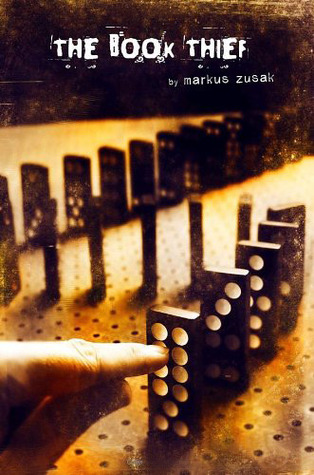
The Book Thief, by Markus Zusak is number four.  This book is about an orphan girl, the daughter of an executed communist, living in Nazi Germany in the early 1940’s.  It is a tear-jerker and an extremely hard book to read without learning to love to cry out loud.  Leisel Meminger is haunted by Death in the story.  In fact, Death loves her enough to be the narrator of the story.  It is a book about loving foster parents, finding the perfect boy, and losing him, discovering what it means to face evil and survive… until you no longer can survive… and then what you do after you don’t survive.  It is about how accordion music, being Jewish, and living among monsters can lead to a triumph of the spirit.

Of course, being as blissfully crazy as I am, I have more books on this list.  But being a bit lazy and already well past 500 words… I have to save the rest for another day.

2 Comments

Filed under book reports, book review, humor

The Uncritical Critic Likes to Read Books Too!

I told you before that I make a lousy movie critic because I watch anything and everything and like most of it.  You don’t believe me?  You can look it up through this link; The Uncritical Critic

I hate to tell you this, but it is almost exactly the same for books too.

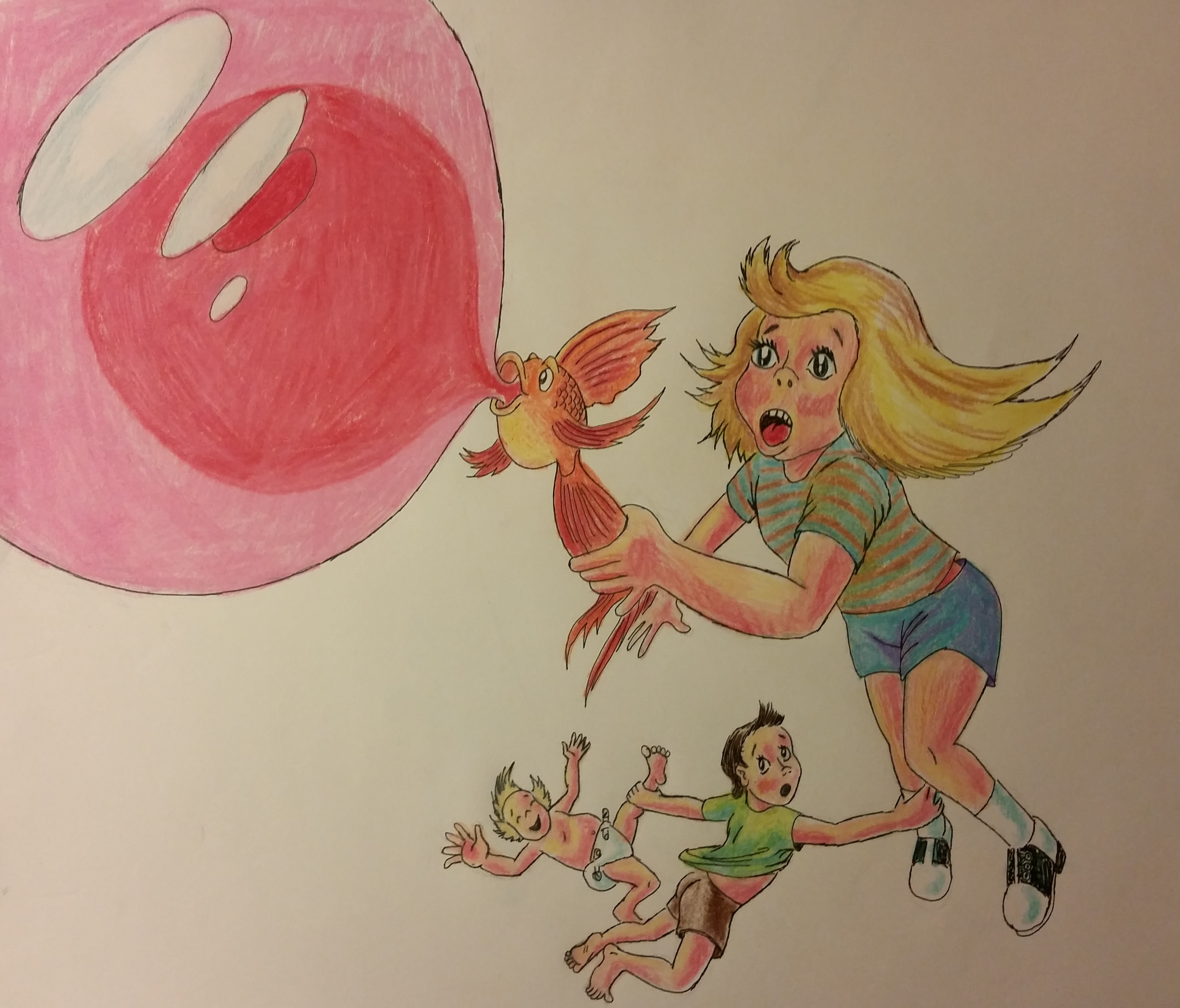
flying goldfish

The Paffooney is an illustration for a proposed collaboration on a children’s book.  My friend and fellow author Stuart R. West (Stuart’s Blogspot about Aliens) had a story about three kids taking a balloon ride when they accidentally gave the goldfish bubble gum to chew ignoring their mother’s warning that dire consequences would follow.  He decided the project was too ridiculous to follow through on, or at least my Paffooney power wasn’t up to making sense of his brilliant literature, and the book did not happen.  And I am sorry about that because I couldn’t wait to find out how it turns out.  I love weird and wild stories of all kinds.  And, unfortunately, I love them uncritically.

So, what kind of books would a goofy uncritical critic actually recommend? Let me lay some bookishness on ya then.

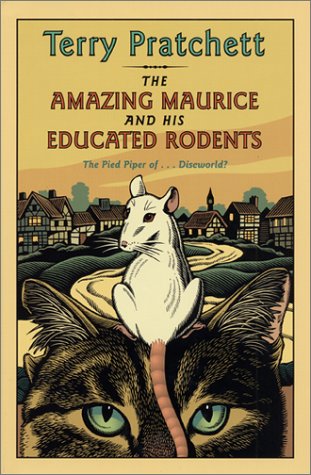
34534

Here is the review I wrote for Goodreads on Terry Pratchett’s The Amazing Maurice and His Educated Rodents.

I have always felt, since the day I first picked up a copy of Mort by Terry Pratchett, that he was an absolute genius at humor-and-satire style fantasy fiction. In fact, he is a genius compared to any author in any genre. He has a mind that belongs up there with Mark Twain, Charles Dickens, and William Faulkner… or down there as the case may well be. This book is one of his best, though that is a list that includes most of his Discworld novels.
Amazing Maurice is a magically enhanced cat with multiple magically enhanced mice for minions. And the cat has stumbled on a sure fire money-making scheme that completely encompasses the myth of Pied Piper of Hamlin. In fact, it puts the myth in a blender, turns it on high, and even forgets to secure the lid. It is funny, heartwarming, and changes the way you look at mice and evil cats.
This is a book to be read more than once and laughed at for the rest of your life.

You see what I mean?  I uncritically praise books that make me laugh and think deeply about things at the same time.  It is as if I don’t have any standards at all if something is brilliantly written and makes a deep and influential impression on me.

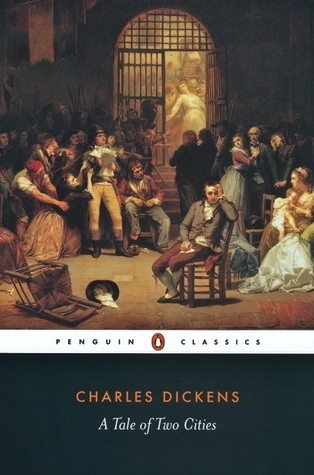
1953

Here’s another book that I love so much I can’t be properly critical when I reread it.  A Tale of Two Cities by Charles Dickens.  I cannot help but be taken in by the unrequited love the dissolute lawyer Sydney Carton had for the beautiful refugee from the French Revolution, Lucy Manette.  Tragic love stories melt my old heart.  And I can’t help but root for Charles Darnay as well, even though I know what’s going to happen in Paris at the Bastille because I have read this book three times and seen the Ronald Coleman movie five times.  I also love the comical side characters like Jerry Cruncher the grave-robber and hired man as well as Miss Pross, the undefeatable champion of Miss Lucy and key opposer to mad Madam Defarge.

I simply cannot be talked out of praising the books I read… and especially the books I love.  I am totally uncritical as a reader, foolishly only looking for things I like about a book.  Real critics are supposed to read a book and make faces that remind you of look on my little brother’s face when I had to help him use an outhouse for the first time.  (Oh, what a lovely smell that was!)  (And I mean that sarcastically!)  Real critics are supposed to tell you what they hated about the book and what was done in such a juvenile and unprofessional way that it spoiled all other books forever.  That’s right isn’t it?  Real critics are supposed to do that?  Maybe I am glad I’m not a real critic.

2 Comments

Filed under book review, humor, Paffooney

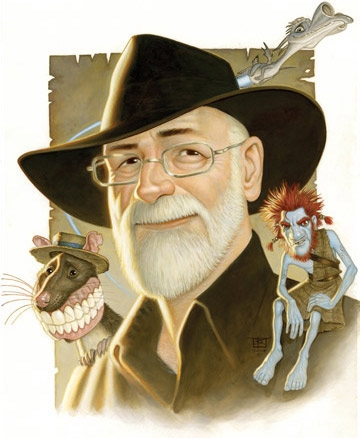
Terry Pratchett, the Grand Wizard of Discworld

image borrowed from TVtropes.com

image borrowed from TVtropes.com

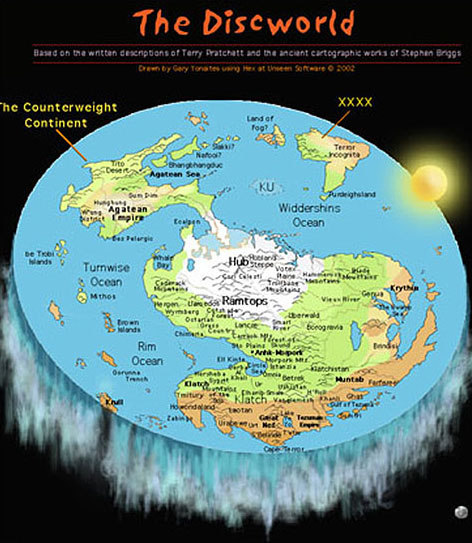
I firmly believe that I would never have succeeded as a teacher and never gotten my resolve wrapped around the whole nonsense package of being a published author if I hadn’t picked up a copy of Mort, the first Discworld novel by Terry Pratchett that I ever encountered.  I started reading the book as a veteran dungeon-master at D&D role-playing games and also as a novice teacher having a world of difficulty trying to swim up the waterfalls of Texas education fast enough to avoid the jagged rocks of failure at the bottom.  I was drinking ice tea when I started reading it.  More of that iced tea shot out my nose while reading and laughing than went down my gullet.  I almost put myself in the hospital with goofy guffaws over Death’s apprentice and his comic adventures on a flat world riding through space and time on the backs of four gigantic elephants standing on the back of a gigantic-er turtle swimming through the stars.  Now, I know you have no earthly idea what this paragraph even means, unless you read Terry Pratchett.  And believe me, if you don’t, you have to start.  If you don’t die laughing, you will have discovered what may well be the best humorist to ever put quill pen to scroll and write.  And if you do die laughing, well, there are worse ways to go, believe me.

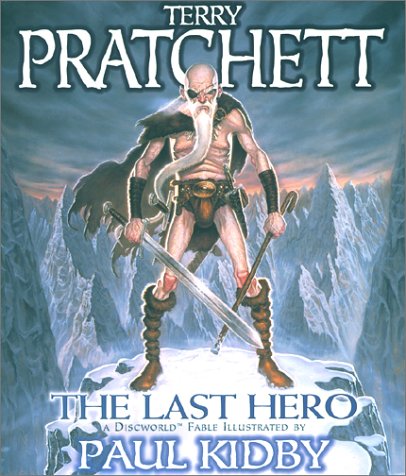
lasthero

Discworld novels are fantasy-satire that make fun of Tolkien and Conan the Barbarian (written by Robert E. Howard, not the barbarian himself) and the whole world of elves and dwarves and heroes and dragons and such.  You don’t even have to love fantasy to like this stuff.  It skewers fantasy with spears of ridiculousness (a fourth level spell from the Dungeons of Comedic Magic for those fellow dungeon masters out there who obsessively keep track of such things).  The humor bleeds over into the realms of high finance, education, theater, English and American politics, and the world as we know it (but failed to see from this angle before… a stand-on-your-head-and-balance-over-a-pit-of-man-eating-goldfish sort of angle).

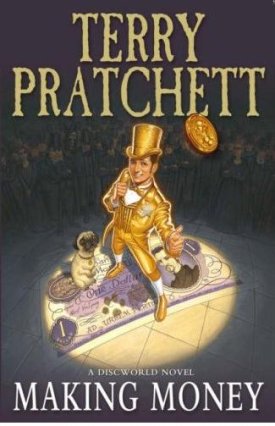
makingmoneycover

Terry Pratchett’s many wonderful books helped me to love what is ugly, because ugly is funny, and if you love something funny for long enough, you understand that there is a place in the world even for goblins and trolls and ogres.  Believe me, that was a critical lesson for a teacher of seventh graders to learn.  I became quite fond of a number of twelve and thirteen year old goblins and trolls because I was able see through the funny parts of their inherent ugliness to the hidden beauty that lies within (yes, I know that sounds like I am still talking about yesterday’s post, but that’s because I am… I never stop blithering about that sort of blather when it comes to the value hidden inside kids).

a-hatful-of-sky

I have made it a personal goal to read every book ever written by Terry Pratchett.  And that goal is now within reach because even though he is an incredibly prolific writer, he has passed on withing the last year.  He now only has one novel left that hasn’t reached bookstores.  Soon I will only need to read a dozen more of his books to finish his entire catalog of published works.  And I am confident I will learn more lessons about life and love and laughter by reading what is left, and re-reading some of the books in my treasured Terry Pratchett paperback collection.  Talk about your dog-eared tomes of magical mirth-making lore!  I know I will never be the writer he was.  But I can imitate and praise him and maybe extend the wonderful work that he did in life.  This word-wizard is definitely worth any amount of work to acquire and internalize.  Don’t take my convoluted word for it.  Try it yourself.

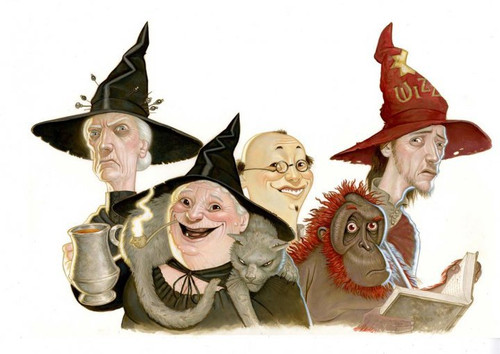
borrowed from artistsUK.com

borrowed from artistsUK.com

map

12 Comments

Filed under book review, humor, NOVEL WRITING