Category Archives: book review

Books are Life, and Life is Books

20170602_082021

I just finished reading David Mitchell’s The Bone Clocks, his novel from 2014.  Just, WOW!  I guess this post is technically a book review… but not really.  I have to talk about so much more than just the book.

You can see in my initial illustration that I read this book to pieces.  Literally.  (And I was an English Major in college, so I LITERALLY know what literally means!)

e69ac83cbf6c06d8ef06fcd9db1050d2

Look at this face.  Can you stop looking at the beautiful eyes?  I can’t.

I discovered Mitchell as a writer when I happened onto the book and movie pair of Cloud Atlas.  It enthralled me.  I read the book, a complex fantasy about time and connections, about as deeply and intricately as any book that I have ever read.  I fell in love.  It was a love as deep and wide as my love of Dickens or my love of Twain… even my love of Terry Pratchett.

It is like the picture on the left.  I can’t stop looking into it and seeing more and more.  It is plotted and put together like a finely crafted jeweled timepiece.

220px-Cloud_Atlas_Poster

And this new book is almost exactly like that.  It is a first- person narrative in six parts with five different narrators.  Holly Sykes, the central character, is the narrator of the first and last parts, in the past in the 1980’s, and in the future in 2043.  The titular metaphor of the bone clocks is about the human body and how it measures time from youth to old age.  And it is pictured as a clock ticking in practically all it’s forms, from a child who is snuffed out at eight years of age to horologists who have lived for a thousand years by being reincarnated with past lives intact.

Fantasy and photographic realism intertwine and filigree this book like a vast kaleidoscope of many colors, peoples, societies, and places.  At one point David Mitchell even inserts himself into the narrative cleverly as the narrator of part four, Crispin Hershey, the popular English novelist struggling to stay on top of the literary world.  He even indulges every writer’s fantasy and murders himself in the course of the story.

David Mitchell is the reason I have to read voraciously and write endlessly.  His works seem to contain an entire universe of ideas and portraits and events and predictions and wisdoms. And he clearly shows me that his universe is not the only one that needs to be written before the world ends.  Books are life, and life is in books.  And when the world as we know it is indeed gone, then they will be the most important thing we ever did.  Even if no one is left to read them.

And so, I read this book until it fell into pieces, its spine broken and its back cover lost.  To be fair, I bought it at a used book store, and the paperback copy was obviously read by previous owners cover to cover.  The pages were already dog eared with some pages having their corners turned down to show where someone left off and picked up reading before me.  But that, too, is significant.  I am not the only one who devoured this book and its life-sustaining stories.  Know that, if you do decide to read and love this book, you are definitely not the only one.  I’d lend you my copy.  But… well, it’s already in pieces.

Leave a comment

Filed under book review, education, insight, inspiration, strange and wonderful ideas about life

Three Books at Once

No, this isn’t some kind of multiple-book book review.  This is an ungodly silly claim that I can actually read three books at once.  Silly, but true.

Now I don’t claim to be a three-armed mutant with six eyes or anything.  And I am relatively sure I only have one brain.  But, remember, I was a school teacher who could successfully maintain a lesson thread through discussions that were supposed to be about a story by Mark Twain, but ventured off to the left into whether or not donuts were really invented by a guy who piloted a ship and stuck his pastries on the handles of the ships’ wheel, thus making the first donut holes, and then got briefly lost in the woods of a discussion about whether or not there were pirates on the Mississippi River, and who Jean Lafitte really was, and why he was not the barefoot pirate who stole Cap’n Crunch’s cereal, but finally got to the point of what the story was really trying to say.  (How’s that for mastery of the compound sentence?)  (Oh, so you could better?  Really?  You were in my class once, weren’t you.)  I am quite capable of tracking more than one plot at the same time.  And I am not slavishly devoted to finishing one book before I pick up the next.

I like reading things the way I eat a Sunday dinner… a little meatloaf is followed by a fork-full of mashed potatoes, then back to meat, and some green peas after that…  until the whole plate is clean.

Treasure Island by Robert Louis Stevenson is the meatloaf.  I have read it before, just as I have probably had more meatloaf in my Iowegian/Texican  lifetime than any other meat dish.  It’s pretty much a middle-America thing.  And Treasure Island is the second book I ever read.  So you can understand how easy a re-read would be.  I am reading it mostly while I am sitting in the high school parking lot waiting to pick up the Princess after school is out.

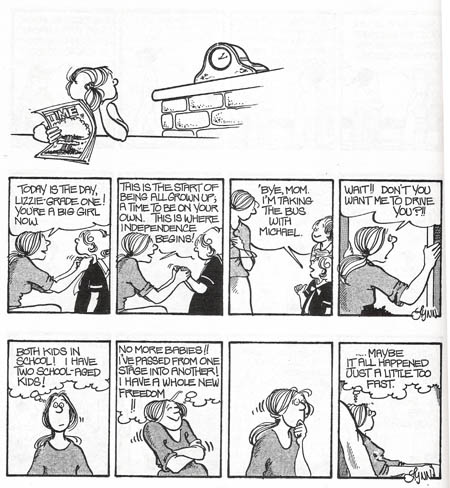
fbofw1Lynn Johnston’s For Better or Worse is also an old friend.  I used to read it in the newspaper practically every day.  I watched those kids grow up and have adventures almost as if they were members of my own family.  So the mashed potatoes part of the meal is easy to digest too.

51+ETSVSDJL

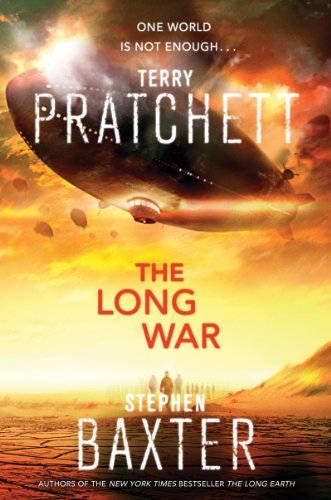
So that brings me to the green peas.  Green peas are good for you.  They are filled with niacin and folic acid and other green stuff that makes you healthier, even though when the green peas get mashed a bit and mix together with the potatoes, they look like boogers, and when you are a kid, you really can’t be sure.  Terry Pratchett and Stephen Baxter wrote this book The Long War together.  And while I love everything Terry Pratchett does, including the book he wrote with Neil Gaiman, I am having a hard time getting into this one.  Parts of it seem disjointed and hard to follow, at least at the beginning.  It takes work to choke down some of it.  Peas and potatoes and boogers, you know.

But this isn’t the first time I have ever read multiple books at the same time.  In fact, I don’t remember the last time I finished a book and the next one wasn’t at least halfway finished too.  So it can be done.  Even by sane people.

3 Comments

Filed under book review, comic strips, education, goofy thoughts, humor, old books, philosophy, reading

Love Stories With Clowns and Elephants

book_WFE

Yes, this essay is supposed to be a book review of Sara Gruen’s lovely, enthralling circus story Water for Elephants.  But you know me.  My writing gets overwhelmed and filigreed by my obsessive urge to dive into the ocean of things that excite me to purple paisley prose.

It is a fascinating love story involving a depression-era travelling train circus, a young man who suddenly finds himself a penniless orphan days before he can complete his degree in veterinary medicine, an elephant, a beautiful horse-riding show girl and circus star, and her cruel but charming ring master husband.

I don’t think I am spoiling anything by telling you that Jacob Jankowski, the main character of the tale falls in love with both the beautiful Marlena and an apparently untrainable elephant named Rosie.  And I also shouldn’t actually be ruining the ending by telling you that the murderer who ends the story is revealed in the opening pages, but is still a surprise when masterful story-teller Sara Gruen re-reveals the murder at the end.  This is a plot-driven novel that completely catches you up in a doomed relationship, a complicated romance, and an artfully re-created world of depression-era train circuses that ranks right up there with Cecil B. DeMille’s movie spectacular The Greatest Show on Earth.

Yes, I had to equate this book with an old 1950’s movie that I love because of the similarities of plot and spectacle.  Both the movie and the book have a faithful clown friend who lives a tragic life.  Both Buttons the clown, played by Jimmy Stewart in the movie, and Kinko the clown, the dwarf Walter in the book whose only friend is Queenie the dog before he gets involved in the main character’s problems, play a crucial role as a supporting character.  There is a romantic triangle in each.  Jacob, Marlena, and Marlena’s husband August in the book mirror the complex relationship between the circus runner Brad Braden, his girlfriend the trapeze star, Holly, and the circus’s newest trapeze star, the Great Sebastian in the movie.  And in each story there is a huge disaster that threatens the existence of the circus.  But I am in no way suggesting that one is merely a copy of the other.  Each story is unique and enthralling in a thousand different ways.  They are two entirely different stories told by two different master story-tellers that happen to be built on the same basic framework.  And both of those things teach you a great wealth of carefully researched details about the magical world of real travelling circuses.

Oh, yes… And I forgot to mention, the book Water for Elephants was made into a movie in 2011.

Water_for_Elephants_Poster

Leave a comment

Filed under book review, clowns, commentary, finding love, humor, movie review

For the Love of Reading!

c360_2017-01-02-10-17-06-058

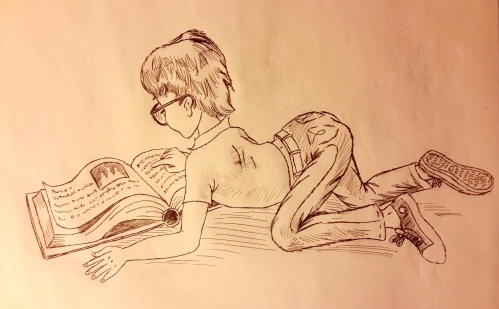
Yes, I know it looks awkwardly painful to read on the floor in a scroochy position like that, but that was me as a kid.  I was the awkwardest nerd in Wright County, Iowa, when I was a boy.  But Dr. Seuss taught me early on to read and enjoy the imaginary worlds that reading created in my stupid little head.

I don’t remember the first actual book I read, other than to firmly believe it was a Dr. Seuss book like Yertle the Turtle, or Horton Hears a Who!  But I do remember the first chapter book, the first great adventure.  It was The White Stag by Kate Seredy.  It was the Newberry Medal winner published in 1937, and told the mythical journey of Hunor and Magyar, two brothers and leaders of two peoples who are on an epic quest to find the land where they belong by following a magical white stag.

the_white_stag

I was nine when I read and fell in love with that book.  I picked it off Miss Mennenga’s reading shelf because it was a simple red book with a plain red cover (the paper illustrated book cover had long since disintegrated in kids’ hands over time.)  Red was my favorite color.

But I fell in love with the movie version that unfolded in my mind’s eye.  It was when I learned to dive so deeply into a  book that the characters became real to me.

The following year when I was ten the book was Treasure Island by Robert Louis Stevenson.  Jim Hawkins was my best friend that year.  That was followed by Rudyard Kipling’s First Jungle Book.  I walked around the jungle with Mowgli and Bagheera the black panther for quite a while after that.

I think it is important to often look back on the beginnings of things.  This is the story of how I became a reader for life.  And it matters now that I am furiously trying to cram in more books of all sorts before the end.  The journey nears completion, and it helps to focus on what goals and what loves I had at the outset.  Will there be reading in Heaven?  I hope so.  Otherwise, truthfully, I may not go.

3 Comments

Filed under autobiography, book review, Dr. Seuss, education, humor, reading, self portrait, strange and wonderful ideas about life

A $3.00 Treasure Trove

C360_2016-12-21-17-27-40-934.jpg

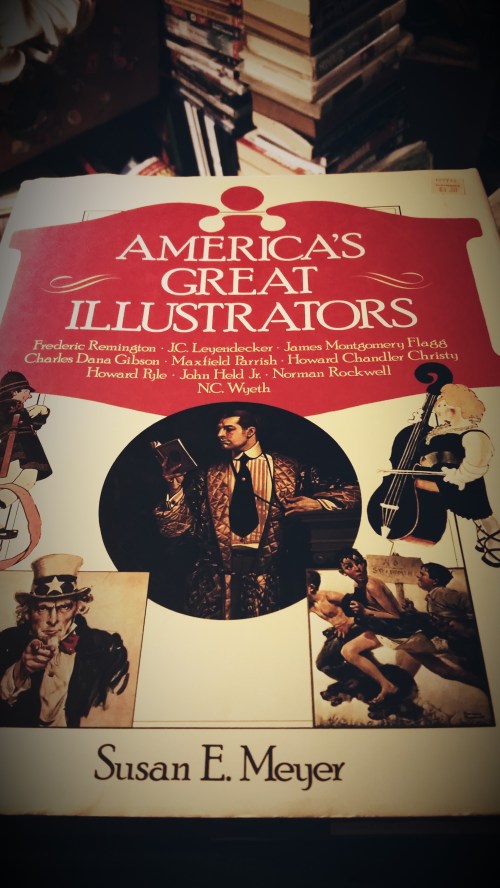
If you cruise the bargain sections in an old used book store like Half-Price Books, eventually you are going to find something priceless.  This book I am showing you is that very thing for me.

It was copyrighted in 1978.  The inscription inside the front cover says this was a Father’s Day gift on June 19th, 1988.  Someone named Gary gifted it to someone named Claude in Burleson, Texas.  It was probably a cherished book until someone passed away and the book changed hands in an estate sale.
c360_2016-12-21-17-26-52-638

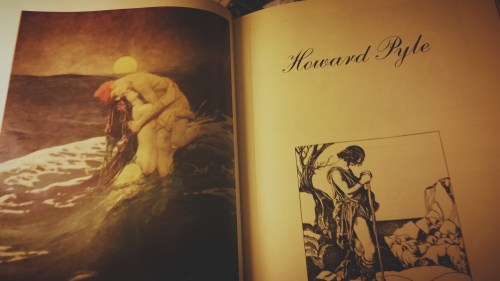
Howard Pyle

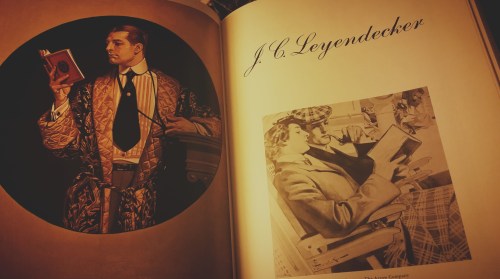
The book chronicles the height of the publishing era when being able to print books and reproduce artworks began entertaining the masses.  Always before painters and great artists worked for a patron for the purpose of decorating their home in a way that displayed their great wealth.  But from the 1880’s to the rise of cinema, magazines and books kept the masses entertained, helped more people to become literate than ever before, and created the stories that made our shared culture and life experiences grow stronger and ever more inventive.  The book focuses on the best of the best among a new breed of artist… the illustrators.

These are the ones the book details;

Howard Pyle, N.C. Wyeth, Frederick Remington, Maxfield Parrish, J.C. Leyendecker, Norman Rockwell, Charles Dana Gibson, Howard Chandler Christy, James Montgomery Flagg, and John Held Jr.
c360_2016-12-21-17-26-08-244

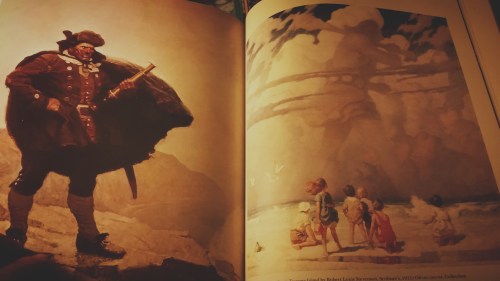
N.C. Wyeth

Wyeth was most famous as a book illustrator for Treasure Island, Kidnapped, other books by Robert Louis Stevenson, Mark Twain,  and a famous volume of tales about Robin Hood.
c360_2016-12-21-17-25-30-575

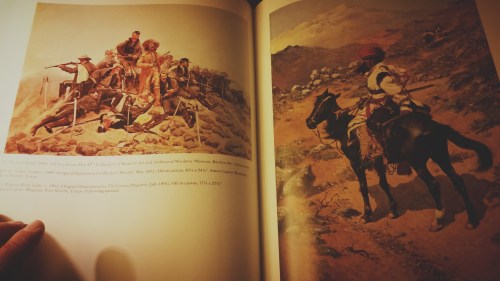
Frederick Remington

Remington is a name you probably know as a maker of Western art.  He was a famous painter of cowboys and Indians and the American frontier.
c360_2016-12-21-17-25-11-104

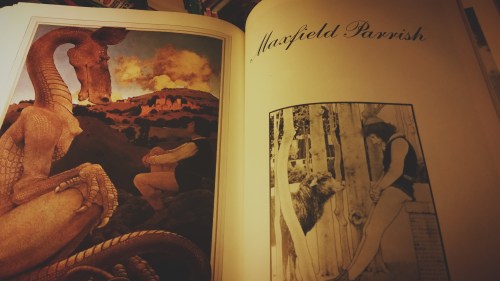
Maxfield Parrish

Maxfield Parrish is my all-time favorite painter.  His work is something I gushed about in previous posts because I own other books about his fanciful works painted in Maxfield Parrish blue.
c360_2016-12-21-17-24-36-579

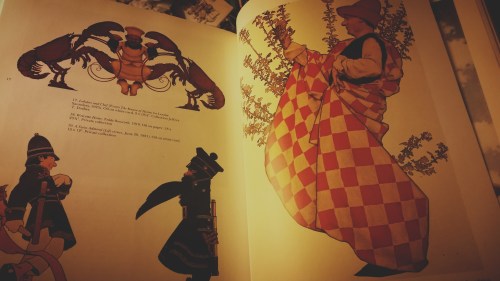
Also Maxfield Parrish


c360_2016-12-21-17-24-09-869

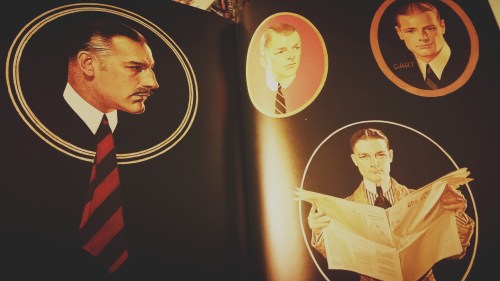
J.C. Leyendecker

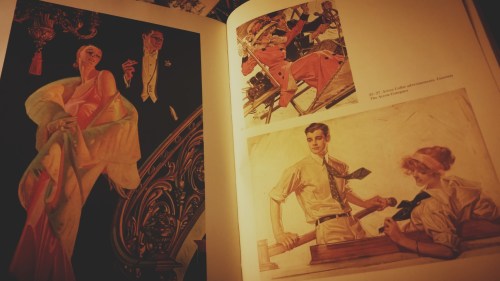
You will probably recognize Leyendecker’s work in magazine and advertising illustration as the standard of the Roaring 20’s.  His paintings set a style that swept American culture for more than a decade, and still affects how we dress to this very day.
 

c360_2016-12-21-17-23-44-163

More Leyendecker


c360_2016-12-21-17-23-26-011

Even more from Leyendecker


c360_2016-12-21-17-22-58-983

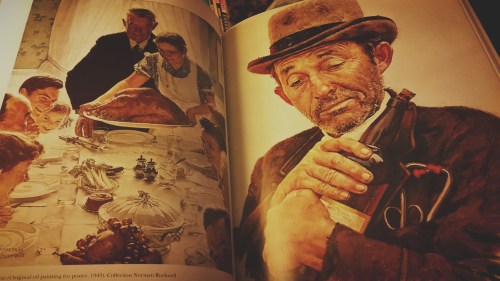
Norman Rockwell

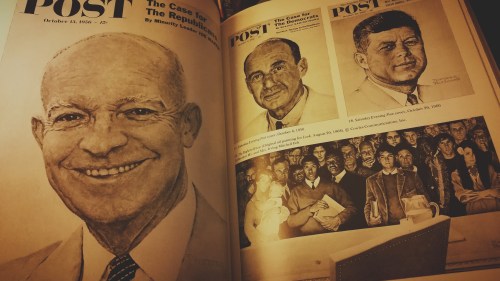
Norman Rockwell and his work for The Saturday Evening Post is still familiar to practically everyone who reads and looks at the illustrations.  As you can see he was a master of folksy realism and could do a portrait better than practically anyone.
 

c360_2016-12-21-17-22-02-082

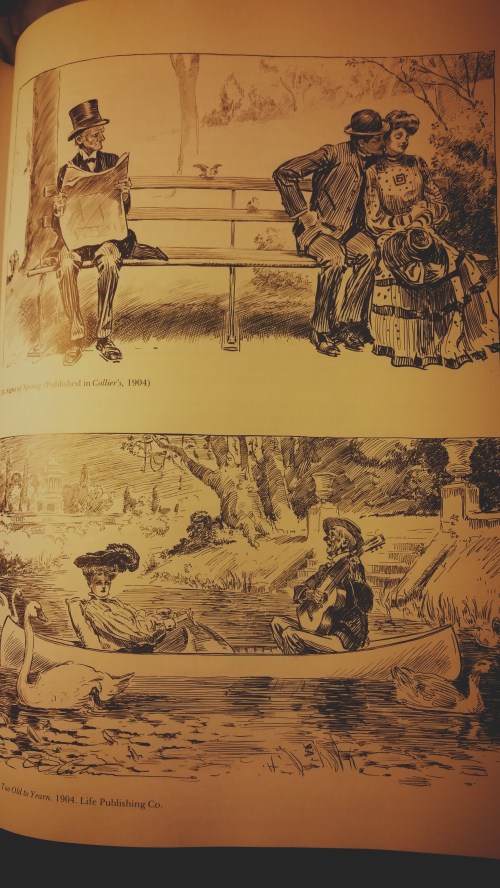
Also Rockwell

I have also written about Norman Rockwell before too.  I have half a dozen books that include his works.  My wife is from the Philippines and she knew about him before I ever said a word to her about him.
c360_2016-12-21-17-21-38-237

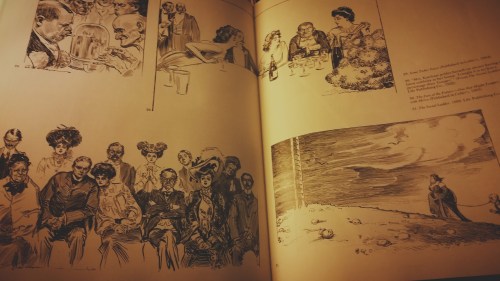
Charles Dana Gibson

As you can plainly see, Gibson was a master of pen and ink.  His work for Collier’s and other magazines thrills in simple black and white.  More cartoonists than just little ol’ me obsess about how he did what he did.
c360_2016-12-21-17-21-14-634

Also Gibson


c360_2016-12-21-17-20-49-992

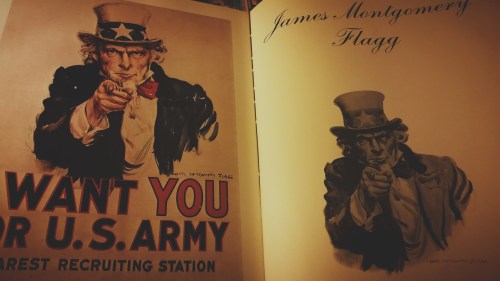
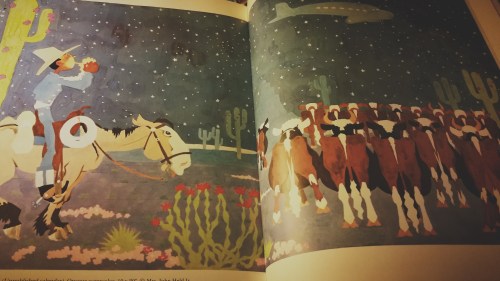
James Montgomery Flagg… with a name like that, who else could it be?
 

c360_2016-12-21-17-20-06-847

John Held Jr.

The work of Held is stylistically different than all the rest in easily noticeable ways.  He’s the guy that made all the big-headed Pinocchio-looking people in the 1920’s.  You may have seen his work before, though you probably never knew his name.

This bit of someone else’s treasure hoard will now become a part of my own dragon’s treasure, staying by my bedside for quite a while, while I continue to suck the marrow from each of its bones.  I love this book.  It is mine, and you can’t have it… unless you find your own copy in a used bookstore somewhere.

4 Comments

Filed under art criticism, art my Grandpa loved, book reports, book review, humor, illustrations, imagination, oil painting, old art, old books, pen and ink, Uncategorized

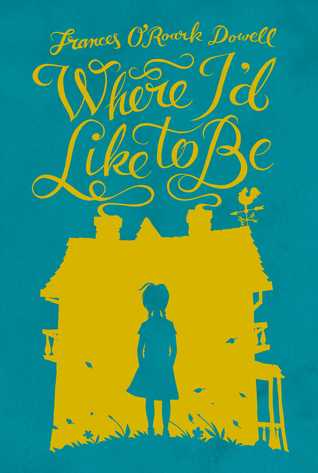
Where I’d Like to Be (a book by Frances O’Roark Dowell)

490978

This book made me cry. And that is not unusual, even though I am a 60-year-old man. A Tale of Two Cities by Charles Dickens made me cry. At the end, not during the funny parts. But this was a book about a lonely eleven-year-old girl trying to make friends. Why should that make me cry?
But it is also a bittersweet tale of memorable child characters who have nowhere left to turn but each other, and their imaginations. The poetic sting of it can make a grown man cry. You should read it. You will understand then.

Leave a comment

Filed under art criticism, book reports, book review, characters, compassion, empathy, good books, humor, strange and wonderful ideas about life

Holy Bagumba!

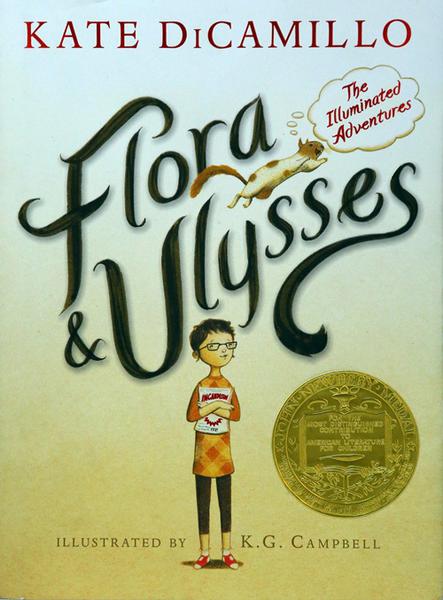
newbery2014

I have just finished reading a wonderful book.  It is a young adult novel bordering on being a children’s book.  It won the 2014 Newbery Medal for best work of children’s literature.  But it is a book of so many dimensions that it totally defies categories.  Librarians with butterfly nets who want to pin this book down on their library shelves will be pointlessly waving their nets at it like they believe it’s a butterfly, but it will soar away from them like an eagle.

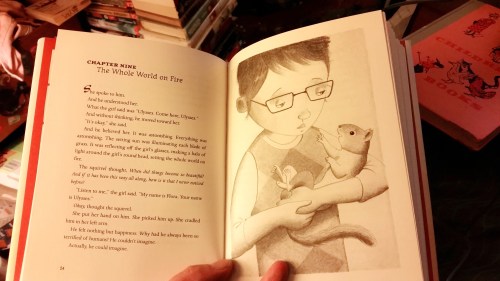
c360_2016-11-06-09-59-56-962

Flora & Ulysses (the Illuminated Adventures) is a combination book of many different things.  G. K. Cambell’s cartoony paffoonies add to and amplify the story to the point that sometimes it becomes a graphic novel.

Flora herself is a comic-book lover and follower of the adventures of a comic-book superhero named Incandesto.  Ulysses the squirrel is run over by a rogue vacuum cleaner and the accident graces him with super powers (the ability to fly and throw cats and write poetry).  And Flora rescues and befriends this newly minted superhero and sets him on a path that pits him against the only super-villain available, Flora’s own mother.

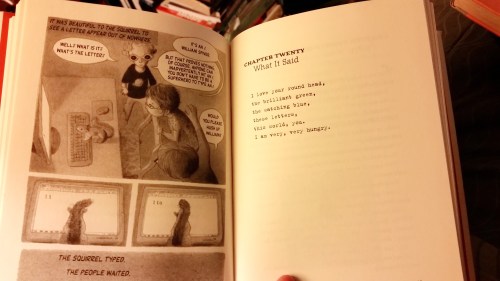
c360_2016-11-06-10-00-47-864

At certain points, through metaphor, elegance, and supreme focus, the story itself becomes poetry.  But, of course, when the poem ends with a line about the squirrel being hungry, it becomes humorous poetry, simply by the juxtaposition of the sublime with the ridiculous.

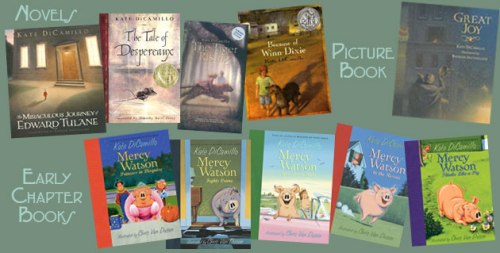
bk_all

As a writer, Kate DiCamillo is a master of everything I want to be.  She is as much a masterful story-teller as Mark Twain, Ernest Hemingway, or William Faulkner.  But many people will be put off by the fact that she is a children’s author.  They will ignore her stories because how could a children’s author affect their lives in any way?  But if you are a reader who can think and feel about things in a book, she will make you laugh and make you cry and make you not afraid to die… for love of a good book.

Let me also suggest a few of her other wonderful, wonderful books;

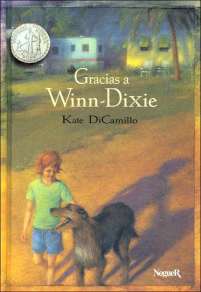
winn-dixie

Leave a comment

Filed under book reports, book review, commentary, good books, humor, metaphor, poetry, reading

Tom Sawyer Abroad (Book Review)

20161017_162015

Yep, I read about being an “erronort” traveling in a balloon while sitting in a parking lot in my car.

Believe it or not, I read this entire 100+year-old book in my car while waiting for my daughter and my son in school parking lots.  What a perfectly ironic way to read a soaring imaginary adventure written by Mark Twain and mostly forgotten about by the American reading public.

c360_2016-10-30-10-26-22-635

My copy of this old book is a 1965 edition published for school libraries of a book written in 1894.  It tells the story of how Tom and Huck and Jim steal a ride on a balloon at a town fair from a somewhat mentally unhinged professor of aeronautical science.  The balloon, which has space-age travel capabilities due to the professor’s insane genius, takes them on an accidental voyage to Africa.

Of course, the insane professor intends to kill them all, because that’s what insane geniuses do after they prove how genius-y they really are.  But as he tries to throw Tom into the Atlantic, he only manages to plunge himself through the sky and down to an unseen fate.  The result being a great adventure for the three friends in the sands of the Sahara.  They face man-eating lions, mummy-making sandstorms, and a chance to land on the head of the Sphinx.

The entire purpose of this book is to demonstrate Twain’s ability to be a satirical stretcher of the truth, telling jokes and lies through the unreliable narrator’s voice of Huck Finn.

Here is a quoted passage from the book to fill up this review with words and maybe explain just a bit what Twain is really doing with this book;

c360_2016-10-30-10-48-45-630

Notice how I doubled my word count there without typing any of the words myself?  Isn’t the modern age wonderful?

But there you have it.  This book is about escaping every-day newspaper worries.  In a time of Presidential Candidate Donald Trump, global warming, and renewed threats of thermonuclear boo-boos with Russia, this proved to be the perfect book to float away with on an imaginary balloon to Africa.  And the book ends in a flash when Aunt Polly back in Hannibal wants Tom back in time for breakfast.  I really needed to read this book when I picked it up to read it.

2 Comments

Filed under book reports, book review, foolishness, good books, humor, imagination, Mark Twain, old books, strange and wonderful ideas about life

Reading Twain for a Lifetime

mark-twain

I wish to leave no doubt unturned like a stone that might have treasure hidden under it.  I love the works of Samuel L. Clemens, better known as Mark Twain.

I have read and studied his writing for a lifetime, starting with The Adventures of Tom Sawyer which I read for myself in the seventh grade, after seeing the musical movie Tom Sawyer starring Johnny Whittaker as Tom.  I caught a severe passion, more serious than a head-cold, for the wit and wisdom with which Twain crafted a story.  It took me a while to acquire and read more… but I most definitely did.  I took an American Literature course in college that featured Twain, and I read and analyzed The Adventures of Huckleberry Finn.  I also bought a copy of Pudd’nhead Wilson which I would later devour in the same thoroughly literate and pretentious manner as I had Huck Finn.  Copies of A Connecticut Yankee in King Arthur’s Court and The Mysterious Stranger were purchased at the same time, though I didn’t read them cover to cover until later during my years as a middle school English teacher.  I should point out, however, that I read and re-read both of those, Connecticut Yankee winning out by being read three times.  As a teacher, I taught Tom Sawyer as an in-class novel assignment in the time when other teachers thought I was more-or-less crazy for trying to teach a 100-year-old book to mostly Hispanic non-readers.  While the lunatic-inspired experiment was not a total success, it was not a total failure either.  Some kids actually liked having me read parts of it aloud to them, and some borrowed copies of the book to reread it for themselves after we finished as a class.

marktwaindvd2006During my middle-school teaching years I also bought and read copies of The Prince and the Pauper, Roughing It, and Life on the Mississippi.  I would later use a selection from Roughing It as part of a thematic unit on Mark Twain where I used Will Vinton’s glorious clay-mation movie, The Adventures of Mark Twain as a way to painlessly introduce my kids to the notion that Mark Twain was funny and complex and wise.

I have also read and used some of Twain’s most famous short fictions.  “The Celebrated Jumping Frog of Calaveras County” and “The Man Who Corrupted Hadleyburg” are both masterpieces of Twain’s keen insight into the human psyche and the goofy and comic corruptions he finds there.

And now, retired old me is reading Tom Sawyer Abroad.  And, though it is not one of his finest works, I still love it and am enthralled.  I will review it and share it with you when I am finished.  But I will never be through with Mark Twain.  Not only is there more of him to read, but he has truly been a life-long friend .

1 Comment

Filed under book reports, book review, goofy thoughts, happiness, heroes, old books, sharing, strange and wonderful ideas about life

Benjamin Franklin (a book review)

43363

I admit to loving dry old history books that most of my contemporaries would wrinkle their noses at and loudly proclaim, “It’s BORING!!!”  But I don’t think the fact that I really really loved this book automatically means that you will detest it.  So bear with me and let me tell you about a book about a historically important and thoroughly fascinating man.

Edmund Morgan is a scholar who believes in using primary source material, and Franklin, as a printer, writer, statesman, scientist, and very sociable letter-writing man left a vast wealth of primary source materials behind to help us understand what was in his mind as he performed some of the most essential services ever given to a country as the United States was being formed.

The book makes us very aware that if history had followed Franklin’s every desire for specific outcomes, we would still be part of the British Empire.  But Franklin was unique among the founding fathers.  He did not serve his own ambitions the way John Adams did.  He did not serve strictly ideological goals like Thomas Jefferson often did.  But his input and pragmatism were essential to helping those two men  create the Declaration of Independence.

He believed in public service as a higher goal.  He carried out not his own will, but the will of the people evident in the debates about where the country needed to go when the government of the British King and Parliament became increasingly unresponsive to the needs and issues of the American colonies.

This was akin to the way he approached science.  He was able to discover enough scientific facts through careful and clever experiments to create practical and life-saving inventions like the Franklin stove and lightning rods.  He led the field for a time in the investigation and understanding of electricity, and the old story of flying a kite in a thunderstorm is not a myth.  It was an actual experiment using what Franklin had discovered about electrical conductivity and insulation to prove that lightning was made up of electrical energy.  Edison and Tesla might never have started if Franklin had not come first.  He never defended, argued, or explained his scientific theories.  He believed in letting experimental evidence speak for itself.  Basically, he became a world-famous scientist by not seeking fame.

Franklin loved to be with people of all kinds, especially intelligent people and female people.  He was a good friend to many, and even maintained respectful friendships with some who chose to be on the other side of the American independence question.  His work on the Pennsylvania constitution, being ambassador to France, and his part in the peace treaty negotiations with England made him as essential to the American experiment as any of the founding fathers who would later take a turn at being president.

All I can really say about this excellent book is that it helps you get to know the man who was Ben Franklin.  And this is a man that most people are bound to love, and every man should know.

Leave a comment

Filed under book review, humor, philosophy