
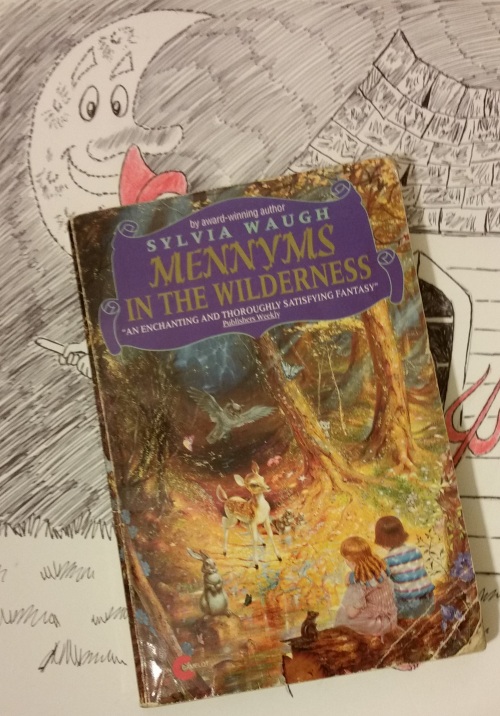
This is the book I have really read, though I intend to acquire the rest.
Sylvia Waugh is a British writer of children’s books who has a lot in common with me. She spent her career as a teacher of grammar. In her late fifties she became a published author. Her book series of the Mennyma is a charming fantasy adventure about dolls so loved by their owner, they actually come to life… and survive her…. and then have to make their way in a world that would be horrified by them and might easily seek to destroy them.

Hopefully none of my dolls come to life after I croak. After years of collecting, they nearly outnumber humanity.
But rest assured, the dolls in this sweet-natured children’s book series would never prove evil. The books are more fantasy-comedy than horror story. In fact, they are impossibly far away from horror.
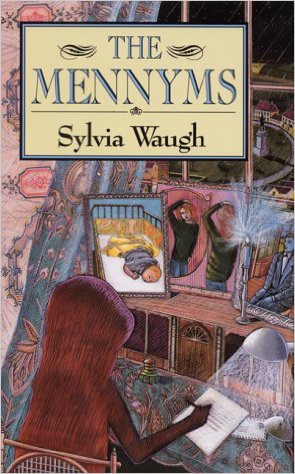
The original book.
Joshua Mennym is the head of a family of life-size rag dolls. He pretends to be a middle-aged man. He generally keeps his distance from the general public, because, up close, his basic rag-doll-ness would stand revealed. Rag dolls are not supposed to walk and talk, let alone have families and live in a home of their own. His wife is Vinetta Mennym, also a rag doll. Together they are parents to the ten-year old twins, Poopie, the boy, and Wimpey, the girl.
The teenage twins are Pilbeam and Soobie. Pilbeam is the girl and constant companion of the elder teenage sister, Appleby. Soobie is the boy and blue. Why their former owner, Kate Penshaw, made him with a blue head and blue feet and blue hands is a mystery both to the Mennyyms and to me. It causes him to be the one most likely to cause exposure of the family secret because even at a distance he does not look like a “real people” person.
Baby Googles is the smallest of the family, constantly cared for by the nanny, Miss Quigley, who is also considered a Mennym because she is also a doll.
Grandpa Magnus Mennym lives in the attic with Grandma and takes care of the household bills. He writes scholarly works on the English Civil War and publishes them for a modest income which comes through the mail. Granny Tulip is also relied upon for her wisdom and experience whenever a problem with keeping the family secret comes up.
Each book in the series contains a different adventure revolving around the realistic comedy generated by impossible people trying so hard to be real. I absolutely love the adventures, even the ones I haven’t read yet. And I know that the only way you could possibly love these books too is if you share my loony love of the fantastically impossible that turns out to be real. After reading these books, I fully intend to keep a very close eye on my own doll collection.




















 Catch a Falling Star
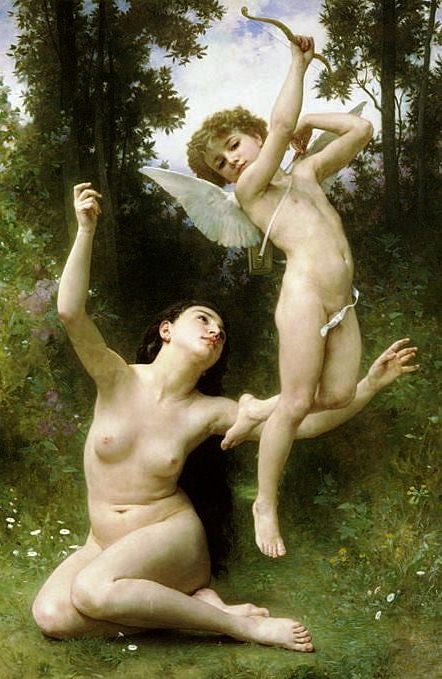
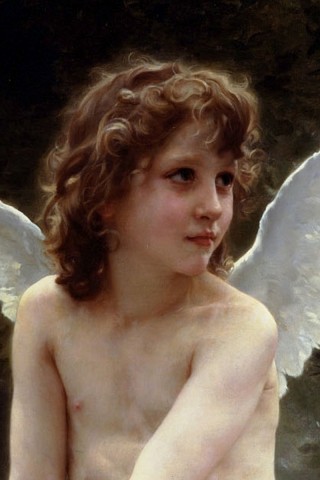
Naked Innocence
To be clear, I will have to write a post called Naked Experience to go with this post. It is a William Blake style of thing. You know, that English Romantic Poet guy who was into drawing naked people even more than me? The writer of Songs of Innocence and Experience? You know, this stuff;
Well, maybe you don’t know. But Blake gave the world the metaphor of the innocent lamb and the tyger of experience (tyger is his spelling, not mine, and it didn’t blow up the spell checker, even though it made the thing unhappy with me again). There is a certain something I have learned about nakedness that I mean to innocently convey. I learned it from anatomy drawing class and spending time with nudists. Naked is not evil. Naked is not pornography. Nakedness, itself, is a very good thing.
At this point the avid clothing-wearers among you are probably saying to yourself, “This guy is nuts! If God had wanted us to be nude, then we wouldn’t have been born with clothes on.” And I must admit, I cannot argue with logic like that.
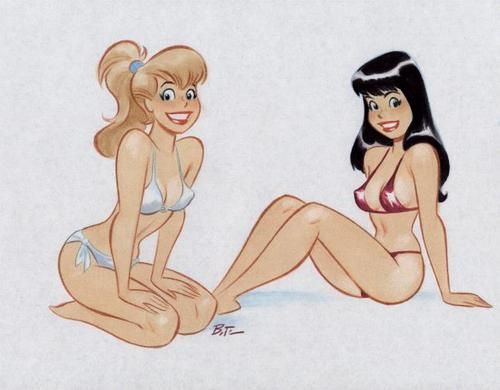
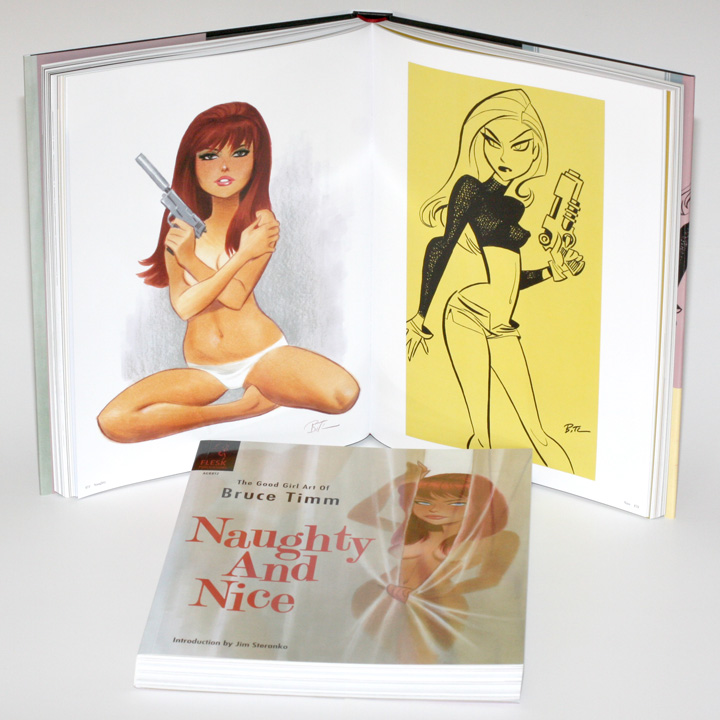
But on a more serious note, I believe nudity is a fundamentally essential part of the nature of art. After all, pictures of naked people are a central part of what people have been drawing since they first started etching them with charcoal on cavern walls. And all art, including this blog, is about the human experience. What it means to be human. What it feels like to be alive on this Earth and able to feel.
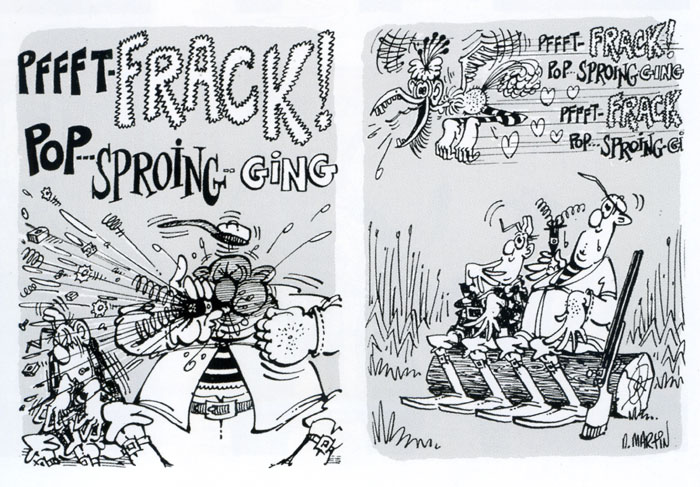
And there is nothing sinister and immoral in drawing nudes to portray that fact. I am trying to show metaphorically the music of existence, the pace, the symmetry, the musical score… It isn’t focused on the private bits, what some call the naughty parts, even when those things are present in the picture. “How dare that naughty Mickey show the naked back end of that butterfly! It ought to have pants on at least!” Yes, I am making a mockery of that outrage itself. I am not a pornographer. These pictures were not created to engender any prurient interests. These pictures are part of Blake’s lamb. They will not bite you. Though blue-nosed people who wish to control what others think may very well bite me for daring to say so.
I have posted a lot of writing and artwork on this blog that I held for the longest time to be completely private and personal. I hardly ever showed any of it to anybody before I posted it here. But I am old. I no longer have secrets. I am capable of telling you everything even though I have never met most of you in real life. And I have no shame. I have become comfortable with emotional and intellectual nudity. And when I am dead, the body I have kept hidden from the world for so long will be no more. It’s just a thought. It’s a naked thought. And it is completely innocent.
Leave a comment
Filed under artists I admire, artwork, commentary, humor, nudes, Paffooney, strange and wonderful ideas about life
Tagged as art, literature, nudes, poetry, William Blake